Vue lecture

Ukrainian drone pilots turned a captured AK and a hard-drive magnet into a flying machine gun

flying-AK

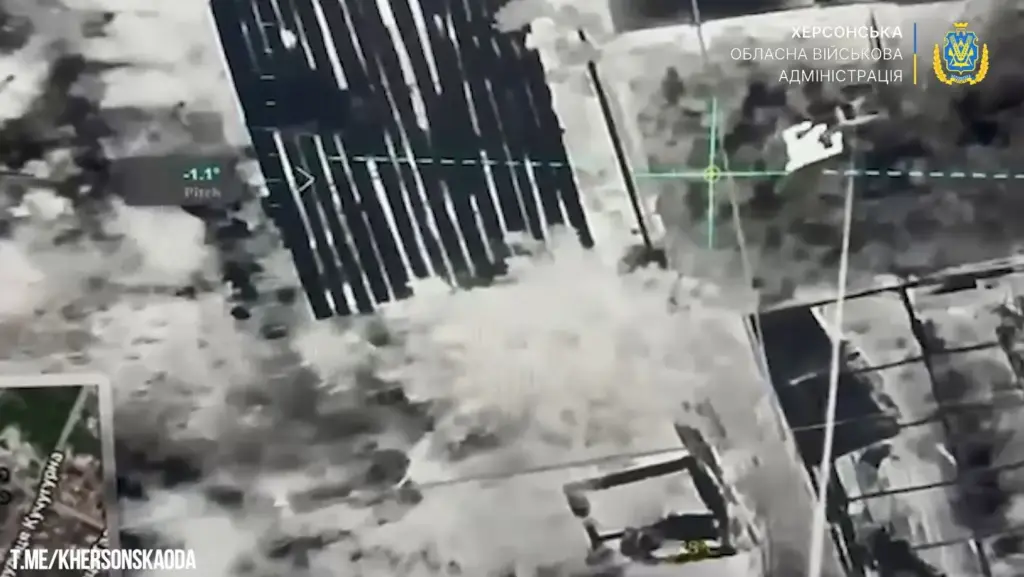
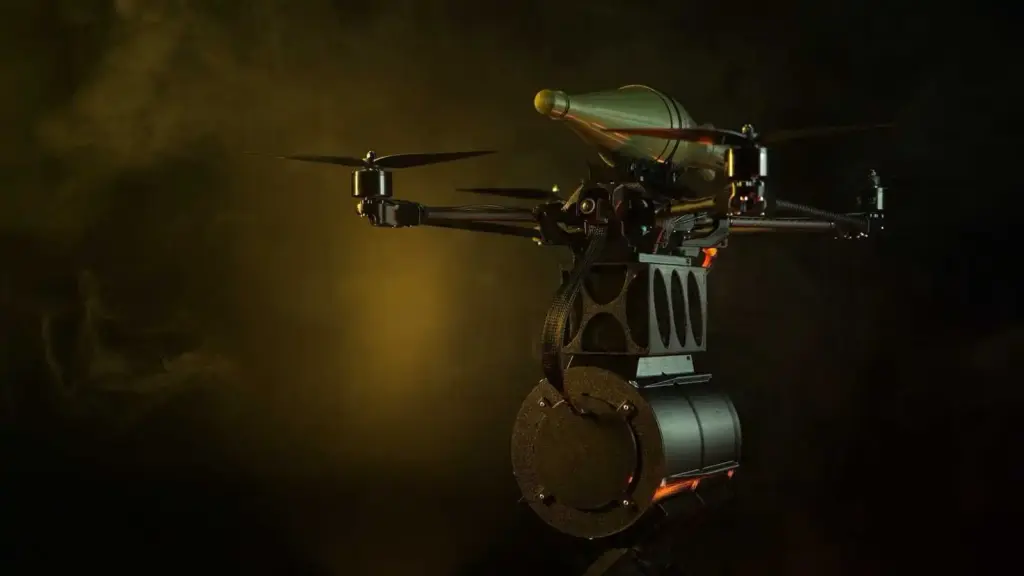
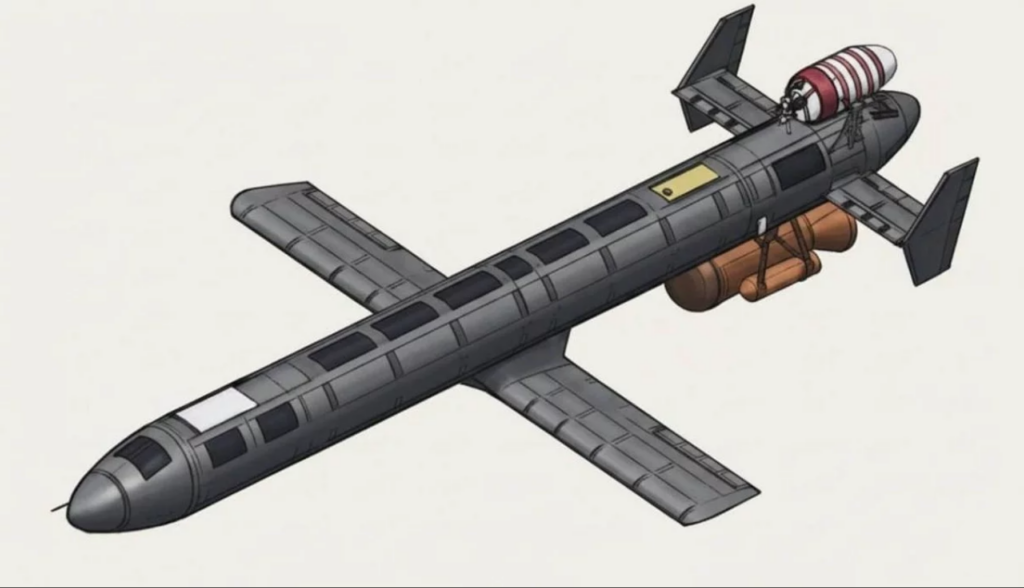
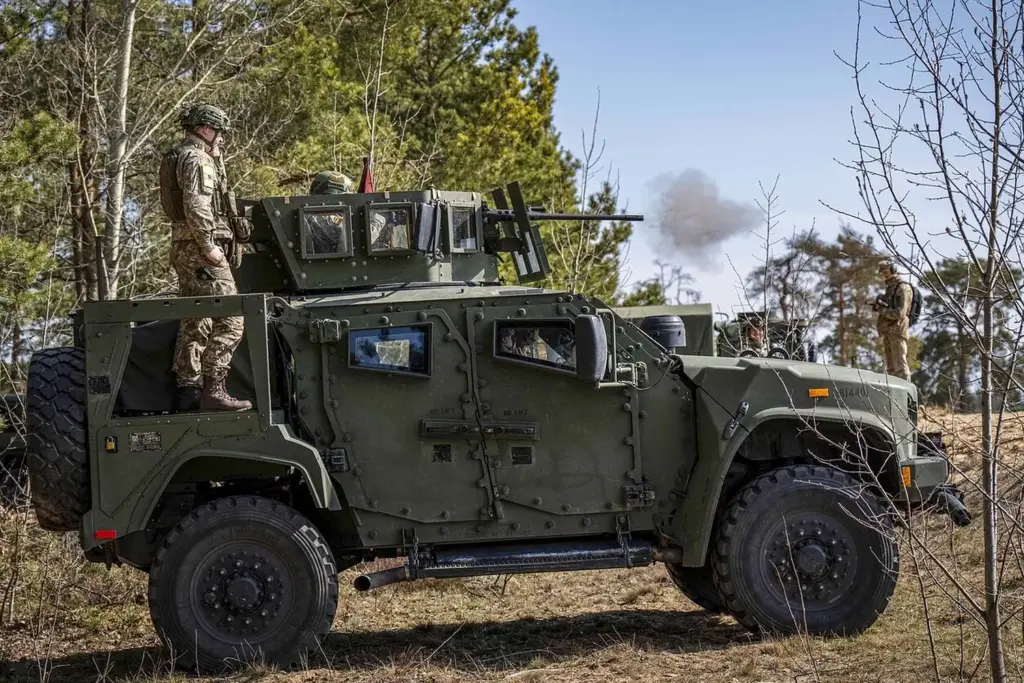
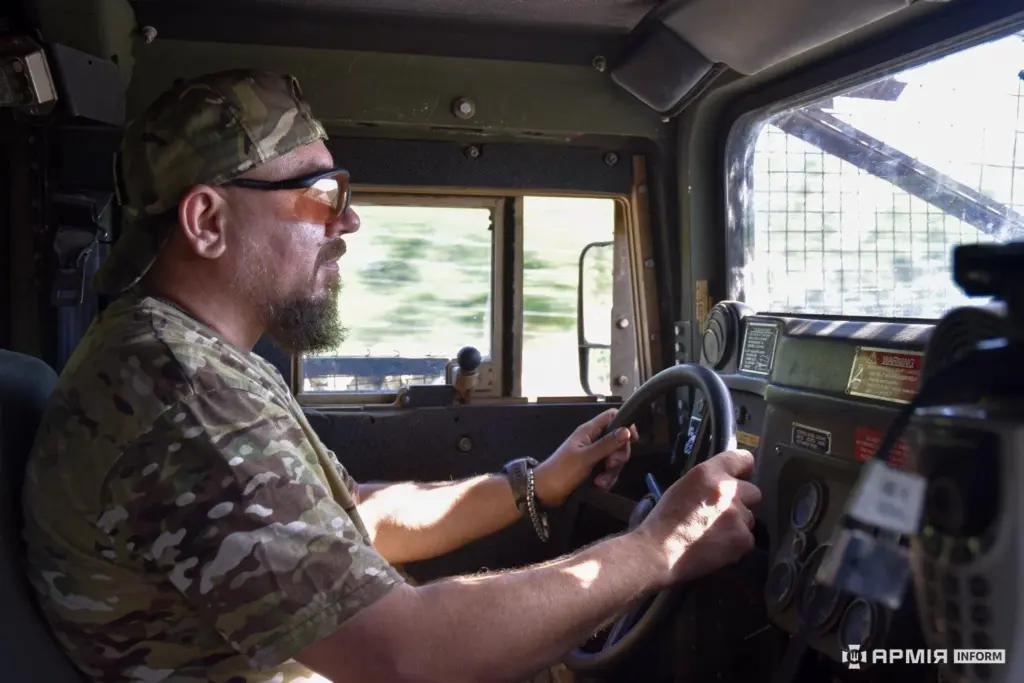
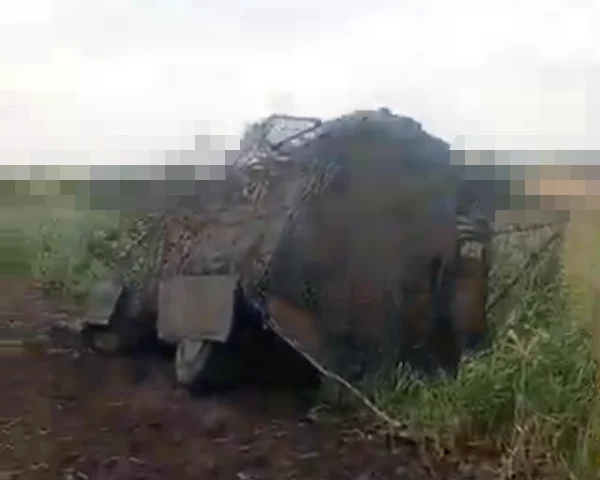
Drone operators from Ukraine's Presidential Brigade mounted a captured AK with a 45-round magazine on a heavy drone using a neodymium magnet from a hard drive, rope, and tape. They connected the trigger to a remote electronic mechanism and fired the weapon at Russian positions. The soldiers on the receiving end fled, according to a video the brigade published on Facebook on 11 August 2026.

Ukrainian units have been turning whatever they capture or are given into weapons throughout Russia's ongoing full-scale invasion.

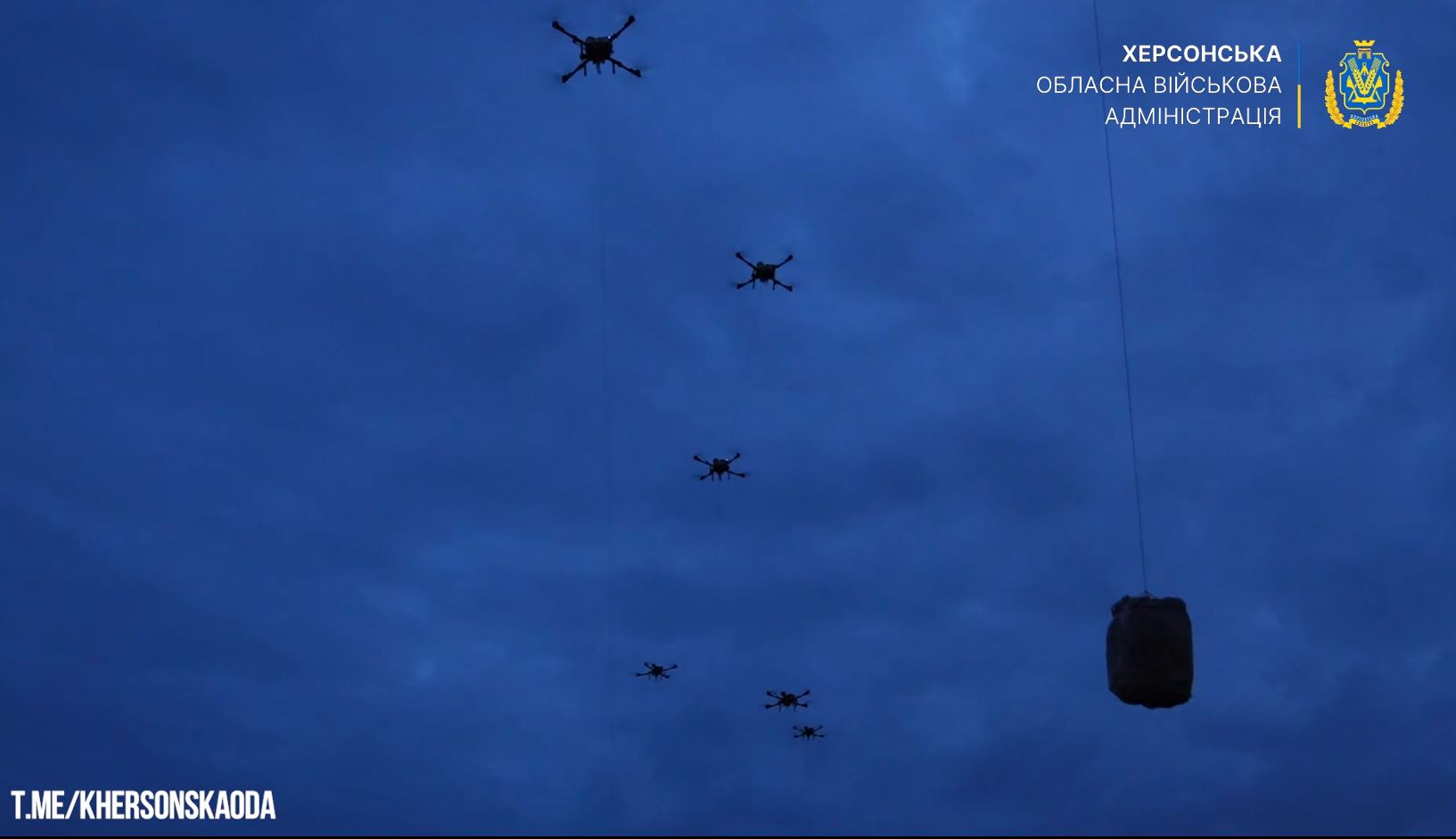
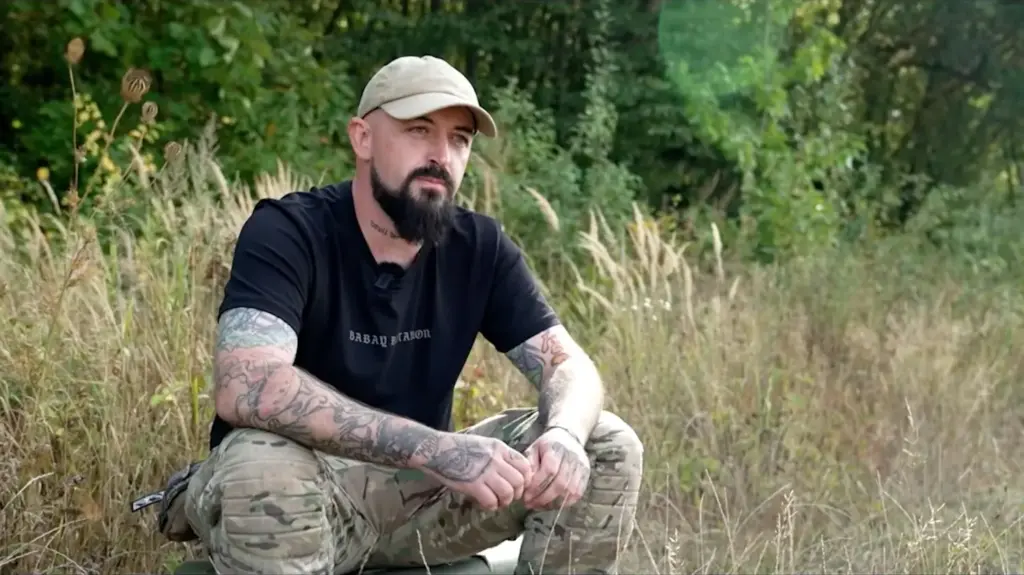
The pilot behind the idea, callsign Joker, said it came after his unit received a heavy drone called Queen of Hornets from volunteers and started looking for a way to attach a weapon beneath it.

"I once took apart a hard drive and remembered the neodymium magnet inside. A fellow soldier said, 'I have a small one, but it's very powerful.' We tried lifting the rifle, and it worked," he said in the video.

A Ukrainian drone pilot turned a captured AK and a magnet from a broken hard drive into a flying gun

He anchored the rifle under a heavy drone with the magnet, rope, and tape, then wired the trigger to fire by remote. Early flights swung like a pendulum until he steadied… pic.twitter.com/xjQekIMBBP

— Euromaidan Press (@EuromaidanPress) August 12, 2026

In the brigade's account, the first flights were rough: the rifle swung beneath the drone like a pendulum, making the aircraft nearly uncontrollable. The pilots eventually adapted.

The weapon scared more than it hit, Joker said.

"When a drone flies up to you and starts shooting an assault rifle at close range, it really hits your nerves. They ran pretty fast," he said.

The crew then began experimenting with heavier weapons, including grenade launchers. According to the pilot, during one combat deployment, the crew confirmed at least one Russian soldier killed.

The brigade said its units continue looking for unconventional ways to strengthen their drones' combat capabilities at the front.

  •  

A record 4.41 million Ukrainians are under EU protection—and few are going home

eurostat-data-2026

The number of Ukrainian citizens holding temporary protection status in EU countries reached 4.41 million as of 30 June 2026, the highest since the mechanism was activated in March 2022, according to data published by Eurostat on 11 August. The total rose by 24,380 (+0.6%) from the previous month.

The displacement is one dimension of the broader demographic damage that Russia's war is inflicting on Ukraine. The country's population has contracted from over 41 million before the full-scale invasion to roughly 31 million, driven by displacement, war casualties, and a fertility rate that has collapsed to among the lowest in the world. Only 23% of Ukrainian women refugees with children say they plan to return, even if the war ends.

The figure has been edging upward since mid-2023. It crossed 4 million in September 2023, reached 4.2 million by October 2024, and has now hit a new high. New decisions granting protection are now falling: EU countries issued 155,640 in the first quarter of 2026, down 17% from the previous quarter, and 2025's annual total was 14% below 2024's — even as the overall number of people already holding the status keeps rising.

The numbers suggest an accumulation effect: fewer people are leaving the system than are entering it. Cumulatively, EU countries have issued 7.1 million temporary protection decisions since March 2022, meaning roughly 2.7 million of those decisions are no longer active — as people returned to Ukraine, moved on, switched to other residence statuses, or were deregistered.

  • Germany hosted the most beneficiaries at about 1.29 million (29.2% of the EU total), followed by Poland with roughly 961,000 (21.8%) and Czechia with about 391,000 (8.9%).
  • Relative to population, the ranking shifts. Czechia recorded 35.8 beneficiaries per thousand residents, followed by Slovakia (27.2) and Cyprus (26.8), against an EU average of 9.8 per thousand.
  • Protection numbers rose in 24 of 27 EU countries. Italy posted the largest absolute increase (+4,115, or +8.8%), followed by Czechia (+3,835) and Germany (+2,960). Poland was the only country with a significant decrease (-6,335, or -0.7%). Belgium and Ireland posted negligible declines.

The EU just extended shelter for Ukrainians to 2028—with a new catch for military-age men

Ukrainian citizens accounted for over 98.5% of all beneficiaries. Adult women made up 43.4%, adult men 27%, and minors nearly a third (29.6%). The share of adult men has risen from 23% in October 2024, around the time Czech Interior Minister Lubomír Metnar's government pushed for the new military-compliance condition adopted by the Council in August.

The EU's temporary protection mechanism, activated in March 2022, has been renewed annually since. The most recent extension, a Council decision that took effect on 5 August, prolonged the framework to March 2028 while adding a new condition: Ukrainian men of military age applying for the first time must now prove they have met their mobilization obligations, including through Ukraine's Reserve+ app. The June data predates that rule, making it a baseline for measuring its impact.

  •  

Ukraine’s security service breaks up two schemes registering Starlink terminals for Russia

sbu-detained-starlink

Ukraine's Security Service (SBU) said on 10 August 2026 that it had detained three more people suspected of illegally registering Starlink satellite terminals for Russian forces, and had blocked two separate schemes for putting hostile terminals onto Ukraine's verification list.

The arrests are the latest in a months-long pattern. After Ukraine and SpaceX cut off smuggled Starlink terminals and required every device to be verified, the SBU says, Russia turned to paying financially desperate Ukrainians to register hostile terminals under real Ukrainian identities, laundering them onto the whitelist meant to keep them out. Each case the service has announced follows the same script: a recruit found through Telegram, a terminal signed up in their own name, then pressure to pull in others.

In Dnipro, according to the service, counterintelligence exposed a woman who had done Russia's bidding in exchange for money to buy drugs. She registered one terminal in her own name, the SBU said, then drew in acquaintances, also looking for money for a "dose," to register more.

sbu-detained-starlink
Photo: SBU

In Zhytomyr, according to the service, a local unemployed woman registered one terminal in her own name, then brought in a male acquaintance, and the two moved to what the SBU called "serial" activation at post offices, using front persons who handed over their personal data for a cut of the payment.

sbu-detained-starlink
Photo: SBU

The SBU described all three suspects as drug-dependent people who had gone looking for quick money in Telegram channels, the same recruitment funnel it has flagged in earlier cases. The service said it had documented the suspects' activity, detained them at their homes, and blocked every terminal registered through the two schemes.

Investigators served the three with notices of suspicion under two articles of Ukraine's Criminal Code: Article 114-1, obstructing the lawful activity of the Armed Forces and other military formations during a special period, applied together with the prior-conspiracy provision of Article 28, and Article 111-2, aiding the aggressor state. The SBU said the suspects face eight to 12 years in prison. These are allegations, and none of the three has been convicted.

The SBU's regional directorates in Dnipropetrovsk and Zhytomyr oblasts ran the operations with the National Police, overseen by the regional prosecutors.

In February, the SBU detained a couple in Odesa Oblast who, it said, had agreed to register terminals for Russia at $30 each and planned to pull in a local resident who uses drugs to help.

In late June, the service reported eight suspected agents who registered terminals in their own names, passed the credentials to Russian handlers, and were told to recruit as many additional people as possible.

On 24 July, the SBU said it had broken up a network in Kyiv that used fake Ukrainian passports and an unwitting postal worker to activate 76 terminals for Russia's FSB security service, a case that drew high treason charges under martial law and the threat of life imprisonment.

On 25 July, the service detained a man in Dnipro suspected of registering more than 1,000 terminals, the largest single scheme reported so far.

Why Starlink matters

Starlink, operated by SpaceX, has become one of the most important communications systems on the modern battlefield, providing fast, reliable satellite internet that is difficult to jam.

Ukraine has relied extensively on the network throughout Russia's full-scale invasion to maintain communications between military units and support drone operations.

Russian forces have also sought access to the system, but their use has been significantly constrained. In cooperation with SpaceX, Ukraine has introduced verification measures and whitelisted legitimate users operating on Ukrainian territory, limiting Russian access and forcing Moscow to seek alternative communications systems.

  •  

From builder to the eyes of Ukraine’s front: the soldier with the callsign Dancer who went from Soviet launchers to drones

ukrainian-soldier-drones

Fedir's four and a half years compress a shift the Ukrainian military has been living through since the invasion. Ukraine's forces have moved from Soviet-era systems, through Western precision weapons, to a homegrown drone war that now shapes the front line more than any single piece of hardware. Soldiers have had to relearn their job every year, mastering whatever technology arrives next, because the side that adapts faster survives. Fedir's story shows how fast that reinvention has come, and what it costs the people carrying it out.

"We give battle, boys — this is war," battalion commander Mykhailo Myronenko told the men. Fedir, a former construction worker, was on combat duty with a Lviv air defense brigade, and his job was diesel: keeping the generators running so the S-300 launchers never lost power. On the busiest days, he says, the unit fired eight to ten times.

In 2024, the war upgraded around him. He retrained on the IRIS-T SLS, a German air defense system, and moved from generators to the launch itself. "Three missiles. Three targets down," he says of his first launches on Western hardware.

"I was standing in snow mixed with mud, and I understood I was really useful to my Ukraine," said Fedir.

drone-operator
Fedir "Dancer". Photo: Lviv Anti-Aircraft Missile Brigade named after Ivan Vyhovskyi

Then he left. The IRIS-T sits well back from the front, and Fedir gave it up to fly drones, because he wanted to see the results of his work up close, through his own camera rather than on someone else's screen. He flew his first missions in Sumy Oblast, moving onto position in the dark with the headlights off. Through the camera, he saw his first Russian soldier walking a trench.

Drone operators are the eyes of the front, and among the most hunted people on it for exactly that reason. The task that matters most, he says, comes after the flight: not bringing a "tail" home, not letting an enemy drone track the path back to your shelter. One day, he says, it went wrong. A Russian FPV drone found their group, a comrade made cover shouting "FPV," and the blast was followed by artillery meant to finish them off. Fedir took a serious concussion, spent a few days in a hospital, and went back. "I was desperate to return. Because this is my war," he said.

Recon drone Mavic
DJI Mavic 3 Pro. Photo: Lviv Anti-Aircraft Missile Brigade named after Ivan Vyhovskyi

The callsign came by chance, from the work. When the jamming is heaviest, and he is fighting to hold the link to his drone against Russian electronic warfare, he starts to move at the controls, a small involuntary dance. His comrades named him Dancer.

His rotation has ended, and he could go back to the IRIS-T. He has chosen to stay on the zero line. After the war, he says, he wants the ordinary things: a family, and the peace to build again.

  •  

Occupied Ukraine’s schools get a new Russian ideology class, a separate military-training track, and behavior grades from 1 September

School students in occupied Luhansk.
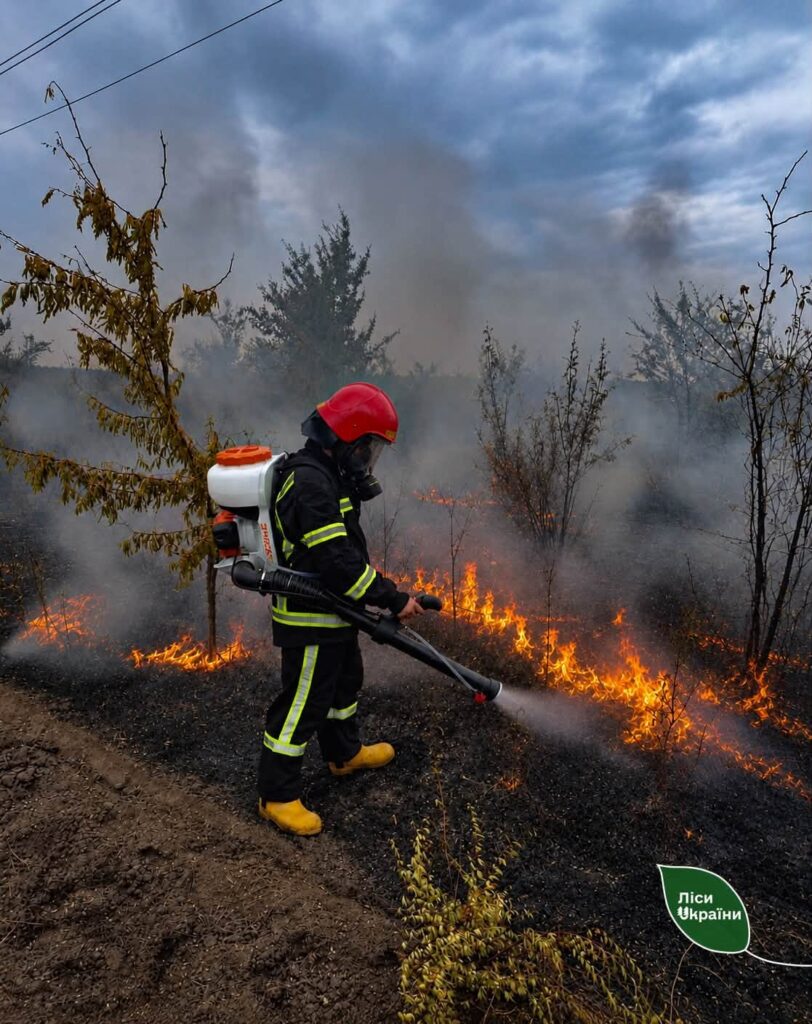
From 1 September 2026, schoolchildren in Russian-occupied areas of Ukraine will study under a reworked curriculum built around loyalty to the Russian state, the Yellow Ribbon resistance movement reported on Telegram, a change separately confirmed by the Crimean Tatar Resource Center.
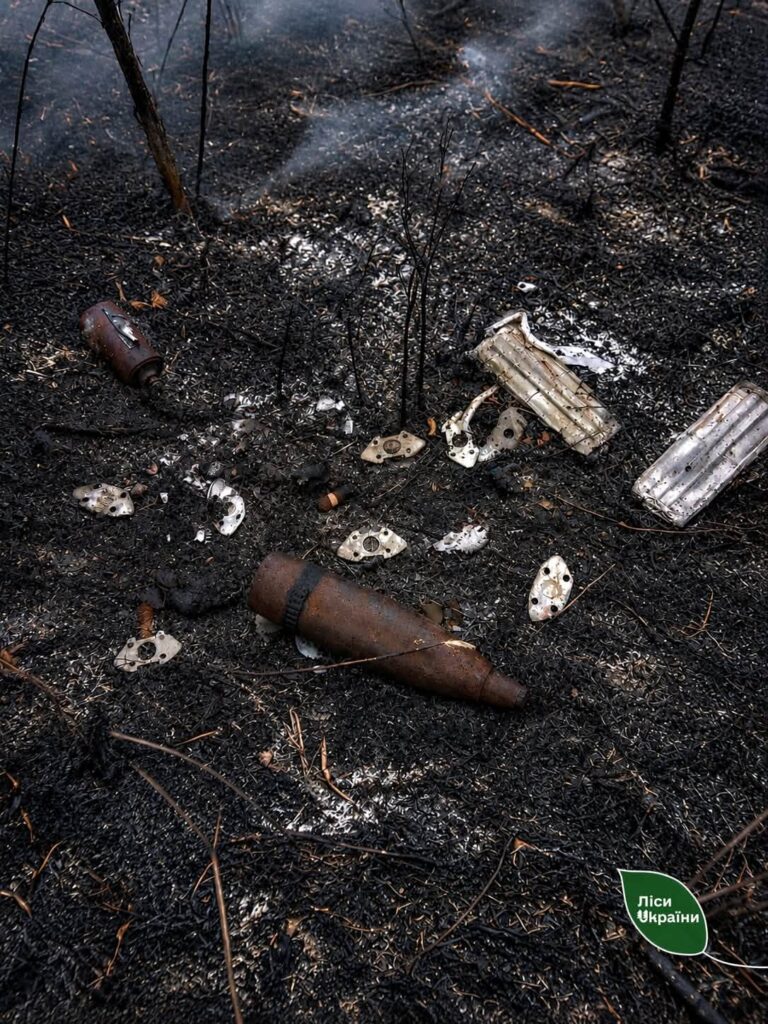
Taken together, the changes work to strip a generation of Ukrainian children of their national identity — children who did not choose to be schooled under Russia's war against their country.

The overhaul bundles three separate mechanisms into a single school year. Occupation authorities are introducing a new subject called "Spiritual and Moral Culture of Russia." They are splitting the existing course "Fundamentals of Security and Defense of the Motherland" into two tracks, life safety and basic military training, deepening a militarization of occupied schooling that Euromaidan Press has documented. And for pupils in grades 2 through 8, a three-tier behavior assessment is being added, graded as "exemplary," "acceptable," or "unacceptable." Together, Yellow Ribbon said, the changes are turning schools in the occupied territories into "a tool of the ideological and military indoctrination of children."

The new identity subject is aimed at children in grades 5 to 7, roughly ages 10 to 13, and is built on so-called traditional Russian values, with Russian Orthodox Church representatives drawn into the teaching in occupied Crimea and Sevastopol. The Almenda Center of Civil Education has documented the subject's territory-wide rollout. It puts the reach of the imposed Russian curriculum as a whole at more than 582,000 children in nearly 2,000 schools. The subject mirrors a class Russia is rolling out in its own schools, now applied to Ukrainian children in territory it holds by force. The new three-tier behavior grading adds a compliance layer to a system that the OSCE expert mission found is already enforced through "pervasive coercion," applying pressure to children, parents, and teachers alike.

An unlawful campaign

International humanitarian law bars an occupying power from indoctrinating and militarizing the children under its control. In July 2026, an independent expert mission established under the OSCE's Moscow Mechanism, invoked by 41 of the organization's 57 participating states, reported to the OSCE Permanent Council that Russia's transformation of the education system in the occupied territories breaches international law, naming Article 43 of the Hague Regulations and Article 50 of the Fourth Geneva Convention.

The experts described a coordinated, state-level system spanning schools, youth organizations, religious institutions, and security agencies, built to strip Ukrainian children of their identity from kindergarten age through high school. The "Fundamentals of Security and Defense of the Motherland" course, now being split to carve out a dedicated military track, has been compulsory in schools in occupied territory since the 2024/25 academic year.

Russia abducts Ukrainian children brainwashes North Korea
Explore further

Russia sends children from occupied Ukraine to North Korean re-education camps, human rights expert tells US Senate

The in-place indoctrination forms one arm of a wider effort to erase Ukrainian identity. The other is deportation. In March 2023, the International Criminal Court issued arrest warrants for Russian President Vladimir Putin and his children's rights commissioner, Maria Lvova-Belova, over the unlawful transfer of Ukrainian children. As of June 2026, according to the OSCE mission, Ukraine's Ministry of Justice had recorded 20,610 children as deported or forcibly transferred, and Ukrainian authorities reported just 2,264 returned.

Ukraine's own tally is likely an undercount: Yale researchers put the total closer to 35,000, and Ukrainian officials have estimated the real figure runs into the hundreds of thousands. In a resolution of 8 May 2025, the European Parliament declared that Russia's forcible transfer and deportation of Ukrainian children meets the legal definition of genocide, part of a "genocidal strategy" to erase Ukrainian identity.

  •  

A Russian missile took Oleksandra Paskal’s leg at six. At 10, she competes in rhythmic gymnastics across five continents

Ukrainian girl gymnast on prothesis

The Dance of Freedom tour, featuring young Ukrainian gymnast Oleksandra Paskal, has carried her from Paris to Tokyo, Akhmetov Foundation reported. Behind it lie a seaside home reduced to rubble, 15 days in a coma, and a place among the more than 3,200 children Russia's war has killed or wounded.

Russia has spent the war striking the cities where Ukrainian families live, turning apartment blocks and holiday coasts into places where children are wounded far from any front line. For every Ukrainian child whose recovery becomes a story the world follows, many more carry injuries and losses that never surface beyond a case file.

In May 2022, three months into Russia's full-scale invasion, a missile struck a home in Zatoka, a resort village on the coast of Ukraine's Odesa oblast. No air-raid siren sounded in the neighborhood, the family says. Beneath the collapsed concrete lay Oleksandra Paskal, six years old, her leg pinned under a slab.

Her mother, Maria, lost consciousness in the blast. Maria later recounted the scene to the Museum of Civilian Voices. She described what she saw when she came to: a heavy concrete slab lying across her daughter's leg, the girl's arm dislocated with the bone exposed, a finger hanging loose, her head badly bruised. Neighbors helped lift the slab. Sasha, as the family calls her, spent 15 days in intensive care in a medically induced coma. Doctors first feared a severe head injury. Then they found that blood had stopped circulating to her left leg. They amputated.

Oleksandra Paskal gymnast
Sasha Paskal on Rizatdinova Cup 2025. Photo: NV/Maksym Pidopryhora

Four years later, Oleksandra is 10 and a competitive rhythmic gymnast performing on five continents.

Her case is at once singular and representative. In the fifth year of Russia's full-scale war, the fighting is still killing and wounding Ukrainian children, even as global attention fades. Oleksandra survived and found a stage; most children harmed by the war never have their stories told beyond Ukraine. The distance between the scale of that harm and the world's diminishing notice is what her tour is built to close.

The return took roughly seven months.

She learned to walk with a prosthesis, returned to the gym, and won her first post-amputation competition in Chornomorsk.

"My passion for sport is bigger than my loss," she told CNN Sports.

Oleksandra Paskal gymnast
Oleksandra Paskal. Photo: Viktoria Efremova

In 2025, President Volodymyr Zelenskyy and First Lady Olena Zelenska awarded her the "Future of Ukraine" honor. Earlier this year, she took gold at Carla's Rhythmic Cup, an international competition in Romania, where she competes against children without disabilities.

The performances abroad are part of the Dance of Freedom tour, an initiative of the Rinat Akhmetov Foundation in partnership with the football club Shakhtar Donetsk, timed to the 35th anniversary of Ukraine's independence on 24 August. Over two weeks, Oleksandra performed her routine in Paris, in New York's Times Square, in Rio de Janeiro, in Nairobi, and finally in Tokyo. In New York, she met the boxer Oleksandr Usyk, visited Ukraine's mission to the United Nations, and stood beneath the Statue of Liberty.

For Oleksandra, the travel is partly an escape. "I'm really happy to travel because it's an opportunity to distract myself from what's going on in Ukraine," she said. Her mother frames it as a purpose.

"She's so strong and motivated," Maria said. "Although she's very young, she's a role model for many people with similar circumstances. We never pushed her. What she's doing comes from her."

Oleksandra Paskal gymnast
Oleksandra Paskal. Photo: Viktoria Efremova

Oleksandra's story is singular, but the injury that shaped it is not. According to UNICEF, more than 3,200 Ukrainian children have been killed or wounded since Russia launched its full-scale invasion on 24 February 2022. These are UN-verified casualties, a count that captures only the cases investigators have been able to confirm, so the real toll is almost certainly higher. Almost 2.6 million, more than a third of the country's children, remain displaced. More than 1,700 schools and other educational facilities have been damaged or destroyed. Every stop on the tour, her mother says, is meant to hold that reality before an international audience.

Oleksandra's own ambitions run past the tour. She wants to compete at the Paralympics in Brisbane in 2032 and win gold if rhythmic gymnastics is included in the program. In New York, Usyk gave her a method: write down that you are an Olympic champion, and read it every day. When they met, Zelenskyy gave her a sentence to carry: never give up and move forward.

  •  
❌