Connexion

Oleshky’s evacuation was called a success, but some residents didn’t make it out. Now, the aid is still not reaching them

Some residents of Russian-occupied Oleshky, Kherson Oblast, missed last week’s evacuation because they had no connection, could not reach the assembly point, or feared Russian filtration. Those left behind report that aid brought in during the mission is not reaching them, the head of the town’s Ukrainian administration, Tetiana Hasanenko, said in an interview Ukrinform published on 5 November. Some who got aid describe a food set that would not last a week, but the administration cannot verify the reports, Hasanenko said.
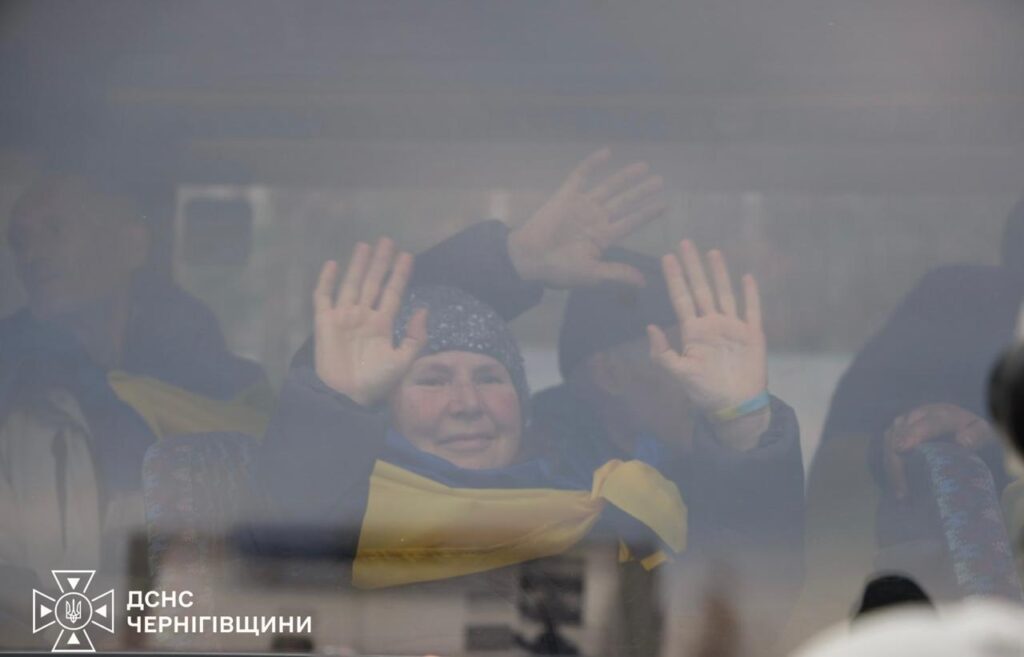
Under a truce brokered by US First Lady Melania Trump, which ran from 27 October to 1 November, Ukrainian and Russian ombudsmen brought residents out of Oleshky through Russia and Belarus. The evacuees reached Ukrainian-held territory on 31 October, from a 94-year-old to a child just over a year old. Ukraine’s ombudsman, Dmytro Lubinets, called the joint evacuation and aid mission a success, and Kyiv hopes to reuse it for civilians in other occupied areas. Hasanenko’s account points to its limits: Ukraine cannot check what happens to the aid inside the town, and the evacuation did not reach everyone who wanted to leave. It matters now because the two ombudsmen are working out monthly deliveries to Oleshky, while the Kremlin says it has no similar truce planned for now. For those left behind, the next negotiated way out has no date.
Some residents never heard of the evacuation
Some residents were sheltering in basements with no connection and did not know about the evacuation, Hasanenko said. Even the silence did not convince others.
“People in the community are in such a state that it is hard for them to believe anything,” Hasanenko said.
Some people with limited mobility were not brought to the assembly point near the hospital, Hasanenko said. They had expected the Russians to take them there. On the highway, some women waiting for the convoy went home, believing the buses had already passed.
Others stayed because they feared Russian filtration. Even some who left saw the route through Russia and Belarus as a possible “one-way trip.” But “death awaited them either way,” Hasanenko said, “so they took the risk.”
A former school director killed in a drone attack, administration said
After the truce, the administration was told that former school director Kostiantyn Melnyk had been killed in a drone attack, Hasanenko said.
“Terrible things continue to happen there,” Hasanenko said.
Concerns about aid in the town are not new. In September, Hasanenko said Russian troops had seized food that Ukraine dropped by drone and accused the people who received it of cooperating with Ukraine.
Many evacuees arrived without documents
Evacuees are now in hospital, Hasanenko said. Many left without documents, and others carry old booklet-style passports whose data in the community registry is out of date, which administrators are now updating. In addition, residents who have left the occupied community since 1 September can receive 5,000 hryvnias from the community.
Read also
-
The Oleshky truce saved hundreds, but Russia used it to bring fresh troops, armor, and fuel within nine kilometers of Kherson, marines say
-
Ukraine’s and Russia’s human rights commissioners agree to keep working on regular humanitarian missions after the Oleshky evacuation
-
Eggs cost nearly 20 times US prices in occupied Oleshky, where Ukraine’s ombudsman says people die of hunger every day