The appointment of Mykhailo Fedorov, a Ukrainian former defense minister, showed how other militaries are racing to adapt to battlefield changes accelerated by the war in Ukraine.
The appointment of Mykhailo Fedorov, a Ukrainian former defense minister, showed how other militaries are racing to adapt to battlefield changes accelerated by the war in Ukraine.
Ukraine's former defense minister Mykhailo Fedorov has offered to help the United States build a fleet of attack drones if Washington sends Ukraine the Patriot interceptor missiles it needs to get through winter, he told the Financial Times. The idea is Fedorov's own proposal, not a deal, and he holds no government post that would let him negotiate one for Kyiv. He is in Washington mainly to raise American money for a fund that would both invest in Ukrainian defense-tech c
Ukraine's former defense minister Mykhailo Fedorov has offered to help the United States build a fleet of attack drones if Washington sends Ukraine the Patriot interceptor missiles it needs to get through winter, he told the Financial Times. The idea is Fedorov's own proposal, not a deal, and he holds no government post that would let him negotiate one for Kyiv. He is in Washington mainly to raise American money for a fund that would both invest in Ukrainian defense-tech companies and build new ones of its own.
Over the past year, Ukraine's partners have shifted from handing over weapons off their shelves to funding and co-producing Ukrainian-designed drones and missiles, inside and outside the country.
What the fund would do
Fedorov used his working trip to Washington to line up venture funds, entrepreneurs and tech companies as backers, Suspilne reported. The fund would not simply invest in existing Ukrainian defense-tech firms, he wrote; it would also create new companies around the technologies the front line needs most. He set out three targets: battlefield robots to replace soldiers in the most dangerous positions, jet-powered interceptor drones to bring down Russia's faster new attack drones, and cheap missiles that use artificial intelligence. He did not say what his own role would be, or whether he would profit. He said the next step is to assemble a team and launch the first projects.
Explore further
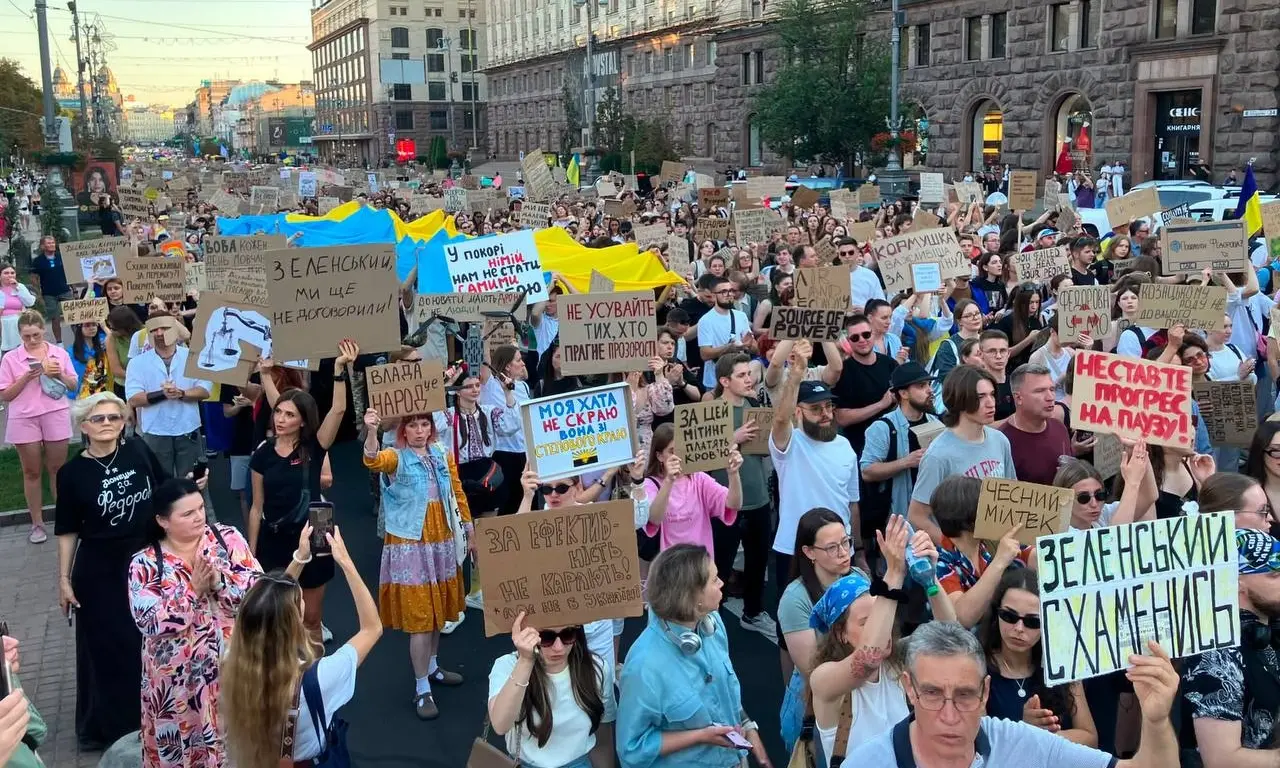
The Fedorov protesters lost. But they backed a man for what he built, not what he promised—and that may be new in Ukraine.
The interceptors behind the offer
Fedorov framed the drone help as a straight swap.
"I'm ready to make that trade," he told the FT.
Ukraine is running low on interceptor missiles for its Patriot batteries, one of the few air-defense systems able to reliably stop Russia's ballistic missiles. Fedorov declined to say whether he would meet anyone from the Trump administration.
Ukraine's ex-minister turns open critic
President Volodymyr Zelenskyy dismissed Fedorov on 15 July, after six months in the job. Fedorov said a feud with Commander-in-Chief Oleksandr Syrskyi, who he says blocked his reforms, drove the split, Zelenskyy removed Syrskyi on 21 July as protests spread. in an interview with Reuters published on 25 August.
"it looks as though we're gradually, slowly losing," he said in an interview with Reuters.
The move sends the right signal. While we’re at it, can we ban using ringtones and scooting on the sidewalk?Imagine driving in Italy, with its narrow, cobblestone streets and scooter enthusiasts. I find it hard enough to drive in Los Angeles, a city designed specifically with the automobile in mind. I’d probably squash a pedestrian or two trying to navigate Italian roads.The modern world is just too hectic for the ancient streets of Europe, so Italy is considering doing the only sensible thing i
The move sends the right signal. While we’re at it, can we ban using ringtones and scooting on the sidewalk?
Imagine driving in Italy, with its narrow, cobblestone streets and scooter enthusiasts. I find it hard enough to drive in Los Angeles, a city designed specifically with the automobile in mind. I’d probably squash a pedestrian or two trying to navigate Italian roads.
The modern world is just too hectic for the ancient streets of Europe, so Italy is considering doing the only sensible thing it can: outlawing texting in crosswalks. The Italian government’s updated draft of its highway code proposes fines of €75 or more for anyone caught sending a DM, updating their LinkedIn, finishing Wordle on the fifth guess, or anything else phone-related that might make them miss an oncoming metal projectile. I’m sure most people will risk the slap on the wrist to get that message off, but it at least sends a signal to the Italian people that paying attention to traffic is actually kind of important.
Dave Schilling is a Los Angeles-based writer and humorist
A NATO country's defense minister wanted Mykhailo Fedorov the day after Ukraine dismissed him. Fedorov, Ukraine's former defense minister, has agreed to advise Italian Defense Minister Guido Crosetto on defense innovation, he wrote on Telegram.
As deputy prime minister and digital transformation minister, Fedorov created the Brave1 defense-tech cluster, then ran the Defense Ministry from 14 January 2026 until his dismissal in July. The removal triggered nationwide prote
A NATO country's defense minister wanted Mykhailo Fedorov the day after Ukraine dismissed him. Fedorov, Ukraine's former defense minister, has agreed to advise Italian Defense Minister Guido Crosetto on defense innovation, he wrote on Telegram.
As deputy prime minister and digital transformation minister, Fedorov created the Brave1 defense-tech cluster, then ran the Defense Ministry from 14 January 2026 until his dismissal in July. The removal triggered nationwide protests through July, with demonstrators calling for his reinstatement.
Earlier, Fedorov refused every other post Zelenskyy offered, saying only the defense minister, the president, and the commander-in-chief truly shape the war.
"I thanked Guido for his personal support and for offering me the opportunity to serve as his adviser on defense innovation. In this role, I will help Italy develop modern warfare technologies," he said.
Crozetto moved within a day
The Italian minister said he called Fedorov the day after the dismissal and asked when he would come to Rome to work as an advisor.
Fedorov met Crosetto on the first stop of an international trip focused on digitalization and defense technology.
The focus stays on his own projects
Fedorov said his main focus is unchanged and that he continues working in Ukraine on his own projects to strengthen its defense and attract international resources. In the advisory role, he will help Italy develop technologies of modern war and adapt to new security challenges, he wrote.
The two discussed drones, autonomous systems, air defense, and the development of a defense-tech ecosystem. The future of defense belongs to countries that can quickly test and scale new solutions, Fedorov said, and Ukraine's experience could serve as the basis for a new defense model for Europe.
Earlier, the Ukrainian parliament approved Yevhenii Khmara as the new defense minister. During his first speech, Khmara made it clear that he would continue his predecessor's course — the technologization of the army.
He added that there "would be more Ukrainian weapons, and strikes would be more precise.
A 15-year-old using social media apps in Australia in July, more than half a year after the country had implemented a ban on children under 16 using many platforms.
Many Italians see themselves in Andrea Bajani’s latest novel, a portrayal of the family as a “little totalitarian system” shaped by psychological and physical violence.
Many Italians see themselves in Andrea Bajani’s latest novel, a portrayal of the family as a “little totalitarian system” shaped by psychological and physical violence.
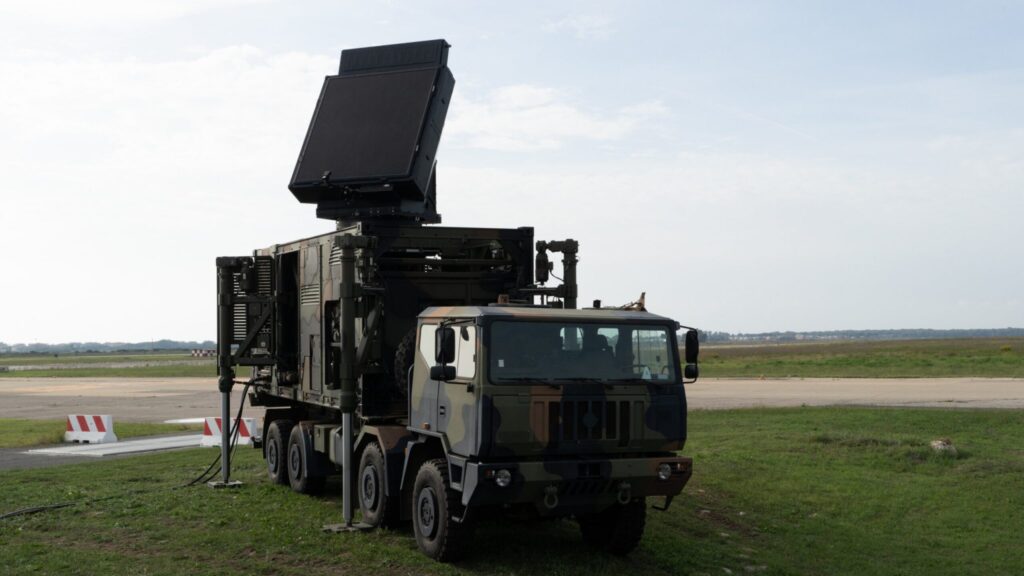
Italian defense giant Leonardo has quietly registered a research subsidiary in Kyiv, planting a direct corporate flag in Ukraine's wartime defense ecosystem, Euractiv reported. The move reverses the company's previous public stance against opening operations in Ukraine.
European defense firms are quickly embedding inside Ukraine's defense industry, as Ukraine's wartime manufacturing base has become a draw rather than a risk for Western capital.
Kyiv-based R&D com
Italian defense giant Leonardo has quietly registered a research subsidiary in Kyiv, planting a direct corporate flag in Ukraine's wartime defense ecosystem, Euractiv reported. The move reverses the company's previous public stance against opening operations in Ukraine.
European defense firms are quickly embedding inside Ukraine's defense industry, as Ukraine's wartime manufacturing base has become a draw rather than a risk for Western capital.
Kyiv-based R&D company
Leonardo Ukraine appeared in Ukraine's business register on 20 May, but the company disclosed the step only in its H1 2026 financial report at the end of July. The subsidiary's share capital stands at about $125,000. Leonardo International wholly owns it.
"We have completed the legal process to begin operations. The new company will be used to work in this region," a Leonardo spokesperson said.
The subsidiary will focus on R&D covering communications and navigation systems, software, IT services, and electronic and optical technologies. The step brings Leonardo closer to Ukraine's drone and missile industry, which has expanded rapidly during the war.
Explore further
Italy wants continental defense alliance, including Ukraine. Kyiv already out-produces all of NATO on drones
From no factory to a Kyiv office
Just over a year ago, then-CEO Roberto Cingolani said that Leonardo had no plans to open a factory in Ukraine, as Reuters reported. At the same time, Cingolani pledged to test Leonardo's Michelangelo Dome air defense system in Ukraine. The Italian government did not reappoint him in April 2026. Lorenzo Mariani took over as CEO in May.
The subsidiary is not a factory. But it gives Mariani a registered legal presence inside Ukraine's defense innovation ecosystem, positioned near the drone and electronic warfare sectors Leonardo wants to tap.
Explore further
Yes, Italy is arming Ukraine — here’s what military aid data shows
Leonardo is not the first major European defense firm to set up inside Ukraine. Germany's Quantum Systems established three joint ventures and made the country its second-largest international base. Rheinmetall is building an ammunition plant there. Ukrainian defense companies, in turn, have opened production facilities across Europe.
The Italian prime minister is leading what will soon be the longest-lasting government in the country’s postwar history. She shows herself by turns funny and fierce in a rare interview.
The Italian prime minister is leading what will soon be the longest-lasting government in the country’s postwar history. She shows herself by turns funny and fierce in a rare interview.
In a rare interview, the onetime political outcast reflects on her route from “the uncomfortable side of history” to the threshold of leading Italy’s most durable postwar government.
In a rare interview, the onetime political outcast reflects on her route from “the uncomfortable side of history” to the threshold of leading Italy’s most durable postwar government.
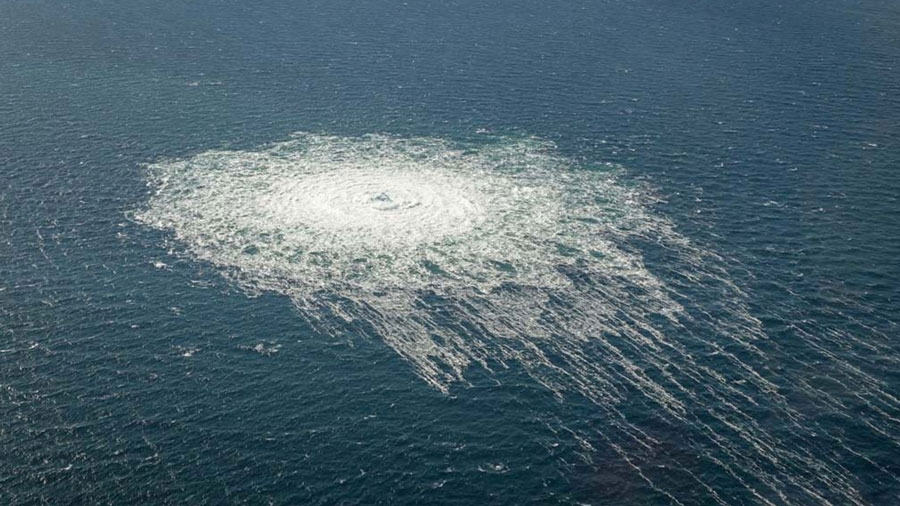
Ukraine has opened its own criminal investigation into the 2022 destruction of the Nord Stream gas pipelines, months after Germany charged a Ukrainian over the blasts, Suspilne reported. Prosecutors in Kyiv registered the case on war-crimes grounds and say they will test whether Russia staged the sabotage to discredit Ukraine. Serhii Kuznietsov is due to stand trial in Germany in October.
The undersea link was built to carry Russian gas around Ukraine and tie Europe mor
Ukraine has opened its own criminal investigation into the 2022 destruction of the Nord Stream gas pipelines, months after Germany charged a Ukrainian over the blasts, Suspilne reported. Prosecutors in Kyiv registered the case on war-crimes grounds and say they will test whether Russia staged the sabotage to discredit Ukraine. Serhii Kuznietsov is due to stand trial in Germany in October.
The undersea link was built to carry Russian gas around Ukraine and tie Europe more tightly to Moscow, a dependence Europe scrambled to shed after Russia's 2022 invasion.
Kyiv will test a Russian false-flag version
Ukraine's Security Service, under the Prosecutor General's Office, opened proceedings on 9 July under the article on violations of the laws and customs of war. Kuznietsov's Ukrainian lawyer, Mykola Katerynchuk, told Suspilne about the case.
The Prosecutor General's Office confirmed it is supervising a probe into the "possible commission in September 2022, amid the international armed conflict between Russia and Ukraine, by citizens of Ukraine, of actions connected to the undermining" of both pipelines in the Baltic Sea. It said the case was registered after the "independent discovery in the media" that Germany had charged a Ukrainian citizen.
Given Russia's use of hybrid methods, investigators will also examine whether Russians organized the explosions as a "false flag" operation, using Ukrainian citizens or imitating their participation to discredit Ukraine.
The office said it used the laws-and-customs-of-war charge because it matches the qualification chosen by Germany's Federal Prosecutor's Office.
Explore further
Russia laid Nord Stream to bypass Ukraine amid preparations for war. Four years after it exploded, Kyiv says it had nothing to do with blasts
The case against Serhii Kuznietsov
The pipelines exploded on 26 September 2022. On 8 August 2025, Germany's Federal Court of Justice issued an arrest warrant for Kuznietsov, alleging he led a group of six who mined the pipelines and detonated them remotely.
Italian police arrested him on 21 August 2025, and Italy's Supreme Court later confirmed his extradition to Germany. A Polish court, by contrast, refused a German request for another Ukrainian suspect, Volodymyr Zhuravlov.
On 2 July 2026, Germany's Federal Prosecutor's Office published its charges — an attack on civilian objects, causing an explosion, and destroying structures. Kuznietsov denies guilt.
Immigrants have long eased labor shortages on farms and factories in Italy. But churches also need foreign-born priests, like the Rev. Vincent Souly of the Ivory Coast.
Immigrants have long eased labor shortages on farms and factories in Italy. But churches also need foreign-born priests, like the Rev. Vincent Souly of the Ivory Coast.
The Italian military police said that art collectively valued at more than $10 million had been found five months after being taken in a nighttime heist near Parma.
The Italian military police said that art collectively valued at more than $10 million had been found five months after being taken in a nighttime heist near Parma.
With temperatures set to soar as high as 109 degrees Fahrenheit (43 Celsius) this week, Europeans and tourists say that summer in Europe has lost its appeal.
With temperatures set to soar as high as 109 degrees Fahrenheit (43 Celsius) this week, Europeans and tourists say that summer in Europe has lost its appeal.
By setting up a curling rink in the shadow of the Colosseum, sports officials hope to capitalize on the fresh popularity of the Winter Olympics phenomenon. Even in a heat wave and without any ice.
By setting up a curling rink in the shadow of the Colosseum, sports officials hope to capitalize on the fresh popularity of the Winter Olympics phenomenon. Even in a heat wave and without any ice.
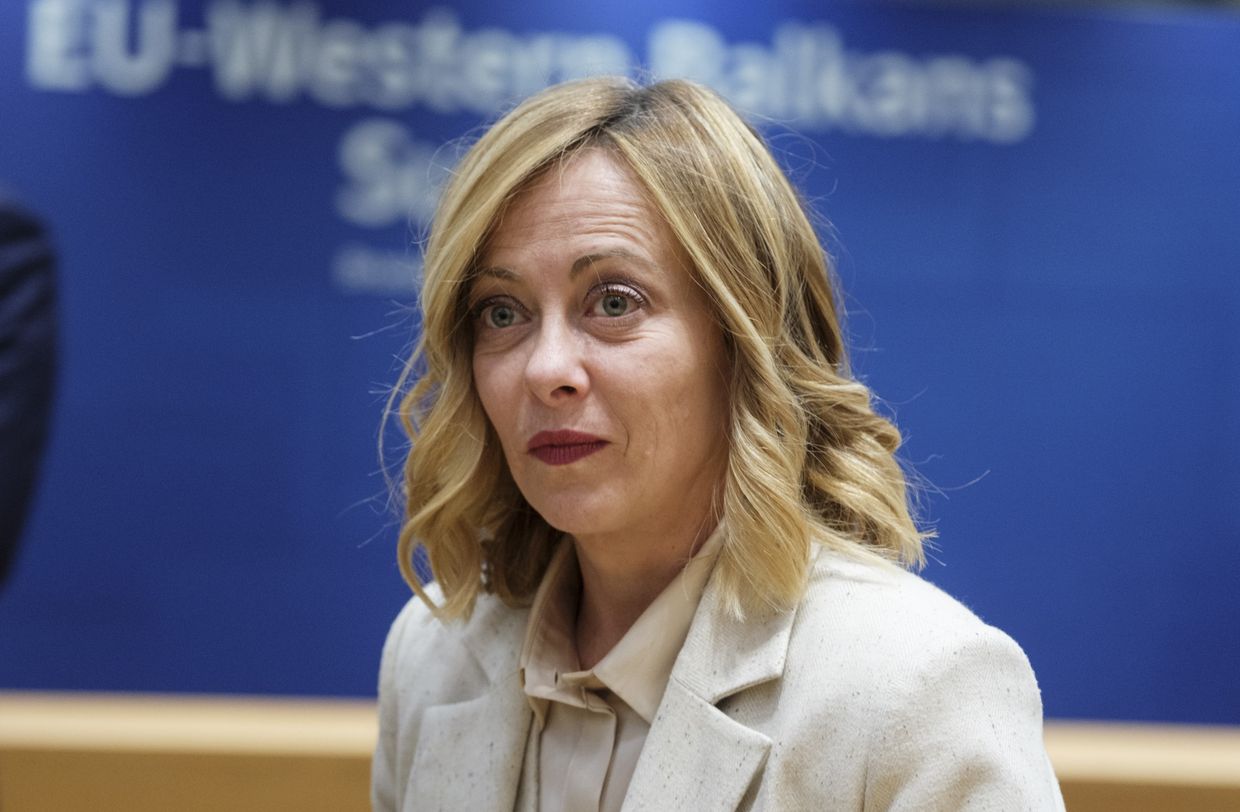
The U.S. has "reviewed" the components it is supplying Ukraine, but did not halt assistance, Italian Prime Minister Giorgia Meloni said on July 4."The United States has not stopped supplying weapons and supporting Ukraine, it has reviewed the decision to supply specific components... (this is) significant but very different from the total American disengagement that has been reported," Meloni said, speaking at a forum.U.S. President Donald Trump on July 3 denied that Washington has paused supply
The U.S. has "reviewed" the components it is supplying Ukraine, but did not halt assistance, Italian Prime Minister Giorgia Meloni said on July 4.
"The United States has not stopped supplying weapons and supporting Ukraine, it has reviewed the decision to supply specific components... (this is) significant but very different from the total American disengagement that has been reported," Meloni said, speaking at a forum.
U.S. President Donald Trump on July 3 denied that Washington has paused supplying weapons to Kyiv amid media reports of a halt in shipments.
Pentagon spokesperson Sean Parnell confirmed on July 2 that some military assistance to Ukraine has been halted as the U.S. Defense Department conducts a review of foreign aid deliveries.
"I hope for positive developments on the issue," Meloni said, adding that she has spoken to Trump regarding Ukraine.
The weapons reportedly held back include two dozen Patriot air defense missiles, over two dozen Stinger air-defense systems, precision artillery rounds, Hellfire missiles, drones, and more than 90 AIM air-to-air missiles launched from F-16 fighter jets.
NATO Secretary General Mark Rutte said on July 2 that he understands the White House's need to safeguard its own defense capabilities, but underscored that Ukraine urgently requires sustained support.
"I totally understand that the U.S. always has to make sure its interests are covered... When it comes to Ukraine, in the short term, Ukraine cannot do without all the support it can get," Rutte said.
A bipartisan group of U.S. lawmakers voiced their opposition to the decision to halt military aid shipments to Ukraine on July 2.
"We must build up our own Defense Industrial Base here in the U.S. while simultaneously providing the needed assistance to our allies who are defending their freedom from brutal invading dictators. To not do both is unacceptable," Republican Rep. Brian Fitzpatrick, the co-chair of the Congressional Ukraine Caucus, said.
Democratic Senator Richard Blumenthal, a member of the Senate Armed Services Committee, described the military aid pause as "fallacious and maybe even disingenuous."
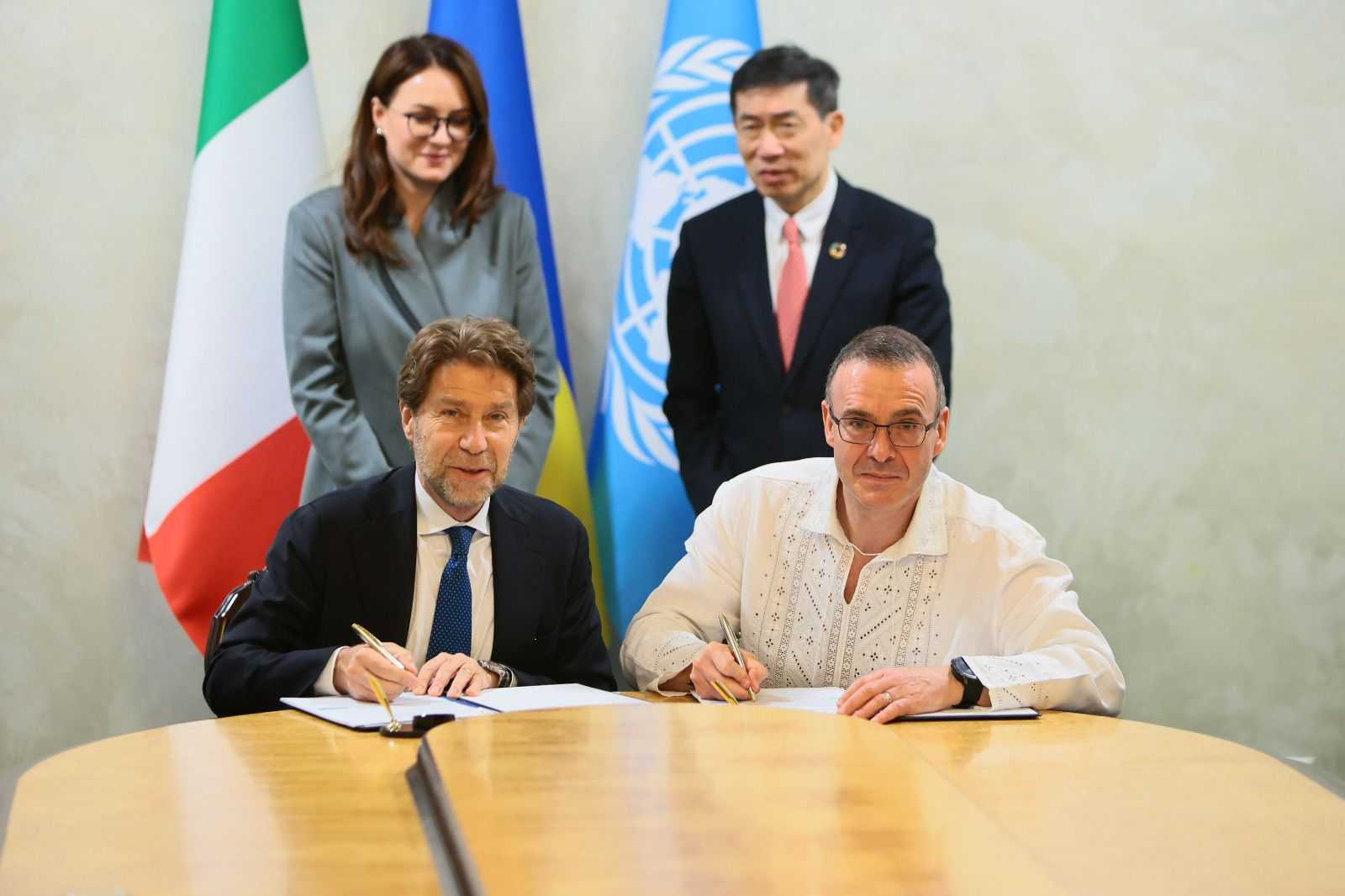
Italy has pledged 1.5 million euros (approximately $1.6 million) to support humanitarian demining efforts in Ukraine, deepening its partnership with the United Nations Development Programme (UNDP) and the Ukrainian government. The agreement was formalized during a high-level ceremony in Kyiv on June 23 attended by Italian Ambassador Carlo Formosa, UN Assistant Secretary-General and new UNDP Administrator Haoliang Xu, Jaco Cilliers, Resident Representative of the UNDP in Ukraine, and Ukraine’s Fi
Italy has pledged 1.5 million euros (approximately $1.6 million) to support humanitarian demining efforts in Ukraine, deepening its partnership with the United Nations Development Programme (UNDP) and the Ukrainian government.
The agreement was formalized during a high-level ceremony in Kyiv on June 23 attended by Italian Ambassador Carlo Formosa, UN Assistant Secretary-General and new UNDP Administrator Haoliang Xu, Jaco Cilliers, Resident Representative of the UNDP in Ukraine, and Ukraine’s First Deputy Prime Minister and Economy Minister Yuliia Svyrydenko.
"Demining is not just a technical operation; it is a deeply humanitarian act that combines cooperation and innovation to restore hope in Ukraine," Ambassador Formosa said. "This project is not only a response to the emergency — it’s a step toward recovery. It’s about returning land to farmers, playgrounds to children, and safe roads to families."
The funding will support UNDP’s mine action program, which focuses on clearing land contaminated by mines and explosive remnants of war, ensuring the safe return of land to Ukrainian communities.
The initiative comes as Ukraine continues to grapple with one of the world’s largest demining challenges. According to the State Emergency Service, the total area of potentially mined land has been reduced by over 20% since late 2022. However, approximately 137,000 square kilometers (52,900 square miles) — much of it farmland — remain contaminated. Demining operations are carried out by the emergency service personnel, National Police, Ministry of Defense, and non-governmental organizations.
Currently, 112 certified demining operators, including eight international groups, are active in Ukraine, the State Emergency Service reported on June 24. Their combined capacity includes more than 9,000 personnel, 278 specialized vehicles, and over 13,000 metal detectors.
While significant progress has been made, Ukrainian officials stress that continued international support and funding are critical to accelerating clearance efforts.
 Connexion













 The Kyiv IndependentThe Kyiv Independent news desk