Russia has destroyed 2.1 million square meters of Ukraine’s modern warehouse space out of a total 5 million, wiping out more than two-fifths of the country’s storage capacity as Moscow expands its air campaign against Ukraine’s economy, according to the Financial Times.
Russia is increasingly targeting the infrastructure that keeps Ukraine’s economy running and its citizens supplied, including warehouses, distribution centers, railways, fuel stations, and other logistics facilities. By
Russia has destroyed 2.1 million square meters of Ukraine’s modern warehouse space out of a total 5 million, wiping out more than two-fifths of the country’s storage capacity as Moscow expands its air campaign against Ukraine’s economy, according to the Financial Times.
Russia is increasingly targeting the infrastructure that keeps Ukraine’s economy running and its citizens supplied, including warehouses, distribution centers, railways, fuel stations, and other logistics facilities. By hitting these sites far from the front line, Russia is disrupting the supply of everyday goods and making it harder for Ukrainians to find what they need.
Around 900,000 square meters of warehouse space has been destroyed in recent months alone, according to Ukrainian entrepreneur Ruslan Shostak, founder of the Eva and Varus retail chains, cited by the Financial Times.
Russia is destroying Ukraine’s warehouse capacity
The loss of warehouse space is creating problems for businesses across Ukraine.
Russian strikes have hit warehouses and distribution centers belonging to major Ukrainian retailers, pharmaceutical companies, publishers, and logistics operators.
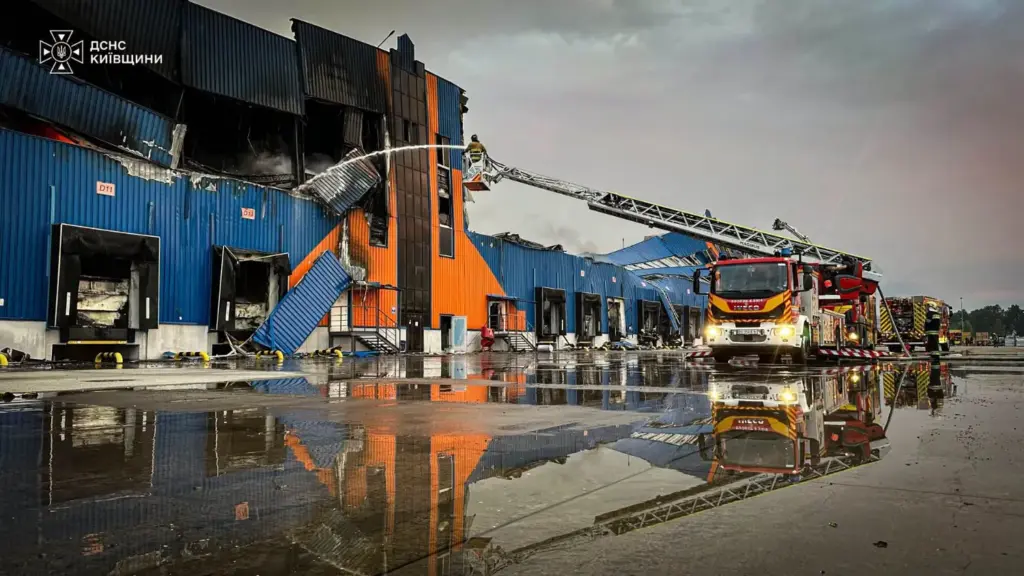
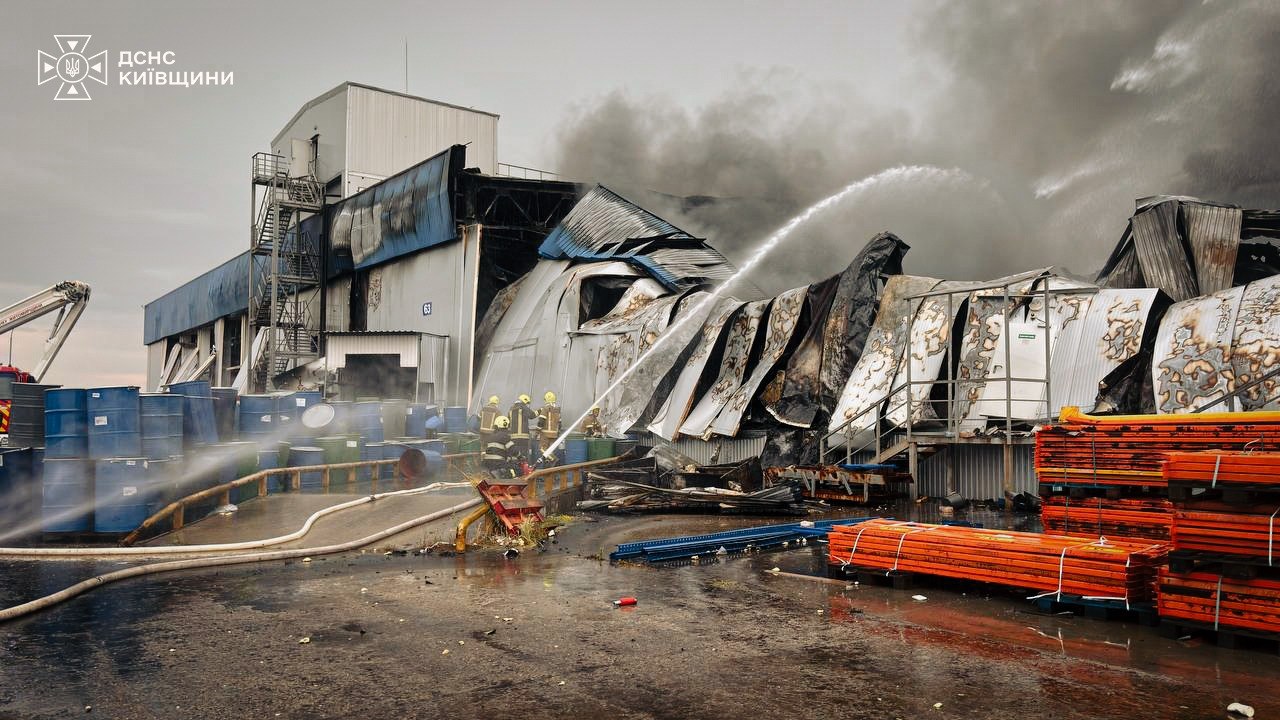
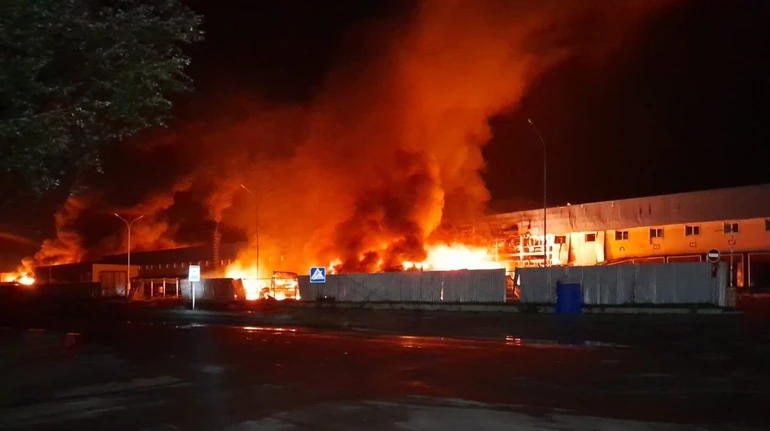
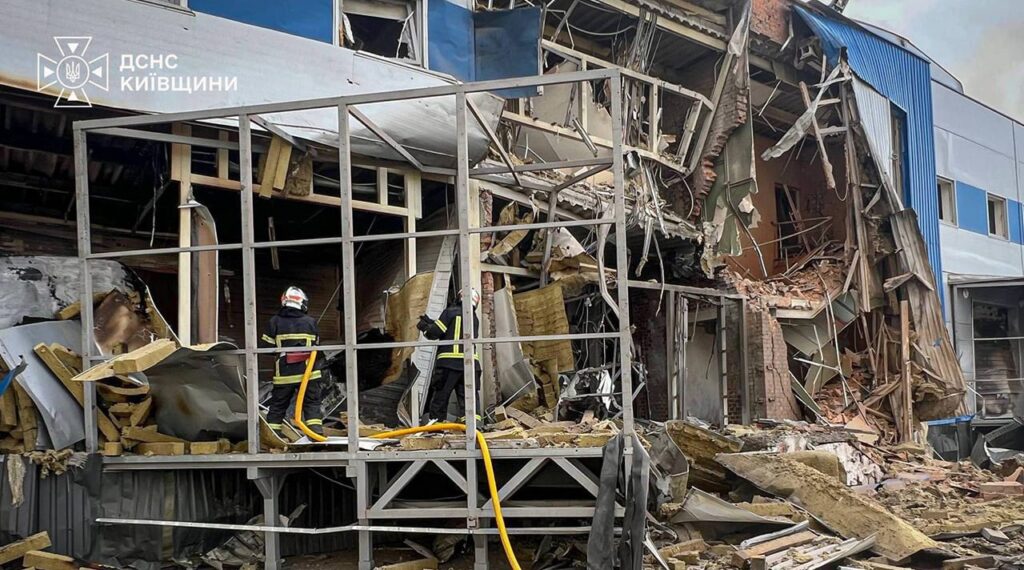
One recent strike destroyed a warehouse belonging to toy retailer Budynok Ihrashok near Kyiv, FT reported. The facility was hit by a jet-powered drone and caught fire, but firefighters were unable to intervene while Russian drone attacks were continuing.
The company now plans to distribute its inventory among smaller warehouses and its network of 67 stores rather than rely on a single large distribution center.
The destruction of large warehouses is forcing companies to rethink how they store and distribute goods, increasing costs and making supply chains more vulnerable to further attacks.
Explore further
Kyiv stockpiles food and water as Russia’s new aerial tactics threaten a brutal winter
The attacks are spreading across Ukraine’s economy
Warehouses are not the only economic infrastructure being targeted.
Russian drones have increasingly struck railway infrastructure in western Ukraine, while fuel stations are also being hit farther from the front line. These attacks can disrupt the movement of goods even when they do not directly destroy the businesses producing them.
The result is a widening pressure on Ukraine’s logistics network. Companies must find alternative storage and transport routes while operating under the continuing threat of Russian airstrikes.
The attacks are part of Russia’s broader long-range air campaign against Ukraine’s civilian infrastructure. Moscow is increasingly using drones and missiles to hit economic targets deep inside Ukraine, putting strain on the systems that allow the country’s economy to function during the war.
Russia struck a fourth Ukrainian pharmaceutical warehouse in two weeks on 14 September, setting fire to the Odesa depot of medicine distributor BaDM, Ekonomichna Pravda reported. Russian forces hit it during an attack they ran across the country through the night.
Russia fights a ground war on the front and bombs the country behind it with drones, cruise and ballistic missiles, and glide bombs, and in recent months it has aimed much of that at the civilian supply system, taking out the
Russia struck a fourth Ukrainian pharmaceutical warehouse in two weeks on 14 September, setting fire to the Odesa depot of medicine distributor BaDM, Ekonomichna Pravda reported. Russian forces hit it during an attack they ran across the country through the night.
Russia fights a ground war on the front and bombs the country behind it with drones, cruise and ballistic missiles, and glide bombs, and in recent months it has aimed much of that at the civilian supply system, taking out the depots of retailers and carriers along with the rail that moves them. Burning stored goods does not move the front line, but it changes how a country at war feeds, supplies, and treats itself.
The fourth depot, and what Russia did to it
The BaDM complex stands on the edge of Odesa. The strike started a fire on the grounds, and the State Emergency Service worked at the site. It left significant damage to the storage buildings.
Preliminarily, nobody was hurt, sources on the pharmaceutical market told Ekonomichna Pravda. BaDM is one of the biggest wholesalers moving medicines to Ukrainian pharmacies.
The three depots Russia hit before it
Russia opened the run on 3 September, when it damaged the Biokon logistics complex in Boryspil raion, Kyiv Oblast. That site counts as the country's largest specialized pharmaceutical warehouse.
Overnight on 8 September, Russian forces attacked the Kyiv warehouse of Optima-Pharm with two ballistic missiles. They had already destroyed that site, which belongs to one of the largest distributors, in 2025.
On 13 September, Russian forces struck Universal Logistic, the second-largest medicine warehouse in Ukraine. Four specialized sites in two weeks is a pattern, and Russia now hits medicine storage as it has hit food, construction materials, and parcels.
Explore further
WHO humanitarian warehouse in Dnipro destroyed in strike, Director-General says
The attack the Odesa strike came in
Russia launched 108 strike drones from 18:00 on 13 September, Ukraine's Air Force said. The wave carried Shahed-type drones, among them jet-powered ones, Gerbera drones, and Parodiya decoys. Air defense downed or suppressed 85 of them by 08:00. Ukrainian forces recorded hits at seven locations, and the Air Force said the attack was still running when it published that count.
Medicine is not the only category on Russia's list. Its strikes have wrecked so much large-format storage that Ukrainian retailers are now building small sites everywhere instead of a few big ones. In August, a strike destroyed a World Health Organization humanitarian warehouse in Dnipro, which held medical supplies for frontline facilities, and the WHO did not name who fired it.
On the morning of 30 August, I went to a central Lviv branch of Silpo, a Ukrainian supermarket chain operated by Fozzy Group. It had run out of buckwheat, peas, pearl barley, and other dry goods.
Telegram reports from Lviv showed partially empty shelves at other supermarkets as shoppers stocked up on flour, salt, and cereals. Similar gaps appeared in Kharkiv, Ivano-Frankivsk, and Vinnytsia. Russian strikes have also damaged some of Ukraine's largest wine warehouses,
On the morning of 30 August, I went to a central Lviv branch of Silpo, a Ukrainian supermarket chain operated by Fozzy Group. It had run out of buckwheat, peas, pearl barley, and other dry goods.
As replacement space runs short, the state has stepped in: on 4 September, on Zelenskyy's order, oblast military administrations switched to round-the-clock operation, opening a single window for businesses and forming working groups to find them relocation sites and connect utilities, deputy Head of the President's office Viktor Mykyta said.
Overall, Russia has destroyed about 90% of Ukraine's modern storage—including 80% of the refrigerated warehouses around Kyiv—faster than it can be rebuilt. So retailers, parcel carriers, and now the government are scrambling to replace one centralized system with dozens of scattered sites. Whether they can do it before winter, and at what cost to prices, is the question now hanging over the country's food supply.
Replacement warehouses become new targets
Aftermath of Russian strikes on a Nova Poshta warehouse in Sviatopetrivske near Kyiv on 28 August 2026. Photo: Anton Ovsienko/Facebook
Each time a company disperses its stock to survive, the new sites become the next targets. Russia hit a warehouse used by Fora, a nationwide "store next door" Ukrainian grocery chain, four days after the company began using it—the third strike on Fora's logistics in 22 days, and the chain had only just spread its stock across several warehouses to reduce exactly this risk. Another warehouse added during that rebuilding was destroyed on 20 August, one week after Fora began using it.
The same pattern caught Ukraine's largest private parcel carrier Nova Poshta: lost its most advanced robotic fulfillment center and a sorting depot in Sviatopetrivske near Kyiv overnight on 28 August and is now doing what Fora did—pushing stock out to its local branches, according to CEO Yevhen Tafiichuk's Facebook statement. "Nova Poshta's cargo and postal branches across the country are becoming local warehouses," he wrote.
Clients' stock will be divided among those locations, reducing dependence on a few large centers. Nova Poshta is also contacting publishers and shops whose books were destroyed and will compensate them for their losses, Tafiichuk said.
And it continues daily. On 29–30 August alone, Russian strikes hit PepsiCo, an Auchan warehouse, and food stores in Odesa Oblast.
The Agriculture Ministry told Euromaidan Press that Ukrainian farms continued to supply the domestic market in full and that the country faced no danger of famine. Individual supermarket chains could nevertheless carry a narrower selection.
Fozzy freezes office hiring
Aftermath of a Russian attack on Silpo's distribution centers and NOVUS's main logistics center on 5 August in Kyiv. Photo: Fozzy Group press office
Fora's parent company, the Fozzy chain of wholesale supermarkets, told Forbes Ukraine that ten of its distribution centers had been damaged during August. Rebuilding delivery routes and restoring supplies had substantially increased logistics costs.
The increased costs have hit company development. Fozzy has frozen office hiring and canceled its planned autumn salary review for office employees. However, recruitment for supermarkets, warehouses, and production continues. The company will reconsider the restrictions once its financial results and cash flow become clearer.
Replacement storage falls short
A Russian attack on 3 September destroyed warehouses of the Teva pharmaceutical company. Photo: DSNS
Kyiv's commercial warehouse space had returned to prewar levels by the end of 2025. Yet only 2.5% was vacant at the end of June 2026, according to Yaroslav Horbushko's August assessment. Horbushko, an executive at commercial property consultancy Expandia, said a business seeking a 10,000-square-meter warehouse could not find one because only scattered smaller premises remained available.
Available refrigerated storage in and around Kyiv could replace only 20–30% of the refrigerated space destroyed by Russian attacks, Investment Programs Bureau CEO Oleksandr Bondarenko estimated on 11 August. He put the destroyed space at 80,000–100,000 square meters, compared with 20,000–30,000 square meters still available to rent.
The destroyed warehouses kept meat, dairy products, fruit, and vegetables chilled before delivery to shops. Even a small new refrigerated terminal would take six to twelve months to build.
Logistics company Global Ocean Link outlined one option on 17 August: keeping some imported stock in Central European warehouses and bringing it into Ukraine in smaller batches. Factories can also bypass distribution centers and deliver directly to shops. However, three-quarters of Ukrainian dairy producers lack enough vehicles and staff to supply individual stores across large retail networks, said Arsen Didur, executive director of the Union of Dairy Enterprises of Ukraine.
Export bottleneck strains grain storage
A separate shortage is developing in the storage of crops awaiting export. The Agriculture Ministry expects Ukraine to harvest approximately 84 million tonnes of grain and oilseeds this season—far more than the country consumes—while civilian agricultural exports through deepwater sea routes have stopped completely following intensified attacks on ports and warehouses.
Explore further
Russia drove most ships from Ukraine’s ports. Now its drones are hunting the trains
Alternative routes carried approximately 1.5 million tonnes of agricultural products in August, only 33% of the estimated requirement, the ministry told Euromaidan Press. Grain shipments reached 822,000 tonnes, or 21% of potential export demand.
Even if fully expanded, the Danube ports, railways, and roads could carry no more than half of the required export volume. Slower exports could leave Ukraine short of storage for 11 million tonnes of agricultural products by November.
The government is seeking temporary storage capacity. With international donors, it is also providing large polymer sleeves to farmers whose warehouses have been damaged in nine oblasts. The sleeves allow crops to be stored temporarily at individual farms.
Who pays for new routes?
Bondarenko's cost estimates suggest that replacing one large refrigerated warehouse with several smaller facilities could increase logistics costs by 10–15%. He estimated that the smaller sites would collectively require 60–70 workers, compared with 20–30 at one large automated warehouse, as well as additional loading and sorting equipment.
Some retail chains were demanding that manufacturers cover all logistics risks, according to Didur's RBC-Ukraine interview. He warned that suppliers could seek other sales channels if those demands spread.
Ukrainian supermarket chain VARUS, the fifth-largest on the Ukrainian market,said it was trying to absorb additional logistics costs. Higher delivery costs would not automatically raise shelf prices by the same percentage, the chain said, because purchasing costs, exchange rates, and other factors also influence what shoppers pay.
Shops remain open, and the ministry sees no famine threat. The lasting damage appears in the capacity and money consumed by each workaround: more workers and vehicles, smaller shipments, deferred hiring and salary reviews, and fewer warehouses available when the next strike comes.
In the pessimistic scenario, producers would refuse to work under the new logistics rules and prefer going down the export route, which would lead to a stable deficit of goods on the shelves of Ukrainian supermarkets by October-November, Bondarenko assessed.
But from a broader perspective, if the pace of Russian strikes continues, Ukrainian businesses could be forced to close or relocate their production facilities to neighboring Romania, Slovakia, and Poland—leading to losses in employment and taxes to the Ukrainian budget, he added.
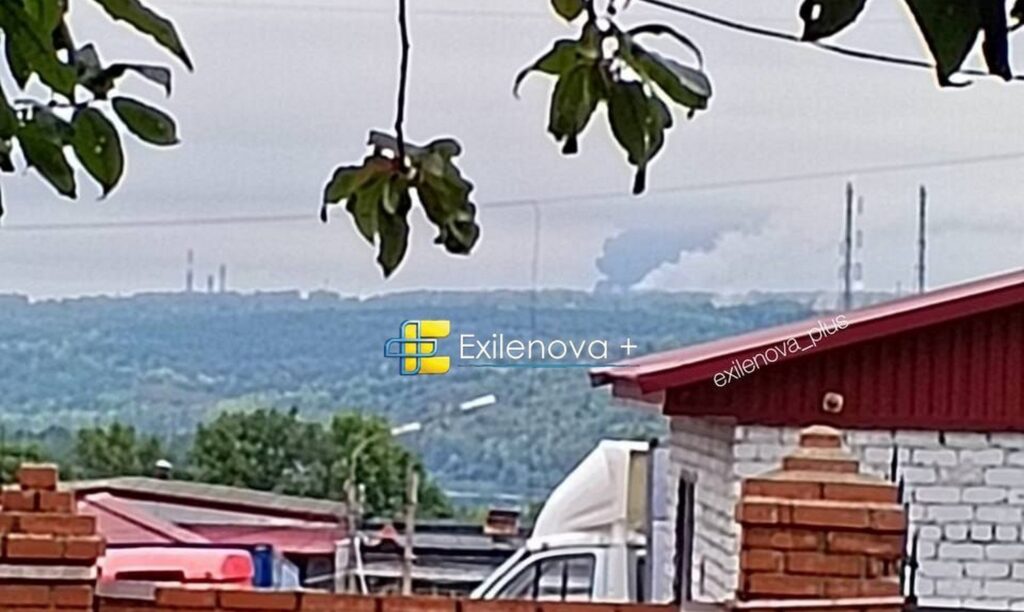
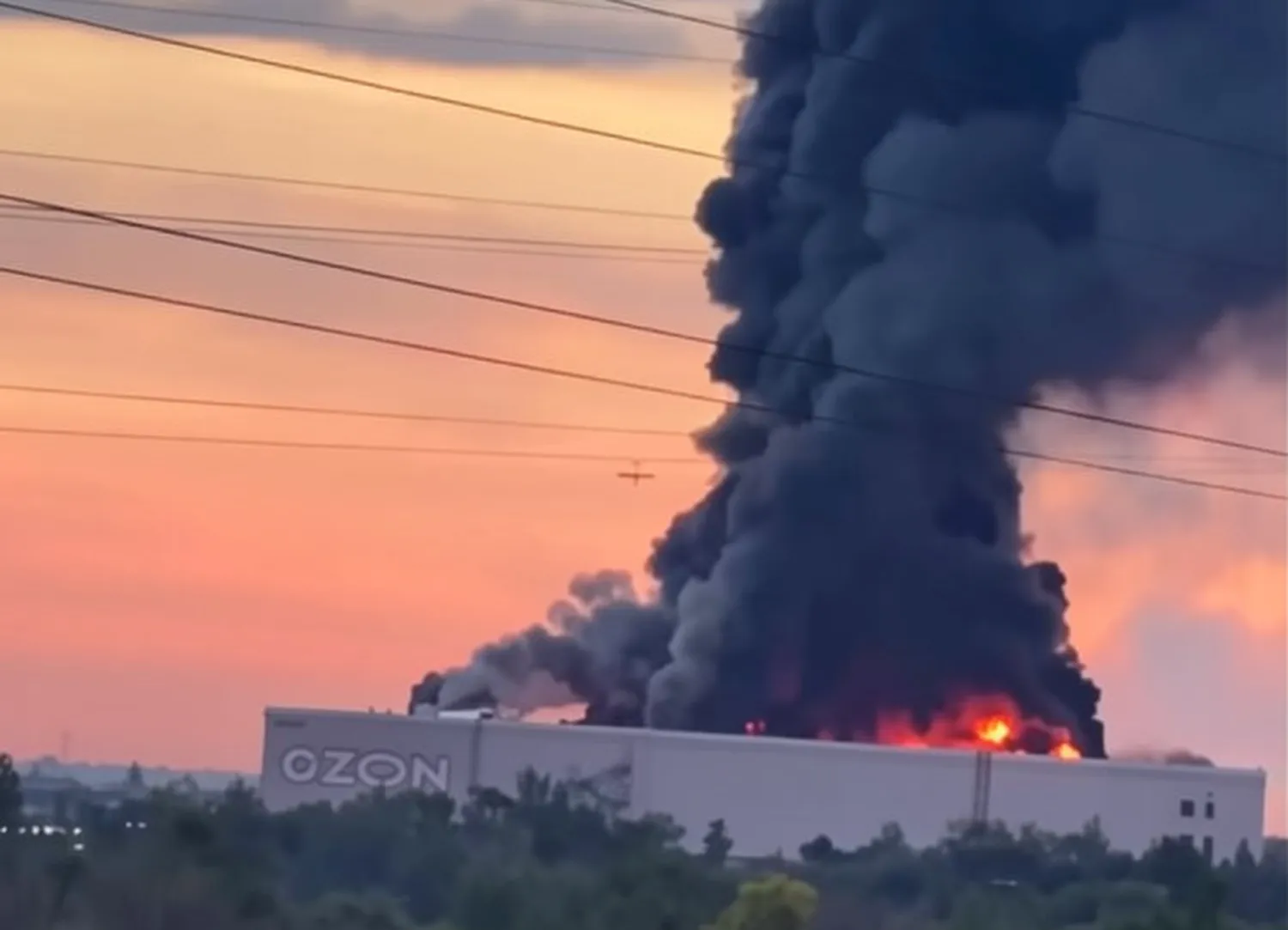
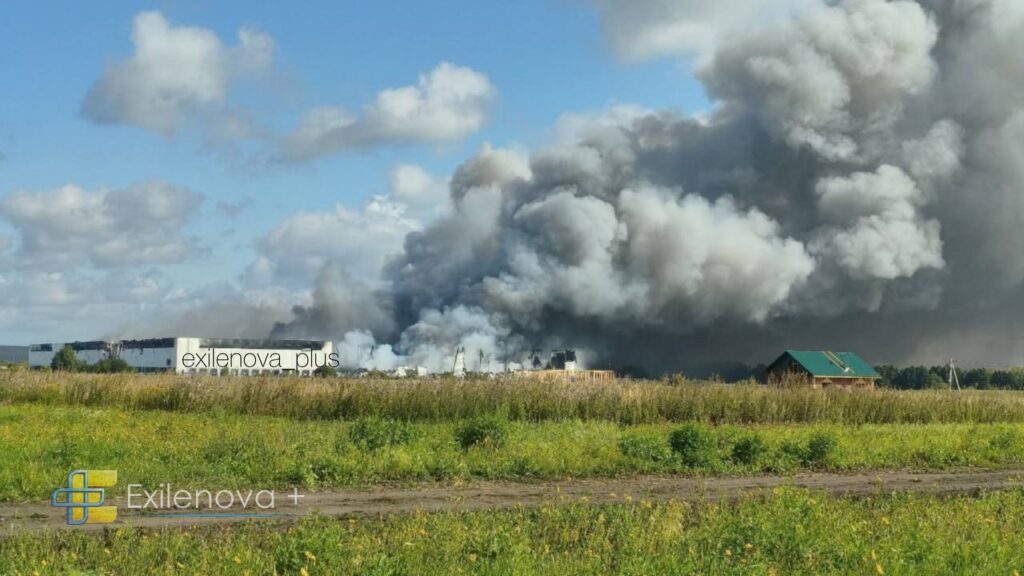
Ukrainian drones attacked two Ozon logistics centers overnight on 27 August, one in Ufa and one in Orenburg Oblast, Russia's second-largest online store said. Staff were evacuated at both sites, and preliminary information indicated no casualties. Video published by Ukrainian monitoring channel Exilenova+ shows a drone reaching the Bashkortostan warehouse and exploding.
Ukraine's deep-strike campaign has spread across Russian refineries and fuel depots, chemical plants,
Ukrainian drones attacked two Ozon logistics centers overnight on 27 August, one in Ufa and one in Orenburg Oblast, Russia's second-largest online store said. Staff were evacuated at both sites, and preliminary information indicated no casualties. Video published by Ukrainian monitoring channel Exilenova+ shows a drone reaching the Bashkortostan warehouse and exploding.
Ukraine's deep-strike campaign has spread across Russian refineries and fuel depots, chemical plants, arms factories, railways, and the warehouses that move consumer goods. Together the strikes take refining capacity, storage space, and freight throughput out of service repeatedly, and sanctions leave Russia fewer parts and crews to restore them with.
The strike on camera
Exilenova+ reported in the morning that an Ozon warehouse was burning after impacts in Blagoveshchensk, a town north of Ufa. The Bashkortostan capital lies roughly 1,300 kilometers from the war zone in Ukraine. Around midday the channel published eyewitness video of what it called the moment of a drone attack on the site, and said the warehouse had not caught fire. The footage shows a drone reaching the site and detonating there.
Drone hit another Russian warehouse
Eyewitness video from Blagoveshchensk in Bashkortostan shows the moment a Ukrainian drone reached Ozon's fulfillment center — the largest logistics complex the online retailer runs in the Volga area — and detonated. The channel that published… pic.twitter.com/oHUgjRz0v0
Earlier, the channel reported that residents of Sterlitamak, Bashkortostan's second-largest city, about 120 kilometers from Ufa, had written about explosions, with nothing then known about impacts. Astra later placed smoke over what it said was probably the Bashkir Soda Company works there.
Ozon said the Orenburg site—about 1,200 kilometers from the war zone—has resumed work. The one it placed in Ufa sustained what it called minor damage but remains closed, because the grounds need a thorough inspection. It is not accepting deliveries.
Russian news Telegram channel Astra identified the damaged facility from the eyewitness footage as Ozon's UFA_RFC fulfillment center in Blagoveshchensk. When it opened in late 2024 it was billed as the largest Ozon logistics complex in Russia's Volga federal district, with a total area of 93,000 square meters.
Smoke over the Ufa refineries
Astra also traced smoke in eyewitness footage to the Bashneft-Ufaneftekhim refinery in Ufa. The plant is one of Rosneft's leading refineries and a dual-use site: it supplies specialized fuel to Russia's armed forces and petrochemical feedstock for defense-grade materials. It burned after a strike on 1 August.
Bashneft runs three refineries side by side in Ufa's northern industrial zone—Ufaneftekhim, Novoil, and UNPZ—forming one of Russia's largest refining complexes, with a combined capacity of up to 23.5 million tons of feedstock a year.
Explore further
Ukrainian drones hit warehouse belonging to Russian online retailer Ozon for the first time
What officials said, and didn't
Bashkortostan's authorities did not report the attack. Orenburg Oblast governor Yevgeny Solntsev mentioned drone danger in his region but gave no account of consequences. Ufa closed its airport.
Russia's Defense Ministry claimed air defenses destroyed 267 Ukrainian fixed-wing drones overnight across Russian regions, Bashkortostan among them.
The campaign so far
Ukraine's warehouse campaign began with Wildberries, Russia's largest online marketplace, which lost eight warehouses and roughly 860,000 square meters of storage in July alone. It reached Ozon for the first time on 22 August at Chapayevsk in Samara Oblast, where more than 500 employees evacuated and people were hurt. Four more Ozon hubs were hit across southern Russia two nights later.
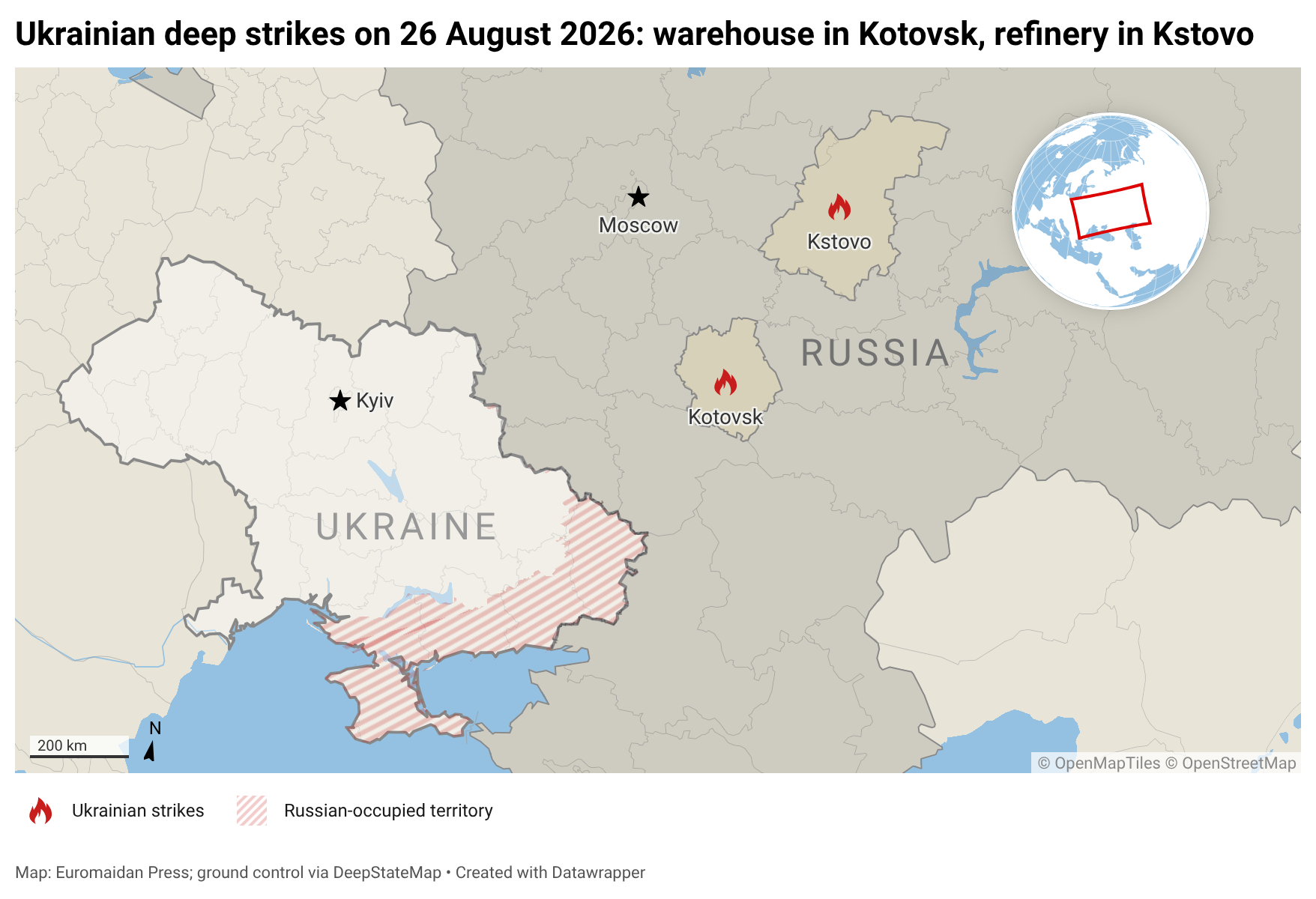
Ukrainian drones struck the Wildberries logistics hub in the Russian town of Kotovsk for the second time in six weeks, Ukrainian monitoring channel Exilenova+ reported. A fire took hold across most of the 108,000-square-meter complex, and by late morning, the regional governor said the warehouse was destroyed. Wildberries, Russia's biggest online store, had restarted the site after a July strike. The facility is located in Tambov Oblast, about 420 km from the war zone i
Ukrainian drones struck the Wildberries logistics hub in the Russian town of Kotovsk for the second time in six weeks, Ukrainian monitoring channel Exilenova+ reported. A fire took hold across most of the 108,000-square-meter complex, and by late morning, the regional governor said the warehouse was destroyed. Wildberries, Russia's biggest online store, had restarted the site after a July strike. The facility is located in Tambov Oblast, about 420 km from the war zone in Ukraine.
Since mid-July, Kyiv's long-range drones have been burning through the depots of Wildberries and Ozon, Russia's two biggest online stores, alongside the refineries and fuel depots that remain on the target list. Marketplace hubs are wide, flat, and largely uncovered by air defense, and the space takes months to replace, so the campaign now reaches the part of the Russian economy that touches every household.
The second fire at the same hub
Exilenova+ reported the strike at 01:24, saying Ukraine's Defense Forces had hit the site again and that a fire was burning. Later, the channel continued to share photos and videos from Kotovsk. The Russian news Telegram channel Astra reported that local residents described the warehouse as attacked and alight. Witnesses counted at least 10 explosions in 40 minutes. Wildberries said a drone attack damaged its logistics facility in the oblast and started a fire, and that the site had stopped accepting new deliveries.
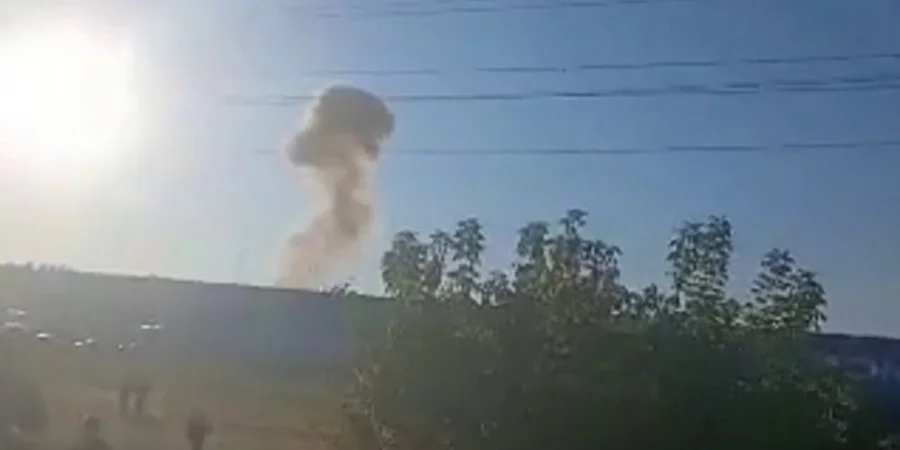
Smoke rising from the Wildberries logistics center after the drone strike in Kotovsk, Tambov Oblast, Russia, 26 August 2026. Photo: Supernova+
What the governor said, and what changed by morning
Tambov Oblast governor Yevgeny Pervyshov confirmed the attack and put the burning area at more than 100,000 square meters. He claimed air defenses and mobile fire groups of a regional volunteer reserve unit destroyed 16 drones. He initially reported one Wildberries employee hurt, with concussion from a blast wave, and said a downed Ukrainian drone set a house on fire in a dacha settlement.
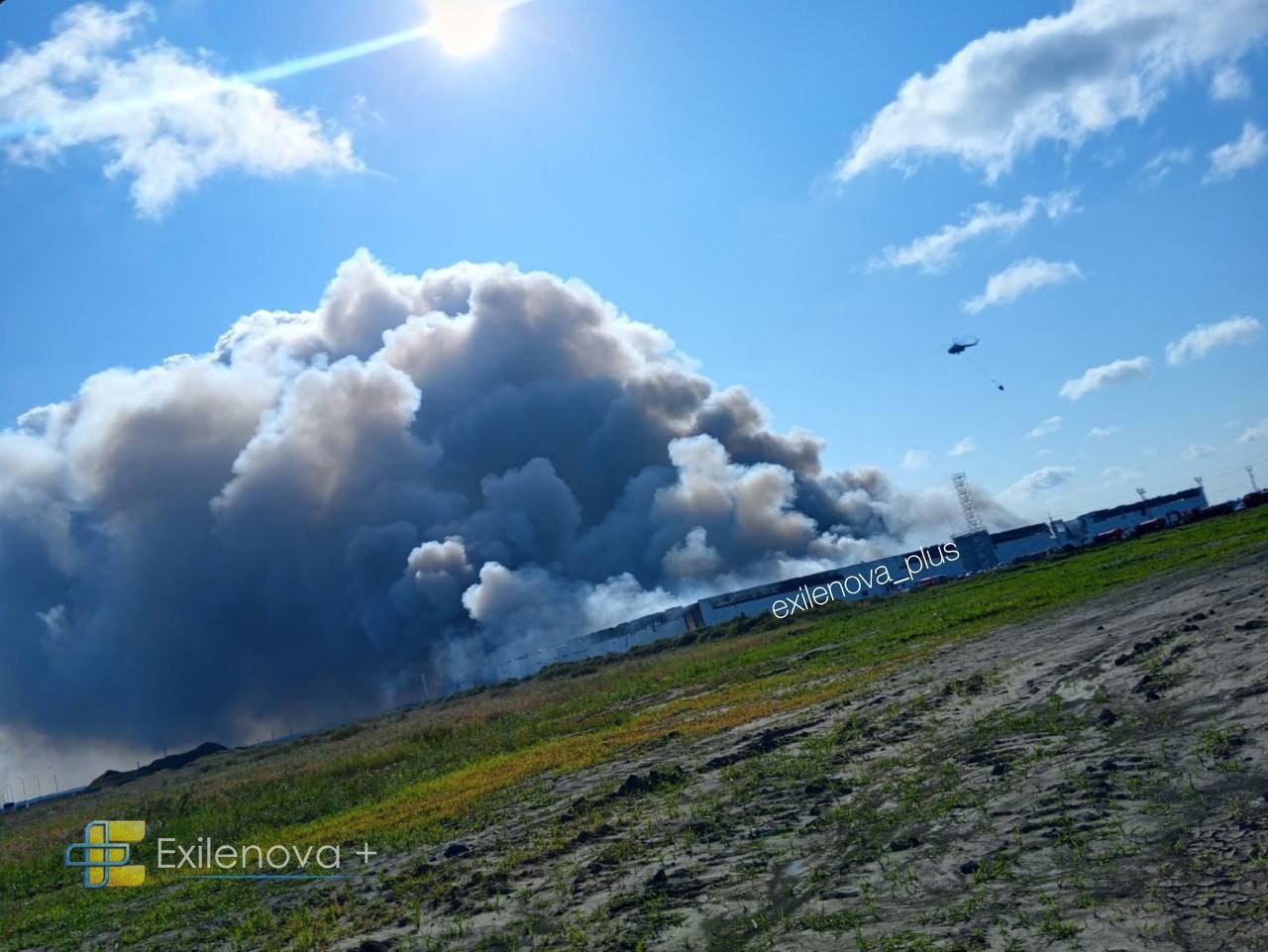
A helicopter carrying a water bucket above the burning Wildberries logistics center in Kotovsk, Tambov Oblast, Russia, 26 August 2026. Photo: Exilenova+
By 11:17, Pervyshov's account had changed. Fire had destroyed the warehouse completely, and two people were injured, he said. Three strike drones had reached the building, the official stated. He closed by again urging men in the oblast to join the defense of its skies. Earlier, Kotovsk's mayor asked residents not to leave their homes for two days, citing the risk of carbon monoxide poisoning from the burning warehouse.
Russia's Defense Ministry separately claimed it destroyed 426 drones overnight across the country.
Last night, Ukrainian drones struck another warehouse in Russia
The Wildberries hub in Kotovsk, Tambov Oblast, caught fire and the company announced a "temporary" suspension of its operations.
Ukrainian President Volodymyr Zelenskyy said Ukrainian forces hit 16 targets in Russia over the past day, naming oil facilities — "the Russian oil wallet that finances the war" — along with airfields, a missile unit, a military plant, and Russian logistics. War has to return to where it came from, he said.
Almost no storage left in central Russia
The Kotovsk hub opened in 2025 as one of Wildberries' key logistics sites for central Russia, built to hold up to 54 million items at full capacity. Drones first hit it overnight on 18 July, when seven warehouse staff died and, by the governor's count, 25 more were hurt. The company suspended operations then, too.
By the end of July, the retailer had already lost more than a million square meters of warehouse space, Exile+ calculated, which leaves it physically almost no free capacity in the center of the country.
From one marketplace to the next
Ukrainian drones destroyed eight Wildberries warehouses in July alone, roughly 860,000 square meters or about 15.4% of the company's storage. The campaign widened to Ozon, Russia's second-largest online store, with its biggest Russian complex hit in Orenburg on 23 August, and three southern hubs struck the next night.
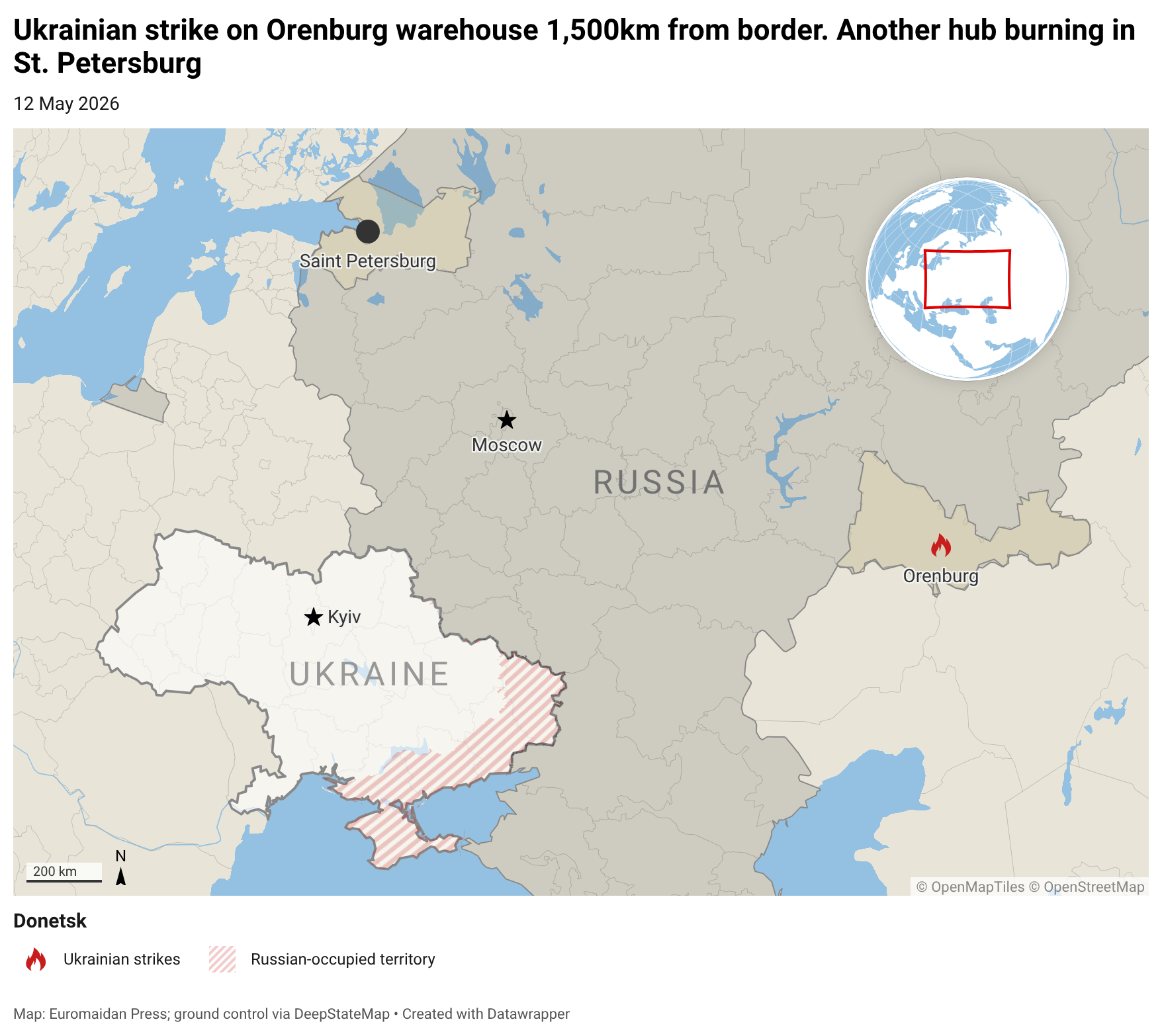
Ukrainian drones struck a logistics complex belonging to Russian online retailer Ozon in Orenburg on 23 August, the second Ozon warehouse hit in two days, monitoring Telegram channels reported. The site sits about 1,200 km from the war zone, near Russia's border with Kazakhstan. Hours earlier, a large fire tore through a separate warehouse outside St. Petersburg, roughly 900 km north of Ukraine, though local authorities declared no drone or missile threat.
Kyiv's long-r
Ukrainian drones struck a logistics complex belonging to Russian online retailer Ozon in Orenburg on 23 August, the second Ozon warehouse hit in two days, monitoring Telegram channels reported. The site sits about 1,200 km from the war zone, near Russia's border with Kazakhstan. Hours earlier, a large fire tore through a separate warehouse outside St. Petersburg, roughly 900 km north of Ukraine, though local authorities declared no drone or missile threat.
Kyiv's long-range drone program has pushed its reach ever deeper into the Russian rear, turning fuel depots, factories, and delivery hubs far behind the lines into routine targets, and retail networks have drawn special attention because their warehouses double as arteries for the wider war economy. Each strike this far inside Russia forces Moscow to stretch air defenses across a country too vast to shield everywhere at once. Disrupted e-commerce warehouses also add to pressure already showing at the pumps, where fuel shortages have brought rationing to major cities.
Drones hit Russia's biggest Ozon warehouse
Ukrainian monitoring channel Exilenova+ published video of the strike moment, after which a fire took hold on the site. Independent Russian outlet Astra analyzed eyewitness footage showing an emergency vehicle racing toward the depot. The complex spans more than 200,000 m² and was designed to hold over 31 million items, ranking among Ozon's biggest in Russia.
Smoke rising over the Ozon logistics complex in Orenburg, Russia, 23 August 2026. Photo: Exilenova+
The warehouse stands inside the city's special economic zone, a tax-favored industrial park on the eastern edge of European Russia. The first phase opened in August 2024, and a second building followed in 2025.
Orenburg mayor Albert Yumadilov claimed several drones were downed over the special economic zone and that debris fell on the Ozon complex, starting a fire that crews quickly put out with no one hurt.
Ozon confirmed the strike, saying it evacuated more than 300 workers, pulled its goods from the marketplace and stopped taking new deliveries while the site sat idle.
A second fire near St. Petersburg, with no air-raid alert
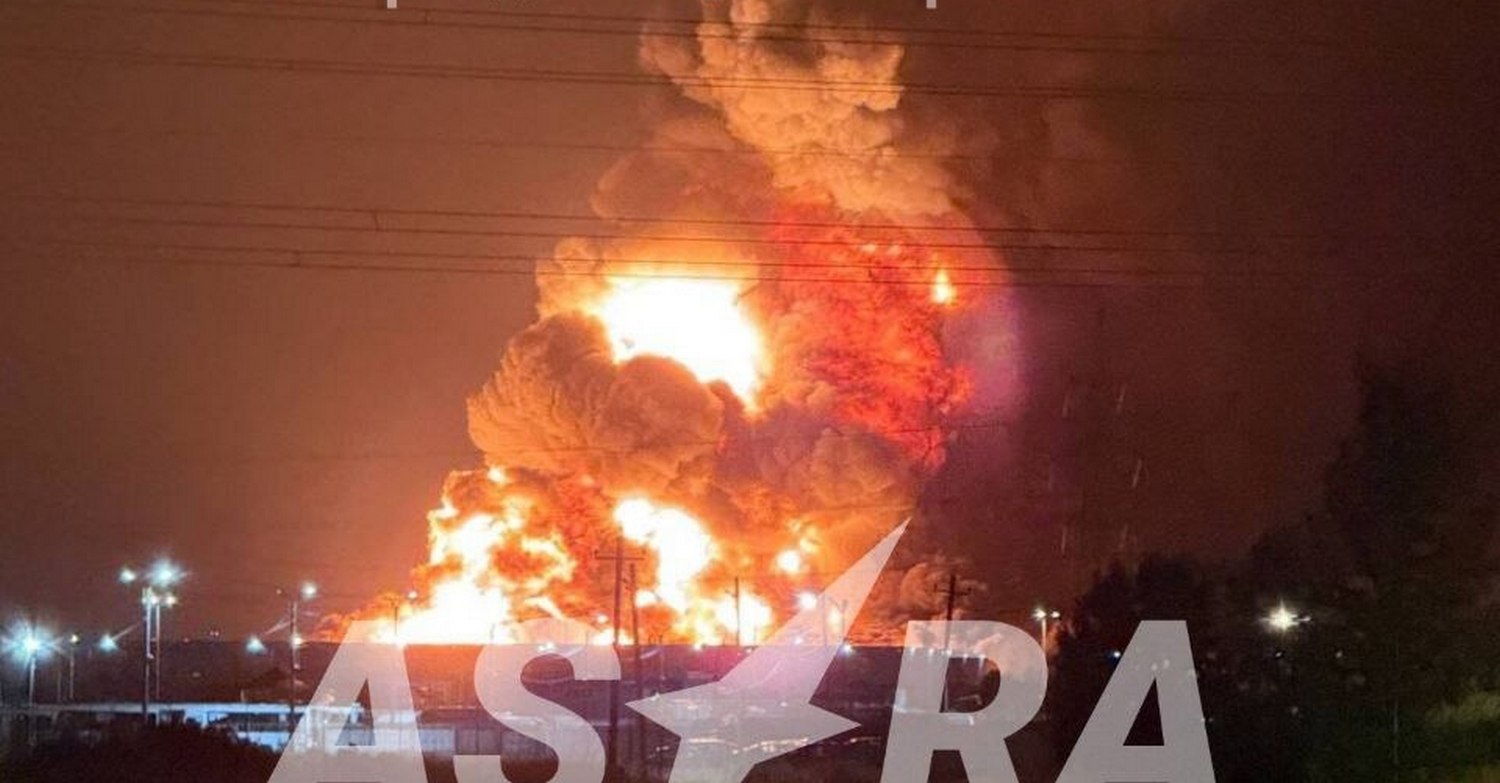
Overnight, a large blaze hit a warehouse in the Kolpino area south of St. Petersburg. Astra established that the warehouse stood about 350 m from an Ozon site, and witnesses said they heard no drones or air defense. Ukrainian Telegram channel Exile+ identified the burning facility as a storage warehouse run by Logistera.
A large fire at a warehouse complex in the Kolpino area of St. Petersburg, Russia, 23 August 2026. Photo: Astra
Part of a widening campaign on Russian marketplace logistics
The Orenburg hit followed the first-ever Ozon strike a day earlier, at a warehouse in Chapaevsk, Samara Oblast. Before turning to Ozon, Ukrainian drones had struck more than 10 warehouses belonging to the larger Russian marketplace Wildberries. Such marketplace hubs move not only consumer goods but dual-use items like electronics and drone components that can reach Russia's military.

 Connexion



 Exilenova+