Vue normale

  • ✇Euromaidan Press
  • Ukraine’s secret counteroffensive is more successful than we thought
    Ukraine's quiet counteroffensive north of Lyman has produced dramatic results since April Now two Russian regiments are in danger of encirclement Escape is still likely for the Russians, but their retreat buys time for the Ukrainian defenders of Lyman and nearby Sloviansk Ukraine secret eastern counteroffensive seems to have been even more successful than some observers reported. It's possible that, in the sector just north of the town of Lyman in eastern Ukra
     

Ukraine’s secret counteroffensive is more successful than we thought

Par : David Axe
26 août 2026 à 17:15

  • Ukraine's quiet counteroffensive north of Lyman has produced dramatic results since April
  • Now two Russian regiments are in danger of encirclement
  • Escape is still likely for the Russians, but their retreat buys time for the Ukrainian defenders of Lyman and nearby Sloviansk

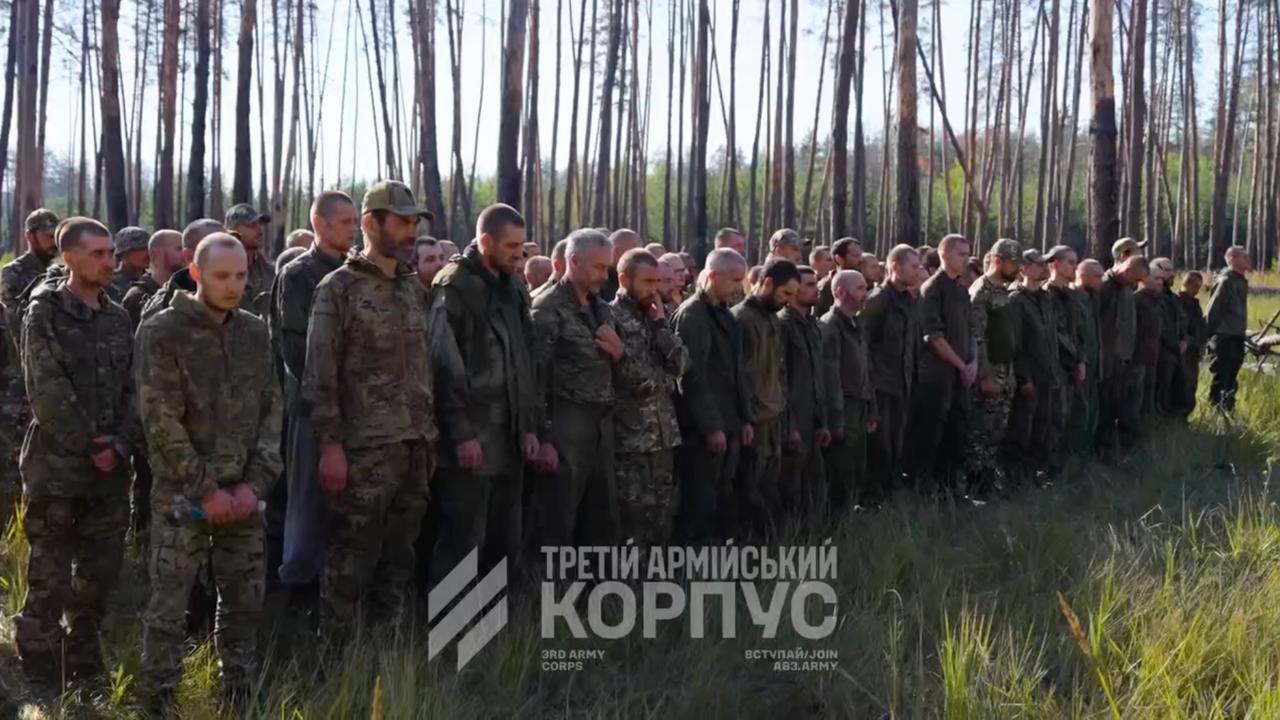
Ukraine secret eastern counteroffensive seems to have been even more successful than some observers reported. It's possible that, in the sector just north of the town of Lyman in eastern Ukraine's Donetsk Oblast, the Ukrainian 3rd Army Corps is just a few kilometers short of encircling two Russian regiments.

That doesn't mean the Russian units can't escape. After all, there isn't a contiguous line of Ukrainian forces—nor a contiguous line of Russian forces for that matter—anywhere along the 1,200-km disputed gray zone that threads across eastern and southern Ukraine.

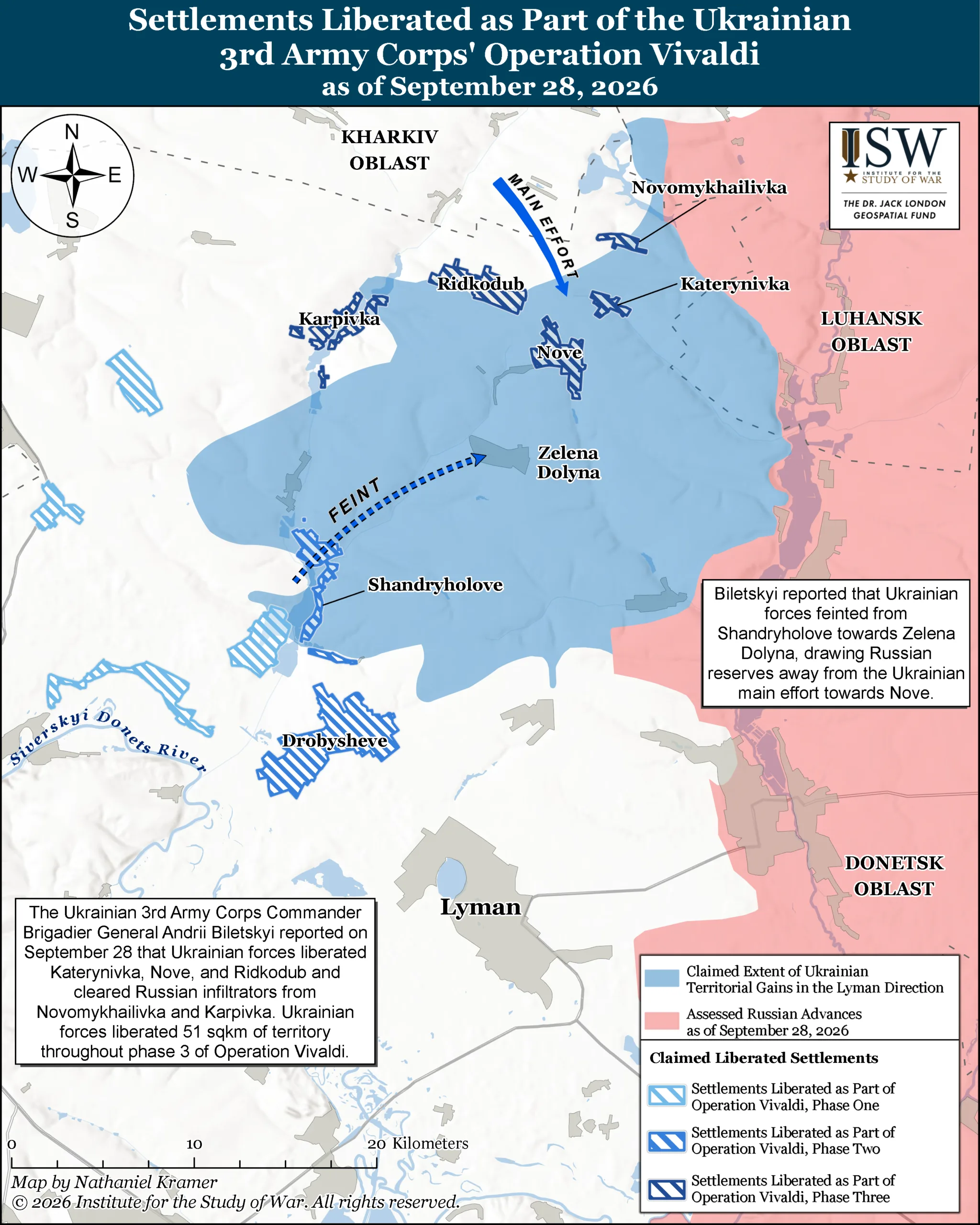
Situation near Nove as of 23 August
Situation near Nove as of 23 August. Map: Euromaidan Press

But the closing pincer around elements of the Russian 2nd and 144th Motor Rifle Divisions could strain the Russians' logistics and compel the Russians to reconsolidate in order to preserve their combat power—by retreating east. That would take a lot of pressure off Lyman and, by extension, also take a lot of pressure off Sloviansk and Kramatorsk, the last two big free cities in Donetsk.

Lyman, which lies 15 km northeast of Sloviansk—the northernmost of the free cities—is the main obstacle between at least six Russian regiments and Sloviansk. The Russians have been inching toward Sloviansk and Kramatorsk from several directions for months now, racing against the coming winter to position forces for a possible siege of the twin cities next year. Winter in Ukraine punishes any attacker by depriving them of the leafy tree canopy that can conceal infiltrating troops during warmer months.

According to the most recent map from analyst and mapper Thorkill, one of the more reliable observers of unit-level action in Ukraine, the Ukrainian 3rd Assault Brigade is just a few kilometers away from linking up with the 60th Mechanized Brigade in or around the village of Kolodyazi.

Sytuacja w rejonie Nowego (Łyman), część II.

Jednym z odcinków frontu w Donbasie, na którym wojska ukraińskie prowadzą obecnie działania zaczepne, jest rejon Kateryniwka - Nowe – Zełena Dolyna, na północ od Łymanu. Od połowy maja 2026 r. pozycje rosyjskiej 144 Dywizji Strzelców… pic.twitter.com/AIvInwHGX3

— Thorkill (@Thorkill65) August 25, 2026

Galloping advance

If true, that means the 3rd Assault Brigade and adjacent units from the 3rd Army Corps have carried out one of the more successful Ukrainian counteroffensives in memory. In April they first exploited gaps in Russian defenses north of the village of Nove. In May and June they advanced toward the village. In July they captured it.

After that, the attacking Ukrainians kept pushing south into the right flank of a 10-km-by-10-km salient that advancing Russian regiments created as they maneuvered around Lyman from the north, aiming to surround the town instead of directly assaulting it on their way toward Sloviansk.

Leaving their flank exposed, the Russians trying to encircle Lyman found themselves at risk of encirclement, instead. If the 3rd Assault Brigade or 60th Mechanized Brigade—together possessing thousands of troops, on paper—can march through Kolodyazi, they will have closed a ring of loose Ukrainian control around at least two Russian regiments, also with potentially thousands of troops.

Emphasis on loose control. Again, there aren't enough Ukrainian forces on the ground north of Lyman to prevent any "encircled" Russians from retreating back to the east. But that retreat would represent a major victory for the Ukrainian defenders north and east of Sloviansk. "The fall of this salient [north of Lyman] would significantly delay the fall of Lyman," analyst and mapper AMK Mapping predicted.

Situational update on the Lyman direction:

The Ukrainian counterattacks north of Lyman are now entering their fourth month, as they come closer and closer to cutting off the Russian salient. Two pincers have been formed, which are both dangerously close to cutting the Russians… pic.twitter.com/mu2kZ4S3Jv

— AMK Mapping 🇳🇿 (@AMK_Mapping_) August 26, 2026

No one expects the Russians to halt their offensive toward Sloviansk and Kramatorsk. But in potentially taking two steps forward and one step back in their northerly march on the free cities, the Russians sacrifice time. Time the Ukrainians can use to stiffen their defenses in Sloviansk and Kramatorsk and evacuate more of the tens of thousands of civilians who remain in the cities despite the constant danger from Russian drones and bombs.

The possible extent of the Ukrainian gains north of Lyman—a 10-km march since April—is impressive given Russia's overall advantage in manpower and firepower in the east. Equally impressive is the operational security, or OPSEC, that cloaked the offensive until now. Sure, there were a few videos of action around Nove that hinted at a major Ukrainian action.

But the units involved exercised surprising discipline, and prevented too much information from leaking. "Someone in the 3rd Corps responsible for [OPSEC] is actually trying to do their job diligently and has quite effectively cut off information," Thorkill noted. The secrecy may have facilitated the Ukrainian advance by delaying any sense of panic among the Russian commanders who are responsible for reinforcing the Lyman salient, but who also tend to ignore bad news as long as possible because they know it could reflect poorly on them.

News of the counteroffensive is now available for all to see, even if official Ukrainian sources have yet to confirm it. That may mean time is running out for the 3rd Army Corps to close its pincer before the Russians retreat or reinforce. AMK Mapping has already seen some evidence of a "partial withdrawal from the most vulnerable positions in the salient.

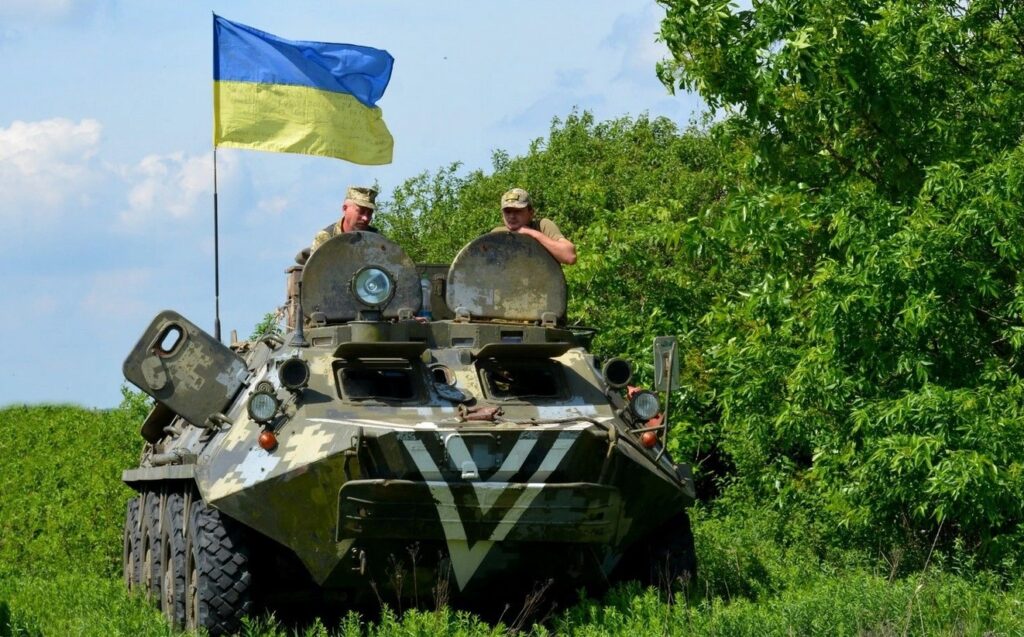
A 53rd Mechanized Brigade trooper.
Explore further

Can Ukrainian forces save Sloviansk and Kramatorsk?

  • ✇Euromaidan Press
  • Ukraine’s secret counteroffensive takes the pressure off Sloviansk
    Without much fanfare, Ukrainian forces have been counterattacking north of Lyman in eastern Ukraine's Donetsk Oblast The Ukrainian advance takes some pressure off the free city of Sloviansk, just 20 km to the southwest The problem is: the Russians are advancing toward Sloviansk and Kramatorsk from several other directions Russian forces are fighting against time to close a pincer around the last free cities in eastern Ukraine. The deadline: the coming winter,
     

Ukraine’s secret counteroffensive takes the pressure off Sloviansk

Par : David Axe
25 août 2026 à 07:51

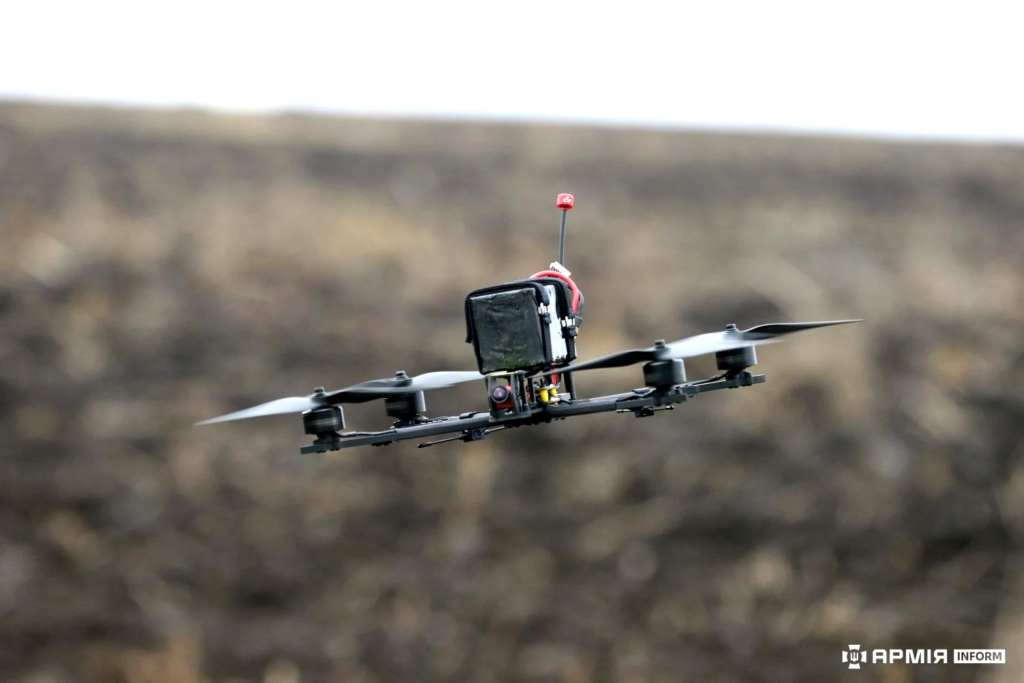
A Ukrainian soldier carries an FPV drone.

  • Without much fanfare, Ukrainian forces have been counterattacking north of Lyman in eastern Ukraine's Donetsk Oblast
  • The Ukrainian advance takes some pressure off the free city of Sloviansk, just 20 km to the southwest
  • The problem is: the Russians are advancing toward Sloviansk and Kramatorsk from several other directions

Russian forces are fighting against time to close a pincer around the last free cities in eastern Ukraine. The deadline: the coming winter, which will strip the leaves from the trees and leave any attacking force exposed to overhead surveillance and attack.

But in one key sector, Ukrainian forces are spoiling the coordinated Russian operation to partially surround Sloviansk and neighboring Kramatorsk. With admirable operational security, or OPSEC, a clutch of Ukrainian brigades under the 3rd Army Corps hasn't just blunted the advance of the Russian Center Group of Forces—it has pushed the Russians back.

This Ukrainian counterattack along the axis through the town of Lyman, ongoing since May, has largely escaped widespread notice. Yes, there is some scant video evidence of Ukrainian attacks. And yes, a few analysts have adjusted their maps to account for apparent Ukrainian advances, especially in the direction of Nove, a Russian-occupied village 15 km north of Lyman, which itself lies 15 km north of Sloviansk.

Ukrainian 🇺🇦 forces have been conducting for weeks two unnoticed counter-attacks in two directions of the frontline.

With barely any geolocation, the Ukrainians kept a good level of OPSEC and the russians have been reluctant to publish videos from these areas.

In the Ivanivka… pic.twitter.com/hNJy4YhkxG

— Clément Molin (@clement_molin) June 10, 2026

But for the most part, Ukrainian and Russian sources have avoided talking about Lyman. "The Ukrainians kept a good level of OPSEC and the Russians have been reluctant to publish videos from these areas" depicting their retreats, analyst and mapper Clément Molin noted in June, just a few weeks after the Ukrainians attacked toward Nove.

Molin, for one, expects the OPSEC to lift in the coming days. "By the end of the month, we should have an official update on the good results of a Ukrainian offensive that has largely remained secret," he wrote on Monday.

Situation near Nove as of 23 August
Situation near Nove as of 23 August. Map: Euromaidan Press

April offensive

The Ukrainians' limited counteroffensive around Lyman apparently kicked off on in mid-April. One of the first attacks that left any real evidence occurred on 22 May, when a small Ukrainian mechanized force—perhaps from the 60th or 66th Mechanized Brigade, the 77th Air Assault Brigade, or the Presidential Brigade—attacked in armored trucks and M-113, Stryker, and BTR-4 armored personnel carriers. Heavy bomber drones flew top cover.

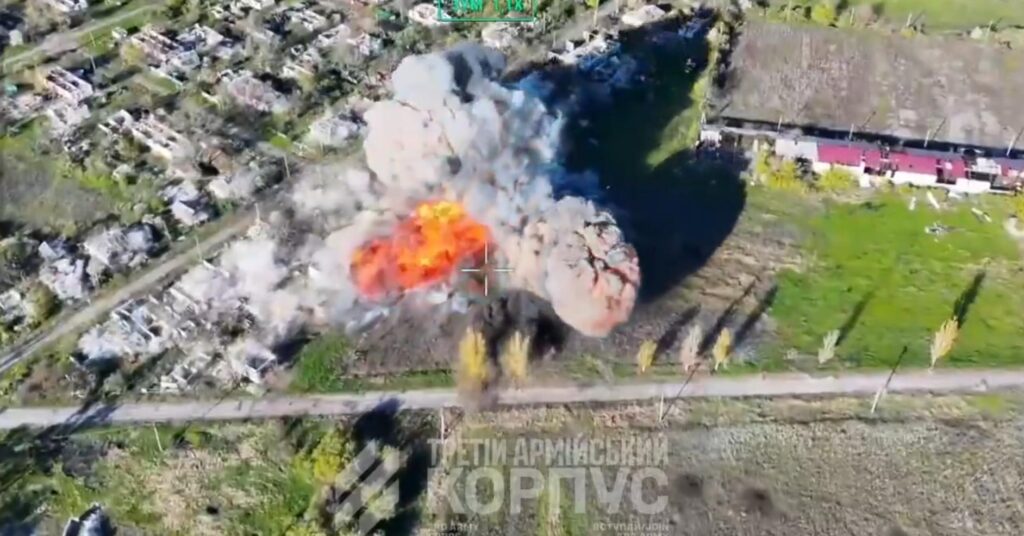
The Russian 144th Motor Rifle Division fought back with its own drones. Interceptor drones took aim at the bombers. First-person-view and heavy bomber drones blasted at least one BTR-4, hitting it before and after it dropped off its infantry passengers. Drones struck some of the disembarked Ukrainian infantry.

How many Ukrainian troops survived and entrenched in new positions on 22 May is unclear. Regardless, the Ukrainian 3rd Army Corps wasn't done with Nove. Attacks continued. And sometime after the 22 May assault on Nove, "the Ukrainians managed to consolidate their gains," Molin concluded after scrutinizing a few videos and some satellite imagery.

By early July, Ukrainian forces had succeeded in "operationally encircl[ing] the Russian forces defending the village of Nove," according to analyst and mapper Thorkill. "Fierce fighting is currently underway to expel the Russians from that locality," Thorkill reported at the time.

Sytuacja w rejonie Nowego (Łyman).

Jednym z odcinków frontu w Donbasie, na którym wojska ukraińskie prowadzą obecnie działania zaczepne, jest rejon wsi: Nowe – Zełena Dolyna, na północ od Łymanu. Od połowy maja 2026 r. pozycje rosyjskiej 144 Dywizji Strzelców Zmotoryzowanych… pic.twitter.com/2EJQgz4eps

— Thorkill (@Thorkill65) July 8, 2026

The aim of the Ukrainian counterattacks is obvious. The 3rd Army Corps intends to put pressure on the northern right flank of 10 km-by-10-km salient jutting into the battleground north of Lyman. The Russian 144th Motor Rifle Division has been pouring troops into the salient, clearly intending to surround and isolate Lyman instead of directly assaulting it—all in order to clear a path toward Sloviansk.

Salients are risky for both sides, however. The farther the Russians extend their Lyman salient, the more exposed they are on their flanks. The Ukrainians know this. And even if the 3rd Army Corps can't fully cut across the salient in order to surround the Russians inside of it, the corps can at least take advantage of the salient's exposed flanks.

Capturing Nove, on the very northern edge of the salient, could allow the Ukrainians to bring to bear more artillery and drones on the Russians south of Nove. The 3rd Army Corps doesn't have to fully encircle the Russian troops closest to Lyman in order to hammer them with withering firepower.

Soldiers of Ukraine's 79th Air Assault Brigade.
Explore further

Ukraine’s quiet counteroffensive took 745 square km. Russia’s dead Starlink is how

Just how successful the 3rd Army Corps has been in its local counteroffensive could become clearer very soon. That won't spell lasting relief for Sloviansk and Kramatorsk, however. Fighting against the clock as summer begins turning into fall and then winter, the Russians are slowly advancing toward the twin cities from several directions.

The siege of Kramatorsk and Sloviansk is coming. Perhaps not this year, but surely by 2027. To fully safeguard the twin cities, the Ukrainians would need to duplicate their success north of Lyman along several other directions.

That's a big ask of a Ukrainian force that's overall still outnumbered and outgunned.

  • ✇Euromaidan Press
  • Russia grinds up the eastern approach to Sloviansk after its northeastern push stalled
    Russian forces have gained ground on the eastern approaches to Sloviansk and continue to prioritize an eastern route toward the city, according to the Institute for the Study of War (ISW). Their earlier push from the northeast had bogged down, and Russia now aims to set up a future assault on one of the last major cities Ukraine still holds in Donetsk Oblast. A quick move on the city itself remains extremely unlikely, ISW said. Russia's 2026 summer campaign in the east
     

Russia grinds up the eastern approach to Sloviansk after its northeastern push stalled

24 août 2026 à 13:29

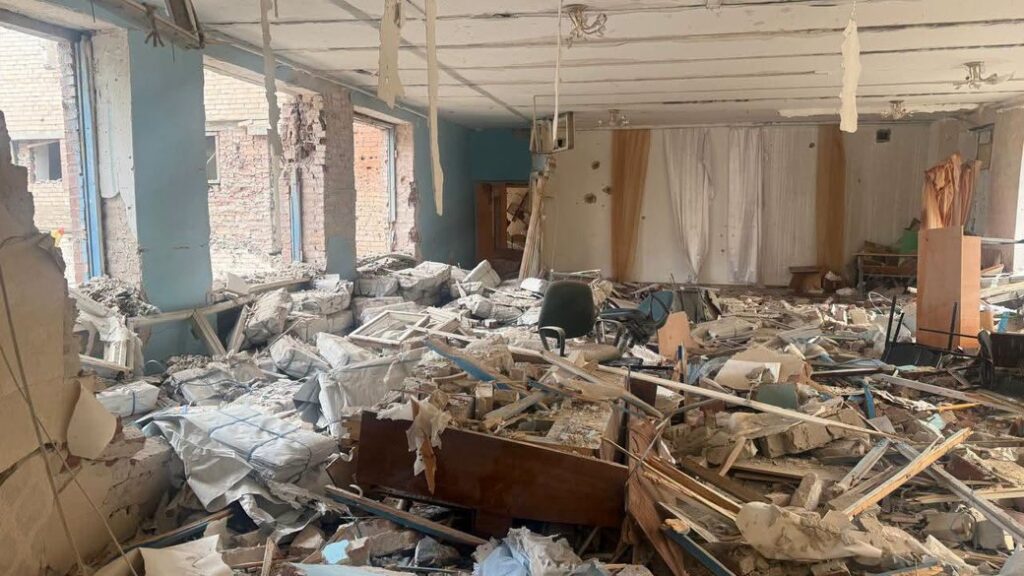
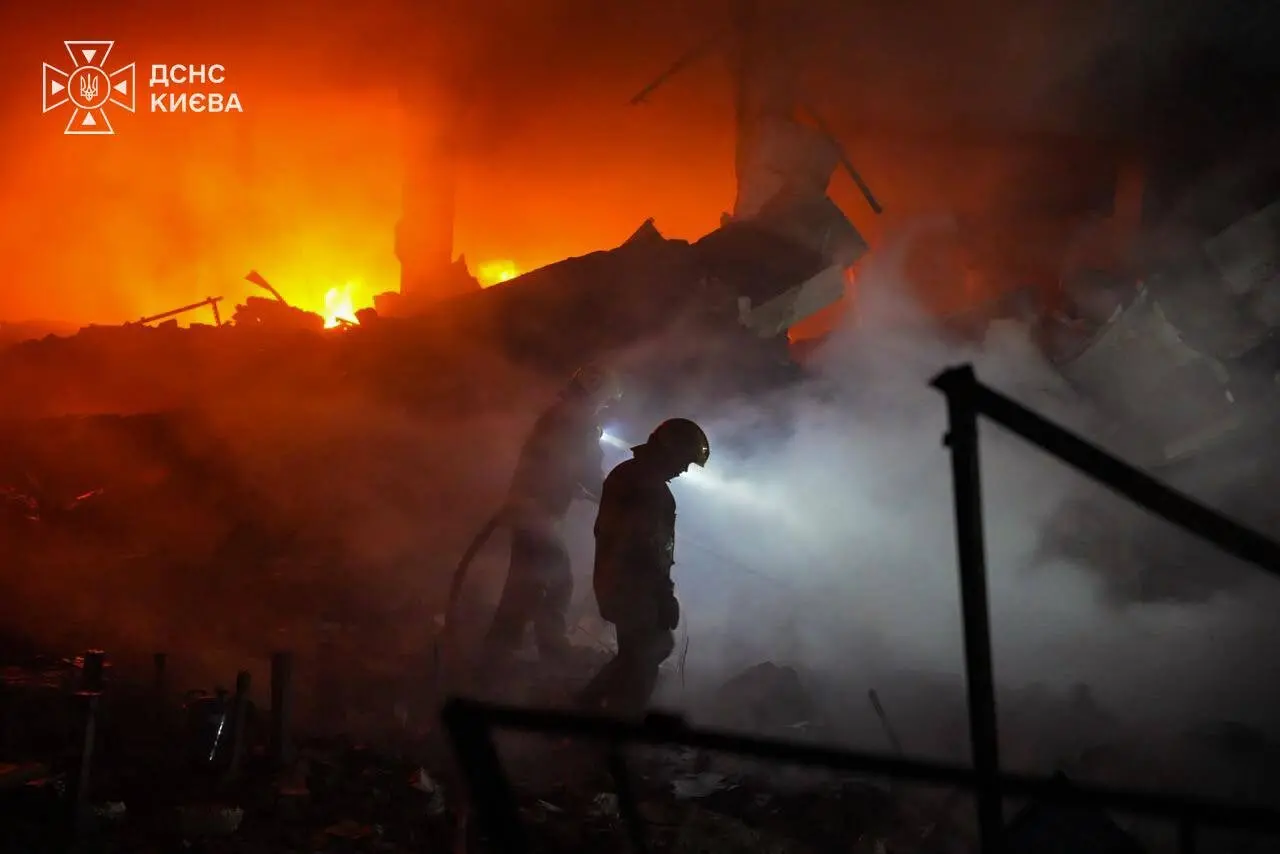
The aftermath of the destruction following one of the strikes in Sloviansk

Russian forces have gained ground on the eastern approaches to Sloviansk and continue to prioritize an eastern route toward the city, according to the Institute for the Study of War (ISW). Their earlier push from the northeast had bogged down, and Russia now aims to set up a future assault on one of the last major cities Ukraine still holds in Donetsk Oblast. A quick move on the city itself remains extremely unlikely, ISW said.

Russia's 2026 summer campaign in the east has advanced through field edges and small villages rather than the breakthroughs the Kremlin keeps promising, the grinding pattern that has defined the fighting across Donetsk Oblast for years.

Destroyed Kostiantynivka
Explore further

Kostiantynivka: Why one city in Donbas matters so much that Putin lies about having captured it

The eastern approach

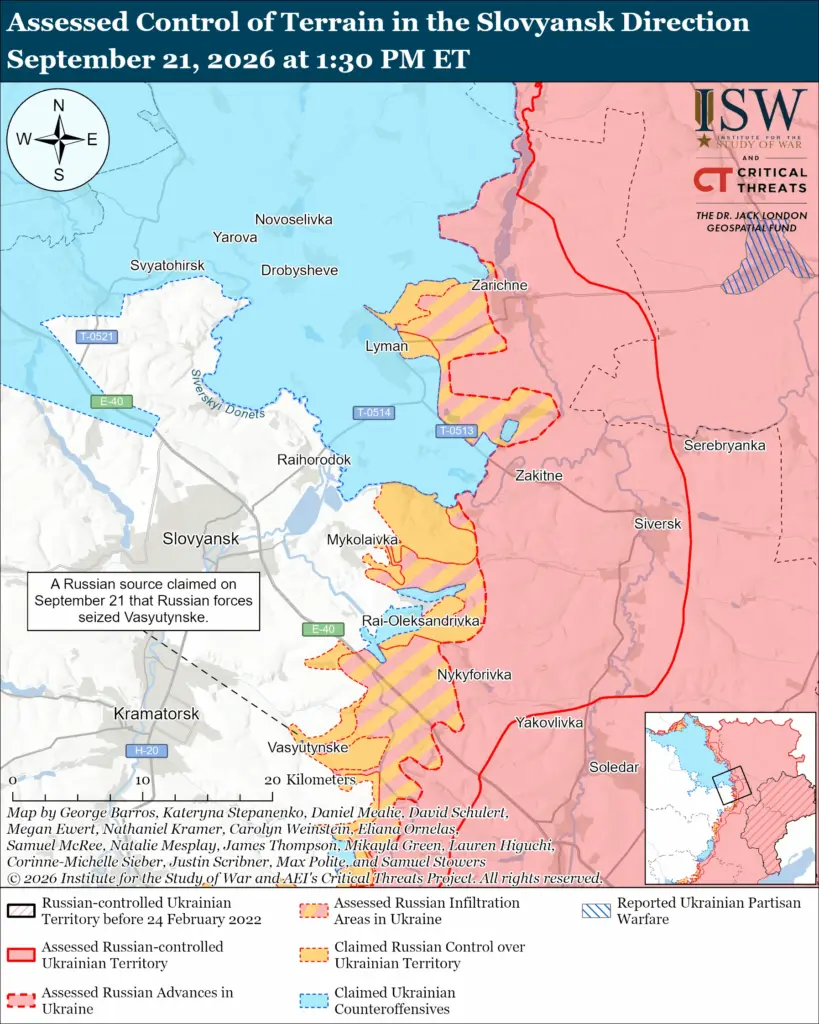
Ukrainian military observer Kostiantyn Mashovets reported that Russian forward units are advancing across several tactical areas at once in the Sloviansk direction. He said the command of Russia's 3rd Combined Arms Army rushes assault infantry forward right after each successful infiltration. Russian troops reached the southeastern edge of Pyskunivka, east of Sloviansk, from the east and northeast, moving off positions they had seized on the southern bank of the Siverskyi Donets, Mashovets said. Zakitne lies northeast of Pyskunivka and Kryva Luka southeast of it, and ISW read the advance as evidence Russia has consolidated positions in both.

They also infiltrated the southern and southeastern outskirts of Mykolaivka from western Rai-Oleksandrivka. ISW assessed that Russia is running a dual effort to connect its units near Kryva Luka with those at Rai-Oleksandrivka, so it can assault Mykolaivka from dominant terrain to the east and south at once. Mashovets added that other Russian groups slipped through three settlements along the E-40 Bakhmut-Sloviansk highway, trying to hold the western bank of the Siverskyi Donets-Donbas Canal and reach the river just east of the city.

ISW observed reports on 23 August that Ukrainian forces repelled a Russian infiltration attempt in Mykolaivka.

Oleksandr Borodin, spokesperson for Ukraine's 3rd Army Corps, said the Lyman direction falls in his corps' zone and that Russia's goal there is to half-encircle the Sloviansk-Kramatorsk agglomeration from the flank—first securing bridgeheads across the rivers, then cutting logistics. He called those plans unrealistic:

"We have quite serious defensive positions there and have been preparing for a long time. The capabilities they currently have to try to accomplish this task are insufficient even to come close to achieving such a goal."

Why Moscow switched directions

Russia prioritized attacking Sloviansk from the northeast through Lyman when it opened its spring-summer 2026 offensive, but that effort has largely stalled. The Siverskyi Donets River, which loops north and northeast of the city, together with a web of canals, handed Ukrainian defenders a natural moat. So Russian commanders now treat Mykolaivka as a key prize. Taking it would let them strike west toward Sloviansk from the east, skirting the water obstacles that blocked the northeastern route.

Soldiers of the 93rd Separate Mechanized Brigade’s Fox Crew prepare for a logistics run near the Kramatorsk–Kostiantynivka road in Donetsk Oblast. The unit, once focused on anti-tank warfare, now uses strike drones to disrupt Russian supply lines. Credit: 93rd Separate Mechanized Brigade / Fox Crew.
Explore further

Ukrainian intelligence units will not help: Analyst warns that once Russia breaks into Sloviansk and Kramatorsk, reinforcing them only delays inevitable

A slow road into the Fortress Belt

Sloviansk anchors the northern end of Ukraine's Fortress Belt, a chain of fortified cities that has blunted Russian advances in Donetsk Oblast since 2014. ISW cautioned that Russian forces are extremely unlikely to make fast gains west of Mykolaivka, since they still need to seize several more settlements first.

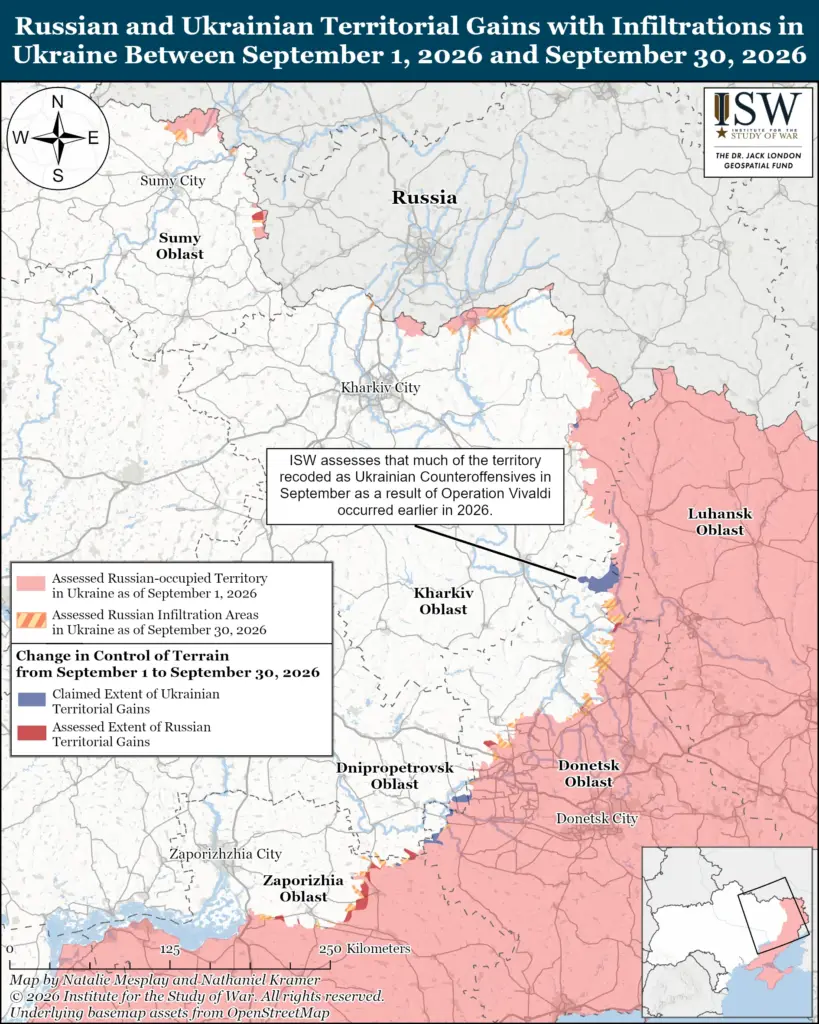
Ukraine's President Volodymyr Zelenskyy said on 23 August that Putin has ordered his army to seize all of Donetsk Oblast by 31 December. By ISW's count, it is the 15th such deadline since 2022, and Russia has missed every one that has come due.

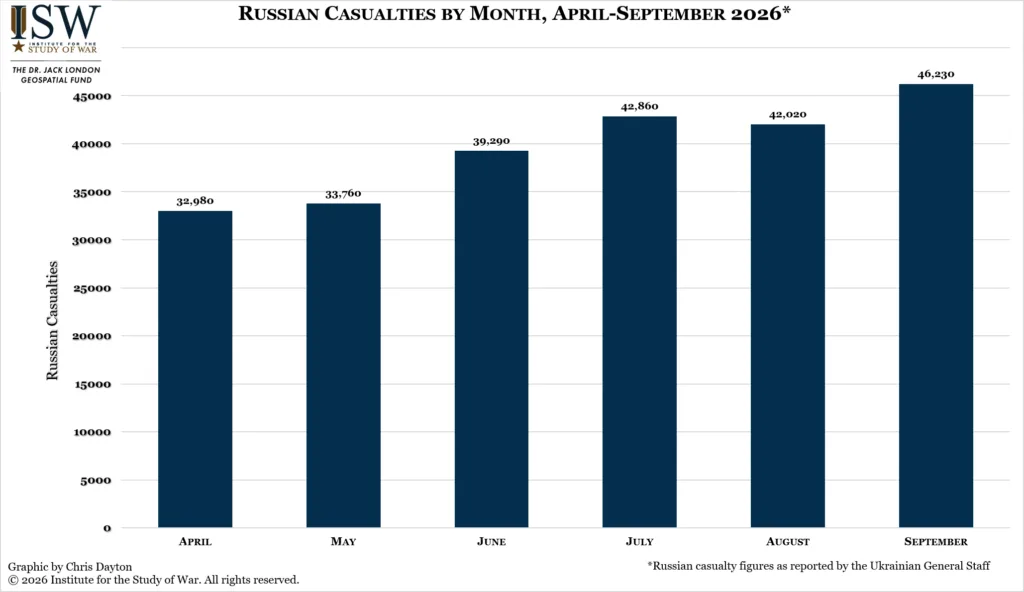
Zelenskyy put Russia's frontline casualties this year at around 267,000, including about 155,000 killed, and said 70% to 80% of them fall in the Kostiantynivka direction. Russia holds about 79.89% of Donetsk Oblast, by ISW's count, and Zelenskyy said the Kremlin is preparing to mobilize around 300,000 men after the 18–20 September State Duma elections, partly to reinforce Donetsk and Luhansk oblasts.

  • ✇Euromaidan Press
  • Russian groups keep trying—and failing—to reach Lyman, gateway to Donbas’ fortress belt, officer says
    Logistical problems are stopping Russian small infantry groups from reaching Lyman, a 53rd Brigade officer told Army TV on 21 August, ArmyInform reported. Russia is trying to capture Lyman and use it as a launchpad for an advance toward Sloviansk and Kramatorsk. Its forces have repeatedly tried to push into the city. They have reached its eastern edge but have not secured a foothold inside, according to Ukraine’s Joint Forces. Junior Lieutenant Volodymyr Hirniak, a c
     

Russian groups keep trying—and failing—to reach Lyman, gateway to Donbas’ fortress belt, officer says

21 août 2026 à 16:54

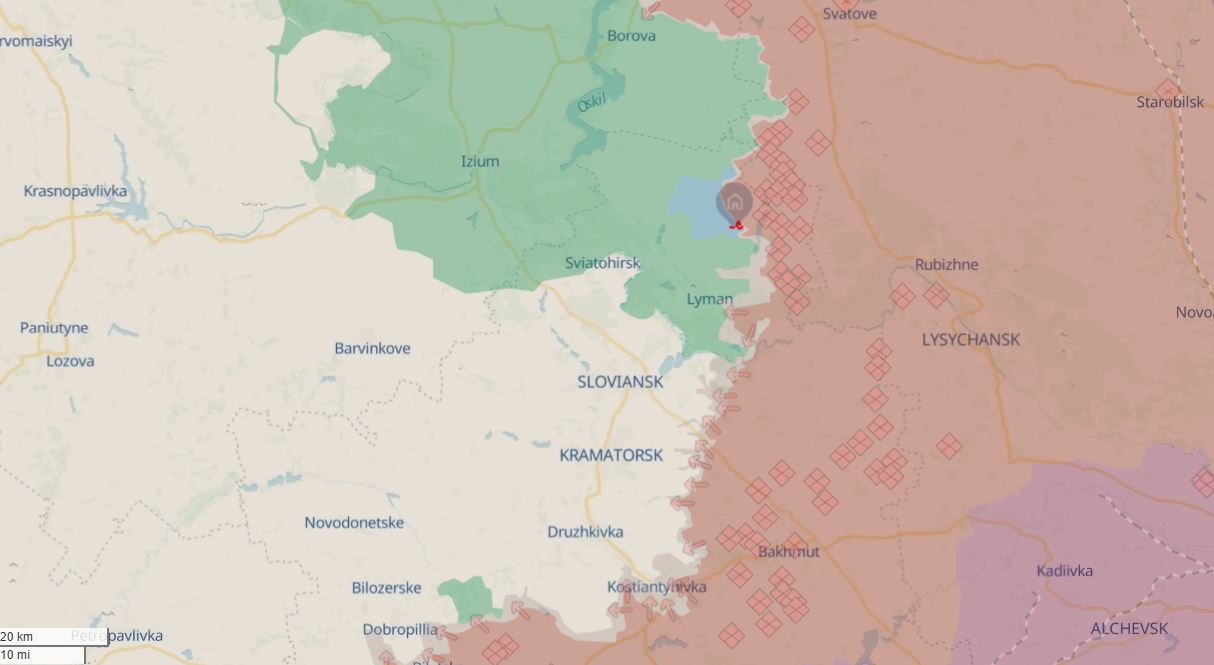
Map of the Lyman front in northern Donetsk Oblast, with arrows showing Russian advances westward toward Lyman, Sloviansk, and Kramatorsk.

Logistical problems are stopping Russian small infantry groups from reaching Lyman, a 53rd Brigade officer told Army TV on 21 August, ArmyInform reported.

Russia is trying to capture Lyman and use it as a launchpad for an advance toward Sloviansk and Kramatorsk. Its forces have repeatedly tried to push into the city. They have reached its eastern edge but have not secured a foothold inside, according to Ukraine’s Joint Forces.

Junior Lieutenant Volodymyr Hirniak, a communications officer with Ukraine’s 53rd Separate Mechanized Brigade, said the situation in the unit’s sector remained tense but had “not changed too radically.”

Russian forces continued to use drones, including fiber-optic models, Hirniak said. On the ground, they were sending small infantry groups to slip through Ukrainian lines and create confusion inside the brigade’s defensive positions.

The tactic was neither new nor confined to the 53rd Brigade’s sector, he added. Russia’s immediate aim was to reach Lyman and “open a gate” for further advances.

However, logistical problems were preventing the groups from achieving that aim, according to Hirniak. Ukrainian troops later detected and neutralized the infiltrating teams, he said.

ArmyInform did not report how many groups had attempted to advance, where within the brigade’s sector the incidents occurred, or over what period. Hirniak’s account could not be independently verified.

Why Russia keeps pushing toward Lyman

Lyman is a frontline city in northern Donetsk Oblast that blocks Russia’s northern route toward Sloviansk and Kramatorsk, part of Ukraine’s fortified Donbas “fortress belt.” Russia occupied the city for about four months in 2022 before Ukrainian forces liberated it on 1 October.

Joint Forces spokesman Viktor Trehubov said on 4 August that Russia needed to capture Lyman and establish a base there before advancing south toward Sloviansk and Kramatorsk.

Russia has pressed towards Lyman for more than a year. In July 2025, another Ukrainian officer said Russian gains near the city remained slow and costly despite repeated attempts to exploit gaps in Ukrainian lines.

  • ✇Euromaidan Press
  • A Ukrainian railway engineer spied on Lyman’s defenses for Russia using Google Maps
    A Ukrainian court sentenced the former chief engineer of Lyman’s locomotive depot to 15 years in prison with property confiscation for helping Russia target the frontline city, Ukraine’s Security Service (SBU) said on 11 August. Investigators report he sent a Russian handler the locations of Ukrainian positions intended for guided-bomb and artillery strikes. Lyman blocks Russia’s northern route toward Sloviansk and Kramatorsk, which are part of Ukraine's fortress belt i
     

A Ukrainian railway engineer spied on Lyman’s defenses for Russia using Google Maps

12 août 2026 à 14:01

SBU officers in camouflage and tactical gear, seen from behind during an operation.

A Ukrainian court sentenced the former chief engineer of Lyman’s locomotive depot to 15 years in prison with property confiscation for helping Russia target the frontline city, Ukraine’s Security Service (SBU) said on 11 August. Investigators report he sent a Russian handler the locations of Ukrainian positions intended for guided-bomb and artillery strikes.

Lyman blocks Russia’s northern route toward Sloviansk and Kramatorsk, which are part of Ukraine's fortress belt in the Donbas. As attacks on supply lines intensify, information about Ukrainian positions can help Russia direct bombs and artillery. The case fits a broader pattern of Russian intelligence recruiting people inside Ukraine to locate targets. Russian services have used money and blackmail, including threats against recruits’ families, to secure their cooperation.

According to the SBU, the former engineer traveled around Lyman and its outskirts to record Ukrainian military bases. He marked possible targets on Google Maps, then sent screenshots to a handler in Russia through a messaging app.

The collaborator operated from basement

The agency said an acquaintance whom it described as a “DNR deputy” in occupied Donetsk Oblast connected him with Russian intelligence. The SBU said the man moved into an apartment building’s basement to shelter himself while directing Russian strikes on the community.

SBU officers detained him in Sloviansk in May 2026. The agency said a seized smartphone contained evidence of his reconnaissance and contacts with the Russian side.

The SBU did not identify the man, the court, or any specific strike enabled by his information.

How Russia turns locals into spotters 

The Lyman case involved an acquaintance of the former engineer, but Russian services also use money, blackmail, and online platforms to find recruits. The SBU says minors may initially receive simple assignments, such as taking photographs or painting graffiti, before being directed toward more serious sabotage.

Other recruits have allegedly answered Telegram offers of “easy money.” These include a Zaporizhzhia man later convicted of building bombs and a Dnipro suspect accused of activating more than 1,000 Starlink terminals for Russian forces.

Ukraine has prosecuted similar cases before. In November 2024, a court sentenced another Russian agent to 15 years for guiding missile and drone strikes in Zhytomyr Oblast.

More recent cases remain at the allegation stage. The SBU has accused a Kharkiv Oblast man of installing hidden cameras near military sites and a Poltava student of mapping energy facilities while filming air-defense units.

❌