Connexion

The Oleshky truce saved hundreds, but Russia used it to bring fresh troops, armor, and fuel within nine kilometers of Kherson, marines say

Russian forces used the six-day ceasefire around occupied Oleshky to rotate units, fortify positions, expand anti-drone protection on roads, and bring up ammunition, Ukraine’s General Staff said on 2 November.
US First Lady Melania Trump, who coordinated the truce, wrote that she hoped Oleshky would serve “as a foundation for lasting peace.” The truce ended on 1 November. Sky News could not release the footage until the evacuees had reached Ukrainian-held territory, a journalist who worked on the report said. That footage shows Russian armor and supplies moving into Oleshky, nine kilometers from Kherson, during the pause. That suggests the next humanitarian ceasefire may come at a military price, and the marines across the river expect to fight a resupplied enemy.
Armored vehicles on the streets, aid carried off from the hospital
Sky News correspondent Stuart Ramsay watched the operation from the control center of the 34th Separate Marine Brigade. Even before the evacuation began, armored vehicles were on Oleshky’s streets, and soldiers with large rucksacks were filing into buildings with basements. After the convoy left on 30 October, one black vehicle peeled off and delivered supplies to Russian soldiers, Ukrainian military intelligence told Sky. Russian troops then carried boxes and sacks of aid out of the hospital to their positions.
The brigade’s commander, Lieutenant Colonel Dmytro Pulinets, told Sky what the brigade had recorded Russia doing:
- repairing or replacing its artillery
- retaking abandoned positions
- rotating the troops cut off in Oleshky
- bringing in new forces, aerial reconnaissance equipment, and fuel
The evacuation should have happened sooner, last year, he said. But “this is going to create a great deal of work for us once the ceasefire ends.”
Yana Borysova, Sky’s source inside the town, is now safe. She said Russian forces had “already brought in tanks, armored personnel carriers and soldiers.”
Bodies taken to occupied Henichesk
The footage also shows bodies being carried out of the hospital grounds in double body bags on 30 October and loaded onto a truck under Russian soldiers’ supervision. “Over 30 have been held there,” Ramsay said. Residents told Sky the dead had been killed in violent circumstances.
“There will be no investigation or inquiry into what happened to them,” Ramsay added.

On 1 November, Kherson journalist Oleh Baturin reported that 47 bodies kept in the hospital basement since May had been taken to occupied Henichesk, citing volunteer Kseniia Arkhipova. It is not clear whether they include the bodies in Sky’s footage. In September, Arkhipova told Ukrainska Pravda that Russian forces barred burials. She said they wanted the bodies examined in Henichesk to produce reports blaming Ukraine’s army. Tetiana Hasanenko, head of the Oleshky City Military Administration, put the number of bodies in the basement at about 100 at the time. Occupation authorities have long kept families from recovering their dead.
Nearly 800 out, as many as two-thirds stayed
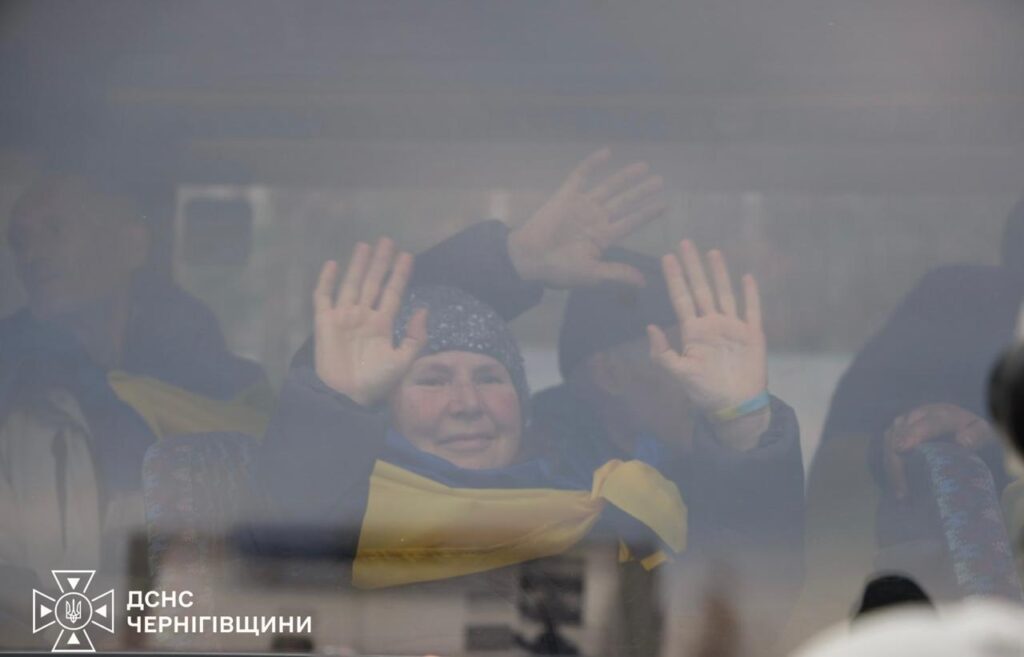
Melania Trump also said the mission had evacuated nearly 800 people. She did not say how many went to Ukrainian-held territory and how many to Russia. Sky’s sources said as many as two-thirds of residents stayed in Oleshky. Those evacuated to Ukrainian-held territory were taken out through Russia and Belarus, Sky reported, and crossed the border on 31 October.
Read also
-
Ukraine brings people and their pets out of occupied Oleshky under longest ceasefire since 2022, from 94-year-old to one-year-old
-
Drone-and-mine siege: Ukraine takes Oleshky crisis to UN as 2,000 civilians starve in occupied city
-
Russia may use the Oleshky truce to rebuild its forces, ISW warns, as evacuees face a route through Russia and Belarus