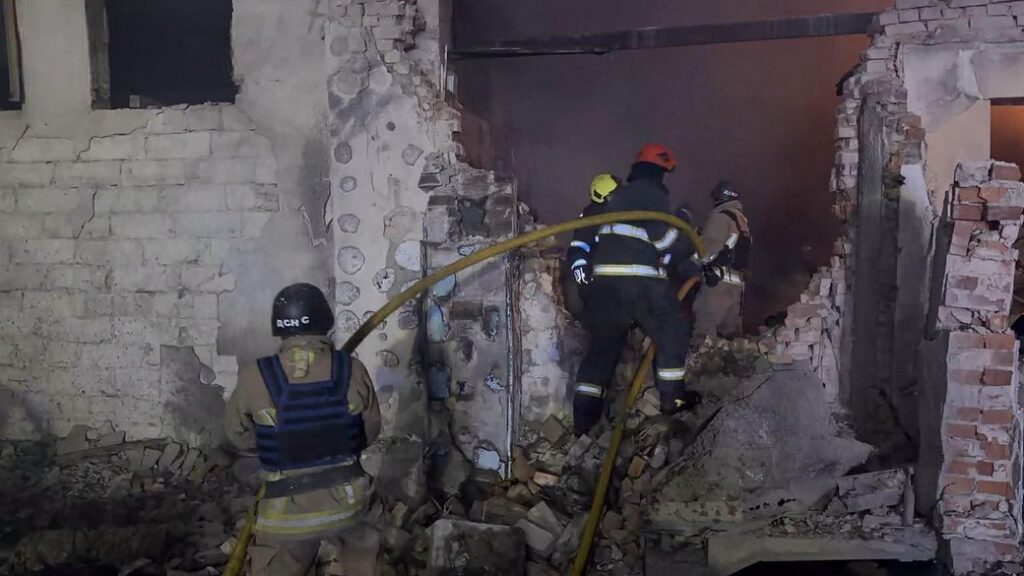
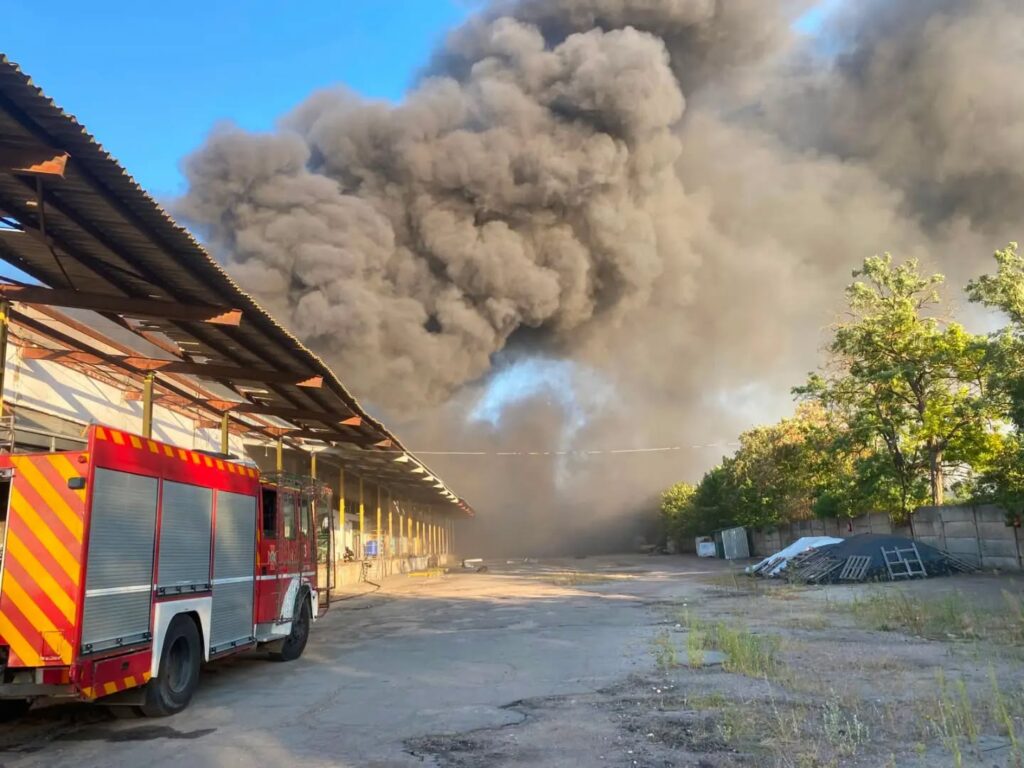
A Russian strike on southern Odesa Oblast killed one person overnight and set grain trucks on fire. Five trucks loaded with grain were destroyed and three more damaged, with one person killed and three injured, the head of the Odesa Regional Military Administration, Oleh Kiper, said.
The strike hit the Izmail district, home to Ukraine's largest Danube port. The port became a maritime lifeline after Russia's 2022 Black Sea blockade, carrying the overflow whenever the sea
A Russian strike on southern Odesa Oblast killed one person overnight and set grain trucks on fire. Five trucks loaded with grain were destroyed and three more damaged, with one person killed and three injured, the head of the Odesa Regional Military Administration, Oleh Kiper, said.
The strike hit the Izmail district, home to Ukraine's largest Danube port. The port became a maritime lifeline after Russia's 2022 Black Sea blockade, carrying the overflow whenever the sea lanes are constrained, National Security Journal reported. The attack is part of a campaign against the food supply.
Ukraine is one of the world's largest suppliers of wheat, maize, and sunflower, so the strikes register far beyond its borders, in the import-dependent countries that buy its grain.
Fire destroyed eight trucks
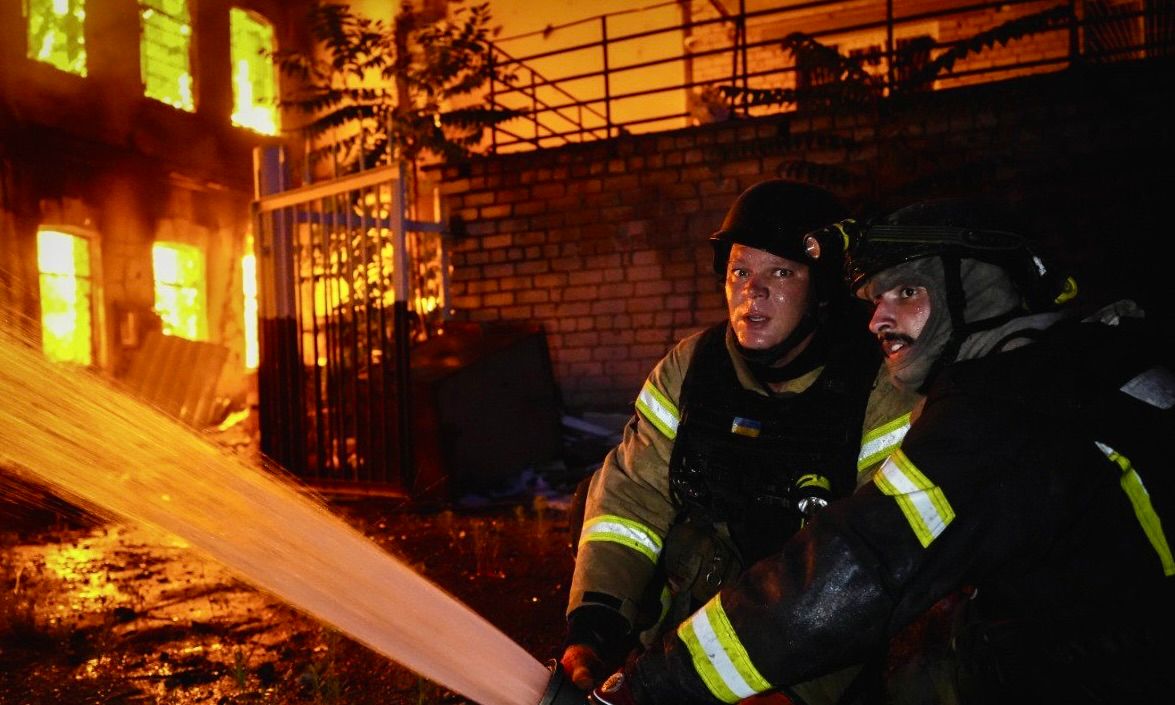
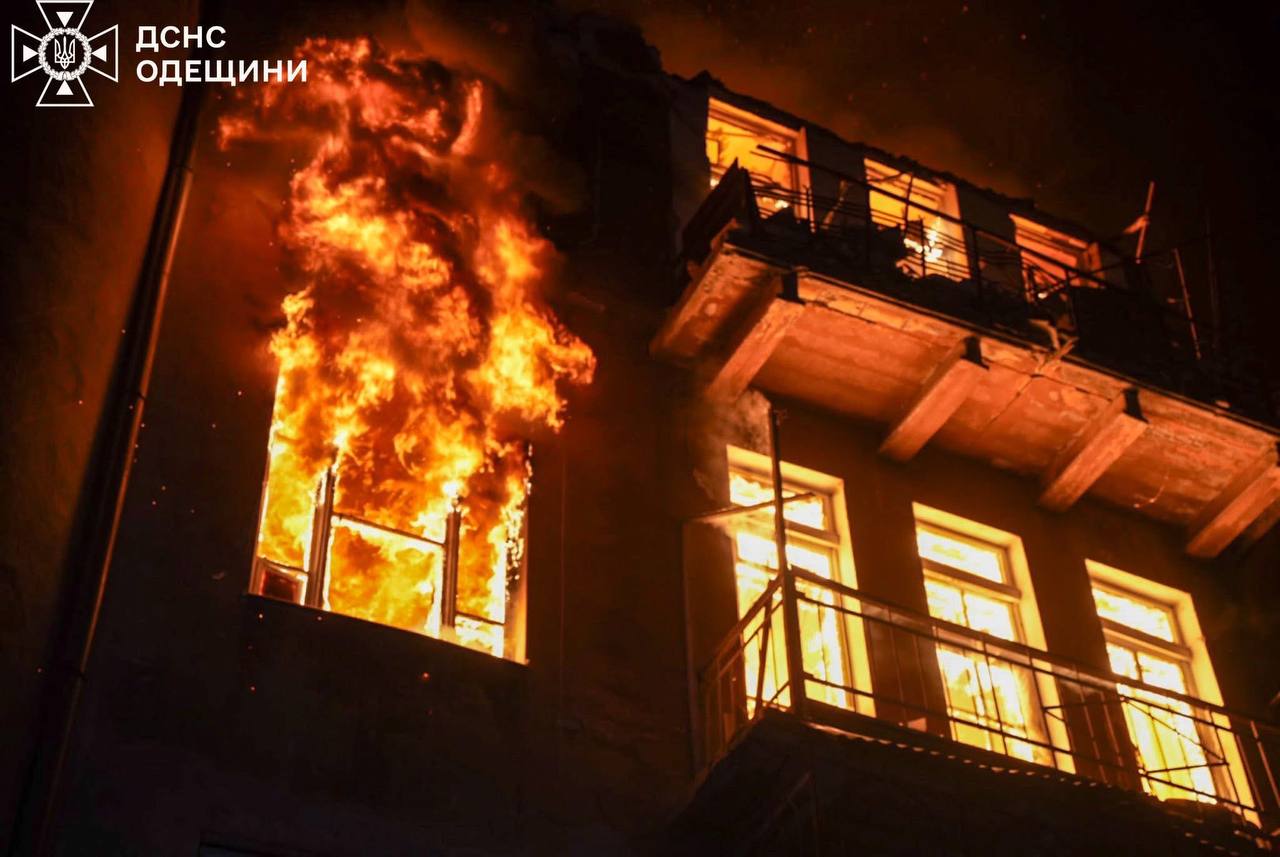
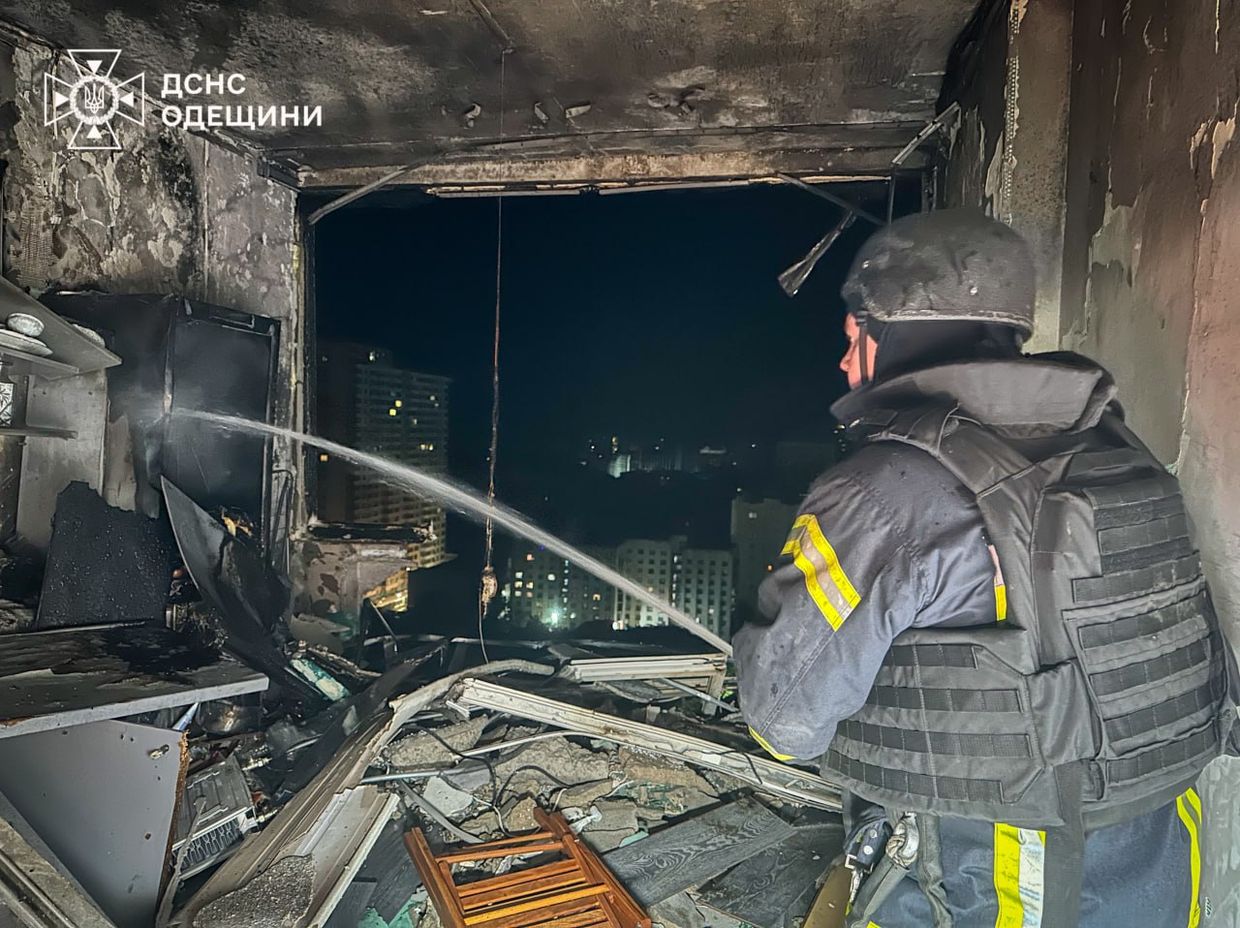
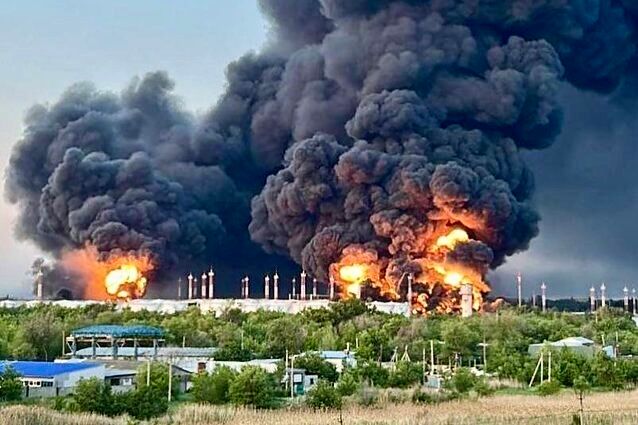
The attack set eight cargo trucks and dry grass nearby alight, the press service of the State Emergency Service in Odesa Oblast reported. Rescuers have since put out the fires.
"Unfortunately, a person was killed in the attack, and three more were injured," the service said.
The strike hit transport infrastructure
Russia struck the Izmail district overnight on 29 August, damaging transport infrastructure, the Izmail District State Administration reported. The district sits on the Danube close to the Romanian border.
"There are casualties. Sadly, a person has been killed. The injured have been given the necessary help. Representatives of the security structures and medical workers are working at the scene," the administration said.
The Danube corridor is a standing target
The strike fits a pattern. Russia hit Izmail's port infrastructure on 13 August, cutting power in parts of the city, and struck it again days later, damaging a Togo-flagged civilian vessel. The attacks come during Ukraine's peak wheat harvest, expected at around 60 million metric tons this year, close to the 2025 crop. Farmers need the export revenue now to finance next year's sowing, and storage is filling as grain goes unshipped.
Russia's Defense Ministry has described its Izmail strikes as hitting berthing terminals for military cargo and depots for Western-supplied weapons. The trucks burned in this strike were carrying grain.
Moldova will invest in air defense after repeated Russian drone incursions, Moldovan President Maia Sandu said, RFE/RL reported. She spoke at the country's independence celebrations on 27 August alongside the Ukrainian and Romanian presidents, hours after another group of drones entered Moldovan airspace during Russian strikes on Ukraine. The Institute for the Study of War (ISW) says the crossings show Putin continuing to normalize the threat that Russia's strikes on we
Moldova will invest in air defense after repeated Russian drone incursions, Moldovan President Maia Sandu said, RFE/RL reported. She spoke at the country's independence celebrations on 27 August alongside the Ukrainian and Romanian presidents, hours after another group of drones entered Moldovan airspace during Russian strikes on Ukraine. The Institute for the Study of War (ISW) says the crossings show Putin continuing to normalize the threat that Russia's strikes on western Ukraine pose to European states.
Russia's drones and missiles have worked the southwestern edge of Ukraine all summer, hitting the Danube ports and later the crossings that tie the region to the European Union, and the machines regularly stray past the borders—aerial drones into the airspace next door, sea drones into Black Sea waters and onto the beaches. Romania's fighter jets and Bulgaria's navy now destroy what reaches them, while a neutral country with no alliance behind it and no way to shoot anything down is assembling that capability.
"We cannot be intimidated"
Russian drones have violated the airspace of Moldova and Romania dozens of times, Sandu noted. She met Romanian President Nicușor Dan and Ukrainian President Volodymyr Zelenskyy in Chișinău for the anniversary.
"And today, on the eve of our holiday, Russian drones invaded our airspace with the obvious aim of intimidating us. And now I want to say clearly, in the presence of our friends—we cannot be intimidated. We are investing in air defense in order to have the capability to protect our people and infrastructure," she said.
Sandu also called on every country of the free world to help Ukraine, and specifically to strengthen its air defense before winter. While Ukraine fights in the east, she said, Moldova can sleep calmly. Russian drones have breached Moldovan airspace repeatedly before this month.
Ukrainian President Volodymyr Zelenskyy, Moldovan President Maia Sandu, and Romanian President Nicușor Dan at a joint press conference in Chișinău, Moldova, 27 August 2026. Photo: Moldova 1
Five drones from the Ukrainian border
Moldova's Defense Ministry reported five unidentified drones entering Moldovan airspace from various points along the border area with Ukraine in Odesa Oblast early on 27 August, the day after a single drone crossed the border and left minutes later. The five crossings ran from 03:56 to 06:02, and each drone flew over the country briefly before turning back toward Ukraine, following Russian air attacks there, the ministry said.
ISW says these incidents show that Putin continues to normalize the threat that Russia's strike campaign against the westernmost parts of Ukraine poses to European states, including Moldova and eastern NATO members. The crossings also show the Kremlin accepting the risk that its war can damage other states.
Fragments police preliminarily identified as parts of a combat drone, recovered near Crocmaz in Moldova's Ștefan Vodă district, 9 August 2026. Photo: Consiliul Raional Ștefan Vodă/Facebook
Moldova is not in NATO or the EU, and it is a neutral state. Russian drones have crossed its airspace illegally around 70 times since the start of the full-scale war, Moldova's National Army says. Defense Minister Anatolie Nosatîi called the situation extremely serious after one incursion this month halted air traffic over the country for 15 minutes, and said the army needs modernizing.
Romania shoots, Bulgaria clears up
Unlike Moldova, the NATO members in the region act on what reaches them. Romania intercepts what crosses in, and Bulgaria destroys what drifts to its coast:
26 June: Bulgaria's navy destroyed a drifting drone seven nautical miles off Kranevo.
21 July: Bulgarian, Romanian, and Turkish ships destroyed a drifting drone 21 nautical miles off Ahtopol.
24–26 July: Romanian F-16s downed three drones, the country's first shootdowns at home.
Early August: Romanian jets scrambled before Ukraine shot the drone down.
16 August: a Spanish F/A-18 downed a drone north of Galați, the fourth over Romania this year, the Defense Ministry said.
20 August: a Romanian F-16 destroyed an explosive-laden sea drone with its cannon near an offshore gas platform. President Nicușor Dan blamed Russia.
22 August: two more drone wrecks turned up on Bulgarian beaches, one of them a Russian decoy without a warhead.
Ukraine opened a nationwide investigation into soldiers' payments five days ago. The State Bureau of Investigation has now charged a deputy commander of a separate security and servicing battalion in Odesa Oblast with issuing travel orders that sent his subordinates to fake combat groupings on paper, the bureau reported on 25 August.
Combat pay in Ukraine runs on paperwork. Assault and zonal payments depend on time spent on each mission and require documentary confirmat
Ukraine opened a nationwide investigation into soldiers' payments five days ago. The State Bureau of Investigation has now charged a deputy commander of a separate security and servicing battalion in Odesa Oblast with issuing travel orders that sent his subordinates to fake combat groupings on paper, the bureau reported on 25 August.
Combat pay in Ukraine runs on paperwork. Assault and zonal payments depend on time spent on each mission and require documentary confirmation, with the highest rates going to troops on the line of contact.
The travel orders carried the scheme
The soldiers collected the additional payment known as the Defender's Bonus for combat participation that did not happen, taking about $15,600, without grounds, according to the agency.
"In fact, soldiers remained in Odesa. Despite this, they were paid an additional bonus," officers said.
Part of that money went back to the officer who arranged it. He was detained and charged under Part Five of Article 426-1 of the Criminal Code, which covers a military official exceeding authority and carries a sentence of up to 12 years.
The case sits inside a national sweep
The bureau launched the operation, called Justice for Soldiers, on 20 August together with the General Staff, conducting 72 searches and preparing suspicions against 22 people.
Most of the cases concerned money wrongly paid to soldiers. Twelve proceedings were related to the illegal calculation and receipt of payments by soldiers, with 58 searches conducted and suspicions planned against 20 people.
Twelve of those proceedings deal with the illegal calculation and receipt of payments by soldiers. A separate strand covers commanders using troops for private labor.
A separate strand targeted the misuse of soldiers themselves. Five searches were conducted in a case involving the illegal use of military labor, in which subordinates, instead of performing military duties, were used for construction, household, and other work in the commanders' private interests.
Ukraine is building a sea-facing layer of air defense along its southern coast, Kyrylo Liukov, head of the unmanned technologies department at the Serhii Prytula Foundation, wrote in a column for RBC-Ukraine. Winged interceptors now reach the Russian spy drones that guide strikes in the south.
Russia's nightly drone strikes on Ukrainian cities have turned air defense into a race to close every corridor Russia can fly through, over land first and now over the open sea. K
Ukraine is building a sea-facing layer of air defense along its southern coast, Kyrylo Liukov, head of the unmanned technologies department at the Serhii Prytula Foundation, wrote in a column for RBC-Ukraine. Winged interceptors now reach the Russian spy drones that guide strikes in the south.
Russia's nightly drone strikes on Ukrainian cities have turned air defense into a race to close every corridor Russia can fly through, over land first and now over the open sea. Kyiv does it with cheap interceptors rather than costly missiles, and keeps having to chase Russian workarounds. The sea was the stretch air defense could not reach, and it is where Russia keeps the spotters that make its Shahed swarms steerable.
Land and sea are two different fights
Defending the sky over land and over open water are two different problems, Liukov wrote. Multirotor copters are fast and simple to launch near the coast, but past roughly 25 km offshore, a multirotor is almost useless. Russia builds its mission routes so that drones cross dozens of kilometers over sea before they turn toward Ukrainian targets. Fixed-wing drones close the gap. Built like gliders, they loiter for over an hour and hold a link at 40 km and beyond, helped by an open radio horizon that land's terrain and buildings deny them.
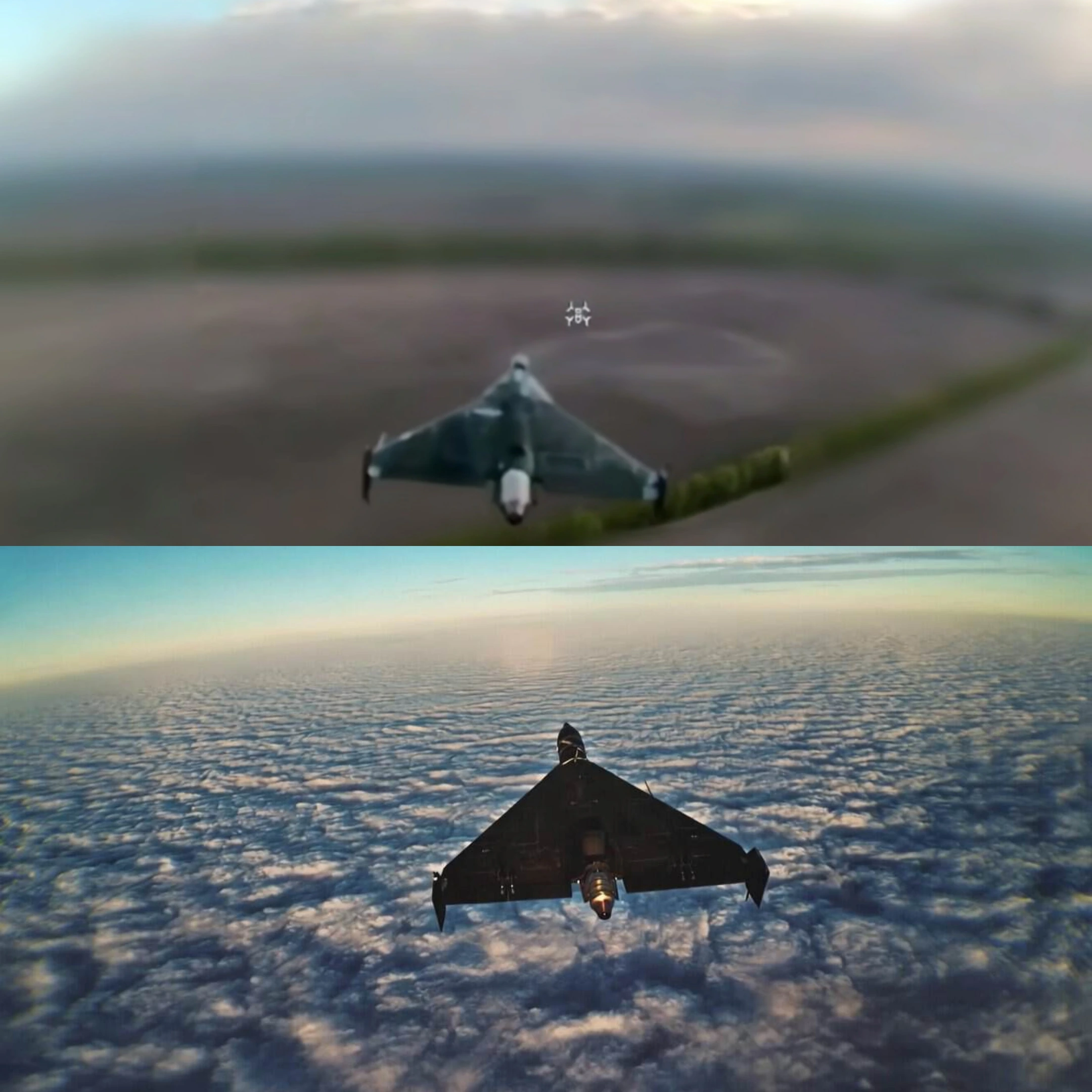
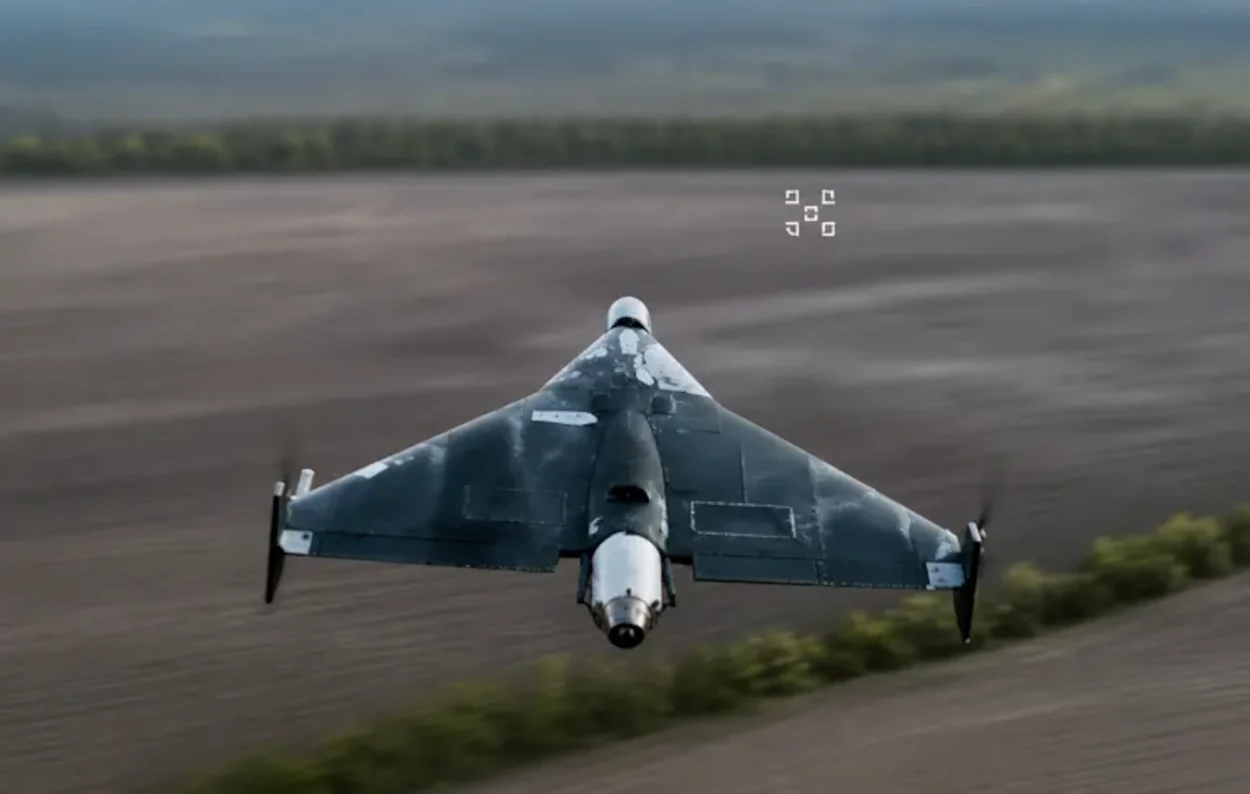
Recon drones are the priority target for a reason. Beyond spotting and confirming hits, they work as relays in a MESH network for a group of strike drones. In that setup, Russian crews can steer Shaheds by hand right up to the moment of impact, Liukov wrote.
Southern units recently set three distance records with foundation-supplied interceptors. The 18th aviation commandant's office of Air Command South downed a Russian Orlan-30 reconnaissance drone 110 km out. It used a Wovkulaka Spitfire interceptor, the longest kill on record for that system.
The 12th Separate Special Purpose Center set the other two, flying a system from the miltech company TechnoTaras: an Orlan downed at 86 km, and a 145 km hunt measured from the takeoff point that held a stable digital link the whole way, Liukov wrote. That leaves Russia's drones exposed much farther from shore than its planners assume, he added—and if such results become routine, Russia has to pull its transit routes farther out still.
The Maiachnia beacon line
A less obvious problem was navigation, not shooting. A drone flying without GPS steers by landmarks, and over open sea, there are none. Late last year, the foundation, the 12th Separate Special Purpose Center, and TechnoTaras launched a project called Maiachnia. It strings radio beacons on the Skyline system along the coast from Ochakiv to Izmail. The beacons work on their own and keep backup power, tied to a central network that operators can adjust remotely. An operator can then track the drone even under GPS jamming, bad weather, or a temporary loss of link, and bring it home. More than five southern units now fly the foundation's winged drones.
The real stakes sit offshore—the southern ports and the Black Sea grain corridor that Russian drones threaten and that land-based copters can barely reach. Keeping Russian drones farther offshore would buy room there. But Russia is scaling up a faster, jet-powered Shahed, and the interceptor answer to it is early—so the offshore edge just won will have to be defended again.
Russian strikes in southern Odesa Oblast overnight into 20 August left 13,000 utility customers without power, Odesa Oblast head Oleh Kiper reported. President Volodymyr Zelenskyy also said drones attacked a checkpoint on Ukraine’s border with Moldova.
Russia has intensified attacks on southern Ukraine’s Danube region, where ports and transport routes lie close to Moldova and Romania. The spillover from the attacks has forced these neighboring countries to close airspac
Russian strikes in southern Odesa Oblast overnight into 20 August left 13,000 utility customers without power, Odesa Oblast head Oleh Kiper reported. President Volodymyr Zelenskyy also said drones attacked a checkpoint on Ukraine’s border with Moldova.
Russia has intensified attacks on southern Ukraine’s Danube region, where ports and transport routes lie close to Moldova and Romania. The spillover from the attacks has forced these neighboring countries to close airspace, scramble aircraft, and shoot drones down.
The Odesa Oblast Military Administration said Russian strikes disrupted power in several communities, and repair crews began restoration work. It did not identify damaged electrical equipment or say whether the grid had been shut down as a precaution. Two truck trailers carrying food caught fire at another location, but firefighters extinguished both blazes, the State Emergency Service said. No casualties were reported.
One of the food trucks that was struck during Russia's assault. Source: DSNS of Ukraine
Zelenskyy did not identify which crossing was attacked or describe the damage. The Izmail District State Administration later reported that Russia attacked the Reni community with Shahed-136 drones. It recorded a hit on an unspecified site near the Reni–Giurgiulești international checkpoint.
Approximate location of where the strike occurred.
People and freight cross between Ukraine and Moldova through checkpoints such as Reni–Giurgiulești. The district administration did not describe the damage or say whether the checkpoint remained open.
Russian attacks keep reaching Moldova
At 03:16 on 20 August, surveillance systems operated by Moldova’s National Army detected an unauthorized flight, public broadcaster Moldova1 reported.
The object was preliminarily identified as a Shahed-136/Geran-2, a long-range explosive drone used by Russia. It crossed from Ukraine near Kotlovyna in southwestern Odesa Oblast and flew toward Etulia in Moldova’s autonomous Gagauzia region. It returned to Ukrainian airspace at 03:22.
Explore further
Blast marks Moldova’s third airspace breach in nine days
Similar incidents occurred earlier in August. An unidentified aerial object exploded in a Moldovan field 12 kilometers from Ukraine on 9 August. On 17 August, Moldova closed part of its airspace for 15 minutes after Ukraine’s Air Force warned that a Russian Banderol, a jet-powered missile-drone, had crossed from Odesa Oblast. The object later exploded near Talmaza.
Romania activates defenses
On 20 August, Romania’s Defense Ministry said its radars detected targets near Ukraine at 02:23 and scrambled two Spanish F-18s and a Romanian helicopter. A drone entered Romanian airspace east of Galați at 03:21 and crashed near Grindu at 03:24. Its impact started a fire that went out on its own. Romania reported no casualties or material damage.
Four days earlier, a Spanish F-18 shot down a drone that entered Romania from Moldova. NATO said it appeared to be Russian.
Russia has recently intensified attacks on Ukraine’s Danube ports and struck the Mayaky bridge connecting southern Ukraine with Moldova and Romania. Such attacks can disrupt Ukraine’s transport links and force neighboring militaries to react within minutes.
Editor's note: This is a developing story.
Russia launched a massive overnight missile and drone attack targeting Kyiv and the surrounding region, killing 14 people and injuring more than 40, Ukrainian authorities said on 20 August.
The attack involved ballistic and cruise missiles alongside hundreds of drones. Ukraine’s Air Force said the main direction of the attack was Kyiv Oblast, with strikes and debris recorded at multiple locations. Several explosions were hea
Russia launched a massive overnight missile and drone attack targeting Kyiv and the surrounding region, killing 14 people and injuring more than 40, Ukrainian authorities said on 20 August.
The attack involved ballistic and cruise missiles alongside hundreds of drones. Ukraine’s Air Force said the main direction of the attack was Kyiv Oblast, with strikes and debris recorded at multiple locations. Several explosions were heard in the capital around midnight on 20 August, according to Euromaidan Press reporters in the city.
Residential building hit in Kyiv
In Kyiv, strikes, damage, and fires were reported in the Sviatoshynskyi, Darnytskyi, and Solomianskyi districts.
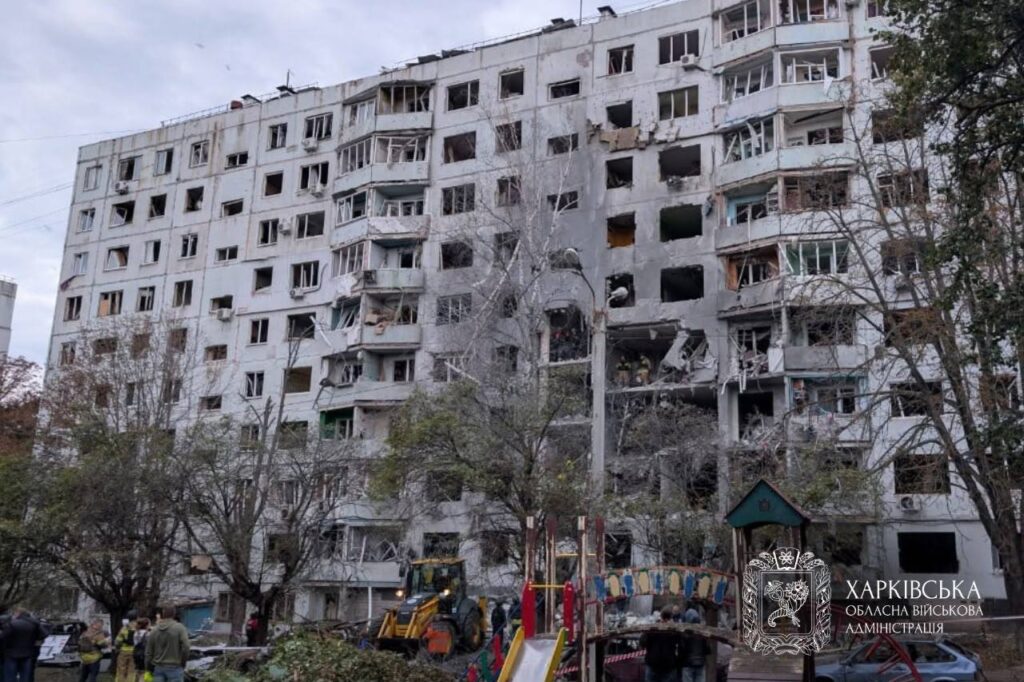
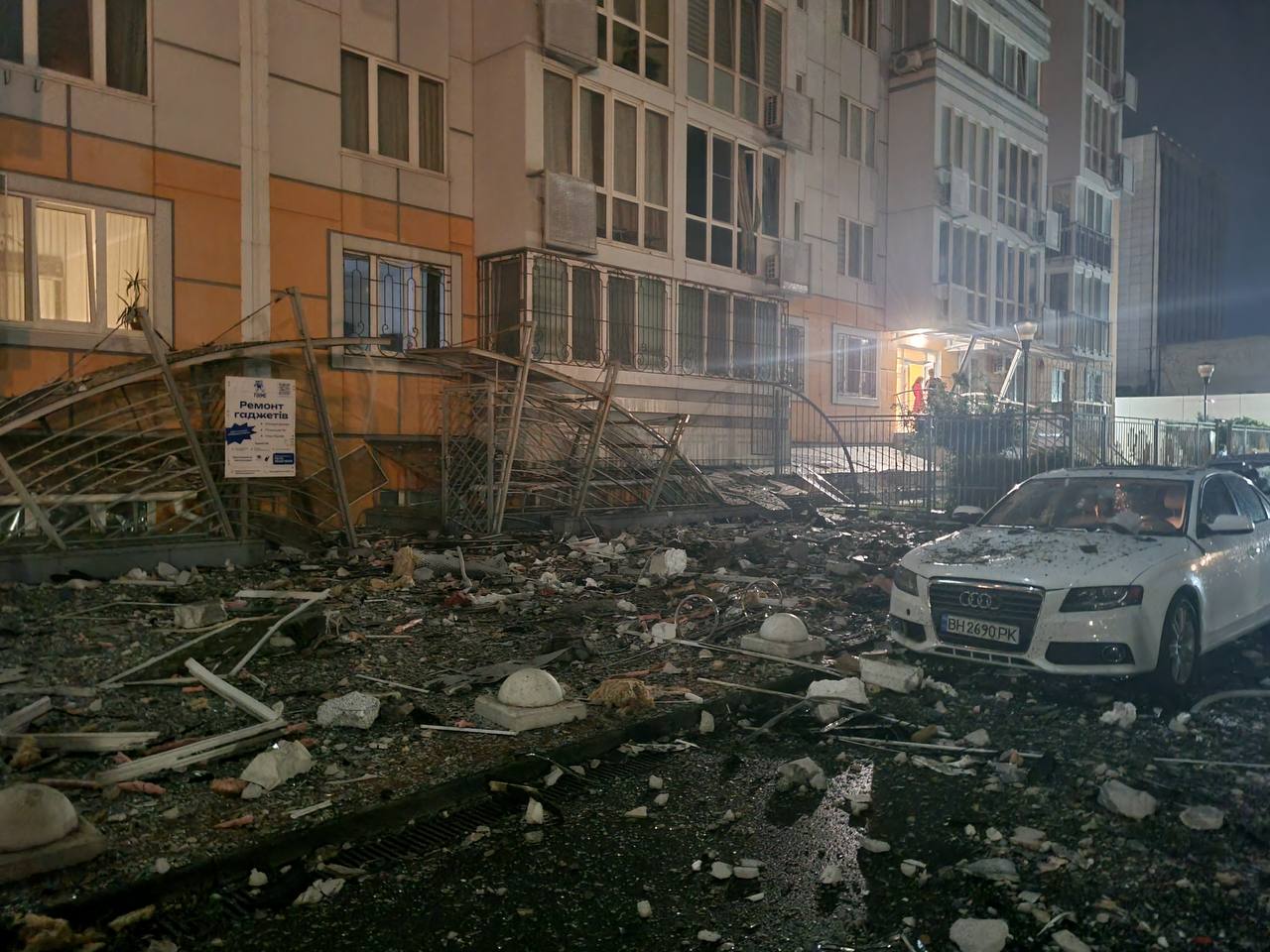
In Solomianskyi district, the upper two floors of a nine-story residential building were destroyed, with a fire breaking out across the seventh through ninth floors.
People were trapped in two residential buildings and a school bomb shelter, prompting emergency crews to carry out rescue operations.
Thirteen people have now been confirmed killed in Kyiv, including a woman whose body was discovered by rescuers in Solomianskyi district, Interior Minister Ivan Vyhivskyi said.
Ukrainian President Volodymyr Zelenskyy said a children's hospital and a school were also damaged in the capital.
Kyiv Mayor Vitali Klitschko said the city would observe 21 August as a day of mourning, with entertainment events banned and flags lowered.
Death toll from Russia's missile attack on Kyiv city and Oblast climbs to 14
Ukraine's Interior Minister Ivan Vyhivskyi says another woman's body was found in Solomianskyi. More than 40 were wounded. The strikes damaged about 20 residential buildings, a school, a children's… pic.twitter.com/3wicnc5lni
Around 20 residential buildings in Kyiv were significantly damaged, along with a school, children's hospital, and kindergarten, Vyhivskyi said.
In Sviatoshynskyi district, Russian strikes hit an industrial site and sparked fires at warehouses covering 500 and 1,000 square meters. Another warehouse also caught fire.
In Darnytskyi district, a non-residential site was hit, causing fires across warehouses and vehicles covering about 1,000 square meters. Rescuers saved one person and handed them over to medics.
Other locations saw damage to residential buildings, a medical facility, cars, garages, and stores.
More than 600 rescuers and police officers have been involved in clearing the aftermath since overnight. Emergency crews are currently working at two sites in Kyiv and three more in Boryspil and Brovary districts.
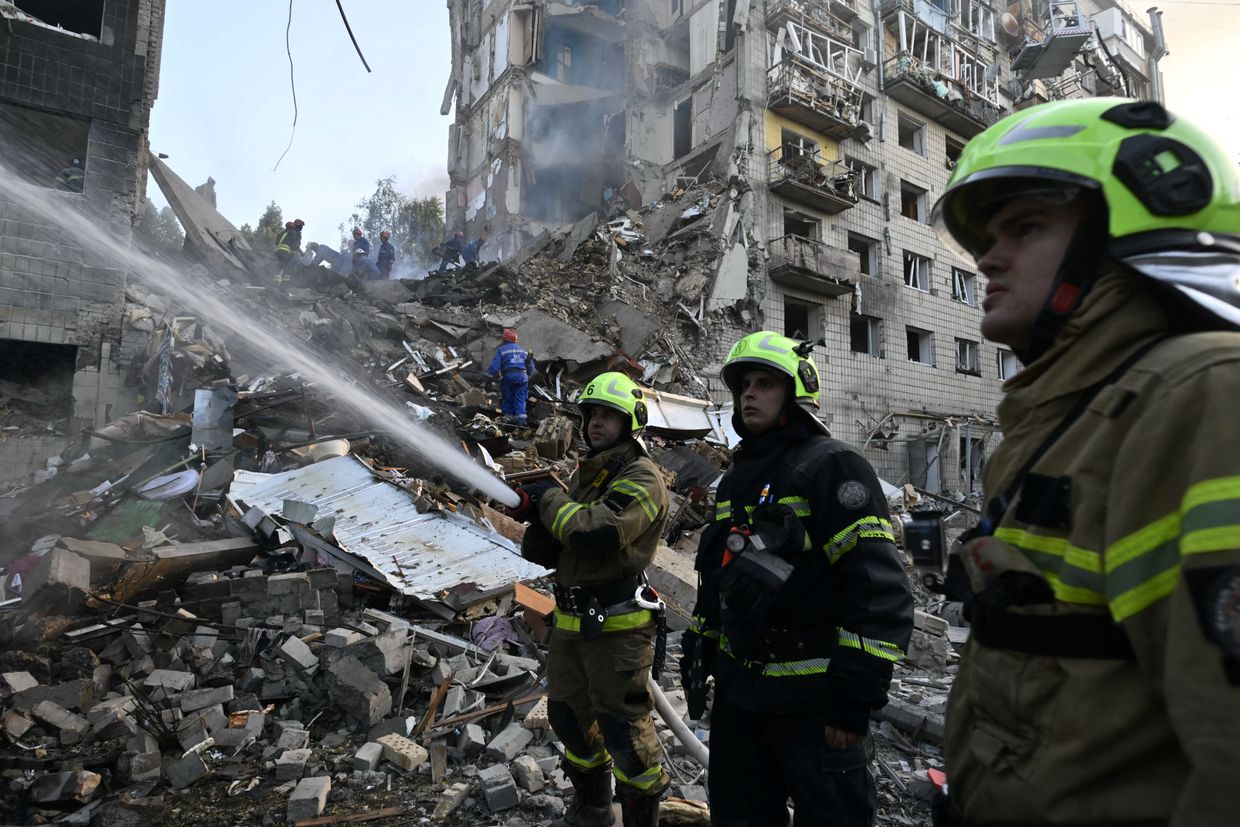
Rescuers are using specialized equipment and robotic systems to clear the rubble and check whether anyone remains trapped.
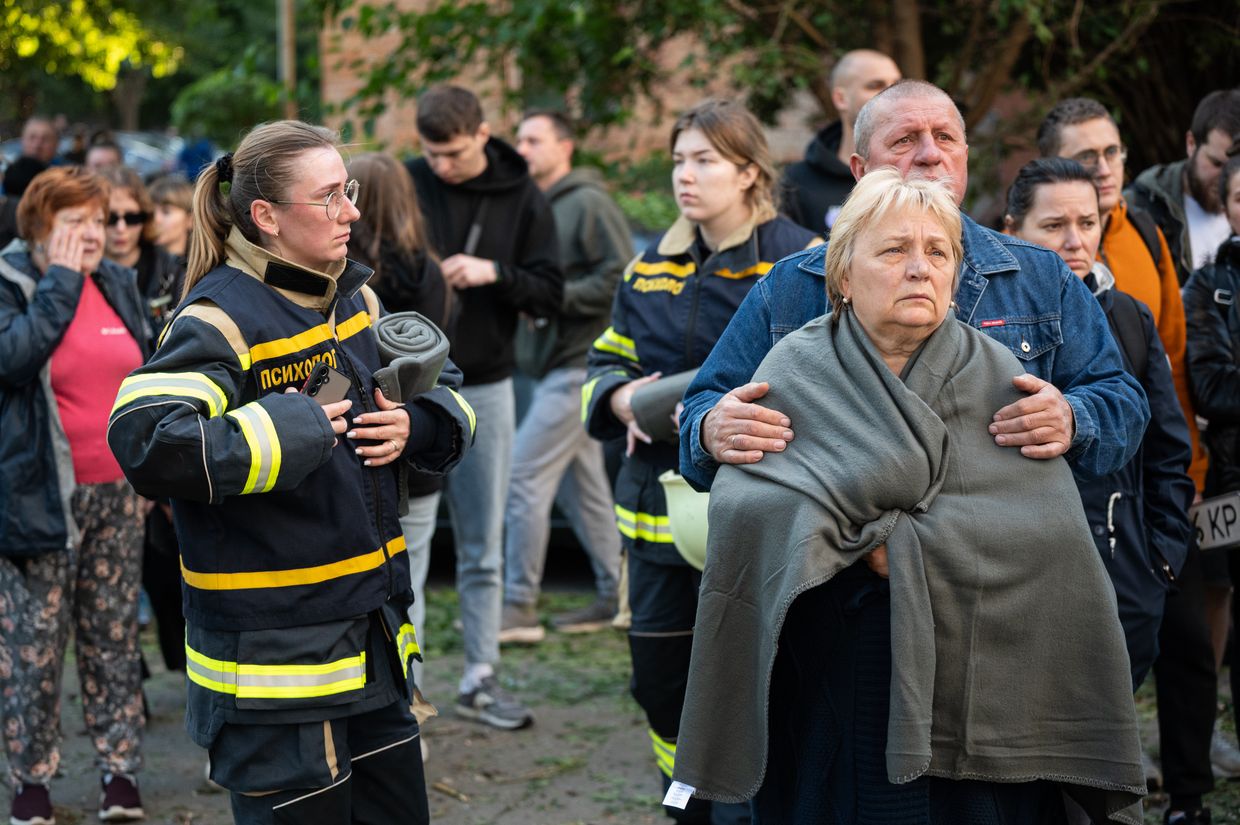
Police have set up assistance centers at the attack sites to register reports of damaged or destroyed property. More than 200 reports have already been processed in Kyiv, while psychologists are assisting people who lost relatives or their homes.
Russia's overnight missile attack killed at least 12 people in Kyiv and injured 34.
Russia pounded Kyiv and its surrounding region for hours into 20 August with dozens of ballistic missiles, Kalibr cruise missiles, and jet-powered Shahed drones.
The attack also hit Kyiv Oblast. One man was killed in Brovary district and another was injured.
In Boryspil district, six people were injured, four of whom were hospitalized. The attack damaged 14 private homes, four warehouses, a gas station, an apartment building, and eight vehicles.
Vyhivskyi said fires also engulfed warehouses storing household goods in Kyiv Oblast. Firefighters are working to contain the blaze, with aviation also deployed.
Russian attack leaves Kyiv and six oblasts with power outages
Ukrenergo says outages hit Kyiv and Kyiv, Donetsk, Odesa, Zaporizhzhia, Dnipropetrovsk, and Kharkiv oblasts. Ukrainians are asked to limit powerful appliances from 18:00–22:00.
Zelenskyy calls for stronger ballistic missile defenses
Zelenskyy said Russia’s growing investment in ballistic missiles requires a stronger international response and more air defense for Ukraine.
He said Ukraine is working daily on its FREYJA interceptor program, but stressed that Patriot interceptors remain irreplaceable and are needed every day to protect Ukrainian cities from Russian ballistic missile attacks.
“Every additional missile saves the lives of our people,” Zelenskyy said, thanking those working to provide Ukraine with additional air defense capabilities.
Russia spent months preparing its missiles. Zelenskyy says Ukraine still lacks enough interceptors to stop them
Russia combined different ballistic missiles, cruise missiles, and drones in its overnight attack to maximize damage to civilian infrastructure, President Volodymyr… pic.twitter.com/4iaRPs7dLC
Ukraine's Air Force said Russia launched 168 Shahed-type attack drones, Gerbera decoy drones, and other drones, along with 36 Kh-101, Iskander-K, and Kh-59 cruise missiles, eight Kalibr missiles, two Banderyl-type loitering munitions, and ballistic missiles including Oniks, Zircon, Iskander-M, and S-400 missiles.
As of 9:30 a.m., Ukrainian air defenses had shot down or suppressed 31 cruise missiles, all eight Kalibr missiles, both loitering munitions, and 145 drones, according to the Air Force.
The Air Force reported impacts at 28 locations and debris from intercepted targets at two others.
The attack continued into the late morning, with air raid sirens still active and several Russian drones still in Ukrainian airspace.
Ukraine is under a massive Russian attack right now: Russia's Kalibr missiles were launched from the Novorossiysk port
The warhead of the Kalibr family of cruise missiles typically weighs 450 kg Exilenova+ pic.twitter.com/DBgfRX7xhB
Russia hit Kyiv with ballistic and hypersonic missiles overnight, damaging a children’s hospital, with people trapped in a shelter
Rail traffic disrupted
Russia's strikes also disrupted rail traffic around Kyiv after railway infrastructure was damaged. Several suburban and regional trains between Kyiv and Nizhyn were rerouted or canceled.
Strikes reported in other regions
Zelenskyy said the attack also caused damage in Odesa and Chernihiv oblasts.
In Odesa Oblast, Russian drones targeted a border crossing with Moldova, while strikes in Chernihiv Oblast damaged gas infrastructure.
Russia strikes food trucks in Odesa Oblast
The attack ignited two trailers carrying food. Ukrainian firefighters extinguished the blaze, the State Emergency Service reported. No one was killed or injured.
More than 100 drones were detected near Romania over the past 96 hours, with NATO fighter jets scrambled seven times in response to the increased aerial activity, Romanian Defense Minister Radu Miruță said, according to Antena 3 CNN.
The figures come as Romania faces a growing number of drone incidents linked to Russia’s war against Ukraine. Romanian forces have recently shifted from monitoring and escorting drones to actively destroying those that enter Romanian airspa
More than 100 drones were detected near Romania over the past 96 hours, with NATO fighter jets scrambled seven times in response to the increased aerial activity, Romanian Defense Minister Radu Miruță said, according to Antena 3 CNN.
The figures come as Romania faces a growing number of drone incidents linked to Russia’s war against Ukraine. Romanian forces have recently shifted from monitoring and escorting drones to actively destroying those that enter Romanian airspace, while NATO aircraft are increasingly being called on to respond to aerial threats along the alliance’s eastern flank.
NATO aircraft repeatedly activated
According to Miruță, Romanian authorities detected more than 100 drones in the vicinity of Romanian territory during the four-day period. NATO fighter jets participating in air-policing missions were activated seven times.
Miruță did not report how many of the detected drones entered Romanian airspace, nor how many were identified as Russian or Ukrainian.
Miruță said most of the drones were destroyed by Ukrainian air defenses outside Romania, but close enough for their debris to reach Romanian shores.
“[Russia’s war in Ukraine] is a real war, with real consequences. That is why we are taking every measure we can to limit the indirect consequences that are also being felt here,” Miruță wrote on Facebook.
The report comes shortly after Romania destroyed two Russian Gerbera-type drones that were found drifting in the Black Sea near the Neptun Deep offshore gas project on 11 August. Romanian military divers carried out controlled detonations after Ukraine confirmed the drones were not Ukrainian.
Romania has begun shooting down drones
The latest figures follow a significant change in Romania’s response to drone incursions.
In late July, Romanian F-16s shot down three drones over Romanian territory and territorial waters in three consecutive days. One of the drones was identified as a Russian Shahed-type attack drone, while investigations were conducted into the others.
The July incidents marked a shift from Romania’s previous approach of tracking or escorting drones that crossed into its airspace during Russian attacks on Ukraine. Four of the five drones shot down in EU and NATO countries at that point had been neutralized by Romanian military pilots, according to Miruță.
Romanian President Nicușor Dan called the repeated violations of Romanian airspace “inadmissible and intolerable” and Bucharest prepared a diplomatic protest to Moscow after one of the downed drones was identified as Russian.
Explore further
Romania knocks a third Russian drone from its sky in 72 hours
Drone war reaches beyond Ukraine
Romania has repeatedly dealt with drones crossing its border during Russian attacks on Ukrainian territory, particularly in the vicinity of Ukrainian ports on the Danube and the Black Sea.
In June, a Ukrainian sea drone that had lost control, which Kyiv attributed to Russian electronic warfare, exploded near an oil terminal in the Romanian port of Constanța. No one was injured, but more than 1,000 people were evacuated from the area as a precaution.
The incidents have also extended beyond Romania. On 14 August, NATO fighter jets shot down a foreign drone after it entered Latvian airspace. Latvia said the drone had entered its airspace as a result of Russian electronic warfare activity.
The repeated incidents have made drone activity around NATO’s eastern border an increasingly regular consequence of Russia’s war against Ukraine.
A combat drone exploded near a village on Moldova's border with Ukraine on 9 August, sparking a grass fire but hurting no one, Moldovan police said. Investigators recovered fragments and will examine them to establish the drone's type and origin. It was one of two blasts the war pushed across Europe's borders in two days, with Bulgaria fielding a separate drone explosion and summoning Ukraine's ambassador.
Russia's mass strikes keep driving drones and missiles across Uk
A combat drone exploded near a village on Moldova's border with Ukraine on 9 August, sparking a grass fire but hurting no one, Moldovan police said. Investigators recovered fragments and will examine them to establish the drone's type and origin. It was one of two blasts the war pushed across Europe's borders in two days, with Bulgaria fielding a separate drone explosion and summoning Ukraine's ambassador.
Russia's mass strikes keep driving drones and missiles across Ukraine's borders into EU and NATO states, and Russian jamming can knock Ukraine's own drones off course into the same skies—so every crash starts with one question: whose weapon was it.
A drone down in a Moldovan field
The blast rang out around 13:20 near Crocmaz, in Moldova's Ștefan Vodă district in the southeast, and set dry grass alight, NewsMaker reported. The village lies on the Dniester, upstream of Ukraine's Dniester estuary.
The field near Crocmaz, in Moldova's Ștefan Vodă district, where a drone exploded and set dry grass alight, 9 August 2026. Photo: Consiliul Raional Ștefan Vodă/Facebook
Firefighters and patrols confirmed no civilians were hurt and no homes were damaged. Police found fragments that they preliminarily identified as parts of a combat drone. Those pieces will undergo a ballistic-technical examination to determine the drone's exact type, its affiliation, and how it fell. Crocmaz sits right on the Ukrainian border. The district council posted photos of the object and told residents to avoid the cordoned area and report any fragments to the 112 line.
Debris from a drone that exploded near Crocmaz in Moldova's Ștefan Vodă district, close to the Ukraine border, 9 August 2026. Photo: Consiliul Raional Ștefan Vodă/Facebook
The blast came amid an assault on Odesa
The drone fell hours after Russia hit Odesa with missiles and drones overnight on 9 August. Much of Moldova's eastern border runs along Odesa Oblast, so wreckage from the war often drifts across. Russian drones have crashed on Moldovan soil during such attacks before. Whether this one was Russian or something else is for the examination to show.
A parallel case in Bulgaria
Also today, Bulgaria's Foreign Ministry summoned Ukraine's ambassador, Olesia Ilashchuk, over a drone that exploded on 8 August near the Romanian border, by a Trans-Balkan gas pipeline compressor station, Bulgarian National Television reported. Its defense bloc said the drone was likely a Ukrainian decoy, with no sign it was launched on purpose.
Explore further
Russia’s drones violated the airspace of Moldova and Romania — one fell straight onto a civilian roof (MAP)
At least 12 civilians were killed and 69 others injured in Russian attacks across Ukraine over the past 24 hours, regional authorities reported on July 7.Ukraine's Air Force said Russia launched 101 drones overnight, including Iranian-designed Shahed-type attack drones, as well as four S-300/400 guided missiles. Air defenses intercepted 75 drones, while another 17 likely served as radar-jamming decoys.The drone and missile assault was countered using aviation, electronic warfare, mobile fire tea
At least 12 civilians were killed and 69 others injured in Russian attacks across Ukraine over the past 24 hours, regional authorities reported on July 7.
Ukraine's Air Force said Russia launched 101 drones overnight, including Iranian-designed Shahed-type attack drones, as well as four S-300/400 guided missiles. Air defenses intercepted 75 drones, while another 17 likely served as radar-jamming decoys.
The drone and missile assault was countered using aviation, electronic warfare, mobile fire teams, and air defense systems, the military said.
The heaviest casualties occurred in Donetsk Oblast, where seven civilians were killed — four in Kostiantynivka, two in Druzhkivka, and one in Novohryhorivka — and 15 others were injured, Governor Vadym Filashkin reported.
In Kharkiv Oblast, 27 people were injured, including three children, according to Governor Oleh Syniehubov. At least three victims remain hospitalized in moderate condition, and the number may rise.
Russian forces also attacked critical and residential infrastructure in Kherson Oblast, killing two civilians and injuring nine, Governor Oleksandr Prokudin said.
Two more civilians were killed in Sumy Oblast in a drone strike, local authorities said. Another person was injured. In Odesa Oblast, one civilian was killed and infrastructure was damaged in an attack on the regional capital, Governor Oleh Kiper reported.
In Zaporizhzhia, at least 12 people were injured in separate attacks throughout the day, including 10 during a drone strike on the city center, Governor Ivan Fedorov said.
Five civilians were injured in Dnipropetrovsk Oblast — two women and three men — in the latest wave of attacks, according to Governor Serhii Lysak.
The mass strikes come amid Russia's continued rejection of ceasefire proposals and its growing use of aerial assaults to pressure Ukrainian defenses.
Kyiv has repeated its urgent appeals to Western partners to ramp up deliveries of air defense systems to protect civilian areas from drone and missile attacks.
A Russian missile and drone strike on Odesa on July 3 damaged the building of the Chinese Consulate General, Foreign Minister Andrii Sybiha said on July 4."Following tonight's massive Russian air attack on Ukraine, we discovered in Kyiv a component of a Russian-Iranian Shahed-136/Geran-2 combat drone, which was made in China and supplied just recently," Sybiha wrote on X. "And right on the eve, the Chinese Consulate General's building in Odesa suffered minor damage."The July 3 assault on Odesa k
A Russian missile and drone strike on Odesa on July 3 damaged the building of the Chinese Consulate General, Foreign Minister Andrii Sybiha said on July 4.
"Following tonight's massive Russian air attack on Ukraine, we discovered in Kyiv a component of a Russian-Iranian Shahed-136/Geran-2 combat drone, which was made in China and supplied just recently," Sybiha wrote on X.
"And right on the eve, the Chinese Consulate General's building in Odesa suffered minor damage."
The July 3 assault on Odesa killed two people and injured six others. China has not publicly acknowledged the incident or reported any damage to its diplomatic premises in the city.
The Shahed-136 drone, a loitering munition used by Russia in its attacks on Ukrainian cities, has been assembled in large numbers in Russia with components sourced globally.
Ukraine has previously documented that Chinese companies have contributed electronics and materials used in the production of these drones.
Beijing remains one of Russia's key wartime partners, helping Moscow evade Western sanctions and emerging as the leading supplier of dual-use goods used by the Russian defense industry.
China's Foreign Minister Wang Yi reportedly told EU foreign policy chief Kaja Kallas on July 3 that Beijing cannot afford for Russia to lose the war in Ukraine, according to the South China Morning Post, which cited unnamed sources familiar with the conversation.
The reported statement adds to growing concerns in Kyiv over China's expanding role in supporting Russia's war effort. President Volodymyr Zelensky has repeatedly accused China of siding with Moscow.
As Russian-Chinese relations deepen, Russian President Vladimir Putin is expected to visit China in September for the Shanghai Cooperation Organization summit, where he is scheduled to meet with Chinese leader Xi Jinping.
Russian attacks against Ukraine killed 10 people and injured at least 50 others over the past day, regional authorities said on June 28.Ukrainian forces downed 21 out of the 23 drones, including Shahed-type attack drones and decoys, launched by Russia overnight, the Air Force reported.One drone was intercepted by electronic warfare or disappeared from radars, according to the statement. Russia usually launches decoys alongside real drones to overwhelm Ukraine's air defense.A Russian drone attack
Russian attacks against Ukraine killed 10 people and injured at least 50 others over the past day, regional authorities said on June 28.
Ukrainian forces downed 21 out of the 23 drones, including Shahed-type attack drones and decoys, launched by Russia overnight, the Air Force reported.
One drone was intercepted by electronic warfare or disappeared from radars, according to the statement. Russia usually launches decoys alongside real drones to overwhelm Ukraine's air defense.
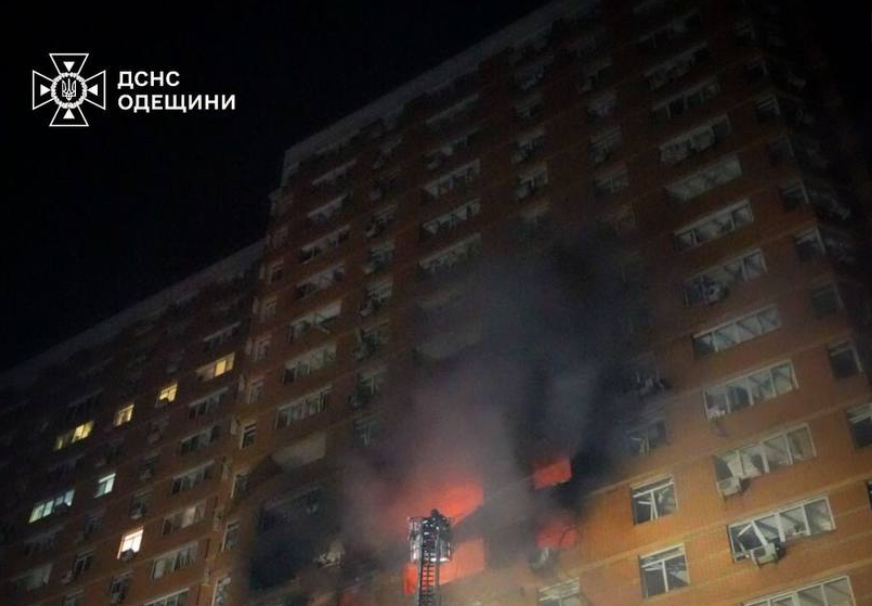
A Russian drone attack on the city of Odesahit a high-rise building,killing a married couple and injuring at least 14 other people, including three children,Governor Oleh Kiper said.
A Russian missile strike on the city of Samar in Dnipropetrovsk Oblast killed five people and injured at least 25 others, Governor Serhii Lysak said.
Three men aged 30, 36 and 53 were injured in a Russian attack on Chuhuiv in Kharkiv Oblast, according to Governor Oleh Syniehubov.
Russian attacks near Polohy and Vasylivka in Zaporizhzhia Oblastinjured a man and a woman, Governor Ivan Fedorov reported.
Russian troops injured a man by dropping an explosive device on the Bilopillia community in Sumy Oblast, local authorities reported.
Two people were killed in Kostiantynivka and Ivanopillia in Donetsk Oblast, Governor Vadym Filashkin said. Two others suffered injuries in the region over the past day.
In Kherson Oblast, Russian forces targeted 42 settlements, including the regional center of Kherson. One person was killed, and three others injured, Governor Oleksandr Prokudin reported.
Editor's Note: This is a developing story. Russia attacked the southern city of Odesa overnight on June 28, killing two people and injuring at least 14 others, Ukraine's State Emergency Service reported. The drone attack hit a 21-story building, causing a fire on the 7th, 8th, and 9th floors that left residents trapped in their apartments. First responders rescued five people, including a small child.Two people, a married couple, were killed in the attack, Odesa Oblast Governor Oleh Kiper report
Russia attacked the southern city of Odesa overnight on June 28, killing two people and injuring at least 14 others, Ukraine's State Emergency Service reported.
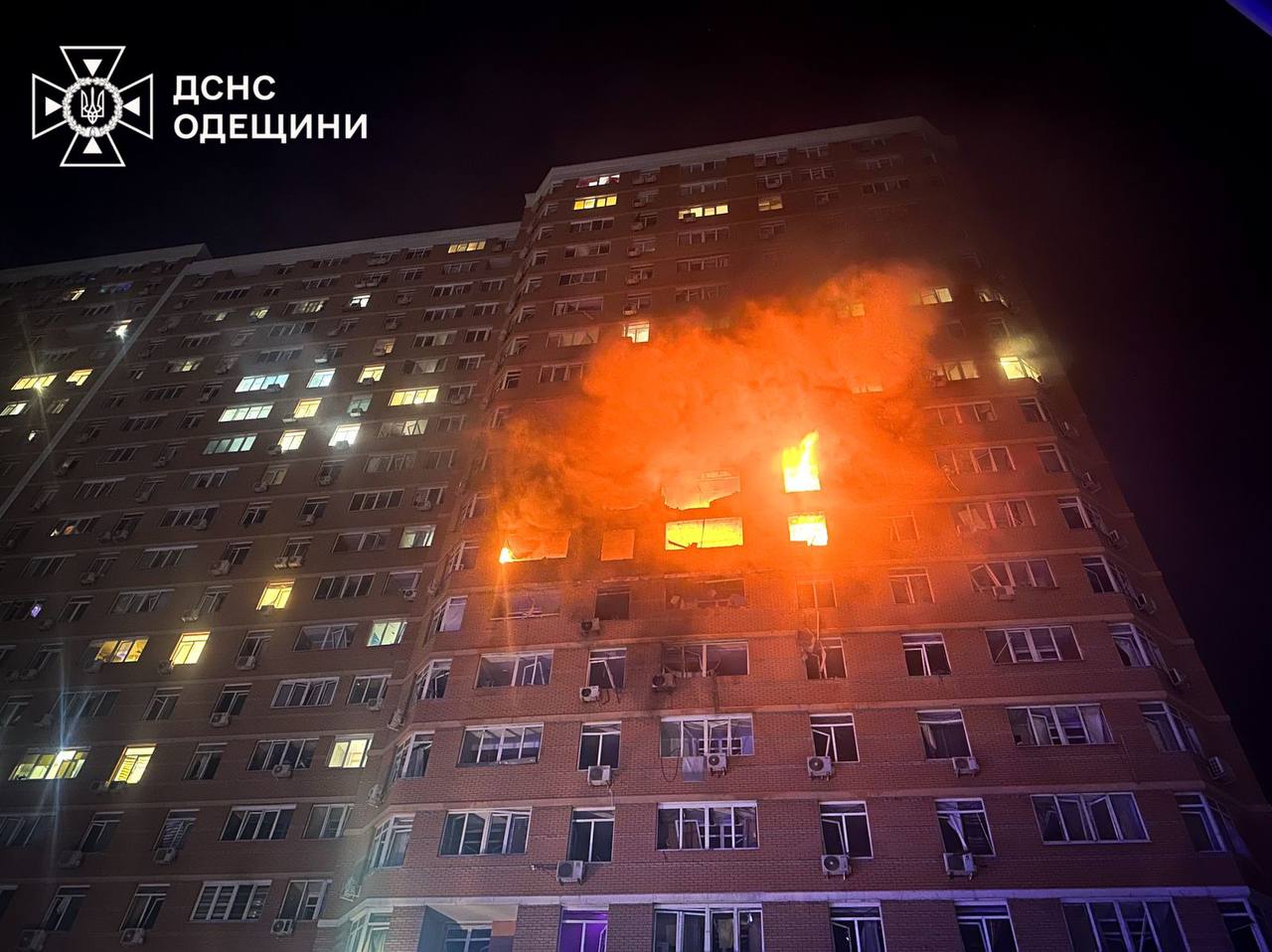
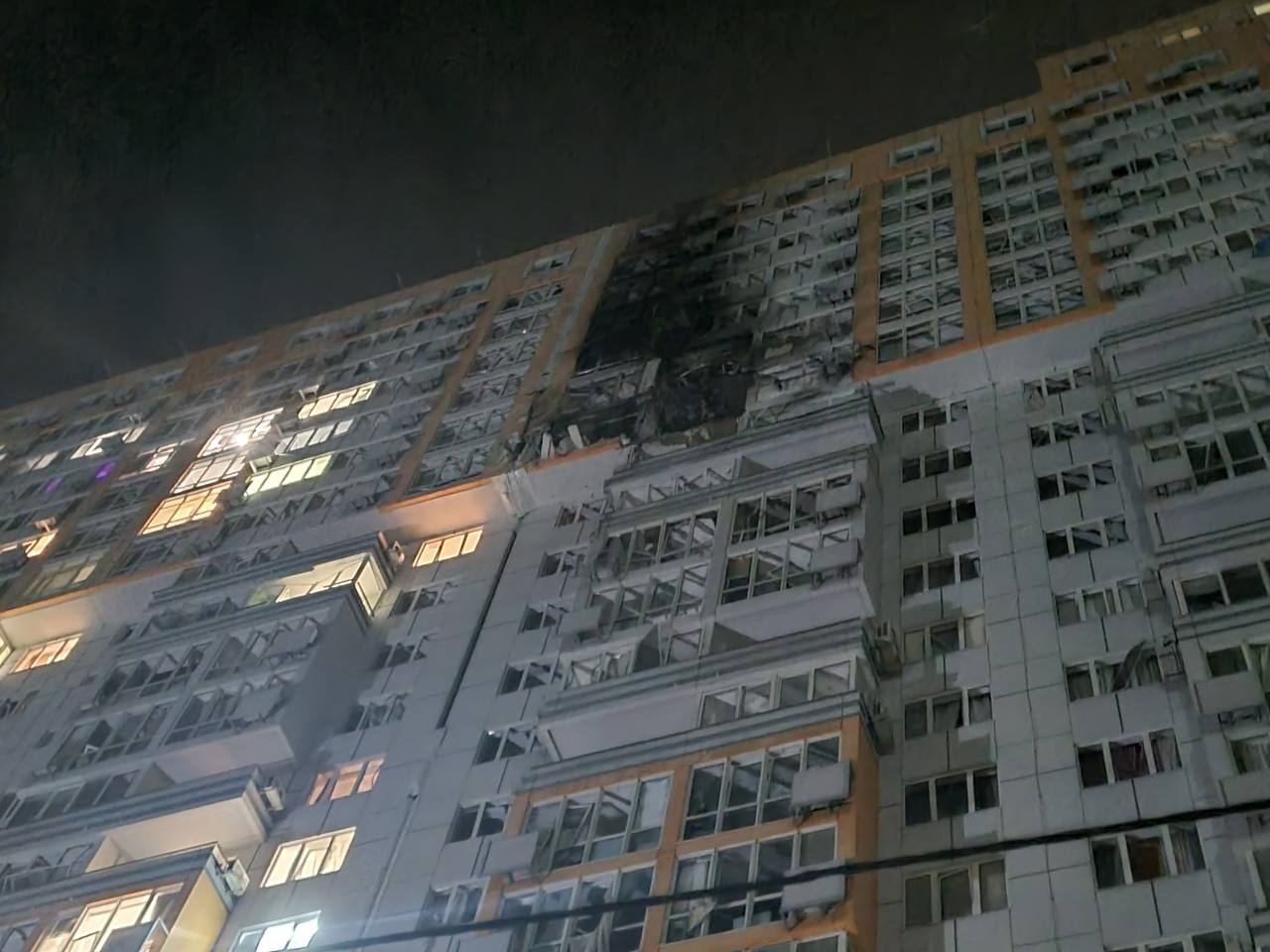
The drone attack hit a 21-story building, causing a fire on the 7th, 8th, and 9th floors that left residents trapped in their apartments. First responders rescued five people, including a small child.
Two people, a married couple, were killed in the attack, Odesa Oblast Governor Oleh Kiper reported. Emergency workers recovered their bodies from the damaged building.
At least 14 other civilians were injured, including three children. Both are receiving treatment in medical facilities, Kiper said.
Ongoing air raid alarms throughout the night complicated rescue efforts, the State Emergency Service said.
Odesa, a port city on Ukraine's Black Sea coast with a population of around 1 million, has been a frequent target of Russian attacks since the full-scale invasion. A massive Russian drone strike on June 20 killed one civilian and injured 14 others, including three first responders.
Russian missile and drone attacks on Ukrainian cities have intensified dramatically in May and June.
Three people were killed and at least 12 others injured after a Russian ballistic missile strike hit the city of Bilhorod-Dnistrovskyi in Odesa Oblast on June 23, Governor Oleh Kiper reported. The attack targeted a local educational institution, destroying the building and leaving several people, including members of the teaching staff, possibly trapped under the rubble. No children were present at the time due to summer holidays, Kiper said.As of 4:00 p.m. local time, three of the wounded were
Three people were killed and at least 12 others injured after a Russian ballistic missile strike hit the city of Bilhorod-Dnistrovskyi in Odesa Oblast on June 23, Governor Oleh Kiper reported.
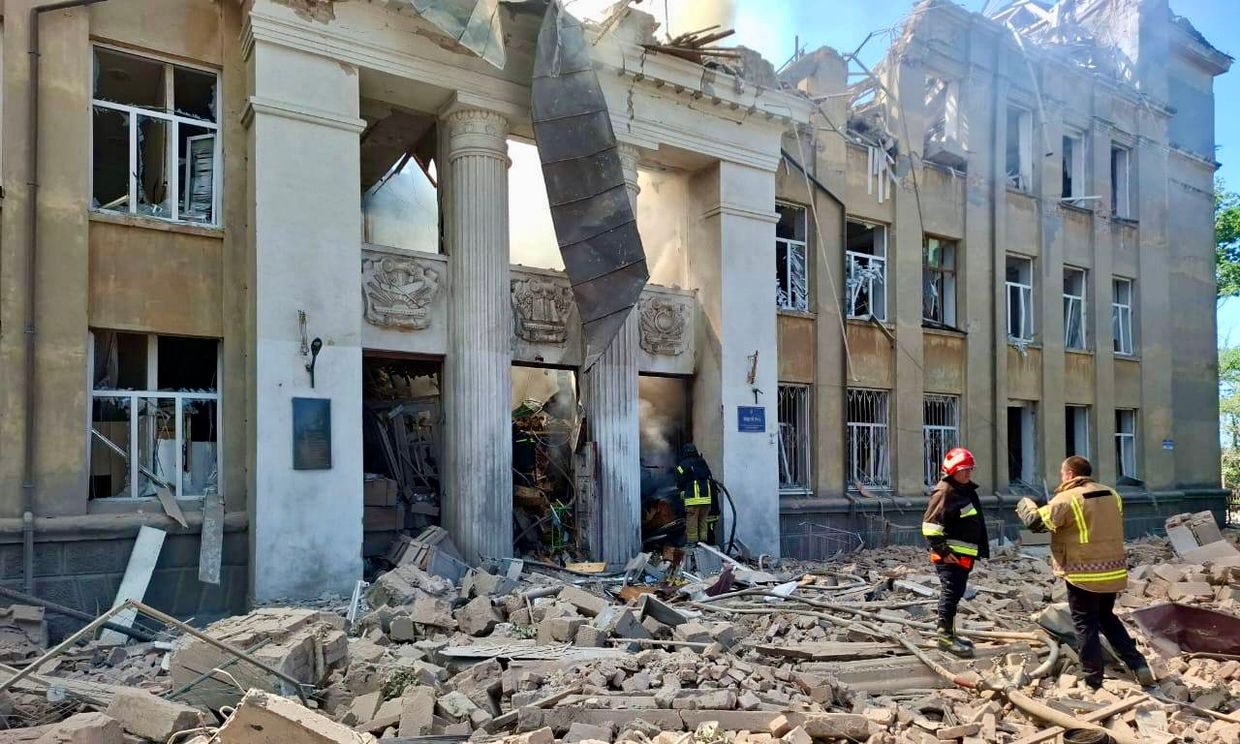
The attack targeted a local educational institution, destroying the building and leaving several people, including members of the teaching staff, possibly trapped under the rubble. No children were present at the time due to summer holidays, Kiper said.
As of 4:00 p.m. local time, three of the wounded were reported in serious condition, while the others — including two teenagers — were being treated for moderate injuries. The Air Force reported tracking two high-speed ballistic targets heading toward the city shortly before the strike.
Later in the day, Kiper reported that a 60-year-old woman died of her wounds at the hospital. Eight victims remained hospitalized as of 9:00 p.m. local time, while the rest were receiving outpatient care.
Bilhorod-Dnistrovskyi, a historic Black Sea city known for its Akkerman Fortress, lies near the mouth of the Dniester River.
Under international humanitarian law, the deliberate targeting of civilian infrastructure such as schools is forbidden and may constitute a war crime. Russia has repeatedly struck non-military sites throughout its full-scale invasion.
Earlier the same day, Russia launched another mass missile and drone attack on Kyiv, killing at least eight people and injuring 33 others, including four children, according to city officials.
Russian attacks across Ukrainian regions killed two civilians and injured at least 39, including minors, over the past day, regional authorities reported on June 20.Russian forces launched 86 Shahed-type attack drones and decoys against Ukraine overnight, the Air Force said. Ukrainian air defenses reportedly shot down 34 drones, while 36 disappeared from radars or were intercepted by electronic warfare.Russia launched "massive" drone attacks against Odesa overnight, authorities reported, resulti
Russian attacks across Ukrainian regions killed two civilians and injured at least 39, including minors, over the past day, regional authorities reported on June 20.
Russian forces launched 86 Shahed-type attack drones and decoys against Ukraine overnight, the Air Force said. Ukrainian air defenses reportedly shot down 34 drones, while 36 disappeared from radars or were intercepted by electronic warfare.
Russia launched "massive" drone attacks against Odesa overnight, authorities reported, resulting in one civilian killed and at least 14 injured, including three emergency workers.
The attack drones struck over 10 targets, including seven residential buildings, and led to multiple large-scale fires. At the site of one of the attacks, a 23-story residential building caught fire between the 18th and 20th floors, and led to the evacuation of over 600 people.
In Dnipropetrovsk Oblast, two men aged 39 and 64 were injured in Russian attacks, Governor Serhii Lysak said. Two industrial facilities, two schools, and four houses were damaged during strikes against the Nikopol district overnight.
In Donetsk Oblast, one person was killed and another injured in Kostiantynivka, while five others were injured elsewhere in the region, according to Governor Vadym Filashkin.
Russian attacks against Kharkiv and eight other settlements in Kharkiv Oblast injured six people, two of them minors, Governor Oleh Syniehubov reported. Multiple residential buildings, houses, a school, warehouses, and other property were damaged.
In Kherson Oblast, 11 people were wounded in Russian strikes, said the regional governor, Oleksandr Prokudin. Seventeen houses were damaged.
Editor's note: This is a developing story and is being updated.Russian forces struck residential buildings in Odesa overnight on June 20, killing a civilian and injuring at least 14 others, including three emergency workers, the Prosecutor General's Office reported.The attack, which the service described as "massive," rang out around 1 a.m. local time. The attack drones struck over 10 targets, including seven residential buildings, and led to multiple large-scale fires. At the site of one of the
Editor's note: This is a developing story and is being updated.
Russian forces struck residential buildings in Odesa overnight on June 20, killing a civilian and injuring at least 14 others, including three emergency workers, the Prosecutor General's Office reported.
The attack, which the service described as "massive," rang out around 1 a.m. local time. The attack drones struck over 10 targets, including seven residential buildings, and led to multiple large-scale fires.
At the site of one of the attacks, a 23-story residential building caught fire between the 18th and 20th floors, and led to the evacuation of over 600 people.
In a separate attack on a four-story building within the city, three firefighters were injured when structural elements collapsed on the responders. The building is described as being "completely engulfed in flames," according to the State Emergency Service.
The three injured firefighters are currently hospitalized in stable condition. Additional information on the attacks, as well as casualties, is being clarified as search efforts under rubble and debris continue.
Firefighters extinguish a fire at a residential building in Odesa on June 20, 2025 following a Russian drone attack that injured at least 13 people, including three firefighters. (Ukraine State Emergency Service/Telegram)
The aftermath of a Russian drone attack on a residential building in Odesa on June 20, 2025. The attacks on the city injured at least 13 people, including three firefighters. (Odesa Oblast Governor Oleh Kiper/Telegram)
In addition to the buildings, Odesa's main train station also had infrastructure damaged as a result of the drone attack, Ukraine's railway agency Ukrzaliznytsia reported.
Odesa, a port city on Ukraine’s Black Sea coast with a population of around 1 million, has been a frequent target of Russian attacks throughout the full-scale war.
"The overhead contact line and the rail and sleeper grid were affected," the agency wrote in a statement, adding that no injuries had been reported.
On June 10, a missile and drone attack on Odesa killed two people and injured eight.
Russia has continued to increase the frequency and severity of its attacks on Ukrainian cities, while rejecting a ceasefire in Ukraine. Overnight on June 17, Russia launched one of its largest attacks on Kyiv since the start of full-scale war in February 2022, killing 30 people and injuring 172 others.
Editor's note: This is a developing story and is being updated.Russian drone strikes on Odesa early June 17 killed 2 people and injured 17 others, including a pregnant woman and a child, regional authorities said.The body of a 60-year-old woman was recovered from the rubble of a collapsed building, along with the remains of another woman born in 1947, Odesa Oblast Prosecutor's Office reported."My sincere condolences to her family and loved ones," Odesa Oblast Governor Oleh Kiper wrote. One pers
Editor's note: This is a developing story and is being updated.
Russian drone strikes on Odesa early June 17 killed 2 people and injured 17 others, including a pregnant woman and a child, regional authorities said.
The body of a 60-year-old woman was recovered from the rubble of a collapsed building, along with the remains of another woman born in 1947, Odesa Oblast Prosecutor's Office reported.
"My sincere condolences to her family and loved ones," Odesa Oblast Governor Oleh Kiper wrote.
One person remains hospitalized as of 9 a.m., while the rest of the injured are receiving outpatient treatment.
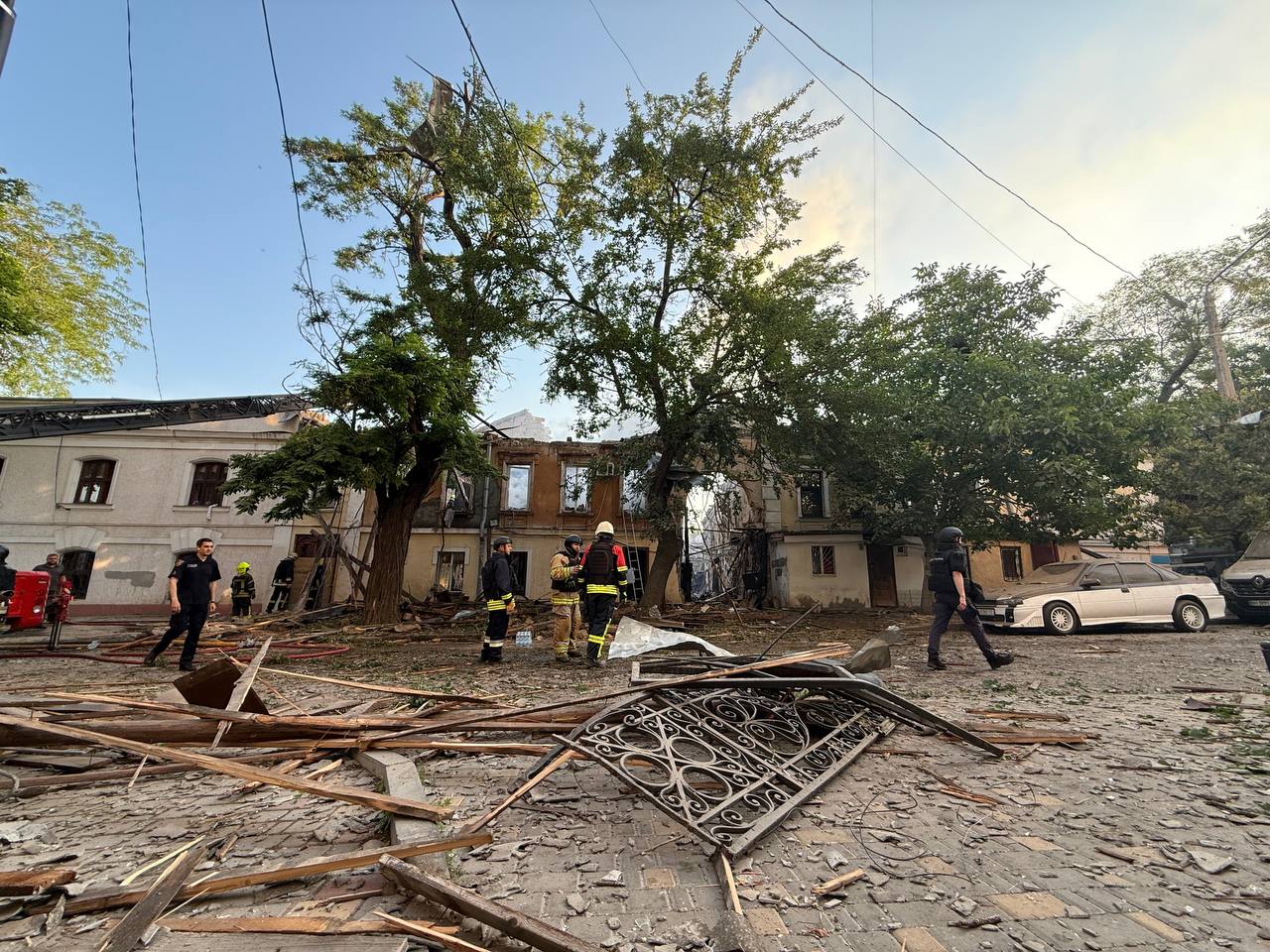
The strike damaged multiple residential buildings in Odesa’s historic city center, as well as a kindergarten and an inclusive support center. Emergency services and volunteers continue clearing debris and responding to the aftermath.
The attack also damaged civilian infrastructure across the city, including residential buildings.
Emergency services and volunteers are working at the scene to clear debris.
Overnight, Russia also launched a mass attack on Kyiv, injuring at least 18 people.
Odesa, a port city on Ukraine’s Black Sea coast with a population of around 1 million, has been a frequent target of Russian attacks throughout the full-scale war.