❌

Vue normale

Russian milblogger urges hitting Ukraine’s nuclear plants. ISW: without stronger defenses, last winter will likely repeat

5 novembre 2026 à 07:33

zaporizhzhia attack

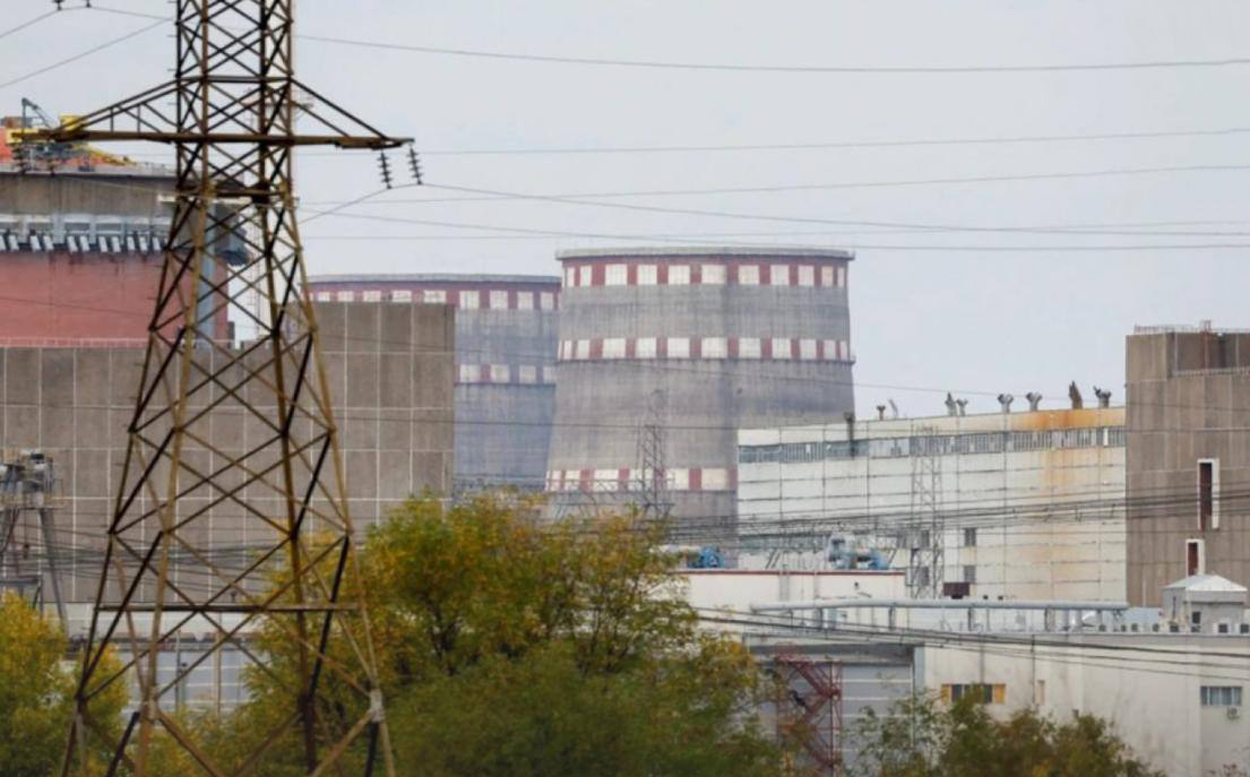
This winter’s Russian strikes will likely do what last winter’s did, unless Ukraine can fend off the big waves of drones and missiles Russia sends every day, the Institute for the Study of War (ISW) assessed on 4 November. The same day, the Kremlin-affiliated Telegram channel Rybar wrote that Russia should think about putting Ukraine’s nuclear plants out of action by striking their unit transformers or generators.

Russia has kept up its strikes on Ukraine’s power system this autumn, under a plan for the winter that Ukraine says lists 60 critical infrastructure sites as targets. It now hits not only power plants but also substations, and its drones even cut down the towers that carry high-voltage lines. The damage has now reached nuclear generation, which can recover only as the networks are repaired. Last winter was the worst yet, and ISW says Russia’s campaign then reportedly damaged or destroyed 80% of Ukraine’s power generation.

A pro-Kremlin channel wants Odesa and the northeast cut off

Rybar urged Moscow to avoid the “mistakes of 2022 and 2023,” when loud claims outran results. Strikes now hit “system-forming substations” and smaller facilities that directly affect power flows, the channel wrote. Precise hits on key nodes could isolate Odesa and leave northeastern Ukraine without normal supply, it argued.

The channel named the 24/750 kV and 24/330 kV unit transformers, as well as generators, as targets that would bring “far greater effect,” along with substations and battery storage at large solar farms. In an earlier post that day, it claimed Russia had shifted to “more systematic and rational” attacks.

Nuclear plants already producing less

Meanwhile, “large-scale and systemic” Russian attacks have forced Ukraine’s nuclear plants to reduce generation, First Deputy Energy Minister Artem Nekrasov said on 4 November. Output will recover gradually as crews repair the damaged networks. The situation is hardest in Kyiv and Kyiv Oblast, where distributors have imposed grid restrictions.

On 3 November, Russia sent three drones at a substation the Khmelnytskyi nuclear plant depends on. Nuclear plants produce roughly half of Ukraine’s electricity.

Nuclear power plants in Ukraine. Map: Euromaidan Press.

Defenses and repairs decide the winter

President Volodymyr Zelenskyy called strikes on networks and distribution Russia’s “new tactic” this year. The speed of repairs “now matters as much as having missiles for air defense,” he said.

First Deputy Prime Minister and Energy Minister Denys Shmyhal says protection is working: 235 second-level shelters now cover key energy elements, and only one protected facility has been hit by a ballistic missile in six months.

Ballistic missiles remain the hardest threat for Ukraine’s air defense, and Ukraine’s Defense Ministry says it needs better means against them.

“The provision of Patriot interceptor missiles and other air defense systems and support for Ukraine’s energy infrastructure reconstruction is essential to ensure that Ukraine can withstand Russia’s increasingly destructive strike campaign,” ISW wrote.

A three-ton bomb fell on an aid queue on Monday—two days later, rescuers have found 37 dead. And now Russia strikes Ukraine’s power stations

4 novembre 2026 à 05:39

Rescuers search the rubble of the underground school in Komyshuvakha, Zaporizhzhia Oblast, Ukraine, November 2026

The death toll from Russia's bombing of an aid distribution point in Komyshuvakha rose to 37, the Zaporizhzhia Oblast Military Administration reported on 4 November. Russian attacks on 3 and 4 November killed and wounded civilians across seven oblasts. Moscow also kept hitting Ukraine's power system and aimed drones at a substation serving a nuclear plant.

Russia is running two campaigns at once this autumn: one against people in front-line towns, the other against the grid the whole country relies on. Ukraine says it intercepted a Russian plan for this winter that lists 60 critical infrastructure sites as targets for up to 1,000 missiles, drones, and bombs. Nuclear plants now produce roughly half of Ukraine's electricity, and the substations that feed them have been targeted before. Hitting those links can black out the country without striking a reactor.

Komyshuvakha's toll keeps rising

On the third day of searches, rescuers had identified 12 of the dead, while 59 people were still listed as missing, Ukraine's National Police reported. Some of the missing may be among those already found, and up to 38 more people may lie under the rubble. Ivan Fedorov, head of Ukraine's State Agency for Restoration and Infrastructure Development, said Russia hit people collecting humanitarian aid with a FAB-3000, a three-ton aerial bomb, on 2 November. Five people were injured.

On 2 November, Russian forces struck a school in Komyshuvakha, Zaporizhzhia Oblast, killing 26 people. Source: Ukraine's State Emergency Service
Explore further

Russia strikes school where civilians recieved aid in Zaporizhzhia Oblast days after Oleshky truce. Nine more bombs hit its shelter, killing at least 26

The underground school was built to a single standard design and checked by every relevant service, but no underground school in Ukraine is designed to withstand a FAB-3000, Fedorov told a briefing, Ukrinform reported. “These were launches of nine aerial bombs, some of them quite rare 'three-thousanders',” he said. Latvian Foreign Minister Baiba Braže called for an extraordinary meeting of the UN Security Council over the strike. Latvia chairs the Council this month.

Russia kills civilians in Zaporizhzhia, Dnipropetrovsk, and Donetsk oblasts

Two Russian strikes on Vilniansk killed a woman, 52, and a man, 63, and injured a man, 59, the oblast administration reported on 4 November. A fire broke out in a five-story apartment building. Russian shelling also killed a 53-year-old man in Bilenke, in the same district. Over the previous day, Russia killed two people and injured three in Zaporizhzhia and its district, striking 51 towns and villages 857 times, Fedorov wrote.

outages
Explore further

One of largest Russian attacks yet on Ukraine’s energy system forces emergency blackouts across regions and leaves Kyiv without water

On 3 November, Russian drones, artillery, and missiles killed two people in Dnipro and injured 38 across Dnipropetrovsk Oblast, oblast head Oleksandr Hanzha reported. Fourteen people hurt in Dnipro are still in hospital, four in serious condition. Overnight, a Russian strike set an enterprise in Dnipro on fire and injured two men.

Aftermath of a Russian attack on Dnipro, Ukraine, 3 November 2026
Aftermath of a Russian attack on Dnipro, Ukraine, 3 November 2026. Photo: Dnipropetrovsk Oblast Military Administration

On 3 November in Donetsk Oblast, Russia killed one person in Kramatorsk and one in Yasnohirka, where four guided bombs also injured five, oblast head Vadym Filashkin said. Three more people were wounded in Sloviansk.

Russian drones also wounded a 69-year-old woman in Sumy Oblast and, on 3 November, three people at a farm business in Zhytomyr Oblast's Liubar community. In Rivne Oblast, a Russian attack hit a gas station and hurt a man on 3 November, and a woman was injured overnight. In Kherson, a man stepped on a Russian mine.

russia blacked out europe's largest nuclear plant 15 times since occupying 2022 · post zaporizhzhia power energoatom znpp russian-occupied (znpp) again lost external 40th anniversary chornobyl disaster said same day
Explore further

Russia won’t start a nuclear war. It might cause a nuclear disaster.

Drones sent at a substation serving the Khmelnytskyi nuclear plant

During the 3 November mass attack, Russia sent three drones at a substation critical to the stable operation of the Khmelnytskyi nuclear plant, First Deputy Prime Minister and Energy Minister Denys Shmyhal said. He called it “a serious step of escalation.” Ukraine informed the International Atomic Energy Agency (IAEA), which had not commented.

Overnight on 4 November, Russia hit an energy facility, a shopping center, and homes in Odesa Oblast, the oblast administration reported. Critical infrastructure in Vinnytsia was also damaged. By late morning, Ukraine's Air Force was still tracking Russian jet-powered drones heading for Bila Tserkva, south of Kyiv.

❌