A Russian drone tore a hole in the shield over Chornobyl’s dead reactor. Now the G7 is paying to patch it.
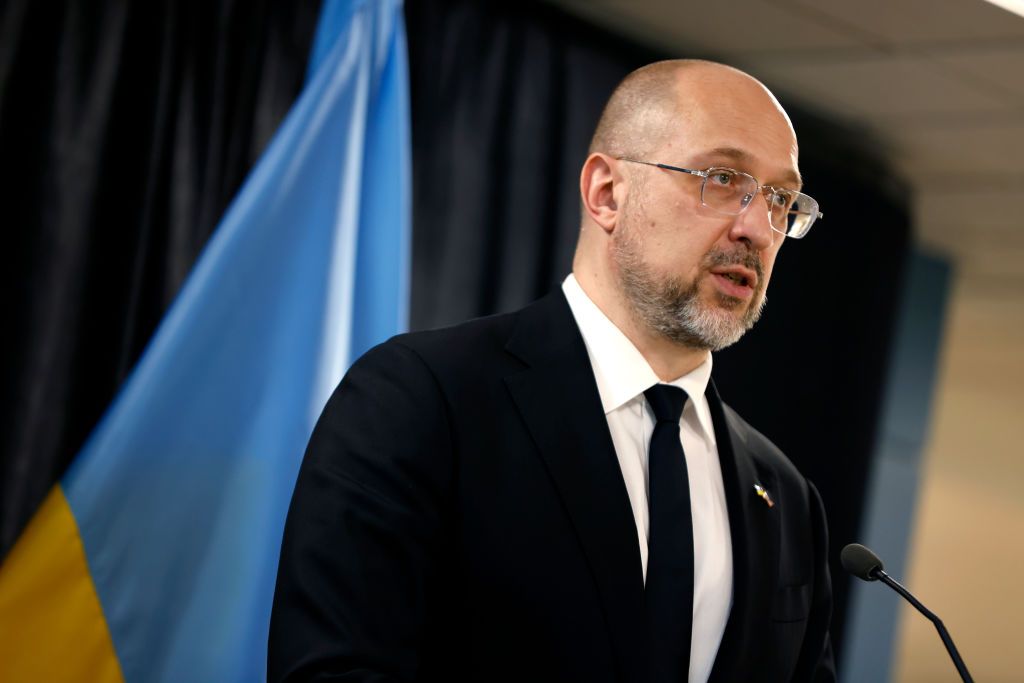
The Group of Seven nations plans to allocate 260 million euros ($292 million) to repair the New Safe Confinement at the Chornobyl Nuclear Power Plant, First Deputy Prime Minister and Energy Minister Denys Shmyhal says on X.
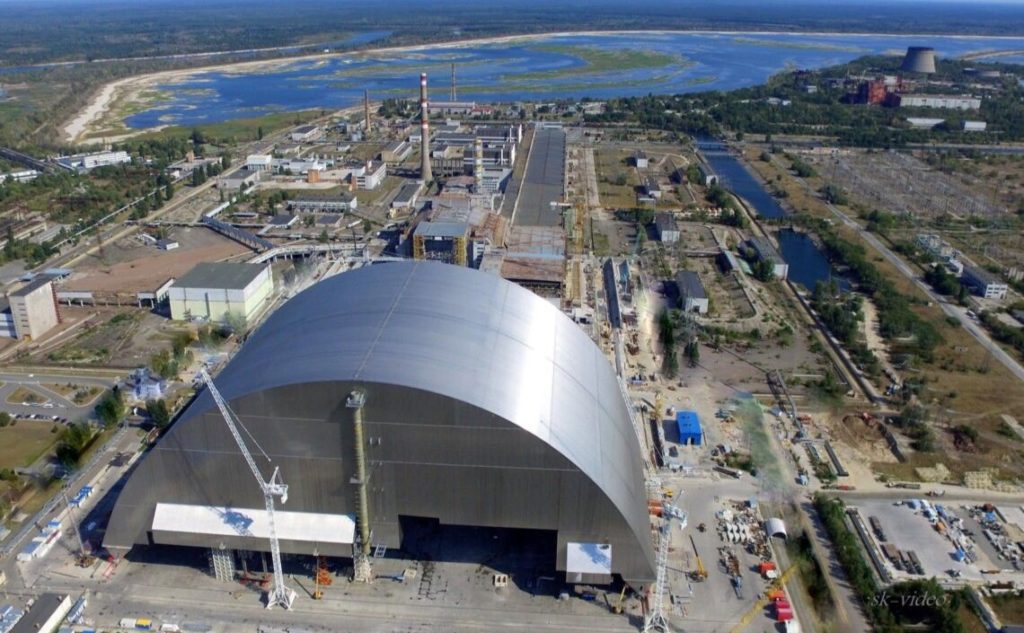
The confinement, a 35-story steel arch sealing the reactor that exploded in the 1986 disaster, was damaged by a Russian drone strike in February 2025. Full
A Russian drone tore a hole in the shield over Chornobyl’s dead reactor. Now the G7 is paying to patch it.
The Group of Seven nations plans to allocate 260 million euros ($292 million) to repair the New Safe Confinement at the Chornobyl Nuclear Power Plant, First Deputy Prime Minister and Energy Minister Denys Shmyhal says on X.
The confinement, a 35-story steel arch sealing the reactor that exploded in the 1986 disaster, was damaged by a Russian drone strike in February 2025. Full restoration will cost at least 500 million euros, the European Bank for Reconstruction and Development (EBRD) estimates, so the G7 pledge covers just over half, leaving about 240 million euros still to raise.
Shmyhal calls the decision an important step toward restoring nuclear safety at the plant, which the Russian strike had compromised. The money will go to priority work, including resealing the structure and restoring its ventilation system.
“Thank you to France and personally to Minister Roland Lescure for leadership in mobilizing international support,” Shmyhal says, crediting France and the EBRD with co-chairing the effort.
The night a drone pierced the sarcophagus
The damage dates to 14 February 2025. A Russian drone carrying a high-explosive warhead punched a hole through the arch’s roof and ignited a fire in the cladding, breaching the structure’s seal and ventilation.
The attack caused a 15 m² breach in the inner and outer cladding and damaged around 200 m² of panels.
"It was a targeted Russian attack on the Chornobyl station with a drone that is an analog of the Iranian Shahed," Ukrainian President Zelenskyy said at that time.
A bill only half-covered, and a 2030 deadline
The G7 money closes only part of the gap. Partners must still raise roughly 240 million euros more, and Ukraine hopes to secure it at a donor conference in Paris co-chaired by Ukraine, France and the EBRD, Shmyhal says.
The clock matters as much as the cost. The work must be finished by 2030 to limit corrosion and protect the arch’s 100-year design life, the EBRD says, turning a repair bill into a race against the rust the strike set loose.
Russia is planning a winter strike campaign involving up to 1,000 missiles, drones, and bombs targeting, among other facilities, electrical substations, hydroelectric and thermal power plants, and boiler houses. The information is contained in a document that, according to sources cited by The New York Times, Ukraine's Energy Minister Denys Shmyhal presented as an intercepted Russian plan to destroy energy infrastructure systematically. The newspaper reported on 2 October.
Russia has be
Russia is planning a winter strike campaign involving up to 1,000 missiles, drones, and bombs targeting, among other facilities, electrical substations, hydroelectric and thermal power plants, and boiler houses. The information is contained in a document that, according to sources cited by The New York Times, Ukraine's Energy Minister Denys Shmyhal presented as an intercepted Russian plan to destroy energy infrastructure systematically. The newspaper reported on 2 October.
Russia has been striking critical infrastructure across Ukraine since the beginning of its full-scale invasion. Such attacks have become particularly frequent ahead of and during winter. Ukraine's recent battlefield gains may have prompted Putin to reconsider his strategy and attempt to force Ukraine to surrender through winter strikes, analysts at the Institute for the Study of War (ISW) suggest. Russia's reported plans to attack Ukraine's energy, water supply, and sewage systems could threaten the basic living conditions of millions of people. Such strikes could increase pressure on civilians and the Ukrainian economy while forcing the state to divert more resources to emergency infrastructure repairs instead of defense needs.
The New York Times was unable to verify the document's authenticity independently, but noted that it was written in Russian and dated August.
Explore further
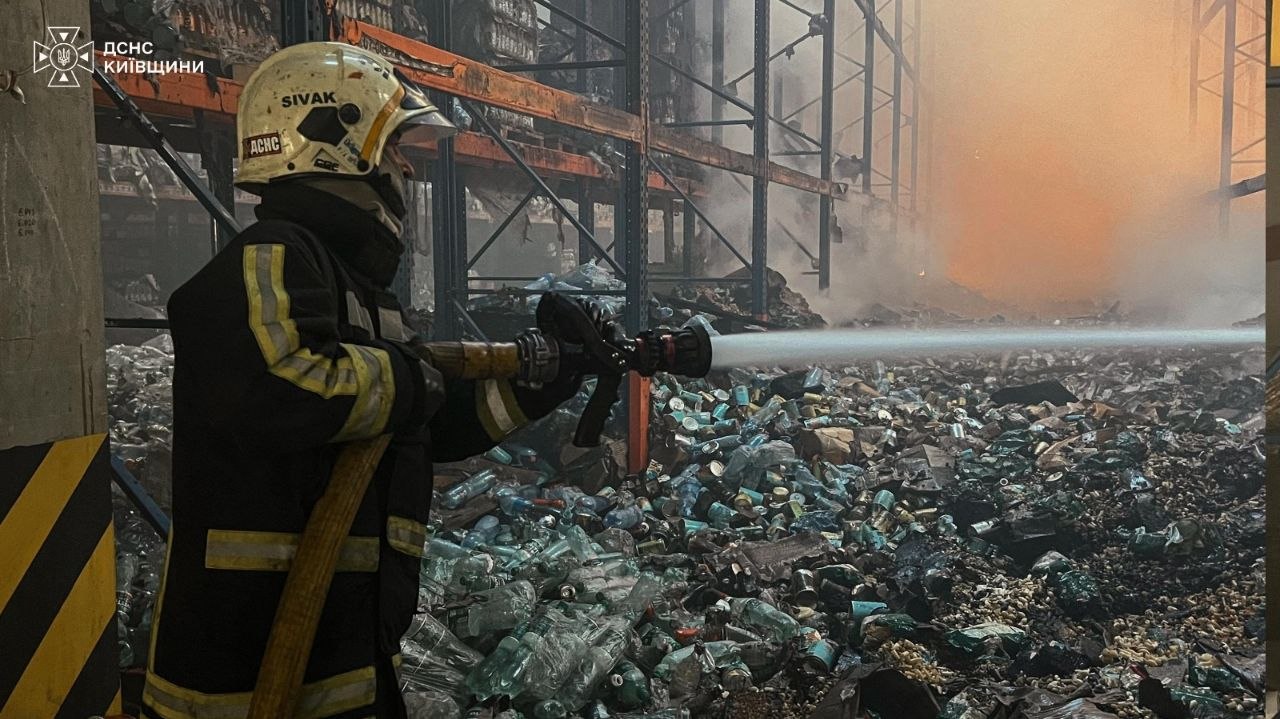
Warehouses, a home-improvement store, a farm: Russia’s strikes aimed past the grid at Ukraine’s civilian economy
A representative of Ukraine's defense-industrial sector who has reviewed the document believes it is more of a calculation than a finalized Russian military operations plan, according to Schemes, an investigative journalism project by Radio Free Europe/Radio Liberty (RFE/RL), in a report published on 8 October.
60 targets: how Russia could attack Ukraine's critical infrastructure
The document outlines how many missiles, drones, and bombs Russia would need to deprive Kyiv, Kharkiv, and Odesa of electricity, heating, water, and sewage services, Radio Liberty reported on 9 October. The document's full list of priority cities also includes Dnipro, Zaporizhzhia, Mykolaiv, Kherson, Poltava, Chernihiv, Kryvyi Rih, Cherkasy, Kropyvnytskyi, Lviv, Vinnytsia, and Ivano-Frankivsk.
Regions of Ukraine containing cities listed as “priority” targets in Russia's plan to attack critical infrastructure this winter (shown in grey). Map: Euromaidan Press
According to the document, Russia plans to begin by attacking substations near Ukraine's western border, through which the country receives electricity from Europe. Hydroelectric power plants could be targeted next, followed by facilities intended to shut down Ukraine's three operational nuclear power plants, Radio Liberty reports. The document lists a total of 60 key targets.
According to Schemes, the document states that Russia would need up to 770 Molniya and Geran drones, Dan-T/Banderol missile-drones, 170 FAB guided aerial bombs, and 75 Kinzhal and Iskander-M ballistic missiles to carry out the attacks.
Sewage systems could become Russia's next target
The document devotes particular attention to water supply and wastewater systems. These include pumping stations, treatment facilities, and other infrastructure essential for cities to provide residents with water and dispose of wastewater.
One of the water supply facilities. Illustrative photo: Ukrinform
Russia has not previously attacked such facilities on a similar scale, The New York Times notes.
Preparing for possible attacks on water supply and sewage systems is significantly more difficult than protecting energy infrastructure, Oleh Popenko, head of the Ukrainian Union of Utility Services Consumers, told Current Time, RFE/RL's Russian-language network.
“Sewage is a very complex system. There are specific challenges: where to discharge wastewater, how to organize treatment facilities, and so on. Some work is also underway in this sector, but it will be much more difficult here than with district heating utilities,” Popenko says.
Creating alternative routes in case sewage pumping stations are destroyed is an expensive and technically challenging task, he adds. Such construction could cost billions of hryvnias.
Explore further
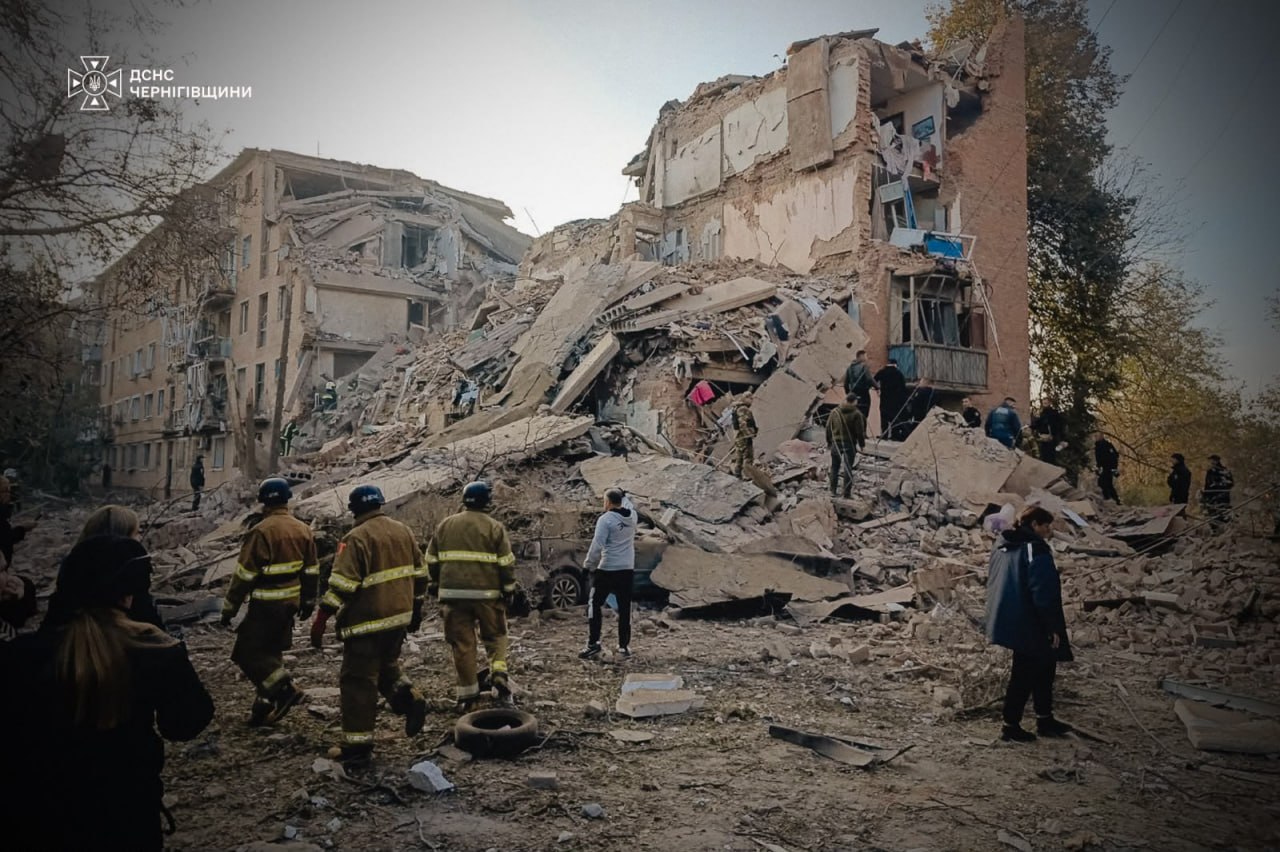
14 dead in Pryluky, two each in Kyiv, Kremenchuk, and Oleksandriia: Russia’s night of 70 missiles
The priority is to equip water utilities with backup power sources so they can continue operating during power outages. However, if Russian strikes damage the sewage system itself, resolving the problem quickly will be much more difficult, Popenko believes. Specific solutions, including wastewater disposal and the operation of treatment facilities, will have to be determined according to the extent of the damage.
Sewage pumping stations play a particularly important role. They pump wastewater onward for disposal and treatment. If such a station is put out of operation by a strike, the city needs an alternative way to divert wastewater while the damaged facility is being repaired, Popenko says. Bypass pipes or channels could be installed for this purpose, but setting up such a system during wartime is far from easy.
Air defenses remain crucial to Ukraine's winter preparations
Preparations for winter are underway, but protection for energy infrastructure remains inadequate, Popenko believes. The main concern is large substations that transmit electricity from nuclear power plants and distribute electricity imported from Europe.
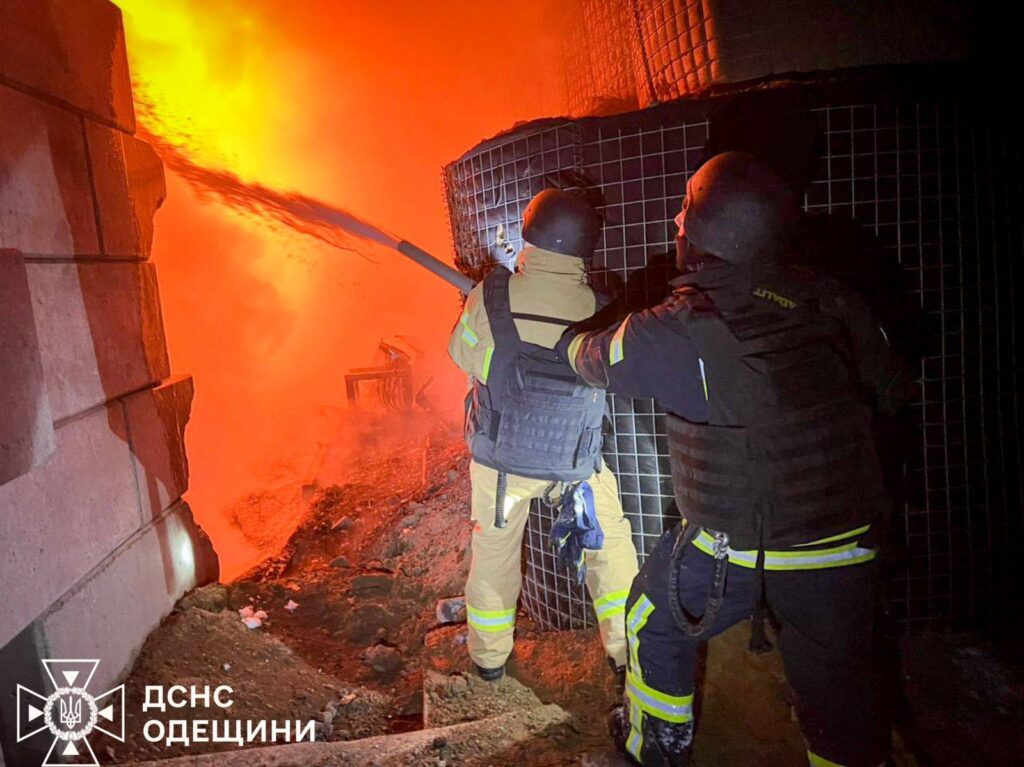
Rescuers extinguish a fire caused by a Russian strike in Odesa Oblast. Illustrative photo: State Emergency Service of Ukraine in Odesa Oblast
At the same time, some protective measures are already proving effective. Despite drone attacks over two days, one of Kyiv's substations withstood the strikes, and the city did not lose power, although scheduled outages were in effect, the expert says.
Popenko considers a repeat of last winter's scenario, when parts of Kyiv went without heating for weeks, entirely possible. Russian forces continue to attack energy facilities, and in his assessment, strengthening air defenses in Kyiv is the only way to protect its combined heat and power (CHP) plants from large-scale attacks.
“There are no other ways — for example, building some sarcophagi around CHPs or constructing shelters — because Russia can destroy these facilities again through massive strikes. And then the city risks being left 50–60% without heat,” Popenko believes.
Residents are also preparing for winter, but their options vary, he says. Some homeowners' associations participate in government programs to insulate apartment buildings and purchase backup power supplies for elevators and pumping stations. Owners of private houses are buying generators, among other measures. However, such equipment and preparations require substantial funds, meaning not everyone can afford them, he notes.
Ukraine has already experienced prolonged power outages during previous winters, particularly in 2022 and 2023. At the time, some regions went without electricity for 18–20 hours a day, the expert says. This experience may help people prepare for possible disruptions, but it does not eliminate the risk of further attacks and infrastructure damage.
President Volodymyr Zelensky and U.S. President Donald Trump discussed a potential change in Ukraine's ambassador in Washington during a recent phone call, a source familiar with the conversation told the Kyiv Independent.Oksana Markarova has held the post since April 2021, and played a central role in coordinating U.S. military and financial support during the early phases of Russia's full-scale invasion. According to the source, the topic of replacing her was raised by Kyiv, suggesting the mov
President Volodymyr Zelensky and U.S. President Donald Trump discussed a potential change in Ukraine's ambassador in Washington during a recent phone call, a source familiar with the conversation told the Kyiv Independent.
Oksana Markarova has held the post since April 2021, and played a central role in coordinating U.S. military and financial support during the early phases of Russia's full-scale invasion.
According to the source, the topic of replacing her was raised by Kyiv, suggesting the move could be "useful for both sides." The source added that there are multiple "strong candidates" in the running.
When contacted by the Kyiv Independent, a spokesperson for Stefanishyna said they "do not comment on rumors."
The possible reshuffle comes at a moment of renewed tension between Kyiv and Washington. The U.S. Defense Department recently paused shipments of critical weapons systems, including Patriot missiles and precision-guided munitions, sparking concern in Kyiv.
The discussion about Ukraine's representation in Washington also coincides with longstanding speculation about a broader government reshuffle.
Rumors about replacing Shmyhal as prime minister have circulated since last summer. Although Zelensky replaced several officials in September 2024, Shmyhal remained in office.
Halushchenko, one of the potential ambassadorial candidates, has faced criticism in parliament. Lawmakers from the Energy Committee, led by lawmaker Inna Sovsun, introduced a motion to dismiss him in January, citing alleged corruption.
Shmyhal has served as Ukraine's Prime Minister since March 2020, overseeing national governance during a period marked by reforms and wartime crises. Before his premiership, he held key roles as Ivano-Frankivsk Oblast Governor and Vice Prime Minister.
Stefanishyna is a seasoned Ukrainian diplomat and expert in European integration who has held high-level government roles since 2020. In September 2024, she was appointed Deputy Prime Minister for European and Euro-Atlantic Integration, and Justice Minister.
Umerov is Ukraine's current Defence Minister, appointed in September 2023. He started his political career as a member of the Parliament for the opposition party Voice (Holos). Umerov played a major role in peace talks with Russia in the early phase of the full-scale war.
The ambassadorial review comes as Kyiv seeks to strengthen its diplomatic ties with Washington.
Zelensky described his July 5 phone call with Trump as "the best conversation in all this time." The U.S. president echoed the sentiment, calling the exchange "very strategic."
Andriy Yermak, head of Ukraine's Presidential Office, has been leading campaigns to supplant three top officials in the Ukrainian government, the Economist reported on July 6, citing multiple anonymous officials. The story follows a corruption probe into Deputy Prime Minister Oleksii Chernyshov, the highest-ranking official in Ukrainian history to face such charges while still in office. According to the Economist's sources, Yermak was a driving force behind the investigation.Yermak, President V
Andriy Yermak, head of Ukraine's Presidential Office, has been leading campaigns to supplant three top officials in the Ukrainian government, the Economist reported on July 6, citing multiple anonymous officials.
The story follows a corruption probe into Deputy Prime Minister Oleksii Chernyshov, the highest-ranking official in Ukrainian history to face such charges while still in office. According to the Economist's sources, Yermak was a driving force behind the investigation.
Yermak, President Volodymyr Zelensky's close friend and chief adviser, spurred on the Chernyshov probe while also renewing attempts to replace Kyrylo Budanov, head of Ukraine's military intelligence agency (HUR) , and Prime Ministery Denys Shmyhal, three unnamed officials told the Economist.
There is no evidence that Yermak ordered an investigation into Chernyshov, the Economist reports, but officials told the outlet that he influenced the case by allowing it to progress while freezing other investigations.
Chernyshov ran afoul of Yermak by offering himself as an alternative liaison to Washington, the officials claimed. His removal would also reportedly clear the way for Deputy Prime Minister Yuliia Svyrydenko, a Yermak protege, to assume the role of Prime Minister in the event of Shmyhal's dismissal.
Rumors of a government reshuffle unseating Shmyhal have circulated for months. Ukrainian media reported last summer that Zelensky was considering replacing the prime minister with Svyrydenko. While several key officials were replaced in a reshuffle in September 2024, Shmyhal kept his post.
Chernyshov, too, has said he will not step down from his role as deputy prime minister despite the ongoing corruption probe.
Reports of imminent dismissal have also periodically surrounded Budanov, Ukraine's spy chief. Budanov has rejected such rumors as "Russian propaganda" in the past.
Sources told the Economist that Yermak was leading another effort to oust Budanov in June 2025. According to the outlet, warnings from the White House not to fire Budanov may have helped secure his position.
Politico reported in June that U.S. officials, particularly those working in the Trump administration, found Yermak's diplomatic style abrasive and off-putting, potentially risking U.S.-Ukrainian relations at a critical time.
Ukraine has received another 1 billion euros ($1.1 billion) in macro-financial assistance from the European Union as part of a G7 loan, Prime Minister Denys Shmyhal announced on June 13."This is the fifth tranche of macro-financial assistance from the EU under the ERA Extraordinary Revenue Acceleration) initiative," Shmyhal wrote on social media. "The funds will be directed toward key expenditures of the state budget."Shmyhal thanked Ukraine's partners for their "consistent and reliable support,
Ukraine has received another 1 billion euros ($1.1 billion) in macro-financial assistance from the European Union as part of a G7 loan, Prime Minister Denys Shmyhal announced on June 13.
"This is the fifth tranche of macro-financial assistance from the EU under the ERA Extraordinary Revenue Acceleration) initiative," Shmyhal wrote on social media. "The funds will be directed toward key expenditures of the state budget."
Shmyhal thanked Ukraine's partners for their "consistent and reliable support," adding, "Together, we will make (Russia) pay for all the damage caused to Ukraine."
According to Shmyhal, Ukraine has received a total of 7 billion euros ($8 billion) from the European Union under the ERA initiative, which is funded by the windfall profits generated from immobilized Russian sovereign assets.
The ERA mechanism, launched by the G7 and backed by the EU and the United States, is a $50 billion program designed to support Ukraine through loans repaid using future income from frozen Russian assets. Since Russia's full-scale invasion in 2022, G7 countries have frozen around $300 billion in Russian sovereign assets.
Ukraine received the previous 1-billion-euro tranche on May 8 as part of the fourth installment of EU aid under ERA.

 Connexion