❌

Vue normale

Tunnels and hybrid attacks: Russia digs in under Ukraine-controlled skies across 20-30% of Kherson’s occupied bank, marine officer says
7 novembre 2026 à 16:16

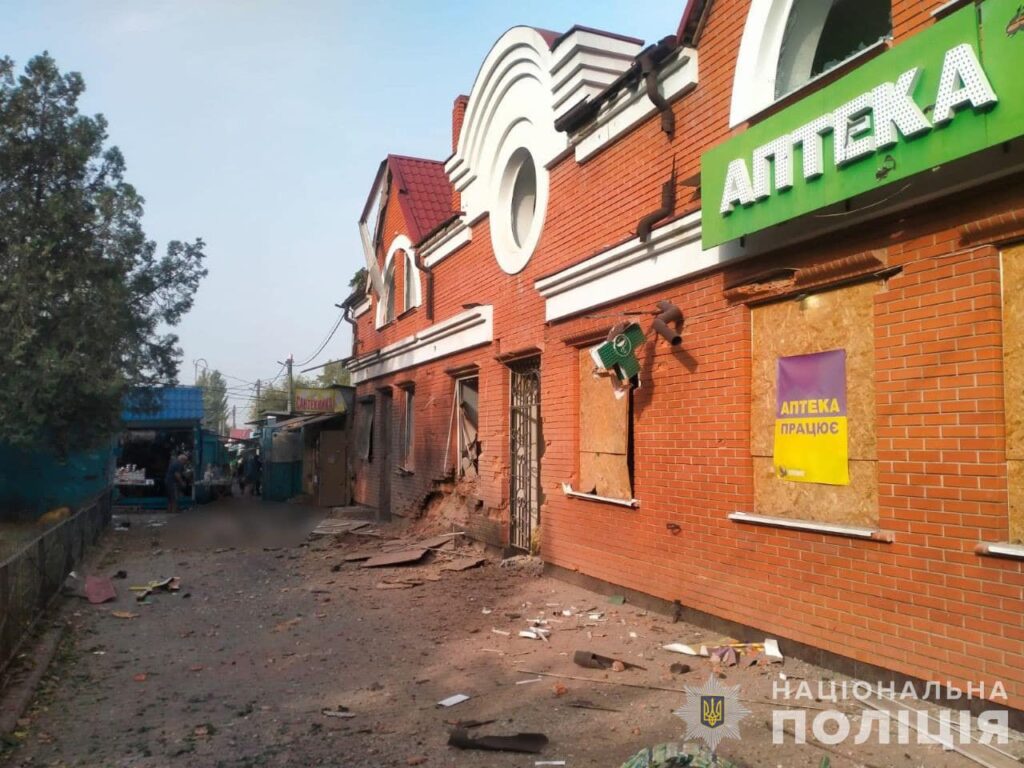
russian strikes kherson market zaporizhzhia high-rise kill seven civilians aftermath russia's shelling city 1 october 2024 ukraine's internal ministry 20241001110757-4423

Russia is digging tunnels to keep moving under skies Ukraine controls. Underground passages up to 150 meters long now run through 20-30% of the occupied left bank of Kherson Oblast, and Russian forces on the river have switched from frontal attacks to a “hybrid” positional war, the chief of staff of Ukraine’s 34th Separate Marine Brigade, Alim Kerimov, told Krym.Realii.

Kerimov frames the change as the mark of failed offensives: Russia has slashed its ground assaults, all but abandoned Dnipro boat crossings, and leaned into bombarding Kherson’s civilians. Meanwhile, Ukrainian marines hold islands in the delta and claim to be pushing forward. As of late 2026, Russian forces control over 70% of Kherson Oblast, but its main city, Kherson, remains under Ukrainian control.

Fewer assaults, more terror

Russia has cut back its assaults and river crossings on the Dnipro axis and intensified artillery, drone, and aviation strikes, Kerimov said.

In 2025, there were up to 700 assault sorties by occupiers. Now it’s 150-200 a year. Last year, the Russians had up to 200 sorties on boats, and in the last six months, about 22.

"Why did Russia switch to a more positional hybrid war? It understands that all his offensive operations end in failure. And it simply turns to terror of civilians,” he said.

However, Russia doesn't give up its attempt to recapture Kherson, liberated in 2022. On 22 October, Russia’s amphibious landing attempt of the last offensive campaign was wiped out, with one Russian killed and three captured.

Kherson’s Governor Oleksandr Prokudin says Russia now launches up to 6,500 drone attacks a week at the region, which he also calls deliberate terror against civilians.

Tunnels under the airspace

The passages let Russian troops move where Ukraine holds the sky, according to Kerimov. His brigade hunts them around the clock.

“All these shelters and tunnels are detected and destroyed at once. For example, Oleshky, I wouldn’t say they have an extensive system there,” he stated.

There are stretches, somewhere around 20-30% of the total, on the left bank, he continued.

"That is, sections where they run, try to walk, then move into a tunnel. We have this picture, and we work in this direction day and night," he said, naming Oleshky, an occupied town on the left bank opposite Kherson.

Russian drone launch points sit 5 to 15 kilometers deep into the occupied bank.

Marines hold the islands

Despite the pressure, Ukrainian marines keep positions in the Dnipro’s island zone and are advancing, Kerimov noted, without giving coordinates.

“We have many positions on the left bank, where rotations are conducted on a permanent basis. And we are advancing in this island zone overall, and in a certain settlement on the left bank,” he said.

The advance, he added, is happening in several directions at once.

The Oleshky truce saved hundreds, but Russia used it to bring fresh troops, armor, and fuel within nine kilometers of Kherson, marines say

2 novembre 2026 à 08:08

Drone footage shows Russian armor in occupied Oleshky during the humanitarian truce

Russian forces used the six-day ceasefire around occupied Oleshky to rotate units, fortify positions, expand anti-drone protection on roads, and bring up ammunition, Ukraine’s General Staff said on 2 November.

US First Lady Melania Trump, who coordinated the truce, wrote that she hoped Oleshky would serve “as a foundation for lasting peace.” The truce ended on 1 November. Sky News could not release the footage until the evacuees had reached Ukrainian-held territory, a journalist who worked on the report said. That footage shows Russian armor and supplies moving into Oleshky, nine kilometers from Kherson, during the pause. That suggests the next humanitarian ceasefire may come at a military price, and the marines across the river expect to fight a resupplied enemy.

Armored vehicles on the streets, aid carried off from the hospital

Sky News correspondent Stuart Ramsay watched the operation from the control center of the 34th Separate Marine Brigade. Even before the evacuation began, armored vehicles were on Oleshky’s streets, and soldiers with large rucksacks were filing into buildings with basements. After the convoy left on 30 October, one black vehicle peeled off and delivered supplies to Russian soldiers, Ukrainian military intelligence told Sky. Russian troops then carried boxes and sacks of aid out of the hospital to their positions.

The brigade’s commander, Lieutenant Colonel Dmytro Pulinets, told Sky what the brigade had recorded Russia doing:

  • repairing or replacing its artillery
  • retaking abandoned positions
  • rotating the troops cut off in Oleshky
  • bringing in new forces, aerial reconnaissance equipment, and fuel

The evacuation should have happened sooner, last year, he said. But “this is going to create a great deal of work for us once the ceasefire ends.”

Yana Borysova, Sky’s source inside the town, is now safe. She said Russian forces had “already brought in tanks, armored personnel carriers and soldiers.”

Bodies taken to occupied Henichesk

The footage also shows bodies being carried out of the hospital grounds in double body bags on 30 October and loaded onto a truck under Russian soldiers’ supervision. “Over 30 have been held there,” Ramsay said. Residents told Sky the dead had been killed in violent circumstances.

“There will be no investigation or inquiry into what happened to them,” Ramsay added.

Bodies are carried out of the hospital grounds in Russian-occupied Oleshky during the humanitarian truce
Bodies are carried out of the hospital grounds in Russian-occupied Oleshky during the humanitarian truce, 30 October 2026. Screenshot: Sky News / YouTube

On 1 November, Kherson journalist Oleh Baturin reported that 47 bodies kept in the hospital basement since May had been taken to occupied Henichesk, citing volunteer Kseniia Arkhipova. It is not clear whether they include the bodies in Sky’s footage. In September, Arkhipova told Ukrainska Pravda that Russian forces barred burials. She said they wanted the bodies examined in Henichesk to produce reports blaming Ukraine’s army. Tetiana Hasanenko, head of the Oleshky City Military Administration, put the number of bodies in the basement at about 100 at the time. Occupation authorities have long kept families from recovering their dead.

Nearly 800 out, as many as two-thirds stayed

Melania Trump also said the mission had evacuated nearly 800 people. She did not say how many went to Ukrainian-held territory and how many to Russia. Sky’s sources said as many as two-thirds of residents stayed in Oleshky. Those evacuated to Ukrainian-held territory were taken out through Russia and Belarus, Sky reported, and crossed the border on 31 October.

❌