Vue normale

  • ✇Euromaidan Press
  • Ukraine is deliberately building the fragmented fighter fleet every air force is trained to avoid
    France's promise to hand Ukraine its first Rafale fighters will leave Kyiv operating one of the most mixed combat-jet fleets in the world—eight types built in four countries—according to RFE/RL. Analysts say Ukraine is taking on that complexity by choice—a wartime bridge it means to dismantle once its Soviet jets are gone. Ukraine entered the full-scale war with a Soviet-built air force and has spent years remaking it under fire, leaning on whatever hardware allies will par
     

Ukraine is deliberately building the fragmented fighter fleet every air force is trained to avoid

16 juillet 2026 à 15:50

dassault says it’s ready send rafales ukraine — kyiv asks · post rafale fighter jet aviation da00044906_s french aircraft manufacturer has confirmed deliver jets requests le journal du dimanche reports

France's promise to hand Ukraine its first Rafale fighters will leave Kyiv operating one of the most mixed combat-jet fleets in the world—eight types built in four countries—according to RFE/RL. Analysts say Ukraine is taking on that complexity by choice—a wartime bridge it means to dismantle once its Soviet jets are gone.

Ukraine entered the full-scale war with a Soviet-built air force and has spent years remaking it under fire, leaning on whatever hardware allies will part with. Every jet it adds now folds into an air campaign reaching ever deeper into Russian-held skies.

The Rafale pledge, and the fleet it caps

Paris announced on 14 July that Ukraine will receive an initial four Rafales from a batch of 16, once Ukrainian pilots and ground crews have completed conversion to the type. That training could start in 2026, France and Ukraine said in a joint statement, with the jets expected over Ukraine around 2028-2029.

By RFE/RL's count, the deliveries will leave Ukraine flying eight combat-jet types from four countries: the Soviet MiG-29s and Su-27s it inherited, older Su-24 and Su-25 strike aircraft, and four Western fighters— American F-16s, French Mirage 2000s and Rafales, and Swedish Gripens. Almost no air force runs a lineup that wide.

Why does everyone else standardize

Militaries converge on one or two jet types for hard economic reasons. Each type needs its own supply chain, its own trained mechanics, its own spare parts, its own pilot pipeline. Germany and France, both large and well-funded, field just two fighter types each. Several NATO members fly only one.

A Ukrainian Mirage 2000.
Explore further

Paris reportedly offers Athens a deal — 43 Greek Mirage 2000 jets for Ukraine, discounted Rafales in return

Christoph Bergs, an air power analyst at the Royal United Services Institute, told RFE/RL the fragmentation is a passing cost, not a fixed design. Kyiv wants to swap out its Soviet fleet entirely, he said, and the small batches of Gripens and Rafales arriving this decade will first cover "a transitionary, likely accelerated period of training and tactical integration."

Why Ukraine has no choice

The Soviet jets still at the core of Ukraine's fighting fleet became a liability after Russia seized Crimea in 2014 and cut off the flow of spare parts. Each year they keep flying, they grow harder to maintain and riskier to keep aloft. Kyiv cannot wait for one Western type to arrive in bulk while Russia attacks now, so it takes whatever allies will send, whenever they send it.

That is how the fleet became a patchwork—by wartime arithmetic, not design. F-16s came first because the US and its European operators had them in numbers and the parts to keep them airworthy. Mirages came because France had a few to spare. Gripens are coming because Sweden signed on for as many as 150, Rafales because Kyiv wants 100. Each deal made sense on its own, together, they hand Ukraine a training and maintenance load no peacetime planner would ever take on.

What the complexity buys

The mix pays Ukraine back in two ways. It builds combat air power faster because Kyiv accepts whatever airframe is available instead of waiting for a single standardized type. And it spreads the risk, so no lone supply cutoff or political reversal grounds the whole force. When Washington wavered over F-16 munitions and rules of engagement, the other jets kept flying.

Ukraine reportedly strikes Russian airbase used to attack its cities, using a drone similar to the Russian Shahed

16 juillet 2026 à 15:20

Smoke seen on the horizon reportedly coming from Russia's Engels-2 airbase in Saratov, following a drone strike on 16 July 2026. Photo: Exilenova+

A reported overnight drone attack targeted Russia's Engels-2 strategic airbase in Saratov Oblast on 16 July, with open-source analysts identifying a fire on the installation that hosts bombers used in missile attacks against Ukraine.

The monitoring Telegram channel Exilenova+ reported that multiple drones targeted the airbase overnight. Videos published by the channel appeared to show a fire burning on or near the military installation.

Independent Russian outlet Astra reported, based on open-source analysis, that a fire broke out on the airbase following the strike.

Shahed-like drone design draws attention

Ukrainian defense outlet Militarnyi noted that footage recorded by local residents appeared to show drones visually resembling Iranian-designed Shahed loitering munitions, which Russia has used extensively to strike Ukrainian cities and infrastructure throughout its full-scale invasion.

The outlet noted that visually similar drones have been observed during previous Ukrainian long-range strikes inside Russia.

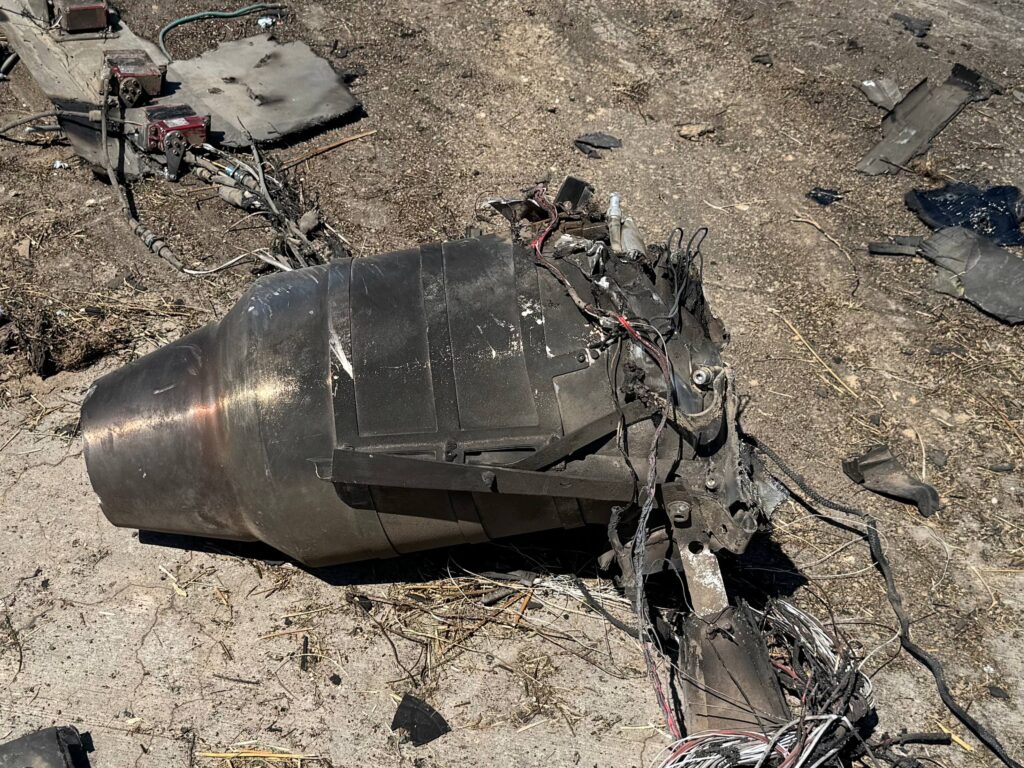
An unidentified Ukrainian drone, visually resembling the Iranian-designed Shahed kamikaze drone, used to attack Russia's Engels-2 airbase on 16 July 2026. Photo: Exilenova+

Base used for missile attacks on Ukraine

Engels-2 is one of Russia's principal strategic aviation bases and hosts Tu-95MS and Tu-160 strategic bombers, which Russia regularly uses to launch Kh-101 cruise missiles against Ukrainian cities and infrastructure.

The base also stores munitions, fuel, and maintenance equipment supporting Russia's long-range bomber fleet. Militarnyi noted that Russia expanded the airbase last year by constructing additional aircraft parking areas to accommodate more strategic bombers.

The airbase has been targeted repeatedly since Russia launched its full-scale invasion of Ukraine in 2022, reflecting Ukraine's campaign to degrade Russia's long-range strike capabilities deep behind the front line.

Explosions reported across Engels

Residents of the Russian cities of Saratov and Engels reported hearing multiple explosions beginning around 2:30 a.m. local time, according to monitoring channels.

Saratov Oblast Governor Roman Busargin acknowledged a drone attack on the region, saying civilian infrastructure in Engels had been damaged but reporting no casualties. He did not confirm any strike on the military airfield.

According to Astra, one drone also struck a residential apartment building about two kilometers from the airbase. Militarnyi reported that local residents also described power outages following the explosions, with social media users suggesting a substation may have been hit. 

  • ✇Euromaidan Press
  • Zelenskyy defends the right to protest and hands defense to his strike-war chief
    Ukraine’s President Volodymyr Zelenskyy told the crowds demanding the return of dismissed Defense Minister Mykhailo Fedorov that they were right to protest even during the war—then pressed ahead anyway, naming his special operations chief Yevhenii Khmara acting defense minister and passing over both Fedorov and Interior Minister Ihor Klymenko, the reported frontrunner. Explore further
     

Zelenskyy defends the right to protest and hands defense to his strike-war chief

16 juillet 2026 à 12:21

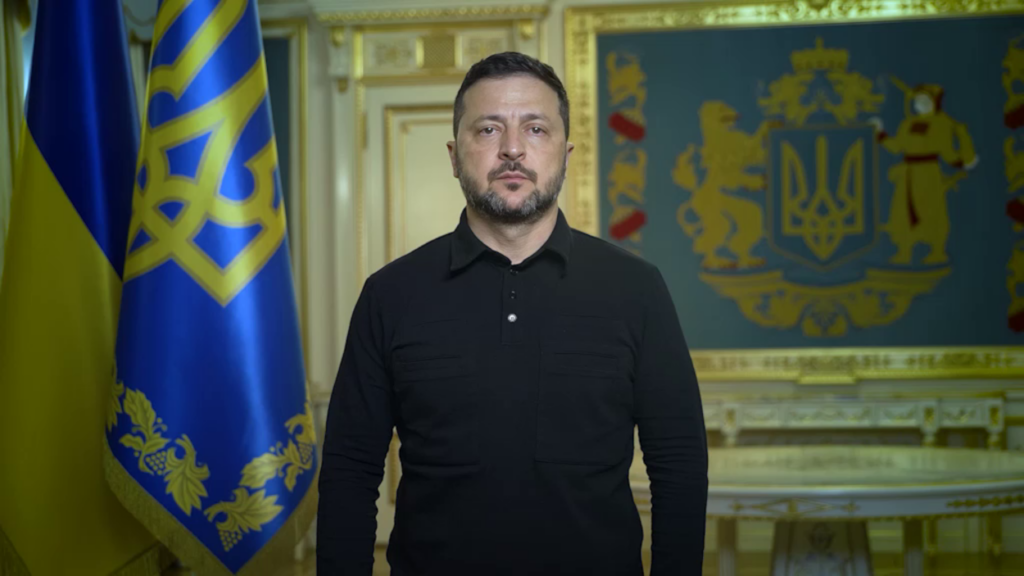
yevhenii khmara

Ukraine’s President Volodymyr Zelenskyy told the crowds demanding the return of dismissed Defense Minister Mykhailo Fedorov that they were right to protest even during the war—then pressed ahead anyway, naming his special operations chief Yevhenii Khmara acting defense minister and passing over both Fedorov and Interior Minister Ihor Klymenko, the reported frontrunner.

cardboard protests against zelenskyy's firing fedorov erupt across ukraine · post rally support dismissed defense minister mykhailo odesa 16 2026 signs read bring back ministry needs don't change what works
Explore further

“Cardboard” protests against Zelenskyy’s firing of Fedorov erupt across Ukraine

It was the second time in a year that street protests have thrown one of Zelenskyy’s decisions into doubt. Last July, a week of rallies forced him to reverse a law stripping Ukraine’s anti-corruption agencies of their independence. He called his own answer an ellipsis rather than a full stop and said Fedorov would remain on his team in a role to be named later, he told a briefing reported by Ukrainska Pravda.

At the briefing, Zelenskyy floated Interior Minister Ihor Klymenko as the man who could stop it.

The president tied the incoming minister’s first task to ending “busification”—recruitment officers seizing men in public and bundling them into minibuses bound for enlistment offices. At the briefing, he floated Interior Minister Ihor Klymenko as the man who could stop it. By evening, he had chosen Khmara instead.

The rallies he answered had filled nearly 20 cities that morning, most of the crowds young, and they stayed peaceful.

Ukrainian Defense Minister Mykhailo Fedorov in Germany, on 15 April 2026. Source: Fedorov

The man he fired blames the army

Fedorov, in his own farewell briefing hours earlier, argued that no minister can fix mobilization without deeper change within the army, since Ukraine’s recruitment centers answer to the military command rather than the Defense Ministry, as reported by LIGA.net.

Zelenskyy told his party’s faction that Fedorov had botched the recruitment-center reform.

Where leadership and supply already work, he said, the problem disappears—pointing to the National Guard’s 13th “Khartia” brigade, which he said has a waiting list of at least 2,000 foreign volunteers. The state, he added, is selling its recruits lies and chaos.

fedorov breaks silence ukraine's army chief syrskyi gave ultimatum—then blocked reforms · post mykhailo during briefing 16 2026 михайло федоров під час брифінгу липня року фото мілітарний ukraine news ukrainian
Explore further

Fedorov breaks his silence: Ukraine’s army chief Syrskyi gave him an ultimatum—then blocked his reforms

That runs counter to the reason given for his removal. Zelenskyy told his party’s faction that Fedorov had botched the recruitment-center reform and that he could not choose between the minister and Commander-in-Chief Oleksandr Syrskyi, lawmakers said afterward, as Censor.net reported.

Zelenskyy Khmara SBU
Ukrainian President Zelenskyy (left) meets with Yevhen Khmara after his appointment to lead the SBU during Ukraine's largest wartime reshuffle. 5 January 2025. Photo: Zelenskyy/TB

Zelenskyy turns to his special operations chief

Khmara, whom Zelenskyy had made acting head of the Security Service in January, was told to run the ministry. The president praised his experience directing Ukraine’s long-range strike operations against Russia and said he would ask parliament to confirm him once the legal formalities were done, the president wrote on his official channel.

Parliament has already confirmed a new prime minister, Naftogaz chief Serhii Koretskyi. Khmara’s confirmation is the vote still to come.

  • ✇Euromaidan Press
  • UK fast-tracks new ballistic missile for Ukraine with “pared-down” design
    The United Kingdom has signed contracts with several defense companies to develop its first domestically produced ballistic missile in more than 50 years, with a "pared-down" design intended to accelerate deliveries to Ukraine by late 2027, Bloomberg reported on 16 July, citing people familiar with the program. According to Bloomberg, the accelerated effort, known as Project Nightfall, is designed to both bolster Ukraine's long-range strike capabilities and reduce Europ
     

UK fast-tracks new ballistic missile for Ukraine with “pared-down” design

16 juillet 2026 à 12:19

Ukrainian President Volodymyr Zelenskyy, UK Prime Minister Kier Starmer, and NATO Secretary-General Mark Rutte in London at the Coalition of the Willing meeting on 24 October, 2025.

The United Kingdom has signed contracts with several defense companies to develop its first domestically produced ballistic missile in more than 50 years, with a "pared-down" design intended to accelerate deliveries to Ukraine by late 2027, Bloomberg reported on 16 July, citing people familiar with the program.

According to Bloomberg, the accelerated effort, known as Project Nightfall, is designed to both bolster Ukraine's long-range strike capabilities and reduce Europe's dependence on American-made weapons.

Fast-tracked development

Bloomberg reported that the UK Ministry of Defence relaxed some of the missile's original requirements after receiving feedback from industry in an effort to speed up development.

The revised specifications reportedly reduce the missile's range from more than 600 kilometers to 500 kilometers and its warhead from 300 kilograms to 200 kilograms, while raising the target unit cost from under £500,000 to a maximum of £800,000.

According to Bloomberg's sources, test launches are expected to begin within the next 12 months, with the first deliveries planned for late 2027. The publication noted that ballistic missile programs typically take more than a decade to develop and field.

Supporting Ukraine and Europe's rearmament

The project is intended to achieve two strategic goals: supplying Ukraine with long-range strike capabilities and expanding Europe's indigenous defense industrial base as European governments seek to lessen reliance on US military support, Bloomberg reported.

The missile is expected to be capable of launching from multiple vehicle platforms, firing salvos in quick succession, operating in electronically contested environments, and being manufactured at a rate of up to 10 systems per month.

A UK Ministry of Defence spokesperson told Bloomberg that Britain is "applying the lessons of Ukraine to deliver military capability faster, using rapid prototyping, innovation and close collaboration with British industry."

Broader UK weapons effort

Project Nightfall is one of several British initiatives aimed at strengthening Ukraine's long-range strike capabilities.

Britain is also developing a low-cost, long-range cruise missile for Ukraine under Project Brakestop, with testing already underway in the UK, Bloomberg reported.

The report comes as European governments continue expanding joint defense projects and increasing investments in domestic weapons production amid Russia's ongoing full-scale invasion of Ukraine.

  • ✇Euromaidan Press
  • Ukraine repatriates 501 bodies Russia says are Ukrainian service members
    Ukraine has repatriated the bodies of 501 people whom Russia says may be Ukrainian service members, the Coordination Headquarters for the Treatment of Prisoners of War announced on 16 July. The transfer is one of the latest in a series of wartime repatriation operations between Ukraine and Russia, allowing Ukrainian authorities to begin the process of identifying the dead and eventually return them to their families. Identification process begins The Coordination
     

Ukraine repatriates 501 bodies Russia says are Ukrainian service members

16 juillet 2026 à 10:28

Trucks loaded with bodies of Ukrainian soldiers, accompanied by people in protective gear.

Ukraine has repatriated the bodies of 501 people whom Russia says may be Ukrainian service members, the Coordination Headquarters for the Treatment of Prisoners of War announced on 16 July.

The transfer is one of the latest in a series of wartime repatriation operations between Ukraine and Russia, allowing Ukrainian authorities to begin the process of identifying the dead and eventually return them to their families.

Identification process begins

The Coordination Headquarters said the remains will undergo forensic examination by Ukrainian investigators and experts to establish their identities.

The headquarters noted that Russia identified the bodies as potentially belonging to Ukrainian military personnel. 

Ukrainian authorities will independently verify each identity through forensic procedures. The process can take weeks or months, particularly when remains are fragmented or degraded, and often relies on DNA analysis and other forensic methods.

Coordinated repatriation effort

According to the headquarters, the operation involved the Coordination Headquarters for the Treatment of Prisoners of War, the Security Service of Ukraine's Joint Center, the Armed Forces, the Interior Ministry, the Office of the Parliamentary Commissioner for Human Rights, the Commissioner for Persons Missing Under Special Circumstances, the State Emergency Service, and other security agencies.

The headquarters also thanked the International Committee of the Red Cross for assisting with the repatriation.

Part of ongoing humanitarian exchanges

Since the start of Russia's full-scale invasion, Ukraine and Russia have periodically exchanged the bodies of fallen soldiers alongside prisoner-of-war swaps.

Once repatriated, the remains are transferred to specialized state institutions, where forensic experts work to identify the deceased before they can be returned to their families for burial.

  • ✇Euromaidan Press
  • Fedorov breaks his silence: Ukraine’s army chief Syrskyi gave him an ultimatum—then blocked his reforms
    Outgoing Defense Minister Mykhailo Fedorov used a briefing on 16 July to say Ukraine's top military command blocked his reforms and that Commander-in-Chief Oleksandr Syrskyi handed him an ultimatum, Militarnyi reported. He said he had pushed to replace both Syrskyi and General Staff chief Andrii Hnatov, and that the General Staff spent months refusing to sign off on his changes. He spoke a day after confirming he was leaving the post. Ukraine has spent the war rebuilding it
     

Fedorov breaks his silence: Ukraine’s army chief Syrskyi gave him an ultimatum—then blocked his reforms

16 juillet 2026 à 08:51

fedorov breaks silence ukraine's army chief syrskyi gave ultimatum—then blocked reforms · post mykhailo during briefing 16 2026 михайло федоров під час брифінгу липня року фото мілітарний ukraine news ukrainian

Outgoing Defense Minister Mykhailo Fedorov used a briefing on 16 July to say Ukraine's top military command blocked his reforms and that Commander-in-Chief Oleksandr Syrskyi handed him an ultimatumMilitarnyi reported. He said he had pushed to replace both Syrskyi and General Staff chief Andrii Hnatov, and that the General Staff spent months refusing to sign off on his changes. He spoke a day after confirming he was leaving the post.

Ukraine has spent the war rebuilding its army around open tenders and a homegrown drone industry, a shift that pits startup-style managers against a traditional command structure over who controls the tools the front now runs on. Fedorov's account lands in the middle of a government shakeup. President Volodymyr Zelenskyy moved this week not to renominate him, with Interior Minister Ihor Klymenko set to take the defense post and Naftogaz chief Serhii Koretskyi approved as prime minister. 

Zelenskyy's decision drew a rare wartime backlash: protests broke out in Kyiv and more than a dozen cities, and deputy Air Force commander Pavlo Yelizarov resigned the same day, warning that the firing and the blocking of Fedorov's reforms would "cause numerous casualties and destruction of Ukraine." 

Fedorov, credited with building the drone force that reshaped the war, is being replaced mid-reform. 

fedorov breaks silence ukraine's army chief syrskyi gave ultimatum—then blocked reforms · post commander-in-chief oleksandr generalstaffua олександр сирський фото ukraine news ukrainian reports
Ukraine's Commander-in-Chief Oleksandr Syrskyi. Photo: GeneralStaff.ua

The ultimatum

Fedorov said that once Zelenskyy told him he did not plan to dismiss Syrskyi, he accepted it and agreed to work with the general, "because our client is the Ukrainian people." But his ministry's initiatives began to be blocked, he said, and Syrskyi was "not ready to talk about problems personally, to his face."

cardboard protests against zelenskyy's firing fedorov erupt across ukraine · post rally support dismissed defense minister mykhailo odesa 16 2026 signs read bring back ministry needs don't change what works
Explore further

“Cardboard” protests against Zelenskyy’s firing of Fedorov erupt across Ukraine

Instead, the commander preferred to "weave intrigues" and assume someone had ordered a media campaign against him. That is what led Syrskyi to effectively deliver an ultimatum, Fedorov said.

"Instead of figuring out how to defeat Russia asymmetrically, which is the commander-in-chief's task, he figured out how to split the country," he said. 

Fedorov stressed he had not set an "either me or Syrskyi" condition and was ready to keep working, and credited Syrskyi with saving the country in 2022. But the war had fully changed since, he argued: 

"The drone changes the architecture. The management system has changed, we must change."

mykhailo fedorov
Explore further

The Syrskyi feud was not it: why Ukraine really dropped its drone-war minister

Why he wanted the command replaced

Fedorov said he had proposed "radical personnel decisions" — removing both Syrskyi and Hnatov — to fix systemic problems in the armyLiga reported. Ukraine has no other option, he argued, if it wants to beat the enemy asymmetrically and with minimal losses, "where strong leader-commanders will develop, will not be suppressed and written off." He tied the demand to ending abuses in the army, including in the Skelia assault regiment, hit weeks earlier by reports of non-combat deaths in its training centers.

The blocking

The obstruction was concrete, Fedorov said. For six months the General Staff refused to sign the documents needed to change the ministry's structure and create a competence center, citing formal objections and a reluctance to bring in new people.

Serhii Sternenko assassination
Explore further

“Our state became further from victory”: Ukraine’s top volunteer, whose fund bought 286,000 FPV Drones, just lost his defense post

The ministry kept improvising around the blocks: 

"We always hacked this with some non-standard solutions and continue to do it, but overall it doesn't work if we're talking about a serious system." 

Even routine reforms stalled — approving a basic plan to supply brigades with drones took four months, and distribution still ran on loyalty rather than need, he said at the same briefing.

Fedorov also rejected the blame directed at his ministry over mobilization, noting the recruitment centers answer to the commander-in-chief and the General Staff, not to him, Liga reported. There is no fixing mobilization "without a new social contract and without real changes in the army," he said.

  • ✇Euromaidan Press
  • Ukraine’s spy service and navy team up to strike two Russian crude tankers in the Black Sea
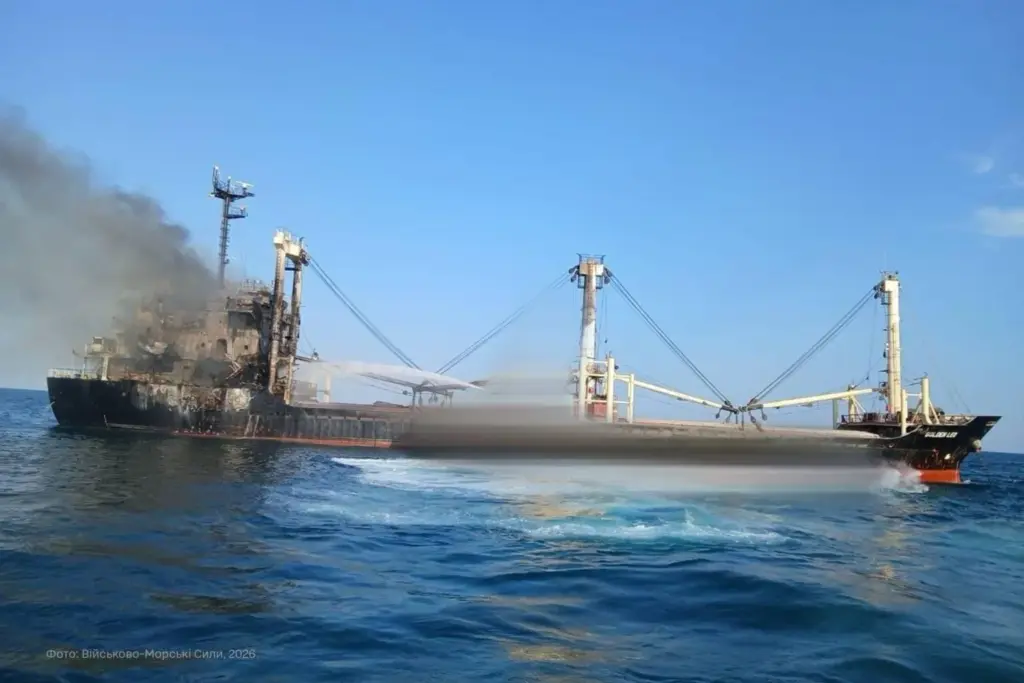
    Ukraine's Security Service (SBU) struck two sanctioned Russian oil tankers with naval drones in the Black Sea, the SBU said. The vessels belong to the shadow fleet Moscow uses to sell crude around Western sanctions, and Russian aircraft tried and failed to stop the attack. Oil exports remain the biggest source of cash for Russia's war, and Ukraine has spent 2026 attacking that revenue, where Western measures have left the money moving. Ukraine keeps targeting Russian oil re
     

Ukraine’s spy service and navy team up to strike two Russian crude tankers in the Black Sea

16 juillet 2026 à 08:37

ukraine's spy service navy team up strike two russian crude tankers black sea · post shadow-fleet tanker banda burns after sbu naval-drone 16 2026 video exploding ukraine news ukrainian reports

Ukraine's Security Service (SBU) struck two sanctioned Russian oil tankers with naval drones in the Black Sea, the SBU said. The vessels belong to the shadow fleet Moscow uses to sell crude around Western sanctions, and Russian aircraft tried and failed to stop the attack.

Oil exports remain the biggest source of cash for Russia's war, and Ukraine has spent 2026 attacking that revenue, where Western measures have left the money moving. Ukraine keeps targeting Russian oil refineries, oil pipelines, depots, export terminals, and tankers. Forcing Moscow to defend its own oil exports at sea makes every shipment slower and costlier, compounding a fuel crisis already reshaping daily life inside Russia.

Two tankers, one sanctions-busting job

The SBU, working with the Navy, hit the ocean-going tankers Louise 1 and Banda — both under Ukrainian sanctions — with Mamai naval drones. 

ukraine's spy service navy team up strike two russian crude tankers black sea · post sbu naval drone closes stern shadow-fleet tanker louise 1 16 2026 video drones nears shadow
An SBU naval drone closes on the stern of the Russian shadow-fleet tanker Louise 1 in the Black Sea, 16 July 2026. Screenshot from SBU video

Louise 1 had moved Russian crude through the G7 and EU embargo, loading at Baltic and Black Sea ports with its transponder switched off. In 2026 alone, it carried nearly 3 million tons of Russian Urals crude, the SBU said.

ukraine's spy service navy team up strike two russian crude tankers black sea · post sanctioned tanker banda sight sbu naval drone before 16 2026 video ukraine news ukrainian reports
The sanctioned Russian tanker Banda in the sight of an SBU naval drone before the strike in the Black Sea, 16 July 2026. Screenshot from SBU video

Banda had run Russian crude out of four ports: Ust-Luga, Kerch, Novorossiysk, and Nakhodka.

Ukraine's SBU hits two shadow-fleet tankers in the Black Sea

The Security Service of Ukraine and Navy struck the sanctioned tankers Louise 1 and Banda with Mamai sea drones, the SBU said. The Louise 1 alone moved nearly 3 mn tons of Russian crude in 2026.

📹SBU pic.twitter.com/wrWwpLGntC

— Euromaidan Press (@EuromaidanPress) July 16, 2026

As the drones closed in, Russian aircraft fired machine guns and dropped bombs at them, without success, the SBU said. 

The Russian shadow fleet's Louise 1 flies the Panama flag, the Banda sails under Liberia's.

The service calls each shadow-fleet tanker a legitimate target and a working part of Russia's war machine. Every strike, it says, cuts the oil money paying for the invasion.

A week earlier, the SBU's Sea Baby drone hit the sanctioned tanker Blue in Ukraine's waters off occupied Yalta. Ukraine has spent 2026 turning cheap drones into kinetic sanctions on Russia's tanker fleet. Sea Baby drones have wrecked shadow-fleet tankers across the Black Sea since late 2025.

The air campaign running alongside it

The naval strikes run in parallel with an aerial-drone campaign by the Unmanned Systems Forces (SBS). On 16 July, SBS operators struck 11 more shadow-fleet vessels — five oil tankers, a gas carrier, three dry-cargo ships, and two tugs.

Ukraine's drones hit 11 more shadow-fleet ships in a single day, pushing the 10-day total to 147

Ukraine's Unmanned Systems Forces (SBS) struck 11 vessels of Russia's sanctions-dodging shadow fleet on 16 July, commander Robert "Madyar" Brovdi said. The day's haul, in the Black… pic.twitter.com/4iZPIjoT2B

— Euromaidan Press (@EuromaidanPress) July 16, 2026

That brought the 6–16 July total to 147 vessels: 117 in the Sea of Azov and 30 in the Black Sea.

"The goal: paralysis of the logistics of oil, fuel, and cargo that bypasses sanctions," commander Robert "Madyar" Brovdi wrote. 

1,500 British and French troops are heading to Poland in September—the first physical test of Europe’s plan to guarantee Ukraine’s security

16 juillet 2026 à 08:05

Ukrainian soldiers during the Sea Breeze 2026 exercises in Romania. Source: The 30th Marine Corps of the Ukrainian Navy

1,500 British and French troops will deploy to Poland in September for the first joint exercises of the Coalition of the Willing, Poland's Deputy Defense Minister Paweł Bejda said on TVP Info. The maneuvers will focus on moving troops and equipment at scale—transport and logistics, not combat.

"We are preparing for operations connected with the transfer and transport of forces. We want to show that we know how to do this," Bejda said.

The Coalition of the Willing was formed in March 2025 as a European-led framework to guarantee Ukraine's security after any ceasefire, and it has spent more than a year turning pledges into forces it can actually send. By April 2025, only six of 30 member countries had committed troops. British military planners floated a 64,000-strong force. European ministers doubted they could muster even 25,000. The September exercise puts the coalition's central promise—that Britain and France can lead a credible multinational force—to its first test with troops on the ground rather than in a communiqué.

Why logistics is the real test

Since Russia's full-scale war, Poland has handled 95% of allied military aid transiting to Ukraine, Bejda noted. The September drills rehearse that same task: moving forces and equipment through the corridor a security-guarantee force would rely on.

Poland's Defense Minister Władysław Kosiniak-Kamysz said the country is becoming the site of Europe's most important military exercises. Prime Minister of Poland Donald Tusk said the maneuvers would prepare the coalition for "real security guarantees for Ukraine, but also for the region."

What still isn't resolved

In February 2026, British and French paratroopers rehearsed rapid Ukraine deployment in Exercise Orion. Days earlier, a growing number of coalition members had privately conceded their troop contributions depended on Moscow's approval—effectively handing President of Russia Vladimir Putin a veto over the force meant to deter him.

Thank you. I was thinking of adding one more sentence at the end. Do you think that's enough, or is there anything else I should expand or improve?

Ukraine hit 147 Russian shadow-fleet ships in 10 days. Now Moscow is pulling its best drone unit off the front to guard the tankers, partisans say

16 juillet 2026 à 05:38

Russian shadow fleet tanker in the crosshairs of a Ukrainian drone in the Mediterranean Sea. Screenshot from video: hromadske

The Ukrainian partisan movement Atesh says Russia is responding by pulling scarce military units—including operators from its elite Rubicon (also spelled Rubikon) drone center—off other duties to guard the tankers. This comes as Ukraine struck 147 vessels of Russia's sanctions-dodging shadow fleet between 6 and 16 July, collapsing maritime traffic in the Sea of Azov and pushing the campaign into the Black Sea.

Russia's "shadow fleet" is a network of 1,400+ aging tankers used to move Russian oil in violation of Western sanctions and the G7 price cap. The ships fly flags of convenience, use opaque ownership structures, and engage in ship-to-ship transfers designed to obscure the oil's origin.

Oil is Russia's largest export earner and the financial foundation of its war. The shadow fleet is how Moscow keeps that revenue flowing despite sanctions—and, increasingly, how it moves fuel to Russian forces in occupied Ukraine, including Crimea, amid the fuel crisis Ukrainian strikes have created.

Through 2026, Ukraine has turned cheap drones into a blockade of that revenue at both ends—the refineries that turn oil into cash, and the tankers that move it. Between 6 and 15 July, Ukrainian drones struck 136 vessels of the shadow fleet across the Sea of Azov and the Black Sea, according to Unmanned Systems Forces commander Robert "Madyar" Brovdi. The past 24 hours added 11 more ships to the tally, according to the SBS' scoreboard.

Ship movements in the Sea of Azov dropped from 132 vessels on 6 July to 43 by 12 July, synthetic-aperture-radar imagery cited by the open-source channel Oko Gora showed.

The partisans inside Russia's own ranks

Atesh—"fire" in Crimean Tatar and Turkish—is a partisan movement of Ukrainians and Crimean Tatars operating inside Russia and Russian-occupied territory. It gathers intelligence on Russian military movements, recruits agents within Russian ranks, and passes targeting data to Ukraine's Defense Forces.

Smoke rising from the site of a Ukrainian strike somewhere around the Crimean Bridge, 21 June 2026. Screenshot from video: Zelenskyy
Explore further

Crimea occupation officials pack up as some reportedly flee to Russia on state fuel as Ukrainian strikes intensify, ATESH claims

Russia's best drone unit, reportedly set to guard tankers

An Atesh agent embedded at the Black Sea Fleet headquarters reportedly said Russia plans to redeploy scarce, high-value military units to protect its tankers in the Black and Azov seas. Among the units named are the operators from the Rubicon drone center, the 51st Air Defense Division, and the 1096th Anti-Aircraft Missile Regiment of the Black Sea Fleet.

novorossiysk-sea-port-russia-
Explore further

Atesh partisans: Russia mines Novorossiysk harbor amid Ukraine’s maritime drone threats

According to the report, Russia plans to assign up to three service members to each tanker, armed with twin machine guns, man-portable air-defense systems (MANPADS), and anti-aircraft drones to repel Ukrainian drone attacks. Atesh framed the reported redeployment as evidence of the Russian command's alarm at the pace of losses:

"The reason for the command's panic is obvious," the group wrote, citing more than the 136 vessels struck in just over a week.

If accurate, the redeployment would carry a cost for Russia beyond the ships themselves. Rubicon— Russia's Center for Advanced Unmanned Technologies—is one of Moscow's most effective drone formations, built to disrupt Ukrainian logistics and hunt down drone operator teams. It has been a central element of Russia's pressure on the Pokrovsk axis. Pulling Rubicon operators to guard tankers would divert a scarce, specialized capability from the front line to defensive maritime duty—a reallocation Ukraine's campaign would have forced.

Ukraine built a sea denial with no navy

Ukraine has no conventional navy in the Black Sea. It has instead built sea denial from nothing, using unmanned systems alone—first driving the Russian Black Sea Fleet out of Sevastopol, now hunting the commercial fleet that funds the war. The shadow-fleet campaign extends that logic from warships to the economic infrastructure behind them.

Ukraine's drones hit 11 more shadow-fleet ships in a single day, pushing the 10-day total to 147

Ukraine's Unmanned Systems Forces (SBS) struck 11 vessels of Russia's sanctions-dodging shadow fleet on 16 July, commander Robert "Madyar" Brovdi said. The day's haul, in the Black… pic.twitter.com/4iZPIjoT2B

— Euromaidan Press (@EuromaidanPress) July 16, 2026

The strategic effect is already visible in Russia's export data: roughly 135 million barrels of Russian oil are now sitting in floating storage, loaded but undelivered, as buyers slow their liftings and tankers idle for weeks. Whether or not Russia specifically redirects Rubicon, the campaign has forced Moscow into a defensive posture over a maritime supply chain it previously treated as low-risk—assigning armed crews, escorts, and air defense to civilian tankers that were never built to be defended.

 "The shadow fleet will go to the bottom, following the Black Sea [Fleet]." Atesh closed its report 

  • ✇Euromaidan Press
  • “Cardboard” protests against Zelenskyy’s firing of Fedorov erupt across Ukraine
    Peaceful "cardboard protests" against the dismissal of Defense Minister Mykhailo Fedorov broke out in Kyiv and at least 16 other Ukrainian cities on the morning of 16 July. The "cardboard" refers to handmade signs the protesters hold. The rallies were timed to the parliament session set to weigh a wider government reshuffle, and echoed last year's protests over Ukraine's anti-corruption bodies. Their message was to keep Fedorov in the job. Ukraine has spent the war rebuildi
     

“Cardboard” protests against Zelenskyy’s firing of Fedorov erupt across Ukraine

16 juillet 2026 à 04:16

cardboard protests against zelenskyy's firing fedorov erupt across ukraine · post rally support dismissed defense minister mykhailo odesa 16 2026 signs read bring back ministry needs don't change what works

Peaceful "cardboard protests" against the dismissal of Defense Minister Mykhailo Fedorov broke out in Kyiv and at least 16 other Ukrainian cities on the morning of 16 July. The "cardboard" refers to handmade signs the protesters hold. The rallies were timed to the parliament session set to weigh a wider government reshuffle, and echoed last year's protests over Ukraine's anti-corruption bodies. Their message was to keep Fedorov in the job.

Ukraine has spent the war rebuilding its defense procurement around open tenders and a homegrown drone industry, changes that turned on the small circle of officials now being reshuffled mid-war. Losing that circle in the space of a few days—an arms-industry chief and a key minister—hands the next team a running reform to carry without its architects, at a moment when the front depends on the machine they built. 

Kyiv fills the square that hosted last year's protests

In Kyiv, participants gathered from early morning in the square beside the Ivan Franko National Academic Drama Theater.

cardboard protests against zelenskyy's firing fedorov erupt across ukraine · post protesters hold signs rally defense minister mykhailo fedorov's dismissal kyiv 16 2026 read bring back = technological genius more
Protesters hold cardboard signs at a rally against Defense Minister Mykhailo Fedorov's dismissal in Kyiv, 16 July 2026. Signs read "Bring back Fedorov," "Fedorov = technological genius," "Fedorov = more dead Russians. Syrskyi = more dead Ukrainians," "Don't touch it, it works," "Sanych (a colloquial way to address Zelenskyy, — Ed.), what the hell?" Photo: Ukrinform

Suspilne says the action was called by veteran and former combat medic Dmytro Koziatynskyi, one of the organizers of the 2025 protests defending the independence of Ukraine's anti-corruption agencies, the National Anti-Corruption Bureau (NABU) and the Specialized Anti-Corruption Prosecutor's Office (SAP). He asked people to bring cardboard placards and stressed that the action must stay peaceful.

Rally in Kyiv against the dismissal of Defense Minister Fedorov

Hundreds filled a Kyiv square by the President's Office with cardboard signs, chanting "Fedorov is the defense minister!"

📹 Hromadske pic.twitter.com/MaC2QeoiY4

— Euromaidan Press (@EuromaidanPress) July 16, 2026

Protesters oppose the constant reshuffling of officials and the removal of people whose work they consider effective, Koziatynskyi said. Hundreds gathered on the square, most of them young people and students, chanting "Fedorov is defense minister!"

cardboard protests against zelenskyy's firing fedorov erupt across ukraine · post rally support ukraine's defense minister mykhailo ivano-frankivsk 16 2026 signs read decisions strengthen katsaps (russians - ed) fedorov's resignation
A rally in support of Ukraine's Defense Minister Mykhailo Fedorov in Ivano-Frankivsk, 16 July 2026. Signs read "Decisions should strengthen defense" and "Katsaps (Russians, - Ed.) support Fedorov's resignation." Photo: Suspilne Ivano-Frankivsk / Inna Sendetska-Moniuk

From Lviv to Odesa, the same message

Similar rallies ran the same morning in Ivano-Frankivsk, Vinnytsia, Lutsk, Khmelnytskyi, Lviv, Uzhhorod, Dnipro, Ternopil, Odesa, Mykolaiv, Cherkasy, Rivne, Zaporizhzhia, Zhytomyr, Chernivtsi, and Poltava.

cardboard protests against zelenskyy's firing fedorov erupt across ukraine · post rally support dismissed defense minister mykhailo vinnytsia 16 2026 signs read don't destroy what works swap prisoners suspilne у
A rally in support of dismissed Defense Minister Mykhailo Fedorov in Vinnytsia, 16 July 2026. Signs read "Don't destroy what works" and "Swap prisoners, not Fedorov." Photo: Suspilne Vinnytsia

Crowd sizes ranged from a few dozen to around a hundred per city. Several began with a minute of silence for those killed in the Russo-Ukrainian war.

Ivano-Frankivsk rallies against Zelenskyy's firing of Fedorov. Similar rallies ran in Kyiv, Kharkiv, Lviv, Uzhhorod, Ternopil, Lutsk, and Zaporizhzhia.

About 100 people gathered outside the administrative building on Hrushevskoho Street in western Ukraine's Ivano-Frankivsk on… pic.twitter.com/SjdbzhbMy5

— Euromaidan Press (@EuromaidanPress) July 16, 2026

The signs spelled out the anger. In Vinnytsia, people held signs reading "Don't destroy what works," "Bring back Fedorov," and "Don't take away hope." In Lutsk, slogans included "Ukraine needs results, not personnel games." In Lviv, protesters on Svobody Avenue by the Taras Shevchenko monument carried placards asking why one man's ego mattered more than the state's defense, and one that read "The audit showed 300 billion in theft. They removed the auditor, not the thieves."

cardboard protests against zelenskyy's firing fedorov erupt across ukraine · post protesters voice stance government reshuffle rally khmelnytskyi 16 2026 signs read don't do dumb things instead military tech —
Protesters voice their stance on the government reshuffle at a rally in Khmelnytskyi, 16 July 2026. Signs read "Don't do dumb things," "Instead of military tech — total encephalopathy," "Change the system, not Fedorov," and "Innovation, not Soviet ways." Photo: Suspilne Khmelnytskyi

In Mykolaiv, 26 people gathered by the city council with signs reading "Moscow is glad about your decision" and "Swap prisoners, not Fedorov." 

ukraine's deputy air force commander resigns moment fedorov loses ministry · post pavlo yelizarov павло єлізаров ukraine news ukrainian reports
Explore further

Ukraine’s deputy Air Force commander resigns the moment Fedorov loses the ministry

Cherkasy protesters chanted "Klymenko — no" and "Give back prisoners, not Fedorov." Lviv participant Sofia Boiko said she came out for democracy and a free country, calling it wrong to remove someone who had finally started making decisions that worked, and describing Fedorov as the most effective defense minister of the full-scale invasion.

cardboard protests against zelenskyy's firing fedorov erupt across ukraine · post residents rally dismissal defense minister mykhailo dnipro 16 2026 signs read bring [him] back animals why do need system
Residents rally against the dismissal of Defense Minister Mykhailo Fedorov in Dnipro, 16 July 2026. Signs read "Bring [him] back, you animals!", "Why do I need a system that works against me," "Removing Fedorov = helping the Russians," and "Drone lovers for Fedorov." Photo: Suspilne Dnipro

The Ukrainian government–run United24 media platform joined today's protests:

"Today, the UNITED24 Media is pausing all publications to join protests over the dismissal of Defense Minister Mykhailo Fedorov. See you there," the project's X wrote.

What led to the protests

The rallies followed President Volodymyr Zelenskyy's decision not to renominate Fedorov as defense minister. Deputies from the Servant of the People party told Suspilne, after a faction meeting with the President, that he would instead put forward Interior Minister Ihor Klymenko for the post — a figure associated in public perception with a Soviet-style mindset.

Commanders of two National Guard corps, however, supported the nomination of Klymenko. Notably, the National Guard is subordinate to the Interior Ministry, not the Armed Forces.
Ukrainian Defense Minister Mykhailo Fedorov in Germany, on 15 April 2026. Source: Fedorov
Explore further

Ukraine’s reformist defense Minister is out after six months. Earlier, his audit exposed $7.2 billion in defense overspending

On 15 July, Fedorov confirmed he was leaving and summed up his tenure, listing among his results cutting Russian forces off from Starlink, expanding drone-procurement programs, a procurement reform, weapons contracts, and the testing of Ukrainian ballistic missiles.

cardboard protests against zelenskyy's firing fedorov erupt across ukraine · post rally support defense minister mykhailo chernivtsi 16 2026 signs read ministry hope syrskyi skelia mon suspilne учасники акції на
A rally in support of Defense Minister Mykhailo Fedorov in Chernivtsi, 16 July 2026. Signs read "Fedorov to the Defense Ministry," "Fedorov is our hope," "Syrskyi to Skelia, Fedorov to MoN." Photo: Suspilne Chernivtsi


Mykhailo Fedorov summarized his tenure as Defense Minister, citing the cutoff of Russian forces from Starlink, the launch of the Logistics Lockdown campaign to isolate occupied Crimea, increased funding for the Drone Line, and larger drone purchases than last year.

Parliament is due on 16 July to consider the personnel changes, with Fedorov's replacement part of a broader reshuffle. 

Fedorov led the Defense Ministry from January 2026, having replaced Denys Shmyhal. Klymenko took over the Interior Ministry in February 2023 after Denys Monastyrskyi died in a helicopter crash in Brovary. The defense minister is appointed by parliament on the President's nomination, as the post falls under the presidential quota.

  • ✇Euromaidan Press
  • One Greek company keeps Russia’s Arctic gas moving—and Athens won’t let the EU touch it
    Greece is blocking the European Union's newest round of sanctions on Russian gas to shield a single shipping company, the Financial Times reported. The objection has stalled the bloc's 21st sanctions package for a week and forced an emergency extension of the cap on Russian oil prices. At the center sits one Greek tycoon and a fleet of tankers built for Russia's Arctic. As Russia's full-scale war grinds on, the money that funds it still moves by sea, and the tangle of Weste
     

One Greek company keeps Russia’s Arctic gas moving—and Athens won’t let the EU touch it

16 juillet 2026 à 03:46

one greek company keeps russia's arctic gas moving—and athens won't let eu touch · post greece-based dynagas ltd's lng carrier yenisei river named after russia dynagaspartnerscom yenisei_river_big greece blocking european

Greece is blocking the European Union's newest round of sanctions on Russian gas to shield a single shipping company, the Financial Times reported. The objection has stalled the bloc's 21st sanctions package for a week and forced an emergency extension of the cap on Russian oil prices. At the center sits one Greek tycoon and a fleet of tankers built for Russia's Arctic.

As Russia's full-scale war grinds on, the money that funds it still moves by sea, and the tangle of Western-owned vessels wired into that trade keeps blunting the sanctions meant to cut it off.

The company at the center

Athens is protecting Dynagas after its ambassador warned the sanctions would "ruin" the company owned by Greek shipowner George Prokopiou. Greece's ambassador to the EU told fellow envoys on Wednesday that the planned measures, which would ban transporting Russian LNG to third countries, would "ruin" the firm, two people briefed on his remarks said. Two others confirmed he had named Dynagas as the reason Greece could not back the package.

The company operates 27 gas tankers, according to maritime data portal Equasis. A third of them are Arc7 vessels, ice-hardened ships built to handle the frozen waters near the Yamal plant on Russia's northern coast. Only 15 such carriers keep Yamal's exports running year-round, and European companies control most of them, an arrangement that leaves Russia's Arctic gas trade exposed to any Western move against the ships. 

Dynagas has moved more than 10 million tons of Russian LNG since the start of 2025, the FT calculated using data from analytics firm Kpler, identifying 11 of its ships that completed 144 voyages in that time.

EU 17th sanctions package Russian LNG
Explore further

Europe can legally quit Russian LNG today. It keeps choosing not to.

A veto that freezes the whole package

The EU's 21st sanctions package needs unanimous support, so one refusal is enough to hold it. Greece's objection has left the rest of the package stalled, freezing planned measures against additional Russian banks, crypto platforms, and defense-industry firms. The package also carries a mechanism to lower the ceiling above which companies may legally buy and transport Russian crude. 

The bloc's previous round added 46 shadow-fleet tankers to its blacklist, bringing the total past 630 ships.

Prokopiou controls Dynagas alongside Dynacom, whose Russian-crude trade has brought in $915 million over three years — the biggest such haul of any Greek shipowner. When the US-Israel war with Iran erupted, Dynacom was among the earliest operators willing to run tankers through the Strait of Hormuz.

  • ✇Euromaidan Press
  • Ukraine’s deputy Air Force commander resigns the moment Fedorov loses the ministry
    A senior Ukrainian Air Force commander has quit over Defense Minister Mykhailo Fedorov's removal, public broadcaster Suspilne reported. Pavlo Yelizarov tied his resignation to the reshuffle, and warned about the reforms it leaves hanging. Ukraine is deep into its fifth year of full-scale war and reshuffling its government mid-fight, with the president dropping a popular reformer reportedly to smooth over a feud with the military's highly unpopular top commander.  A resignat
     

Ukraine’s deputy Air Force commander resigns the moment Fedorov loses the ministry

16 juillet 2026 à 03:35

ukraine's deputy air force commander resigns moment fedorov loses ministry · post pavlo yelizarov павло єлізаров ukraine news ukrainian reports

A senior Ukrainian Air Force commander has quit over Defense Minister Mykhailo Fedorov's removal, public broadcaster Suspilne reported. Pavlo Yelizarov tied his resignation to the reshuffle, and warned about the reforms it leaves hanging.

Ukraine is deep into its fifth year of full-scale war and reshuffling its government mid-fight, with the president dropping a popular reformer reportedly to smooth over a feud with the military's highly unpopular top commander. 

A resignation report tied to one firing

Yelizarov posted his resignation report in the stories on his Facebook page. He gave a single reason: Fedorov's dismissal.

He called Fedorov the initiator of "strategic reforms in the field of air defense." Yelizarov said that firing and the alleged blocking of those reforms "will cause numerous casualties and destruction of Ukraine."
Ukrainian Defense Minister Mykhailo Fedorov in Germany, on 15 April 2026. Source: Fedorov
Explore further

Ukraine’s reformist defense Minister is out after six months. Earlier, his audit exposed $7.2 billion in defense overspending

Yelizarov joined Ukraine's Armed Forces on 24 February 2022, the first day of Russia's full-scale invasion. He took the deputy Air Force command on 19 January 2026.

The reshuffle behind the exit

His departure comes during a wider Cabinet shake-up. Ukraine's parliament confirmed Fedorov as defense minister on 14 January, replacing Denys Shmyhal, in Yulia Svyrydenko's government.

Serhii Sternenko assassination
Explore further

“Our state became further from victory”: Ukraine’s top volunteer, whose fund bought 286,000 FPV Drones, just lost his defense post

On 15 July, President Volodymyr Zelenskyy signaled he would propose Interior Minister Ihor Klymenko for the post in the new Cabinet — a criticized pick.

Fedorov's exit closed a six-month tenure that opened with an audit uncovering billions in defense overspending. His removal also pushed out the ministry's top drone-fund adviser.

The dismissal also brought people onto the streets. Ukrainians rallied against it in KyivLvivDniproVinnytsiaIvano-FrankivskKhmelnytskyiUzhhorodLutskKropyvnytskyi, and other cities.


cardboard protests against zelenskyy's firing fedorov erupt across ukraine · post rally support dismissed defense minister mykhailo odesa 16 2026 signs read bring back ministry needs don't change what works
Explore further

“Cardboard” protests against Zelenskyy’s firing of Fedorov erupt across Ukraine

“Symbolically,” says Ukraine’s departing defense minister: New ballistic missile was tested on day government resigned

15 juillet 2026 à 17:40

Ukraine ballistic missile program

Ukrainian Defense Minister Fedorov wrote in the same post confirming his departure that Ukraine had conducted a successful ballistic missile test on 14 July, developed within the Defense Ministry's zone of responsibility. "Symbolically," the same day the government fell, he said.

Fedorov did not name the missile. He said the project's technical requirements had been radically changed during the work, its accuracy maximized, and its cost cut by 30%.

"Symbolically, on the day the government resigned, we conducted a successful test of ballistics developed in the MoD's zone of responsibility," he wrote.

Two ballistic tracks, and the clue points to Sapsan

Ukraine is running its ballistic missile development on more than one track. The reference points to a program that Ukraine has been careful to name for months.

Defense outlet Militarnyi noted that the phrasing suggests it is not the FP-7 or FP-9 ballistic missiles from the private firm Fire Point, and that Fedorov may have meant the Sapsan operational-tactical system, whose serial production reportedly began in 2025.

The Sapsan (also known as Hrim-2) was developed by the state design bureau KB Pivdenne and traces back to a pre-war export program for Saudi Arabia. Zelenskyy confirmed on 9 December 2025 that Ukraine had begun using domestically produced Sapsan missiles in combat.

It carries a 480-kg warhead, more than double the payload of US-supplied ATACMS, and reportedly reached 5.2 Mach in testing. Zelenskyy said Russians often mistake Sapsan strikes for Neptune cruise-missile attacks: "And let them keep thinking that."

The other track is Fire Point, the private firm behind the Flamingo cruise missile, which is developing the FP-7 and FP-9 ballistic missiles as a cheaper analog to ATACMS.

Fire Point's chief designer has put the FP-9 at 855 km range with an 800-kg warhead, priced at half what ATACMS costs. However, Fire Point is a private developer.

Program is already operating in combat conditions

Whatever Fedorov meant, Ukraine's ballistic missiles are past the stage of pure experiment. Russia's Defense Ministry announced on 30 June that it had shot down a Ukrainian long-range ballistic missile.

A successful test on 14 July is a data point on a curve that is already bending toward accuracy, not a lab result waiting years for deployment.

  • ✇Euromaidan Press
  • Ukraine’s 412th Nemesis brigade destroyed rare Russian Zemledeliye system with FPV drones
    Ukraine burned the machine that lays minefields from kilometers away. Fighters of the Asgard battalion within the 412th Nemesis brigade struck a rare Russian Zemledeliye system on the Zaporizhzhia front, the brigade said. The Zemledeliye ("Agriculture") is an engineering system that fires rockets to scatter mines across a target area from 5 to 15 kilometers away, building a minefield in minutes where Russia needs one. It was first shown at a Moscow military parade in 2020 a
     

Ukraine’s 412th Nemesis brigade destroyed rare Russian Zemledeliye system with FPV drones

15 juillet 2026 à 17:17

Russia's ISDM Zemledeliye minelaying system launcher was unveiled at the Victory Day military parade in June 2020. Photo: Vitaly Kuzmin, via armyrecognition.com

Ukraine burned the machine that lays minefields from kilometers away. Fighters of the Asgard battalion within the 412th Nemesis brigade struck a rare Russian Zemledeliye system on the Zaporizhzhia front, the brigade said.

The Zemledeliye ("Agriculture") is an engineering system that fires rockets to scatter mines across a target area from 5 to 15 kilometers away, building a minefield in minutes where Russia needs one. It was first shown at a Moscow military parade in 2020 and used heavily against Ukraine's 2023 counteroffensive.

The machine is built on a heavy KamAZ chassis with computerized controls that automatically map the minefields it lays, so losing one is a real blow to the occupation's engineering and logistics capacity.

The mines it scatters are the reason the machine matters. Remote mining is what makes Ukrainian supply routes too dangerous to drive.

Zemledeliye lays mines that keep killing Ukrainian robots

Ukraine has spent 2026 moving its frontline logistics onto ground robots specifically because approaches are mined and drone-hunted. Units near Novopavlivka use ground robots to resupply FPV teams because Russian drone activity and remote mining have made traditional supply routes too dangerous for soldiers. The 5th Assault Brigade lost one of two ground robots crossing mined and debris-strewn ground to reach a Russian position in June.

The Zemledeliye is one of the systems used to seed the ground. Killing it does not clear the mines already laid, but it stops the machine from laying more, and it is far harder for Russia to replace than the mines themselves.

Nemesis has been hunting Russian high-value systems all year

The 412th Nemesis brigade is one of the Unmanned Systems Forces units running Ukraine's deep- and mid-strike campaign against Russian air defense, logistics, and now engineering assets. A single week of Nemesis strikes in January destroyed an estimated $300 million worth of Russian air defense equipment. In April, a Nemesis mid-range drone struck the 9S32M1, a key component of Russia's S-300V air defense system.

The brigade was also among six Ukrainian drone units that hit Russian oil tankers, gas carriers, and a tug in the Black Sea on 15 July, part of the operation isolating occupied Crimea.

“Our state became further from victory”: Ukraine’s top volunteer, whose fund bought 286,000 FPV Drones, just lost his defense post

15 juillet 2026 à 16:35

Serhii Sternenko assassination

One of Ukraine's biggest drone-fund volunteers is no longer a defense adviser. Serhii Sternenko said he is out as an adviser to the defense minister, which reduces his ability to improve the army's drone situation.

His departure follows the exit of Defense Minister Mykhailo Fedorov, whom Sternenko called "the best defense minister in our entire history."

As of 15 July, the foundation has purchased 286,566 FPV drones and helped bring down more than 12,675 aerial targets.

He was appointed a Defense Ministry adviser on 22 January 2026, days after Fedorov took over, specializing in drone combat strategy. He has survived four assassination attempts since 2014, the most recent a shooting in May 2025 that Ukraine's Security Service tied to Russian intelligence.

"It's a shame that today our state became significantly further from victory," Sternenko wrote. "It's a shame that they weren't even allowed to begin real reforms, though a lot was still changed."

Sternenko blames "artificial delays"

Sternenko listed what was in progress when the door closed. New tender requirements for FPV drone procurement were near completion, he said — rules that would let the army get the best equipment and build infrastructure for deeper strikes.

"I hope they are ultimately approved," he wrote.

He named what stopped the rest.

"A lot did not work out, including because of bureaucratic obstacles and artificial delays by those who cause army reform inconveniences," Sternenko said.

Among what he did achieve, Sternenko listed helping unify ground control stations for fiber-optic drones and lifting several individual brigades to much higher positions in the overall rankings.

Among his regrets: not managing to help his country more in a full-scale war.

His foundation will keep supplying troops with top equipment, he said, "but, of course, on a smaller scale."

Three departures, one direction

Sternenko's exit completes a cluster. In two days, Ukraine has lost Ukroboronprom chief Herman Smetanin, Defense Minister Fedorov, and now Fedorov's drone adviser. All come from the part of the state that runs weapons and procurement, and all during a Cabinet reshuffle that is replacing Prime Minister Denys Shmyhal's government.

The anger online has been directed at the loss of Fedorov above all. Many Ukrainians also call him the best minister and say he gave them hope despite an imperfect record.

Meanwhile, Russia's Telegram channels call Fedorov's resignation a good thing for Russia. They recalled Fedorov's cutting off Starlink terminals, which slowed its logistics on the front, and the expansion of drone use.

Ukraine’s reformist defense Minister is out after six months. Earlier, his audit exposed $7.2 billion in defense overspending

15 juillet 2026 à 15:28

Ukrainian Defense Minister Mykhailo Fedorov in Germany, on 15 April 2026. Source: Fedorov

Ukraine's youngest-ever defense minister is leaving after six months. Mykhailo Fedorov confirmed his departure on social media on 15 July, publishing a summary of what his team managed to do and what it did not.

The decision angered many Ukrainians, who are criticizing it widely.

"It was a great honor to serve the Ukrainian people as Minister of Defense," he wrote.

Fedorov is not a minor figure. He built Ukraine's "Army of Drones" program from volunteer workshops into production of roughly 200,000 drones a month, created the Brave1 defense-tech cluster, and secured Starlink for Ukraine days after the full-scale war by tweeting at Elon Musk.

He became the defense minister on 14 January 2026 at 34, with a mandate to turn the army into a machine-first, manpower-light force.

Earlier, he began with an audit that uncovered about $7.2 billion in overspending and put ministry officials through a lie detector tests, The Economist reported. His departure is the second at the top of Ukraine's defense-industrial structure in two days, following the exit of Ukroboronprom chief Herman Smetanin.

The warning sign came a week earlier. When Zelenskyy flew to the NATO summit in Ankara on 7 July — the biggest defense event of the month, where Trump promised Ukraine a Patriot license — Fedorov was not in Ukraine's delegation.

Reformer under fire

Among the results the outlet credits to him: moving part of procurement onto open tenders, which cut the price of 155mm artillery shells by 16% almost immediately.

Reforms that size make enemies. An official who exposes billions in overspending, subjects a ministry to polygraphs, and strips margins out of arms contracts by opening them to competition is removing money from people who were used to receiving it.

Fedorov's own scorecard

The summary Fedorov published is his own account of his tenure, a list of claimed results rather than an independent audit. By his telling, the Defense Ministry team:

Cut off Russian access to Starlink, sharply reducing Russia's ability to wage effective drone warfare. Took over a ministry with no budget, moved money forward from year-end allowances, and invested it in mid-strike, fiber-optic FPV, cheap reconnaissance, ground robots, interceptor drones, and deep-strike drones — buying more drones in four months than in all of the previous year.

Launched "Logistics Lockdown" as a separately funded program that, Fedorov says, cut Russian supply lines and began the isolation of Crimea, and continued the Drone Line financing that underwrites drone buys for the Unmanned Systems Forces.

Introduced 70% prepayment for purchases through the eBaly system on the Brave1 Market. Ran the first tenders for long-range artillery and hundreds of thousands of drones, which he says saves the state budget billions of dollars. Bought thousands of pickups, buggies, and ATVs for the army through a tender for the first time.

Integrated Pavlo Lazar into the Air Force and introduced an after-action review of every massed attack. Over that period, Fedorov says, drone interception rose from 83% to 91% and cruise-missile interception from 47% to 87%. Contracted PAC-2 GEM-T missiles for Patriot for the first time and applied for PAC-3 European loan.

Started a baseline drone-supply system so that, from July, every combat brigade and corps receives predictable drone deliveries without manual intervention, and launched grant programs for explosives and missile producers.

Began an unpopular transformation of military service: fixed-term contracts for all with defined service periods and deferrals, one of the world's highest infantry pay scales, an open foreign-recruitment market, and new tools to bring back soldiers who went AWOL.

Exit without stated reason

Fedorov did not say why he is leaving, and Zelenskyy had not announced a replacement or a new post for him at the time of publication. His confirmation followed reports that a wider Cabinet reshuffle is underway, with Prime Minister Denys Shmyhal's government facing replacement.

His tenure had results independent of his own account. Ukraine's Defense Ministry codified 1,000 weapons samples in the first half of 2026, with the domestically made share rising to nearly 90% from 69.6% a year earlier. Ground robots ran 16,676 logistics and evacuation missions in June, up 122% since January. The counter-logistics campaign against Crimea that he funded is still running nightly.

Meanwhile, Ukraine's defense-industrial machine is scaling faster than at any point in the war. It is doing so while losing, in two days, both the head of its state arms conglomerate and the minister who ran its procurement.

Russia built Crimea’s power grid on sanctioned Siemens turbines. Ukraine has struck cooling system of one in Balaklava

15 juillet 2026 à 10:49

Anchorage of small vessels in Balaklava Bay. Photo: RFE/RL

Ukraine's Special Forces said they hit the turbine equipment that keeps the lights on in occupied Crimea for the Russian armed forces. Also, resistance took part in the mission which struck the Balaklava thermal power plant in Sevastopol overnight on 14 July.

The strike damaged the machine hall housing the cooling system of one of the plant's Siemens SGT5-2000E turbines, and if the pumping equipment was hit, repairs could take two to five months.

Balaklava is one of two plants that together supply about 90% of Crimea's electricity, and the damage sticks because of the turbines' origin.

Balaklava and the Tavrida plant in Simferopol were opened by Putin in 2019 to end Crimea's dependence on mainland power, and both were built around Siemens turbines transferred to Crimea and installed in breach of EU sanctions.

Illegal Siemens turbines 

Those Siemens units remain under sanctions and out of proper service, so Russia cannot simply replace a damaged turbine — each hit compounds the last.

The turbines reached Crimea in 2017 through the Russian firm Technopromexport, and German prosecutors charged five Siemens staff over the deal in 2024.

Crimea's grid is occupation's weak point

Occupied Crimea is a military-logistical hub for the Russian army, and stable electricity is what keeps it running. Communications nodes, command centers, radar stations, electronic warfare, air defense, repair plants, the Black Sea Fleet, and military airfields all depend on the grid.

Hitting the generation on the peninsula degrades both the offensive and defensive capacity of Russian forces there and slows the tempo of their rear supply.

Ukraine has spent the past three weeks proving the point.

This was not Balaklava's first hit. A Ukrainian drone strike on 24 June blacked out all of occupied Sevastopol, with the plant as its primary target. The 14 July operation names a more specific wound: the cooling system of a single turbine, the component Russia can least afford to lose.

A sustained campaign has hit Balaklava and Tavrida repeatedly, blacked out Sevastopol and Yalta, and pushed the occupation to declare a peninsula-wide state of emergency on 26 June.

Russia is already cannibalizing itself to keep power on

The strikes are landing on a grid that cannot be quickly rebuilt, and Russia's workarounds show it. The partisan movement ATESH reported that occupation authorities have begun stripping transformers from idle Northern Crimean Canal pumping stations to patch substations destroyed by Ukrainian strikes.

Before Russia's 2014 annexation, Crimea drew more than 80% of its electricity from mainland Ukraine. The grid Moscow built to replace that link is the one Ukraine is now taking apart, one turbine at a time.

From Russia’s contract to death in about month: Cameroon student and 23-year-old were found dead in Ukraine

15 juillet 2026 à 10:20

Ukraine's Defense Intelligence published the identities of two Cameroonian citizens killed fighting for Russia, both from Douala, Cameroon's largest city. Source: HUR

Two men from Cameroon signed Russian army contracts and died within about a month. Ukraine's Defense Intelligence (HUR) published the identities of both, saying their bodies were found on the Lyman and Zaporizhzhia sectors of the front.

The two are recent entries in a recruitment pipeline that has pulled at least 27,000 foreign nationals from more than 130 countries into Russia's army, a pipeline the European Parliament voted 479 to 17 in March 2026 to classify as human trafficking.

By the count of HUR's "I Want to Live" project, Russia has cost the lives of at least 106 Cameroonian citizens since the full-scale war began.

One was student. One had been in Russia two months

Both men were from Douala, Cameroon's largest city. Both signed as infantry soldiers. Both were sent to a training center briefly and then to the front. Both were killed in what HUR calls "meat assaults", the frontal infantry attacks Russia uses to find Ukrainian firing positions with human bodies.

Ngouloure Ibrahim Nkite, born 10 March 2003, arrived in Russia on 9 February 2026. He signed a one-year rifleman's contract in the city of Oryol on 4 April. After a few weeks at a training center, he was sent to occupied Luhansk Oblast. He was killed around 12 May near Lyman in Donetsk Oblast. He was 23, and he had been in Russia for three months.

Tapindjeu Namekong Loique, born 15 April 2001, was a student at Michurinsk State Agrarian University in Tambov Oblast when he was recruited. He signed his rifleman's contract in Vologda on 25 March 2026. Like Nkite, he spent little time in training. He was killed around 23 April near Huliaipole in Zaporizhzhia Oblast. He was 25.

From contract to death, each man lived roughly a month.

Pattern HUR is documenting

Meanwhile, Ukraine says Russia plans to open eight new cultural centers in Africa to funnel young people toward the war, part of what it calls "a war for the minds of Africans." Ukraine counts more than 1,780 Africans from 36 countries fighting for Moscow.

HUR published the two men's names alongside its standard message: that the only way for a foreign national in the Russian army to survive is voluntary surrender, through the "I Want to Live" project.

A nationwide bomb-shelter overhaul is underway in Belarus as Moscow pushes Minsk toward its war against Ukraine

15 juillet 2026 à 10:11

nationwide bomb-shelter overhaul underway belarus moscow pushes minsk toward its war against ukraine · post civil-defense shelter enterprise так выглядит укрытие на одном из минских предприятий скриншот онт news ukrainian

Belarus has spent 2026 repairing and upgrading its civil-defense shelters nationwide, the Belarusian opposition project Belpol reported. The investigators frame the drive as another stage of the regime's militarization, tied to its alignment with Russia. They caution, though, that shelter work alone is no proof of preparing for war.

The drive lands as Russia presses Belarus to enter its war on Ukraine, as Russian President Vladimir Putin wants Belarusian territory for drone strikes on Ukraine and a new front, and has threatened to cut funding if Minsk refuses. Kyiv has repeatedly warned that Moscow is trying to pull Belarus deeper into the war. Rebuilding civil defense is one more sign of a state raising its readiness — even as Belpol stresses the shelters alone prove nothing.

Inspections, fines, and a jump in "unfit" shelters

Belpol shared scans of the underlying documents. For example, Mahilyow Oblast had 276 civil-defense structures as of 2 June. Officials deemed 204 ready, 72 unsatisfactory, and earmarked 38 for restoration and 34 for write-off.

February–April checks produced 66 orders to fix violations and held 11 officials liable. Belpol says the rise in shelters marked unfit most likely reflects a more thorough audit, not shelters decaying in a few months.

Ukrainian President Volodymyr Zelenskyy, 26 April 2026. Photo: Zelenskyy on Telegram
Explore further

Kyiv gave Belarus ruler week to pull Russia’s drone relays. They went silent in three days, Zelenskyy says

The work spans the whole country

The regional report is only part of the picture. Belpol points to state procurement orders for the same work across Belarus. The state telecom Beltelecom ordered design work to modernize a civil-defense space in Minsk. The National Bank of Belarus is reconstructing protective rooms in its headquarters on Independence Avenue. Brest is upgrading a bomb shelter inside a wastewater treatment complex, while Mahilyow repairs a shelter at the Strommashina plant and inspects others, including the Stroygaz enterprise. The tenders reach government offices, telecoms, industry, utilities, and banks — a centralized program, Belpol says, not scattered repairs.

Ukrainian soldiers on the border with Belarus. Photo: Suspilne Lutsk
Explore further

“If he doesn’t, Ukraine will”: Zelenskyy just gave Lukashenka one week to strip Russian repeaters off Belarus’s border towers

Why this fits a pattern

Belpol is careful: modernizing shelters is not by itself evidence of war planning, and many states do it for resilience. Yet since 2022, Minsk has deepened military ties with Russia, hosted joint exercises, militarized its economy, expanded territorial-defense units, and tightened its mobilization system.

Previously, France's Emmanuel Macron warned Alyaksandr Lukashenka against being dragged into the war in a May call, and Volodymyr Zelenskyy has demanded that Minsk dismantle the Russian relay stations on its soil used to guide attack drones.

  • ✇Euromaidan Press
  • You can’t jam what you can’t identify: Ukraine just fielded its first portable drone detector
    Russian soldiers for many years have carried a device Ukrainian soldiers have not. Ukraine has lacked a portable, mass-produced, relatively cheap device capable of recognizing drone signatures, Ukrainian Defense Ministry adviser Serhii "Flash" Beskrestnov said. Nearly every Russian soldier, meanwhile, carried a Chinese "Bulat" detector that distinguishes drone types. Yesterday, Beskrestnov was given the first Ukrainian device capable of distinguishing drone types for testin
     

You can’t jam what you can’t identify: Ukraine just fielded its first portable drone detector

15 juillet 2026 à 10:01

The first Ukrainian device capable of distinguishing drone types for testing. Source: Serhii "Flash" Beskrestnov

Russian soldiers for many years have carried a device Ukrainian soldiers have not. Ukraine has lacked a portable, mass-produced, relatively cheap device capable of recognizing drone signatures, Ukrainian Defense Ministry adviser Serhii "Flash" Beskrestnov said.

Nearly every Russian soldier, meanwhile, carried a Chinese "Bulat" detector that distinguishes drone types. Yesterday, Beskrestnov was given the first Ukrainian device capable of distinguishing drone types for testing.

"I haven't tested the range yet, but it recognizes signatures well. Even MESH," he wrote.


It can also control electronic warfare and see analog video. The one thing that disappointed him was the upper frequency band, because the front is already saturated with video transmitters up to 8 GHz.

"I'll say right away: this solution is intended for mobile equipment or stationary points," Beskrestnov said.

You cannot jam what you cannot identify. A detector that reads a drone's signature is the first step in the chain that ends in bringing it down.

Detection is now harder half of drone war

Knowing a drone is there has become the difficult part. Russia has pushed toward drones that are hard to detect and impossible to jam, such as low-flying Molniyas with small radar signatures, fiber-optic drones that emit no radio signal at all, and now AI-guided variants with no operator link.

Ukraine shot down an AI-equipped Molniya over Zaporizhzhia for the first time on 9 July with no antenna, no operator, and no emissions for a detector to catch. Against that class of threat, the answer has shifted from electronic warfare to kinetic interception: a bullet or an interceptor drone rather than a jamming signal.

But most Russian drones still emit something. A soldier who can read a signature knows what is overhead, which frequency it uses, and whether the jammer in his kit can touch it. That is what the Bulat gave Russian troops, and what Ukrainian troops have been improvising without.

Detector is one piece of wider Ukrainian catch-up

Ukraine has been building the detection layer quickly, mostly through private firms. Ukrainian company Kara Dag pioneered acoustic and infrared systems to spot fiber-optic drones that jamming cannot stop. Another Ukrainian detector-maker's technology is now drawing interest abroad as drone warfare spreads beyond Ukraine.

  • ✇Euromaidan Press
  • Brussels let Ukraine spend EU defense funds on Chinese drone components
    The European Union has given Ukraine permission to spend part of its defense loan on Chinese-made drone components, the Financial Times reported. The waiver covers the first money released under the loan, and it lays bare how far the EU still depends on Beijing for parts it cannot supply itself. As Russia's war continues in Ukraine, China dominates the supply of key drone parts, including engines, flight controllers, and batteries. It has previously restricted Ukraine’s acc
     

Brussels let Ukraine spend EU defense funds on Chinese drone components

15 juillet 2026 à 09:50

brussels let ukraine spend eu defense funds chinese drone components · post litavr interceptor ukraine's ministry medium_litavr-uav-site-01-3911f49c7c news ukrainian reports

The European Union has given Ukraine permission to spend part of its defense loan on Chinese-made drone components, the Financial Times reported. The waiver covers the first money released under the loan, and it lays bare how far the EU still depends on Beijing for parts it cannot supply itself.

As Russia's war continues in Ukraine, China dominates the supply of key drone parts, including engines, flight controllers, and batteries. It has previously restricted Ukraine’s access to them while Chinese firms supply the cables, batteries, electronics, and other parts to Russia.

The carve-out

Kyiv requested and secured an exemption for the first defense tranche, worth €5.9 billion and set aside entirely for drones. It lets Ukraine buy certain Chinese components that the bloc does not make in sufficient quantity, two people familiar with the decision told the FT. That tranche is the opening slice of a wider support loan that reserves €60 billion for weapons purchases.

Rules built to keep the money inside the bloc

Under the loan's terms, weapons bought with EU funds must come mainly from the single market, Ukraine, or approved partners such as Canada. Other countries can qualify by signing a security partnership with the union, contributing to the scheme, and backing Ukraine substantially. The UK joined on 13 July.

For suppliers outside those groups, foreign components may not exceed 35% of a contract, and purchases must not undercut the EU's own security and defense interests. But the rules leave a door open. When eligible countries cannot deliver comparable goods fast enough, or in the volumes Ukraine needs, Kyiv can ask Brussels to let it buy elsewhere. That is the door Ukraine walked through for its drone money.

tanks problem russia’s new combat model could bring war nato faster than expected isw says · post russian soldiers military parade 9 2025 moscow russia kremlinru victory_day_parade_2025_at_red_square focus rapid adaptation
Explore further

Beijing is far more directly involved in war than previously understood: China secretly trained 200 Russian troops in 2025

China supplies both sides

The waiver throws light on Beijing's role at both ends of the war. Brussels has branded China "the key enabler of Russia's war" as a major supplier to Moscow's military-industrial complex, even as it concedes that Ukraine's own arms makers lean on Chinese parts too.

Ukraine has built one of the continent's most inventive defense sectors under bombardment, outrunning the continent's established arms makers in several fields. Even so, its appetite for drones outpaces what Kyiv and its allies can produce of certain components. Ukrainian officials put drones at roughly 80% of Russian battlefield casualties.

  • ✇Euromaidan Press
  • A month’s worth of Russia’s oil exports is stuck at sea—135 million barrels loaded but not delivered
    Ukraine's strikes on Russian refineries are pushing Moscow to export crude it can no longer process at home, Bloomberg reported. Buyers are not taking it fast enough, so Russian oil is piling up on tankers at sea. The value of those exports keeps sliding, and tanker loadings dipped in the week to 12 July. Sanctions were supposed to choke the money, yet Russia keeps its crude moving on a sprawling fleet of tankers bound for Asia — the very chain Kyiv now works to break. The
     

A month’s worth of Russia’s oil exports is stuck at sea—135 million barrels loaded but not delivered

15 juillet 2026 à 09:10

azov sea wasn't enough—ukraine's drones followed russia's oil fleet black · post russian tanker thermal sight ukrainian naval drone during strikes marked 119th vessel hit 6–15 2026 operation sbs video

Ukraine's strikes on Russian refineries are pushing Moscow to export crude it can no longer process at home, Bloomberg reported. Buyers are not taking it fast enough, so Russian oil is piling up on tankers at sea. The value of those exports keeps sliding, and tanker loadings dipped in the week to 12 July.

Sanctions were supposed to choke the money, yet Russia keeps its crude moving on a sprawling fleet of tankers bound for Asia — the very chain Kyiv now works to break. The near-term damage is to price, not volume, but cheaper barrels, slower sales, and a fresh US sanctions push could deepen the squeeze on the revenue that pays for the war.

Ukraine's refinery strikes are forcing crude onto the water

Ukraine has stepped up its strikes on Russia's refineries. Yesterday, it hit the Gazprom Neftekhim Salavat plant far inside Russia, and the Afipsky facility near the Black Sea. The wave of attacks has driven Russian refining runs to their lowest in more than 21 years this month. That deepens a domestic fuel crunch and squeezes the global market. With less crude to process at home, Moscow is likely diverting more into exports as its own production falls. Russia pumped 8.93 million barrels a day in June — about 830,000 below the level it promised the OPEC+ producer group.

The Azov Sea wasn’t enough—Ukraine’s drones followed Russia’s oil fleet into the Black Sea

The oil is piling up faster than buyers take it

Soaring exports are not being matched by deliveries. So Russian crude is stacking up on tankers, loaded but not yet discharged, Bloomberg wrote. The total has climbed back near its start-of-2026 highs — about 135 million barrels by Sunday.

month's worth russia's oil exports stuck sea—135 million barrels loaded delivered · post russian crude onto tankers yet discharged 2025–2026 sea ukraine news ukrainian reports
Russian crude loaded onto tankers but not yet discharged, 2025–2026. Chart: Bloomberg vessel-tracking data

Cargoes are building up near Egypt in the Mediterranean and east of Singapore. Five Urals tankers are anchored off Egypt, and another five have halted near Singapore, a gathering point for shadow-fleet ships hauling sanctioned oil. A growing share of the oil at sea is on vessels that seem to be sitting idle rather than sailing.

month's worth russia's oil exports stuck sea—135 million barrels loaded delivered · post tankers loading crude russian terminals port weeks ending 12 5 28 2026 ukraine news ukrainian reports
Tankers loading crude at Russian terminals by port, for the weeks ending 12 July, 5 July, and 28 June 2026. Chart: Bloomberg vessel-tracking data

Fewer tankers, and less money for the same oil

Russia shipped 3.98 million barrels of crude a day in the week to 12 July, down from 4.08 million. Year-to-date volumes remain above every annual average since 2022, yet the four-week export value fell $200 million to $1.68 billion a week. Urals prices have nearly halved since mid-April.

month's worth russia's oil exports stuck sea—135 million barrels loaded delivered · post gross weekly income seaborne crude 2022–2026 latest four-week average value ukraine news ukrainian reports
Gross weekly income from Russia's seaborne crude exports, 2022–2026, with the latest four-week average. Chart: Bloomberg calculation using Argus Media price data and vessel-tracking data

Russia sent 4 million barrels of oil a day toward Asia. Only about half was openly bound for India and China, while 1.9 million barrels a day remained undeclared, likely until tankers crossed the Arabian Sea. Türkiye took 160,000 barrels a day, and Syria 40,000.

  • ✇Euromaidan Press
  • 20,000 confirmed hits make General Cherry Ukraine’s top FPV drone maker
    Drones made by Ukrainian company General Cherry recorded more than 20,000 confirmed target hits in June, topping Ukraine's effectiveness ranking for FPV strike systems, the company told Militarnyi. It was the company's third consecutive month at the top, with confirmed hits across the spring exceeding 40,000. General Cherry led in two categories: total "e-points" earned across all strike systems and FPV drone effectiveness. The ranking matters because of what it feeds. Ukra
     

20,000 confirmed hits make General Cherry Ukraine’s top FPV drone maker

15 juillet 2026 à 07:18

interceptor drones General Cherry (Chereshnia)

Drones made by Ukrainian company General Cherry recorded more than 20,000 confirmed target hits in June, topping Ukraine's effectiveness ranking for FPV strike systems, the company told Militarnyi. It was the company's third consecutive month at the top, with confirmed hits across the spring exceeding 40,000. General Cherry led in two categories: total "e-points" earned across all strike systems and FPV drone effectiveness.

The ranking matters because of what it feeds. Ukraine runs a combat-into-currency procurement system: frontline units earn "e-points" for verified battlefield results, then spend those points on the Brave1 Market, choosing hardware directly from manufacturers. More than 400 units have ordered over 500,000 systems this way.

The scoring is based on confirmed combat results uploaded and verified through Ukraine's battlefield systems, which means a manufacturer's ranking is not a marketing claim but a running tally of which drones actually convert to kills. A company at the top of that ranking is one whose drone units will keep choosing. 

The company behind the number

General Cherry said its June result rose more than 5,000 confirmed hits over May—the largest month-on-month gain of any manufacturer in the ranking—and attributed the improvement to iteration based on operator feedback from combat units.

Combat footage of Bullet interceptor drones striking Russian Shaheds.

General Chereshnya says its Bullet and AIR interceptors have destroyed dozens of Shahed-type targets.

Interceptor drones create a cheaper, more flexible air defense layer that reduces pressure on… pic.twitter.com/6S09zUVKAc

— Euromaidan Press (@EuromaidanPress) November 28, 2025

The same company builds the General Cherry AIR and Bullet interceptor drones that Ukrainian forces used to shoot down Russia's AI-modified Molniya strike drone on the Zaporizhzhia front—meaning the manufacturer topping the strike-effectiveness ranking is also producing the interceptors defeating Russia's autonomous drones. General Cherry recently developed a reconnaissance drone, Sweetheart, with a range of up to 150 km.

Molniya drone carrier
Explore further

Russia’s AI drone can’t be jammed or detected—so Ukraine shot it down

Why is the manufacturer ranking different?

Ukraine's points system has two visible faces. On the demand side, units compete on a public leaderboard—"Birds of Madyar" topped the unit rankings for 2025, the year Ukrainian drones hit some 820,000 Russian targets in total—and the best-performing units get access to the best hardware first. On the supply side, which the General Cherry result illustrates, manufacturers are ranked by how effectively their systems perform in combat.

The two are linked: units buy what works, verified performance determines what's available, and the manufacturers whose drones score highest get ordered most. It is a feedback loop in which battlefield data, not procurement lobbying, determines market allocation.

That loop is why the West is studying it. The US launched a near-identical marketplace in March 2026, copying Brave1 Market and DOT-Chain Defense. Ukraine produced roughly 4 million drones in 2025, more than all NATO members combined, and aims to reach 7 million in 2026—an output distributed across competing manufacturers whose survival depends on frontline performance.

  • ✇Euromaidan Press
  • The Azov Sea wasn’t enough—Ukraine’s drones followed Russia’s oil fleet into the Black Sea
    Ukraine's aerial attack drones opened a new front against Russia's sanctions-dodging shadow fleet, striking 20 vessels in the Black Sea in a single night, the Unmanned Systems Forces (SBS) reported. The raid launched the Black Sea phase of a campaign that had until now played out in the Sea of Azov, and it pushed the 10-day tally well past a hundred ships. Oil is Russia's war chest, and through 2026, Ukraine has turned cheap drones into a blockade of that revenue at bot
     

The Azov Sea wasn’t enough—Ukraine’s drones followed Russia’s oil fleet into the Black Sea

15 juillet 2026 à 06:55

azov sea wasn't enough—ukraine's drones followed russia's oil fleet black · post russian gas carrier thermal sight ukrainian drone during strikes marked 118th vessel hit 6–15 2026 operation sbs video

Ukraine's aerial attack drones opened a new front against Russia's sanctions-dodging shadow fleet, striking 20 vessels in the Black Sea in a single night, the Unmanned Systems Forces (SBS) reported. The raid launched the Black Sea phase of a campaign that had until now played out in the Sea of Azov, and it pushed the 10-day tally well past a hundred ships.

Oil is Russia's war chest, and through 2026, Ukraine has turned cheap drones into a blockade of that revenue at both ends — the tankers that move the oil and the refineries that turn it into cash. Extending the hunt from the shallow Azov feeder run to the deep-water Black Sea export anchorages widens the pressure on one of Moscow's biggest export earners and tightens the drone ring around occupied Crimea's fuel supply.

The Black Sea cluster opens

Overnight on 15 July, SBS operators struck 17 oil tankers, two gas carriers, and one tug in Black Sea waters. Six drone units ran the raid together: the 9th "Kairos" Battalion of the 414th "Magyar's Birds" Brigade, the 1st Separate Center, the 20th "K-2" Brigade, the 412th "Nemesis" Brigade, the 427th "Rarog" Brigade, and the 413th "Raid" Regiment.

azov sea wasn't enough—ukraine's drones followed russia's oil fleet black · post russian tanker thermal sight ukrainian naval drone during strikes marked 119th vessel hit 6–15 2026 operation sbs video
A Russian oil tanker in the thermal sight of a Ukrainian drone during strikes in the Black Sea, marked as the 119th vessel hit in the 6–15 July 2026 operation. Screenshot from SBS video

The two gas carriers fell to Nemesis and Raid operators. The 1st Separate Center took the tug.

azov sea wasn't enough—ukraine's drones followed russia's oil fleet black · post russian tug thermal sight ukrainian naval drone during strikes marked 136th vessel hit 6–15 2026 operation sbs video
A Russian tug in the thermal sight of a Ukrainian drone during strikes in the Black Sea, marked as the 136th vessel hit in the 6–15 July 2026 operation. Screenshot from SBS video

The timing was deliberate. SBS commander Robert "Madyar" Brovdi wrote that the Black Sea cluster of operation MoLoChKa ("Dairy") opened on 15 July, the Day of Ukrainian Statehood. He framed the night as a scoreline: 20 to nil.

Ukrainian drones switch to the Black Sea: 20 first tankers hit

Drone Forces Commander Robert Brovdi says the tally of ships hit in the Black Sea and the Sea of Azov now stands at 136.

📹Madyar pic.twitter.com/J30Fv9TNo1

— Euromaidan Press (@EuromaidanPress) July 15, 2026

136 ships in 10 days

The Black Sea haul adds to a running total that has climbed fast. From 6 to 15 July, Ukraine's drones struck 136 vessels of Russia's shadow fleet across both seas.

Of those, 116 went down in the Sea of Azov between 6 and 14 July, as an earlier daily count tracked. The 20 Black Sea kills on 15 July carried the campaign west into deeper, wider water.

Bigger tankers, a different aim point

The Black Sea vessels seen in the SBS video are ocean-going ships, far larger than the flat-bottomed river couriers Ukraine has been burning along the Azov feeder route. The footage from the FP-1 or FP-2 attack drones shows the operators aiming mostly for the deck structures rather than the bridges, with follow-up drones filming the fires that spread after the first strikes.

The shadow fleet exists to slip past international sanctions, move Russian oil and oil products, and funnel the proceeds into Moscow's budget for the war on Ukraine. Systematically hitting it breaks the enemy's logistics chains and jams the shadow maritime infrastructure, SBS said.

The operation's stated goal is steady disruption of Russian logistics and the money behind them. Disabling tankers, cargo ships, and support vessels complicates oil exports and limits Russia's ability to fuel its troops and the occupation force in Crimea.

  • ✇Euromaidan Press
  • Ukraine’s Navy just showed the Barracuda sea drone leading a three-drone strike—no crew in the fight
    Ukraine's Navy released footage on 14 July showing three types of unmanned systems working through a single strike sequence. A Barracuda kamikaze sea drone opened by striking an abandoned vessel that Russian forces were using as an observation post. An uncrewed boat armed with an unguided rocket module then hit the shoreline where Ukrainian forces said Russian shelters were located. Finally, a naval drone acting as a UAV carrier launched reconnaissance and FPV drones that l
     

Ukraine’s Navy just showed the Barracuda sea drone leading a three-drone strike—no crew in the fight

15 juillet 2026 à 06:41

Ukrainian Barracuda naval drone. Photo: Ukraine's 40th Separate Coastal Defense Brigade

Ukraine's Navy released footage on 14 July showing three types of unmanned systems working through a single strike sequence. A Barracuda kamikaze sea drone opened by striking an abandoned vessel that Russian forces were using as an observation post. An uncrewed boat armed with an unguided rocket module then hit the shoreline where Ukrainian forces said Russian shelters were located. Finally, a naval drone acting as a UAV carrier launched reconnaissance and FPV drones that located and struck camouflaged Russian positions.

The Barracuda itself is not new—Euromaidan Press has already reported its combat use, in which it delivered FPV drones that destroyed a Russian boat in October 2025, and sneaked through Dnipro wetlands to blow up a Russian ammunition site in November. What is new is the integration: one platform striking, one suppressing, one finding and killing.

"Look how the Barracuda's multi-tier strike system works," the Navy said.

Custom Code

The pattern this fits

The demonstration lands inside a year of rapid Ukrainian naval-drone evolution that has moved well beyond the kamikaze-boat attacks that first drove Russia's Black Sea Fleet out of Sevastopol. In April 2026, an uncrewed Ukrainian boat shot down a Russian Shahed drone with an interceptor launched from its deck—what Ukraine called a world first.

In May, Ukraine's military intelligence (HUR) showed the Katran sea drone carrying 27 AI-guided interceptors built to kill Shaheds that follow rivers toward Kyiv. On 14 July—the same day as the Barracuda footage—a Ukrainian unit used a naval drone as a landing craft to put an armed ground robot onto the Russian-held Kinburn Spit.

Barracuda naval drone operator. Screenshot from video: Ukraine's 40th Separate Coastal Defense Brigade
Explore further

Ukrainian Barracuda naval drone sneaks through Dnipro wetlands to blow up Russian ammo site (VIDEO)

The common thread is the removal of the human from the point of contact. Ukraine is assembling naval operations in which surface drones strike, carry, launch, and defend—and the sailor stays ashore.

Satellite image released by the Ukrainian Navy showing the damaged Russian FSB patrol ship Izumrud moored at a pier in occupied Crimea. Source: The Ukrainian Navy
Explore further

Ukraine sank Russian ship that shot at its sailors in 2018 with Sargan-3000 naval drone

What comes next

Ukraine's Defense Intelligence has said it is developing a new system for naval drones that would go beyond destroying targets to intercepting sanctioned vessels in the Black Sea and escorting them to port for confiscation. According to HUR unit commander with the callsign "Ninth," the concept centers on the upgraded multipurpose Katran drone.

That doctrine would sit alongside a campaign already underway: Ukraine's drone operators had struck 116 Russian vessels supplying occupied Crimea in nine days by 14 July—the destructive arm of the same push to seal off the peninsula by sea.

Russia plans to build 120 Banderol missiles in month. Analyst who found it in 2025 says weapon is “nothing outstanding”

15 juillet 2026 à 05:05

Russia's Orion heavy drone. Photo via Telegram/Madyar.


Russia wants to build four Banderol, a hybrid of a kamikaze drone and a cruise missile, a day. The production plan for this year is 120 Banderol a month, Ukrainian Defense Ministry adviser Serhii "Flash" Beskrestnov said on social media. By his estimate, the factory has not yet reached that rate.

The Banderol is generating an alarm disproportionate to its nature, according to the assessment of the man who flagged it in 2025.

"Lately a lot has been written about the Banderol missile, though I talked about it more than a year ago," Beskrestnov wrote.

His verdict is that the missile is "nothing outstanding." A budget cruise missile with a small warhead."

It is made by the sanctioned Russian firm Kronshtadt, which was reported to be facing imminent bankruptcy in August 2025, with 40 lawsuits totaling $7.76 million filed against it in three months.

Banderol flies off drone that Ukraine keeps shooting down

The Banderol launches from air platforms. Right now, it is launched from the Orion drone, and launches from an Mi-8 helicopter have also been worked out, Beskrestnov said.

That launch method is a vulnerability. Big drones are too easy a target over the front, and in the enemy rear, whether it is an Orion or a Bayraktar, Beskrestnov said.

What missile actually does

The Banderol carries an OFBCh-150 warhead with 50 kg of explosive. Beskrestnov loosely compared its destructive capability to a Shahed.

It can fly up to 500 km, though Ukraine's Defense Forces have recorded strikes at a maximum of 300 km. It usually cruises at 400 to 2,000 meters and drops to 200 meters before impact. It maneuvers actively and needs just 2.5 km of space to turn around. It is guided by satellite navigation and is vulnerable to electronic warfare, but has a backup autonomous navigation system.

Russia's strike arsenal has been expanding as the Kremlin finds ways around sanctions, with the Banderol joining Kh-101, Kh-555, KAB glide bombs, and Shaheds in its combined attacks on Ukrainian cities.

  • ✇Euromaidan Press
  • Russia’s Arctic bases sit near-naked as air defenses vanish to guard Moscow and refineries burning inland
    Russia has stripped much of the air defense from its far-north bases, satellite imagery sourced by RFE/RL shows. Some units appear to have shifted toward areas Ukraine's drones can now reach. One analyst ties the shift to a war that forces Moscow to guard more ground with fewer launchers and crews. Ukraine's long-range drones now reach ever deeper into Russia, turning places once treated as safe into potential targets and stretching a finite pool of defenses across an enorm
     

Russia’s Arctic bases sit near-naked as air defenses vanish to guard Moscow and refineries burning inland

15 juillet 2026 à 04:55

russia's arctic bases sit near-naked air defenses vanish guard moscow refineries burning inland · post defense site near severodvinsk northwestern russia 2023 (left) 2025 (right) its missile systems removed satellite

Russia has stripped much of the air defense from its far-north bases, satellite imagery sourced by RFE/RL shows. Some units appear to have shifted toward areas Ukraine's drones can now reach. One analyst ties the shift to a war that forces Moscow to guard more ground with fewer launchers and crews.

Ukraine's long-range drones now reach ever deeper into Russia, turning places once treated as safe into potential targets and stretching a finite pool of defenses across an enormous territory. Moscow appears to add cover in one region by thinning defenses in another. As long as Ukraine keeps destroying Russian air defenses in occupied Crimea, that trade only tightens, and the far north looks like the ground Russia is most willing to leave open.

Russia's Arctic missile sites emptied out

Around the Rogachevo air base on Russia's Novaya Zemlya islands, most air-defense equipment has disappeared from a missile site operating there since at least August 2015. A 6 July image records the change. Launchers and radars stood there in September 2019. By this July, the site read close to bare.

russia's arctic bases sit near-naked air defenses vanish guard moscow refineries burning inland · post fleet transporter vehicles missile storage revetment near rogachevo base novaya zemlya archipelago 2022 (left) 2025
A fleet of transporter vehicles and a missile storage revetment near the Rogachevo base in Russia's Novaya Zemlya archipelago, in July 2022 (left) and August 2025 (right). Satellite image: Google Earth via RFE/RL

The submarine city lost much of its shield

In Severodvinsk, on the White Sea, Russia builds and repairs its nuclear submarines. Several decades-old air-defense positions around the city now appear vacant. Satellite images show roughly 24 S-300 and S-400 launchers gone from specialized positions around the city.

The Barents Observer said the death of an S-400 commander offered a possible clue that personnel from Severodvinsk had deployed elsewhere. Lieutenant Colonel Vladimir Spiridonov was killed in occupied Crimea in April 2024. His remains went home to the far north, where he was buried.

At least some of the missing launchers appear to have been redeployed. New batteries have appeared beside likelier targets. 

By the Saratov refinery in Russia's southwest, an empty field filled with launch vehicles, their tubes raised. Drones have struck that refinery repeatedly since early 2025. In Moscow, crews have seized park land in the capital to host S-400 batteries these past weeks.

russia's arctic bases sit near-naked air defenses vanish guard moscow refineries burning inland · post s-400 defense missile launcher vehicles 2018 file sergei malgavko/tass rferl ukraine news ukrainian reports
S-400 air defense missile launcher vehicles in a 2018 file photo. Illustrative photo: Sergei Malgavko/TASS

Open-source investigations estimate that about 60% of Russia's S-300 and S-400 systems have left their pre-2022 positions. Air defense has mostly stayed around the country's nuclear silos and its long-range bomber bases.

professor at the Norwegian Institute for Defense Studies, Katarzyna Zysk, reads the far-north drawdown as "a growing mismatch between the targets Russia must protect and its available launchers, interceptors, and trained personnel." The pullback suggests Moscow sees no big strike coming against the far north, and judges it can cut protection there without unacceptable risk.

  • ✇Euromaidan Press
  • Latvia logs 111 straight days of migrants pushed across from Belarus—and blames its support for Ukraine
    Latvia's frontier with Belarus has not gone a single day without an attempted illegal crossing since late March, according to Radio Svaboda, RFE/RL's Belarusian service. The country's border service ties the sustained pressure to a state-run hybrid campaign, and its chief has named Latvia's support for Ukraine among the reasons the country has become the primary target. Russia and its closest ally, Belarus, probe the EU's eastern edge with tools short of open war — migrants
     

Latvia logs 111 straight days of migrants pushed across from Belarus—and blames its support for Ukraine

15 juillet 2026 à 04:34

latvia logs 111 straight days migrants pushed across belarus—and blames its support ukraine · post fence along latvia's border belarus vnī lsm žogs uz latvijas robežas news ukrainian reports

Latvia's frontier with Belarus has not gone a single day without an attempted illegal crossing since late March, according to Radio Svaboda, RFE/RL's Belarusian service. The country's border service ties the sustained pressure to a state-run hybrid campaign, and its chief has named Latvia's support for Ukraine among the reasons the country has become the primary target.

Russia and its closest ally, Belarus, probe the EU's eastern edge with tools short of open war — migrants funneled to the fence, balloons drifting into airspace, prompting border closures. The campaign forces the targeted state to spend heavily on fences, troops, and border surveillance.

An unbroken run since March

Latvia's State Border Guard has logged migrant crossing attempts from Belarus for 111 consecutive days, a Pozirk analysis of the agency's operational data found. Radio Svaboda reported the tally on 15 July.

Between 25 March and 13 July, officers recorded 7,791 attempts — an average of 70 a day. In winter the traffic was a fraction of that. From 1 January to 24 March, a span of 83 days, the agency counted just 141 attempts, or 1.7 a day. Pozirk calculated a year-to-date total of 7,932, or about 41 daily, while Latvia's State Border Guard listed 7,933.

On 13 July, the entire EU-Belarus frontier saw 42 attempts, 41 of them on the Latvian line and one on the Polish. The day before brought 41, then 87 on 11 July and 103 on 10 July, with Latvia taking the bulk each time. Lithuania has seen no crossing activity for five days.

Across the bloc's Belarus border, neighboring states logged 9,116 attempts since January. Latvia absorbed 87% of them. Lithuania took 9.9%, or 904, and Poland 3.1%, or 280.

Two migrants with obscured faces pose alongside a Belarusian soldier in camouflage uniform inside a military transport vehicle, all making hand gestures
Explore further

Latvia exposes Belarusian military’s direct role in weaponizing migration

Riga's border chief points to its stance on Ukraine

Latvia is the number-one target in a hybrid war unleashed by the Belarusian authorities, State Border Guard head Guntis Pujāts told Delfi. The situation at the border, he said, presents serious challenges.

Pujāts said the migrant smugglers have grown more aggressive, pushing officers toward harsher detention methods and a need for wider support from the National Armed Forces. Border guards stopped roughly 7,600 people from crossing illegally this year, far more than in the same period of 2025.He said one of the causes of such pressure is Latvia's consistent support for Ukraine and its condemnation of Russian aggression. 

A campaign running since 2021

Neighboring EU states treat the flow as a hybrid attack organized by the regimes in Minsk and Moscow. Lukashenka has repeatedly said Belarusian guards will not stop migrants heading for the bloc through his country.

The crisis began in 2021, when thousands of people from Asian and African countries started crossing from Belarus into Latvia, Lithuania, and Poland in an organized way. It has continued at varying intensity since, and dozens of migrants have died along these borders.

This Ukrainian female soldier flies one of war’s heaviest drones. She turns down promotion twice to keep doing it

14 juillet 2026 à 18:57

A Ukrainian female soldier with a call sign "Tsyhancha" went from FPV operator to piloting the Heavy Shot bomber. Image: The 125th Separate Heavy Mechanized Brigade

A Ukrainian female soldier flies one of the war's heaviest drones and has twice turned down a promotion to keep doing it. "Tsyhancha" went from FPV operator to piloting the Heavy Shot bomber in the 125th Separate Heavy Mechanized Brigade, which told her story on social media.

She decided to enlist, watching friends and acquaintances who were already defending Ukraine. At the recruitment center, they offered her drones, and that is where the path began. She flew FPVs first, then moved to strike wings, but she always wanted the heavy bomber.

"First I learned to fly FPV. Then we got onto strike wings. But I always wanted to be a 'bomber.' Now I work on Heavy Shot," she says.

Heavy bombers are the reusable half of Ukraine's drone war. Where an FPV explodes once, a heavy bomber drops its payload and flies back for more, and the crews use them to hit Russian positions at night and to run supplies into the front. Ukraine's most famous heavy bomber, the Vampire, topped the battlefield kill rankings in 2025 with 2.5 million combat missions.

Intuition matters more than theory

Technical skill can be learned, she says. What carries a mission is the ability to decide fast.

"You can learn all the theory, but if you can't instantly find a way out of a non-standard situation, it will be very hard. Intuition plays the biggest role," she says. 

She has not chased rank. She reveals she has repeatedly refused a sergeant's post, even when it came bundled with training in Britain.

"I didn't come here to be a boss. I came here to do the job," she explains. 

Olivier that didn't make it

Heavy drone crews do more than strike. They regularly run water, ammunition, and other necessities to forward positions. One run is stuck in the whole unit's memory.

Before a holiday, the soldiers decided to deliver Olivier salad to the infantry. Mid-flight, they had to drop the cargo as an emergency measure. 

"We ran after the package, and it was already flattened on the road. We gathered it all up, laughing, and said: 'Now send us your Olivier too,'" she recalls.

On serving in a men's unit, she says she has never felt any discomfort over it.

"I like my unit and my colleagues. I'm always sure of my people," she says. 

She is one of a growing cohort

Tsyhancha is part of a shift that is tracked throughout the war. More than 70,000 women serve in Ukraine's military, roughly 5,500 in combat roles. 

Women now fly Ukraine's heaviest drones in units across the front. In March 2026, a pilot with the callsign "Harley Quinn" flew the Vampire into Russian lines at night for the 77th Airmobile Brigade. Ukraine's National Guard stood up its first all-female FPV strike crew in the Zaporizhzhia sector, building its own munitions and running its own attack missions.

Kateryna "Meow" Troian flew over a thousand combat missions for the 82nd Air Assault Brigade before Russian forces killed her near Pokrovsk in June 2025. 

Russia fired its missile at ammo that was stored next to civilian homes. Now Ukraine’s top defense-industry chief is out

14 juillet 2026 à 18:33

vyshneve

The head of Ukraine's state defense conglomerate is out. Herman Smetanin announced on social media that he is leaving the post of director general of Ukroboronprom, the state joint-stock company that groups roughly 100 enterprises producing missiles, drones, armored vehicles, and ammunition. The resignation follows the Vyshneve tragedy.

On 6 July, a Russian strike detonated munitions at a depot in Vyshneve, in Kyiv Oblast's Bucha district, destroying almost five streets and damaging around 280 houses.

The depot belonged to one of Ukroboronprom's enterprises. Russia fired the missile, but the depot should not have been where it was.

President Volodymyr Zelenskyy said on 11 July that the directors of two state enterprises had stored weapons and ammunition next to residential buildings in defiance of both the law and a decision of the Supreme Commander-in-Chief's Staff.

"There was a direct ban on this — both under the law and under the Staff's decision — and all of it was violated," Zelenskyy stressed.

Ukroboronprom fired two enterprise directors before its chief left

After the tragedy, Ukroboronprom dismissed the heads of two state enterprises, along with other officials whose action or inaction may have caused the grave consequences, according to UNIAN. The company said all those responsible would bear criminal liability under Ukrainian law. The SBU has identified the officials who allowed the storage to take place.

Zelenskyy signaled the accountability would not stop at the enterprise level.

"It is a large structure, it includes dozens of enterprises, one of which is situated at that depot in Vyshneve," he said.

Days later, the person at the top of that structure was gone.

Smetanin led Ukroboronprom twice

Smetanin had headed Ukroboronprom on two separate occasions. He was first appointed director general of the joint-stock company on 28 June 2023. From 5 September 2024 to 17 July 2025, he served as Ukraine's Minister for Strategic Industries. In July 2025, he returned to Ukroboronprom as acting head, and in August 2025, he took charge of the defense-industrial group for the second time.

His exit leaves Ukroboronprom without a director general at a moment when Ukraine's defense industry is scaling faster than at any point in the war.

Vyshneve strike was part of Russia's largest attack on Kyiv in months

The depot detonation did not happen in isolation. Russia struck Kyiv and Kyiv Oblast with a massive combined barrage overnight on 6 July, firing 68 missiles and 351 drones, including 23 Iskander-M and S-400 ballistic missiles and six Zircon or Oniks missiles. Air defenses downed 363 of 419 targets, but not one ballistic or Zircon missile was intercepted. The attack killed 11 people in Kyiv.

  • ✇Euromaidan Press
  • Ukraine opened its captured Russian arsenal to allies. Hundreds of applications came in within month
    Foreign defense companies want to look inside Russia's weapons. More than 300 applications have been submitted to TrophyLab, Ukraine's portal for research on captured enemy equipment, Ukraine's Defense Ministry said. Ukrainian arms manufacturers and military units have also applied. Ukraine launched the platform on 19 June, opening seized Russian missiles, drones, and vehicles to allied governments and arms makers as shared technical intelligence. The site lists systems, in
     

Ukraine opened its captured Russian arsenal to allies. Hundreds of applications came in within month

14 juillet 2026 à 18:05

ukraine endures over 500 guided bombs 660 drones past week zelenskyy says unexploded russian kinzhal missile's warhead found lviv oblast early 2024 telegram/dsns kh-101 missile warheads (3) emphasized unprecedented nature

Foreign defense companies want to look inside Russia's weapons. More than 300 applications have been submitted to TrophyLab, Ukraine's portal for research on captured enemy equipment, Ukraine's Defense Ministry said. Ukrainian arms manufacturers and military units have also applied.

Ukraine launched the platform on 19 June, opening seized Russian missiles, drones, and vehicles to allied governments and arms makers as shared technical intelligence. The site lists systems, including a Kinzhal hypersonic missile and a T-90M tank, as study material.

Defense Minister Mykhailo Fedorov said every seized missile, drone, and vehicle is now known to the free world. Within a month, the applications are in the hundreds.

Registered researchers can request an actual sample or a fragment of captured equipment for their own analysis. Fedorov said that the step significantly shortens the development cycle for countermeasures.

Ukraine's intelligence services fill database

The database is populated by units of Ukraine's Defense Forces, the Main Directorate of Intelligence (HUR), the Security Service of Ukraine (SBU), and specialized scientific institutions.

The platform gives engineers, scientists, and defense technology manufacturers from Ukraine and partner countries access to drawings, technical documentation, and analytical materials on Russian weapons.

Every applicant is vetted before access.

They are screened for possible links to Russia, whether they fall under Ukrainian or international sanctions, and for compliance with other requirements. Registration runs through trophylab.mod.gov.ua.

West is buying what Ukraine learned hard way

TrophyLab is one instrument in a wider transfer of Ukrainian battlefield knowledge into the allied defense industry.

Earlier, the Pentagon started talks to purchase Ukrainian interceptor drones, having concluded that no American manufacturer can match their price, delivery timelines, and battlefield-proven reliability.

Ukraine's Cabinet set new rules in May 2026 for handling captured Russian equipment, allowing state customers to export trophy weapons under Ukraine's international treaties without additional authorization.

Russia's weapons are being taken apart in Ukraine, and the blueprints are being handed to the people building the systems that will have to stop them next.

  • ✇Euromaidan Press
  • Russian drone tracked moving car on Kharkiv road and killed man driving it
    A Russian drone killed a man driving his car in Kharkiv Oblast. The strike hit a Peugeot on the Zolochiv-Maksymivka road near the village of Berezivka in Bohodukhiv raion on the evening of 14 July, killing the 61-year-old driver, the Kharkiv Oblast Prosecutor's Office said on Telegram. The drone was preliminarily identified as a Molniya. The precise hit on the moving car suggests that the Molniya was piloted in real-time. Prosecutors opened a pre-trial investigation into a
     

Russian drone tracked moving car on Kharkiv road and killed man driving it

14 juillet 2026 à 17:10

The image shows a car of a Ukrainian civilian, who was killed by a Russian Molniya drone. Source: The Kharkiv Oblast Prosecutor's Office

A Russian drone killed a man driving his car in Kharkiv Oblast. The strike hit a Peugeot on the Zolochiv-Maksymivka road near the village of Berezivka in Bohodukhiv raion on the evening of 14 July, killing the 61-year-old driver, the Kharkiv Oblast Prosecutor's Office said on Telegram. The drone was preliminarily identified as a Molniya.

The precise hit on the moving car suggests that the Molniya was piloted in real-time.

Prosecutors opened a pre-trial investigation into a war crime that caused a death, under Part 2 of Article 438 of Ukraine's Criminal Code. Russian drones hunting civilian cars on Kharkiv Oblast roads is a documented pattern.

In October 2025, a Russian Molniya drone hit a car in the Kupiansk district, wounding a 37-year-old volunteer, and an FPV drone killed two men in another car in the same raion two hours later. Both were classified as war crimes.

Molniya is cheap, common, and now flies itself

The Molniya is among the cheapest weapons in Russia's arsenal. It is a low-cost kamikaze drone built close to the front, reliable and ubiquitous. Russia launches up to ten a day on the Zaporizhzhia axis alone.

Ukraine shot down an AI-equipped Molniya over Zaporizhzhia for the first time on 9 July. The AI variant has no antenna, no operator link, and no emissions for a detector to catch, making electronic warfare useless against it. Ukraine's answer is kinetic interception. Defense Ministry adviser Serhii Beskrestnov has warned that a fiber-optic Molniya is already in testing, which would emit no radio signal at all.

Russia's terror documented

Ukraine's Prosecutor General's Office has documented over 11,000 Russian FPV attacks on civilians since 2024, with 2,010 recorded in the first four months of 2026 alone.

The road between Zolochiv and Maksymivka is a public road in a Ukrainian oblast. A man was driving home on it. 

Earlier, a Russian FPV drone killed a 57-year-old hospital worker walking along a road in the same oblast — the last resident of the border village of Tokarivka Druha.

  • ✇Euromaidan Press
  • Ukraine sank Russian ship that shot at its sailors in 2018 with Sargan-3000 naval drone
    Ukraine sank a Russian ship that shot at its sailors. The Ukrainian Navy said it destroyed the Russian second-rank border patrol ship Izumrud or "Emerald" with a Sargan-3000 naval drone. The crew suffered dead and wounded. The Navy later published satellite imagery showing the pier around the ship blackened by fire and Izumrud settling into the water at its mooring. What did Izumrud do in 2018?  On 25 November 2018, Izumrud opened fire on Ukrainian Navy vessels in the Kerch
     

Ukraine sank Russian ship that shot at its sailors in 2018 with Sargan-3000 naval drone

14 juillet 2026 à 15:44

Satellite image released by the Ukrainian Navy showing the damaged Russian FSB patrol ship Izumrud moored at a pier in occupied Crimea. Source: The Ukrainian Navy

Ukraine sank a Russian ship that shot at its sailors. The Ukrainian Navy said it destroyed the Russian second-rank border patrol ship Izumrud or "Emerald" with a Sargan-3000 naval drone.

The crew suffered dead and wounded. The Navy later published satellite imagery showing the pier around the ship blackened by fire and Izumrud settling into the water at its mooring.
What did Izumrud do in 2018? 

On 25 November 2018, Izumrud opened fire on Ukrainian Navy vessels in the Kerch Strait, wounding Ukrainian sailors. Ukraine's General Staff published intercepted radio communications from the attack showing that Izumrud, hull number 354, was the ship that fired.

The Berdiansk's captain radioed that he was undertaking no illegal action and was leaving for open sea. The answer was a salvo from Izumrud's 30mm gun, followed by lethal fire.

The captain and two crew members were wounded by shrapnel. Russia seized the tugboat Yany Kapu and the armored boats Berdiansk and Nikopol and took 24 Ukrainian sailors prisoner.

"The satellite image confirms the destruction of the Russian border patrol ship Izumrud at the mooring wall. We continue to reduce the Russian aggressor's potential at sea," the Navy said.

What Izumrud did in 2018

In 2018, the Ukrainian ships were sailing from Odesa to Mariupol. Russia closed the Kerch Strait without lawful notice, blocked the passage under the bridge with a cargo vessel, and moved it aside to let its own ships through.

The FSB border guard ship Don rammed the tugboat, Yany Kapu.

Bellingcat later found the tug was intentionally rammed at least four times over the course of an hour. Russian intercepts captured the crews discussing how to do it. When the Ukrainian boats turned back and crossed into neutral waters, Izumrud opened fire.

Year after annexation 

Russian special forces boarded the vessels. The 24 captured sailors were paraded on Russian state television, making forced confessions.

They were held for nearly a year. Russia returned the ships in November 2019, with the ramming damage on Yany Kapu clearly visible and the bullet holes on Berdiansk painted over with black rectangles.

Izumrud was launched in 2014, the year Russia annexed Crimea. Project 22460, 62.5 meters long, 630 to 750 tons, up to 27 knots, with a helicopter pad. It served in the FSB's coast guard.

Consequences of own destruction: Russia is stripping canal it killed to fix Crimean substations Ukraine keeps hitting

14 juillet 2026 à 15:20

Electrical substation on fire following a Ukrainian drone strike in Bakhchisarai, occupied Crimea, Ukraine, on 5 July 2026. Screenshot from video: Robert "Madyar" Brovdi

Russia has started removing the transformers from the Northern Crimean Canal, which historically supplied up to 85% of the Crimean Peninsula's fresh water. ATESH partisans say occupation authorities have begun hauling them to electrical substations damaged by Ukrainian strikes. The claim has not been independently verified.

The reason, according to ATESH, is that Russia has run out of spare transformers. A new one of this class takes six months to a year and a half to build, and sanctions prevent Russia from quickly buying one abroad.

So the occupation is cannibalizing its own infrastructure — pulling equipment off one facility to plug the hole in another. The units being taken are not junk: 10- to 40-MVA transformers that once fed large pumping stations, including NS-355 on the Connecting Canal. That class of equipment fits almost any substation.

The pumping stations are available for stripping because the canal has not worked since June 2023. Russia blew up the Kakhovka dam, and the Dnipro level at the intake fell below critical levels, and the flow of Dnipro water into Crimea stopped. The pumps have sat idle ever since.

Russia is dismantling the consequences of its own destruction to repair the damage from Ukrainian strikes.

Transformers are going where war needs them

Russian command now prioritizes facilities that feed the defense industry, rail junctions, air defenses, radars, and command posts, per ATESH.

Moving transformers from dead pumping stations to those substations is an attempt to restore power fast, without waiting for foreign deliveries or long production runs.

ATESH calls it a dead end. The stock of equipment that can be pulled from other sites keeps shrinking, and every new Ukrainian strike opens a new hole with nothing left to fill it.

Ukraine has been burning Crimean substations for three weeks

The claim lands in the middle of a sustained campaign. Ukrainian drones have hit Crimean power infrastructure night after night since late June.

Ukraine struck 37 energy facilities across occupied southern Ukraine between 1 and 5 July, targeting electrical substations and transformers in Crimea and parts of Kherson, Luhansk, and Zaporizhzhia oblasts, according to Unmanned Systems Forces Commander Robert Brovdi.

Occupation authorities declared a peninsula-wide state of emergency on 26 June. They have shut children's camps, halted civilian fuel sales, and imposed rolling blackouts.

  • ✇Euromaidan Press
  • Polish man approached passerby in Łódź and hit him twice in head. Police say he took him for Ukrainian
    A Polish man in Łódź beat a passerby he thought was Ukrainian. The victim was Polish. Police are now searching for the attacker, who approached a local resident talking on the phone near the city center on 11 July, struck him, and told him his place was not in Poland, Polish broadcaster RMF24 reports. The incident comes amid a rising number of attacks and verbal aggression against Ukrainians in Poland, which has drawn growing concern from Polish authorities and civil societ
     

Polish man approached passerby in Łódź and hit him twice in head. Police say he took him for Ukrainian

14 juillet 2026 à 13:14

Far-right marchers in Warsaw carry an anti-Ukrainian banner reading UKRO POLIN STOP over merged Polish and Ukrainian flags

A Polish man in Łódź beat a passerby he thought was Ukrainian. The victim was Polish. Police are now searching for the attacker, who approached a local resident talking on the phone near the city center on 11 July, struck him, and told him his place was not in Poland, Polish broadcaster RMF24 reports.

The incident comes amid a rising number of attacks and verbal aggression against Ukrainians in Poland, which has drawn growing concern from Polish authorities and civil society organizations.

Polish support for taking in Ukrainian refugees has fallen from 94% in March 2022 to 48% by early 2026, with 46% opposed — the highest opposition since the invasion began, per Euromaidan Press reporting.

Victim was hospitalized

The victim's account indicates the attacker took him for a Ukrainian, Łódź police spokesperson Maksymilian Jasiak said.

The man was hit at least twice in the head and hospitalized with a broken nose and jaw injuries. He filed a police report the next day. Officers have seized CCTV footage. The legal classification of the crime and the attacker's motive will be determined after his arrest.

Beating happened on Volyn anniversary

The assault took place on 11 July, the anniversary of the 1943 Volhynia massacres, and the date Ukrainian intelligence chief Kyrylo Budanov had named days earlier as the trigger for the hardest phase of the Poland-Ukraine rupture.

The rupture began on 26 May, when Zelenskyy signed a decree naming a special operations unit "Heroes of the Ukrainian Insurgent Army" (UPA)

UPA is a contested figure in Polish-Ukrainian historical memory. Ukrainian historiography presents UPA as anti-Soviet and anti-Nazi independence fighters. Polish historiography emphasizes UPA's association with the 1943-44 Volhynia massacres.

Polish President Karol Nawrocki stripped Zelenskyy of the Order of the White Eagle, Poland's highest honor, amid the clash. Zelenskyy returned it by post, and former Ukrainian presidents renounced theirs. 

Poland and Ukraine’s memory war has spilled into the streets. Its consequences might be disastrous.
Polish sentiment has turned violent before

Earlier, on a Warsaw bridge in May 2026, a 16-year-old Ukrainian refugee, Artem, had his skull fractured. He had fled Russian missiles in Zaporizhzhia. Weeks later, Lublin's city hall took down the Ukrainian flag.

Poland's General Staff has reported large-scale Russian operations aimed at undermining Polish-Ukrainian ties, creating an atmosphere of fear and anxiety about Ukrainian claims in Poland. Anti-Ukrainian messaging in Poland's information space doubled between August and November 2025 compared with the same period a year earlier.

Poland is the main hub for weapons reaching Ukraine. Breaking the two countries apart has been a Russian objective since 2022.

  • ✇Euromaidan Press
  • Ukrainian new state award’s second criterion contributes to security of all Europe
    Ukraine's Parliament has reported that it has established a new state award for European integration. 271 MPs voted for bill No. 15359 establishing the Order of Europe. The vote took place a day before the EU's General Affairs Council meets in Brussels on 14 July, where cluster 6 is on the agenda for the EU accession of Ukraine and Moldova. Ukraine opened its first cluster in June 2026 after years of Hungarian vetoes. The order can go to Ukrainian citizens and foreigners f
     

Ukrainian new state award’s second criterion contributes to security of all Europe

14 juillet 2026 à 12:45

EU buildings lit in Ukraine flag colors on fourth anniversary of Russia's full-scale invasion

Ukraine's Parliament has reported that it has established a new state award for European integration. 271 MPs voted for bill No. 15359 establishing the Order of Europe.

The vote took place a day before the EU's General Affairs Council meets in Brussels on 14 July, where cluster 6 is on the agenda for the EU accession of Ukraine and Moldova. Ukraine opened its first cluster in June 2026 after years of Hungarian vetoes.

The order can go to Ukrainian citizens and foreigners for outstanding personal service in supporting Ukraine's strategic course toward full EU membership, for significant contributions to helping Ukraine strengthen its resilience in defending its independence and the security of all Europe, and for strengthening international cooperation in the interests of democracy, peace, good neighborliness, and friendly relations between peoples.

Ukraine scored 9 out of 100 on reform plan it signed with Brussels

Ukraine has completed 9 of 100 possible points in the first three months of the 10-priority reform plan it agreed with the European Commission in December 2025, according to an assessment by Transparency International Ukraine and the New Europe Center.

Monitors found zero progress on prosecutor reform.

In July 2025, Zelenskyy signed legislation subordinating Ukraine's main anti-corruption agencies to political control in the same week that Brussels had quietly scheduled the opening of Ukraine's first negotiating cluster. The law was reversed after mass protests.

Award's second criterion is one that Europe is actually watching

The order's three criteria include contributions to Ukraine's resilience in defending its independence and the security of all of Europe. That is the argument Ukraine now makes in Brussels and Paris: that its army, its drones, and its defense industry are a European asset, not a European charity.

Italy's defense minister called this week for a continental defense architecture including Ukraine. France agreed this week to license a continental defense architecture to help Ukraine build Aster missiles. Ten countries have also joined Ukraine's anti-ballistic coalition.

Ukraine kills Russian radars with drones, then strikes through gap. France flew both in one package on jet Ukraine gets in 2028

14 juillet 2026 à 11:28

storm shadow scalp demonstrator on a dassault rafale b

A French Rafale flew a drone that went hunting for an air-defense radar. Dassault Aviation and Harmattan AI said in a 13 July press release that a Rafale F4 conducted its first joint operation with a drone carrying NAMIB, a new electronic reconnaissance system built to find enemy air defenses, according to Defense Express.

Ukraine is due to receive its first 16 Rafales in 2028-2029, and anything that could improve the aircraft against Russian air defenses is directly relevant to how Ukraine fights.

There is an unresolved question underneath. Which Rafale variant Ukraine gets is not settled, and the aircraft may be secondhand F3Rs that would need upgrading to the F4 standard. NAMIB was demonstrated on an F4.

During the trials, the drone located a simulated hostile radar station several dozen kilometers away, passed the coordinates to the Rafale pilot, and the pilot ran a simulated strike.

Six and half months from start to first flight

NAMIB is a joint development by Dassault and Harmattan AI. Its specifications have not been disclosed. It can be integrated on different types of drones, such as quadcopters, long-range fixed-wing platforms, and others.

Development started in January 2026. The first joint operation flew on 13 July. That is roughly six and a half months.

The project sits inside a strategic partnership the two companies announced in the same month, under which Dassault integrates Harmattan AI's combat artificial intelligence into the Rafale with an eye toward the F5 standard.

The drone-control demonstration is arguably the more significant half of the announcement: a fighter pilot directing an unmanned aircraft as part of a strike package is the architecture every major air force is now building toward.

Ukraine has been killing Russian radars hard way

Ukraine has been dismantling Russian air defense with drones, one radar at a time.

Ukraine's General Staff reported 24 radar systems damaged in Crimea alone between March and May 2026, and 25 air defense systems hit in April, including components of the Tor, Buk, Osa, Pantsir, S-300, and S-400 systems.

A company commander with the 413th Unmanned Systems Regiment told Euromaidan Press that in some sectors the Russians are "losing the concept" of layered air defense as the layers get picked off, opening blind spots.

That campaign is working, but it is slow. The Lasar's Group operation earlier this month killed a Buk-M3 with strike drones first, and only then did the Air Force fly into the corridor that opened.

  • ✇Euromaidan Press
  • Ukrainian pilots opened the Bastille Day flypast from French fighter jets
    Two French Mirage 2000B fighters opened the Bastille Day flypast over Paris on 14 July, each with a Ukrainian co-pilot in the cockpit, Militarnyi reported. It was the first time Ukrainian pilots had taken part in France's national parade. French pilots flew the aircraft; the Ukrainians served as second pilots. The Mirage 2000-5F that France sends to Ukraine is a single-seat aircraft, so there is no room for a passenger. The two-seat 2000B was flown instead—the trainer versi
     

Ukrainian pilots opened the Bastille Day flypast from French fighter jets

14 juillet 2026 à 11:04

The French Air and Space Force's national aerobatic team performs a flypast during the annual Bastille Day military parade on the Champs-Élysées, with the Arc de Triomphe in the background, Paris, France, 14 July 2026. Photo: AP/Thomas Padilla

Two French Mirage 2000B fighters opened the Bastille Day flypast over Paris on 14 July, each with a Ukrainian co-pilot in the cockpit, Militarnyi reported. It was the first time Ukrainian pilots had taken part in France's national parade. French pilots flew the aircraft; the Ukrainians served as second pilots.

The Mirage 2000-5F that France sends to Ukraine is a single-seat aircraft, so there is no room for a passenger. The two-seat 2000B was flown instead—the trainer version. Ukrainian pilots and aircraft technicians are still training on the type at Luxeuil air base in eastern France, ahead of further Mirage deliveries.

What France put in the air

The flypast began at 10:21 a.m. in Paris, ahead of the ground columns. Ninety-five aircraft crossed the sky over Paris—84 French and 11 from other European countries, along with 32 helicopters.

Flight plan for France's Bastille Day air parade on 14 July 2026. Source: Armée de l'Air et de l'Espace
Flight plan for France's Bastille Day air parade on 14 July 2026. Photo: Armée de l'Air et de l'Espace

For the first time at a Bastille Day parade, French fighters flew with weapons mock-ups fixed under their wings, among them the Scalp cruise missile France supplies to Ukraine for strikes on Russian targets, France 24 reported. The Élysée called it an unprecedented demonstration of how France's land and air forces now work together.

It was the largest parade France has staged: 6,686 troops on foot and 315 vehicles, with 98 aircraft and 31 helicopters listed in the official program the day before—a handful fewer flew on the day. Around 500 soldiers from 35 Coalition of the Willing countries opened the march. Twenty-five Ukrainian soldiers followed them.

What leaders said

The parade was French President Emmanuel Macron's tenth and last as commander-in-chief, as he leaves office in 2027. The Élysée gave it a theme: the strategic awakening of Europe.

"The message we send to the world is this: Yes, peace is our goal. Yes, we cherish freedom and the rule of law. And yes, we stand ready to fight to defend them. Always, and at the cost of blood if necessary," Macron said in his address to the armed forces on the eve of the parade.

President of Ukraine Volodymyr Zelenskyy echoed that message and told the French news channel BFMTV that this parade, this idea of inviting Ukraine, of bringing together the coalition of the willing, of staging this demonstration—all of it is a very good signal. 

Then he added that people only realize the war is close, he said, when it comes within 50 km of their border. He thanked the French for understanding—and noted that the problem is not France's alone: if the war is not in your country, not on your land, not in your house, you cannot feel it.

Macron: "Proud to see the Ukrainian military marching alongside our forces." https://t.co/2f44QwAZyN

— Euromaidan Press (@EuromaidanPress) July 14, 2026

What Bastille Day is

France's national holiday marks 14 July 1789, when Parisians stormed the Bastille fortress and prison— the event that started the French Revolution and brought down the monarchy. The military parade on the Champs-Élysées is its centerpiece, and the guest list is always a statement.

The symbolism extended beyond the parade itself. It came a day after Macron hosted the Coalition of the Willing summit in Paris, where European governments discussed a new air-defense initiative built around a Ukrainian interceptor.

  • ✇Euromaidan Press
  • Denmark sent Ukraine something essential that keeps F-16 parts airworthy
    Denmark has sent Ukraine 10 more mobile climate shelters for aviation equipment. Ukraine's Defense Ministry says the units maintain the temperature and humidity levels needed to store aviation technical equipment. Fighter jets are as good as the parts kept ready for them. The shelters allow Ukraine to keep equipment serviceable, extend its working life, and perform quality maintenance on aircraft under wartime conditions, per the Defense Ministry. Among the equip
     

Denmark sent Ukraine something essential that keeps F-16 parts airworthy

14 juillet 2026 à 10:54

more f-16 jets arrive ukraine zelenskyy confirms ukrainian fighter jet 2024 fb_img_1722930467761 air force has received new batch part international military aid president volodymyr announced during zoom briefing journalists 20

Denmark has sent Ukraine 10 more mobile climate shelters for aviation equipment. Ukraine's Defense Ministry says the units maintain the temperature and humidity levels needed to store aviation technical equipment.

Fighter jets are as good as the parts kept ready for them. The shelters allow Ukraine to keep equipment serviceable, extend its working life, and perform quality maintenance on aircraft under wartime conditions, per the Defense Ministry.

Among the equipment that needs special protection are metrological instruments, electronic components, and other systems sensitive to temperature swings.

Why does Ukraine require special protection? 

Ukraine now operates 25 shelters, and Denmark plans to deliver 15 more by the end of 2026, bringing the total to 40.

Ukraine possesses a vast number of aircraft, including F-16s that intercept Russian missiles and drones nightly, but they only fly if the components that keep them airworthy survive Ukrainian summers and winters in the field.

The equipment came through the International Air Force Capability Coalition, which also trains Ukrainian pilots and technical personnel, transfers aircraft, and develops airfield infrastructure.

Denmark gives more of its economy to Ukraine's defense than any other country

Denmark has committed $11.1 billion in military aid to Ukraine for 2022 through 2028, and added $600 million to its Ukraine Fund for 2026. Measured as a share of national economic output, Denmark is the world's leading supporter of Ukraine's military.

Copenhagen co-founded the F-16 coalition with the Netherlands and Norway, began training Ukrainian pilots on the aircraft in August 2023, and has delivered multiple batches of jets.

Danish model channeled $2.7 billion in two years

It was the first country to buy weapons directly from Ukraine's own defense industry for Ukraine's army — the arrangement now known as the "Danish model," through which the EU and allied countries have channeled $2.7 billion in two years.

In February 2026, Denmark and Ukraine launched a €33 million project to modernize a Ukrainian defense training center. Danish military aid since 2022 has included F-16s, air defense missiles, tanks, artillery, and drones.

Ukraine's Defense Ministry thanked Denmark for consistent support and contribution to strengthening Ukrainian aviation.

  • ✇Euromaidan Press
  • Ukraine is building a flight school under fire—and the simulator delivery shows how fast
    Ukraine's Air Force has received a second batch of mobile F-16 flight simulators, the Defense Ministry announced on 13 July. The machines let pilots rehearse combat without taking off—and, unlike an ordinary simulator, they can be packed up and driven somewhere else when the airfield gets hit. Ukraine fights a war in which its most valuable equipment is the hardest to replace, and Russia targets the bases where that equipment sits. Anything that generates combat capability
     

Ukraine is building a flight school under fire—and the simulator delivery shows how fast

14 juillet 2026 à 08:52

F-16 simulator of the Ukrainian Air Force. Still from a video by Ukraine's Ministry of Defense

Ukraine's Air Force has received a second batch of mobile F-16 flight simulators, the Defense Ministry announced on 13 July. The machines let pilots rehearse combat without taking off—and, unlike an ordinary simulator, they can be packed up and driven somewhere else when the airfield gets hit.

Ukraine fights a war in which its most valuable equipment is the hardest to replace, and Russia targets the bases where that equipment sits. Anything that generates combat capability without exposing an aircraft —or a runway—is worth more here than the same thing would be worth to any NATO air force in peacetime.

Why a simulator matters more here than anywhere else

Ukraine has taken delivery of roughly half of the fighter jets its European partners promised. The ones that fly are in the air defending Ukraine each night. None can be quickly replaced, and each has a finite number of flight hours in its airframe before it requires deep maintenance.

That makes training expensive in a way it isn't for other air forces. Every hour a Ukrainian pilot spends learning to intercept a cruise missile is an hour of wear on a jet that should be intercepting cruise missiles. A simulator hour costs less, risks no aircraft, and uses none of the fleet's life.

"More training means faster preparation, preserved aircraft service life, and significantly higher effectiveness in the air. Protecting the sky is our top priority." Defense Minister Mykhailo Fedorov said when the first mobile units arrived in April.

The part that moves

A conventional flight simulator is a building, it has an address, and Russia knows the addresses of Ukraine's airbases.

These simulators don't, because they were built to Ukraine's own specifications—the software models Ukrainian terrain and weather—and they can be relocated within days. Training stops for nobody's missile strike. It resumes next week somewhere else. Fedorov called mobility critical to pilot safety amid constant attacks. The Ministry says only a handful of such systems exist anywhere, because they are expensive to build.

The Netherlands, Czechia, and Austria supplied this batch through the Air Force Capability Coalition, the group of countries that has spent the last three years building Ukraine's F-16 force — jets, pilots, and the training to fly them

  • ✇Euromaidan Press
  • Hungary votes to remove Orbán-loyal president as Magyar dismantles Fidesz system 
    Hungary’s parliament voted on 13 July to remove President Tamás Sulyok. Elected president in 2024, Sulyok held a largely ceremonial office but could sign legislation.  Sulyok’s removal forms part of the sweeping 17th amendment to Hungary’s constitution, Politico reported. Lawmakers approved the constitutional amendment by 139 votes to six, while Fidesz boycotted the session. The package also introduces a 12-year limit for lawmakers. Sulyok's removal is not yet fi
     

Hungary votes to remove Orbán-loyal president as Magyar dismantles Fidesz system 

14 juillet 2026 à 08:17

Hungarian Prime Minister Péter Magyar speaks with Ukrainian President Volodymyr Zelenskyy before an EU leaders’ meeting in Brussels.

Hungary’s parliament voted on 13 July to remove President Tamás Sulyok. Elected president in 2024, Sulyok held a largely ceremonial office but could sign legislation. 

Sulyok’s removal forms part of the sweeping 17th amendment to Hungary’s constitution, Politico reported.

Lawmakers approved the constitutional amendment by 139 votes to six, while Fidesz boycotted the session. The package also introduces a 12-year limit for lawmakers.

Sulyok's removal is not yet final. He has five days to sign the constitutional amendment, and Tisza lawmakers have vowed to launch impeachment proceedings if he refuses.

Prime Minister Péter Magyar accused him of consistently siding with his former political patrons.

“Whenever he has had to choose between constitutional principles and the interests of Fidesz, Tamás Sulyok has time and again chosen the interests of Fidesz, and continues to do so to this day,” Magyar said according to Politico.

The vote marks another step in Magyar’s effort to dismantle the political system built during Viktor Orbán’s 16 years in power. Magyar won April’s election after promising to restore the rule of law, curb corruption and end Hungary’s role as Russia's closest partner inside the EU.

What Magyar has changed for Ukraine—and what he has not

For Kyiv, Magyar’s record is an improvement over Orbán’s, but not a clean break.

His government ended Hungary’s two-year veto on EU reimbursements for weapons sent to Ukraine, releasing €6.6 billion and clearing a path for more than €40 billion in delayed claims.

But Magyar has also predicted that Europe will return to buying Russian gas after the war, all while hesitating to commit to a complete decoupling of Hungary from Russian energy.

Still, Magyar’s government also dismissed every Orbán-era intelligence chief and placed Russia hybrid-warfare expert Péter Buda in strategic oversight, seeking to remove pro-Russian influence from services that Hungary’s allies had come to distrust

Hungary still slows Ukraine’s EU accession

Magyar has not fully ended Budapest’s obstruction of Ukraine’s membership bid. In June, Hungary blocked a joint EU letter needed to advance accession talks, threatening Kyiv’s goal of opening all six negotiating clusters by mid-July.

Budapest later dropped its veto on Cluster 6, covering external relations and security policy, which the EU opened on 14 July. By then, however, only two of the six clusters had opened—indicating that Magyar has eased Orbán-era obstruction without entirely abandoning Hungary’s cautious stance on Ukraine's membership.

Two months in office, three blows to Ukraine: Bulgaria’s premier stacks Coalition of the Willing exit on aid freeze and sanctions blocks

14 juillet 2026 à 07:48

two months office three blows ukraine bulgaria's premier stacks coalition willing exit aid freeze sanctions blocks · post founding document states new defense complement existing missile systems including sovereign european

Bulgaria has pulled out of the Coalition of the Willing, the group of nations backing Ukraine against Russian aggression, Bloomberg reportedPro-Russian Prime Minister Rumen Radev announced the exit on 14 July, a day after skipping the coalition's Paris summit. The move is the latest in a string of anti-Ukrainian steps Sofia has taken since Radev took office in May.

Europe's anti-Ukraine bench rotates rather than empties — Viktor Orbán, who plotted an anti-Kyiv axis inside the EU, lost power at the ballot box in April, but Radev now fills his seat alongside Andrej Babiš, who defunded Czechia's shell pipeline to Ukraine, Robert Fico, who still lays flowers at the Kremlin wall each May, and Poland's right-wing presidency, which feeds a memory war that has already cost Kyiv medals, MiGs, and goodwill — each turning another capital into a brake on Europe's support.

"Not prolonging it by military means"

Radev told reporters on 14 July that Bulgaria rejects the coalition's core purpose.

"We're not participating in a coalition that insists on continuing financial and military aid to Ukraine. The solution to this conflict is not in prolonging it by military means, but in a strong diplomatic mission that will finally put an end to the escalation," he stated.

Bulgaria attended previous coalition meetings but sent no representative to the Paris gathering. The withdrawal distances the Balkan country further from the EU majority standing behind Kyiv. Radev has repeatedly rejected accusations of siding with Russia, claiming he favors "pragmatic" relations with the Kremlin.

A pattern two months in the making

The coalition exit caps a rapid reversal of Bulgarian policy. Radev, a former president who called occupied Crimea Russian, became Prime Minister in May after his party won the country's eighth election in five years. He promptly halted government-supplied military aid to Kyiv, though commercial arms sales continue.

That freeze carries weight because of what Bulgaria makes. The country ranks among the EU's top producers of Soviet-standard ammunition — the shells that proved decisive for Ukraine's defense in the war's opening stages.
russian church courts strip priests rank refusing patriarch kirill's war prayer · post president vladimir putin orthodox kirill file 2022 earlier владимир путин и патриарх кирилл фото alexander nemenov dpa
Explore further

Italy joins Bulgaria in resisting EU sanctions on Patriarch Kirill

Radev has also promised to block EU sanctions moves against two prominent Russians: Patriarch Kirill, the head of the Russian Orthodox Church, and oligarch Vagit Alekperov, the founder of oil giant Lukoil.

Leaders of Denmark, France, Germany, Italy, the Netherlands, Norway, Spain, Sweden, and Britain agreed in Paris on 13 July to create an integrated anti-ballistic defense coalition together with Ukraine.
  • ✇Euromaidan Press
  • Ukraine’s closest ally refuses to lift its grain embargo on Ukraine
    Poland will not lift its ban on Ukrainian agricultural imports for now, Deputy Agriculture Minister Adam Nowak announced in Brussels, Polskie Radio reported. The refusal keeps one of three national embargoes in place as the new EU-Ukraine trade agreement approaches. For Kyiv, access to European markets remains a strategic source of wartime export revenue. Ukraine's road into the EU keeps running through member states' domestic politics, where farm lobbies and historical dis
     

Ukraine’s closest ally refuses to lift its grain embargo on Ukraine

14 juillet 2026 à 07:41

warsaw refuses lift its embargo ukrainian agricultural products · post grain dumped kotomierz station poland protesting polish farmers 2024 ukraine's ministry territorial development 424976892_794983942669789_11388486026792687_n 25 ukraine news reports

Poland will not lift its ban on Ukrainian agricultural imports for now, Deputy Agriculture Minister Adam Nowak announced in Brussels, Polskie Radio reported. The refusal keeps one of three national embargoes in place as the new EU-Ukraine trade agreement approaches. For Kyiv, access to European markets remains a strategic source of wartime export revenue.

Ukraine's road into the EU keeps running through member states' domestic politics, where farm lobbies and historical disputes can weigh more than signed treaties.

Warsaw sees no way to move first

Warsaw justifies the ban by the need to protect their farmers' interests. Nowak stated:

"We see no possibility of lifting this ban unilaterally. It would deal a blow to the Polish food market and thus bring losses for consumers. Ukraine received access to European markets without complying with all the standards, while Polish farmers are obliged to meet them. This is the only way to stabilize the situation on the Polish market," he claimed. 

The Deputy Minister called the current moment especially difficult ahead of the harvest. Grain prices remain very low, he claimed, while farmers struggle to find storage.

Polish Defense Minister Władysław Kosiniak-Kamysz in Kyiv, on 18 September 2025.
Explore further

Poland armed Ukraine with Patriot missiles. Its president’s camp called it “treason”

Three embargoes against one trade deal

The new trade agreement between the EU and Ukraine takes effect from November, according to Polskie Radio. In theory, all unilateral trade restrictions must then disappear. Poland, however, keeps its own embargo, and Slovakia and Hungary do the same. 

For Ukraine, European market access carries strategic weight, not just economic value. The agrarian sector depends heavily on exports, and foreign-currency revenue from agricultural deliveries grew by more than 9% in the first months of 2026. Ukraine produces far more than its internal market can absorb. Export restrictions, therefore, hit the sector's stability directly, along with the foreign-currency inflows the state budget relies on.

The embargo stance lands amid a wider chill between Warsaw and Kyiv. Poland's right-wing anti-Ukrainian president, Karol Nawrocki, is pushing a legal ban on the UPA flag while relations remain strained by the artificially inflated memory dispute over the 1943–1945 Volhynia tragedy. 
  • In 2023–2024, Polish farmers and truckers repeatedly blocked border crossings in both directions, at times spilling Ukrainian grain from trucks and railcars.
  • ✇Euromaidan Press
  • Europe’s answer to the Patriot costs $700,000 a shot—and no foreign government can switch it off
    Ten countries launched a coalition in Paris on 13 July around Freya, a Ukrainian-made interceptor meant to shoot down Russian ballistic missiles at a fraction of a Patriot's cost. President of Ukraine Volodymyr Zelenskyy told the meeting he hopes to see Freya working within a year. Its maker does not expect to intercept a ballistic missile until the end of 2027. Ukraine shoots down four out of ten Russian ballistic missiles. Only the American Patriot reliably kills them, Uk
     

Europe’s answer to the Patriot costs $700,000 a shot—and no foreign government can switch it off

14 juillet 2026 à 06:52

Ukrainian air defense unit. Photo: Western Operational Territorial Command of the National Guard of Ukraine

Ten countries launched a coalition in Paris on 13 July around Freya, a Ukrainian-made interceptor meant to shoot down Russian ballistic missiles at a fraction of a Patriot's cost. President of Ukraine Volodymyr Zelenskyy told the meeting he hopes to see Freya working within a year. Its maker does not expect to intercept a ballistic missile until the end of 2027.

Ukraine shoots down four out of ten Russian ballistic missiles. Only the American Patriot reliably kills them, Ukraine burns through about 60 of those interceptors a month on what its Air Force calls a "starvation ration," and there is one company on Earth that builds them.

What Freya is

It is not a new weapon. Kyiv arms maker Fire Point is converting a ground-attack ballistic missile it already builds into an interceptor, reusing the airframe of a Soviet-era missile Ukraine's air force has flown for decades.

Freya's shot costs around $700,000. A Patriot interceptor costs $3.8 million—more than five times as much. The idea is a missile cheap enough to fire at everything Russia launches.

It is also slower than its target, a Russian Iskander comes down at roughly 2,100 meters per second; the Freya tops out near 2,000 meters per second. It does not win a chase. It gets to the right piece of sky first and waits.


Freya system missile.

Freya system missile. Chart: Fire Point.

A missile alone is not an air defense system. It needs radar to see the incoming missile, radar to steer the interceptor, and a command center to run the intercept. Ukraine is buying it all in Europe: Fire Point has signed a memorandum with Germany's Hensoldt for the detection radar—its CEO says the radar gap is now closed—while firms in Denmark, Italy, and Norway remain candidates for the rest.

The part nobody has

What turns a rocket into an interceptor is the seeker—the eye that finds a missile falling at six times the speed of sound. Fire Point wants it from Germany's Diehl Defense. There is a cooperation agreement, signed in April. As of the company's last public account, there was no supply contract.

The plan is to start serial production of missile bodies in August, at up to three per day, and to store the airframes until German seekers arrive. Ukraine will spend the autumn filling a warehouse with half-finished missiles. Diehl has published no delivery schedule.

Freya system missile.
Explore further

The Freya air defense system could take down Russian ballistic missiles. Can Ukraine build it?

The missile itself works, the first flight test reached 25 km—Patriot's altitude—and steered mid-flight. It has still never met a ballistic missile.

What Paris did and didn't do

The coalition produced a declaration and a flagship project, but no money for either. Marc DeVore, a St Andrews scholar of arms production, told Euromaidan Press he would be "very happy" if Freya were truly operational by December 2027, and is "fairly doubtful" about December 2026. Intercepting ballistics, he noted, is harder than anything Ukraine has already mastered—drones included.

116 Russian ships in nine days: One big export tanker needs 12–15 small ones to fill it. Ukraine is burning the small ones

14 juillet 2026 à 05:46

116 russian ships nine days one big export tanker needs 12–15 small ones fill ukraine burning · post ukrainian drone 413th raid regiment closes tug sea azov — marked 116th

Ukraine's drone operators struck 11 more Russian vessels in the Sea of Azov overnight on 14 July, bringing a nine-day total to 116, the Unmanned Systems Forces (SBS) said. SBS commander Robert "Madyar" Brovdi laid out what the campaign is for. The strikes paralyze the courier tanker fleet that moves Russian oil to export and fuel to occupied Crimea.

Oil revenue pays for Russia's invasion, and Ukrainian deep-strike drones keep reaching the refineries that turn that oil into fuel and cash, hitting two more overnight, with one of them sitting 1,300 km from the war zone. Every burned courier and tug pushes more of Crimea's supply onto roads and rails already under drone fire, tightening the squeeze that Kyiv describes as turning the peninsula into an island.

One night's haul: five tankers, five dry cargo ships, one tug

The overnight strikes hit five tankers, five dry cargo ships, and one tug, all in the Azov Sea. Operators of the 1st Separate Center, the 413th Separate Regiment Raid, and the 20th Separate Brigade K-2 struck the tankers and cargo ships. The 413th regiment hit the tug. 

Ukraine strikes 11 more Russian ships in the Sea of Azov over the past 24 hours

The week-long operation's current total sits at 116 ships now.

📹TG/Madyar pic.twitter.com/YYGCqc6qqT

— Euromaidan Press (@EuromaidanPress) July 14, 2026

The operation, now at its ninth day, carries the name MoLoChKa, a Ukrainian term for dairy products. Both Brovdi and the SBS shared thermal video of the strikes. 

NASA FIRMS satellite data again shows fires at the anchorage north of occupied Kerch — the same spot that burned on 12 July and 13 July — plus at Russia's Port Kavkaz across the strait.

The July tally stood at 91 vessels by 12 July. A day later, strikes on 15 more ships spread across the whole Azov Sea.

Russian ships burning after successful Ukrainian strikes on 12-13 July 2026.
Explore further

Ukraine hits 15 Russian vessels as drone blockade of Crimea spreads across Azov Sea

Why the drones don't sink the ships

Brovdi said his operators strike the vessels without sinking them, turning them into ghosts drifting across the sea

"The shadow fleet is wasting away, but it must disappear as a species," he wrote. 

He promised to record a video explaining the operation in detail.

Euromaidan Press earlier suggested why the drone operators target the ships' controls instead of trying to sink them: this still knocks out the ships, doesn't carry environmental harm, and prompts Russia to send tugs to tow them away — adding the tugs to the target list.

one russian ship every 112 minutes over six days ukraine hits 14 more vessels total tally nears 100 · post ukrainian drone closes tanker sea azov 6–12 2026 news reports
Explore further

One Russian ship every 112 minutes for a week: Ukraine hits 14 more vessels as total tally nears 100

The courier-tanker bottleneck

The campaign's core target is Russia's feeder fleet, Brovdi explained. These are small and medium flat-bottomed tankers, 140 meters long with 7,000 tons deadweight. They carry oil from Russian river transshipment bases down the Volga-Don Canal and across the Azov Sea. Russia's large export tankers sit too deep to enter those shallow terminals. They load at anchor in the Black Sea instead, each taking the volume of 12–15 courier runs. Paralyzing the couriers, therefore, effectively blocks the export of Russian oil at its source, Brovdi said. His drones also burn the tugs that tow struck tankers across the sea. 

116 russian ships nine days one big export tanker needs 12–15 small ones fill ukraine burning · post several vessels once thermal sight ukrainian drone over sea azov 13–14 2026
Several Russian vessels at once in the thermal sight of a Ukrainian drone over the Sea of Azov, 13–14 July 2026. Screenshot from video: Unmanned Systems Forces

The same squeeze limits gasoline deliveries to Crimea through the shallow neck of the Azov Sea. That leaves road and rail cisterns as Russia's main and very dangerous option, since Ukrainian drones keep both under fire control

116 russian ships nine days one big export tanker needs 12–15 small ones fill ukraine burning · post moment ukrainian drone strike hits sea azov thermal footage overnight 14 2026
The moment a Ukrainian drone strike hits a Russian tanker in the Sea of Azov, thermal footage, overnight on 14 July 2026. Screenshot from video: Unmanned Systems Forces

SBS: the target is Russia's war logistics and war money

Despite international sanctions, Russia keeps exporting oil through its shadow fleet and spends the revenue on the war against Ukraine, the SBS noted. The operation's goal is the consistent disruption of the enemy's logistics chain. Disabling tankers, dry cargo carriers, and auxiliary vessels complicates oil exports and limits maritime transport. It also cuts Russia's ability to fuel its troops and the occupation grouping in Crimea. 

  • ✇Euromaidan Press
  • Russia’s ex-space chief calls for “systematic zeroing out” of the Starlink satellite constellation
    A Russian senator has demanded the destruction of the Starlink satellite constellation, claiming its loss would allow Russia to win the war in Ukraine within weeks, The Moscow Times reported. The call landed as a joint European investigation revealed that Russia and China have worked on anti-Starlink weapons for three years without producing a solution.  Ukraine's access to Starlink gives it a significant advantage over Russia — this is the nervous system of the drone war f
     

Russia’s ex-space chief calls for “systematic zeroing out” of the Starlink satellite constellation

14 juillet 2026 à 05:38

russia's ex-space chief calls systematic zeroing out starlink satellite constellation · post russian senator former roscosmos head dmitry rogozin moscow times alco ukraine news ukrainian reports

Russian senator has demanded the destruction of the Starlink satellite constellation, claiming its loss would allow Russia to win the war in Ukraine within weeks, The Moscow Times reported. The call landed as a joint European investigation revealed that Russia and China have worked on anti-Starlink weapons for three years without producing a solution. 

Ukraine's access to Starlink gives it a significant advantage over Russia — this is the nervous system of the drone war for whoever holds it — SpaceX's cutoff of smuggled Russian terminals in early 2026 collapsed Russian frontline command and control and temporarily grounded parts of Moscow's own drone fleet, leaving Russia to fight the network it once quietly used.

"Koschei's needle in Elon Musk's egg"

Dmitry Rogozin, a senator and former head of Russia's space agency Roscosmos, wrote on Telegram that Ukraine must lose access to Starlink. He demanded a "systematic zeroing out" of the satellite constellation.

"The enemy will lose its advantage in global control of unmanned systems, and the war will end within two to three weeks with its complete rout. Starlink is that very needle of Koschei the Immortal that must be taken out of Elon Musk's egg and broken," Rogozin stated.

Koschei the Immortal is a villain of Russian folklore whose death is hidden in a needle concealed inside an egg, inside a duck, which is then stuffed into a hare—for whatever Russian reason. Breaking the needle kills him.

Communication and control of unmanned systems matter more in modern combat than thousands of tanks and aircraft, Rogozin claimed. He asserted that Russia knows several ways to cut its enemy off from Starlink, without naming any.

Ukrainian drones killed a Russian Buk-M3 air defense system. Credit: Lasar's Group
Explore further

Russia has found way to jam Starlink and take down Ukraine’s drones

China offered anti-Starlink options back in 2023

Rogozin's statement came amid the publication of an investigation by Der Spiegel, The Insider, and Le Monde into Russian-Chinese military-technical cooperation. Beijing offered Moscow various ways to counter the Starlink network as early as 2023, the outlets found.

The Chinese proposals ranged from cyberattacks and diplomatic pressure to developing means of physically destroying satellites. So far, no solution has been proposed, according to the investigation.

  • ✇Euromaidan Press
  • Ukraine votes to dismiss its PM. She hasn’t accepted the exit job offered
    Ukraine’s parliament votes on the afternoon of 14 July to dismiss Prime Minister Yuliia Svyrydenko, while the Washington ambassadorship offered as her exit remains unaccepted.As of that morning, Svyrydenko was not considering the role for herself, three sources told Suspilne. Hours earlier, the Rada’s state-building committee backed her resignation—16 votes in favor, four abstentions. Whether she has refused outright is not known. Sources in the President’s Office link
     

Ukraine votes to dismiss its PM. She hasn’t accepted the exit job offered

14 juillet 2026 à 05:18

ukraine's prime minister confirms stepping down cabinet shake-up begins · post president volodymyr zelenskyy (l) meets yuliia svyrydenko kyiv 12 2026 left right telegram ukraine news ukrainian reports

Ukraine’s parliament votes on the afternoon of 14 July to dismiss Prime Minister Yuliia Svyrydenko, while the Washington ambassadorship offered as her exit remains unaccepted.

As of that morning, Svyrydenko was not considering the role for herself, three sources told Suspilne. Hours earlier, the Rada’s state-building committee backed her resignation—16 votes in favor, four abstentions. Whether she has refused outright is not known.

Sources in the President’s Office linked her exit to the need to replace Ukraine’s ambassador in the US.

The Washington posting is the official rationale for the change. Sources in the President’s Office linked her exit to the need to replace Ukraine’s ambassador in the US—a role, they said, that requires an exceptionally strong figure as Kyiv works through the Patriot production license.

If the premier does not take the job, Ukraine’s second wartime change of prime minister rests on President Volodymyr Zelenskyy’s broader case: that the Cabinet needs renewal.

What Svyrydenko told parliament

Speaking to the committee before its vote, Svyrydenko said the president had made clear that the Cabinet needed to be renewed and certain policy directions strengthened, naming social and education policy as areas that could be run more effectively, Suspilne reported.

Government sources told Suspilne the president is satisfied with her work.

In her departure statement, Svyrydenko wrote on Telegram that she had discussed with the president the changes needed to strengthen the government’s work and relations with international partners, thanked her Cabinet, and said she is ready to continue serving the state and working toward a just peace.

Neither she nor Zelenskyy has publicly named a precise reason for the change. Government sources told Suspilne the president is satisfied with her work and has no complaints.

naftogaz ceo serhiy koretskyi in davos january 2026
Naftogaz CEO Serhiy Koretskyi speaks at Ukraine House Davos, 20 January 2026. Photo: Ukraine House Davos

Who governs next

The likeliest candidate for the premiership is Serhii Koretskyi, head of state energy company Naftogaz, three sources in the President’s Office and the government told Suspilne. Koretskyi turned loss-making Ukrnafta profitable after 2022 and steered Naftogaz through the past winter.

Suspilne reported that Zelenskyy wanted an energy-sector figure in place before the next heating season amid Russian attacks. If parliament approves the dismissal, the Cabinet serves in an acting capacity, likely under First Vice Prime Minister Denys Shmyhal, until a new government is voted in.

ukraine's prime minister confirms stepping down cabinet shake-up begins · post president volodymyr zelenskyy (l) meets yuliia svyrydenko kyiv 12 2026 left right telegram ukraine news ukrainian reports
Explore further

Ukraine’s Prime Minister confirms she is stepping down as a Cabinet shake-up begins

A year, minus three days

Zelenskyy proposed Svyrydenko for premiership exactly one year before the dismissal vote, on 14 July 2025; she took office three days later. Her year in charge spanned the attempt to strip Ukraine’s anti-corruption agencies of independence and the largest protests of the full-scale war, which reversed it.

It also saw the Midas corruption case that toppled the head of the President’s Office, the opening of Ukraine’s first EU accession negotiating cluster, and a €90 billion ($104.4 billion) EU loan. The sixth cluster opens in Brussels on the day parliament votes on her dismissal.

A plant making 150 products from gasoline to polyethylene caught fire 1,300 km from the war zone—Ukraine hits two refineries overnight

14 juillet 2026 à 04:13

plant making 150 products gasoline polyethylene caught fire 1300 km war zone—ukraine hits two refineries overnight · post blazes afipsky oil refinery after ukrainian drone attack krasnodar krai russia 14

Ukrainian drones set fires at two Russian oil facilities at opposite ends of the country overnight on 14 July, according to monitoring channels and Russian regional authorities. The Gazprom Neftekhim Salavat petrochemical complex burned in Bashkortostan, some 1,300 km from the war zone, while the Afipsky refinery caught fire in Krasnodar Krai, around 400 km from the front. A Rosneft oil depot next to the Salavat plant was likely hit as well.

Ukraine's deep-strike campaign has idled more than 40% of Russia's refining capacity and pushed processing to its lowest level in two decades, forcing Moscow to ration gasoline in dozens of regions and smuggle fuel to the front hidden in grain trucks. With Omsk hit 2,500 km away and now Salavat burning, no major Russian gasoline producer sits beyond drone range anymore, and every repeat strike on plants like Afipsky resets repairs faster than Russia can finish them — a shortage of 400,000-600,000 tons a month that Belarusian and Kazakh supplies cover only halfway.

The last big gasoline producer still standing

Residents of Salavat heard a series of explosions in the early hours, then watched thick black smoke climb over the industrial zone, visible across the city. Ukrainian monitoring Telegram channel Exilenova+ published footage of the fires. Russian news Telegram channel Astra confirmed through its OSINT analysis that the Gazprom Neftekhim Salavat complex was struck and burning.
plant making 150 products gasoline polyethylene caught fire 1300 km war zone—ukraine hits two refineries overnight · post black smoke rises over gazprom neftekhim salavat complex after ukrainian drone strike
Black smoke rises over the Gazprom Neftekhim Salavat complex after the Ukrainian drone strike, Salavat, Bashkortostan, Russia, 14 July 2026. Photo: Exilenova+
The plant is one of Russia's largest refining and petrochemical complexes. It processed 7.2 million tons of crude in 2024 — 2.7% of Russia's total refining — and produced 1.5 million tons of gasoline, 2.5 million tons of diesel, and 0.7 million tons of fuel oil, Reuters reported, citing industry sources. Its design capacity reaches 10 million tons a year, and it makes some 150 kinds of products, from jet fuel to polyethylene, ammonia, and plasticizers.

The complex was the last major gasoline producer that strikes had not yet touched in 2026. Its loss means roughly 11,000 tons of daily fuel deliveries gone from the Russian market — about 5% of domestic demand. Drones already struck the plant twice in September 2025, after which the regional head insisted it worked on as normal.

Preliminary damage: primary unit and polyethylene workshop

Ukrainian monitoring channel Supernova+ reported preliminary hits on the AVT-6 primary oil distillation unit and workshop No. 20, which produces high-density polyethylene. Nothing leaves a refinery without primary distillation, so damage there stops the whole production chain.

The strike likely reached beyond the complex itself. The Rosneft-Opt oil depot nearby probably caught fire too, according to Astra.

Bashkortostan head Radiy Khabirov claimed a "massive attack" of drones on Salavat's industrial zone was repelled. He attributed the "pockets of smoke" to falling debris of downed drones and stated nobody was hurt. Russia's aviation authority restricted operations at the Ufa airport during the attack.

Drones struck a refinery 1,300 km from the war zone: Gazprom Neftekhim Salavat is burning in Russia

Overnight on 14 July, residents of Salavat in Bashkortostan heard the explosions, then watched the smoke climb over a plant that refines 7.2 million tons of crude a year and makes… pic.twitter.com/emkIb4L3A1

— Euromaidan Press (@EuromaidanPress) July 14, 2026

Afipsky burns again at the other end of the fuel map

In Krasnodar Krai, the first explosions near the Afipsky refinery sounded around midnight, and a powerful fire followed, Ukrainian monitoring channel Krymsky Veter reported. The blaze rose near the plant's tank farm, according to Astra's analysis of witness footage. The Krasnodar Krai operational headquarters confirmed the fire at the refinery after the drone attack.

fires both ends russia's fuel chain lukoil depot stavropol krai ferry port facing kerch · post smoke oil fire drifts over industrial area near russia 13 2026 4a4773de-e3fe-4db0-a597-58f2dd5605cd ukraine news
Explore further

Fires at both ends of Russia’s fuel chain: a Lukoil depot in Stavropol Krai and a ferry port facing Kerch

The export-oriented plant runs two primary distillation units with capacities of 9,786 and 8,829 tons per day and does not currently make gasoline or diesel for the domestic market, Reuters reported. Together with the affiliated Krasnodar refinery, it processed 7.2 million tons in 2024 and 3 million tons in the first half of 2025. Ukraine's General Staff puts its share at about 2.1% of Russia's refining.

Drones have hit Afipsky at least eight times since May 2023, including a March 2026 strike that damaged the AT-22/4 primary processing unit and the previous attack on 11 June.

  • ✇Euromaidan Press
  • Olenivka officials and Taganrog jail land on EU sanctions list for abuse of Ukrainian prisoners
    The EU has imposed sanctions on 15 people and an entity over the torture of Ukrainian POWs and detained civilians, the Council of the EU announced. The 13 July listings reach prison officials in occupied Ukraine and inside Russia, and one detention facility. Among the targets are people tied to the Olenivka mass killing and the jail where journalist Viktoriia Roshchyna died. More than 90% of Ukrainians returning from Russian captivity describe beatings and electric-shock to
     

Olenivka officials and Taganrog jail land on EU sanctions list for abuse of Ukrainian prisoners

14 juillet 2026 à 04:08

olenivka officials taganrog jail land eu sanctions list abuse ukrainian prisoners · post so-called investigator russia's investigative committee stands among burned bunk beds destroyed barrack prison where russians killed war

The EU has imposed sanctions on 15 people and an entity over the torture of Ukrainian POWs and detained civilians, the Council of the EU announced. The 13 July listings reach prison officials in occupied Ukraine and inside Russia, and one detention facility. Among the targets are people tied to the Olenivka mass killing and the jail where journalist Viktoriia Roshchyna died.

More than 90% of Ukrainians returning from Russian captivity describe beatings and electric-shock torture, yet only a handful of Russians have been convicted, even for executing prisoners.

Olenivka's deputy chief held responsible for mass killing of POWs

Eight Russians and one entity fall under the EU's Global Human Rights Sanctions Regime. The most prominent is Dmitry Neelov, first deputy head of the Olenivka prison in occupied Donetsk Oblast. The Council says he took part in torturing, beating, and humiliating Ukrainian POWs and civilian captives. It blames him directly for the prisoners' mass deaths at the colony on 28–29 July 2022. He deliberately held back evacuating wounded prisoners after a Russian attack on the colony. A number of senior officers and colony employees who degraded prisoners join Neelov on the list.

A UN expert panel confirmed in 2025 that Russia carried out the strike that killed over 50 Ukrainian defenders there. 

Torture as staff entertainment at Penal Colony No 7

Alexei Khavetsky, security chief of Penal Colony No 7 in the village of Pakino in Russia's Vladimir Oblast, ran the systematic abuse of Ukrainian POWs. Under his supervision, prisoners suffered electric shocks, deliberate starvation, sexual abuse, and extreme humiliation "for the entertainment of the colony staff," the Council states.

Explore further

Investigation: Russia blew up 53 Ukrainian POWs in Olenivka prison, then honored killers with medals

FSB officer tortured civilians in three occupied oblasts

The list also includes Yan Zanevsky, an officer of Russia's Federal Security Service (FSB). He took part in the illegal detention and torture of civilians in occupied parts of Kherson, Mykolaiv, and Zaporizhzhia oblasts. He beat, suffocated, and sexually abused detainees.

The Taganrog jail where Roshchyna died becomes a sanctioned entity

The one entity designated is Pre-trial detention center-2 in Taganrog, known as SIZO-2. Russia holds Ukrainian POWs and civilians there, women and journalists among them. Systemic torture there has led to deaths. Journalist Viktoriia Roshchyna spent a year detained there before her death, and her body bore numerous torture marks.

funeral of journalist Victoria Roshchyna,
Explore further

Kyiv buried journalist Victoria Roshchyna, murdered in Russian captivity

Whole command chain of Penal Colony No 10 listed

Seven more individuals fall under a separate regime targeting human rights abuses inside Russia. They are Alexander Gnutov, who heads Penal Colony No 10 in Udarny village, his five deputies, and Galina Mokshanova, head of its medical unit. The colony has held hundreds of Ukrainian POWs and civilians captured in occupied territories. Former detainees describe beatings, electric shocks, mock executions, sexual violence, stress positions that caused trophic ulcers, and refusals of medical care. Detained civilians endure the same abuse as the POWs, with no trial and no legal status.

All listed individuals and the entity face an asset freeze, and EU citizens and companies cannot make funds available to them. 

“Incredible legacy for him”: Days after Graham’s death, Trump says he’s ready to move on his Russia sanctions bill

14 juillet 2026 à 01:17

President Donald Trump gestures while speaking to reporters alongside Senator Lindsey Graham aboard Air Force One, with the presidential seal visible on a screen behind them.

US President Donald Trump will support the Russia sanctions bill Lindsey Graham spent two years trying to pass. A White House official told CNN on Monday that the president backs the bipartisan package, days after Graham's sudden death.

The bill allows the president to impose heavy tariffs on imports from any country that buys Russian oil, uranium, or natural gas. Graham and Democratic Senator Richard Blumenthal introduced it as the Sanctioning Russia Act in 2025, with 500% tariffs on purchasers of Russian petroleum and uranium. It drew more than 80 Senate cosponsors, a veto-proof majority, and went nowhere.

Senate Majority Leader John Thune froze it to give Trump room to negotiate an end to the war, and the White House opposed it, arguing it would undercut diplomacy. Trump repeatedly panned the legislation and pushed for discretion to impose sanctions himself rather than be told to do so by statute.

Trump answers on bill himself 

Asked directly by CNN's Kaitlan Collins whether he would sign it, Trump said: "Yeah, we're talking about it."

Graham announced the breakthrough on 10 July. He and Blumenthal said they had reached an agreement with the administration after extended negotiations. He died the next day, at 71, having just returned from Kyiv, where he met Zelenskyy on 10 July. 

Thune says it was what Graham cared about most at end

Thune said the White House had been working closely with Graham on the measure and that he was hopeful it would pass.

"It'll take Democrats and Republicans here in the Senate to do that, but I'm hopeful we can make it happen," Thune said.

In Graham's last days, the sanctions package was "the thing that he cared the most about in terms of an accomplishment, and it would certainly be an incredible legacy for him."

Blumenthal, who traveled to Kyiv with Graham repeatedly since July 2022, said he planned to speak with Thune about timing.

"It should be seen as a fitting tribute to Sen. Graham to do it quickly in his memory," Blumenthal said. "It's exactly what we were talking about when I last spoke to him over the weekend."

The bill now needs a new lead Republican sponsor. Finding one is on Blumenthal's agenda with Thune.

Leverage is higher now than when bill was written

The sanctions target the countries buying Russian energy. China and India together take roughly 85% of Russian crude exports.

They would land on a Russian oil sector that Ukraine has already broken open. Ukraine's General Staff reported on 4 July that Ukrainian strikes have idled 42.74% of Russia's oil refining capacity, resulting in $13.5 billion in industry losses since August 2025.

A law that taxes buyers arriving while the refineries burn is a different instrument from the same law would have been a year ago.

Zelenskyy said last week that there is now no Russian oil refinery that Ukrainian weapons cannot reach.

❌