The US has resumed sharing intelligence on Russian ballistic missile launches with Ukraine after a pause of several days, Ukrainian President Volodymyr Zelenskyy told NBC News on 18 October. The blackout fell on days when Russia was firing ballistic missiles at Ukraine. Limits on the Starlink satellite service that Ukraine’s forces rely on remain in place, he said.
Russia has leaned on ballistic missiles in this month’s strikes on Ukraine’s grid, firing 39 in a single attack, and Ukrain
The US has resumed sharing intelligence on Russian ballistic missile launches with Ukraine after a pause of several days, Ukrainian President Volodymyr Zelenskyy told NBC News on 18 October. The blackout fell on days when Russia was firing ballistic missiles at Ukraine. Limits on the Starlink satellite service that Ukraine’s forces rely on remain in place, he said.
Russia has leaned on ballistic missiles in this month’s strikes on Ukraine’s grid, firing 39 in a single attack, and Ukraine is short of interceptors to stop them. Washington has used its support as leverage, reportedly telling Kyiv to spare Russian refineries or lose US intelligence and arms.
Three days without warnings
The sharing had been blocked for some period of time before it was restored, Zelenskyy said on Meet the Press.
“We are very thankful for this. Now it works,” he said.
Ukraine gets other intelligence from Europeans and dozens of other partners, he explained. But only the United States has the data that tells Kyiv when Russia launches ballistic missiles.
“We didn’t get it during ballistic attacks during three days,” Zelenskyy said.
A timely warning gives Ukraine’s air defenses extra minutes to prepare and lets authorities alert civilians, Liga noted. Late on 12 October, Russian ballistic missiles hit Kyiv before the air-raid alert reached people, with no advance data on launches from Russian territory. The next day, US President Donald Trump said Washington was still sharing intelligence. Two days later, Zelenskyy said Kyiv had received no US warnings of incoming ballistic missiles while it paused its strikes on Russian refineries at Washington’s request. That pause followed the energy ceasefire Trump declared on 11 October, which Russia never confirmed.
Explore further
“He thinks Ukraine is a weak link and that it needs to be squeezed into giving in”: diplomat on why Trump pressures Kyiv, not Moscow
Starlink still capped, Kyiv says
Starshield, the military version of Starlink, still cuts out above 161 km/h, Zelenskyy said, too slow for Ukraine’s interceptor drones to catch Russia’s jet-powered Shahed-type drones. NBC News, which aired the interview, separately reported that Starlink services had resumed at normal speed. He said Ukraine’s generals and government believe the order came from the US government and SpaceX carried it out, though he did not know who exactly made the call. Ukraine had instead asked SpaceX and Trump to open Starlink over Russia so it could hit ballistic missile launchers, he said.
“If [Trump] will personally decide to lift this decision, it will immediately work as it was before,” he said.
US Treasury Secretary Scott Bessent, who appeared on the same show, called Zelenskyy’s charge “very reckless” and said Trump and Secretary of State Marco Rubio had denied any administration role. Asked about the break in intelligence sharing, he said he did not know anything about it but that Zelenskyy should be “very careful about making statements like this that aren’t true.” Reuters had reported, citing three officials, that White House officials ordered the Pentagon to limit the service.
Asked whether Ukraine could win without the United States, Zelenskyy said it would be very difficult.
“But if the United States will support Putin, I mean, it’s unbelievable, it’s tragedy. It’s historic mistake and big tragedy,” he said.
He also said his team had received word that US negotiators wanted to meet, and that he had offered to meet in Brussels or London, hoping the US team would be ready this week.
The warnings are back, but they stopped once without explanation. Ukraine’s defense against Russia’s missiles still runs through decisions made in the US.
Someone tried to set fire overnight to a Lithuanian company that stores Starlink communication equipment, but tipped-off guards foiled the attempt, Lithuanian Prime Minister Mindaugas Sinkevičius said. He linked the attack to Russia’s hybrid war against Europe. It is the third suspected sabotage of Starlink infrastructure in Europe in under a month.
Russia keeps attacking Ukraine at the front and from the air while running a sabotage campaign behind the lines in Europe, which ISW has li
Someone tried to set fire overnight to a Lithuanian company that stores Starlink communication equipment, but tipped-off guards foiled the attempt, Lithuanian Prime Minister Mindaugas Sinkevičius said. He linked the attack to Russia’s hybrid war against Europe. It is the third suspected sabotage of Starlink infrastructure in Europe in under a month.
Russia keeps attacking Ukraine at the front and from the air while running a sabotage campaign behind the lines in Europe, which ISW has linked into one pattern. Starlink keeps Ukraine’s drone units and front-line troops connected, and Poland pays for much of that service.
Fuel canisters and a control unit
The attack came just after midnight, the prime minister wrote. Security services had warned the company about possible attacks, security was stepped up, and the attempt failed.
The company provides connectivity through nine Starlink satellite antennas used by Ukraine, Sinkevičius told Lithuanian public radio LRT. At almost 2 a.m., intruders tried to burn the antennas and their control unit, leaving behind incendiary liquid in canisters of 3 to 10 liters.
“It is obvious that this is part of Russia’s hybrid war with elements of sabotage,” he said, adding that the client was likely “the Russian side.”
He said he believes the people involved, and how many there were, are known, but gave no details, citing the investigation.
Police Commissioner General Arūnas Paulauskas said no suspects had been detained, any damage was minimal, and the company kept working. A pretrial investigation is under way.
Explore further
New Starlink restrictions disrupt Ukrainian drone missions. Kyiv adviser says move is tied to “political situation”
A drone the same morning
Hours later, an object that apparently entered from Poland crossed northern Lithuania, and NATO jets failed to identify it, Defense Minister Robertas Kaunas said. Possible fragments were found in the Pasvalys district near the Latvian border. Latvia’s military said the object may have blown itself up on a course toward Latvia.
Sinkevičius said the sabotage version had to be checked for the drone too. He called the National Security Commission for Monday, 19 October, to examine both incidents and consider giving services more powers to neutralize drones.
The third Starlink site
In September, a fire destroyed the distribution panel at a Starlink ground station in Wola Krobowska, Poland. Germany detained two Turkish nationals on 12 October, and Warsaw blamed Russian intelligence. In Bulgaria, masked intruders burned 11 of 17 Starlink antennas near Sofia.
Ending the war by forcing Ukraine to capitulate is impossible, the commander of the 429th “Achilles” Unmanned Systems Brigade, Yurii Fedorenko, said in an interview with 24 Kanal.
His statements came as Ukraine absorbed the fallout from the US-Russia diesel deal that saw its Starlink throttled and US intelligence lapse, a gap tied to a strike that killed three in Kyiv.
Achilles is a volunteer unit formed in the first days of the full-scale invasion, built around aerial reconnaissanc
Ending the war by forcing Ukraine to capitulate is impossible, the commander of the 429th “Achilles” Unmanned Systems Brigade, Yurii Fedorenko, said in an interview with 24 Kanal.
His statements came as Ukraine absorbed the fallout from the US-Russia diesel deal that saw its Starlink throttled and US intelligence lapse, a gap tied to a strike that killed three in Kyiv.
Achilles is a volunteer unit formed in the first days of the full-scale invasion, built around aerial reconnaissance and drone strikes and credited with more than 57,000 strikes. Fedorenko, its commander, was named a Hero of Ukraine in January 2026.
Fedorenko says he believes that there would be no “miraculous de-escalation,” and now argues that neither pressure from Washington nor Russian missiles can break the country’s will to fight for its liberty.
Russia will keep terrorizing Ukrainians with ballistic missiles, jet drones and Shaheds, and no near-term shift in US policy will stop it, Fedorenko stresses, so Ukraine will keep defending itself and striking back. A lasting energy ceasefire, he added, will not hold.
“Ukrainian society is ready to defend itself and to uphold its right to life by force,” he says, arguing that the Kremlin’s mouthpieces, and those working for third countries, have misjudged the mood in Ukraine.
No measure, he insists, could force Ukraine to capitulate in the short term.
Why the US election could swing the pendulum back
Fedorenko sees the political balance shifting after the US vote. President Donald Trump will probably not hold the majority he once had, making it harder for him to take domestic decisions alone, he notes. Even foreign policy, a presidential prerogative, will have to reckon with that balance.
If Trump must bargain with Democrats to pass domestic measures, that will shape the wider picture, Fedorenko argues. He stopped short of predicting impeachment, calling that the wrong framing, but cautioned that decisions already taken could be reviewed, challenged and overturned in the courts.
“I am firmly convinced we will get through the difficulties dictated by circumstances, including those arising across the ocean,” he says.
A cold shower for Europe that could help Ukraine
The US turn toward Moscow has jolted Europe, in Fedorenko’s view. American threats to leave NATO or rewrite how it shares the burden landed on European leaders like a cold waterfall, he recounts, pushing each state to ask how it would stand if the US walked away and to treat the Russian threat as one standing at its own borders, no longer a problem confined to Ukraine.
That alarm can work in Kyiv’s favor, drawing more weapons, defense financing and economic support from European partners, Fedorenko argues.
The same logic drives the satellite question. Ukraine cannot build a Starlink alternative alone, lacking its own space program, so the answer is collective, with NATO states pooling launches into a shared network, he explains. Russia is taking the other path with its “Rassvet” system, much of it, in fact, built by China, and if Moscow and Beijing get there first, he warns, the fallout would reach far beyond Ukraine.
Elon Musk approached US President Donald Trump with a proposal to limit the speed of Starlink satellite communications in Ukraine, disrupting Kyiv’s ability to counter Russian drone attacks, The Telegraph reported on 16 October, citing four sources familiar with the discussions.
The restrictions had immediate consequences for Ukraine’s defenses, forcing some drone missions against Russian positions to be called off and threatening the ability to intercept Russian jet-powered drones as t
Elon Musk approached US President Donald Trump with a proposal to limit the speed of Starlink satellite communications in Ukraine, disrupting Kyiv’s ability to counter Russian drone attacks, The Telegraph reported on 16 October, citing four sources familiar with the discussions.
The restrictions had immediate consequences for Ukraine’s defenses, forcing some drone missions against Russian positions to be called off and threatening the ability to intercept Russian jet-powered drones as they targeted Ukrainian cities at the time.
According to The Telegraph, Trump agreed with Musk’s suggestion, paving the way for the Pentagon to impose restrictions on Starshield, the military-grade version of SpaceX’s satellite network used by Ukrainian forces.
The report contradicts Musk’s public claim that the US military and ultimately Trump were responsible for deciding any limits on the system. However, Trump denied that either he or Musk was responsible for Ukraine losing access, while an anonymous US official told AFP that the president had not requested the reduction in service.
The reported restrictions come amid tensions between Washington and Kyiv over Ukrainian strikes on Russian oil refineries. The episode has raised concerns about Ukraine’s dependence on privately controlled communications infrastructure and the risk that changes to US support could weaken its battlefield capabilities.
Starshield is the military-grade version of Starlink, SpaceX’s satellite internet network. It allows Ukrainian drone operators to maintain communications with aircraft moving at high speeds, supporting both defensive interception missions and strikes against Russian targets.
The speed limit imposed on Ukrainian drones using Starshield was around 160 kph, making it difficult for them to intercept Russian jet-powered drones and missiles traveling at roughly twice that speed.
According to The Telegraph, a senior source said Musk had become concerned about potential backlash from European consumers following the restrictions. A high-ranking European official and two Ukrainian sources reportedly corroborated the account that Musk and Trump were both involved in the decision.
The Pentagon has not publicly explained the restrictions. The report’s account also remains disputed: Trump said on 16 October that he did not believe either he or Musk was responsible for Ukraine losing access, while an anonymous US official cited by AFP said the president had not requested the reduction.
Explore further
“Trump and Musk must be held accountable”: US senator warns Starlink network failing over Ukraine could cripple its shield against Russian missiles and drones
Ukraine says Starshield capabilities are being restored
Ukrainian President Volodymyr Zelenskyy said on 16 October that restrictions on SpaceX’s Starshield satellite communications system had disrupted several military operations, including efforts to intercept Russian jet-powered Geran drones attacking Ukrainian cities.
Zelenskyy said Ukraine did not use Starlink to support attacks inside Russia, but relied on the system to intercept drones targeting civilians, conduct mid-range strikes against Russian military targets in occupied Ukrainian territory, and deliver food and water to frontline troops using drones.
“When the speed was reduced, we were unable to intercept a certain number of jet-powered ‘shaheds,’ [Gerans - ed.]” Zelenskyy wrote on X, adding that Ukrainian forces had lost the ability to carry out some operations while the restrictions were in place.
Zelenskyy said Ukraine’s Defense Ministry was in contact with partners and had received signals from the White House that the capabilities would be restored. However, he stressed that speeds had not yet returned to their previous levels, although restoration was underway.
We don’t use Starlink for our responses inside Russia. We use Starlink to intercept jet-powered “shaheds” that attack our civilians and kill families.
Starlink wasn’t turned off – its speed was reduced. And when the speed was reduced, we were unable to intercept a certain number…
— Volodymyr Zelenskyy / Володимир Зеленський (@ZelenskyyUa) October 16, 2026
Europe warns against dependence on Musk’s network
The latest episode has renewed European concerns about relying on Musk and SpaceX for critical communications infrastructure. Polish Foreign Minister Radosław Sikorski warned Musk on social media that European customers were watching his actions, The Telegraph reported.
The European Union is developing its own satellite communications system, IRIS², intended to provide an alternative to Starlink, according to The Telegraph. The system is planned to become operational by 2030, leaving Ukraine and European governments dependent on existing providers in the meantime.
The report adds to concerns that decisions made in Washington or by private technology providers could directly affect Ukraine’s ability to defend itself against Russian attacks.
The EU plans to fast-track antitrust approval for Project Bromo, a satellite venture meant to cut Europe's reliance on American space technology, Bloomberg reports. The news comes days after the White House ordered the Pentagon to slow Starshield, the military-grade Starlink service Ukraine's forces use, according to Reuters.
Project Bromo would merge the satellite businesses of Italy’s Leonardo and France’s Airbus and Thales into one company. Bloomberg calls it the bloc’s answer to Spa
The EU plans to fast-track antitrust approval for Project Bromo, a satellite venture meant to cut Europe's reliance on American space technology, Bloomberg reports. The news comes days after the White House ordered the Pentagon to slow Starshield, the military-grade Starlink service Ukraine's forces use, according to Reuters.
Project Bromo would merge the satellite businesses of Italy’s Leonardo and France’s Airbus and Thales into one company. Bloomberg calls it the bloc’s answer to SpaceX, and the EU sees it as a regional giant able to compete with US and Chinese rivals.
European Commission President Ursula von der Leyen has backed the project, Eunews reports.
“These are the types of industrial champions we need if Europe is to lead in the space economy of tomorrow,” she said at an international space summit in Paris last month, citing Bromo by name.
A year of quiet groundwork before the filing
Over the past year, the partners and EU officials have worked through potential competition concerns so they can be resolved before a formal application, according to Bloomberg. The companies have not yet applied, but Brussels expects them to in the coming weeks.
For large deals, regulators usually hold such preliminary talks to flag obstacles early. If the companies offer concessions, such as selling some assets, the deal could clear after a first-phase review of a little over a month. If competition concerns remain, the Commission could open an in-depth probe lasting several months.
The caveat behind the SpaceX-rival label
A fast review is not a free pass. Competition Commissioner Teresa Ribera has warned that the project cannot expect one, and unions and suppliers have raised concerns about jobs and competition, Bloomberg reports. Von der Leyen’s public backing drew criticism from some members of the European Parliament.
Her support “doesn’t mean we are not going to apply and to enforce our own regulation,” Ribera told Bloomberg TV.
Why it matters to Ukraine
The push is part of a wider European scramble for space autonomy. Ukraine wants to build a satellite system of its own that no single company controls.
This week showed why. After the Starshield order, the military-grade terminals stopped working on fast-moving objects, and now work only at speeds of up to 160 kph, a person in Ukraine’s Defense Ministry told Reuters. Ukrainian officials said the restrictions complicated strike missions against Russian forces and logistics in occupied territory and slowed the interceptor drones that shoot down Shaheds.
White House officials instructed Pentagon leaders to limit Starshield, SpaceX’s military-grade satellite service used by Ukrainian forces, Reuters reported on 15 October, citing three officials. The report came a day after a senior US official told Axios the Trump administration had nothing to do with the alleged Starlink restrictions.
Ukrainian forces rely on US-controlled satellite technology for battlefield operations and for intercepting Russian drones aimed at Ukrainian cities, so
White House officials instructed Pentagon leaders to limit Starshield, SpaceX’s military-grade satellite service used by Ukrainian forces, Reuters reported on 15 October, citing three officials. The report came a day after a senior US official told Axios the Trump administration had nothing to do with the alleged Starlink restrictions.
Ukrainian forces rely on US-controlled satellite technology for battlefield operations and for intercepting Russian drones aimed at Ukrainian cities, so the latest restrictions have raised questions about how reliably they can depend on it.
Senior US official denies president requested restrictions
Asked about the order, a senior US official replied, “No such request was ever made by the president.” The White House did not respond to questions about whether other administration officials might have made the request.
Ukrainian officials contacted the White House, State Department and Pentagon on 13 and 14 October and were told it was a White House decision
European allies question Starlink restrictions
European officials raised concerns about the restrictions. German Foreign Minister Johann Wadephul criticized the throttling and said Ukraine must continue to receive full support, Spiegel reported on 15 October. Wadephul said Germany had questions for the US, noting that Germany finances part of the Starlink technology used in Ukraine.
On 16 October, UK Defense Secretary Wes Streeting said US Defense Secretary Pete Hegseth had assured him in a face-to-face meeting that Starlink was back up and running, the Guardian reported. However, a Ukrainian Defense Ministry source said that military-grade terminals were working in motion again, but only at speeds of up to 160 km/h.
New data-speed restrictions disrupted drone missions
The military Starshield package previously had no data-speed restrictions, Ukraine’s 7th Rapid Response Corps told Novynarnia. Ukrainian officials said that after the restrictions were imposed, terminals disconnected when drones exceeded 160 km/h and sometimes at 80 km/h.
The Corps also reported 10–20-second connection drops at 110–120 km/h on the Huliaipole front, which made drones harder to control. One unit had to cancel some missions.
The restrictions came as US President Donald Trump pressed Kyiv to stop striking Russian oil refineries, blaming them for soaring energy prices ahead of November’s midterm elections. Ukraine suspects SpaceX imposed the restrictions to pressure Kyiv over the refinery strikes, but that motive has not been confirmed.
Russia is pushing its drone war westward, into a Ukrainian region that borders NATO. Russian drones attacked Volyn Oblast through the night of 16 October, hitting civilian and critical infrastructure and leaving 370,000 subscribers without power, regional administration head Roman Romaniuk says. Volyn borders Poland, a NATO member, and Belarus, a Russian ally.
Russia’s jet-powered drones keep flying farther west, and now the strikes reach deeper into the center and the EU-facing frontie
Russia is pushing its drone war westward, into a Ukrainian region that borders NATO. Russian drones attacked Volyn Oblast through the night of 16 October, hitting civilian and critical infrastructure and leaving 370,000 subscribers without power, regional administration head Roman Romaniuk says. Volyn borders Poland, a NATO member, and Belarus, a Russian ally.
Russia’s jet-powered drones keep flying farther west, and now the strikes reach deeper into the center and the EU-facing frontier too. Moscow launched more than 850 Shahed drones at Ukraine in about a day and a half, including a record roughly 360 on the central Kirovohrad Oblast, precisely as a speed cap on Starlink degraded the interceptor drones Ukraine’s air defense relies on.
Moscow escalates its attacks after winning sanctions relief from the diesel deal of US President Donald Trump and Russian President Vladimir Putin and sensing pressure on Ukraine, exploiting the moment its defenses were artificially restricted.
“Russia takes advantage of every such moment and must be held accountable for what it does,” Zelenskyy says, noting the skies had not been clear for a single hour.
A night that turned deadly in the west
In Volyn Oblast, the damage was concrete and lethal. Debris fell on a power line in the central Lutsk community, cutting electricity and disrupting water supply, and the city lost power entirely with public transport halted, Lutsk council secretary Andrii Razumovskyi says.
The heaviest toll came in Manevychi, where a drone hit the private enterprise Agrofrukt LTD, killing one person and injuring eight. By 10:46 AM, the fire there was contained, and residents were asked to seal windows, doors, and vents due to the risk of an ammonia release from a damaged facility.
A capital-to-border map of the same assault
Throughout the day, Russia has struck Kyiv and its region, and the Dnipropetrovsk, Odesa, Rivne, Kharkiv and Donetsk regions, along with Zaporizhzhia, Kherson, Mykolaiv, Vinnytsia, Zhytomyr, Khmelnytskyi, Poltava and Ivano-Frankivsk.
By reaching western border regions at once, Russia is widening the pressure on civilians across the country and edging closer to the EU.
Ukraine’s operation to strike Russian targets at operational and strategic depth is continuing, Unmanned Systems Forces Commander Robert “Madiar” Brovdi said. He listed data centers, military and strategic sites, and energy hubs “deep in the swamps,” his usual name for Russia.
The fresh statement lands amid fears that a Starlink disruption could break front-line operations.
Overnight into 14 October, the 7th Air Assault Corps said the faster StarShield military package, an advanced
Ukraine’s operation to strike Russian targets at operational and strategic depth is continuing, Unmanned Systems Forces Commander Robert “Madiar” Brovdi said. He listed data centers, military and strategic sites, and energy hubs “deep in the swamps,” his usual name for Russia.
The fresh statement lands amid fears that a Starlink disruption could break front-line operations.
Overnight into 14 October, the 7th Air Assault Corps said the faster StarShield military package, an advanced version of Starlink that its units depend on, had been throttled, halting a series of missions. Against that backdrop, Brovdi says his branch’s strikes are not falling.
“A serious brawl is underway in conditions of significantly worse weather, drizzle, fog, and precipitation,” Brovdi says, underscoring that the pace held through conditions that usually ground drones.
Over the first two weeks of October, the drone branch verified 7,306 Russian soldiers killed or wounded, up 59.45% on the same period in August and 24.65% in September, he writes on his Telegram page, calling the trend the opposite of de-escalation.
Where the killing climbs fastest, and who is doing it
One sector stands out above the rest. On the Dobropillia-Pokrovsk axis, in the zone of the Azov group, the branch’s drones accounted for 3,221 Russian losses in the first two weeks of October, a 102% jump on August and 42.5 percent on September, Brovdi reports.
The figures cover only the drone branch and are verified in the military’s Delta, the video fixation system, he stresses, so the full count of Russian losses across all Ukrainian forces can be much higher.
The scale of a campaign that will not slow down
The numbers behind the claim are large. Over the first two weeks of October, the branch flew 124,500 combat missions, strike and reconnaissance, and hit 32,172 Russian targets, of which manpower was 22.7%, by his count.
That works out to about 2,298 Russian targets a day, he adds, the kind of tempo that makes any talk of a lull on the front hard to square with what his drones are recording. The deep-strike half of that campaign has grown 1,150% over 2026, reaching military-industrial and energy sites far inside Russia, according to Euromaidan Press.
Tech billionaire Elon Musk wrote on X on 15 October: “And so the slaughter continues … Time for Zelensky to go.” Four days earlier, he had posted that Zelenskyy had gone too far, after US President Donald Trump said it was time for Ukraine to get a new president. Asked by Morgan on 14 October whether he would resign, Zelenskyy said he would not: “It’s my responsibility.”
Musk’s post comes as Washington squeezes Kyiv instead of Moscow: Ukraine’s military satellite links slowed, US missil
Tech billionaire Elon Musk wrote on X on 15 October: “And so the slaughter continues … Time for Zelensky to go.” Four days earlier, he had posted that Zelenskyy had gone too far, after US President Donald Trump said it was time for Ukraine to get a new president. Asked by Morgan on 14 October whether he would resign, Zelenskyy said he would not: “It’s my responsibility.”
Musk’s post comes as Washington squeezes Kyiv instead of Moscow: Ukraine’s military satellite links slowed, US missile warnings went missing, and the US threatened to cut intelligence unless Kyiv stops hitting Russian refineries.
Land and elections
Zelenskyy said elections could not be held under constant Russian attack: “From the point of security, you can’t do elections.”
Of any future president, he said: “I’m sure the new man or woman will defend our country.” He also reminded Trump that Crimea and parts of Donbas were already occupied when he took office, under another president, long before the full-scale invasion.
“I’m a realist, and I understand that people are more important than one kilometer or two kilometers. It’s not about kilometers. It’s about land and homes,” he told Morgan.
Zelenskyy has said Ukraine is ready for elections if a full 60-day ceasefire is in place. Numerous sources told The Atlantic that Trump sees Zelenskyy as the main obstacle to a peace deal and related business deals with Russia. One Trump adviser said he is also an obstacle to Trump’s hopes for the Nobel Peace Prize.
Starlink
Ukrainian forces reported restrictions on Starshield, the SpaceX satellite system they use for battlefield communications and drone operations, and Zelenskyy warned the decision would cost lives. On 14 October, Musk said Starshield is owned and controlled by the US government, which sets its limits, and that commercial Starlink cannot be used for offensive military action. Zelenskyy told the FT he did not know whether the decision was SpaceX’s or the US government’s, adding: “I think it’s about SpaceX.” A senior US official told Axios the Trump administration had nothing to do with the restrictions.
Intelligence and refineries
On two consecutive nights, air raid alerts in Kyiv sounded only after Russian ballistic missiles were already approaching or striking the capital. Zelenskyy said Ukraine received no warning from partners of the launches on 12 and 13 October, which hit civilian infrastructure and a major power plant. A Ukrainian official told CNN the loss of intelligence “will give Russians a real leverage on a frontline.” A European official questioned Washington’s explanation that weather caused the gaps in missile warnings. Trump denied halting intelligence sharing.
Washington had warned it could suspend intelligence sharing if Ukraine kept striking Russian refineries, Axios reported. A US official disputed that any explicit threat was made. Sources told CNN the US had also threatened to halt European purchases of US weapons for Ukraine. Zelenskyy told the FT the warning came through military channels.
To lower energy costs before next month’s midterm elections, Trump has pressed Kyiv to stop refinery strikes, CNN reported. Zelenskyy said he felt betrayed after Trump announced a diesel supply deal with Russia. On 14 October in London, he told the FT that Ukraine would resume strikes on Russian oil refineries.
Ukrainian officials contacted the White House, CIA, and Pentagon after the restrictions, which Ukraine says affected both Starlink and Starshield, Axios reported on 14 October. A senior US official told Axios the Trump administration had nothing to do with the restrictions. On the same day, Elon Musk said on X that Starshield systems are owned and controlled by the US government, and that any speed or usage limits are decided by the US military and ultimately the president.
The restrict
Ukrainian officials contacted the White House, CIA, and Pentagon after the restrictions, which Ukraine says affected both Starlink and Starshield, Axios reported on 14 October. A senior US official told Axios the Trump administration had nothing to do with the restrictions. On the same day, Elon Musk said on X that Starshield systems are owned and controlled by the US government, and that any speed or usage limits are decided by the US military and ultimately the president.
The restrictions could affect Ukraine’s ability to intercept Russian attack drones and carry out mid-range strikes against Russian forces and military targets in occupied Ukrainian territories. A speed cap of 160 km/h was insufficient to intercept some jet-powered drones, an unnamed Ukrainian official told Axios. Ukrainian officials told Axios they suspect SpaceX imposed the restrictions to pressure Kyiv to accept US President Donald Trump’s demand to stop striking Russian oil refineries, though the motive remains unconfirmed. But Starlink does not work inside Russia, and the drones attacking Russian oil facilities use other communications systems, according to Reuters.
What Musk and the White House said
Musk did not directly address the throttling, Axios noted. Starlink, he wrote, “is a commercial service owned and controlled by SpaceX,” limited to civilian or defensive use.
White House officials told the Ukrainians they don’t have control over SpaceX, two sources told Axios. One said the administration would reach out to SpaceX to figure out what happened. The White House did not immediately respond to Axios’s request for comment.
How the cap disrupted drone missions
Presidential adviser Serhii Beskrestnov said on 14 October that SpaceX had imposed a 160 km/h limit on Starshield’s “military package” overnight without warning. Ukraine’s 7th Rapid Reaction Corps said mid-range strike drones must reach high speed quickly and that an unstable connection “will make it impossible to launch such aircraft or use them as intended.” One unit on the Huliaipole front had to cancel some missions, the corps told Novynarnia.
Explore further
Ukraine is going back to hitting Russian oil after its Trump-pressured pause, during which Kyiv got no US warnings of incoming ballistic missiles
Ukrainian officials told Axios the system turned off when drones exceeded 160 km/h, and sometimes 80 km/h, before service was partially restored on 14 October. The Defense Ministry said SpaceX continues to restrict Starlink to 160 km/h and that it remains in communication “with partners and SpaceX regarding stable service conditions and the prevention of sudden restrictions,” Axios reported.
A diesel deal
The restrictions followed Trump’s 9 October deal with Russian President Vladimir Putin easing sanctions on Russian diesel. A day later, Trump told reporters: “We said you could do whatever you want to Russia, don’t hit the refineries,” the Kyiv Independent reported.
Ukraine will resume strikes on Russian oil refineries, ending a three-day pause it held at Washington’s request, Ukrainian President Volodymyr Zelenskyy told the Financial Times in an interview published on 15 October. Russia kept bombing Ukraine’s energy system throughout the pause, while Kyiv lost US missile warnings and its Starlink service slowed. Zelenskyy said Ukraine would halt energy strikes again only in exchange for more US air defense.
Ukraine's deep-strike campaign targets t
Ukraine will resume strikes on Russian oil refineries, ending a three-day pause it held at Washington’s request, Ukrainian President Volodymyr Zelenskyy told the Financial Times in an interview published on 15 October. Russia kept bombing Ukraine’s energy system throughout the pause, while Kyiv lost US missile warnings and its Starlink service slowed. Zelenskyy said Ukraine would halt energy strikes again only in exchange for more US air defense.
Ukraine's deep-strike campaign targets the Russian oil industry, which fuels Russia's army in Ukraine and earns the export revenue funding the war. Striking the plants that turn Russian crude into fuel, 12 of them hit in September alone, is one of the few levers Kyiv controls on Moscow’s war income. US President Donald Trump has blamed those strikes for higher US fuel prices, which most analysts attribute to the Iran war, and Washington has threatened to withhold intelligence, and reportedly weapons, unless Kyiv gives it up. Each step Washington takes toward Moscow, from fuel waivers to talk of frozen assets, widens the gap Europe and Ukraine must fill, while Russia gains revenue and time to keep striking.
A pause that bought nothing
Zelenskyy said he stopped the refinery strikes for three days to meet US wishes, but Russia kept hitting Ukraine’s energy infrastructure and killing civilians. During the pause, Ukraine received no US warnings of ballistic missile launches, he said. Starlink also slowed across the country, hampering front-line operations and mid-range strikes on Russian military targets, he added.
Russia used those days to fire 39 ballistic missiles and more than 120 drones at Ukraine’s grid overnight into 14 October, leaving at least 600,000 people without power. “We hold energy ceasefire from our side,” Zelenskyy told Piers Morgan on 14 October. Of the Starlink slowdown, he added: “I’m sure that they knew what they did.”
The price of another pause
Ukraine could again stop hitting Russian energy only if it receives more US interceptors for its Patriot systems, Zelenskyy told the FT. He warned that a halt could simply invite more US-Russia deals that feed Russia’s war machine, and predicted the next one would involve gas.
Explore further
“Starshield systems are owned and controlled by the US government”: Musk says Trump, not SpaceX, is behind cut hitting Ukraine
US intelligence officials had warned Ukraine’s embassy in Washington that a new strike on Russia’s energy facilities would end all intelligence sharing at once, The Washington Post reported, citing a person familiar with the matter. Washington has not fully cut it off, but the threat stands, the person said. Trump said on 13 October that the US was still sharing intelligence.
Washington’s other moves toward Moscow
A senior US official told Axios the administration had nothing to do with the Starlink limits, which Elon Musk hadblamed on the US military. The administration is also considering easing sanctions on shadow fleet tankers, which have carried oil from Russia, Iran, and Venezuela, so the blacklisted vessels could haul non-sanctioned cargo, a US official told Reuters. The US Energy Department said the move would not help Russia ship its oil or fuel.
Washington eased sanctions on Russian oil this spring, after which Russia’s oil income jumped $890 million in a week, and it extended that waiver despite telling allies it would not. US envoys also proposed unfreezing part of Russia’s frozen assets to lure Moscow back to talks, an idea European officials rejected, the Financial Times reported.
SpaceX chief Elon Musk says the version of Starlink that Ukraine’s military uses, StarShield, is owned and controlled by the US government rather than by his company. His claims come amid a storm over Ukrainian reports that a speed cut had broken their frontline operations.
Ukraine’s drones and air defenses rely on Starlink to steer and strike, so a limit on the network hits combat directly. Ukrainian troops reported that overnight into 14 October, the faster military package they depen
SpaceX chief Elon Musk says the version of Starlink that Ukraine’s military uses, StarShield, is owned and controlled by the US government rather than by his company. His claims come amid a storm over Ukrainian reports that a speed cut had broken their frontline operations.
Ukraine’s drones and air defenses rely on Starlink to steer and strike, so a limit on the network hits combat directly. Ukrainian troops reported that overnight into 14 October, the faster military package they depend on was throttled, halting a series of missions. Musk’s answer shifts the decision and the blame from SpaceX to the US government and, ultimately, to the president.
“Any limits on speed or usage are decided by the US military and ultimately POTUS. StarShield systems are owned and controlled by the US government,” Musk says.
He draws a line between the two services. Ordinary Starlink is a commercial product owned by SpaceX, limited to civilian or defensive use and not for offensive military action, which he called inappropriate for a commercial company.
Their conversation took place the same week that Washington pressured Kyiv over its strikes on Russian oil refineries amid US President Donald Trump's diesel deal with Moscow.
The exchange that forced Musk to answer
The statement followed a direct appeal. Former Defense Minister Mykhailo Fedorov told Musk on X that Starlink connectivity at speeds of up to 160 km/h was being restored, and pressed for more.
“Removing StarShield’s speed limit entirely is now critical for Ukraine’s defense. Thank you, Elon Musk. We hope for your continued support,” Fedorov wrote, framing the cap as a direct constraint on the war.
The faster package Ukraine cannot do without
The ordinary Starlink Mini mounted on drones is capped at about 160 km/h, which is too slow for some missions, so faster flight requires access to the military version, StarShield, Ukrainska Pravda notes. Ukraine has used StarShield since 2024.
US Senator Richard Blumenthal, a co-author of the Russia sanctions law named after Lindsey Graham, has issued a sharp statement on the latest developments in Ukraine. He says that President Donald Trump and SpaceX chief Elon Musk should be held accountable for reported Starlink failures that could cripple Ukraine’s defense.
On 14 October, Ukraine’s military reported a Starlink disruption that halted its operations. It happened at the same time the country’s air defense stopped receiving
US Senator Richard Blumenthal, a co-author of the Russia sanctions law named after Lindsey Graham, has issued a sharp statement on the latest developments in Ukraine. He says that President Donald Trump and SpaceX chief Elon Musk should be held accountable for reported Starlink failures that could cripple Ukraine’s defense.
On 14 October, Ukraine’s military reported a Starlink disruption that halted its operations. It happened at the same time the country’s air defense stopped receiving intelligence on a Russian ballistic strike that killed three people in Kyiv. Both failures came right after the US struck a diesel deal with Russia, letting low volumes of fuel into global markets and America while pressure grew on Ukraine to stop hitting the Russian oil refineries that raise the cost of the war.
"Reports of Starlink failing in Ukraine are deeply alarming— potentially crippling air defense against Russia’s murderous missiles & drones. Trump & Musk must be held accountable," he says.
When the network falters, the war feels it
The alarm rests on how completely Ukraine leans on the system. SpaceX has reportedly throttled the StarShield military package Ukrainian drones use, with connections dropping once the drones move at speed, and breaking a series of missions.
Ukraine neither owns nor controls Starlink, and the latest limits revived long-running fears that its battlefield lifeline can be dialed down from outside the country.
Blumenthal’s demand sits inside a broader revolt in Congress. A bipartisan group of 12 senators wrote Trump on 13 October urging him to rescind his deal letting Russian diesel back to market, calling the Treasury’s General License No. 135 a gift to Moscow that should be withdrawn.
They pressed him instead to use the Graham-Leach-Bliley Act he signed in September to squeeze Russia and its enablers, above all, China.
"If there's one lesson from Trump's mindless warmongering, it's that we need to break our dependence on foreign imports of fossil fuels & embrace alternate sources of energy," he said.
One of Ukraine’s most prominent drone volunteers, Serhii Sternenko, says that Starlink terminals have been restricted overnight, with connectivity beginning to drop out at speeds exceeding 160 km/h. As a result, several critical missions were disrupted.
Sternenko heads a charitable foundation that has purchased 291,502 FPV drones, which have helped the Ukrainian military shoot down more than 12,954 aerial targets. He has also served as an adviser within the team of former Defense Minis
One of Ukraine’s most prominent drone volunteers, Serhii Sternenko, says that Starlink terminals have been restricted overnight, with connectivity beginning to drop out at speeds exceeding 160 km/h. As a result, several critical missions were disrupted.
Sternenko heads a charitable foundation that has purchased 291,502 FPV drones, which have helped the Ukrainian military shoot down more than 12,954 aerial targets. He has also served as an adviser within the team of former Defense Minister Mykhailo Fedorov.
Sternenko suggests that SpaceX may have introduced the restrictions at the request of the Trump administration. He adds that Ukraine had refrained from striking Russian oil refineries and energy infrastructure in recent days, as Trump had requested.
“But Trump was looking for any opportunity to undermine our defense capabilities, and he did so despite the fact that we had complied with his demands,”Sternenko says.
The limit landed the same night Russian ballistic missiles struck Kyiv’s Desnianskyi district, killing three women and injuring 24, including a seven-year-old girl.
Rescuers evacuated people covered in blood
The strike on a nine-story residential building set it ablaze, burning out apartments from the first floor to the ninth, with rescuers pulling bloodied residents from the flames and leaving survivors without power, water, or gas, according to Suspilne.
During the night’s first ballistic launches, partners did not alert Ukraine, but for the three later waves the warnings did come through, Air Force communications chief Yurii Ihnat says. The cause of the first lapse is still being established, per Radio Free Europe/Radio Liberty.
The early warnings help Ukrainian civilians quickly find a place to hide from such strikes, leaving up to 3 minutes to do so. Without it, people are left entirely helpless in the face of the aggression.
Further Starlink restrictions have reportedly been introduced
Later, Sternenko wrote that reports were "coming in from military personnel that restrictions on the use of Starlink satellite communications terminals for our operations have just been tightened.
"The speed at which the connection starts dropping out is now 60–70 km/h,” he added.
Poland’s Foreign Minister Radoslaw Sikorski has publicly criticized SpaceX chief Elon Musk over the latest disruptions in Starlink's operation in Ukraine. Poland is the largest supplier of Ukraine’s terminals, having provided about 29,500, roughly half the network. It also has a Starlink ground station in Wola Krobowska that provides connectivity for much of Central and Eastern Europe, including Ukraine, RMF24 reports.
On 13 October, SpaceX imposed a 100 mph (160 km/h) speed limit on t
Poland’s Foreign Minister Radoslaw Sikorski has publicly criticized SpaceX chief Elon Musk over the latest disruptions in Starlink's operation in Ukraine. Poland is the largest supplier of Ukraine’s terminals, having provided about 29,500, roughly half the network. It also has a Starlink ground station in Wola Krobowska that provides connectivity for much of Central and Eastern Europe, including Ukraine, RMF24 reports.
On 13 October, SpaceX imposed a 100 mph (160 km/h) speed limit on the StarShield military package that Ukrainian forces use, disrupting drone missions without warning. Poland, which pays about $50 million a year for Ukraine’s Starlink terminals, told Musk it is watching.
“Hey, @elonmusk, big man, are you playing politics with your products again? As your European customers, we are watching you,” Sikorski wrote on X.
The “big man” jab echoed their 2025 clash, when Musk told Sikorski to “be quiet, small man” after the minister noted that Warsaw, not SpaceX as charity, pays for the service.
Meanwhile, presidential adviser Serhii “Flash” Beskrestnov said that this could not be a coincidence and was most likely tied to the current political situation.
When a drone outruns its own signal
The cap bites exactly where Ukraine’s drones do their work. The StarShield package had previously carried no data speed limit, and the change directly affected drones that use Starlink to steer in flight, the 7th Air Assault Corps said.
“During flights, the connection could drop for 10 to 20 seconds at speeds of just 110 to 120 kilometers per hour. The drones kept moving, but these interruptions made them harder to control,” the corps said, describing problems that now start well below the new ceiling.
A dependence Kyiv has feared for years. The limit revives an old worry. Ukraine neither owns nor controls Starlink, and the restriction follows fresh fears of a shutdown after Musk backed US President Donald Trump’s call for Zelenskyy to resign.
Ukraine’s presidential adviser Serhii Beskrestnov said SpaceX had imposed a 100 mph (160 km/h) speed limit on its military Starshield service overnight into 14 October, disrupting several missions without warning Ukraine’s defense forces.
Ukraine’s forces use Starlink-connected drones to strike Russian positions and logistics, including targets behind the front line. Unlike earlier restrictions introduced at Kyiv’s request to stop Russian forces from exploiting Starlink, the latest chan
Ukraine’s presidential adviser Serhii Beskrestnov said SpaceX had imposed a 100 mph (160 km/h) speed limit on its military Starshield service overnight into 14 October, disrupting several missions without warning Ukraine’s defense forces.
Ukraine’s forces use Starlink-connected drones to strike Russian positions and logistics, including targets behind the front line. Unlike earlier restrictions introduced at Kyiv’s request to stop Russian forces from exploiting Starlink, the latest change reportedly targets the military Starshield service and was imposed without warning Ukraine’s military.
What the new restriction covers
Beskrestnov wrote that the restriction applies to the “military package” of Starshield services. He said the move “obviously cannot be a coincidence” and was connected with the “current political situation,” but did not explain what he meant.
Activist Serhii Sternenko, a former adviser to Ukraine’s defense minister, reported that connections began disappearing at speeds above 160 km/h. He suggested SpaceX had acted at the Trump administration’s request but provided no evidence. Starlink does not work inside Russia, and the drones hitting Russia’s oil industry use other means of communication, Reuters noted. Sternenko added that the ordinary satellite terminals were still working.
Later on 14 October, Sternenko wrote that, according to military reports, restrictions had been tightened further, with connections starting to drop at 60–70 km/h. Beskrestnov later warned that the restriction also hits Starlink-linked interceptor drones, which he called Ukraine’s most effective current defense against jet-powered Shaheds.
Front-line units report dropped connections
Ukraine’s 7th Rapid Reaction Corps confirmed the disruptions in a statement to Reuters. The corps’ press service told Novynarnia that its units on the Huliaipole front began experiencing problems overnight. The corps said the change affected drones controlled through Starlink in flight and concerned Starshield’s data-transmission speed, which it said had previously been unrestricted.
The corps said connections could disappear for 10–20 seconds at movement speeds of 110–120 km/h, complicating drone control. Flying slower creates its own risk, it said, because “slower targets become more vulnerable to being hit by the enemy.”
Some high-speed drones, particularly mid-range strike models, must reach high speed quickly, the corps said. An unstable connection “will make it impossible to launch such aircraft or use them as intended.” Since the start of the day, one unmanned systems unit on the Huliaipole front had to cancel some missions because of connection problems, the corps said.
Earlier limits came at Kyiv’s request
In late January, SpaceX began restricting Starlink in Ukraine at Kyiv’s request after Russian forces started mounting terminals on strike drones. After Russian drones struck a passenger train in Kharkiv Oblast on 27 January, Beskrestnov, then an adviser to the defense minister, suggested one of them may have been controlled via Starlink. In early February, Ukraine introduced a whitelist under which only registered terminals could continue operating. Beskrestnov called the earlier countermeasures “temporary” and “emergency.”
SpaceX had not publicly commented on the restriction, and Ukraine’s Defense Ministry was looking into its cause, Radio Svoboda reported. Polish Foreign Minister Radosław Sikorski asked Elon Musk on X whether he was “playing politics with your products again,” adding: “As your European customers, we are watching you.”
German services detained two Turkish citizens on 12 October over the 23 September arson attack on a Starlink ground station in Wola Krobowska, near Warsaw, Poland’s Internal Security Agency (ABW) said. Both are suspected of arson, and Polish officials blame Russian intelligence. RMF24 later reported that German police also detained two more people who may be connected to the attack.
Poland is one of the main corridors for Western aid to Ukraine, and Polish Foreign Minister Radosław Siko
German services detained two Turkish citizens on 12 October over the 23 September arson attack on a Starlink ground station in Wola Krobowska, near Warsaw, Poland’s Internal Security Agency (ABW) said. Both are suspected of arson, and Polish officials blame Russian intelligence. RMF24 later reported that German police also detained two more people who may be connected to the attack.
Poland is one of the main corridors for Western aid to Ukraine, and Polish Foreign Minister Radosław Sikorski has said Poland spends about $50 million a year on Ukraine's Starlink service. That puts Polish infrastructure in the path of a Russian campaign that already hacks cameras to track arms heading east.
Fingerprints, DNA, and a route out
The men were held under European arrest warrants and now await transfer to Poland. Interior Minister Marcin Kierwiński wrote that the suspects would face charges of “subversion, sabotage on behalf of a foreign intelligence service” after their transfer to Poland. Polish authorities issued European arrest warrants for the suspects, who were subsequently detained in Germany.
Działania @PolskaPolicja i @ABW_GOV_PL we współpracy ze służbami niemieckimi (BKA) doprowadziły do zatrzymania na terenie Niemiec 2 obywateli Turcji odpowiedzialnych za podpalenie stacji Starlink w Woli Krobowskiej. Zarzut-dywersja, sabotaż na rzecz obcego wywiadu. @CBSPolicji
Police chief Marek Boroń said investigators reconstructed how the suspects prepared the attack and fled. “We have secured recordings pointing to this specific action. We have fingerprints, the perpetrators’ DNA, how they moved, when they came to Poland, and when they were evacuated from our country,” he said. One suspect lives in Germany, and the other had been ordered to leave the country, he added.
Warsaw points at Moscow
Prime Minister Donald Tusk called the fire another act of Russia's hybrid war and promised the saboteurs will answer to Polish justice.
Na zlecenie polskich służb niemiecka policja zatrzymała dwóch obywateli tureckich podejrzanych o podpalenie stacji Starlink na Mazowszu. To kolejny akt wojny hybrydowej. Sprawcy sabotażu odpowiedzą przed polskim wymiarem sprawiedliwości.
“We have no doubt that Russian intelligence services are behind this act of sabotage,” said Tomasz Siemoniak, the minister coordinating Poland’s special services.
Those services increasingly turn to people tied to the criminal world, he added.
Two more possible links
German counterterrorism officers detained a woman in Berlin, and a man is also in German custody, Polish radio RMF FM reported, citing its reporter. Both may be linked to the arson. The woman allegedly picked up the Turkish men near Łódź after they entered Poland from Germany, then drove them to Wola Krobowska. The man’s role is still being examined.
Ukraine’s amphibious ground robot UNEX UGV can tow artillery guns, its project lead said in a video interview, Militarnyi reported on 13 October. The electric platform from ABRIS Design Group (ABRIS DG) also swims, climbs, and hauls cargo on its own deck.
The Defense Ministry’s robot tally, kept in its DELTA system, counts supply and evacuation runs. It logged 25,143 of them in August, a monthly figure that has climbed all year. In April, then-Defense Minister Mykhailo Fedorov said the
Ukraine’s amphibious ground robot UNEX UGV can tow artillery guns, its project lead said in a video interview, Militarnyi reported on 13 October. The electric platform from ABRIS Design Group (ABRIS DG) also swims, climbs, and hauls cargo on its own deck.
The Defense Ministry’s robot tally, kept in its DELTA system, counts supply and evacuation runs. It logged 25,143 of them in August, a monthly figure that has climbed all year. In April, then-Defense Minister Mykhailo Fedorov said the goal was for robots to handle all frontline logistics. A robot that brings a gun and its shells to a position adds artillery moves to that workload.
A gun behind, shells aboard
The robot can pull a gun or another wheeled vehicle of up to 10 metric tons (about 22,000 lb), the project lead said. Ammunition can ride aboard, so the gun and its rounds reach the position together. No crew has to go with them, he said, and the team has already demonstrated the setup. On its own deck, ABRIS DG says, the robot carries up to 1.7 tons (3,750 lb) on land and 1.25 tons (2,760 lb) on water.
ABRIS DG said US Army testers ran UNEX through scenarios that included towing Joint Light Tactical Vehicles (JLTVs), which are armored US military trucks. The trials took place at the Army’s XTech competition in Vilseck, Germany, in March 2026. UNEX was picked as one of five winners, the company said.
Swims, climbs, backtracks
The robot can float for more than an hour. The team has already crossed the Desna River and narrow stretches of the Dnipro with it, the project lead said. Ultra-low-pressure tires spread its weight over soft ground and swamps. ABRIS DG says it climbs obstacles up to one meter (3.3 ft) high and drives out of water onto ice.
Explore further
Ukraine turned ground robots into a frontline workhorse. Its first competitive tender may reward cheap copies over proven machines, an officer warns
Operators steer it via Starlink or radio. An escort drone can add an overhead view to the robot’s own cameras. If the link drops, the robot retraces its route to where the signal last held.
It runs on a Ukrainian-made 78 kWh battery. The project lead puts its work time at up to six hours and its range at up to 120 km (75 miles), with a top speed of 20 km/h (12 mph). Load and terrain cut into those figures, he added. With a generator now in development, a mission should stretch to about 12–14 hours, he said.
The robot is not built for the zero line, the project lead said. It works 20–30 km behind the front, at night, where armor would add little. Developers also plan demining and air defense versions. Ukraine’s Defense Ministry codified the robot and cleared it for use in its forces in April 2025.
Russia is building a satellite network that could soon put all of Europe within its reach. The “Rassvet” satellite system is an extraordinary threat, first to Ukraine and then to the rest of Europe, Oleksandr Danyliuk, the head of the private European aerospace and defense technology company Destinus, said at the Warsaw Security Forum, according to Ukrinform.
Rassvet is Russia’s answer to Starlink, a low-orbit satellite network built by Bureau 1440 to give Moscow’s forces communications
Russia is building a satellite network that could soon put all of Europe within its reach. The “Rassvet” satellite system is an extraordinary threat, first to Ukraine and then to the rest of Europe, Oleksandr Danyliuk, the head of the private European aerospace and defense technology company Destinus, said at the Warsaw Security Forum, according to Ukrinform.
Rassvet is Russia’s answer to Starlink, a low-orbit satellite network built by Bureau 1440 to give Moscow’s forces communications that no one else can switch off. European states must invest more quickly in cheap, effective, mass-produced systems to counter it.
“They will be able to navigate to any point in Europe without problems. This needs to be stopped,” said Danyluik, a former Ukrainian finance minister, said.
Cheap systems, made at scale
Danyliuk’s prescription is already being used on Ukraine’s front. Europe should invest in inexpensive, effective systems that can be mass-produced, he argues, the same approach Ukraine uses, and that Russia also turns against it.
“This gap needs to be filled as quickly as possible,” he said.
He urged allies not to overlook threats that might look secondary today, pointing to Rassvet as exactly that kind of slow-building danger.
Appearing strong is not enough to deter Russia, Danyliuk argued, because Moscow can gauge how ready European states actually are.
Ukraine races to catch up
Both sides are now scrambling to own the satellite link rather than rent it. Ukraine is building a satellite system of its own, similar to Starlink but beyond any single company’s control, President Volodymyr Zelenskyy said on 4 October.
He argued Kyiv should be free to turn Starlink on Russian military targets, warning that China and other states will share comparable satellite technology with Moscow within months.
By Ukrainian estimates, Russia still needs five to eight years to complete Rassvet, which so far reaches Ukraine only in brief passes. That window is the time Danyliuk says Europe must use.
SpaceX will not cut Ukraine off from Starlink satellite communications, Serhii “Flash” Beskrestnov, presidential adviser on defense technology, says. The reason is that the company could lose a large share of its revenue.
Ukraine’s troops and drones lean heavily on Starlink, a network Kyiv neither owns nor controls, and Elon Musk has used that control against it before. The latest shutdown fears spread after Elon Musk supported US President Donald Trump's criticism of Ukrainian Presiden
SpaceX will not cut Ukraine off from Starlink satellite communications, Serhii “Flash” Beskrestnov, presidential adviser on defense technology, says. The reason is that the company could lose a large share of its revenue.
Ukraine’s troops and drones lean heavily on Starlink, a network Kyiv neither owns nor controls, and Elon Musk has used that control against it before. The latest shutdown fears spread after Elon Musk supported US President Donald Trump's criticism of Ukrainian President Volodymyr Zelenskyy.
“Not a year goes by without it coming up again: ‘They’ll cut off our Starlink.’ The enemy’s Telegram channels fuel these rumors. We have good and stable partner relations with SpaceX,” Flash writes.
Musk is first of all a businessman, and Ukraine brings SpaceX significant profit, so he is sure no one will switch Starlink off in Ukraine, Flash said. Unexpected moves are possible, he added, but of a different kind, such as turning Starlink on for Russia inside its own territory.
The rumors come amid real US pressure
The fears did not appear in a vacuum. After Trump allowed Russian diesel back to US markets, talk spread of "sanctions" on Ukraine if it keeps hitting the Russian refineries that fund Moscow, with the Financial Times reporting, citing European officials, that Trump’s administration has threatened to halt the mechanism for buying US weapons for Ukraine, known as PURL.
Axios has also reported, citing a Ukrainian and an American official, that Washington has threatened to stop sharing intelligence with Ukraine if it continues striking Russian refineries.
Ukraine is building a backup
The scare feeds a longer effort to reduce dependence. Ukraine is working on a satellite system of its own, something similar to Starlink but beyond Musk’s control, President Volodymyr Zelenskyy said on 4 October.
The timing is the reason, he said: some states will share the technology with Russia late this year or early next, and the Chinese are among them. Moscow is already fielding its own Starlink-style constellation, Rassvet, though for now it reaches Ukraine only in brief passes.
Ukraine is working on a satellite system of its own, something similar to SpaceX's Starlink, Ukrainian President Volodymyr Zelenskyy said on 4 October, Interfax-Ukraine reported. He argued Kyiv should be free to turn Starlink on Russian military targets, warning that China and other states will share comparable satellite technology with Moscow within months. Ukraine's battlefield communications still ride on a network owned by Elon Musk, who has clashed with Kyiv and once limited its warti
Ukraine is working on a satellite system of its own, something similar to SpaceX's Starlink, Ukrainian President Volodymyr Zelenskyy said on 4 October, Interfax-Ukraine reported. He argued Kyiv should be free to turn Starlink on Russian military targets, warning that China and other states will share comparable satellite technology with Moscow within months. Ukraine's battlefield communications still ride on a network owned by Elon Musk, who has clashed with Kyiv and once limited its wartime use.
Low-orbit satellite internet has turned into a frontline utility that a single company or government can switch on or off, and both armies are now racing to own that link instead of renting it. Control of the network decides whose drones can see the battlefield and fly through the jamming to strike it—leverage Kyiv has gone without while its connection rode on hardware it does not run.
Working on a Starlink of its own
Zelenskyy said there was groundwork in place and that Ukraine was working on a system similar to Starlink. He called it fair for Ukraine to aim Starlink at military sites inside Russia. The timing is the reason, he said: some states will share the technology with Russia late this year or early next, and the Chinese are among them. Moscow is already fielding its own Starlink-style constellation, Rassvet, though for now it reaches Ukraine only in brief passes.
Ukraine's troops and drones lean heavily on Starlink, a network Kyiv neither owns nor controls. Musk has used that control against Kyiv before: in 2022 SpaceX refused a Ukrainian request to extend Starlink over occupied Crimea for a drone strike on Russia's warships, and it has since restricted the network's use for drone operations.
Sanctions, and satellites of its own
Zelenskyy has asked US President Donald Trump several times to sanction the Russian and Chinese companies building Russia's Rassvet network, most recently at the UN General Assembly in New York, he said in a recent Financial Times interview.
Explore further
The EU sanctioned Russia’s Starlink rival but not the company that builds it. Experts call that the gap that matters
Denys Shtilerman, co-founder and chief designer at Ukrainian defense company Fire Point, told the Financial Times in May that the firm had launched two satellites this year and planned dozens more in 2027, aiming to reduce reliance on the US government and Western tech companies. To strike deep inside Russia and gather intelligence, he has said, Ukraine needs its own constellation covering all of Russia.
Ukraine is about to tell Washington exactly which Russian targets it wants punished under America's new sanctions law, the Associated Press reported. A senior Ukrainian diplomat said Kyiv will hand the Trump administration and Congress a wish list of companies, ships, and people this week—and at the top are the firms supplying parts for Russia's answer to Starlink.
The law requires Washington to act but lets the president waive the sanctions if he certifies that doing so serves US natio
Ukraine is about to tell Washington exactly which Russian targets it wants punished under America's new sanctions law, the Associated Press reported. A senior Ukrainian diplomat said Kyiv will hand the Trump administration and Congress a wish list of companies, ships, and people this week—and at the top are the firms supplying parts for Russia's answer to Starlink.
The law requires Washington to act but lets the president waive the sanctions if he certifies that doing so serves US national interests, and the first choice falls due in weeks. For Ukraine, a measure that names no targets changes nothing on the ground—which is why the fight now is over whose names make the list before the clock runs out.
A list topped by Russia's Starlink clone
Denys Sienik, chargé d'affaires at Ukraine's embassy in Washington, said the priority is a group of Russian firms making components for Rassvet, Moscow's homegrown satellite network, which Russia hopes to complete by the end of the year—though its own officials have put the start of service in 2027. Bureau 1440, the firm building Rassvet, is not itself on US sanctions lists, but its parent company, ICS Holding, is under US blocking sanctions, according to Militarnyi. The suppliers feeding the network parts are not sanctioned, and those are the ones Kyiv wants added to the list.
Russia sped up the project after Ukraine and SpaceX cut off the Starlink terminals its troops had used without authorization at the front. If Russia completes the constellation, Sienik said, it could strike Ukraine at will with real-time information—a danger he warned would bite hardest this winter. "If these entities are not sanctioned, it will actually make this program possible for Russia and that will be a game-changer," he told reporters, Reuters reported. Kyiv wants access to Starlink inside Russia, too, so it can strike targets there.
Euromaidan Press has reported how such a network would change the battlefield: the satellites transmit in high-frequency bands that are hard to jam, and a relay overhead would feed drones and missiles fresh coordinates mid-flight, letting them fly low under air defenses that struggle to see them.
Oil tankers and attacks on US firms
Ukraine is pushing for tougher action against Russia's shadow fleet, too—the aging tankers that sell its oil around Western restrictions—and is asking the administration and American industry to publicly condemn Russian attacks on US companies' operations inside Ukraine, Sienik said.
The deadline Washington is now facing
The requests arrive as the administration faces an 18 October deadline to decide which Russian entities, if any, to sanction under the Lindsey O. Graham Sanctioning Russia and Iran Act, which US President Donald Trump signed into law on 18 September. The law directs the White House to impose tariffs on Russia's biggest oil buyers and to block its banks, officials, and tankers—but lets the president waive those measures, which is why Kyiv is lobbying for the toughest list it can get.
The company that actually assembles Russia's homegrown answer to Starlink has been left off every Western sanctions list, a US research group and a Ukrainian anti-corruption watchdog separately told Euromaidan Press this month.
Both landed on the same gap—the manufacturer, Bureau 1440, and its leaders remain untouched by the West, even though Kyiv has already placed the firm on Ukraine's own sanctions list. They differ on how much a Western designation would achieve, not on where the op
The company that actually assembles Russia's homegrown answer to Starlink has been left off every Western sanctions list, a US research group and a Ukrainian anti-corruption watchdog separately told Euromaidan Press this month.
Both landed on the same gap—the manufacturer, Bureau 1440, and its leaders remain untouched by the West, even though Kyiv has already placed the firm on Ukraine's own sanctions list. They differ on how much a Western designation would achieve, not on where the opening is.
The company no Western government has sanctioned
Rassvet is Russia's low-Earth-orbit satellite constellation, built by the private firm Bureau 1440 to give Moscow's troops communications independent of SpaceX. Bureau 1440 launched its first 16 satellites in March 2026, building the network after SpaceX cut off the Russian units' unauthorized Starlink access. C4ADS, a US-based research organization, confirmed to Euromaidan Press that Bureau 1440 and its leadership sit outside every Western sanctions regime, and called designating the manufacturer the single most visible and effective step available.
Viktoriia Vyshnivska, a senior analyst at the Independent Anti-Corruption Commission (NAKO), a Ukrainian watchdog, was more measured. "We shouldn't expect a magical effect," she said, but sanctions would make the Western boards and components Bureau 1440 depends on harder and costlier to source. Many of those goods are already banned under EU export controls, she noted—yet the manufacturer itself remains off the lists.
The EU named the network but not the firm
The EU has already moved once. Its 21st sanctions package, adopted on 23 July, targeted the Rassvet network but stopped short of the manufacturer, leaving Bureau 1440 and its chief executive off the lists. On 28 August, Ukrainian Foreign Minister Andrii Sybiha said Kyiv had sent a formal note to the UN's telecom agency requesting that Ukraine be excluded from Rassvet's coverage. Days later, he urged EU ministers to sanction the project. Ukraine gave partners a list of nine entities tied to it, Militarnyi reported, citing sources.
For years Ukraine could find, jam, or knock out the communication links Russian forces leaned on. Rassvet may be the first it cannot. Vyshnivska put the useful window to slow it at about a year. Russia, by Ukrainian calculations, needs five to eight years to see it through.
Euromaidan Press examined how Russia built Rassvet, and how far it still has to go.
Russia's low-Earth-orbit satellite constellation Rassvet went from a few minutes of connectivity over Ukraine to two stable windows lasting more than an hour each in just five months. The system was built by the Russian private company Bureau 1440 as Moscow's answer to Starlink.
As of now, it is nowhere near matching SpaceX's 10,000-satellite network—but the gap between what Russia has now and what it needs is closing, and the tools that could slow it down mostly sit unused. When Ukrai
Russia's low-Earth-orbit satellite constellation Rassvet went from a few minutes of connectivity over Ukraine to two stable windows lasting more than an hour each in just five months. The system was built by the Russian private company Bureau 1440 as Moscow's answer to Starlink.
As of now, it is nowhere near matching SpaceX's 10,000-satellite network—but the gap between what Russia has now and what it needs is closing, and the tools that could slow it down mostly sit unused. When Ukraine and SpaceX bricked Russian-obtained Starlink terminals earlier this year, Russian assaults froze across the front—proof that cutting satellite command-and-control links matters more than disrupting guidance. Russia is now building its own links. The most consequential tool that could slow that down is Western sanctions against Bureau 1440 itself.
Four years of Western sanctions have failed to cut Russia off from the foreign components its missile and drone factories rely on: parts manufactured after sanctions were imposed still reach Russian assembly lines within months. Rassvet is a new version of the same problem. The system is still being built and relies on imported components whose exact origin is disputed—some experts point to American and European parts reaching Russia through sanctions-evasion networks, others say the core hardware is built from off-the-shelf Chinese components. Its manufacturer remains unsanctioned by any Western government, while some of the infrastructure needed to expand production has already been struck by Ukraine.
Six minutes in March, two hours by August
In March 2026, Bureau 1440 launched its first operational batch of 16 Rassvet satellites from Plesetsk Cosmodrome. Each pass over Ukraine created a window of six to 10 minutes, Serhii Beskrestnov, callsign Flash, a Ukrainian presidential adviser on defense technology, estimated at the time.
By late August, the picture had changed. Tracking data from N2YO showed four passes a day and two stable communication windows lasting more than an hour each. Satellite communications expert Volodymyr Stepanets said that 12 of the 16 satellites from the first batch had reached their operational altitude of 550 km, three were still ascending, and one had burned up—likely due to a manufacturing defect. A second batch of 16 went into orbit in July, though those satellites struggled to reach their target altitude and some may reenter the atmosphere.
Bureau 1440 shows footage of separation of 16 Rassvet satellites from Soyuz's third stage pic.twitter.com/jhe2krZ1kA
The second batch may be climbing faster than the first did at the same stage. Still, Russia is far from the 200–250 satellites Beskrestnov considers necessary for stable, round-the-clock coverage, and the altitude of roughly 550 km is still short of the roughly 800 km the constellation is designed to reach.
What Rassvet would change on the battlefield
Russia is unlikely to have any civilian use in mind for these communication windows. The satellites transmit in the Ka and Ku bands—high-frequency signals that are difficult to jam and difficult to detect.
Radio frequency spectrum and satellite frequency bands, including Ka and Ku bands used by Russia's Rassvet constellation. Source: Bliley Technologies
Right now, Ukraine's electronic warfare can push Russian drones offline: a Shahed flying low through a jammed zone loses its link and drifts off course. A satellite relay overhead would change that. The drone holds its course, receives updated coordinates mid-flight, stays below radar, and strikes. The constellation could do this for long-range strike and naval drones alike—letting them operate through electronic warfare at very low altitudes, where Ukraine's air defenses struggle to see them.
Bureau 1440 has also developed user terminals small enough to fit on Geran-type attack drones and cruise missiles. Gerans have struck Ukrainian territory, including Kyiv and Kyiv Oblast, almost continuously over the past month. A terminal on a Geran would turn a one-way munition into a weapon that can be redirected after launch. Unlike the Starlink terminals Ukraine relies on, which are geographically restricted, Russian terminals are expected to face no such limits—the same terminal that connects a Geran over Kyiv Oblast would work over Berlin or Paris.
A pass of the Russian Rassvet satellites over Ukraine scheduled for 21 April 2026. Source: www.n2yo.com
The sanctions lever—and the gap in it
Rassvet's parent company, IKS Holding, is one of Russia's largest hardware and software developers. The US sanctioned the holding, its then-owner Anton Cherepennikov, and the subsidiaries Kryptonit and KNS Group on 24 February 2023. Cherepennikov died under unexplained circumstances, but the company keeps operating.
Ukraine's Foreign Intelligence Service (SZRU) says the holding serves as a personnel reserve for the Federal Security Service (FSB). The first deputy CEO of IKS Holding is Boris Korolyov, son of FSB First Deputy Director Sergei Korolyov, according to the SZRU. He took the post at 27 in 2023, after Cherepennikov's death.
More importantly, though, is the company that actually builds the satellites—Bureau 1440—and its leadership. Ukraine has placed the company on its own sanctions list, but Kyiv's unilateral designations carry limited trade enforcement power, because these people and this company are absent from Western lists. At Euromaidan Press's request, the US-based research organization C4ADS confirmed that Bureau 1440 and its leadership sit outside every Western sanctions regime, and called designating the manufacturer the single most visible and effective step available.
From the Ukrainian side, Viktoriia Vyshnivska, a senior analyst at the Independent Anti-Corruption Commission (NAKO), told Euromaidan Press that sanctions on Bureau 1440 are not a magic button—but they are not pointless, either. Because Bureau 1440 uses Western equipment, designating the company would directly affect trade in those boards and components, she said. Any Western manufacturer that kept doing business with the company would also risk investigation and legal consequences.
Given the reach of Russia's sanctions-evasion networks and its close ties with China in joint production and technology sharing.
"We shouldn't expect a magical effect," Vyshnivska said.
But sanctions would make direct trade impossible and raise the cost and difficulty of sourcing Western components.
Even if the useful window is short, making supplies more expensive and harder to find is the point.
Many of the goods Bureau 1440 uses are already banned from sale to Russia under EU export controls, Vyshnivska noted. Yet Bureau 1440 itself is still absent from the sanctions lists. Her recommendation: Bureau 1440, its current owners, its parent company, the key related entities and individuals, and its main suppliers should all be designated.
Illustration of the Russian Rassvet satellites by Bureau 1440
Diplomacy: Ukraine goes to the ITU
Beyond that, Ukraine is trying to act on its own on several fronts.
The first is diplomacy. On 28 August, Ukrainian Foreign Minister Andrii Sybiha said Ukraine had sent a formal note to the International Telecommunication Union (ITU), the UN agency that coordinates radio frequencies, demanding that Ukrainian territory be excluded from Rassvet's service areas across all frequency bands. The system's use over Ukraine "has nothing to do with civilian purposes," he wrote on X.
Today, we officially addressed the International Telecommunications Union @ITU requesting an exclusion of Ukraine’s national territory from the declared service areas of all beams of the Russian military satellite system 'Rassvet' satellite networks in all frequency bands.
Days later, at a meeting of EU foreign ministers in Ireland, Sybiha handed partners a list of nine legal entities linked to the project and urged them to impose sanctions.
The EU had already moved once: its 21st sanctions package, adopted on 23 July, targeted the Rassvet network. But the main gap is not closed, and that round stopped short of the manufacturer, leaving Bureau 1440 and its chief executive off the lists.
Hitting the supply chain with weapons
Another lever is direct strikes. In mid-August, Ukrainian-made Flamingo cruise missiles struck an industrial zone in Samara that houses the Progress Rocket Space Center—the only plant in Russia that serially assembles the Soyuz-2.1b rockets used to launch Rassvet into orbit. Satellite imagery published by the Ukrainian Telegram channel Exilenova+ showed a collapsed roof section 85 meters long and 35 meters wide over Building 106A, the hall where crews wire the rockets' control systems and cabling. The channel reported two missile hits on that hall.
The aftermath of a strike by two FP-5 Flamingo cruise missiles on the Progress Rocket and Space Center. Photo: t.me/exilenova_plus
If the hall was destroyed, production could stop entirely, and switching to other Russian launch vehicles would take significantly longer and add complexity. Drones also attempted to strike Plesetsk Cosmodrome, from which both 2026 batches were launched.
Both targets—the factory that builds the rockets and the site that launches them—are needed if Russia is to expand Rassvet production.
The timeline: 5.5 to eight years, if nothing changes
Russia plans to expand the constellation to 292 satellites by the end of 2027, Deputy Chief of Ukraine's Defense Intelligence (HUR) Vadym Skibitskyi said. Moscow's longer-term goal is 924 satellites by 2035.
Explore further
After SpaceX cuts off Starlink access, Russia launches first 16 satellites of its own “Rassvet” alternative
With 32 satellites already launched in two batches, 260 more are needed. At 16 satellites per launch, that requires roughly 17 launches. At a four-month interval between launches, deploying them would take roughly 5.5 years even if every launch succeeded and every satellite reached its target orbit. That most likely won't fully work out: one satellite from the first batch is already lost, two from the second batch may be lost as well, and none of them has yet reached the required altitude.
Russia also depends on the scarce Soyuz-2.1b rocket. The rocket has averaged only six to eight launches per year since 2022—most committed to GLONASS navigation satellites, ISS resupply, and military payloads—limiting Russia to a theoretical maximum of roughly two Rassvet-dedicated launches per year, or 128 Rassvet satellites over four years at that rate.
There is still time to shut this project down or slow it. Vyshnivska put the useful window to slow Rassvet at about a year. Russia, by Ukrainian calculations, needs five to eight years to see it through.
A Russian academic and an ultranationalist media owner have drawn up a menu of ways to knock out Starlink, the satellite network keeping Ukraine's drones and troops online, the Ukrainian defense outlet Militarnyi reported. The ideas run from jamming to a nuclear blast in space, and come as Poland investigates a suspicious fire at a Starlink ground station serving Ukraine.
Satellite internet is the nervous system of the drone war. Since a terminal cutoff early this year gutted Russian fr
A Russian academic and an ultranationalist media owner have drawn up a menu of ways to knock out Starlink, the satellite network keeping Ukraine's drones and troops online, the Ukrainian defense outlet Militarnyi reported. The ideas run from jamming to a nuclear blast in space, and come as Poland investigates a suspicious fire at a Starlink ground station serving Ukraine.
Satellite internet is the nervous system of the drone war. Since a terminal cutoff early this year gutted Russian frontline coordination, Moscow's search for a workaround has widened from the spectrum to orbit—and from the battlefield toward the infrastructure that keeps the network alive.
The scenarios
Sergei Glazyev of the Russian Academy of Sciences and Konstantin Malofeyev, founder of the Russian outlet Tsargrad, laid out the proposals. Glazyev's list runs from cutting communication cables on land and undersea to crippling data centers and downing reconnaissance and command aircraft, whatever their nationality. Without American and British spotters, planners, and analysts, he claims, Ukraine's army would go blind. Glazyev's core argument is that Starlink satellites are not geostationary—nothing hangs over Ukraine, so the entire constellation must be struck at once.
For electronic warfare, they push wider use of the Volna Kupol Garant, a roughly $1.5 million system that beams a signal to briefly deafen a passing Starlink satellite over what its developers claim is up to 20 km². Kinetic options follow—the A-235 Nudol and S-500 Prometheus interceptors—though they call spending one costly missile on one cheap satellite "insane extravagance." A third idea scatters metal pellets to spark what the authors call the Kessler effect—a debris cascade that would destroy everything at that altitude.
The bluntest proposal detonates a nuclear device in space, its pulse frying electronics on low-orbit satellites. The authors admit this would also wreck Russia's own Rassvet network, which orbits at a similar altitude. "We can no longer hit Musk's creation for free," they write, "but it's still the optimal option. The legal consequences are unimportant."
Explore further
Russia’s answer to Starlink was written off as a failure—its satellites are still climbing
A station burns in Poland
On 23 September, fire destroyed the distribution panel of a ground Starlink station in Wola Krobowska that feeds Poland and Ukraine. Poland's Deputy Prime Minister Krzysztof Gawkowski said sabotage could not be ruled out and that the pattern matched Russian services' modus operandi. A bottle of flammable liquid was found beside the burned distribution panel, according to sources cited by RMF24. Exatel, which the minister named as the station's operator, said it only subleases the land and transmits data there, and neither operates nor owns the infrastructure.
Several recent incidents across Europe were conducted by Russia or are likely attributable to Russia, ISW assessed in its 24 September report, though authorities have not officially linked the Polish and German incidents to Moscow.
Russia's full-scale war against Ukraine has expanded into a parallel campaign of provocations against European defense and logistical infrastructure. The Kremlin is using drones, arson, and undersea cable sabotage to degrade Europe's will and ability to suppo
Several recent incidents across Europe were conducted by Russia or are likely attributable to Russia, ISW assessed in its 24 September report, though authorities have not officially linked the Polish and German incidents to Moscow.
Russia's full-scale war against Ukraine has expanded into a parallel campaign of provocations against European defense and logistical infrastructure. The Kremlin is using drones, arson, and undersea cable sabotage to degrade Europe's will and ability to support Ukraine, while deliberately intensifying the frequency of airspace violations to erode the boundary between hybrid and kinetic war.
Drones over Moldova and Romania
Four Russian drones flew over Bukovyna and targeted an energy facility and border crossings with Moldova and Romania, Chernivtsi Oblast Military Administration head Ruslan Osypenko reported. Ukrainian forces shot down three. The fourth flew toward Suceava County in northeastern Romania.
ISW map showing two Russian Gerbera drone crash sites in Moldova and Romania on 24 September 2026. Map: ISW
A drone crashed in Cernița, Florești district, Moldova—preliminarily identified as a Russian Gerbera type, the first such device found in the country. It carried an onboard camera, hit a tree, and exploded, Moldovan police said. Romania's Defense Ministry reported a second aerial vehicle entered Romanian airspace for four minutes and crashed near Solca in the same border region; geolocated footage confirmed it was also a Gerbera, ISW noted. Poland evacuated the Hrubieszów and Dorohusk border crossings for 30 minutes, Prime Minister Donald Tusk said. Three countries were put on alert by a single night of Russian strikes.
"Intentional and accidental Russian drone incursions into NATO and Moldovan airspaces are likely part of the Kremlin's efforts to normalize airspace violations by intensifying their frequency," ISW assessed.
Sabotage in Poland and Germany
A fire engulfed the power system and backup generator at a Starlink ground station in Wola Krobowska, central Poland, on the evening of 23 September. Deputy Prime Minister Krzysztof Gawkowski confirmed it was sabotage aimed at cutting internet access, including for Ukraine's military. Authorities have not identified who was responsible, but the act aligns with Russia's "new" doctrine of attacks, Gawkowski said. The station is now operating normally.
German authorities suspended operations at Berlin-Brandenburg airport for 45 minutes the same evening after staff reported a drone sighting, Die Zeit reported. Federal police could not confirm it. ISW assessed both incidents fit Russia's wider pattern of sabotage against European defense assets, though neither has been officially attributed to Russia.
Explore further
Russian attack puts three countries on alert as drones enter Moldova and Romania
Western intelligence warnings
A Lithuanian Defense Ministry source reported on 23 September that Russia could launch Gerbera drones from a shipping container in the Mediterranean against Spain, France, and Italy. Danish Defense Intelligence assessed on 24 September that Russia will intensify its hybrid war in coming months, including destructive cyber attacks and sabotage carrying a high risk of casualties, and that there is a low but growing risk of a limited Russian military attack on a NATO border state. It sees no indications of an outright invasion. The CIA reportedly warned Poland that Russia may sabotage underwater cables to disrupt its banking system, according to Newsweek Polska journalists.
NATO tracked and confronted Russian submersibles rehearsing deployment of a new cable-disabling weapon near Svalbard in spring 2026—no cables were damaged, but the operation demonstrated Moscow's intent, Reuters reported. Shadow fleet vessels likely served as drone-launch platforms for incursions into NATO airspace, ISW noted.
"The increasing frequency of such warnings suggests that Western intelligence agencies are picking up indicators that the Kremlin is looking to diversify its platforms and means for conducting attacks against NATO and European states and is considering conducting such attacks," ISW assessed.
ISW said it has not yet seen evidence that Russia has conducted the attacks the warnings describe.
Denmark's assessment—that a limited Russian military strike on a NATO border state could come in the coming months—suggests the boundary between hybrid provocations and military action is narrower than European policy has assumed. ISW's synthesis reframes what governments have treated as separate incidents into one campaign.
"Intentional and accidental Russian drone incursions into NATO and Moldovan airspaces are likely part of the Kremlin's efforts to normalize airspace violations by intensifying their frequency," ISW assessed.
"The increasing frequency of such warnings suggests that Western intelligence agencies are picking up indicators that the Kremlin is looking to diversify its platforms and means for conducting attacks against NATO and European states and is considering conducting such attacks," ISW assessed.
Ukraine's 425th Separate Assault Regiment Skelya is converting American-made armored vehicles into remotely operated platforms as part of its "remote infantry" concept, head of the regiment's innovation support group Edhar Vinnik wrote in an exclusive column for 24 Kanal. The approach rests on a simple principle: if a machine can do the job, no soldier should risk their life doing it, Vinnik argued. The regiment established an Innovation Center to develop unmanned systems and robotic platf
Ukraine's 425th Separate Assault Regiment Skelya is converting American-made armored vehicles into remotely operated platforms as part of its "remote infantry" concept, head of the regiment's innovation support group Edhar Vinnik wrote in an exclusive column for 24 Kanal. The approach rests on a simple principle: if a machine can do the job, no soldier should risk their life doing it, Vinnik argued. The regiment established an Innovation Center to develop unmanned systems and robotic platforms, Militarnyi reported.
The M1117 is the second vehicle Skelya has converted to unmanned control—after completing the Novator armored car in June—and the regiment's approach won a Defense Ministry DELTA innovation competition on 31 August 2026, earning approximately $33,700. The pattern suggests Ukraine's cheapest path to unmanned ground capability may not run through purpose-built robots but through vehicles already in service, upgraded with off-the-shelf hardware.
M1117 conversion nears completion
The regiment is in the final stages of converting the American M1117 Guardian into a remotely controlled platform. The 4x4 vehicle has been in Ukrainian service since 2023.
"The project of remote control of the American armored wheeled vehicle M1117 is in the final stage," Vinnik said.
This is Skelya's second such conversion. In June, the regiment completed a similar project with the Novator armored car. The Novator received multiple communication channels: Starlink, LTE, and Silvus radio systems. Vinnik argued the conversions prove that remote control can scale to any vehicle in service, if the hardware supports it.
Software ties the system together
Without adequate software, all unmanned platforms would remain isolated machines, Vinnik noted. The regiment's IT Innovation Department develops proprietary software for coordinating unmanned systems. One solution replicates functionality similar to R2D2—a network data-relay infrastructure that enables remote equipment operation. Using off-the-shelf routers cut the cost roughly fourfold.
"Without adequate software, all these drones and ground systems would remain just separate machines," Vinnik said.
The cost reduction matters for scalability, Vinnik argued. A technology that exists in one copy is a demo—one cheap and reliable enough for hundreds of crews is a capability. The regiment measures its progress by one number, he wrote: how many soldiers were not sent where they could be killed or wounded.
Why old armor gets a second life
The M1117 Guardian—built on the Cadillac Gage Commando chassis from the Vietnam War era—exemplifies the trend. The regiment's Innovation Center, established in autumn 2025, won a Defense Ministry DELTA innovation competition on 31 August 2026. Skelya's approach reflects a broader Ukrainian trend of converting existing vehicles into unmanned platforms rather than building robots from scratch. The National Guard's Khartiia Corps earlier converted a 12-ton US-made M113 armored personnel carrier into an unmanned platform for remote demining and logistics, fitting it with anti-drone armor and a mine flail. Ukraine is also rebuilding Soviet BRDM-2 armored scouts into remotely operated robotic platforms, and three units recently received Kaban—a bolt-on kit that turns ordinary vehicles into uncrewed ones.

 Connexion

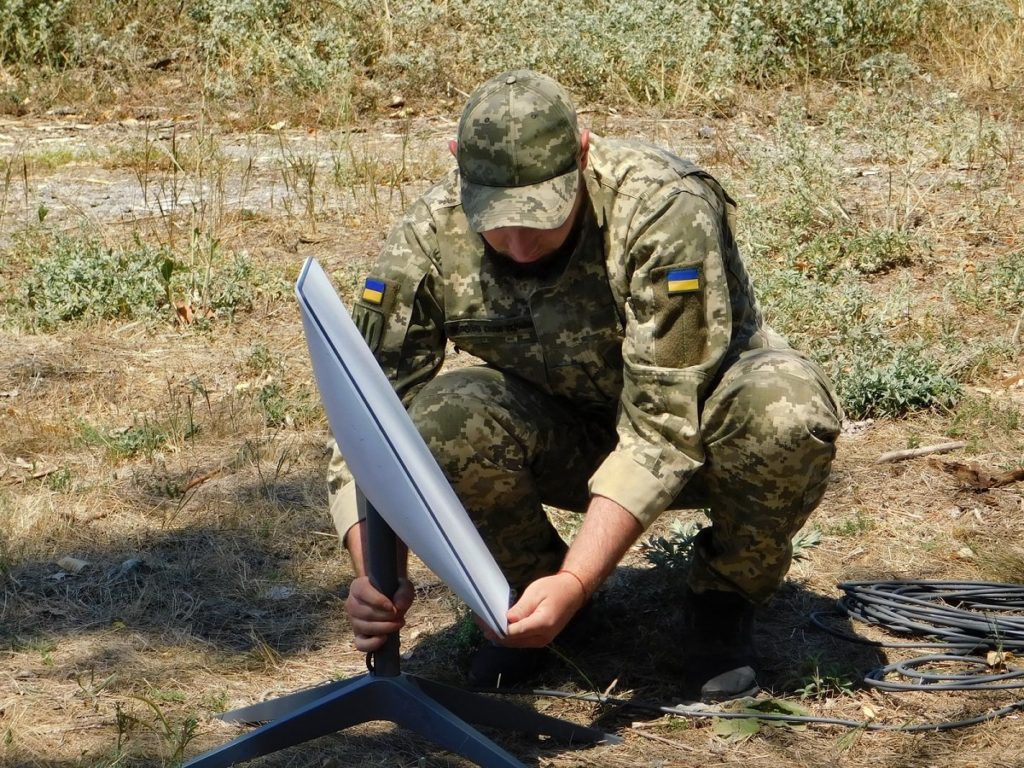
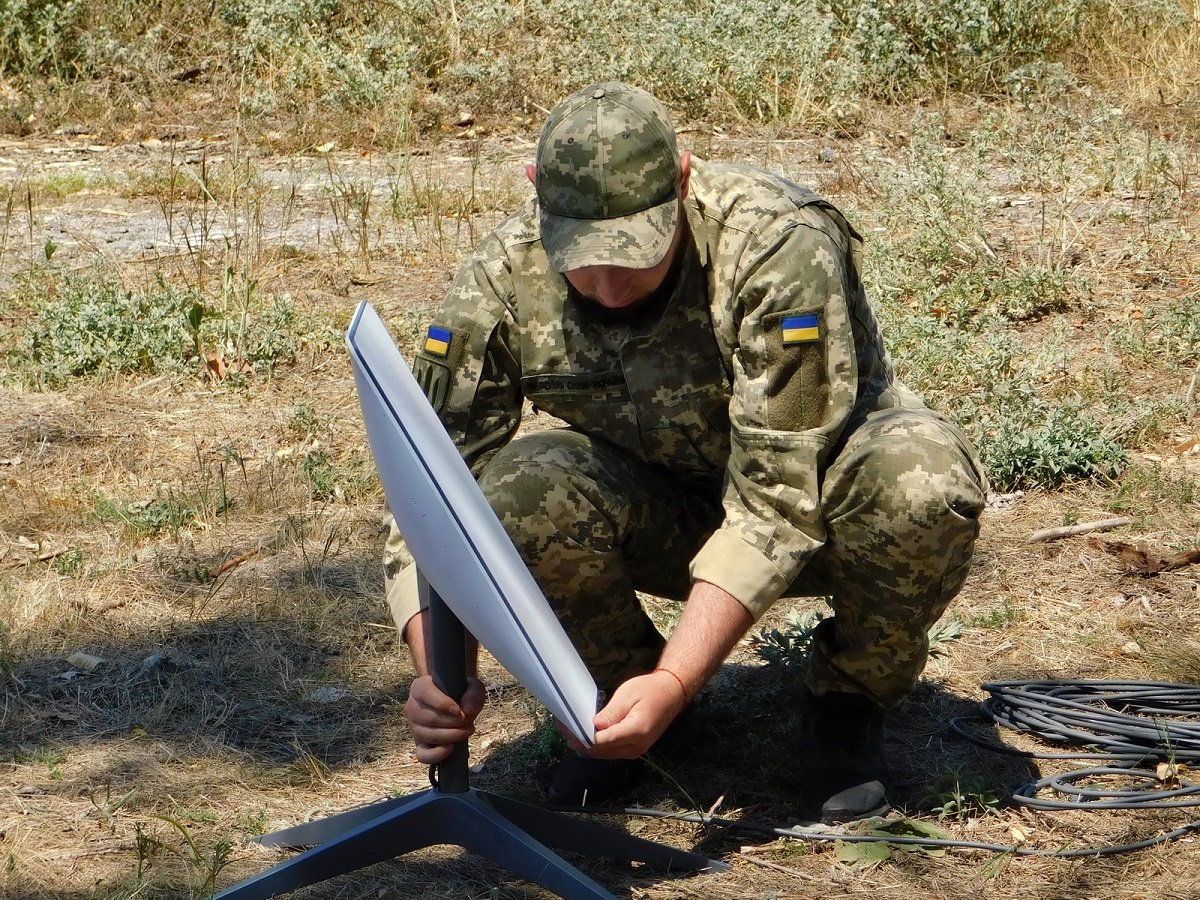


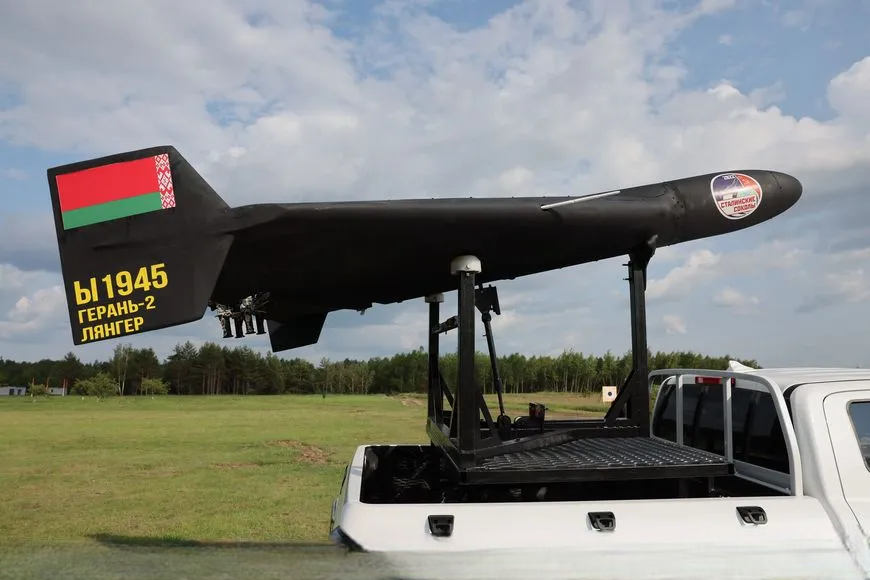


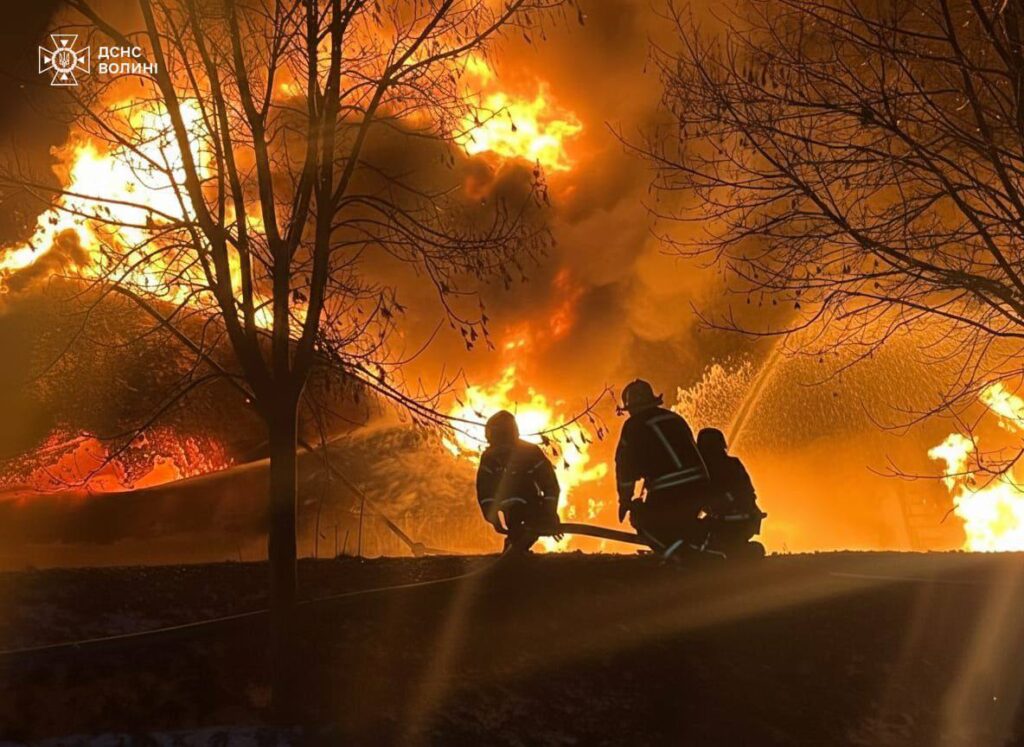



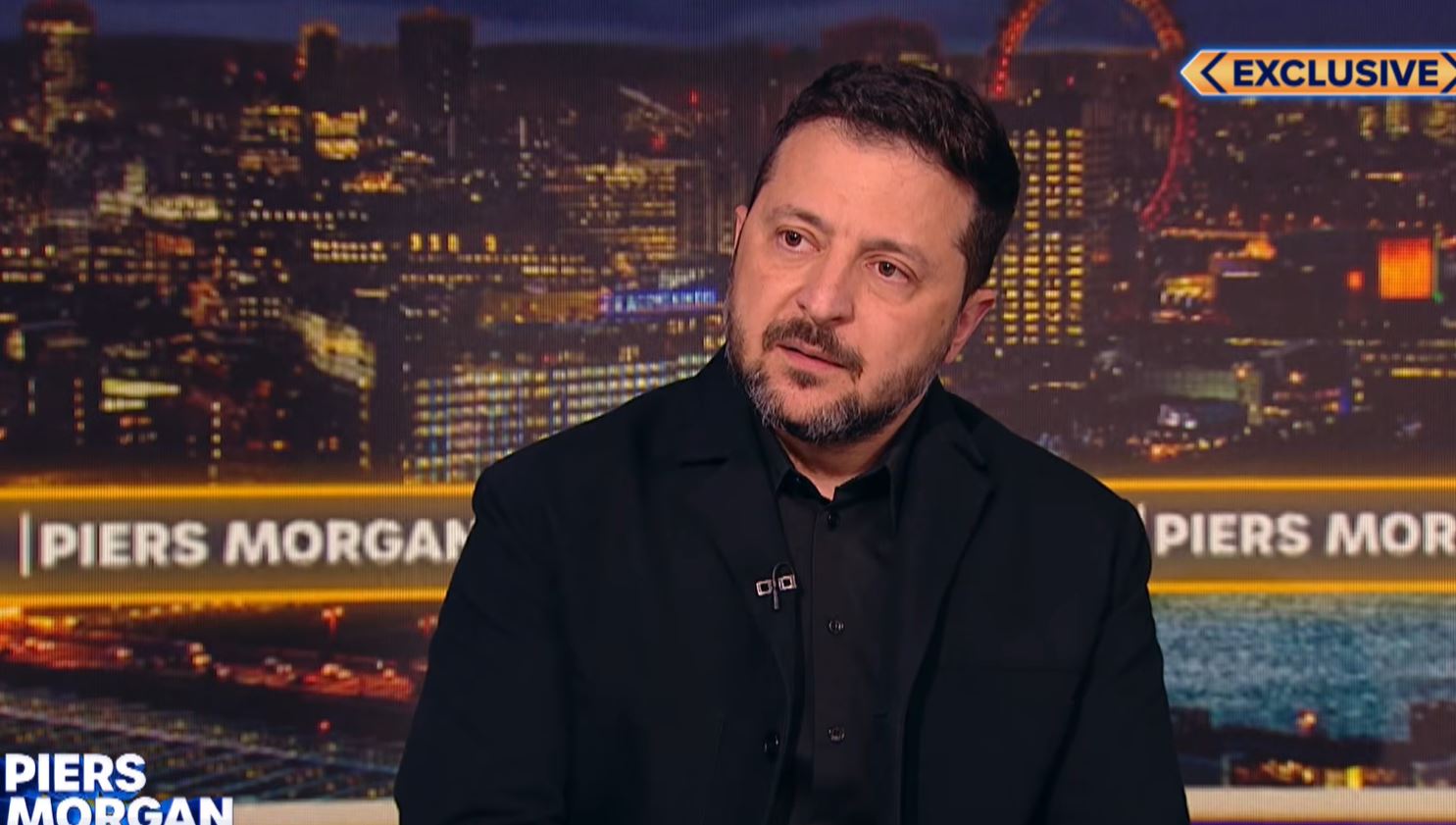

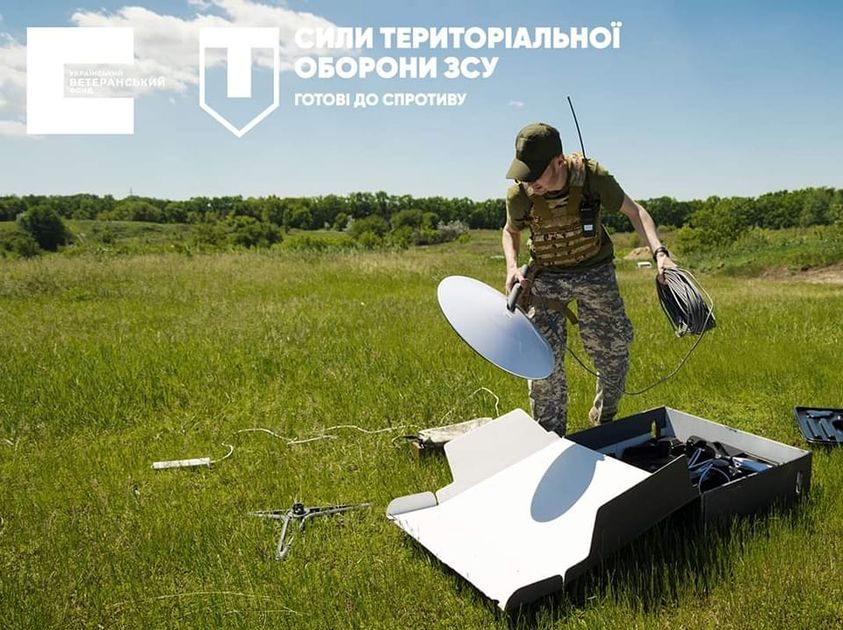



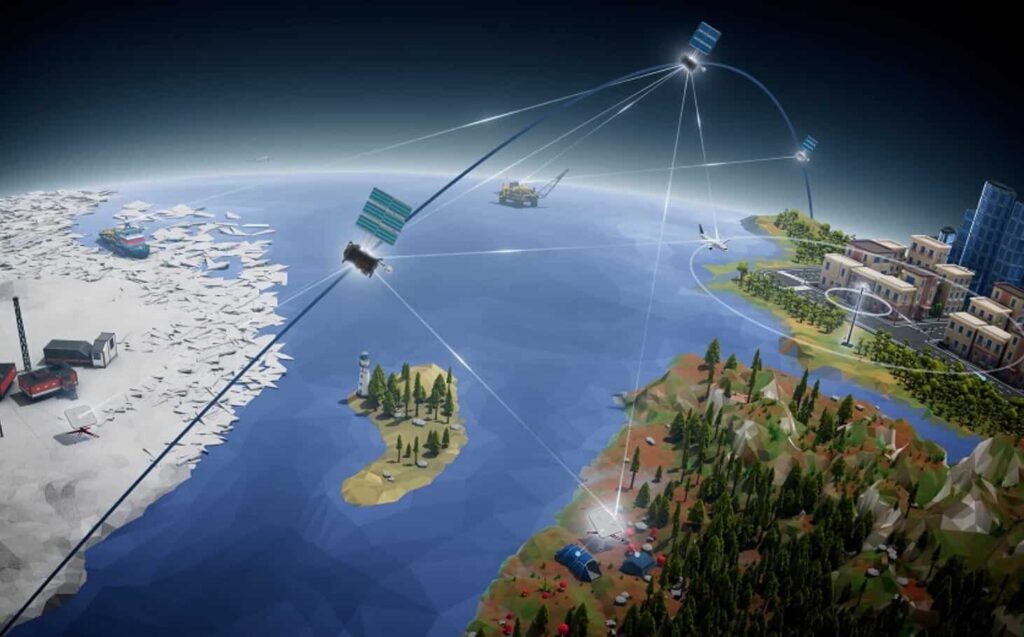


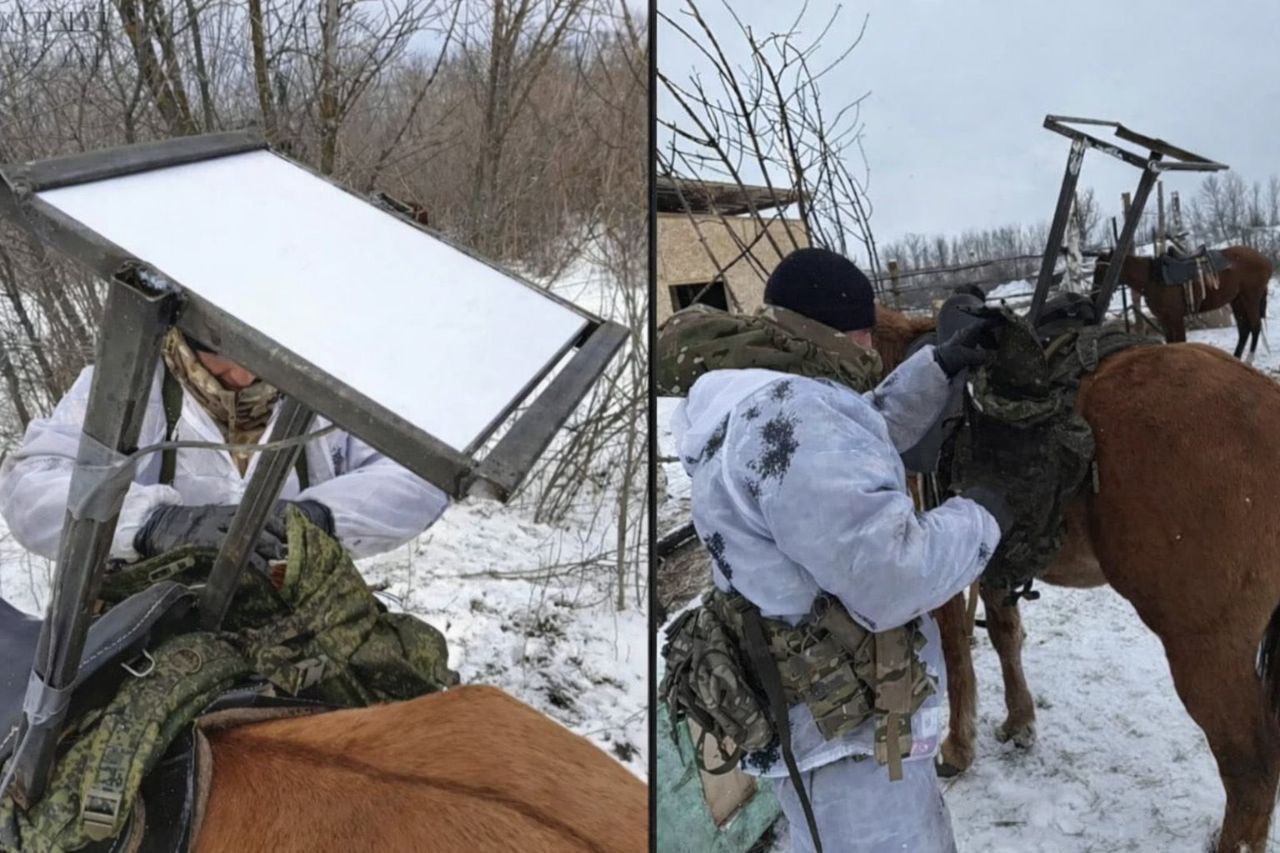
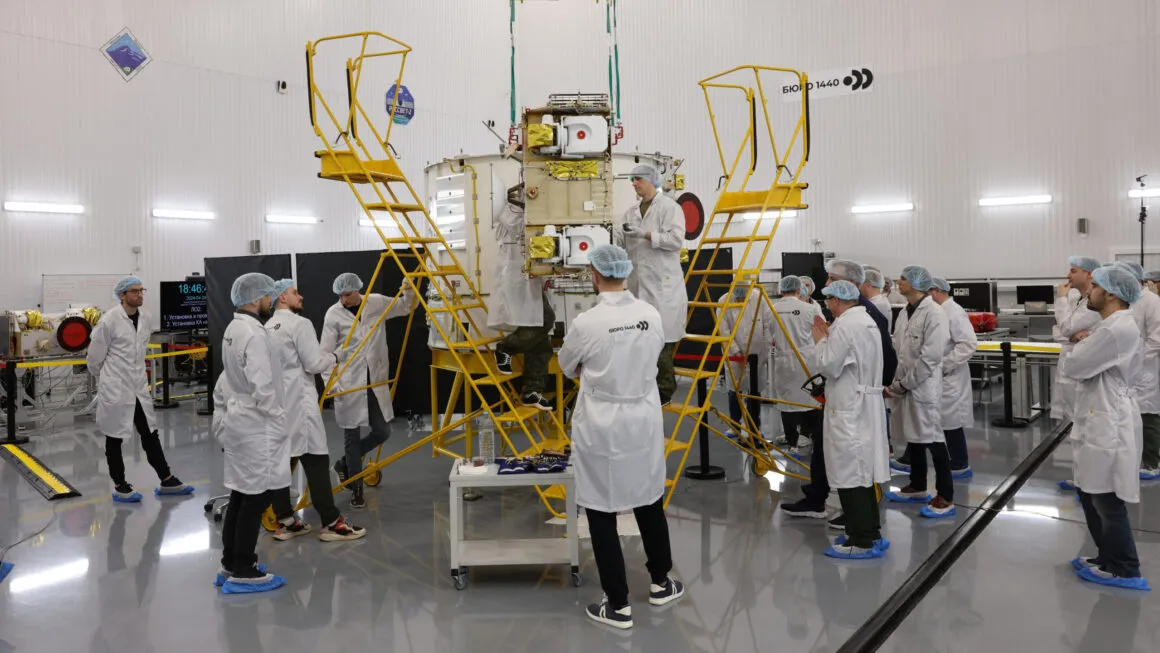
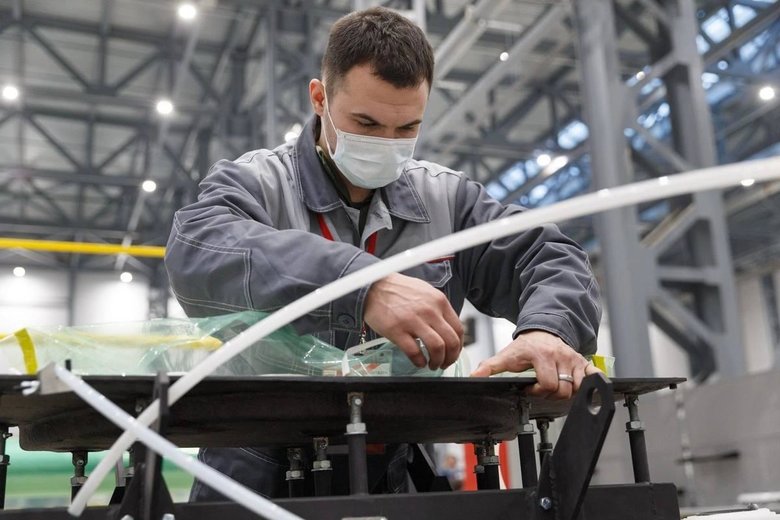
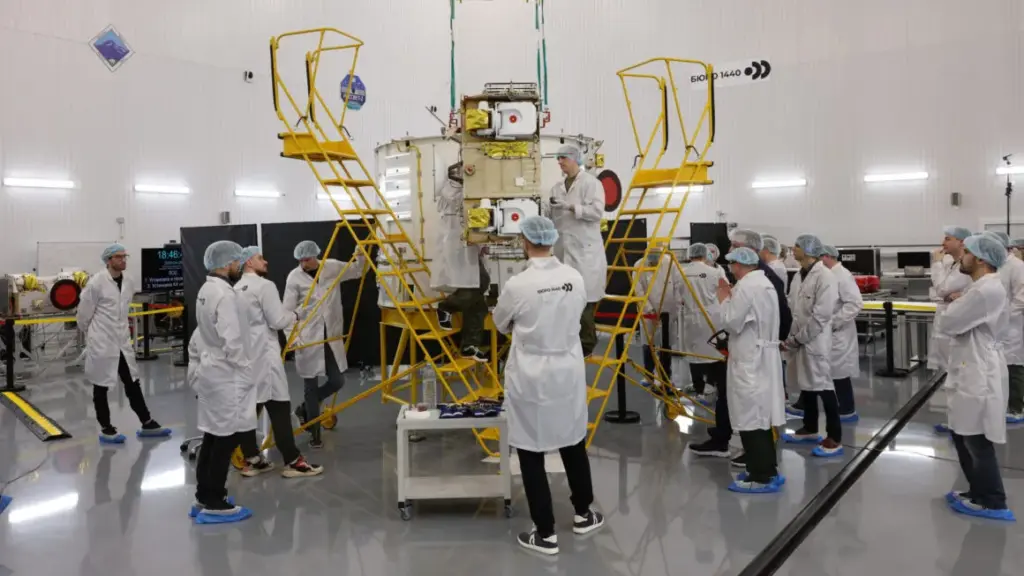
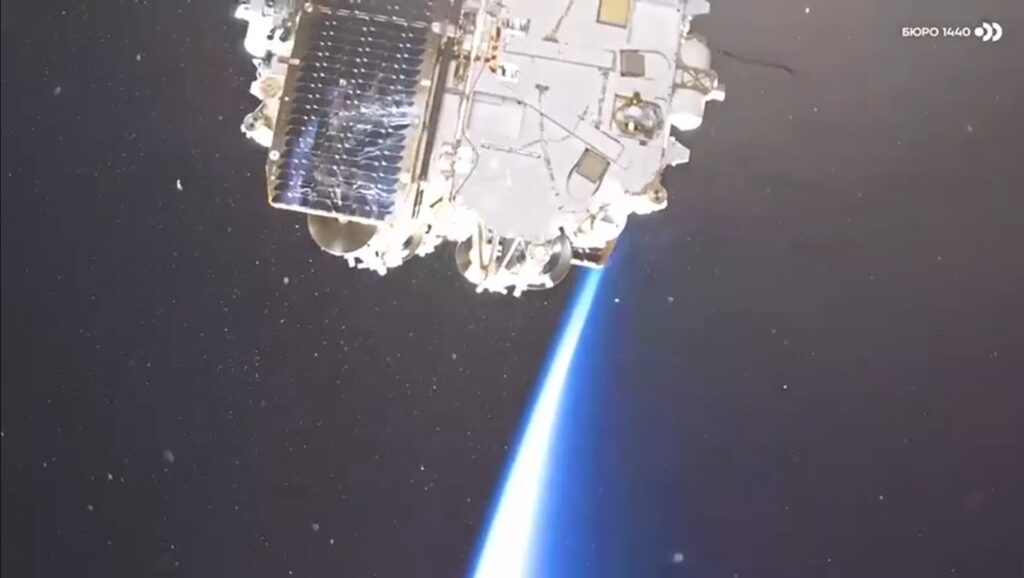
 (@afec7032)
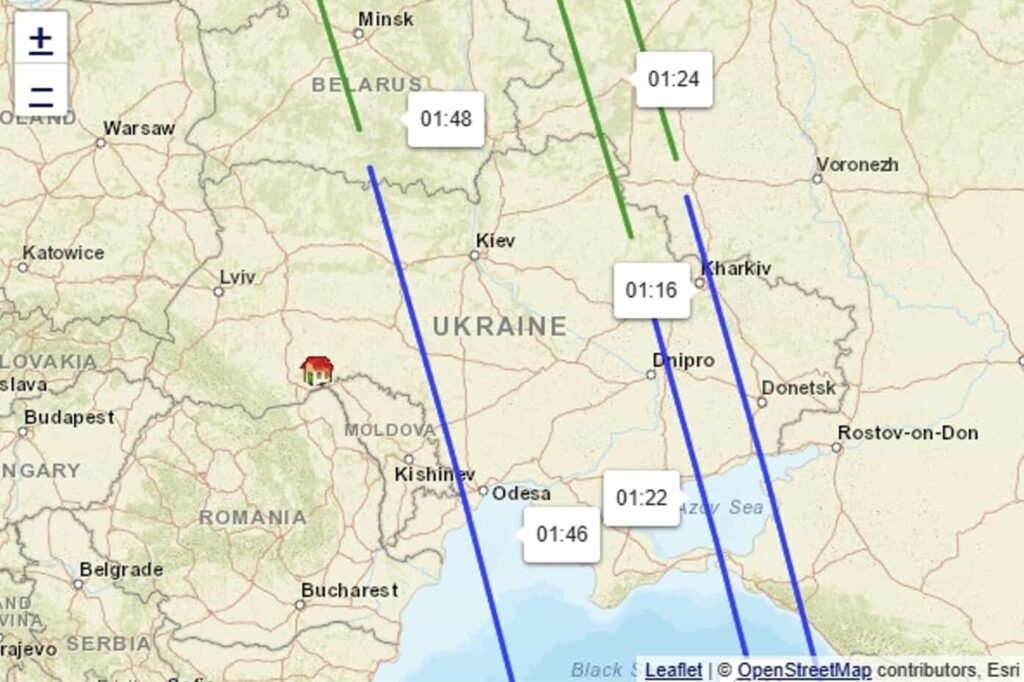
 (@andrii_sybiha)