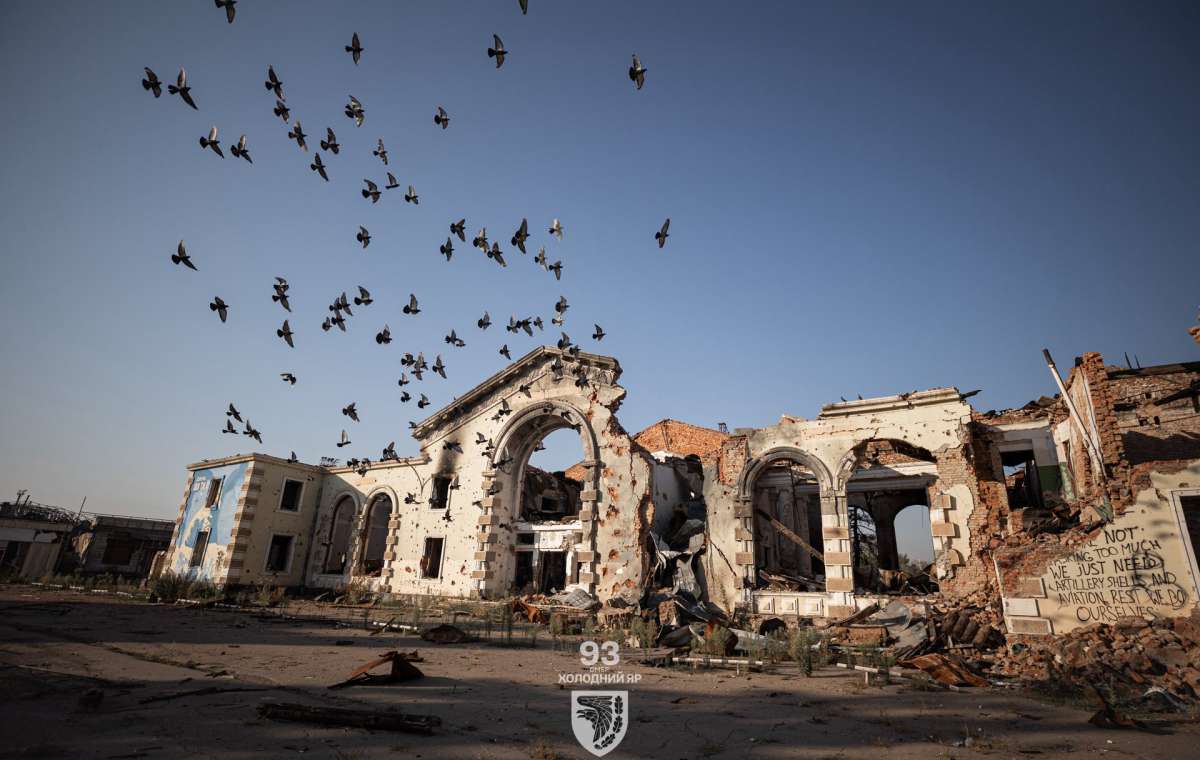
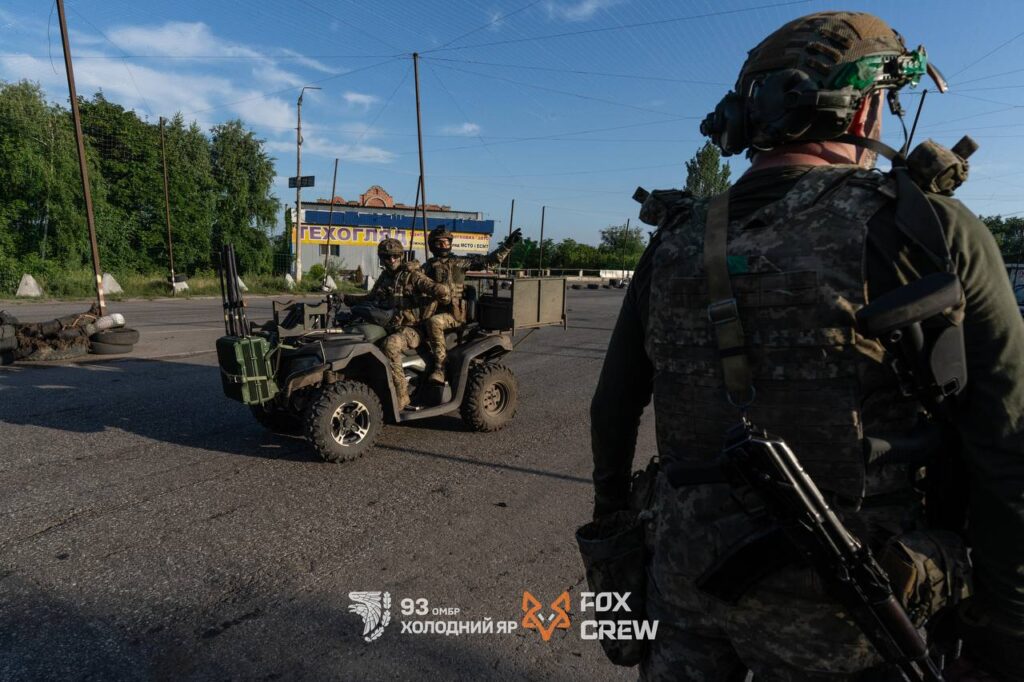
Ukrainian troops pushed into a front-line village Russian forces were sure they could never reach, an officer from the assault force told Army TV. He described a methodical, house-by-house clearing—then a Russian response that, once the village fell, called the footage an AI fake.
Through 2026 Russia has pressed on this stretch of the eastern front, creeping toward the fortress belt, the chain of fortified cities anchoring Donetsk Oblast. Retaking Serednie is one move in a quiet Ukraini
Ukrainian troops pushed into a front-line village Russian forces were sure they could never reach, an officer from the assault force told Army TV. He described a methodical, house-by-house clearing—then a Russian response that, once the village fell, called the footage an AI fake.
Through 2026 Russia has pressed on this stretch of the eastern front, creeping toward the fortress belt, the chain of fortified cities anchoring Donetsk Oblast. Retaking Serednie is one move in a quiet Ukrainian counteroffensive that has clawed back ground on this axis—which is why this village changing hands lands harder than the map suggests.
The terrain Russia trusted
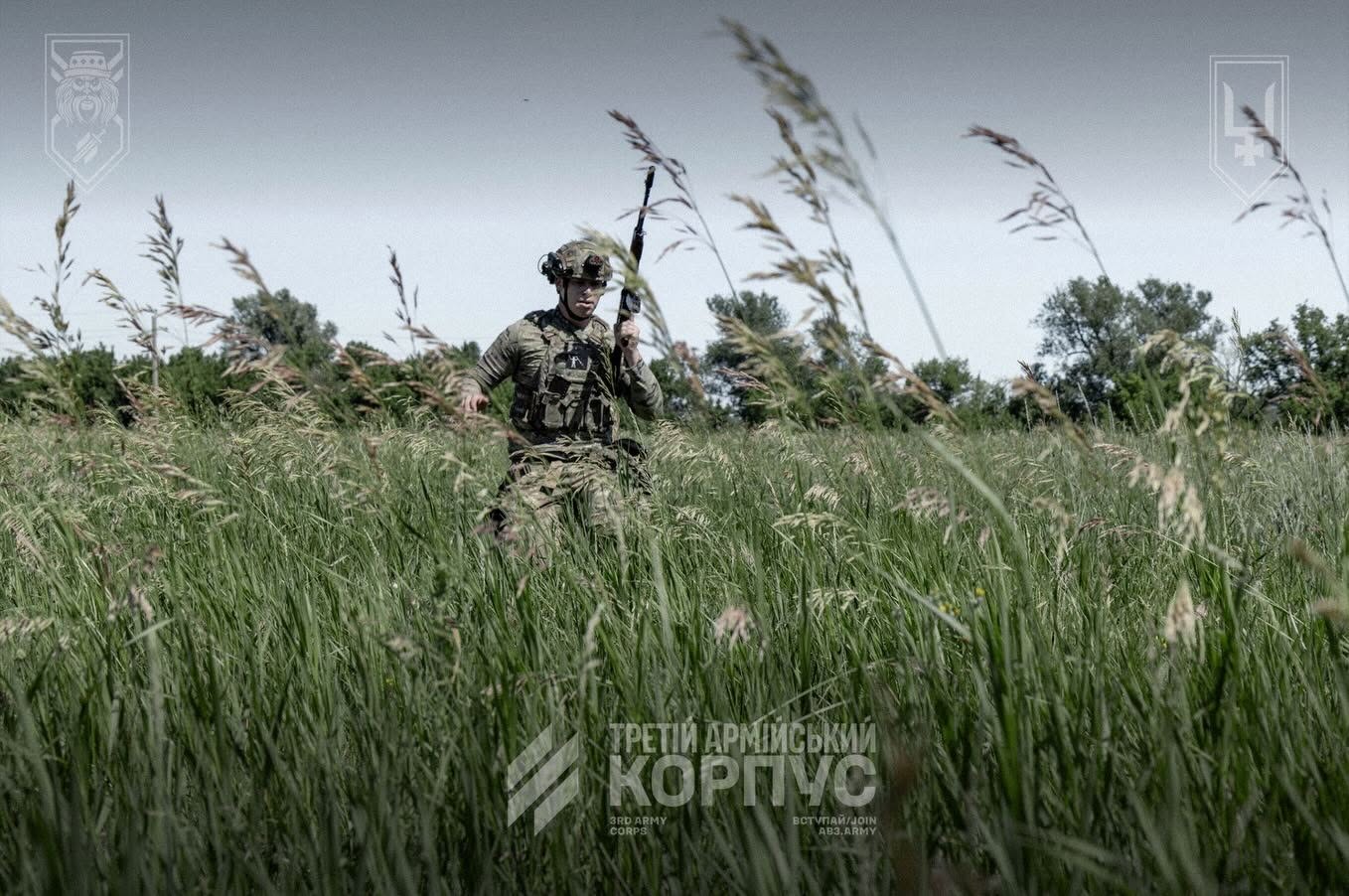
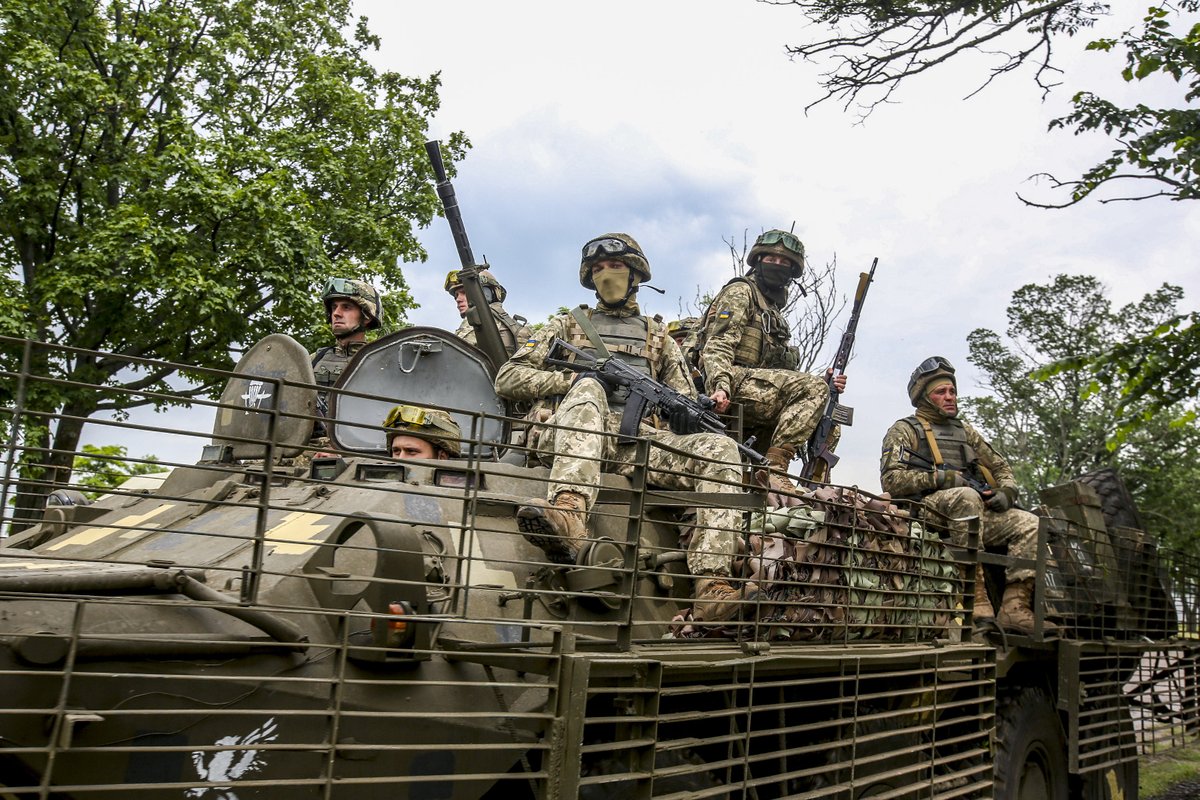
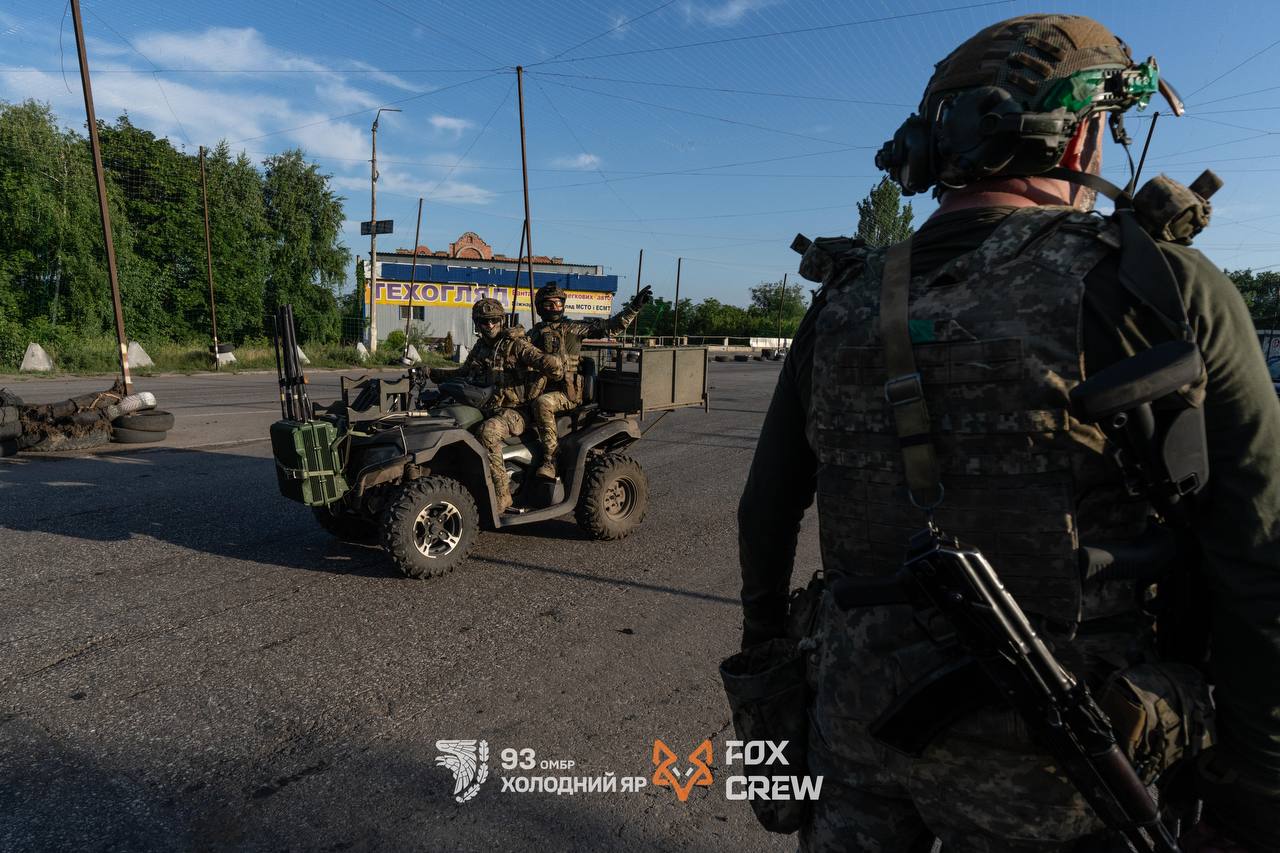
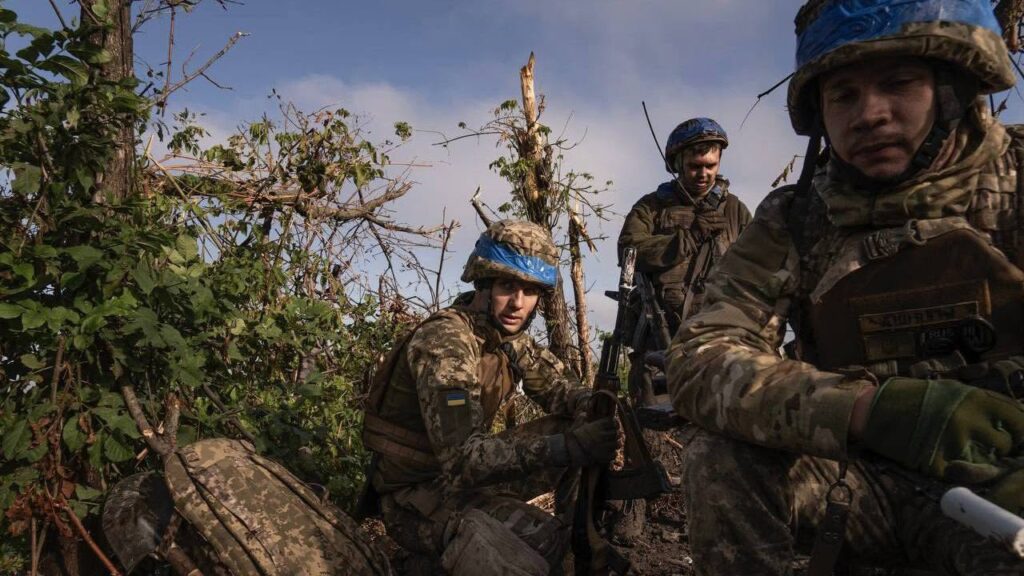
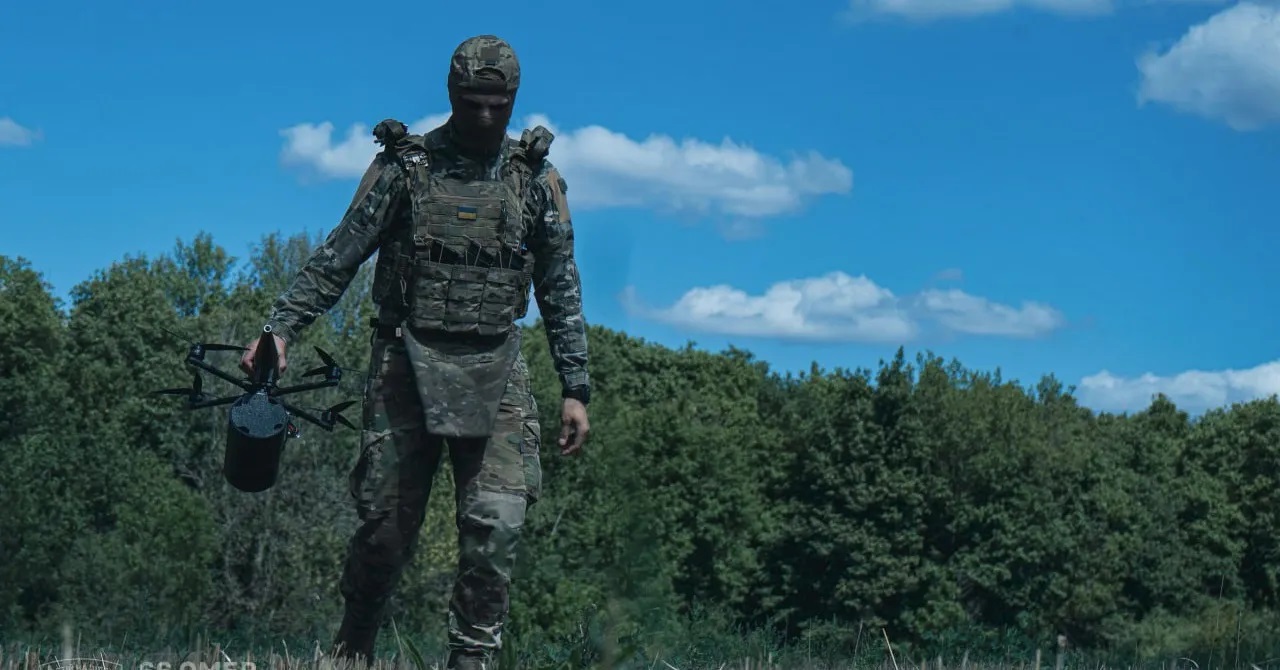
Serednie sits on the Lyman direction in eastern Ukraine, an axis where Russian forces have been pressing toward Ukrainian-held Sloviansk and Kramatorsk. Troops from Ukraine's 66th Separate Mechanized Brigade entered the village during Operation Vivaldi, said the deputy commander of its first mechanized battalion, Kassta, callsign Timokha.
Explore further
Ukraine’s Vivaldi counteroffensive disrupts Russia’s plan to encircle Donetsk Fortress Belt – ISW
Sitting on their own gains there, the Russians assumed no counterattack could follow and were certain the terrain itself ruled out any move into the village.
"The enemy, having success in this direction, did not expect that any counterattack or offensive could come in response," Timokha said.
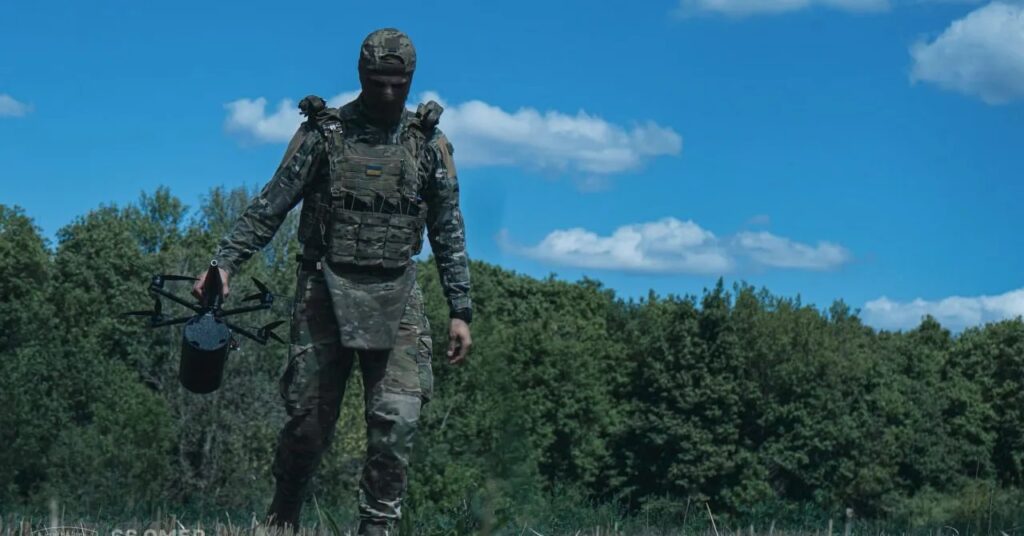
Preparing for the operation took more than a day or two, he added, because the village was full of basements and buildings that each had to be checked. Reconnaissance came first, then fire from drones, heavy bomber drones, and artillery to grind down a garrison he put at at least a platoon, before assault groups moved in with friendly units alongside.
Operation Vivaldi as a whole, run under an information blackout, has cleared 75 km² of enemy infiltration pockets and de-occupied another 10.
Then the Russians called it AI
Small Russian attempts to retake the village broke apart on the approaches, Timokha said. The louder reaction came online: Russians claimed the Ukrainian liberation videos were made with artificial intelligence.
He likened it to Sviatohirsk, where Vladimir Putin announced the town's capture before the commander of Ukraine's Third Army Corps, Brigadier General Andrii Biletskyi, publicly denied it, Timokha said.
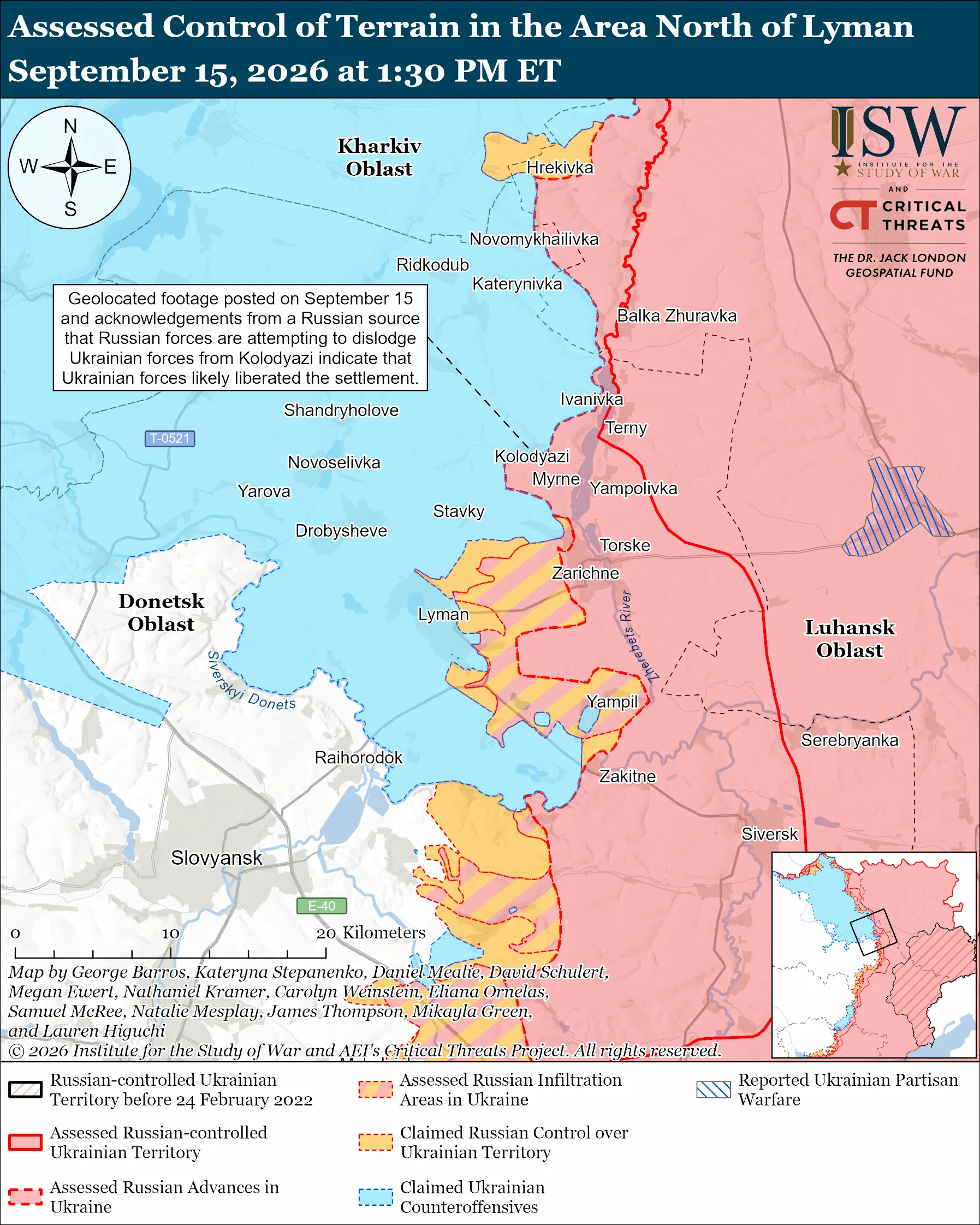
Russia's attempt to encircle the fortified cities of Donetsk Oblast has lost its northern pincer, the commander of Ukraine's Third Army Corps, Brigadier General Andrii Biletskyi, said in a television interview reported by Ukrinform. He described where the two Russian pincers were meant to meet, far behind the front line, and what Moscow must do now that one of them is gone. He also named what the Ukrainian operation there is meant to achieve, after declining to do so when he revealed it
Russia's attempt to encircle the fortified cities of Donetsk Oblast has lost its northern pincer, the commander of Ukraine's Third Army Corps, Brigadier General Andrii Biletskyi, said in a television interview reported by Ukrinform. He described where the two Russian pincers were meant to meet, far behind the front line, and what Moscow must do now that one of them is gone. He also named what the Ukrainian operation there is meant to achieve, after declining to do so when he revealed it two days earlier.
Seizing all of Donetsk Oblast is Russia's central objective in the ongoing all-out war, on the battlefield and at the negotiating table alike, and Russian leader Putin has ordered it done by the end of 2026. Russian forces have already missed 15 of his earlier deadlines against a belt of fortified cities Moscow can neither storm nor bypass, and it is losing men faster than it can replace them.
Two pincers that were to meet in another oblast
Biletskyi set out the Russian design "to envelop the so-called fortress cities from the north and from the south"—the four cities, Sloviansk, Kramatorsk, Druzhkivka, and Kostiantynivka, that have been the backbone of Ukraine's defense in the oblast since 2022..
"From the south it was an envelopment through Dobropillia, and from the north through this salient, which is now being cut off, it went to the city of Sviatohirsk and further, to the settlement of Barvinkove, where these two claws of the Russian army, the Dobropillia one from the south and the Sviatohirsk one from the north, were supposed to close," the commander said.
Barvinkove sits in Kharkiv Oblast, west of the fortified belt. The distance from there to the current front line shows how far behind Ukrainian lines the ring was meant to close.
Neither pincer got near it. Ukrainian forces stopped the Russian infiltration near Dobropillia last year, Biletskyi said, and the situation there remains difficult but under control. Russian assault groups have kept pushing toward the town in recent weeks, though Ukrainian troops have mined or destroyed the main approaches.
On the northern pincer he was blunt:
"The northern claw has effectively been routed and destroyed," he said.
Explore further
“Only the first season” – Ukraine unveils secret counteroffensive in a region Russia has been trying to seize for 12 years
Now the cities have to be stormed
Holding that result now depends on Russian supply, Biletskyi said. The critical task is "paralyzing logistics, paralyzing the rear areas, not letting the Russians restore this offensive."
He then set out what the failure costs Moscow.
"Then they will have to storm the Sloviansk-Kramatorsk and the Druzhkivka-Kostiantynivka agglomerations head-on," he said. "And storming these cities head-on is a far more painful and costly business for them than trying to envelop them and effectively take them without a fight."
Map: ISW
Russia has taken none of them: it has been fighting for Kostiantynivka since October 2025 and has not reached the other three. Ukraine reinforced the sector last month, placing two newly formed groupings under Azov commanders. One of them has since warned that Russia may mobilize up to 600,000 troops for its next offensive.
Explore further
Ukraine’s Vivaldi counteroffensive disrupts Russia’s plan to encircle Donetsk Fortress Belt – ISW
What Vivaldi is actually for
Two days after the operation was made public without a stated objective, Biletskyi gave one, and it is defensive.
"Our main strategic task for the Armed Forces of Ukraine is defense on the Donetsk and Luhansk axes, the defense of Donetsk and Luhansk oblasts," he said.
Ukrainian forces are not trying to take as much ground as they can, he added.
"We are not fighting there just for tens or hundreds, and at one time thousands, of kilometers. We are fighting first of all for favorable defensive lines."
Vivaldi is meant to put the troops on exactly those lines. That sets a different yardstick than captured settlements: the operation will be judged on the ground Ukraine ends up holding, not on how much of it there is.
Biletskyi confirmed the offensive in northern Donetsk Oblast on 15 September, after a period of information silence. His corps had cleared 75 square kilometers of Russian infiltrators and liberated 10 more, and its drone units had cut Russian supply routes and burned fuel infrastructure, the corps said at the time. Asked then what the operation was aiming at, he declined to say, offering only that Vivaldi has four seasons and this was the first. The Institute for the Study of War assessed a day later that the operation disrupts the Russian plan to encircle the fortress belt.
Ukraine's 3rd Army Corps has retaken 150–240 sq km north of Lyman since May
It erased 18 months of Russian groundwork for a northern march on Sloviansk
Almost nobody reported it for three months—not even Russian war correspondents
The fighting continues north of Lyman, but on Ukraine's terms
On 22 May, a mechanized battalion of Ukraine's 3rd Assault Brigade—backed by at least two more brigades, the 60th Mechanized and the 66th, attached to the 3rd Army Corp
Ukraine's 3rd Army Corps has retaken 150–240 sq km north of Lyman since May
It erased 18 months of Russian groundwork for a northern march on Sloviansk
Almost nobody reported it for three months—not even Russian war correspondents
The fighting continues north of Lyman, but on Ukraine's terms
On 22 May, a mechanized battalion of Ukraine's 3rd Assault Brigade—backed by at least two more brigades, the 60th Mechanized and the 66th, attached to the 3rd Army Corps for the operation—attacked Russian positions around the village of Nove, 15 km north of the town of Lyman in eastern Ukraine's Donetsk Oblast. Russian drones were heavily jammed that day. Roughly five Ukrainian vehicles were hit, most by fiber-optic drones—the only kind still able to fly.
Nobody outside the Ukrainian army reported it for three months. The first fragmentary accounts surfaced in late August; the full picture only this week. By then the 3rd Army Corps had taken back somewhere between 150 and 240 sq km and wrecked Russian plans for a northern siege of Sloviansk, one of the last two big free cities in Donetsk. Observer Thorkill, writing in Polish, called it a success on an operational scale.
The presence of that Ukrainian armor around Nove, which at the time anchored the right flank of a 100 sq km salient held by regiments of the Russian 20th Combined Arms Army, was an ominous sign for the Russians. After months of careful preparation by the 3rd Army Corps, the Armed Forces of Ukraine (AFU) were strong north of Lyman. Russian forces were weak.
This has effectively been a 20-month operation. Ukrainian forces spent that stretch building one of the biggest bunny-ears situations of the war: russian forces pushed in deep enough that abandoning the position became politically and institutionally difficult, but never wide… pic.twitter.com/QxhzWv2v8V
"The moment AFU could start moving vehicles through the area, the battle was basically over," mapper Vitaly wrote three months later. "Vehicles didn't win it, they showed up because the conditions that had made vehicle movement impossible were already gone." Ukrainian drones were everywhere. And Russian drones, effectively jammed by electronic warfare, could barely fly.
Not everyone reads those months the same way. Thorkill, who tracked the sector throughout, puts the breakthrough at 17 to 18 August, and writes that for most of July and early August the 3rd Corps' attacks were repelled by the Russian 144th Motor Rifle Division. On that account the slow months were not a steady advance. What turned them, he says, is not clear: someone on the Ukrainian side made the difference north of Kolodiazi. He is candid about the limits of what can be seen. Some sources say the Russians withdrew, others deny it, others say they were partly cut off. What he can confirm from satellite imagery is that Ukrainian forces retook Serednie and Zelena Dolyna.
Overextended and pummeled by drones, the Russians barely clung to their salient north of Lyman, which sat between the Nitrius and Zherebets rivers. They were especially exposed at its western edge, where they had pushed across the Nitrius. The Russians had hoped the salient would be a "base for an offensive on Lyman, which could have allowed further offensives to Izium and Sloviansk [and] threatened the northern supply road to Donbas," according to mapper Clément Molin.
The main offensive axis comes from Nove and goes all the way south. We know there are two main support axes, one east and on west. The one east is recent and there are very few proofs, we just know that they nearly reached the Zherebet river.
Instead, the salient became a trap as the Ukrainian 3rd Army Corps relentlessly—but quietly—exploited the fragility of the Russian 20th Combined Arms Army. The Russians have now been pushed back toward the Zherebets, leaving behind their uncounted dead ... and their ambitions for a quick northern march on Lyman and then Sloviansk and neighboring Kramatorsk.
It had taken Russian forces 18 months to set the conditions for a push toward Sloviansk from the north. In the three months beginning with that mechanized assault around Nove, the Russians "apparently lost 1.5 years of progress in the area," Vitaly concluded. Estimates of the ground retaken vary: Molin puts it at more than 200 sq km, the AKM Mapping account at 151, and Konrad Muzyka of Rochan Consulting at around 240.
The appearance of Ukrainian armor around Nove in late May was a strong indication that the 3rd Army Corps had the momentum. But that doesn't mean the Corps' eventual victory in the battle for the Lyman salient was a foregone conclusion. On paper, the Russians have a manpower and firepower advantage in Donetsk.
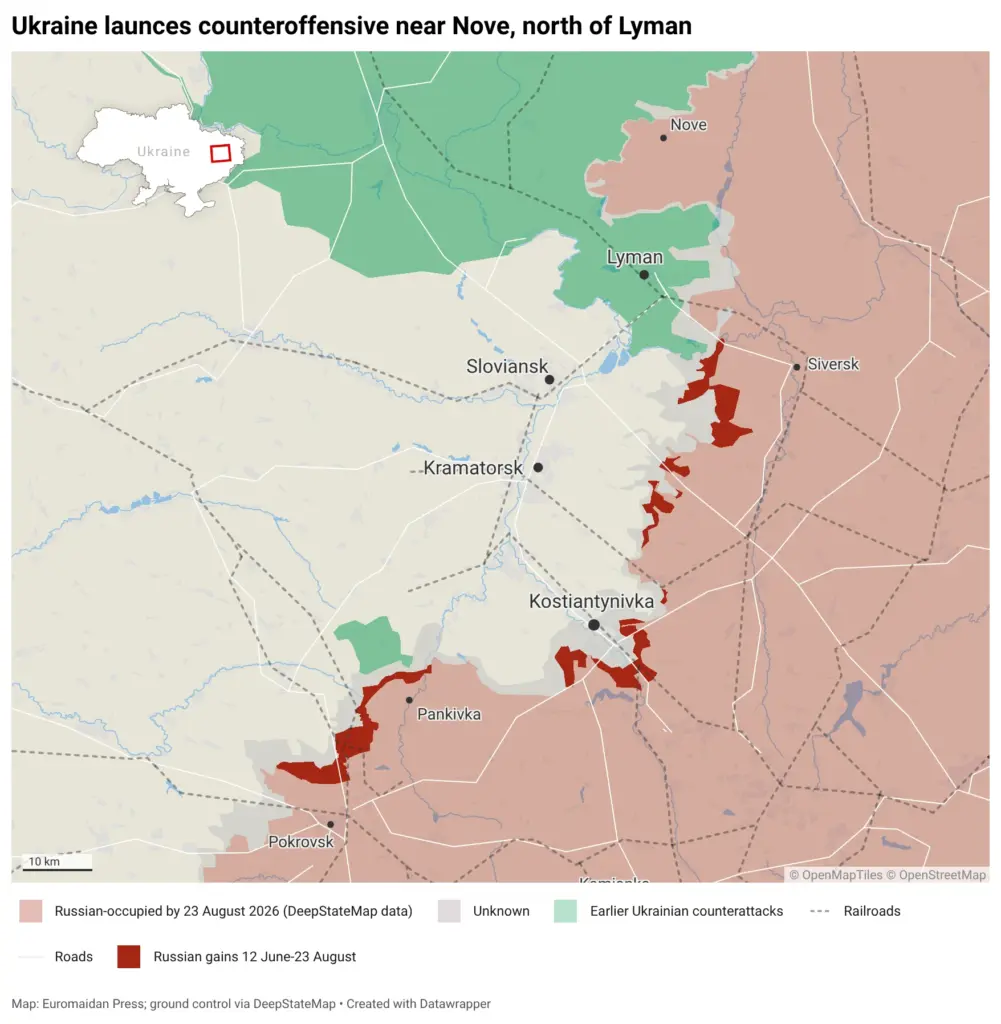
Situation near Nove as of 23 August. Map: Euromaidan Press
A bridgehead too far
The 20th Combined Arms Army advanced too far, too fast. And the terrain favored the Ukrainian defenders, who could pluck at the Russians' supply lines from entrenched positions until the time was right for a counterattack.
"Russia putting itself inside a deep, narrow pocket only made the final phase easier," Vitaly explained. "Once AFU had enough control over the surrounding movement, every new Russian mission sent into the area walked into a reinforced perception trap—troops committed to hold positions that existed far more convincingly in reports than as a functioning front."
The silence
What kept the trap working was that nobody talked about it. The Ukrainian general staff said nothing. Pro-Ukrainian analysts, who normally map every advance within hours, held their tongues until late August. So did the Russians.
Observer Andrew Perpetua, who has followed Ukraine's other quiet operations around Kupiansk and in southern Donetsk, called this one tighter still. The Lyman operation "seemed even more protected since even the most in the know and honest Russian reporters seem to be missing it. Or at least silent about it," he wrote. "It was honestly shocking to watch how out of the loop the Russians really were, which I think is in large part due to the collective action of OSINT to avoid speaking about the situation."
Perpetua's reading is that the lying is heaviest exactly where Russian forces are being pushed back. Nearby Sviatohirsk is the case in point. Vladimir Putin recently announced its capture. On 7 September, the commander of the 3rd Army Corps, Brig. Gen. Andrii Biletskyi, walked around the town on camera.
Explore further
Ukraine’s secret counteroffensive is more successful than we thought
The 3rd Army Corps cut across the salient around three weeks ago, reaching the northern edge of Kolodiazi and trapping an unknown number of Russian stragglers between the Ukrainian vanguard and the old Russian bridgehead. Most of the encircled Russians appear to have escaped. "There is a large area where there may still be Russian soldiers," Molin warned. "Most of the villages westwards have been cleared, but not the treelines."
On 24 August the Ukrainians mounted a second mechanized attack, so the operation has not stopped. But the 3rd Army Corps is likely shifting from attacking to consolidating and defending—and clearing out the Russian stragglers that, left alone, could sow chaos in the new gray zone that was once a Russian salient.
Russian channels have started to admit the problem. Rybar wrote of "problems near Lyman," conceding that Ukrainian units have been attacking southward from Ridkodub for months and that Russian forces "do not even control the airspace immediately near the front line." The fighting continues, but on Ukraine's terms, for now.
How much it changes is the one thing the analysts do not agree on. "This is one of the most important victory for Ukraine in 2026," Molin wrote, a victory that "will delay the offensive on northern Donbas." Thorkill, in the same post that called it an operational-scale success and rated it larger than the 7th Rapid Reaction Corps' gains near Velyka Novosilka in July, ends on the opposite note: it will not, he writes, affect in any way the situation of Ukrainian forces on the direction that matters most at present, the Kramatorsk agglomeration.
Free to redeploy from the stabilized southeastern front, a key Ukrainian brigade has moved north to help defend Kramatorsk and Sloviansk
It took two months, and almost nobody outside the Ukrainian army knew it was happening
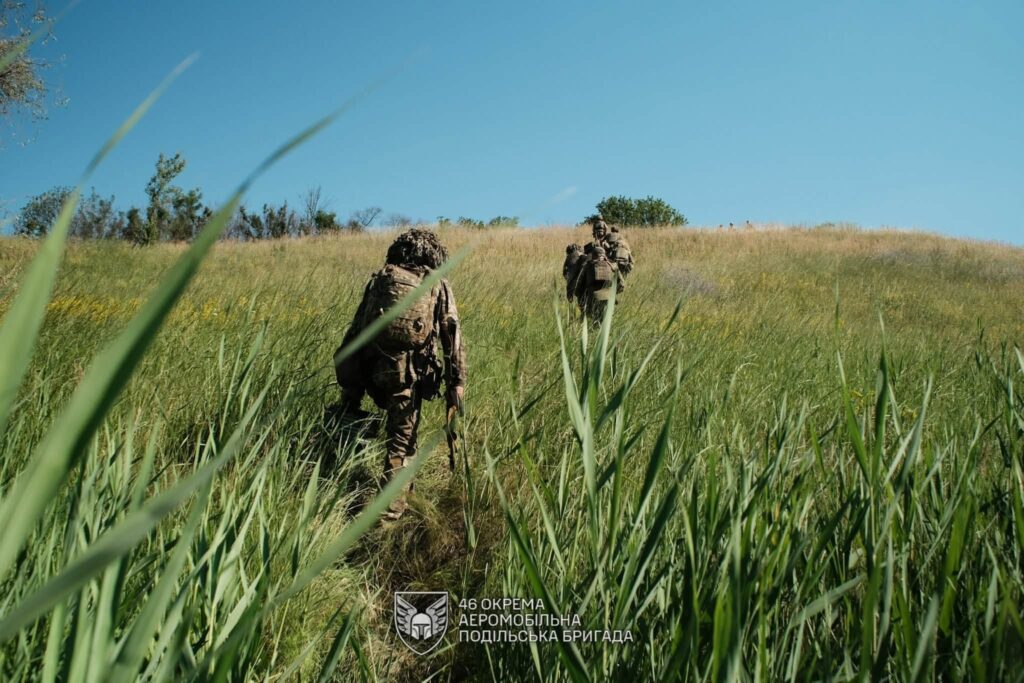
The 46th Airmobile Brigade's first task may be to cover a short retreat by an adjacent brigade
Kramatorsk and Sloviansk are the last two big cities in the Donbas that Russia does not hold, and taking them has been the main Russian objective
Free to redeploy from the stabilized southeastern front, a key Ukrainian brigade has moved north to help defend Kramatorsk and Sloviansk
It took two months, and almost nobody outside the Ukrainian army knew it was happening
The 46th Airmobile Brigade's first task may be to cover a short retreat by an adjacent brigade
Kramatorsk and Sloviansk are the last two big cities in the Donbas that Russia does not hold, and taking them has been the main Russian objective in eastern Ukraine since 2022. Ukraine is now moving forces north from the southeast to defend them.
The 46th Airmobile Brigade began that move in July. The first outside confirmation came this week.
Shifting north to plug a gap between two Ukrainian corps, the brigade could protect adjacent units as they retreat a short distance from what's left of Chasiv Yar—a battleground since the spring of 2024—and straighten the Ukrainian line where the 11th and 19th Corps meet. Both corps now sit under Biletskyi's new force grouping, according to Unit Observer—a command relationship no Ukrainian outlet has reported and which open sources cannot independently confirm.
Zooming out, the reshuffle around Kostiantynivka runs alongside a wider effort to redistribute Ukrainian troops along the 1,200-km gray zone threading through southern, eastern, and northern Ukraine. Gen. Mykhailo Drapatyi took over as commander-in-chief on 22 July, arriving with a mandate to unwind the Soviet-inherited command model Ukraine has fought this war with, and a reputation for favoring decentralized command. The 46th began moving before he did, in early July, according to Unit Observer, so this redeployment is not his. But the 33rd Assault Regiment was partially reassigned to Biletskyi's corps after the handover.
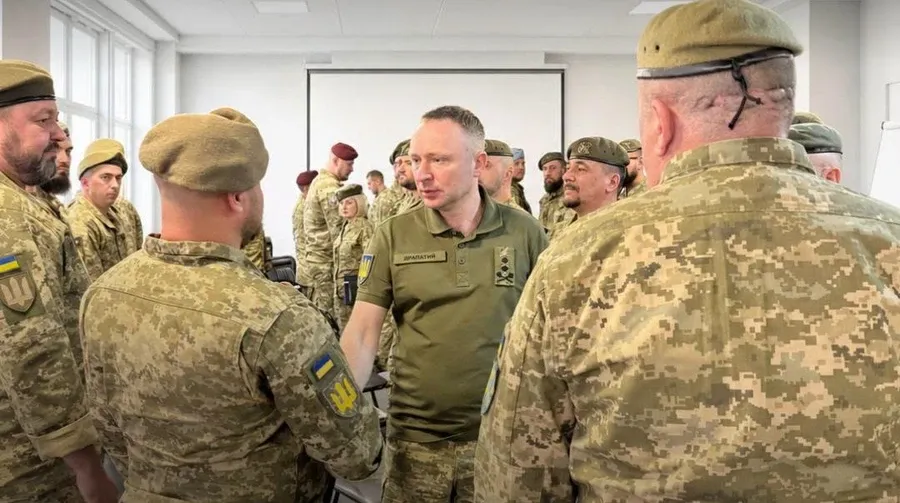
Ukrainian Commander-in-Chief Mykhailo Drapatyi met senior sergeants. Source: Drapatyi
The best-case scenario is that the redeployment helps stabilize the front 16 km south of Kramatorsk, delaying the Russian siege of that city and Sloviansk to the north. In the worst case, the 46th Airmobile Brigade and its thousands of troops are too few and too late to make much of a difference as the Center Group of Forces and its tens of thousands of troops grind through Ukrainian defenses on their slow march toward Kramatorsk and Sloviansk.
The 46th Airmobile Brigade spent years fighting in southeastern Ukraine. But it's arguably no longer needed along the southern end of the gray zone after a Ukrainian counteroffensive that kicked off in February halted and then rolled back Russian forces, stabilizing what was once Ukraine's most vulnerable flank.
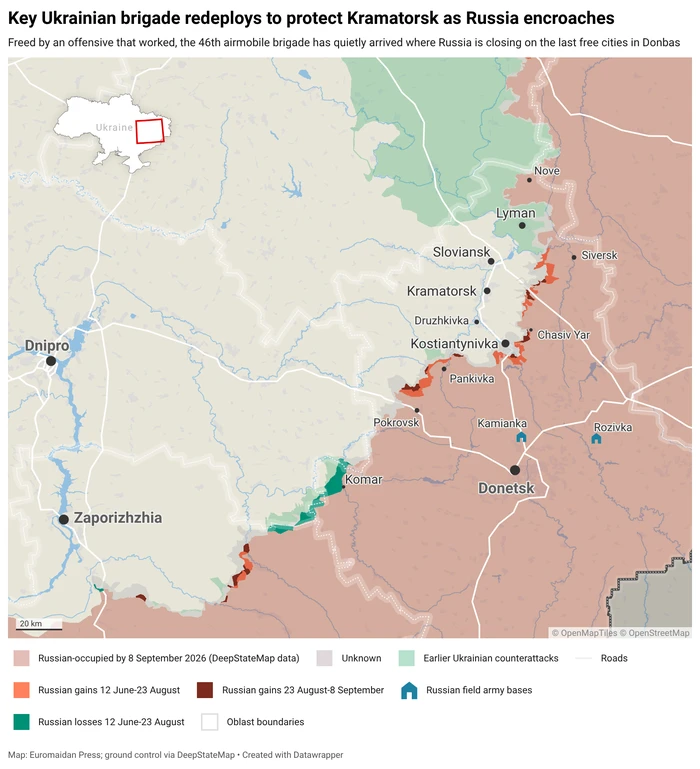
Map of the situation around Kramatorsk and Sloviansk, Euromaidan Press
Free to fight elsewhere, the brigade began its move north toward Kostiantynivka and Chasiv Yar two months ago. The move happened almost entirely in secret. "Strict OPSEC measures have become the standard for the Ukrainian armed forces in 2026," mapper Unit Observer noted, "with units delaying posts up to several months to avoid giving away their relocation along the front line."
That discipline is now visible across the whole Ukrainian effort. The southeastern counteroffensive that freed up this brigade ran for six months with very few videos and small teams. Ukraine's Swedish radar planes flew combat sorties for half a year before the defense ministry said so. A brigade crossing the front unremarked for two months is the same practice, applied to ground forces.
Since May 2022, Donbas has been the main military objective pursued by Russia , which concentrated its firepower and forces in the industrial region
The battle for Donbas has now been going on for 13 years, while Russia hopes to capture the last remaining cities (Kramatorsk,… pic.twitter.com/0fk3DTqGDS
Recent videos confirmed the deployment. The 46th Airmobile is now in position just north of the ruins of Kostiantynivka and just west of the ruins of Chasiv Yar, which lie 11 km northeast of Kostiantynivka. Sitting astride the juncture between two Ukrainian corps, the 11th and 19th, the brigade is set to play a crucial role in the ongoing Ukrainian defense of Kramatorsk and Sloviansk.
According to Unit Observer, the 46th Airmobile Brigade's move "will likely support the gradual retreat of elements of the 24th Mechanized Brigade remaining between Chasiv Yar and the village of Stinky," 6 km west of Chasiv Yar. The 24th Mechanized Brigade has fought long and hard in and around Chasiv Yar to hold back a much larger Russian force. But incremental Russian advances north and south of the 24th Mechanized Brigade's positions have put the brigade at risk of partial encirclement.
It's a dangerous position for the weary brigade. If it could fall back to the west a few kilometers, it could eliminate the risk to its flanks—and straighten and shorten the overall Ukrainian line. It's possible the 46th Airmobile Brigade's job is to safeguard the short retreat.
Explore further
Desperate to save Sloviansk and Kramatorsk, Ukrainian forces counterattack and reinforce
The command and control process is deceptively complex, and the confusion is exactly the kind Drapatyi is trying to engineer out. Ukraine's new corps are supposed to be its highest front-line commands, coordinating the brigades, regiments, and battalions fighting in the same sectors. But in the areas where two corps meet, it may be unclear which corps is in charge.
Ukraine's answer has been to add a layer above the corps. On 26 August, Zelenskyy announced that two reinforced groupings would take over the defense of Donetsk Oblast, commanded by Denys Prokopenko of the 1st National Guard "Azov" Corps and Andrii Biletskyi of the 3rd Army Corps, both named Heroes of Ukraine.
The 3rd Corps' zone of responsibility has grown daily since the start of the year, its deputy commander Lt. Col. Rodion Kudriashov told NV, and he framed the new groupings as Ukraine scaling up what already works.
The grouping formalizes an arrangement that had already grown up in practice. The 46th Airmobile Brigade fits the same logic. It belongs to neither the 11th nor the 19th Corps—it is an 8th Air Assault Corps unit—but it is a brigade that works, freed by an offensive that worked, arriving in the sector that matters most. It is also arriving into a corps run by its own former commander: Brig. Gen. Valeriy Skred, recently given the 19th, led the 46th through 2022 and 2023.
Only time will tell whether the reshuffling of Ukrainian forces will bolster the defense of Kramatorsk and Sloviansk. And even if the redeployments do stiffen the Ukrainian line south of Kramatorsk and Sloviansk, they do nothing to stiffen the line north of the twin cities.
Russian troops are closing in from that direction, too. Fortunately for the Ukrainians, there's a separate plan for that northern sector. A carefully planned series of Ukrainian counterattacks has quietly cut across a salient of Russian troops marching on Sloviansk.
The Ukrainian attacks may compel the Russians to pull back a short distance. That could give the defenders of Sloviansk more space and time to prepare for the coming siege.
Explore further
Ukraine’s secret counteroffensive is more successful than we thought
The pace of the Russian advance across Ukraine slightly increased in August
The Russians' main objective is unchanged: to get forces in place for a siege of Kramatorsk and Sloviansk no later than next year
Ukrainian counterattacks and reinforcements could slow the Russian plan
In August, Russian gains ticked upward in key sectors along the 1,200-km front line of Russia's 55-month wider war on Ukraine.
The coming winter could slow Russian advances as the tr
The pace of the Russian advance across Ukraine slightly increased in August
The Russians' main objective is unchanged: to get forces in place for a siege of Kramatorsk and Sloviansk no later than next year
Ukrainian counterattacks and reinforcements could slow the Russian plan
In August, Russian gains ticked upward in key sectors along the 1,200-km front line of Russia's 55-month wider war on Ukraine.
The coming winter could slow Russian advances as the trees lose their leaves and infantry infiltrators have nothing to conceal them from overhead drones. But for the next month or two, the trees will still have their leaves, and the infiltrators will still have their cover.
And that means, as fall wears into winter, Ukraine may lose yet more ground in the north and especially in Donbas region in the east, where Russia enjoys a substantial manpower and firepower advantage. "Russian forces still hold the operational initiative and are slowly capturing ... Donetsk Oblast as well as border zones in Sumy and Kharkiv Oblasts," mapper Thorkill warned.
The Russian gains belie a greater truth, however. In the middle of the fifth year of wider war, the situation on the ground only changes along the margins even as thousands die.
According to Thorkill's tally, the Russians occupied just under 220 square km of Ukrainian soil in August. That's 25% more territory than they captured in July. "The situation has deteriorated sharply in the Donbas in August," mapper Clément Molin explained.
Un été difficile en Ukraine , en cause, des décisions politiques contestables.
Après un printemps bien géré par Kyiv (aide financière de l'UE, bonne situation au front, frappes réussies à l'arrière), l'été a vu un nombre de mauvaises nouvelles pour l'Ukraine.
To be fair, the Russians are advancing much more slowly than they did a year ago. "Compared to August 2025, Russian gains are down by nearly half," Molin noted. That's cold comfort to Ukrainian civilians and defenders in the areas where the Russians are still gaining ground, however. And the sheer proximity of the most aggressive Russian formations to the most vulnerable Ukrainian settlements means it might not take much more effort on the part of the Russians to turn these settlements into battlegrounds.
The Russians' main effort is still directed at the last big free cities in Donetsk. Inching forward at great cost from several directions, Russian forces are slowly closing a pincer around Kramatorsk and Sloviansk and the tens of thousands of civilians who still live in the adjacent cities.
Thorkill's map places the forwardmost Russian forces in Mykolaivka, just 4 km east of Sloviansk. This is the middle joint of the Russian pincer. The pincer's southern claw is a zone of disputed control stretching along the road between the ruins of the city of Kostiantynivka and the battleground town of Oleksiievo-Druzhkivka.
If the Russians can march through Oleksiievo-Druzhkivka, they can lay siege to the town of Druzhkivka, a few kilometers to the northwest. If they can capture Druzhkivka, they can turn north and assault Kramatorsk, a mere 6 km away.
Podsumowanie sierpnia 2026 r. wojny rosyjsko-ukraińskiej.
W sierpniu 2026 r. według wyliczeń rus konta tg Creamy_Caprice (wykres poniżej), rus wojska zdobyły niecałe 220 km kw. Był to wzrost dynamiki ich zdobyczy terenowych w stosunku do lipca (176 km kw) o 25 proc. Według… pic.twitter.com/N56TsXJrOv
The most fragile part of the claw is to the north. Bucking the overall trend of Russian gains in August, Ukrainian forces counterattacked in several sectors the same month. Most dramatically, a clutch of Ukrainian mechanized and air assault brigades extended a slow advance through the town of Nove, mostly cutting across a 100-square-km salient of Russian forces around 25 km northeast of Sloviansk.
The Nove counterattacks offer some hope that targeted Ukrainian action may slow the Russian march on Sloviansk and Kramatorsk from the north. Meanwhile, a reshuffling of Ukrainian units south of Kramatorsk could improve Ukrainian defenses against an assault on the twin cities from the south.
As new Ukrainian commander-in-chief Gen. Mykhailo Drapatyi gradually addresses some of the imbalances in the Ukrainian ground forces, certain key units are getting help. Most notably, the 425th Assault Regiment is now subordinate to the 1st Azov Corps, which is responsible for the defense of Kramatorsk.
Keenly aware that the Russians intend to slowly infiltrate front-line settlements with small teams of infantry rather than rushing them with masses of easily-droned armored vehicles, the 1st Azov Corps has assigned the aggressive 425th Assault Regiment "to clear enemy infiltrators from the brigades’ areas of defense," the corps stated.
Explore further
Glide bomb then infiltrate. This is Russia’s new way of war.
Infiltrators aren't the only problem, however. The Russians' favorite tactic combines small teams of infantry with massive aerial firepower in the form of precision-guided KAB glide bombs flung by supersonic Sukhoi Su-34 fighter bombers.
"Glide bombs hurt," Ukraine's 4th National Guard Brigade reported. "It's about 200 kg of explosives flying your way. And you can't really shoot them down like you can shoot down drones. They can collapse fortified buildings, bunkers, and entire urban blocks much more effectively than artillery."
After the dust settles from the glide bomb impacts, Russian infantry "infiltrate through the damaged areas, using the ruins for cover and concealment," the national guard brigade explained.
The same lack of long-range air defenses that exposes Ukrainian cities to relentless Russian bombardment also deprives front-line forces of protection from the Su-34s and their glide bombs. And so the Russians can keep bombing and keep infiltrating as long as the trees offer some concealment for the infantry.
Explore further
Ukraine’s secret counteroffensive takes the pressure off Sloviansk
The clock is ticking. The Russians will aim to position their forces for more direct assaults on Kramatorsk and Sloviansk no later than next year. The Ukrainians will aim to slow down the Russians, trading a little space for more time. Time Drapatyi may use to institute further reforms in the Ukrainian ground forces.
Zooming out and taking the long view, no one should expect major changes on the map of Russia's wider war as the fifth year of fighting grinds toward the sixth. Yes, the last two big free cities in the Donbas are in trouble. But "the overall situation remains unchanged since October 2023," Thorkill wrote.
The Russians slowly advance. The Ukrainians slowly fall back. And losses deepen on both sides.
Ukraine's quiet counteroffensive north of Lyman has produced dramatic results since April
Now two Russian regiments are in danger of encirclement
Escape is still likely for the Russians, but their retreat buys time for the Ukrainian defenders of Lyman and nearby Sloviansk
Ukraine secret eastern counteroffensive seems to have been even more successful than some observers reported. It's possible that, in the sector just north of the town of Lyman in eastern Ukra
Ukraine's quiet counteroffensive north of Lyman has produced dramatic results since April
Now two Russian regiments are in danger of encirclement
Escape is still likely for the Russians, but their retreat buys time for the Ukrainian defenders of Lyman and nearby Sloviansk
Ukraine secret eastern counteroffensive seems to have been even more successful than some observers reported. It's possible that, in the sector just north of the town of Lyman in eastern Ukraine's Donetsk Oblast, the Ukrainian 3rd Army Corps is just a few kilometers short of encircling two Russian regiments.
That doesn't mean the Russian units can't escape. After all, there isn't a contiguous line of Ukrainian forces—nor a contiguous line of Russian forces for that matter—anywhere along the 1,200-km disputed gray zone that threads across eastern and southern Ukraine.
Situation near Nove as of 23 August. Map: Euromaidan Press
But the closing pincer around elements of the Russian 2nd and 144th Motor Rifle Divisions could strain the Russians' logistics and compel the Russians to reconsolidate in order to preserve their combat power—by retreating east. That would take a lot of pressure off Lyman and, by extension, also take a lot of pressure off Sloviansk and Kramatorsk, the last two big free cities in Donetsk.
Lyman, which lies 15 km northeast of Sloviansk—the northernmost of the free cities—is the main obstacle between at least six Russian regiments and Sloviansk. The Russians have been inching toward Sloviansk and Kramatorsk from several directions for months now, racing against the coming winter to position forces for a possible siege of the twin cities next year. Winter in Ukraine punishes any attacker by depriving them of the leafy tree canopy that can conceal infiltrating troops during warmer months.
According to the most recent map from analyst and mapper Thorkill, one of the more reliable observers of unit-level action in Ukraine, the Ukrainian 3rd Assault Brigade is just a few kilometers away from linking up with the 60th Mechanized Brigade in or around the village of Kolodyazi.
Sytuacja w rejonie Nowego (Łyman), część II.
Jednym z odcinków frontu w Donbasie, na którym wojska ukraińskie prowadzą obecnie działania zaczepne, jest rejon Kateryniwka - Nowe – Zełena Dolyna, na północ od Łymanu. Od połowy maja 2026 r. pozycje rosyjskiej 144 Dywizji Strzelców… pic.twitter.com/AIvInwHGX3
If true, that means the 3rd Assault Brigade and adjacent units from the 3rd Army Corps have carried out one of the more successful Ukrainian counteroffensives in memory. In April they first exploited gaps in Russian defenses north of the village of Nove. In May and June they advanced toward the village. In July they captured it.
After that, the attacking Ukrainians kept pushing south into the right flank of a 10-km-by-10-km salient that advancing Russian regiments created as they maneuvered around Lyman from the north, aiming to surround the town instead of directly assaulting it on their way toward Sloviansk.
Leaving their flank exposed, the Russians trying to encircle Lyman found themselves at risk of encirclement, instead. If the 3rd Assault Brigade or 60th Mechanized Brigade—together possessing thousands of troops, on paper—can march through Kolodyazi, they will have closed a ring of loose Ukrainian control around at least two Russian regiments, also with potentially thousands of troops.
Emphasis on loose control. Again, there aren't enough Ukrainian forces on the ground north of Lyman to prevent any "encircled" Russians from retreating back to the east. But that retreat would represent a major victory for the Ukrainian defenders north and east of Sloviansk. "The fall of this salient [north of Lyman] would significantly delay the fall of Lyman," analyst and mapper AMK Mapping predicted.
Situational update on the Lyman direction:
The Ukrainian counterattacks north of Lyman are now entering their fourth month, as they come closer and closer to cutting off the Russian salient. Two pincers have been formed, which are both dangerously close to cutting the Russians… pic.twitter.com/mu2kZ4S3Jv
No one expects the Russians to halt their offensive toward Sloviansk and Kramatorsk. But in potentially taking two steps forward and one step back in their northerly march on the free cities, the Russians sacrifice time. Time the Ukrainians can use to stiffen their defenses in Sloviansk and Kramatorsk and evacuate more of the tens of thousands of civilians who remain in the cities despite the constant danger from Russian drones and bombs.
The possible extent of the Ukrainian gains north of Lyman—a 10-km march since April—is impressive given Russia's overall advantage in manpower and firepower in the east. Equally impressive is the operational security, or OPSEC, that cloaked the offensive until now. Sure, there were a few videos of action around Nove that hinted at a major Ukrainian action.
But the units involved exercised surprising discipline, and prevented too much information from leaking. "Someone in the 3rd Corps responsible for [OPSEC] is actually trying to do their job diligently and has quite effectively cut off information," Thorkill noted. The secrecy may have facilitated the Ukrainian advance by delaying any sense of panic among the Russian commanders who are responsible for reinforcing the Lyman salient, but who also tend to ignore bad news as long as possible because they know it could reflect poorly on them.
News of the counteroffensive is now available for all to see, even if official Ukrainian sources have yet to confirm it. That may mean time is running out for the 3rd Army Corps to close its pincer before the Russians retreat or reinforce. AMK Mapping has already seen some evidence of a "partial withdrawal from the most vulnerable positions in the salient.
Explore further
Can Ukrainian forces save Sloviansk and Kramatorsk?
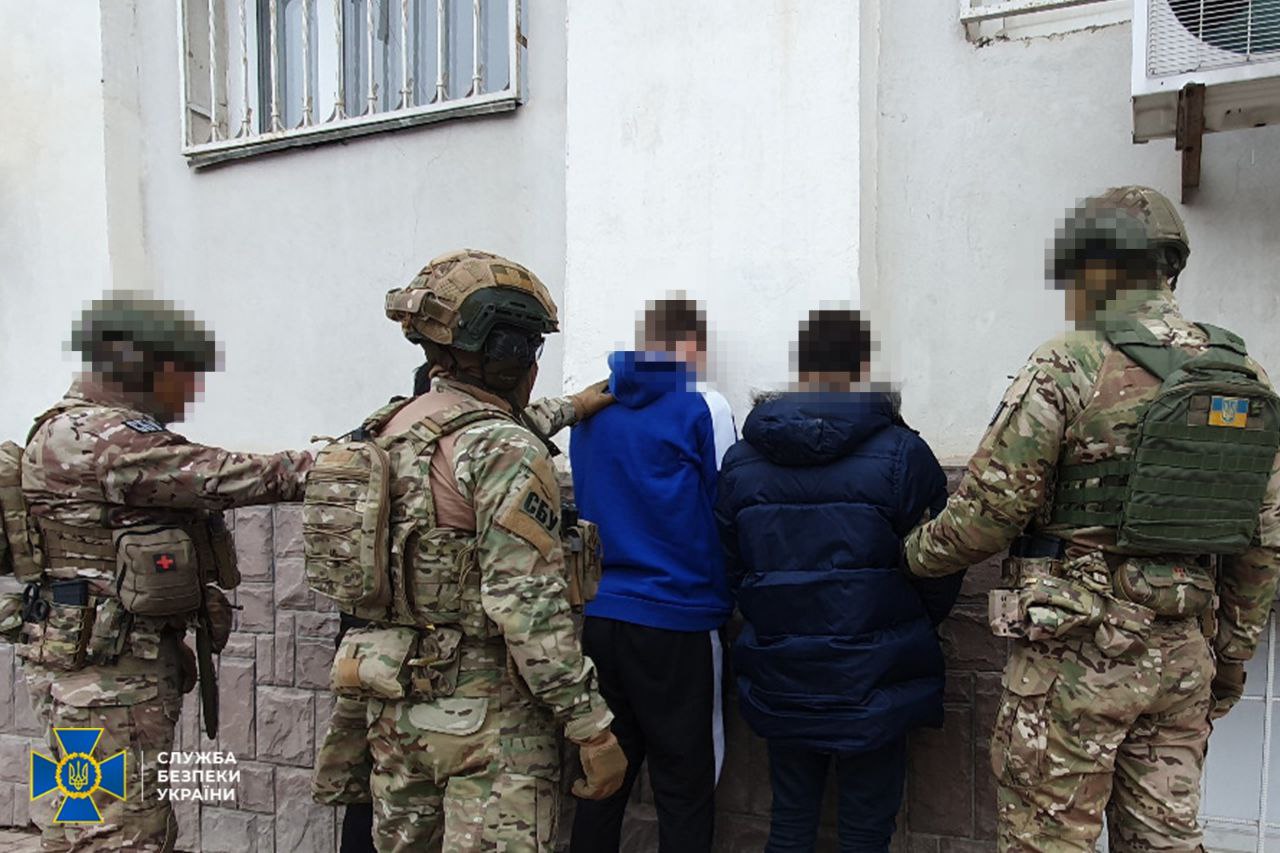
A Ukrainian court sentenced three Russian agents to 15 years each for guiding Russian strikes on Donetsk Oblast, the Security Service of Ukraine (SBU) said on 26 August. Each had been recruited to mark Ukrainian military sites or civilian targets in the east, and counterintelligence exposed them between spring 2025 and March this year. The court found all three guilty of treason committed under martial law. The SBU did not name the court or say which specific strikes th
A Ukrainian court sentenced three Russian agents to 15 years each for guiding Russian strikes on Donetsk Oblast, the Security Service of Ukraine (SBU) said on 26 August. Each had been recruited to mark Ukrainian military sites or civilian targets in the east, and counterintelligence exposed them between spring 2025 and March this year. The court found all three guilty of treason committed under martial law. The SBU did not name the court or say which specific strikes the men enabled.
Russia has spent this war turning Ukrainian civilians into spotters for its bombs — reaching them through Telegram job and drug channels, forged official summonses, relatives in occupied areas, and promises of easy money — and the SBU has opened more than 3,800 treason investigations since 2022 as of February 2026, so any single verdict stands for a caseload far larger than what reaches the news.
The informer inside the armor repair base
One of the convicted men worked at a Defense Forces repair base, and the SBU detained him in the Kramatorsk sector in April 2025. Russian services noticed him through his brother, who lives in Russia and works for the Federal Security Service (FSB), the investigation established. Recruitment through relatives in Russia or the occupied territories is a method Ukrainian counterintelligence has documented before, including inside a marine brigade on the active front.
During his own shifts at the defense enterprise, he recorded the geolocations of repair shops used to restore heavy armored vehicles for Ukraine's Armed Forces. He tried to pass the photographs and building coordinates to his Russian handler through an anonymous chat in a messenger.
The Dobropillia man who aimed 1.5-ton bombs near Pokrovsk
The second man was an unemployed resident of Dobropillia and an agent of Russian military intelligence, which noticed him through anti-Ukrainian comments in Telegram channel chats, the SBU said. The agency's counterintelligence detained him near Pokrovsk in March this year. Investigators established that he directed 1.5-ton guided aerial bombs at fortified areas and at artillery positions that keep Russian assault groups under fire control on the Pokrovsk axis. Russian forces have leaned more heavily on heavy glide bombs across this stretch of front this year, hitting fortifications and reducing towns to rubble their infantry then uses as cover.
The Kostiantynivka resident who marked his own city
The third man, recruited by the FSB, lived in Kostiantynivka, and SBU military counterintelligence exposed him in August 2025, according to the report. He approached Russian services through pro-Kremlin Telegram channels and offered them his help.
He directed Russian guided aerial bombs and small first-person-view drones at the civilian infrastructure of the front-line city, according to the case materials. He also tracked the positions of Ukrainian drone units carrying out combat tasks on the Kramatorsk axis. Russian strikes on that axis have repeatedly hit residential blocks, with prosecutors opening war-crimes investigations.
Ukrainian courts have handed down the same 15-year term in comparable cases, including for a locomotive depot engineer who mapped Ukrainian positions around Lyman.
Without much fanfare, Ukrainian forces have been counterattacking north of Lyman in eastern Ukraine's Donetsk Oblast
The Ukrainian advance takes some pressure off the free city of Sloviansk, just 20 km to the southwest
The problem is: the Russians are advancing toward Sloviansk and Kramatorsk from several other directions
Russian forces are fighting against time to close a pincer around the last free cities in eastern Ukraine. The deadline: the coming winter,
Without much fanfare, Ukrainian forces have been counterattacking north of Lyman in eastern Ukraine's Donetsk Oblast
The Ukrainian advance takes some pressure off the free city of Sloviansk, just 20 km to the southwest
The problem is: the Russians are advancing toward Sloviansk and Kramatorsk from several other directions
Russian forces are fighting against time to close a pincer around the last free cities in eastern Ukraine. The deadline: the coming winter, which will strip the leaves from the trees and leave any attacking force exposed to overhead surveillance and attack.
But in one key sector, Ukrainian forces are spoiling the coordinated Russian operation to partially surround Sloviansk and neighboring Kramatorsk. With admirable operational security, or OPSEC, a clutch of Ukrainian brigades under the 3rd Army Corps hasn't just blunted the advance of the Russian Center Group of Forces—it has pushed the Russians back.
This Ukrainian counterattack along the axis through the town of Lyman, ongoing since May, has largely escaped widespread notice. Yes, there is some scant video evidence of Ukrainian attacks. And yes, a few analysts have adjusted their maps to account for apparent Ukrainian advances, especially in the direction of Nove, a Russian-occupied village 15 km north of Lyman, which itself lies 15 km north of Sloviansk.
Ukrainian forces have been conducting for weeks two unnoticed counter-attacks in two directions of the frontline.
With barely any geolocation, the Ukrainians kept a good level of OPSEC and the russians have been reluctant to publish videos from these areas.
But for the most part, Ukrainian and Russian sources have avoided talking about Lyman. "The Ukrainians kept a good level of OPSEC and the Russians have been reluctant to publish videos from these areas" depicting their retreats, analyst and mapper Clément Molinnoted in June, just a few weeks after the Ukrainians attacked toward Nove.
Molin, for one, expects the OPSEC to lift in the coming days. "By the end of the month, we should have an official update on the good results of a Ukrainian offensive that has largely remained secret," he wrote on Monday.
Situation near Nove as of 23 August. Map: Euromaidan Press
April offensive
The Ukrainians' limited counteroffensive around Lyman apparently kicked off on in mid-April. One of the first attacks that left any real evidence occurred on 22 May, when a small Ukrainian mechanized force—perhaps from the 60th or 66th Mechanized Brigade, the 77th Air Assault Brigade, or the Presidential Brigade—attacked in armored trucks and M-113, Stryker, and BTR-4 armored personnel carriers. Heavy bomber drones flew top cover.
The Russian 144th Motor Rifle Division fought back with its own drones. Interceptor drones took aim at the bombers. First-person-view and heavy bomber drones blasted at least one BTR-4, hitting it before and after it dropped off its infantry passengers. Drones struck some of the disembarked Ukrainian infantry.
How many Ukrainian troops survived and entrenched in new positions on 22 May is unclear. Regardless, the Ukrainian 3rd Army Corps wasn't done with Nove. Attacks continued. And sometime after the 22 May assault on Nove, "the Ukrainians managed to consolidate their gains," Molin concluded after scrutinizing a few videos and some satellite imagery.
By early July, Ukrainian forces had succeeded in "operationally encircl[ing] the Russian forces defending the village of Nove," according to analyst and mapper Thorkill. "Fierce fighting is currently underway to expel the Russians from that locality," Thorkill reported at the time.
Sytuacja w rejonie Nowego (Łyman).
Jednym z odcinków frontu w Donbasie, na którym wojska ukraińskie prowadzą obecnie działania zaczepne, jest rejon wsi: Nowe – Zełena Dolyna, na północ od Łymanu. Od połowy maja 2026 r. pozycje rosyjskiej 144 Dywizji Strzelców Zmotoryzowanych… pic.twitter.com/2EJQgz4eps
The aim of the Ukrainian counterattacks is obvious. The 3rd Army Corps intends to put pressure on the northern right flank of 10 km-by-10-km salient jutting into the battleground north of Lyman. The Russian 144th Motor Rifle Division has been pouring troops into the salient, clearly intending to surround and isolate Lyman instead of directly assaulting it—all in order to clear a path toward Sloviansk.
Salients are risky for both sides, however. The farther the Russians extend their Lyman salient, the more exposed they are on their flanks. The Ukrainians know this. And even if the 3rd Army Corps can't fully cut across the salient in order to surround the Russians inside of it, the corps can at least take advantage of the salient's exposed flanks.
Capturing Nove, on the very northern edge of the salient, could allow the Ukrainians to bring to bear more artillery and drones on the Russians south of Nove. The 3rd Army Corps doesn't have to fully encircle the Russian troops closest to Lyman in order to hammer them with withering firepower.
Explore further
Ukraine’s quiet counteroffensive took 745 square km. Russia’s dead Starlink is how
Just how successful the 3rd Army Corps has been in its local counteroffensive could become clearer very soon. That won't spell lasting relief for Sloviansk and Kramatorsk, however. Fighting against the clock as summer begins turning into fall and then winter, the Russians are slowly advancing toward the twin cities from several directions.
The siege of Kramatorsk and Sloviansk is coming. Perhaps not this year, but surely by 2027. To fully safeguard the twin cities, the Ukrainians would need to duplicate their success north of Lyman along several other directions.
That's a big ask of a Ukrainian force that's overall still outnumbered and outgunned.
Russian forces have gained ground on the eastern approaches to Sloviansk and continue to prioritize an eastern route toward the city, according to the Institute for the Study of War (ISW). Their earlier push from the northeast had bogged down, and Russia now aims to set up a future assault on one of the last major cities Ukraine still holds in Donetsk Oblast. A quick move on the city itself remains extremely unlikely, ISW said.
Russia's 2026 summer campaign in the east
Russian forces have gained ground on the eastern approaches to Sloviansk and continue to prioritize an eastern route toward the city, according to the Institute for the Study of War (ISW). Their earlier push from the northeast had bogged down, and Russia now aims to set up a future assault on one of the last major cities Ukraine still holds in Donetsk Oblast. A quick move on the city itself remains extremely unlikely, ISW said.
Russia's 2026 summer campaign in the east has advanced through field edges and small villages rather than the breakthroughs the Kremlin keeps promising, the grinding pattern that has defined the fighting across Donetsk Oblast for years.
Explore further
Kostiantynivka: Why one city in Donbas matters so much that Putin lies about having captured it
The eastern approach
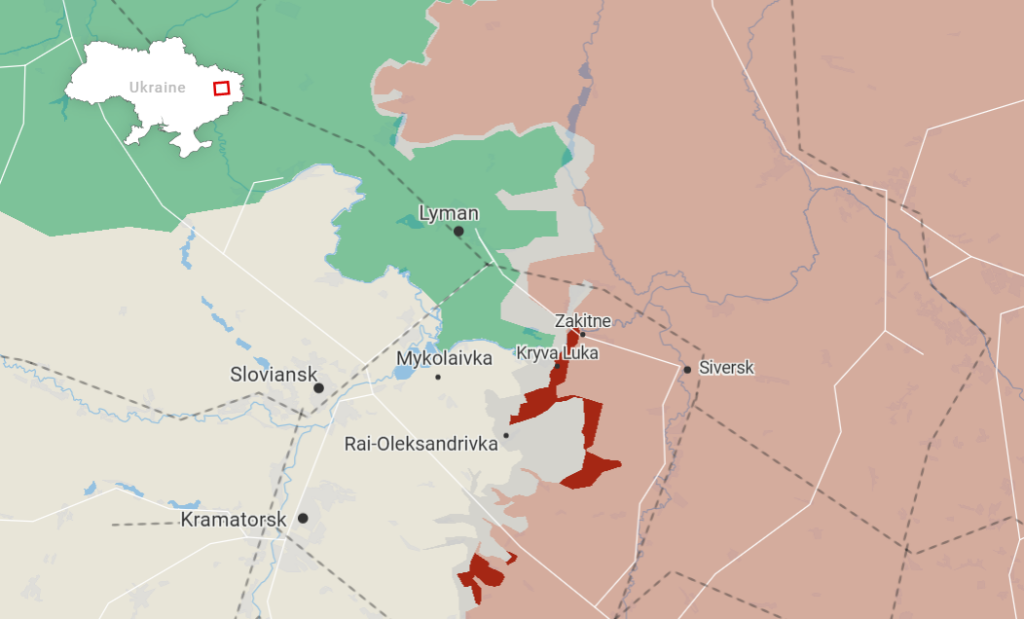
Ukrainian military observer Kostiantyn Mashovets reported that Russian forward units are advancing across several tactical areas at once in the Sloviansk direction. He said the command of Russia's 3rd Combined Arms Army rushes assault infantry forward right after each successful infiltration. Russian troops reached the southeastern edge of Pyskunivka, east of Sloviansk, from the east and northeast, moving off positions they had seized on the southern bank of the Siverskyi Donets, Mashovets said. Zakitne lies northeast of Pyskunivka and Kryva Luka southeast of it, and ISW read the advance as evidence Russia has consolidated positions in both.
They also infiltrated the southern and southeastern outskirts of Mykolaivka from western Rai-Oleksandrivka. ISW assessed that Russia is running a dual effort to connect its units near Kryva Luka with those at Rai-Oleksandrivka, so it can assault Mykolaivka from dominant terrain to the east and south at once. Mashovets added that other Russian groups slipped through three settlements along the E-40 Bakhmut-Sloviansk highway, trying to hold the western bank of the Siverskyi Donets-Donbas Canal and reach the river just east of the city.
ISW observed reports on 23 August that Ukrainian forces repelled a Russian infiltration attempt in Mykolaivka.
Oleksandr Borodin, spokesperson for Ukraine's 3rd Army Corps, said the Lyman direction falls in his corps' zone and that Russia's goal there is to half-encircle the Sloviansk-Kramatorsk agglomeration from the flank—first securing bridgeheads across the rivers, then cutting logistics. He called those plans unrealistic:
"We have quite serious defensive positions there and have been preparing for a long time. The capabilities they currently have to try to accomplish this task are insufficient even to come close to achieving such a goal."
Why Moscow switched directions
Russia prioritized attacking Sloviansk from the northeast through Lyman when it opened its spring-summer 2026 offensive, but that effort has largely stalled. The Siverskyi Donets River, which loops north and northeast of the city, together with a web of canals, handed Ukrainian defenders a natural moat. So Russian commanders now treat Mykolaivka as a key prize. Taking it would let them strike west toward Sloviansk from the east, skirting the water obstacles that blocked the northeastern route.
Explore further
Ukrainian intelligence units will not help: Analyst warns that once Russia breaks into Sloviansk and Kramatorsk, reinforcing them only delays inevitable
A slow road into the Fortress Belt
Sloviansk anchors the northern end of Ukraine's Fortress Belt, a chain of fortified cities that has blunted Russian advances in Donetsk Oblast since 2014. ISW cautioned that Russian forces are extremely unlikely to make fast gains west of Mykolaivka, since they still need to seize several more settlements first.
Ukraine's President Volodymyr Zelenskyy said on 23 August that Putin has ordered his army to seize all of Donetsk Oblast by 31 December. By ISW's count, it is the 15th such deadline since 2022, and Russia has missed every one that has come due.
Zelenskyy put Russia's frontline casualties this year at around 267,000, including about 155,000 killed, and said 70% to 80% of them fall in the Kostiantynivka direction. Russia holds about 79.89% of Donetsk Oblast, by ISW's count, and Zelenskyy said the Kremlin is preparing to mobilize around 300,000 men after the 18–20 September State Duma elections, partly to reinforce Donetsk and Luhansk oblasts.
Ukrainian analysts warn that the situation on a key stretch of the Donetsk front is becoming increasingly dangerous for two cities central to Ukraine's defense. The eastern flank of the Sloviansk-Kramatorsk agglomeration is taking on an increasingly threatening character, and earlier stabilization measures are clearly not working, military analyst Oleksandr Kovalenko said.
The two cities anchor the line that has held Russia back for over a decade. Sloviansk and Kramator
Ukrainian analysts warn that the situation on a key stretch of the Donetsk front is becoming increasingly dangerous for two cities central to Ukraine's defense. The eastern flank of the Sloviansk-Kramatorsk agglomeration is taking on an increasingly threatening character, and earlier stabilization measures are clearly not working, military analyst Oleksandr Kovalenko said.
The two cities anchor the line that has held Russia back for over a decade. Sloviansk and Kramatorsk form part of the so-called fortress belt, the line of Ukrainian fortifications that has restrained the Russian advance since 2014. The agglomeration serves as the most important bastion and logistics hub for Ukrainian forces in the east. A threat to it is a threat to the backbone of Ukraine's defense in Donbas.
Russia is 12 to 13 km away
Kovalenko laid out how close Russian forces have come. Their forward positions are 12-13 kilometers from Sloviansk and Kramatorsk. He warned that if Russia's pace does not slow, the first infiltrations into both cities could come by December 2026.
The advance is measured in ground lost. The problem on the eastern flank runs about 30 kilometers, where Russia's 3rd Combined Arms Army operates.
"Only in the third week of August, Russian forces captured 21 square kilometers of Ukrainian territory in this section of the frontline," the expert said.
Russia uses the terrain of the "Cretaceous Flora" reserve, its hilly micro-relief rather than open steppe, to advance, absorbing not just square kilometers into pockets but villages and settlements.
The flank threatens neighboring sectors
The deterioration is spreading pressure sideways. The advance creates pressure from the southern bank of the Siverskyi Donets on the zone of the 3rd Army Corps, which had stabilized the Lyman direction and pinned Russian forces near Yampil, Kovalenko believes. The former Siverskyi direction saw the fastest rate of territorial loss of any sector in 2025, slowed in April and May 2026, but the 3rd Combined Arms Army's advance has not yet been stopped.
The cumulative loss is large. After losing more than 500 square kilometers over a year, the unstable flank, sagging since June 2025, is becoming a problem for other directions, looming over or pressuring them.
Kovalenko argued the sector has gone months without attention while threatening both the main agglomeration and the successfully held directions around it.
Analysts urge reinforcement before it is too late
Kovalenko proposed a specific fix. The sector must be reinforced as soon as possible, he said, suggesting that the nearest resource, Andrii Biletsky's 3rd Army Corps, often described as one of the most capable formations in Ukraine's forces, be used at least to relieve both banks of the Siverskyi Donets.
"Once infiltrations into Sloviansk and Kramatorsk begin, reinforcing garrisons and landing intelligence-directorate troops will not solve the problem but only delay the inevitable," he warned.
A second analyst gave a similar warning. Yurii Butusov, a drone company commander in the National Guard's "Khartia" corps, said that if Ukraine's forces retreat from there, Russia gains tactical advantages and Sloviansk-Kramatorsk is gradually lost, ultimately leading to the loss of the Donbas.
He also said that only Biletskyi can take responsibility for this battle.
"Only orderly command and organization at the front now will allow us to turn the course of a battle that is so far not going in our favor," Butusov said.

 Connexion


 , which concentrated its firepower and forces in the industrial region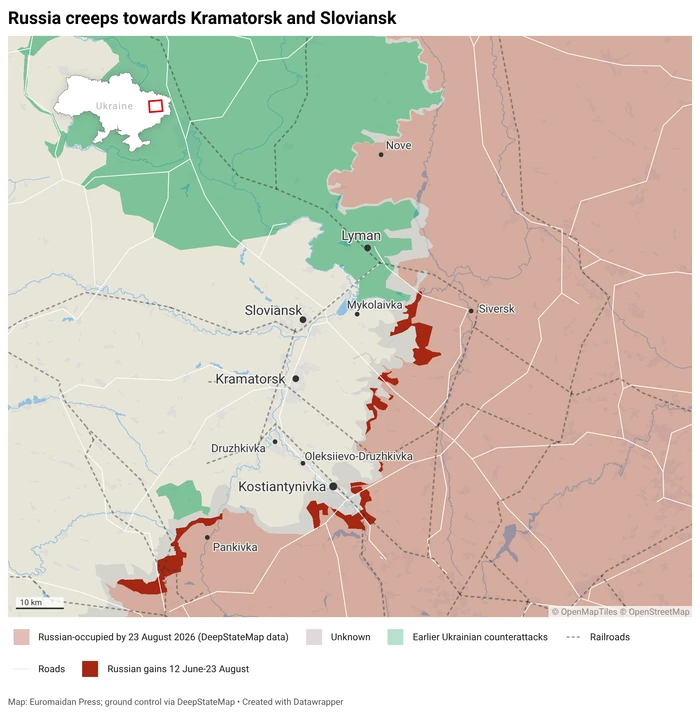
 , en cause, des décisions politiques contestables.
 La décision…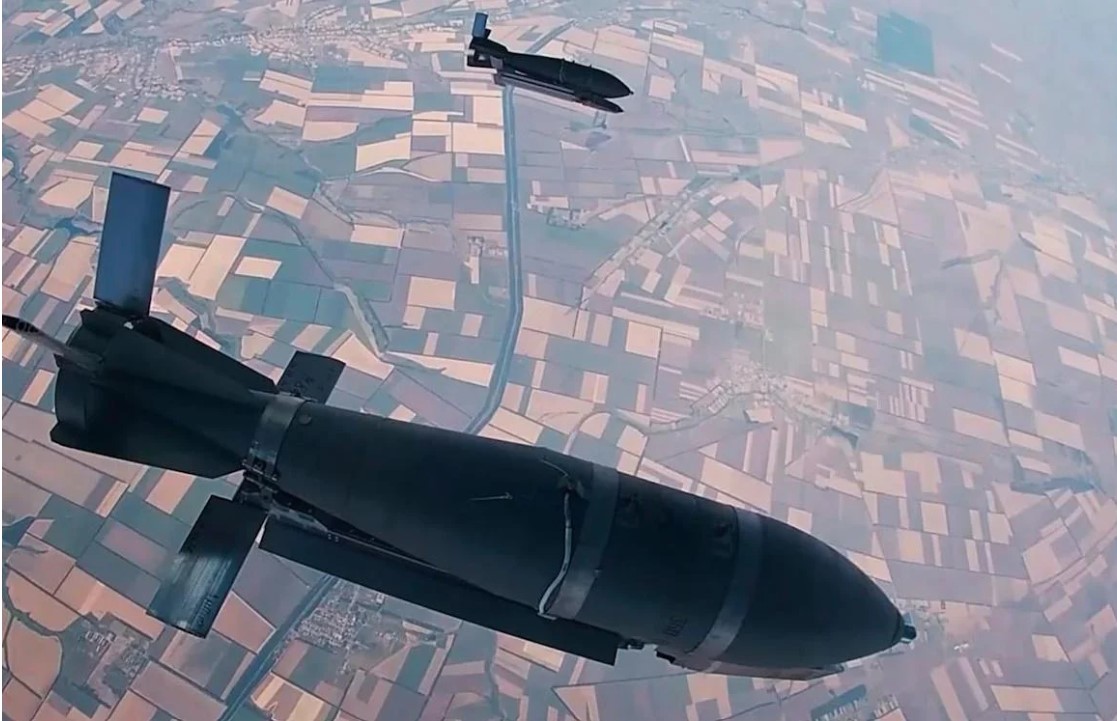
 (@AMK_Mapping_)