Vue normale

ISW: First Pokrovsk, then Huliaipole—now Russia points its logistics-killing air campaign at the Fortress Belt

4 août 2026 à 06:55

isw first pokrovsk huliaipole—now russia points its logistics-killing air campaign fortress belt · post russian-strikes-against-bridges-within-slovyansk-august-3-2026-scaled ukraine news ukrainian reports

Russia is trying to cut off two of Ukraine's biggest remaining strongholds in the east before it ever storms themaccording to the Institute for the Study of War (ISW). The think tank finds Moscow reviving a months-long air campaign against supply lines — the same method that preceded its 2025 advances elsewhere in eastern Ukraine. This time, the target is the Fortress Belt, and the effort leans more heavily on glide bombs than before.

Capturing all of Donetsk Oblast has been Russia's central war aim for years, and the Fortress Belt — a chain of fortified cities held and reinforced since 2014 in northwestern Donetsk Oblast — is the last major barrier standing between Russian forces and that goal.

Russia dusts off its 2025 logistics playbook

Through 2025, Russian forces ran long campaigns of drones, glide bombs, and missiles to sever Ukrainian supply lines before pushing near Pokrovsk and Huliaipole. ISW calls this battlefield air interdiction (BAI) — using airpower to strike rear targets behind the front and choke an enemy's logistics. Now the same approach has moved north, ISW assessed, aimed at Sloviansk and Kramatorsk, the twin cities anchoring the top of the Fortress Belt. The goal is to isolate the defenders there from steady resupply. Ukrainian and Russian commentators alike have described the strain, noting that nighttime logistics runs into the two cities have become hard to pull off.

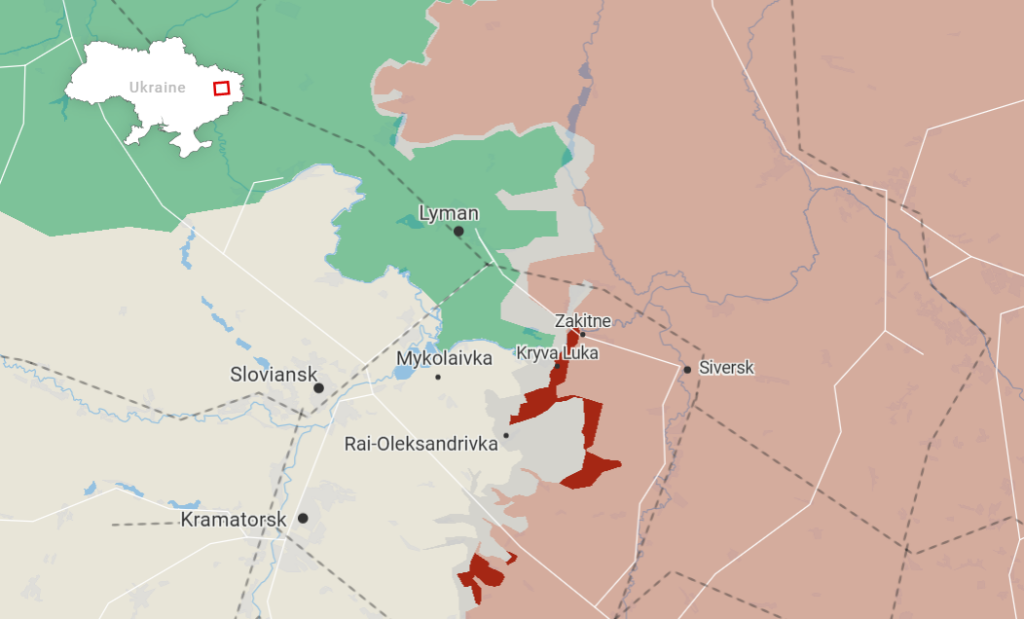
isw first pokrovsk huliaipole—now russia points its logistics-killing air campaign fortress belt · post slovyansk-direction-august-3-2026 ukraine news ukrainian reports
Map: ISW

The target list: bridges, rails, and the roads between

Russia has increasingly gone after the locomotives that keep Ukrainian supplies moving, and reportedly handed troops 1,000 Molniya loitering munitions in July 2026 with orders to intensify strikes near Kramatorsk. It has also begun hitting major bridges. Geolocated footage posted on 2 August showed a heavily damaged crossing over the Kazennyi Torets River in eastern Sloviansk. The bridge linked the city to the highway leading to Kramatorsk.

isw russia's long push toward sloviansk gains ground ukraine counterattacks · post lyman-tactical-area-july-28-2026 news ukrainian reports
Explore further

ISW: Russia’s long push toward Sloviansk gains no ground as Ukraine counterattacks

More glide bombs, fewer drones

This year's campaign appears to lean more heavily on glide bombs than the 2025 versions did, ISW found, with many reports of guided glide-bomb strikes on Sloviansk, Kramatorsk, and surrounding settlements over recent weeks. ISW assessed that Russia may be reaching for these heavy bombs because Ukrainian jamming and interceptors have blunted its capacity to field drones as widely as before. The bombs do more than break fortifications. ISW noted the strikes reduce cities to rubble that Russian troops then use as cover, as they have in Kostiantynivka.

A slow build, not a quick breakthrough

The point of the campaign, ISW assessed, is to shape the battlefield for a future offensive against Sloviansk and Kramatorsk — not to seize them now. ISW does not expect Russian forces to reach or push through the cities soon. Russian troops have been infiltrating Kostiantynivka for months without capturing it, despite Russian claims otherwise. Russia's 2025 campaigns needed months to prepare later advances, and ISW expects this one to move just as slowly.

isw first pokrovsk huliaipole—now russia points its logistics-killing air campaign fortress belt · post russian-strikes-against-bridges-within-slovyansk-august-3-2026-scaled ukraine news ukrainian reports
Explore further

ISW: First Pokrovsk, then Huliaipole—now Russia points its logistics-killing air campaign at the Fortress Belt

At the same time, Ukraine's Joint Forces spokesman Viktor Trehubov gave a similar read on Lyman. He told national television that Russia wants the town as a launchpad toward Sloviansk and Kramatorsk. But he said Russian forces still cannot dig in there, and Ukraine's growing drone advantage is tipping the fight toward Kyiv.

  • ✇Euromaidan Press
  • ISW: Russia’s long push toward Sloviansk gains no ground as Ukraine counterattacks
    Russia is still unable to break into Sloviansk and the fortified towns shielding it, months into an offensive to seize the rest of eastern Ukraine's Donetsk Oblast, the Institute for the Study of War (ISW) found. Its troops keep leaning on guided bombs and small groups of infiltrating infantry, while Ukrainian forces counterattack and hunt the drone crews harassing their supply lines. In the latest fighting the attacker moved and the front did not. As the frontline area
     

ISW: Russia’s long push toward Sloviansk gains no ground as Ukraine counterattacks

3 août 2026 à 04:04

isw russia's long push toward sloviansk gains ground ukraine counterattacks · post lyman-tactical-area-july-28-2026 news ukrainian reports

Russia is still unable to break into Sloviansk and the fortified towns shielding it, months into an offensive to seize the rest of eastern Ukraine's Donetsk Oblast, the Institute for the Study of War (ISW) found. Its troops keep leaning on guided bombs and small groups of infiltrating infantry, while Ukrainian forces counterattack and hunt the drone crews harassing their supply lines. In the latest fighting the attacker moved and the front did not.

As the frontline areas are heavily saturated with killer drones on both sides, Russia's full-scale invasion has settled into a war of position where the attacker can still bomb and probe but rarely breaks through, and every stalled push costs it more men for less ground than the year before. Eastern Ukraine's chain of fortified cities is the last major barrier before the open country beyond.

Russia's drive on Sloviansk holds nothing new

Russian forces kept up offensive operations toward Sloviansk on 1 and 2 August without a confirmed advance, as Ukrainian units counterattacked, ISW says. A Russian milblogger claimed Ukrainian troops hit back near Rai-Oleksandrivka, just east of the city. Russia's TASS state news agency claimed its forces had taken and were clearing Lyman to the north, but the assessment confirmed no such capture.

The northern approach is not new. Lyman is the gateway to the Sloviansk-Kramatorsk area, and its defense has repeatedly blunted the claw Russia needs to close around the two cities. The current push is part of a Fortress Belt offensive that opened in spring and has crawled forward at heavy cost since.

Russia is using guided bombs to shape Sloviansk before its infantry moves. Vadym Lyakh, head of the city's military administration, reported a FAB-250 glide-bomb strike on the morning of 2 August. The strike fit a long-running pattern: level the buildings from the air to open a path the ground troops have not been able to take.

Russia keeps bombing other Donetsk Oblast cities in what the assessment calls the Fortress Belt to prepare later assaults. Ukraine's National Police reported that two KAB-250 guided glide bombs hit Druzhkivka on 2 August, killing two civilians and wounding two more. Farther out, Russian forces also kept attacking around Dobropillia on both days and did not advance.

Kostiantynivka holds as infantry infiltrates on foot

To the south, Russian forces attacked around Kostiantynivka on both days without a confirmed gain, ISW noted. Ukraine's General Staff logged continued fighting, and Russian bloggers claimed only small local moves to the north.

The tactic is the same one Russia has run for weeks. A Ukrainian special-forces officer reported that small groups hide in basements and ruins, waiting for reinforcements, and a Ukrainian non-commissioned officer reported that troops use dense summer foliage to conceal the approach. It echoes the assault Russia has pressed into the city for weeks, flattening it and pushing men in on foot.

isw russia's long push toward sloviansk gains ground ukraine counterattacks · post kostyantynivka-druzhkivka-tactical-area-august-1-2026 news ukrainian reports
Map: ISW.

Ukrainian forces are striking Russian drone control points in the near rear south of Kostiantynivka, likely in part to protect their supply roads. Ukraine's General Staff reported a strike on one such point near Berestok on 1 August. The drones reach deep: Ukrainian troops described Molniya drones flying up to 20 kilometers and aircraft-type drones up to 40 kilometers, complicating nighttime resupply through Kramatorsk and Sloviansk.

"Neither Ukrainian nor Russian forces made confirmed advances on August 2," ISW wrote regarding the situation all across the front.

  • ✇Euromaidan Press
  • ISW: Russia has taken just 81 km² of Ukraine this year—while claiming 2,226
    Russia's forces have gained little ground in Ukraine this year even as Moscow inflates its battlefield tallies and stiffens its demands, according to the Institute for the Study of War (ISW). Ukrainian defenses and a counteroffensive have held Russian advances to a fraction of the official claims. That gap, the analysts said, appears to shape the Kremlin's thinking about war and peace. Ukraine has spent this year turning Russian assaults into heavy losses for marginal groun
     

ISW: Russia has taken just 81 km² of Ukraine this year—while claiming 2,226

23 juillet 2026 à 04:20

isw russia has taken just 81 km² ukraine year—while claiming 2226 · post russian president vladimir putin (left) chief general staff valery gerasimov (right) arrive command russia’s joint group forces

Russia's forces have gained little ground in Ukraine this year even as Moscow inflates its battlefield tallies and stiffens its demandsaccording to the Institute for the Study of War (ISW). Ukrainian defenses and a counteroffensive have held Russian advances to a fraction of the official claims. That gap, the analysts said, appears to shape the Kremlin's thinking about war and peace.

Ukraine has spent this year turning Russian assaults into heavy losses for marginal ground. Each month of stalemate raises the human and economic price both sides pay to hold their positions. A Kremlin convinced it is winning is a Kremlin unlikely to negotiate, which points to more fighting rather than less. At the same time, Ukraine keeps widening its deep-strike campaign against the logistics, fuel, and industry funding the invasion, shifting pressure off the near-static front and onto Russia's rear.

The gap between the map and the front

On 22 July, the Russian Defense Ministry amplified a claim that its forces seized 2,226 km² in the first half of 2026. The figure came from a Russian propaganda Telegram channel. ISW assessed a far smaller number. By its count, Russian troops hold a net 81 km² gained across 2026 so far. Units seized or infiltrated about 627 km², the analysts found, but infiltration is not control. Soldiers who slip into a field or treeline do not hold it. Stripping those gains out leaves the smaller total. 

A strong Ukrainian spring-summer counteroffensive helped keep Russia's net advance this low, ISW noted.

Moscow inflates the picture Putin sees

The exaggeration is not only public messaging. Russian officials keep constructing a false reality that appears to shape President Vladimir Putin and his choices. Russian channels have done this before over occupied Crimea's supply lines. Occupation head Yevgeny Balitsky recently assured Putin that the main road to Crimea was secure. Russia's own war bloggers refuted him within hours. ISW noted that inflated reports encourage Putin to keep refusing compromise.

use all available methods — shoigu fc threatened moldova over transnistria limited ukraine way · post russian chief general staff army valery gerasimov armed forces gerasimov© dmitry kharichkov mod tass russia's
Explore further

Moscow’s offensive has lost ground since it started — yet Russia’s top brass declared Luhansk Oblast fully seized for the fourth time

Moscow hardens its Ukraine capitulation demands

Kremlin spokesman Dmitry Peskov claimed on 22 July that Russia's 2024 terms still stand. Those terms demand that Ukraine withdraw from its Luhansk, Donetsk, Zaporizhzhia, and Kherson oblasts. They also require Ukraine to drop its bid to join NATO. Bloomberg reported that Russia now refuses to return any occupied Ukrainian land. Sources close to the Kremlin said Russia's Defense Ministry assured Putin it can seize all of Donetsk Oblast by the end of 2026. ISW called that extremely unlikely and would not endorse it on any timeline.

  • ✇The Kyiv Independent
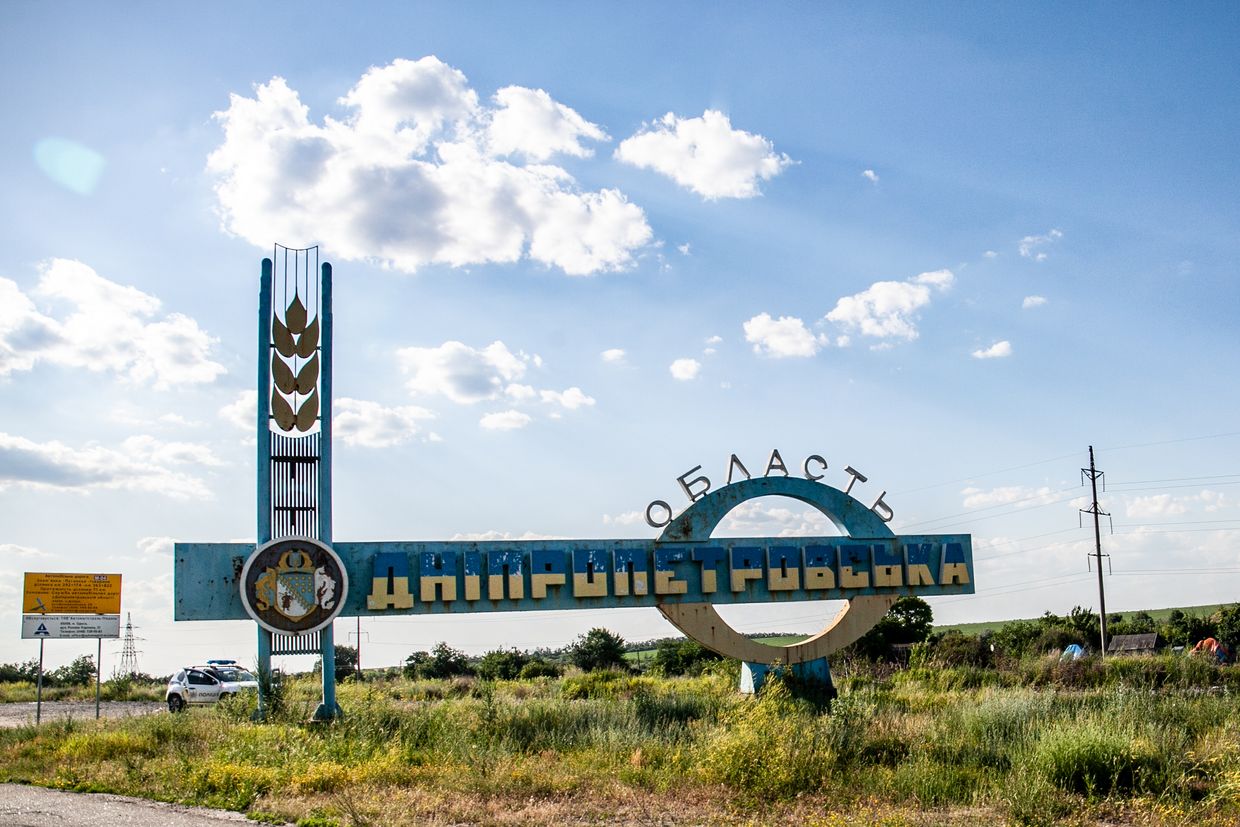
  • Ukrainian military denies NYT claims about Russian presence in Dnipropetrovsk Oblast
    There is no confirmed information that Russian troops have entered Ukraine's Dnipropetrovsk Oblast, spokesperson Victor Tregubov of the Khortytsia group of forces told Ukrainian media outlet Suspilne on June 13, refuting earlier claims published by the New York Times (NYT).The NYT cited Ukrainian military sources claiming that Russian troops crossed the administrative boundary into Dnipropetrovsk Oblast for the first time since the war began.The reporting also referenced a map by the Institute f
     

Ukrainian military denies NYT claims about Russian presence in Dnipropetrovsk Oblast

13 juin 2025 à 11:41
Ukrainian military denies NYT claims about Russian presence in Dnipropetrovsk Oblast

There is no confirmed information that Russian troops have entered Ukraine's Dnipropetrovsk Oblast, spokesperson Victor Tregubov of the Khortytsia group of forces told Ukrainian media outlet Suspilne on June 13, refuting earlier claims published by the New York Times (NYT).

The NYT cited Ukrainian military sources claiming that Russian troops crossed the administrative boundary into Dnipropetrovsk Oblast for the first time since the war began.

The reporting also referenced a map by the Institute for the Study of War (ISW) indicating that Russian forces advancing in the region had allegedly secured a foothold.

Tregubov said the situation remains unchanged as of June 13. He indicated that no information suggests Russian forces have crossed the administrative border, but he noted that updated intelligence may be available later in the day.

Andrii Zadubiny, press officer of the Khortytsia forces, also rejected the claims.

"No enemy incursion into Dnipropetrovsk Oblast has been recorded. We refute this information," he told Suspilne. He suggested that ISW might be relying on Russian sources.

On June 8, Russia's Defense Ministry claimed that its forces had entered Dnipropetrovsk Oblast, a claim that has not been substantiated by Ukrainian authorities.

The Ukrainian monitoring group DeepState also reported no evidence of Russian forces entering the oblast. A map depicting Russian-occupied areas of Ukraine indicates that the Russian troops are only a couple of kilometers from the border.

To date, Dnipropetrovsk Oblast — a major industrial region in central Ukraine — has not seen confirmed Russian ground incursions, though it has remained under constant threat from missile and drone attacks.

In late April, Ukrainian authorities began mandatory evacuations of families with children from four front-line villages — Kolona Mezhova, Novopidhorodne, Raipole, and Sukhareva Balka — located just kilometers from Russian positions.

The latest developments come amid growing pressure on Ukrainian defenses across multiple fronts and continued failure of U.S.-mediated negotiations to produce a ceasefire agreement.

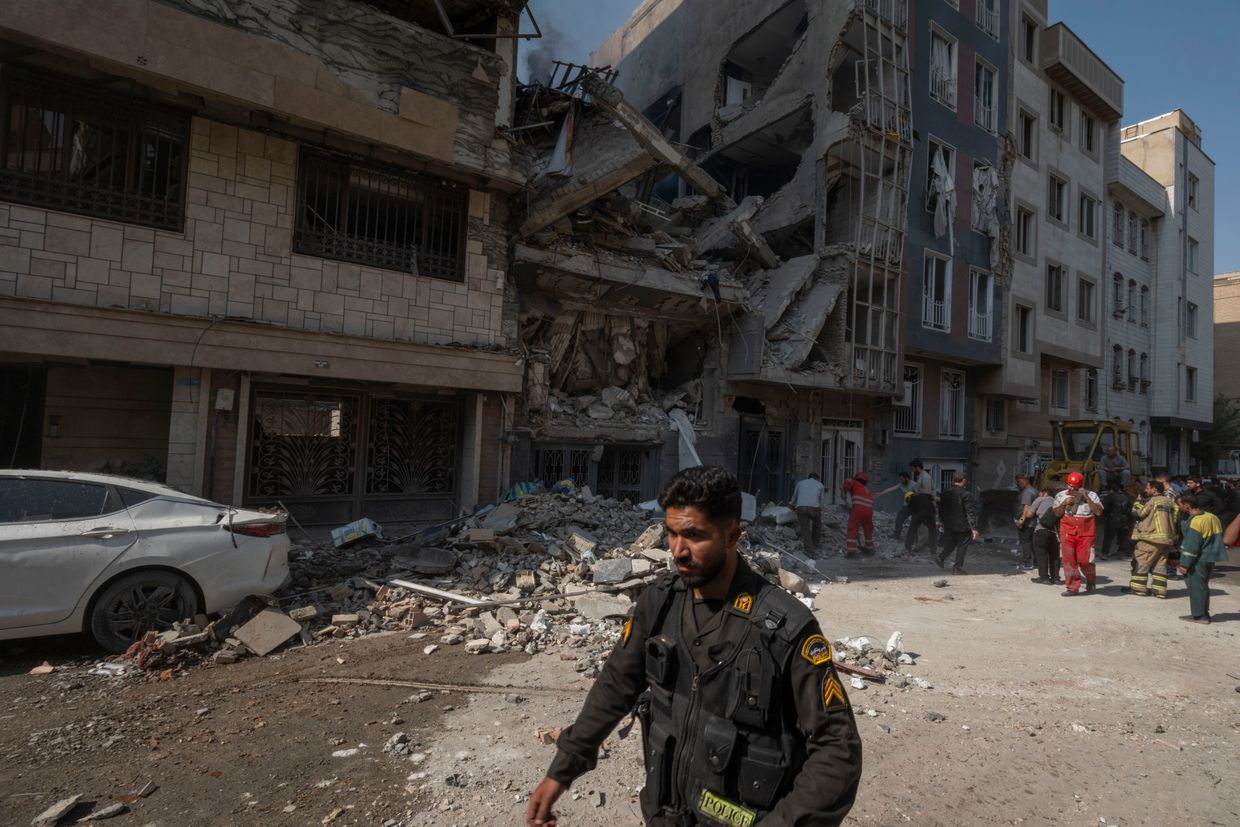
After Israel’s strikes, Ukraine says Iran ‘source of problems’ but warns against destabilization
Ukraine on June 13 expressed concern over the security situation in the Middle East after Israeli air strikes against Iran, but stressed that Tehran remains a “source of problems” in the region “and beyond.”
Ukrainian military denies NYT claims about Russian presence in Dnipropetrovsk OblastThe Kyiv IndependentMartin Fornusek
Ukrainian military denies NYT claims about Russian presence in Dnipropetrovsk Oblast
❌