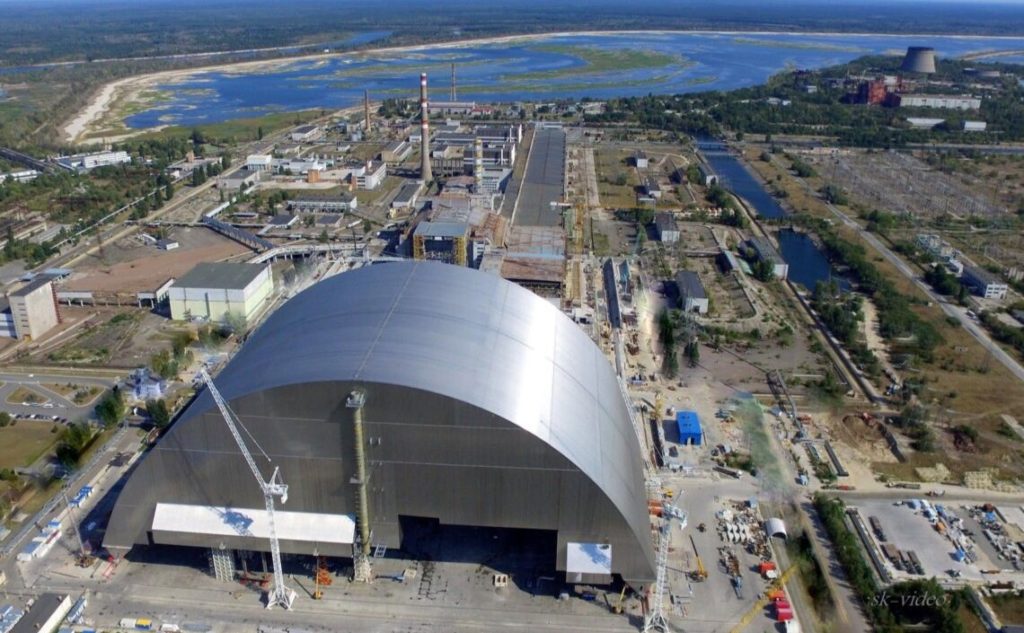
Ukrainian power engineers restored the Ferosplavna-1 line and put the Russian-occupied Zaporizhzhia Nuclear Power Plant (ZNPP) back on external electricity after almost three weeks, Ukraine's state nuclear operator Energoatom reported. The repairs took three days and were carried out during a local ceasefire brokered by the International Atomic Energy Agency (IAEA), the UN's nuclear watchdog.
Russia has held Europe's largest nuclear plant for four and a half years, fail
Ukrainian power engineers restored the Ferosplavna-1 line and put the Russian-occupied Zaporizhzhia Nuclear Power Plant (ZNPP) back on external electricity after almost three weeks, Ukraine's state nuclear operator Energoatom reported. The repairs took three days and were carried out during a local ceasefire brokered by the International Atomic Energy Agency (IAEA), the UN's nuclear watchdog.
Russia has held Europe's largest nuclear plant for four and a half years, failing to restart it while working to wire it into its own grid, while the cooling of six shut-down reactors and their spent fuel depends on wires crossing the front line and on diesel brought in from outside. One repaired line counts as news because the plant has been cut off from external power more than two dozen times since 2022.
The line is back, and the plant is drawing 11 MW
The plant's own needs were energized from the 330-kV Ferosplavna-1 overhead line on 7 September, Energoatom said. Consumption stood at 11 MW.
The work of Ukrainian power engineers and the agreed local ceasefire made the restoration possible, the company said. Ukrainian specialists reconnected the plant to Ukraine's unified power system under constant security risks and what the company called the unpredictable actions of Russian forces, according to Energoatom. It was the seventh local truce IAEA Director General Rafael Grossi has negotiated in this war, the IAEA said.
The plant can now power the pumps cooling its reactors and spent fuel again, along with its other safety systems, the IAEA said.
Almost three weeks on emergency generators
The ZNPP had been without external power since 20 August, Energoatom said. Its critically important systems ran on diesel generators throughout, a mode that created additional risks to nuclear and radiation safety at Europe's largest nuclear plant, the company said.
The plant lost Ferosplavna-1, its sole remaining power line, to military activity north of the Dnipro on 20 August, the IAEA said. The plant had been facing a possible station blackout as the diesel reserves for those generators diminished. The site had cut its running generators to two and begun cycling its cooling pumps to save fuel.
Full assurance of nuclear and radiation safety at the plant is possible only after its de-occupation and return to Ukraine's control and to Energoatom, the single legitimate operator, the company said.
CIA Director John Ratcliffe told U.S. lawmakers that recent American military strikes dealt a major blow to Iran’s nuclear program by destroying the country’s only metal conversion facility, a U.S. official told Associated Press on June 29. Speaking on condition of anonymity due to the sensitivity of the intelligence, the official explained that Ratcliffe outlined the significance of the strike during a classified briefing last week, calling it a major setback that would take Tehran years to rec
CIA Director John Ratcliffe told U.S. lawmakers that recent American military strikes dealt a major blow to Iran’s nuclear program by destroying the country’s only metal conversion facility, a U.S. official told Associated Press on June 29.
Speaking on condition of anonymity due to the sensitivity of the intelligence, the official explained that Ratcliffe outlined the significance of the strike during a classified briefing last week, calling it a major setback that would take Tehran years to recover from.
Ratcliffe also told lawmakers that most of Iran’s stockpile of enriched uranium likely remains buried under rubble at the Isfahan and Fordo nuclear sites, two of the three key facilities targeted by U.S. strikes.
While the uranium may still be intact, the official emphasized that the destruction of the metal conversion facility has left Iran without a crucial component needed to build a nuclear weapon. "You can’t do a nuclear weapon without a conversion facility," Secretary of State Marco Rubio said during the NATO summit. "We can’t even find where it is, where it used to be on the map. You can’t even find where it used to be because the whole thing is just blackened out. It’s gone. It’s wiped out."
President Donald Trump has continued to defend the operation, which came just before a ceasefire between Israel and Iran took effect last Tuesday.
"It was obliterating like nobody’s ever seen before," Trump said in an interview with Fox News. "And that meant the end to their nuclear ambitions, at least for a period of time." Defense Secretary Pete Hegseth echoed that assessment, stating the sites were “destroyed.”
A preliminary report by the U.S. Defense Intelligence Agency, however, concluded the strikes inflicted significant damage but did not completely demolish the Fordo, Natanz, and Isfahan facilities.
Rafael Grossi, Director General of the International Atomic Energy Agency, said on CBS’ "Face the Nation" that three major Iranian nuclear sites with “capabilities in terms of treatment, conversion and enrichment of uranium have been destroyed to an important degree.”
However, he cautioned against overstating the damage. “Some is still standing,” Grossi said, adding, “If they so wish, they will be able to start doing this again.” He emphasized that inspectors must be allowed in to fully assess the extent of the destruction. “Frankly speaking, one cannot claim that everything has disappeared, and there is nothing there,” he said.
The destroyed metal conversion facility, located at the Isfahan nuclear site, had played a central role in Iran’s nuclear weapons development. The facility’s function—to convert enriched uranium gas into dense metal—is a critical step in producing the explosive core of a nuclear bomb. Ratcliffe emphasized this point during the classified hearing, describing the facility’s elimination as a strategic win that effectively undercuts Iran’s ability to weaponize its uranium.
Ratcliffe also told lawmakers that the 12-day U.S. assault severely weakened Iran’s air defense systems. According to the U.S. official, the CIA director explained that Iran now lacks the capability to defend against future Israeli airstrikes, making any attempts to rebuild its nuclear program highly vulnerable.
Israeli officials have asked the Trump administration to join military operations targeting Iran’s nuclear program, including a strike on the fortified Fordow uranium enrichment site, Axios reported on June 14, citing two Israeli officials.The request comes as Israel continues its assault on Iranian targets and warns that it lacks the capability to destroy Fordow alone. The underground facility, located deep within a mountain, is beyond the reach of Israel’s conventional weapons. U.S. forces in
Israeli officials have asked the Trump administration to join military operations targeting Iran’s nuclear program, including a strike on the fortified Fordow uranium enrichment site, Axios reported on June 14, citing two Israeli officials.
The request comes as Israel continues its assault on Iranian targets and warns that it lacks the capability to destroy Fordow alone. The underground facility, located deep within a mountain, is beyond the reach of Israel’s conventional weapons. U.S. forces in the region, however, have the necessary bunker-busting bombs and bomber aircraft to hit the site.
According to an Israeli official who spoke to Axios, Trump suggested in a recent conversation with Israeli Prime Minister Benjamin Netanyahu that he would consider joining the operation if needed. But a White House official denied that claim on June 13.
A second U.S. official confirmed that Israel had urged the U.S. to take part, but said the administration is not currently considering involvement. Israeli Ambassador to the U.S. Yechiel Leiter told Fox News on June 13 that "the entire operation… really has to be completed with the elimination of Fordow."
An Israeli source told Axios that the U.S. is considering the request, and that Israel hopes Trump will agree to it.
A senior White House official told Axios on June 14 that "whatever happens today cannot be prevented," referring to the Israeli attacks. "But we have the ability to negotiate a successful peaceful resolution to this conflict if Iran is willing. The fastest way for Iran to accomplish peace is to give up its nuclear weapons program," the official added.
U.S. officials have so far maintained that Iranian retaliation must not target American forces, arguing that the current Israeli operation does not justify attacks on U.S. interests.
Editor's note: This is a breaking story and is being updated.Israeli forces launched "preemptive strikes" on Iran overnight on June 13, targeting Iran's nuclear program, Prime Minister Benjamin Netanyahu said in an overnight address.Netanyahu said in an overnight address that Israel launched "Operation Rising Lion," which would last for "many days," marking a drastic escalation in conflict in the Middle East."We struck at the heart of Iran's nuclear enrichment program... We targeted Iran's main
Editor's note: This is a breaking story and is being updated.
Israeli forces launched "preemptive strikes" on Iran overnight on June 13, targeting Iran's nuclear program, Prime Minister Benjamin Netanyahu said in an overnight address.
Netanyahu said in an overnight address that Israel launched "Operation Rising Lion," which would last for "many days," marking a drastic escalation in conflict in the Middle East.
"We struck at the heart of Iran's nuclear enrichment program... We targeted Iran's main enrichment facility in Natanz. We targeted Iran's leading nuclear scientists working on the Iranian bomb," Netanyahu said.
The strikes killed Hossein Salami, the Commander-in-Chief of Iran’s Islamic Revolutionary Guard Corps (IRGC), multiple Iranian state media outlets reported. Iran’s Supreme Leader Ayatollah Ali Khamenei confirmed that several nuclear scientists and officials had been killed in the attack.
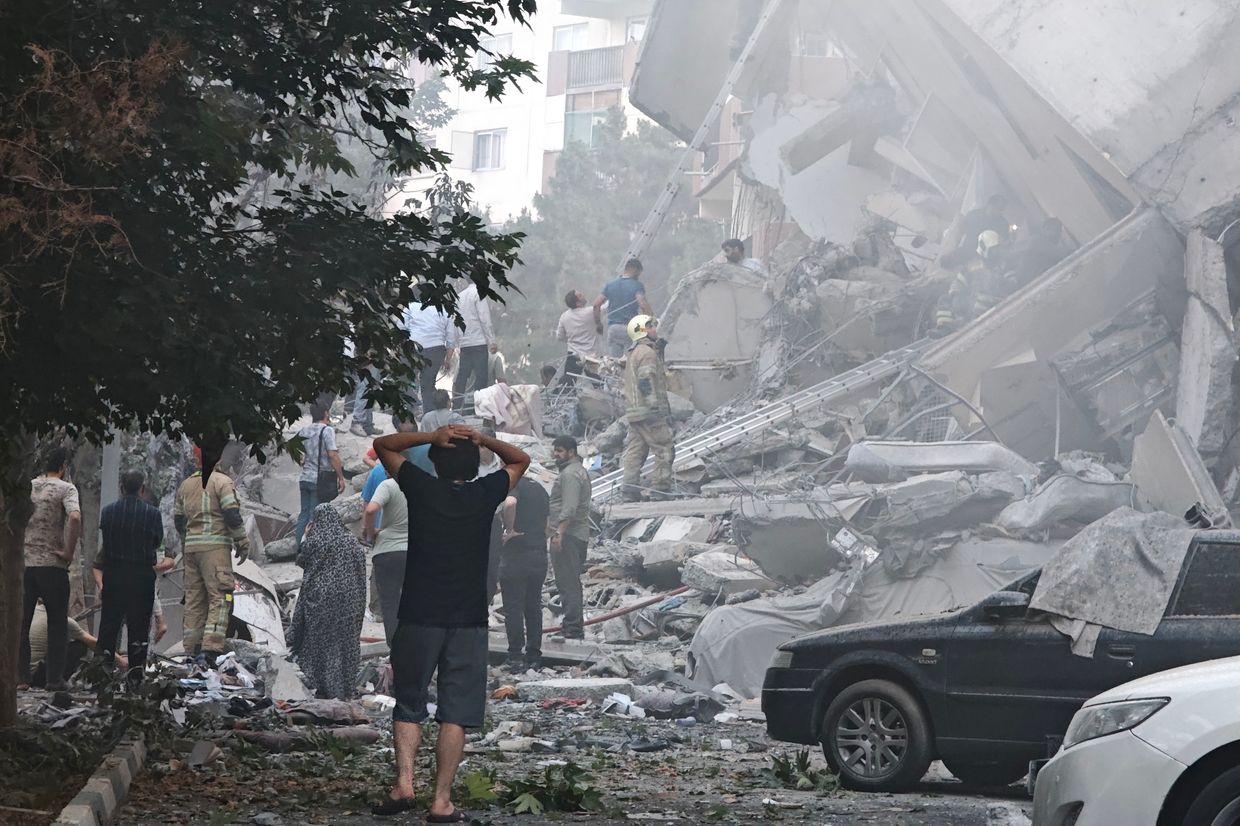
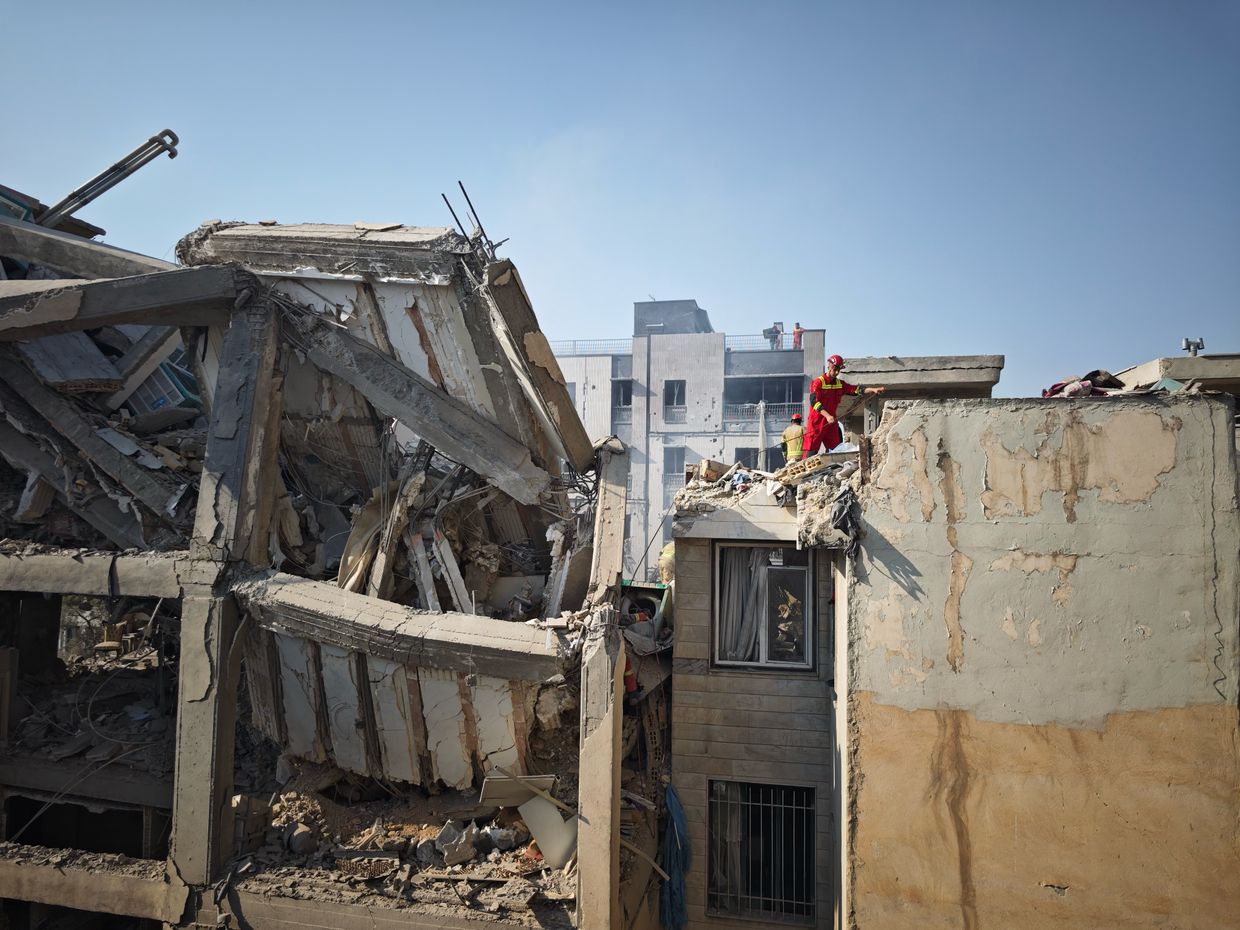
The full extent of the attack was not immediately clear. Multiple explosions were reported in Tehran as videos posted on social media purportedly show fire burning in multiple locations of Tehran.
"Following the State of Israel’s preemptive strike against Iran, a missile and drone attack against the State of Israel and its civilian population is expected in the immediate future" Israeli Defense Minister Israel Katz warned in a statement.
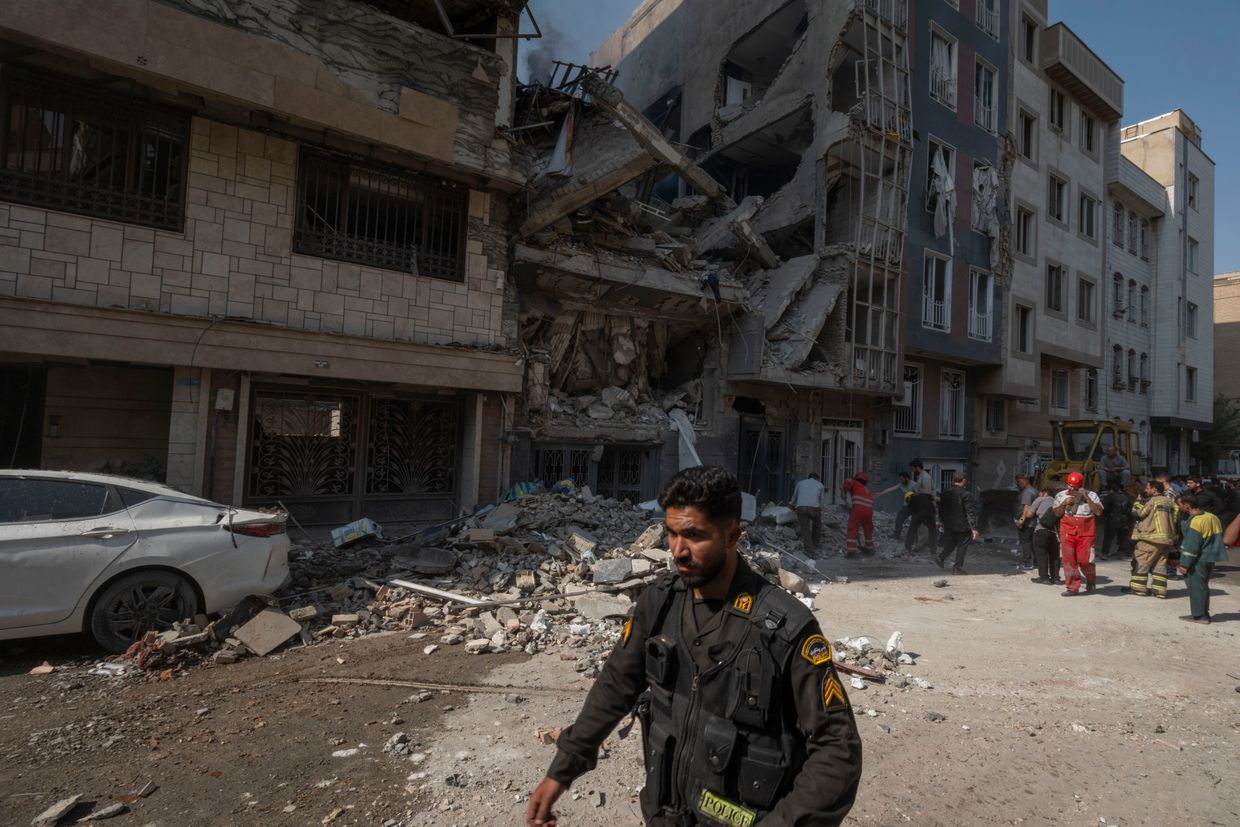
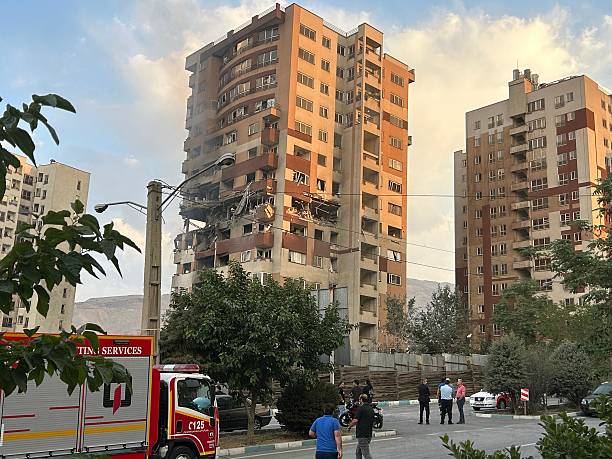
A view of a damaged building in the Iranian capital, Tehran, following an attack by Israel on June 13, 2025. (Ahmet Dursun/Anadolu via Getty Images)
Iran's Supreme Leader vowed to enact "severe punishment" in response to the attack, accusing the United States for "also (being) responsible for the dangerous consequences of this reckless escalation."
In a statement released by the State Department, U.S. Secretary of State Marco Rubio said that the United States was not involved in the strikes on Iran.
U.S. President Donald Trump, who plans to convene a cabinet meeting in response to the strikes, expressed concerns about escalating tensions between Israel and Iran earlier in the day, warning that a "massive conflict" could erupt in the Middle East.
"Tonight, Israel took unilateral action against Iran. We are not involved in strikes against Iran and our top priority is protecting American forces in the region," Rubio said.
Speaking to reporters at the White House on June 12 ahead of the strikes, Trump warned that an Israeli strike on Iran "could happen" if a nuclear deal is not reached with Iran. Talks between Washington and Tehran were set to resume this weekend on Iran's nuclear program.
Earlier in the day, Trump emphasized that despite tensions, he is committed to avoiding conflict and prefers a diplomatic solution to Iran's nuclear aspirations. "I want to have an agreement with Iran," Trump said, referring to ongoing Iran-US nuclear talks in Oman.
Writing on Truth Social later in the day, Trump reaffirmed his commitment to a "diplomatic resolution to the Iran nuclear issue," and insisted that his "entire administration has been directed to negotiate with Iran."
Iran insists its nuclear program is for peaceful purposes and has expressed willingness to accept limited restrictions in exchange for the lifting of sanctions.
Coinciding with Trump’s remarks, the International Atomic Energy Agency released a report highlighting Iran’s failure to comply with its obligations to fully disclose activities at its nuclear facilities.
Beyond the Middle East, Iran has emerged as a key ally of Russia in its war against Ukraine, supplying Moscow with drones used in attacks on Ukrainian cities.
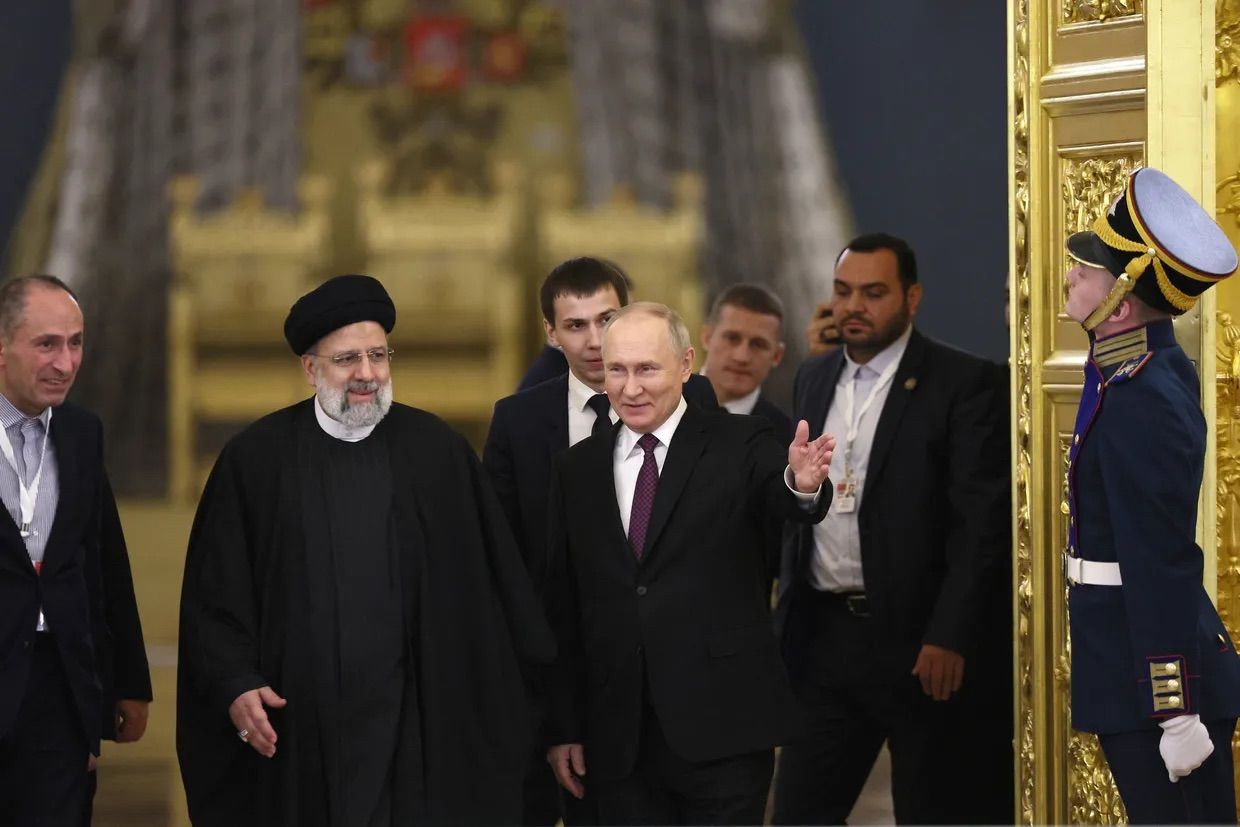
In April 2025, Russian President Vladimir Putinratified a strategic partnership with Iran, vowing to strengthen bilateral ties and pledging not to support any third party engaged in conflict with the other.