Vue normale

Fix for Ukraine’s interceptors is radar seeker head, and American firm is selling one for $4,000, says president’s tech adviser

28 août 2026 à 16:45

russia steers its long-range drones ground towers—kyiv says hit one occupied crimea · post russia’s new “geran-4 seeker” shahed variant uses machine-vision ai targeting geran 4 ukraine news ukrainian reports

Ukraine's drone interceptors work until the weather turns. On 28 July, Presidential advisor Serhii "Flash" Beskrestnov wrote that fog and cloud in fall, winter, and spring can leave an interceptor pilot unable to see more than a dozen meters, and that success rates fall as soon as winter begins, a problem that is especially severe over the sea.

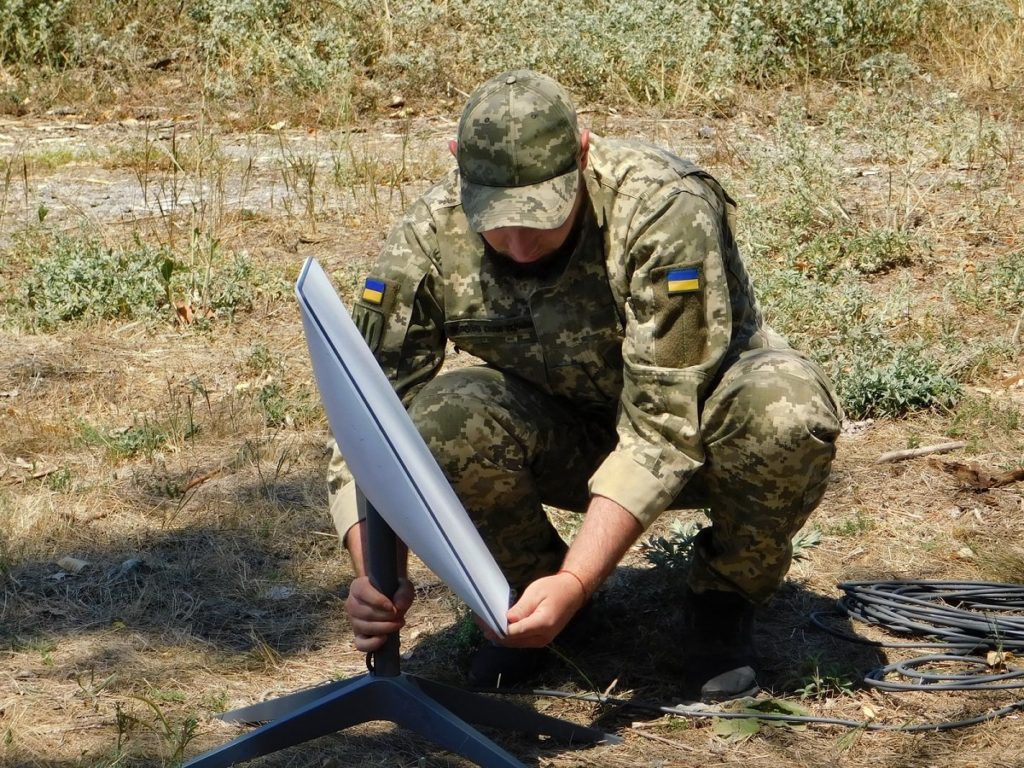
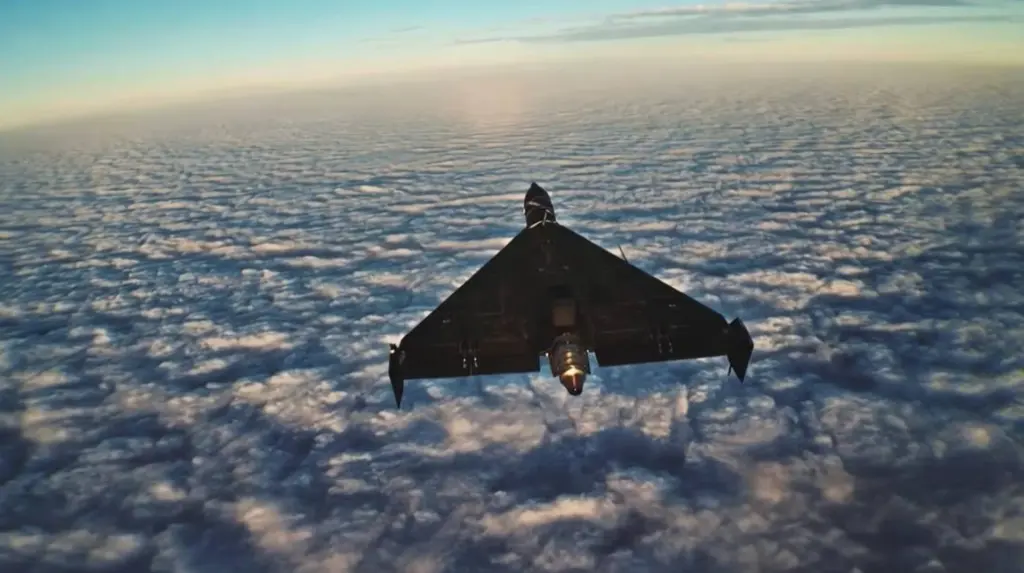
Cheap interceptor drones have become one of Ukraine's main answers to Shahed saturation. But nearly every system shares the flaw Beskrestnov names: it depends on a pilot or camera seeing the target. Ukrainian and foreign teams are all racing toward the same fix, an onboard seeker head.

The method started simple

The earliest approach was primitive but cheap and effective, Beskrestnov said. A pilot flies the interceptor to the right point using the radar network, then finds the target by eye, chases it, and attacks.

Russia answered not only with jet Shaheds but with onboard electronic warfare, evasion systems, in-flight maneuvers, and rear-facing cameras to watch the sky behind, he explained. Ukraine replied with machine-vision target capture and guidance.

Bad weather remains unsolved

None of that fixes visibility, Beskrestnov wrote, and the problem hits both ordinary and jet interceptors. The way out, he argued, is an autonomous seeker head, acoustic, thermal, or radar, mounted on the interceptor itself.

A radar seeker is the ideal, in his view, because it opens the door to a fully autonomous system with no human in the loop: the network sees the target, launches the nearest interceptor, guides it by tactical radar, and the seeker locks on for the kill.

A US firm has put a price on it

Building a radar small enough for an interceptor has proven hard, and teams in Ukraine and abroad are working on it, Beskrestnov said, adding that he would not discuss the Ukrainian efforts because the subject is sensitive.

He pointed to the American company Archimedes, which he said announced a radar days ago, operating at 24 gigahertz with a 25-by-14-degree field of view and a one-kilometer lock-on range, shown in a promotional video mounted on several Ukrainian interceptors, at about $4,000 per unit. Whether it works remains to be seen, he added, given how hard the problem is.

Ukraine’s new commander-in-chief has been picking technical chiefs. Adviser who knows them says he is putting most competent people

26 août 2026 à 14:26

Presidential adviser on defense technology development Serhii "Flash" Beskrestnov at the test range of new electronic warfare means against jet-powered Shaheds. Source: Serhii "Flash" Beskrestnov

Serhii "Flash" Beskrestnov, advisor to the president on the development of defense technologies, has highly praised the recent personnel changes in the new Ukrainian commander-in-chief's staff. He says that Mykhailo Drapatyi is appointing the most competent people available to the Armed Forces' technical directions, adding that "after many years of war, he knows most of the army's technical specialists."

The endorsement comes from Beskrestnov, an adviser to former Ukrainian Defense Minister Mykhailo Fedorov, considered the most effective in Ukraine's history. After the dismissal, he became a non-staff adviser to President Volodymyr Zelenskyy.

The technology war moves weekly

Beskrestnov rates the new appointees on temperament as much as expertise.

"The main thing is that these new heads are energetic, modern, and good communicators," he wrote.

In a war of technologies, everything changes literally every week, and "we have to react to all the enemy's challenges just as fast. Analyze, forecast, respond, and act a step ahead of the enemy," he added.

Drapatyi arrived in the same reshuffle

Zelenskyy named Drapatyi commander-in-chief on 21 July, replacing Oleksandr Syrskyi, and said in the same address that he had offered Fedorov a leadership position bringing together Ukraine's technological capabilities.

Fedorov's removal drew street protests across Ukraine. Drapatyi commands the General Staff rather than the ministry, so the appointments Beskrestnov praises sit outside the structure he left behind.

Change will be slow, he expects

"I believe big positive changes are ahead of us, but this will not happen fast, because a great deal has to change," Beskrestnov said.

He did not name any of the new appointees or their posts.

Earlier, Beskrestnov disclosed Russia's new tactics in its drones. According to him, while Ukraine's cheap interceptor drones have been knocking Russia's nightly attackers out of the sky, Russia has now bolted a jammer onto some of its own drones to blind them.

  • ✇Euromaidan Press
  • Russia’s attack drones now jam the cheap interceptors sent to kill them
    Ukraine's cheap interceptor drones have been knocking Russia's nightly attackers out of the sky, so Russia has now bolted a jammer onto some of its own drones to blind them, according to Serhii "Flash" Beskrestnov, an adviser to Ukraine's President on defense technology. He examined the system, found in drone wreckage, and mapped how it strikes back at the interceptor sent to hunt it. Russia batters Ukrainian cities with long-range drones most nights, and Ukraine has le
     

Russia’s attack drones now jam the cheap interceptors sent to kill them

25 août 2026 à 12:39

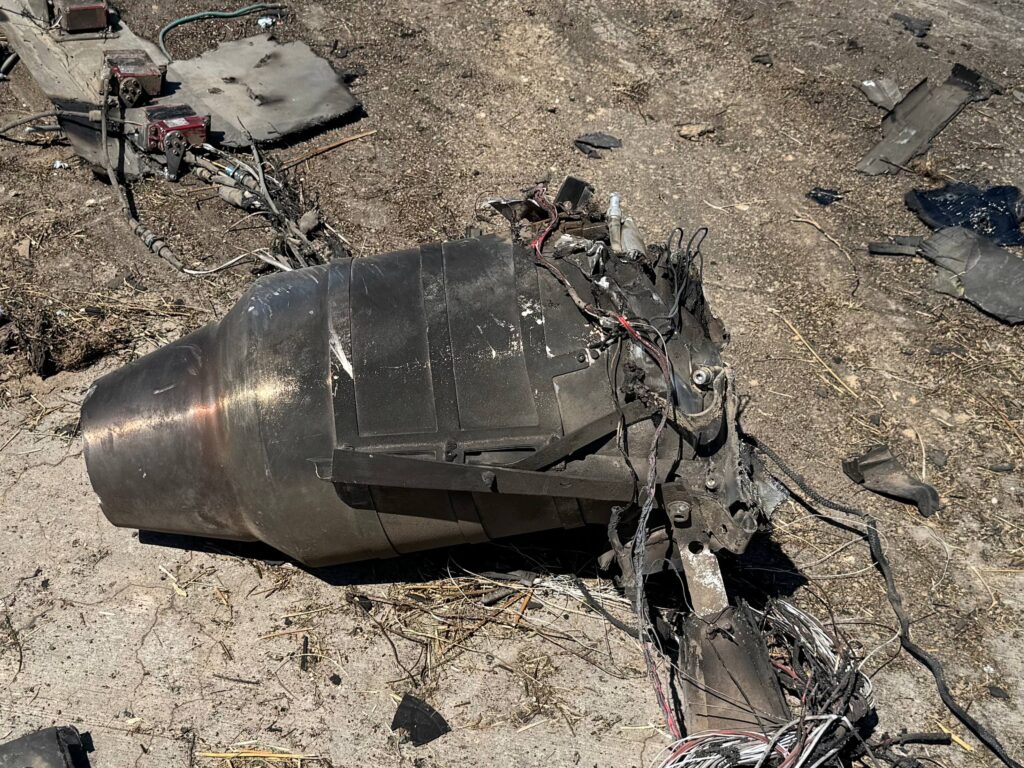
Electronic warfare equipment from Shahed drones.

Ukraine's cheap interceptor drones have been knocking Russia's nightly attackers out of the sky, so Russia has now bolted a jammer onto some of its own drones to blind them, according to Serhii "Flash" Beskrestnov, an adviser to Ukraine's President on defense technology. He examined the system, found in drone wreckage, and mapped how it strikes back at the interceptor sent to hunt it.

Russia batters Ukrainian cities with long-range drones most nights, and Ukraine has leaned on a cheap shield—drones costing a few thousand dollars—instead of burning through far pricier missiles. Anything that dulls that shield pushes the cost of defending the sky back up.

A jammer that waits for the interceptor

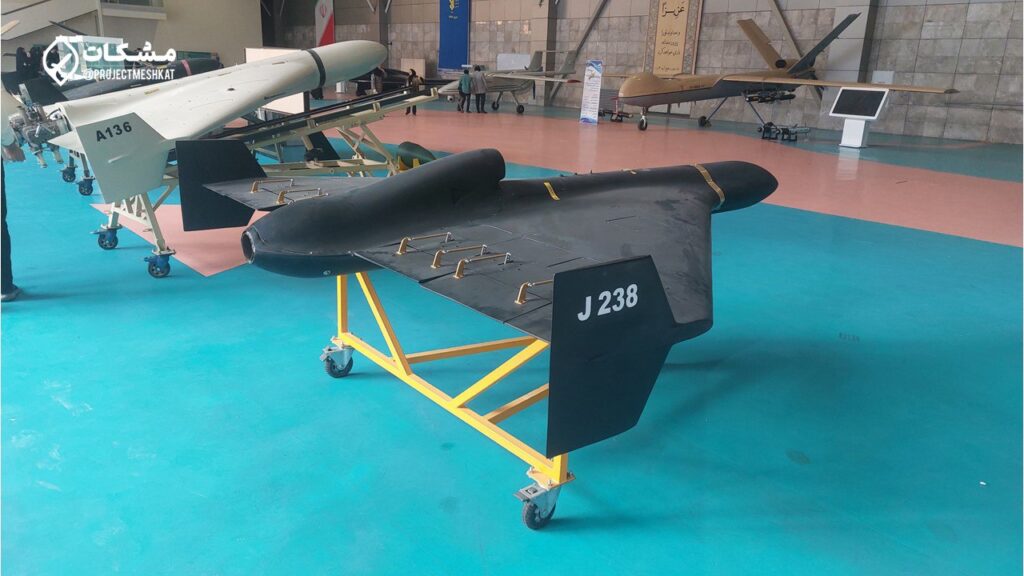
The unit rides on a Geran, Russia's version of the Iranian Shahed one-way drone. It listens for the video signal an approaching Ukrainian interceptor beams back to its pilot. Its receiver reads the interceptor's working frequency, then orders a transmitter to bury that same channel in noise, Beskrestnov found.

A Ukrainian Hornet drone spots another Hornet. Photo: Ukraine's 1st Azov Corps
Explore further

How Ukraine uses AI to guide long-range drone strikes through electronic warfare and deep into Russian-controlled rear areas

By his first estimate, the jammer's signal runs about five times stronger than the interceptor's video link—enough to wipe the picture and any chance of steering the drone onto its target.

Seconds decide it

In Beskrestnov's account, the system detected a test transmitter and switched on jamming after about three seconds, and the feed cut out. The device stays nearly idle until a hunter comes close, then jumps to full power to smother the signal. It targets the ordinary analog video band around 5.8 gigahertz that many cheap interceptors still use.

Possible answers, include interceptors with terminal-guidance homing for the final stretch of flight, digital communication links, or transmitters set to non-standard frequencies.

“two targets ammo one drone” how ukrainian drone crew hunts russian transport behind front line · post arti schultz daria moskalets/ armiyainform ukraine news reports
Explore further

“Two targets and ammo with one drone”: How a Ukrainian drone crew hunts Russian transport behind the front line

An old problem for Russia's drones

Russia has tried again and again to keep its one-way drones alive against Ukraine's defenses, including wiring jammers into some Shaheds earlier this year. Spending weight and power to protect a drone from a far cheaper interceptor shows how well those cheap drones work.

A jet-powered BM-35 can now hit 350 km/h. Russia says that’s specifically to outrun Ukraine’s interceptors

15 août 2026 à 14:04

A Russian drone is flying at Ukraine. Source: NTV

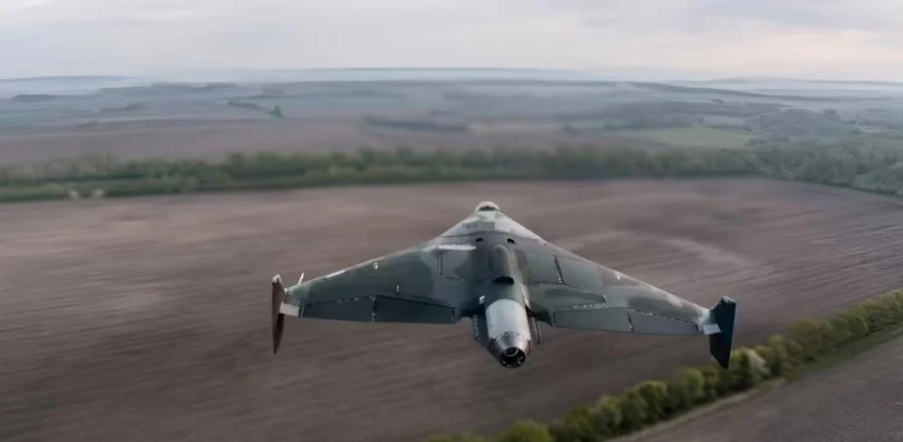
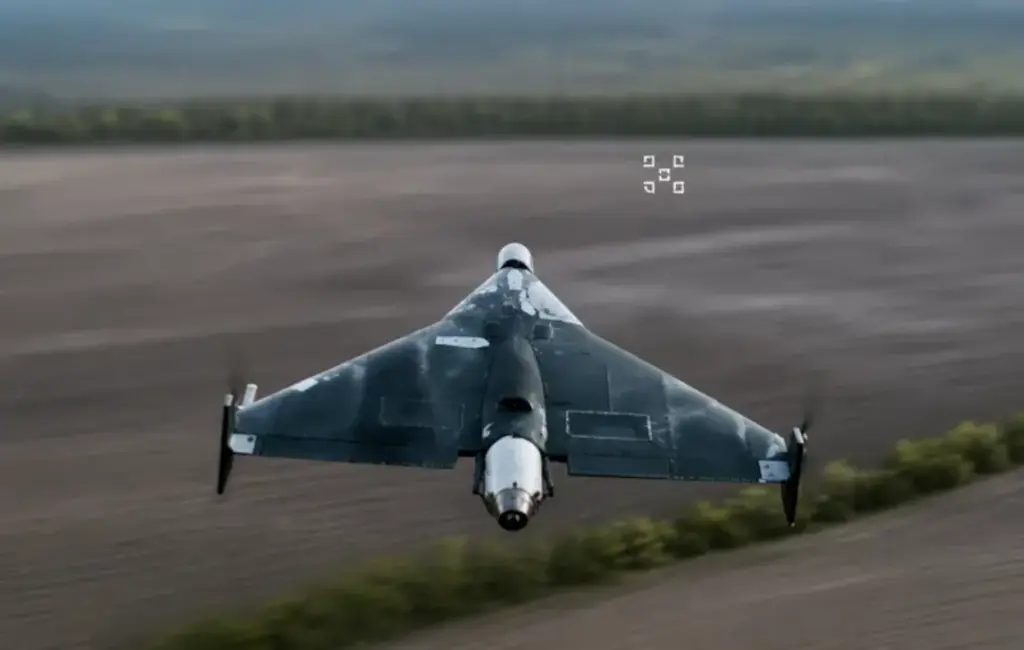
Russia is upgrading more of its drones to escape Ukraine's drone hunters. Russia has begun fitting jet engines to another attack drone model, the BM-35, presidential adviser Serhii "Flash" Beskrestnov reported.

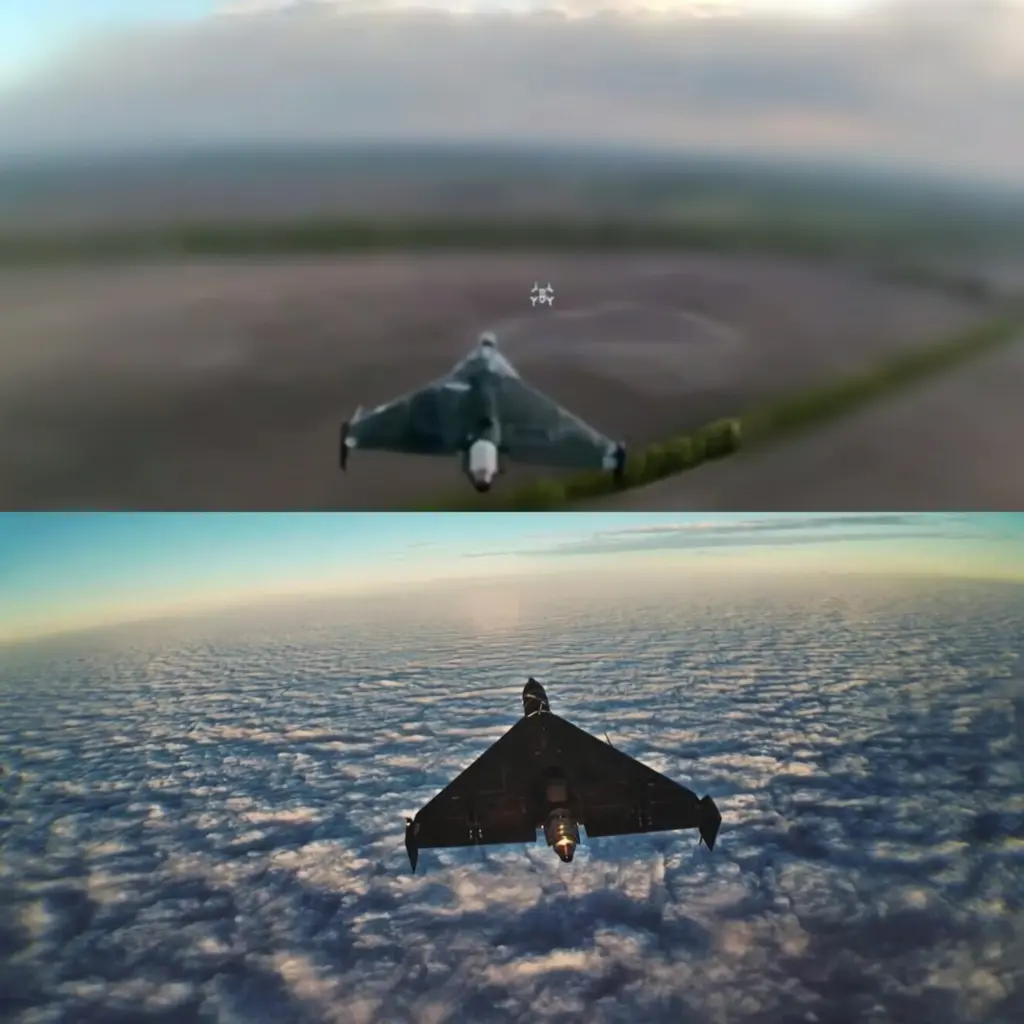
The move is a direct answer to Ukraine's interceptors, and it is spreading across Russia's drone fleet. As Ukraine's interceptors have improved, the Russians are replacing their engines with jet engines not only on long-range Geran drones but also on budget mid-strike drones.

Each Ukrainian advance in shooting drones down pushes Russia to make them faster, Beskrestnov says.

The jet BM-35 is built to be harder to catch

Beskrestnov shared a Russian report showing the jet version of the BM-35 and its claimed characteristics. According to the Russian segment, the jet BM-35 can reach over 350 kilometers per hour, has a range of over 200 kilometers, and carries a 10-kilogram warhead.

The speed is the whole point. Russian fighters claim the increased speed is intended to make the drone harder for Ukrainian interceptors to catch, according to the Russian report. A faster drone gives Ukraine's interceptors less time to close and strike, which is exactly the problem the jet engine is designed to create.

The change is driven by Ukraine's own success

Ukraine has scaled up cheap interceptor drones that take down tens of thousands of Russian drones a month, and that success is what forces Russia to respond, swapping propeller engines for jets to fly above the speed interceptors can reliably catch.

The result is a cost-and-speed contest. Jet engines make each drone more expensive and complex than the cheap propeller models Russia has relied on for mass attacks. So by making its interceptors effective, Ukraine has pushed Russia toward pricier, faster drones, the same dynamic seen with the jet Gerans that now strike Ukrainian cities.

Russia's war is driving advances in weapons technology without limits. This means that soon Ukraine will have to find more ways to protect itself from new weapons, as well as its allies, who have also come under Russia's attacks, such as Poland, Romania, and the Baltic States.

  • ✇Euromaidan Press
  • Why can’t Ukraine just blow up Russian launchers firing ballistic missiles at its cities?
    There is a reason Ukraine cannot simply blow up the launchers firing ballistic missiles at its cities. Russia's Iskander launchers are extremely hard to catch, and interfering with the missiles' production is nearly as difficult, presidential adviser Serhii "Flash" Beskrestnov said on the national telethon, according to UNIAN. The launchers survive by never staying still or coming within reach. Iskander launchers head to their firing positions only when a combat task is
     

Why can’t Ukraine just blow up Russian launchers firing ballistic missiles at its cities?

5 août 2026 à 15:54

ukrainian intelligence russia’s advanced missile arsenal shrinks nearly 50% since russia's iskander-m its mobile launcher iskander domestic pyongyang-supplied kn-23 ballistic stockpile has dropped 580 300 told liga report does mention

There is a reason Ukraine cannot simply blow up the launchers firing ballistic missiles at its cities. Russia's Iskander launchers are extremely hard to catch, and interfering with the missiles' production is nearly as difficult, presidential adviser Serhii "Flash" Beskrestnov said on the national telethon, according to UNIAN.

The launchers survive by never staying still or coming within reach. Iskander launchers head to their firing positions only when a combat task is set, sometimes moving along forest roads for five hours to avoid detection by satellites, then deploying fast, firing, and fleeing.

They launch from 140 to 150 kilometers behind the front line, which is why catching one on the march or at its firing position is so hard.

The launcher is a fleeting target

Beskrestnov described a weapon designed to be gone before it can be hit.

"The deployment of the Iskander happens very quickly. Then the launch. The Iskander fires and then flees the position," he said.

The forest-road approach and the 140- to 150-kilometer standoff are deliberate. By staying beyond HIMARS' range and moving under tree cover to evade satellites, the launcher gives Ukraine almost no window to detect, target, and strike it before it fires and moves on.

Attacking the factories is hard too

Ukraine's other option, hitting production, faces its own obstacles. The missiles are made deep underground, where they are not easy to attack, Beskrestnov said.

He also claimed sanctions do not work well against the Iskander because it is "probably the only product made 100% from Russian resources and Russian electronics." That claim sits awkwardly against Ukraine's own documented findings.

Ukraine's sanctions commissioner, Vladyslav Vlasiuk, reported that an Iskander fired at Kyiv Oblast on 10 July held more than 140 foreign components, 62 of them American. Meanwhile, Ukraine's Defense Intelligence has said that without foreign parts, Russia cannot build the missile at all. Ukraine has repeatedly struck the plants making Iskander components, precisely because those production nodes are vulnerable.

The interception gap makes it worse

The launcher problem compounds the shortage of defenses against the missiles themselves. With Ukraine short of the Patriot interceptors that are the only reliable defense against Iskander ballistic missiles, and the launchers nearly impossible to catch, Russia can keep firing them at a pace Ukraine cannot fully answer, striking cities from safe forest positions deep behind the front.

  • ✇Euromaidan Press
  • For under $120, Russia can get Ukrainian warehouse bombed. Here’s how it finds its targets
    Russia has the ballistic missiles to keep hitting Ukraine every month at the current pace. Russia can launch about 100 ballistic missiles at Ukraine each month, technology specialist and presidential adviser Serhii "Flash" Beskrestnov said on 5 August. The estimate sets the scale of a threat that Ukraine's air defenses cannot fully answer. The current density is higher because Russia wants a demonstrative reaction and is attacking partly from reserves, but going for
     

For under $120, Russia can get Ukrainian warehouse bombed. Here’s how it finds its targets

5 août 2026 à 12:10

Presidential adviser on defense technology development Serhii "Flash" Beskrestnov at the test range of new electronic warfare means against jet-powered Shaheds. Source: Serhii "Flash" Beskrestnov

Russia has the ballistic missiles to keep hitting Ukraine every month at the current pace. Russia can launch about 100 ballistic missiles at Ukraine each month, technology specialist and presidential adviser Serhii "Flash" Beskrestnov said on 5 August.

The estimate sets the scale of a threat that Ukraine's air defenses cannot fully answer.

The current density is higher because Russia wants a demonstrative reaction and is attacking partly from reserves, but going forward, the attacks will run at around 100 ballistic missiles a month, Beskrestnov said.

Against a weapon that only the Patriot reliably stops, and with Ukraine short of Patriot interceptors, roughly 100 ballistic missiles a month is a sustained lethal pressure the country will have to endure.

The target is Ukraine's warehouses

Beskrestnov said Russia has intensified strikes on a specific set of civilian targets. Moscow has stepped up attacks on various warehouses and production sites, including those for food products, construction materials, and retail, and this trend will continue for now.

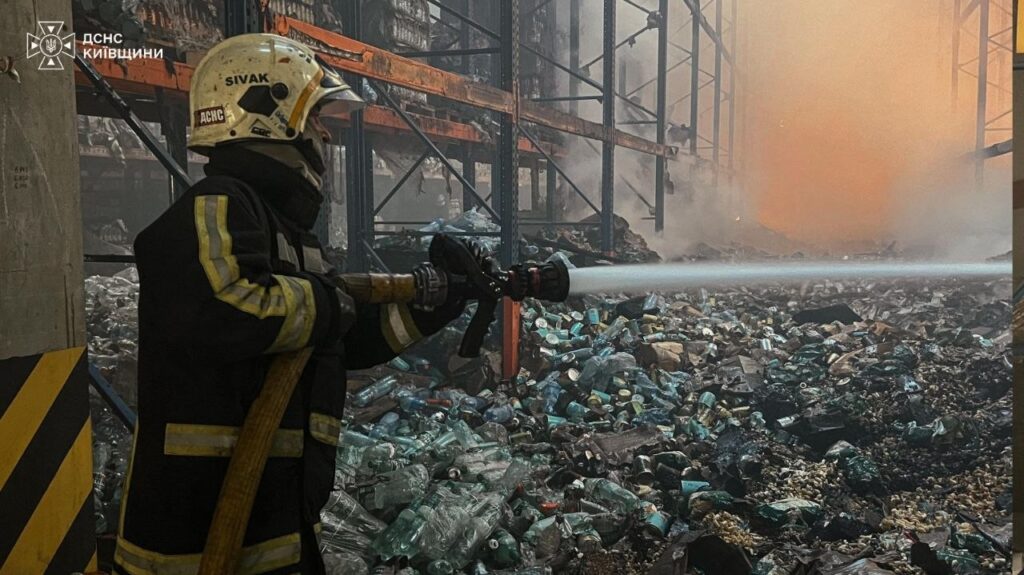
The pattern matches recent strikes. Russia has hit the warehouses of the retailer Rozetka, killing a worker, and food storage across the country, part of a campaign against the civilian logistics that keep daily life supplied, which has forced businesses to decentralize storage and reroute deliveries.

Russia finds the targets with cheap informants

The chilling part is how easily Russia locates these warehouses. It takes little effort because warehouse data is completely open and requires no satellites or intelligence channels, Beskrestnov said.

"A person is hired, a traitor for a few thousand hryvnia, who watches what happens at the warehouse, the movement of trucks, the volume. Then this information reaches Russia, and a decision is made about a strike," he explained.

He said his own house was targeted the same way in April, when he had just returned from a work trip and was wounded in the strike.

His advice to businesses

Beskrestnov urged businesses to adapt. He advised entrepreneurs to diversify storage, avoid concentrating large quantities of goods and vehicles in one place, and, where possible, seek subleased small warehouse spaces.

Spreading stock across many small sites makes each one a poorer target, not worth a ballistic missile, and denies the local informants an easy, high-value warehouse to point Russia toward. It is a war-economy adaptation forced on Ukrainian business by a bombing campaign that now reaches the supply chain itself, as Beskrestnov suggested.

❌