Vue normale

  • ✇Euromaidan Press
  • Ukraine has five ways to stop Russia’s Iskanders. Only one arrives before the strikes on the grid begin
    Desperately short of missiles for its roughly 10 Patriot air defense batteries, Ukraine has just a few options as colder weather looms—and the Russians prepare to fire even more hard-to-intercept Iskander ballistic missiles at Ukrainian cities and power plants. The Iskander is a unique threat, and Ukraine is uniquely vulnerable. The Patriot is one of just a few systems that stands any chance of hitting an incoming Iskander as the Russian missile barrels in at six or sev
     

Ukraine has five ways to stop Russia’s Iskanders. Only one arrives before the strikes on the grid begin

Par : David Axe
29 août 2026 à 09:34

A Patriot air defense missile launcher. Photo: South Korean defense ministry.

Desperately short of missiles for its roughly 10 Patriot air defense batteries, Ukraine has just a few options as colder weather looms—and the Russians prepare to fire even more hard-to-intercept Iskander ballistic missiles at Ukrainian cities and power plants.

The Iskander is a unique threat, and Ukraine is uniquely vulnerable. The Patriot is one of just a few systems that stands any chance of hitting an incoming Iskander as the Russian missile barrels in at six or seven times the speed of sound. And the Patriot is, or was, the most plentiful anti-ballistic interceptor. It usually takes two or three of them to bring down one Iskander.

Then came Iran. Coalition forces fired an average of 225 interceptors a day during the first four days of the war against Lockheed Martin's production rate of 1.7 a day, the Foreign Policy Research Institute calculated—a 132-to-one gap between use and manufacture. Lockheed built 620 Patriots in all of 2025. And every Patriot the Americans fire at an Iranian missile is a Patriot Ukraine won't be able to fire at a Russian missile.

Specifications of Russia's Iskander-M ballistic missile system
Chart: Euromaidan Press

Ukrainian batteries have so few missiles that air defenders can do little more than watch as the 3.8-ton Iskanders and other heavy Russian missiles barrel in. "This is a really heartbreaking sight when you have equipment but you're not able to intercept any missile," Dmytro, the chief engineer of Ukraine's Patriot fleet, told CNN. "Ballistic missiles are flying over your head and you are not able to do anything with it, and behind you, there are civilians." He first ran out of interceptors in December 2025.

Across the 39-day campaign, CSIS estimates 1,060 to 1,430 Patriots were expended—more than half the US prewar inventory. At Lockheed's rate, replacing them takes three years.

And a Patriot cannot be conjured. A single PAC-3 MSE takes about 24 months to build, its solid rocket motor 30. In January the Pentagon signed a seven-year deal for Lockheed to reach 2,000 Patriots a year—by 2030, by which point the Russo-Ukrainian war will be eight years old. Far too late to save Ukraine from the coming hard winter.

The Ukrainian air force has two other batteries that can intercept ballistic missiles, both French-Italian SAMP/Ts, and they are short of missiles too. France agreed in November to send eight next-generation SAMP/Ts over two years—a schedule, not a stockpile.

Transporter-loader vehicle of Russia's Iskander ballistic missile system
Transporter-loader vehicle 9T250 of Russia's Iskander missile system. Photo via Militarnyi.

Winter looms

The interceptor crisis will only worsen as winter looms and the supply of electricity for residential heating once again becomes a matter of life and death for millions of Ukrainians. Iskanders "could hit all significant non-nuclear electricity generation," Jakub Janovsky, a Czech military analyst, explained to Euromaidan Press. The Kremlin has cut production of several other missile types—including, as Euromaidan Press reported this month, the Kinzhal—to pour more into the Iskander.

"I wanted to secure 300 missiles for the Patriot systems as part of the winter package. The request from our Air Force is for 360," Ukrainian President Volodymyr Zelenskyy told journalists on 23 August, in remarks posted to X. "But when only 600 are produced a year, 360 is not easy to obtain." He has asked Washington for 5% or 10% of the US stockpile, and says Ukraine will pay. By his own account it holds about 1%.

Russia could have up to 1,300 ballistic missiles a year. Right now, they have 600–630. We have an approximate understanding of the volume they are counting on from today and through the end of winter. Roughly speaking, they could have 100 ballistic missiles a month. But they are…

— Volodymyr Zelenskyy / Володимир Зеленський (@ZelenskyyUa) August 23, 2026

What are Ukraine's non-Patriot options?

Its own ballistic interceptor

Frantic for air defenses, Ukraine is developing its own. In May, Kyiv munitions-maker Fire Point unveiled Freya, a pan-European anti-ballistic project built around the FP-7.x—a 7.25-m composite interceptor derived from the company's FP-7 surface-to-surface missile. Cued by European radars and guided in the final moments by an infrared seeker from Germany's Diehl Defence, it is meant to cost around $700,000 a shot against a Patriot's $3.8 million.

Fire Point had run at least five tests by the end of July, and co-founder Denys Shtilerman told the Financial Times mass production could begin as early as this month. But the first attempt at intercepting an actual ballistic target is planned for around July 2027—a winter away, and then some. Infrared guidance is also reckoned less reliable than radar, since spoofing can mislead the seeker.

Sanctions on the Iskander supply chain

Sanctions may seem attractive, and there is a narrow chokepoint. Ammonium perchlorate makes up 45% to 52% of the Iskander's solid fuel, and Russia has exactly one plant that makes it—the state-owned ANOSIT—according to the Economic Security Council of Ukraine.

That plant depends on imported sodium chlorate, a chemical Russia lost the ability to make when the USSR collapsed. Russia bought more than $40 million of it in 2024 and the first half of 2025, 61% from China and most of the rest from the Farg'onaazot chemical plant in Uzbekistan. The largest Russian importer, Pioneer Trade, sells on to firms that supply the Iskander's designer, its cluster-warhead maker, and the Votkinsk plant that builds the missile.

But Russia gets around sanctions by buying through third parties. And while the European Union already restricts the export of sodium chlorate to Russia, neither Farg'onaazot nor any of the Russian importers moving it is under blocking sanctions. Even where the bans hold, they just "make things more costly and less convenient," Janovsky told Euromaidan Press. "They can't stop things from happening if the other side really wants to do something."

Map of factories in Russia and Uzbekistan supplying Iskander-M production
Map: Euromaidan Press
Deep strikes against the Iskander supply chain

Ukraine has already tried this one. The main Iskander factory is in Votkinsk, 1,400 km from the border, and on the night of 20–21 February Ukrainian Flamingo cruise missiles hit it. Zelenskyy said every missile launched reached the plant. Satellite imagery confirmed damage to a workshop where Iskanders and Oreshniks are assembled; local officials reported two shops damaged and 11 people injured.

Iskander production rose anyway. So the question is not whether Ukraine can reach Votkinsk—it can, and did—but whether it can launch enough munitions at once to inflict damage that lasts. "Ukraine can try a massive saturation strike with hundreds of drones and dozens of cruise missiles to overwhelm local defenses and wreck enough of the factory complex to at least temporarily disable the production," Janovsky said. That might take essentially the entire Ukrainian deep strike force—and if it failed, Russian industry would get a months-long reprieve.

Kill the launchers before they shoot

This is the hardest one. Russian crews keep their Iskander launchers 140 to 150 km behind the front line, beyond the reach of Ukraine's HIMARS, and move them to firing positions along forest roads—sometimes for five hours—to stay out of satellite view. Once in position, a launcher needs about 16 minutes to send its first missile and four for the second, then it leaves. Twenty minutes, in the open, somewhere in a forest, a hundred and fifty kilometers away.

Ukraine is trying anyway. On 23 August, Zelenskyy said Ukrainian forces had struck an Iskander launcher near the border, and described a dedicated program to hunt the launch sites. Euromaidan Press could not independently verify the strike. He was explicit about why the program exists. "When our anti-ballistic missile stocks are at a minimum, there is another tactic," he said. "It is more difficult, and we developed it."

All options but one arrive after the cold

OptionWhen it delivers
Patriots from alliesUkraine's air force asked for 360; Zelenskyy sought 300 for the winter package. Output is 600 a year, and CSIS says about half of it goes to allies and partners
Lockheed's expansion to 2,000 a yearThat rate is not reached until 2030
Freya / FP-7.x interceptorsFirst attempt at intercepting a ballistic target planned for around July 2027
Sanctions on the supply chainThe chemical is restricted; none of the companies moving it is designated
Deep strike on the Votkinsk factoryTried in February. Workshops hit, production still rose
Hunting the launchersNow—one strike claimed on 23 August, not independently verified
Winter heating season begins in November.

Unable to shoot down all the Iskanders, Ukraine may have no choice but try everything all at once: sanction the suppliers, attack the supply chain, hunt the launchers, and scurry to deploy homemade interceptors. All while continuing to beg for every available Patriot.

Ukrainian Navy CB90 assault boats sailing Black Sea patrol operations coastal defense against Russian drones
Explore further

Ukraine may have just lost its first Swedish assault boat—to a Russian jet drone

Iskander Russia fired at Kyiv Oblast in July held 62 American parts. Ukraine has now named more than 100 Russian ballistics producers and wants its allies to sanction all of them

26 août 2026 à 18:02

two children pulled rubble alive three did survive—one village near kryvyi rih after russian missile attack · post residential building burns strike lviv 30 2026 у львові після обстрілу горить

Ukraine has drawn up a list of those who build Russia's ballistic missiles and wants all of them sanctioned by its allies. Kyiv is asking partners to impose sanctions on more than 100 Russian ballistics producers, presidential sanctions commissioner Vladyslav Vlasiuk said at a press conference in Kyiv, according to Ukrinform.

The demand rests on physical evidence. An Iskander that Russia fired at Kyiv Oblast on 10 July held more than 140 foreign components, 62 of them American, alongside parts from Switzerland, Germany, Taiwan, China, and Japan, Vlasiuk reported in July. Most were made recently, which means the parts are still reaching Russia. Naming the factories is Ukraine's attempt to close the gap at the production end rather than chase each shipment.

The plan runs on synchronization

The commissioner laid out several parts of the plan at the press conference. The first is getting the same producers sanctioned everywhere at once, so a firm blocked in one country cannot operate through another. He said the files were handed to partners a few weeks ago, and Ukrainian specialists expect to identify every producer on allied lists by September or October.

The plan also covers what Vlasiuk called kinetic sanctions, meaning strikes on Russian defense-industry sites. He named the Kamensky Combine, which makes components for rocket fuel, as one such target.

The critical parts are still foreign

Ukraine keeps finding Western microelectronics in identified Russian ballistics, including Iskander-M missiles and those used by the S-400 system, with parts traced to the US, Japan, Germany, Taiwan, France, Britain, and Switzerland. The most sensitive elements are the Kometa satellite navigation system and autonomous inertial guidance units, which run on American, Swiss, and French microelectronics.

Ballistics is the most demanding product for quality and precision, Vlasiuk said, which is why those two systems are the chokepoint.

Ukraine wants smaller packages, sooner

The commissioner asked partners to adopt more stringent export controls, up to licensing or banning the export of sensitive components to third countries that help Russia evade sanctions. Ukraine has also compiled a list of more than 10 critical materials, including ammonium perchlorate, aluminum powder, and tungsten, as well as the numerically controlled machine tools Russia needs to build the missiles.

The EU has already begun work on a large 22nd sanctions package. Ukraine is urging it not to wait, asking instead for an interim ballistics package in September and another in October, moving in small steps as Ukraine, Britain, and Canada already do.

  • ✇Euromaidan Press
  • Putin’s Mach-10 wonder weapon misses by 30 meters. Russia stopped building it in April.
    As more Russian missiles rain down on Ukrainian cities, one munition is curiously absent The Mach-10 Kinzhal, an air-launched ballistic missile, has been missing in action for months now Ukrainian intelligence says the Kremlin halted production in April because the missile kept missing by 30 meters Russia's Kinzhal air-launched ballistic missile, a version of the ground-launched Iskander, travels as far as 2,000 km at a claimed 10 times the speed of sound whil
     

Putin’s Mach-10 wonder weapon misses by 30 meters. Russia stopped building it in April.

Par : David Axe
19 août 2026 à 08:14

all 20+ russian kinzhal hypersonic missiles targeting kyiv intercepted patriot since may 2023 russia's mig-31k aircraft carrying missile illustrative mounted mig-31

  • As more Russian missiles rain down on Ukrainian cities, one munition is curiously absent
  • The Mach-10 Kinzhal, an air-launched ballistic missile, has been missing in action for months now
  • Ukrainian intelligence says the Kremlin halted production in April because the missile kept missing by 30 meters

Russia's Kinzhal air-launched ballistic missile, a version of the ground-launched Iskander, travels as far as 2,000 km at a claimed 10 times the speed of sound while packing a 500-kg warhead. It was one of a clutch of purported super-weapons that Russian Pres. Vladimir Putin revealed in a dramatic announcement in 2018.

Launched in mid-air by specially modified Mikoyan MiG-31 interceptors in order to boost its speed and range, the Kinzhal is, in theory, a powerful deep strike munition capable of blasting right through all but the best and rarest air defenses.

In a recent interview, Deputy Chief of Ukraine’s Defence Intelligence Major General Vadym Skibitskyi made a series of interesting claims about Russian missile and drone production rates.

According to him, Russia is producing the following missiles at these rates:

- Iskander-M…

— AMK Mapping 🇳🇿 (@AMK_Mapping_) August 11, 2026

In practice, it kept missing. Russia stopped building the $4.5-million missile in April, Maj. Gen. Vadym Skibitskyi, Ukraine's deputy chief of defense intelligence, told RBC-Ukraine—and the rocket fuel and components that had gone into Kinzhals now go into Iskanders, sea-launched Kalibr cruise missiles, and air-launched Kh-101 cruise missiles instead.

A missile of this class needs to land within five to seven meters of its aim point to be worth firing. The Kinzhal, according to Skibitskyi, lands within 30 meters or more. "We can hardly recall a single instance where this missile hit the target precisely," he said. Satellite imagery of the Ukrainian air base at Starokostiantyniv, a favorite Kinzhal target, shows the craters ringing the airfield rather than sitting on it.

‼ Russian voenkors publishes satellite images from the Starokostiantyniv area!

🚀⚠ The photo shows craters from missiles that did not reach their targets. In some cases, the Kinzhals' deviation was up to 144 meters. pic.twitter.com/qvameRj5t8

— MAKS 26 🇺🇦👀 (@Maks_NAFO_FELLA) November 10, 2025

The Kolomna Machine Building Design Bureau reportedly contracted 44 Kinzhals in 2024 and 144 in 2025, Militarnyi reported from Russian defense ministry documents. The line climbed for two years and then stopped dead.

The Kinzhal isn't the only munition reportedly getting the ax. The Kremlin is also halting production of the Kh-32 air-launched cruise missile, which Russian engineers repeatedly failed to improve before the program was sent back for further work. "This would explain why Russia has not launched any Kinzhals for multiple months, and very few Kh-32s," AMK Mapping noted.

At least one analyst anticipated this development years ago. Way back in 2022, then-CNA analyst Michael Kofman wrote that he didn't "understand the interest in Russian use of Kinzhal. There's nothing special or particularly exciting about this system." It is, according to Kofman, just an Iskander but with a more complicated and expensive launch method.

It may have taken the Russians a few years to come to the same conclusion. The last Kinzhal strike might have been on 14 May, when the Russians launched three Kinzhals as part of a wider strike on Ukrainian cities involving 731 missiles and drones.

The purported Kinzhal shutdown, if true, could orphan the boutique fleet of around two dozen MiG-31K/I interceptors whose main role is to haul a Kinzhal to high altitude before launch. The Kinzhal carriers account for around 20% of the wider MiG-31 fleet, whose main mission is air defense over the vast Russian interior.

The MiGs may end up as victims of ruthless efficiency-seeking. If Skibitskyi is right, the Kremlin simply can't afford to keep every munition in production as it seeks to escalate its bombardment of Ukrainian cities amid growing economic losses from Ukrainian deep strikes targeting Russian strategic industries.

It's possible the only way the Russians can boost production of their best deep strike munitions is to cut production of the underperforming ones. According to the pro-Ukrainian Conflict Intelligence Team, the savings in fuel, components, and funds from the suspended Kinzhal and Kh-32 assembly lines "were redirected to other types of missiles."

Cutaway rendering of a Russian Kinzhal hypersonic missile shown on Ukraine's TrophyLab platform
A cutaway rendering of a Russian Kinzhal hypersonic missile, as shown on Ukraine's TrophyLab platform. Illustrative image: TrophyLab/Ukraine's Defense Ministry

Production winners and losers

That's how, in July, Russia reportedly produced 65 Iskanders, surpassing its target of 60 by nearly 10%. Meanwhile, production of Kh-101s reached 140% of the monthly target. Kalibr production 111%. Across its main missile lines, Russian industry is running at 110 to 120% of plan. Certain Russian munitions may soon disappear from the sky over Ukraine, if they haven't already. But only because more copies of better munitions are taking their place.

Ironically, the Kinzhals and their carriers are fading away at the same time Ukraine's own deep strike forces may have landed their most powerful blow against the aerial hypersonic strike force. On 15 August, a barrage of Ukrainian drones and cruise missiles struck a range of targets deep inside Russia.

The MICH 2000 drone can fly up to 2,000 km and carry a warhead weighing up to 60kg. Photo courtesy of the manufacturer
Explore further

Ukraine’s new Tu-95 killer is a $48,000 copy of a drone China refused to sell

Among the targets was Savasleyka air base, in Nizhny Novgorod around 785 km from Ukraine. "Direct hits and fires reported," WarTranslated noted.

Among other aircraft, Savasleyka air base hosts some of the MiG-31Ks that carry Kinzhal missiles. Or once carried them, if Skibitskyi is correct and the missile has fallen out of use. It's unclear whether the attack on Savasleyka damaged or destroyed any MiG-31s.

Even if the Kinzhal launchers burned to the ground, it may be too late to matter. The Russians may have rendered the planes and their missiles irrelevant before the Ukrainians could drone them.

  • ✇Euromaidan Press
  • Why can’t Ukraine just blow up Russian launchers firing ballistic missiles at its cities?
    There is a reason Ukraine cannot simply blow up the launchers firing ballistic missiles at its cities. Russia's Iskander launchers are extremely hard to catch, and interfering with the missiles' production is nearly as difficult, presidential adviser Serhii "Flash" Beskrestnov said on the national telethon, according to UNIAN. The launchers survive by never staying still or coming within reach. Iskander launchers head to their firing positions only when a combat task is
     

Why can’t Ukraine just blow up Russian launchers firing ballistic missiles at its cities?

5 août 2026 à 15:54

ukrainian intelligence russia’s advanced missile arsenal shrinks nearly 50% since russia's iskander-m its mobile launcher iskander domestic pyongyang-supplied kn-23 ballistic stockpile has dropped 580 300 told liga report does mention

There is a reason Ukraine cannot simply blow up the launchers firing ballistic missiles at its cities. Russia's Iskander launchers are extremely hard to catch, and interfering with the missiles' production is nearly as difficult, presidential adviser Serhii "Flash" Beskrestnov said on the national telethon, according to UNIAN.

The launchers survive by never staying still or coming within reach. Iskander launchers head to their firing positions only when a combat task is set, sometimes moving along forest roads for five hours to avoid detection by satellites, then deploying fast, firing, and fleeing.

They launch from 140 to 150 kilometers behind the front line, which is why catching one on the march or at its firing position is so hard.

The launcher is a fleeting target

Beskrestnov described a weapon designed to be gone before it can be hit.

"The deployment of the Iskander happens very quickly. Then the launch. The Iskander fires and then flees the position," he said.

The forest-road approach and the 140- to 150-kilometer standoff are deliberate. By staying beyond HIMARS' range and moving under tree cover to evade satellites, the launcher gives Ukraine almost no window to detect, target, and strike it before it fires and moves on.

Attacking the factories is hard too

Ukraine's other option, hitting production, faces its own obstacles. The missiles are made deep underground, where they are not easy to attack, Beskrestnov said.

He also claimed sanctions do not work well against the Iskander because it is "probably the only product made 100% from Russian resources and Russian electronics." That claim sits awkwardly against Ukraine's own documented findings.

Ukraine's sanctions commissioner, Vladyslav Vlasiuk, reported that an Iskander fired at Kyiv Oblast on 10 July held more than 140 foreign components, 62 of them American. Meanwhile, Ukraine's Defense Intelligence has said that without foreign parts, Russia cannot build the missile at all. Ukraine has repeatedly struck the plants making Iskander components, precisely because those production nodes are vulnerable.

The interception gap makes it worse

The launcher problem compounds the shortage of defenses against the missiles themselves. With Ukraine short of the Patriot interceptors that are the only reliable defense against Iskander ballistic missiles, and the launchers nearly impossible to catch, Russia can keep firing them at a pace Ukraine cannot fully answer, striking cities from safe forest positions deep behind the front.

  • ✇The Kyiv Independent
  • Ukraine hits Russian electronic warfare facility making Shahed, Iskander components, General Staff says
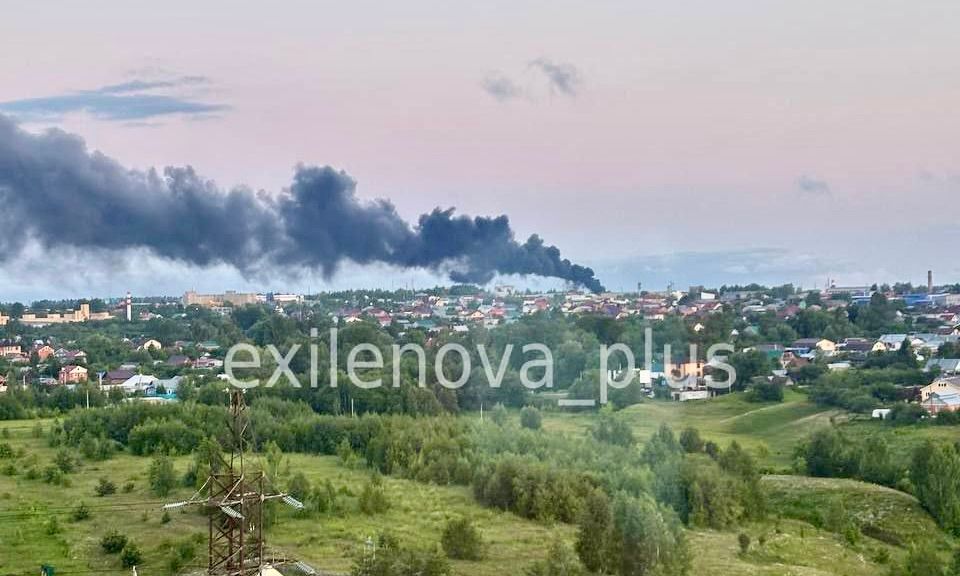
    Ukraine struck a critical Russian military-industrial site overnight on July 5 that produces components for high-precision weapons used by Moscow to attack Ukraine, the General Staff of Ukraine's Armed Forces reported. The site in question is JSC VNIIR-Progress, a Russian state institute that specializes in developing electronic warfare (EW) systems, including the Kometa antenna arrays, used to jam satellite, radio, and radar signals.The institute is located in Cheboksary, Chuvash Republic, abou
     

Ukraine hits Russian electronic warfare facility making Shahed, Iskander components, General Staff says

5 juillet 2025 à 11:05
Ukraine hits Russian electronic warfare facility making Shahed, Iskander components, General Staff says

Ukraine struck a critical Russian military-industrial site overnight on July 5 that produces components for high-precision weapons used by Moscow to attack Ukraine, the General Staff of Ukraine's Armed Forces reported.

The site in question is JSC VNIIR-Progress, a Russian state institute that specializes in developing electronic warfare (EW) systems, including the Kometa antenna arrays, used to jam satellite, radio, and radar signals.

The institute is located in Cheboksary, Chuvash Republic, about 1,200 kilometers (745 miles) away from the Ukrainian border.

The Kometa antenna is used in Shahed-type drones, Iskander-K cruise missiles, and guided aerial bomb modules — all high-precision weapons used by Russia to strike civilian and military targets across Ukraine.

The General Staff confirmed that Ukrainian weapons reached the target area but said final damage assessments were still underway.

The VNIIR-Progress institute has been sanctioned by both the United States and the European Union for its role in supporting Russia's war effort.

The Iskander-K is a precision-guided cruise missile with a range of up to 500 kilometers (311 miles), frequently used by Russia to target civilian areas. Shahed drones have become a central part of Moscow's airstrike tactics since late 2022 due to their low cost and high payload.

Located on the Volga River, Cheboksary is the capital of the Chuvash Republic and lies deep inside Russian territory. Russian independent media outlet Astra and local Telegram channels earlier reported explosions in the city overnight.

Russia's Defense Ministry claimed to have shot down two drones over the region.

This marks the second known Ukrainian drone strike on VNIIR-Progress. On June 9, explosions and fires were also reported at the facility following another drone attack.

❌