Vue normale

  • ✇Euromaidan Press
  • Warning sirens are going west: Russian jet-powered drones bring strikes closer to NATO country
    Poland will have more than 1,000 automated warning sirens in Lublin Voivodeship by the end of 2026, Interior Minister Marcin Kierwiński said on 19 September, up from nearly 350 now. The region had about 30 remotely activated sirens at the beginning of 2024. The expansion comes as Russian attacks on the west of Ukraine are reaching closer to Poland. Prime Minister Donald Tusk said Russia is expected to intensify attacks on Ukraine's critical infrastructure and warned of possible "acciden
     

Warning sirens are going west: Russian jet-powered drones bring strikes closer to NATO country

21 septembre 2026 à 12:21

Alarms in Poland

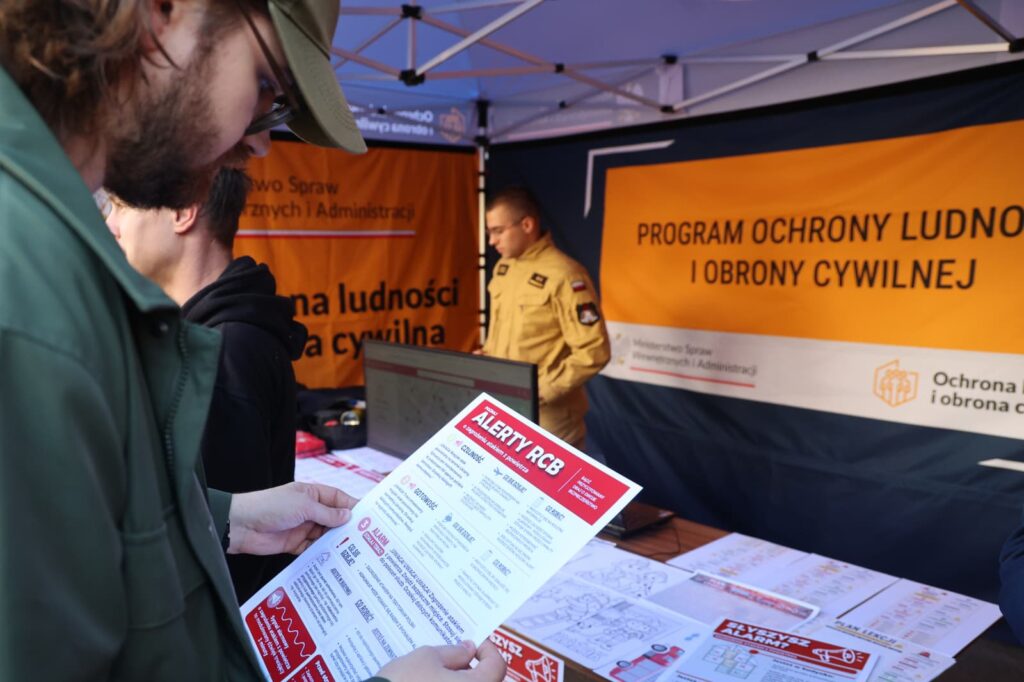
Poland will have more than 1,000 automated warning sirens in Lublin Voivodeship by the end of 2026, Interior Minister Marcin Kierwiński said on 19 September, up from nearly 350 now. The region had about 30 remotely activated sirens at the beginning of 2024.

The expansion comes as Russian attacks on the west of Ukraine are reaching closer to Poland. Prime Minister Donald Tusk said Russia is expected to intensify attacks on Ukraine's critical infrastructure and warned of possible "accidental" drone or missile strikes on NATO countries, including Poland. He also said Russia is introducing jet-powered drones that move much faster and at higher altitudes.

Sirens sound as drones approach the border

A Russian air attack on western Ukraine triggered air-raid warnings in Poland's Lublin and Podkarpackie regions on 17 September. Sirens sounded in Lublin and Rzeszów, while residents received an SMS warning: "ATTENTION! ATTENTION! ATTENTION! Threat of an air attack. Find a safe place. Follow the instructions of the emergency services. Await further announcements."

The Polish military said its aircraft were activated in response to Russian strikes involving jet-powered drones against western Ukraine. A Russian drone flying toward Poland fell on Ukrainian territory about four kilometers from the Polish border, according to Polish authorities. Polish airspace was not violated.

Airports in Lublin and Rzeszów temporarily suspended operations to give military aircraft freedom of movement. Polish authorities said the measures were preventive and intended to protect Polish airspace.

More strikes on the border zone

On 13 September, Russian strikes near the Yahodyn-Dorohusk border crossing damaged a gas station and hit the locomotive of a Kyiv-Warsaw passenger train about two kilometers from the Polish border. No deaths were reported, and the border crossing temporarily halted operations.

On 19 September, Poland again activated ground-based air-defense systems and increased radar reconnaissance in response to another wave of Russian strikes on Ukraine. The operation ended the same day with no violation of Polish airspace recorded.

Shelters, sirens, and a 1939 echo

Beyond sirens, authorities have marked nearly 3,500 official shelter locations in Lublin Voivodeship. More than 500 State Fire Service stations and volunteer fire units took part in special exercises on 19 September to practice responses to warning signals and emergency alerts.

"We are building a civil-protection system virtually from scratch," Kierwiński said at a briefing in Lublin. "We have very, very little time."

The 17 September strikes fell on the anniversary of the Soviet Union's 1939 invasion of Poland. Prime Minister Donald Tusk described the Russian attack as "massive, extremely brutal."

The 13 September strikes near the border also drew a response from Kyiv. Foreign Minister Andrii Sybiha described them as Putin's terror "knocking" directly on the doors of the EU and NATO and called for a "full trade embargo, a total entry ban, and complete sanctions against Russia's military-industrial complex."

  • ✇Euromaidan Press
  • Iran armed Russia with Shaheds. Now it wants the jet-powered Geran-5 remake back to fight Israel and the US
    Russia has upgraded the Iranian Shahed it fires at Ukraine into jet-powered drones that Iran now wants back, the Financial Times reported. Tehran plans to use them in its own war against Israel and the United States, the paper reported, citing Western intelligence. Russia now fights with weapons it churns out and revises mid-fight, a homegrown production model fast enough to turn a cheap imported airframe into something its original supplier now wants back. From a 185 km/h propeller
     

Iran armed Russia with Shaheds. Now it wants the jet-powered Geran-5 remake back to fight Israel and the US

14 septembre 2026 à 08:05

geran-5

Russia has upgraded the Iranian Shahed it fires at Ukraine into jet-powered drones that Iran now wants back, the Financial Times reported. Tehran plans to use them in its own war against Israel and the United States, the paper reported, citing Western intelligence.

Russia now fights with weapons it churns out and revises mid-fight, a homegrown production model fast enough to turn a cheap imported airframe into something its original supplier now wants back.

From a 185 km/h propeller drone to a jet that looks like a missile

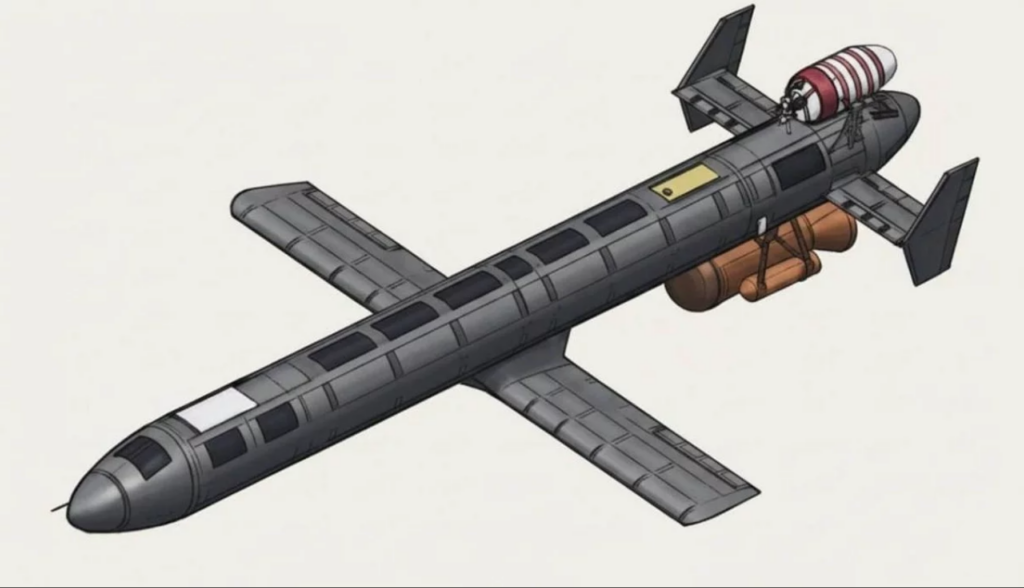
Russia started building the Geran, its own version of Iran's Shahed, in 2023. The first Geran-1 flew at up to 185 km/h with a 20-kilogram warhead. The newest Geran-5 flies at up to 600 km/h, carries a 90-kilogram warhead, and has a range of up to 1,000 km. Newer models add thermal cameras, AI-assisted guidance, Russian anti-jamming antennas, and Chinese mesh modems.

Serhii "Flash" Beskrestnov, a non-staff adviser to Ukraine's president on defense technology, has described how such drones work:

"A Russian operator flies at an altitude of 2–5 km, spots the target, locks onto it using the camera, and then the Shahed automatically attacks the target."

Almost all of Russia's jet drones used against Ukraine carry such a camera, he added.

Skipping the testing, straight to combat

Centralized production lets the Kremlin redesign fast and fold in combat lessons.

"The reason Russia was able to create a major new production line from scratch was because it's technologically a lot simpler than making something like tanks, which require enormous, unique and costly machine tools," said Ruslan Pukhov, who heads the Moscow-based Center for Analysis of Strategies and Technologies.

He added that they essentially skipped the long testing period that usually accompanies any military development process, with changes going straight into production and being checked in combat.

  • ✇Euromaidan Press
  • The EU just released $7 billion for Ukraine to buy Patriot missiles and drones
    The European Commission has formally approved €6.1 billion ($7.1 billion) for Ukraine's air defense, drones, and missiles, EU Defense and Space Commissioner Andrius Kubilius announced on 12 September. The decision lets Ukraine order American Patriot Advanced Capability-3 (PAC-3) interceptors for its Patriot launchers, and it includes five exceptions to the EU's own purchasing rules. With it, all the defense money Europe set aside for Ukraine this year has been assigned.
     

The EU just released $7 billion for Ukraine to buy Patriot missiles and drones

12 septembre 2026 à 05:59

eu just released $7 billion ukraine buy patriot missiles drones · post european commissioner defence andrius kubilius j stacevičiaus / lrt nuotr news ukrainian reports

The European Commission has formally approved €6.1 billion ($7.1 billion) for Ukraine's air defense, drones, and missiles, EU Defense and Space Commissioner Andrius Kubilius announced on 12 September. The decision lets Ukraine order American Patriot Advanced Capability-3 (PAC-3) interceptors for its Patriot launchers, and it includes five exceptions to the EU's own purchasing rules. With it, all the defense money Europe set aside for Ukraine this year has been assigned.

As Russia keeps hitting Ukrainian cities with missiles and drones, Ukraine defends them with two supply chains it does not control—an American interceptor pipeline measured in years, and a domestic drone industry limited by how much anyone will pay for it. European money is the biggest lever that moves either.

What the decision unlocks

The funding will support Ukraine's ability to withstand what Kubilius called the continued intensification of Russian ballistic missile and drone strikes.

The money comes from the €90 billion ($105 billion) loan the EU built for Ukraine, of which €60 billion ($70 billion) is set aside for weapons across 2026 and 2027. One route runs through PURL, the arrangement under which allied governments pay for American weapons and NATO organizes delivery.

Five exceptions to Europe's own rules

The package carries five exemptions from the loan's standard purchasing rules, Kubilius said. Three of them cover Ukrainian-made drones and components that cost more than the rules allow. The other two cover American equipment, including the PAC-3 missiles.

The exceptions are what was settled this week. The Commission had signed off on the €6.1 billion package on 24 August, covering air and missile defense systems, missiles, ammunition, and radars. What remained was the rules governing how the money could be spent.

1000 patriot missiles arrive too late winter so ukraine asked ramstein arms coalition open its warehouses · post ukraine's defense minister yevhenii khmara right commander-in-chief major general mykhailo drapatyi meeting
Explore further

1,000 Patriot missiles arrive too late for this winter, so Ukraine asked the Ramstein arms coalition to open its warehouses

This year's money is all committed

All €28.3 billion ($33 billion) allocated for Ukraine's defense from the loan in 2026 has now been agreed, Kubilius said.

Earlier slices went the same way. In July, the Commission released €3.47 billion ($4 billion) for drones, missiles, air defense, and Swedish Gripen fighter jets, the first 16 of which reach Ukraine in early 2027. On 8 September Brussels approved Ukraine's own application, filed five days earlier, to spend more than €2 billion ($2.3 billion) of loan money on Patriot interceptors.

What money cannot buy quickly

An approval is not a delivery. The 1,000 Patriot interceptors Ukraine has ordered arrive too late for this winter, which is why Kyiv asked allied governments to release rounds from their warehouses now and accept replacements later. A sum above €2 billion buys somewhere between roughly 190 and 580 interceptors, depending on the price Washington sets.

Russia, meanwhile, turns out about 100 of its deadliest missiles a month, 60 of them Iskander-Ms, and about 3,000 jet-powered drones in the same period. Ukraine intercepted one of the 57 ballistic missiles fired in the first eight days of August.

  • ✇Euromaidan Press
  • Money, not engineering, is what stands between Ukraine and Russia’s fastest drones, Zelenskyy says
    Ukraine has not had enough of the right weapons to shoot down Russia's jet-powered drones, President Volodymyr Zelenskyy said at a press conference with Canadian Prime Minister Mark Carney in Calgary on 10 September. He put the remaining obstacles at time and money rather than engineering, and used the appearance to press partners for joint production. Russia attacks Ukrainian cities with drones every night, and the defense against the fastest of them is still being bui
     

Money, not engineering, is what stands between Ukraine and Russia’s fastest drones, Zelenskyy says

11 septembre 2026 à 10:12

Ukrainian President Volodymyr Zelenskyy speaks after signing a 100-year partnership declaration with Canada, 10 September 2026. Screenshot: Office of the President of Ukraine video

Ukraine has not had enough of the right weapons to shoot down Russia's jet-powered drones, President Volodymyr Zelenskyy said at a press conference with Canadian Prime Minister Mark Carney in Calgary on 10 September. He put the remaining obstacles at time and money rather than engineering, and used the appearance to press partners for joint production. Russia attacks Ukrainian cities with drones every night, and the defense against the fastest of them is still being built.

Russia has spent this year rebuilding its air campaign around whatever Ukraine intercepts least, and aiming it at supply chains, industry, and housing across the country. Ukraine answers with hardware it can design in months and cannot yet fund in the quantities the nights demand, which is why it now asks partners for production lines alongside finished weapons.

"We did not have enough means"

Zelenskyy was answering a question about the Russian drone found at Leipzig airport in Germany and the drone that delayed his own flight out of Moldova.

"We have to be very frank: we did not have enough means to destroy all these fast drones," he said. "Yes, we are on the way, more than 60 companies are already working on this. Yes, we will get a result, but it takes time."

Three days earlier, he noted that only three to five of the firms show real results.

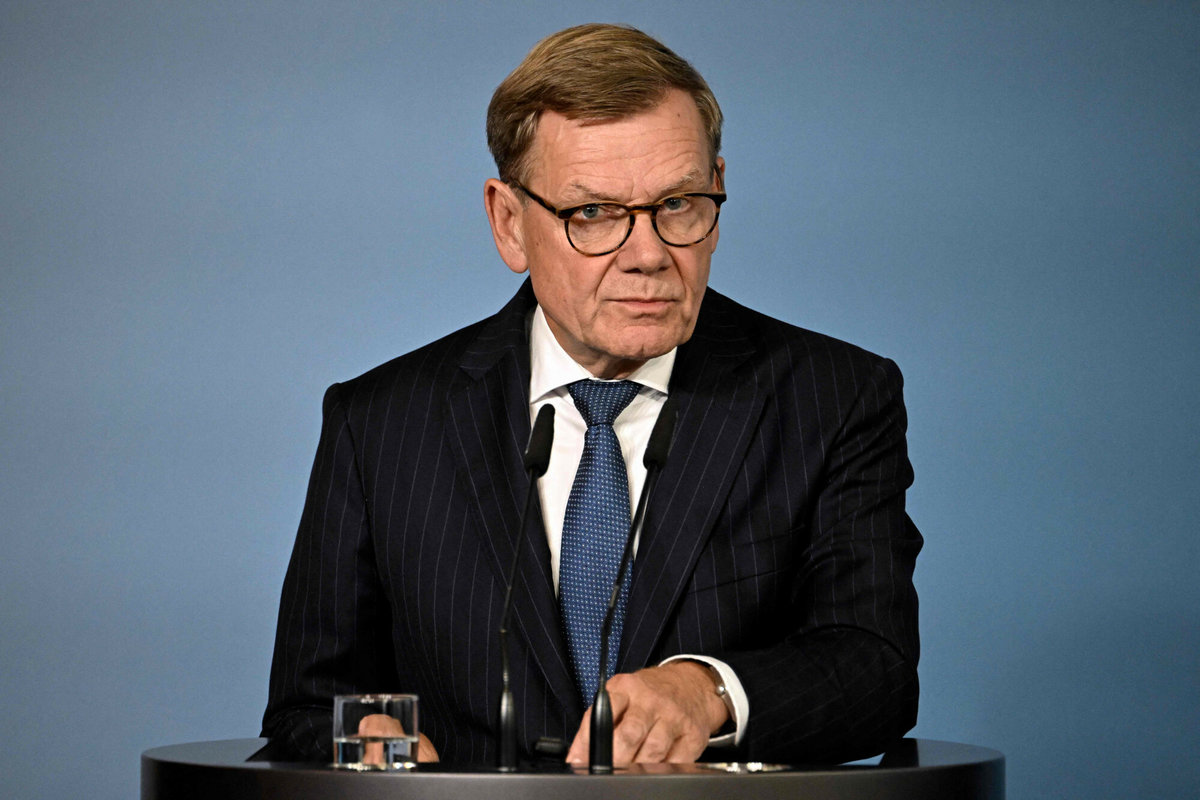
German Foreign Minister Johann Wadephul stands behind a lectern during a press conference.
Explore further

Germany blames Moscow for Leipzig drone attack, closes consulate and cultural center among sweeping diplomatic measures

The bottleneck is money

He then went past the engineering.The problem is not only technology, he said, but the funding to build thousands of interceptors every single day.

That arithmetic sends Ukraine abroad with its blueprints. 

"That is why we talk about joint production, about production lines in one country or another," Zelenskyy said.

Russia now builds about 3,000 jet-powered drones a month, by Ukrainian military intelligence's count, and fired some 800 of them in four days at the end of August. They fly faster than propeller Shaheds and are harder to bring down, which has stretched air raid alerts nationwide. Ukraine's Air Force cannot yet rely on usual interceptor drones against them.

money engineering what stands between ukraine russia's fastest drones zelenskyy says · post russia’s new “geran-4 seeker” shahed variant geran-4 news ukrainian reports
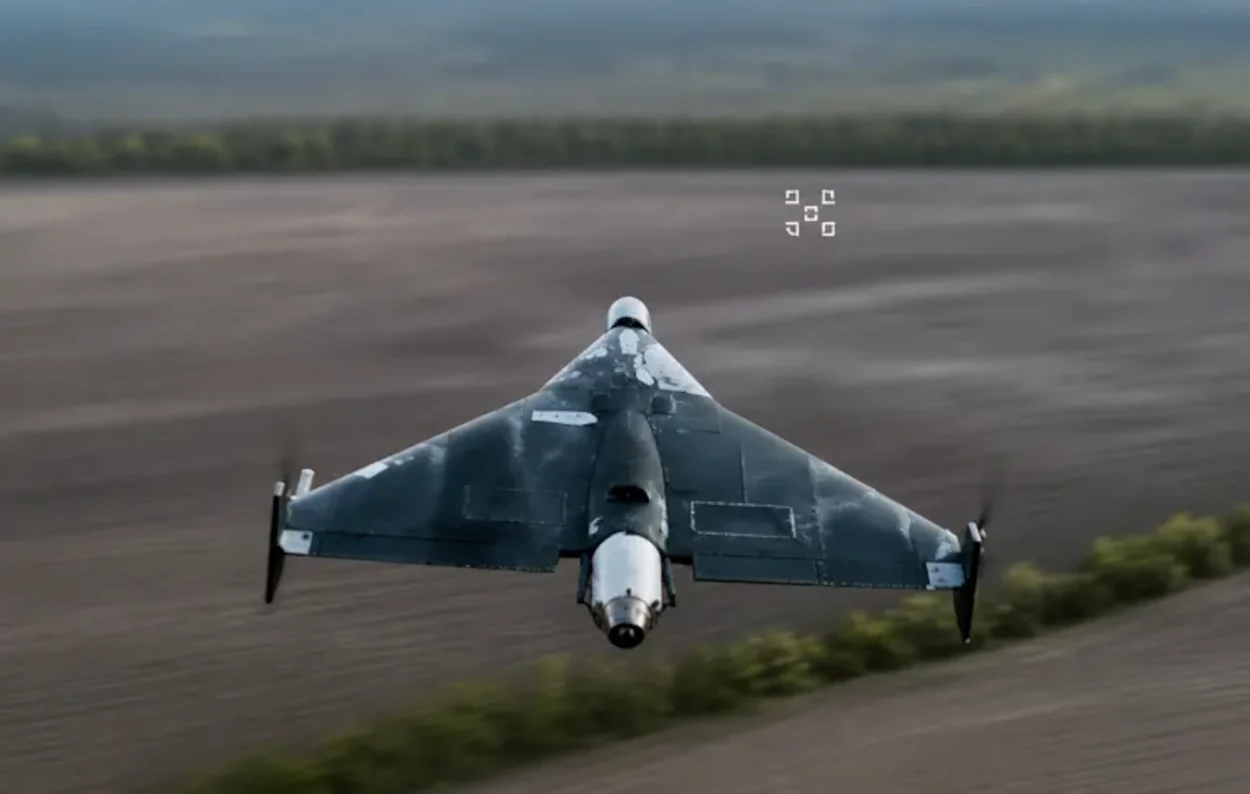
Russia’s new “Geran-4 Seeker” jet-powered Shahed drone variant. Source: Dyki Shershni

One drone, of the kind that turned up at Leipzig or crossed Moldova, is not a problem for Ukraine, Zelenskyy said. Thousands of fast drones a day are.

one russian drone held up seven flights moldova zelenskyy's trip norway king harald v's funeral among · post zelenskyy walking other heads state dignitaries behind coffin v central oslo 9
Explore further

One Russian drone held up seven flights in Moldova, Zelenskyy’s trip to Norway for King Harald V’s funeral among them

What a night without enough interceptors looks like

The same night, Russia sent 161 long-range attack drones at Ukraine, decoys among them, along with a cruise missile.That is an ordinary night now, and its damage spreads thin across the map instead of landing in one place.

A Russian strike set a nine-story apartment block alight in Kyiv, burning the facade up to the fifth floor and a flat on the second. Firefighters carried seven people out and handed seven more to medics. Russian drones injured eight people in the capital overnight. 

North of the city, Russia burned warehouses in the Bucha district, then struck the same site again while the crews were still dousing the flames. 

In Dnipro, the drones kept coming back, more than ten times from the evening on, damaging a plant and a row of garages and injuring seven people.

Farther out, Russia injured a mother and her son in Zaporizhzhia and damaged a plant in Zhytomyr Oblast, and the waves ran west far enough that NATO jets went up over Romania.

  • ✇Euromaidan Press
  • Russia now hunts Kyiv by daylight too, Flash explains why
    Russia has started launching its strike drones during the day, not only after dark. The reason is the new jet-powered Geran drones, which fire groups cannot take down, so for Russia there is no longer any difference between attacking by day or by night, Serhii "Flash" Beskrestnov, President Zelenskyy's adviser on defense technologies, told Glavcom. The near-hourly daytime raids are the new face of a campaign that culminated on 1 September, Knowledge Day, when Russia hit
     

Russia now hunts Kyiv by daylight too, Flash explains why

3 septembre 2026 à 06:07

geran-5

Russia has started launching its strike drones during the day, not only after dark. The reason is the new jet-powered Geran drones, which fire groups cannot take down, so for Russia there is no longer any difference between attacking by day or by night, Serhii "Flash" Beskrestnov, President Zelenskyy's adviser on defense technologies, told Glavcom.

The near-hourly daytime raids are the new face of a campaign that culminated on 1 September, Knowledge Day, when Russia hit Kyiv and its region with ballistic missiles and jet-powered drones and killed 12 people. That strike culminated a six-day assault on the capital that began on 27 August, two days after CIA Director John Ratcliffe arrived in Moscow. However, even after that, the attack continued. Sirens now sound across Kyiv and the surrounding oblast roughly once an hour, around the clock.

Why the shift to daylight

The daytime raids carry an added economic and psychological weight, he said. The threat of strikes forces shops and businesses to open and close unpredictably, snarls transport, and can halt rail service.

"They understand perfectly well that daytime attacks hurt the population and business," Beskrestnov said, adding that the state railway Ukrzaliznytsia is paralyzed.

Keeping the defenders on their feet

A further aim is to hold Ukraine's air defense in a permanent state of readiness, Beskrestnov said. Round-the-clock attacks mean radar stations and generators must run without pause.

"Radar stations and generators run constantly, and that also puts a strain on our troops," he added.

Kyiv remains a Russian prime target because it carries symbolic as well as military weight, as the capital houses the government, business, and warehouses, and a strike there would resonate far more than terrorizing a small town.

Russian forces first concentrated on districts nearer the drones' launch corridors — Kyiv's Left Bank, and the Brovary and Boryspil raions — before switching to the other bank to hunt for targets. As the cold season approaches, he expects Russia to intensify strikes on the energy infrastructure it has so far spared.

Russia’s air war has cost the average Ukrainian mall 166.8 working days since 2022, about eight months of closed floors

2 septembre 2026 à 15:37

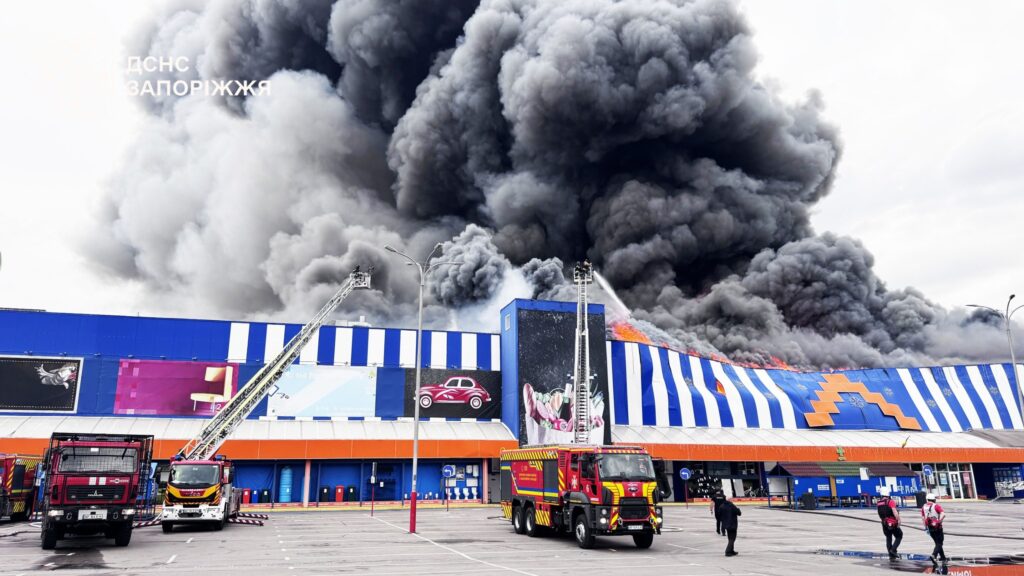
Fire at a shopping center in Zaporizhzhia, Ukraine, following a Russian drone strike on 28 August 2026. Photo: Ukraine’s State Emergency Service

Air-raid alerts covered a record share of working hours at shopping centers across Ukraine in August. Sirens ran for 21.8 percent of the hours malls were open, the Ukrainian Council of Shopping Centers reported.

For more than a fifth of the hours malls were open to serve customers, sirens instead sent staff and shoppers to shelters. The share has more than doubled in a year. The climb is related to Russia's escalating air campaign: Moscow ran a seven-day barrage of ballistic missiles and jet-powered drones against Kyiv into early September, the kind of assault that keeps sirens running through the business day.

Every tracked measure rose

The council considers four figures: the number of alerts, the number during mall working hours, the total alert duration, and the duration during working hours. All four climbed from July to August, it says.

Five regions bear the worst of it

The five regions with the most daytime alert time, between 10 a.m. and 9 p.m., barely changed over the month, the council says. Donetsk Oblast led at 82.0 percent, followed by Sumy at 76.4, Zaporizhzhia at 71.4, Kharkiv at 60.3, and Chernihiv at 40.1.

The sharpest monthly jump fell in Kyiv and Kyiv Oblast.

Faster drones drive the sirens

Russia has switched to jet-powered drones that fly more than three times faster than the propeller Shaheds Ukraine spent three years learning to shoot down. The faster a drone reaches a city, the less time defenders have to catch it.

That is what fills the sirens. Alerts sound earlier and stay on longer, which is the shared council measure.

Ukraine races to answer them

Ukraine has four interceptor systems in field testing, built to take down jet drones, Defense Minister Yevhenii Khmara said on 30 August. The country now wants to bring them to standard and build them in the thousands.

Until that layer works, every jet-drone raid costs Ukraine a long air alert that empties a shopping center.

Downtime piles up over years

Since the full-scale war began, the average Ukrainian mall has lost 166.8 working days to air-raid alerts, according to the report. August 2026 alone accounted for 6.4 of them.

That is more than eight working months of shuttered trading floors, and it is still climbing.

42,020 troops, 1,827 artillery systems, 89 tanks: Ukraine’s tally of what it cost Russia to keep fighting in August

2 septembre 2026 à 14:13

Soldiers of Ukraine’s 425th Separate Assault Regiment Skelia. Photo: Skelia

Russian losses reached one of the highest of the entire full-scale war in August, Ukraine's Defense Ministry says, citing General Staff data. Last month, Ukraine killed or wounded 42,020 invaders.

As its frontline losses climb, Russia is escalating its terror against Ukraine's civilians. Moscow uses large numbers of ballistic missiles and new jet-powered drones to do it. Russia opened its latest drone assault on 27 August, two days after CIA director John Ratcliffe arrived in Moscow, and has kept it up since.

For comparison, Russia lost 42,860 soldiers in July, 33,760 in May, and 39,290 in June, the ministry says.

Ukraine takes another step toward its goal

Ukraine's Defense Ministry states that effectively destroying Russian manpower and logistics is among its priorities, so that Russia's losses reach a level that forces it to abandon its plans of conquest.

"August's losses for the Russian army were another step toward reaching that goal," the Defense Ministry says.

Ukraine began its logistics lockdown late this May. It is a coordinated campaign to scale up medium-range drone strikes against Russian supply convoys, depots, command nodes, and air-defense systems 20 to 200 kilometers behind the front.

Russia loses more than men

Ukraine's Defense Forces also struck 13,835 vehicles and fuel tankers in August.

Over the month they hit an estimated:

  • 89 tanks;
  • 197 armored combat vehicles.
  • On top of that, 1,827 Russian artillery systems were destroyed or disabled.

"Inflicting such losses systematically raises the cost of continuing the war for Russia and forces it to spend ever more resources replacing manpower, equipment, and weapons," the ministry says.

How does Russia answer the losses?

Ukraine's Office of the President has said Russia is preparing an additional mobilization wave in 2026–2027, aiming to draft 300,000 people this year and 300,000 next. Those figures are a response to the steady rise in frontline losses, the office adds.

Meanwhile, Russian President Vladimir Putin called that information "nonsense" after the Shanghai Cooperation Organization summit in Bishkek.

At the same time, legal-aid organizations report a covert mobilization across Russia's regions and occupied territories. Over the past month and a half, residents of at least 17 Russian regions have complained of forcible detention, beatings, and coercion into signing contracts with the Russian Defense Ministry.

  • ✇Euromaidan Press
  • 800 jet drones in four days: Russia is now firing type Ukraine’s interceptors cannot catch
    More than half the drones Russia fired at Ukraine over the past four days were jet-powered, and Kyiv was the main target. Of the more than 1,500 drones launched, about 800 were jet-powered, Colonel Yurii Ihnat, head of the communications department of Ukraine's Air Force Command, said, UNIAN reports. A massive attack on Kyiv and the Kyiv region began on 27 August, two days after US Central Intelligence Agency (CIA) Director John Ratcliffe’s visit to Moscow. According t
     

800 jet drones in four days: Russia is now firing type Ukraine’s interceptors cannot catch

31 août 2026 à 15:36

A fire burns at a Nova Poshta fulfillment and sorting center in Sviatopetrivske, Kyiv Oblast, after a Russian drone strike on 28 August 2026. More than 60,000 books were destroyed in the attack. Photo: Readeat

More than half the drones Russia fired at Ukraine over the past four days were jet-powered, and Kyiv was the main target. Of the more than 1,500 drones launched, about 800 were jet-powered, Colonel Yurii Ihnat, head of the communications department of Ukraine's Air Force Command, said, UNIAN reports.

A massive attack on Kyiv and the Kyiv region began on 27 August, two days after US Central Intelligence Agency (CIA) Director John Ratcliffe’s visit to Moscow. According to President Donald Trump, the visit was related to efforts to broker an end to Russia’s war against Ukraine, per Sky News.

Previous interceptors won't work

The attack on Kyiv and the surrounding region, accompanied by repeated air-raid alerts, has continued for all five days since then.

A jet-powered Shahed is a version of the strike drone fitted with a turbojet engine in place of a propeller, which makes it three times faster and far harder to shoot down.

Ukraine intercepts about 88 to 90 percent of all drones, but the rate against jet-powered ones is lower precisely because of their speed, Ihnat noted.

The problem is structural: Ukraine's interceptor drones reach roughly 300 kilometers per hour and physically cannot catch a target moving faster and flying at about five kilometers' altitude, beyond the reach of mobile fire teams and portable SAM systems.

Russia adds jet drones every month

Moscow began using jet-powered UAVs in large numbers in July, launching five times as many as in June, Ihnat noted. Their number may rise further by the end of August, he added.

The jet-drone attacks come from every direction. Ihnat said the debris of recovered Shaheds shows they were manufactured just two weeks earlier, meaning production is running without pause.

Banderols fly like cruise missiles

Russia has also stepped up its use of Banderols, systems that combine features of drones and missiles and fly at up to 600 kilometers per hour, Ihnat said. They are harder to shoot down, so short-range surface-to-air missile systems and aircraft with air-to-air missiles are used against them.

Jet-powered drones are significantly more expensive than conventional ones, Ihnat noted.

The strikes hit specific targets

Russia's attacks are aimed not only at psychological pressure on the capital's residents but at specific targets, Ihnat said. These are logistics and shopping centers, postal terminals, critical infrastructure, and other strategic sites.

Strikes of this kind have destroyed about 90 percent of Ukraine's modern warehouse space in recent weeks and slowed grain exports through the Black Sea corridor.

❌