Ukrainian drones struck the Ryazan oil refinery in Russia on the morning of 6 September and set one of its core units on fire, Ukrainian defense outlet Militarnyi reported. The unit produces the high-octane component the Rosneft plant needs for its higher grades of gasoline. Russian regional authorities acknowledged a fire without naming the site. Ryazan is situated southeast of Moscow, about 470 km from Ukraine.
Ukraine has spent this year pushing long-range drones deeper into Russia, working methodically through refineries, pipelines, and export terminals to cut the fuel that moves Russian armies and the oil income that pays for the war. The pressure now runs deep past Russia's borders, with the shortage reaching Central Asian markets.
What burned at Ryazan
Drones hit the low-temperature isomerization unit for pentane-hexane fractions, designated Izomalk-2-LIN-800, according to Militarnyi's analysis. The unit sits on the refinery's grounds and is one of the critically important links in the plant's production cycle.
It converts low-octane straight-run oil fractions into a cleaner high-octane blending component. That component is what allows the refinery to produce gasolines of the higher environmental classes, Euro-5 among them, without adding harmful additives.
Geolocation of the fire at the Ryazan oil refinery after a Ukrainian drone strike, Ryazan, Russia, 6 September 2026. Graphic: Militarnyi, imagery: ESRI
The refinery belongs to Rosneft and ranks among Russia's largest refining enterprises, with a capacity of about 17 million tons of crude a year. It makes motor gasolines of all grades, diesel, aviation kerosene, fuel oil, liquefied gases, bitumen, and petrochemical feedstock. Four crude distillation units sit on the site, along with equipment for vacuum gasoil hydrotreating, cracking, and catalytic reforming.
Ukrainian monitoring channel Exilenova+ published videos of the strike.
Drones already attacked this unit in December 2025 and damaged it. Earlier waves targeted the plant's ELOU-AVT-3, ELOU-AVT-6, and AVT-1 units.
By May 2026 the refinery had lost 90–100% of its refining capacity. Satellite imagery from 3 August 2026 showed Ukraine's Defense Forces had disabled two of the four crude distillation units on site.
Ukrainian drones struck the refinery in May, and FP-1 drones set it and a nearby warehouse burning in July.
Russian officials report a fire, not a target
Ryazan Oblast governor Pavel Malkov confirmed the region came under drone attack. Drone debris damaged residential buildings in Ryazan and Sapozhkovsky district, he stated, and a fire broke out at an enterprise he did not name. He said there were no casualties and that emergency services were working.
Russian news Telegram channel Astra said its analysis of photographs taken by residents established that the fire was on the grounds of the Ryazan refinery. Ukrainian channel Exilenova+, which tracks such attacks, also reported a hit on the plant.
Ukraine's General Staff said strikes on 26 August and 1 September fully stopped two large refining enterprises: Lukoil-Nizhegorodnefteorgsintez in Kstovo, Nizhny Novgorod Oblast, and the Novatek-Ust-Luga complex in Leningrad Oblast. Both supply the Russian army.
Short of gasoline, Russia has been buying more fuel abroad. Moscow discussed importing gasoline from Kazakhstan in June, and a Kazakh refinery deal would cover 0.3% of Russian demand. Belarus increased its gasoline supplies to Russia nearly 20-fold in the first half of the year.
Ukraine's anti-corruption investigators say a senior official in the Office of the Prosecutor General set up and ran a criminal organization from within the office. The National Anti-Corruption Bureau (NABU) and the Specialized Anti-Corruption Prosecutor's Office (SAPO) said in a statement on 5 September that the group took bribes to allow fraudulent call centers to operate and laundered millions.
The case cuts into Ukraine's own prosecution service, the body meant to bring such crimes to court. NABU, widely regarded as the country's most independent anti-corruption institution, and SAPO opened the operation this week, at a time when fraudulent call centers have become a major problem for organized crime. Meanwhile, authorities are pursuing hundreds of suspected operations at home and abroad.
More than $450,000 was spent on real estate
According to the investigation, a head of a structural unit at the Office of the Prosecutor General created and led the organization in mid-2025, recruiting both serving prosecutors and close associates. Members allegedly took systematic bribes in exchange for not obstructing the so-called call centers, which defraud Ukrainian citizens and foreigners on a mass scale. Such operations run phone and online scams that strip money from victims at home and abroad.
The proceeds were laundered, investigators say. More than $450,000 was spent on real estate, jewelry, and other valuables, while roughly $225,000 was placed in associates' bank accounts and passed off as business income. The alleged organizer also re-registered previously acquired assets to third parties to hide his ownership, including property in a popular apartment complex near the Carpathian Mountains worth at least $270,000.
According to NABU, the criminal group included:
"Chancellor", its leader
"Muza", a close friend of the Chancellor
"Comrade", Chancellor’s driver
"Flash", Chancellor’s assistant
The investigation shows that the "Chancellor" has managed to consolidate all the levers of influence over fraudulent call centers in his hands. The individual decided which call centers to “protect” and which ones to shut down. Bribes were also allegedly paid to secure appointments to senior positions in the prosecution service.
“I can’t just go to work for the sake of going to work. I need to live there, not just exist. If you’re going to do something, then go all in. But I prefer it this way: if you’re gonna f*ck, f*ck a queen, if you’re gonna steal, steal a million,” Chancellor says in an audio recording released by NABU.
Five charged, more expected
Five people have been exposed so far, suspected of creating, leading, or participating in a criminal organization and of laundering money. The investigation is continuing, and NABU says it is identifying other possible participants.
The Office of the Prosecutor General said it would assist the anti-corruption agencies and suspended the employee in question for the duration of the pre-trial investigation.
"I have a Porsche, Loro Piana, Mimi, flowers"
At the same time, the Prosecutor General’s Office is calling for an assessment of the legality of NABU’s nighttime searches. It says the searches of the offices of senior officials and the investigators’ access to materials from other criminal proceedings require a legal assessment.
Meanwhile, the recordings show that after NABU began searching the people involved in the scheme, they panicked and covered up the most obvious traces of their alleged wrongdoing, including deleting photos of their luxurious lifestyles from social media.
“I need to delete everything… I have a Porsche, Loro Piana, Mimi, flowers, watches, bracelets, bags here. I need to delete everything,” an accomplice in the scheme, known by the pseudonym "Muza", tells "Chancellor" in the recordings.
Earlier, Ukrainska Pravda reported, citing its own sources, that on 4 September NABU detained Serhii Kropyva, deputy head of the Department of International Legal Cooperation at the Prosecutor General’s Office.
A Ukrainian National Guard unit says it destroyed one of Russia's rarer electronic-warfare stations, 55 kilometers behind the front. Lasar's Group said its own bomber drones hunted down an R-330Zh Zhitel jamming station near Sievierodonetsk in mid-summer, in a statement on its Telegram channel.
The Zhitel is worth the effort. It detects and jams GPS, satellite, and cellular signals, and Russian forces have been using it to blind Ukrainian reconnaissance drones over the Sievierodonetsk area. Mounted on a KamAZ truck, it can operate alone or be integrated into a wider jamming network, Militarnyi reported.
How the unit says it did it
The strike was the unit's own from start to finish, Lasar's Group said. Its intelligence analysts, working with the unit's aerial reconnaissance crews, pinpointed the Zhitel's exact position.
Ukrainian soldiers from "Lasar's Group" of the National Guard destroyed a rare Russian R-330Zh "Zhitel" jamming station deep in Russian-held territory
Russian troops had used the system mainly to blind Ukrainian reconnaissance drones over the Siverskodonetsk Lasar's Group pic.twitter.com/JEQeADMSBk
Strike crews then flew in-house-built LASAR bomber drones 55 kilometers deep to destroy it.
The rationale is simple: the fewer electronic warfare systems the Russians have, the freer Ukrainian drones are at the front, which is why such systems sit high on the Lasars' target list. The Zhitel they hit had been used mainly against reconnaissance drones, keeping Ukraine's forces from monitoring the area around Sievierodonetsk.
Not the unit's first
It is at least the second Zhitel Lasar's Group has claimed this year. In April, the unit destroyed a Zhitel and a command-and-staff vehicle in Kharkiv Oblast. The unit has made a specialty of hunting high-value Russian assets deep in the rear: in March, its drone crews tracked down a roughly $50-million Yastreb-AV counter-battery radar in occupied Luhansk Oblast, one pilot even landing a drone on the vehicle to follow it as Russian forces tried to move it to safety.
Taking out a jamming node like the Zhitel has an outsized effect: it restores freedom of movement for Ukrainian drones, brings back GPS-dependent navigation and weapons in the area, and makes it harder for Russia to blind Ukrainian reconnaissance.
A Ukrainian soldier in a trench or in a vehicle can now get a short alert on their phone the moment a Russian FPV drone or glide bomb starts closing in. The system behind it, Hrafit (Graphite), pulls together data from nearly all available radio-technical intelligence and surveillance into a single picture, ArmyInform reported.
The threat no longer stops at a command post. The warning reaches the soldier at an observation point, the sector command, and the commander-in-chief at once. To use it in a position, a soldier needs only a protected smartphone and satellite internet, including Starlink, and on the ground, it comes down to one short push notification.
Hrafit answers one question: Is the sky clear?
In modern combat, a second's hesitation can be enough for an infantry soldier in a trench or a crew in a vehicle to be caught by an FPV drone or a guided glide bomb. Hrafit is the Ukrainian answer, moving situational awareness onto an ordinary phone.
Military programmers built it for Ukraine's Defense Forces to answer the one question that matters most in the field: is the sky clear? Militarnyi reported that the system is being supplied to the Armed Forces, the National Guard, the Security Service, and the Border Guard Service.
It tracks drones and glide bombs
Working in real time, Hrafit flags a wide range of incoming threats:
FPV drones, both kamikaze and loitering types
tactical quadcopters such as the DJI Mavic, which are often used to direct fire
winged Russian drones like the Molniya and Privet
guided glide bombs and other aerial munitions
Three versions run from HQ to the trench
Hrafit runs on Android, iOS, and the web, in three versions.
The full version, for analysts, commanders, and electronic warfare and air defense operators, adds reporting, filters, frequency-band analysis, and a global map of the fighting.
For instance, Hrafit Lite strips down the interface for troops on the zero line, showing only the local area, so nothing distracts from the fight.
A third module, Sova (Owl), is built for logistics crews, drivers, and medical evacuation: it runs during a drive, moves its monitoring sector across the map with the vehicle, and warns of danger along the way.
Soldiers can learn the system through an official online course in the Army+ app, which teaches them to operate and configure Hrafit and issues a completion certificate.
Ukrainian Defense Forces units have been ordered to temporarily observe a ceasefire along the line of contact from 00:00 on 5 September through 23:59 on 8 September, Ukrainska Pravda reported, citing sources in several military brigades and a senior security official.
The order comes as US President Donald Trump’s special envoys Steve Witkoff and Jared Kushner are expected to visit Moscow and Kyiv this weekend for talks aimed at ending Russia’s war against Ukraine.
According to Ukrainska Pravda’s sources, Ukrainian units operating across the front have received instructions to observe the temporary “silence regime” during the four-day period.
An air raid alert was issued in Kyiv at 00:00 on 5 September just as the temporary ceasefire was due to take effect, with Russian drones reported over Kyiv and Kharkiv oblasts.
Pause coincides with US envoys’ visits
Witkoff and Kushner are expected to meet Russian President Vladimir Putin in Moscow on 5 September before traveling to Kyiv for talks with Ukrainian President Volodymyr Zelenskyy on 6 September.
Their visit comes after months of stalled negotiations. US-mediated talks between Russia and Ukraine froze in February following the outbreak of war between the US, Israel and Iran, while subsequent contacts between US, Russian and Ukrainian officials have failed to produce a breakthrough.
Explore further
Witkoff and Kushner to visit Kyiv and Moscow to revive peace talks as Russia ramps up attacks across Ukraine
Zelenskyy said on 4 September that Ukraine would ensure conditions for the US envoys’ safe travel and called for Russia to reciprocate by refraining from strikes during the period needed for the meetings and related logistics.
The reported Ukrainian order would extend the pause beyond the envoys’ visits, covering 5–8 September.
Russia has continued its intensive drone campaign against Ukrainian cities even as diplomatic contacts have resumed. Kyiv remains skeptical of Moscow’s willingness to accept a genuine ceasefire, with Ukrainian officials warning that Russia may use negotiations to buy time while continuing its military campaign.
Budapest praised the Verkhovna Rada—Ukraine’s parliament—after it voted 261–0 to classify mass arrests, deportations, and persecution by the Soviet military administration in Zakarpattia (also known as Transcarpathia) from 1944 to 1946 as crimes of the communist regime.
The vote makes the Verkhovna Rada the first state body in the world to recognize the repression of Zakarpattia’s Hungarian community as a crime, according to European Pravda. It creates an opening for historical reconciliation after years of minority-rights disputes, strained relations, and blocking Ukraine’s EU accession. However, Budapest continues to press Kyiv for further concessions.
After Soviet forces took control of Zakarpattia—Ukraine’s westernmost region, bordering Hungary and home to the country’s largest ethnic Hungarian community—the NKVD, Stalin’s secret police, and SMERSH, Soviet military counterintelligence, detained civilian men aged 18 to 50 under the pretext of mobilization.
The men were deported without trial to labor camps and the Soviet Gulag prison-camp system. Hungary’s Foreign Ministry said tens of thousands of Hungarian- and German-speaking men were deported, and many thousands died under the inhumane conditions of forced labor.
The campaign became known in Hungarian as malenkijrobot. Derived from a Russian phrase meaning “a little work,” Soviet troops used this deceptive phrase when taking people away.
Hungarian Foreign Minister Anita Orbán—no relation to former Prime Minister Viktor Orbán—called the declaration “a fitting tribute” to thousands targeted by Soviet terror because of their Hungarian identity. She said Hungary was ready to help uncover the truth about the past and honor the victims.
Hungary welcomes the Ukrainian parliament’s declaration condemning Soviet authorities' coercive measures against the Hungarian community in Transcarpathia between 1944 and 1946. The declaration is a fitting tribute to the thousands of victims of deportation and forced labor…
The resolution calls for memorials, archival publications, research, and the inclusion of the repression in educational programs. It also draws a parallel with Russia’s present-day occupation practices, saying Moscow is committing similar large-scale repression against civilians in occupied Ukraine.
Marton Hajdu, chair of the Hungarian parliament’s foreign affairs committee, nevertheless said reconciliation must be accompanied by Kyiv’s full implementation of its June agreement with Budapest on minority rights.
A cautious thaw in Hungarian-Ukrainian relations
The exchange adds to tentative signs of improving relations since Péter Magyar ended Viktor Orbán’s 16 years in power in April. Magyar’s government summoned Russia’s ambassador after Moscow struck Zakarpattia and later closed a money-laundering case involving $82 million belonging to Ukraine’s state-owned Oschadbank, reversing another Orbán-era dispute.
Budapest and Kyiv also reached a June agreement covering Hungarian-language education and the use of Hungarian in public services. Yet Magyar’s government has continued to slow parts of Ukraine’s EU accession process amid domestic pressure to defend Zakarpattia’s Hungarian community. The recognition of Soviet crimes, therefore, provides new common ground without settling the wider disagreements between the neighbors.
US President Donald Trump’s special envoys Steve Witkoff and Jared Kushner are expected to travel to Moscow and Kyiv this weekend for talks aimed at restarting efforts to end Russia’s war against Ukraine, Axios reported, citing US officials.
The planned trip comes as Washington seeks to revive negotiations that stalled earlier this year and as Russia continues its military campaign against Ukraine. Russia has dramatically stepped up its attacks on Ukraine in recent weeks, launching increasingly large waves of drones and missiles against Ukrainian cities and infrastructure.
Moscow talks Saturday, Kyiv on Sunday
Witkoff and Kushner are expected to travel to Moscow on Friday, 4 September, and meet Russian President Vladimir Putin on Saturday, 5 September, Axios reported.
They are then scheduled to travel to Kyiv for talks with Ukrainian President Volodymyr Zelenskyy on Sunday, 6 September. Zelenskyy confirmed the planned meetings on 4 September.
The Kyiv visit would be the first by Witkoff and Kushner since Trump returned to the White House. The two envoys have traveled to Moscow several times to meet Putin but have not previously visited Kyiv during the current Trump administration.
Ukrainian and US officials have discussed a Kyiv visit for several months, but it has reportedly been postponed multiple times for various reasons.
Zelenskyy confirms visit, calls for reciprocal pause in strikes
Zelenskyy said Ukraine is preparing for the envoys’ visit and will ensure the necessary conditions for their safe arrival.
He said Ukraine would refrain from airstrikes against Russia for the period required for the talks and related logistics, and called on Moscow to provide a reciprocal pause in its air attacks.
“We care specifically about them, not Russia,” Zelenskyy said, adding that Kyiv expects Russia to “mirror” the pause.
Zelenskyy said Ukraine wants the visit and negotiations to be as constructive and substantive as possible, while acknowledging that the outcome will depend on the proposals Witkoff and Kushner bring and Russia’s response to them.
Talks stalled earlier this year
The Trump administration’s mediation between Russia and Ukraine was effectively frozen in February after the outbreak of the US-Israeli war with Iran.
Witkoff and Kushner have continued holding separate discussions with Russian and Ukrainian negotiators in the months since, but the talks have produced little significant progress.
The renewed push comes as Washington has again sought a path toward direct negotiations. CIA Director John Ratcliffe also recently traveled to Moscow and discussed the possibility of restarting diplomatic efforts, including a potential Trump-Putin-Zelenskyy summit.
Kyiv remains skeptical of Moscow’s intentions
The diplomatic effort comes alongside continued Russian attacks and an increasingly escalatory military situation.
Kyiv has faced near-constant large-scale drone attacks in recent weeks, while Ukrainian officials have warned that Russia may be preparing further military escalation. Axios reported that Ukrainian officials remain highly skeptical of Putin’s intentions and believe Russia could be preparing a major escalation in the war.
Explore further
Russian drone strikes SBU headquarters in central Kyiv. Zelenskyy says “geography” of Ukraine’s response is set
At the same time, Ukrainian officials have continued to argue that negotiations should not be abandoned.
Kyrylo Budanov, Zelenskyy’s chief of staff and former military intelligence chief, told The New York Times that US-mediated talks could resume in September. He said, however, that conditions for a ceasefire were unlikely to emerge before spring 2027.
Budanov has argued that Ukraine must keep diplomatic channels open even while fighting continues, saying that “the war cannot be eternal.”
The planned meetings will therefore take place against a backdrop of continued battlefield fighting and increased air attacks, with major disagreements still unresolved between Kyiv and Moscow.
A Russian drone struck the central building of Ukraine’s Security Service (SBU) on Volodymyrska Street in central Kyiv on September 4, injuring 12 people, according to Ukrainian officials.
The strike hit the SBU’s central headquarters directly opposite St. Sophia’s Cathedral, one of Kyiv’s best-known historic landmarks.
Kyiv Mayor Vitali Klitschko said nine of the injured were hospitalized, with two in serious condition.
Drone targeted SBU chief’s office
Ukrainian President Volodymyr Zelenskyy said the drone was directed toward the office of SBU chief Oleksandr Poklad inside the building.
The SBU confirmed that the strike was deliberately aimed at Poklad’s office, but said he was not injured.
Zelenskyy said he had ordered Poklad to prepare a “meaningful” and, if possible, symmetrical response to the Russian attack, with Ukraine’s military supporting the operation.
Later, Zelenskyy said Ukraine had already determined the "geography" of its response and would choose the timing based on when it could achieve an effective result.
SBU chief Oleksandr Poklad meets with Ukrainian President Volodymyr Zelenskyy following a Russian drone strike on SBU headquarters in Kyiv, 4 September 2026. Photo: Zelenskyy
Ukrainian Foreign Minister Andrii Sybiha called the strike on the SBU headquarters “major escalation that demands resolute responses,” saying it showed Moscow’s rejection of diplomacy during a renewed push for peace.
The Russian attack on Ukraine’s Security Service Headquarters is a major escalation that demands resolute responses.
Moscow launched this strike during a renewed push for peace — laying bare its true rejection of diplomacy.
The strike occurred in the middle of the day in one of central Kyiv’s busiest areas, with large numbers of civilians and vehicles on nearby streets, according to Euromaidan Press sources on the ground.
The attack came amid a sustained Russian campaign of drone attacks on Kyiv and the surrounding oblast, with the capital repeatedly targeted by large waves of jet-powered Geran drones and other weapons.
The attacks have increasingly brought explosions, fires and falling debris to residential and civilian areas across the capital and its suburbs, forcing emergency crews to respond repeatedly as the city remains under a persistent aerial threat.
Russia’s new models of Geran drones, developed from Iranian-designed Shaheds, are harder for Ukrainian air defenses to intercept. Moscow is deploying them in growing numbers, increasing the chances that drones reach Ukrainian cities and intensifying the threat to civilians.
Building damaged and fire breaks out
The drone strike caused a fire in the building, which emergency crews later extinguished.
Klitschko said sections of the building’s ceiling and an exterior wall were destroyed. Emergency services remained at the scene after the fire was brought under control.
The SBU said the damaged headquarters would be restored.
The agency also vowed that Russia would face a response through further Ukrainian operations, including strikes against Russian assets and networks.
A Russian drone struck the Ukrainian Security Service (SBU) headquarters on Volodymyrska Street in central Kyiv on September 4, injuring 12 people.
The drone was deliberately directed at the office of SBU chief Oleksandr Poklad, according to Ukrainian officials, but he was not… pic.twitter.com/DQ76MyAEeO
The Russian strike also damaged a building within the National Conservation Area “Sofia Kyivska,” located directly across Volodymyrska Street from the SBU headquarters, according to Suspilne.
According to the reserve’s director general Nelia Kukovalska, the blast shattered windows and destroyed the glass entrance structure of the complex’s Consistory building, whose exterior faces Volodymyrska Street.
No one at the reserve was injured, as staff and visitors took shelter. The historic St. Sophia Cathedral itself was not damaged, according to Kukovalska.
The St. Sophia Cathedral in Kyiv was founded in 1011, under the reign of Volodymyr the Great, the king who ruled Kyivan Rus from 980 to 1015. (Photo: ukrmandry.com.ua)
The nearby Zavertailo bakery was also damaged, though all staff and customers survived after taking shelter in the basement.
Ukrainian drones set fire to two fuel depots around Sochi and hit a Russian air defense position overnight on 4 September, according to monitoring channels. They also reported that drones struck an explosives factory and a petrochemical plant in Bashkortostan the same night, more than a thousand kilometers from Ukraine. Russian officials acknowledged the depot fire and said nothing about the air defense site.
The strikes are part of Ukraine's long-range campaign against Russian refineries, fuel depots, and military plants, run with cheap drones deep inside Russia. Oil proceeds fuel Russia's war machine and its whole economy.
Two depots burned behind their anti-drone screens
Astra's OSINT analysts geolocated the fires to the Rosneft-Kubannefteprodukt depot in Sochi's Adler district and to the Lukoil-Yugneftprodukt depot on the federal territory of Sirius. Sochi mayor Andrei Proshunin confirmed a fire at a depot. The regional operational headquarters claimed there were no casualties. Sochi is a Russian resort city on the eastern Black Sea coast, about 600 km from the frontline in Ukraine.
Fires broke out at two fuel depots in and beside Sochi, southern Russia, after drones struck overnight
One is a Rosneft depot in the resort's Adler district, the other a Lukoil site on the federal territory of Sirius, reported the Russian news Telegram channel Astra, which… pic.twitter.com/JqXiw2pRYG
The Ukrainian OSINT channel Cyberboroshno identified one of the hit sites as the BATO aviation fuel terminal, which fuels aircraft at airports across Krasnodar Krai. Every tank there stood behind purpose-built protective structures, Militarnyi reported, and the Lukoil site holds 12 tanks with a combined volume of about 8,400 m³. The burning depot sits roughly 100 meters from Sochi international airport, Russia's fifth-busiest by passenger traffic in 2024, the Russian outlet Agentstvo found.
Protective structures around the fuel tanks at the BATO aviation fuel terminal in Sochi, Russia, September 2026. Photo: Cyberboroshno
Panoramic imagery from this year shows anti-drone netting around the tanks at both depots. Two days before the strikes, Russian Deputy Prime Minister Aleksandr Novak claimed Russian refineries were better protected than those in the UAE, and Russian President Vladimir Putin said their protection level was now completely different.
An air defense position caught fire near the Abkhazia border
Astra analyzed eyewitness footage and placed a detonation and fire at a launch position near the settlement of Sirius, by the Psou river on the Abkhazia border, where an S-300 or S-400 system is based. The Ukrainian monitoring channels Exilenova+ and Supernova+ said drones struck the air defenses directly. Russia's Defense Ministry and local authorities reported nothing about it.
The site of the strike on Russian air defense positions in Sochi, Russia, 4 September 2026. Photo: Exilenova+
Drones had tried the same area in May. A Ukrainian sea drone struck the Russian supply vessel Nefrit at Sochi port the previous day.
Explosives and petrochemicals hit in Bashkortostan
Drones reached Sterlitamak on the morning of 4 September, hitting the Avangard plant and the Sterlitamak Petrochemical Plant, footage published by Supernova+ shows. Residents reported a series of explosions, and one man said on video that about a dozen drones had already flown toward the petrochemical works. The frames show Ukrainian FP-1 strike drones.
Smoke over Sterlitamak, Russia, after the strike on the Avangard plant, 4 September 2026. Photo: Supernova+
Russia's Defense Ministry claimed it downed 490 drones overnight across several regions, occupied Crimea, and the Black Sea.
Avangard makes explosives, ammunition, and casings on Russian state defense orders, and also disposes of ballistic missile solid fuel. It belongs to Rostec and sits on the sanctions lists of several countries. The petrochemical plant, about 1,300 km from Ukraine's border, produces rubber, aviation gasoline, and the additive ionol for Russian industry, Militarnyi said. Drones have hit it in November 2025 and in January and April 2026.
On 4 September, Ukraine's military intelligence agency HUR published drone footage of an August operation against a Russian coastal missile launcher in occupied Crimea, it said on Telegram. Its special unit Group 13 struck the launcher and hit fuel trucks and a command vehicle on the peninsula in the same operation.
Russia fires missiles and drones into Ukrainian cities every day, and much of what reaches the south lifts off from the occupied peninsula, which also carries the supply lines and air defense cover for Russia's southern front. Ukraine has spent the past year working through that base piece by piece — power, radars, launchers, bridges — to turn it into an island that has to be resupplied under fire.
What HUR says its operators hit
The target was a Bastion, the carrier of Zircon and Oniks missiles. Russia uses those missiles for terrorist strikes against Ukraine, HUR said.
Group 13 operators destroyed and struck two fuel trucks and a command-and-staff vehicle belonging to Russian forces, the agency said. It placed the work in August 2026 without giving a date or a place on the peninsula.
Tanker trucks and other vehicles at a Russian position in occupied Crimea, Ukraine, filmed from a Ukrainian drone in August 2026. Screenshot: HUR
The footage shows the view from drone cameras closing on the targets. HUR did not say what kind of drones its operators used, and the unit works with both aerial and naval systems, including naval drones rigged to carry FPV drones.
Designated 3K55, the system defends a shoreline and hits both surface and ground targets, warships among them. It takes up to five minutes to deploy, fires supersonic P-800 Oniks and hypersonic Zircon missiles, and reaches from 300 to 600 km depending on the missile and the mode of use. It doubles as an air defense asset, tracking up to 50 objects along the horizon at up to 250 km with passive radar and 450 km with active radar. Russia has fielded it since 2010 and builds it in a mobile version and a silo-based one.
Other Ukrainian services have hit Bastions before
Ukraine's Navy said its forces struck a Bastion's launch positions and deployment site on the peninsula overnight on 16 August, without naming a unit. Ukrainian forces hit a Bastion launcher in the occupied village of Aktachi in March, and in February they struck the concentration area of the Russian brigade that operates the system in Crimea.
The Bastion coastal missile system. Illustrative photo from open sources.
In an operation earlier in the summer, one of Group 13's uncrewed boats launched attack drones at two Russian radars in occupied Crimea without the vessel ever reaching shore.
Strikes on the peninsula continued overnight
Drone attacks on occupied Crimea have been running for weeks, and they continued into 4 September, though what was hit this time is not yet known.
Explosions sounded in Sevastopol and Dzhankoi district, Suspilne reported. Monitoring channels logged blasts and drone flights past 04:00, and satellite imagery showed a fire west of the airfield at Hvardiiske, with the cause unconfirmed. Russia's Defense Ministry claimed 490 drones downed over Crimea, other occupied territories, and Russian regions.
Ukraine's F-16 pilots are so short of air-to-air missiles that on some daytime sorties they go up with nothing but the plane's gun. Instead of using effective AIM-120 Advanced Medium-Range Air-to-Air Missile (AMRAAM) and the shorter-range AIM-9 Sidewinder, Ukrainian forces are left with the M61A1 Vulcan 20mm rotary cannon, which can pose a grave danger to civilians, the War Zone reports.
Destroying Russian targets with the M61A1 Vulcan 20mm rotary cannon carries risks: the cannon rounds, similar to grenades, can strike a fairly wide area when they hit the ground, potentially killing innocent people.
Worse, the AIM missiles the F-16s are rationing are the same ones that arm the NASAMS batteries defending Kyiv, so every jet-fired round competes with ground air defense for the same scarce stock.
A 107th Wing commander using the callsign "Phantom" confirmed the shortage when a journalist asked him directly whether Ukraine was severely short of missiles for its F-16s.
“Yes, that’s true. Any aircraft without weapons is … useless,” Phantom said.
Kyiv wants the missiles, and a way to make them
Stopping as many Russian Geran drones and cruise missiles as possible before they reach Ukrainian cities takes missiles, and Phantom was blunt about what the fleet needs. He called for more air-to-air missiles and for interceptors to reload the US-made ground-based Patriot batteries.
"We require more means of protection, such as Patriot missiles and air-to-air missiles, AIM-9s or AIM-120s to our fleet," he said.
The fix he wants outlasts any single shipment: "At least we need to try to increase the production, or at least to allow Ukraine to localize the production in Ukraine or other European countries."
Until that exists, the arithmetic stays brutal, as every missile fired at a Russian drone or cruise missile is one fewer for the next attack.
A cheaper rocket enters the mix
One weapon Phantom did not mention may ease that math. Ukrainian F-16s now appear to carry the laser-guided 70mm APKWS II rocket.
Built from a standard unguided rocket fitted with a laser-guidance kit, it is far cheaper than an AMRAAM and has already become a primary anti-drone weapon for US jets in the Middle East — a lower-cost way to knock down drones and subsonic cruise missiles without spending a scarce air-to-air missile on each one.
The European Union is discussing export support with Ukraine and its neighboring countries, including through so-called solidarity lanes, Agriculture Commissioner Christophe Hansen told Bloomberg on 2 September.
Strikes in the Black Sea have curtailed exports from both Ukraine and Russia, while low water limits how much grain vessels can carry on the Danube, Ukraine’s main fallback when sea traffic slows. Wheat and corn prices are at multiyear highs, and the Bloomberg Agriculture Spot Index jumped by more than 13% in August, its sharpest monthly rise in over a decade. Hansen said the EU’s role as a major food exporter means drought-driven production losses could cause shortages elsewhere.
Created after Russia's full-scale invasion, the solidarity lanes carry Ukrainian exports by road, rail, and river through neighboring countries when Black Sea shipping is disrupted.
The European Commission is separately weighing relief for drought-hit EU farmers. Hansen urged governments to use flexibilities in the Common Agricultural Policy, the EU's farm-subsidy system, including exemptions for circumstances beyond farmers' control, emergency fertilizer aid, and earlier payments, but proposed no new measures in a letter seen by Bloomberg. EU agriculture ministers are due to discuss the drought in Ireland next week and in Brussels later in September.
Russian attacks squeeze Ukraine’s export routes
Low water is only one obstacle to Ukraine’s southern export routes. Russia has repeatedly attacked ports and transport links along the Danube and on Odesa Oblast’s Black Sea coast. Some Ukrainian farmers have sold wheat below production cost as port prices fell, leaving less money for the next sowing.
Romania detected more than 100 drones during seven attacks on Danube ports in mid-August, interim Romanian Defense Minister Radu Miruță said. Russia struck Izmail, Ukraine's largest Danube port, three times in August. The 29 August attack killed one person and destroyed five grain trucks, Odesa regional authorities said.
Ukraine and Moldova have pursued a rail corridor through Moldova to Constanța, Romania’s main Black Sea port, as an alternative. Moldova later halved transit tariffs through 31 December. Ukrainian officials estimate the corridor could handle around 10% of Ukraine's grain exports, Reuters reported.
Russia has been bolting small FPV attack drones to the wings of its long-range Gerans and releasing them deep inside Ukraine, far behind the front. The tactic may now have reached Kyiv Oblast, where an FPV drone was recently recorded, though it is not confirmed that a Geran delivered it, Serhii "Flash" Beskrestnov, the president's adviser on defense technologies, told UNIAN. A Geran drop is one of the versions being weighed.
A Geran (the Russian-built version of Iran's Shahed-136) can fly hundreds of kilometers, so bolting short-range FPVs to its wings carries them far past the front line before release. Russia has done the same with its Molniya and Gerbera drones, and in May Euromaidan Press reported FPVs delivered this way, turning up dozens of kilometers from the border, on the ground, and even on the roofs of apartment buildings.
A year-old experiment, still rare
"The Russians have been running these experiments for a while. They attach two FPVs above the wings and drop them," Beskrestnov said.
He last recorded the tactic a week ago in Konotop, in Sumy Oblast, where Russian forces held two such drones on a carrier's wings and released them.
Until now, he added, it had shown up only on conventional Gerans. Holding an FPV on a jet-powered Geran is far harder because the speed is too high for a clean release, "but technologically it's entirely possible," Beskrestnov believes.
Ukrainian air defenders have brought at least one carrier down: in March, the Darknode anti-Shahed unit destroyed a Geran carrying two wing-mounted FPVs over Ukrainian airspace before it could release them, Militarnyi reported.
Low yield, mostly a scare tactic
Russia uses the tactic sparingly, and by its own measure, it does not work well.
"If you look at the number of successful strikes they've had with these FPVs, it's small," Beskrestnov explained, because controlling a drone dropped this way is difficult.
The FPVs carry no large warhead, and the launches often serve mainly to terrorize civilians, he said.
The dropped drones are usually flown over ordinary mobile networks rather than through a relay mounted on the carrier.
"There's an ordinary SIM card, and they control the FPV through it," Beskrestnov said, adding that Ukraine has been recording the practice on and off for about a year.
Ukraine formally notified the International Civil Aviation Organization (ICAO) on 2 September that Russian airspace is unsafe for civilian flights because of increased military activity, Ukrainian Foreign Minister Andrii Sybiha said. The letter behind the notification asks the organization to urge its member states to stop civil flights over Russia altogether, ZN reported.
ICAO, the UN aviation agency, cannot close Russian airspace or order carriers to reroute. European and US airlines already avoid Russia's airspace, while carriers from China, Türkiye, and the Gulf states have kept flying through it. Those remaining airlines must assess the safety of flying amid drone and air defense operations. Drone alerts during reported Ukrainian attacks have repeatedly shut Russian airports and delayed hundreds of flights.
The notification follows a 1 September warning by Ukrainian President Volodymyr Zelenskyy, who told airlines, insurers, and other aviation stakeholders that Russian skies were becoming unsafe as Ukrainian drones reached deeper into the country.
Zelenskyy said Ukraine's Foreign Ministry would pass information about the risks to international organizations. The letter to ICAO came from another office—Mykola Kalashnyk, Ukraine's minister for recovery, infrastructure, and transport, whose portfolio covers aviation.
Russian President Vladimir Putin said Zelenskyy's statement amounted to "a bid for state terrorism" and that Moscow would find a way to respond if civilian "tragedies" followed.
Sybiha urged airlines to avoid Russian airspace and said the notice was meant to prevent unintended incidents, arguing that Moscow was failing to disclose the dangers its war had created. He invoked Ukraine’s inherent right to self-defense under Article 51 of the UN Charter, the provision that recognizes states’ right to defend themselves against an armed attack. The foreign minister further stated that the war was “returning home to Russia.”
In its separate statement, ICAO warned of rising threats to civil aviation worldwide. It did not mention Russia, endorse Ukraine’s assessment, or say Kyiv’s notification had prompted it.
The UN aviation body identified long-range weapons, drones, navigation-signal interference, and advanced air-defense systems as growing dangers to civilian aircraft. It reiterated that international aviation law prohibits the use of weapons against them.
ICAO urged member states to assess airspace under their control, share threat intelligence quickly, and improve military-civilian coordination.
Russian airports were already facing repeated closures
Russian airspace has not been legally or completely closed. The disruption has instead taken the form of temporary restrictions at individual airports.
From 5–7 May 2026, restrictions during reported Ukrainian attacks delayed more than 450 flights at Moscow airports, while limits at Vnukovo remained in place for nearly 18 hours.
On 6 July 2025, Moscow's Sheremetyevo airport canceled 171 flights, while airports in five other cities suspended operations. During an earlier wave on 22 May 2025, Domodedovo halted flights four times in one day and Sheremetyevo three times, while Vnukovo and Zhukovsky also restricted operations.
Airports in Kaluga, Nizhny Novgorod, Saratov, and Tambov were temporarily closed during a 27 May attack in which Moscow claimed 99 drones were intercepted. Two days later, another alert delayed 20 arrivals and 14 departures at Vnukovo, pro-Kremlin Telegram channels claimed.
Ukraine’s Third Army Corps has released photos of the RapidRanger air defense system mounted on a URO VAMTAC armored vehicle. The troops themselves described the system as a “short-range storm.”
The system defends the sky in areas where radar cannot spot a target and other weapons cannot reach it, filling the gap between mobile fire groups and heavy, less-mobile air-defense systems. That niche — fast, cheap, and radar-independent — is exactly where Russia's Shaheds and small reconnaissance drones have been slipping through.
A crew from Ukraine’s 1030th “Aquila” Anti-Aircraft Missile and Artillery Regiment is loading the RapidRanger with anti-aircraft missiles ahead of a combat deployment. Source: Ukraine’s 1030th “Aquila” Anti-Aircraft Missile and Artillery Regiment
The images show a crew of the 1030th "Aquila" Anti-Aircraft Missile-Artillery Regiment arming the launcher with missiles before going on combat duty for the first time, RBC-Ukraine reports.
Light enough to ride a pickup
Rapid Ranger weighs only 500 kilograms and has a modular design that allows it to be mounted on pickups, armored cars, or even tracked platforms.
The systems in Ukrainian service ride Spanish URO VAMTAC tactical off-roaders, which reach 135 km/h, drive on public roads, and can change position quickly or cover long distances.
A crew from Ukraine’s 1030th “Aquila” Anti-Aircraft Missile and Artillery Regiment is loading the RapidRanger with anti-aircraft missiles ahead of a combat deployment. Source: Ukraine’s 1030th “Aquila” Anti-Aircraft Missile and Artillery Regiment
That mobility is the point: a launcher that can shoot and move is far harder for Russian forces to find and destroy than a fixed battery.
Laser guidance beats the decoys
The system's LMM Martlet missiles are 1.3 meters long, weigh 13 kilograms, and reach 1,800 km/h, striking targets up to seven kilometers away. Crucially, the missiles use laser guidance, not only infrared, so Rapid Ranger can hit targets with a low thermal signature or those carrying heat-emitting decoys. That makes it effective against Russian reconnaissance drones like the Orlan-10, whose small heat trail slips past heat-seeking weapons.
A crew from Ukraine’s 1030th “Aquila” Anti-Aircraft Missile and Artillery Regiment is loading the RapidRanger with anti-aircraft missiles ahead of a combat deployment. Source: Ukraine’s 1030th “Aquila” Anti-Aircraft Missile and Artillery Regiment
A 360-degree electro-optical surveillance suite gives the crew all-around coverage, and the system detects targets out to about 15 kilometers, which is more than twice its engagement range, giving the crew time to track a threat before firing.
Rapid Ranger reached Ukrainian units as part of a British military aid package, and Euromaidan Press reported in April that the system was already downing Shaheds from its Spanish mounts. The 3rd Corps' photos are the newest confirmation that Ukraine's newest Western air-defense hardware is now integrated and standing combat duty at the front.
Air-raid alerts covered a record share of working hours at shopping centers across Ukraine in August. Sirens ran for 21.8 percent of the hours malls were open, the Ukrainian Council of Shopping Centers reported.
For more than a fifth of the hours malls were open to serve customers, sirens instead sent staff and shoppers to shelters. The share has more than doubled in a year. The climb is related to Russia's escalating air campaign: Moscow ran a seven-day barrage of ballistic missiles and jet-powered drones against Kyiv into early September, the kind of assault that keeps sirens running through the business day.
Every tracked measure rose
The council considers four figures: the number of alerts, the number during mall working hours, the total alert duration, and the duration during working hours. All four climbed from July to August, it says.
Five regions bear the worst of it
The five regions with the most daytime alert time, between 10 a.m. and 9 p.m., barely changed over the month, the council says. Donetsk Oblast led at 82.0 percent, followed by Sumy at 76.4, Zaporizhzhia at 71.4, Kharkiv at 60.3, and Chernihiv at 40.1.
The sharpest monthly jump fell in Kyiv and Kyiv Oblast.
Faster drones drive the sirens
Russia has switched to jet-powered drones that fly more than three times faster than the propeller Shaheds Ukraine spent three years learning to shoot down. The faster a drone reaches a city, the less time defenders have to catch it.
That is what fills the sirens. Alerts sound earlier and stay on longer, which is the shared council measure.
Ukraine races to answer them
Ukraine has four interceptor systems in field testing, built to take down jet drones, Defense Minister Yevhenii Khmarasaid on 30 August. The country now wants to bring them to standard and build them in the thousands.
Until that layer works, every jet-drone raid costs Ukraine a long air alert that empties a shopping center.
Downtime piles up over years
Since the full-scale war began, the average Ukrainian mall has lost 166.8 working days to air-raid alerts, according to the report. August 2026 alone accounted for 6.4 of them.
That is more than eight working months of shuttered trading floors, and it is still climbing.
Ukraine’s Security Service (SBU) and National Police shut down a Kyiv-based network of several dozen people who allegedly used fake cryptocurrency investment platforms and malicious code to steal digital assets from citizens of EU countries, the SBU said on 1 September.
Investigators identified the alleged organizer as a 25-year-old Kyiv IT specialist, according to the SBU. The case reaches beyond Ukraine because the agency says the alleged victims were EU citizens. The agency said the network’s monthly turnover from funds obtained illegally could reach $1 million during its most lucrative periods.
The SBU said investigators had documented alleged crimes by every member of the group. However, its statement did not specify how long the network had operated, how many EU citizens were affected, which countries they lived in, or the total amount allegedly stolen.
The agency did not name any foreign law enforcement partners involved.
How the crypto ring operated
The alleged organizer of the crypto ring recruited other tech workers in the capital, the SBU said. Posing as cryptocurrency-platform representatives, they offered targets seemingly profitable ways to invest in digital assets.
The network found victims by posting about supposedly lucrative crypto projects in popular Telegram channels, then showed them fabricated trading results and fake profits to make the operation look legitimate, investigators said.
Engaged targets were sent a link to a counterfeit site that mimicked a real crypto service and were persuaded to connect their wallets and approve a transaction, the SBU said. The site carried malicious code called a “drainer” that, the agency said, let the operators withdraw the victims’ assets to addresses they controlled—emptying the wallets.
During 23 searches of the suspects’ offices and homes, officers seized phones, computers, money believed to be criminal proceeds, and 16 high-end cars, including Porsche, BMW, and Mercedes-Benz models, the SBU said.
Authorities were still deciding whether to serve notices of suspicion, while the investigation continued under the Prosecutor General’s Office, the SBU said. Those involved could face up to 12 years in prison with confiscation of property.
Ukraine’s role in combating cross-border cybercrime
Ukraine has previously joined with foreign agencies to pursue cross-border cyber threats. In April, the SBU said it worked with the FBI, EU law enforcement, and Polish counterintelligence to disrupt Russian military-intelligence spying through hacked routers. The operation blocked more than 100 servers and removed hundreds of routers in Ukraine from Russian control.
Russian losses reached one of the highest of the entire full-scale war in August, Ukraine's Defense Ministry says, citing General Staff data. Last month, Ukraine killed or wounded 42,020 invaders.
As its frontline losses climb, Russia is escalating its terror against Ukraine's civilians. Moscow uses large numbers of ballistic missiles and new jet-powered drones to do it. Russia opened its latest drone assault on 27 August, two days after CIA director John Ratcliffe arrived in Moscow, and has kept it up since.
For comparison, Russia lost 42,860 soldiers in July, 33,760 in May, and 39,290 in June, the ministry says.
Ukraine takes another step toward its goal
Ukraine's Defense Ministry states that effectively destroying Russian manpower and logistics is among its priorities, so that Russia's losses reach a level that forces it to abandon its plans of conquest.
"August's losses for the Russian army were another step toward reaching that goal," the Defense Ministry says.
Ukraine began its logistics lockdown late this May. It is a coordinated campaign to scale up medium-range drone strikes against Russian supply convoys, depots, command nodes, and air-defense systems 20 to 200 kilometers behind the front.
Russia loses more than men
Ukraine's Defense Forces also struck 13,835 vehicles and fuel tankers in August.
Over the month they hit an estimated:
89 tanks;
197 armored combat vehicles.
On top of that, 1,827 Russian artillery systems were destroyed or disabled.
"Inflicting such losses systematically raises the cost of continuing the war for Russia and forces it to spend ever more resources replacing manpower, equipment, and weapons," the ministry says.
How does Russia answer the losses?
Ukraine's Office of the President has said Russia is preparing an additional mobilization wave in 2026–2027, aiming to draft 300,000 people this year and 300,000 next. Those figures are a response to the steady rise in frontline losses, the office adds.
Meanwhile, Russian President Vladimir Putin called that information "nonsense" after the Shanghai Cooperation Organization summit in Bishkek.
At the same time, legal-aid organizations report a covert mobilization across Russia's regions and occupied territories. Over the past month and a half, residents of at least 17 Russian regions have complained of forcible detention, beatings, and coercion into signing contracts with the Russian Defense Ministry.
Kazakhstan’s privately owned Kondensat refinery will process Russian crude and return about 70% of the resulting petroleum products to Russia, Kazakh Energy Minister Yerlan Akkenzhenov said on 25 August, Radio Liberty reported.
Based on figures reported by Radio Liberty, the roughly 70% of Kondensat’s maximum gasoline output bound for Russia would amount to about 0.3% of the country’s daily summer gasoline demand. That makes the arrangement a limited stopgap rather than a solution. John Roberts of the Atlantic Council nevertheless told the outlet that even small additional supplies could help during an acute shortage, including at the front: “It helps, but it doesn’t solve the problem.”
Ukrainian drone strikes have knocked dozens of Russian refineries offline in recent months, forcing Moscow to restrict fuel exports and reimpose rationing, Radio Liberty reported. Gasoline caps returned to Moscow and St. Petersburg in August, while Rosneft reportedly limited fills to 30 liters per car at every station nationwide.
Kondensat has processed Russian oil before. The refinery began handling supplies delivered through Tatneft’s TANECO refinery in 2024, when Kazakhstan and Russia agreed to permit exports of fuel produced from Russian feedstock back to Russia. The arrangement was renewed in 2025, according to Radio Liberty.
Central Asia has no spare refining capacity that could materially change Russia’s situation, Ukrainian energy analyst Hennadiy Riabtsev told Radio Liberty’s Schemes project. Possible contributions from Kazakhstan, Kyrgyzstan, India, China, and Belarus would remain a drop in the ocean for the Russian market, he said.
Prospective suppliers also understand that Russian fuel demand supports the war effort and that assisting Moscow could carry sanctions risks, Ukraine’s presidential sanctions commissioner, Vladyslav Vlasiuk, told Schemes. Kyiv therefore does not expect a queue of countries willing to supply Russia with petroleum products, he said.
Russia’s fuel shortage gives Kazakhstan room to bargain
Russia’s shortage has spread from gas station queues to farming and public transport, with fuel-sale restrictions officially covering more than 40 regions by July, Euromaidan Press reported, citing The Moscow Times. Moscow’s export restrictions have also raised prices and tightened supplies across Central Asia.
Yet Russia’s growing dependence gives Kazakhstan additional bargaining room. Ukrainian strikes have previously prompted Russian retailer Wildberries to expand its warehousing operations in Kazakhstan, while Astana has promoted domestic competitors.
Ukraine saved more than $45 million on a single army purchase by opening it to competing bidders. The purchase was 5,000 pickup trucks, carried out through the open Prozorro tender system, Ukraine's Defense Ministry said on 2 September.
Competitive tenders of this kind saved its procurement agency nearly $362 million on non-lethal supplies in 2025, about 15 percent below expected cost, the ministry reported. The trucks are one more category moved from closed contracts to open bidding.
Volunteers used to carry this
Pickups are among the most-wanted vehicles at the front and among the longest neglected by the state, the Defense Ministry noted when it launched the tender. Until now, the need fell to volunteer drives and troops' own money.
"These are brand-new vehicles with a manufacturer's warranty, all-wheel drive, with powerful diesel engines,"Mstyslav Banik, Ukraine's deputy defense minister, said.
The trucks do everything up close
The pickups are essential for logistics, evacuation, unit mobility, and drone-crew work, former DOT director Arsen Zhumadilov said when the tender opened. That range of use is why they rank among the most-requested vehicles on the front.
The agency ran the market consultations, set the technical requirements, and vetted the suppliers for the order.
Six suppliers, not one
The order was split into lots, so six different companies will deliver the trucks rather than a single contractor. The ministry frames that as insurance: if one supplier fails, the rest still deliver. This is the largest batch of pickup trucks from the state.
The purchase began in May, so the first trucks would arrive before the cold. The full batch is due by the end of 2026.
Drones are meant to be next
Then-defense minister Mykhailo Fedorov said in May that an earlier competitive tender for 155mm shells had cut costs by more than 16 percent. The next category to move to open bidding, he said, would be FPV, mid-strike, and deep-strike drones.
Asked about reports in Ukrainian and Western media that Russia could order a mass mobilization after September’s parliamentary elections, Vladimir Putin replied: “That’s complete nonsense. It’s an information attack on Russia,” RBC reported. He was speaking after the Shanghai Cooperation Organization summit in Bishkek.
Ukraine’s military and foreign intelligence services say Russia’s General Staff has prepared a scenario for mobilizing an additional 600,000 people during 2026 and 2027—300,000 each year. Their briefing described a contingency, not an issued call-up, and did not say mobilization had begun. If activated, the agencies said, the recruits would primarily reinforce units fighting Ukraine and newly formed military units.
Ukraine’s intelligence services linked the scenario to mounting battlefield losses and a slowdown in contract recruitment. They said Russia lost roughly 240,000 personnel from January through July, including at least 140,000 killed or permanently lost, while recruiting about 232,000 contract soldiers. The figures could not be independently verified.
Russia’s military also rehearsed procedures for mobilizing residents of Kaliningrad Oblast in July, Ukrainska Pravda reported, citing The Wall Street Journal.
Reports of a possible draft have generated concern inside Russia. More than 20,000 people crossed into Georgia through the Verkhny Lars checkpoint in a single day amid fears of mobilization, as EP previously reported.
Ukraine’s warnings and Russia’s denials
Ukrainian President Volodymyr Zelenskyy said in August that Moscow planned to mobilize several hundred thousand people after the elections and roughly the same number in 2027, citing military intelligence. HUR deputy chief Vadym Skibitskyi later assessed that a call-up could provide troops for a northern offensive by February 2027, while stressing that the agency saw no preparations underway at the time.
Dmitry Medvedev, Vasily Nebenzya, and the State Duma’s defense committee have all denied plans for another mass draft. Russian officials issued similar denials shortly before Putin announced the 2022 call-up. RBC notes that the decree authorizing that mobilization was never formally revoked. No new call-up has been publicly announced or reported as underway.
Ukraine’s General Staff confirmed that Ukrainian forces struck the Novatek-Ust-Luga production complex in Russia’s Leningrad Oblast on 1 September, saying the target was hit and a fire followed. The scale of the damage remains under assessment.
Russian authorities initially acknowledged damage and a fire but did not identify the facility. Ukraine’s military intelligence later named the Novatek complex as the target, and the General Staff has now confirmed the strike and said the facility supports Russia’s armed forces. It did not explain how, nor say whether, production was disrupted.
Ukraine’s military intelligence agency, HUR, was first to identify the target, saying on 1 September that its operators had struck the complex alongside Ukraine’s Defense Forces in a joint deep-strike operation. Key elements of the site’s oil-processing installation and other equipment were hit, and a large fire broke out, the agency said. The General Staff confirmed the strike the following day.
Video of the overnight attack on the port of Ust-Luga in Russia’s Leningrad region. pic.twitter.com/dXG5XTkhab
The Novatek complex at Ust-Luga separates stable gas condensate—a liquid produced during natural gas extraction—into fuel and petroleum components and handles their shipment through the Baltic port. Its design capacity exceeds six million tons a year, the General Staff said. The plant produces light and heavy naphtha, kerosene, a diesel fraction, and a marine-fuel component.
Explore further
Drone attack damages Russia’s Baltic oil port as drone crosses Latvia into Estonia
Ukraine has repeatedly targeted the Ust-Luga port
Before Ukraine named the target, Leningrad Oblast Governor Alexander Drozdenko acknowledged infrastructure damage and a fire at Ust-Luga on 1 September, but did not identify the specific facility. HUR subsequently named the Novatek complex as the target and reported damage to key equipment.
The operation continued Ukraine’s campaign against Ust-Luga’s energy and port infrastructure. Ukrainian agencies confirmed the first strike on Novatek’s complex overnight on 24–25 March. Drones returned on 31 March, setting fuel-storage tanks ablaze, damaging a pier and pumping equipment, and temporarily halting port operations, followed by another reported attack on 7 April. Ukrainian drones last hit the port on 14 August, marking the sixth such attack there in 2026.
Estonia is automatically diverting emails using Russia’s .ru internet domain into quarantine for additional security checks before they reach state institutions connected to the country’s secure government network, Justice and Digital Affairs Minister Liisa Pakosta told Estonia's public broadcaster ERR.
The measure is intended to protect Estonian government computer systems amid a post-2022 surge in cyberattacks that officials link to Russia. It applies only to institutions operating inside the secure state network, leaving local governments and some state bodies outside.
Many Estonian residents, particularly Russian speakers, still use .ru email services, ERR noted. Because the filter is triggered solely by the address ending, legitimate messages will be screened alongside potentially malicious ones and may take longer to arrive.
Pakosta said the safeguard was necessary because cyberattacks against Estonia had increased “exponentially” since 2022 and that many were linked to Russia. She said such attacks had not succeeded against Estonia, while major public-sector cyberattacks had succeeded in both Latvia and Lithuania.
The rerouting is automatic and handled centrally, so agencies do not need to take any action, Pakosta said. A large proportion of state institutions have already moved behind the government’s unified cyber shield, while the transition continues.
Pakosta described the quarantine as one small measure within Estonia’s wider cybersecurity work. Estonia’s courts have gone further, saying they will ask parties in legal proceedings to stop using .ru addresses for official communication, according to ERR.
How the Baltic states are hardening against Russia
Estonia's email quarantine forms part of a broader Baltic effort to limit Russian influence and strengthen defenses against military, cyber, and covert threats.
Estonia, Latvia, and Lithuania are constructing a Baltic Defense Line, a planned network of bunkers, anti-tank ditches, and other barriers, along their borders with Russia and Belarus. Latvia has also banned imports of Russian and Belarusian books, clothing, toys, and other goods.
The threat extends beyond cyberattacks: an Estonian court found that Russia’s military intelligence agency, the GRU, ordered the 2024 firebombing of a Ukrainian restaurant in Tallinn, part of a wider Russian sabotage campaign targeting European supporters of Ukraine.
Russian propagandists used the Matryoshka disinformation network to circulate a digitally altered front page of the Polish regional weekly Przegląd Regionalny warning of a “hungry fall and winter” in Ukraine, the country’s Center for Countering Disinformation reported.
The fake turns genuine anxiety over Russian attacks on warehouses and food logistics into an unsupported prediction of mass starvation. The Center said Matryoshka routinely disguises fabricated material as reporting by established Western outlets, lending Russian narratives borrowed credibility while creating the impression that foreign media consider Ukraine’s situation hopeless.
The fabricated Przegląd Regionalny front page claimed Russian strikes would push 63% of Ukrainians to the brink of famine over a “hungry autumn and winter.” No such article ran—the real front page of that issue looked entirely different, and the circulated image was built using graphics-editing software, the Center said.
The image spread through Matryoshka, a network that dresses invented content in the mastheads of recognized Western outlets. In this case, the campaign was meant to frighten Ukrainians and weaken public confidence, according to the Center.
Although it impersonated a Polish outlet, the Center described Ukrainians—not Polish readers—as the campaign’s target: the Polish masthead supplied an apparently independent foreign voice for a Russian narrative.
The fake works because the disruption it points to is real. Russian attacks on warehouses and food logistics had destroyed up to 90% of Ukraine’s modern food storage capacity, and suppliers were moving stocks and changing delivery routes and storage methods in response, Agriculture Minister Taras Vysotskyisaid on 28 August 2026, according to Interfax-Ukraine.
Supermarket chain ATB has temporarily capped purchases of certain essential goods at 6 units of any single product per customer, citing both Russian strikes and resellers buying in bulk.
What the fake predicts, though, is not what officials expect. Presidential defense-technology adviser Serhii “Flash” Beskrestnov urged Ukrainians not to panic and said a systemic food shortage was not expected, ZN.UA reported.
How Russia spreads disinformation in Poland
Russia has repeatedly exploited Poland’s information space to turn political, economic, and security anxieties against Ukraine. Polish Deputy Prime Minister Krzysztof Gawkowskisaid Russian intelligence had offered Poles €3,000–€4,000 ($3,500–$4,600) to spread disinformation before the 2025 presidential election.
After Russian drones entered Poland that September, Prime Minister Donald Tusk said the Kremlin was using real fears and emotions to fuel anti-Ukrainian sentiment. False claims about Ukrainians living off Polish taxpayers have also fed hostility as bilateral relations frayed.
The head of the Moscow-based Russian Orthodox Church, Patriarch Kirill, personally consecrated Igor Pashentsev as bishop of Skadovsk and Oleshky after occupation authorities appointed him to lead the Skadovsk diocese, the Ukrainian outlet IPC-South reported, citing Russian sources.
The appointment advances the Russian church’s incorporation of occupied Ukrainian parishes into a Moscow-controlled structure created after Russia seized the area. Pashentsev will oversee churches across five occupied Kherson districts through a diocese IPC-South describes as operating illegally on Ukrainian territory.
Ukraine banned the Moscow-based Russian Orthodox Church from operating in the country in 2024 and established a court process for suspending Ukrainian religious groups that fail to sever Russian control. The measure targets Russian control, not Orthodox Christianity.
IPC-South says Pashentsev graduated from a Soviet military command school of chemical defense and served in the Soviet Defense Ministry’s 12th Main Directorate from 1981 to 1992. The Federation of American Scientists says the directorate stored, maintained, transported, and secured the Soviet Union's nuclear arsenal, but public records do not identify his duties there.
Ordained in 1993, Pashentsev completed the Moscow Theological Seminary in 1998, later led a Tambov diocesan office for relations with the armed forces and detention facilities, and served in the Barysh diocese. Known in the church as Joseph, he held the rank of archimandrite—a senior Orthodox monk—before his consecration.
During a Dormition liturgy—a major Orthodox feast honoring the Virgin Mary—Kirill gave Pashentsev an episcopal staff symbolizing a bishop’s authority and delivered instructions before his ministry began, Russian church accounts relayed by IPC-South said.
The Russian Orthodox Church created the Skadovsk diocese—a regional church administration—on 27 December 2023 after the occupation made it impossible for the existing Kherson diocese to oversee parishes on the Dnipro’s left bank. The new body incorporated parishes across the occupied Oleshky, Hola Prystan, Kalanchak, Skadovsk, and Chaplynka districts. IPC-South describes it as operating illegally on Ukrainian territory.
Russia weaponizes church control while suppressing other faiths
Pashentsev’s appointment is part of the Moscow Patriarchate’s wider effort to control religious life in occupied Ukraine. Religious communities that reject Kremlin authority face interrogations, threats, closures, and confiscation.
Ukraine’s Security Service has accused church structures of recruiting and training mercenaries for Russia’s military. The Institute for the Study of War, a US-based think tank, says occupation authorities also arbitrarily detain clergy and destroy places of worship while suppressing independent Ukrainian religious identity.
A shootout involving Ukrainian security personnel in Kyiv left several people wounded on 2 September, with Ukrainian authorities now saying the confrontation occurred during an investigation into an alleged Russian plot to assassinate a Russian opposition figure in Ukraine.
The incident took place overnight in Kyiv’s Dniprovskyi district, amid reports that Stepan Kaplunov, deputy commander for combat operations of the Russian Volunteer Corps (RDK), had been abducted.
Shootout follows reported abduction
Ukrainska Pravda reported, citing Kaplunov’s lawyer Taras Borovskyi, that law enforcement officers arrived at the serviceman’s home after his reported disappearance.
According to Borovskyi, Kaplunov’s fellow soldiers came to the location after being alerted, after which gunfire broke out. The lawyer also published video from the scene, Ukrainska Pravda reported.
The RDK had previously said that unknown individuals abducted Kaplunov from the courtyard of his home.
Ukraine’s State Bureau of Investigation confirmed to Ukrainska Pravda that it had received a complaint from Kaplunov’s lawyers alleging his abduction and was examining it for possible registration as a criminal proceeding.
Ukrainska Pravda, citing sources in Ukraine’s security services, reported that the confrontation involved the Security Service of Ukraine (SBU) and Ukraine’s Main Intelligence Directorate (HUR). Its sources said three HUR personnel had been wounded as of Wednesday morning.
SBU links confrontation to Russian plot
The SBU later said the confrontation occurred during an investigation into an alleged terrorist attack organized by Russia’s Federal Security Service (FSB).
The agency said its investigators were conducting a search at one of the addresses connected to the case when a group of people launched an armed attack on them. The group allegedly blocked the investigators’ vehicles with cars and attempted to prevent the search.
The SBU said its Alpha special operations unit was deployed to stop the armed resistance. Officers used their weapons, and several people who resisted were wounded, according to the agency.
The attackers were detained, the SBU said. Initial investigative work found that they belonged to one of Ukraine’s Defense Forces units, while weapons and documents were seized from them.
The agency did not identify the detainees or their military unit.
Alleged assassination attempt
Earlier on 2 September, the SBU said it and HUR had jointly foiled an FSB plot to assassinate a leader of a Russian opposition nationalist political movement who had traveled to Ukraine for Independence Day.
The SBU did not name the alleged target or provide details of the planned attack.
RBC-Ukraine, citing sources, reported that the target was Kaplunov. The outlet also reported that HUR later deleted a statement about the foiled attack.
The SBU’s later statement about the shootout did not name Kaplunov or explicitly identify the armed group involved as HUR personnel.
The Russian Volunteer Corps is a unit operating within Ukraine’s military intelligence structures and composed of Russian nationals fighting against Russia’s invasion.
Budanov calls for investigation
Kyrylo Budanov, head of Ukraine’s Presidential Office, said the incident should be thoroughly and impartially investigated, according to RBC-Ukraine.
He said no one should be allowed to abduct servicemen, open fire in Ukrainian cities, or give or carry out criminal orders with impunity.
The Prosecutor General’s Office has opened a pretrial investigation into threats against and an attempt on the life of a law enforcement officer, the SBU said.
Authorities have not publicly provided a full account reconciling the different reports surrounding the incident. Investigative actions are ongoing.
Ukraine and Russian opposition figures
Ukraine has become a base for some Russian opposition figures and anti-Kremlin activists since the start of Russia’s full-scale invasion. Some have joined Ukrainian military units or otherwise supported Ukraine’s war effort.
That has also made some of them targets for Russian intelligence operations.
Russian President Vladimir Putinsaid Moscow would “find a way to respond” if civilian “tragedies” followed President Volodymyr Zelenskyy’s warning that Ukrainian drone operations were making Russian skies unsafe. Zelenskyy told foreign airlines and insurers that the “safe moments” in Russian airspace were over.
Zelenskyy’s warning seeks to extend the cost of Russia’s war beyond damaged military and energy facilities to airlines, insurers, and travelers. It does not mean Russian airspace is legally or completely closed. However, carriers that continue flying over Russia face higher costs from repeated airport shutdowns during drone alerts, as well as the danger that military activity in Russian airspace could endanger civilian aircraft.
Putin spoke after a 1 September Shanghai Cooperation Organization summit in Bishkek, where Russia and China coordinate regional security. Zelenskyy’s warning amounted to “a bid for state terrorism” if he had made it publicly, the Russian president said, adding that Russia does not negotiate with “terrorists.” Putin also said Russian forces were preparing massive strikes on Ukraine’s energy infrastructure.
In his evening video address, Zelenskyy said Ukraine did not threaten civilian aircraft but would keep striking Russian military targets and parts of the economy supporting the war. Ukraine’s Presidential Office head Kyrylo Budanovbacked the decision, saying long-range weapons would systematically strike military targets in Russia while the invasion continued.
Explore further
“Russian airspace will effectively be closing”: Zelenskyy warns airlines Russian skies are no longer safe
Shares in Aeroflot, Russia’s national airline, fell to an intraday low of 30.36 rubles at about 20:40 Moscow time, down 5.11%, Meduza reported, citing Moscow Exchange data. The timing does not establish that Zelenskyy’s speech alone drove the decline.
Wall Street Journal correspondent Yaroslav Trofimovposted a chart of the decline on X, writing, “Aeroflot shares after Zelensky’s warning.”
European and US carriers already avoid Russian airspace, but airlines from China, Türkiye, the United Arab Emirates, and other Gulf states continue using it, Reuters reported. Aviation-risk firm Osprey Flight Solutions assessed that daily attacks deep inside Russia were nearly certain through 2026 and warned of possible misidentification.
Andrii Kovalenko, head of Ukraine’s Center for Countering Disinformation, said it was “strange” to hear terrorism accusations from “the leader of a terrorist organization masquerading as the Russian state.” Putin’s reaction showed Moscow feared pressure on its airspace, he argued.
Previous closures of Russian airspace due to Ukrainian attacks
Russian airports were repeatedly shut during Ukrainian drone alerts well before Zelenskyy’s warning. On 6 July 2025, Moscow airports canceled 171 flights while airports in five other cities suspended operations.
Ukrainian President Volodymyr Zelenskyy warned airlines, insurers, and other aviation stakeholders on 1 September that Russian airspace is becoming increasingly dangerous as Ukrainian drones operate deeper inside the country.
The warning comes as Ukraine has increasingly carried out long-range drone strikes deep inside Russia, targeting military, energy, industrial, and other infrastructure. Russian authorities have repeatedly reported temporary airport closures and flight disruptions during drone attacks as part of air defense measures.
“We want to warn every airline that uses Russian airspace, every insurer, and everyone who still uses Russia’s key airports: Russian airspace is becoming completely unsafe,” Zelenskyy said.
“Russian airspace will effectively be closing”
Zelenskyy said Ukraine does not intend to threaten civilian aviation or civilian aircraft, but warned that the growing presence of drones over Russia means airlines must account for the risks.
“We in Ukraine do not want innocent lives to be lost. That is why we are warning our partners: the safe days in Russia’s skies are over,” he said.
Zelenskyy accused Russian authorities of failing to properly inform airlines about the risks, saying they have not adequately communicated the growing danger posed by drones in Russian airspace.
“Although the Russian authorities are not properly informing people about this, Russian airspace will effectively be closing,” Zelenskyy said, arguing that Russia’s war against Ukraine is making its own airspace unsafe.
Zelenskyy warned that the growing scale of Ukrainian drone operations over Russia will have to be factored into aviation risks. “There will simply be drones in Russia’s skies on a scale that has to be taken into account,” he said.
He called on foreign ambassadors in Ukraine and Russia to relay the warning to their governments, and said Ukraine’s Foreign Ministry and other institutions would provide international organizations with information about the risks to Russian airspace.
“Drone-infested skies are no place for civilian aviation,” Zelenskyy said.
Ukraine closed its skies in 2022. Russia has kept flying
The warning highlights a stark difference between the two countries. Ukraine has kept its airspace closed to civilian aviation since Russia launched its full-scale invasion in February 2022.
The risk is familiar to Ukraine. Russian forces have repeatedly attacked Ukrainian airports and aviation infrastructure during the full-scale invasion, making the continued operation of civilian aviation impossible.
Russia is also responsible for the 2014 downing of Malaysia Airlines Flight MH17 over occupied eastern Ukraine, which killed all 298 people aboard, showing the danger Russia’s military activities can pose to civilian aviation.
Russia, meanwhile, has continued operating major airports and regular passenger flights despite Ukrainian drones increasingly reaching deep into its territory. EASA has warned that Russian air defenses responding to Ukrainian drone and missile attacks could pose risks to civilian aircraft, including through misidentification, particularly around major airports.
Russian airports increasingly disrupted by Ukrainian drones
Russian authorities have repeatedly restricted or suspended flights at Moscow and other airports during Ukrainian drone attacks. The disruptions have generally come as Russia activates air defenses against drones targeting military, energy, industrial, and logistics infrastructure.
Russia has also moved toward broader restrictions on civilian aviation. In June, Russia imposed new restrictions on light aircraft around Moscow and neighboring regions, while regular passenger and charter flights remained exempt.
The result is a growing disruption to Russian aviation even as Moscow continues to keep its main passenger airspace open: Ukrainian drones are not being used to target civilian aircraft, but their increasing presence is making normal aviation operations more difficult and forcing Russia to restrict or suspend flights during attacks.
The Rassvet communications satellites Moscow launched in July are likely to have shorter operational lifespans than planned because atmospheric drag increases at their current altitudes, the Institute for the Study of War (ISW) reported.
Moscow accelerated Rassvet’s deployment after its forces lost unauthorized Starlink access in February. A complete network could support battlefield communications and remotely controlled strikes against Ukraine, but existing satellites provide only brief connectivity windows. The latest setback will likely delay continuous coverage, ISW assessed.
Russian forces had relied heavily on unauthorized Starlink terminals for frontline communications, drone operations, and command-and-control. Ukraine and SpaceX blocked them on 5 February, disrupting Russian communications and assaults across several sectors. A Russian-controlled network could reduce Moscow’s dependence on SpaceX and illicit supply chains for terminals.
None of the 16 satellites launched on 19 July had reached 550 kilometers as of 31 August, according to N2YO tracking data cited by ISW. Many remained between 300 and 400 kilometers, some were gradually losing altitude, and at least two were reportedly heading toward atmospheric reentry.
ISW identified 550 kilometers as the altitude reached by the successful first-batch satellites, while reporting 870 kilometers as Rassvet’s intended operational altitude. At lower altitudes, satellites must use more fuel to counter greater atmospheric drag, shortening their operating lives.
Of the 32 Rassvet satellites launched in 2026, only 12—all from the first batch launched on 24 March—reached sustainable altitudes. They remained at roughly 550 kilometers and provided two daily connectivity windows over Ukraine totaling up to 90 minutes, ISW reported.
Russia needs at least 200–300 working satellites for stable, round-the-clock coverage, presidential defense-technology adviser Serhii “Flash” Beskrestnov assessed. Bureau 1440 plans “dozens” more launches and “hundreds” more satellites, but Russia depends on the scarce, costly Soyuz-2.1b rocket.
Only six to eight Soyuz-2.1b launches of all types have occurred since 2022, limiting Russia to a maximum of 128 Rassvet satellites over four years at that rate, ISW assessed.
Ukraine struck the Progress Space Rocket Center, which builds Soyuz-type vehicles, on 14–15 August and attempted to strike Plesetsk Cosmodrome on 23 August, ISW noted. Both Rassvet batches launched from Plesetsk, showing Ukraine can threaten the rockets and launch infrastructure required to expand the constellation, the institute assessed.
What is Rassvet?
Rassvet, meaning “Dawn,” is a low-Earth-orbit broadband constellation developed by Bureau 1440 as Russia’s domestic alternative to Starlink. Its 5G-based satellites are intended to provide high-speed, low-latency internet independently of SpaceX.
Although initially designed for civilian communications, a mature network could provide Russian forces with battlefield connectivity, command-and-control links, and connections to long-range drones. Moscow aims to place 292 satellites in orbit by the end of 2027 and 924 by 2035.
Former Ukrainian Defense Minister Mykhailo Fedorov has announced the launch of a new defense technology company, with Palantir CEO Alex Karp set to become its first major investor.
The venture comes after Fedorov’s five months as defense minister ended with his dismissal in July, a decision that triggered weeks of protests demanding his return. He is now taking his focus on drones, AI and other military technologies into the private sector, while partnering with a company whose growing role in warfare and government data has also drawn criticism.
Fedorov announced the venture on X on 1 September with little other information, saying more details would be released soon.
In a video released alongside the announcement, Karp said he and Fedorov had worked together for five years and that he was excited to help turn Ukraine’s experience of modern warfare into products for allied countries.
“Our ambitious new project will strengthen Ukraine and help build a safer future for the entire world,” Fedorov wrote.
From digital minister to defense reformer
Fedorov, 35, became one of the most prominent figures in Ukraine’s drive to use technology to transform its military during the full-scale war. Before becoming defense minister, he served as minister of digital transformation, where he helped build Ukraine’s digital government infrastructure and became closely associated with the country’s rapid adoption of drones and other military technologies.
He became defense minister in February 2026 and spent roughly five months in the post before President Volodymyr Zelenskyy dismissed him on 15 July as part of a broader government reshuffle. The dismissal reportedly followed a prolonged conflict between Fedorov and then-Commander-in-Chief Oleksandr Syrskyi over the direction of Ukraine’s military. Zelenskyy later said the relationship between the two had broken down.
Fedorov had pushed for a more technology-driven military, including greater use of drones, robotics, artificial intelligence and data-based decision-making. During his tenure, his team also pursued changes to defense procurement and logistics.
His dismissal triggered rare wartime protests across Ukraine. Demonstrators in Kyiv and several other major cities demanded his reinstatement, arguing that his removal threatened the military-technology reforms they credited with improving Ukraine’s ability to fight Russia.
The protests continued for roughly a month but failed to reverse the decision. Parliament approved Yevhenii Khmara as defense minister on 19 August.
The movement later lost momentum after Fedorov called for wartime elections, a position that protesters rejected amid the ongoing war. The episode nevertheless made his dismissal an unusually public political dispute, with supporters defending his record while Zelenskyy and others pointed to disagreements over military leadership and policy.
Explore further
The Fedorov protesters lost. But they backed a man for what he built, not what he promised—and that may be new in Ukraine.
What Fedorov did after leaving office
Since leaving the Defense Ministry, Fedorov has remained focused on defense technology rather than returning to another Ukrainian government position.
In late August, Italian Defense Minister Guido Crosetto said he had offered Fedorov a position as an adviser on modern warfare and defense innovation. Fedorov agreed to provide advice remotely and on a non-staff basis, while keeping his main work focused on Ukraine’s defense-tech sector.
Fedorov has also been working to establish a defense-tech investment fund and has been seeking US investors for it. During a working trip to Washington in August, he pitched a fund that would not only invest in existing Ukrainian defense-tech companies but also build new ones around technologies he considers critical to the war.
He identified three priorities: battlefield robots that can replace soldiers in the most dangerous positions, jet-powered interceptor drones capable of countering Russia’s faster attack drones, and inexpensive AI-enabled missiles.
Fedorov also proposed helping the United States develop an attack-drone fleet in exchange for additional Patriot interceptor missiles for Ukraine. He described the idea as a potential trade, but it is his own proposal rather than an agreement with the US government, and he no longer holds a government position that would allow him to negotiate such a deal.
In a recent Reuters interview, Fedorov also emerged as a more outspoken critic of Ukraine’s wartime trajectory, saying that “it looks as though we’re gradually, slowly losing.” His comments came after his dismissal and amid his continuing disagreements with the military leadership over the direction of Ukraine’s war effort.
The new company announced on 1 September appears to build on this work, moving from plans to invest in and create defense-tech companies toward establishing a company of Fedorov’s own.
Why Palantir matters
Karp’s involvement connects Fedorov’s new venture to one of the world’s largest defense and intelligence technology companies.
Palantir develops software for large-scale data analysis, artificial intelligence and military and government operations. Its products are used to integrate data from different sources and support operational planning and decision-making. Palantir has also worked with Ukraine during the full-scale war, including on AI and data-analysis initiatives.
The company has become increasingly involved in military technology, while also facing criticism over its work with governments and armed forces. Its ties to Israel and its role in military applications, particularly in relation to the war in Gaza, have generated protests and scrutiny over the use of AI and data technologies in warfare.
Palantir has faced separate concerns in the UK over its access to sensitive government and health data, with critics questioning how effectively safeguards around such information can be independently verified.
For Fedorov, the partnership marks a shift from trying to change Ukraine’s military from inside government to building defense technology outside it. For Karp and Palantir, the investment offers a direct connection to a former Ukrainian defense minister whose team worked on military technologies during a war that has rapidly changed how drones, AI, robotics and data are used on the battlefield.
An explosives-laden drone aimed at a Ukrainian cargo aircraft at Leipzig/Halle Airport was part of a Russian state operation, Interior Minister Alexander Dobrindt said on 1 September.
Germany has moved from suspecting foreign sabotage to formally blaming Russia for the Leipzig attack. The finding has prompted diplomatic and security measures against Moscow while the criminal investigation continues.
Police investigations, the attack pattern, and intelligence findings established Russian responsibility, Dobrindt said. The drones' configuration, components, explosives, and detonation systems resembled those used in other Russian hybrid operations—covert sabotage and disruption below the threshold of open war—and in Russia's war against Ukraine, Foreign Minister Johann Wadephul said.
The first drone, carrying explosives, was found near a Ukrainian cargo aircraft on the evening of 4 August and defused. Investigators believe a DHL freighter may have collided with a second drone while aborting its landing after the airport closed; that drone was never recovered. A third drone was found on 14 August in a field at Kabelsketal, where investigators subsequently discovered roughly 50 grams of suspected military explosive.
Leipzig/Halle is an international freight hub used by Ukrainian Antonov aircraft and NATO's strategic airlift program, through which allies charter heavy transport aircraft to move oversized military cargo.
Berlin will close the Bonn consulate on 18 September, end the operating agreement for the Russian House, a Moscow-backed cultural center, tighten entry controls for Russian nationals, seek to add more targets to EU sanctions lists, and pressure Russia's shadow fleet—opaquely owned tankers used to move Russian oil outside Western restrictions. Wadephul also summoned the Russian ambassador. Russia's Berlin embassy will remain open.
Russian Foreign Ministry spokesperson Maria Zakharova told Interfax that Moscow would respond to Germany's “anti-Russian action,” without specifying how.
NATO Secretary General Mark Rutte said the alliance stood in full solidarity with Germany, and European Commission President Ursula von der Leyen described Berlin's measures as a strong response.
Dobrindt said Germany expects further Russian hybrid attacks. The Leipzig incident follows a widening campaign of suspected Russian sabotage across Europe, including a 2024 incendiary-device attack at the same airport that Western security officials suspected Russian intelligence organized.
How the Leipzig attack unfolded
Euromaidan Press reported on 12 August, citing Die Zeit, that footage showed an explosives-laden quadcopter striking the wing of a parked Ukrainian Antonov An-124 before falling without detonating. The article also noted that a US Defense Department official told CNN that Washington assessed the drone belonged to Russian intelligence.
On 25 August, EP reported, citing Tagesschau’s NDR/WDR/SZ investigation, that investigators had expanded the case to three drones and found the third with suspected military explosive nearby in Kabelsketal, 10 days after the original attempt.
Ukrainian president Volodymyr Zelenskyy marked the start of the academic year with children at a Kyiv Oblast school rebuilt after Russian forces destroyed it in 2022, before an air attack forced their first lessons into the shelter on 1 September 2026, the Kyiv Oblast Military Administration said.
Knowledge Day, Ukraine’s traditional start of the academic year, fell during the full-scale invasion for the fifth time. Russia’s war now determines whether children can learn alongside their classmates: local security and shelter access govern classroom returns, while about 200,000 pupils near the front will remain fully remote.
Around three million pupils began the 2026–2027 academic year, including roughly 240,000 first-graders, 10% fewer than a year earlier, Member of Parliament Iryna Borzova of the Verkhovna Rada’s Committee on Youth and Sports told Ukrinform. Most will learn in person or through a blended format, but some 200,000 children near the front will study entirely online, she said.
More than 82% of school pupils and preschoolers can access shelters, Education Minister Andrii Butenko said. The government has allocated UAH 6 billion this year to expand access to shelters and other educational safety infrastructure.
Russian forces destroyed the school Zelenskyy visited in March 2022. It reopened only last autumn with a shelter and backup power, according to the Kyiv Oblast Military Administration.
An exhibition shows damage inflicted when Russian forces destroyed the Kyiv Oblast school in March 2022. The school reopened in autumn 2025. Photo: Office of the President of Ukraine
Zelenskyy said Russia had spent the preceding two weeks attacking infrastructure partly to disrupt the start of the academic year.
Ahead of Knowledge Day, Kyiv Oblast Military Administration head Tymur Tkachenko advised schools in high-risk communities not to hold mass opening ceremonies. Each school was to decide whether to proceed based on the security situation in its community.
“First and foremost, there must be safety,” Tkachenko said. If a ceremony went ahead, he recommended holding it directly in a shelter where possible. For events outside shelters, attendance was not to exceed the capacity of the nearest protective facility, and schools were told to avoid large gatherings of pupils, parents, and staff.
How Russia’s invasion has devastated Ukrainian education
Ukraine’s 2026 Knowledge Day began after six consecutive days of Russian attacks on Kyiv and its surrounding region, culminating overnight in a massed missile and drone strike. Eight people were killed, and seven were injured, including three children, while civilian infrastructure was damaged across five Kyiv districts.
Russia’s invasion has turned school safety and reconstruction into central parts of Ukraine's education policy. By September 2024, more than 3,500 educational institutions had been damaged and nearly 400 destroyed, with the World Bank estimating that almost $14 billion would be needed to rebuild them.
Attacks on Ukraine’s energy system have also left classrooms without heat or electricity, forcing prolonged holidays and renewed distance learning.
On 1 September 2026, Latvia banned imports of Russian- and Belarusian-made books, clothing, toys, and other consumer goods, including shipments routed through third countries, Latvian Public Media reported.
The restricted goods were worth approximately €12.5 million ($14.5 million) in 2025, or 6.5% of Latvia’s remaining imports from the two countries. Although modest economically, the measure goes beyond EU-wide sanctions and advances Riga’s effort to deny Moscow and Minsk revenue during Russia’s war against Ukraine.
The restrictions cover the following:
Books, newspapers, and other printed material
Clothing, textiles, footwear, and headwear
Toys, games, and sporting equipment.
Latvia’s Cabinet approved the final product list on 25 August following a Foreign Ministry proposal, completing restrictions parliament authorized on 23 July.
The ban applies regardless of whether the products arrive directly or through another country. Russian- and Belarusian-made goods may still transit Latvia on their way to other EU markets, Meduza reported.
Food and beverages are not covered. The restrictions are scheduled to remain in force until 1 July 2027 and will be reviewed annually.
The Foreign Ministry said the measure is also intended to limit the entry of Russian propaganda material. The targeted products accounted for only 0.05% of Latvia’s total imports in 2025, according to Euronews.
How Latvia has been cutting off trade with Russia and Belarus
Latvia’s combined imports from Russia and Belarus have already fallen by 91%, from €2.13 billion ($2.47 billion) in 2022 to €193 million ($224 million) in 2025, according to Latvian Public Media. Much of that decline followed the country’s departure from Russian energy supplies and the Baltic states’ disconnection from the Russian and Belarusian electricity grids.
The latest prohibition blocks consumer goods that Brussels has not collectively banned.
Latvian Prime Minister Andris Kulbergs previously pledged to eliminate the country’s remaining commercial links with Russia and Belarus, although pharmaceutical exporters were expected to remain exempt.
In August, Latvia also resumed publishing a monthly register of businesses trading with either country, naming 171 companies. Inclusion on the list does not itself indicate a sanctions violation.
Russia's Zircon runs on two solid-propellant motors, a booster and a sustainer, Ukraine's military intelligence (HUR) said in a breakdown of the missile's structure and components. That leaves no room for the scramjet Moscow advertised, Defense Express wrote.
Russia presented Zircon as a hypersonic missile capable of penetrating modern air defenses. HUR says it instead uses solid-propellant motors, which Defense Express reads as demolishing Moscow's claims about a superweapon. The intelligence agency also listed an Altera programmable chip and a TriQuint amplifier among the missile's components, the same finding investigators keep making in Russian weapons.
HUR published an interactive 3D model of Zircon through its War&Sanctions database, the latest in a series on Russian ballistic weapons. The agency said the recorded maximum speed to date does not exceed Mach 6.8—about seven times the speed of sound—and that the missile does not hold it through the whole flight. Russia claims Mach 9 at some stages of flight. Zircon carries a roughly 120-kilogram warhead.
A 3D render of a 3M22 Zircon. Source: HUR, Ukraine's military intelligence agency
Defense Express reported that a 2010 contract with solid-fuel specialist NPO Iskra indicates that this propulsion system was planned from the earliest stages of Zircon's development.
Built for ships, moved onto a coastal launcher
Zircon is a Russian anti-ship missile developed for surface ships and nuclear-powered submarines. Russia later adapted it for Bastion-M coastal launchers amid difficulties operating its Black Sea Fleet, HUR said.
Ukrainian forensic experts first confirmed Russia had fired a Zircon at Kyiv in February 2024. Defense Express reported that Ukraine intercepted two more over the capital the following month. Russia has continued using Zircon against land targets: in February 2026, it launched four at Ukraine’s power grid, of which Ukrainian air defenses downed two.
What solid-fuel propulsion changes
Solid fuel does not make Zircon slow: Mach 6.8 is still hypersonic. A scramjet draws oxygen from the atmosphere to sustain hypersonic flight; Zircon instead flies on self-contained rocket motors. HUR calls it a ballistic missile rather than the hypersonic cruise missile Russia advertised, and notes its onboard computer is the type fitted to all Russian ballistic missiles. Defense Express says the trajectory may be aeroballistic and the motor possibly dual-pulse, given the range Russia wanted from a missile that had to fit a ship's launch silo.
Russian President Vladimir Putin claimed in 2019 that the missile could reach Mach 9 and travel 1,000 kilometers, up from earlier official figures of Mach 6 to 8 and 400 to 500 kilometers. A year earlier, the former head of its manufacturer said it flew on a jet engine, Defense Express said.
In February 2024, Kyiv's forensic institute concluded from the debris that the engine was air-breathing rather than solid-fuel, and Defense Express went further the following month, reporting from its own sources that Russia had built a working scramjet. The outlet has since appended a correction to that article, noting that HUR found a solid-fuel 3L2211 motor from NPO Iskra where the scramjet was supposed to be.
The US chips inside Zircon
HUR identified two components from US manufacturers inside Zircon: a programmable gate array from Altera, now part of Intel, and a TGA2704 amplifier from TriQuint Semiconductor, now Qorvo. It also mapped 70 companies involved in its production, along with their personnel and foreign manufacturing equipment.
The finding fits a wider pattern. Investigators have found Western electronics in Russia's UMPK glide-bomb kits and traced at least 28 foreign parts from 15 companies in the Kh-101 that struck Kyiv's Okhmatdyt children's hospital.
A 2026 examination found 62 US-made parts in an Iskander missile, while a Russian Geran drone combined a Soviet missile with Western electronics and a Chinese modem.
Russian authorities reported damage and a fire at Ust-Luga port during an overnight drone attack on 1 September. One drone crossed Latvian and Estonian airspace, prompting NATO to scramble Turkish F-16s.
The attack hit a major outlet for Russian energy exports. Reuters reported that Ust-Luga loads about 700,000 barrels of crude a day and exported 32.9 million metric tons of oil products in 2025. Its terminals also serve shadow-fleet tankers used to bypass sanctions.
Drozdenko did not identify the damaged facility or specify the scale of the fire.
Militarnyi published an image attributed to the Exilenova+ monitoring channel showing a blaze near the port. The image’s time and precise location have not been independently verified.
Drones struck the port zone of Ust-Luga in Leningrad region overnight into September 1, sparking a fire, governor Alexander Drozdenko… pic.twitter.com/lGEesBMOBN
Baltic states issue warnings as NATO fighters scramble, while Finland restricts traffic
Estonia warned residents in eight counties and scrambled Turkish fighter jets serving in NATO’s Baltic Air Defense Mission, which protects the skies of Estonia, Latvia, and Lithuania.
Estonian Air Force Commander Brigadier General Riivo Valgesaid around a dozen drones had moved near the country’s border. One briefly entered southeastern Estonia, while another approached Narva before turning back into Russia. The fighters did not open fire, and the warnings were lifted by about 5:30 a.m.
Latvia issued two warnings overnight, first in the Ludza municipality and then in the Alūksne municipality. Latvia’s Armed Forces said a drone crossed Latvian airspace and continued into Estonia, where NATO fighters searched for it. The Latvian alerts ended at around 4:20 a.m.
The military lifted both restrictions shortly after 6 a.m., saying no drones had strayed into Finland.
Repeated strikes on Ust-Luga
Ust-Luga lies around 110 kilometers west of St. Petersburg and some 900 kilometers from Ukraine. It is the endpoint of the Baltic Pipeline System-II, which carries Russian crude to the port for export. The area hosts facilities operated by Russian gas producer NOVATEK and fertilizer maker EuroChem.
Ukraine began its series of 2026 attacks on Ust-Luga overnight on 24–25 March. The Security Service of Ukraine, the country’s counterintelligence agency, and the military’s elite Special Operations Forces confirmed that they had struck NOVATEK’s gas-condensate complex, which processes liquid hydrocarbons into fuels.
Further attacks followed in late March. They set fuel-storage tanks ablaze, damaged a pier and pumping equipment, and temporarily halted port operations, according to Russian Telegram channel Astra.
On 7 April, Ukraine’s General Staff, the military’s senior command, confirmed another strike on Ust-Luga’s oil terminal, saying three oil storage tanks were destroyed. Another attack on 14 August again caused damage and a fire, Drozdenko reported at the time.
Former Ukrainian President Petro Poroshenko, leader of the opposition European Solidarity party, has offered to unite with President Volodymyr Zelenskyy in a new type of government. He has explained his initiative as necessary to save the country and adopt crisis-response measures amid a new phase of the war.
Russia's strike campaign has become a governance problem as much as a military one. Each attack on Kyiv costs the city about $12 million, and they now arrive almost twice a week. Agriculture Minister Taras Vysotskyi said on 28 August that, roughly speaking, 90% of retail chains' food logistics had been destroyed in the latest attacks, which included jet-powered drones that trigger an air alert in Kyiv every hour.
"We are the opposition, but we are ready to cooperate with the authorities in the legislative provision of all necessary decisions, up to the creation of a coalition and a government of national unity," he said.
Speaking in a video address on 31 August, he set out five issues to solve for the parliamentary session.
One: keep the capital running
The current barrage has forced Kyiv to a near-standstill, with alerts sounding through the working day. If they are permanent, Poroshenko argued, the rules for how the city runs must change, and the government, military, transport operators, and business must agree on a single published procedure. When the capital is shut down for hours, much of the economy stops with it, and the lost billions never reach the army, he added.
"Let us say honestly what Putin is doing. He wants to switch Kyiv off. To make people finally say: it is impossible to live here," Poroshenko said.
Two: give parents a school plan
The school year opens on 1 September under a rule allowing in-person classes only where a school has a shelter with room for everyone. Kyiv's administration told UNN that 94% of city schools have basic shelters, but capacity limits set the ceiling, forcing shifts or blended formats when a shelter cannot hold every child at once.
"Tomorrow is 1 September. Thousands of parents still do not understand how their children will study, especially where there are no proper shelters," Poroshenko said.
Three: return Kyiv's money
Kyiv has lost revenue to the central budget even as its defense costs climb, a dispute with the government that predates the barrage. Poroshenko demanded the return of about $180 million to the budget, along with the personal income tax paid by combat brigades.
"This week Kyiv is forced to carry out a budget sequester for the first time," he explained, cutting spending on doctors, teachers, and the socially vulnerable to fund the city's own defense.
Four: scale up war-risk insurance
Russia's strikes have hit businesses faster than any recovery system can answer, with warehouses and logistics hubs among the targets this month. Business needs war-risk insurance, money for rapid recovery after strikes, new logistics, and the ability to invest in its own protection, including private air defense, Poroshenko said.
Five: fund energy resilience now
Putin has named energy as his main target, the former president pointed out, and the coming winter is the pressure point. Kyiv's small, maneuverable generation, cogeneration, and backup power for hospitals, water utilities, and communications must be installed now, he added.
On 1 September — the day Ukraine marks Knowledge Day, when schoolchildren and students are meant to begin the new academic year — Russia launched a massive attack on Kyiv and its region with ballistic missiles and jet-powered drones. Moscow used different types of its fast, deadly weapons, including ship-launched Kalibr, and hypersonic Zircon missiles, and jet-powered drones to target the Ukrainian capital.
This attack was the culmination of a 6-day assault on the capital and region that began on 27 August. It started two days after CIA Director John Ratcliffe arrived in Moscow on 25 August. US President Donald Trump announced that the visit was linked with US-initiated peace efforts to end the war against Ukraine. Throughout this 5-day period, air raid sirens sounded every hour in the capital and region, paralyzing life in Kyiv, according to Sky News.
As early as the day after the 5-day attack began, Agriculture Minister Taras Vysotsky stated that Russia had destroyed about 90% of the food logistics infrastructure of retail chains, according to UkrInform.
Russia injures three children and continues the attack
As a result of the "ballistic" attack on Kyiv and the region, hits from enemy missiles and strike drones were recorded at 28 locations, and debris from downed targets fell at 10 locations, according to the Air Force of Ukraine.
In addition, some enemy missiles did not reach their targets, and the locations of those missiles are being clarified.
"Unfortunately, as a result of the Russian attack, there are dead and injured. The attack continues, with more than ten Russian drones in the airspace," the military reported.
According to the Kyiv City Military Administration, civilian infrastructure was damaged in 5 of Kyiv's 10 districts — Holosiivskyi, Darnytskyi, Dniprovskyi, Sviatoshynskyi, and Solomianskyi.
"As a result of the attack, unfortunately, 8 people died. Another 7 people were injured, including 3 children," the Kyiv authorities said.
Railway workers are still receiving treatment and remain hospitalized
Russia struck a railway facility, a critical link in the country's logistics chain, as its airways have been closed since 2022.
Oleksandr Pertsovskyi, head of the board of Ukrzaliznytsia (Ukrainian Railways), stated that Russia carried out a targeted ballistic attack on Kyiv's railway infrastructure. Russia killed six railway workers.
According to him, another employee was injured and is in the hospital, where they are receiving the necessary care.
He added that dozens of employees managed to take shelter and survive the attack. They are now being helped to recover from what they experienced.
Pertsovskyi noted that the strike caused "extensive destruction," including the complete destruction of one workshop, and that efforts to extinguish fires at the facility were still ongoing.
He said that, due to the attack's consequences, movement was temporarily restricted on two railway sections, but it was later restored.
Earlier, a source close to the Russian president told The Economist that Vladimir Putin most likely regarded Ratcliffe's visit as a sign of American weakness. He already interpreted former CIA Head Bill Burns' meeting with Russian authorities in 2021 the same way, where he warned about the consequences of Russia's war against Ukraine. Three months after the meeting, Russia launched the full-scale invasion.
A Ukrainian defense company has built a single device that finds an FPV drone, reads its video feed, and jams it. Rebel Group has developed Brama, a stationary electronic warfare and reconnaissance system to counter FPV drones, which it plans to codify for use by the Defense Forces, the company's press service told Oboronka.
Brama can both detect a drone's signal and jam it, allowing an operator to move from spotting a drone to suppressing it.
Two jobs from one point
Brama can detect the frequency of an analog video signal, decode it, and then apply directed electronic warfare to suppress both the video channel and the drone's control link, the press service explained. Once an operator receives target data and locates a drone, they can suppress it immediately without additional equipment, Militarnyi reports.
"Both functions are implemented in a single device, so the operator does not need to use additional equipment to move from detection to suppression," a Rebel Group representative says.
Rebel Group is seeking codification
Brama has already passed laboratory testing and trials in combat conditions, according to the company. It is now going through Ukraine's military codification procedure, the required step before defense equipment can be approved for broader use by the armed forces.
Its producer company, Rebel Group, specializes in electronic warfare and reconnaissance systems, and some of its equipment has already been codified and tested at the General Staff's proving grounds, the press service noted.
It joins a widening Ukrainian EW effort
Brama is one of several recent Ukrainian counter-drone systems. In July, Ukraine unveiled Lima Quant, an upgraded electronic warfare system built to defeat the advanced satellite-navigation antennas Russia now fits to Shahed drones, cruise and ballistic missiles, and guided bombs, United24 reported.
Those antennas, newer 12- and 16-element arrays, had proven resistant to earlier jammers, which is why each side keeps building the next countermeasure as the other adapts.
More than half the drones Russia fired at Ukraine over the past four days were jet-powered, and Kyiv was the main target. Of the more than 1,500 drones launched, about 800 were jet-powered, Colonel Yurii Ihnat, head of the communications department of Ukraine's Air Force Command, said, UNIAN reports.
A massive attack on Kyiv and the Kyiv region began on 27 August, two days after US Central Intelligence Agency (CIA) Director John Ratcliffe’s visit to Moscow. According to President Donald Trump, the visit was related to efforts to broker an end to Russia’s war against Ukraine, per Sky News.
Previous interceptors won't work
The attack on Kyiv and the surrounding region, accompanied by repeated air-raid alerts, has continued for all five days since then.
A jet-powered Shahed is a version of the strike drone fitted with a turbojet engine in place of a propeller, which makes it three times faster and far harder to shoot down.
Ukraine intercepts about 88 to 90 percent of all drones, but the rate against jet-powered ones is lower precisely because of their speed, Ihnat noted.
The problem is structural: Ukraine's interceptor drones reach roughly 300 kilometers per hour and physically cannot catch a target moving faster and flying at about five kilometers' altitude, beyond the reach of mobile fire teams and portable SAM systems.
Russia adds jet drones every month
Moscow began using jet-powered UAVs in large numbers in July, launching five times as many as in June, Ihnat noted. Their number may rise further by the end of August, he added.
The jet-drone attacks come from every direction. Ihnat said the debris of recovered Shaheds shows they were manufactured just two weeks earlier, meaning production is running without pause.
Banderols fly like cruise missiles
Russia has also stepped up its use of Banderols, systems that combine features of drones and missiles and fly at up to 600 kilometers per hour, Ihnat said. They are harder to shoot down, so short-range surface-to-air missile systems and aircraft with air-to-air missiles are used against them.
Jet-powered drones are significantly more expensive than conventional ones, Ihnat noted.
The strikes hit specific targets
Russia's attacks are aimed not only at psychological pressure on the capital's residents but at specific targets, Ihnat said. These are logistics and shopping centers, postal terminals, critical infrastructure, and other strategic sites.
Strikes of this kind have destroyed about 90 percent of Ukraine's modern warehouse space in recent weeks and slowed grain exports through the Black Sea corridor.
Ukrainian troops say they have trapped about 2,500 Russian soldiers on the Kinburn Spit. Systematic drone strikes and remote mining have let them cut the Russian supply lines and destroy almost all of Russia's artillery on the spit, scouts told Radio Free Europe/Radio Liberty's "Crimea.Realities" project.
The Kinburn Spit is a narrow sandy peninsula about 40 kilometers long, between the Dnipro-Buh Estuary and the Black Sea, the last part of Mykolaiv Oblast that Russia has held since 2022. Whoever controls the spit controls the sea exit from the ports, which is why Moscow kept artillery there to shell the southern coast, said former Head of the Mykolaiv Regional State Administration Vitali Kim.
Now, the troops say, Russia can reach the coastal zone of Mykolaiv Oblast only with long-range guns from occupied Kherson Oblast.
Supply runs through a single corridor
The Russian force has one way in — a single land route Ukrainian troops keep under fire, from Zaliznyi Port through Heroiske.
"Our task here is to neutralize everything that drives onto the Kinburn Spit. Since we started destroying Russian troops at a rapid pace, they cannot bring in anything effective," reconnaissance unit commander with the call sign "Yava" explained.
A scout calls the spit a trap
Intercepts show panic among the Russian units, the troops say.
"In the intercepts, they're screaming that they can't do logistics, that they don't want to go in, because it's death. The road is cut, and they have very little ammunition. The spit is a trap for them," the scout said.
Mining the supply routes is the main method
The problem, the troops say, is that the occupiers disguise themselves as civilians, changing into civilian clothes, which places limits on when Ukrainian soldiers can strike. The main method is catching the Russians on logistics by mining their routes.
"A vehicle hit a mine that was dropped maybe a week ago, maybe yesterday. The first thing is cutting Russia's logistics — the vehicles, the resupply by quad bikes and motorcycles," deputy reconnaissance company commander with the call sign "Holova" explained.
Ukraine's former defense minister Mykhailo Fedorov has offered to help the United States build a fleet of attack drones if Washington sends Ukraine the Patriot interceptor missiles it needs to get through winter, he told the Financial Times. The idea is Fedorov's own proposal, not a deal, and he holds no government post that would let him negotiate one for Kyiv. He is in Washington mainly to raise American money for a fund that would both invest in Ukrainian defense-tech companies and build new ones of its own.
Over the past year, Ukraine's partners have shifted from handing over weapons off their shelves to funding and co-producing Ukrainian-designed drones and missiles, inside and outside the country.
What the fund would do
Fedorov used his working trip to Washington to line up venture funds, entrepreneurs and tech companies as backers, Suspilne reported. The fund would not simply invest in existing Ukrainian defense-tech firms, he wrote; it would also create new companies around the technologies the front line needs most. He set out three targets: battlefield robots to replace soldiers in the most dangerous positions, jet-powered interceptor drones to bring down Russia's faster new attack drones, and cheap missiles that use artificial intelligence. He did not say what his own role would be, or whether he would profit. He said the next step is to assemble a team and launch the first projects.
Explore further
The Fedorov protesters lost. But they backed a man for what he built, not what he promised—and that may be new in Ukraine.
The interceptors behind the offer
Fedorov framed the drone help as a straight swap.
"I'm ready to make that trade," he told the FT.
Ukraine is running low on interceptor missiles for its Patriot batteries, one of the few air-defense systems able to reliably stop Russia's ballistic missiles. Fedorov declined to say whether he would meet anyone from the Trump administration.
Ukraine's ex-minister turns open critic
President Volodymyr Zelenskyy dismissed Fedorov on 15 July, after six months in the job. Fedorov said a feud with Commander-in-Chief Oleksandr Syrskyi, who he says blocked his reforms, drove the split, Zelenskyy removed Syrskyi on 21 July as protests spread. in an interview with Reuters published on 25 August.
"it looks as though we're gradually, slowly losing," he said in an interview with Reuters.
Ukraine has four potential interceptor systems that could shoot down Russia’s increasingly common jet-powered Geran attack drones, Ukrainian Defense Minister Yevhen Khmara said on 30 August, according to Suspilne.
Russia has sharply increased its use of the faster drones against Ukrainian cities, causing major damage to civilian infrastructure and many civilian casualties. The attacks are putting near-unprecedented strain on Ukraine’s air defenses.
All four interceptor systems have undergone field testing, Khmara said. Ukraine now aims to bring them to the required level as quickly as possible and scale production to thousands of units.
“The search for countermeasures against jet-powered drones continues,” Khmara told journalists, according to Suspilne. “There are already four potential interceptors that can shoot down jet-powered ‘Shaheds.’ Field tests have already been conducted on them.”
Russia is rapidly expanding Geran attacks
Russia's Gerans are jet-powered adaptations of the Iranian-designed Shahed attack drones that Russia has produced domestically throughout the full-scale war. The faster Geran variants give Ukrainian air defenses less time to detect and engage them.
Ukrainian defense technology adviser Serhii “Flash” Beskrestnov said Russia used more than 2,500 jet-powered Gerans against Ukraine in August, up from about 1,500 in July.
He also said the drones are being launched against Ukraine almost directly from Russian factories, highlighting the rapid expansion of their production and use.
Zelenskyy calls for faster production
Ukrainian President Volodymyr Zelenskyy has made countering the Gerans a priority as Russia sustains repeated attacks on Ukrainian cities.
At a 28 August meeting of Ukraine’s military leadership, Zelenskyy said the country needed to maximize domestic weapons production, with the immediate focus on defending against jet-powered Gerans and increasing Ukraine’s own long-range strikes against Russia.
“[The] main thing is our defense against jet-powered ‘Shaheds,’” Zelenskyy said in his evening address.
He said Russia had adopted a tactic of keeping Kyiv and other cities under repeated air raid alerts, with Gerans reaching the capital as well as cities including Kharkiv and Zaporizhzhia.
Explore further
Four days of Russian attacks keep Kyiv under near-constant fire. Ukraine is struggling to defend its skies
“All our means of countering [them] are already being used,” Zelenskyy said, adding that Ukraine needs a significant acceleration in production of interceptors specifically designed for the jet-powered drones.
Khmara said the four potential interceptors are now at the field-testing stage, with the next step being to bring them into production at a scale of thousands of units.
For Ukraine, that scale is critical. The country must defend a large territory against increasingly large Russian drone barrages while also preserving limited air-defense resources for ballistic and other missiles that require more advanced interceptors.
Another Russian strike has destroyed tens of thousands of Ukrainian books around Kyiv, adding to a summer of attacks that has wiped out millions of copies and damaged the warehouses, printing plants and markets that keep Ukraine’s publishing industry running.
Since Russia’s full-scale invasion began in 2022, Ukrainian publishers, printers, bookstores, warehouses and other parts of the literature industry have repeatedly been hit by Russian attacks.
The destruction has drawn comparisons to earlier Russian and Soviet efforts to suppress the Ukrainian language, culture and national identity, with publishers and cultural figures warning that the current attacks are damaging not only businesses and infrastructure but the means through which Ukrainian culture is produced and preserved.
The latest loss came on 28 August, when a Russian drone struck a Nova Post fulfillment and sorting center in Sviatopetrivske, Kyiv Oblast. More than 60,000 books stored there were destroyed, including books belonging to Ukrainian publishers and retailers such as Vivat, A-BA-BA-HA-LA-MA-HA, Osnovy, Readeat and Book.ua.
The destruction is taking a growing toll on Ukrainian culture
Nova Post director Yevhen Tafiichuk said the strike destroyed the company's most modern robotic fulfillment center, along with books from several publishers and stores. He said the company is working with affected partners to compensate their losses and is moving toward a decentralized fulfillment system to reduce the risk of losing large inventories in a single strike.
“For centuries, the enemy has tried to destroy the Ukrainian language, culture and memory. Once, it burned libraries and banned printing; today, it launches missiles at printing plants and warehouses filled with books,” Tafiichuk said.
The latest destruction comes after the Ukrainian publishing industry estimated that Russian attacks had already destroyed about 13 million books in July and August – nearly a third of the number of books Ukrainian publishers printed during all of 2025.
Explore further
Russia has burned 13 million Ukrainian books in three months, nearly third of everything country printed in 2025
Another warehouse full of books goes up in flames
The Sviatopetrivske strike hit a logistics facility rather than a publishing house itself, but the consequences spread across much of the book market.
Readeat founder Dmytro Feliksov said more than 60,000 physical books were destroyed and estimated his company's losses at more than UAH 23 million. The warehouse held stock for several publishers and booksellers.
Vivat CEO Yuliia Orlova said the publisher also lost books stored at the Kyiv warehouse in the attack. The company had already begun moving some print runs to other parts of Ukraine, including Lviv, after earlier Russian strikes destroyed publishing infrastructure. But many new releases and books by Ukrainian authors remained in Kyiv.
The same attack destroyed a warehouse used by A-BA-BA-HA-LA-MA-HA to fulfill direct orders. The losses came as publishers were already trying to spread their inventories across multiple locations to reduce the risk posed by Russian strikes.
Millions of books destroyed across Ukraine, publishers hit again and again
On 1 August, a Russian strike on the warehouses of RNK-Ranok destroyed nearly 8 million books, including hundreds of thousands of school textbooks. The Ukrainian Book Institute said the loss from that strike alone was equivalent to about 30% of the country's annual book production.
A separate Russian strike on 19 July destroyed the Konvi printing facility and about 250,000 books belonging to Knyholav, along with print runs and materials belonging to numerous other publishers.
BookChef has suffered some of the largest losses around Kyiv. A Russian strike in July destroyed about 800,000 books at its main warehouse. A second strike in August hit a backup warehouse opened after the first loss, destroying more than 100,000 additional books, Interfax-Ukraine reported.
The attacks have also damaged publishing offices and warehouses. On 16 August, Russian strikes near Kyiv’s Pochaina metro station damaged the offices and warehouses of BookChef and RM, including areas where books were stored.
Kyiv’s Pochaina market also burned
The damage is not limited to modern distribution centers.
On 16 August, a Russian strike set fire to Kyiv’s Pochaina book market, one of the capital’s best-known places to buy new, used and second-hand books. Much of the market burned, with the fire covering more than 2,000 square meters of commercial space.
The market, formerly known as Petrivka, had operated for about 30 years and was a major hub for second-hand books and other goods. Dozens of thousands of books were destroyed, according to local reporting.
Kyiv’s Pochaina book market was hit again during Russia’s overnight missile attack, with rows of stalls burned and books damaged.
“Pochaina Book Market is finished. Three missiles hit the stalls. This time, the story is over,” Oleksandr Krasovytskyi, CEO of Folio publishing… pic.twitter.com/fum3LNN5Dt
The destruction was extensive enough that 60–70% of the market's commercial space was lost. The surviving Bukinist section began reopening later in August, with booksellers returning to trade where their stock had survived, RBC reported.
The market's destruction also meant the loss of a part of Kyiv's book culture that cannot simply be replaced by reprinting new editions. Second-hand books, older editions and used collections had been traded there for generations.
Explore further
Kyiv’s largest book market hit by Russian missiles
The losses are hitting an already fragile industry
The Ukrainian publishing sector had been growing before Russia's latest attacks, helped in part by rising demand for Ukrainian-language books during the full-scale invasion.
But publishers now face the repeated cost of replacing destroyed print runs, warehouses and equipment while also trying to keep books moving to stores and readers.
Olesia Ostrovska-Liuta, director general of Mystetskyi Arsenal, said the Ukrainian book industry had only recently begun to grow, making the latest losses especially painful.
“Losses are accumulating, while the tools to minimize them are being built extremely slowly,” she said. “Culture will not disappear, but it will once again be drained of its strength.”
Publishers seek help to rebuild and protect a supply chain under attack
The Ukrainian Publishing Association has called for additional support, including war-risk insurance for book stocks, affordable financing to rebuild printing capacity and the restoration of state purchases of books for libraries.
The Ukrainian Book Institute has also appealed for international support for the publishing sector, saying Russia has systematically targeted publishing houses, bookstores, printing facilities and warehouses since the start of the full-scale invasion.
For publishers, the latest strikes show that moving books from a printer to a reader has itself become a wartime vulnerability. A single warehouse can contain the output of dozens of publishers, and losing it can erase months of work and leave books unavailable even when the companies themselves survive.
Nova Post says it is responding by distributing inventory across more locations rather than relying on large centralized facilities. The strategy may help reduce future losses, but it also reflects how deeply Russia’s ongoing attacks have altered the basic infrastructure through which Ukrainians produce, store and buy books.
Ukraine’s Defense Forces struck three Russian military and energy targets overnight on 29-30 August, including a major oil refinery in Leningrad Oblast, a site used to store and launch attack drones in Rostov Oblast, and an airfield in Krasnodar Krai, Ukraine’s General Staff said.
Ukraine has increasingly targeted energy and military infrastructure inside Russia as part of an effort to disrupt the resources supporting Moscow’s war effort. Russia’s military relies heavily on fuel and other petroleum products produced at major refineries, while oil exports provide revenue that helps fund the war.
The General Staff said the strikes caused fires at all three sites. The extent of the damage is still being assessed.
Ukraine strikes one of Russia’s largest oil refineries
In Kirishi, Leningrad Oblast, Ukrainian forces struck the Kirishi oil refinery, also known as KINEF, Russia’s 2nd largest oil refinery.
The refinery has an annual processing capacity of about 20 million metric tons of crude oil and produces motor fuels, aviation fuel, diesel and other petroleum products, according to the General Staff. It also supplies fuel for Russia’s military.
KINEF has been targeted repeatedly since Russia launched its full-scale invasion. The latest strike is at least the sixth reported Ukrainian attack on the refinery.
Ukraine struck Russia’s second-largest oil refinery, KINEF in Leningrad Oblast, overnight, causing a fire at the site.
The refinery has been repeatedly targeted by Ukraine since Russia launched its full-scale invasion.
Russian authorities acknowledged damage in Kirishi following the overnight attack, according to Russian OSINT outlet ASTRA. Leningrad Oblast Governor Alexander Drozdenko claimed several residential buildings were damaged, with windows blown out in some apartments, while a fire broke out in the city’s industrial zone. He said the industrial fire and fires from drone debris had been extinguished.
ASTRA reported that videos from residents showed a large fire at what appeared to be the KINEF refinery. ASTRA also geolocated footage of an explosion at the upper floors of an apartment building in Kirishi, where residents reported hearing air defense activity. The footage has not been independently verified.
Drone launch site struck in Rostov Oblast
Ukrainian forces also struck a site in Millerovo, Rostov Oblast, used to store, prepare and launch attack drones.
The General Staff said a fire was reported at the facility following the strike.
Millerovo has been repeatedly used by Russian forces as a base for launching attacks against Ukraine. Striking drone infrastructure can disrupt the storage, preparation and deployment of the weapons used in Russia’s ongoing aerial campaign.
Explore further
One alternative to air defense: Ukraine strikes Russian Bastion system used to attack Ukrainian cities from Crimea
Fire reported at Yeysk airfield
A Ukrainian strike also hit Yeysk airfield in Russia’s Krasnodar Krai, according to the General Staff.
A fire was reported at the site after the strike. The General Staff did not provide details on which facilities or equipment at the airfield were damaged.
The three strikes were part of a broader Ukrainian campaign against Russian military infrastructure and the energy facilities supporting Russia’s war effort.
Russia’s Defense Ministry claimed that its air defenses intercepted or destroyed 494 fixed-wing drones overnight across Russia and occupied Ukrainian territory. It said the drones were detected over Leningrad, Bryansk, Belgorod, Kaluga, Kursk, Tver, Smolensk, Oryol, Pskov, Tula, Novgorod and Rostov oblasts, as well as Krasnodar Krai, Moscow, occupied Crimea and the Azov and Black seas.
The General Staff said operations against key Russian targets are continuing, while the extent of the damage from the overnight strikes is still being determined.
Russia has kept Kyiv and surrounding areas under near-continuous attack for four days, repeatedly sending drones and missiles toward the capital and other Ukrainian regions.
The prolonged attacks have kept air defense crews and emergency workers operating almost constantly, while disrupting civilian life across Kyiv and the surrounding oblast.
Ukrainian President Volodymyr Zelenskyy said on 30 August that Russia had launched nearly 2,000 attack drones, more than 1,600 guided aerial bombs and 31 missiles of various types against Ukraine over the past week. The missiles included North Korean ballistic weapons.
The current attacks follow months of increasingly heavy Russian aerial strikes against Kyiv and other Ukrainian cities. Russia has ramped up its use of ballistic missiles while also expanding its use of newer jet-powered Geran drones, which have repeatedly targeted the capital and surrounding areas.
Four days of attacks
Kyiv and Kyiv Oblast have been under repeated attack since 27 August, with waves of drones arriving throughout the day and night.
The attacks have hit residential buildings, warehouses, businesses and other civilian infrastructure. They have also repeatedly forced firefighters and rescue crews to stop their work and move to safety before returning once the immediate threat passes.
At least three people were injured in a Russian overnight attack on Kyiv, as the capital entered a fourth consecutive day of near-continuous Russian attacks.
In the Obolonskyi district, a strike caused a fire from the second to fifth floors of a 12-story residential building.… pic.twitter.com/rTT5TZvNEA
In Myla, Kyiv Oblast, rescue workers are still clearing the aftermath of the 28 August attack that killed 38 people, injured 20 and left four people missing.
Rescue crews continue working in Myla, Kyiv Oblast, clearing debris, extinguishing fires, and searching for explosive remnants after Russia’s deadly attack on 28 August.
The continuing attacks have also affected movement around the capital. Air raid alerts, damaged infrastructure and the threat of further strikes have disrupted traffic and travel both within Kyiv and on routes connecting the city with the surrounding region.
Explore further
Kyiv has been under attack for 2 days nonstop. Russia is targeting the capital’s civilian supply chains
Air defenses under pressure
The attacks are putting Ukraine's air defense network under some of its heaviest pressure since the full-scale invasion began.
Ukraine has to defend a vast area against increasingly large drone barrages while also dealing with ballistic and other missiles that are more difficult to intercept.
Ukraine relies on US-made Patriot systems to counter ballistic missiles, but limited stocks of Patriot interceptors and insufficient deliveries from partners have left a critical gap in its air defenses, which Russia is now exploiting to cause major damage to civilian infrastructure and greater civilian casualties.
The repeated use of jet-powered drones adds another challenge. Russia has increasingly deployed these faster Geran drones, adapted from the Iranian Shahed design, in attacks on Kyiv and other Ukrainian cities, including against civilian infrastructure.
Zelenskyy said the government’s priority now is to provide greater protection against the Russian attacks.
Attacks continue across Ukraine
The pressure is not limited to Kyiv.
Zelenskyy said Russian forces are carrying out attacks virtually around the clock against frontline and border communities, including Nikopol, Kramatorsk, Kherson and communities in Kharkiv, Zaporizhzhia, Dnipropetrovsk, Donetsk and Sumy oblasts.
Russian forces attacked Donetsk Oblast 30 times on 30 August, damaging residential areas and causing four fires, Ukraine’s State Emergency Service reported.
In Sloviansk, Russian shelling set balconies and apartments on fire on the fifth through seventh floors of a nine-story… pic.twitter.com/12GbUDsRpL
Across these areas, the attacks are keeping emergency services active while damaging homes, businesses and civilian infrastructure.
In Kyiv, meanwhile, the fourth day of attacks has left residents dealing with repeated air raid alerts, disrupted movement and the continuing risk of new strikes even as crews are still clearing the damage from previous ones.
A Ukrainian maker known for ground robots has built a flying attack drone. Ratel Robotics has unveiled the Ratel K1, a strike FPV drone for ground targets with a tactical range of up to 30 kilometers, according to Defender Media.
The K1 will likely join the number of weapons that clear out Russian logistics. The campaign scales medium-range drone strikes against Russian supply convoys, depots, command nodes, and air defenses 20 to 200 kilometers behind the front. On 29 May, Ukrainian forces destroyed 483 Russian vehicles in a single day, an all-time record that pushed cumulative Russian motor-transport losses past 100,000.
A 30-kilometer FPV sits at the near edge of that fight, reaching supply routes and second-line positions that shorter drones cannot.
The company came from ground robots
Ratel Robotics is a Ukrainian ground robotics maker whose fielded line includes logistics, casualty evacuation, mining, and demining platforms. The K1 is its move into aerial strike, and the company brings a wartime production record to it rather than starting from scratch.
Ratel's ground systems took part in the military parade in Kyiv on 24 August, marking Ukraine's 35th Independence Day, the company said. The firm has also joined a campaign, with the National WWII Museum and the Tallboy brand, to raise nearly $447,000 for a planned museum of modern military technologies, according to Ratel.
The specifications come from the maker
The K1 is built on a 22-inch frame, reaches a top speed of 75 kilometers per hour, remains airborne for up to 35 minutes, and carries up to 2 kilograms.
The drone uses a digital video system and a daytime camera and is controlled via a satellite link through Starlink. Per Brave1 Market, it has no built-in autonomous navigation, no auto-takeoff, and no automatic return-to-home landing.
The manufacturer is currently working on the next iteration of the Ratel K1, refining the system based on test results and operational experience.
Poland's prime minister says the next seven or eight months could decide the region's security. Donald Tusk said there are signs of serious Russian preparations to escalate tensions, both in the war against Ukraine and across the region, according to Ukrinform.
Tusk's warning follows weeks of similar alarms from the countries on NATO's eastern edge. Lithuanian President Gitanas Nausėda said on 15 July that intelligence pointed to possible Russian strikes on critical infrastructure in the Baltic states or Poland, according to Defense News.
Poland is the main transit route for Western military aid to Ukraine, which makes its security inseparable from Ukraine's. Tusk himself said in July that Russia could be ready for a confrontation with Europe as early as 2027.
The CIA visit was not the whole of it
At the meeting, reporters asked Tusk about the recent visit of CIA Director John Ratcliffe to Moscow. Poland is in constant contact with the agency's leadership and was not caught off guard by news of Ratcliffe's activity, he said.
Some security information must stay confidential, Tusk added, but that does not mean the public should be deprived of information about the most important threats.
The signals go beyond one trip
The matter is no longer only the CIA director's visit to Moscow, Tusk said. Over recent weeks, numerous public signals have pointed to Russian preparation for escalation.
Russia is very seriously preparing to escalate tensions, both in the war with Ukraine and across the whole region, and that for Russia this fall and winter are meant to be key, he claimed.
Moscow states its aims openly
Some Russian figures have described the war's purpose in plain terms. This week, State Duma vice-speaker Pyotr Tolstoy said Russia views Ukraine as a "territory" that would allow Moscow to export its energy to Europe via a short route, not as a sovereign country.
Tolstoy, whom the EU sanctioned in 2022 as a central figure in Russian state propaganda, also called for massed bombing of Ukrainian cities to break the population into surrender. His remarks are one more public signal of the kind Tusk pointed to.
Ukraine has decided which Western fighters it will build its air force around. The Air Force settled on three platforms, the Swedish JAS 39 Gripen, the French Rafale, and the American F-16, aviation commander Colonel Oleksandr Diakiv said in a segment by the Air Force Command.
Ukraine entered the full-scale war flying Soviet-era jets and has spent three years assembling a Western fleet. F-16s arrived in 2024 and now fly combat missions. France has delivered Mirage 2000s, and Sweden has pledged to deliver Gripen. The choice narrows Ukraine's field to three types it can sustain, arm, and repair at war tempo.
The choice weighed more than performance
Ukraine assessed every platform that might suit it, Diakiv said, and concluded it could operate three with maximum effectiveness. The decision turned on aircraft and operating costs, weapons, logistics, parts availability, what Ukrainian infrastructure can support, and the speed of repairs and battle-damage recovery.
"We went through all the platforms that were possibly acceptable for us. And we came to the conclusion that Ukraine can use three platforms with maximum effectiveness," Diakiv explained.
The F-16 already operates in Ukraine, so the Air Force has both the aircraft and trained pilots, technicians, and specialists who know its quirks. That experience will speed the adoption of the other Western types, according to Diakiv.
The Gripen suits a country under fire
Also, Diakiv singled out the Gripen, a multirole fighter that can strike air and ground targets and carries Swedish and other European weapons. Its main advantage is that it demands little infrastructure.
The jet can operate from unprepared surfaces and stretches of road and requires minimal ground crew to prepare for another flight in 15 to 20 minutes, according to the commander.
The aircraft is only part of the system
Taking on a new platform is not a matter of handing over jets, Diakiv believes. Weapons, ground support, parts, logistics, and trained people all have to arrive together, and Ukrainian pilots, engineers, and logistics specialists are now training abroad.
"You can buy a plane, you can buy a missile, you can buy a bomb, but you cannot buy experience," Diakiv said.
That combat experience, according to the colonel, is increasingly shaping the aviation coalition, with allies helping Ukraine realize ideas drawn from its own fighting rather than only offering finished solutions.
Desperately short of missiles for its roughly 10 Patriot air defense batteries, Ukraine has just a few options as colder weather looms—and the Russians prepare to fire even more hard-to-intercept Iskander ballistic missiles at Ukrainian cities and power plants.
The Iskander is a unique threat, and Ukraine is uniquely vulnerable. The Patriot is one of just a few systems that stands any chance of hitting an incoming Iskander as the Russian missile barrels in at six or seven times the speed of sound. And the Patriot is, or was, the most plentiful anti-ballistic interceptor. It usually takes two or three of them to bring down one Iskander.
Then came Iran. Coalition forces fired an average of 225 interceptors a day during the first four days of the war against Lockheed Martin's production rate of 1.7 a day, the Foreign Policy Research Institute calculated—a 132-to-one gap between use and manufacture. Lockheed built 620 Patriots in all of 2025. And every Patriot the Americans fire at an Iranian missile is a Patriot Ukraine won't be able to fire at a Russian missile.
Chart: Euromaidan Press
Ukrainian batteries have so few missiles that air defenders can do little more than watch as the 3.8-ton Iskanders and other heavy Russian missiles barrel in. "This is a really heartbreaking sight when you have equipment but you're not able to intercept any missile," Dmytro, the chief engineer of Ukraine's Patriot fleet, told CNN. "Ballistic missiles are flying over your head and you are not able to do anything with it, and behind you, there are civilians." He first ran out of interceptors in December 2025.
Across the 39-day campaign, CSIS estimates 1,060 to 1,430 Patriots were expended—more than half the US prewar inventory. At Lockheed's rate, replacing them takes three years.
And a Patriot cannot be conjured. A single PAC-3 MSE takes about 24 months to build, its solid rocket motor 30. In January the Pentagon signed a seven-year deal for Lockheed to reach 2,000 Patriots a year—by 2030, by which point the Russo-Ukrainian war will be eight years old. Far too late to save Ukraine from the coming hard winter.
The Ukrainian air force has two other batteries that can intercept ballistic missiles, both French-Italian SAMP/Ts, and they are short of missiles too. France agreed in November to send eight next-generation SAMP/Ts over two years—a schedule, not a stockpile.
Transporter-loader vehicle 9T250 of Russia's Iskander missile system. Photo via Militarnyi.
Winter looms
The interceptor crisis will only worsen as winter looms and the supply of electricity for residential heating once again becomes a matter of life and death for millions of Ukrainians. Iskanders "could hit all significant non-nuclear electricity generation," Jakub Janovsky, a Czech military analyst, explained to Euromaidan Press. The Kremlin has cut production of several other missile types—including, as Euromaidan Press reported this month, the Kinzhal—to pour more into the Iskander.
"I wanted to secure 300 missiles for the Patriot systems as part of the winter package. The request from our Air Force is for 360," Ukrainian President Volodymyr Zelenskyy told journalists on 23 August, in remarks posted to X. "But when only 600 are produced a year, 360 is not easy to obtain." He has asked Washington for 5% or 10% of the US stockpile, and says Ukraine will pay. By his own account it holds about 1%.
Russia could have up to 1,300 ballistic missiles a year. Right now, they have 600–630. We have an approximate understanding of the volume they are counting on from today and through the end of winter. Roughly speaking, they could have 100 ballistic missiles a month. But they are…
— Volodymyr Zelenskyy / Володимир Зеленський (@ZelenskyyUa) August 23, 2026
What are Ukraine's non-Patriot options?
Its own ballistic interceptor
Frantic for air defenses, Ukraine is developing its own. In May, Kyiv munitions-maker Fire Point unveiledFreya, a pan-European anti-ballistic project built around the FP-7.x—a 7.25-m composite interceptor derived from the company's FP-7 surface-to-surface missile. Cued by European radars and guided in the final moments by an infrared seeker from Germany's Diehl Defence, it is meant to cost around $700,000 a shot against a Patriot's $3.8 million.
Fire Point had run at least five tests by the end of July, and co-founder Denys Shtilerman told the Financial Times mass production could begin as early as this month. But the first attempt at intercepting an actual ballistic target is planned for around July 2027—a winter away, and then some. Infrared guidance is also reckoned less reliable than radar, since spoofing can mislead the seeker.
Sanctions on the Iskander supply chain
Sanctions may seem attractive, and there is a narrow chokepoint. Ammonium perchlorate makes up 45% to 52% of the Iskander's solid fuel, and Russia has exactly one plant that makes it—the state-owned ANOSIT—according to the Economic Security Council of Ukraine.
That plant depends on imported sodium chlorate, a chemical Russia lost the ability to make when the USSR collapsed. Russia bought more than $40 million of it in 2024 and the first half of 2025, 61% from China and most of the rest from the Farg'onaazot chemical plant in Uzbekistan. The largest Russian importer, Pioneer Trade, sells on to firms that supply the Iskander's designer, its cluster-warhead maker, and the Votkinsk plant that builds the missile.
But Russia gets around sanctions by buying through third parties. And while the European Union already restricts the export of sodium chlorate to Russia, neither Farg'onaazot nor any of the Russian importers moving it is under blocking sanctions. Even where the bans hold, they just "make things more costly and less convenient," Janovsky told Euromaidan Press. "They can't stop things from happening if the other side really wants to do something."
Map: Euromaidan Press
Deep strikes against the Iskander supply chain
Ukraine has already tried this one. The main Iskander factory is in Votkinsk, 1,400 km from the border, and on the night of 20–21 February Ukrainian Flamingo cruise missiles hit it. Zelenskyy said every missile launched reached the plant. Satellite imagery confirmed damage to a workshop where Iskanders and Oreshniks are assembled; local officials reported two shops damaged and 11 people injured.
Iskander production rose anyway. So the question is not whether Ukraine can reach Votkinsk—it can, and did—but whether it can launch enough munitions at once to inflict damage that lasts. "Ukraine can try a massive saturation strike with hundreds of drones and dozens of cruise missiles to overwhelm local defenses and wreck enough of the factory complex to at least temporarily disable the production," Janovsky said. That might take essentially the entire Ukrainian deep strike force—and if it failed, Russian industry would get a months-long reprieve.
Kill the launchers before they shoot
This is the hardest one. Russian crews keep their Iskander launchers 140 to 150 km behind the front line, beyond the reach of Ukraine's HIMARS, and move them to firing positions along forest roads—sometimes for five hours—to stay out of satellite view. Once in position, a launcher needs about 16 minutes to send its first missile and four for the second, then it leaves. Twenty minutes, in the open, somewhere in a forest, a hundred and fifty kilometers away.
Ukraine is trying anyway. On 23 August, Zelenskyy said Ukrainian forces had struck an Iskander launcher near the border, and described a dedicated program to hunt the launch sites. Euromaidan Press could not independently verify the strike. He was explicit about why the program exists. "When our anti-ballistic missile stocks are at a minimum, there is another tactic," he said. "It is more difficult, and we developed it."
All options but one arrive after the cold
Option
When it delivers
Patriots from allies
Ukraine's air force asked for 360; Zelenskyy sought 300 for the winter package. Output is 600 a year, and CSIS says about half of it goes to allies and partners
Lockheed's expansion to 2,000 a year
That rate is not reached until 2030
Freya / FP-7.x interceptors
First attempt at intercepting a ballistic target planned for around July 2027
Sanctions on the supply chain
The chemical is restricted; none of the companies moving it is designated
Deep strike on the Votkinsk factory
Tried in February. Workshops hit, production still rose
Hunting the launchers
Now—one strike claimed on 23 August, not independently verified
Winter heating season begins in November.
Unable to shoot down all the Iskanders, Ukraine may have no choice but try everything all at once: sanction the suppliers, attack the supply chain, hunt the launchers, and scurry to deploy homemade interceptors. All while continuing to beg for every available Patriot.
Explore further
Ukraine may have just lost its first Swedish assault boat—to a Russian jet drone
A senior Russian official said out loud what Russia's missiles do every night. Pyotr Tolstoy, deputy chairman of the State Duma and great-great-grandson of Russian writer Lev Tolstoy, has called for massed bombing of Ukrainian cities to break the resistance of the people living in them and force a surrender, the news outlet 24 Kanal reported.
Russia denies striking civilians and claims after each attack that it hit military targets, even as its missiles land on homes, hospitals, power plants, and food depots. Ukraine's Foreign Ministry Spokesperson Heorhii Tykhyi said Tolstoy's words should be grounds for an International Criminal Court arrest warrant, calling them a Russian official's demand for war crimes.
What Tolstoy has urged in public, Russian forces have done for more than 12 years while denying it.
The presenter proposed emptying the cities
On the state talk show Vremya Pokazhet, which Tolstoy hosts, he was reminded that more than 20 million people live in Ukraine and asked what would become of them if the country were turned to scorched earth. He proposed warning residents a day before strikes so they could flee their homes.
"You think we are calling for cruelty? We are calling for demoralizing the population so thoroughly that it comes out to meet our troops with its little paws up," Tolstoy said.
Then he named the reason
In the end, Tolstoy described what Ukraine means for Russia's plans.
"[Ukraine] is the kind of territory that will allow us to export our energy resources to Europe by the short route," he said.
He also characterized European leaders in the same speech.
"So gray-haired dwarves from Europe greet them (Ukrainians), and all these notorious Ursulas and Kaja Kallases, do they represent any value to us? No," Tolstoy claimed.
The descendant of a novelist, sanctioned in 2022
Tolstoy trained in France and worked with Le Monde and Agence France-Presse before working with the Russian state television and politics.
The European Union placed him on its sanctions list on 23 February 2022, the day before the full-scale war, naming him a central figure in Russian state propaganda. In 2024, he told the French channel BFMTV that Russian forces would kill French soldiers if they deployed to Ukraine.

 Connexion
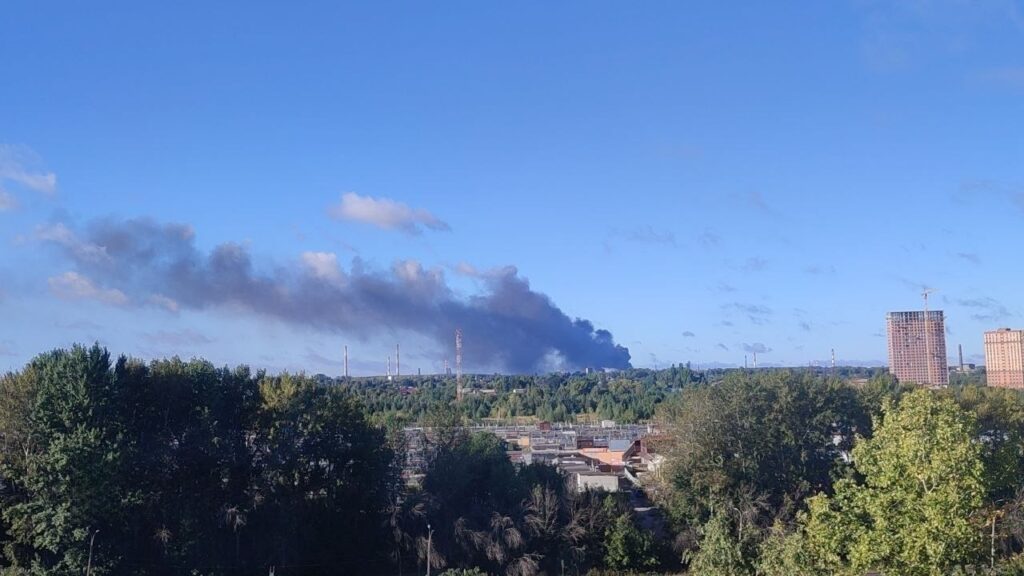
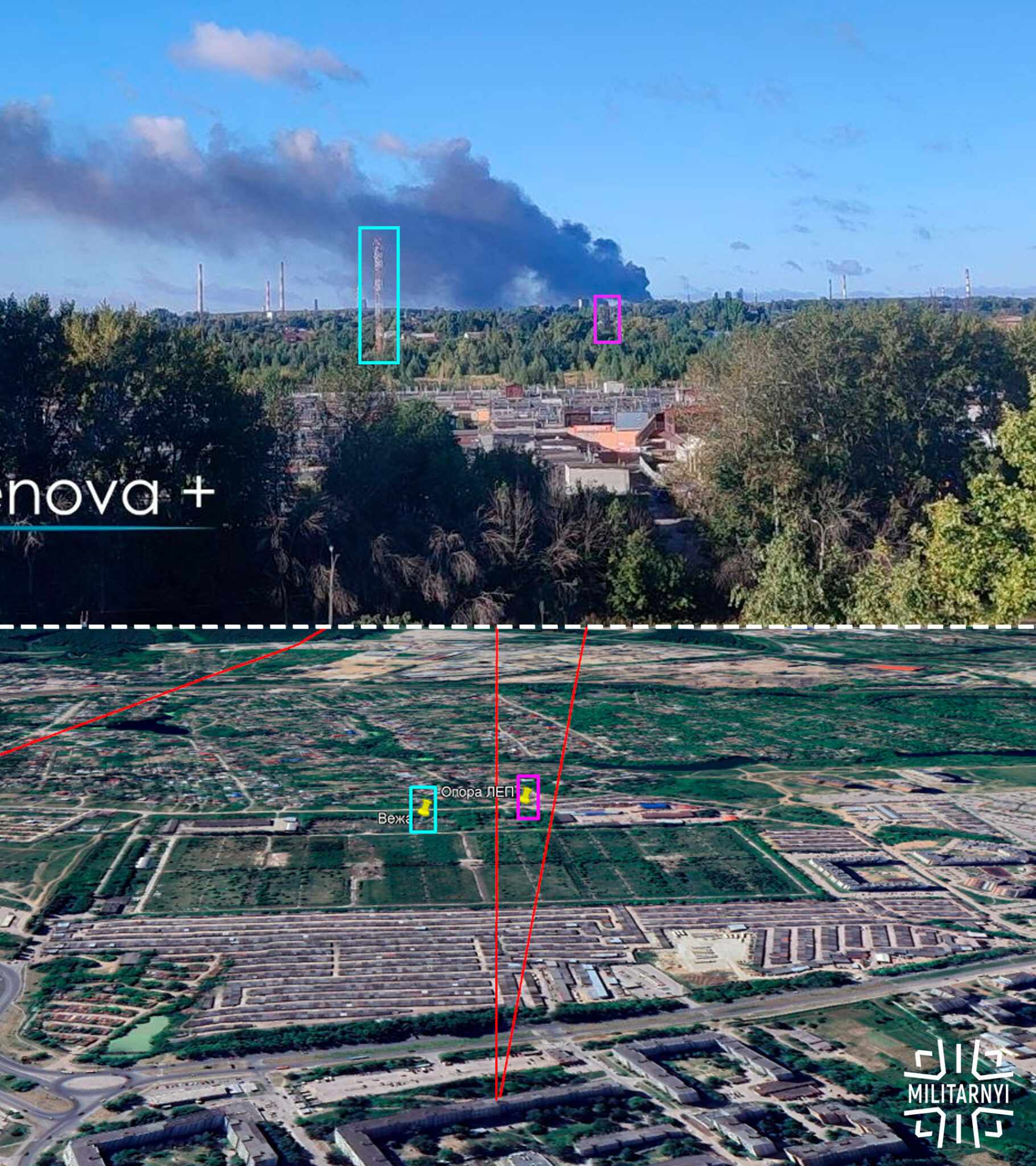
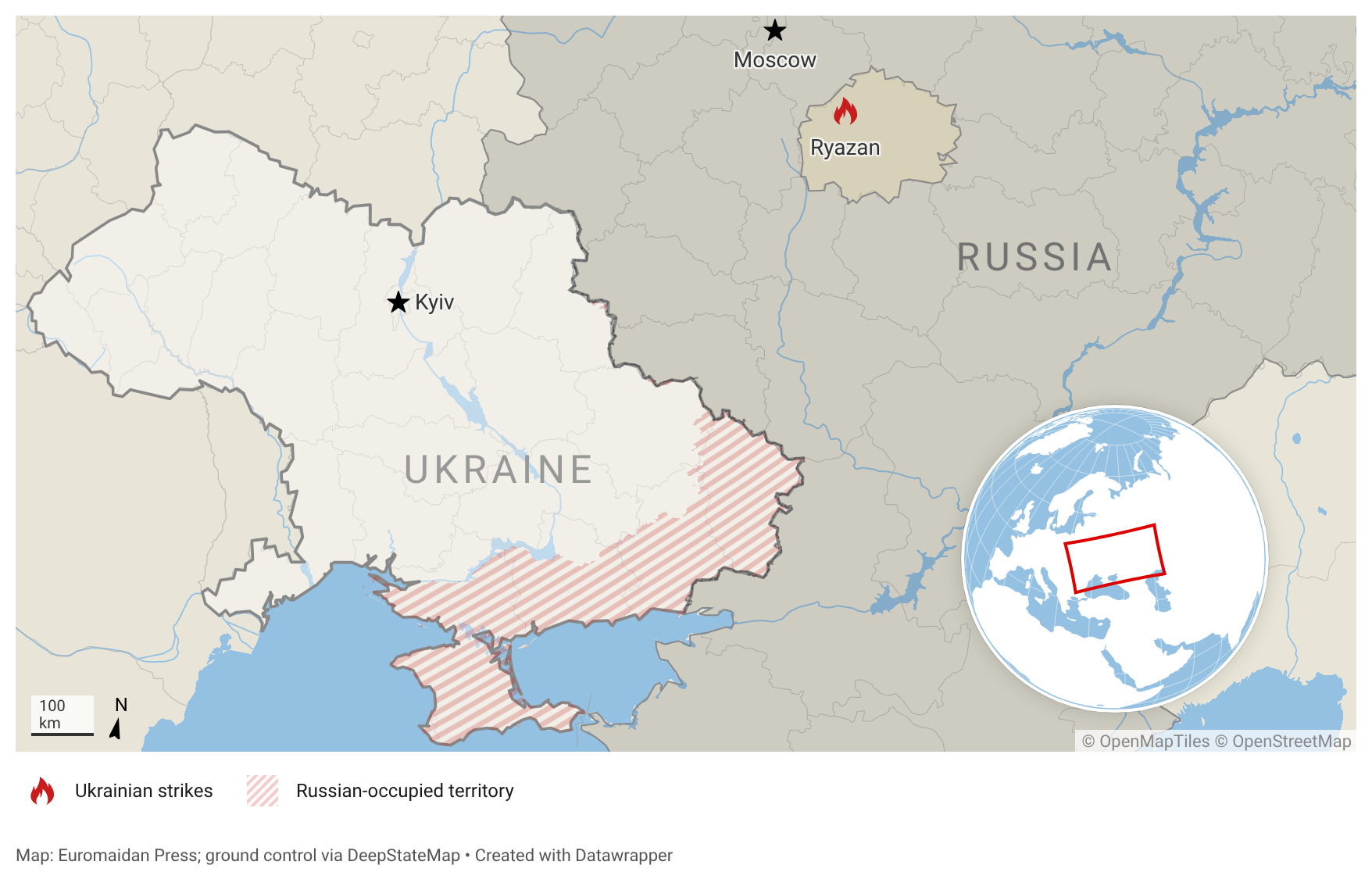
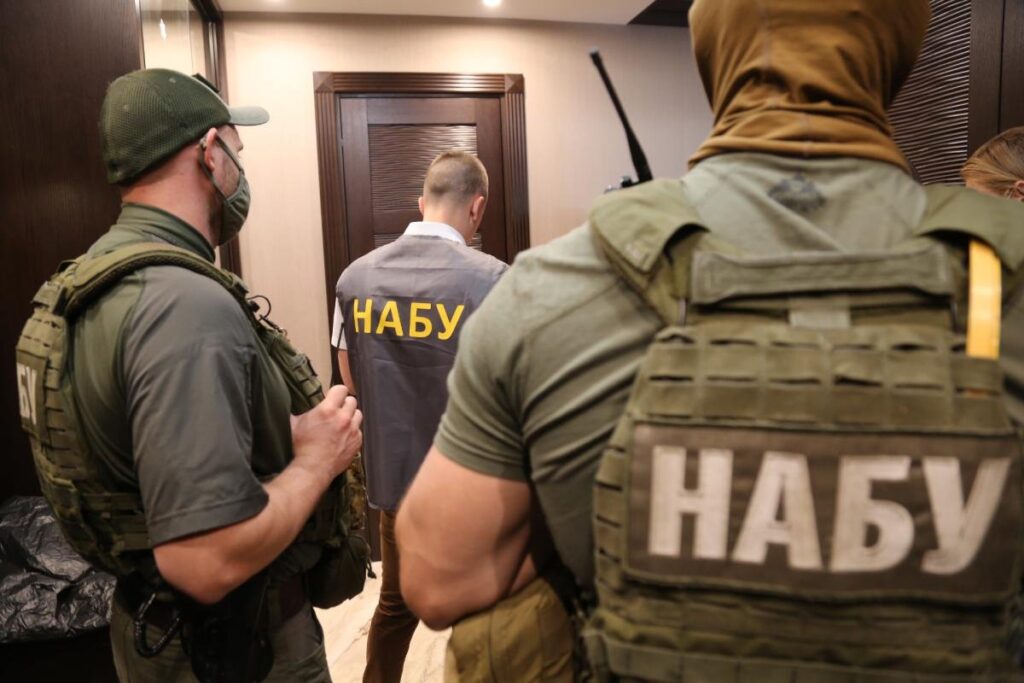
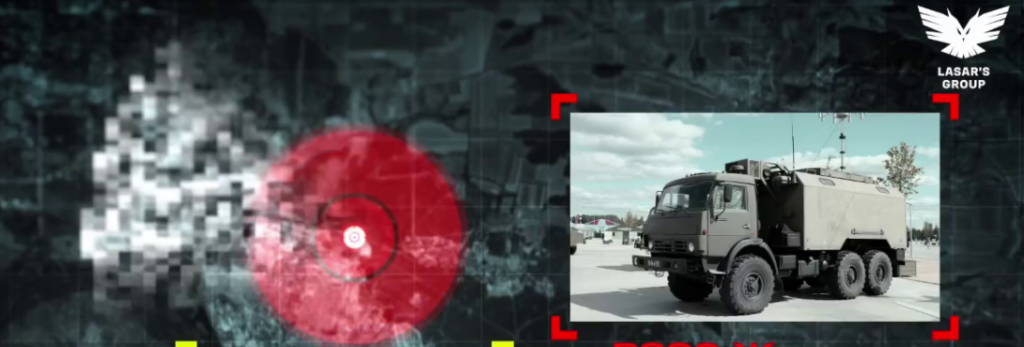
 Lasar's Group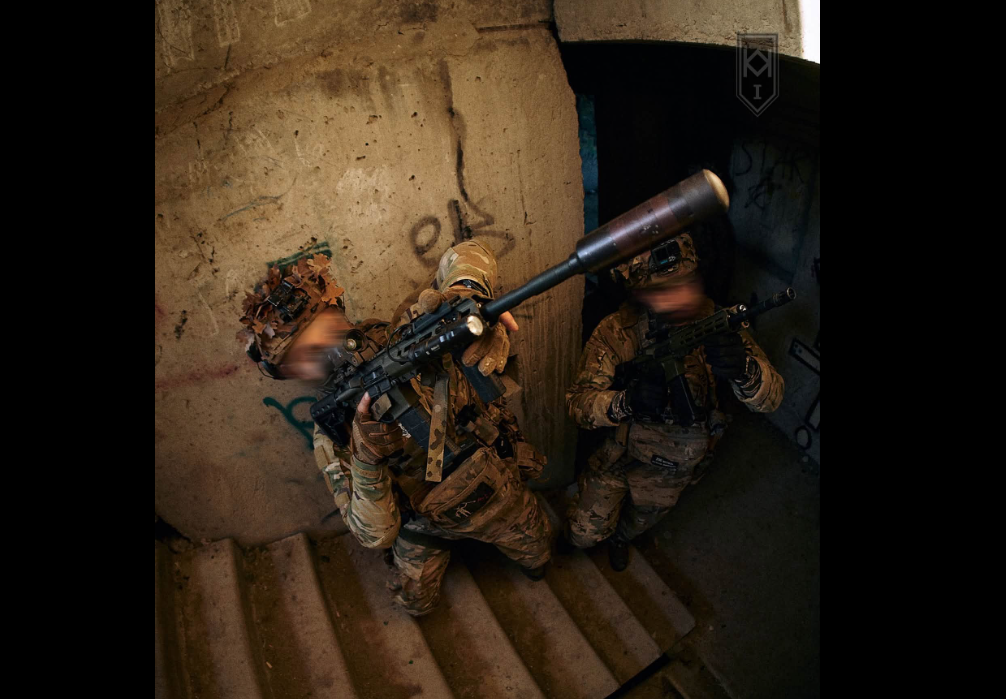
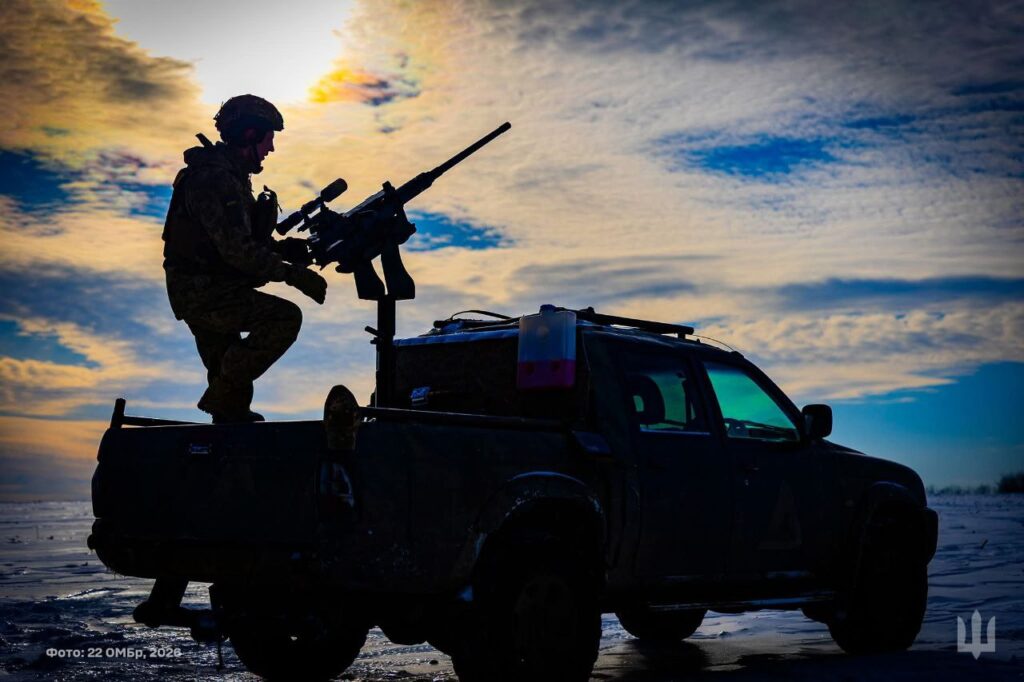



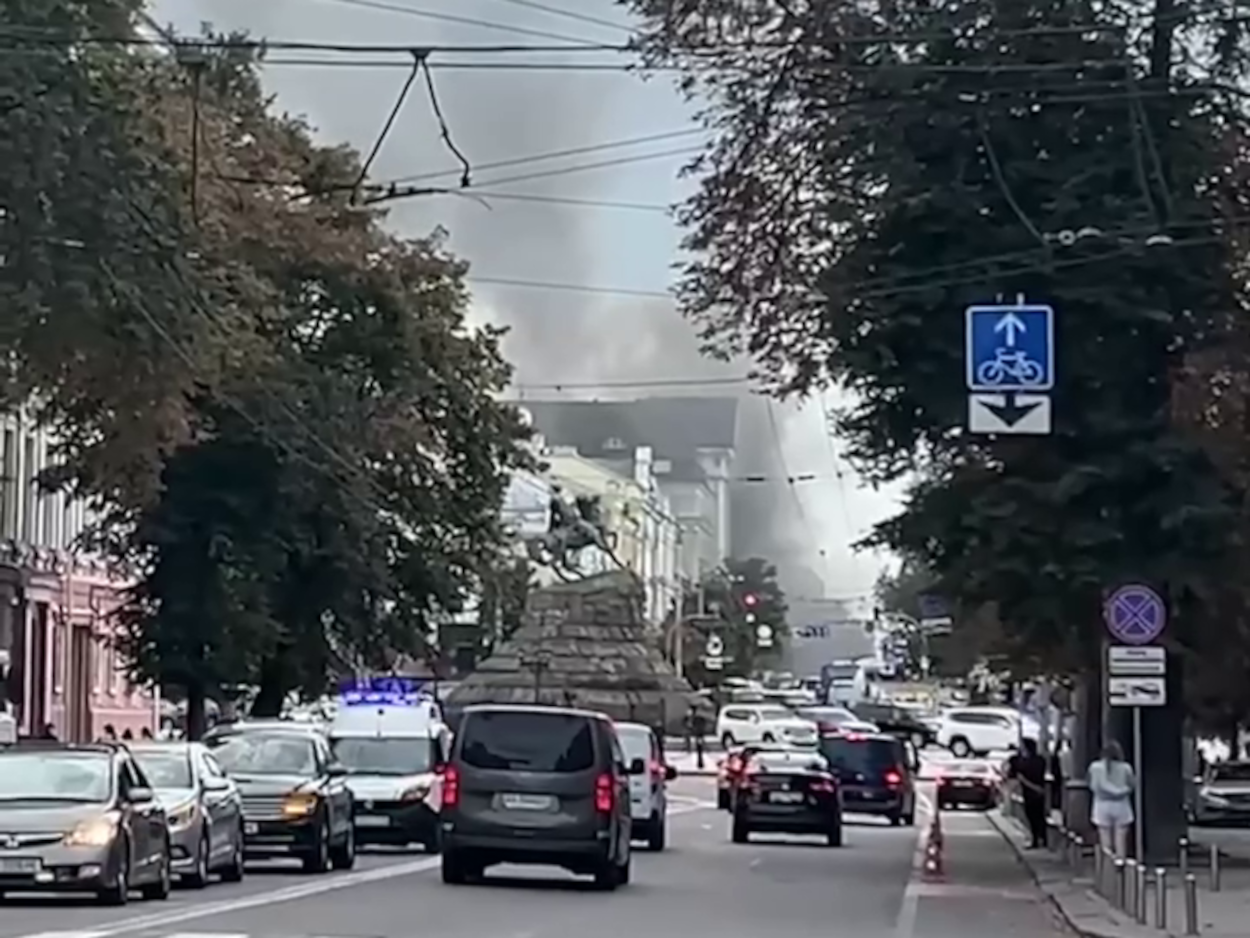

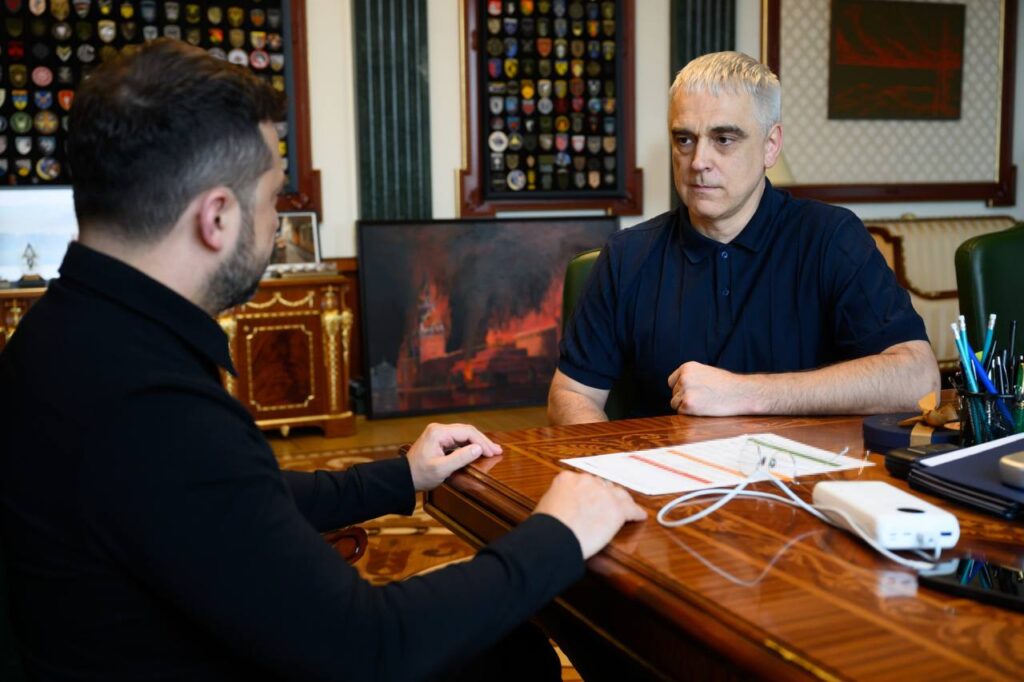
 (@andrii_sybiha)
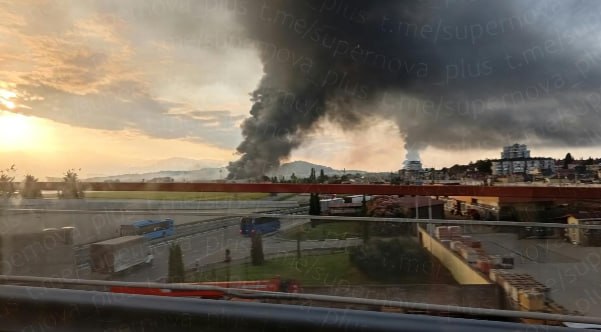
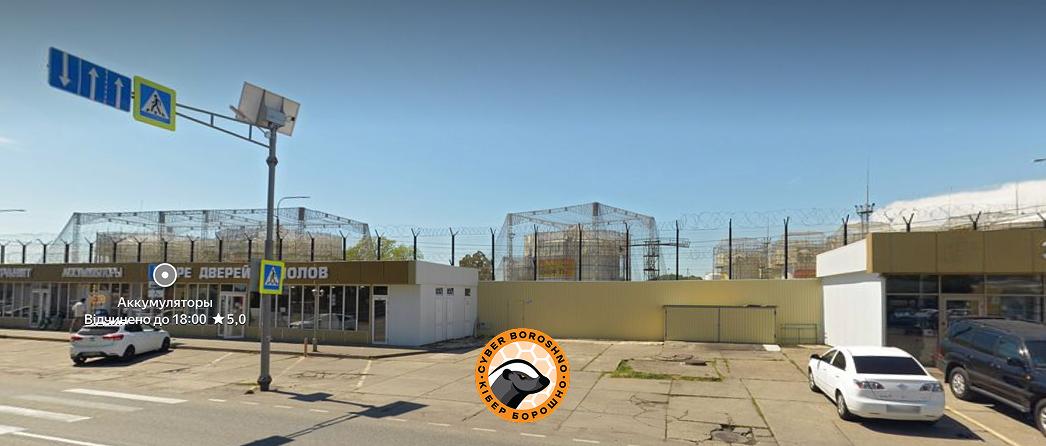


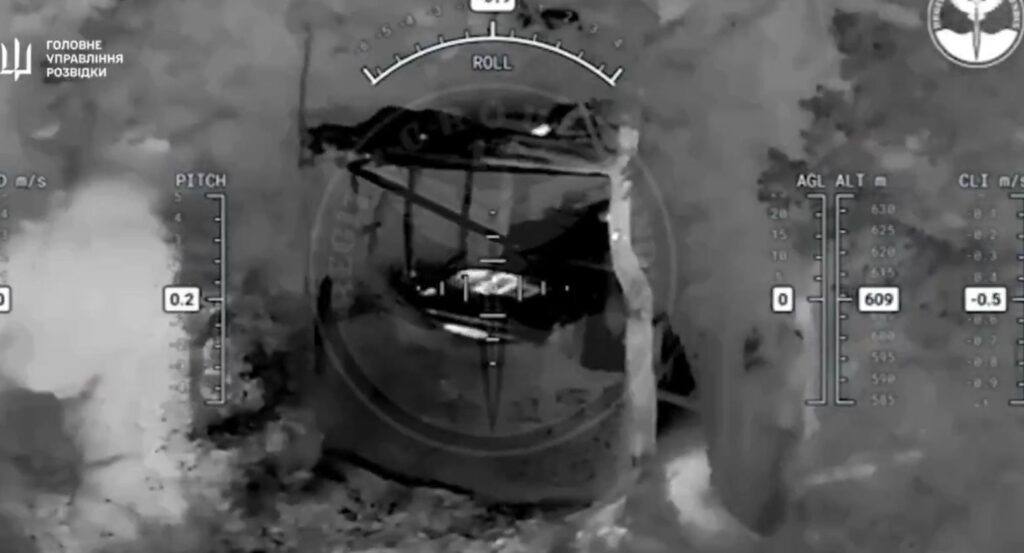
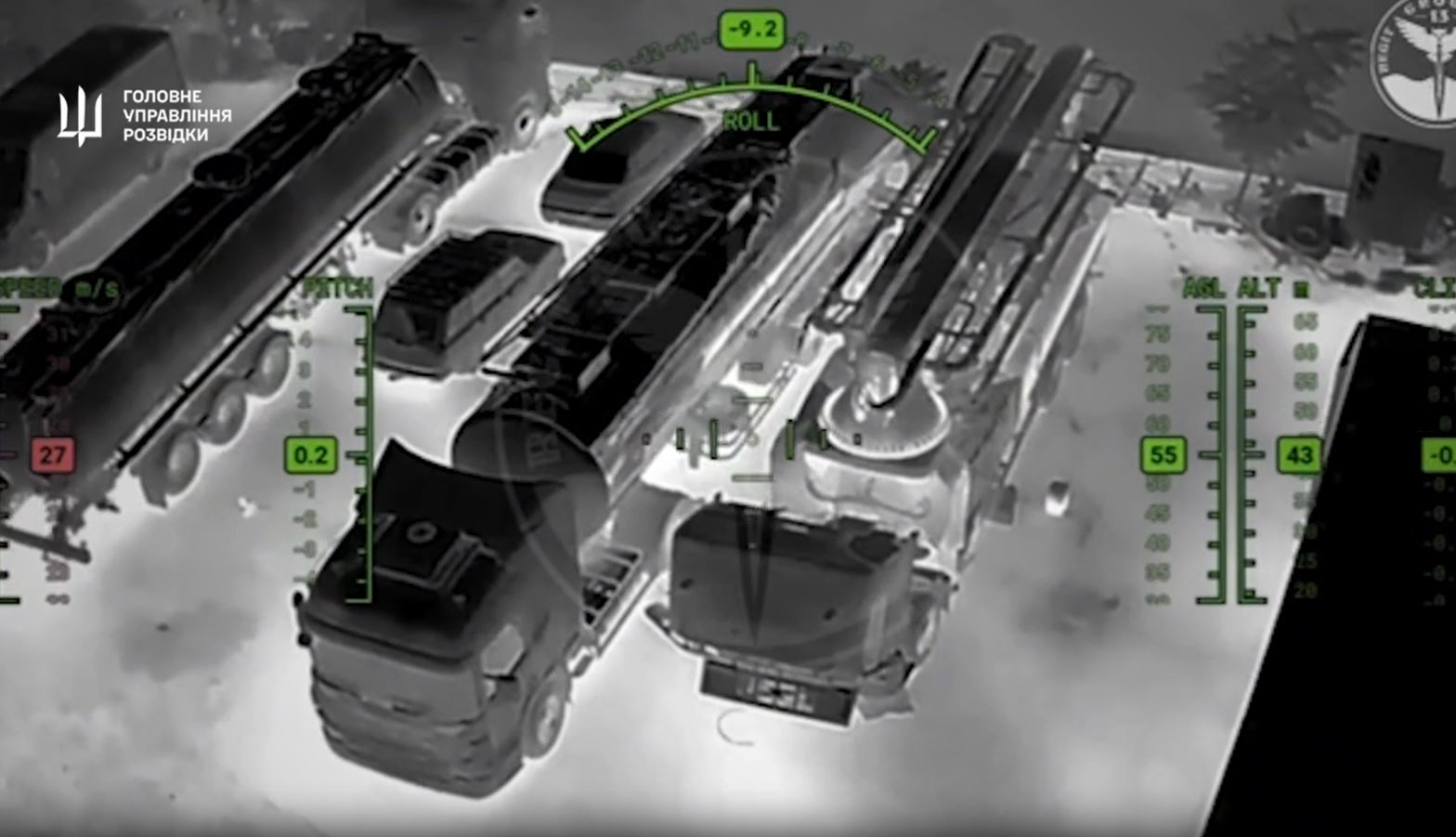
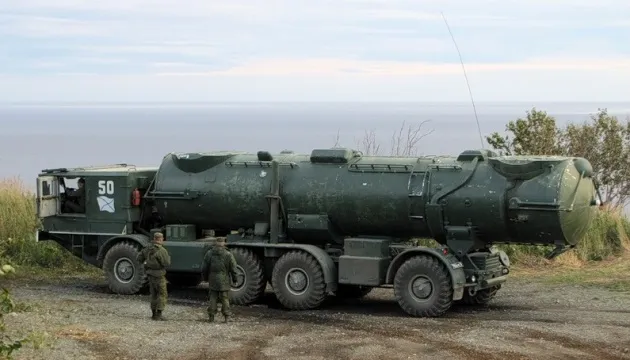

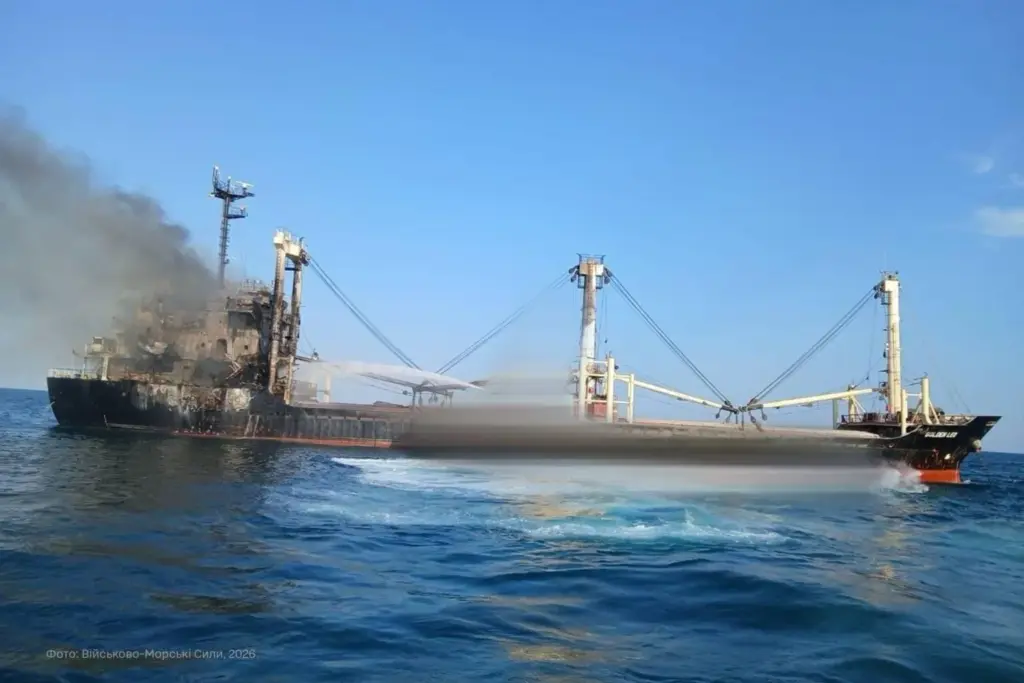
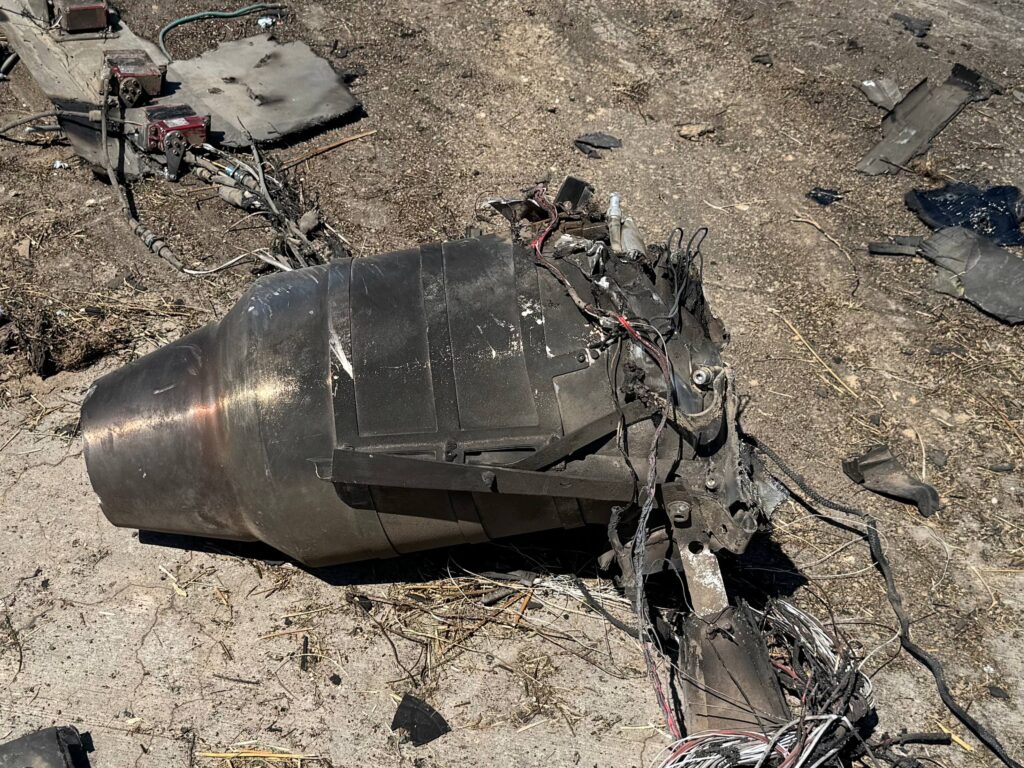

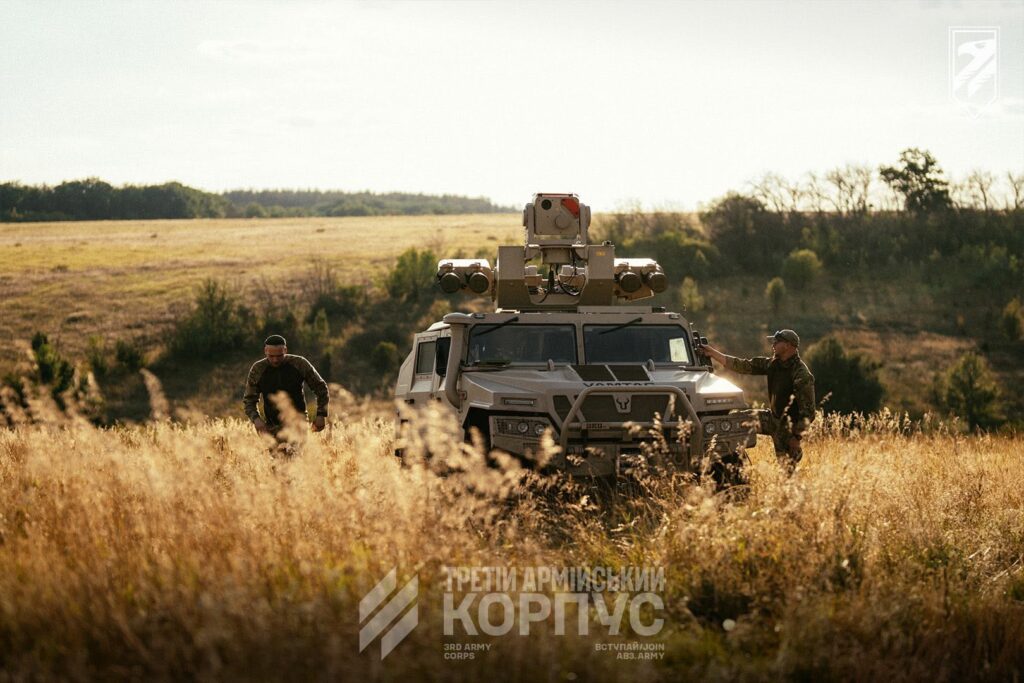
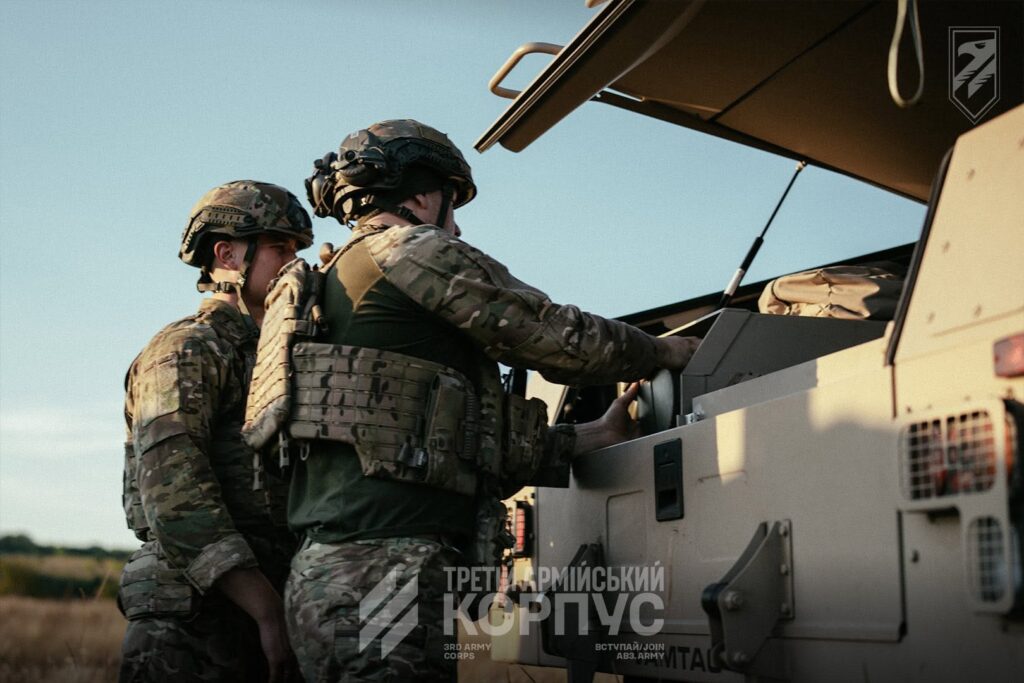
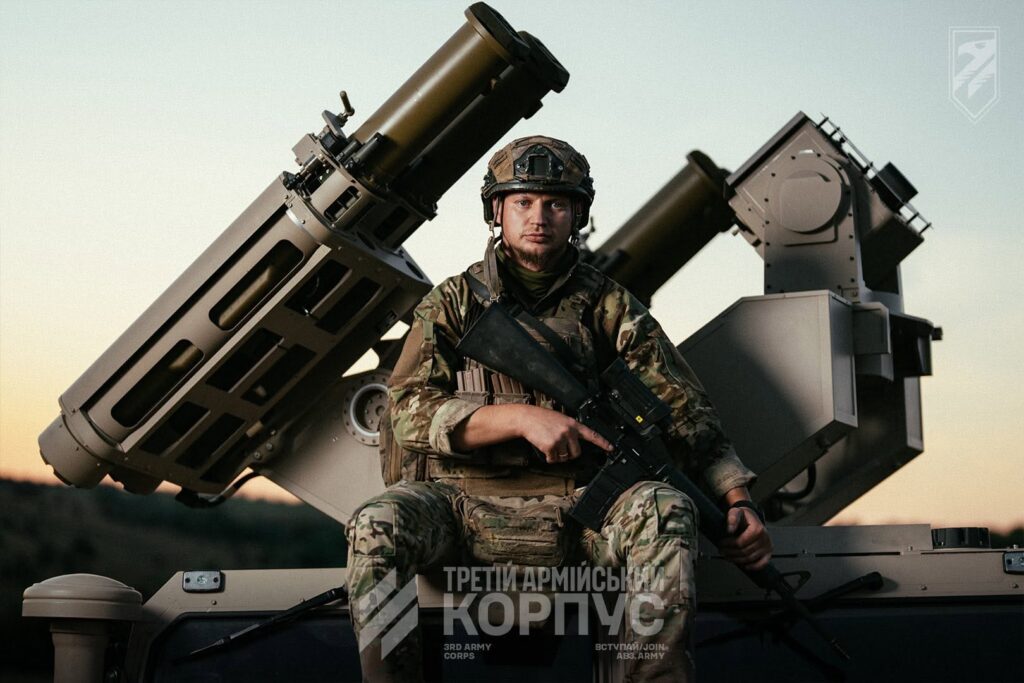
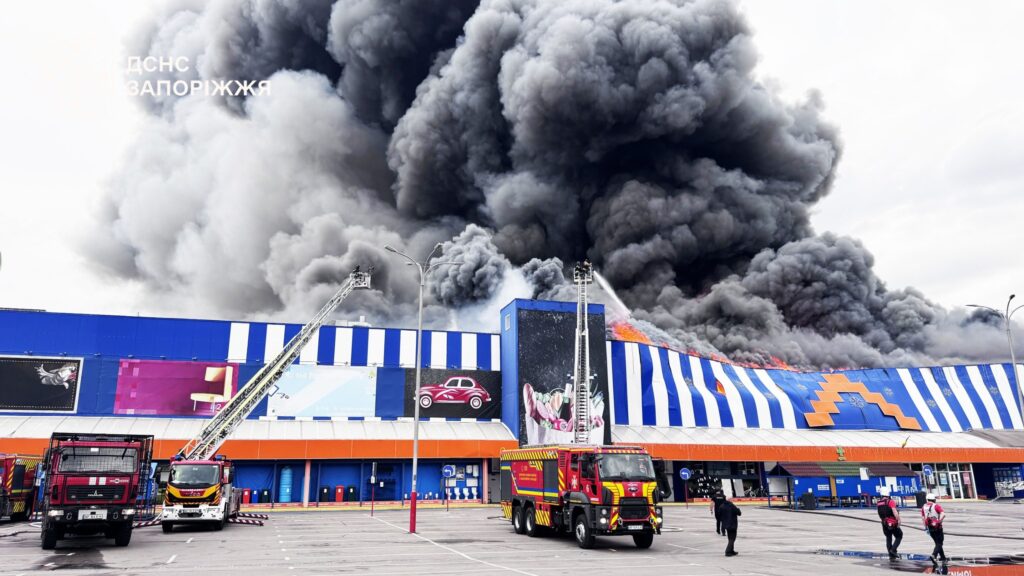
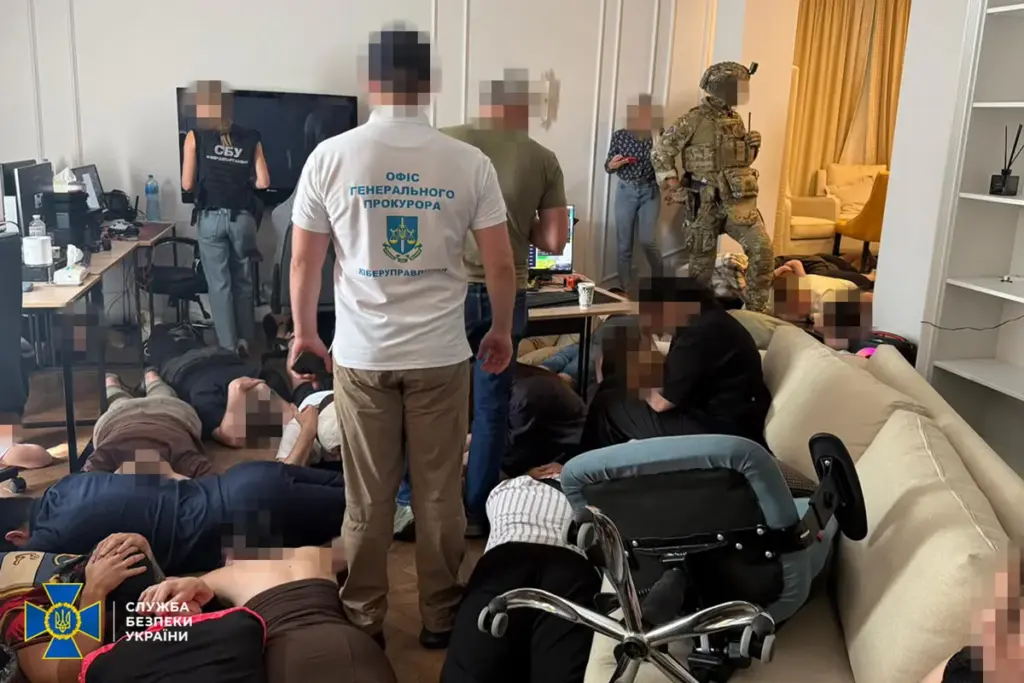
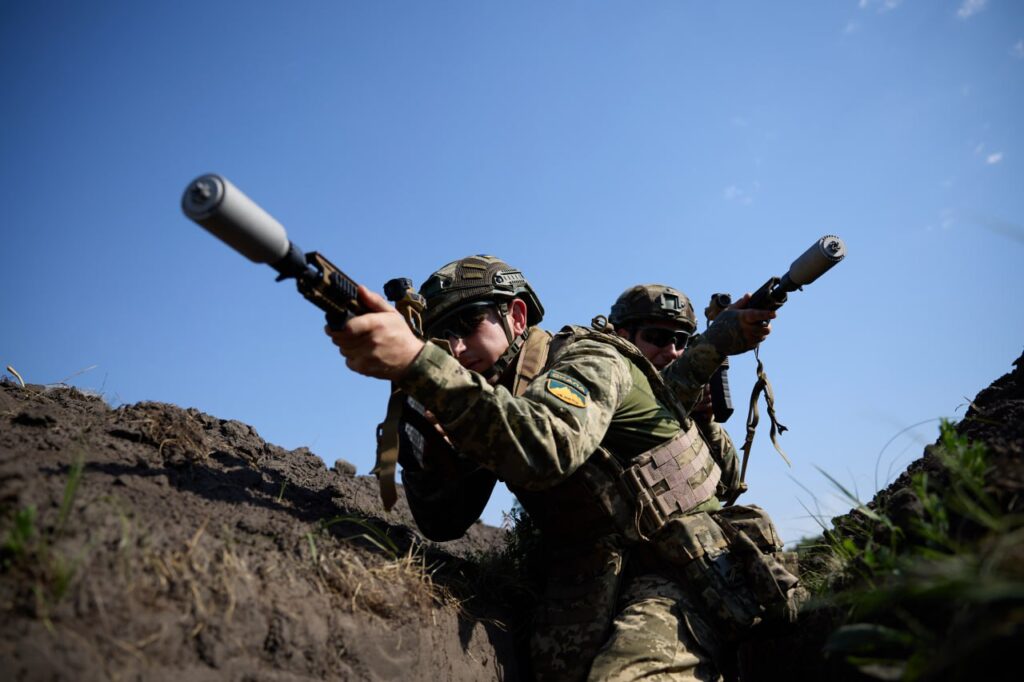


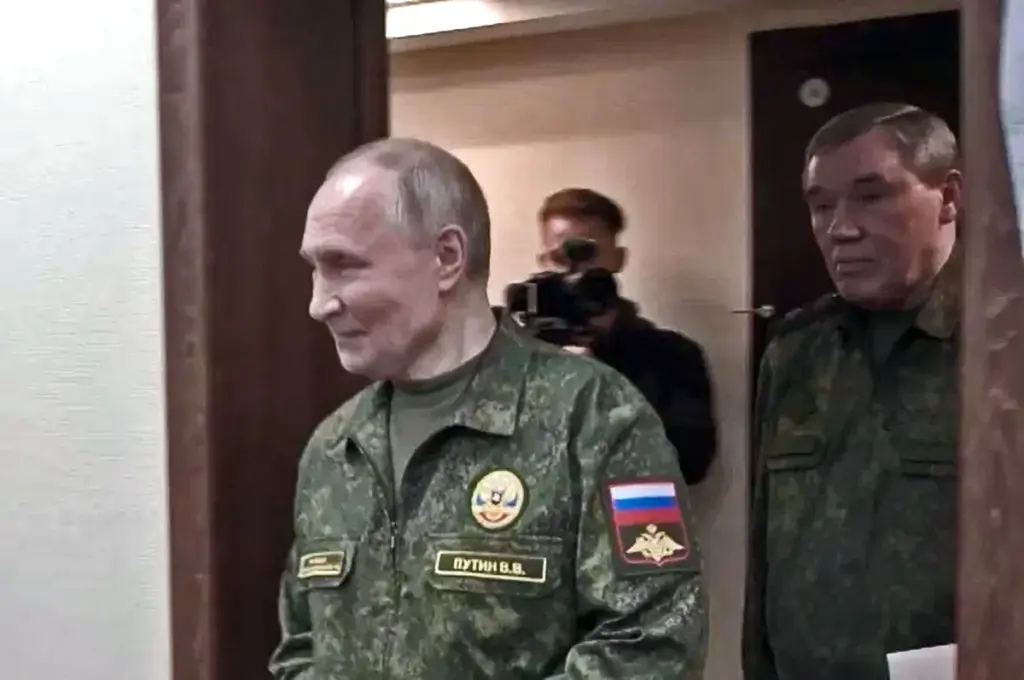





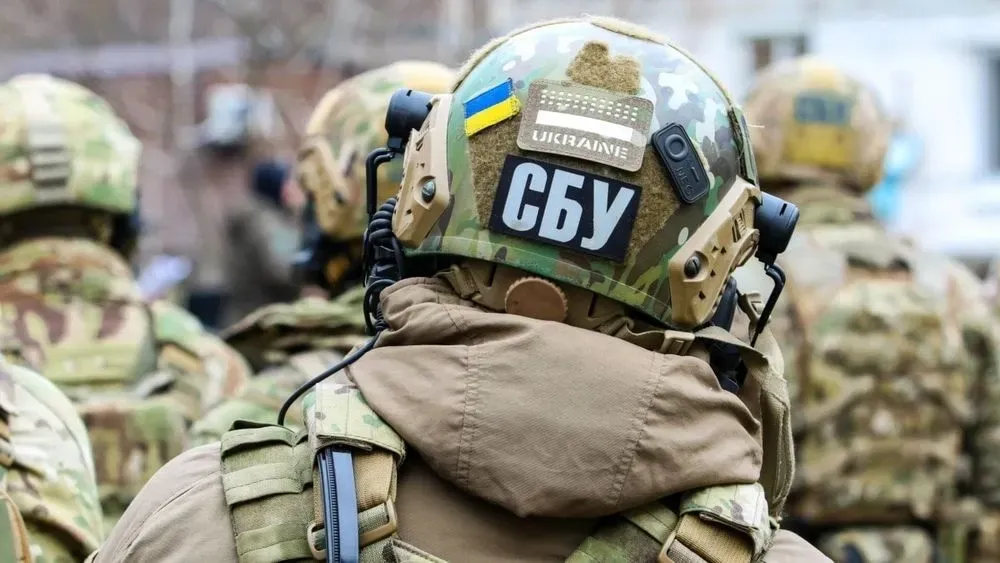

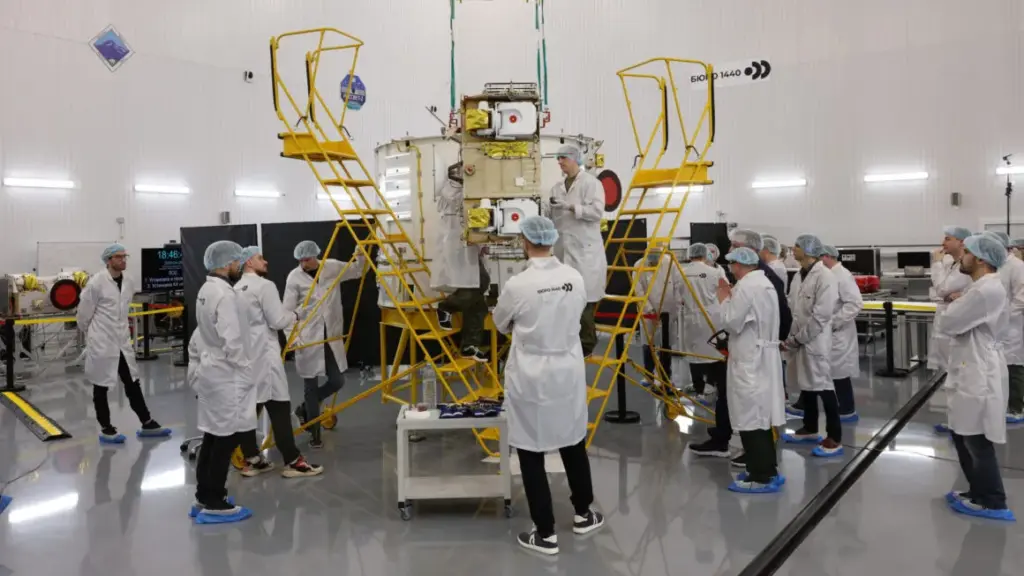



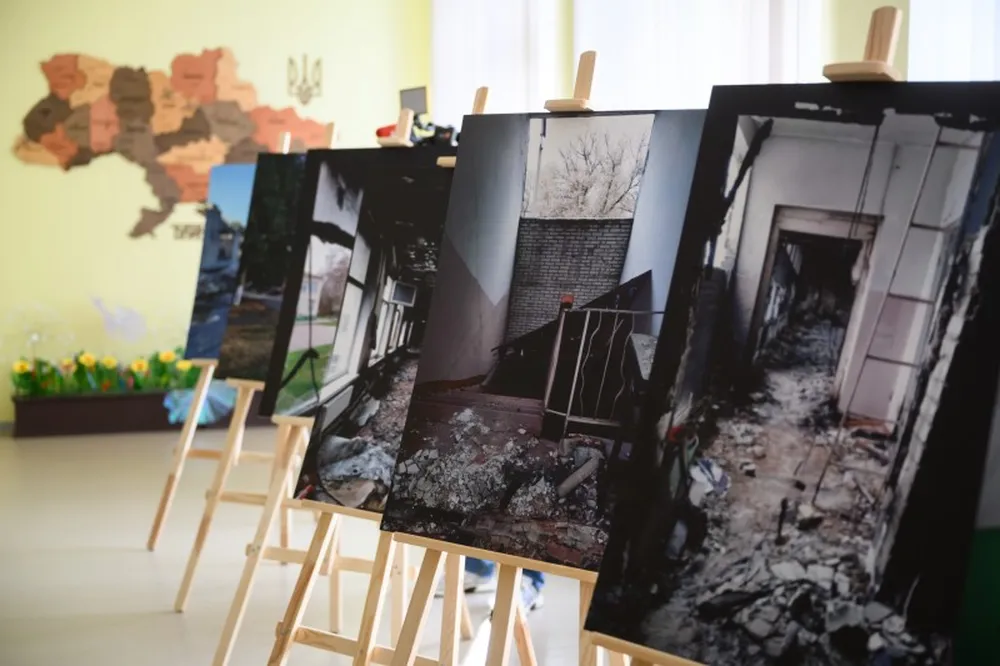
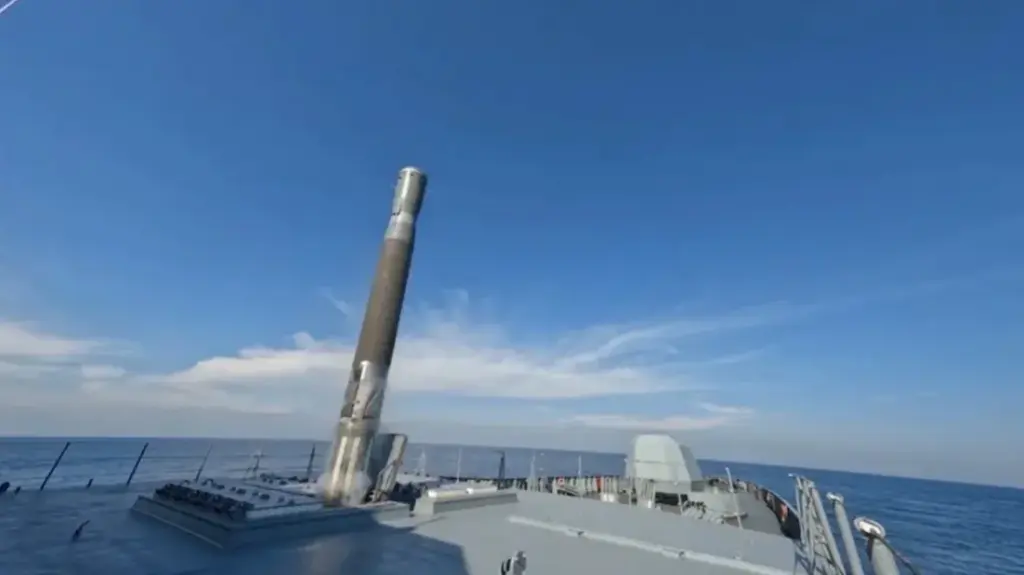


 **𝗗𝗥𝗢𝗡𝗘𝗦 𝗛𝗜𝗧 𝗨𝗦𝗧-𝗟𝗨𝗚𝗔 𝗣𝗢𝗥𝗧 𝗔𝗡𝗗 𝗧𝗢𝗟𝗬𝗔𝗧𝗧𝗜 𝗢𝗩𝗘𝗥𝗡𝗜𝗚𝗛𝗧, 𝗙𝗜𝗥𝗘𝗦 𝗕𝗥𝗘𝗔𝗞 𝗢𝗨𝗧 𝗔𝗧 𝗕𝗢𝗧𝗛
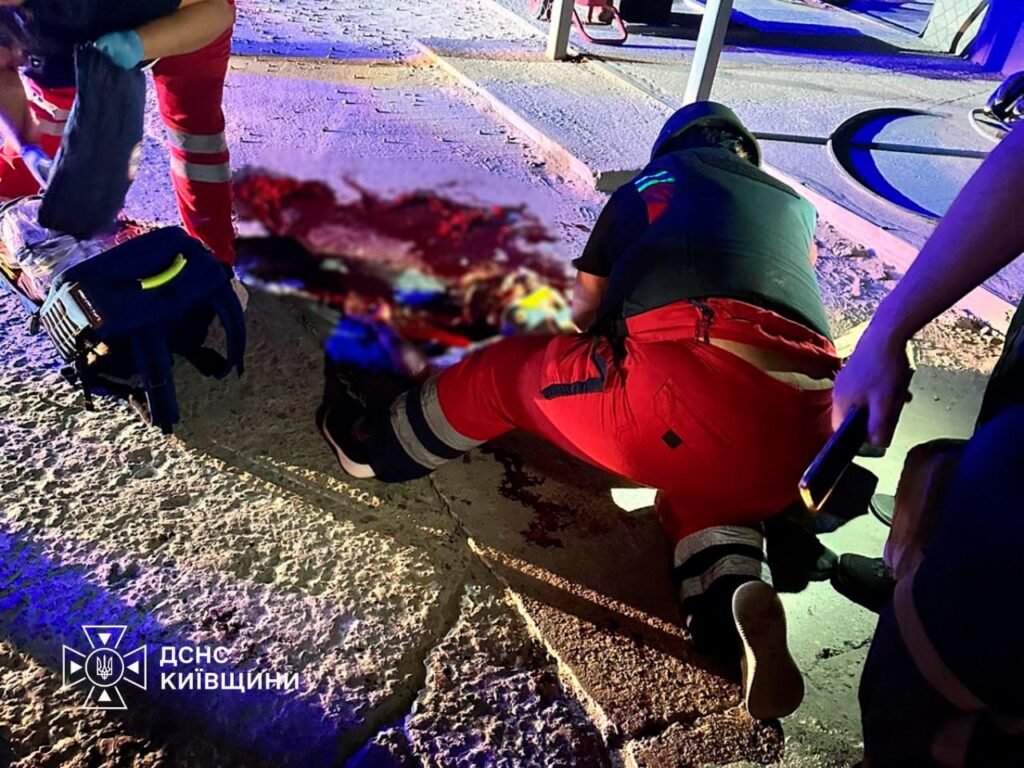

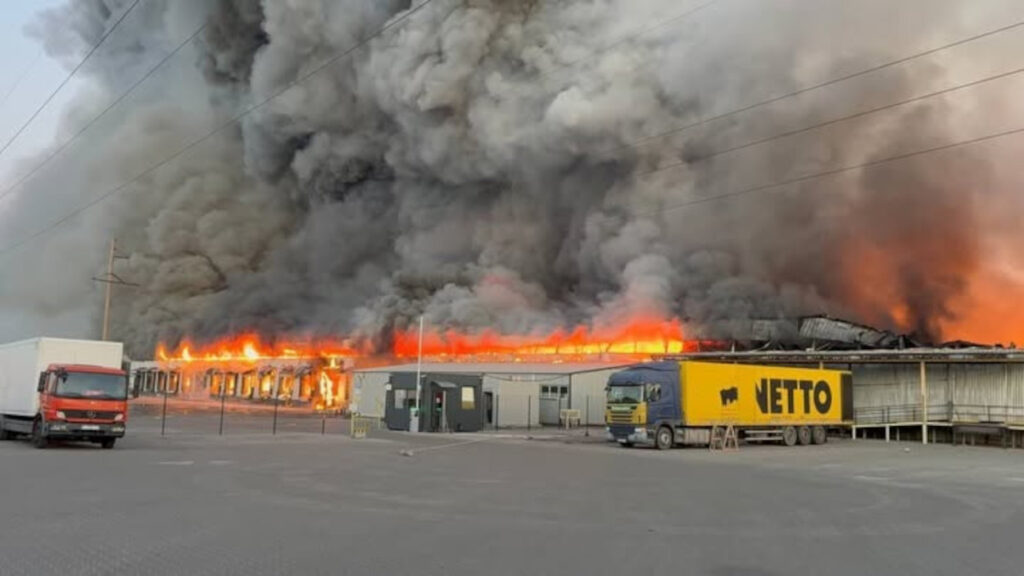
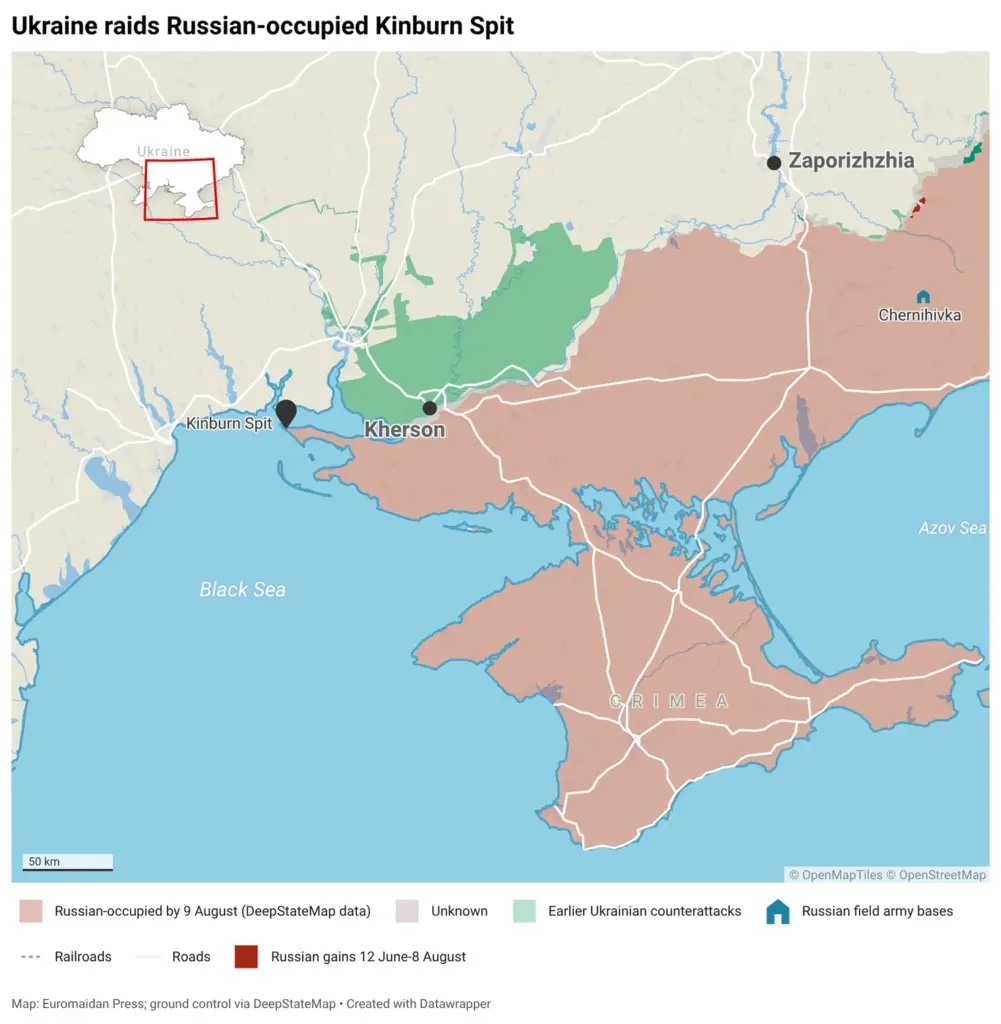

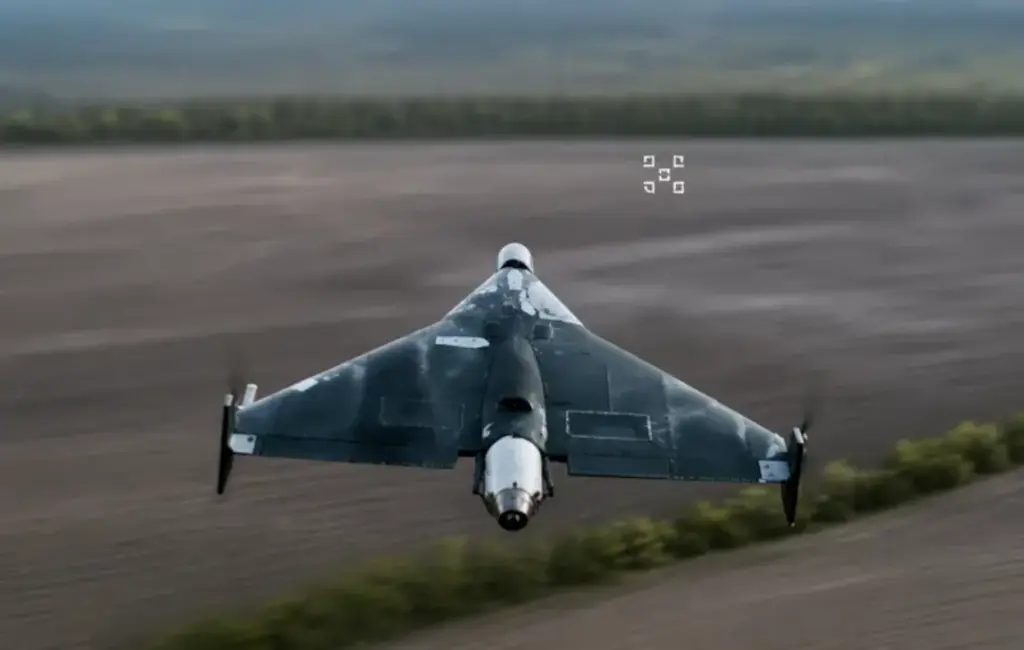
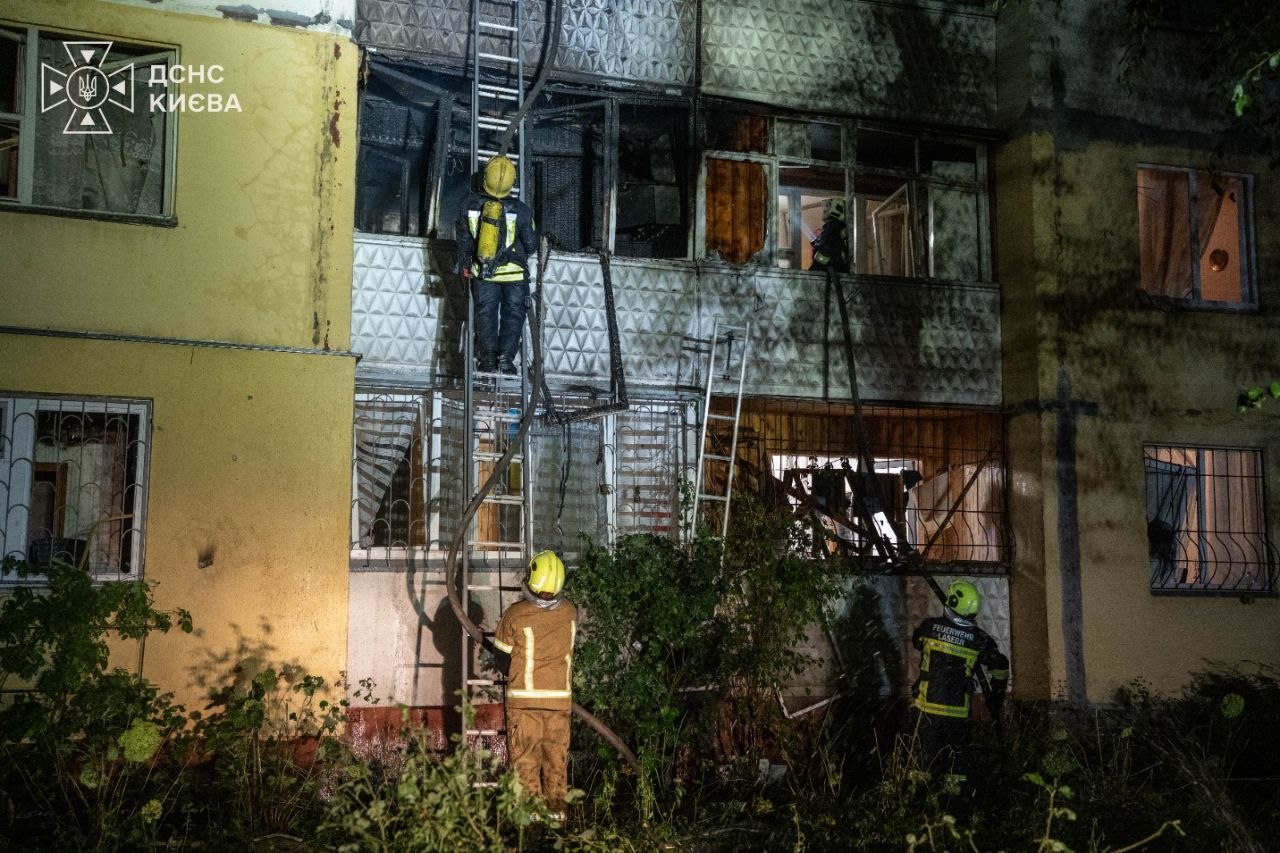
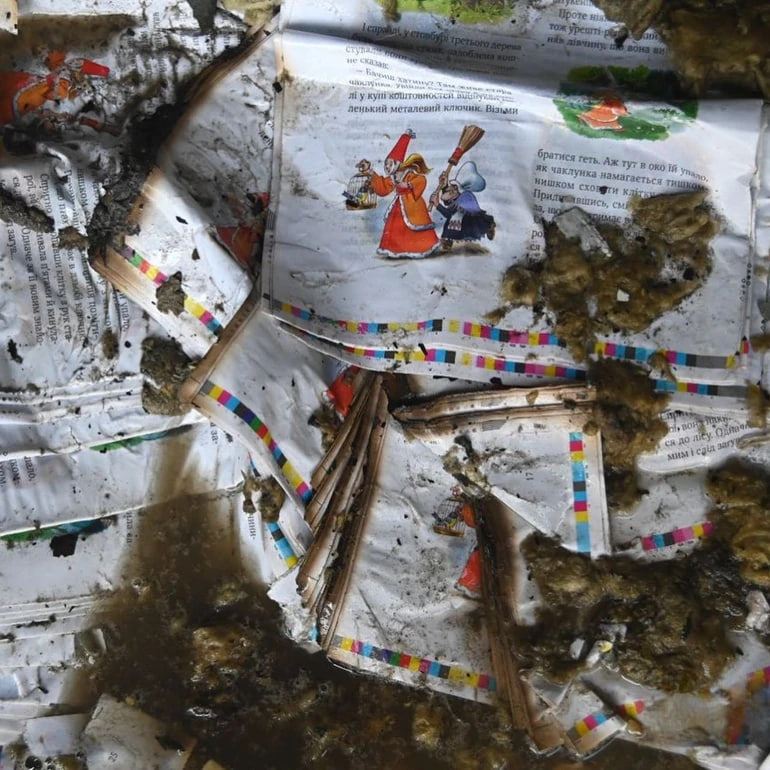
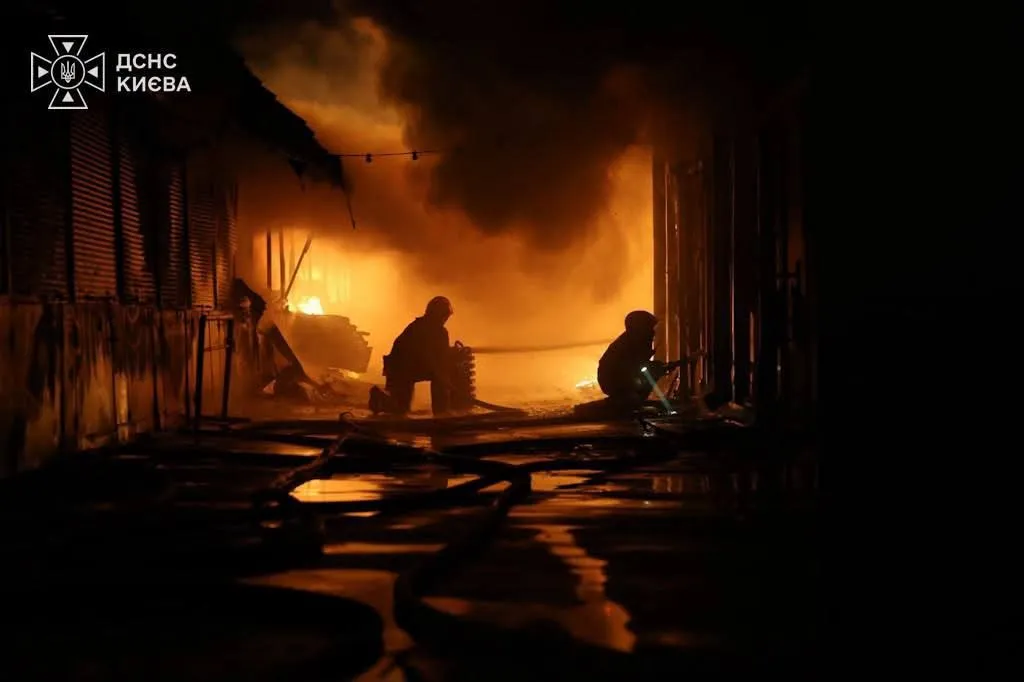
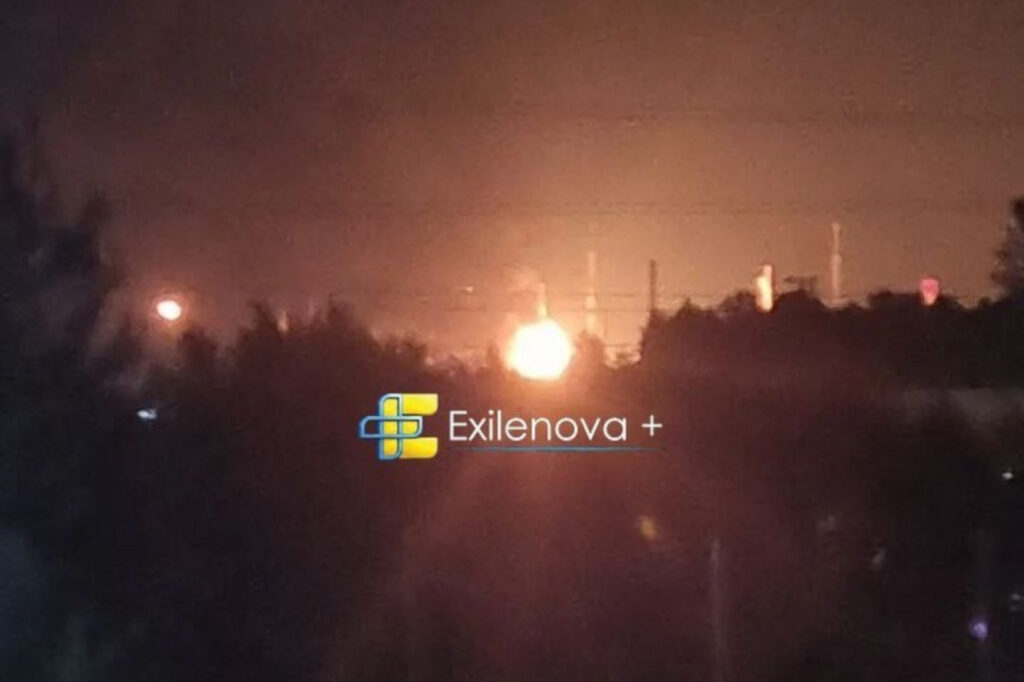
 Supernova+