Vue normale

  • ✇Euromaidan Press
  • Latvia blocks Russian and Belarusian books, clothes and toys
    On 1 September 2026, Latvia banned imports of Russian- and Belarusian-made books, clothing, toys, and other consumer goods, including shipments routed through third countries, Latvian Public Media reported. The restricted goods were worth approximately €12.5 million ($14.5 million) in 2025, or 6.5% of Latvia’s remaining imports from the two countries. Although modest economically, the measure goes beyond EU-wide sanctions and advances Riga’s effort to deny Moscow and Mi
     

Latvia blocks Russian and Belarusian books, clothes and toys

1 septembre 2026 à 08:52

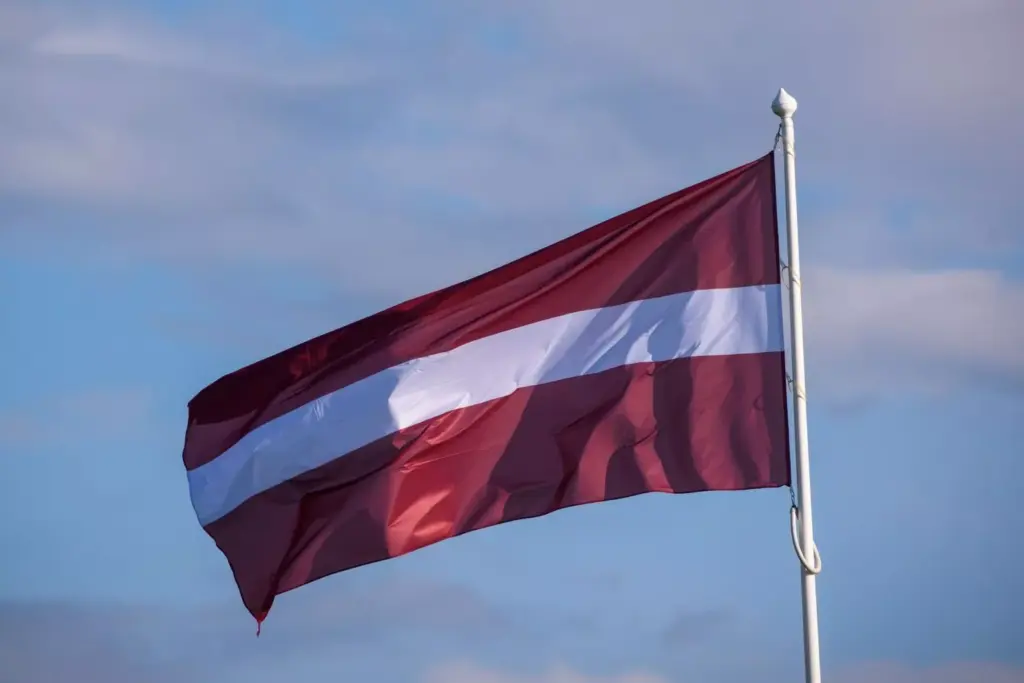
Latvian flag flying from a white flagpole against a blue, lightly clouded sky.

On 1 September 2026, Latvia banned imports of Russian- and Belarusian-made books, clothing, toys, and other consumer goods, including shipments routed through third countries, Latvian Public Media reported.

The restricted goods were worth approximately €12.5 million ($14.5 million) in 2025, or 6.5% of Latvia’s remaining imports from the two countries. Although modest economically, the measure goes beyond EU-wide sanctions and advances Riga’s effort to deny Moscow and Minsk revenue during Russia’s war against Ukraine.

The restrictions cover the following:

  • Books, newspapers, and other printed material
  • Clothing, textiles, footwear, and headwear
  • Toys, games, and sporting equipment.

Latvia’s Cabinet approved the final product list on 25 August following a Foreign Ministry proposal, completing restrictions parliament authorized on 23 July.

The ban applies regardless of whether the products arrive directly or through another country. Russian- and Belarusian-made goods may still transit Latvia on their way to other EU markets, Meduza reported.

Food and beverages are not covered. The restrictions are scheduled to remain in force until 1 July 2027 and will be reviewed annually.

The Foreign Ministry said the measure is also intended to limit the entry of Russian propaganda material. The targeted products accounted for only 0.05% of Latvia’s total imports in 2025, according to Euronews.

How Latvia has been cutting off trade with Russia and Belarus

Latvia’s combined imports from Russia and Belarus have already fallen by 91%, from €2.13 billion ($2.47 billion) in 2022 to €193 million ($224 million) in 2025, according to Latvian Public Media. Much of that decline followed the country’s departure from Russian energy supplies and the Baltic states’ disconnection from the Russian and Belarusian electricity grids.

The latest prohibition blocks consumer goods that Brussels has not collectively banned.

Latvian Prime Minister Andris Kulbergs previously pledged to eliminate the country’s remaining commercial links with Russia and Belarus, although pharmaceutical exporters were expected to remain exempt.

In August, Latvia also resumed publishing a monthly register of businesses trading with either country, naming 171 companies. Inclusion on the list does not itself indicate a sanctions violation.

  • ✇Euromaidan Press
  • India’s cooking-oil imports jump for festival season—but not war-hit sunflower
    India, the world’s biggest edible-oil importer, bought a 10-month high of about 1.5 million tons of vegetable oil in July, up roughly a third from June, as refiners restocked for the August-to-November festival season.The jump was led by palm oil, up by half, and soybean oil, up about a third, data compiled by UkrAgroConsult. Sunflower oil rose just 4%, the weakest of the three, and India buys most of it from Ukraine and Russia, the world’s leading exporters. Vegetable
     

India’s cooking-oil imports jump for festival season—but not war-hit sunflower

18 août 2026 à 03:44

modi and zelenskyy during the g7 meeting in france, 17 june 2026

India, the world’s biggest edible-oil importer, bought a 10-month high of about 1.5 million tons of vegetable oil in July, up roughly a third from June, as refiners restocked for the August-to-November festival season.

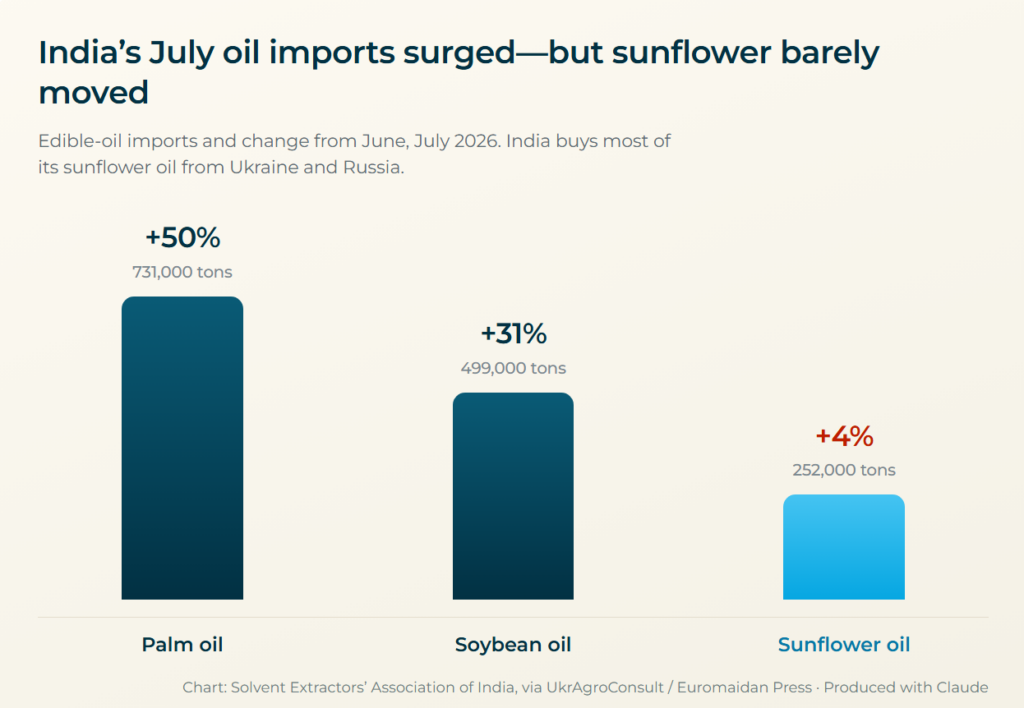
The jump was led by palm oil, up by half, and soybean oil, up about a third, data compiled by UkrAgroConsult. Sunflower oil rose just 4%, the weakest of the three, and India buys most of it from Ukraine and Russia, the world’s leading exporters.

Vegetable oil and meal earn more than 15% of Ukraine’s foreign currency.

Now the sunflower supply is the one going into reverse. India’s sunflower-oil imports are set to fall in August to their lowest since February, with about 150,000 tons of cargo delayed at Black Sea ports and buyers in the south switching to soybean, four traders told Reuters.

The switch is only partly about the war. Soybean and palm oil are cheap, and India’s own mills are pressing less oil from a smaller domestic harvest, leaving refiners leaning on imports, Rajesh Patel told OFI. The GGN Research partner expects soybean oil imports to top 500,000 tons a month into the autumn.

edible oil imports of india, july 2026
India’s edible-oil imports hit a 10-month high in July 2026 as refiners stocked up for the festival season, but the surge went to palm and soybean oil while sunflower barely moved. Chart: Solvent Extractors’ Association of India, via UkrAgroConsult / Euromaidan Press · Made with Claude

Russia’s strikes close Ukraine’s window

Ukraine is in no position to capture that demand. Russian strikes on Chornomorsk in mid-July forced Kernel, its largest exporter, to halt its terminals there, and the country’s farmers’ union reckons the summer attacks have cost a third of its capacity to ship grain by sea.

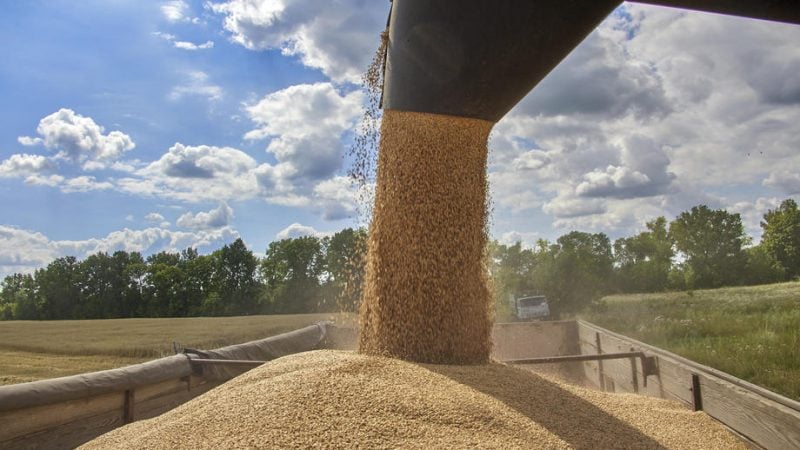
ukraine grain
Explore further

Russia’s port strikes leave Ukraine’s grain with almost nowhere else to go

Vegetable oil and meal earn more than 15% of Ukraine’s foreign currency, among its largest sources of the hard cash that funds the war, the industry association Ukroliyaprom has said.

The squeeze runs through geography Ukraine cannot change: almost all its farm exports leave by sea, through a handful of Odesa ports now under regular fire, with no land route at anything near the scale.

Kyiv now expects to export barely half the harvest it had planned to sell abroad this season, and is arranging emergency loans so farmers can plant the next crop. Since the start of August, grain leaving by rail has dropped by more than three-quarters year-on-year, according to Ukrzaliznytsia data.

  • ✇Euromaidan Press
  • Ukraine’s drones force oil-giant Russia to import gasoline—now from Morocco
    Ukrainian drone strikes have forced Russia to import gasoline—shipping cargoes from as far as Morocco to an Arctic port—and to pay for the damage twice over. Moscow now subsidizes both the refineries the drones keep setting on fire and the foreign fuel replacing what those refineries can no longer produce. Ukraine’s drones have forced Moscow to subsidize both the refineries they keep setting on fire and the foreign gasoline. Russia caps fuel prices at home below what
     

Ukraine’s drones force oil-giant Russia to import gasoline—now from Morocco

6 août 2026 à 06:33

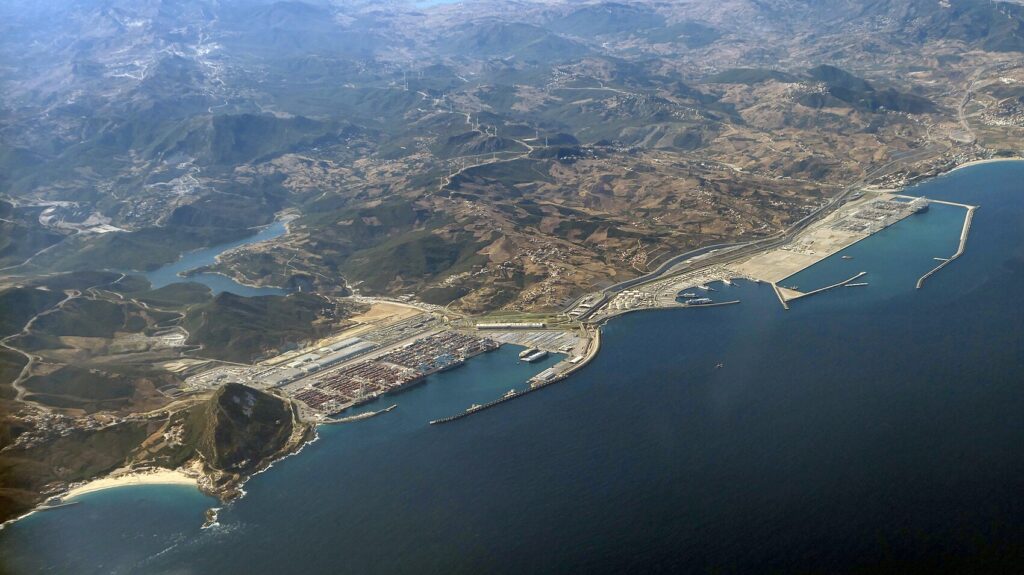
tanger med, the cargo port of tangier in morocco

Ukrainian drone strikes have forced Russia to import gasoline—shipping cargoes from as far as Morocco to an Arctic port—and to pay for the damage twice over. Moscow now subsidizes both the refineries the drones keep setting on fire and the foreign fuel replacing what those refineries can no longer produce.

Ukraine’s drones have forced Moscow to subsidize both the refineries they keep setting on fire and the foreign gasoline.

Russia caps fuel prices at home below what refiners could earn abroad, and the budget pays them the difference—so they keep supplying the domestic market rather than exporting everything. The payments, together with related reimbursements, reached 1.221 trillion rubles ($15 billion) from April through July, Finance Ministry data show—close to the full annual budget of Moscow Oblast, the region ringing the capital.

Those monthly payments have roughly halved since spring, to about 190 billion rubles ($2.4 billion) in July, as lower oil prices narrowed the gap the subsidy fills.

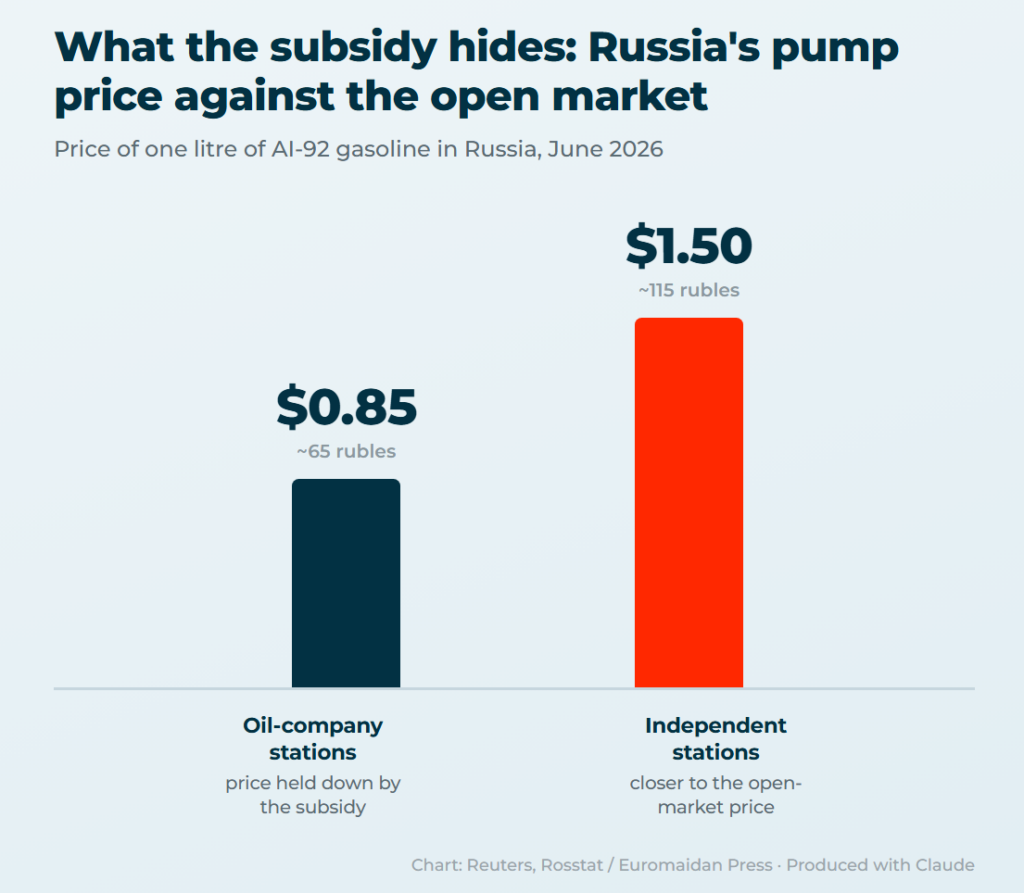
gas price comparison in russia summer 2026
In June 2026, oil-company stations sold a liter of AI-92 gasoline for about 65 rubles ($0.85); independent stations charged upward of 115 rubles ($1.50). The gap is what the subsidy hides. Chart: Reuters, Rosstat / Euromaidan Press

Russia cannot keep its refineries running

Russian crude processing fell to 3.6 million barrels a day in July, its lowest since 2002 and roughly a third below the seasonal norm. Ukraine has hit at least 24 of Russia’s 34 largest refineries in some 50 strikes.

Fuel shortages and rationing now affect 50 million people—about a third of Russia’s population—according to a Financial Times analysis. Russia runs the world’s third-largest oil-refining industry, so the lost output has tightened diesel and gasoline supply beyond its borders. With less capacity to refine at home, Russia has had to export more raw crude and less high-value fuel.

With its refineries down, Moscow is now paying a second subsidy—this time to the importers bringing gasoline in. Gasoline is arriving by rail from Belarus and Kazakhstan and by sea from India and, in mid-July, Morocco: a cargo loaded at the port of Tangier and discharged at Murmansk, on the Arctic coast.

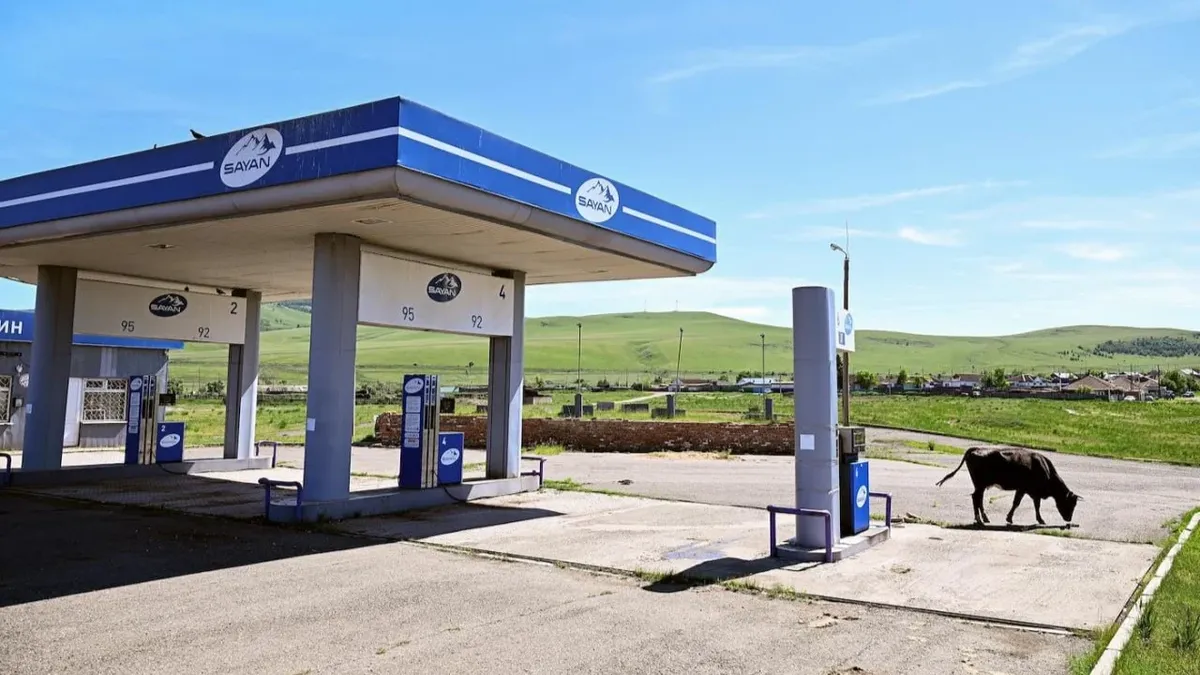
a cow grazes by an idle sayanneft gas station in russia amid nationwide fuel crisis
Explore further

Why Russia is importing gasoline made from its own oil

Ukraine has already named the import route as a target. In early July, presidential sanctions commissioner Vladyslav Vlasiuk called Russia’s new reliance on imported fuel a fresh vulnerability and said Kyiv had raised a response with the European Commission—though the EU’s next sanctions package, now in preparation, is so far built mainly around other measures.

A country that ships crude out of the Arctic is now shipping gasoline in through it.

❌