More than 200 U.S. intelligence and military analysts are in Saudi Arabia helping it provide assistance to its Yemeni allies, current and former U.S. officials say.
More than 200 U.S. intelligence and military analysts are in Saudi Arabia helping it provide assistance to its Yemeni allies, current and former U.S. officials say.
Our reporter Ivan Nechepurenko looks at gas stations in Moscow to see how severe the shortages have become as Ukrainian attacks target Russian refineries.
Our reporter Ivan Nechepurenko looks at gas stations in Moscow to see how severe the shortages have become as Ukrainian attacks target Russian refineries.
Democrats are competitive in Alaska, Iowa, Ohio, Texas and even Kansas as they try to wrest control of the Senate from Republicans. Here’s a look at why.
Democrats are competitive in Alaska, Iowa, Ohio, Texas and even Kansas as they try to wrest control of the Senate from Republicans. Here’s a look at why.
President Vladimir V. Putin brought up a sale of Russian energy assets with President Trump’s envoys, Jared Kushner and Steve Witkoff, pushing a deal that raises new questions about conflicts of interest.
President Vladimir V. Putin brought up a sale of Russian energy assets with President Trump’s envoys, Jared Kushner and Steve Witkoff, pushing a deal that raises new questions about conflicts of interest.
The negotiations about the Lukoil deal show that personal business interests in President Trump’s inner circle are also in play. Lukoil is Russia’s biggest private oil company.
Economies in Latin America and Europe rely on American diesel. Stopping exports could tip some countries into recession, hurting trade with the United States.
Economies in Latin America and Europe rely on American diesel. Stopping exports could tip some countries into recession, hurting trade with the United States.
Sales of the Chevrolet Silverado were up, but the growth came from a light-duty version of the truck. Sales of heavy-duty Silverados slumped as Americans shift away from full-size pickups and S.U.V.s.
The Coast Guard has intercepted two small boats it says were carrying illegal fuel to Cuba as the United States enforces a fuel blockade aimed at Cuba’s Communist government.
The Coast Guard has intercepted two small boats it says were carrying illegal fuel to Cuba as the United States enforces a fuel blockade aimed at Cuba’s Communist government.
Truckers are among the hardest hit by the soaring cost of diesel fuel. High prices are forcing some to stay on the road for months and others to park their rigs.
Truckers are among the hardest hit by the soaring cost of diesel fuel. High prices are forcing some to stay on the road for months and others to park their rigs.
Iran has been launching drones and missiles at commercial ships in the waterway each week, though it has often failed to strike its targets, according to a Western security official.
Iran has been launching drones and missiles at commercial ships in the waterway each week, though it has often failed to strike its targets, according to a Western security official.
The new pipeline from Alberta’s oil sands to the Pacific Coast may lower separatist tensions in that province while also loosening energy ties with the U.S.
The new pipeline from Alberta’s oil sands to the Pacific Coast may lower separatist tensions in that province while also loosening energy ties with the U.S.
Prime Minister Mark Carney of Canada speaking about an oil pipeline planned to connect distribution points in Alberta to ports in British Columbia on Thursday in Fort McMurray, Alberta.
A reduction in refineries has already driven the price of diesel to record highs, threatening economies. An U.S. export ban would be “tremendous shock and blow.”
A reduction in refineries has already driven the price of diesel to record highs, threatening economies. An U.S. export ban would be “tremendous shock and blow.”
Workers unloading produce in Manila, where soaring global diesel prices are driving up transport costs and pushing everyday food prices out of reach for consumers.
As record prices weigh on the G.O.P.’s midterm outlook, several Republicans have coalesced around an idea to block diesel from leaving the United States. Others are skeptical that doing so would lower costs.
As record prices weigh on the G.O.P.’s midterm outlook, several Republicans have coalesced around an idea to block diesel from leaving the United States. Others are skeptical that doing so would lower costs.
The average price of diesel has risen by nearly 75 percent since the war with Iran began at the end of February, a spike that has complicated Republicans’ midterm aspirations.
Abbas Araghchi, Iran’s foreign minister, said a history of contradictory messaging meant that President Trump’s rejection might not be a final position.
Abbas Araghchi, Iran’s foreign minister, said a history of contradictory messaging meant that President Trump’s rejection might not be a final position.
She will be the first head of state from her country in eight years to make a speech to the body in person, and she is likely to sound radically different from her recent predecessors.
She will be the first head of state from her country in eight years to make a speech to the body in person, and she is likely to sound radically different from her recent predecessors.
Ali al-Zaidi is a political neophyte hoping to succeed where previous leaders failed. In an interview, he laid out an ambitious timeline that could prove hard to meet.
Ali al-Zaidi is a political neophyte hoping to succeed where previous leaders failed. In an interview, he laid out an ambitious timeline that could prove hard to meet.
The president vacillated but decided on Sunday not to join Saudi Arabia, for now, in joint strikes against the Houthis in Yemen. But he also needs the kingdom’s cooperation in his war against Iran.
The president vacillated but decided on Sunday not to join Saudi Arabia, for now, in joint strikes against the Houthis in Yemen. But he also needs the kingdom’s cooperation in his war against Iran.
It was the fifth time that a chamber of the Republican-controlled Congress has voted to rein in President Trump’s war powers as discontent with the conflict grows among voters.
It was the fifth time that a chamber of the Republican-controlled Congress has voted to rein in President Trump’s war powers as discontent with the conflict grows among voters.
A new poll from The New York Times and Siena University found that more than three-quarters of independent voters disapproved of President Trump’s handling of the war.
The Kremlin said that an agreement would be “a very good idea” but that any deal would not have much effect on fuel markets, as President Trump had suggested.
The Kremlin said that an agreement would be “a very good idea” but that any deal would not have much effect on fuel markets, as President Trump had suggested.
Crown Prince Mohammed bin Salman asked the United States for more U.S. military help last week after the Iranian-backed Houthi forces in Yemen launched a broad offensive.
Crown Prince Mohammed bin Salman asked the United States for more U.S. military help last week after the Iranian-backed Houthi forces in Yemen launched a broad offensive.
Saudi Arabia’s crown prince, Mohammed bin Salman, last month. Prince Mohammed held talks on Monday with Adm. Brad Cooper, who leads U.S. Central Command.
The kingdom is in a state of strategic shock after coming under attack from an emboldened Iran and failing to win more U.S. military support, analysts say.
The kingdom is in a state of strategic shock after coming under attack from an emboldened Iran and failing to win more U.S. military support, analysts say.
Talks between the United States and Iran hit a dead end weeks ago, leaving Arab countries struggling to manage their ties to Tehran amid ongoing attacks.
Talks between the United States and Iran hit a dead end weeks ago, leaving Arab countries struggling to manage their ties to Tehran amid ongoing attacks.
A drone attack from Iraq forced Saudi Arabia to close its East-West pipeline, the kingdom said, threatening a key workaround to Iran’s Persian Gulf blockade.
A drone attack from Iraq forced Saudi Arabia to close its East-West pipeline, the kingdom said, threatening a key workaround to Iran’s Persian Gulf blockade.
Satellite images released by Planet Labs on Saturday showed the East-West pipeline facility in the Hejaz Region of Saudi Arabia on Sept. 8, and again, after sustaining damage, on Sept. 11.
Iran and its allies now hold sway over two key oil shipping routes, and Tehran is setting the stage for a diplomatic win that could enhance its stature.
Iran and its allies now hold sway over two key oil shipping routes, and Tehran is setting the stage for a diplomatic win that could enhance its stature.
The group, which includes Iran, has been split over the war. It called for “maximum restraint” in the Middle East without casting blame on any particular country.
The group, which includes Iran, has been split over the war. It called for “maximum restraint” in the Middle East without casting blame on any particular country.
The militia captured the island in the Bab al-Mandab Strait, a choke point for trade. Saudi Arabia also announced it had shut down a critical oil pipeline after a drone attack launched from Iraq.
The militia captured the island in the Bab al-Mandab Strait, a choke point for trade. Saudi Arabia also announced it had shut down a critical oil pipeline after a drone attack launched from Iraq.
The leaders of China, Russia, India, Iran and other nations in the BRICS club gather in New Delhi this weekend, but wars and soaring energy prices divide them.
The leaders of China, Russia, India, Iran and other nations in the BRICS club gather in New Delhi this weekend, but wars and soaring energy prices divide them.
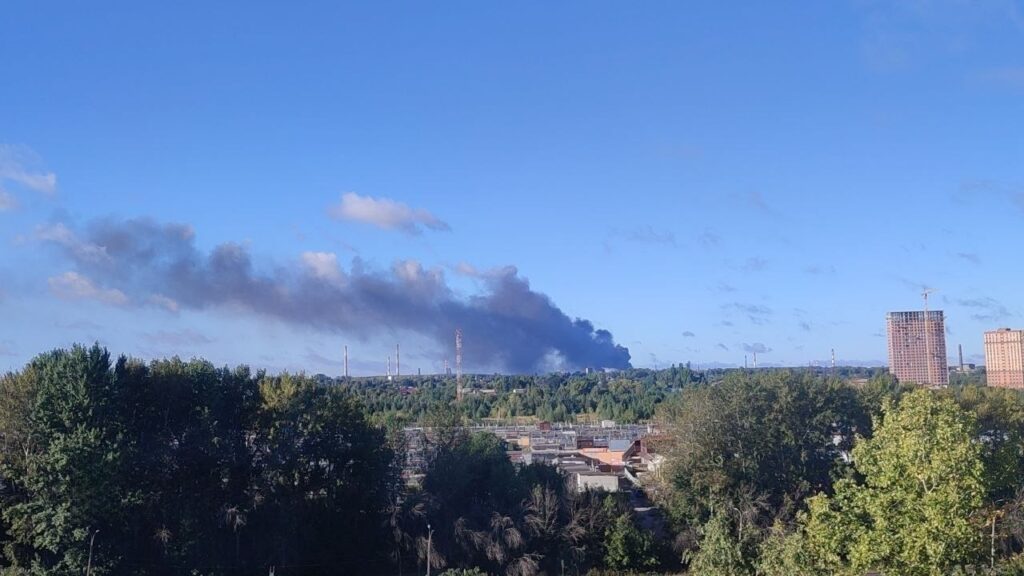
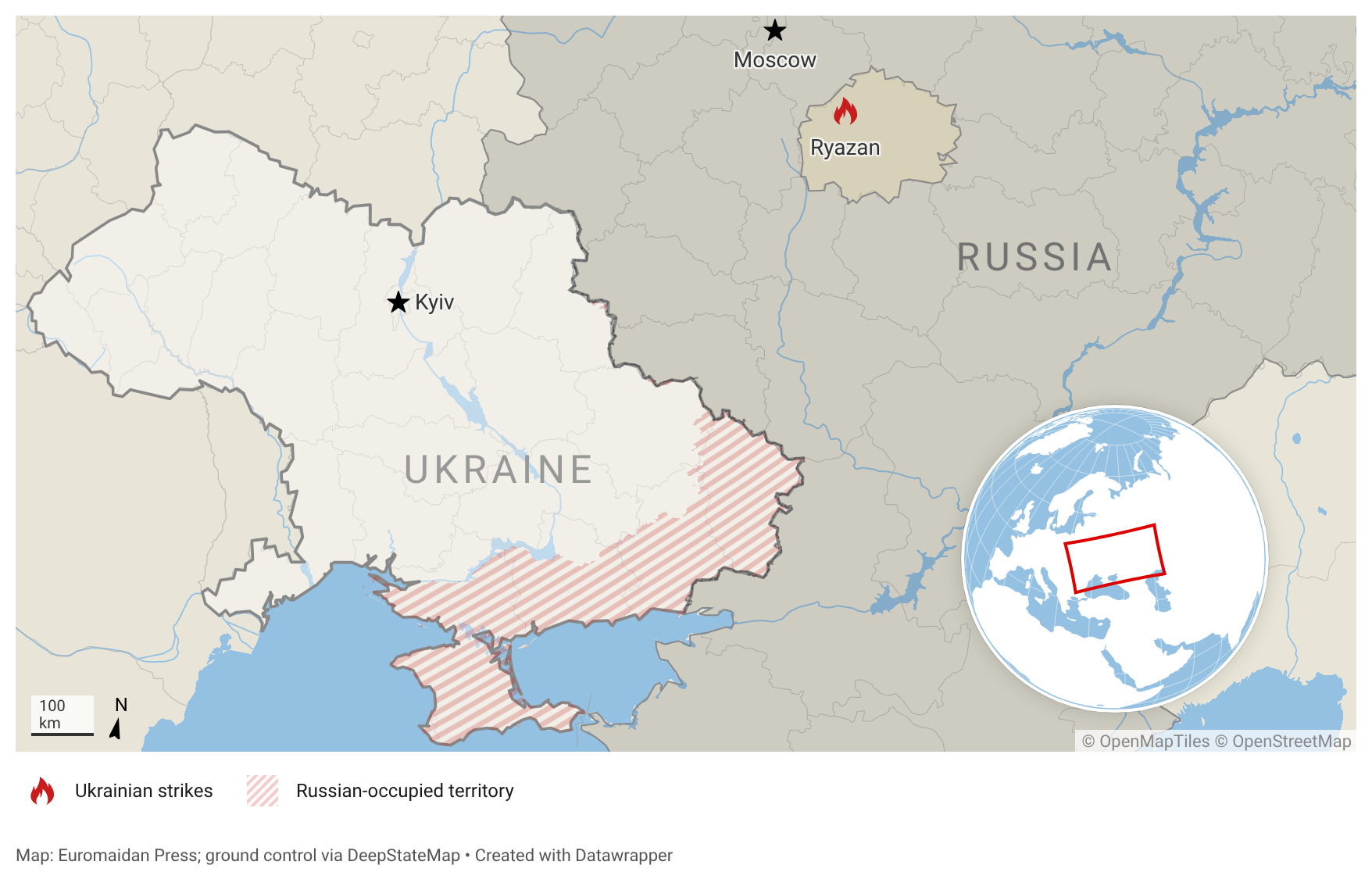
Ukrainian drones struck the Ryazan oil refinery in Russia on the morning of 6 September and set one of its core units on fire, Ukrainian defense outlet Militarnyi reported. The unit produces the high-octane component the Rosneft plant needs for its higher grades of gasoline. Russian regional authorities acknowledged a fire without naming the site. Ryazan is situated southeast of Moscow, about 470 km from Ukraine.
Ukraine has spent this year pushing long-range drones dee
Ukrainian drones struck the Ryazan oil refinery in Russia on the morning of 6 September and set one of its core units on fire, Ukrainian defense outlet Militarnyi reported. The unit produces the high-octane component the Rosneft plant needs for its higher grades of gasoline. Russian regional authorities acknowledged a fire without naming the site. Ryazan is situated southeast of Moscow, about 470 km from Ukraine.
Ukraine has spent this year pushing long-range drones deeper into Russia, working methodically through refineries, pipelines, and export terminals to cut the fuel that moves Russian armies and the oil income that pays for the war. The pressure now runs deep past Russia's borders, with the shortage reaching Central Asian markets.
What burned at Ryazan
Drones hit the low-temperature isomerization unit for pentane-hexane fractions, designated Izomalk-2-LIN-800, according to Militarnyi's analysis. The unit sits on the refinery's grounds and is one of the critically important links in the plant's production cycle.
It converts low-octane straight-run oil fractions into a cleaner high-octane blending component. That component is what allows the refinery to produce gasolines of the higher environmental classes, Euro-5 among them, without adding harmful additives.
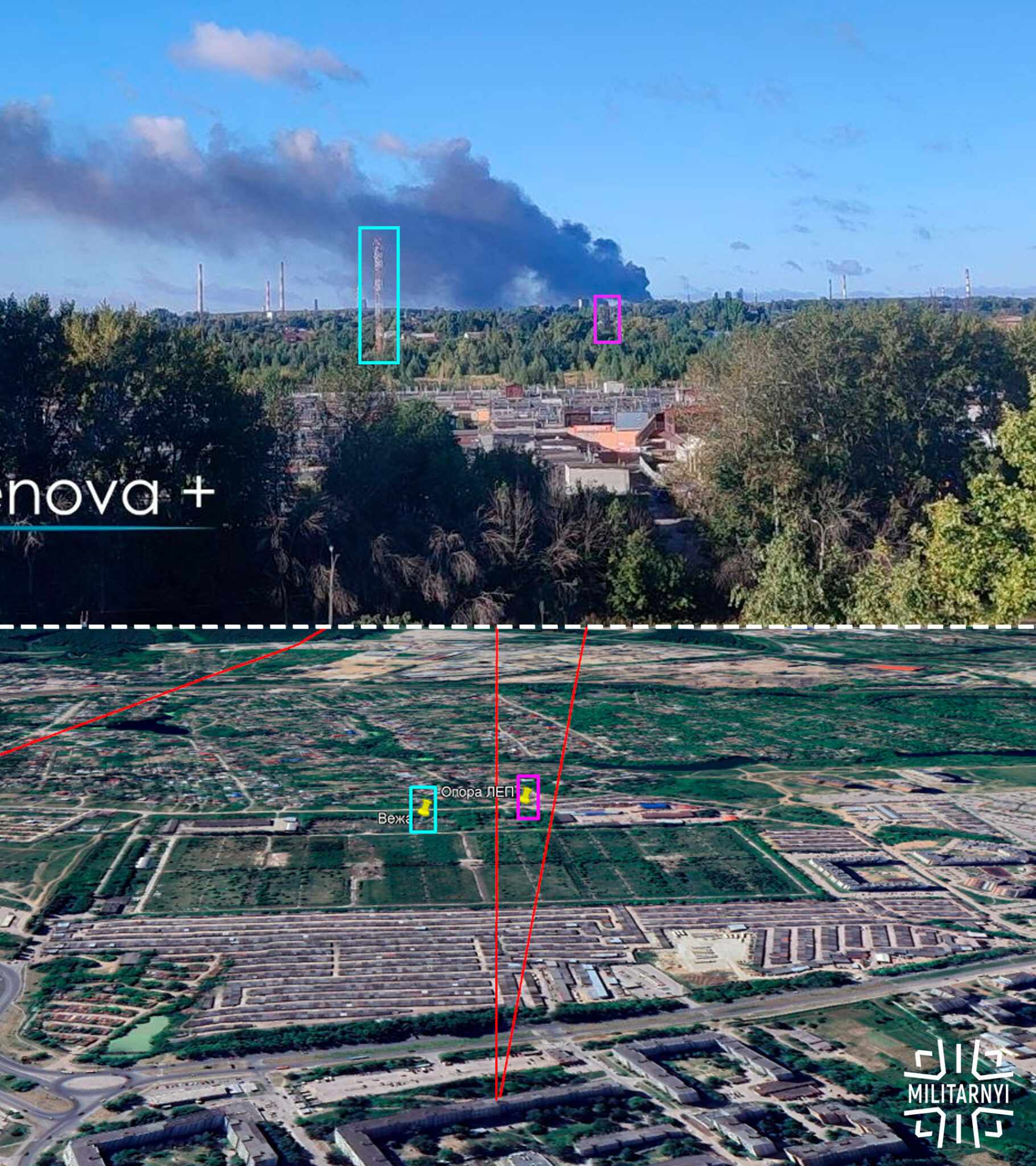
Geolocation of the fire at the Ryazan oil refinery after a Ukrainian drone strike, Ryazan, Russia, 6 September 2026. Graphic: Militarnyi, imagery: ESRI
The refinery belongs to Rosneft and ranks among Russia's largest refining enterprises, with a capacity of about 17 million tons of crude a year. It makes motor gasolines of all grades, diesel, aviation kerosene, fuel oil, liquefied gases, bitumen, and petrochemical feedstock. Four crude distillation units sit on the site, along with equipment for vacuum gasoil hydrotreating, cracking, and catalytic reforming.
Ukrainian monitoring channel Exilenova+ published videos of the strike.
Drones already attacked this unit in December 2025 and damaged it. Earlier waves targeted the plant's ELOU-AVT-3, ELOU-AVT-6, and AVT-1 units.
By May 2026 the refinery had lost 90–100% of its refining capacity. Satellite imagery from 3 August 2026 showed Ukraine's Defense Forces had disabled two of the four crude distillation units on site.
Ukrainian drones struck the refinery in May, and FP-1 drones set it and a nearby warehouse burning in July.
Russian officials report a fire, not a target
Ryazan Oblast governor Pavel Malkov confirmed the region came under drone attack. Drone debris damaged residential buildings in Ryazan and Sapozhkovsky district, he stated, and a fire broke out at an enterprise he did not name. He said there were no casualties and that emergency services were working.
Russian news Telegram channel Astra said its analysis of photographs taken by residents established that the fire was on the grounds of the Ryazan refinery. Ukrainian channel Exilenova+, which tracks such attacks, also reported a hit on the plant.
Ukraine's General Staff said strikes on 26 August and 1 September fully stopped two large refining enterprises: Lukoil-Nizhegorodnefteorgsintez in Kstovo, Nizhny Novgorod Oblast, and the Novatek-Ust-Luga complex in Leningrad Oblast. Both supply the Russian army.
Short of gasoline, Russia has been buying more fuel abroad. Moscow discussed importing gasoline from Kazakhstan in June, and a Kazakh refinery deal would cover 0.3% of Russian demand. Belarus increased its gasoline supplies to Russia nearly 20-fold in the first half of the year.
Kazakhstan’s privately owned Kondensat refinery will process Russian crude and return about 70% of the resulting petroleum products to Russia, Kazakh Energy Minister Yerlan Akkenzhenov said on 25 August, Radio Liberty reported.
Based on figures reported by Radio Liberty, the roughly 70% of Kondensat’s maximum gasoline output bound for Russia would amount to about 0.3% of the country’s daily summer gasoline demand. That makes the arrangement a limited stopgap rather than
Kazakhstan’s privately owned Kondensat refinery will process Russian crude and return about 70% of the resulting petroleum products to Russia, Kazakh Energy Minister Yerlan Akkenzhenov said on 25 August, Radio Liberty reported.
Based on figures reported by Radio Liberty, the roughly 70% of Kondensat’s maximum gasoline output bound for Russia would amount to about 0.3% of the country’s daily summer gasoline demand. That makes the arrangement a limited stopgap rather than a solution. John Roberts of the Atlantic Council nevertheless told the outlet that even small additional supplies could help during an acute shortage, including at the front: “It helps, but it doesn’t solve the problem.”
Ukrainian drone strikes have knocked dozens of Russian refineries offline in recent months, forcing Moscow to restrict fuel exports and reimpose rationing, Radio Liberty reported. Gasoline caps returned to Moscow and St. Petersburg in August, while Rosneft reportedly limited fills to 30 liters per car at every station nationwide.
Kondensat has processed Russian oil before. The refinery began handling supplies delivered through Tatneft’s TANECO refinery in 2024, when Kazakhstan and Russia agreed to permit exports of fuel produced from Russian feedstock back to Russia. The arrangement was renewed in 2025, according to Radio Liberty.
Central Asia has no spare refining capacity that could materially change Russia’s situation, Ukrainian energy analyst Hennadiy Riabtsev told Radio Liberty’s Schemes project. Possible contributions from Kazakhstan, Kyrgyzstan, India, China, and Belarus would remain a drop in the ocean for the Russian market, he said.
Prospective suppliers also understand that Russian fuel demand supports the war effort and that assisting Moscow could carry sanctions risks, Ukraine’s presidential sanctions commissioner, Vladyslav Vlasiuk, told Schemes. Kyiv therefore does not expect a queue of countries willing to supply Russia with petroleum products, he said.
Russia’s fuel shortage gives Kazakhstan room to bargain
Russia’s shortage has spread from gas station queues to farming and public transport, with fuel-sale restrictions officially covering more than 40 regions by July, Euromaidan Press reported, citing The Moscow Times. Moscow’s export restrictions have also raised prices and tightened supplies across Central Asia.
Yet Russia’s growing dependence gives Kazakhstan additional bargaining room. Ukrainian strikes have previously prompted Russian retailer Wildberries to expand its warehousing operations in Kazakhstan, while Astana has promoted domestic competitors.
 Connexion