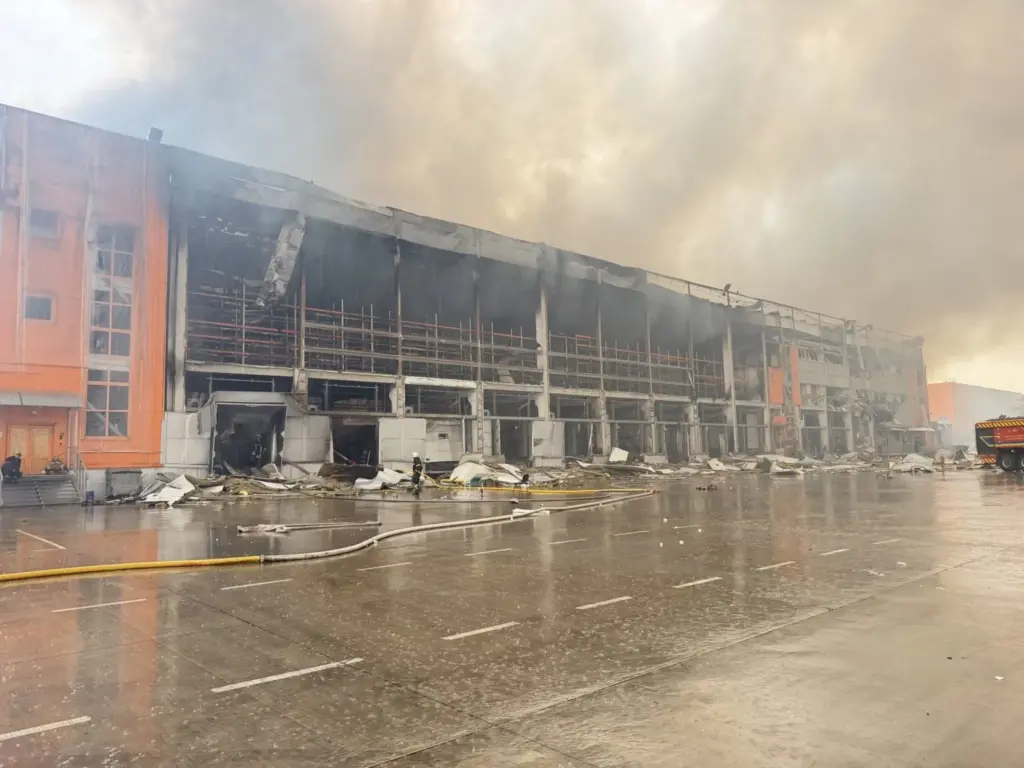
Zaporizhzhia’s largest shopping and entertainment complex, City Mall, will remain closed throughout September following a Russian drone strike on a neighboring hypermarket last week.
Russia’s attacks are increasingly disrupting the basic civilian life of Ukrainian cities, as strikes on shops and other commercial facilities make it harder for businesses to operate and residents to go about their daily lives. The pattern is especially pronounced in cities close to the fro
Zaporizhzhia’s largest shopping and entertainment complex, City Mall, will remain closed throughout September following a Russian drone strike on a neighboring hypermarket last week.
Russia’s attacks are increasingly disrupting the basic civilian life of Ukrainian cities, as strikes on shops and other commercial facilities make it harder for businesses to operate and residents to go about their daily lives. The pattern is especially pronounced in cities close to the front, where Russia is unable to seize territory but can continue attacking from the air.
City Mall announced the closure on 1 September, apologizing to visitors and saying it would provide updates on when operations could resume. The complex did not give an official reason for the decision.
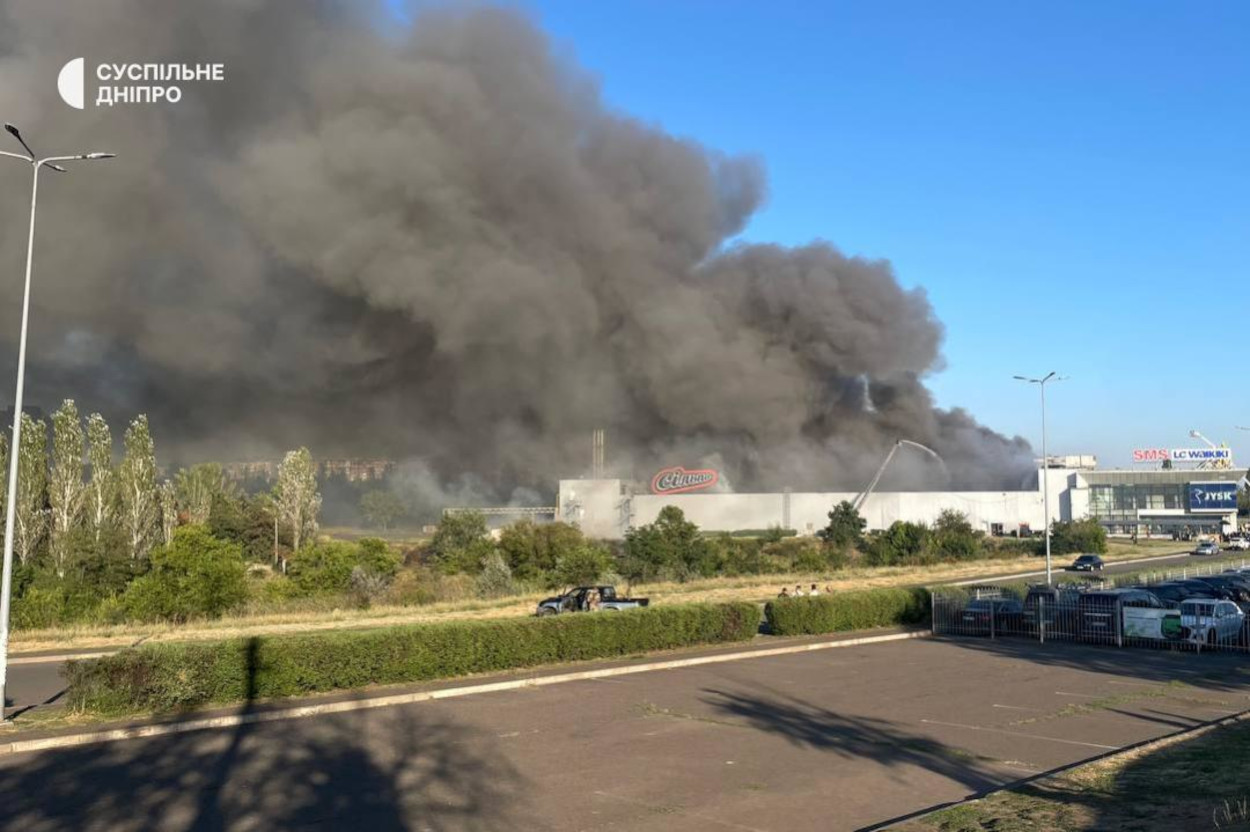
The announcement came four days after a Russian strike hit an Epicentr hypermarket located near the mall on 28 August. The attack sparked a fire covering about 2,000 square meters.
Russia targets Ukraine’s civilian economy
Shopping centers and other commercial facilities have increasingly been caught up in Russia’s attacks on Ukrainian cities.
In recent weeks, Russia has stepped up attacks on commercial sites and retail storage facilities, particularly in and around Kyiv, as well as other major cities closer to Russia and the frontlines.
On 21 August, a Russian drone strike on a shopping center in Kryvyi Rih killed at least 15 people and injured 130, including 23 children, according to local authorities. A second strike hit emergency responders about 30 minutes later as they worked at the scene.
The attacks have also hit Ukraine’s retail sector financially. As of August, three shopping centers had been destroyed and nine more damaged by Russian attacks since the beginning of 2026, with direct losses to the sector reaching 3.226 billion hryvnias ($72.5 million), according to industry data cited by Censor.NET.
Fear of attacks is also keeping shoppers away. Air raid alerts accounted for 21.8% of shopping centers’ operating hours in August, up from 20.1% in July and 9.4% a year earlier.
Explore further
Russia has burned millions of Ukrainian books, striking at the infrastructure of Ukrainian culture
Zaporizhzhia under Russian attack
For Zaporizhzhia, the pressure is particularly severe. The major city lies close to the front line and has faced sustained Russian attacks throughout the full-scale war.
Unable to seize the city through ground advances, Russia has repeatedly used missiles and drones to strike its infrastructure and civilian areas.
The result is a city where even businesses that survive direct strikes can be forced to close because of the continuing threat.
Another Russian strike has destroyed tens of thousands of Ukrainian books around Kyiv, adding to a summer of attacks that has wiped out millions of copies and damaged the warehouses, printing plants and markets that keep Ukraine’s publishing industry running.
Since Russia’s full-scale invasion began in 2022, Ukrainian publishers, printers, bookstores, warehouses and other parts of the literature industry have repeatedly been hit by Russian attacks.
The destruction h
Another Russian strike has destroyed tens of thousands of Ukrainian books around Kyiv, adding to a summer of attacks that has wiped out millions of copies and damaged the warehouses, printing plants and markets that keep Ukraine’s publishing industry running.
Since Russia’s full-scale invasion began in 2022, Ukrainian publishers, printers, bookstores, warehouses and other parts of the literature industry have repeatedly been hit by Russian attacks.
The destruction has drawn comparisons to earlier Russian and Soviet efforts to suppress the Ukrainian language, culture and national identity, with publishers and cultural figures warning that the current attacks are damaging not only businesses and infrastructure but the means through which Ukrainian culture is produced and preserved.
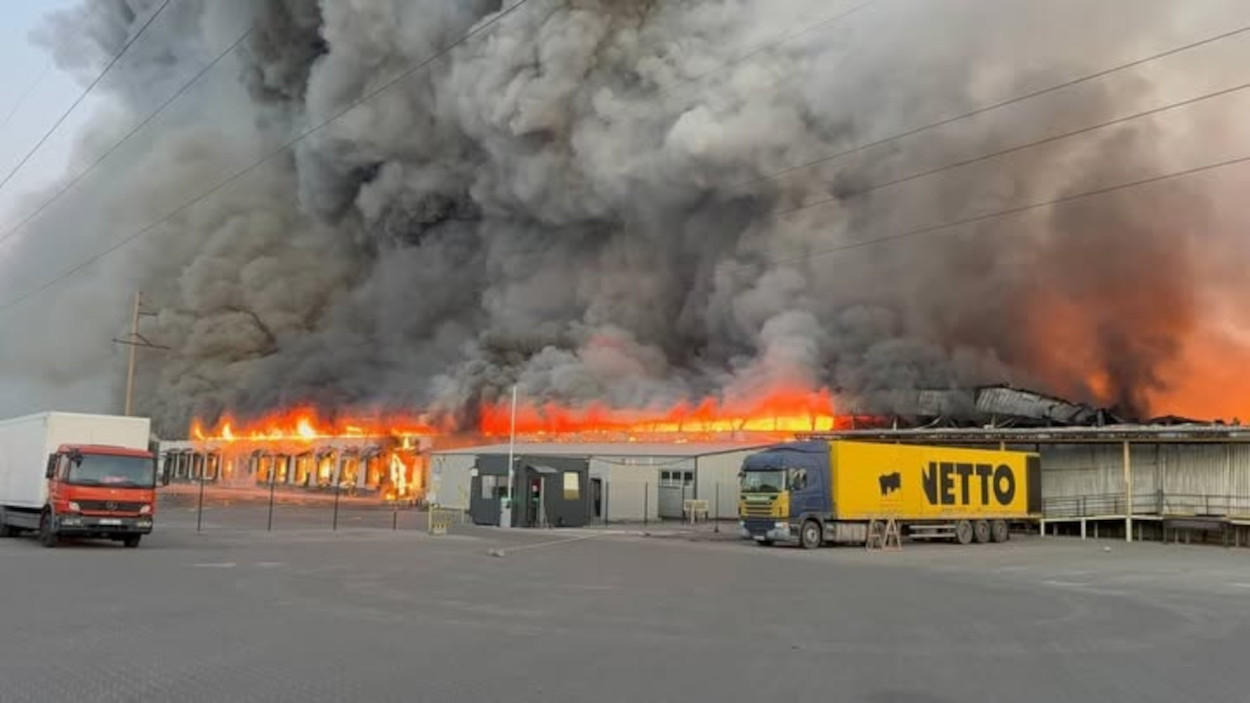
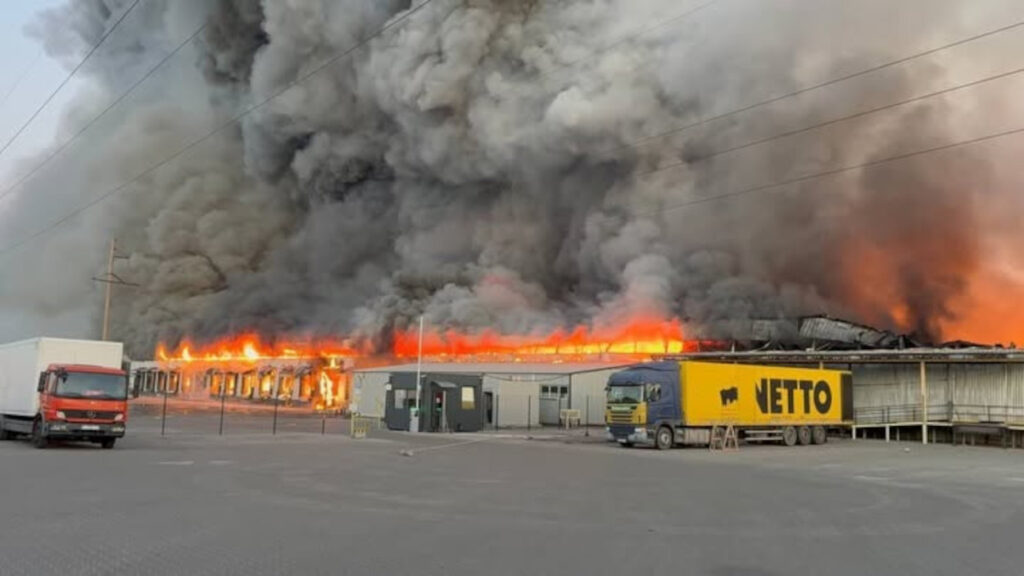
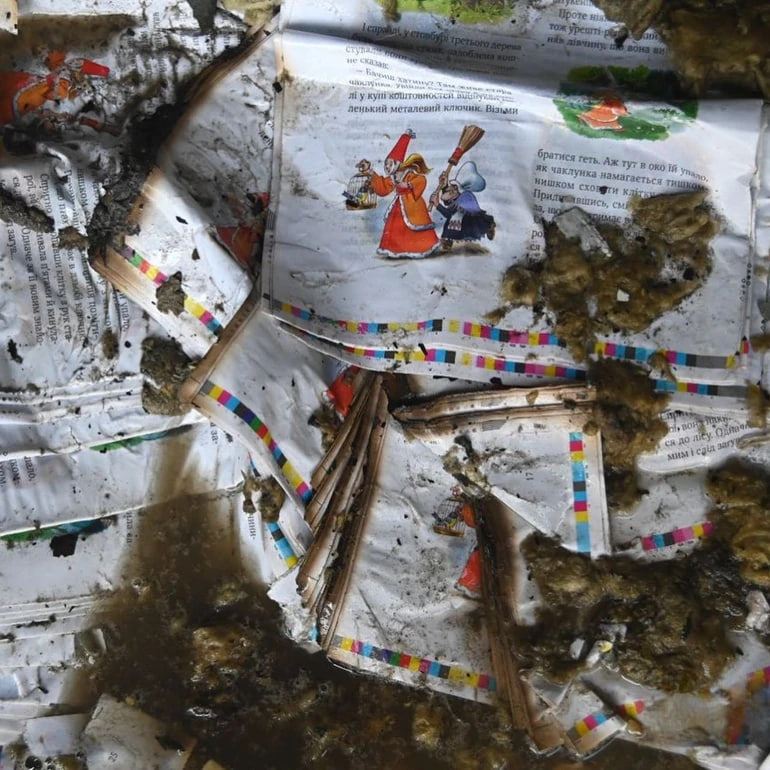
The latest loss came on 28 August, when a Russian drone struck a Nova Post fulfillment and sorting center in Sviatopetrivske, Kyiv Oblast. More than 60,000 books stored there were destroyed, including books belonging to Ukrainian publishers and retailers such as Vivat, A-BA-BA-HA-LA-MA-HA, Osnovy, Readeat and Book.ua.
The destruction is taking a growing toll on Ukrainian culture
Nova Post director Yevhen Tafiichuk said the strike destroyed the company's most modern robotic fulfillment center, along with books from several publishers and stores. He said the company is working with affected partners to compensate their losses and is moving toward a decentralized fulfillment system to reduce the risk of losing large inventories in a single strike.
“For centuries, the enemy has tried to destroy the Ukrainian language, culture and memory. Once, it burned libraries and banned printing; today, it launches missiles at printing plants and warehouses filled with books,” Tafiichuk said.
The latest destruction comes after the Ukrainian publishing industry estimated that Russian attacks had already destroyed about 13 million books in July and August – nearly a third of the number of books Ukrainian publishers printed during all of 2025.
Explore further
Russia has burned 13 million Ukrainian books in three months, nearly third of everything country printed in 2025
Another warehouse full of books goes up in flames
The Sviatopetrivske strike hit a logistics facility rather than a publishing house itself, but the consequences spread across much of the book market.
Readeat founder Dmytro Feliksov said more than 60,000 physical books were destroyed and estimated his company's losses at more than UAH 23 million. The warehouse held stock for several publishers and booksellers.
Vivat CEO Yuliia Orlova said the publisher also lost books stored at the Kyiv warehouse in the attack. The company had already begun moving some print runs to other parts of Ukraine, including Lviv, after earlier Russian strikes destroyed publishing infrastructure. But many new releases and books by Ukrainian authors remained in Kyiv.
The same attack destroyed a warehouse used by A-BA-BA-HA-LA-MA-HA to fulfill direct orders. The losses came as publishers were already trying to spread their inventories across multiple locations to reduce the risk posed by Russian strikes.
Millions of books destroyed across Ukraine, publishers hit again and again
On 1 August, a Russian strike on the warehouses of RNK-Ranok destroyed nearly 8 million books, including hundreds of thousands of school textbooks. The Ukrainian Book Institute said the loss from that strike alone was equivalent to about 30% of the country's annual book production.
A separate Russian strike on 19 July destroyed the Konvi printing facility and about 250,000 books belonging to Knyholav, along with print runs and materials belonging to numerous other publishers.
BookChef has suffered some of the largest losses around Kyiv. A Russian strike in July destroyed about 800,000 books at its main warehouse. A second strike in August hit a backup warehouse opened after the first loss, destroying more than 100,000 additional books, Interfax-Ukraine reported.
The attacks have also damaged publishing offices and warehouses. On 16 August, Russian strikes near Kyiv’s Pochaina metro station damaged the offices and warehouses of BookChef and RM, including areas where books were stored.
Kyiv’s Pochaina market also burned
The damage is not limited to modern distribution centers.
On 16 August, a Russian strike set fire to Kyiv’s Pochaina book market, one of the capital’s best-known places to buy new, used and second-hand books. Much of the market burned, with the fire covering more than 2,000 square meters of commercial space.
The market, formerly known as Petrivka, had operated for about 30 years and was a major hub for second-hand books and other goods. Dozens of thousands of books were destroyed, according to local reporting.
Kyiv’s Pochaina book market was hit again during Russia’s overnight missile attack, with rows of stalls burned and books damaged.
“Pochaina Book Market is finished. Three missiles hit the stalls. This time, the story is over,” Oleksandr Krasovytskyi, CEO of Folio publishing… pic.twitter.com/fum3LNN5Dt
The destruction was extensive enough that 60–70% of the market's commercial space was lost. The surviving Bukinist section began reopening later in August, with booksellers returning to trade where their stock had survived, RBC reported.
The market's destruction also meant the loss of a part of Kyiv's book culture that cannot simply be replaced by reprinting new editions. Second-hand books, older editions and used collections had been traded there for generations.
Explore further
Kyiv’s largest book market hit by Russian missiles
The losses are hitting an already fragile industry
The Ukrainian publishing sector had been growing before Russia's latest attacks, helped in part by rising demand for Ukrainian-language books during the full-scale invasion.
But publishers now face the repeated cost of replacing destroyed print runs, warehouses and equipment while also trying to keep books moving to stores and readers.
Olesia Ostrovska-Liuta, director general of Mystetskyi Arsenal, said the Ukrainian book industry had only recently begun to grow, making the latest losses especially painful.
“Losses are accumulating, while the tools to minimize them are being built extremely slowly,” she said. “Culture will not disappear, but it will once again be drained of its strength.”
Publishers seek help to rebuild and protect a supply chain under attack
The Ukrainian Publishing Association has called for additional support, including war-risk insurance for book stocks, affordable financing to rebuild printing capacity and the restoration of state purchases of books for libraries.
The Ukrainian Book Institute has also appealed for international support for the publishing sector, saying Russia has systematically targeted publishing houses, bookstores, printing facilities and warehouses since the start of the full-scale invasion.
For publishers, the latest strikes show that moving books from a printer to a reader has itself become a wartime vulnerability. A single warehouse can contain the output of dozens of publishers, and losing it can erase months of work and leave books unavailable even when the companies themselves survive.
Nova Post says it is responding by distributing inventory across more locations rather than relying on large centralized facilities. The strategy may help reduce future losses, but it also reflects how deeply Russia’s ongoing attacks have altered the basic infrastructure through which Ukrainians produce, store and buy books.
Russia has kept Kyiv and surrounding areas under near-continuous attack for four days, repeatedly sending drones and missiles toward the capital and other Ukrainian regions.
The prolonged attacks have kept air defense crews and emergency workers operating almost constantly, while disrupting civilian life across Kyiv and the surrounding oblast.
Ukrainian President Volodymyr Zelenskyy said on 30 August that Russia had launched nearly 2,000 attack drones, more than 1,60
Russia has kept Kyiv and surrounding areas under near-continuous attack for four days, repeatedly sending drones and missiles toward the capital and other Ukrainian regions.
The prolonged attacks have kept air defense crews and emergency workers operating almost constantly, while disrupting civilian life across Kyiv and the surrounding oblast.
Ukrainian President Volodymyr Zelenskyy said on 30 August that Russia had launched nearly 2,000 attack drones, more than 1,600 guided aerial bombs and 31 missiles of various types against Ukraine over the past week. The missiles included North Korean ballistic weapons.
The current attacks follow months of increasingly heavy Russian aerial strikes against Kyiv and other Ukrainian cities. Russia has ramped up its use of ballistic missiles while also expanding its use of newer jet-powered Geran drones, which have repeatedly targeted the capital and surrounding areas.
Four days of attacks
Kyiv and Kyiv Oblast have been under repeated attack since 27 August, with waves of drones arriving throughout the day and night.
The attacks have hit residential buildings, warehouses, businesses and other civilian infrastructure. They have also repeatedly forced firefighters and rescue crews to stop their work and move to safety before returning once the immediate threat passes.
At least three people were injured in a Russian overnight attack on Kyiv, as the capital entered a fourth consecutive day of near-continuous Russian attacks.
In the Obolonskyi district, a strike caused a fire from the second to fifth floors of a 12-story residential building.… pic.twitter.com/rTT5TZvNEA
In Myla, Kyiv Oblast, rescue workers are still clearing the aftermath of the 28 August attack that killed 38 people, injured 20 and left four people missing.
Rescue crews continue working in Myla, Kyiv Oblast, clearing debris, extinguishing fires, and searching for explosive remnants after Russia’s deadly attack on 28 August.
The continuing attacks have also affected movement around the capital. Air raid alerts, damaged infrastructure and the threat of further strikes have disrupted traffic and travel both within Kyiv and on routes connecting the city with the surrounding region.
Explore further
Kyiv has been under attack for 2 days nonstop. Russia is targeting the capital’s civilian supply chains
Air defenses under pressure
The attacks are putting Ukraine's air defense network under some of its heaviest pressure since the full-scale invasion began.
Ukraine has to defend a vast area against increasingly large drone barrages while also dealing with ballistic and other missiles that are more difficult to intercept.
Ukraine relies on US-made Patriot systems to counter ballistic missiles, but limited stocks of Patriot interceptors and insufficient deliveries from partners have left a critical gap in its air defenses, which Russia is now exploiting to cause major damage to civilian infrastructure and greater civilian casualties.
The repeated use of jet-powered drones adds another challenge. Russia has increasingly deployed these faster Geran drones, adapted from the Iranian Shahed design, in attacks on Kyiv and other Ukrainian cities, including against civilian infrastructure.
Zelenskyy said the government’s priority now is to provide greater protection against the Russian attacks.
Attacks continue across Ukraine
The pressure is not limited to Kyiv.
Zelenskyy said Russian forces are carrying out attacks virtually around the clock against frontline and border communities, including Nikopol, Kramatorsk, Kherson and communities in Kharkiv, Zaporizhzhia, Dnipropetrovsk, Donetsk and Sumy oblasts.
Russian forces attacked Donetsk Oblast 30 times on 30 August, damaging residential areas and causing four fires, Ukraine’s State Emergency Service reported.
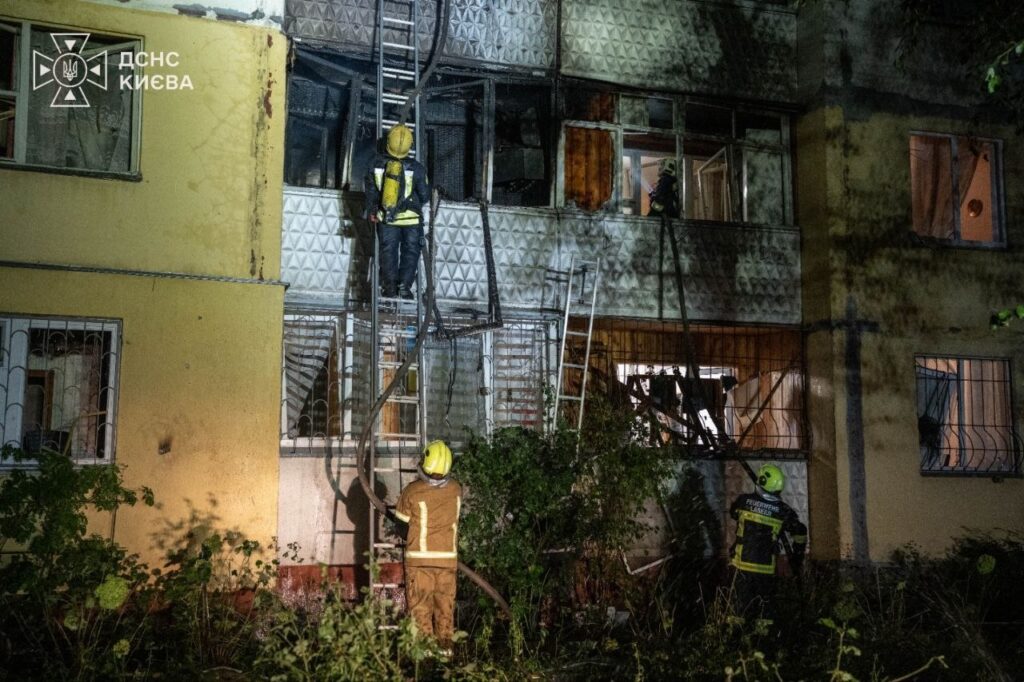
In Sloviansk, Russian shelling set balconies and apartments on fire on the fifth through seventh floors of a nine-story… pic.twitter.com/12GbUDsRpL
Across these areas, the attacks are keeping emergency services active while damaging homes, businesses and civilian infrastructure.
In Kyiv, meanwhile, the fourth day of attacks has left residents dealing with repeated air raid alerts, disrupted movement and the continuing risk of new strikes even as crews are still clearing the damage from previous ones.
Russian attacks have destroyed about 90% of Ukraine’s modern facilities for storing goods, significantly disrupting the country’s retail logistics, Ukraine’s Agriculture Minister Taras Vysotskyi said on 28 August, according to Interfax-Ukraine.
Russia has increasingly targeted Ukraine’s civilian commercial and logistics infrastructure in recent weeks, striking warehouses, distribution centers, hypermarkets, postal terminals and other facilities that keep goods moving th
Russian attacks have destroyed about 90% of Ukraine’s modern facilities for storing goods, significantly disrupting the country’s retail logistics, Ukraine’s Agriculture Minister Taras Vysotskyi said on 28 August, according to Interfax-Ukraine.
Russia has increasingly targeted Ukraine’s civilian commercial and logistics infrastructure in recent weeks, striking warehouses, distribution centers, hypermarkets, postal terminals and other facilities that keep goods moving through the country. The campaign has damaged supply chains and forced businesses to find more expensive and vulnerable ways to store and deliver products.
Vysotskyi said the destruction does not pose a threat of famine, but warned that continued Russian attacks on logistics infrastructure could affect the range of products available in Ukrainian stores. Supermarkets in Kyiv have already seen widespread empty shelves in recent weeks.
Retailers forced to change how goods are delivered
The destruction of warehouses has forced retailers to change how they move products around the country, with deliveries increasingly being made “from the wheels” rather than through conventional storage and distribution facilities, Vysotskyi said.
Such logistics are more complicated and expensive, he said, while some companies have begun relocating their operations to other areas. Russian attacks, however, have also reached some of the relocated facilities.
The comments come as Russia has increasingly targeted commercial and logistics infrastructure across Ukraine. In recent days, Russian drones have struck warehouses, hypermarkets, postal terminals and shopping centers, including in Kyiv, Kyiv Oblast, Kharkiv and Zaporizhzhia.
Explore further
Kyiv has been under attack for 2 days nonstop. Russia is targeting the capital’s civilian supply chains
No threat of famine, minister says
Despite the scale of the destruction, Vysotskyi stressed that Ukraine does not face a food shortage severe enough to threaten the population with famine.
The main impact is expected to be on logistics, availability and the range of goods offered in stores. With fewer storage facilities, retailers have less capacity to stock products and must rely more heavily on direct deliveries.
The shift can also increase costs because goods have to move more frequently and over potentially longer routes without the buffer provided by large distribution centers.
Emergency workers respond to a Russian strike on a shopping center in Kharkiv, Ukraine, on 28 August 2026. Photo: Ukraine’s State Emergency Service
Calls for risk-sharing after Russian strikes
Vysotskyi also called for a system to distribute the financial risks when Russian attacks destroy goods somewhere along the supply chain.
He said these losses currently fall within private contractual relationships between businesses, with the state not acting as an operator in the supply chain. In his view, the risks should be shared more fairly between companies involved in supplying and selling products.
He said such a system would not necessarily mean splitting losses equally. Different products have different margins, sales conditions and profitability, so the share of risk should depend on the specific product and terms of cooperation.
Russia’s attacks on storage and distribution infrastructure are therefore creating effects far beyond the facilities themselves. Damage to the supply chain can change what products reach stores, increase the cost of getting them there, and make Ukraine’s retail system more vulnerable to further strikes.
Russia has spent the past two days repeatedly attacking Kyiv and Kyiv Oblast with jet-powered drones, hitting commercial and logistics infrastructure and disrupting businesses and supply chains around the capital.
The attacks have struck civilian enterprises, food warehouses, hypermarkets, postal terminals, and warehouses storing books, according to Ukraine’s Interior Minister Ivan Vyhivskyi. Fires have broken out at multiple warehouse sites, while repeated strikes have
Russia has spent the past two days repeatedly attacking Kyiv and Kyiv Oblast with jet-powered drones, hitting commercial and logistics infrastructure and disrupting businesses and supply chains around the capital.
The attacks have struck civilian enterprises, food warehouses, hypermarkets, postal terminals, and warehouses storing books, according to Ukraine’s Interior Minister Ivan Vyhivskyi. Fires have broken out at multiple warehouse sites, while repeated strikes have forced emergency crews to repeatedly stop their work and seek shelter.
The attacks are also affecting the movement and storage of essential goods around Kyiv, with damage to food warehouses and other logistics facilities contributing to supply disruptions and shortages.
Russia expands its aerial campaign against Kyiv
The latest wave comes after Russia dramatically ramped up its use of ballistic missiles against Kyiv and other Ukrainian cities in recent months. Now, improved Russian jet-powered drones are being used to sustain repeated attacks on the capital and surrounding oblast.
Russian forces have been launching the jet-powered drones at Ukrainian regions almost continuously for the previous two days.
The pattern has left Kyiv and Kyiv Oblast under prolonged air raid alerts while putting emergency crews under the threat of repeated strikes.
In Kyiv alone, air raid alerts were issued 13 times on 27 August and lasted for more than 14 hours in total.
Across Ukraine, Russian attacks killed 16 people and injured another 50 during the day, Vyhivskyi said.
Kyiv Oblast has been among the hardest-hit areas. Ukraine’s State Emergency Service (DSNS) said on Friday morning the oblast had come under 38 Russian attacks since the first strike overnight on 27 August.
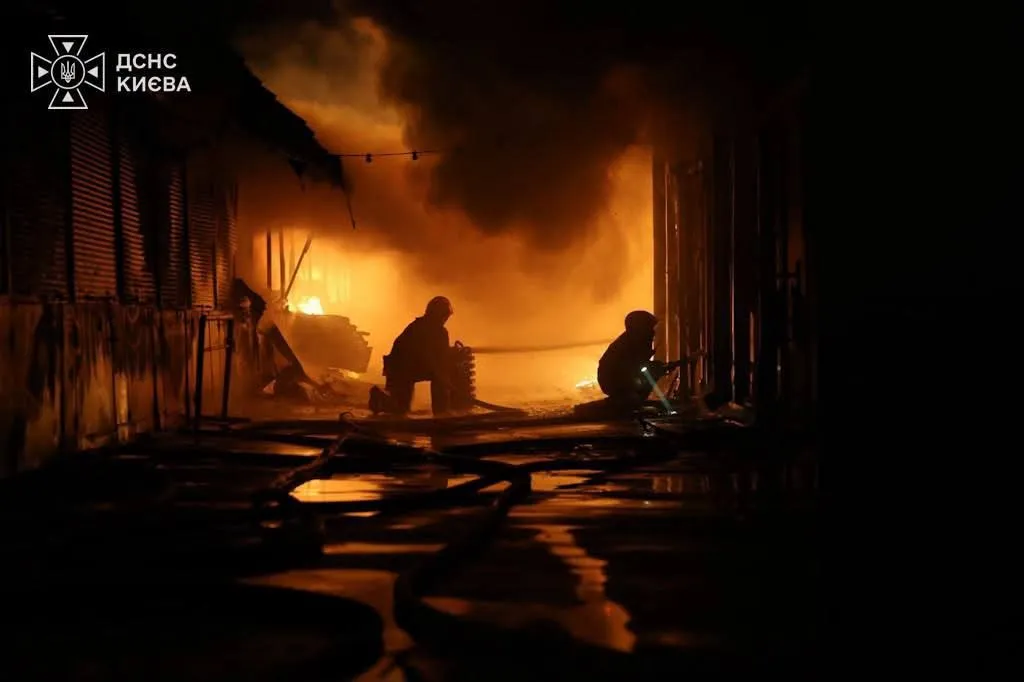
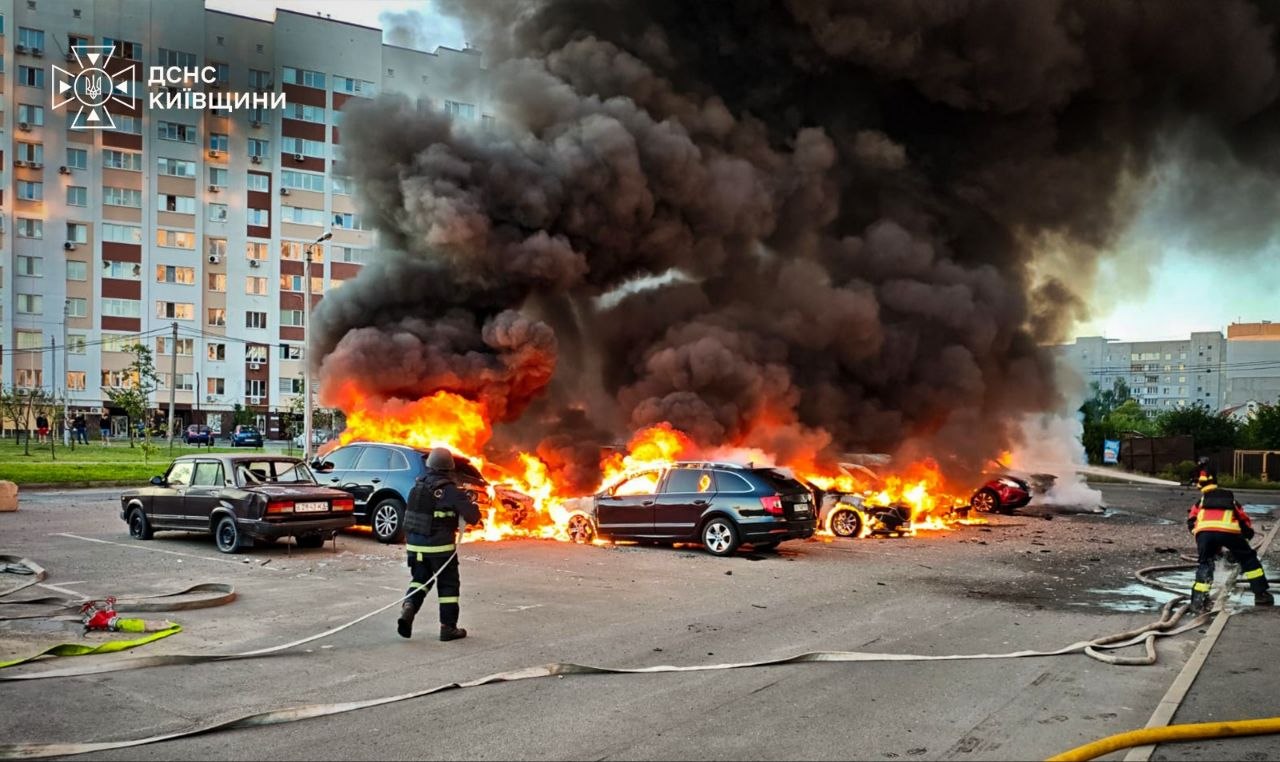
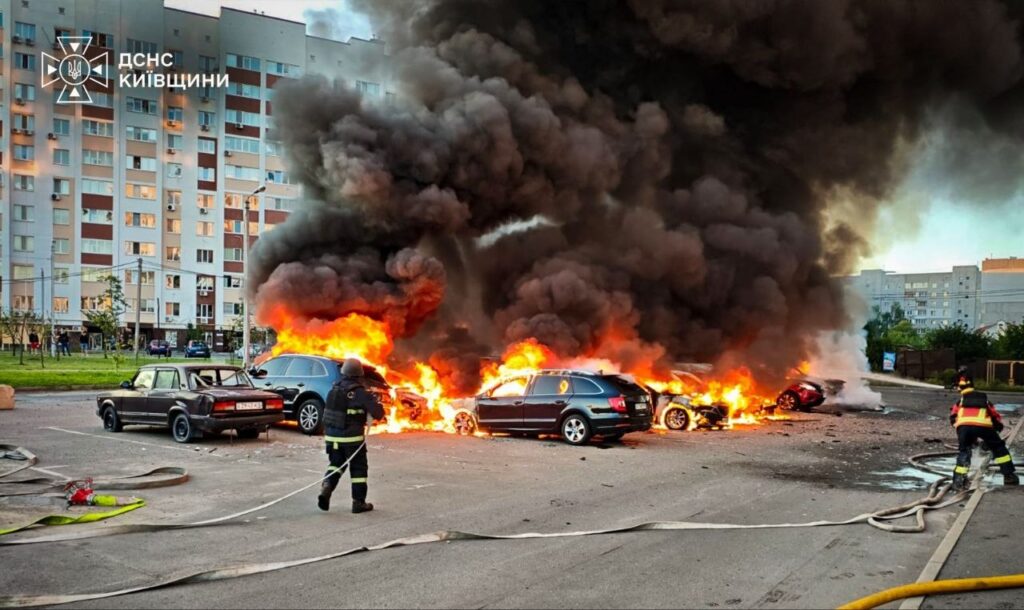
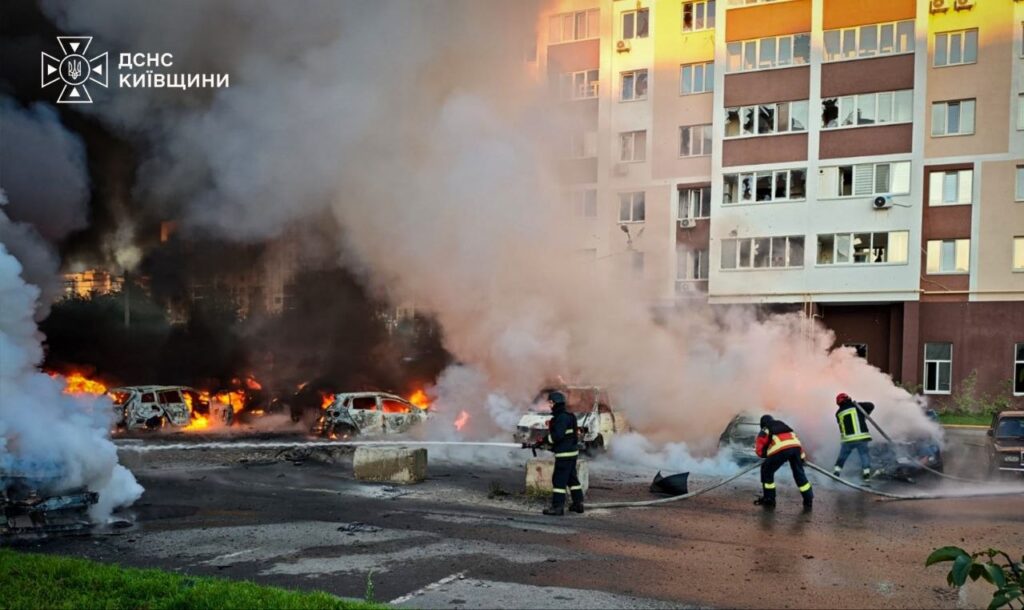
In Bucha district, firefighters worked at several locations where Russian drone strikes caused fires at warehouses and damaged vehicles.
At one site, a drone struck again while rescuers were working. After checking the area, emergency crews returned to the site and continued fighting the fire.
Firefighters also extinguished a fire involving 13 passenger cars. A nearby apartment building was damaged by the blast wave, which shattered windows.
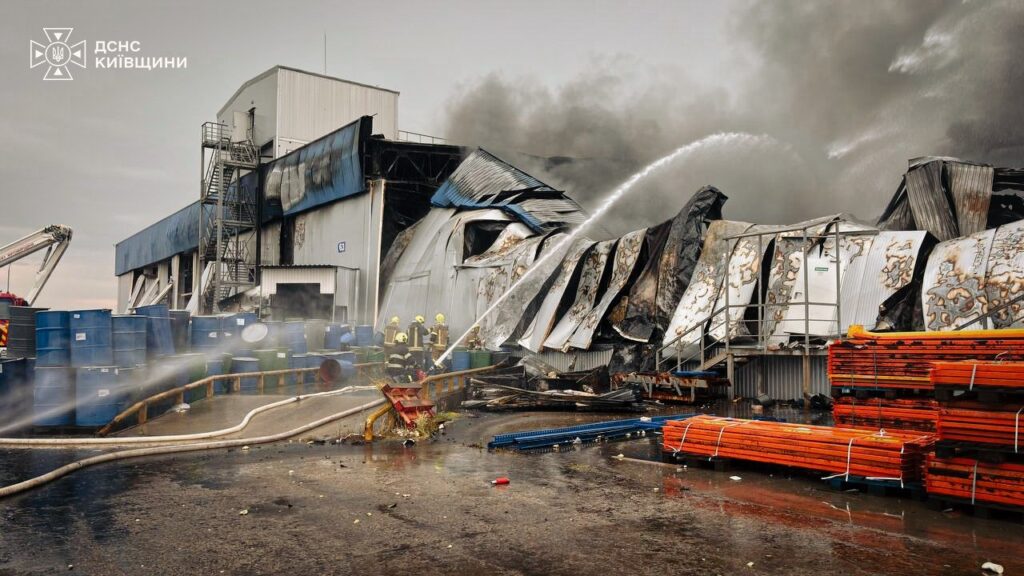
At three locations, crews were still working to extinguish fires at warehouse buildings caused by the repeated attacks.
Aftermath of a Russian strike on Kyiv Oblast, 28 August 2026. Photo: Ukraine's State Emergency Service
Repeat strikes put rescuers at risk
The repeated attacks have made emergency operations particularly dangerous. Since rescuers began working, air raid alerts in the oblast had sounded 20 times as of Friday morning, according to the DSNS.
Firefighters have repeatedly been forced to stop their work and move to shelters or safe distances because of the threat of another strike, before returning to the fires once the danger passes.
Vyhivskyi said one person was killed and others injured in Kyiv Oblast on the morning of 28 August after civilians remained near a site where crews were clearing the aftermath of an earlier strike despite the threat of another attack.
Russia’s latest attacks on Kyiv Oblast have repeatedly put emergency crews in danger, with firefighters forced to halt their work and move to safety as follow-up strikes hit the area.
Ukraine's State Emergency Service said that on 27 August, the oblast came under 28 additional… pic.twitter.com/cPdkj6Wxwa
The attacks on Kyiv and Kyiv Oblast are part of a broader recent pattern of Russian strikes on commercial infrastructure across Ukraine. In recent weeks, Russian drones have hit shopping centers, hypermarkets, warehouses, postal terminals and other civilian businesses.
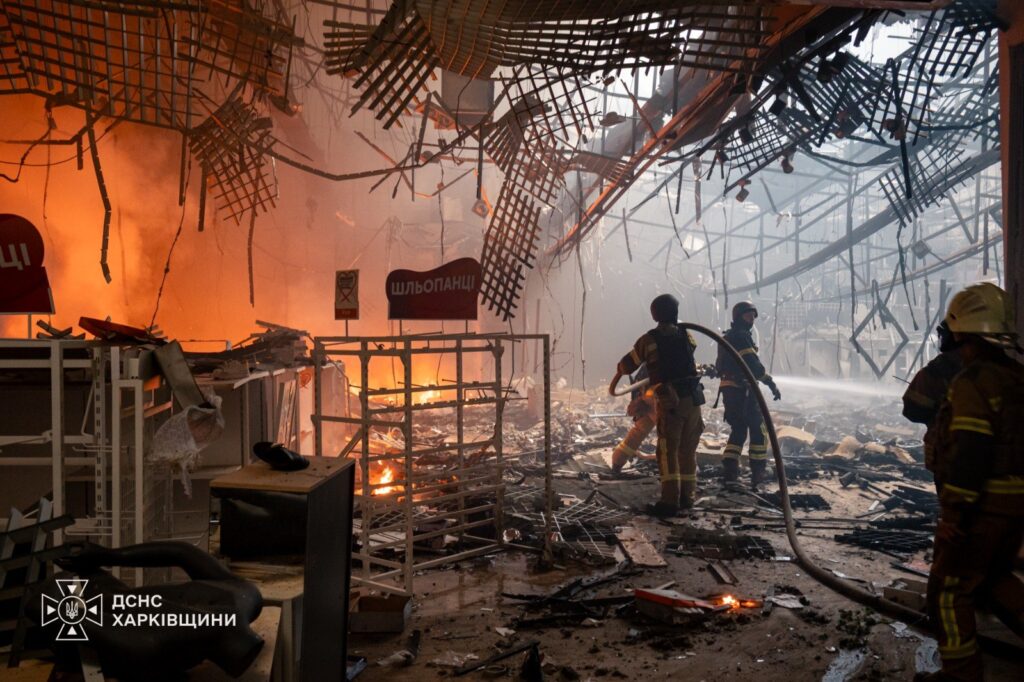
In Kharkiv, a Russian jet-powered drone struck a closed shopping center in the city’s Kyivskyi district on 28 August, partially damaging the building and starting a fire among equipment and furniture. Firefighters extinguished the blaze despite the threat of repeat strikes. No casualties were reported.
Russia has struck another shopping center in Kharkiv with a jet-powered drone, hitting a closed commercial facility in the city’s Kyivskyi district.
The strike comes amid Russia’s intensified campaign against commercial sites across Ukraine, including shopping centers,… pic.twitter.com/KSj719sSKz
In Zaporizhzhia, another Russian drone strike injured five people and set a shopping center on fire. The blaze covered about 14,000 square meters, and firefighters had to repeatedly take shelter because of the threat of follow-up attacks.
A Russian drone strike on Zaporizhzhia injured five people and sparked a massive fire at a shopping center, with the blaze spreading across about 14,000 square meters.
The attack comes amid Russia’s intensified targeting of commercial and logistics sites across Ukraine,… pic.twitter.com/Iu5OyoGCGx
The strikes are adding pressure to Ukraine’s civilian supply and logistics networks, particularly around major population centers. Damage to food warehouses, retail facilities and logistics sites can disrupt the storage and movement of goods, contributing to shortages and delays for businesses and consumers.
Explore further
Russian drone strike on Kryvyi Rih shopping center kills 15, injures 130. Second attack targeted rescue workers 30 minutes later
Authorities warn civilians to stay away
Ukrainian authorities have urged residents to remain in shelters or other safe locations during air raid alerts and avoid areas where emergency crews are working.
The DSNS warned people not to approach sites where the aftermath of Russian strikes is being cleared, citing the continuing threat of repeat attacks.
Vyhivskyi also urged residents to treat every air raid alert as a signal to move to a shelter or other safe location, warning that no urgent task is worth risking a life.
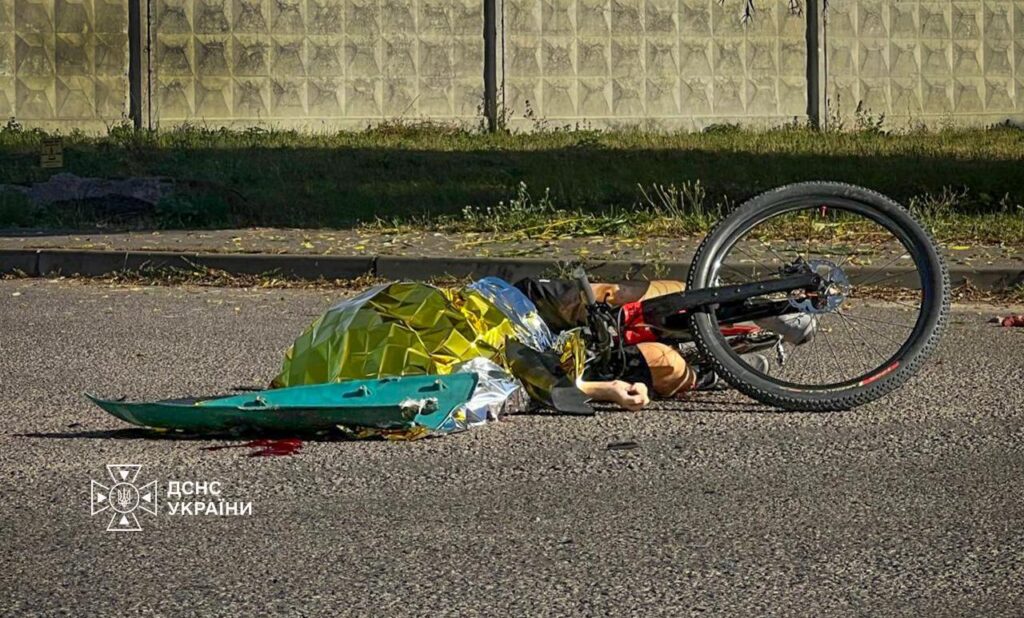
Victim of a Russian strike on Kyiv Oblast, 28 August 2026. Photo: Ukraine's State Emergency Service
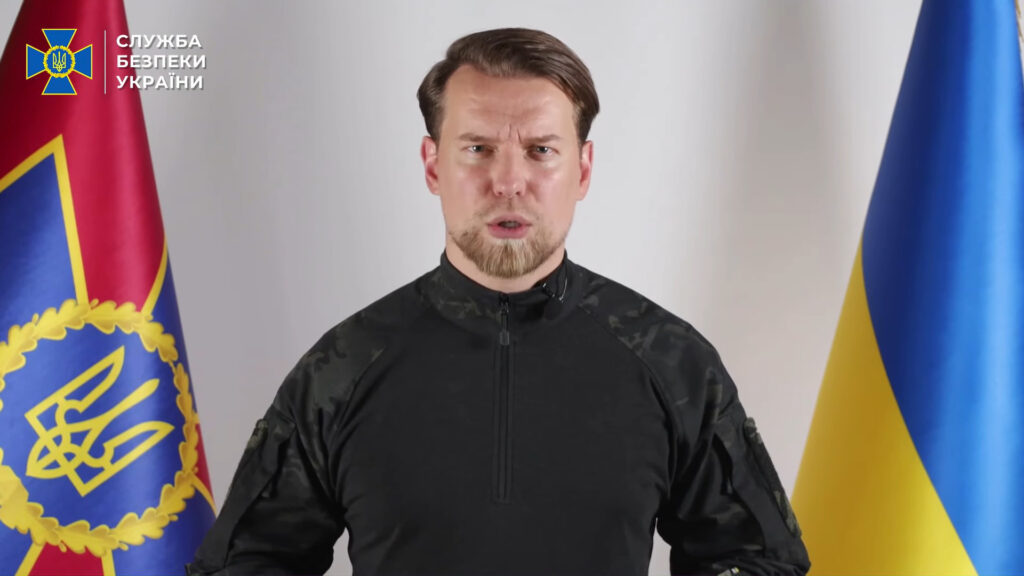
Ukraine's Security Service (SBU) urged Ukrainians to remain particularly vigilant ahead of Independence Day on 24 August, warning of potential Russian attacks and other security threats around the holiday.
Security threats are often heightened around major national holidays in Ukraine during the full-scale war with Russia, when large public gatherings can create opportunities for attacks and Russia has an added incentive to use symbolic dates to spread fear and disrupti
Ukraine's Security Service (SBU) urged Ukrainians to remain particularly vigilant ahead of Independence Day on 24 August, warning of potential Russian attacks and other security threats around the holiday.
Security threats are often heightened around major national holidays in Ukraine during the full-scale war with Russia, when large public gatherings can create opportunities for attacks and Russia has an added incentive to use symbolic dates to spread fear and disruption.
The SBU said Russia could exploit Independence Day gatherings for attacks, provocations, sabotage, cyberattacks, or other crimes.
Russia may recruit Ukrainians for sabotage
The SBU specifically warned about attempts by Russian intelligence services to recruit Ukrainians to carry out attacks inside the country.
According to the agency, Ukrainians could be offered money to set fires, damage property, plant suspicious objects, collect information about military facilities, or carry out other illegal activities.
The SBU urged people not to accept such offers and to immediately report attempts at recruitment.
It also warned that recruiters may disguise requests as ordinary tasks. People could be asked to photograph a particular location, deliver a package, or leave an object somewhere without being told the real purpose of the task.
The SBU said people should be especially cautious about requests from unknown individuals, including those claiming to represent law enforcement.
Russia has repeatedly sought to recruit Ukrainians for sabotage and other activities inside Ukraine during the full-scale war. Ukrainian authorities have previously reported cases in which people were offered money to carry out arson attacks, damage infrastructure, gather intelligence, or perform other tasks on behalf of Russian handlers.
Explore further
Alleged Russian agent arrested in Dnipro, accused of activating 1,000+ Starlink communications terminals to support Russian forces
Warning over information that could help Russia
The agency also urged Ukrainians to avoid sharing information that could help Russia identify military targets or assess the results of its attacks.
That includes photos and videos showing the locations of Ukrainian troops, critical infrastructure, checkpoints, and air defense systems.
The SBU also told people not to publish information about the consequences of Russian strikes, Ukrainian air defense operations, or the movement of Ukrainian military personnel.
Such information can reveal the location and activity of Ukrainian forces or help Russia assess the effectiveness of its strikes.
Independence Day under wartime threats
Ukraine will mark its 35th Independence Day on 24 August, more than four years after Russia launched its full-scale invasion.
The holiday comes as Russia continues to use missiles and drones to attack Ukrainian cities and infrastructure, while Ukrainian authorities remain concerned about Russian intelligence activity and sabotage inside the country.
The SBU urged Ukrainians to remain particularly vigilant before and during Independence Day and to report suspected recruitment, preparations for sabotage or terrorism, and other activity that could threaten national security.
Editor's note: This is a developing story.
Russia launched a massive overnight missile and drone attack targeting Kyiv and the surrounding region, killing 14 people and injuring more than 40, Ukrainian authorities said on 20 August.
The attack involved ballistic and cruise missiles alongside hundreds of drones. Ukraine’s Air Force said the main direction of the attack was Kyiv Oblast, with strikes and debris recorded at multiple locations. Several explosions were hea
Russia launched a massive overnight missile and drone attack targeting Kyiv and the surrounding region, killing 14 people and injuring more than 40, Ukrainian authorities said on 20 August.
The attack involved ballistic and cruise missiles alongside hundreds of drones. Ukraine’s Air Force said the main direction of the attack was Kyiv Oblast, with strikes and debris recorded at multiple locations. Several explosions were heard in the capital around midnight on 20 August, according to Euromaidan Press reporters in the city.
Residential building hit in Kyiv
In Kyiv, strikes, damage, and fires were reported in the Sviatoshynskyi, Darnytskyi, and Solomianskyi districts.
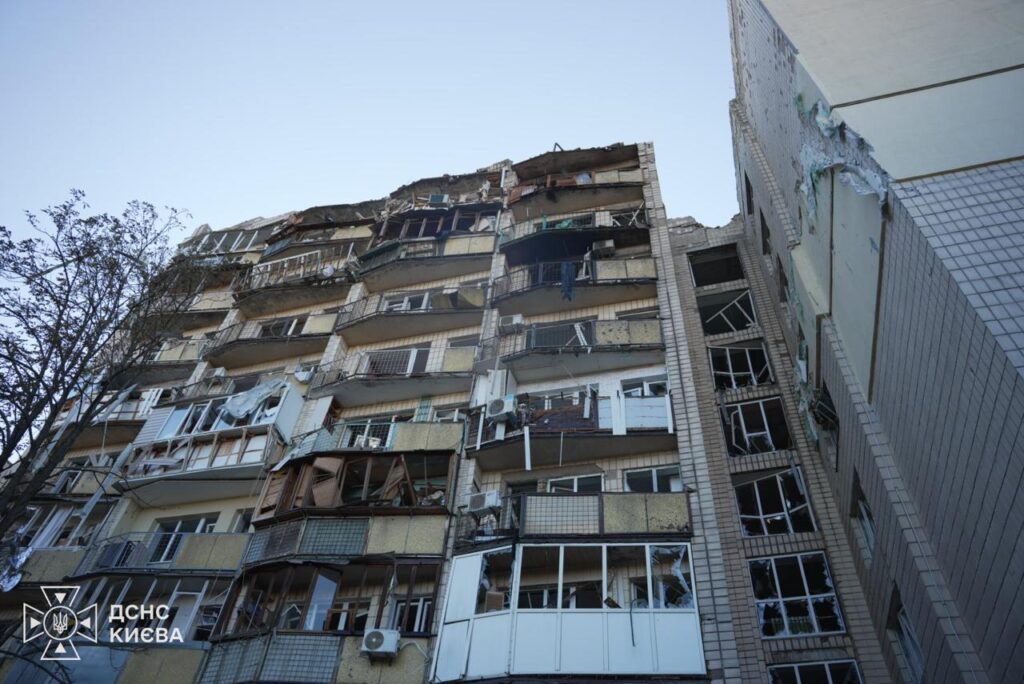
In Solomianskyi district, the upper two floors of a nine-story residential building were destroyed, with a fire breaking out across the seventh through ninth floors.
People were trapped in two residential buildings and a school bomb shelter, prompting emergency crews to carry out rescue operations.
Thirteen people have now been confirmed killed in Kyiv, including a woman whose body was discovered by rescuers in Solomianskyi district, Interior Minister Ivan Vyhivskyi said.
Ukrainian President Volodymyr Zelenskyy said a children's hospital and a school were also damaged in the capital.
Kyiv Mayor Vitali Klitschko said the city would observe 21 August as a day of mourning, with entertainment events banned and flags lowered.
Death toll from Russia's missile attack on Kyiv city and Oblast climbs to 14
Ukraine's Interior Minister Ivan Vyhivskyi says another woman's body was found in Solomianskyi. More than 40 were wounded. The strikes damaged about 20 residential buildings, a school, a children's… pic.twitter.com/3wicnc5lni
Around 20 residential buildings in Kyiv were significantly damaged, along with a school, children's hospital, and kindergarten, Vyhivskyi said.
In Sviatoshynskyi district, Russian strikes hit an industrial site and sparked fires at warehouses covering 500 and 1,000 square meters. Another warehouse also caught fire.
In Darnytskyi district, a non-residential site was hit, causing fires across warehouses and vehicles covering about 1,000 square meters. Rescuers saved one person and handed them over to medics.
Other locations saw damage to residential buildings, a medical facility, cars, garages, and stores.
More than 600 rescuers and police officers have been involved in clearing the aftermath since overnight. Emergency crews are currently working at two sites in Kyiv and three more in Boryspil and Brovary districts.
Rescuers are using specialized equipment and robotic systems to clear the rubble and check whether anyone remains trapped.
Police have set up assistance centers at the attack sites to register reports of damaged or destroyed property. More than 200 reports have already been processed in Kyiv, while psychologists are assisting people who lost relatives or their homes.
Russia's overnight missile attack killed at least 12 people in Kyiv and injured 34.
Russia pounded Kyiv and its surrounding region for hours into 20 August with dozens of ballistic missiles, Kalibr cruise missiles, and jet-powered Shahed drones.
The attack also hit Kyiv Oblast. One man was killed in Brovary district and another was injured.
In Boryspil district, six people were injured, four of whom were hospitalized. The attack damaged 14 private homes, four warehouses, a gas station, an apartment building, and eight vehicles.
Vyhivskyi said fires also engulfed warehouses storing household goods in Kyiv Oblast. Firefighters are working to contain the blaze, with aviation also deployed.
Russian attack leaves Kyiv and six oblasts with power outages
Ukrenergo says outages hit Kyiv and Kyiv, Donetsk, Odesa, Zaporizhzhia, Dnipropetrovsk, and Kharkiv oblasts. Ukrainians are asked to limit powerful appliances from 18:00–22:00.
Zelenskyy calls for stronger ballistic missile defenses
Zelenskyy said Russia’s growing investment in ballistic missiles requires a stronger international response and more air defense for Ukraine.
He said Ukraine is working daily on its FREYJA interceptor program, but stressed that Patriot interceptors remain irreplaceable and are needed every day to protect Ukrainian cities from Russian ballistic missile attacks.
“Every additional missile saves the lives of our people,” Zelenskyy said, thanking those working to provide Ukraine with additional air defense capabilities.
Russia spent months preparing its missiles. Zelenskyy says Ukraine still lacks enough interceptors to stop them
Russia combined different ballistic missiles, cruise missiles, and drones in its overnight attack to maximize damage to civilian infrastructure, President Volodymyr… pic.twitter.com/4iaRPs7dLC
Ukraine's Air Force said Russia launched 168 Shahed-type attack drones, Gerbera decoy drones, and other drones, along with 36 Kh-101, Iskander-K, and Kh-59 cruise missiles, eight Kalibr missiles, two Banderyl-type loitering munitions, and ballistic missiles including Oniks, Zircon, Iskander-M, and S-400 missiles.
As of 9:30 a.m., Ukrainian air defenses had shot down or suppressed 31 cruise missiles, all eight Kalibr missiles, both loitering munitions, and 145 drones, according to the Air Force.
The Air Force reported impacts at 28 locations and debris from intercepted targets at two others.
The attack continued into the late morning, with air raid sirens still active and several Russian drones still in Ukrainian airspace.
Ukraine is under a massive Russian attack right now: Russia's Kalibr missiles were launched from the Novorossiysk port
The warhead of the Kalibr family of cruise missiles typically weighs 450 kg Exilenova+ pic.twitter.com/DBgfRX7xhB
Russia hit Kyiv with ballistic and hypersonic missiles overnight, damaging a children’s hospital, with people trapped in a shelter
Rail traffic disrupted
Russia's strikes also disrupted rail traffic around Kyiv after railway infrastructure was damaged. Several suburban and regional trains between Kyiv and Nizhyn were rerouted or canceled.
Strikes reported in other regions
Zelenskyy said the attack also caused damage in Odesa and Chernihiv oblasts.
In Odesa Oblast, Russian drones targeted a border crossing with Moldova, while strikes in Chernihiv Oblast damaged gas infrastructure.
Russia strikes food trucks in Odesa Oblast
The attack ignited two trailers carrying food. Ukrainian firefighters extinguished the blaze, the State Emergency Service reported. No one was killed or injured.
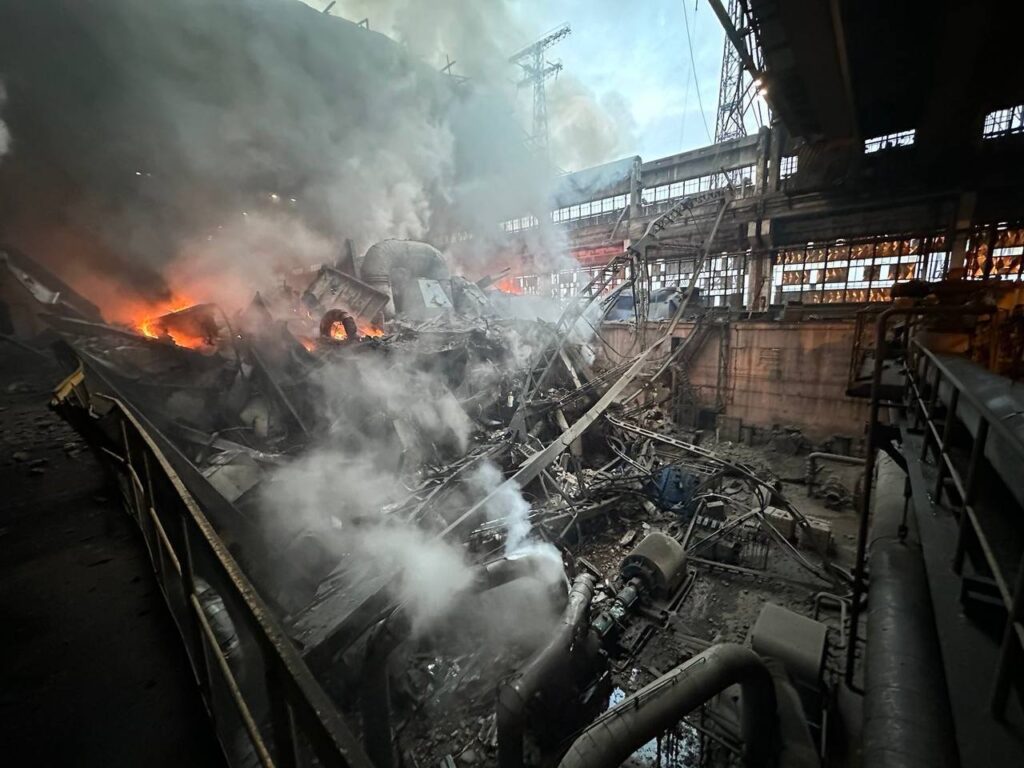
Russia launched a massive attack on one of Ukraine’s DTEK thermal power plants, severely damaging equipment and forcing the facility to stop generating electricity, the energy company said on 18 August.
The strike comes as Russia continues its campaign against Ukraine’s energy infrastructure ahead of another winter, with Ukrainian officials warning that Moscow is expected to intensify attacks on critical civilian systems.
DTEK power plant sustains significant damage
Russia launched a massive attack on one of Ukraine’s DTEK thermal power plants, severely damaging equipment and forcing the facility to stop generating electricity, the energy company said on 18 August.
The strike comes as Russia continues its campaign against Ukraine’s energy infrastructure ahead of another winter, with Ukrainian officials warning that Moscow is expected to intensify attacks on critical civilian systems.
DTEK power plant sustains significant damage
DTEK said Russian forces heavily damaged equipment at one of its thermal power plants, forcing the station to halt electricity generation. The company did not identify the plant or provide an estimate of when it could resume operations.
DTEK’s thermal power plants have been attacked more than 230 times since the start of Russia’s full-scale invasion, according to the company.
During the previous major attack on 12 June, one DTEK employee was killed, the company said.
Ukraine faces another winter of energy attacks
The latest strike adds to extensive damage Russia has inflicted on Ukraine’s power system. Energy Minister Denys Shmyhal said earlier this month that Russia has destroyed or damaged more than 80% of Ukraine’s power-generating capacity.
Ukraine is preparing for another difficult winter after repeated Russian strikes last winter caused widespread damage to electricity and heating infrastructure.
Shmyhal has also warned that Russia could broaden its campaign this winter by targeting Ukraine’s water systems. Such attacks could make prolonged power outages significantly more dangerous for civilians by disrupting water supplies and sewage systems.
Kyiv Oblast faces mounting Russian attacks
The power plant strike came as Russia launched another large drone attack on Ukraine, with Kyiv Oblast the main target. Ukraine’s Air Force said dozens of drones were launched during the day, with most intercepted or suppressed by Ukrainian air defenses.
The latest assault is part of a broader pattern of Russian attacks on Kyiv Oblast in recent weeks. Alongside energy infrastructure, Russian forces have repeatedly targeted warehouses, distribution centers and other logistics facilities around the capital, disrupting the systems that supply Kyiv and other parts of Ukraine.
With winter approaching, the combination of attacks on energy generation and civilian logistics is adding pressure to a country already dealing with years of damage to its critical infrastructure.
More than 100 drones were detected near Romania over the past 96 hours, with NATO fighter jets scrambled seven times in response to the increased aerial activity, Romanian Defense Minister Radu Miruță said, according to Antena 3 CNN.
The figures come as Romania faces a growing number of drone incidents linked to Russia’s war against Ukraine. Romanian forces have recently shifted from monitoring and escorting drones to actively destroying those that enter Romanian airspa
More than 100 drones were detected near Romania over the past 96 hours, with NATO fighter jets scrambled seven times in response to the increased aerial activity, Romanian Defense Minister Radu Miruță said, according to Antena 3 CNN.
The figures come as Romania faces a growing number of drone incidents linked to Russia’s war against Ukraine. Romanian forces have recently shifted from monitoring and escorting drones to actively destroying those that enter Romanian airspace, while NATO aircraft are increasingly being called on to respond to aerial threats along the alliance’s eastern flank.
NATO aircraft repeatedly activated
According to Miruță, Romanian authorities detected more than 100 drones in the vicinity of Romanian territory during the four-day period. NATO fighter jets participating in air-policing missions were activated seven times.
Miruță did not report how many of the detected drones entered Romanian airspace, nor how many were identified as Russian or Ukrainian.
Miruță said most of the drones were destroyed by Ukrainian air defenses outside Romania, but close enough for their debris to reach Romanian shores.
“[Russia’s war in Ukraine] is a real war, with real consequences. That is why we are taking every measure we can to limit the indirect consequences that are also being felt here,” Miruță wrote on Facebook.
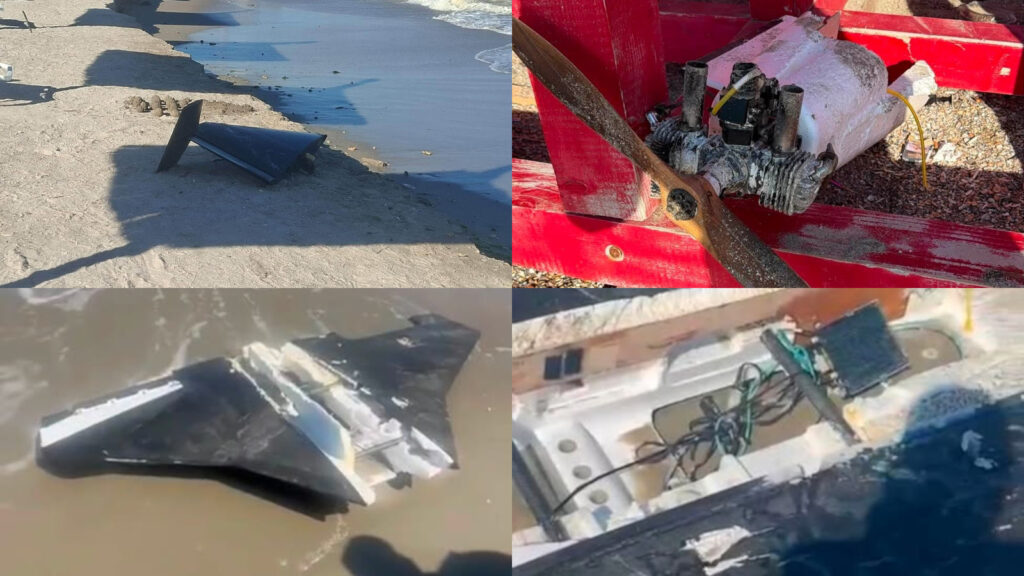
The report comes shortly after Romania destroyed two Russian Gerbera-type drones that were found drifting in the Black Sea near the Neptun Deep offshore gas project on 11 August. Romanian military divers carried out controlled detonations after Ukraine confirmed the drones were not Ukrainian.
Romania has begun shooting down drones
The latest figures follow a significant change in Romania’s response to drone incursions.
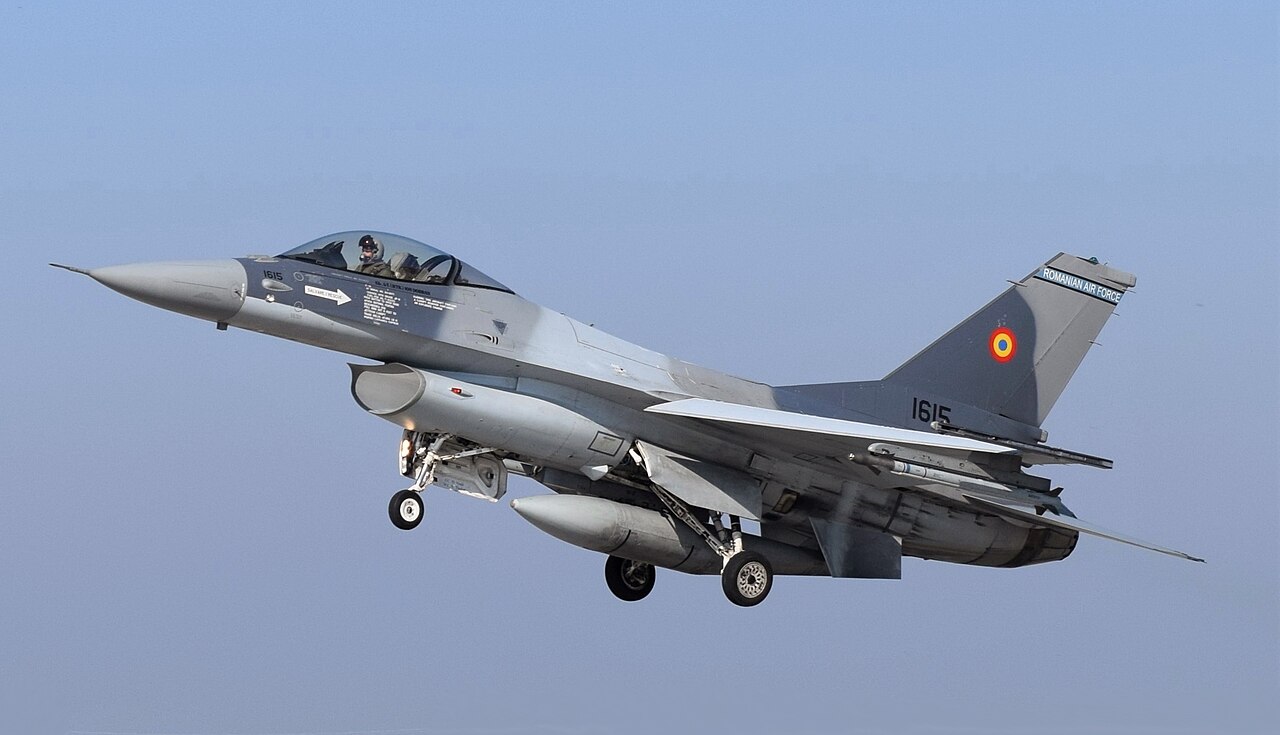
In late July, Romanian F-16s shot down three drones over Romanian territory and territorial waters in three consecutive days. One of the drones was identified as a Russian Shahed-type attack drone, while investigations were conducted into the others.
The July incidents marked a shift from Romania’s previous approach of tracking or escorting drones that crossed into its airspace during Russian attacks on Ukraine. Four of the five drones shot down in EU and NATO countries at that point had been neutralized by Romanian military pilots, according to Miruță.
Romanian President Nicușor Dan called the repeated violations of Romanian airspace “inadmissible and intolerable” and Bucharest prepared a diplomatic protest to Moscow after one of the downed drones was identified as Russian.
Explore further
Romania knocks a third Russian drone from its sky in 72 hours
Drone war reaches beyond Ukraine
Romania has repeatedly dealt with drones crossing its border during Russian attacks on Ukrainian territory, particularly in the vicinity of Ukrainian ports on the Danube and the Black Sea.
In June, a Ukrainian sea drone that had lost control, which Kyiv attributed to Russian electronic warfare, exploded near an oil terminal in the Romanian port of Constanța. No one was injured, but more than 1,000 people were evacuated from the area as a precaution.
The incidents have also extended beyond Romania. On 14 August, NATO fighter jets shot down a foreign drone after it entered Latvian airspace. Latvia said the drone had entered its airspace as a result of Russian electronic warfare activity.
The repeated incidents have made drone activity around NATO’s eastern border an increasingly regular consequence of Russia’s war against Ukraine.
A Russian ballistic strike on Zaporizhzhia, Ukraine, killed seven employees of the Zaporizhstal steel plant and injured 21 others, Ukrainian steelmaker Metinvest, the plant’s majority owner, said on 11 August.
The workers were on their way to a shelter after an air raid alert was announced when the strike hit the industrial site, according to the company.
Metinvest said the attack also damaged energy facilities and infrastructure, as well as the main and auxiliary f
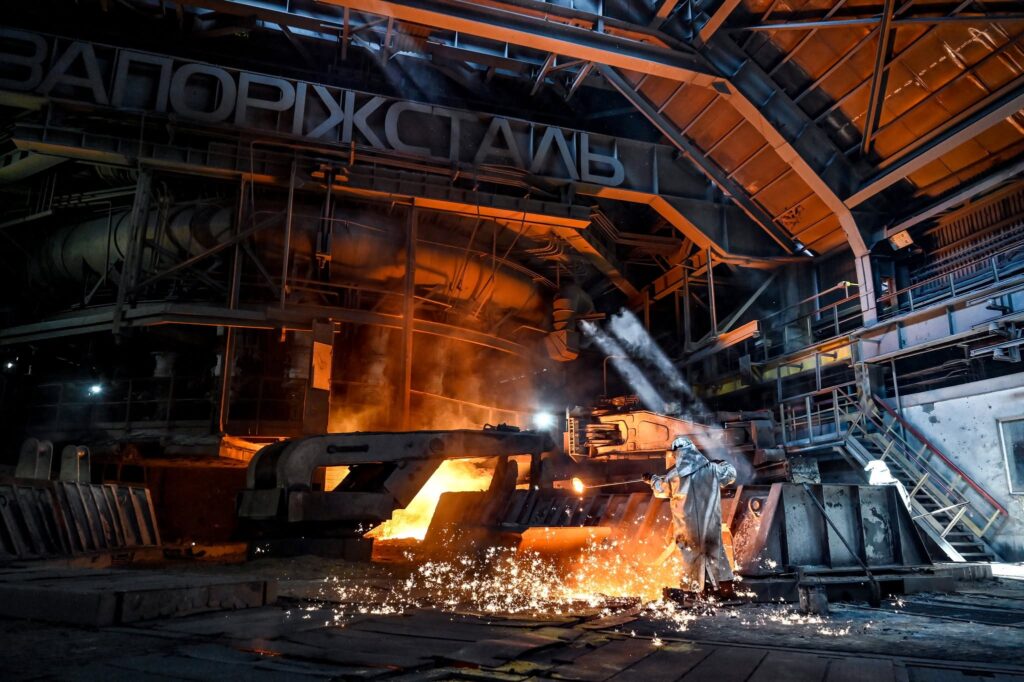
A Russian ballistic strike on Zaporizhzhia, Ukraine, killed seven employees of the Zaporizhstal steel plant and injured 21 others, Ukrainian steelmaker Metinvest, the plant’s majority owner, said on 11 August.
The workers were on their way to a shelter after an air raid alert was announced when the strike hit the industrial site, according to the company.
Metinvest said the attack also damaged energy facilities and infrastructure, as well as the main and auxiliary facilities of the plant’s coke and blast-furnace operations.
Russia’s ballistic missile strikes leave very little time between threat detection and impact for people to react and reach shelter. Several people have been killed from strikes across the country while on their way to bomb shelters.
Zaporizhstal shuts down after strike
Metinvest said Zaporizhstal has been completely shut down following the attack, while its other production sites in the city are operating at reduced capacity.
Company specialists are assessing the damage and determining the scope and timeline of repairs. Emergency and restoration work is already underway, according to the statement.
The company said its Zaporizhzhia facilities are civilian industrial sites that employ tens of thousands of people and produce steelmaking and coke-chemical products.
Metinvest said it is providing medical assistance and support to the 21 injured employees and staying in contact with the families of those killed and wounded.
The company's facilities will fly flags at half-mast on 11 and 12 August in mourning for the seven Zaporizhstal workers killed in the attack.
North Korean missiles used against Zaporizhzhia
Ukrainian President Volodymyr Zelenskyy said Zaporizhzhia was targeted overnight with North Korean ballistic missiles, Russian Zircon missiles and guided aerial bombs.
Zelenskyy said the attack was designed to cause maximum damage to civilian infrastructure.
Ukraine's military intelligence said on 5 August that a North Korean missile unit had begun deploying to western Russia, potentially adding up to 120 ballistic missiles and six launchers to Russia's arsenal.
According to Ukrainian intelligence representative Andrii Cherniak, North Korea has supplied Russia with around 150 KN-23 and KN-24 missiles since late 2023, including a recent batch of 40 missiles.
The missiles have been linked to attacks with high civilian casualties, including a July strike on Radushne in Dnipropetrovsk Oblast that killed an entire family.
Ballistic threat is growing
The strike comes as Russia has increasingly relied on ballistic missiles in attacks on Ukrainian cities. Unlike drones and cruise missiles, ballistic missiles travel at very high speeds and are much harder for Ukraine to intercept, particularly because Kyiv has a limited supply of the advanced air defense interceptors needed to counter them, mainly US-made Patriot systems.
Ukraine has reported that most ballistic missiles launched in recent mass attacks have penetrated its air defenses, contributing to severe destruction and civilian casualties.
Russia destroyed a Bosch warehouse in Ukraine overnight into 5 August, the German manufacturer said. The strike wiped out its stock of household goods and industrial technology. No Bosch employee or worker for its logistics partner was injured.
The strike was part of Russia's intensified attacks on the warehouses and distribution centers that supply Ukraine. Destroying these facilities eliminates stored goods and disrupts the delivery of food, parcels, equipment, and ot
Russia destroyed a Bosch warehouse in Ukraine overnight into 5 August, the German manufacturer said. The strike wiped out its stock of household goods and industrial technology. No Bosch employee or worker for its logistics partner was injured.
The strike was part of Russia's intensified attacks on the warehouses and distribution centers that supply Ukraine. Destroying these facilities eliminates stored goods and disrupts the delivery of food, parcels, equipment, and other essential products. Recent attacks have hit both Ukrainian companies and international brands operating in the country.
Bosch said the warehouse premises belonged to its logistics partner. The company's preliminary assessment found that all Bosch products stored there had been destroyed. It did not disclose the location.
Bosch and its logistics partner are now assessing the damage. They are also seeking ways to maintain operations and meet commitments to customers and business partners.
Russia launches anti-ship missiles on stocks
The Bosch loss came during the same overnight barrage that devastated warehouses and production sites across Kyiv and the surrounding region. Russian strikes destroyed facilities used by Rozetka, Nova Poshta, and Epicentr. The three companies distribute parcels, household goods, and construction supplies across Ukraine.
That attack killed 17 people and wounded 44. Ukraine intercepted none of the 24 ballistic missiles or four anti-ship missiles Russia launched, according to Ukrainian officials.
Ukraine is looking for ways to protect its businesses
The same night, a strike burned down the central Ukraine warehouse of German automotive-products maker Liqui Moly. All employees escaped injury, and the company said it would continue operating.
Russia's overnight barrage burned down the Ukrainian warehouse of a German household brand, Liqui Moly. Source: Liqui Moly
Two nights earlier, a Russian drone attack outside Dnipro set food warehouses ablaze. On 1 August, another Russian drone hit a Rozetka warehouse where 270 people were working, killing one employee.
The campaign comes as Russia launches more missiles than Ukraine can reliably stop. Moscow fired 376 missiles in July, including 126 ballistic weapons, Euromaidan Press previously reported.
Ukrainian presidential adviser Serhii Beskrestnov said Russia had intensified attacks on warehouses and production sites. He warned businesses to disperse their stocks. Russia can sustain about 100 ballistic-missile launches a month and locate commercial targets using cheap local informants, he said.

 Connexion


 Exilenova+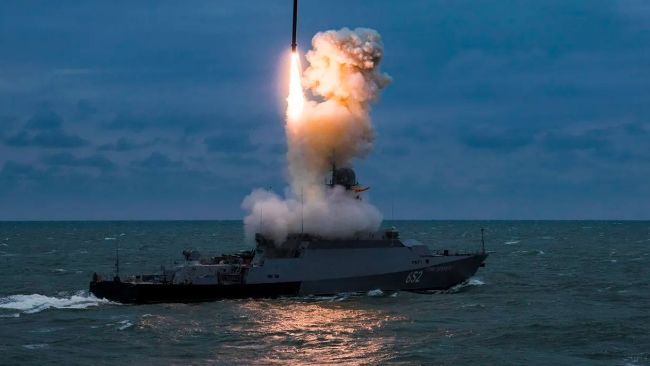
 DSNS
DSNS