Vue normale

Ukraine reported hitting warships and an oil terminal in a Russian port city whose mayor claimed only falling debris

9 septembre 2026 à 08:09

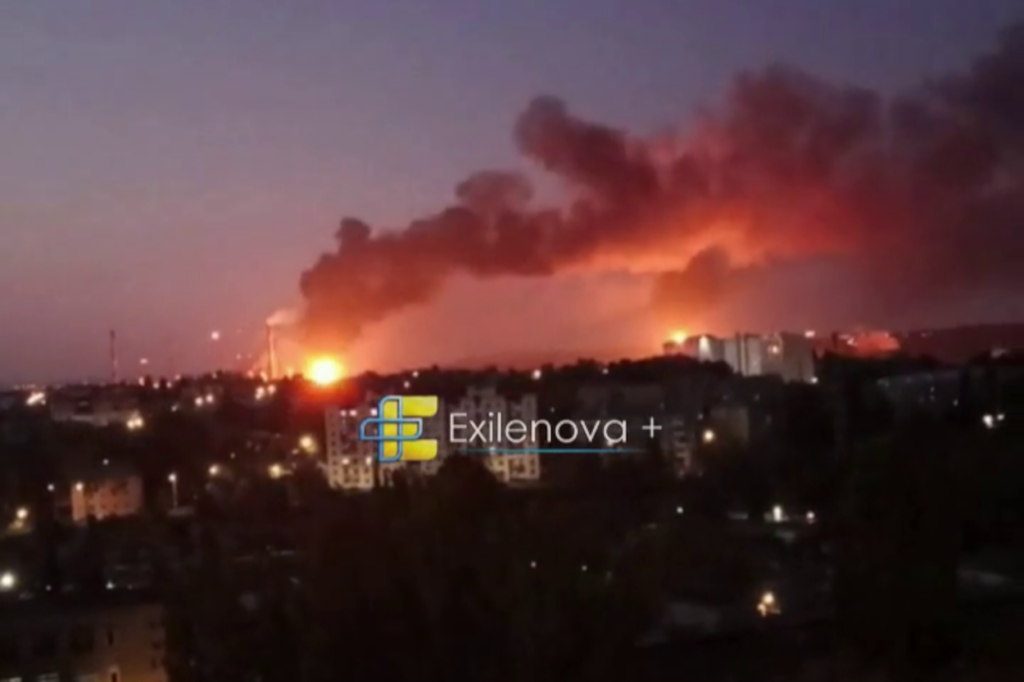
ukraine reported hitting warships oil-shipping terminal where local authority only fires falling debris · post fire port novorossiysk russia 9 2026 пожежа в порту новоросійська вересня джерело exilenova+ news ukrainian

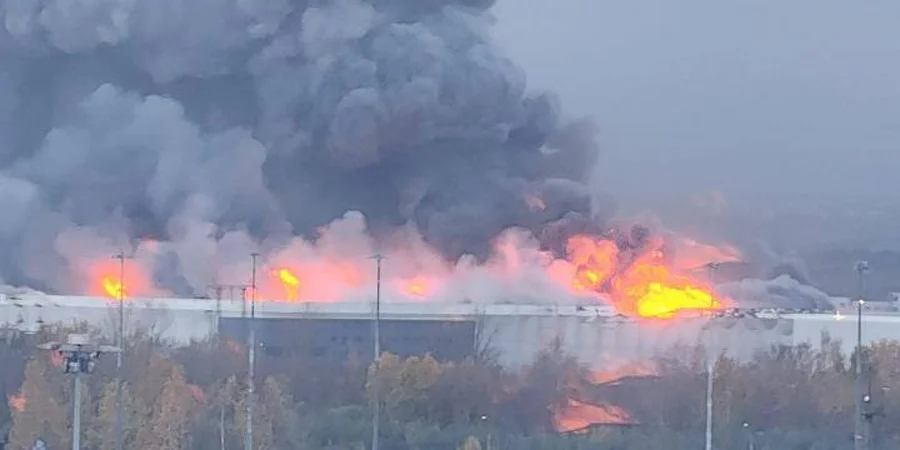
Ukrainian drones set a fuel-oil terminal on fire in the port of Novorossiysk again overnight on 9 September, monitoring channels reported. Novorossiysk's mayor claimed drone debris came down on enterprise grounds in the Russian city. Ukraine's military later reported strikes on the naval base there, including on warships that carry cruise missiles.

Russia keeps attacking Ukrainian cities and the power grid with missiles and drones as winter closes in, and because Ukraine's air defenses cannot stop every ballistic salvo in its final seconds, the launch platforms and the fuel and export money that sustain them sit among the few targets Kyiv can act on directly.

Analysts placed the fire on a fuel-oil terminal

Ukrainian defense news outlet Militarnyi located the strike through geospatial intelligence (GEOINT) analysis, which matches published photos and video against satellite imagery and maps. That work showed drones hitting the mazut (fuel-oil) terminal inside the port in Krasnodar Krai. Fire broke out on the terminal grounds, and at least one storage tank took damage. Around midnight, residents began reporting the sound of drones overhead, Russian air defense fire, and explosions.

novorossiysk on the map

The Ukrainian Telegram channel Exilenova+ started posting videos of the attack on the port around midnight, further into the morning sharing more footage of the fire at the fuel-oil terminal. Russian news Telegram channel Astra wrote of fires on the grounds of several enterprises and near a residential building, with a column of dark smoke in eyewitness video. Its analyst then established from that footage that the burning object was the Novorossiysk Fuel Oil Terminal. Astra called the work open-source intelligence (OSINT) analysis, meaning conclusions drawn from publicly available imagery and records.

Satellites feeding NASA's Fire Information for Resource Management System (FIRMS), which flags heat sources from orbit, recorded several seats of fire in Novorossiysk after the night raid. An OSINT reading of eyewitness video also placed a fire at an apartment building in the city.

ukraine reported hitting warships oil-shipping terminal where local authority only fires falling debris · post geolocation strike port infrastructure novorossiysk russia 9 2026 based nasa firms data esri геолокація ураження
Geolocation of the strike on port infrastructure in Novorossiysk, Russia, 9 September 2026, based on NASA FIRMS data and an ESRI map. Map: Militarnyi

Novorossiysk mayor Andrei Kravchenko claimed overnight that air defenses were still fighting off the drone attack. He stated that drone debris had come down at several enterprises and near a residential building, and claimed that preliminary information showed no casualties. Kravchenko later acknowledged hits on enterprises while describing the cause as "falling debris."

Night fires in Novorossiysk during the UDF attack. pic.twitter.com/Jr85ypYrOz

— Exilenova+ (@Exilenova_plus) September 9, 2026

Ukrainian drones and missiles hit the same naval base overnight on 12 August, damaging Kalibr-carrying frigates and stopping all three of the port's grain terminals.

Ukraine's account named ships, the harbor, and the terminal

Robert Brovdi, callsign Madyar, commands Ukraine's Unmanned Systems Forces, the military branch that runs the country's drone units. He said Ukrainian Defense Forces struck the Russian naval base at Novorossiysk in a combined operation overnight, and that the Russians lost several military vessels there, missile carriers among them.

Ukrainian President Volodymyr Zelenskyy confirmed strikes on Novorossiysk and Krasnodar Krai around midday. He said Ukraine hit a terminal used for shipping oil, military harbor facilities, and warships, including carriers of Kalibr cruise missiles.

No independent assessment of damage to the vessels had emerged by midday, and Russia's defense ministry did not address the naval base.

Novorossiysk after the night attack. Locals report a large number of attackers at night, and the port infrastructure has been destroyed. pic.twitter.com/junTmDn0tp

— Exilenova+ (@Exilenova_plus) September 9, 2026

The port Ukraine keeps returning to

The targeted terminal stores and transships fuel oil, a heavy refinery product, along with light petroleum products, and its throughput runs to about 4 million tons a year. It belongs to the Novorossiysk Commercial Sea Port, the largest seaport in Russia, and counts among the leading enterprises of the city's transport hub.

Novorossiysk has come under repeated drone attack as one of Russia's biggest export gateways, whose work directly funds the war against Ukraine. Disruption there has already pushed oil supplies from Russia's western ports 15% below plan. Russia's fleet sheltered in the port after Ukrainian strikes pushed it out of occupied Crimea. Novorossiysk lies more than 300 km from the front line.

  • ✇Euromaidan Press
  • Drone attack damages Russia’s Baltic oil port as drone crosses Latvia into Estonia
    Russian authorities reported damage and a fire at Ust-Luga port during an overnight drone attack on 1 September. One drone crossed Latvian and Estonian airspace, prompting NATO to scramble Turkish F-16s. The attack hit a major outlet for Russian energy exports. Reuters reported that Ust-Luga loads about 700,000 barrels of crude a day and exported 32.9 million metric tons of oil products in 2025. Its terminals also serve shadow-fleet tankers used to bypass sanctions.
     

Drone attack damages Russia’s Baltic oil port as drone crosses Latvia into Estonia

1 septembre 2026 à 06:26

A thick gray plume of smoke rises above a distant tree line beneath a pink early-morning sky.

Russian authorities reported damage and a fire at Ust-Luga port during an overnight drone attack on 1 September. One drone crossed Latvian and Estonian airspace, prompting NATO to scramble Turkish F-16s.

The attack hit a major outlet for Russian energy exports. Reuters reported that Ust-Luga loads about 700,000 barrels of crude a day and exported 32.9 million metric tons of oil products in 2025. Its terminals also serve shadow-fleet tankers used to bypass sanctions.

Leningrad Oblast Governor Alexander Drozdenko said emergency crews were working in Ust-Luga’s port zone while the damage was being assessed. He later claimed Russian air defenses downed 52 drones over Leningrad Oblast and reported no casualties.

Drozdenko did not identify the damaged facility or specify the scale of the fire.

Militarnyi published an image attributed to the Exilenova+ monitoring channel showing a blaze near the port. The image’s time and precise location have not been independently verified.

🇷🇺 🔥 **𝗗𝗥𝗢𝗡𝗘𝗦 𝗛𝗜𝗧 𝗨𝗦𝗧-𝗟𝗨𝗚𝗔 𝗣𝗢𝗥𝗧 𝗔𝗡𝗗 𝗧𝗢𝗟𝗬𝗔𝗧𝗧𝗜 𝗢𝗩𝗘𝗥𝗡𝗜𝗚𝗛𝗧, 𝗙𝗜𝗥𝗘𝗦 𝗕𝗥𝗘𝗔𝗞 𝗢𝗨𝗧 𝗔𝗧 𝗕𝗢𝗧𝗛

🔥 Drones struck the port zone of Ust-Luga in Leningrad region overnight into September 1, sparking a fire, governor Alexander Drozdenko… pic.twitter.com/lGEesBMOBN

🇺🇦 Vortex Report (@VortexReportX) September 1, 2026

There was no immediate information on whether the attack disrupted port operations. Ukraine had not claimed responsibility at the time of publication.

The regional warnings coincided with a broader drone attack on western Russia that included Ust-Luga, although authorities did not specifically link the drones approaching or entering NATO airspace to the port strike.

Baltic states issue warnings as NATO fighters scramble, while Finland restricts traffic

Estonia warned residents in eight counties and scrambled Turkish fighter jets serving in NATO’s Baltic Air Defense Mission, which protects the skies of Estonia, Latvia, and Lithuania.

Estonian Air Force Commander Brigadier General Riivo Valge said around a dozen drones had moved near the country’s border. One briefly entered southeastern Estonia, while another approached Narva before turning back into Russia. The fighters did not open fire, and the warnings were lifted by about 5:30 a.m.

Latvia issued two warnings overnight, first in the Ludza municipality and then in the Alūksne municipality. Latvia’s Armed Forces said a drone crossed Latvian airspace and continued into Estonia, where NATO fighters searched for it. The Latvian alerts ended at around 4:20 a.m.

Finland’s Armed Forces introduced temporary air and sea restrictions over the eastern Gulf of Finland at 3:37 a.m.

The military lifted both restrictions shortly after 6 a.m., saying no drones had strayed into Finland.

Repeated strikes on Ust-Luga

Ust-Luga lies around 110 kilometers west of St. Petersburg and some 900 kilometers from Ukraine. It is the endpoint of the Baltic Pipeline System-II, which carries Russian crude to the port for export. The area hosts facilities operated by Russian gas producer NOVATEK and fertilizer maker EuroChem.

Ukraine began its series of 2026 attacks on Ust-Luga overnight on 24–25 March. The Security Service of Ukraine, the country’s counterintelligence agency, and the military’s elite Special Operations Forces confirmed that they had struck NOVATEK’s gas-condensate complex, which processes liquid hydrocarbons into fuels.

Further attacks followed in late March. They set fuel-storage tanks ablaze, damaged a pier and pumping equipment, and temporarily halted port operations, according to Russian Telegram channel Astra.

On 7 April, Ukraine’s General Staff, the military’s senior command, confirmed another strike on Ust-Luga’s oil terminal, saying three oil storage tanks were destroyed. Another attack on 14 August again caused damage and a fire, Drozdenko reported at the time.

❌