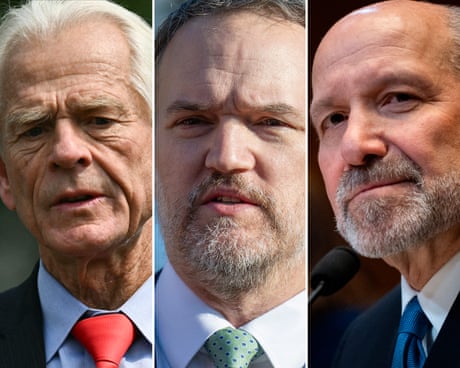
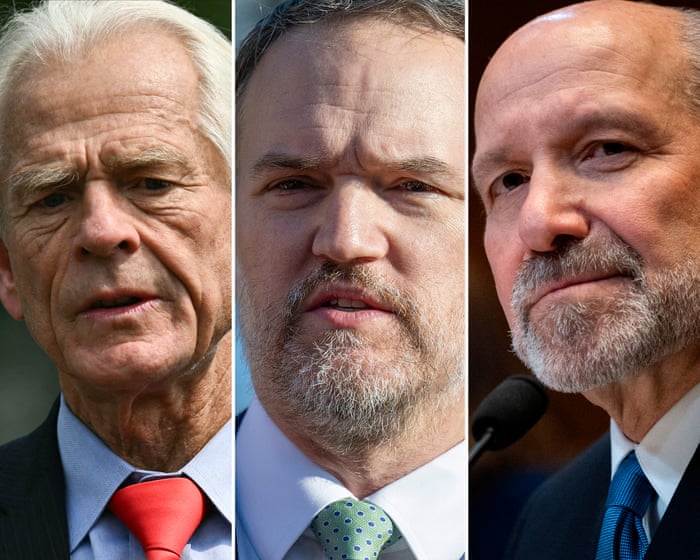
US trade representative Jamieson Greer has a level-headed reputation but commerce secretary Howard Lutnick and White House adviser Peter Navarro also have key rolesHaving reportedly read Victor Hugo’s Les Misérables, in French, during a military tour of duty in Iraq, Jamieson Greer considered himself an unlikely target for accusations of francophobia.But Donald Trump’s US trade representative, hitherto one of the president’s less high-profile cabinet members, found himself in that uncomfortable
US trade representative Jamieson Greer has a level-headed reputation but commerce secretary Howard Lutnick and White House adviser Peter Navarro also have key roles
Having reportedly read Victor Hugo’s Les Misérables, in French, during a military tour of duty in Iraq, Jamieson Greer considered himself an unlikely target for accusations of francophobia.
But Donald Trump’s US trade representative, hitherto one of the president’s less high-profile cabinet members, found himself in that uncomfortable position amid the acrimonious collapse of bilateral trade talks with Canada that now threatens to degenerate into an all-out trade war between the two close trading partners whose economies are tightly intertwined.
Reform UK denies donor and crypto-billionaire’s global interests in arms and military could present a conflict of interest over its defence spending policyAs he struggles with questions about the millions he has received from the billionaire Christopher Harborne, Nigel Farage has made no secret of his enthusiastic support for the industry that made part of his benefactor’s fortune – cryptocurrency. The Reform UK leader even urged the governor of the Bank of England to drop a crypto policy that m
Reform UK denies donor and crypto-billionaire’s global interests in arms and military could present a conflict of interest over its defence spending policy
As he struggles with questions about the millions he has received from the billionaire Christopher Harborne, Nigel Farage has made no secret of his enthusiastic support for the industry that made part of his benefactor’s fortune – cryptocurrency. The Reform UK leader even urged the governor of the Bank of England to drop a crypto policy that may be costly for Harborne.
But another element of Harborne’s business interests could prove still more consequential if it shapes Farage’s positions. There appears to be no precedent for a major UK donor who is so entwined with the military.
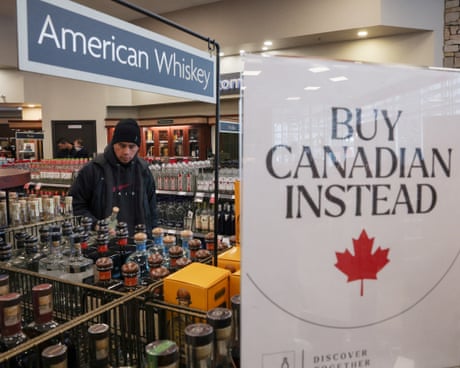
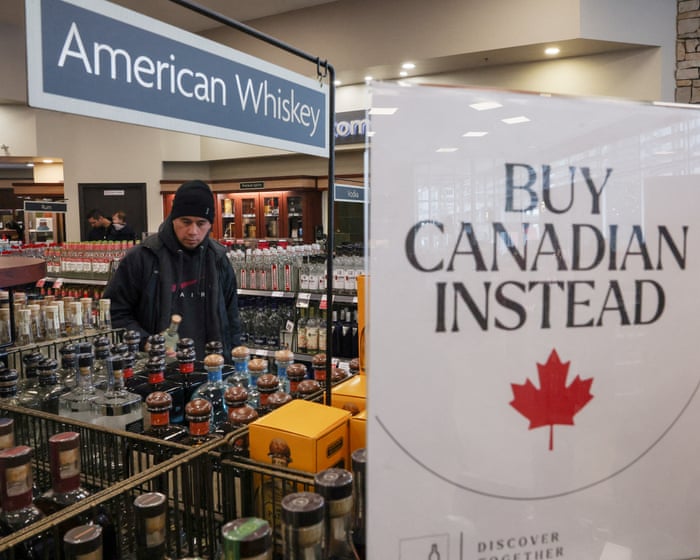
Avoiding US goods and services – from tech to whisky to air travel – has forced many to find a new way of livingFor William McDonald, 38, a diesel mechanic from Thunder Bay, Ontario, “Canadian is always the first choice,” even if it means his weekly bills are higher.“As soon as Trump started putting those tariffs on in February [last year], I started boycotting US goods,” he said. “Avoiding American products has driven my costs up, and I’m still happy to do it. Continue reading...
Avoiding US goods and services – from tech to whisky to air travel – has forced many to find a new way of living
For William McDonald, 38, a diesel mechanic from Thunder Bay, Ontario, “Canadian is always the first choice,” even if it means his weekly bills are higher.
“As soon as Trump started putting those tariffs on in February [last year], I started boycotting US goods,” he said. “Avoiding American products has driven my costs up, and I’m still happy to do it.
With the federal deficit near 6% of GDP and the national debt over $40tn, America’s fiscal position looks increasingly precariousBessent ‘will lose’ battle with bond markets, ex-mentor warnsAre we seeing the first signs of panic in Donald Trump’s Treasury? The US is by far the world’s biggest debtor, and the steady rise in global long-term interest rates – which I have long argued was inevitable – is starting to cause real pain.Until now, the Treasury secretary, Scott Bessent, has dismissed conc
Are we seeing the first signs of panic in Donald Trump’s Treasury? The US is by far the world’s biggest debtor, and the steady rise in global long-term interest rates – which I have long argued was inevitable – is starting to cause real pain.
Until now, the Treasury secretary, Scott Bessent, has dismissed concerns about US debt, which recently surpassed $40tn, as a big nothingburger. Growth, in his telling, will be so spectacular the US will easily be able to meet its interest obligations without any significant tax rises or spending cuts, while the rest of the world will happily keep feeding it money. But if Bessent really believes that, why is he trying to strong-arm the bond market by fiddling with the maturity structure of government debt?
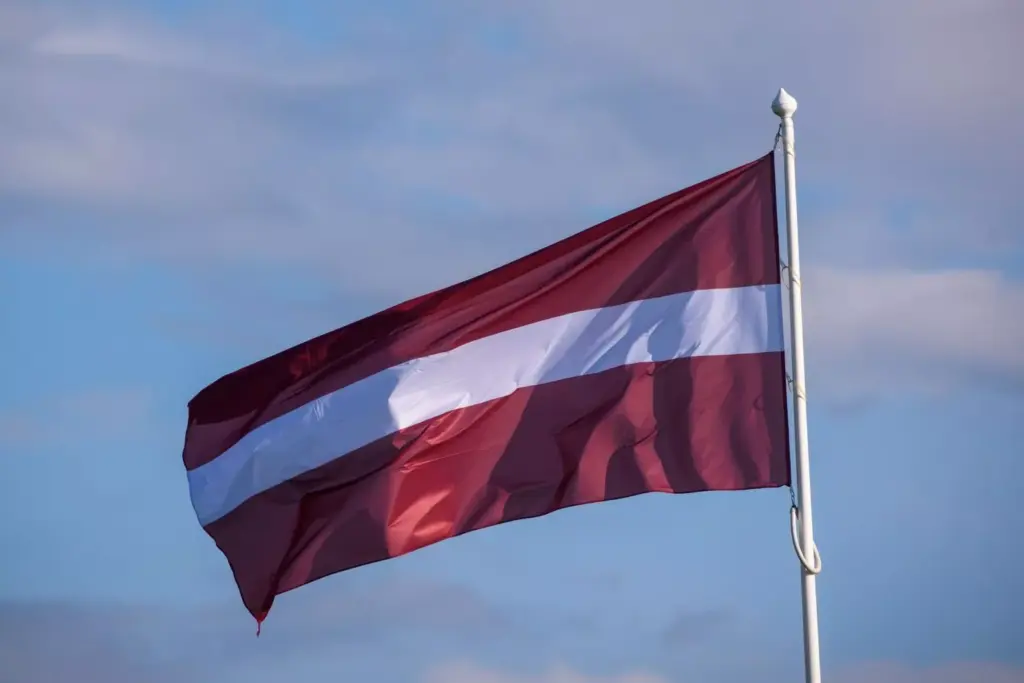
Latvia has resumed publishing monthly lists of locally registered companies trading goods with Russia or Belarus after a nearly three-year pause, public broadcaster LSM reported on 20 August 2026.
Prime Minister Andris Kulbergs has pledged to sever its remaining economic ties with Russia and Belarus, but substantial trade remains legal because EU sanctions are not a full embargo. The monthly register makes that commerce visible by identifying the companies involved.
Latvia has resumed publishing monthly lists of locally registered companies trading goods with Russia or Belarus after a nearly three-year pause, public broadcaster LSM reported on 20 August 2026.
Prime Minister Andris Kulbergs has pledged to sever its remaining economic ties with Russia and Belarus, but substantial trade remains legal because EU sanctions are not a full embargo. The monthly register makes that commerce visible by identifying the companies involved.
The Central Statistical Bureau, Latvia's national statistics agency, published the names of 171 companies for July. A subsequent analysis by Latvian news agency LETA found that more than two-thirds operated in logistics, food and agriculture, or medicine.
The disclosure is, in effect, a form of naming and shaming. Yet the statistics bureau stopped publishing a similar list in autumn 2023 because names without transaction details could not support objective conclusions. The register is not a sanctions blacklist, and inclusion does not indicate a sanctions violation.
Under an amendment adopted on 18 June 2026, Latvia’s tax authority must send the data to the statistics bureau each month. The change also lifted tax-confidentiality rules that had kept company names private, LSM reported.
The explanatory note accompanying the law said disclosure was intended to support Ukraine. The amendment's authors argued that Latvian companies should not contribute to Russian and Belarusian state revenues while Russia’s invasion continues, according to LSM.
Latvia seeks to cut its remaining trade
The Prime Minister said in June that Latvia must sever its remaining economic ties with Russia and Belarus. However, he indicated that pharmaceutical exporters would likely be exempted on national-security grounds.
Latvia’s exports to Russia and Belarus each fell only about 7% in 2025, while imports from Russia plunged by more than two-thirds, according to official data cited by Euromaidan Press.
EU sanctions do not prohibit all trade
The EU renewed its economic sanctions on Russia through July 2027, preserving restrictions on trade, finance, and energy, as well as on goods and technology with both civilian and military uses, Euromaidan Press reported in June.
The Council of the EU says its trade restrictions exclude health, pharmaceutical, food, and agricultural products to avoid harming Russian civilians. Those exclusions allow EU companies to continue lawful trade with Russia even while other parts of its economy remain under sanctions over the invasion of Ukraine.
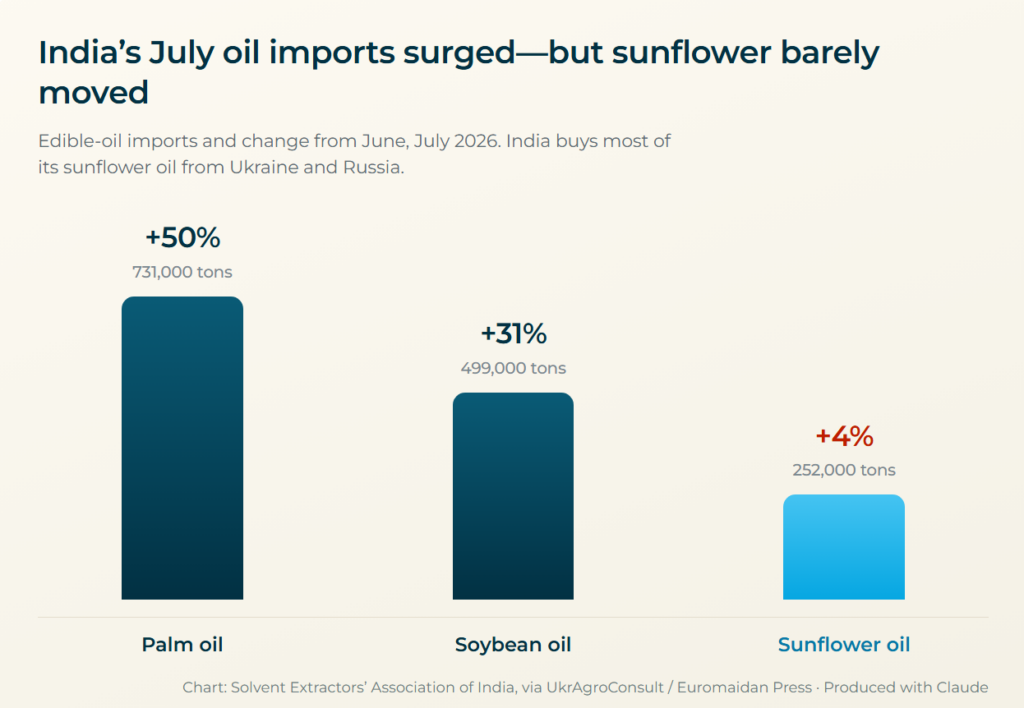
India, the world’s biggest edible-oil importer, bought a 10-month high of about 1.5 million tons of vegetable oil in July, up roughly a third from June, as refiners restocked for the August-to-November festival season.The jump was led by palm oil, up by half, and soybean oil, up about a third, data compiled by UkrAgroConsult. Sunflower oil rose just 4%, the weakest of the three, and India buys most of it from Ukraine and Russia, the world’s leading exporters.
Vegetable
India, the world’s biggest edible-oil importer, bought a 10-month high of about 1.5 million tons of vegetable oil in July, up roughly a third from June, as refiners restocked for the August-to-November festival season.
The jump was led by palm oil, up by half, and soybean oil, up about a third, data compiled by UkrAgroConsult. Sunflower oil rose just 4%, the weakest of the three, and India buys most of it from Ukraine and Russia, the world’s leading exporters.
Vegetable oil and meal earn more than 15% of Ukraine’s foreign currency.
Now the sunflower supply is the one going into reverse. India’s sunflower-oil imports are set to fall in August to their lowest since February, with about 150,000 tons of cargo delayed at Black Sea ports and buyers in the south switching to soybean, four traders told Reuters.
The switch is only partly about the war. Soybean and palm oil are cheap, and India’s own mills are pressing less oil from a smaller domestic harvest, leaving refiners leaning on imports, Rajesh Patel told OFI. The GGN Research partner expects soybean oil imports to top 500,000 tons a month into the autumn.
India’s edible-oil imports hit a 10-month high in July 2026 as refiners stocked up for the festival season, but the surge went to palm and soybean oil while sunflower barely moved. Chart: Solvent Extractors’ Association of India, via UkrAgroConsult / Euromaidan Press · Made with Claude
Russia’s strikes close Ukraine’s window
Ukraine is in no position to capture that demand. Russian strikes on Chornomorsk in mid-July forced Kernel, its largest exporter, to halt its terminals there, and the country’s farmers’ union reckons the summer attacks have cost a third of its capacity to ship grain by sea.
Explore further
Russia’s port strikes leave Ukraine’s grain with almost nowhere else to go
Vegetable oil and meal earn more than 15% of Ukraine’s foreign currency, among its largest sources of the hard cash that funds the war, the industry association Ukroliyaprom has said.
The squeeze runs through geography Ukraine cannot change: almost all its farm exports leave by sea, through a handful of Odesa ports now under regular fire, with no land route at anything near the scale.
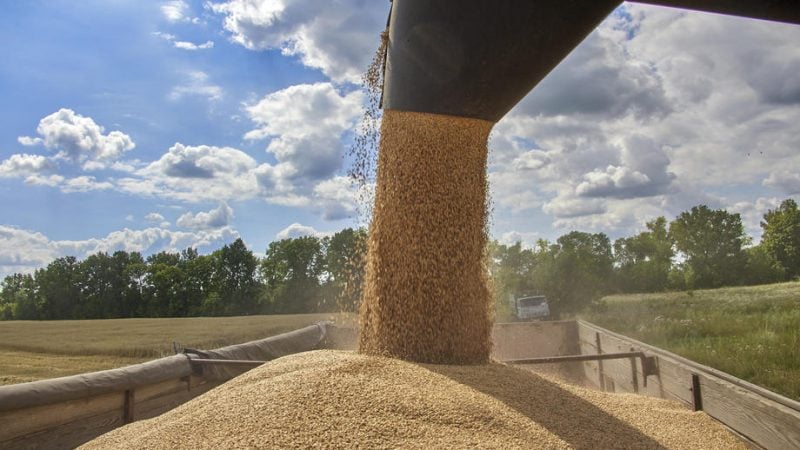
Kyiv now expects to export barely half the harvest it had planned to sell abroad this season, and is arranging emergency loans so farmers can plant the next crop. Since the start of August, grain leaving by rail has dropped by more than three-quarters year-on-year, according to Ukrzaliznytsia data.
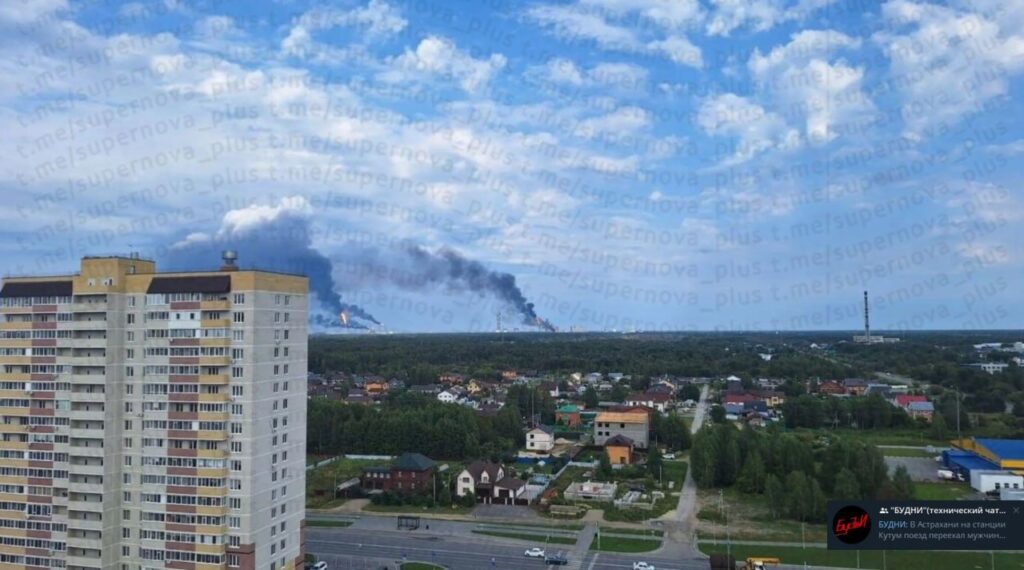
A Ukrainian drone strike shut the plant that produces 40% of Russia’s liquefied petroleum gas on 10 August, and the country’s fuel crisis snapped back across at least 16 regions within days.The shutdown of the Sibur ZapSibNefteKhim complex in Tobolsk, western Siberia, removes about six million metric tons of annual LPG capacity from a fuel system that was already under strain.
Explore furthe
A Ukrainian drone strike shut the plant that produces 40% of Russia’s liquefied petroleum gas on 10 August, and the country’s fuel crisis snapped back across at least 16 regions within days.
The shutdown of the Sibur ZapSibNefteKhim complex in Tobolsk, western Siberia, removes about six million metric tons of annual LPG capacity from a fuel system that was already under strain.
Explore further
“This is money of his accomplices burning”: Russian partisans and Ukraine hit Siberian plant tied to Putin’s inner circle
Gasoline restrictions had begun easing across Russia at the end of July, when Ukrainian drones temporarily shifted to other targets. When the strikes resumed in early August, fuel rationing returned immediately, the independent Russian outlet 7×7 reported.
Three industry sources told Reuters on Tuesday that the complex stopped operations indefinitely “while the extent of the damage and its consequences are being assessed.”
No LPG volumes were offered from the Tobolsk delivery point on Russia’s commodity exchange—a point that earlier this year handled about 4,000 metric tons of propane-butane mix per day. Sibur declined to comment.
The shutdown of the Sibur ZapSibNefteKhim complex in western Siberia, removes six million metric tons of annual LPG capacity from a fuel system already under strain.
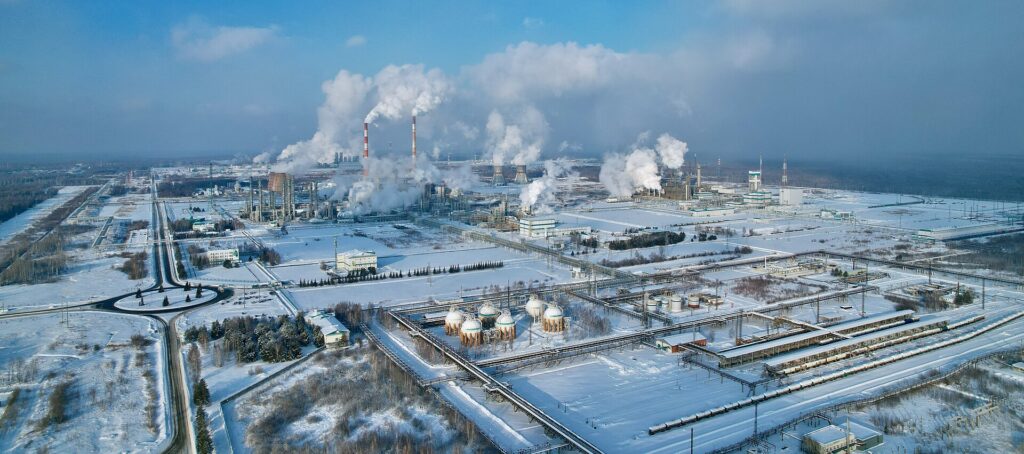
The ZapSibNefteKhim and Tobolsk-Polymer industrial sites in Tobolsk, western Siberia, seen in February 2023. A Ukrainian drone strike shut ZapSibNefteKhim indefinitely on 10 August 2026, taking 40% of Russia’s LPG production offline. Photo: Vyacheslav Bukharov/Wikimedia Commons, CC BY-SA 4.0.
A strike on one unit stopped the entire plant
Tyumen Oblast Governor Aleksandr Moor confirmed a fire at an industrial site following a drone attack but did not identify the facility.
Ukraine’s Special Operations Forces Deep Strike units, working with the Russian insurgent movement Chornaya Iskra (Black Spark), claimed the strike. The plant sits more than 2,200 kilometers from the front line.
Militarnyi’s OSINT analysis identified the specific target as the complex’s central gas fractionation unit—the plant’s entry point, where raw hydrocarbons are separated into usable products before anything else in the production chain can run. About half of ZapSibNefteKhim’s output feeds Sibur’s own petrochemical complex in Tobolsk; the rest goes to market.
Sibur held contracts to supply feedstock to defense-industry enterprises, including the Kamenskiy Kombinat, which produces solid rocket fuel and motors for the Grad, Smerch, and Uragan rocket systems.
Sibur also supplied the Perm Gunpowder Plant, which makes charges for multiple-launch rocket systems, air-defense complexes, and cruise missile boosters, Militarnyi also reported. The Sverdlov Plant and Biysk Oleum Plant, both explosives manufacturers, were also Sibur clients.
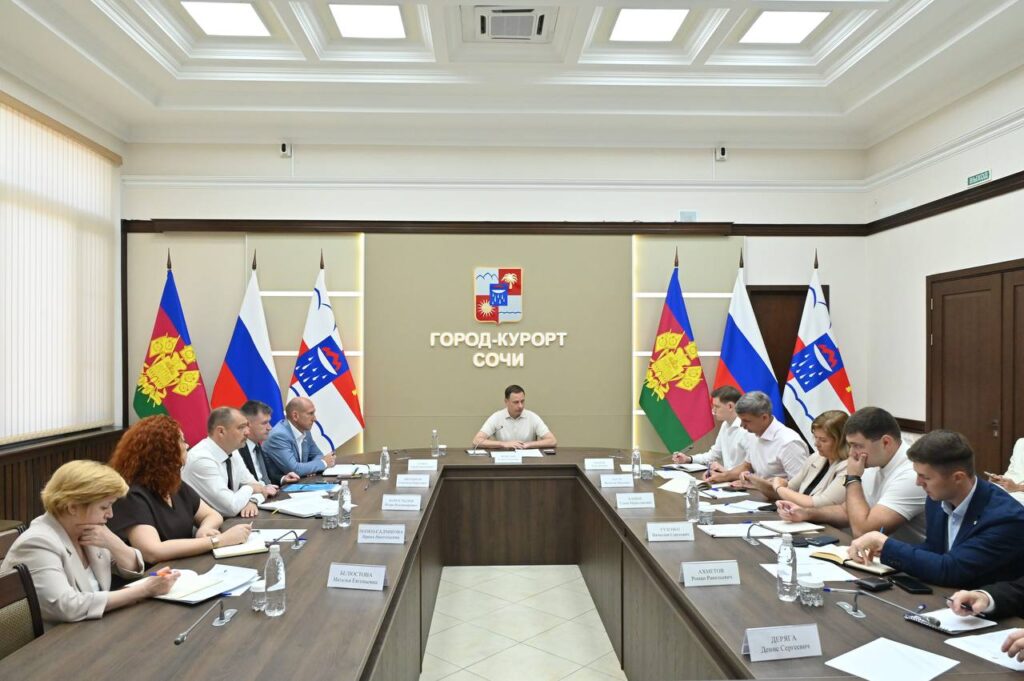
Sochi Mayor Andrei Proshunin meets with city officials as fuel remains available at only 38 of the resort’s 58 gas stations. Photo: Andrei Proshunin/Telegram
Fuel rationing returned within days
Across at least 16 regions, the fuel restrictions that had briefly eased in July are back, 7×7 reported.
In Sochi—Russia’s most famous beach resort—Mayor Andrei Proshunin said on Telegram that fuel was available at only 38 of the city’s 58 gas stations. Deputy Mayor Vyacheslav Bauer told residents and tourists to use public transport or stop driving, the Moscow Times reported.
In Bashkortostan, authorities banned gasoline sales in canisters, leaving at least one resident unable to fuel his lawnmower—as he complained to regional head Radiy Khabirov during a televised address, a Bashkortostan outlet reported. Production at the Ufa petrochemical complex is unaffected by the drone strikes, Khabirov said.
Still, the shortage persists for a different reason: every time a drone-alert protocol is activated, fuel tankers halt en route to gas stations, regional official Elena Prochakovsky explained at a briefing reported by Prufy. Three districts remain in a fuel “red zone,” and 19 of 26 gas stations in Sterlitamak are operating.
Lipetsk Oblast Governor Igor Artamonov told residents not to expect improvement for one to two weeks, Lipetsk outlet Ploshchad reported. “If you can leave 10 liters unfilled, the person arriving on empty will thank you,” he said.
Russia’s fuel system was already breaking
The Tobolsk shutdown lands on an already fractured system. By mid-July, fuel rationing had spread to more than half of Russia’s regions. Ukraine’s drone campaign had struck Russian refineries 194 times in the first half of 2026 alone—eleven times the previous year’s pace—knocking nearly half the country’s refining capacity offline, Ukraine’s General Staff reported on 4 July.
Repair timelines keep slipping because sanctions block the spare parts Russian plants need. To plug the gap, Russia has banned gasoline exports, permitted lower-grade fuel, and begun importing gasoline from India and Morocco, refined from its own crude—shipping it 14,000 kilometers home because its refineries cannot meet domestic demand.
The Tobolsk shutdown removes more LPG output than any single strike of the war. Russia was already rationing fuel in more than half its regions before this strike.
The European Union has reached a long-term trade agreement with Ukraine, marking the end of wartime trade liberalisation measures, though key details of the deal remain undisclosed.EU Trade Commissioner Maros Sefcovic and Agriculture Commissioner Christophe Hansen announced the agreement on June 30, calling it a "predictable" and "reciprocal" framework. However, they did not reveal the final quotas or volumes included in the deal. Sefcovic noted that the finer points would be finalised "in the c
The European Union has reached a long-term trade agreement with Ukraine, marking the end of wartime trade liberalisation measures, though key details of the deal remain undisclosed.
EU Trade Commissioner Maros Sefcovic and Agriculture Commissioner Christophe Hansen announced the agreement on June 30, calling it a "predictable" and "reciprocal" framework. However, they did not reveal the final quotas or volumes included in the deal. Sefcovic noted that the finer points would be finalised "in the coming days."
The new deal replaces the autonomous trade measures (ATMs) that allowed Ukrainian agri-food exports to enter the EU tariff-free since 2022. Those temporary measures expired on June 5, reinstating pre-war trade conditions for a brief period.
Structured in three tiers, the new framework introduces modest increases in quotas for products considered sensitive by EU member states, such as eggs, poultry, sugar, wheat, maize, and honey. A second group of products—including butter, skimmed milk powder, oats, barley, malt, and gluten—will see their quotas adjusted to reflect peak import levels reached since the start of the war. A third category, which includes items such as whole milk powder, fermented milk, mushrooms, and grape juice, will be fully liberalised.
Once finalised, the text of the agreement will be submitted to the Council for ratification.
Sefcovic said negotiations concluded over the weekend, less than a month after formal talks began. However, some critics claim the EU delayed the process to avoid backlash from farmers ahead of Poland’s presidential election.
The agreement also benefits EU producers, granting them greater access to the Ukrainian market for goods like pork, poultry, and sugar. But Hansen made it clear that expanded access for Ukrainian exports will depend on Ukraine’s compliance with EU agricultural standards by 2028, including rules on animal welfare and pesticide use. "This commitment also fits perfectly with Ukraine's EU accession path," he said.
The deal includes safeguard provisions, allowing the EU or individual member states to restrict imports if domestic markets face serious disruptions. “Both EU and Ukrainian producers deserve a stable and predictable basis for the future development of bilateral trade,” Hansen added.

 Connexion