Vue normale

Russia hit Kyiv with ballistic and hypersonic missiles overnight, damaging a children’s hospital, with people trapped in a shelter (UPDATE)

19 août 2026 à 18:26

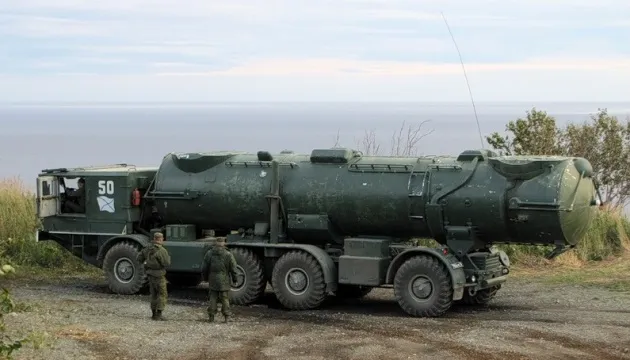
Kalibr missile launch black sea

Russia has launched another massed missile attack on Kyiv in the early hours of 20 August. Russian forces struck the capital with ballistic and Zircon hypersonic missiles, with loud explosions heard across the city and region, according to Ukraine's monitoring channel Yeradar.

The strike is the latest in Russia's campaign of massed missile attacks on Kyiv. Russia has repeatedly hit the capital with ballistic and hypersonic weapons that Ukraine struggles to intercept for lack of Patriot missiles, killing civilians in their homes.

As of 1 AM, Russian Kalibr cruise missiles are approaching Ukrainian cities from Novorossiysk.

Ukraine is under a massive Russian attack right now: Russia's Kalibr missiles were launched from the Novorossiysk port

The warhead of the Kalibr family of cruise missiles typically weighs 450 kg
🎥Exilenova+ pic.twitter.com/DBgfRX7xhB

— Euromaidan Press (@EuromaidanPress) August 19, 2026

Earlier, Ukraine's Defense Ministry said that Russia went back to using imported electronics for its Kalibr cruise missiles’ guidance system after failing to replace them with homemade alternatives.

The ship-launched missile’s homing boards “are made up of more than 80–90% foreign-made components," the Ukrainian authorities reported.

The confirmed toll so far

Casualties were mounting as the attack went on. As of the latest update, one person was killed and three wounded in the attack, the Kyiv City Military Administration said, with information still being clarified.

The strikes hit across several districts. A children's hospital was damaged in the Solomianskyi district, where people were reported to be trapped in a shelter, and a five-story residential building was hit. Warehouses burned in the Sviatoshynskyi district, and non-residential buildings were struck in Darnytskyi, Kyiv Mayor Vitali Klitschko reported.

The attack was still developing

Ukraine's air defenses were engaging an ongoing threat. The Air Force had warned of ballistic weapons approaching from the north and northeast, and monitoring channels reported Russian Tu-95MS strategic bombers taking off, which typically precede cruise-missile launches.

"Explosions in the capital. Kyiv is under ballistic attack. Stay in shelters," Klitschko wrote as the strikes continued.

With the attack unfolding as officials reported it, the full toll and damage were not yet known; the figures provided were preliminary.

One alternative to air defense: Ukraine strikes Russian Bastion system used to attack Ukrainian cities from Crimea

16 août 2026 à 10:38

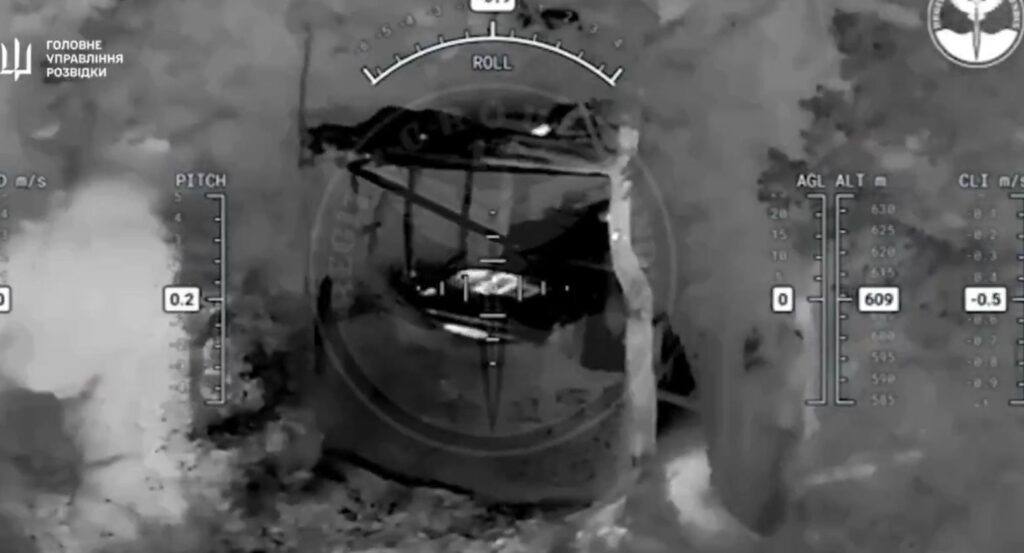
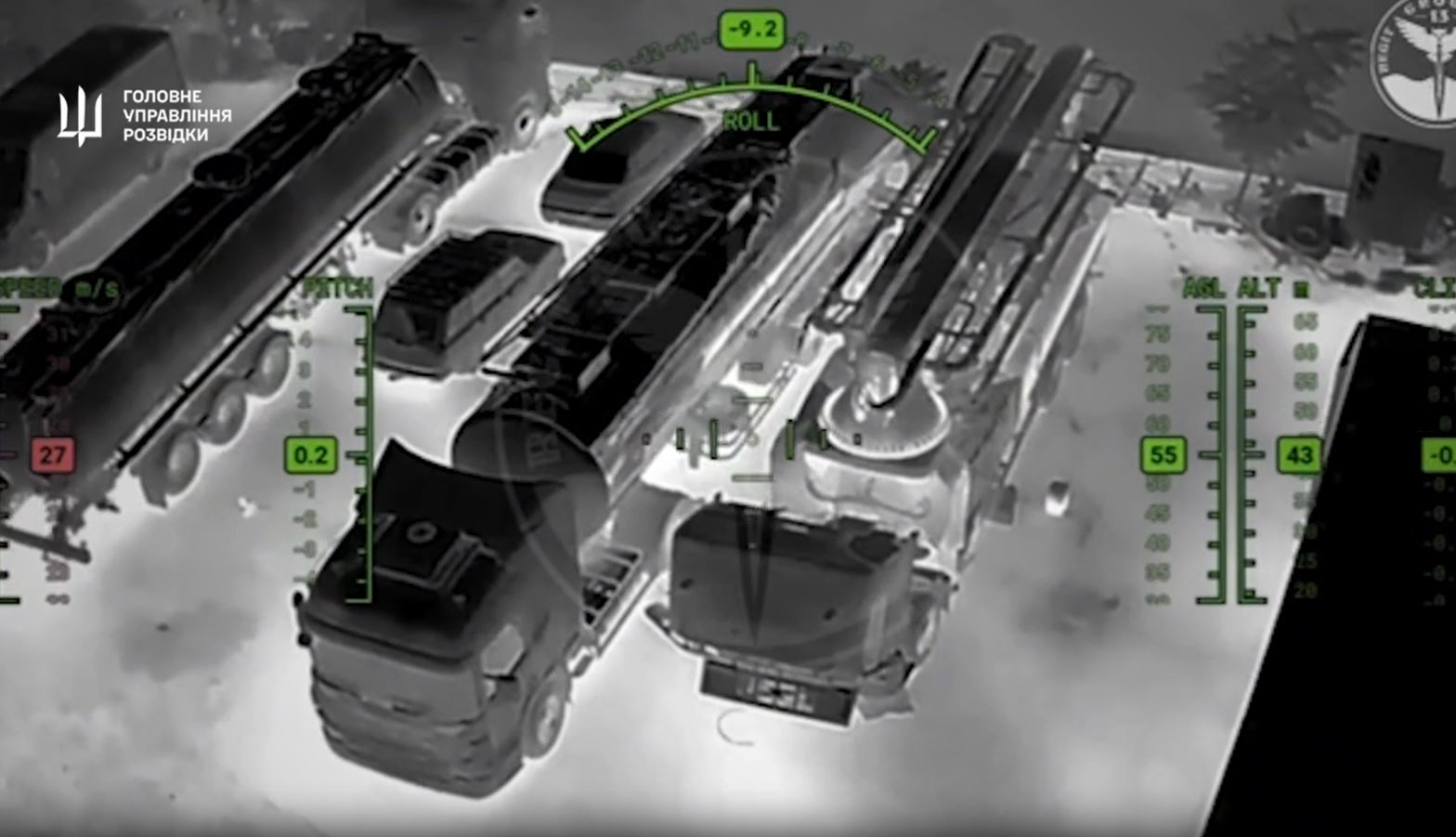
Smoke rises from a Russian Bastion missile system position in occupied Crimea after a Ukrainian strike on 16 August 2026. Screenshot from video: Ukrainian Navy

Ukraine’s Navy said its forces struck the launch positions and deployment site of a Russian Bastion coastal missile system in occupied Crimea overnight on 16 August, reportedly inflicting significant losses in equipment and personnel.

Russia has regularly used Crimea as a launch platform for strikes against Ukraine, making its missile systems there a priority target for Ukrainian forces seeking to reduce Russia’s ability to attack Ukrainian territory.

The Navy said the final Russian losses were still being assessed and did not provide details on the weapons or personnel destroyed.

Bastion systems used to strike Ukraine

The Bastion is a costly and scarce Russian coastal missile system that can launch P-800 Oniks cruise missiles. Russia has used Oniks missiles launched from occupied Crimea to attack targets across southern and other regions of Ukraine.

Oniks is a supersonic anti-ship cruise missile that Russia has adapted for strikes against ground targets in Ukraine, including Odesa Oblast. The missile can travel at more than 3,000 km/h, making it difficult for air defenses to intercept. Its standard range is about 300 kilometers, while upgraded variants can reportedly reach up to 800 kilometers and carry a 300-kilogram warhead. Russia launches ground attacks with Oniks from mobile Bastion systems based in occupied Crimea.

The Navy also said Russia uses Bastion systems to launch Zircon hypersonic missiles against Ukraine.

The Zircon is a newer hypersonic cruise missile designed to reach speeds of roughly Mach 5–9. Russia has used it against Ukrainian cities, including Kyiv, with launches previously reported from Bastion systems in occupied Crimea. Its officially claimed range exceeds 1,000 kilometers, although analysts question that figure; Ukrainian analysts have estimated a lower effective range.

Bastion launchers in Crimea are a particularly important target for Ukraine: they give Russia a mobile platform for striking targets across southern Ukraine and, with Zircon, deep into the country. Ukraine’s air defenses have struggled to intercept these missiles, making strikes on the launchers an important way to reduce the threat before the missiles are fired.

The Ukrainian Navy said the strike was part of ongoing efforts to reduce Russia’s combat potential in the Black Sea region.

Several Ukrainian strikes recorded overnight

The Crimea strike came amid a broader wave of Ukrainian attacks on Russian military, industrial, and logistics targets overnight on 16 August.

Ukraine’s General Staff reported a strike on the Kamensky Combine in Russia’s Rostov Oblast, where a fire was recorded. The plant produces solid rocket fuel for Russia’s Uragan, Smerch, and Tornado-S multiple-launch rocket systems, as well as components for other missile and aviation weapons.

In Moscow Oblast, a Ukrainian drone struck a 250,000-square-meter Wildberries warehouse in Koledino, while another fire was reported at the Severnoye Domodedovo logistics complex. Ukraine’s Defense Ministry later confirmed the Wildberries facility had been put out of operation, saying it was the retailer’s largest warehouse by area.

The General Staff also confirmed the results of two earlier strikes. It said the ZapSibNeftekhim petrochemical complex in Tobolsk was shut down after its central gas-fractionation unit was struck on 10 August, while an 11 August strike damaged several processing units at the Orsknaftaorgsyntez refinery in Orenburg Oblast.

The strikes show the expanding reach of Ukraine’s campaign against the military and industrial infrastructure supporting Russia’s war, from missile systems and rocket-fuel production to oil, petrochemical, and logistics facilities.

Russian plants are overfulfilling monthly missile production quotas by 110-120% and unlikely to pause strikes, Ukraine’s intelligence says

10 août 2026 à 08:41

Vadym Skibitskyi, deputy head of Ukraine’s military intelligence.

Russia fired 198 ballistic and hypersonic missiles at Ukraine in July, its highest monthly total of 2026, alongside 153 cruise missiles, as its factories ran their main missile lines at 110 to 120% of plan, the deputy head of Ukraine's Defense Ministry intelligence directorate (HUR), Major General Vadym Skibitskyi, told RBC-Ukraine in an interview published on 10 August.

The volume reflects a production run, not a drawdown of reserves. Moscow has spent recent months building and firing more of exactly the weapons most likely to penetrate Ukrainian defenses, as Kyiv runs short of the Patriot interceptors that are its only reliable counter to ballistic missiles. On 5 August, Ukraine failed to intercept any of 28 Russian missiles, including 24 ballistic ones.

Launches climbed through the summer

Ballistic launches rose steadily before July's peak: 61 in April, 107 in May, and 134 in June, Skibitskyi said. Attack intervals shortened from roughly one strike every 10 days to weekly, then tighter. "Everything depends on the quantity of weapons produced," he said.

Russia is meeting its monthly plans for the main missile types at 110 to 120% and, by 3 August, had already fulfilled its full-year plan for the Zircon hypersonic and modernized Onyx missiles, building 33 Zircons and 60 Onyx in seven months. That output, Skibitskyi said, makes a lasting pause in strikes unlikely.

Cruise missiles Russian Ukraine
A downed Russian Kh-101 missile. Illustrative photo by Ukraine's Air Force

Plans overfulfilled, reserves untouched

Output for individual systems ran well above target. The July plan for the Kh-101 cruise missile was met at 140%, the Kalibr at 111%, and the Kh-35 at 200%, according to HUR figures. In absolute terms, Russia planned 72 Kh-101s and built 87. It planned 26 Kalibrs and built 29.

Its stockpile of 9M723 ballistic missiles for the Iskander-M stood at about 130 as of 5 August, against a monthly plan of 60, though July output reached 65, Skibitskyi said. For the RM-48U, a Mach 6 surface-to-surface missile launched from the S-400, the August plan is about 40 units on estimated reserves of 400.

"They are not really going into reserves. Right now almost everything for use comes off the assembly line," Skibitskyi said.

ukrainian intelligence russia’s advanced missile arsenal shrinks nearly 50% since russia's iskander-m its mobile launcher iskander domestic pyongyang-supplied kn-23 ballistic stockpile has dropped 580 300 told liga report does mention
An Iskander-M short-range ballistic missile launcher with its missile raised, at the Army-2016 military expo near Moscow, Russia, 8 September 2016. Photo: Vitaly V. Kuzmin

Newly built Kalibrs now largely go to equip Russia's new warships and submarines, he added, and Ukraine intercepts nearly all the Kalibrs fired when it has the surface-to-air missiles to do so.

Kinzhal and Kh-32 output halted since April

Part of the ballistic surge came from stopping other programs. Russia suspended production of the hypersonic Kinzhal and the Kh-32 cruise missile in April, redirecting their propellant and components to missiles it considers more effective, Skibitskyi said. The Kh-32, a modernized Kh-22, had failed repeated attempts to improve its accuracy and was returned to development.

The Kinzhal has a similar problem.

"We can hardly recall a case when this missile hit the target precisely," Skibitskyi said. "For an effective missile the deviation from the target should not exceed 5 to 7 meters, and theirs is 30 meters and more."

Geran-3 jet-powered Russian attack drone.
The Geran-3 jet-powered Russian attack drone. (Photo: Wild Hornets)

A shift to jet-powered drones

Russia's August plan for strike drones, across the Geran, Gerbera, and Harpia families, is 11,000 units, Skibitskyi said. Production dipped in July as plants retooled toward the turbojet Geran-4 and Geran-5, which already made up half of one recent attack and require faster interceptors to stop.

The engines remain a bottleneck. Russia depends on China for the turbojets, pays about $35,000 to $40,000 apiece, and is trying to build its own, Skibitskyi said.

Targets: defense plants, logistics, and Black Sea shipping

Russia concentrates its strikes on Ukraine's defense-industrial complex, centered on Kyiv, Zaporizhzhia, Dnipro, and Kharkiv, and on logistics, including railways, ports, and shipping, Skibitskyi said. He described a methodical campaign against civilian vessels in the Black Sea: "This is an unprecedented situation, when civilian vessels are not simply struck but methodically finished off and destroyed, to deny us the ability to conduct trade."

Energy sites tied to ports and logistics are also targeted, he said, along with other infrastructure meant to sow panic and destabilize the country.

North Korea, Iran, and a Starlink analog

North Korea has transferred 40 more KN-23 and KN-24 missiles after an initial batch of about 100, Skibitskyi said. One recent North Korean missile strayed roughly 15 kilometers from its target and killed a family. Iranian cooperation has narrowed since 2022 and 2023, as Russia now builds its own strike and FPV drones.

Moscow is also fielding Rassvet, a Russian analog of Starlink, faster than planned. Sixteen satellites reached orbit in March 2026, with a planned constellation of 292 by 2027 and 924 by 2035. For now, it works only in fragments, as each satellite passes over Ukrainian territory.

A pause looks unlikely

Russia may cut the number of missiles sent at a single target but is unlikely to stop, Skibitskyi said. The tempo will depend above all on how much it can produce. "They will be able to reduce the number of missiles flying at one target, but they are unlikely to make a pause," he said.

❌