❌

Vue normale

  • ✇Euromaidan Press
  • Ukraine opens its first war-crime case against a ship captain for carrying off 54,000 tons of its stolen grain
    Ukraine has opened its first war-crime case against a ship captain for carrying off its stolen grain. Ukraine’s Security Service and Prosecutor General’s Office have charged the captain of the cargo ship Matros Pozynich with illegally shipping more than 54,000 tons of Ukrainian wheat that Russian forces stole from occupied territory, the Security Service said on Telegram. Russia has looted grain across the Ukrainian land it occupies and sold it abroad as its own, a trade Ukrainian intel
     

Ukraine opens its first war-crime case against a ship captain for carrying off 54,000 tons of its stolen grain

19 octobre 2026 à 11:06

Ukraine has opened its first war-crime case against a ship captain for carrying off its stolen grain. Source: SBU

Ukraine has opened its first war-crime case against a ship captain for carrying off its stolen grain. Ukraine’s Security Service and Prosecutor General’s Office have charged the captain of the cargo ship Matros Pozynich with illegally shipping more than 54,000 tons of Ukrainian wheat that Russian forces stole from occupied territory, the Security Service said on Telegram.

Russia has looted grain across the Ukrainian land it occupies and sold it abroad as its own, a trade Ukrainian intelligence puts at more than 2 million tons in 2025 alone. The case against the Matros Pozynich captain is the first time Kyiv has classified a ship captain’s role in that trade as a war crime, prosecutors said.

The captain, a Russian citizen, twice sailed wheat from occupied Sevastopol in Crimea to the Syrian port of Latakia in 2022 and 2023, according to the Security Service. The first shipment of more than 27,000 tons left Crimea in 2022, and another 27,000-plus tons followed in January 2023.

A crime ordered from the top, investigators say

The shipments were no freelance smuggling run. The grain was removed on the decision of the Russian state’s top political leadership, the Security Service stated, in breach of the Geneva Conventions, which forbid pillaging property in occupied territory.

To hide the voyages, the captain periodically switched off the ship’s automatic identification system and transmitted false coordinates, investigators found. He was notified of suspicion in absentia under two articles of Ukraine’s Criminal Code, including the violations of the laws and customs of war. The service said it is working to identify others in the scheme.

One ship in a fleet that feeds the war

The vessel is a single thread in a much larger theft. Russia has taken roughly 15 million tons of Ukrainian grain from occupied territory between 2022 and August 2025 and earned at least $1 billion from it, money that helps fund the war.

Much of it moves through Russian-controlled ports such as Sevastopol, often relabeled as Russian produce or passed between ships at sea to hide its Ukrainian origin. Buyers have included Syria, Egypt, Turkiye, Lebanon, and others, though Egypt has since pledged to stop accepting grain tied to occupied territories.

  • ✇Euromaidan Press
  • Ukraine’s answer to Russia’s jet-powered Shaheds: a small new missile named Nika, heading into testing
    Ukraine has developed a new missile to knock down Russia's fast, jet-powered Shahed drones, the ones its air defenses catch far less often than older models, President Volodymyr Zelenskyy said on 4 October, Suspilne reported. The weapon, called Nika, has not yet been tested. He announced it during a visit to Kyiv by German Chancellor Friedrich Merz. Russia's plants turn out an estimated 3,000 jet-powered Geran-4 and Geran-5 drones a month, Ukraine's military intelligence estimates, and
     

Ukraine’s answer to Russia’s jet-powered Shaheds: a small new missile named Nika, heading into testing

5 octobre 2026 à 06:38

Illustrative photo of a Ukrainian-made missile launch.

Ukraine has developed a new missile to knock down Russia's fast, jet-powered Shahed drones, the ones its air defenses catch far less often than older models, President Volodymyr Zelenskyy said on 4 October, Suspilne reported. The weapon, called Nika, has not yet been tested. He announced it during a visit to Kyiv by German Chancellor Friedrich Merz.

Russia's plants turn out an estimated 3,000 jet-powered Geran-4 and Geran-5 drones a month, Ukraine's military intelligence estimates, and the jets fly fast enough to outrun the cheap interceptors built for slower, propeller-driven Shaheds. Ukraine plans about 400 units of just one of five interceptor models it is testing by the end of October, as it scrambles to close the gap before winter.

A new missile heads into testing

Both the Ukrainian and German sides have reacted positively to the missile, Zelenskyy said, though he stayed cautious on the result: for now, he said, it only "could be positive." In the same remarks, he announced a successful test of a separate system, the German-Ukrainian interceptor Spys.

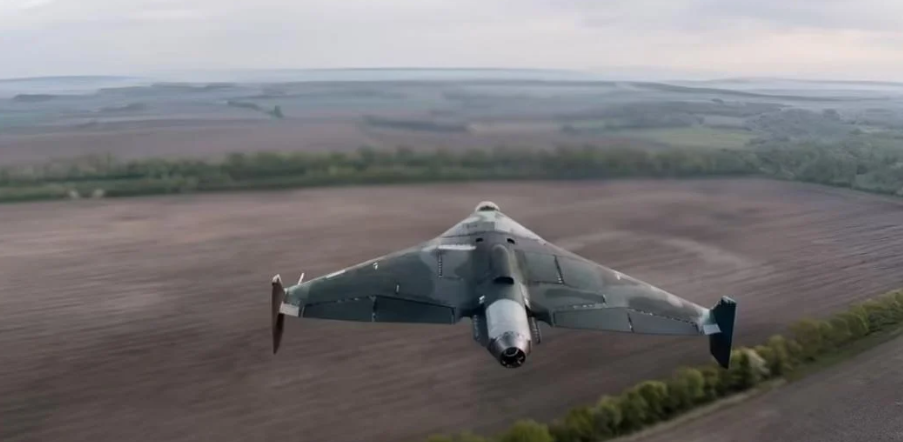
Russia's new "Geran-4 Siker" Shahed variant uses machine-vision AI for targeting. Source: Warhronika
Explore further

Russia adds new weapon to its jet-powered drones, even more dangerous: 40-kilogram charge made to sever high-voltage pylons and iron bridges

Ukraine shoots down 85-92% of propeller-driven Shaheds, Zelenskyy said. Against the jet-powered variants, interception falls to roughly 50-60%, he noted at the press conference with Merz. F-16 fighter jets help close the gap, he said.

From interceptor drones to a new missile

Over the past month, Ukraine tested a new generation of drone interceptors built for the jet-Shahed threat. On 15 September, one struck a Shahed in trials, though Zelenskyy said developers still needed to refine its control system. On 19 September, he said the Security Service of Ukraine (SBU) had created its own interceptor drone and used it to down a jet Shahed in combat. Nika adds a purpose-built missile to that mix.

❌