Russia's newest military satellites keep stalling short of orbit, and Ukraine's top technology adviser says that is exactly why no one should relax. Serhii Beskrestnov, the presidential adviser on defense technology known as Flash, warns that once Russia completes its "Rassvet" satellite network, Moscow could steer its Gerans and missiles from space, and that Ukraine has to build the jamming to stop it before that day comes.
A working Rassvet would hand Russia a permanent link to its lo
Russia's newest military satellites keep stalling short of orbit, and Ukraine's top technology adviser says that is exactly why no one should relax. Serhii Beskrestnov, the presidential adviser on defense technology known as Flash, warns that once Russia completes its "Rassvet" satellite network, Moscow could steer its Gerans and missiles from space, and that Ukraine has to build the jamming to stop it before that day comes.
A working Rassvet would hand Russia a permanent link to its long-range weapons, letting it control drones and missiles online through satellites, what Flash calls "a small catastrophe."
Russia is nowhere near that yet: it has launched around 32 satellites but needs 200 to 250 for stable, round-the-clock coverage, and its most recent batch stalled in low orbit. Flash's point is that the reprieve is temporary.
"Russia is a space power," he wrote, and one heavy Angara rocket could loft much of the constellation in a single launch once its engines are fixed.
Ukraine has tried to choke the program at its source, striking a Russian space-rocket plant in mid-August and reaching for the Plesetsk cosmodrome days later, though the effort has only slowed it.
The MESH failure sets the warning
His alarm rests on a mistake, he says, Ukraine already made. For a year, he wrote, no one in the armed forces systematically worked on countering the MESH radio networks Russia uses to fly its jet Gerans, and no one shielded the capital with electronic warfare, even as the enemy openly built out the technology.
Breaking what he called a lifelong rule against criticizing colleagues, he "thanked" the former commander-in-chief and his electronic-warfare chief for the lapse, he wrote a bit earlier.
The result, he said, is that Russian Geran-5 are now striking under MESH control while Ukrainian specialists scramble to catch up.
The jamming must come first
With Rassvet, Flash argues, Ukraine cannot afford the same delay. The counter-system must not only be designed but actually fielded before the constellation is up, with the country's key infrastructure shielded by the time Russia's satellites reach orbit.
"This electronic warfare must ALREADY have closed all key infrastructure sites," he wrote.
Building it, he cautioned, will be neither fast nor cheap.
Ukraine has successfully tested another interceptor designed to counter Russia’s increasingly common jet-powered Geran attack drones, President Volodymyr Zelenskyy said on 15 September.
The test comes as Russia rapidly expands the use of faster jet-powered Gerans, creating a new problem for Ukraine’s air defenses: these drones give defenders less time to detect and engage them while allowing Russia to maintain large-scale attacks. A successful interceptor could give Ukraine a cheaper, s
Ukraine has successfully tested another interceptor designed to counter Russia’s increasingly common jet-powered Geran attack drones, President Volodymyr Zelenskyy said on 15 September.
The test comes as Russia rapidly expands the use of faster jet-powered Gerans, creating a new problem for Ukraine’s air defenses: these drones give defenders less time to detect and engage them while allowing Russia to maintain large-scale attacks. A successful interceptor could give Ukraine a cheaper, scalable way to counter that threat without relying as heavily on scarce high-end air-defense missiles.
Zelenskyy said Commander-in-Chief Mykhailo Drapatyi reported the successful test, during which the new interceptor struck a Russian Geran drone.
The system still reportedly needs further work, including improvements to some aspects of its control. But the successful test marks another step in Ukraine’s effort to develop a new layer of air defenses against Russia’s faster drones.
Russia is making its drone attacks faster and larger
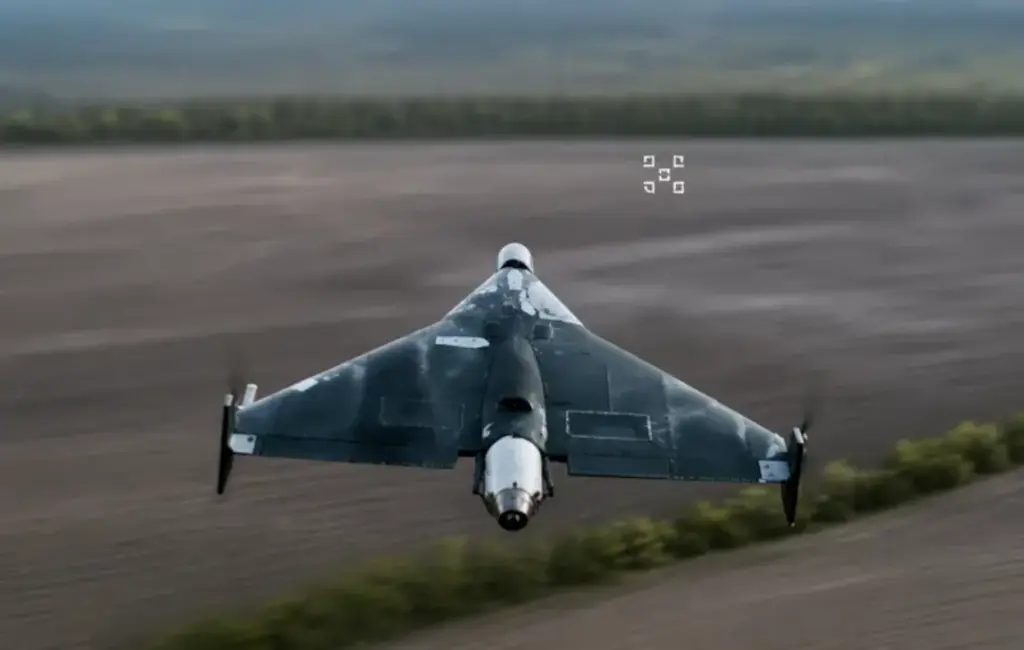
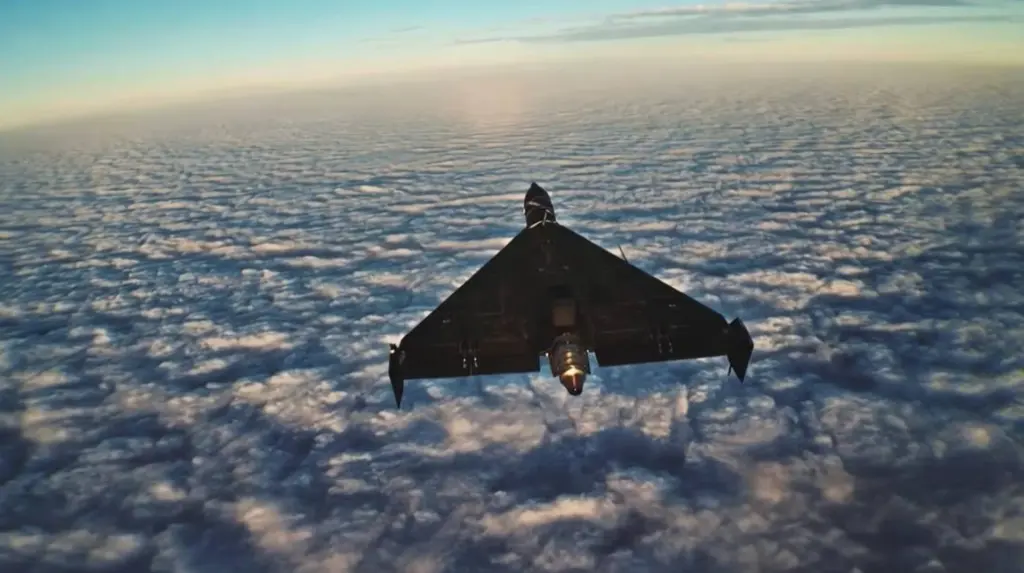
Russia has sharply expanded its use of jet-powered Gerans in recent months, adding a faster and more difficult-to-intercept threat to its large-scale drone campaign.
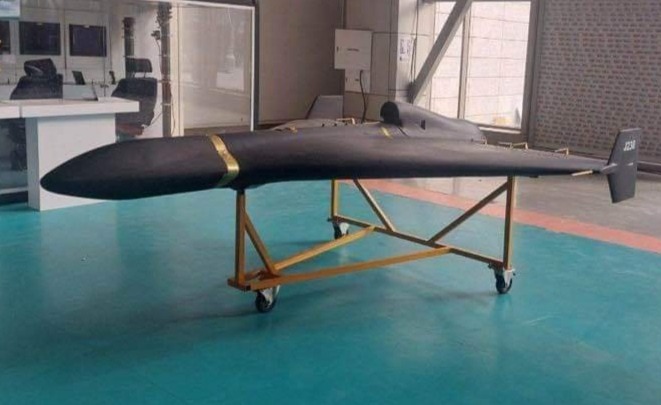
Geran is Russia’s designation for its domestically produced Shahed-derived attack drones, with newer jet-powered variants representing a major upgrade over the earlier propeller-driven models.
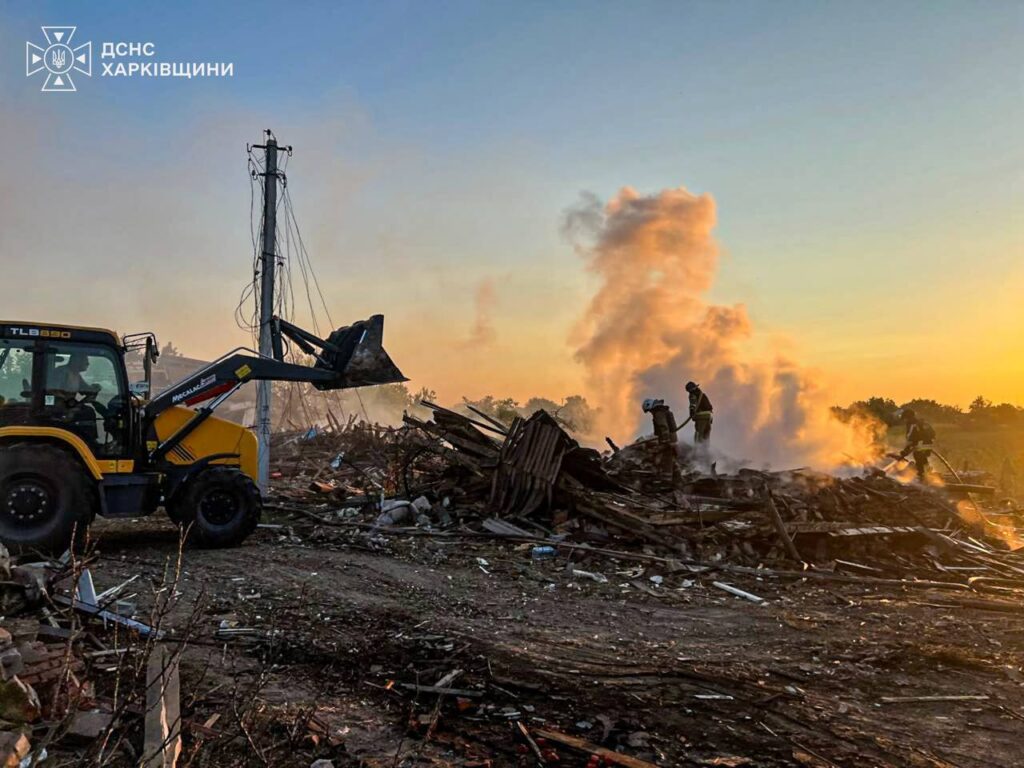
Zelenskyy recently said Russia launched around 2,100 drones against Ukraine last week, alongside nearly 1,700 guided aerial bombs and 78 missiles. The attacks have increasingly targeted energy facilities, railway infrastructure, businesses, and residential areas.
The newer Gerans are faster than earlier Shahed-derived drones and can reach targets deep inside Ukraine. Their speed gives Ukrainian air defenses less time to detect, track, and engage them.
Russia has also changed how it uses its drones. Rather than concentrating attacks almost exclusively overnight, Russian forces have increasingly launched waves during the day as well, keeping Ukrainian cities under repeated air-raid alerts.
The result is a growing challenge not only of interception, but of scale. Ukraine must defend a large territory against increasingly large drone barrages while preserving more sophisticated air-defense missiles for ballistic missiles and other threats.
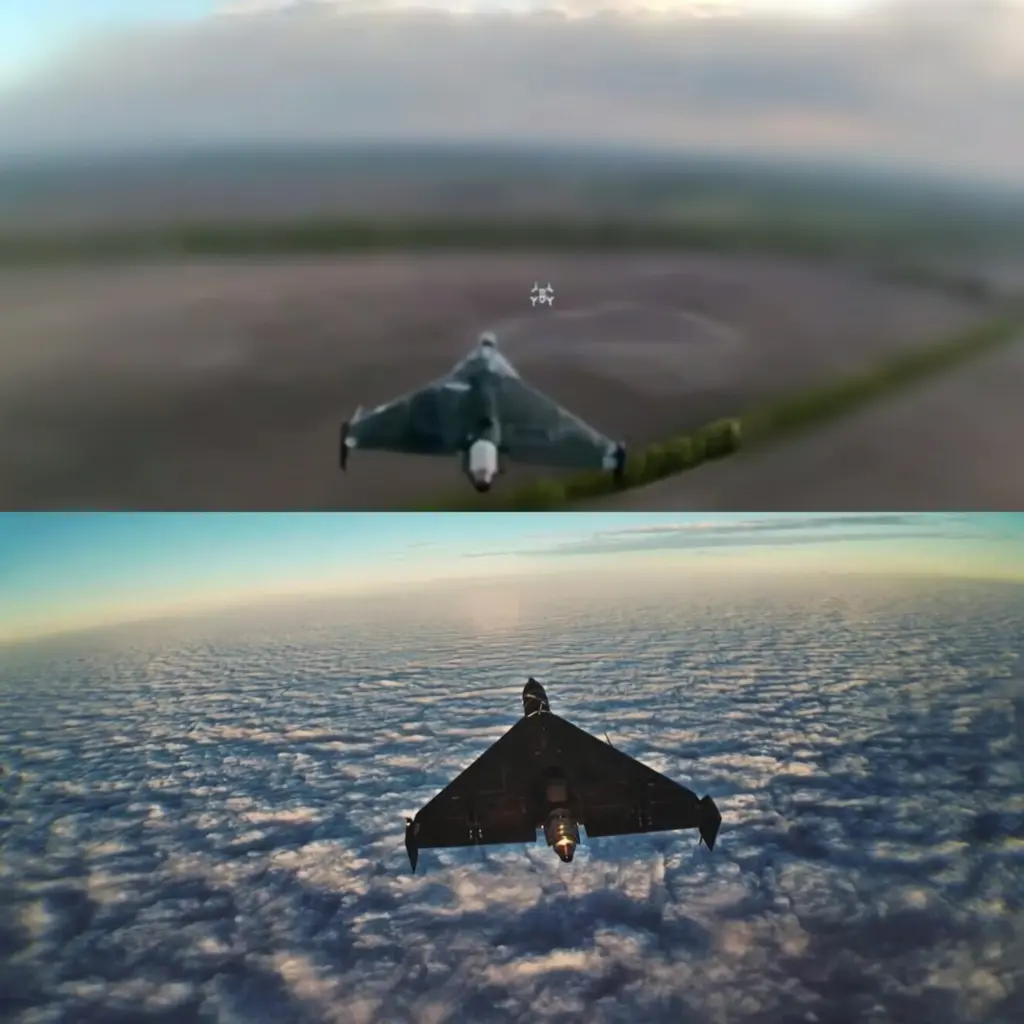
Geran-5 (above) and Geran-4 (below). Image: TurDef
Ukraine is building a new layer of air defense
Ukraine has already been racing to develop such systems. In late August, Defense Minister Yevhen Khmara said four potential interceptor systems capable of shooting down jet-powered Gerans had undergone field testing. Ukraine was aiming to bring them to the required level and eventually produce thousands of units.
Today’s announcement shows that effort continues to produce concrete results.
Ukraine is also expanding other parts of its counter-drone network. Zelenskyy said the country is increasing purchases of electronic warfare equipment and reorganizing mobile fire groups and air-defense positions.
The goal is to build enough layers to cope with Russia’s evolving drone campaign: electronic warfare, mobile fire teams, traditional air defenses, and increasingly specialized interceptors.
Russia is making its drones faster and launching them at greater scale. Ukraine’s response is now moving beyond adapting existing defenses toward developing weapons specifically designed to catch them.
Russia is working methodically to modernize its attack drones on every possible front. This month, its drones are expected to carry 20-element anti-jam antennas in place of the 16-element ones, harder for Ukrainian electronic warfare to defeat, Serhii "Flash" Beskrestnov, President Volodymyr Zelenskyy's defense-technology adviser, said.
Russia's knack for scaling and upgrading its weapons is something Ukrainian experts keep flagging. Serhii Bratchuk, spokesperson for the Ukrainian Volun
Russia is working methodically to modernize its attack drones on every possible front. This month, its drones are expected to carry 20-element anti-jam antennas in place of the 16-element ones, harder for Ukrainian electronic warfare to defeat, Serhii "Flash" Beskrestnov, President Volodymyr Zelenskyy's defense-technology adviser, said.
Russia's knack for scaling and upgrading its weapons is something Ukrainian experts keep flagging. Serhii Bratchuk, spokesperson for the Ukrainian Volunteer Army, recently put it bluntly, "Credit to the Russians. They know how to scale." Meanwhile, military analyst Oleksandr Kovalenko of the Information Resistance group has argued that Russia plans its terror campaigns years out and adapts almost monthly, a foresight Ukraine has struggled to match.
The antenna work is another example, and it will not stop at 20 elements: the main supplier, VNIIR "Progress", plans 24-element arrays in 2027, and Chinese firms are mounting similar efforts, shipping multi-element antennas to Russia disguised as farm equipment.
Autonomous drones need GPS jamming
Not every jet drone that reaches Kyiv is flown by a live operator, Beskrestnov said. A large share runs on ordinary satellite navigation, and a few weeks ago, Russia upgraded the drones' inertial navigation, the backup that holds a course when the satellite signal drops.
The distinction changes how Ukraine fights back. A drone under live control can be stopped by jamming its communication link, the mobile or satellite internet the operator uses, which cuts the operator off. A drone flying on its own has no such link to jam. There, Ukraine has to jam the GPS or GLONASS signals the drone relies on.
Cruise missiles share the weakness
The same logic applies to Russia's newer cruise weapons. The Banderol and the Dan-T, which Russia is betting on, carry no operator link at all, only satellite and inertial navigation, Beskrestnov said.
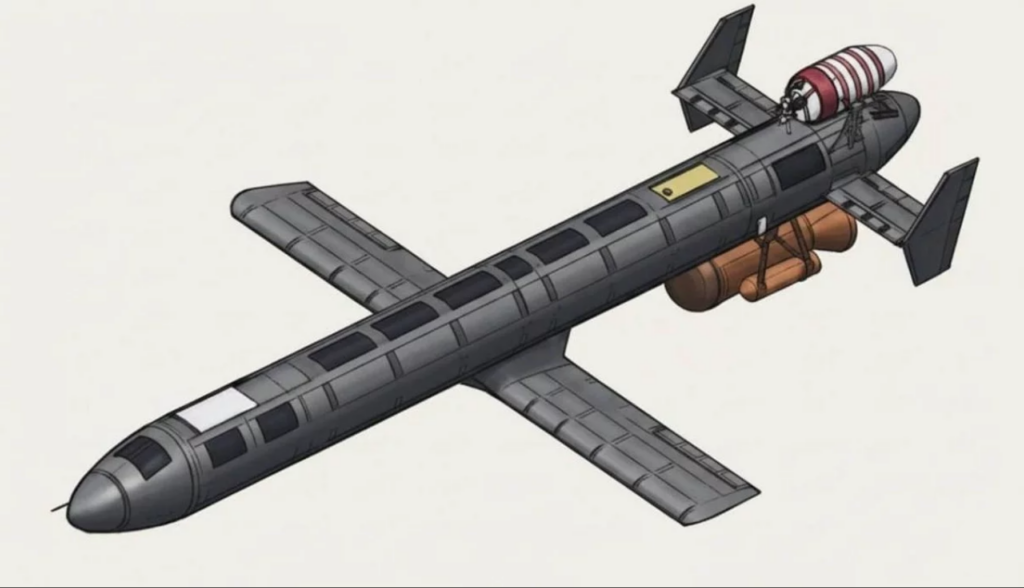
The Dan-T is a strange case: it began as the Dan-M, a jet-powered target drone that Russia's Sokol bureau built in the early 1990s to mimic US Tomahawk cruise missiles for air-defense practice, now fitted with a warhead and fired at Ukrainian cities.
Because these weapons navigate rather than being flown, Ukrainian electronic warfare is one of the few tools that can throw them off course, even as Russia races to harden the navigation they depend on.
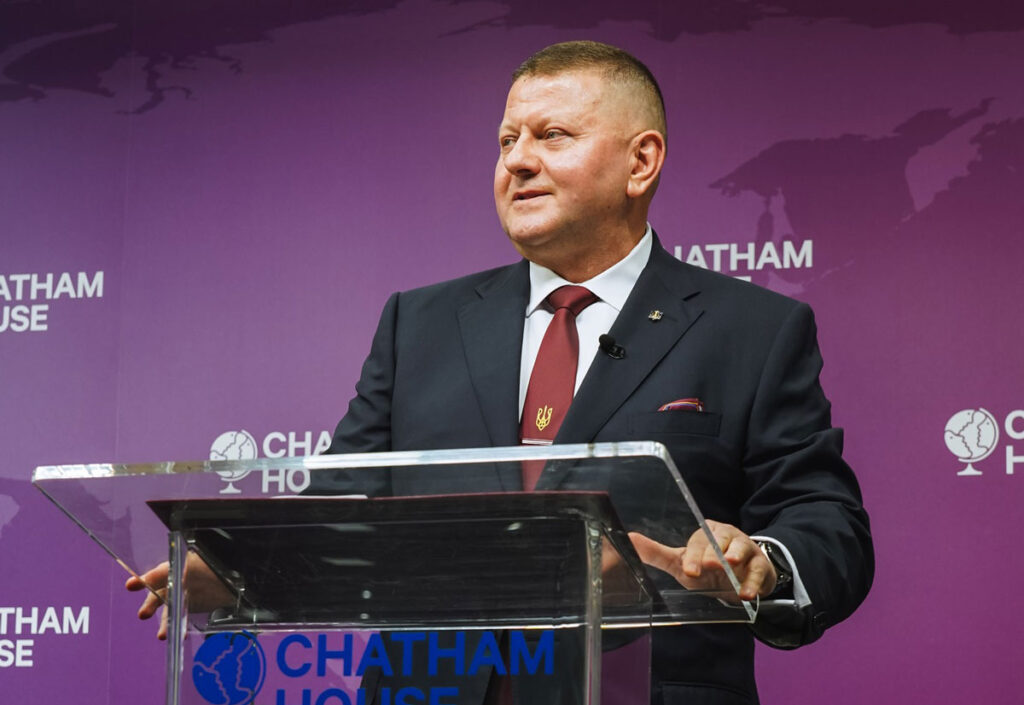
Ukraine's former top general, now its ambassador to Britain, says Russia's jet-powered Geran drone is a glimpse of where war is heading, where high technology keeps getting cheaper. Valerii Zaluzhnyi told a London defense-technology showcase that an expensive Cold War missile had evolved into a cheap weapon that can be fired in bulk, Interfax-Ukraine reports.
During his tenure as Commander-in-Chief, Zaluzhnyi acknowledged that it had been a mistake to believe that the s
Ukraine's former top general, now its ambassador to Britain, says Russia's jet-powered Geran drone is a glimpse of where war is heading, where high technology keeps getting cheaper. Valerii Zaluzhnyi told a London defense-technology showcase that an expensive Cold War missile had evolved into a cheap weapon that can be fired in bulk, Interfax-Ukraine reports.
During his tenure as Commander-in-Chief, Zaluzhnyi acknowledged that it had been a mistake to believe that the sheer number of casualties inflicted on Russia could bring the war to a halt, per UkrInform. By 2025, he had turned that lesson into a doctrine. Given Ukraine’s population, he argued, it cannot win a war of attrition and can wage only a high-tech war of survival. His doctrine was later echoed by former minister Mykhailo Fedorov and the current Yevhen Khmara.
The drone has become a missile in all but name, Zaluzhnyi said, and that is the point. Now, such missiles are affordable to any side, not only to wealthy countries.
The jet Geran flips the economics
The danger such cheap weapons pose is financial as much as military: if a country spends far more on each interceptor than the enemy spends on each target, its defense cannot scale, and the rich risk losing to the poor, Zaluzhnyi believes.
Future wars, he argued, will be decided less by who fields the more sophisticated systems than by who can turn them out cheaply and in volume.
Ukraine needs its own component base
Ukraine has already built much of a modern defense industry on exactly that logic, Zaluzhnyi continued, with combat driving its makers to develop the unmanned systems that now do much of the killing on the ground.
"No other country can offer more relevant experience for developing new weapons, modernizing them, and the ways of using them," he said.
The bottleneck, he added, is components: much of the parts base for Ukrainian weapons still sits abroad, capping how far production can scale and modernize.
He urged partners to pour long-term private investment into Ukrainian defense production, framing it as a two-way deal. Backing Ukraine's makers, he argued, both weakens Russia and builds the partners' own defenses, with Ukraine's battlefield experience as the foundation for weapons fit for the wars to come.
Ukraine is getting closer to home-built interceptors designed to hunt down Russia's fast jet Gerans. Those interceptors have shown very positive early results, and the harder job now is producing enough of them to match the speed at which Ukraine downs the slower drones, Serhii Bratchuk, spokesperson for the Ukrainian Volunteer Army, said on Radio NV.
The jet-powered Geran is the problem Ukraine has been racing to solve. It flies too fast for the mobile gun teams and li
Ukraine is getting closer to home-built interceptors designed to hunt down Russia's fast jet Gerans. Those interceptors have shown very positive early results, and the harder job now is producing enough of them to match the speed at which Ukraine downs the slower drones, Serhii Bratchuk, spokesperson for the Ukrainian Volunteer Army, said on Radio NV.
The jet-powered Geran is the problem Ukraine has been racing to solve. It flies too fast for the mobile gun teams and light interceptors that bring down the slower, piston-engine version. Alongside ballistic missiles, those drones have already done strategic damage: they helped Russia destroy about 90 percent of Ukraine's modern warehouse capacity.
A working interceptor changes that only if Ukraine can field it in numbers, which is why Bratchuk framed the fight ahead as one of production rather than invention.
Interceptors show early promise
However, Bratchuk would not put a date on their release, saying that "right now, our developers are testing our jet interceptor drones."
"We can't talk about details, but from what I know and what I see, the results are very positive, and we are counting on them," he shared.
Four Ukrainian companies already have interceptor drones in field trials, and President Zelenskyy has said that 67 firms in all are working to shoot down the jet drones en masse.
Production must catch up
Ukraine has to lift jet-drone interception to the level it has reached against the conventional Gerans, Bratchuk said, the ones Ukrainians nickname "mopeds" for their buzzing engines. Only then, he argued, can Ukraine say it is closing the sky to the fast drones as it has to the slow ones.
Russia keeps firing both types, in the south and elsewhere, and often at night, precisely to overload Ukraine's air defenses.
Russia scales, and Ukraine must too
Bratchuk gave Russia its due on the one thing that will decide this contest, its ability to turn out weapons in volume.
"Credit to the Russians. They know how to scale," he said.
Ukraine has to learn the same lesson, he argued, and he believes it can, having pulled off fast build-ups before.
"There are examples where we really do learn fast and scale up the relevant processes. So when it comes to jet interceptor drones, we very much want that scaling," he added.
Ukraine now has 67 companies working to shoot down Russia's jet-powered drones en masse, President Volodymyr Zelenskyy said. He gave the number at a Kyiv press conference alongside US presidential envoys Steve Witkoff and Jared Kushner, Ukrinform reported.
Most of those firms are still chasing the problem, and only a few have working systems. The race matters because Russia's jet-powered Geran drones fly too fast for the mobile gun teams that once downed the slower mode
Ukraine now has 67 companies working to shoot down Russia's jet-powered drones en masse, President Volodymyr Zelenskyy said. He gave the number at a Kyiv press conference alongside US presidential envoys Steve Witkoff and Jared Kushner, Ukrinform reported.
Most of those firms are still chasing the problem, and only a few have working systems. The race matters because Russia's jet-powered Geran drones fly too fast for the mobile gun teams that once downed the slower models. Russia has sharply expanded the jets' use over the summer, launching them by day as well as by night and driving air-raid alerts over Kyiv almost hourly.
Prototypes outnumber proven interceptors
"Today, we have about 60 companies in Ukraine already working on intercepting jet-powered drones, and doing so on a mass scale. To be precise, there are 67," Zelenskyy said.
He added that three to five have shown real results, and the next step is mass production.
Zelenskyy calls it all "Plan B"
Zelenskyy framed the entire defensive build-up as a fallback.
"All this defense is 'Plan B,' though right now it is very relevant. 'Plan A' is to accelerate diplomatic possibilities as much as possible, to reduce escalation from Russia," he said.
He spoke as the US envoys pressed a peace push in Kyiv, with no breakthrough announced.
He also called anti-ballistic defense Ukraine's weak point, saying he would raise it in upcoming meetings in Norway and Canada, and that the US plans to increase production of Patriot interceptors next year while Germany expands its own output under existing licenses.
Ukraine needs the interceptors to down Russian ballistic missiles that come several times per week. Each Russian attack on Kyiv costs the city budget about $12 million. More than four thousand buildings in Kyiv have been damaged by Russian strikes, with each attack adding to a repair bill the city carries alongside the human losses.
Russia is launching more jet-propelled Geran drones and Banderol missiles
Speeding along as fast as 700 km/hr, these munitions are hard to intercept
Ukraine's fighters are up to the task—but they are reaching for missiles designed in the 1970s
Russia is launching more of its best jet-propelled attack drones and miniature cruise missiles at Ukrainian ports, cities, warehouses, and power plants. The speedy Geran-3, Geran-4, and Geran-5 drones and Banderol missil
Russia is launching more jet-propelled Geran drones and Banderol missiles
Speeding along as fast as 700 km/hr, these munitions are hard to intercept
Ukraine's fighters are up to the task—but they are reaching for missiles designed in the 1970s
Russia is launching more of its best jet-propelled attack drones and miniature cruise missiles at Ukrainian ports, cities, warehouses, and power plants. The speedy Geran-3, Geran-4, and Geran-5 drones and Banderol missiles can zoom right past Ukraine's ground-based guns and slower interceptor drones, so the Ukrainian air force is deploying more supersonic fighters to chase down the Russian munitions.
But there's a problem. The Ukrainian jets are running short of the missiles that work best against them.
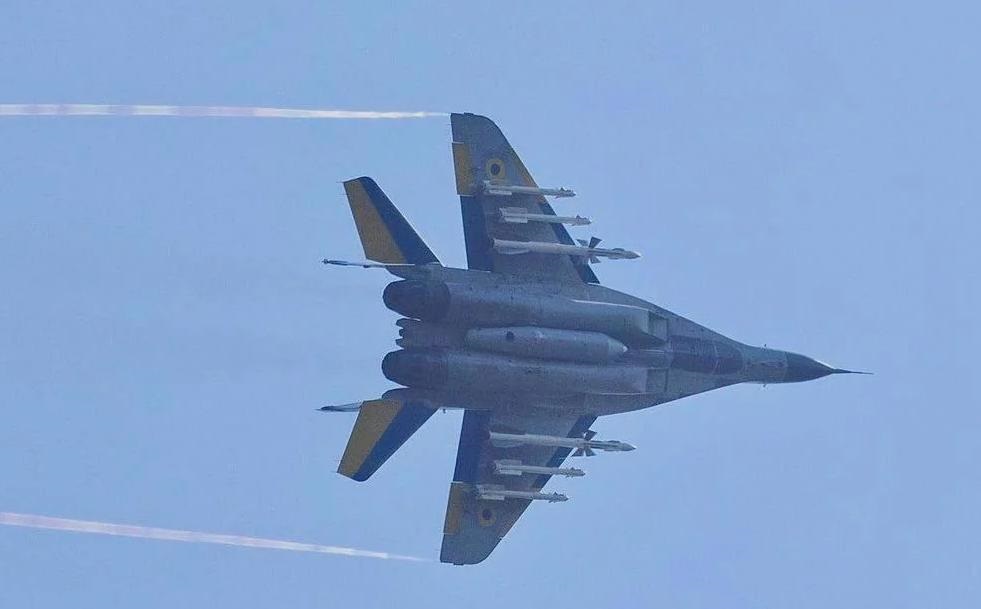
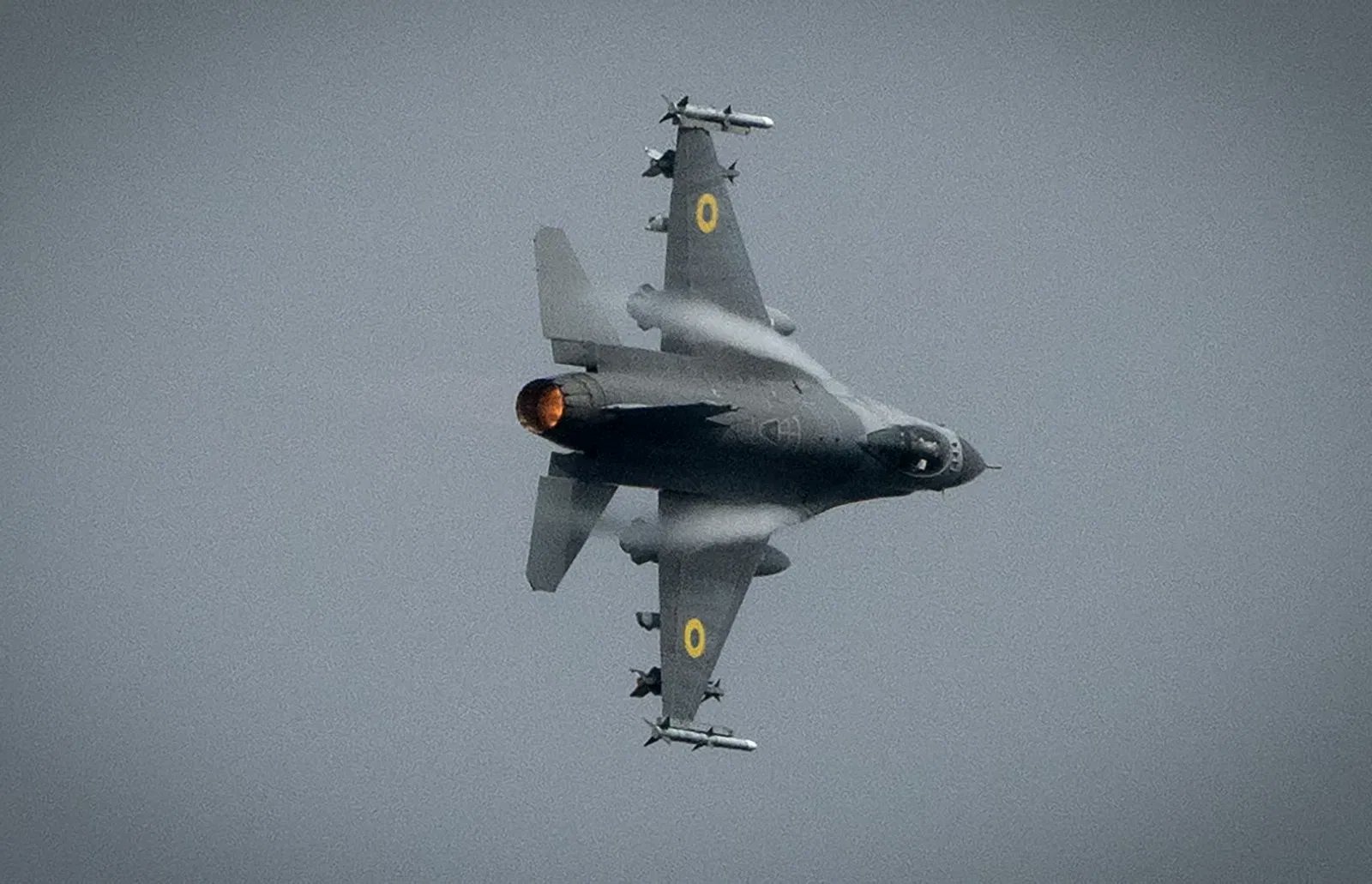
A deepening shortage of infrared-guided AIM-9 missiles and radar-guided AIM-120 missiles for the Ukrainian air force's ex-European Lockheed Martin F-16 fighters has been reported elsewhere. Less well known is what has been happening to the Soviet-era missiles carried by Ukraine's older Mikoyan MiG-29 fighters.
The F-16 is probably the most numerous Ukrainian fighter type, with around 50 in service. But the MiG-29 is a close second. Despite steep losses of MiG-29s in the 55 months since Russia widened its war on Ukraine, Ukrainian aviation brigades may still fly dozens of the classic Soviet-made fighters. MiG-29s are daily sights in the sky over the port of Odesa in southern Ukraine as the twin-engine fighters chase down Russian missiles and drones.
The missile shortage spreading to F-16s really concerns me. Because at the same time out of nowhere we are seeing Ukrainian MiGs flying combat sorties with older R-60 missiles and not R-73s.
Here’s a recent video of an R-60 being used against a banderol cruise missile : pic.twitter.com/UMhtXW2o2p
The MiG-29 can carry the full array of Soviet-style air-to-air missiles in the Ukrainian inventory including the infrared-guided R-60 and R-73 and the radar-guided R-27. But the missile of choice for intercepting the 500 km/hr Gerans and 700 km/hr Banderols is the more modern R-73. The $300,000 heat-seeking missile is maneuverable and accurate at the close ranges that are typical of fighter-on-drone engagements. Its one known weakness is cloud: a Ukrainian pilot said in 2022 that the R-73 tracks poorly through it, which is part of why pilots sometimes fall back on the cannon.
Ukraine went to war in 2022 with substantial stocks of R-73s and surely received additional copies from allies. While Ukrainian industry built some components for the 1980s-vintage missiles, they were and still are assembled in Russia—so the supply is finite. And the rate of expenditure rose sharply as Ukraine pushed the R-73 into roles it was never built for: onto ground-based launchers, after the 9M33 missiles for its Soviet Osa air defense systems ran short, and even onto some of its robotic boats.
Mobile air defense system with R-73 missiles from the 3rd Separate Assault Brigade, March 2025. Photo: Maksym Zaichenko
Down to the 1970s stock
The sign of that pressure is the return of the R-60—a missile designed in the 1970s and considered obsolete when Russia widened the war. Last month an R-60 was visible in the wreckage following the crash of a Ukrainian MiG-29. And this week, video circulated of a MiG-29 downing a Banderol with one at extremely low altitude.
Ukraine's air force had enough R-73s in 2022 that nobody expected to see R-60s again. Continuous interception of Russian cruise missiles and Shahed-type drones changed that, Militarnyi reported. Nor is this improvisation: since November 2025 Ukraine has been running a program to modernize the R-60, replacing analog seeker components with digital ones to sharpen its infrared sensitivity, and adapting it for ground launch. Ihor Fedirko of the Ukrainian Council of Defense Industry called it a temporary way to put otherwise unusable missiles to work.
It's not that the R-60 isn't suitable for downing a Geran or Banderol. It's that it's less suitable than an R-73. "I don't think Ukraine would be using R-60 missiles unless it had nothing else left," one close observer of the Ukrainian air force noted.
Explore further
Ukraine’s F-16s are so short of Western missiles that pilots fall back on jet’s built-in M61A1 Vulcan cannon, which risks killing civilians below
The only other alternative is for a fighter to use its gun. But that's risky, as the pilot must fly dangerously close to a drone or missile before opening fire; the resulting explosion could take out both the interceptee and the interceptor.
In the same way Russia is exhausting Ukraine's long-range surface-to-air missile batteries by firing more ballistic missiles than Ukrainian forces can intercept with their dwindling supply of Patriot missiles, Russia may also be exhausting Ukraine's fighters and their limited stocks of short-range air-to-air missiles.
As the Ukrainian missiles run out, more of the Russian missiles and drones get through—and strike their targets.
I’m not a missile expert but the missile on the left looks like an R-60. Perhaps Ukraine was trying to burn through some old R-60s it had and one malfunctioned. It could also just be An R-27 but I don’t know. The missile on the right looks to be an R-73 pic.twitter.com/yyZ0tSmaf4
The problem is going to get worse before it gets better. Russian industry is ramping up production of both the jet-propelled Geran models and the Banderol, and jet output overtook piston output in August. The Russians launched a reported 1,500 jet Gerans in July and 2,500 in August. Interception rates for the fast drones specifically ran as low as 50% in July, though they may have ticked up to 60% or even 70%.
But that's still too low considering that Ukrainian air defenders usually shoot down 90% of slower propeller-driven Geran-1s and Geran-2s. "Nobody wants interception rates in the 60s/70s," explained Michael Bohnert, an analyst for the RAND think tank in California.
New models of faster interceptor drones, which several Ukrainian manufacturers are scrambling to deliver to front-line forces, may help restore the 90% kill rate for even the fastest Gerans. But "jet-interceptor output has been behind jet-drone output," Bohnert noted. So it's likely that, for a few months at least, the Russians will have the numerical edge, and the Ukrainians will have no choice but to continue sortieing F-16s and MiG-29s to reinforce ground-launched air defenses.
But what happens when the fighters run out of even their oldest missiles?
Russia has been bolting small FPV attack drones to the wings of its long-range Gerans and releasing them deep inside Ukraine, far behind the front. The tactic may now have reached Kyiv Oblast, where an FPV drone was recently recorded, though it is not confirmed that a Geran delivered it, Serhii "Flash" Beskrestnov, the president's adviser on defense technologies, told UNIAN. A Geran drop is one of the versions being weighed.
A Geran (the Russian-built version of Iran's
Russia has been bolting small FPV attack drones to the wings of its long-range Gerans and releasing them deep inside Ukraine, far behind the front. The tactic may now have reached Kyiv Oblast, where an FPV drone was recently recorded, though it is not confirmed that a Geran delivered it, Serhii "Flash" Beskrestnov, the president's adviser on defense technologies, told UNIAN. A Geran drop is one of the versions being weighed.
A Geran (the Russian-built version of Iran's Shahed-136) can fly hundreds of kilometers, so bolting short-range FPVs to its wings carries them far past the front line before release. Russia has done the same with its Molniya and Gerbera drones, and in May Euromaidan Press reported FPVs delivered this way, turning up dozens of kilometers from the border, on the ground, and even on the roofs of apartment buildings.
A year-old experiment, still rare
"The Russians have been running these experiments for a while. They attach two FPVs above the wings and drop them," Beskrestnov said.
He last recorded the tactic a week ago in Konotop, in Sumy Oblast, where Russian forces held two such drones on a carrier's wings and released them.
Until now, he added, it had shown up only on conventional Gerans. Holding an FPV on a jet-powered Geran is far harder because the speed is too high for a clean release, "but technologically it's entirely possible," Beskrestnov believes.
Ukrainian air defenders have brought at least one carrier down: in March, the Darknode anti-Shahed unit destroyed a Geran carrying two wing-mounted FPVs over Ukrainian airspace before it could release them, Militarnyi reported.
Low yield, mostly a scare tactic
Russia uses the tactic sparingly, and by its own measure, it does not work well.
"If you look at the number of successful strikes they've had with these FPVs, it's small," Beskrestnov explained, because controlling a drone dropped this way is difficult.
The FPVs carry no large warhead, and the launches often serve mainly to terrorize civilians, he said.
The dropped drones are usually flown over ordinary mobile networks rather than through a relay mounted on the carrier.
"There's an ordinary SIM card, and they control the FPV through it," Beskrestnov said, adding that Ukraine has been recording the practice on and off for about a year.
Russia has started launching its strike drones during the day, not only after dark. The reason is the new jet-powered Geran drones, which fire groups cannot take down, so for Russia there is no longer any difference between attacking by day or by night, Serhii "Flash" Beskrestnov, President Zelenskyy's adviser on defense technologies, told Glavcom.
The near-hourly daytime raids are the new face of a campaign that culminated on 1 September, Knowledge Day, when Russia hit
Russia has started launching its strike drones during the day, not only after dark. The reason is the new jet-powered Geran drones, which fire groups cannot take down, so for Russia there is no longer any difference between attacking by day or by night, Serhii "Flash" Beskrestnov, President Zelenskyy's adviser on defense technologies, told Glavcom.
The near-hourly daytime raids are the new face of a campaign that culminated on 1 September, Knowledge Day, when Russia hit Kyiv and its region with ballistic missiles and jet-powered drones and killed 12 people. That strike culminated a six-day assault on the capital that began on 27 August, two days after CIA Director John Ratcliffe arrived in Moscow. However, even after that, the attack continued. Sirens now sound across Kyiv and the surrounding oblast roughly once an hour, around the clock.
Why the shift to daylight
The daytime raids carry an added economic and psychological weight, he said. The threat of strikes forces shops and businesses to open and close unpredictably, snarls transport, and can halt rail service.
"They understand perfectly well that daytime attacks hurt the population and business," Beskrestnov said, adding that the state railway Ukrzaliznytsia is paralyzed.
Keeping the defenders on their feet
A further aim is to hold Ukraine's air defense in a permanent state of readiness, Beskrestnov said. Round-the-clock attacks mean radar stations and generators must run without pause.
"Radar stations and generators run constantly, and that also puts a strain on our troops," he added.
Kyiv remains a Russian prime target because it carries symbolic as well as military weight, as the capital houses the government, business, and warehouses, and a strike there would resonate far more than terrorizing a small town.
Russian forces first concentrated on districts nearer the drones' launch corridors — Kyiv's Left Bank, and the Brovary and Boryspil raions — before switching to the other bank to hunt for targets. As the cold season approaches, he expects Russia to intensify strikes on the energy infrastructure it has so far spared.
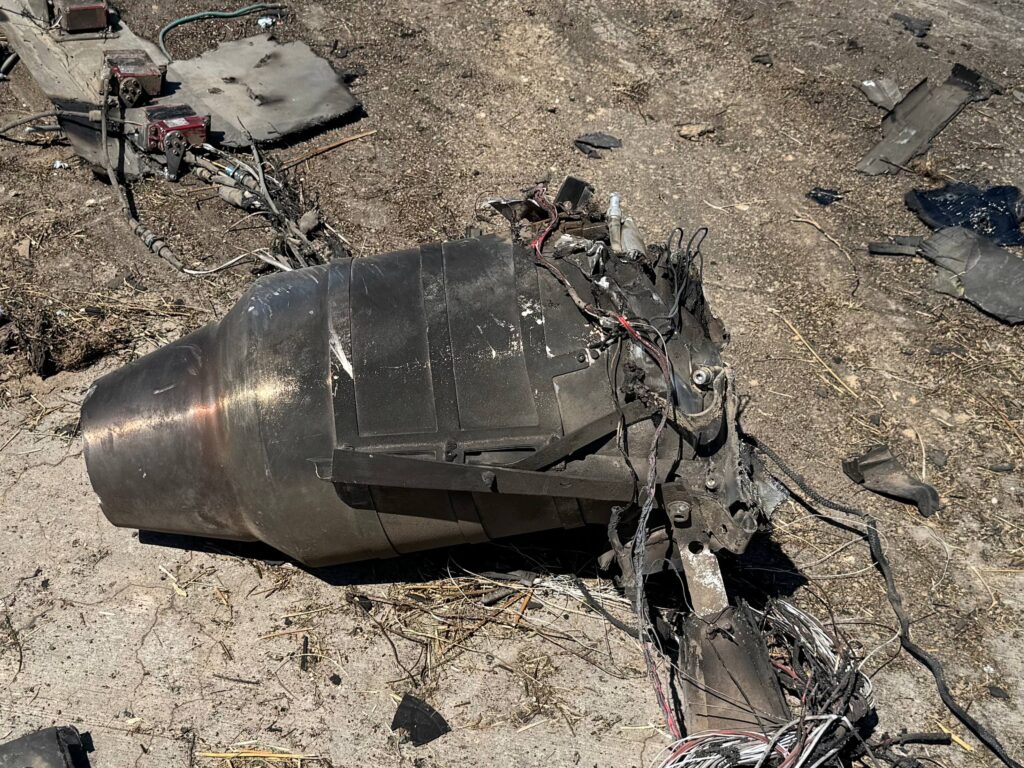
China is helping Russia build a faster Shahed. Russia has begun using upgraded Shahed drones with Chinese-made turbojet engines that fly at speeds close to three times those of earlier versions, the Wall Street Journal reported.
The Shahed jet is designed to beat Ukraine's air defenses. Ukrainian interceptors have downed about 90 percent of the older piston-engine drones, which cruise at roughly 180 kilometers per hour, so Russia switched to the jet-powered Geran-4, whi
China is helping Russia build a faster Shahed. Russia has begun using upgraded Shahed drones with Chinese-made turbojet engines that fly at speeds close to three times those of earlier versions, the Wall Street Journal reported.
The Shahed jet is designed to beat Ukraine's air defenses. Ukrainian interceptors have downed about 90 percent of the older piston-engine drones, which cruise at roughly 180 kilometers per hour, so Russia switched to the jet-powered Geran-4, which cruises at around 500 kilometers per hour.
The engines come from one Shenzhen firm
The turbojets come from Telefly Telecommunications Equipment, founded in Shenzhen in 2010. The company chiefly makes computer hardware and communications equipment, but also sells its own line of micro-turbojets for drones.
China has long been the main clearinghouse for Shahed parts, including engine components, servomotors, and gyroscopes, the newspaper reported.
The company scrubbed its own website
After Ukraine publicized the discovery of Telefly engines in Russian drones, the turbojet section disappeared from the English-language pages of the company's website. The pages in Chinese and other languages still carry them.
China's foreign ministry, which did not respond either, has previously said it strictly regulates exports of dual-use components and rejects unilateral US sanctions on such trade.
Western parts fade as Chinese parts arrive
Downed Shaheds once carried microcontrollers from Texas Instruments in the US and linear regulators from STMicroelectronics, which the newspaper lists as being based in Switzerland. Over time, the Western components are disappearing even as the drones gain better navigation and attack systems, because US Treasury investigations found nearly all the Western parts were being diverted through Chinese intermediaries, often shell companies in Hong Kong.
Ukrainian government researcher Colonel Oleksandr Zaruba said in June that Shaheds now hold more antennas, modems, and SIM cards to correct their flight paths through local mobile networks, and that the components increasingly come from China.

 Connexion