Vue normale

Ukraine reportedly strikes Russian airbase used to attack its cities, using a drone similar to the Russian Shahed

16 juillet 2026 à 15:20

Smoke seen on the horizon reportedly coming from Russia's Engels-2 airbase in Saratov, following a drone strike on 16 July 2026. Photo: Exilenova+

A reported overnight drone attack targeted Russia's Engels-2 strategic airbase in Saratov Oblast on 16 July, with open-source analysts identifying a fire on the installation that hosts bombers used in missile attacks against Ukraine.

The monitoring Telegram channel Exilenova+ reported that multiple drones targeted the airbase overnight. Videos published by the channel appeared to show a fire burning on or near the military installation.

Independent Russian outlet Astra reported, based on open-source analysis, that a fire broke out on the airbase following the strike.

Shahed-like drone design draws attention

Ukrainian defense outlet Militarnyi noted that footage recorded by local residents appeared to show drones visually resembling Iranian-designed Shahed loitering munitions, which Russia has used extensively to strike Ukrainian cities and infrastructure throughout its full-scale invasion.

The outlet noted that visually similar drones have been observed during previous Ukrainian long-range strikes inside Russia.

An unidentified Ukrainian drone, visually resembling the Iranian-designed Shahed kamikaze drone, used to attack Russia's Engels-2 airbase on 16 July 2026. Photo: Exilenova+

Base used for missile attacks on Ukraine

Engels-2 is one of Russia's principal strategic aviation bases and hosts Tu-95MS and Tu-160 strategic bombers, which Russia regularly uses to launch Kh-101 cruise missiles against Ukrainian cities and infrastructure.

The base also stores munitions, fuel, and maintenance equipment supporting Russia's long-range bomber fleet. Militarnyi noted that Russia expanded the airbase last year by constructing additional aircraft parking areas to accommodate more strategic bombers.

The airbase has been targeted repeatedly since Russia launched its full-scale invasion of Ukraine in 2022, reflecting Ukraine's campaign to degrade Russia's long-range strike capabilities deep behind the front line.

Explosions reported across Engels

Residents of the Russian cities of Saratov and Engels reported hearing multiple explosions beginning around 2:30 a.m. local time, according to monitoring channels.

Saratov Oblast Governor Roman Busargin acknowledged a drone attack on the region, saying civilian infrastructure in Engels had been damaged but reporting no casualties. He did not confirm any strike on the military airfield.

According to Astra, one drone also struck a residential apartment building about two kilometers from the airbase. Militarnyi reported that local residents also described power outages following the explosions, with social media users suggesting a substation may have been hit. 

Consequences of own destruction: Russia is stripping canal it killed to fix Crimean substations Ukraine keeps hitting

14 juillet 2026 à 15:20

Electrical substation on fire following a Ukrainian drone strike in Bakhchisarai, occupied Crimea, Ukraine, on 5 July 2026. Screenshot from video: Robert "Madyar" Brovdi

Russia has started removing the transformers from the Northern Crimean Canal, which historically supplied up to 85% of the Crimean Peninsula's fresh water. ATESH partisans say occupation authorities have begun hauling them to electrical substations damaged by Ukrainian strikes. The claim has not been independently verified.

The reason, according to ATESH, is that Russia has run out of spare transformers. A new one of this class takes six months to a year and a half to build, and sanctions prevent Russia from quickly buying one abroad.

So the occupation is cannibalizing its own infrastructure — pulling equipment off one facility to plug the hole in another. The units being taken are not junk: 10- to 40-MVA transformers that once fed large pumping stations, including NS-355 on the Connecting Canal. That class of equipment fits almost any substation.

The pumping stations are available for stripping because the canal has not worked since June 2023. Russia blew up the Kakhovka dam, and the Dnipro level at the intake fell below critical levels, and the flow of Dnipro water into Crimea stopped. The pumps have sat idle ever since.

Russia is dismantling the consequences of its own destruction to repair the damage from Ukrainian strikes.

Transformers are going where war needs them

Russian command now prioritizes facilities that feed the defense industry, rail junctions, air defenses, radars, and command posts, per ATESH.

Moving transformers from dead pumping stations to those substations is an attempt to restore power fast, without waiting for foreign deliveries or long production runs.

ATESH calls it a dead end. The stock of equipment that can be pulled from other sites keeps shrinking, and every new Ukrainian strike opens a new hole with nothing left to fill it.

Ukraine has been burning Crimean substations for three weeks

The claim lands in the middle of a sustained campaign. Ukrainian drones have hit Crimean power infrastructure night after night since late June.

Ukraine struck 37 energy facilities across occupied southern Ukraine between 1 and 5 July, targeting electrical substations and transformers in Crimea and parts of Kherson, Luhansk, and Zaporizhzhia oblasts, according to Unmanned Systems Forces Commander Robert Brovdi.

Occupation authorities declared a peninsula-wide state of emergency on 26 June. They have shut children's camps, halted civilian fuel sales, and imposed rolling blackouts.

  • ✇Euromaidan Press
  • 48 Russian vessels hit over 5 days as Ukraine turns Crimea’s fuel routes into a new battleground
    Ukraine's Unmanned Systems Forces say they have struck 48 Russian vessels over the past five days as part of an expanding campaign against the maritime logistics supporting Moscow's invasion and occupation forces in Crimea. The campaign has increasingly targeted tankers, cargo ships, ferries, and other vessels that Ukraine says transport fuel and military supplies sustaining Russian forces after repeated strikes degraded road and rail supply routes to the occupied penin
     

48 Russian vessels hit over 5 days as Ukraine turns Crimea’s fuel routes into a new battleground

10 juillet 2026 à 13:19

A Russian vessel in the Sea of Azov seen before Ukrainian drone strike, 10 July 2026. Screenshot from video: Ukraine's Unmanned Systems Forces

Ukraine's Unmanned Systems Forces say they have struck 48 Russian vessels over the past five days as part of an expanding campaign against the maritime logistics supporting Moscow's invasion and occupation forces in Crimea.

The campaign has increasingly targeted tankers, cargo ships, ferries, and other vessels that Ukraine says transport fuel and military supplies sustaining Russian forces after repeated strikes degraded road and rail supply routes to the occupied peninsula.

Campaign targets Russia's shadow fleet in Azov Sea

According to the Unmanned Systems Forces, Ukrainian drone operators struck 13 vessels in the Sea of Azov on 10 July alone – 10 tankers, one dry cargo ship, one ferry, and one tug. 

The force said the targeted ships belonged to Russia's sanctioned "shadow fleet." The commander of Ukraine's Unmanned Systems Forces, Robert "Madyar" Brovdi, confirmed that the vessels were under international sanctions.

Russia's shadow fleet is a network of vessels used to evade Western sanctions on Russian oil exports. Ukraine says some of the ships are also used to transport fuel and supplies supporting Moscow's military operations.

It also reported striking 41 military targets in occupied Crimea and southern occupied Ukraine overnight, while drone operators hit another 1,660 Russian targets along the front line, including 426 personnel.

Thirteen more Russian logistics vessels were struck in the Sea of Azov on 10 July, including 10 tankers, a cargo ship, a ferry, and a tug, according to Ukraine's Unmanned Systems Forces.

The latest attacks bring Ukraine's reported total to 48 Russian vessels struck over the past… pic.twitter.com/NBMlIHxhuL

— Euromaidan Press (@EuromaidanPress) July 10, 2026

Maritime logistics campaign expands

The reported strikes come as Ukraine intensifies its campaign against Russia's maritime logistics in the Sea of Azov. After months of attacks on the road and rail routes supplying occupied Crimea, Ukrainian forces have increasingly targeted the seaborne fuel network that supports Russian forces on the occupied peninsula.

The announcement updates earlier reports from Ukraine's Unmanned Systems Forces, which had reported striking 15 vessels on 9 July and a further 12 ships by mid-day on 10 July as the campaign unfolded.

The Institute for the Study of War recently assessed that the campaign marks a new phase in Ukraine's effort to isolate occupied Crimea by adapting to Russia's increased reliance on fuel shipments by sea. 

ISW: Ukraine has entered a new phase of its campaign to cut off occupied Crimea — the target list has shifted to the gasoline tankers crossing the Azov Sea.

The think tank says months of strikes degraded the road and rail links feeding the peninsula, forcing Russia to send fuel… pic.twitter.com/HeFRRSUWYc

— Euromaidan Press (@EuromaidanPress) July 10, 2026

Earlier this week, Ukraine's Unmanned Systems Forces reported striking 35 Russian vessels over four days before announcing additional attacks on another dozen ships.

Earlier on 10 July, satellite imagery published by RFE/RL's Skhemy showed a burning tanker and another apparently damaged vessel near the Kerch Strait, while open-source analysts reported that Russian tanker traffic in the Sea of Azov had declined sharply as strikes intensified. 

ukraine's deep mid-range strikes converge crimea russia's azov coast · post one satellite images shared skhemy shows likely damaged vessel sea near kerch strait 9 2026 супутник planet labs липня
One of the satellite images, shared by Skhemy, shows a likely damaged vessel in the Azov Sea near the Kerch Strait, 9 July 2026. Photo: Planet Labs via RFE/RL's Skhemy

Oil infrastructure also targeted

Alongside the reported attacks on Russian vessels, the General Staff of Ukraine’s Armed Forces confirmed that Ukrainian forces again struck the Ilsky oil refinery in Russia's Krasnodar Krai. Explosions followed by a fire were reported at the facility, with the extent of the damage still being assessed.

The Ilsky refinery is one of southern Russia's largest oil processing plants, with an annual capacity of up to 6.6 million tons. It produces gasoline, diesel fuel, and other petroleum products that Ukraine says are used to support Russian military logistics.

Ukraine also reported strikes on the Kurgannefteprodukt oil terminal in Taganrog and the Azovnefteprodukt fuel depot in Azov, both in Rostov Oblast. Fires, explosions, and smoke were reported at the facilities, which the General Staff said are used to receive, store, and distribute fuel for the Russian military.

Long-range strikes continue

The General Staff also reported another strike on NOVATEK's Ust-Luga gas condensate processing complex in Russia's Leningrad Oblast, one of the country's largest facilities for processing gas condensate into petroleum products.

In occupied Zaporizhzhia Oblast, Ukrainian forces also reportedly struck a Russian fuel and lubricants depot near Rozivka.

The General Staff said assessments of the reported strikes are ongoing and that Ukraine will continue targeting infrastructure supporting Russia's military operations.

  • ✇Euromaidan Press
  • Ukraine’s drones are sinking Crimea’s fuel lifeline, hitting 12 Russian tankers in 2 days
    Ukraine's Unmanned Systems Forces (SBS) say their drone operators struck 12 Russian fuel tankers carrying gasoline to occupied Crimea over two nights, in what appears to be one of Ukraine's largest claimed attacks on Russian maritime fuel logistics since the start of the full-scale war. Crimea has become a growing focus of Ukraine's long-range drone campaign, which aims to degrade the fuel, air defense, transport, and energy infrastructure Russia relies on to sustain mi
     

Ukraine’s drones are sinking Crimea’s fuel lifeline, hitting 12 Russian tankers in 2 days

7 juillet 2026 à 12:21

Russian tankers in the Azov Sea seen by a Ukrainian drone before a series of strikes on 7 July 2026. Screenshot from video: Robert Brovdi

Ukraine's Unmanned Systems Forces (SBS) say their drone operators struck 12 Russian fuel tankers carrying gasoline to occupied Crimea over two nights, in what appears to be one of Ukraine's largest claimed attacks on Russian maritime fuel logistics since the start of the full-scale war.

Crimea has become a growing focus of Ukraine's long-range drone campaign, which aims to degrade the fuel, air defense, transport, and energy infrastructure Russia relies on to sustain military operations from the occupied peninsula.

In a series of statements on 6-7 July, SBS commander Robert "Madyar" Brovdi said Ukrainian drone units targeted tankers transporting fuel across the Azov Sea from Russia's Taganrog to occupied Crimea.

Twelve fuel tankers targeted

According to Brovdi, Ukrainian forces first struck two “shadow fleet” fuel tankers carrying around 7,000 tonnes of gasoline each on 6 July in a joint operation with the Ukrainian Navy.

A day later, SBS units expanded the operation, damaging eight more sanctioned Russian fuel tankers, along with a cargo ship and a ferry operating in the Azov Sea.

Brovdi described the attacks as part of the "battle for gasoline for Crimea," saying the vessels were supplying fuel to the occupied peninsula.

In a later update, he said Ukrainian drones had struck two additional tankers after the initial report, bringing the total to 10 tankers hit during 7 July and 12 vessels overall.

Campaign aims to isolate occupied Crimea

Ukraine has stepped up long-range strikes on occupied Crimea in recent months, targeting the fuel, transport, air defense, and energy infrastructure that sustains Russian military operations on the peninsula and beyond into southern Ukraine. The campaign has increasingly focused on disrupting logistics rather than destroying frontline positions.

Repeated attacks on oil depots, fuel shipments, electrical substations, and gas infrastructure have contributed to localized fuel shortages and rolling power outages across parts of occupied Crimea. Ukrainian officials say the objective is to complicate Russia's ability to supply troops, operate military facilities, and launch attacks from the peninsula while increasing the cost of maintaining the occupation.

Air defenses and fuel infrastructure also hit

Alongside the maritime attacks, Brovdi said SBS units struck 47 military targets on 6 July and 58 more on 7 July.

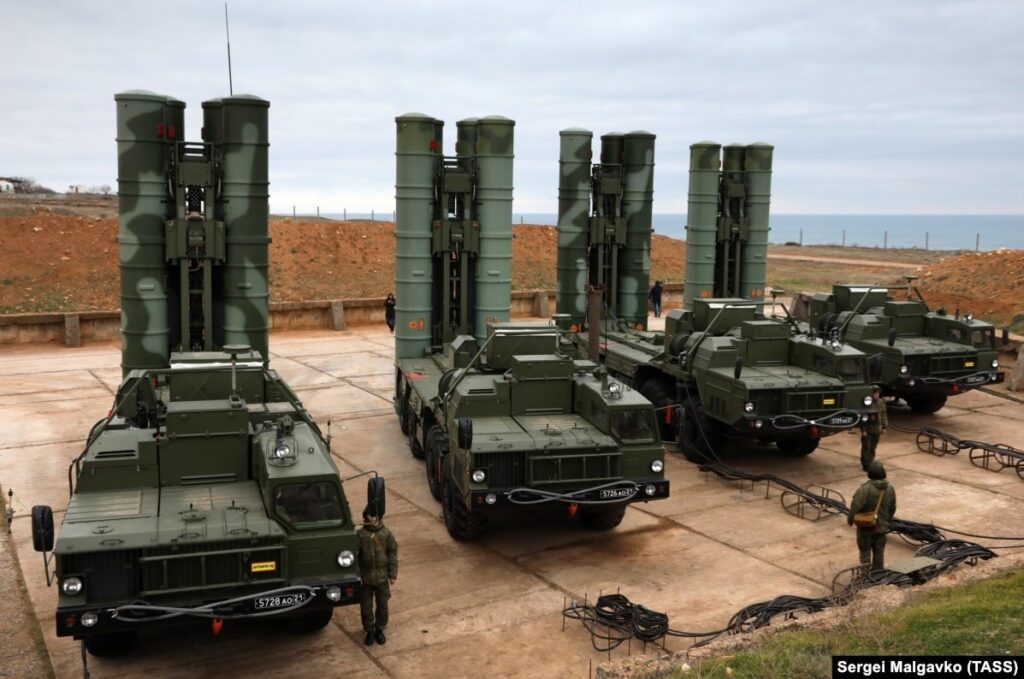
He claimed Ukrainian forces destroyed two Russian S-400 Triumf launchers – one in occupied Crimea and another in Russia's Bryansk Oblast – along with a Nebo-U surveillance radar near Kerch and a fuel depot in the city.

Ukraine's military separately confirmed the destruction of the S-400 launcher in Bryansk Oblast, saying it had been used to launch ballistic missiles toward Kyiv.

Ukrainian drone operators destroyed a Russian S-400 launcher in Russia's Bryansk Oblast that had been used to launch ballistic missiles toward Kyiv.

The launcher was detected and destroyed during Russia's overnight mass missile and drone attack on Ukraine on 6 July, according to… pic.twitter.com/tfHemKijpt

— Euromaidan Press (@EuromaidanPress) July 7, 2026

Energy campaign continues

Brovdi also said SBS units struck five electrical substations and a gas compressor station across occupied Crimea on 7 July.

According to the commander, Ukrainian drones have hit 44 energy facilities in occupied Crimea and southern occupied Ukraine since 1 July as part of an ongoing campaign against infrastructure supporting Russian military operations.

Ukraine has increasingly targeted fuel depots, air defense systems, ports, railway infrastructure, and power facilities used by Russian forces behind the front line. The reported strikes on fuel tankers would mark one of the most significant claimed attacks on maritime fuel deliveries supporting Russia's occupation of Crimea.

  • ✇Euromaidan Press
  • No experience required: Russia advertises for drone operators to defend Moscow from Ukrainian attacks
    Russia's largest employment platform has posted vacancies for drone operators to help defend Moscow from Ukrainian aerial attacks, Reuters reported on 3 July. The recruitment drive comes as Ukraine has stepped up long-range drone attacks on Moscow in recent months, increasingly targeting military, industrial, and energy facilities as part of a broader campaign to disrupt Russia's ability to sustain its war against Ukraine. According to Reuters, the positions were adv
     

No experience required: Russia advertises for drone operators to defend Moscow from Ukrainian attacks

5 juillet 2026 à 14:28

Aftermath of the attack on Moscow, 18 June 2026. Credit: Exilenova+

Russia's largest employment platform has posted vacancies for drone operators to help defend Moscow from Ukrainian aerial attacks, Reuters reported on 3 July.

The recruitment drive comes as Ukraine has stepped up long-range drone attacks on Moscow in recent months, increasingly targeting military, industrial, and energy facilities as part of a broader campaign to disrupt Russia's ability to sustain its war against Ukraine.

According to Reuters, the positions were advertised on HeadHunter, Russia's largest job recruitment website, on behalf of a volunteer unit known as the Combat Army Reserve Force.

The job advertisement says recruits will help "ensure the capital's security using modern technical solutions and surveillance systems."

Volunteer unit seeks new drone operators

According to the listing, successful applicants would prepare and operate drones, conduct reconnaissance missions, and carry out day and night flights to collect data.

Reuters reported that applicants need only basic technical skills and a willingness to learn, with no previous experience required.

The position offers a starting salary of 150,000 rubles (about $1,950 USD) per month, below Moscow's reported average monthly salary of more than 200,000 rubles.

Reuters said it could not determine when the vacancy was first posted, although it was updated on 1 July.

Ukraine steps up long-range drone campaign

The recruitment comes as Ukraine has significantly expanded its long-range drone campaign against military and industrial targets inside Russia.

In recent months, Ukrainian forces have repeatedly targeted airbases, ammunition depots, fuel storage facilities, military logistics hubs, and defense industry sites, while also increasing attacks on Moscow and the surrounding region.

In June, Ukrainian drones struck Moscow multiple times, including two attacks within three days on a major oil refinery located inside the city's ring road, according to Reuters. Russia has also reported frequent attempts by Ukrainian drones to reach the capital, prompting temporary airport closures and flight disruptions.

Kyiv says its long-range strike campaign is intended to degrade Russia's military logistics, disrupt fuel supplies and industrial production, and complicate the movement of military equipment supporting Moscow's war against Ukraine.

The Kremlin has acknowledged the growing threat, saying it is taking additional measures to strengthen Moscow's air defenses, Reuters reported.

Ukraine hits Russian airbase in Crimea; major strikes target backbone of Moscow’s logistics across occupied Ukraine

5 juillet 2026 à 12:25

Electrical substation on fire following a Ukrainian drone strike in Bakhchisarai, occupied Crimea, Ukraine, on 5 July 2026. Screenshot from video: Robert "Madyar" Brovdi

Ukraine struck a key Russian military airbase in occupied Crimea, three ammunition depots, and two bridges used for military logistics overnight on 5 July, while Ukrainian officials also reported a wave of attacks on energy infrastructure supporting Russian forces on the occupied peninsula.

The strikes are part of Ukraine's expanding long-range campaign against Russian military infrastructure, aimed at disrupting logistics, degrading combat support, and making it harder for Moscow to sustain operations in occupied Ukraine.

Hvardiiske airbase struck

The General Staff of Ukraine’s Armed Forces said strikes targeted Hvardiiske airbase, one of Russia's principal military airfields in occupied Crimea.

According to the military, the airbase is used to base tactical and naval aviation aircraft, support combat sorties, and provide logistics and maintenance for Russian aviation units. The extent of the damage is still being assessed.

Bridges and ammunition depots hit

The General Staff also reported strikes on two road bridges in occupied Donetsk Oblast.

The bridges, spanning the Hruzkyi Yalanchyk River near Huselnykove and the Kalmius River near Staromarivka, were used by Russian forces to transport personnel, weapons, ammunition, and other military supplies, according to the statement.

Ukraine also said it struck three Russian ammunition depots near Makiivka in occupied Donetsk Oblast, Dovzhansk in occupied Luhansk Oblast, and Preobrazhenka in occupied Kherson Oblast.

Ukraine reports expanded campaign against Russian energy infrastructure

Separately, Commander of Ukraine's Unmanned Systems Forces, Robert "Madyar" Brovdi, said Ukrainian drone units had disabled 16 energy facilities in occupied territories over the previous 48 hours, including multiple electrical substations across occupied Crimea.

According to Brovdi, Ukrainian forces struck 37 energy facilities across occupied southern Ukraine between 1 and 5 July, targeting electrical substations and transformers in occupied Crimea and parts of Kherson, Luhansk, and Zaporizhzhia oblasts.

He said the campaign is intended to isolate Russian forces on the occupied peninsula by disrupting electricity, logistics, fuel supplies, and communications supporting Moscow's military presence.

Brovdi also noted widespread power outages across occupied Crimea on 3 July amid Ukraine’s ongoing strikes on energy infrastructure.

Satellite data showing reduced electricity activity across Russian-occupied Crimea on 3 July 2026. Screenshot from video: Robert "Madyar" Brovdi

Ukraine expands campaign against Russian military logistics

Ukraine has significantly expanded its long-range strike campaign in recent months, increasingly targeting Russian military infrastructure deep behind the front line. 

The effort has focused on disrupting logistics, fuel supplies, ammunition storage, transport links, airbases, and energy infrastructure that support Russian military operations in occupied Ukraine and Crimea.

The Ukrainian military has repeatedly said degrading Russia's logistical network is intended to reduce its ability to sustain offensive operations and reinforce frontline units.

  • ✇Euromaidan Press
  • June set multiple records for Ukraine’s deep-strike campaign: over 200,000 Russian targets struck
    Ukraine's Defense Forces struck more than 200,000 Russian targets in June, while nearly doubling the number of successful strikes more than 50 kilometers behind the front line, according to Defense Minister Mykhailo Fedorov. In a statement on 5 July, Fedorov said the increase reflected a continued focus on disrupting Russian logistics, with attacks targeting supply routes, transport, and ammunition depots. "The number of strikes on logistics continues to grow," Fedor
     

June set multiple records for Ukraine’s deep-strike campaign: over 200,000 Russian targets struck

5 juillet 2026 à 09:01

Russian military helicopter seen by Ukrainian drone before strike. Screenshot from video: Mykhailo Fedorov

Ukraine's Defense Forces struck more than 200,000 Russian targets in June, while nearly doubling the number of successful strikes more than 50 kilometers behind the front line, according to Defense Minister Mykhailo Fedorov.

In a statement on 5 July, Fedorov said the increase reflected a continued focus on disrupting Russian logistics, with attacks targeting supply routes, transport, and ammunition depots.

"The number of strikes on logistics continues to grow," Fedorov said. "The number of targets hit at distances greater than 50 kilometers from the line of combat nearly doubled."

He also said the intensity of Ukrainian strikes against Russian targets in occupied Crimea increased significantly during June.

Ukraine's deep-strike campaign reached a new level in June, with the Defense Ministry reporting more than 200,000 verified strikes on Russian targets and multiple monthly records.

According to Defense Minister Mykhailo Fedorov, Ukraine nearly doubled the number of successful… pic.twitter.com/xekxdtetdf

— Euromaidan Press (@EuromaidanPress) July 5, 2026

Record month for artillery and drone interceptions

According to Fedorov, June set several new records for Ukraine's Defense Forces.

He said Ukrainian forces achieved their highest monthly number of artillery systems destroyed, intercepted a record 49,575 Russian fixed-wing and multirotor drones, and recorded an all-time high in strikes against Russian vehicles and motorcycles.

Fedorov added that Ukrainian forces killed or seriously wounded nearly 28,000 Russian troops during the month.

Verified through eBaly battlefield system

The minister said every reported strike was verified using video evidence through Ukraine's eBaly battlefield analytics system.

The platform provides commanders with near real-time visibility of battlefield results, allowing successful tactics to be identified quickly and expanded across the force.

Ukraine expands long-range campaign against Russian logistics

Ukraine has significantly expanded its campaign of long-range strikes in recent months, increasingly targeting Russian military assets in occupied Ukrainian territory and border regions inside Russia.

The campaign has focused on disrupting the logistics that sustain Russian offensive operations, including ammunition depots, fuel storage sites, transport hubs, rail infrastructure, command posts, and military vehicles. 

Ukrainian officials have repeatedly said degrading Russia's supply network is intended to reduce its ability to reinforce frontline units and sustain offensive operations.

June also saw a continued increase in strikes against occupied Crimea, which serves as a major Russian military and logistics hub supporting operations in southern Ukraine.

Crimea occupation officials pack up as some reportedly flee to Russia on state fuel as Ukrainian strikes intensify, ATESH claims

3 juillet 2026 à 15:29

Smoke rising from the site of a Ukrainian strike somewhere around the Crimean Bridge, 21 June 2026. Screenshot from video: Zelenskyy

Pro-Ukrainian underground resistance movement ATESH claims that Russian occupation administrations in the cities of Kerch and Feodosia in occupied Crimea have been ordered to urgently evacuate official documents and equipment by 3 July.

The reported preparations come as occupied Crimea has become a key focus of Ukraine's deep-strike campaign. In recent weeks, Ukrainian forces have repeatedly targeted Russian airbases, fuel depots, electrical substations, and logistics facilities across the peninsula.

Repeated attacks have disrupted power supplies and contributed to reported fuel shortages across Crimea, where Ukraine has increasingly targeted the infrastructure supporting Russian military operations.

ATESH reports urgent evacuation order

According to ATESH, the directive was issued by the Russian-installed authorities in occupied Crimea and circulated not only to the administrations of Kerch and Feodosia but also to several other occupation bodies across the peninsula.

The movement said officials were instructed to remove sensitive documents and technical equipment, with the order to be completed by the end of 3 July.

The group also claimed that some occupation officials with access to government fuel supplies suddenly took medical leave or requested emergency vacations before departing for Russia's Krasnodar Krai.

The claims could not be independently verified.

ATESH is a pro-Ukrainian and Crimean Tatar partisan movement that says it operates inside Russian-occupied territories and Russia itself. The group claims its network includes members of the Russian military, occupation administrations, and local residents who gather intelligence and conduct acts of sabotage in support of Ukraine's Defense Forces.

Resistance points to previous warnings

ATESH noted that it had previously reported Russian occupation authorities placing operational headquarters on round-the-clock alert in anticipation of potential Ukrainian strikes. The movement said those warnings preceded one of the largest Ukrainian attacks on Russian military facilities in occupied Crimea in recent months.

The resistance group argued that the latest evacuation measures reflect growing concern among occupation officials over Ukraine's expanding ability to strike military and administrative targets across the peninsula.

ATESH said its network continues to monitor Russian military and occupation authorities in Crimea, gathering intelligence that it says is passed to Ukraine's Defense Forces.

“No longer a peaceful rear”: Ukraine reports 1,150% increase in deep strikes as drones continue hitting Russia’s war machine far from the front lines

3 juillet 2026 à 13:31

penza institute builds sensors missiles hit ukraine now it's smoking · post smoke rises over russia after ukrainian drone strike 1 2026 news reports

Ukraine's Unmanned Systems Forces (SBS) said they have increased successful strikes deep inside Russian-held territory by 1,150% since the beginning of 2026, as Kyiv continues expanding its long-range drone campaign against Russia's military and industrial infrastructure.

According to the force's June operational summary, Ukrainian drone operators carried out 2,359 deep-strike missions targeting sites 500-2,000 kilometers behind the front line, damaging 172 military-industrial and fuel-energy facilities during the month.

Deep-strike campaign expands

The SBS said its operators also flew 3,406 middle-range strike missions (150-300 km), hitting or destroying 1,682 targets, and 2,747 front-line strike missions (25-150 km), destroying or damaging another 1,265 targets.

Priority targets included Russia's defense industry, fuel and energy infrastructure, logistics hubs, fuel and ammunition depots, command posts, military equipment, and troop concentrations. The force said occupied Crimea remains a separate, sustained focus of the campaign.

Oil refineries, naval bases among targets

The military said Ukrainian forces struck 172 military-industrial and fuel-energy facilities in June alone in coordination with other branches of Ukraine's Defense Forces.

Among the targets listed were the Astrakhan Gas Processing Plant; the Ilsky, Afipsky, Novokuibyshevsk, Moscow, Slavyansk, and Lukoil Nizhegorodnefteorgsintez oil refineries; multiple oil depots and fuel terminals; the Port Kavkaz transport hub; defense industry facilities; naval infrastructure in Kronstadt, including the Russian Navy's 15th Arsenal and the Boikiy corvette; and several Russian space communications centers.

"No safe rear"

"The facts speak for themselves: in 2026, our drones have brought the painful effects of war onto the occupier's territory. There is no longer a peaceful rear across the European part of Russia," Unmanned Systems Forces commander Robert "Madyar" Brovdi said.

The military said sustained attacks on Russia's industrial, logistical, and military infrastructure are intended to reduce Moscow's ability to supply its forces and sustain its war against Ukraine.

Ukraine has steadily expanded its long-range drone campaign over the past year, increasingly striking oil refineries, ammunition depots, airbases, defense factories, and logistics hubs hundreds or even thousands of kilometers from the front line in an effort to erode Russia's military and economic capacity.

Ukraine hits at least seven Russian warplanes in second strike on Crimea’s Saky airbase this week, SBU says

3 juillet 2026 à 12:07

ukrainian manpads takes down russian su-30sm jet over black sea air force's sukhoi sukhoi_su-30sm_in_flight_2014

Ukraine's Security Service (SBU) said it struck two key Russian military airbases in occupied Crimea with drones, damaging or destroying at least seven combat aircraft in its second attack on the Saky airbase this week.

The SBU said the strikes targeted the Saky and Hvardiiske airfields as part of a 40-day campaign ordered by President Volodymyr Zelenskyy to degrade Russia's military capabilities.

Second strike on Saky airbase this week

According to the agency, seven aircraft shelters were hit at Saky airbase, where Russian Su-30SM, Su-30, and Su-24 fighter and bomber aircraft were reportedly stationed. Preliminary assessments indicate that at least seven aircraft were destroyed or damaged.

The SBU described the operation as its second successful strike on the Saky airbase within the past week.

Hvardiiske airbase also targeted

At the nearby Hvardiiske airbase, the agency said drones struck two hangars used to store Shahed attack drones and aviation equipment.

Both airbases are among Russia's main aviation hubs in occupied Crimea. Aircraft operating from the bases regularly launch missile and guided bomb attacks against Ukraine and support Russian military operations on the southern front, the SBU said.

SBU: Operations will continue

"The SBU continues to systematically reduce Russia's military potential," the agency quoted its chief, Yevhenii Khmara, as saying. 

"Every special operation means fewer enemy aircraft, logistics assets, warehouses, equipment, and infrastructure supporting Russia's aggression. We will continue putting maximum pressure on the enemy both on the front line and deep in its rear," he said.

Broader overnight drone campaign across Crimea

The airbase strikes coincided with a broader Ukrainian drone campaign across occupied Crimea. Ukraine's Unmanned Systems Forces said they struck 48 targets overnight, including a Tor-M2 air defense system, multiple electrical substations, and a gas compressor station.

The military said the targets were located across the occupied peninsula and in Russia-controlled parts of Zaporizhzhia Oblast.

Crimea remains central to Ukraine's deep-strike campaign

Ukraine has increasingly targeted Russian airbases, logistics hubs, and military infrastructure deep behind the front lines in an effort to disrupt Moscow's ability to sustain its war against Ukraine.

Occupied Crimea has become a key target of Ukraine's deep-strike campaign in recent months, with repeated attacks on Russian airfields, logistics hubs, and military infrastructure aimed at reducing Moscow's ability to sustain operations and launch attacks against Ukraine.

  • ✇Euromaidan Press
  • Ukrainian drones disabled 13 Russian power stations across occupied territory in 48 hours, commander says
    Ukraine's Unmanned Systems Forces said their units struck 13 Russian-controlled energy and logistics targets across occupied Crimea and southern Ukraine over a 48-hour period, disrupting electrical infrastructure and fuel supplies supporting Russian operations. The operation is the latest in Ukraine's expanding campaign to disrupt Russian military logistics far behind the front line. Rather than focusing solely on ammunition depots and command posts, Ukrainian drone for
     

Ukrainian drones disabled 13 Russian power stations across occupied territory in 48 hours, commander says

2 juillet 2026 à 16:09

Ukraine says its drone forces disabled 13 Russian-controlled energy targets across occupied Crimea and eastern Ukraine on 1-2 July. Screenshot from video: Madyar

Ukraine's Unmanned Systems Forces said their units struck 13 Russian-controlled energy and logistics targets across occupied Crimea and southern Ukraine over a 48-hour period, disrupting electrical infrastructure and fuel supplies supporting Russian operations.

The operation is the latest in Ukraine's expanding campaign to disrupt Russian military logistics far behind the front line. Rather than focusing solely on ammunition depots and command posts, Ukrainian drone forces have increasingly targeted the energy and logistics infrastructure that keeps Russian troops and occupation authorities operating in occupied territories.

In a statement on July 2, Unmanned Systems Forces Commander Robert Brovdi, known by the callsign "Madyar," said Ukrainian drone units disabled 12 electrical substations and one gas distribution station between July 1 and 2.

Strikes targeted occupied Crimea

Most of the reported strikes were carried out in Russian-occupied Crimea, where Ukrainian forces said they hit high-voltage substations near Feodosia, Donuzlav, Rodnykove, Karierne, Mytiaieve, Shyroke, and other locations.

Crimea has faced a wave of Ukrainian long-range drone strikes in recent weeks targeting substations, fuel depots, and other energy infrastructure. The attacks have caused repeated power outages and fuel shortages across the occupied peninsula while increasing pressure on Russian military logistics.

Expanding operation against Russian presence in occupied territories

According to the statement, additional targets included a fuel depot in occupied Melitopol, an electrical substation linked to the Starobesheve Thermal Power Plant in occupied Donetsk Oblast, and energy infrastructure in occupied Luhansk Oblast.

Multiple drone units from Ukraine's Unmanned Systems Forces and the State Border Guard Service of Ukraine reportedly participated in the coordinated operation.

Campaign targets Russia's rear logistics

Ukraine has increasingly used long-range drones to target energy infrastructure, fuel storage facilities, logistics hubs, and military support networks deep behind Russian lines, seeking to complicate Moscow's ability to sustain combat operations in occupied territories.

The military did not specify the extent of the damage at each site.

In a brief message accompanying the list of strikes, Brovdi concluded: "Moscow will fall."

  • ✇Euromaidan Press
  • Russian-occupied Crimea imposes electricity restrictions after grid breakdowns amid Ukrainian strikes
    A Russian-installed energy authority in occupied Crimea said on 21 June that electricity consumption limits are being introduced across the peninsula following what it described as “accidents” on the local power grid. The measures come amid continued Ukrainian strikes on occupied Crimea targeting logistics, transport, and energy infrastructure. In recent days, Ukrainian forces have reported attacks on transport routes, fuel facilities, and infrastructure used to support
     

Russian-occupied Crimea imposes electricity restrictions after grid breakdowns amid Ukrainian strikes

21 juin 2026 à 14:34

Semikolodezyanska oil depot in Yedi-Quyu (Lenine), occupied Crimea, amid a Ukrainian drone attack. Screenshot from video: Ukraine's Special Operations Forces

A Russian-installed energy authority in occupied Crimea said on 21 June that electricity consumption limits are being introduced across the peninsula following what it described as “accidents” on the local power grid.

The measures come amid continued Ukrainian strikes on occupied Crimea targeting logistics, transport, and energy infrastructure. In recent days, Ukrainian forces have reported attacks on transport routes, fuel facilities, and infrastructure used to support Russian military supply chains across the peninsula.

In a statement published by “Krymenergoinform,” residents were told that rolling restrictions on electricity use will be introduced across different regions of Crimea.

The announcement did not provide details on the cause or location of the reported grid disruptions.

Strikes reported near Crimean Bridge supply routes

On the morning of 21 June, strikes were reported on logistics infrastructure linked to the Crimean Bridge crossing between Crimea and Russia, including fuel handling and transport nodes on the Russian side of the Kerch Strait.

The Crimean Bridge remains a key logistics artery connecting occupied Crimea with Russia and a central component of Russian supply routes into the peninsula and onward to occupied territories and frontline positions in southern Ukraine.

Ukrainian drones struck infrastructure linked to the Crimean Bridge overnight, hitting fuel and transport targets on both sides of the crossing in a coordinated operation targeting Russia’s key supply route into occupied Crimea.

According to Ukrainian officials, the strikes hit… pic.twitter.com/kUVZk7LDZb

— Euromaidan Press (@EuromaidanPress) June 21, 2026

Pressure grows on Crimea’s logistics system

Ukrainian officials say the broader campaign aims to weaken Russia’s ability to sustain military operations in southern Ukraine by disrupting Crimea’s role as a logistics hub. Defense Minister Mykhailo Fedorov has said sustained pressure on these supply routes could significantly affect Russia’s operational capacity in the region.

He said Crimea’s transport and supply network plays a key role in supporting Russian forces across occupied southern Ukraine. Ongoing strikes on logistics infrastructure are intended to reduce the flow of fuel, equipment, and military supplies into frontline areas.

Analysts say Ukraine’s expanding strike capability is increasing pressure on Russian rear-area infrastructure, forcing adjustments to logistics networks and creating persistent disruption across occupied southern territories.

Ukraine hits both ends of the Crimean Bridge corridor, targeting Russia’s logistical grasp on the occupied peninsula

21 juin 2026 à 06:34

Smoke rising from the site of a Ukrainian strike somewhere around the Crimean Bridge, 21 June 2026. Screenshot from video: Zelenskyy

Ukrainian long-range drones struck infrastructure linked to the Crimean Bridge overnight, hitting targets on both sides of the crossing in an operation aimed at disrupting the main logistics corridor connecting occupied Crimea with Russia.

The Crimean Bridge serves as a critical supply artery linking occupied Crimea with Russia’s mainland and remains central to Russian logistics into the peninsula.

In recent weeks, Ukraine’s broader campaign against Crimea has ramped up, targeting the peninsula’s transport and supply network as a whole, including road and rail corridors, fuel depots, ports, and air defense systems supporting Russian operations in southern Ukraine. 

Fuel and port infrastructure targeted on both sides of the bridge

According to Ukrainian officials, the strikes focused on facilities tied to transport and fuel flows around the Crimean Bridge. In occupied Kerch, Ukrainian drones hit the “TES-Terminal-1” fuel storage site, where petroleum products are handled for local and military supply chains.

On the Russian side of the crossing, Ukrainian forces also struck the “Kavkaz” sea port in Krasnodar Krai, a key oil transshipment hub used to move fuel toward Crimea. Fires were reported at storage and handling areas following the attack.

Air defense systems protecting key logistics corridor also hit

The Security Service of Ukraine (SBU) said the operation also targeted air defense assets deployed to protect the Crimean Bridge, including four radar stations associated with S-400 systems and two Pantsir units positioned near the crossing.

Ukrainian President Volodymyr Zelenskyy said the overnight strikes were part of coordinated long-range operations targeting military logistics, oil infrastructure, and air defense systems at a distance of roughly 300 kilometers from the front line. 

He credited units from the Security Service of Ukraine, the Unmanned Systems Forces, military intelligence (HUR), and Special Operations Forces.

Kyiv views Crimean Bridge as part of Russian military logistics system

The Crimean Bridge was built by Russia after its occupation of Crimea in 2014, without Ukraine’s consent. Kyiv considers it an illegal construction on occupied territory and has consistently viewed it as part of Russia’s military logistics system. 

Because the bridge is used to move fuel, equipment, and personnel into occupied Crimea and onward to Russian forces in southern Ukraine, Ukraine treats it as a legitimate military target under international law.

“Safe Moscow” is no more – drone strikes are eroding the sense of security felt in Russia’s capital, SBU unit says

18 juin 2026 à 16:35

Aftermath of the attack on Moscow, 18 June 2026. Credit: Exilenova+

A Ukrainian Security Service (SBU) drone unit has said repeated strikes on the Moscow Oil Refinery in Kapotnya mark a shift in the perceived security of Russia’s capital, arguing it weakens the idea that Moscow remains insulated from the war, according to Interfax-Ukraine.

Deputy commander of the First Separate Center for Unmanned Systems Roman Parkhanov said the refinery is a critical fuel hub for the capital region and that its exposure to repeated attacks signals a broader change in Russia’s internal security environment.

He said the impact extends beyond infrastructure damage, pointing to what he described as a psychological shift inside Russia as strikes reach deeper into previously shielded areas.

“The realization that there are no longer any safe zones in the country – and that the capital's status no longer protects it from airstrikes – is having a paralyzing effect.

“The notion of a 'safe Moscow' is officially a thing of the past. The new reality for the capital of the aggressor state is life under the shadow of war, which is establishing its own long-term rules there,” he told Interfax-Ukraine.

Second strike in three days on key fuel infrastructure

The comments follow Ukrainian drone strikes on the Moscow oil refinery in Kapotnya on 18 June, which sparked a large fire. It was the second attack on the same facility within three days, after an earlier strike on 16 June damaged a primary processing unit and temporarily disrupted operations.

The refinery, located about 15 kilometers from the Kremlin, is a major supplier of Moscow’s fuel needs, covering roughly 40% of gasoline consumption and around 50% of diesel demand in the region, according to reporting on the facility. It also produces aviation fuel for the capital’s airports.

Pressure on fuel system and internal perception

Parkhanov said the refinery’s role makes it central to Moscow’s energy stability, arguing that repeated disruption could force Russian authorities to reroute supplies or introduce restrictions within the capital.

He said such developments are eroding the perception that major cities remain shielded from the consequences of the war, as strikes increasingly reach high-value infrastructure deep inside Russia.

Oil storage site burns in Russia’s Rostov Oblast after Ukrainian strike on key fuel logistics hub behind occupied territory

18 juin 2026 à 10:50

Fire seen at oil depot in Russia’s Gukovo, Rostov Oblast, after reported Ukrainian drone strike on 18 June 2026. Screenshot from video: Supernova+

A large fire broke out at an oil storage facility in Gukovo, Rostov Oblast, following a reported Ukrainian drone strike overnight, according to OSINT analysis by ASTRA.

Gukovo is a town in Russia’s Rostov Oblast, close to the border with Ukraine’s Luhansk Oblast. It lies near key cross-border transport routes and is located behind the Russian-controlled section of the frontline in occupied eastern Ukraine, making it part of the broader logistics belt supporting Russia’s operations in the Donbas area.

Residents of the town reported explosions and a major blaze in the early hours of 18 June. Video published by monitoring channel Supernova+ was used by analysts at ASTRA to geolocate the fire to an oil depot on Karl Marx Street.

Ukraine claims responsibility for strike with help from Russian resistance

Update 19:30: Ukraine’s Special Operations Forces (SSO) later claimed responsibility for the attack, saying Deep Strike units operating alongside the Russian resistance movement Chornaya Iskra struck the Rostovnefteprodukt oil depot and a fuel and lubricants storage base in Gukovo overnight.

According to the SSO, several Ukrainian drones reached their targets, causing fires and damage at the facilities.

The military said the sites formed part of a system used for the storage, transfer, and shipment of fuel products, including gasoline and diesel. It described Rostov Oblast as a key rear area supporting Russian military operations in southern and eastern Ukraine.

The SSO said the targeted facilities served both regional transport infrastructure and Russian military logistics, adding that operations against fuel and logistics infrastructure would continue as part of efforts to reduce Russia’s ability to sustain its war against Ukraine.

Ukraine’s Special Operations Forces say they struck an oil depot and a fuel storage base in Russia’s Rostov Oblast overnight, causing fires at key logistics facilities in Gukovo.

According to the Ukrainian military, Deep Strike units operating together with the Russian… pic.twitter.com/VJBazxJR1t

— Euromaidan Press (@EuromaidanPress) June 18, 2026

OSINT analysis points to oil storage site

ASTRA said open-source imagery and video verification indicate the fire originated at a fuel storage facility containing multiple storage tanks and rail access infrastructure.

The depot is believed to include several large reservoirs used for petroleum products, with rail lines running through the site, according to satellite imagery referenced in the analysis.

A large fire broke out at an oil depot in Gukovo, Rostov Oblast, after a reported Ukrainian drone strike overnight, according to OSINT analysis by ASTRA.

Residents reported explosions followed by a major blaze in the early hours of 18 June. Analysts say video evidence and… pic.twitter.com/swxmNQzgw0

— Euromaidan Press (@EuromaidanPress) June 18, 2026

Casualties reported by regional authorities

Authorities in Rostov Oblast said one person was killed and two others were injured in the attack, according to statements cited by ASTRA.

Regional governor Yuri Slyusar said the injured were hospitalized in moderate condition. He also reported damage to a locomotive and fires at two commercial sites, with emergency services deployed to the area.

Ukrainian strike campaign on Russian fuel infrastructure

Ukraine has repeatedly targeted fuel storage, refinery, and logistics infrastructure inside Russia with long-range drone strikes, arguing these facilities support Moscow’s military operations in Ukraine.

Russian regional authorities have increasingly reported fires and damage at industrial sites in border and southern regions amid the ongoing strike campaign.

  • ✇Euromaidan Press
  • Defense minister says Ukraine’s drones are turning Crimea into an island
    Ukraine's drone campaign against Russian supply lines is cutting occupied Crimea off from the mainland, and the peninsula will soon "turn into an island," Defense Minister Mykhailo Fedorov said in an interview published on 17 June. Fedorov's words put a cabinet minister's name to a forecast Ukraine's military has been demonstrating for weeks — every land corridor into Crimea struck, traffic on the main route down by more than two-thirds, fuel rationed inside the peninsu
     

Defense minister says Ukraine’s drones are turning Crimea into an island

17 juin 2026 à 10:05

Fedorov

Ukraine's drone campaign against Russian supply lines is cutting occupied Crimea off from the mainland, and the peninsula will soon "turn into an island," Defense Minister Mykhailo Fedorov said in an interview published on 17 June.

Fedorov's words put a cabinet minister's name to a forecast Ukraine's military has been demonstrating for weeks — every land corridor into Crimea struck, traffic on the main route down by more than two-thirds, fuel rationed inside the peninsula. The isolation "could lead to very unexpected consequences for the Russians," he told the PRESSING channel, declining to say more.

A correlation the ministry says it can see

Fedorov linked the strikes directly to the fighting on the front. The more Ukraine hits Russian logistics, the fewer assault operations Russia mounts on the first line, he said, describing a "direct correlation" the ministry tracks.

He said the Defense Ministry contracted 300% more Middle Strike drones in the first four months of 2026 than in all of 2025. That figure sits below a larger one already on the record: in late April, after a briefing from Fedorov, President Volodymyr Zelenskyy said five times more mid-range strike assets had been contracted this year than last.

The campaign behind the forecast

Fedorov announced on 27 May a program he calls Logistics Lockdown, directing an extra 5 billion hryvnias ($112 million) to the drone units striking Russian supply routes 20 to 200 kilometers behind the front. Two weeks later, Unmanned Systems Forces commander Robert Brovdi, known by his call sign Madyar, vowed to isolate Crimea in a Reuters interview, saying strikes had cut traffic on the Novorossiya highway by 71% in a fortnight.

Between 7 and 13 June, Ukrainian drones hit the Chonhar bridge, the Henichesk–Arabat Spit crossing, four bridges near Armiansk, and the Dzhankoi checkpoint. Russian-installed officials said no intact bridges remained at the peninsula's land entrances, with traffic rerouted, then halted again under repeated strikes.

What Fedorov did not say is what the "unexpected consequences" might be, or when.

  • ✇Euromaidan Press
  • Russia quietly lets refiners sell lower-grade Euro-3 fuel as drone strikes squeeze supply
    Russia is trading fuel quality for quantity. To keep pumps supplied as drone strikes cut into refining, the government is letting some refineries sell dirtier, lower-grade gasoline and diesel on the home market, the business daily Kommersant reported, citing a source. Gasoline can also carry more aromatic hydrocarbons and octane-boosting additives. Fuel sold under the Euro-5 label can now contain up to 150 milligrams of sulfur per kilogram—15 times what that grade
     

Russia quietly lets refiners sell lower-grade Euro-3 fuel as drone strikes squeeze supply

16 juin 2026 à 09:31

russia's fuel crisis jumps 15 25 regions five days—plus six occupied ukrainian areas · post russian truck burns gas station skadovsk kherson oblast after logistic lockdown mid-range strike 11 2026

Russia is trading fuel quality for quantity. To keep pumps supplied as drone strikes cut into refining, the government is letting some refineries sell dirtier, lower-grade gasoline and diesel on the home market, the business daily Kommersant reported, citing a source.

Gasoline can also carry more aromatic hydrocarbons and octane-boosting additives.

Fuel sold under the Euro-5 label can now contain up to 150 milligrams of sulfur per kilogram—15 times what that grade allows. The easing began quietly last autumn and was extended in May.

Gasoline can also carry more aromatic hydrocarbons and octane-boosting additives, the Kommersant report found. Only refineries modernizing under deals with the Energy Ministry qualify, and the ministry must report to the government each month on who makes the fuel and in what volume.

The fuel keeps its Euro-5 label, with no marking to flag the lower grade, so drivers cannot tell what they are buying, Za Rulem reported.

Supply problems have hit around a dozen regions.

No official decree has been published, and market sources said only isolated cases of refineries producing the lower grade had occurred so far. Wholesale AI-95 gasoline and diesel rose about 10% in the first half of June. Supply problems have hit around a dozen regions, and the number of drone strikes on Russian refineries has roughly doubled since the start of 2026.

ukraine confirms strikes two tatarstan refineries rocket-fuel rubber plant tolyatti · post black smoke rises over burning oil refining facility after ukrainian strike nizhnekamsk russia 12 2026 0b9bde49-e761-4e4b-9abe-9bd2dd867a7d ukraine's defense
Explore further

Fuel shortages reach Moscow and St. Petersburg as Ukraine’s strikes squeeze Russian refining

Even so, the change will not end the shortage. The additional volumes can only partially ease regional shortfalls, NEFT Research managing partner Sergey Frolov told Kommersant.

The extra sulfur and aromatic compounds speed wear on engines, catalytic converters, and exhaust systems, Novaya Gazeta reported. The aromatics are also toxic compounds tied to health problems, Reuters noted.

“How can it be solved, how? Only if the special military operation ends.”

Tatneft, meanwhile, limited gasoline and diesel sales across its entire Russian network on 16 June and moved to cash-only payments, without giving a reason or an end date. In the Urals, its stations cap sales at 30 liters of gasoline and 60 liters of diesel per customer.

In Russian-occupied Sevastopol, drivers lined up for fuel on 15 June. One, who gave only her first name, doubted the shortages would ease while the war went on. “How can it be solved, how? Only if the special military operation ends,” Reuters quoted Alyona as saying.

❌