❌

Vue normale

  • ✇Euromaidan Press
  • Ukraine wants to aim Starlink at Russian targets—and build a version Elon Musk can’t switch off

    Ukraine is working on a satellite system of its own, something similar to SpaceX's Starlink, Ukrainian President Volodymyr Zelenskyy said on 4 October, Interfax-Ukraine reported. He argued Kyiv should be free to turn Starlink on Russian military targets, warning that China and other states will share comparable satellite technology with Moscow within months. Ukraine's battlefield communications still ride on a network owned by Elon Musk, who has clashed with Kyiv and once limited its warti
     

Ukraine wants to aim Starlink at Russian targets—and build a version Elon Musk can’t switch off

5 octobre 2026 à 12:01

A Starlink satellite terminal set up in a Ukrainian wheat field. Illustrative image shared by Digital Minister Mykhailo Fedorov via Telegram

Ukraine is working on a satellite system of its own, something similar to SpaceX's Starlink, Ukrainian President Volodymyr Zelenskyy said on 4 October, Interfax-Ukraine reported. He argued Kyiv should be free to turn Starlink on Russian military targets, warning that China and other states will share comparable satellite technology with Moscow within months. Ukraine's battlefield communications still ride on a network owned by Elon Musk, who has clashed with Kyiv and once limited its wartime use.

Low-orbit satellite internet has turned into a frontline utility that a single company or government can switch on or off, and both armies are now racing to own that link instead of renting it. Control of the network decides whose drones can see the battlefield and fly through the jamming to strike it—leverage Kyiv has gone without while its connection rode on hardware it does not run.

Working on a Starlink of its own

Zelenskyy said there was groundwork in place and that Ukraine was working on a system similar to Starlink. He called it fair for Ukraine to aim Starlink at military sites inside Russia. The timing is the reason, he said: some states will share the technology with Russia late this year or early next, and the Chinese are among them. Moscow is already fielding its own Starlink-style constellation, Rassvet, though for now it reaches Ukraine only in brief passes.
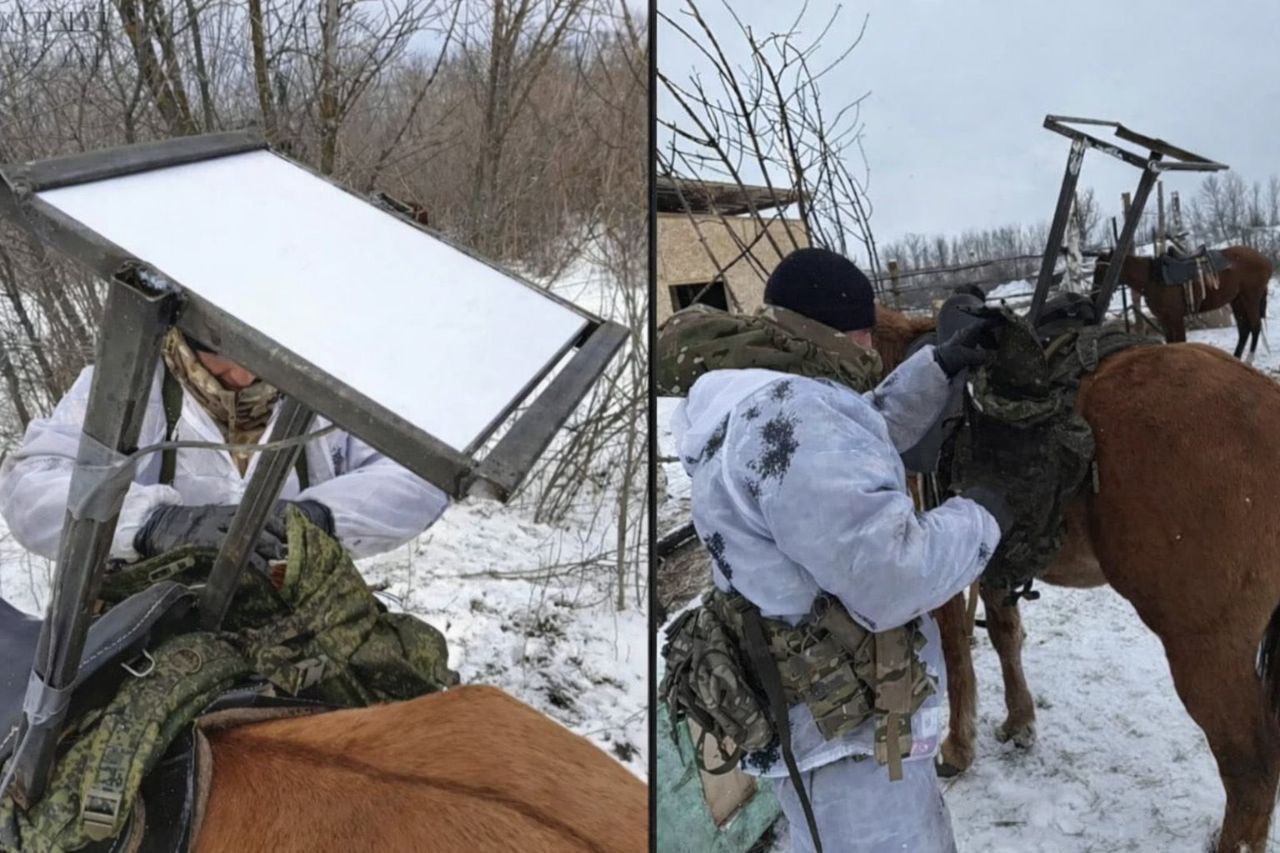
latvia convicted one node starlink supply chain russia — two latvian citizens same network still await trial · post terminal mounted russian horse 2026 latvia's riga city court has sentenced
Explore further

Ukrainian brigades detail Starlink crackdown: Russian terminals “became just bricks,” assaults disrupted

Ukraine's troops and drones lean heavily on Starlink, a network Kyiv neither owns nor controls. Musk has used that control against Kyiv before: in 2022 SpaceX refused a Ukrainian request to extend Starlink over occupied Crimea for a drone strike on Russia's warships, and it has since restricted the network's use for drone operations.

Sanctions, and satellites of its own

Zelenskyy has asked US President Donald Trump several times to sanction the Russian and Chinese companies building Russia's Rassvet network, most recently at the UN General Assembly in New York, he said in a recent Financial Times interview.
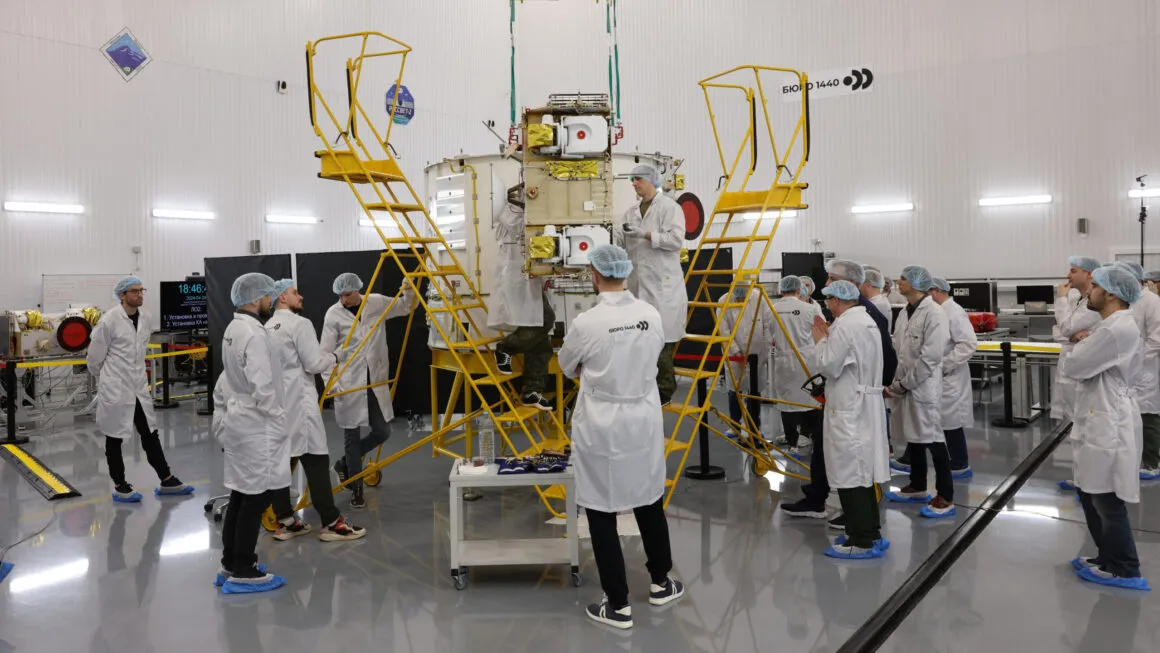
Employees of Russian company Bureau 1440 work on a Rassvet communications satellite.
Explore further

The EU sanctioned Russia’s Starlink rival but not the company that builds it. Experts call that the gap that matters

Denys Shtilerman, co-founder and chief designer at Ukrainian defense company Fire Point, told the Financial Times in May that the firm had launched two satellites this year and planned dozens more in 2027, aiming to reduce reliance on the US government and Western tech companies. To strike deep inside Russia and gather intelligence, he has said, Ukraine needs its own constellation covering all of Russia.

  • ✇Euromaidan Press
  • Most drone interceptors ram or explode. This Ukrainian one just throws a net—six shots to a module
    A Ukrainian defense company has shown a new way to knock FPV drones out of the sky, unveiling a net-firing interceptor at the IT Arena tech conference in Lviv, dev.ua reported. The system, called Mangal and developed by Phantom Defense, is still a prototype—the company says the first production units could reach the market in a few months. Ukraine's counter-drone work has turned into a crowded contest, with firms racing to field jammers, interceptor drones, and net-throwers that can blu
     

Most drone interceptors ram or explode. This Ukrainian one just throws a net—six shots to a module

30 septembre 2026 à 06:31

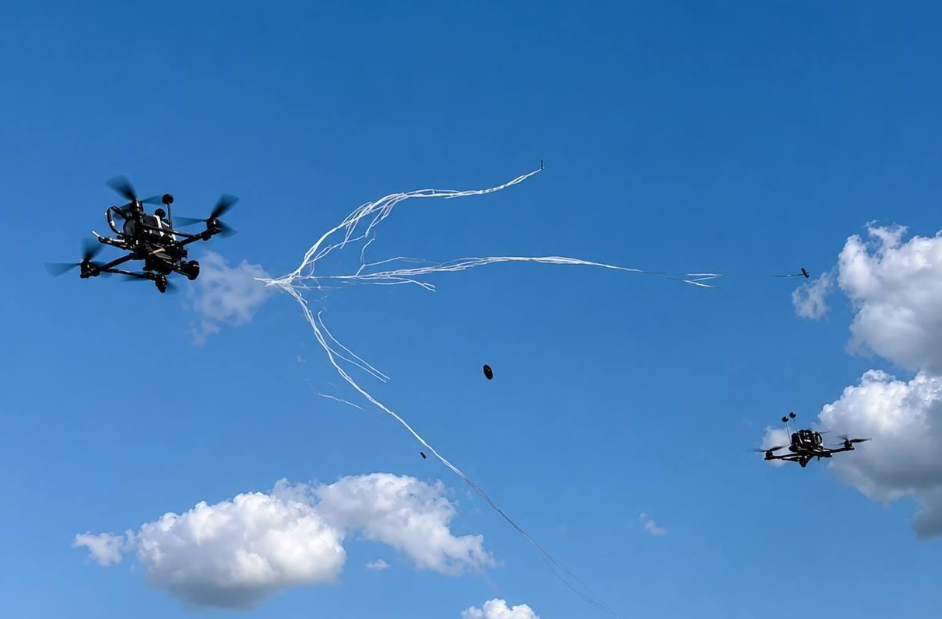
Modular FPV drone interceptor “Mangal” by Phantom Defence. September 2026.

A Ukrainian defense company has shown a new way to knock FPV drones out of the sky, unveiling a net-firing interceptor at the IT Arena tech conference in Lviv, dev.ua reported. The system, called Mangal and developed by Phantom Defense, is still a prototype—the company says the first production units could reach the market in a few months.

Ukraine's counter-drone work has turned into a crowded contest, with firms racing to field jammers, interceptor drones, and net-throwers that can blunt Russia's growing use of cheap FPVs.

What Mangal does

Phantom Defense designed the modular launcher to defend positions, vehicles, and other targets against enemy drones. It fires a special net weighted with sinkers. The net opens the moment it fires, tangling the drone and dragging it down. One module holds six charges. Two cameras give the crew a clearer view, and the system can detect targets on its own, which speeds up how fast an operator spots a threat. Crews can fix Mangal in place to guard checkpoints, trenches, or infrastructure, or bolt it onto a vehicle.

Why a net

FPV drones—aircraft a pilot flies straight into a target—have become a routine danger along the front. A small, fast drone is hard to hit with a single round. A net spreads as it travels, so it is more forgiving to aim. Neither Phantom Defense nor the outlets covering the launch have said how far Mangal's net can reach.

he Ukrainian company WINFLY unveiled the WINFLY Spider, an interceptor equipped with a net-launcher. Source: Militarnyi
Explore further

Ukraine’s newest interceptor doesn’t ram its target. It nets it for $27, then flies home to catch another

Other net-based counters

Other developers are turning to nets too. The WINFLY Spider is an interceptor drone that snares a target in a net and returns to its launch point intact, at about $27 a shot. That lets one aircraft make repeated intercepts instead of being spent on a single kill. Scan Horizon comes from Postup Solutions, a firm registered in Wrocław, Poland, and pairs a net launcher from Ukrainian company Ptashka Drones. Its net reaches about 30 meters. Contra Drone, meanwhile, has shown interceptor missiles that can reportedly carry net warheads alongside other options.

  • ✇Euromaidan Press
  • Mavic vs Slavic: Ukrainian developers adapt reconnaissance drones to the modern battlefield
    Ukrainian company Vyriy Industries is bringing a new tactical reconnaissance drone, Slavic, to the market, Oboronka reports, citing information from the manufacturer. The control system of the new drone will be familiar to DJI Mavic operators, the company also said. Mavic has long been one of the main reconnaissance tools used by Ukrainian forces, with Ukraine relying heavily on supplies of these drones from abroad. After Ukrainian President Volodymyr Zelenskyy said China had stopped se
     

Mavic vs Slavic: Ukrainian developers adapt reconnaissance drones to the modern battlefield

29 septembre 2026 à 14:43

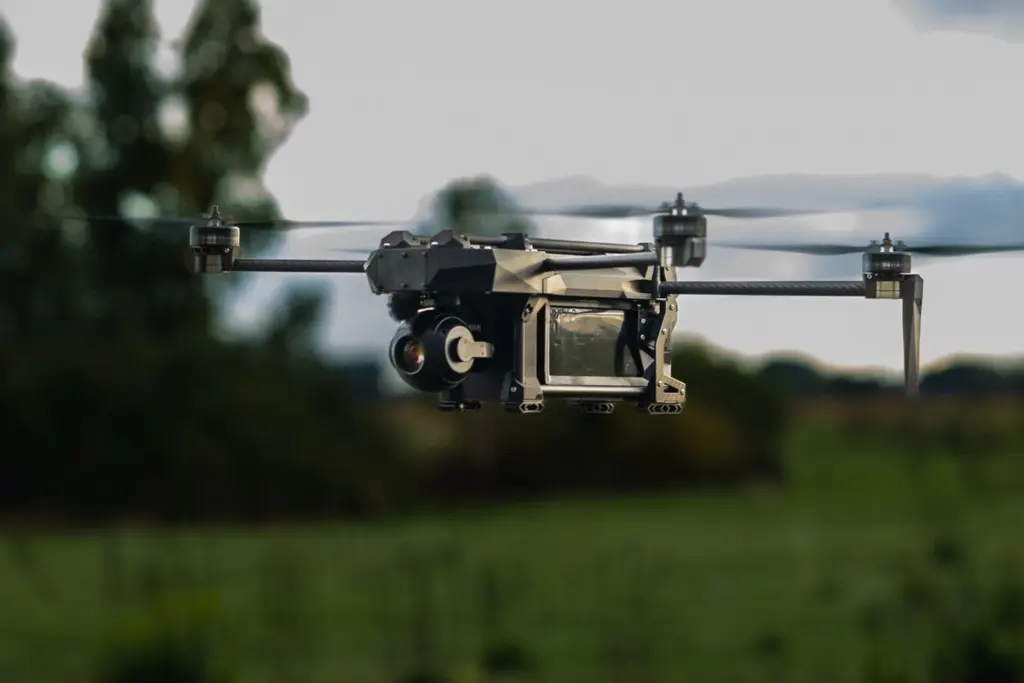
Slavic drone by Vyriy Industries. Photo: Vyriy Industries

Ukrainian company Vyriy Industries is bringing a new tactical reconnaissance drone, Slavic, to the market, Oboronka reports, citing information from the manufacturer. The control system of the new drone will be familiar to DJI Mavic operators, the company also said.

Mavic has long been one of the main reconnaissance tools used by Ukrainian forces, with Ukraine relying heavily on supplies of these drones from abroad. After Ukrainian President Volodymyr Zelenskyy said China had stopped selling drones to Ukraine, the country began seeking alternatives. Slavic is one of these domestic alternatives, designed not only to replace Mavic but also to adapt its capabilities to current battlefield conditions, allowing reconnaissance crews to operate farther from the line of contact and reducing risks to personnel.

Slavic has a tactical range of up to 30 kilometers without GPS

Slavic can remain airborne for up to 1.5 hours because it is equipped with a 40,000 mAh solid-state battery, the media outlet notes. The drone has a tactical range of up to 30 kilometers, the report says.

Illustration showing the positions of the Slavic pilot (left) and Mavic pilot (farther to the right), as well as the drones’ flight ranges relative to enemy positions (shown in red). Illustration: Vyriy Industries

The aircraft can operate without GPS, as Slavic uses optical positioning for navigation. The pilot can also select a less congested channel and operate more effectively in difficult terrain because the communications system operates across a wide range of channels.

The manufacturer notes that for surveillance, Slavic is equipped with a daytime 2K digital camera mounted on a three-axis stabilized gimbal, with 10x optical and 30x hybrid zoom.

Part of the drone with the camera. Photo: Vyriy Industries

The system is supplied as a ready-to-use package “out of the box,” with all the equipment needed for operation without additional field modifications.

The drone is designed to keep crews farther from the front line

The company said its new drone has successfully completed initial combat trials with seven units of the Ukrainian Defense Forces and is preparing for scale-up, the media outlet notes.

“The war has changed, and so have the working conditions for crews. The kill zone has expanded, while available commercial drones have a limited tactical range. The main task now is to provide the military with a specialized platform that can fly longer and farther, so crews can operate farther from the line of contact. This is exactly why we began developing Slavic,” said Oleksii Babenko, founder and CEO of Vyriy Industries.

At the same time, the team is working on new Slavic configurations, including testing thermal imaging modules for nighttime reconnaissance. The manufacturer is also preparing the platform for scaled-up production and deliveries to the Ukrainian Defense Forces, the company told the media.

“Frankensteins” and Ukrainian-made drones are among the options for replacing scarce Mavics

The Ukrainian military had widely used Chinese DJI Mavic 3 drones, including to adjust artillery fire, monitor infantry positions and conduct surveillance, prompting Ukraine to seek ways to replace the shortage. More than five alternatives to the Chinese drone had already been developed in Ukraine, the Ministry of Strategic Industries of Ukraine confirmed to RBC-Ukraine in July 2025.

DJI Mavic 3 in use by a Ukrainian servicemember. Photo: Ministry of Defense of Ukraine

There are also other options for replacing them. The main work in military units is being done with “Frankensteins,” drones assembled from two or three damaged aircraft, Mavic UAV pilot instructor “Dobryi” said in an interview with Militarnyi in July this year. At the same time, such drones are less reliable than new ones, he added.

  • ✇Euromaidan Press
  • A Ukrainian firm now rents out drone jammers by the day—but the deposit is the device’s full price
    Ukrainian defense-tech firm BlueBird Tech has begun renting out its Hrets electronic-warfare jammers by the day, in what it calls Ukraine's first such service, the company said on 29 September 2026. Electronic-warfare gear—the devices that scramble the radio links attack drones rely on—is normally bought outright, renting lets a user take a system for a single mission or test it before committing. The pull is a war where cheap first-person-view (FPV) drones have made portable jamming a
     

A Ukrainian firm now rents out drone jammers by the day—but the deposit is the device’s full price

29 septembre 2026 à 13:50

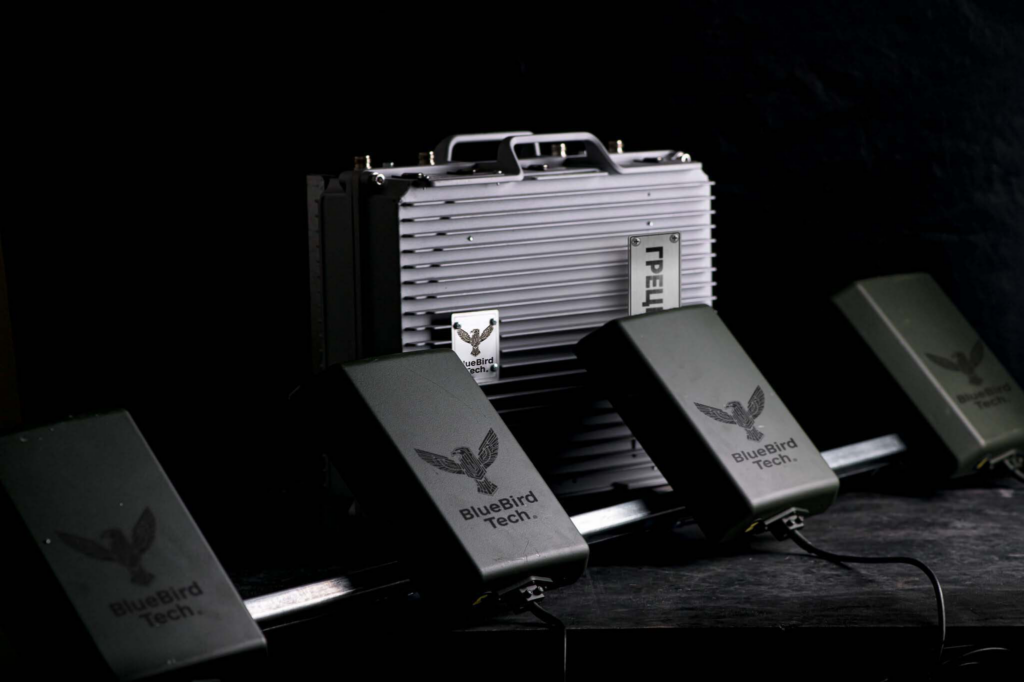
Hrets electronic-warfare jammers.

Ukrainian defense-tech firm BlueBird Tech has begun renting out its Hrets electronic-warfare jammers by the day, in what it calls Ukraine's first such service, the company said on 29 September 2026. Electronic-warfare gear—the devices that scramble the radio links attack drones rely on—is normally bought outright, renting lets a user take a system for a single mission or test it before committing.

The pull is a war where cheap first-person-view (FPV) drones have made portable jamming a routine need, one many users face only for a stint.

How renting works

After paperwork and a deposit equal to the device's full price, the system is handed over, and that handover counts as day one. Each day's rent is then drawn from the deposit, return the system working and undamaged and the renter gets back what is left. Keep it long enough that the fees add up to the full price, and the jammer passes to the renter automatically. Renting is open to individuals, companies, charities, and volunteer groups.

Three models, and what each one jams

The Hrets XL is a modular FPV jammer built from two to 10 working modules, priced case by case. The vehicle-mounted Hrets 4MC is an anti-drop system that jams DJI Mavic-type quadcopters—the drones Russian forces use to drop munitions—for about $56 a day. The lightweight Hrets 4M jams FPV drones at a stated 70 to 400 meters for about $67 a day. One Ukrainian firm has even packed detection, decoding, and jamming of an FPV signal into a single device.

  • ✇Euromaidan Press
  • Ukraine’s snipers didn’t vanish in the drone war—their job changed beyond recognition
    Drones get most of the attention in this war, and deservedly so—but the snipers are still out there, two Ukrainian marksmen told Army Inform, and the same drones have made their work far harder to survive. It now turns on watching, not shooting: long stretches at a hidden position, a thermal scope always running, and a constant fight to stay unseen. Across the drone-saturated front, cheap cameras overhead have rewritten nearly every job—infantry, logistics crews, and now marksmen—so tha
     

Ukraine’s snipers didn’t vanish in the drone war—their job changed beyond recognition

18 septembre 2026 à 08:54

ukraine's snipers didn't vanish drone war—their job changed beyond recognition · post ukrainian sniper ukraine news reports

Drones get most of the attention in this war, and deservedly so—but the snipers are still out there, two Ukrainian marksmen told Army Inform, and the same drones have made their work far harder to survive. It now turns on watching, not shooting: long stretches at a hidden position, a thermal scope always running, and a constant fight to stay unseen.

Across the drone-saturated front, cheap cameras overhead have rewritten nearly every job—infantry, logistics crews, and now marksmen—so that surviving depends less on firepower than on never being seen.

The job is mostly watching

The men—a squad leader in a special-purpose sniper company, callsign Efiop, and his partner Maister—serve in the National Guard of Ukraine's 3rd Operational Purpose Brigade Spartan. Maister worked a factory milling machine before joining in 2022. He saw what Russian troops were doing, he said, and Ukrainian children started dying: he went to fight for the children, and he has a daughter of his own. A team takes a sector and holds it around the clock through a thermal scope.

"We can sit 40 days and never fire a shot. Or we go in, and in a single day we take down a lot of them," Efiop said.

His longest stint at one spot ran 48 days, and the greatest distance he has worked was 2,540 meters—more than a mile and a half.

Up to 154 pounds on your back, over 12 miles to cross

Reaching a position is often the hardest part. A sniper carries a vest, helmet, an assault rifle and the sniper rifle, and what supplies will fit—60 to 70 kilograms, or 132 to 154 pounds. They stay more than a month, and a month's worth will not go on one back. That load sometimes crosses more than 20 kilometers, over 12 miles, of open ground with no tree line to hide behind.

"You don't walk, you run," Maister said.

Lately it has eased a little: food can be dropped in by a heavy Vampire bomber drone.

Drones rewrote the rulebook

The biggest shift came from the sky. Russian drones with thermal cameras can see a bullet in flight because it is warm, Efiop said, and then burn out the position.

"They caught us like that once. We took out three, they saw where we fired from and burned the spot. We moved right away, and everyone lived," Efiop noted.

Now the snipers watch remotely from a safer place instead of lying behind the scope for hours. Once, that safer setup saved a life outright: a mortar round came in and pierced only the rifle scope.

Modern war that the US is not ready for: For the price of one American cruise missile, Russia builds 20 “poor-man” drones and missiles

14 septembre 2026 à 12:17

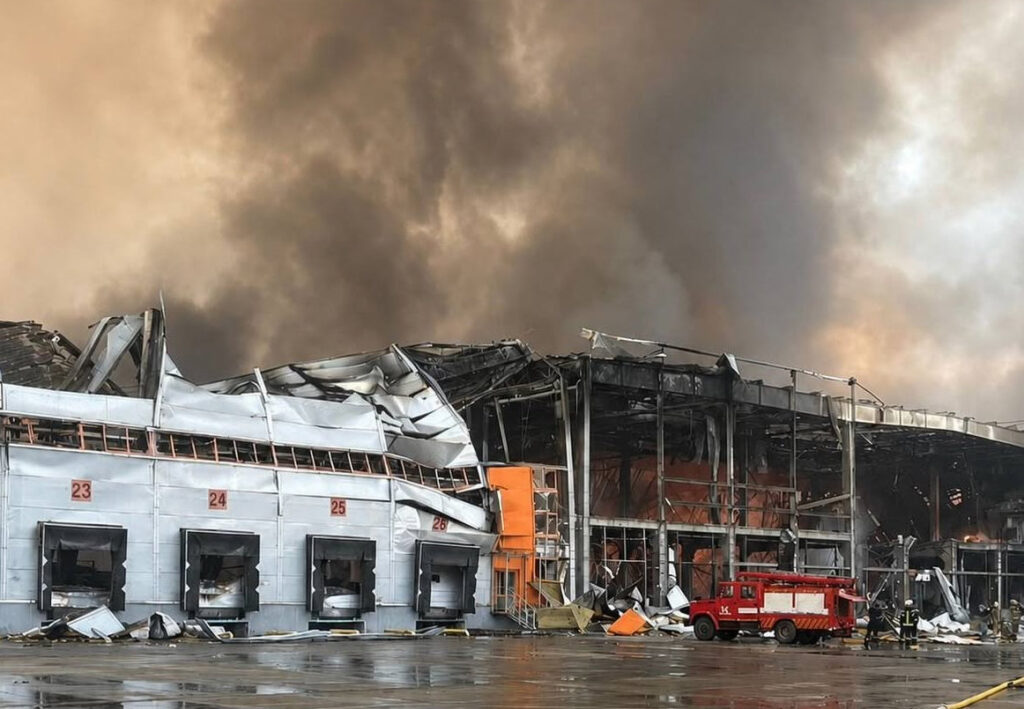
Firefighters beside a heavily damaged warehouse holding Bosch products as smoke rises from its collapsed roof.

Russia has fielded a new generation of cheap, jet-powered drones and cruise missiles faster than Ukraine or the US can build defenses against them, according to The Wall Street Journal. The weapons run on Chinese parts that slip past Western sanctions, and they are already getting through air defenses designed to stop slower drones. Analysts say the West underestimated how fast Moscow could move from an idea to a full assembly line.

Russia now leans on cheap, mass-produced drones to swamp Ukraine's air defenses with sheer numbers night after night, and its factories keep growing to keep the attacks coming. The bigger lesson reaches past this war: in a long fight, cheap weapons in large numbers can beat a small stock of expensive ones.

A cheap weapon that gets past Ukraine's defenses

Ukraine had learned to shoot down the Iran-designed Shahed drones Russia was launching. Then Moscow moved the goalposts. The newest model, the Geran-5, looks more like a missile than a drone—Mike Monnik, head of the drone-threat firm DroneSec, called it "essentially a poor-man's cruise missile," and it forced a rewrite of Ukraine's counter-drone playbook. The Geran-5 and the Banderol cruise missiles are each estimated to cost about $100,000. A US Tomahawk costs more than $2 million.

satellites caught russia expanding its shahed drone plant moscow already holds 6000 drones reserve · post satellite southern part alabuga special economic zone tatarstan newly built production halls published 14
Explore further

Russia built five more halls for the drones it assembles using Chinese parts to hit Ukrainian cities

Built fast, with China's help

Moscow needed only about two years to take each weapon from the drawing board to the battlefield, reworking earlier designs, testing them in combat, and pushing them into serial production. Ukrainian assessments, echoed by the drone-intelligence firm DroneSec, trace the leap to Chinese parts—the turbojet engines, the navigation computers, the radios—most of them off-the-shelf, dual-use gear anyone can buy. The weapons are aimed at Ukrainian cities and infrastructure—a Banderol struck a residential area of Kharkiv in July.

An expensive problem for the West

US forces and NATO have knocked down cheap drones with costly Patriot interceptors and fighter jets, often firing several interceptors at a single weapon. Western firms that built interceptors for slow drones are now scrambling to make faster, jet-powered ones. Kateryna Bondar of the Center for Strategic and International Studies said the West keeps underestimating how fast Russia turns experiments into production, and that Kyiv had years of warning yet was still caught off guard.

"I'm surprised everyone is surprised," she said.

At NATO's July summit in Ankara, members committed more than $40 billion to counter-drone defenses over the coming five years.

Ukraine’s FLYCAT strike drone is built to fly without satellite signals. Its bigger new sibling is designed to reach 200 km behind the front

14 septembre 2026 à 07:45

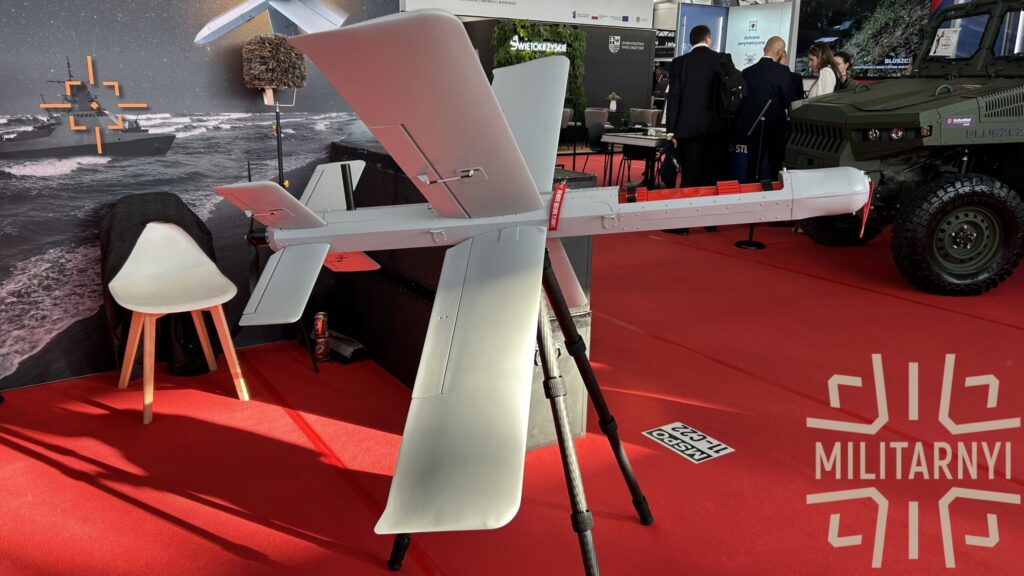
Updated FLYCAT strike UAV at MSPO 2026.

A Ukrainian company has unveiled a homegrown strike drone built to fly deep behind Russian lines, Militarnyi reported on 13 September. Octava Defence showed the new long-range aircraft—a bigger version of a drone already used in combat—at the MSPO 2026 defense expo in Kielce, Poland. The company says the smaller drone is built to keep working in electronic warfare conditions without a reliable satellite signal.

Russian jamming is one of the biggest obstacles to Ukrainian strikes deep in the rear, which is why Ukrainian makers keep building guidance that does not depend on satellite signals.

The workhorse is already in the fight

The base FLYCAT, presented in January 2026 by another Ukrainian firm, Venator Technologies, is a strike drone Ukrainian forces have used in combat since March. An improved model went into action in July and August and is now undergoing codification—entry into Ukraine's official weapons register.

Ukraine is approaching to the Project 1100M "Sargan" patrol boat in Kerch. Source: Ukraine's Defense Intelligence
Explore further

Watch first naval battle in history fought entirely by drones: Ukrainian uncrewed boat spots, fires on, and sinks Russian one in Black Sea

The company says the updated drone can fly more than 80 km, stay in the air for an hour, and carry a warhead weighing up to 3.7 kg. It is built to hunt armored vehicles, artillery, radars, and air-defense systems, as well as lighter shelters and communications gear. It can pair with a scout drone that finds the target and passes the coordinates. Several FLYCATs can also strike a single target together or hit multiple targets at once.

Nearly everything on it is built in Ukraine—the communications, navigation, guidance, and warhead. Only the engines come from abroad. Its two cameras—day-only or day-and-night—feed a terminal-guidance module that picks out the target from 2,000 m as it closes in.

The one that reaches deeper

The FLYCAT SL is a bigger, longer-range version, and it is still in testing. The company says it is built to fly more than 200 km, stay airborne for over two and a half hours, and carry a heavier load of up to 7 kg.

One of the warhead variants of the FLYCAT strike UAV.
One of the warhead variants of the FLYCAT strike drone, shown at MSPO 2026 in Kielce, Poland. Photo: Militarnyi

That range is meant to let it go after command posts, armored vehicles, artillery, and air defenses far behind the front line.

❌