Vue normale

Ex-FSB general who wired Russia’s spies and army found dead in Moscow—a gunshot, no note, no official report
21 août 2026 à 09:20

gunshot note official word—russia reports ex-fsb general dead moscow · post igor laptev ігор лаптєв фото укрінформ ukraine news ukrainian

retired Russian FSB major-general whose company built secure communications for the Kremlin's security services and military has been found dead in his Moscow apartment, RFE/RL's Current Time reported. Russian outlets, citing their own sources, say the 83-year-old apparently killed himself, though authorities have released nothing. His death adds to a run of senior Russian military and security figures dying in the capital.

Russia's war keeps killing the people who build and run it — defense-industry figures and officers assassinated near Moscow, occupation officials blown up in occupied Ukraine — so a reported suicide in a Kremlin insider's apartment rarely settles how he actually died.

An FSB veteran who wired Russia's spies

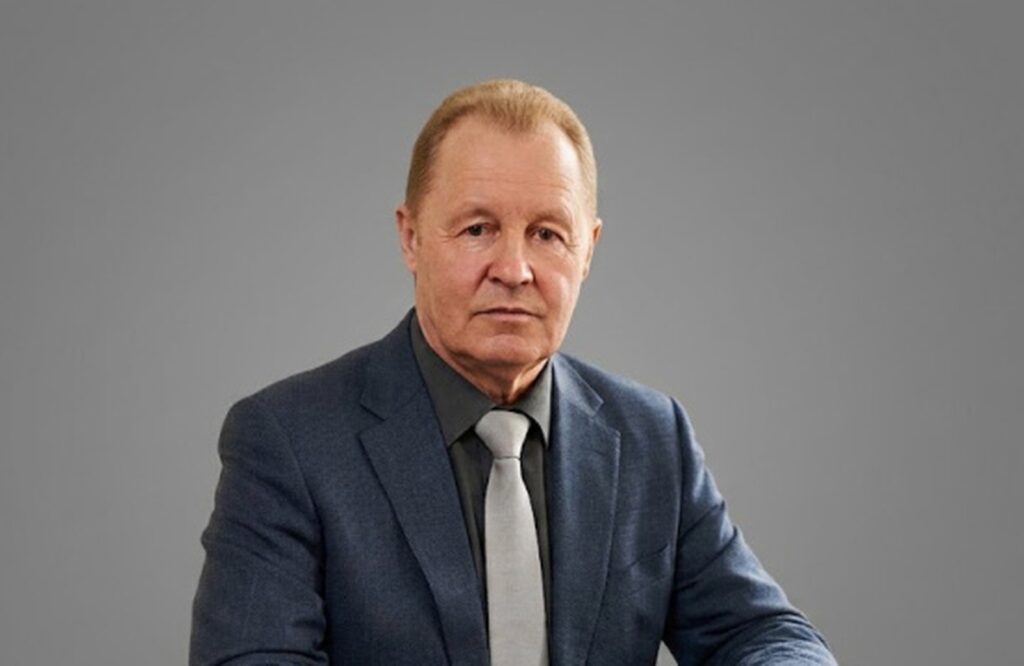
Igor Laptev, 83, was found dead in an apartment in Moscow. Russian outlet MK and others, citing sources, wrote that he probably took his own life on the afternoon of 20 August. Izvestia claimed he died from a gunshot wound to the head. No suicide note or motive has been reported, and Russian law enforcement has issued no official statement.

gunshot note official word—russia reports ex-fsb general dead moscow · post products russia's informtekhnika company display minicomru militarnyi стенд з виробами компанії «информтехника» в рф фотo ukraine news ukrainian
Products of Russia's Informtekhnika company on display. Illustrative photo: Minicom.ru via Militarnyi

Laptev was a chemist-technologist by training who served in the Soviet KGB, including combat in Afghanistan, according to Delovoy Peterburg. In the KGB and later the FSB, he worked on information security. In the late 1990s, he was a deputy minister for taxes and duties, and from 1998, he chaired the board of Informtekhnika i Svyaz, now the Informtekhnika group.

leading russian electronic warfare designer killed bryansk car explosion head design bureau russia's electromechanical plant yevgeny rytikov (l) eliminated responsible modernization anti-drone systems krasukha (r) dead-russian-ew-clown vehicle carrying senior military
Explore further

Leading Russian electronic warfare designer killed in Bryansk car explosion

A supplier to the FSB, the guards, and the army

The company says on its own site that it makes communications systems for federal authorities and security structures, including the FSB, the FSO federal guard service, the Defense Ministry, and the interior ministry. According to OSINT VARTA, it develops and produces specialized telecom equipment and software for secure communications, building switching systems and special-comms platforms for security agencies and state bodies. It also works with Voentelecom, a Russian Defense Ministry structure, to supply troops with digital telecom gear, Militarnyi reported.

A string of deaths among Russia's brass

Laptev's death is not the first in Moscow involving retired Russian generals. On 2 May, retired colonel-general Stanislav Petrov — founder of Russia's radiological, chemical and biological defense troops, who helped create the TOS-1 Buratino heavy flamethrower system — was found dead in a central Moscow apartment. Weeks ago, Moscow buried a general under roadblocks and metal detectors after a bombing that likely killed him at a commander's gathering.

Under roadblocks and metal detectors, Moscow buries a general likely killed in the Bucha commander’s party bombing

7 août 2026 à 11:30

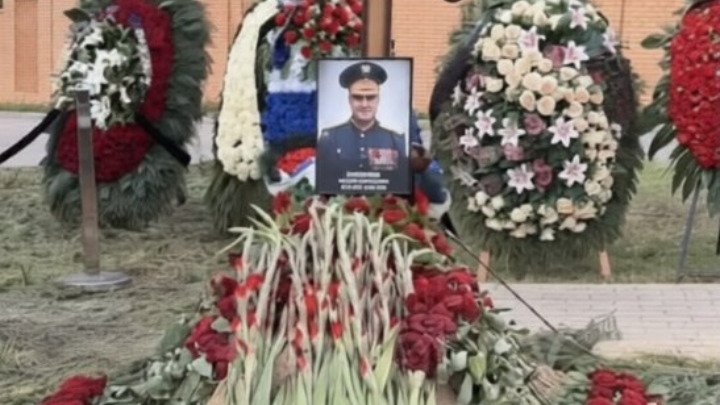
Portrait of Major General Valery Plokhotnyuk surrounded by red flowers and funeral wreaths at his burial site.

Major General Valery Plokhotnyuk was buried in Moscow on 5 August 2026, four days after he reportedly died in a bombing at an Italian restaurant. Security was heavy at the funeral. The ceremony at Troyekurovskoye Cemetery reportedly took place behind roadblocks, metal detectors, and buses carrying Russian National Guard troops.

If he died in the blast, Plokhotnyuk would be at least the fourth senior Russian general killed near Moscow since December 2024. The earlier targets held senior roles in Russia’s war against Ukraine. Moscow has blamed Kyiv for others without presenting public proof. Unlike the three earlier generals, however, independent reporting has not established that Plokhotnyuk himself was the intended target. Responsibility for several of the killings remains disputed or unconfirmed.

The Russian news site Mediazona verified through state registries that Plokhotnyuk died on 1 August 2026, the day of the Moscow bombing. His business partner later confirmed the death after speaking with the general’s father.

Russian officials have not confirmed that Plokhotnyuk died in the blast.

Plokhotnyuk previously commanded Russian troops in Transnistria, a Russian-backed breakaway strip of Moldova. In 2022, he was serving as chief of staff of Russia's 49th Combined Arms Army. Its units attacked southern Ukraine through Kherson and Zaporizhzhia oblasts.

A bomb was brought to the restaurant disguised as a gift

The device that killed Plokhotnyuk exploded at the entrance to Moscow’s Balzi Rossi restaurant on the evening of 1 August. Five people died, and at least 19 suffered injuries.

A woman tried to carry the device inside as a gift but was stopped by a security guard, according to accounts compiled by Sistema, RFE/RL’s Russian investigative unit. The bomb then reportedly detonated remotely.

The woman and the guard both died. Investigators have not said whether she knew that the package contained explosives.

The scene outside Balzi Rossi after the explosion. Source: Baza

Sistema found several signs that the closed restaurant was hosting a belated 55th-birthday celebration for Colonel General Aleksandr Chaiko, appointed head of Russia’s Aerospace Forces in May 2026.

Footage taken before the blast reportedly showed a backdrop reading “Alexander 55.” State registries confirmed that Chaiko’s son-in-law, Daniil Peredriy, died that day. Chaiko’s daughter, Maria, and another relative reportedly suffered injuries.

The presence of several Chaiko relatives indicates that the event was held for him. However, independent reporting has not established whether he was inside when the bomb exploded. Ukraine has not claimed responsibility.

The EU sanctioned Chaiko in March 2026. It identified him as the senior Russian commander on the ground when Russian forces entered Bucha in February 2022. Hundreds of civilians were killed during Russia’s occupation of the Kyiv suburb.

Far from the front, Russia’s generals keep coming under attack

Before Plokhotnyuk’s reported death, bombings had killed at least three senior Russian generals in Moscow and its surrounding region since December 2024.

A bomb hidden in an electric scooter killed chemical warfare commander Igor Kirillov outside his apartment. An SBU source told Reuters that Ukraine organized the operation.

A car bomb later killed General Staff officer Yaroslav Moskalyk near Moscow. Zelenskyy subsequently mentioned an intelligence briefing on the “elimination” of Russian commanders without naming Moskalyk. Kyiv never formally claimed the bombing.

Another vehicle blast killed military planner Fanil Sarvarov in December 2025. Russian investigators considered possible Ukrainian involvement, while Kyiv remained silent.

No public evidence has established who organized the Balzi Rossi bombing.

❌