Vue normale

  • ✇Euromaidan Press
  • Ukraine’s Khartiia soldiers clear 4 km² near Kupiansk, while Russia pushes for main rail hub (VIDEO)
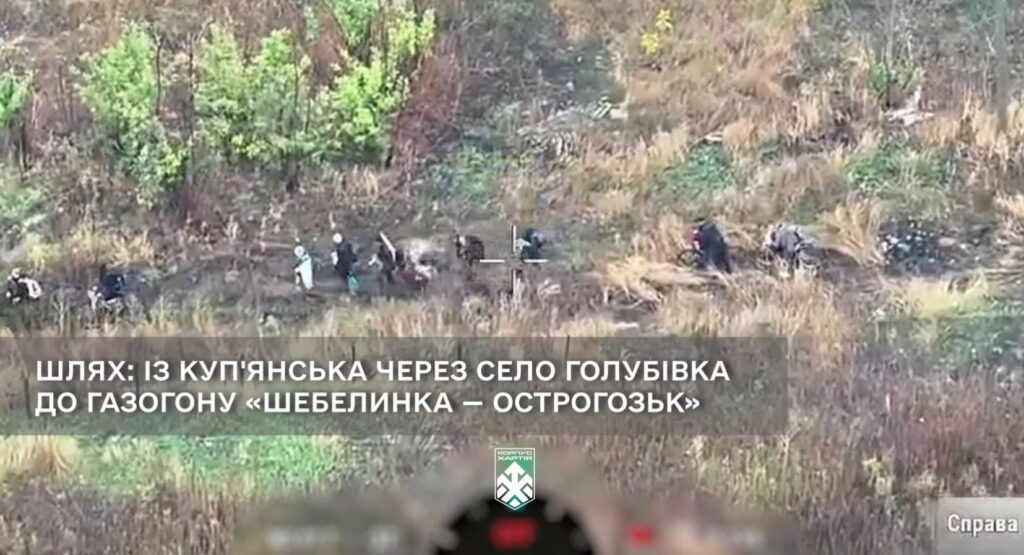
    Ukraine's National Guard says its assault units have cleared four square kilometers of ground near Kupiansk. According to the military, fighters of the 23rd R.U.G. Assault Regiment of the Khartiia corps have pushed Russian forces out of territory between the settlements of Dvorichna and Zapadne, working with the 35th Separate Marine Brigade on one stretch. Russia wants Kupiansk as a logistics node and a springboard for pushing deeper into Kharkiv Oblast. Just outside t
     

Ukraine’s Khartiia soldiers clear 4 km² near Kupiansk, while Russia pushes for main rail hub (VIDEO)

3 septembre 2026 à 11:10

Aerial photo of Kupiansk in Ukraine’s Kharkiv Oblast, August 2026. Photo: 41st Separate Mechanized Brigade

Ukraine's National Guard says its assault units have cleared four square kilometers of ground near Kupiansk. According to the military, fighters of the 23rd R.U.G. Assault Regiment of the Khartiia corps have pushed Russian forces out of territory between the settlements of Dvorichna and Zapadne, working with the 35th Separate Marine Brigade on one stretch.

Russia wants Kupiansk as a logistics node and a springboard for pushing deeper into Kharkiv Oblast. Just outside the city sits the Kupiansk-Vuzlovyi station, a key rail hub whose capture would let Russian forces move supplies and equipment far more easily.

“Overall, another 4 square kilometers of Ukrainian territory have been liberated. As long as the enemy remains on our land, the work continues,” the National Guard said.

Ukraine said its assault units have cleared another four square kilometers of ground near Kupiansk

Fighters of the 23rd R.U.G. Assault Regiment of the Khartiia corps pushed Russian forces out of the territory between the settlements of Dvorichna and Zapadne
🎥The National Guard pic.twitter.com/aOXrXm0BRw

— Euromaidan Press (@EuromaidanPress) September 3, 2026

A city fought over from both banks

The clearing north of the city is only one part of a contested picture. Kupiansk straddles the Oskil River: Ukraine holds the left, eastern bank, while Russian forces have pushed onto the right, western bank closer to Ukraine's rear.

On 2 September, Viktor Tregubov, head of communications for Ukraine's Joint Forces Group, said Russian troops had infiltrated part of northern Kupiansk on that right bank.

"On the right bank, the Russians are trying to hold the northern parts of the city, where they've already infiltrated some of their fighters," he told Suspilne, adding that Ukrainian forces are making trouble for them there.

The infiltrators are trying to reach the city through the village of Holubivka, he said.

On the left bank, Russian units are trying to reach the railway station.

"The Russians are pushing very hard toward it. They want to narrow our bridgehead," Tregubov reported.

No confirmed Russian advance

Back in July, Trehubov mentioned the Russian forces’ logistical problems in this direction, according to ArmyInform.

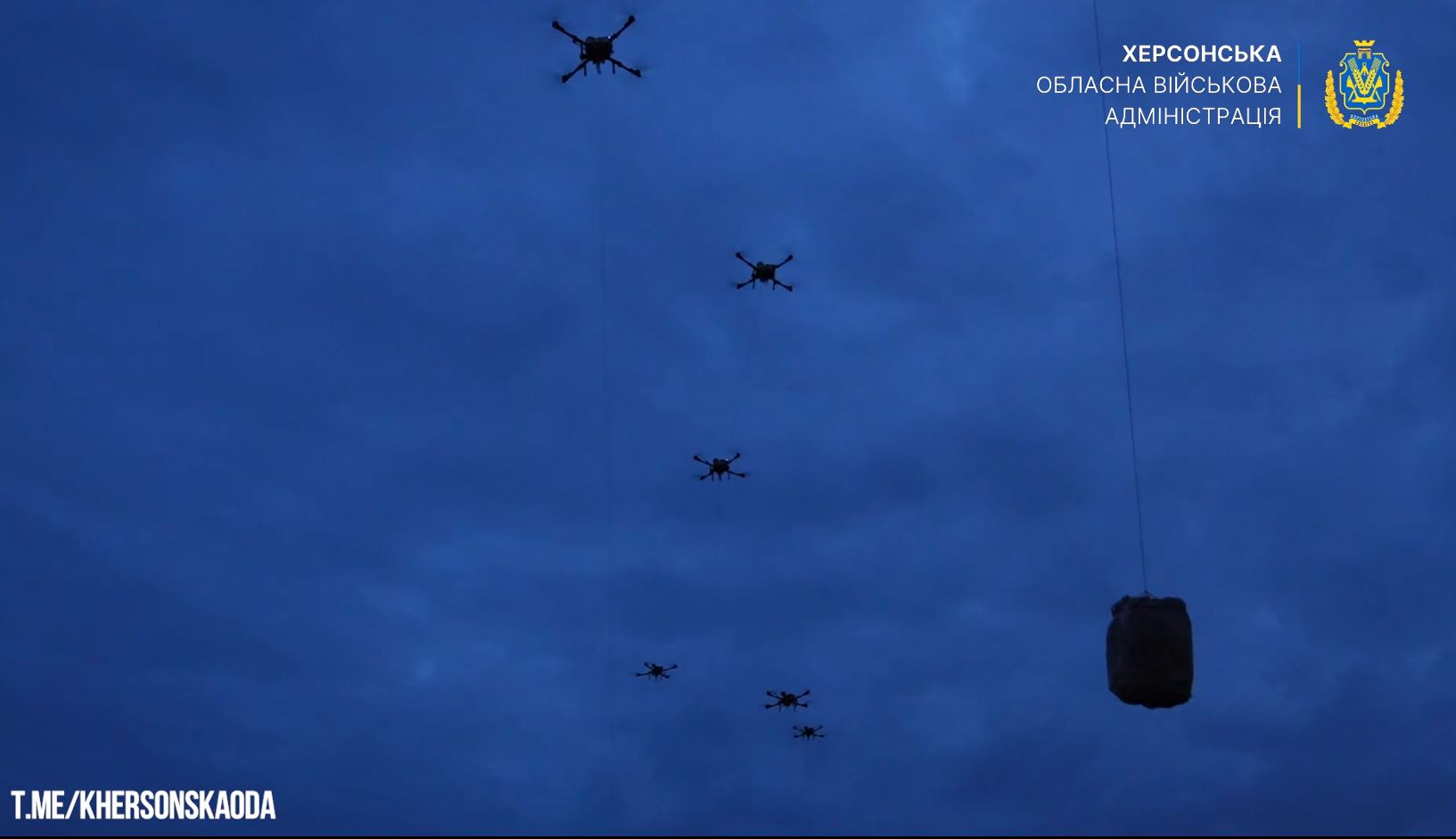
He explained that logistics for Russian forces in the area had been effectively paralyzed by a fuel shortage, with even water being delivered exclusively by drones.

  • ✇Euromaidan Press
  • Foot soldiers get a long spear: Ukrainian assault units strike deep behind Russian lines
    Ukraine's assault regiments, the troops built to storm trenches, have taken on a new role in 2026, reaching far into the Russian rear with their own strike drones, according to a feature by Ukrainska Pravda. Two of them merged their drone teams into a single experimental command and now plan deep strikes and ground assaults together, hitting the roads that feed Russian forces before the infantry moves. Through 2026, Ukraine has turned drones into a way to choke the logi
     

Foot soldiers get a long spear: Ukrainian assault units strike deep behind Russian lines

2 septembre 2026 à 09:01

A Ukrainian soldier of the 92nd Assault Battalion with a machine gun, 2026. Illustrative photo: 92nd Assault Battalion

Ukraine's assault regiments, the troops built to storm trenches, have taken on a new role in 2026, reaching far into the Russian rear with their own strike drones, according to a feature by Ukrainska Pravda. Two of them merged their drone teams into a single experimental command and now plan deep strikes and ground assaults together, hitting the roads that feed Russian forces before the infantry moves.

Through 2026, Ukraine has turned drones into a way to choke the logistics that keep the invasion moving, backed by dedicated funding aimed squarely at the enemy's rear. The shift now under way puts that reach in the hands of the units doing the ground fighting, so the same troops who storm a position can first starve it from dozens of kilometers away.

Assault troops with a long reach

For most of the war, deep strikes behind the front belonged to specialized drone units. That is changing. The 475th Separate Assault Regiment, known as CODE 9.2, was possibly one of the first non-specialist units to run mid-strikes, flights by medium-range attack drones that hit targets 50 to 150 kilometers past the front.

A T-64BM Bulat in the 57th Motorized Brigade. Photo by the brigade
Explore further

A rare Ukrainian Bulat tank turned up in a brigade that never had them

Then CODE 9.2 and the 1st Separate Assault Regiment named after Dmytro Kotsiubailo built a joint command for multidomain operations, code-named Phalanx (Falanha), so they could plan and strike as one. Before that center existed, each unit fought its own stretch of front at its own pace. In plain terms, ground units now own part of the fight far beyond their own trenches.

Drones go in before the infantry

Reporters watched a soldier follow a live feed from a mid-strike drone called Darts as it flew over occupied Zaporizhzhia Oblast toward the Tokmak–Melitopol road, one of three the report calls key for Russian forces on that stretch. Crews log every flight in Ukraine's Delta battlefield system. When several drones go down in one area, an analyst reroutes the next ones around Russian air defenses. The goal is to wear down the enemy's supply before the infantry ever advances.

F-Drones has unveiled the F5, a compact five-inch strike FPV built for assault units. Source: F5
Explore further

Ukrainian drone maker is pitching its new five-inch strike FPV as assault squad’s mortar

Where the shift began

CODE 9.2 launched its first mid-strikes at the end of 2025, during the Kupiansk operation, its commander Oleksandr Nastenko, call sign Flint, recalled. In the interview, the two commanders trace the center back to a build-up of heavy bomber drones, then a plan to isolate the enemy's transport and supply. For assault units, that kind of reach is recent. The regiments had already worked together earlier in 2026 to strike Russian routes into occupied Crimea, hitting bridges and trucks that keep the peninsula fed.

Ukrainian robot commander calls ground robots “Persian elephants.” What army really needs are “Arabian steeds”, he says

28 août 2026 à 16:26

ukraine’s war logistics go robotic battle zones · post ground complex termit cargo board наземний роботизований комплекс «терміт» із вантажем на борту фото тencore several ukrainian combat brigades have shifted

A Ukrainian ground robot used to run 12-15 missions. Near Kupiansk, it now survives three or four. The lifespan is collapsing under the denser Russian FPV drone and mining fire, Andrii Kopach, call sign "Matematyk", who commands a ground-robot unit in the "Lava" unmanned regiment of the "Khartia" corps, told Oboronka.

Ground robots have become a daily part of the front in Ukraine. Ukrainian units ran 16,676 logistics, strike, and evacuation missions with them in June, up 122 percent since January, and the military has contracted more than 22,000 for 2026, nearly double the 2025 total. That scale runs into a wall at the front, where Russia now assigns FPV crews, including fiber-optic drones, specifically to kill the robots.

The lifespan keeps shrinking

The pace of technological change is the core problem, Matematyk said. Ukrainian makers keep improving the platforms, but cannot always keep pace with how quickly the fighting evolves.

A machine may last only three or four missions now, as in Kharkiv Oblast, where it was eight or nine before and 12 to 15 earlier still, he said. Mining, Russian fiber-optic activity, FPV activity, and a targeted focus on countering robots all drive the decline.

Speed is the missing requirement

Most robots at the front are technologically outdated in speed and suspension, Matematyk said. Current figures of 10 to 15 kilometers per hour no longer allow a machine to cross logistics routes safely.

He put the problem in an image. Gun-armed combat robots, he said, are "Persian elephants", fearsome but so slow to reach the objective that "a couple of centuries" pass first. What the army needs are "Arabian steeds" that gallop in, do the job, and gallop back.

AI defense is in development

Ukrainian troops are working with Brave1 and the Digital Transformation Ministry on AI-based active-protection systems that could autonomously detect and neutralize enemy FPVs, Matematyk said. The approaches vary, from a camera to a mini-radar to a camera paired with sound.

The countermeasures could be net launchers, or for fast machines, shotgun blasts and shrapnel, he said. The detection and response are trained on models built from the data his unit has logged over previous years. Ukraine still holds a quality edge over Russian robots through better Starlink-based communications and decentralized robot groups in its units, he added.

Russian electric locomotive was named target of Ukrainian partisan operation. It carried military supplies toward Kharkiv front

10 août 2026 à 01:09

An explosion. Credit: UkrInform

Ukrainian partisans say they crippled a locomotive moving Russian military supplies to the front. Agents of the ATESH movement carried out a sabotage operation near Voronezh, destroying the cab of an electric locomotive used to support military transport, ATESH reported.

Disabling a single locomotive cripples the entire supply line. The locomotive was supposed to continue its journey toward the Kupiansk direction, and after the cab was damaged, operating the machine at its former pace became impossible, disrupting the schedule for forming and dispatching the next trains.

The target was a rail supply line to the front

ATESH said the sabotage hit a link in Russia's military logistics chain. The locomotive was part of the rail transport that moves Russian military cargo, and it was bound for the Kupiansk direction, one of the active sectors of the front in Kharkiv Oblast.

Russia depends heavily on railways to supply its forces. Its army moves ammunition, fuel, weapons, and heavy equipment to the front largely by rail, so the locomotives and the lines they run on are critical arteries of its war effort. A partisan network can reach them behind the front lines at a vulnerable point.

One damaged locomotive slows the whole chain

ATESH framed the value of the strike in terms of the cascade it sets off. The loss of even one link in the mainline causes delays in the delivery of ammunition, fuel, weapons, and heavy equipment.

Those delays compound at the front. When rear supply operations are interrupted, units lose combat effectiveness and suffer significant personnel losses, ATESH said, casting a single sabotaged locomotive as a blow that reaches the soldiers, depending on what it was carrying.

The strike fits ATESH's partisan campaign

Euromaidan Press cannot independently verify the Voronezh sabotage, which is ATESH's own account. But rail sabotage is a documented feature of the war behind Russian lines, and the movement's focus on the logistics that feed the front reflects a real vulnerability in an army that runs on rail.

  • ✇Euromaidan Press
  • Russia’s morning strike on a Kharkiv high-rise kills two men and wounds 21
    Russian forces struck a residential high-rise in Kharkiv's Saltivka district on the morning of 9 August 2026, killing two people and injuring more than 20 others, according to city and oblast officials. The strike collapsed several upper floors and trapped residents inside. Firefighters carried people down from the top stories while a second strike hit a neighboring building. Russia hits Ukrainian cities and their apartment blocks night after night, pairing cheap attack
     

Russia’s morning strike on a Kharkiv high-rise kills two men and wounds 21

9 août 2026 à 03:53

russia's morning strike kharkiv high-rise kills two men wounds 21 · post firefighters work damaged after russian kharkiv's saltivka district 9 2026 2 syniehubov 5458525575338203373 ukraine news ukrainian reports

Russian forces struck a residential high-rise in Kharkiv's Saltivka district on the morning of 9 August 2026, killing two people and injuring more than 20 others, according to city and oblast officials. The strike collapsed several upper floors and trapped residents inside. Firefighters carried people down from the top stories while a second strike hit a neighboring building.

Russia hits Ukrainian cities and their apartment blocks night after night, pairing cheap attack drones with a growing volume of cruise missiles that thinning air defenses struggle to stop. Kharkiv, Ukraine's second-largest city, is situated in northeastern Ukraine, with its outskirts roughly 25-30 km from the Russian border, resulting in regular Russian attacks on locals.

A missile through the upper floors

Kharkiv Mayor Ihor Terekhov reported the strike on Saltivka shortly after 07:00. He said Russia had hit a multi-apartment residential building. Minutes later he confirmed the blast destroyed floors 7 through 10, with wounded people inside.

Oleh Syniehubov, head of the Kharkiv Oblast Military Administration, first described a Russian drone strike that killed two. His administration later clarified that a missile hit the high-rise, and that Russia also struck an office building nearby.

Residents were trapped behind the collapse, and crews began a rescue operation. Firefighters brought seven people down from the upper floors, the State Emergency Service reported. The destroyed ceilings sat between the seventh and tenth floors.

russia's morning strike kharkiv high-rise kills two men wounds 21 · post destroyed upper floors apartment building struck russia kharkiv's saltivka district 9 2026 1 syniehubov 5458525575338203375 ukraine news ukrainian
The destroyed upper floors of the apartment building struck by Russia in Kharkiv's Saltivka district, 9 August 2026. Photo: Kharkiv Oblast Military Administration

As the rescue got underway, Russia struck again. Terekhov said a neighboring high-rise was hit, writing that Russia "is deliberately striking residential buildings" and urging people to shelter. A third impact followed in one of the district's parks.

russia's morning strike kharkiv high-rise kills two men wounds 21 · post rescuers medics carry injured woman site russian kharkiv's saltivka district 9 2026 3 dsns 5458755953088993681 ukraine news ukrainian
Rescuers and medics carry an injured woman from the site of the Russian strike in Kharkiv's Saltivka district, 9 August 2026. Photo: State Emergency Service of Ukraine

Russia regularly employs the double-tap tactic — striking a site, then hitting it again once rescuers arrive — to maximize casualties among first responders.

Two dead, 21 wounded, a boy of five among them

Terekhov counted a dozen wounded at first, then confirmed two people killed at the site. Syniehubov gave the fuller account: two men, aged 50 and 66, killed, and at least 21 people injured.

Among the wounded was a five-year-old boy. 11 people suffered blast injuries and two had carbon monoxide poisoning. Another eight, including a child, had acute stress reactions, and medics hospitalized four.

By late morning, Syniehubov said crews were still clearing the collapsed floors to be sure no one remained underneath. Specialists would then judge whether the building could still be used.

Russians killed two more civilians in Kharkiv this morning

The aerial attack targeted an apartment block, also injuring 21 other people.

📹 TG/DSNS pic.twitter.com/gN9IgRUayP

— Euromaidan Press (@EuromaidanPress) August 9, 2026

A day of strikes across the oblast

Over the past 24 hours, Russia struck Kharkiv and 12 settlements across the oblast, killing three people and wounding or shocking 25, the regional administration said.

In Izium, shelling injured eight people. Russia killed a 68-year-old man in Kivsharivka, near Kupiansk, and wounded a 47-year-old woman in Mykhailivka. In Lozova, a 60-year-old woman was hurt, and a transit evacuation point there took in 227 more people.

❌