Vue normale

  • ✇Euromaidan Press
  • Russia says Armenia’s EU accession law means leaving Moscow-led trade bloc. Yerevan disagrees
    Russian President Vladimir Putin said Armenia's 2025 law launching the EU accession process "amounts to a declaration of withdrawal" from the Russia-led Eurasian Economic Union. Armenian Prime Minister Nikol Pashinyan replied that Armenia had filed no notice to leave and had violated none of the bloc's rules. The leaders met on 1 September in Bishkek, Kyrgyzstan, during a Shanghai Cooperation Organization summit. The exchange turns Armenia's westward shift into an open
     

Russia says Armenia’s EU accession law means leaving Moscow-led trade bloc. Yerevan disagrees

2 septembre 2026 à 10:35

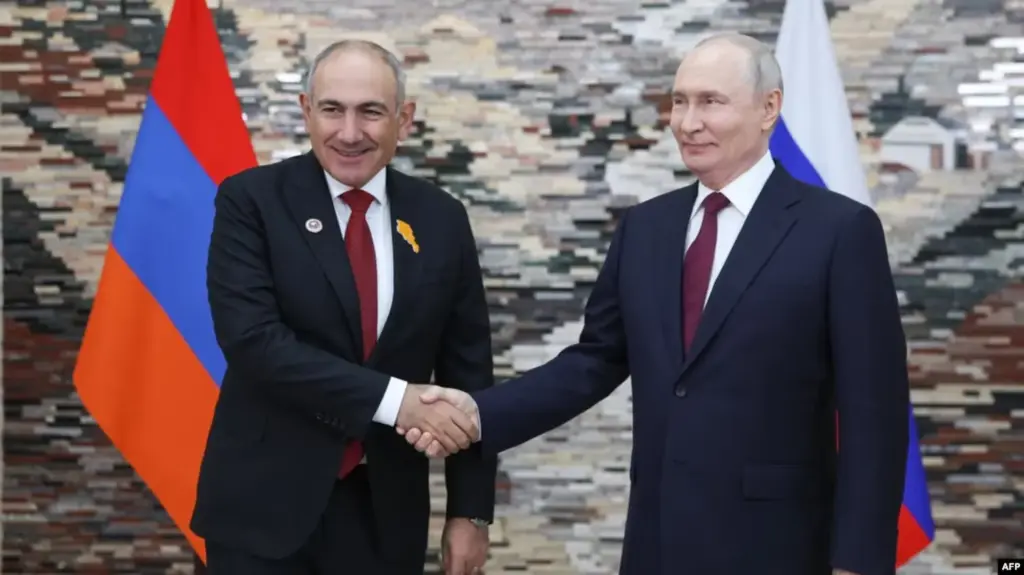
Nikol Pashinyan and Vladimir Putin meet in Bishkek

Russian President Vladimir Putin said Armenia's 2025 law launching the EU accession process "amounts to a declaration of withdrawal" from the Russia-led Eurasian Economic Union. Armenian Prime Minister Nikol Pashinyan replied that Armenia had filed no notice to leave and had violated none of the bloc's rules. The leaders met on 1 September in Bishkek, Kyrgyzstan, during a Shanghai Cooperation Organization summit.

The exchange turns Armenia's westward shift into an open dispute over how far it has already moved from Moscow. Yerevan is preparing an EU application and has frozen participation in Russia's military alliance, but it still belongs to the trade bloc. Russia remains Armenia's largest trade partner, accounting for about 35% of its foreign trade.

The disagreement

In the opening minutes, Putin acknowledged that Armenia's aspiration to join the EU was the country's "legitimate right," but said it "creates difficulties" given Armenia's membership in the bloc that links Russia, Belarus, Kazakhstan, Kyrgyzstan, and Armenia. He told Pashinyan that adopting a law launching the process of joining another organization "amounts to a declaration of withdrawal from ours."

Putin urged Armenia to decide quickly and repeated his call for a referendum on whether Armenia should remain in the trade bloc or pursue EU membership, telling Pashinyan to give the people a choice so the matter could be closed.

Pashinyan pushed back. He noted that the bloc's rules have no mechanism to expel a member state—only a voluntary withdrawal process requiring six months' notice—and that Armenia has filed no such notice. He told Putin the issue had not matured enough for a referendum, arguing that Armenia first needs to submit a formal EU application, receive a response, and agree on an accession roadmap.

How far Armenia has moved

Armenia's parliament passed a law launching the EU accession process in March 2025, though the government has said the law does not amount to a formal membership bid. On 24 August, Pashinyan told lawmakers that the government would begin preparing a formal application "in the near future." Armenia has also dropped the "strategic partner" label for Russia from its new government program and effectively frozen its participation in the Russian-led Collective Security Treaty Organization since early 2024.

Russia's response

Since May 2026, Moscow has imposed a series of bans on Armenian agricultural imports—including fruit, vegetables, and mineral water—citing phytosanitary concerns. The EU called the measures "economic coercion" and announced a support package of more than €50 million for Armenia in June.

Pashinyan says dialogue will continue

After the meeting, Pashinyan posted a video describing the talks as "very good" and saying the two leaders had agreed to continue a "sincere and constructive dialogue" during a future visit to Moscow. He said bilateral relations needed to be "rethought" under new circumstances.

  • ✇Euromaidan Press
  • Armenia drops Russia’s ‘strategic partner’ label, but foreign minister says alliance remains
    Foreign Minister Ararat Mirzoyan said in an interview aired on 31 August that Russia remains "more than a strategic partner" because existing treaties make the two countries allies, adding that the change in the government program's wording should not be interpreted as an end to that relationship. Mirzoyan was responding to Armenia's new 2026–2031 government program, which replaces the "strategic ally" and "strategic partnership" language used in the previous five-year
     

Armenia drops Russia’s ‘strategic partner’ label, but foreign minister says alliance remains

1 septembre 2026 à 08:54

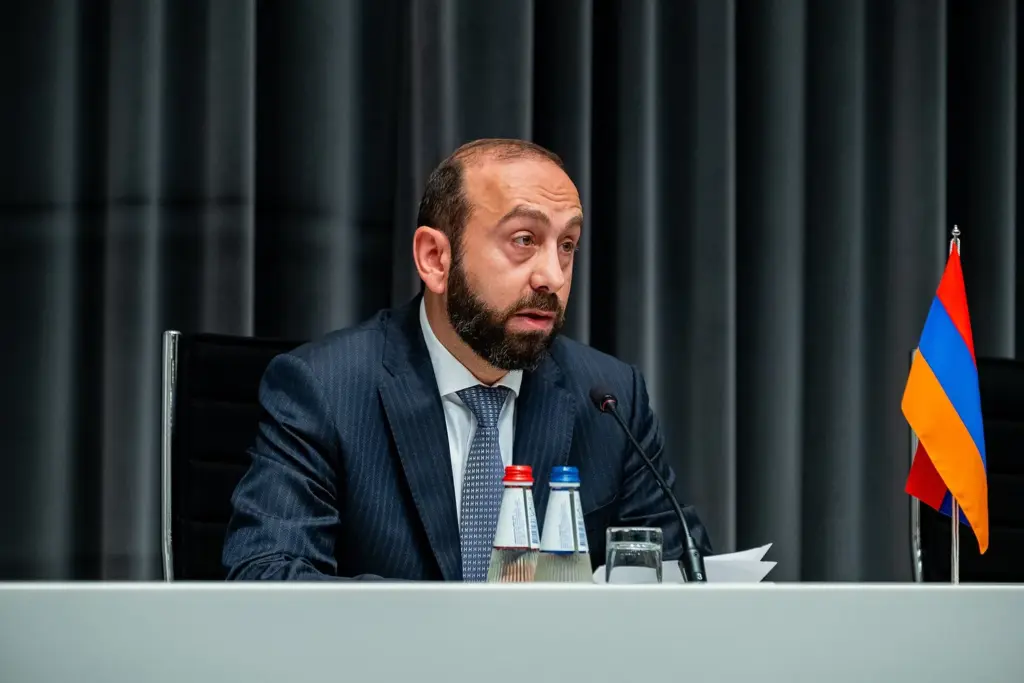
Estonian Foreign Ministry Ararat Mirzoyan

Foreign Minister Ararat Mirzoyan said in an interview aired on 31 August that Russia remains "more than a strategic partner" because existing treaties make the two countries allies, adding that the change in the government program's wording should not be interpreted as an end to that relationship.

Mirzoyan was responding to Armenia's new 2026–2031 government program, which replaces the "strategic ally" and "strategic partnership" language used in the previous five-year plan with a commitment to "transform and deepen" relations with Russia. The previous program referred to an "Armenian-Russian strategic alliance" and pledged to strengthen "allied relations and strategic partnership" with Moscow.

Prime Minister Nikol Pashinyan explained on 27 August that keeping the strategic-partnership language would raise questions about why Russia and the Russia-led Collective Security Treaty Organization had failed to fulfill their security obligations to Armenia in 2022.

Armenia has removed the language of alliance from its government program without ending the treaties, CSTO membership, or energy ties that still bind it to Moscow.

Azerbaijan attacked Armenian territory near Jermuk in September 2022, striking positions inside sovereign Armenia rather than the disputed Nagorno-Karabakh region. Yerevan invoked Article 4 of the Collective Security Treaty, the clause treating an attack on one member as an attack on all, and requested assistance. The alliance sent a fact-finding mission but no troops. requested military assistance. Armenia froze its participation in the CSTO at all levels in 2024, stopped financing it, and has boycotted its summits and military exercises.

Why the alliance frayed

Armenian trust in Moscow had deteriorated further by September 2023, when Azerbaijan retook Nagorno-Karabakh after a brief offensive and Russian peacekeepers deployed to the region did not intervene. Armenian officials accused them of failing to protect the enclave's population.

Yerevan has since moved closer to the European Union. In March 2025, Armenia's parliament passed a law to launch the accession process, though Pashinyan has said any actual membership would require a referendum, and Armenia has not applied to join.

What still ties Armenia to Russia

Even so, Armenia remains heavily dependent on Russia for energy. Russia supplied the bulk of Armenia's natural gas in 2021, and Armenia imports all of its nuclear fuel from Russia, leaving it effectively reliant on imported fuel for nearly 70% of its electricity, according to the International Energy Agency. The country remains a member of the Russian-led Eurasian Economic Union.

Mirzoyan acknowledged that strains had emerged in recent years, citing statements by Russian officials, coverage in Russian media, and Moscow's restrictions on imports of Armenian goods. He called for relations to be made "healthier" and returned to a course of "mutual respect," and said Yerevan did not want a "war of words" with Moscow. Pashinyan said on 1 September that he expected to meet Russian President Vladimir Putin later that day in Bishkek.

❌