❌

Vue normale

Ukrainian marines cleared about 6 km² near Pokrovsk without losses. The Russians they faced got a can of meat a week

12 octobre 2026 à 08:22

gunners can carry small car's weight shells every day — ukraine fields exoskeletons pokrovsk front · post artilleryman 147th separate artillery brigade wearing exoskeleton picks up combat position direction 2026

Ukrainian marines planned a clearing operation near Pokrovsk for about a month, their deputy commander said in remarks relayed by Army Inform. The Defense Ministry’s news agency published them on 12 October. He also described the Russian infantry the marines captured as barely trained, hungry, and unwilling to fight.

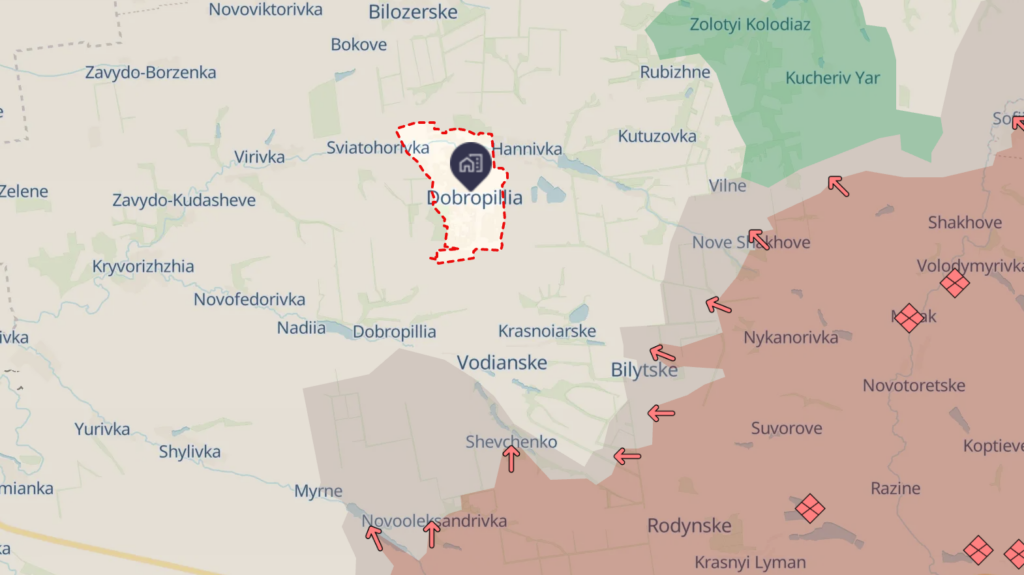
Russia seized Pokrovsk by seeping small infantry groups into the city a few at a time. Beyond the city, Russian advances stayed limited. ISW assessed on 25 February that the capture brought no further operationally significant gains. Small advances continued, and DeepState mapped one near Bilytske in Donetsk Oblast on 7 October. Every stretch where Ukrainian units stop that infiltration closes the route Russia used to take the city.

What the operation produced

Karyi, the 40th Separate Marine Brigade’s deputy commander, said that Operation Audit cleared about 6 km². The marines suffered no losses while inflicting them on the Russians, he said, and gathered a lot of intelligence. He promised the enemy many more surprises.

Service members of Ukraine's 40th Separate Marine Brigade during Operation Audit in the Pokrovsk direction.
Explore further

Ukraine makes local gains on Pokrovsk front despite sustained Russian attacks

The brigade had announced an operation by the same name on 26 September. It said then that the marines had cleared 5 km² and captured two Russian soldiers. The brigade also said they had stopped the flow of Russian infiltration on that stretch of the Pokrovsk direction.

Two weeks of training, then the front

Karyi called the two prisoners typical of the Russian infantry now sent against the marines, with all of two weeks’ training behind them. He said Russian recruits spend a month on transfers and paperwork before going into battle. They then walk to their positions for one or two weeks.
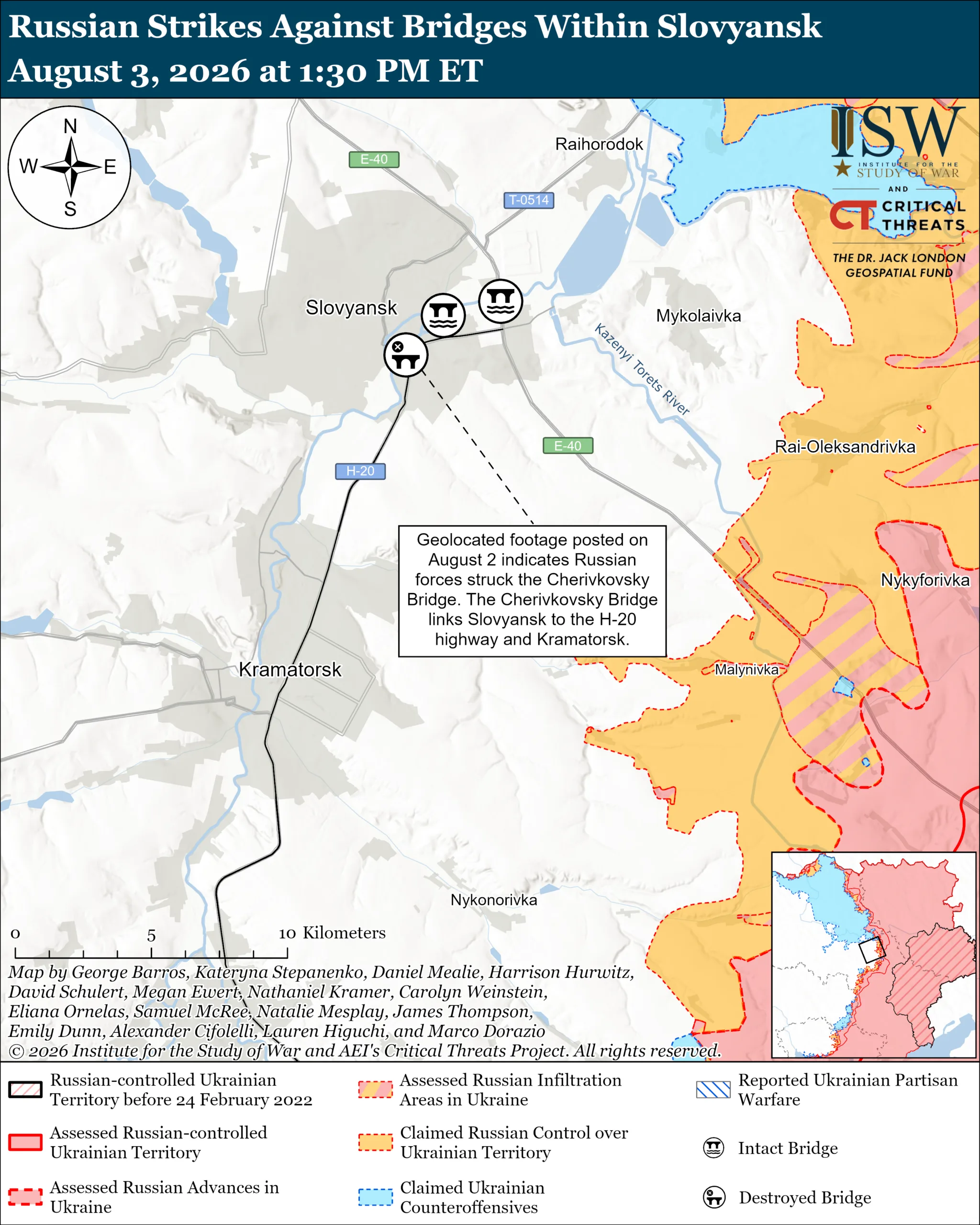
isw first pokrovsk huliaipole—now russia points its logistics-killing air campaign fortress belt · post russian-strikes-against-bridges-within-slovyansk-august-3-2026-scaled ukraine news ukrainian reports
Explore further

ISW: First Pokrovsk, then Huliaipole—now Russia points its logistics-killing air campaign at the Fortress Belt

If drones or Ukrainian ground groups don’t kill them first, he said, they surrender because they no longer want to fight. They are not fed or given water. He described one parcel a week with a can of stewed meat, and water drunk from the ground underfoot. That, Karyi said, is why the Russian troops facing the marines are demoralized and untrained.

  • ✇Euromaidan Press
  • Vivaldi erased Russia’s Lyman pincer. Now Moscow is pushing toward Sloviansk instead
    Ukraine's Vivaldi counteroffensive rolled back a Russian advance north of Lyman in Donetsk Oblast. However, Moscow shifted part of its forces south, Roman Pohorilyi, co-founder of the Ukrainian battlefield mapping project DeepState, told Radio NV. Russian troops are now infiltrating Mykolaivka, a key strongpoint on the approach to the fortress city of Sloviansk, Pohorilyi said. The halted advance was one arm of Russia's plan to encircle Ukraine's Donetsk fortress belt—the fortified citi
     

Vivaldi erased Russia’s Lyman pincer. Now Moscow is pushing toward Sloviansk instead

23 septembre 2026 à 09:51

Two soldiers of Ukraine’s Third Army Corps silhouetted among bare trees at twilight; one holds a radio to his mouth.

Ukraine's Vivaldi counteroffensive rolled back a Russian advance north of Lyman in Donetsk Oblast. However, Moscow shifted part of its forces south, Roman Pohorilyi, co-founder of the Ukrainian battlefield mapping project DeepState, told Radio NV. Russian troops are now infiltrating Mykolaivka, a key strongpoint on the approach to the fortress city of Sloviansk, Pohorilyi said.

The halted advance was one arm of Russia's plan to encircle Ukraine's Donetsk fortress belt—the fortified cities of Sloviansk, Kramatorsk, Druzhkivka, and Kostiantynivka. Pohorilyi warned that losing Mykolaivka would create serious problems for Sloviansk's defenders. Russia is still pressing toward Dobropillia on the belt's southwestern flank.

Pohorilyi said Russia formed a "claw" north of Lyman by exploiting Ukrainian brigades short of personnel and pushing small groups into their lines. Ukraine's Third Army Corps stabilized the area, built up forces, and counterattacked. The push "multiplied all [Russia's] previous efforts by zero," he said.

Russian forces had repeatedly tried to capture or bypass Lyman, Pohorilyi said. Russian groups still infiltrate the approaches to the city, although Ukrainian forces have stabilized the situation there.

The corps says Vivaldi's first two phases regained control of 125 square kilometers, including 50 that had been under Russian occupation. It reported liberating Shandryholove and Derylove, securing Drobysheve, and inflicting more than 3,000 Russian personnel losses. Those battlefield figures have not been independently verified.

vivaldi's secret weapon targeting robots third corps reconnaissance mapped russian command nodes hit cause panic · post graphic ukraine's army / telegram під час операції вівальді нрк десантували щоб порушити
Explore further

Vivaldi’s secret weapon was the targeting, not the robots: Third Corps reconnaissance mapped Russian command nodes, then hit them to cause panic

Pohorilyi noted that the area around Mykolaivka had, until recently, been under the responsibility of Ukraine's 11th Army Corps and is now under the Third Army Corps.

Ukrainian troops must now find and stop infiltrating Russian groups before they establish control, he said. Personnel shortages on the Lyman axis persist, although he said reinforcements are being distributed more evenly.

Map: ISW

Operation Vivaldi and the wider fight for Donetsk's fortress belt

The Third Army Corps first disclosed Operation Vivaldi on 15 September after conducting the counteroffensive north of Lyman under information silence. Commander Andrii Biletskyi said the announced gains were only the first phase; the corps said its attacks had disrupted Russian supply routes.

A 60th Mechanized Brigade captain said Ukrainian units quietly assembled near Derylove and Drobysheve, then struck Russian drone launch sites at planned times so infantry could advance. The corps disclosed a second phase on 20 September.

Farther southwest, Dobropillia faces even heavier pressure, Pohorilyi said. Russia has concentrated large forces there and is pushing with relentless infantry across a wide front, backed by thousands of drones each month—reconnaissance, strike, FPV, and Lancets—with numbers still rising. Russian troops are moving on settlements south of Dobropillia to establish a strongpoint and push deeper into Donetsk Oblast.

The pressure is not new: Biletskyi said Ukrainian troops halted a Russian incursion there last year. After Moscow claimed on 22 September to have encircled the town, the Institute for the Study of War found no evidence to support the claim.

“Huge increase” in Russian assault groups trying to break through to Dobropillia, but they are using familiar tactics, staff sergeant says

15 septembre 2026 à 15:31

Russian Armed Forces assault troops, illustrative photo. Photo: Russian Ministry of Defense

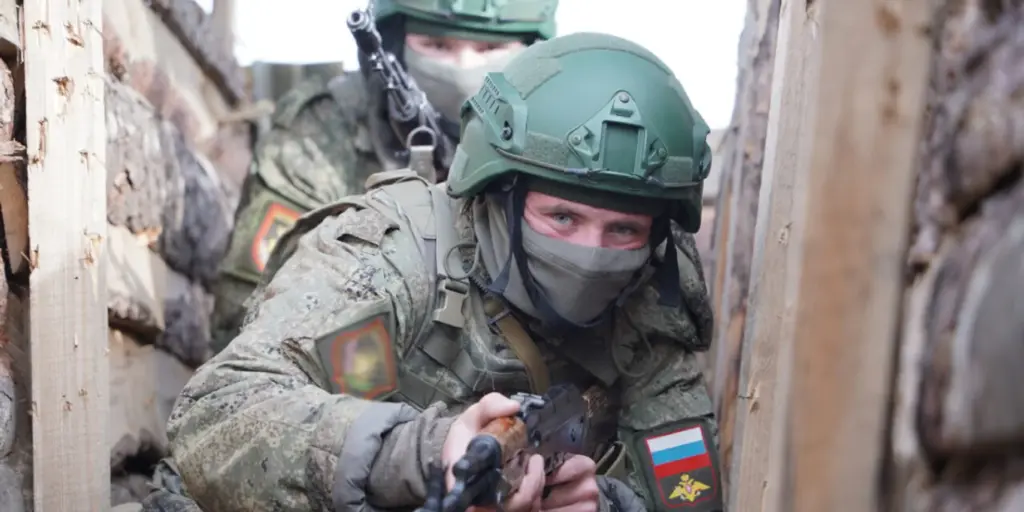
Russian forces have stepped up their attempts to break through toward Dobropillia in recent weeks, staff sergeant Dmytro Davydenko of the Svoboda Battalion headquarters said on the Suspilne Studio broadcast on 14 September.

Dobropillia is an important transportation hub in northern Donetsk Oblast, with a key road connecting it to Kramatorsk. Russian forces are using every possible factor, including weather conditions, to seize Dobropillia as part of their efforts to capture the entire Donetsk Oblast.

He noted that Russian forces may be taking advantage of the “greenery” to move as many troops as possible closer to the settlement and then enter Dobropillia when the weather deteriorates, potentially leading to urban combat.

The actions may be part of a tactic Russia has used before, but Ukraine has taken it into account

“Right now, there is a huge increase in the number of mobile groups moving in this direction. Sometimes we simply cannot keep up with engaging those we detect because there is a very large number of movements advancing in all directions right now,” Dmytro said.

Russian forces may use poor weather conditions to attempt something similar to what they did in Pokrovsk, when they tried to bring in a large number of troops using mechanized columns, the staff sergeant said. He added that the Ukrainian military had “drawn certain conclusions” and created obstacles for Russian forces along the routes to Dobropillia: the roads have either been destroyed, mined, or blocked.

The city of Dobropillia in Donetsk Oblast and Russian forces advancing toward it on the DeepState analytical project's map on 14 September 2026. Screenshot from the DeepState map

The number of assault troops has increased, but Russia faces limitations

Russia can increase the number of troops in the area, but its capabilities are limited, Davydenko said. He explained that one drone operator cannot simultaneously support 20–30 assault groups on different axes, so an increase in the number of Russian troops is unlikely to result in a “critical onslaught.”

“To bring in an even larger number of fighters, I don’t know how well they will manage that, because there is the factor of the physical ability to bring this number of people to the staging point and then lead this large number of people along the route,” Davydenko said.

The Kremlin revives its push toward Dobropillia

Russia prioritized offensive operations toward Pokrovsk and Dobropillia to encircle Ukraine’s fortress belt in Donetsk Oblast from the southwest, but the timeline for such an encirclement is “extremely unrealistic,” the Institute for the Study of War (ISW) said in its 7 August report.

The fortress belt consists of four fortified cities that have formed the backbone of Ukraine’s defense in Donetsk Oblast since 2022: Kostiantynivka, Druzhkivka, Kramatorsk, and Sloviansk. Dobropillia sits at its southwestern corner.

The city initially became a target of Russian strikes as Russian forces advanced toward Pokrovsk, and later became a target for capture. On 11 August 2025, Russian forces managed to approach Dobropillia and cut the Dobropillia–Kramatorsk highway in the opening days of their offensive. Ukrainian forces later reported that they had encircled and eliminated these troops.

In spring and summer 2026, Russia would “almost certainly” attempt to repeat its success in Dobropillia, predicted Francis Farrell for the Kyiv Independent. That is what happened. On 26 July, reports emerged that Russia was once again massing around Dobropillia, using quad bikes and motorcycles, following the same infiltration pattern as in 2025.

❌