Vue normale

Reçu — 1 septembre 2026 Euromaidan Press

Russo-Ukrainian war, day 1651: Russia’s sixth day of attacks on Kyiv ends with massive ballistic missile strike on eve of school year
1 septembre 2026 à 17:44

Exclusives

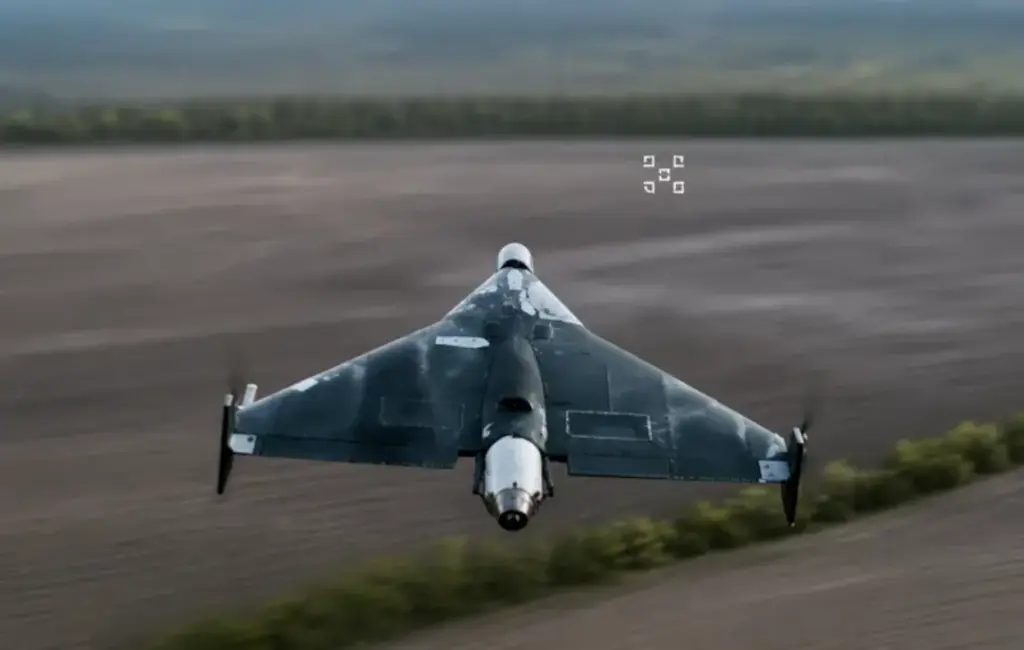
Ukraine spent three years learning to catch Russian drones—so Russia made them fly faster. Russia's jet-powered drones don't beat Ukraine's missile defense. They threaten the cheap layer that keeps it affordable—and they are turning the war into a contest over reaction time.
Russia keeps striking Ukraine’s energy system. Winter resilience plans are less than half complete. Ukraine is racing to shield heat, water, and rail from Russian strikes—but new locomotives will not arrive before 2027.

Military

Second drone brigade in two months: Ukraine is forming the 446th Unmanned Systems Brigade. It is the second brigade of this level stood up in 2026, following the 445th, and recruitment is already underway, per unofficial sources.

Drone attack damages Russia's Baltic oil port as drone crosses Latvia into Estonia. Finland separately restricted air and maritime traffic in the eastern Gulf of Finland. No drones entered Finnish territory.

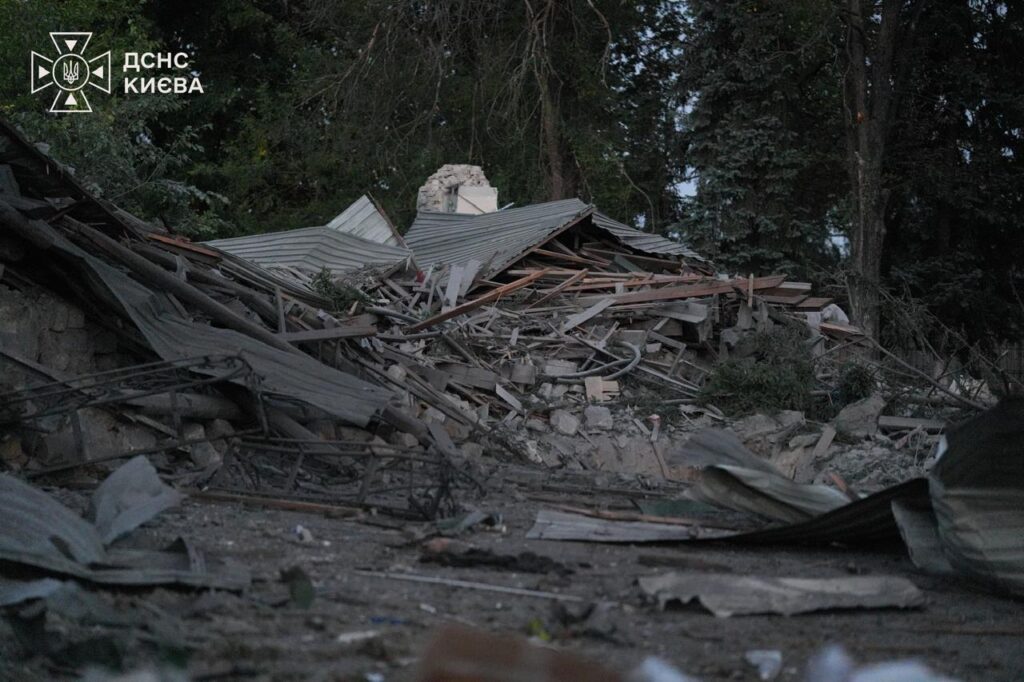
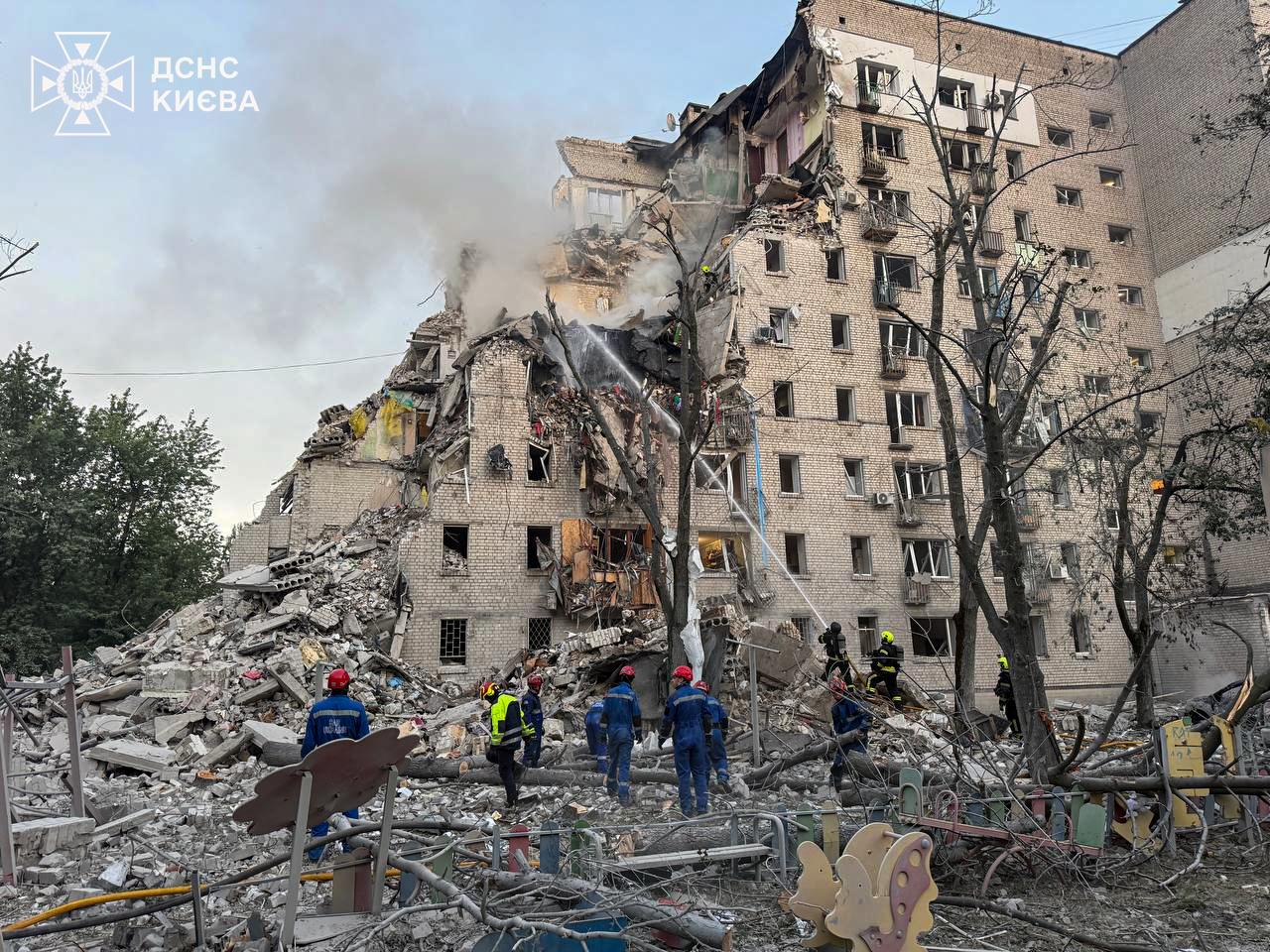
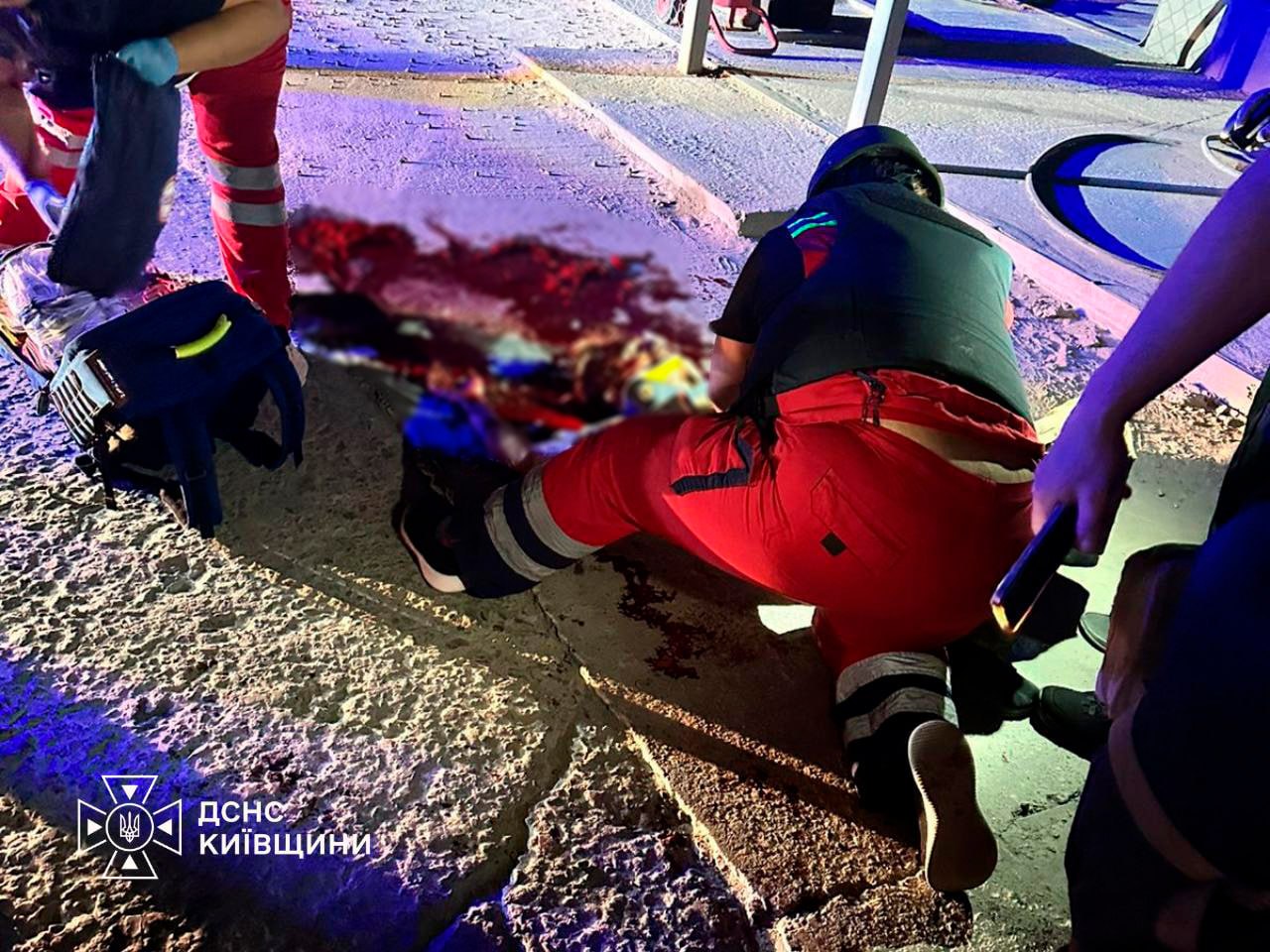
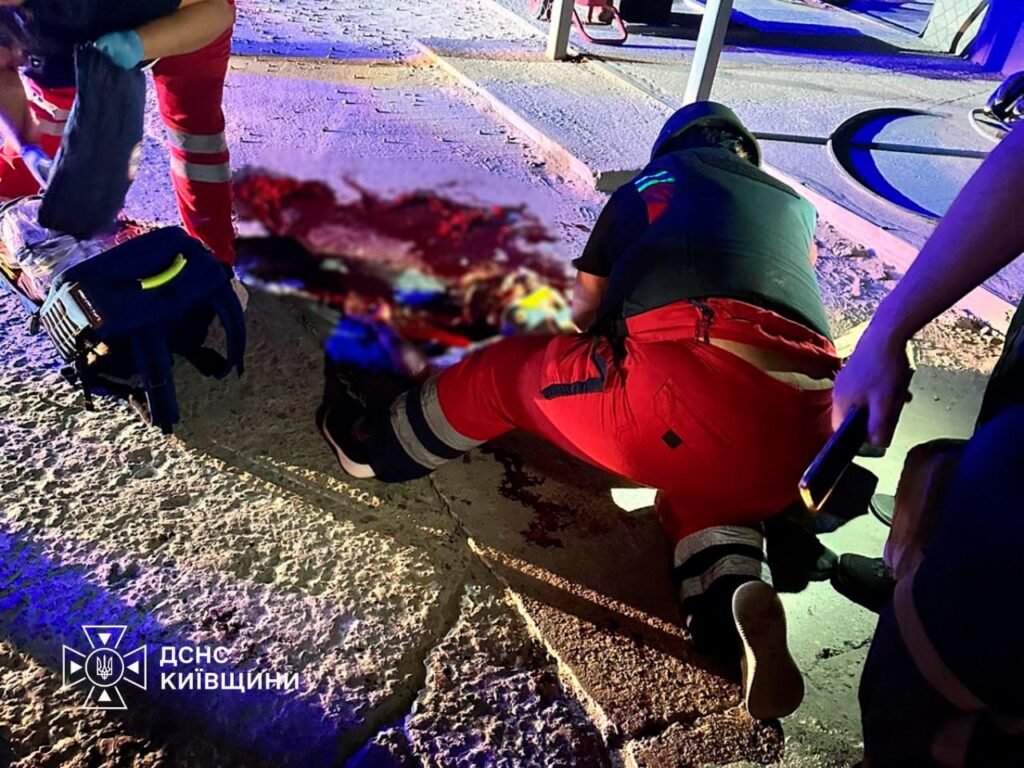
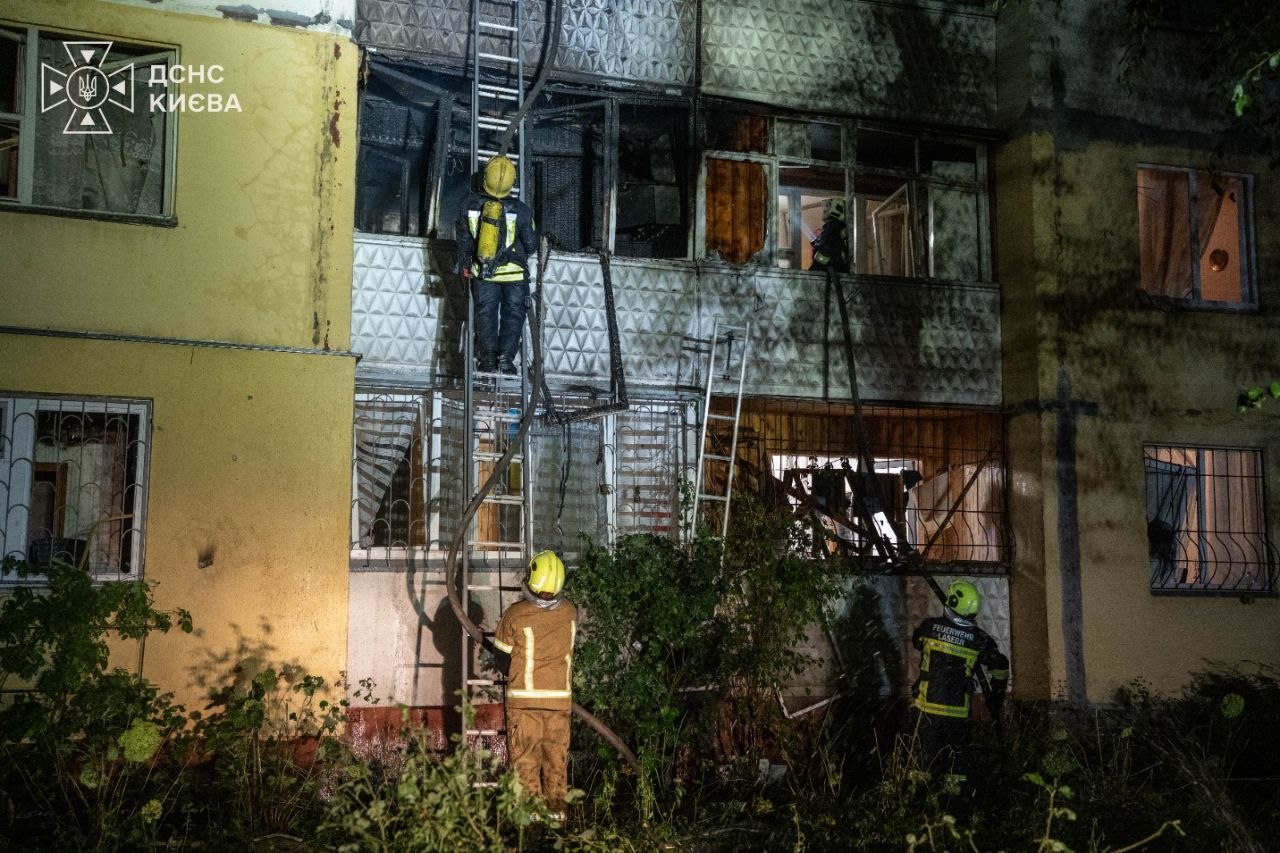
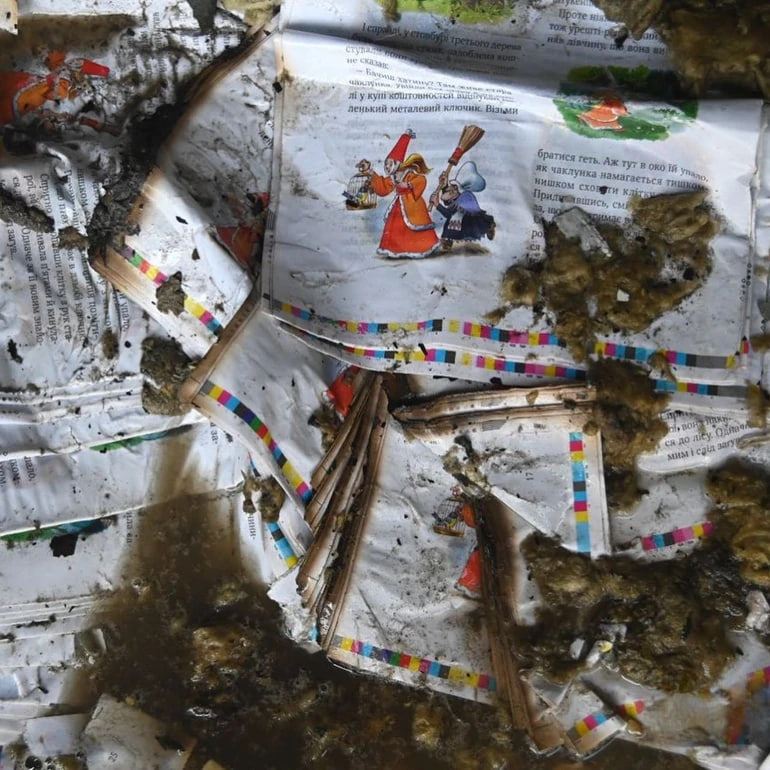
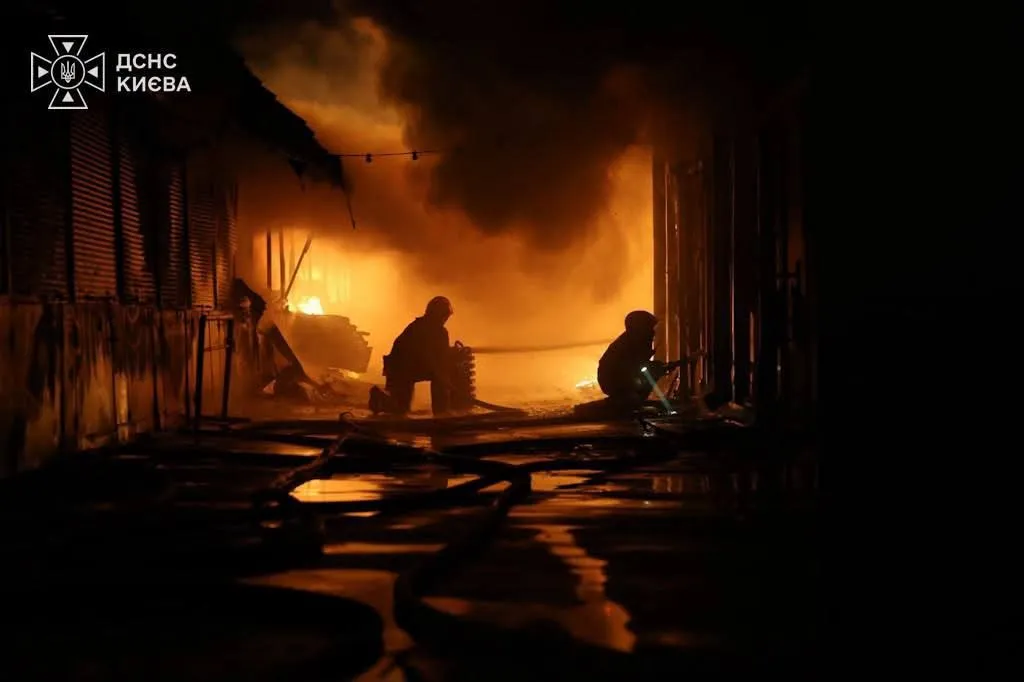
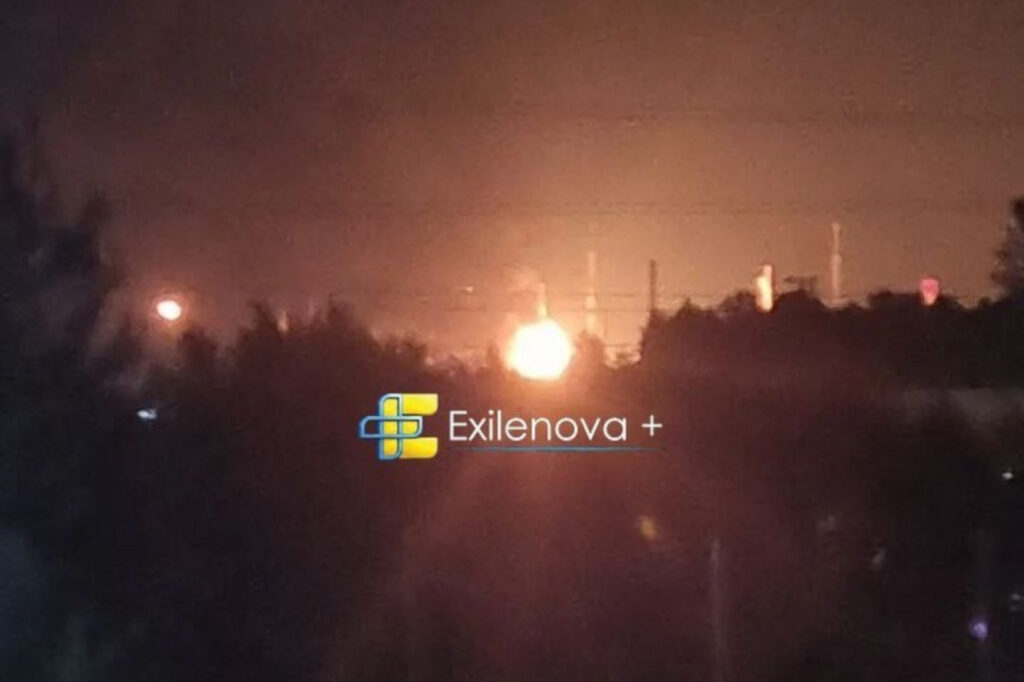
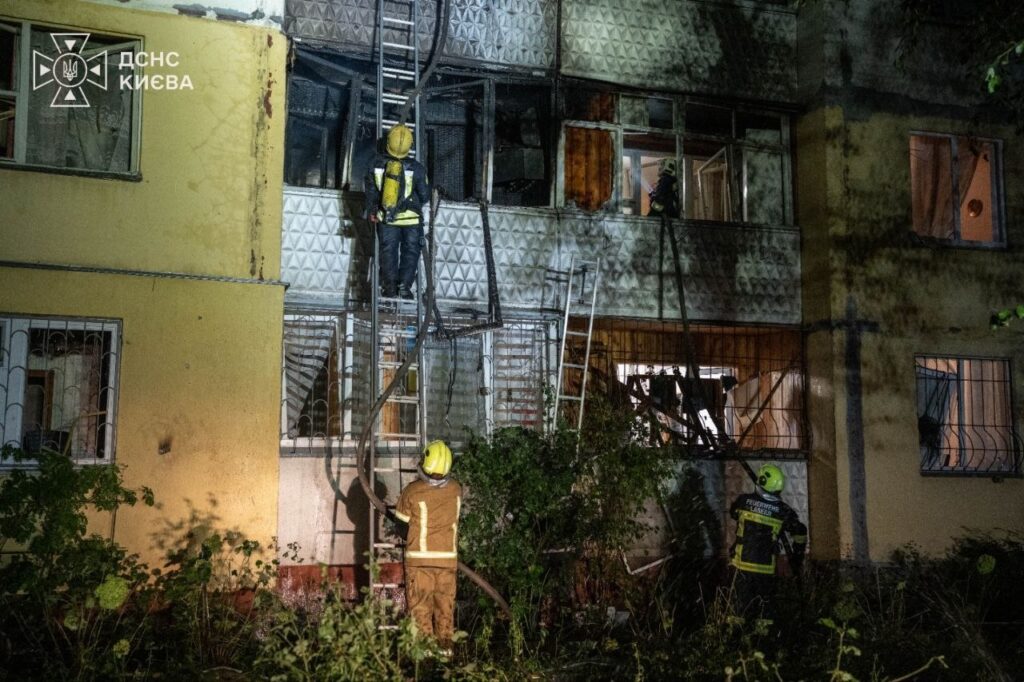
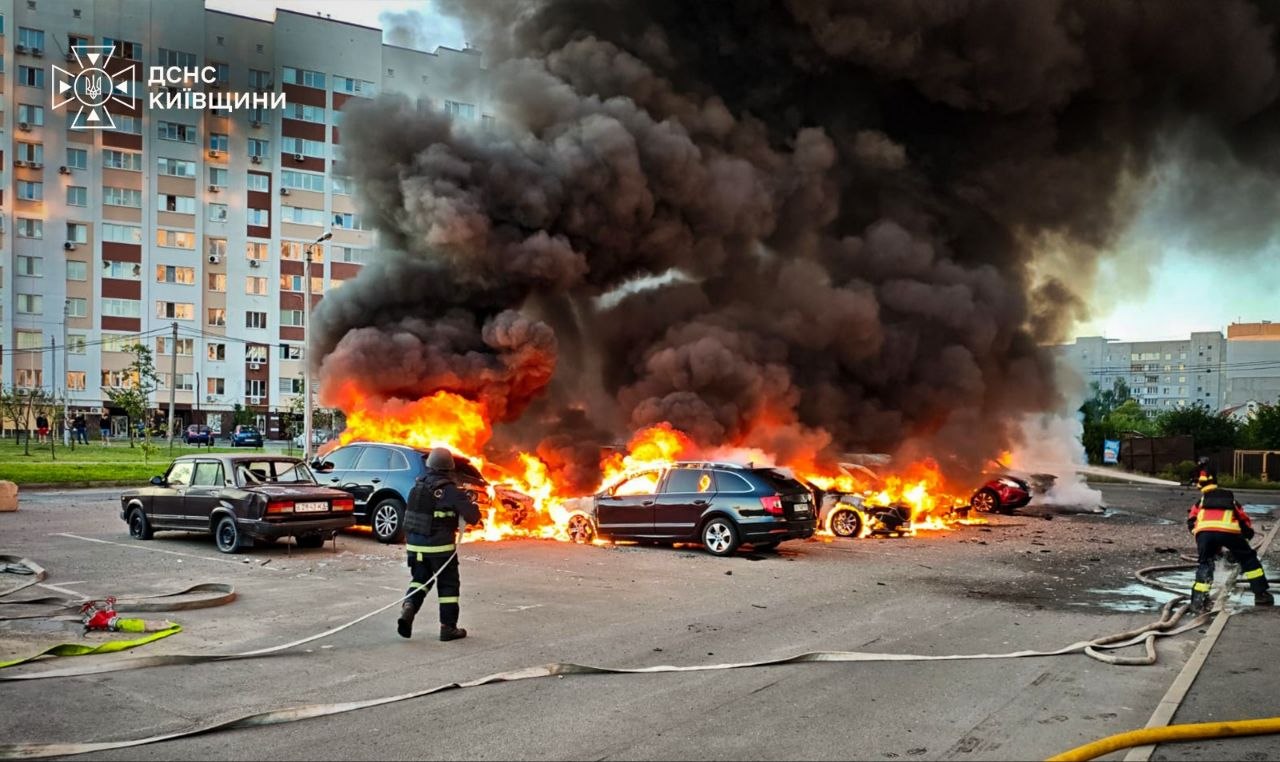
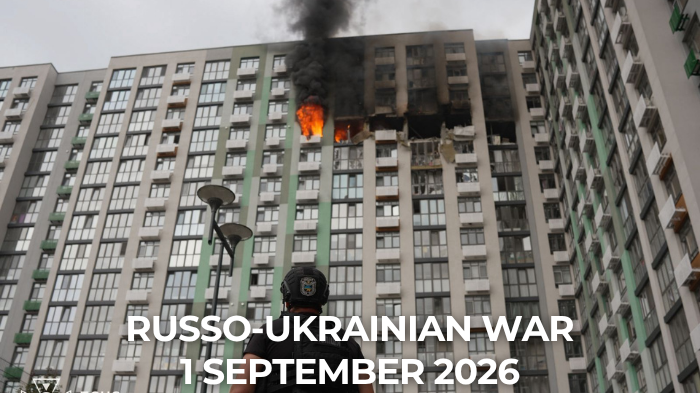
Russia's 6-day attack on Kyiv that started two days after CIA head's visit to Moscow, culminates with massive ballistic missile strike on eve of school year. Three children were among the injured. Civilian infrastructure was damaged in five of Kyiv's ten districts.

800 jet drones in four days: Russia is now firing type Ukraine's interceptors cannot catch. Of more than 1,500 drones launched over four days, about 800 have been jet-powered.

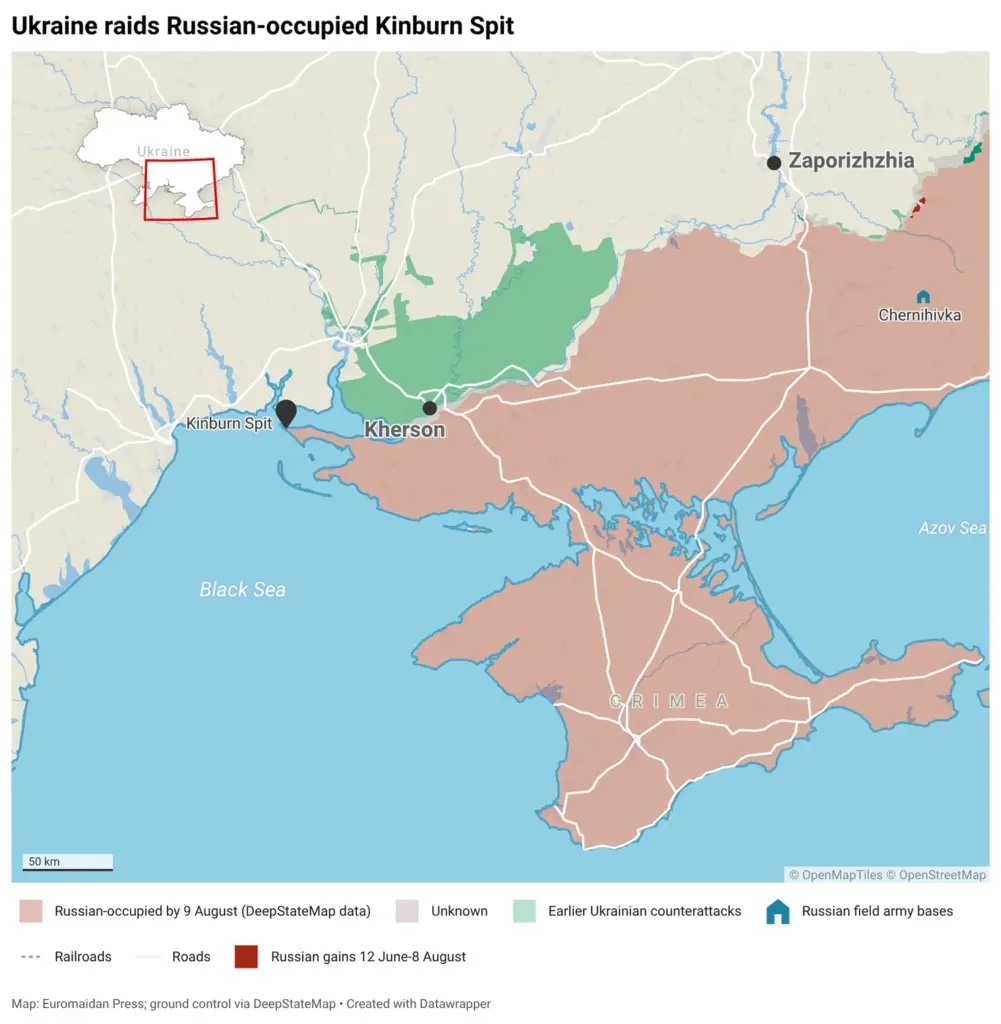
"In intercepts, they're screaming": Russia occupied this spit to control Ukraine's ports. Military says it has now isolated 2,500-strong grouping and destroyed all its artillery. Drone strikes and remote mining have cut supply, the Ukrainian soldiers say.

Intelligence and technology

Russia's Starlink rival falters as latest satellite batch stalls in low orbit, ISW says. None of the 16 spacecraft launched in July reached the 550-kilometer benchmark, while two may reenter the atmosphere and be lost.

Fired Ukraine defense chief Fedorov launches defense-tech company with Palantir CEO backing. After leaving government, Mykhailo Fedorov has moved deeper into defense technology, raising money in the US and pitching new ways to turn Ukraine's battlefield experience into weapons and military systems.

Russia promised a scramjet superweapon. Ukraine says Zircon runs on solid fuel. Ukraine's military intelligence puts Zircon's highest recorded speed at Mach 6.8, below Moscow's Mach 9 claim, and says both its motors are solid-fuel. Its component catalogue also names two US-manufacturer chips inside.

Ukrainian company builds single device that detects FPV drone, reads its video feed, and jams it. Brama has passed lab and combat testing and is now going through codification.

About $150 for airframe, about $875 for finished glider: Ukraine's BlueBird is selling its drone at every stage of assembly. Units pick the control system, camera, and electronics themselves; the bare airframe starts near $150.

Fired Ukrainian minister offers to help build America's drone army— for Patriot missiles in return. Mykhailo Fedorov is courting US investors for a fund that would build defense tech companies itself, not just back them.

International

Germany blames Moscow for Leipzig drone attack, closes consulate and cultural center among sweeping diplomatic measures. One of three drones linked to the incident reportedly struck a Ukrainian Antonov without detonating. Berlin also plans tighter entry controls for Russian nationals and additional EU sanctions.

German politician wants to send Taurus missiles to Ukraine after Russian drone attack in Leipzig airport. Wolfgang Kubicki wants Berlin to warn Moscow that further sabotage in Germany could unlock long-range cruise missiles for Ukraine.

US welcomes Russia back to G20 but rules out economic relief, source says. Washington tied any economic relief for Moscow to the end of the war, while European officials resisted Russia's return to the G20.

Armenia drops Russia's 'strategic partner' label, but foreign minister says alliance remains. The comments come after Armenia's new five-year government program changed how it describes ties with Moscow.

Latvia blocks Russian and Belarusian books, clothes and toys. The national measure goes beyond EU sanctions, covers goods worth €12.5 million in 2025, and limits the entry of propaganda materials.

Indonesia is examining whether traffickers put its citizens into Russia's war on Ukraine. The country's Foreign Ministry has put its overseas missions on establishing how one of its nationals came to serve Moscow's forces.

Someone placed funeral wreaths near defense companies in Lithuania and Czechia. The head of a Lithuanian defense company called it "ordinary intimidation" by Russians.

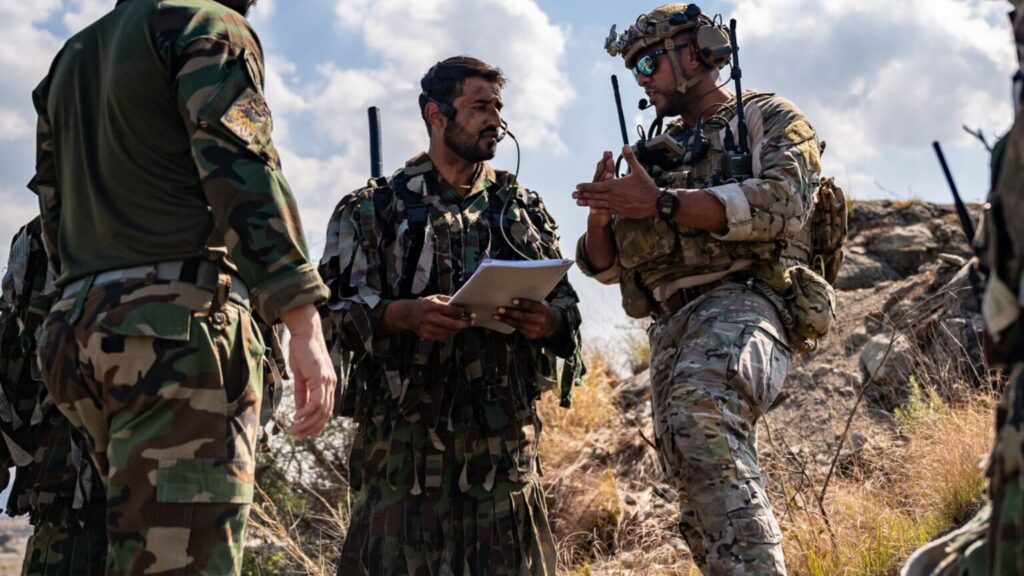
The US built itself a Russo-Ukrainian drone-war drill—Poland is the first ally in. A Green Beret officer expects most of NATO's 32 members to want a look, as Ukraine's war experience reshapes how the alliance trains.

Russia's shadow war on Europe is widening—NATO still sees no attack coming. A Polish warning, a US spy chief's Moscow trip, and an explosive drone found beside a cargo plane at a German airport all preceded the alliance's assessment.

Humanitarian and social impact

Russian air attack interrupts lessons on first day of school in Ukraine. Around 240,000 Ukrainian children entered first grade, 10% fewer than last year. 200,000 students near the front will study entirely online.

UN counted 183 Ukrainian children killed or wounded in July, the highest since 2022. The Ukrainian military released the breakdown on the day many schools across the country stayed shut because of Russian strikes.

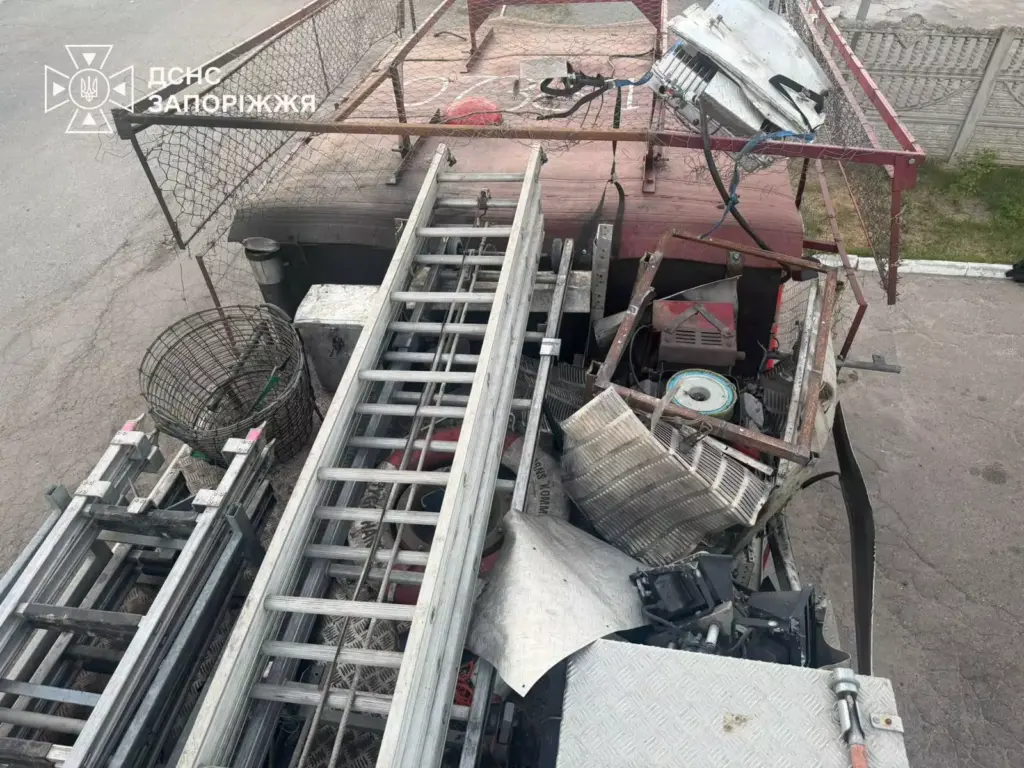
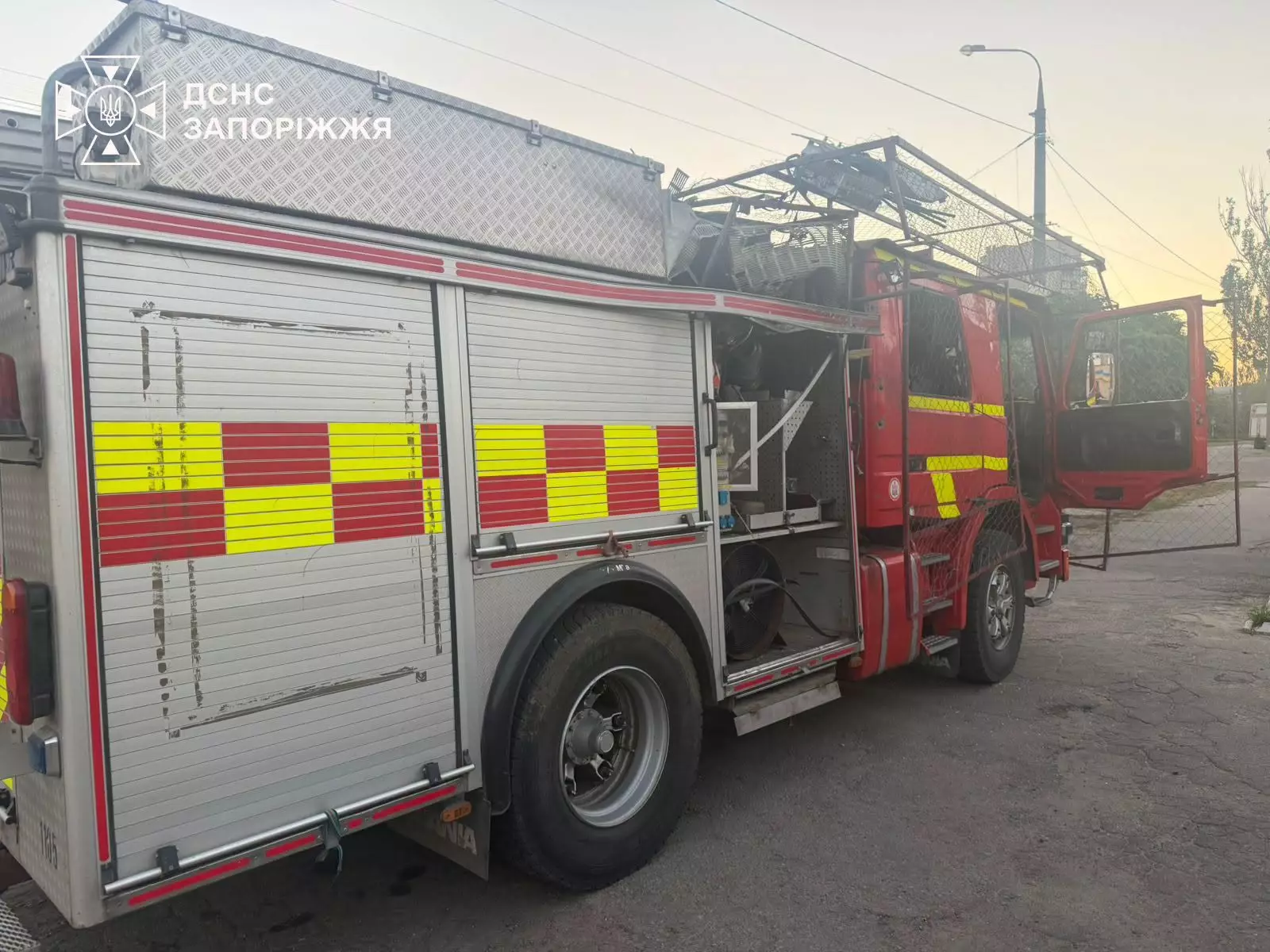
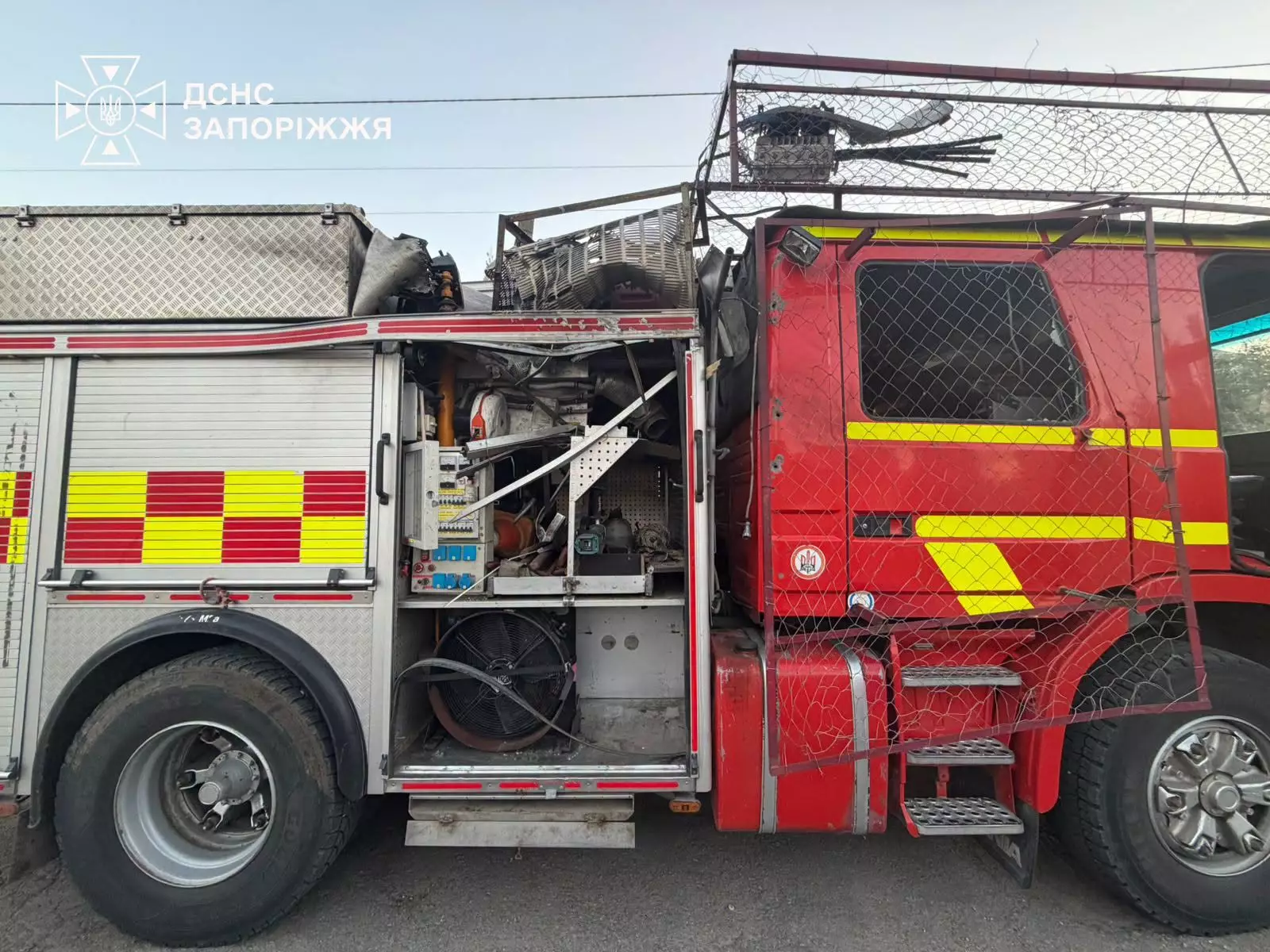
Russian drone struck a Ukrainian fire truck on its way to a house fire—four rescuers injured. The crew was answering a call in a village outside Zaporizhzhia, and all four men went to hospital with injuries of differing severity.

Political and legal developments

"Russian airspace will effectively be closing": Zelenskyy warns airlines Russian skies are no longer safe. Ukraine says civilian aviation is not a target, but warns airlines can no longer assume Russian skies are safe.

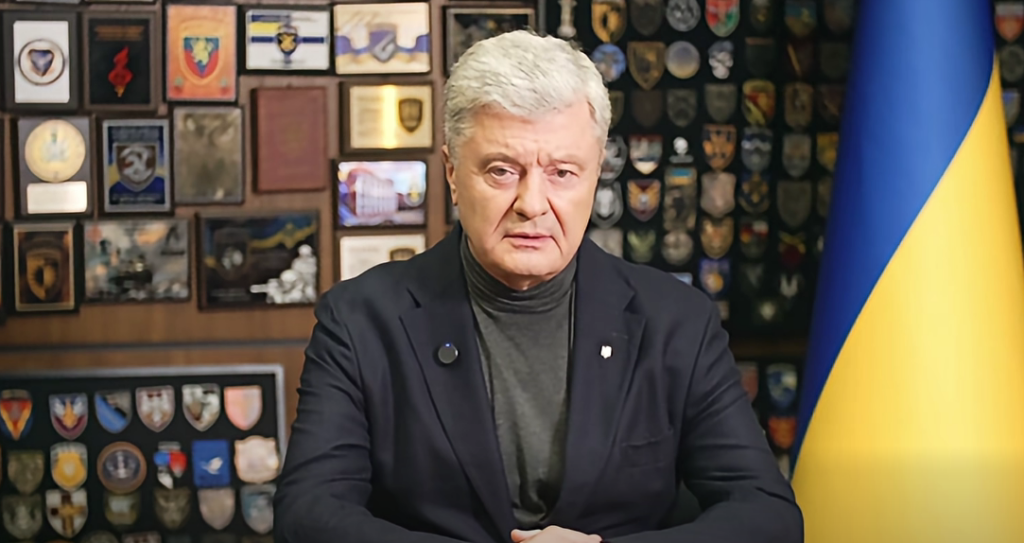
Former Ukrainian president has made offer to Zelenskyy amid Russia's new type of war on Kyiv. Petro Poroshenko has tabled a five-point plan for how the capital survives permanent air raid alerts.

Read our previous daily review here.
“Russian airspace will effectively be closing”: Zelenskyy warns airlines Russian skies are no longer safe

1 septembre 2026 à 16:40

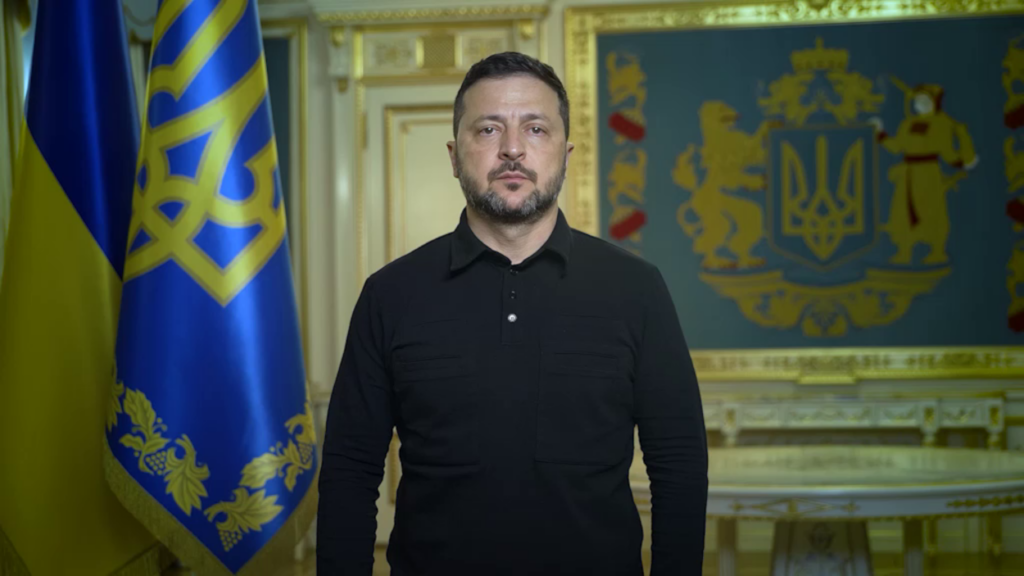
Ukrainian President Volodymyr Zelenskyy during his evening address, 1 September 2026. Screenshot from video: Zelenskyy

Ukrainian President Volodymyr Zelenskyy warned airlines, insurers, and other aviation stakeholders on 1 September that Russian airspace is becoming increasingly dangerous as Ukrainian drones operate deeper inside the country.

The warning comes as Ukraine has increasingly carried out long-range drone strikes deep inside Russia, targeting military, energy, industrial, and other infrastructure. Russian authorities have repeatedly reported temporary airport closures and flight disruptions during drone attacks as part of air defense measures.

“We want to warn every airline that uses Russian airspace, every insurer, and everyone who still uses Russia’s key airports: Russian airspace is becoming completely unsafe,” Zelenskyy said.

“Russian airspace will effectively be closing”

Zelenskyy said Ukraine does not intend to threaten civilian aviation or civilian aircraft, but warned that the growing presence of drones over Russia means airlines must account for the risks.

“We in Ukraine do not want innocent lives to be lost. That is why we are warning our partners: the safe days in Russia’s skies are over,” he said.

Zelenskyy accused Russian authorities of failing to properly inform airlines about the risks, saying they have not adequately communicated the growing danger posed by drones in Russian airspace.

“Although the Russian authorities are not properly informing people about this, Russian airspace will effectively be closing,” Zelenskyy said, arguing that Russia’s war against Ukraine is making its own airspace unsafe.

Zelenskyy warned that the growing scale of Ukrainian drone operations over Russia will have to be factored into aviation risks. “There will simply be drones in Russia’s skies on a scale that has to be taken into account,” he said.

He called on foreign ambassadors in Ukraine and Russia to relay the warning to their governments, and said Ukraine’s Foreign Ministry and other institutions would provide international organizations with information about the risks to Russian airspace.

“Drone-infested skies are no place for civilian aviation,” Zelenskyy said.

Ukraine closed its skies in 2022. Russia has kept flying

The warning highlights a stark difference between the two countries. Ukraine has kept its airspace closed to civilian aviation since Russia launched its full-scale invasion in February 2022. 

The risk is familiar to Ukraine. Russian forces have repeatedly attacked Ukrainian airports and aviation infrastructure during the full-scale invasion, making the continued operation of civilian aviation impossible.

Russia is also responsible for the 2014 downing of Malaysia Airlines Flight MH17 over occupied eastern Ukraine, which killed all 298 people aboard, showing the danger Russia’s military activities can pose to civilian aviation. 

Russia, meanwhile, has continued operating major airports and regular passenger flights despite Ukrainian drones increasingly reaching deep into its territory. EASA has warned that Russian air defenses responding to Ukrainian drone and missile attacks could pose risks to civilian aircraft, including through misidentification, particularly around major airports.

Russian airports increasingly disrupted by Ukrainian drones

Russian authorities have repeatedly restricted or suspended flights at Moscow and other airports during Ukrainian drone attacks. The disruptions have generally come as Russia activates air defenses against drones targeting military, energy, industrial, and logistics infrastructure.

Russia has also moved toward broader restrictions on civilian aviation. In June, Russia imposed new restrictions on light aircraft around Moscow and neighboring regions, while regular passenger and charter flights remained exempt.

The result is a growing disruption to Russian aviation even as Moscow continues to keep its main passenger airspace open: Ukrainian drones are not being used to target civilian aircraft, but their increasing presence is making normal aviation operations more difficult and forcing Russia to restrict or suspend flights during attacks.

  • ✇Euromaidan Press
  • Russia’s Starlink rival falters as latest satellite batch stalls in low orbit, ISW says
    The Rassvet communications satellites Moscow launched in July are likely to have shorter operational lifespans than planned because atmospheric drag increases at their current altitudes, the Institute for the Study of War (ISW) reported. Moscow accelerated Rassvet’s deployment after its forces lost unauthorized Starlink access in February. A complete network could support battlefield communications and remotely controlled strikes against Ukraine, but existing satellites
     

Russia’s Starlink rival falters as latest satellite batch stalls in low orbit, ISW says

1 septembre 2026 à 15:57

Employees of Russian company Bureau 1440 work on a Rassvet communications satellite.

The Rassvet communications satellites Moscow launched in July are likely to have shorter operational lifespans than planned because atmospheric drag increases at their current altitudes, the Institute for the Study of War (ISW) reported.

Moscow accelerated Rassvet’s deployment after its forces lost unauthorized Starlink access in February. A complete network could support battlefield communications and remotely controlled strikes against Ukraine, but existing satellites provide only brief connectivity windows. The latest setback will likely delay continuous coverage, ISW assessed.

Russian forces had relied heavily on unauthorized Starlink terminals for frontline communications, drone operations, and command-and-control. Ukraine and SpaceX blocked them on 5 February, disrupting Russian communications and assaults across several sectors. A Russian-controlled network could reduce Moscow’s dependence on SpaceX and illicit supply chains for terminals.

None of the 16 satellites launched on 19 July had reached 550 kilometers as of 31 August, according to N2YO tracking data cited by ISW. Many remained between 300 and 400 kilometers, some were gradually losing altitude, and at least two were reportedly heading toward atmospheric reentry.

ISW identified 550 kilometers as the altitude reached by the successful first-batch satellites, while reporting 870 kilometers as Rassvet’s intended operational altitude. At lower altitudes, satellites must use more fuel to counter greater atmospheric drag, shortening their operating lives.

Of the 32 Rassvet satellites launched in 2026, only 12—all from the first batch launched on 24 March—reached sustainable altitudes. They remained at roughly 550 kilometers and provided two daily connectivity windows over Ukraine totaling up to 90 minutes, ISW reported.

Russia needs at least 200–300 working satellites for stable, round-the-clock coverage, presidential defense-technology adviser Serhii “Flash” Beskrestnov assessed. Bureau 1440 plans “dozens” more launches and “hundreds” more satellites, but Russia depends on the scarce, costly Soyuz-2.1b rocket.

Only six to eight Soyuz-2.1b launches of all types have occurred since 2022, limiting Russia to a maximum of 128 Rassvet satellites over four years at that rate, ISW assessed.

Ukraine struck the Progress Space Rocket Center, which builds Soyuz-type vehicles, on 14–15 August and attempted to strike Plesetsk Cosmodrome on 23 August, ISW noted. Both Rassvet batches launched from Plesetsk, showing Ukraine can threaten the rockets and launch infrastructure required to expand the constellation, the institute assessed.

What is Rassvet?

Rassvet, meaning “Dawn,” is a low-Earth-orbit broadband constellation developed by Bureau 1440 as Russia’s domestic alternative to Starlink. Its 5G-based satellites are intended to provide high-speed, low-latency internet independently of SpaceX.

Although initially designed for civilian communications, a mature network could provide Russian forces with battlefield connectivity, command-and-control links, and connections to long-range drones. Moscow aims to place 292 satellites in orbit by the end of 2027 and 924 by 2035.

  • ✇Euromaidan Press
  • Fired Ukraine defense chief Fedorov launches defense-tech company with Palantir CEO backing
    Former Ukrainian Defense Minister Mykhailo Fedorov has announced the launch of a new defense technology company, with Palantir CEO Alex Karp set to become its first major investor. The venture comes after Fedorov’s five months as defense minister ended with his dismissal in July, a decision that triggered weeks of protests demanding his return. He is now taking his focus on drones, AI and other military technologies into the private sector, while partnering with a compa
     

Fired Ukraine defense chief Fedorov launches defense-tech company with Palantir CEO backing

1 septembre 2026 à 15:15

Former Ukrainian Defense Minister Mykhailo Fedorov and Palantir CEO Alex Karp announce the launch of Fedorov’s new defense technology company. Screenshot from video: Mykhailo Fedorov

Former Ukrainian Defense Minister Mykhailo Fedorov has announced the launch of a new defense technology company, with Palantir CEO Alex Karp set to become its first major investor.

The venture comes after Fedorov’s five months as defense minister ended with his dismissal in July, a decision that triggered weeks of protests demanding his return. He is now taking his focus on drones, AI and other military technologies into the private sector, while partnering with a company whose growing role in warfare and government data has also drawn criticism.

Fedorov announced the venture on X on 1 September with little other information, saying more details would be released soon.

In a video released alongside the announcement, Karp said he and Fedorov had worked together for five years and that he was excited to help turn Ukraine’s experience of modern warfare into products for allied countries.

“Our ambitious new project will strengthen Ukraine and help build a safer future for the entire world,” Fedorov wrote.

From digital minister to defense reformer

Fedorov, 35, became one of the most prominent figures in Ukraine’s drive to use technology to transform its military during the full-scale war. Before becoming defense minister, he served as minister of digital transformation, where he helped build Ukraine’s digital government infrastructure and became closely associated with the country’s rapid adoption of drones and other military technologies.

He became defense minister in February 2026 and spent roughly five months in the post before President Volodymyr Zelenskyy dismissed him on 15 July as part of a broader government reshuffle. The dismissal reportedly followed a prolonged conflict between Fedorov and then-Commander-in-Chief Oleksandr Syrskyi over the direction of Ukraine’s military. Zelenskyy later said the relationship between the two had broken down.

Fedorov had pushed for a more technology-driven military, including greater use of drones, robotics, artificial intelligence and data-based decision-making. During his tenure, his team also pursued changes to defense procurement and logistics.

His dismissal triggered rare wartime protests across Ukraine. Demonstrators in Kyiv and several other major cities demanded his reinstatement, arguing that his removal threatened the military-technology reforms they credited with improving Ukraine’s ability to fight Russia.

The protests continued for roughly a month but failed to reverse the decision. Parliament approved Yevhenii Khmara as defense minister on 19 August.

The movement later lost momentum after Fedorov called for wartime elections, a position that protesters rejected amid the ongoing war. The episode nevertheless made his dismissal an unusually public political dispute, with supporters defending his record while Zelenskyy and others pointed to disagreements over military leadership and policy.

A column of protesters demanding reinstatement of Mykhailo Fedorov as Defense MInister walks in vul. Khreschatyk in Kyiv, 1 August 2026. Photo: Serge Kostezh/Kyivpost
Explore further

The Fedorov protesters lost. But they backed a man for what he built, not what he promised—and that may be new in Ukraine.

What Fedorov did after leaving office

Since leaving the Defense Ministry, Fedorov has remained focused on defense technology rather than returning to another Ukrainian government position.

In late August, Italian Defense Minister Guido Crosetto said he had offered Fedorov a position as an adviser on modern warfare and defense innovation. Fedorov agreed to provide advice remotely and on a non-staff basis, while keeping his main work focused on Ukraine’s defense-tech sector.

Fedorov has also been working to establish a defense-tech investment fund and has been seeking US investors for it. During a working trip to Washington in August, he pitched a fund that would not only invest in existing Ukrainian defense-tech companies but also build new ones around technologies he considers critical to the war.

He identified three priorities: battlefield robots that can replace soldiers in the most dangerous positions, jet-powered interceptor drones capable of countering Russia’s faster attack drones, and inexpensive AI-enabled missiles.

Fedorov also proposed helping the United States develop an attack-drone fleet in exchange for additional Patriot interceptor missiles for Ukraine. He described the idea as a potential trade, but it is his own proposal rather than an agreement with the US government, and he no longer holds a government position that would allow him to negotiate such a deal.

In a recent Reuters interview, Fedorov also emerged as a more outspoken critic of Ukraine’s wartime trajectory, saying that “it looks as though we’re gradually, slowly losing.” His comments came after his dismissal and amid his continuing disagreements with the military leadership over the direction of Ukraine’s war effort.

The new company announced on 1 September appears to build on this work, moving from plans to invest in and create defense-tech companies toward establishing a company of Fedorov’s own.

Why Palantir matters

Karp’s involvement connects Fedorov’s new venture to one of the world’s largest defense and intelligence technology companies.

Palantir develops software for large-scale data analysis, artificial intelligence and military and government operations. Its products are used to integrate data from different sources and support operational planning and decision-making. Palantir has also worked with Ukraine during the full-scale war, including on AI and data-analysis initiatives.

The company has become increasingly involved in military technology, while also facing criticism over its work with governments and armed forces. Its ties to Israel and its role in military applications, particularly in relation to the war in Gaza, have generated protests and scrutiny over the use of AI and data technologies in warfare.

Palantir has faced separate concerns in the UK over its access to sensitive government and health data, with critics questioning how effectively safeguards around such information can be independently verified.

For Fedorov, the partnership marks a shift from trying to change Ukraine’s military from inside government to building defense technology outside it. For Karp and Palantir, the investment offers a direct connection to a former Ukrainian defense minister whose team worked on military technologies during a war that has rapidly changed how drones, AI, robotics and data are used on the battlefield.

Germany blames Moscow for Leipzig drone attack, closes consulate and cultural center among sweeping diplomatic measures

1 septembre 2026 à 14:43

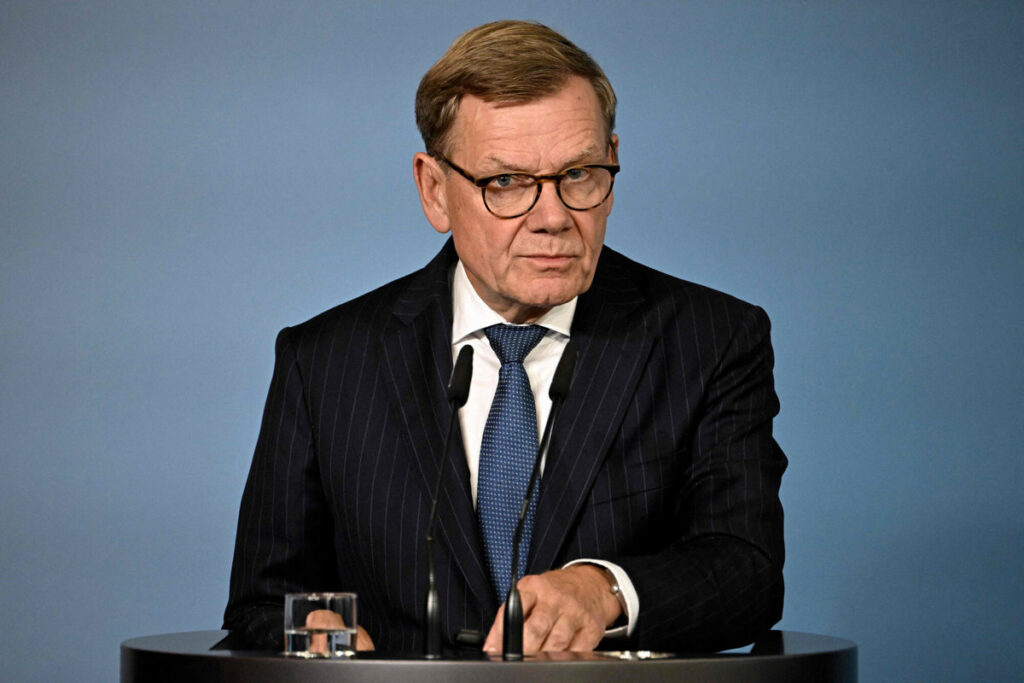
German Foreign Minister Johann Wadephul stands behind a lectern during a press conference.

An explosives-laden drone aimed at a Ukrainian cargo aircraft at Leipzig/Halle Airport was part of a Russian state operation, Interior Minister Alexander Dobrindt said on 1 September.

Germany has moved from suspecting foreign sabotage to formally blaming Russia for the Leipzig attack. The finding has prompted diplomatic and security measures against Moscow while the criminal investigation continues.

Police investigations, the attack pattern, and intelligence findings established Russian responsibility, Dobrindt said. The drones' configuration, components, explosives, and detonation systems resembled those used in other Russian hybrid operations—covert sabotage and disruption below the threshold of open war—and in Russia's war against Ukraine, Foreign Minister Johann Wadephul said.

The first drone, carrying explosives, was found near a Ukrainian cargo aircraft on the evening of 4 August and defused. Investigators believe a DHL freighter may have collided with a second drone while aborting its landing after the airport closed; that drone was never recovered. A third drone was found on 14 August in a field at Kabelsketal, where investigators subsequently discovered roughly 50 grams of suspected military explosive.

Leipzig/Halle is an international freight hub used by Ukrainian Antonov aircraft and NATO's strategic airlift program, through which allies charter heavy transport aircraft to move oversized military cargo.

Berlin will close the Bonn consulate on 18 September, end the operating agreement for the Russian House, a Moscow-backed cultural center, tighten entry controls for Russian nationals, seek to add more targets to EU sanctions lists, and pressure Russia's shadow fleet—opaquely owned tankers used to move Russian oil outside Western restrictions. Wadephul also summoned the Russian ambassador. Russia's Berlin embassy will remain open.

Russian Foreign Ministry spokesperson Maria Zakharova told Interfax that Moscow would respond to Germany's “anti-Russian action,” without specifying how.

NATO Secretary General Mark Rutte said the alliance stood in full solidarity with Germany, and European Commission President Ursula von der Leyen described Berlin's measures as a strong response.

Dobrindt said Germany expects further Russian hybrid attacks. The Leipzig incident follows a widening campaign of suspected Russian sabotage across Europe, including a 2024 incendiary-device attack at the same airport that Western security officials suspected Russian intelligence organized.

How the Leipzig attack unfolded

Euromaidan Press reported on 12 August, citing Die Zeit, that footage showed an explosives-laden quadcopter striking the wing of a parked Ukrainian Antonov An-124 before falling without detonating. The article also noted that a US Defense Department official told CNN that Washington assessed the drone belonged to Russian intelligence.

On 25 August, EP reported, citing Tagesschau’s NDR/WDR/SZ investigation, that investigators had expanded the case to three drones and found the third with suspected military explosive nearby in Kabelsketal, 10 days after the original attempt.

  • ✇Euromaidan Press
  • German politician wants to send Taurus missiles to Ukraine after Russian drone attack in Leipzig airport
    Wolfgang Kubicki, chair of Germany’s pro-business liberal Free Democratic Party (FDP), proposed that Berlin summon Russia’s ambassador and use the prospect of Taurus missiles for Ukraine as leverage against further hybrid attacks during an appearance on German broadcaster ntv. Kubicki’s proposal does not change German policy. The FDP has no seats in the Bundestag, Germany’s federal parliament, while Chancellor Friedrich Merz has ruled out supplying the missiles. However
     

German politician wants to send Taurus missiles to Ukraine after Russian drone attack in Leipzig airport

1 septembre 2026 à 14:01

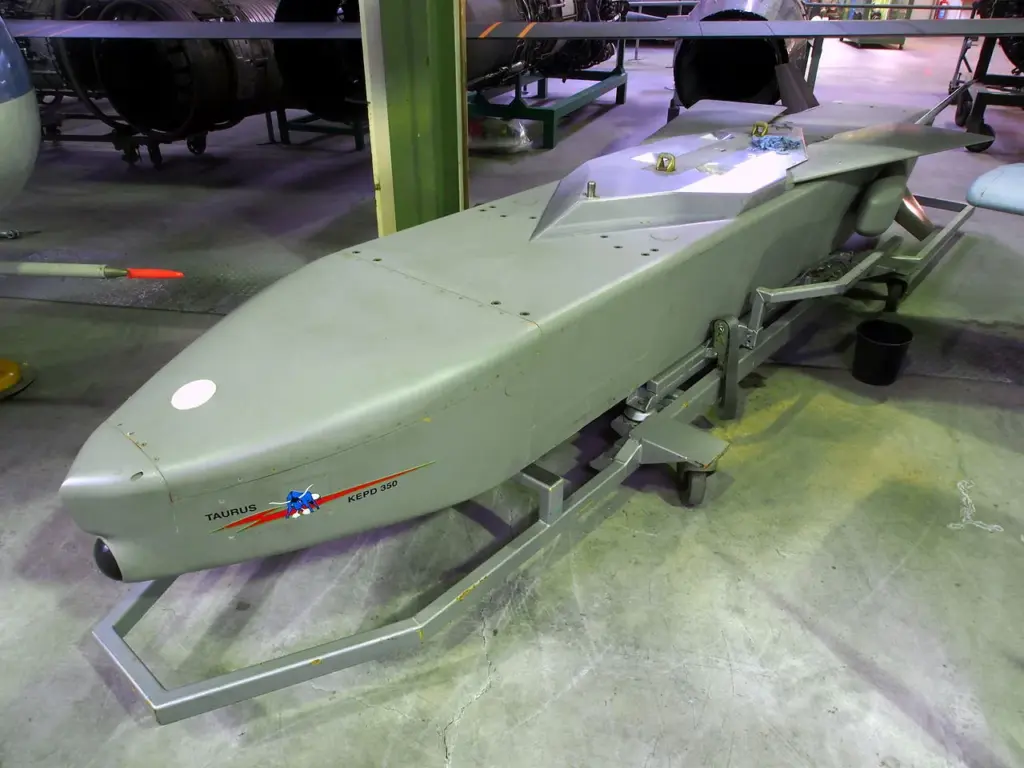
A gray Taurus KEPD 350 cruise missile displayed on a wheeled stand inside an exhibition hall.

Wolfgang Kubicki, chair of Germany’s pro-business liberal Free Democratic Party (FDP), proposed that Berlin summon Russia’s ambassador and use the prospect of Taurus missiles for Ukraine as leverage against further hybrid attacks during an appearance on German broadcaster ntv.

Kubicki’s proposal does not change German policy. The FDP has no seats in the Bundestag, Germany’s federal parliament, while Chancellor Friedrich Merz has ruled out supplying the missiles. However, it recasts military aid to Ukraine as a potential cost Moscow would face for hybrid attacks inside Germany. Berlin has since formally blamed Russia for the Leipzig/Halle operation that prompted his remarks.

Kubicki said “a reasonable person” would tell the ambassador that Germany had so far withheld Taurus missiles. If the hybrid threat continued, Berlin should do everything possible to ensure Ukraine received the weapons it needed to defend itself against Russia, he added.

Taurus, the weapon Kubicki spoke about, is a German-Swedish cruise missile launched from military aircraft, with a range exceeding 500 kilometers. Ukraine has sought it for years to strike military targets far behind Russian lines.

Germany refused to supply Taurus missiles in 2025 while funding hundreds of Ukrainian-made long-range systems. Merz again ruled out a transfer in March, arguing that Ukrainian weapons were more effective.

Leipzig sharpens Germany’s hybrid-war debate

Germany formally blamed Russia on 1 September for the attempted drone attack at Leipzig/Halle Airport and said it would close the Russian consulate in Bonn and terminate the agreement under which the Russian House cultural center operates in Berlin, DW reported. Interior Minister Alexander Dobrindt cited evidence from German and allied intelligence services, as well as investigations across Europe. Russia has denied involvement.

The operation that prompted Kubicki’s warning involved an explosives-laden drone that struck the wing of a Ukrainian Antonov An-124 heavy cargo aircraft on the evening of 4 August but failed to detonate, Die Zeit reported. The airport handles civilian freight and NATO logistics, while Ukraine’s Antonov Airlines uses it as a base.

Investigators later found evidence that three drones were involved and discovered about 50 grams of suspected military explosive near the runways.

  • ✇Euromaidan Press
  • Ukraine spent three years learning to catch Russian drones—so Russia made them fly faster
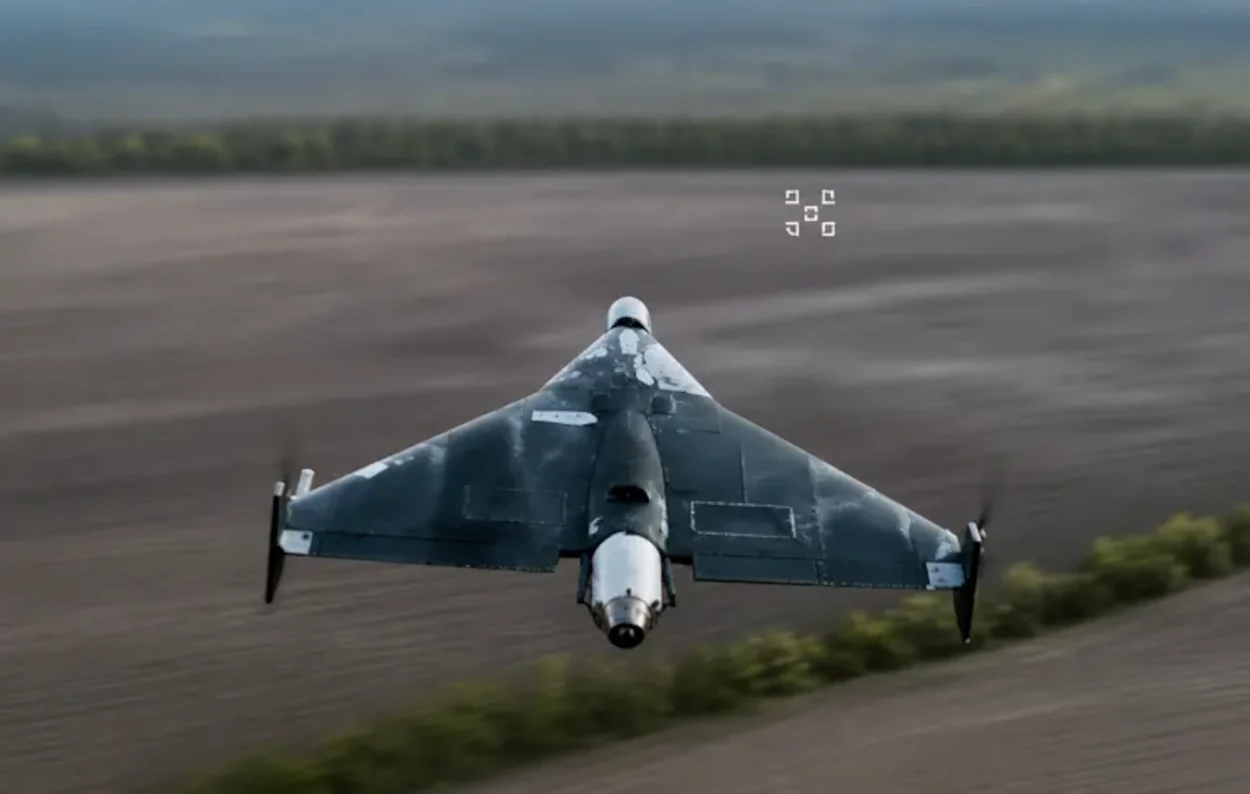
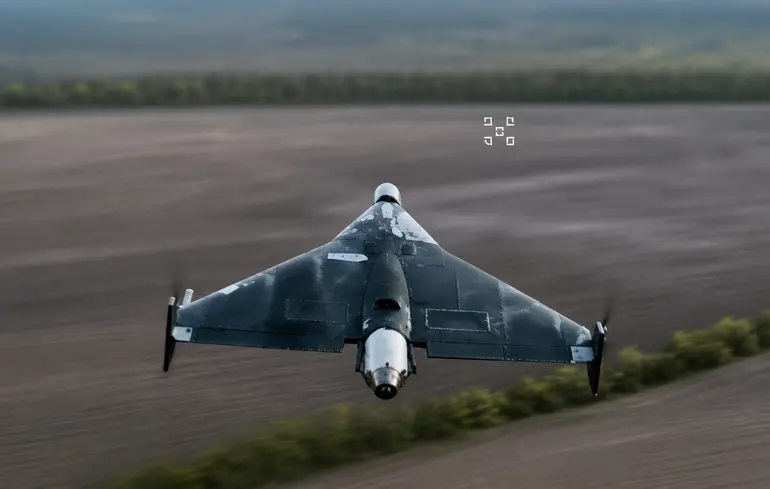
    Russia is sending jet-powered drones against Ukrainian cities in growing numbers—no longer only the Iranian Shahed-238 it fields as the Geran-3, but the newer, faster Geran-4 and Geran-5. The fear everyone voices is their speed, but speed breaks the cheap layer, not the missiles. Ukraine's expensive air-defense missiles already routinely shoot down cruise missiles, and to them, a fast drone is just one more target. The strain falls on the cheap layer instead—the interce
     

Ukraine spent three years learning to catch Russian drones—so Russia made them fly faster

1 septembre 2026 à 13:34

ukraine spent three years learning catch russian drones—so russia made fly faster · post geran-3 jet-powered attack drone wild hornets c1c840787fca380485636007cf683d71 news ukrainian reports

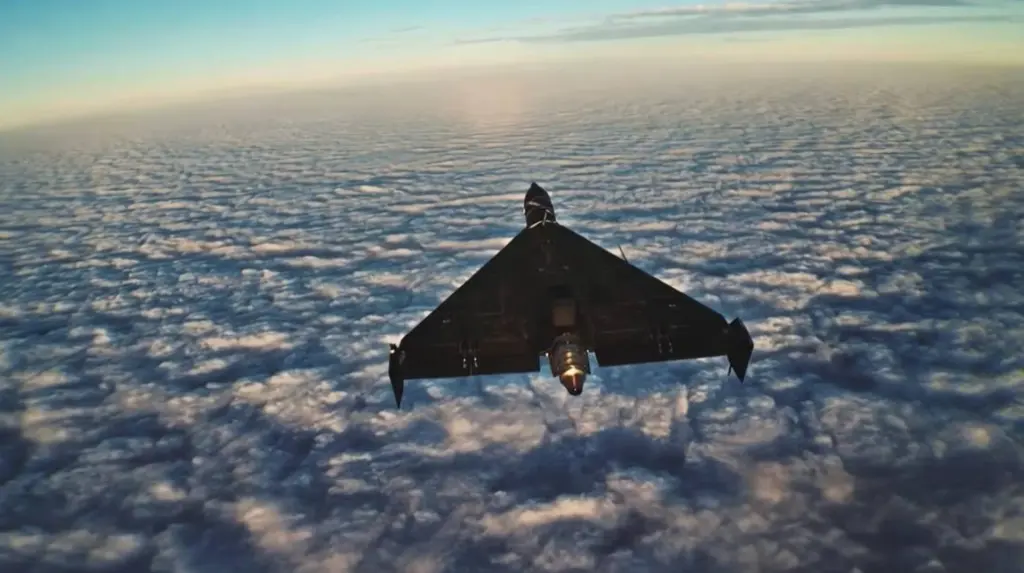
Russia is sending jet-powered drones against Ukrainian cities in growing numbers—no longer only the Iranian Shahed-238 it fields as the Geran-3, but the newer, faster Geran-4 and Geran-5. The fear everyone voices is their speed, but speed breaks the cheap layer, not the missiles.

Ukraine's expensive air-defense missiles already routinely shoot down cruise missiles, and to them, a fast drone is just one more target. The strain falls on the cheap layer instead—the interceptor drones Ukraine built to down thousands of Shaheds a month for a few thousand dollars each, a fraction of a missile's price.

Those were designed to catch slow drones, and against jet speed, they struggle. If that layer breaks, the cost of defending Ukraine's skies climbs—and the Defense Ministry has already started paying to keep it from breaking.

The shift is not marginal, and it continues to accelerate. Russia had sent more than 2,500 jet-powered Shaheds against Ukraine by 30 August, against roughly 1,500 in July, informal presidential adviser Serhii "Flash" Beskrestnov wrote—the drones, he noted, were launched practically straight from the factory. Russia fired roughly 1,400 jet-powered drones since the start of 2026 to June, and air defenses recorded about 180 in all of 2025, Colonel Oleksandr Zaruba of Ukraine's State Research Institute said.

Geran-5 (Above) and Geran-4 (Below)
Geran-5 (above) and Geran-4 (below). Image: TurDef

A record month, and the weapon built to beat it

Ukrainian interceptor drones destroyed more than 33,000 Russian drones of all types in March 2026—roughly double the February total and a record for the cheapest layer of Ukraine's air defense, then-Defense Minister Mykhailo Fedorov said.

Russia sent Shaheds—cheap, propeller-driven, long-range, lumbering in at about 185 kilometers per hour (115 mph)—in mass raids meant to swamp Ukraine's defenses. Ukraine adapted, with mobile fire teams, electronic warfare, and layered engagement, then added interceptor drones that destroy incoming drones for a fraction of a surface-to-air missile's cost.

As Ukraine got better at catching propeller drones, Russia reached for speed—jet-powered versions that fly more than three times faster than the Shaheds Ukraine spent three years learning to intercept.

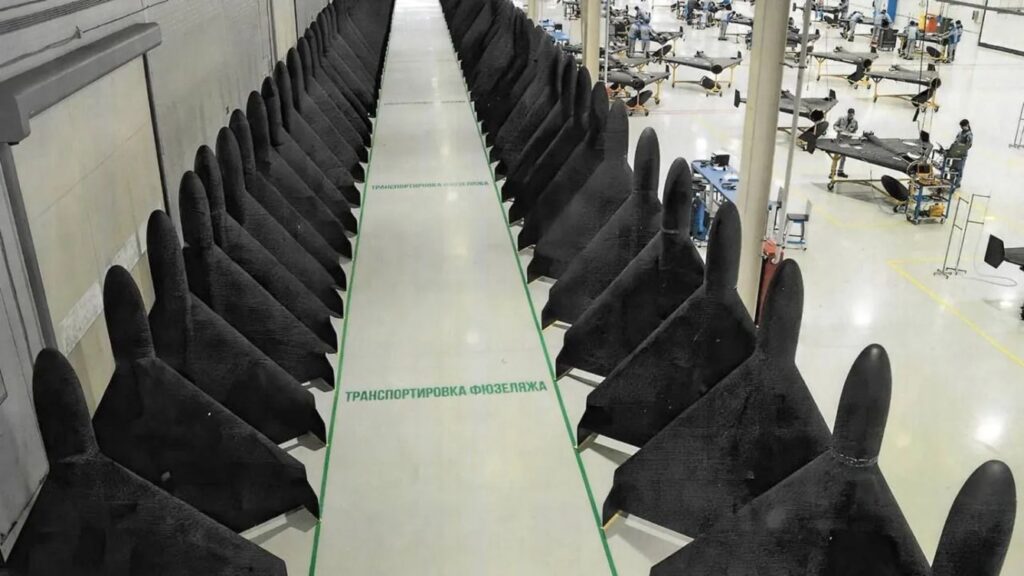
Iranian-designed Shahed-136 drone hulls at a Russian drone factory
Iranian-designed Shahed-136 drone hulls at a Russian drone factory. Photo via TWZ

By August, Ukraine's military intelligence said Russia had stopped building the Geran-3 and shifted to the newer jets, producing roughly 3,000 of them a month.

Conventional air defense already handles this

The worry centers on velocity: a jet drone flies several times faster than a propeller-driven or electric one, reducing the time defenders have to detect, identify, and hit it. But the fear aims at the wrong place, said Oleksii Kolesnyk, director of the Ukrainian firm Reactive Drones.

"A jet-powered UAV is, in many ways, similar to a cruise missile. For conventional air defense, jet-powered drones are simply another aerial target," he told Euromaidan Press.

Ukraine's surface-to-air systems routinely intercept cruise missiles. A fast drone is standard work for them—though Zelenskyy said in late August that the jets are the hardest to intercept, and that combat aircraft now mainly protect against them.

The strain lands on the interceptor drones

An interceptor drone, unlike a ground-launched missile, has to chase its target down and ram it, which worked against slow Shaheds. Against something near cruise-missile speed, the geometry breaks.

The problem exists almost only for interceptor drones, Kolesnyk said—they were never designed for these speeds. At jet velocities, guidance, target tracking, and the final homing onto the target all hit technical ceilings, and faster interceptors alone will not fix it.

"New technical solutions will be needed," he said.

Interceptor drones are why Ukraine can answer mass raids without firing a missile worth hundreds of thousands of dollars at each incoming drone. Break that math, and the affordability of Ukraine's whole air defense shifts.

The Defense Ministry's answer

Through the defense-tech accelerator Brave1, Ukraine backed 12 technologies under the EU4UA Defence Tech grant program, offering up to €150,000 each for high-speed interceptors capable of reaching 450 kilometers per hour (about 280 mph) or more.

Russia’s new “Geran-4 Seeker” Shahed variant uses machine-vision AI for targeting. Source: Dyki Shershni
Explore further

Ukraine is testing four new drone interceptors as Russia floods its skies with faster Gerans 

That push has since produced candidates. By late August, Ukraine had four interceptor systems built to run down the jets, all already in field testing, Defense Minister Yevhenii Khmara said, and the Alexa Spatium had entered service. Ukraine now wants to bring them up to standard and build them in the thousands.

Not a revolution, but an evolution with a long history

Colonel Oleksandr Saienko, a former Ukrainian brigade commander, rejected the idea that any of this is new.

"This is better described as an evolution of unmanned systems rather than a completely new stage of warfare," he said.

Jet drones long predate this war. "The first jet-powered UAVs appeared back in the 1970s," he said, pointing to Soviet reconnaissance drones beginning with the Tu-143 and continuing with the Tu-141 and Tu-243—platforms Ukraine itself later flew in the Donbas war and the full-scale invasion. What has changed is scale, and the problem the drones now solve: arriving before the defender can react.

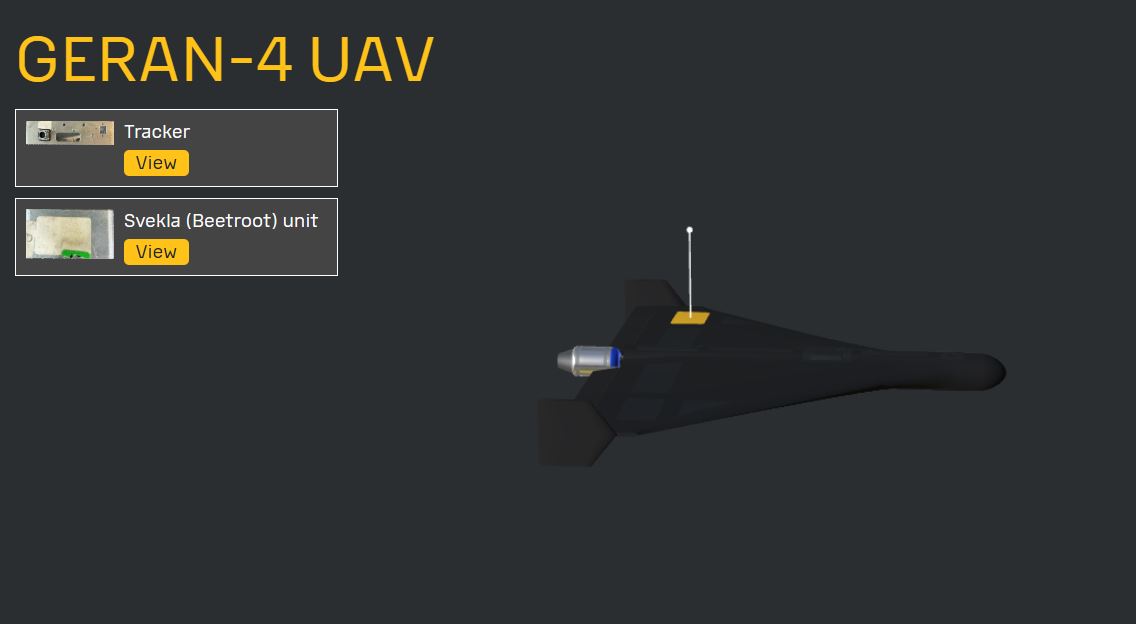
ukrainian intelligence russia's new jet-powered geran-4 attack drone runs chinese turbojets · post interactive 3d model jet powered telefly turbojet engines published ukraine's main directorate (hur) war-sanctionsgurgovua capture revealed agency
Explore further

Ukrainian intelligence: Russia’s new jet-powered Geran-4 attack drone runs on Chinese turbojets

Saienko's warning points past the engine.

"The decisive advantage will not belong to whoever simply has a jet engine. It will belong to whoever integrates these platforms into an effective reconnaissance-strike system, protects them against electronic warfare, manufactures them at scale, and keeps costs manageable," he said.

His frame is the kill chain—detect, identify, decide, engage—and every gain in speed compresses that cycle. "If a target is flying at 500 to 700 kilometers per hour, even a delay of several dozen seconds may make interception impossible," he said, adding: "Radars must see sooner, command systems must classify automatically, and operators get less time—until automation becomes a requirement."

Why hasn't every drone gone jet-powered

Speed solves one problem and creates several. "They are simply another category of strike UAV," Kolesnyk said.

"One solution does not replace another."

Oleksii Kolesnyk, Reactive Drones.

Compact turbojets are expensive and hard to source for smaller drones. Bigger airframes have to be reinforced to take the loads and vibration, which adds weight and cost. Fuel burn climbs far above that of the electric or piston drones built for endurance, and higher speed leaves less room for navigation errors.

So, jet drones fill a niche rather than taking over the whole strike fleet. "They are most effective at ranges of roughly 200 to 600 kilometers," Kolesnyk said—fast strikes on high-value or time-sensitive targets, where getting there quickly matters more than flying cheaply or far.

Explore further

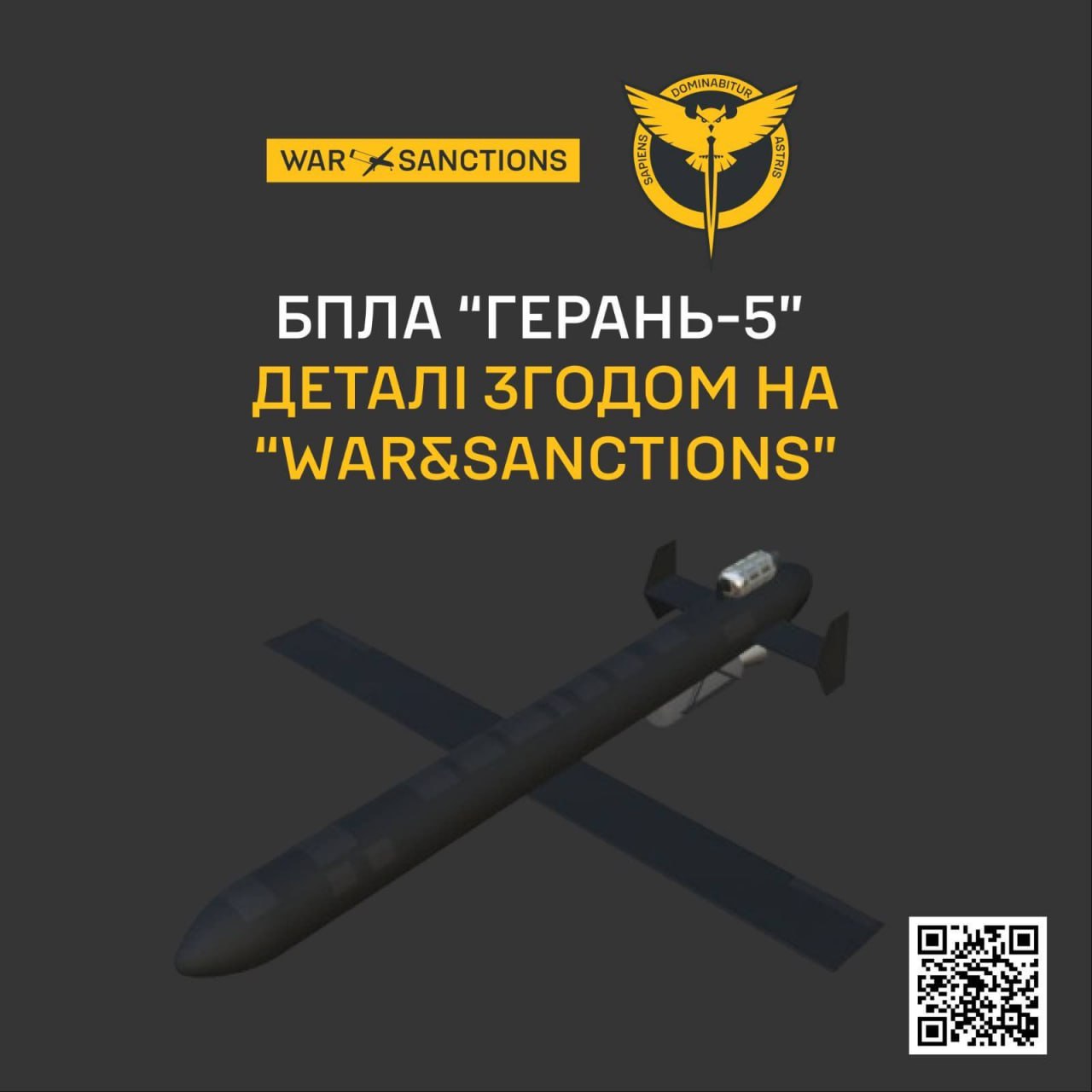
Russia unleashes its Geran-5 air defense killer on Ukraine, equipped with British Raspberry Pi microcomputer tracker

Ukraine didn't drop first-person-view (FPV) drones when fiber-optic ones arrived, and jam-resistant drones didn't replace the rest. Each capability added a layer rather than erasing the previous one. Saienko expects the same. "The emergence of jet aviation did not eliminate piston-engine aircraft. The same principle applies," he said. Cheap propeller drones are ideal for mass attacks, while jet platforms handle speed.

The next fight is over reaction time

Jet drones force defenders to decide faster, and that is the harder demand. A slow propeller drone is a wasteful target for an expensive missile. A cruise missile demands an instant answer. A jet drone sits in between—and an operator has to sort which weapon meets which target in seconds, while holding scarce interceptors back for the worst threats. Every misjudgment costs something.

"The challenge is no longer only interception—it is detecting, identifying, and assigning the target quickly enough," Saienko said.

Both experts reach the same conclusion from opposite ends: Kolesnyk through the technical limits of the interceptor drone, Saienko through the entire defensive network. Both land on automation—AI-driven target recognition, distributed sensors, and fast data sharing to shrink the gap between spotting a target and hitting it. The winner won't necessarily fly the fastest aircraft. It will process information faster than its opponent.

Over four days at the end of August, Russia fired about 800 jet drones at Ukraine, Ukraine's president said—a type most of Ukraine's cheap interceptors still cannot catch. And the problem won't stay Ukraine's alone. Drones from the same broad Shahed family have already strayed into NATO airspace and turned up in other wars. The interception race Ukraine is running now is one everyone will eventually run.

  • ✇Euromaidan Press
  • Russian air attack interrupts lessons on first day of school in Ukraine
    Ukrainian president Volodymyr Zelenskyy marked the start of the academic year with children at a Kyiv Oblast school rebuilt after Russian forces destroyed it in 2022, before an air attack forced their first lessons into the shelter on 1 September 2026, the Kyiv Oblast Military Administration said. Knowledge Day, Ukraine’s traditional start of the academic year, fell during the full-scale invasion for the fifth time. Russia’s war now determines whether children can learn
     

Russian air attack interrupts lessons on first day of school in Ukraine

1 septembre 2026 à 12:04

President Volodymyr Zelenskyy watches as a pupil in an embroidered shirt speaks at a school event decorated with Ukrainian-colored balloons.

Ukrainian president Volodymyr Zelenskyy marked the start of the academic year with children at a Kyiv Oblast school rebuilt after Russian forces destroyed it in 2022, before an air attack forced their first lessons into the shelter on 1 September 2026, the Kyiv Oblast Military Administration said.

Knowledge Day, Ukraine’s traditional start of the academic year, fell during the full-scale invasion for the fifth time. Russia’s war now determines whether children can learn alongside their classmates: local security and shelter access govern classroom returns, while about 200,000 pupils near the front will remain fully remote.

Around three million pupils began the 2026–2027 academic year, including roughly 240,000 first-graders, 10% fewer than a year earlier, Member of Parliament Iryna Borzova of the Verkhovna Rada’s Committee on Youth and Sports told Ukrinform. Most will learn in person or through a blended format, but some 200,000 children near the front will study entirely online, she said.

More than 82% of school pupils and preschoolers can access shelters, Education Minister Andrii Butenko said. The government has allocated UAH 6 billion this year to expand access to shelters and other educational safety infrastructure.

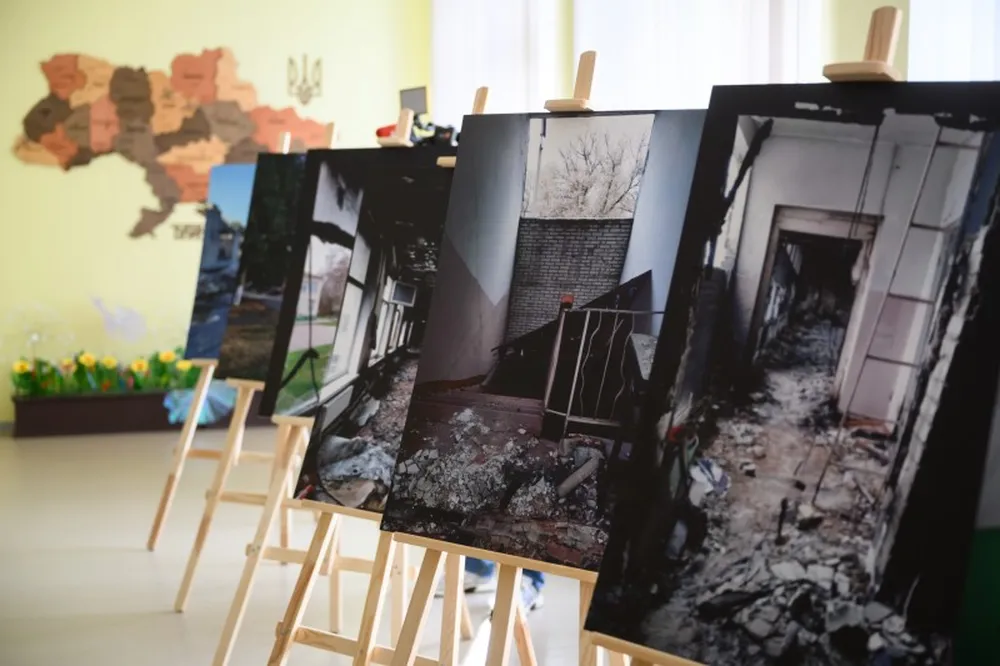
Russian forces destroyed the school Zelenskyy visited in March 2022. It reopened only last autumn with a shelter and backup power, according to the Kyiv Oblast Military Administration.

Photographs of burned and rubble-filled school interiors displayed on easels inside the rebuilt school.
An exhibition shows damage inflicted when Russian forces destroyed the Kyiv Oblast school in March 2022. The school reopened in autumn 2025. Photo: Office of the President of Ukraine

Zelenskyy said Russia had spent the preceding two weeks attacking infrastructure partly to disrupt the start of the academic year.

Ahead of Knowledge Day, Kyiv Oblast Military Administration head Tymur Tkachenko advised schools in high-risk communities not to hold mass opening ceremonies. Each school was to decide whether to proceed based on the security situation in its community.

“First and foremost, there must be safety,” Tkachenko said. If a ceremony went ahead, he recommended holding it directly in a shelter where possible. For events outside shelters, attendance was not to exceed the capacity of the nearest protective facility, and schools were told to avoid large gatherings of pupils, parents, and staff.

How Russia’s invasion has devastated Ukrainian education

Ukraine’s 2026 Knowledge Day began after six consecutive days of Russian attacks on Kyiv and its surrounding region, culminating overnight in a massed missile and drone strike. Eight people were killed, and seven were injured, including three children, while civilian infrastructure was damaged across five Kyiv districts.

Russia’s invasion has turned school safety and reconstruction into central parts of Ukraine's education policy. By September 2024, more than 3,500 educational institutions had been damaged and nearly 400 destroyed, with the World Bank estimating that almost $14 billion would be needed to rebuild them.

Attacks on Ukraine’s energy system have also left classrooms without heat or electricity, forcing prolonged holidays and renewed distance learning.

  • ✇Euromaidan Press
  • How flexible education can support professionals through career disruption
    Career disruption can change priorities faster than a long-term plan can adapt. Redundancy, relocation, caring responsibilities or a move into another sector may interrupt a familiar routine, yet professional development can continue. When circumstances shift, structured learning can provide direction. Professionals comparing options may review https://ihcl.org.uk/courses while deciding which type of study could help them keep building relevant knowledge through the transition. Why
     

How flexible education can support professionals through career disruption

1 septembre 2026 à 11:11

How Flexible Education Can Support Professionals Through Career Disruption


Career disruption can change priorities faster than a long-term plan can adapt. Redundancy, relocation, caring responsibilities or a move into another sector may interrupt a familiar routine, yet professional development can continue.

When circumstances shift, structured learning can provide direction. Professionals comparing options may review https://ihcl.org.uk/courses while deciding which type of study could help them keep building relevant knowledge through the transition.

Why does career continuity matter during prolonged uncertainty?

A break in employment does not remove previous experience, but it can make ongoing development more important. Employers may want recent evidence that a candidate has kept their knowledge current.

Career continuity does not mean following the same path at any cost. It means maintaining enough professional activity to keep future options open through study, project work, volunteering or other relevant practice.

During a longer transition, this helps people identify changes in their field. They can return to the market with a clearer view of current requirements instead of relying only on older experience.

Which skills travel well between vountries and industries?

Some abilities remain useful even when a person changes country, sector or employer. For international mobility, the most practical ones are:

  • negotiation — finding workable agreements when priorities differ;
  • research — locating reliable sources and turning unfamiliar information into useful context;
  • professional writing — preparing clear briefs, reports or handover documents;
  • remote collaboration — working effectively across time zones, platforms or distributed teams;
  • cultural awareness — recognising different workplace norms and responding appropriately.

These skills are useful in roles where people regularly work across borders or organisational cultures. They also help professionals transfer their experience into a new environment more convincingly.

Which learning format fits a busy schedule?

A career transition rarely produces a predictable timetable. Interviews, temporary work, family duties or relocation tasks may appear with little notice, so rigid study arrangements can become difficult to sustain.

A better fit is a format built around manageable units, visible milestones and materials available outside fixed class times. This gives learners a clear weekly direction while leaving room for changes in availability.

It is also worth checking how assessments are organised. Practical tasks completed in stages are easier to fit around an uneven schedule than several large assignments due at the same time.

What should learners prioritise when choosing a programme?

Start with the outcome rather than the course title. Check if the curriculum supports the roles you are considering, whether assessments produce work you can discuss in interviews and how much guidance is available when plans change.

Recognition, workload and access also deserve attention if you expect to move between countries. The programme should be understandable to future employers and realistic to complete from wherever you may be based.

During a career transition, progress is easier to maintain when the next task is clear and support is close at hand. IHCL brings this together through its ACEL approach, personal mentorship and custom-made LMS, helping learners keep moving even when work, location or long-term plans are changing.

  • ✇Euromaidan Press
  • US welcomes Russia back to G20 but rules out economic relief, source says
    US Treasury Secretary Scott Bessent told Russian Finance Minister Anton Siluanov that “nothing is possible until the war is over” during their 31 August meeting, a source familiar with the exchange told Reuters. Siluanov’s return marked the first in-person G20 appearance by Russia’s finance minister since 2022, raising European concerns that Moscow was being treated as a normal partner again. Bessent’s response indicated that renewed contact would not bring economic rel
     

US welcomes Russia back to G20 but rules out economic relief, source says

1 septembre 2026 à 10:20

US Treasury Secretary Scott Bessent speaks in front of a G20 Asheville 2026 backdrop.

US Treasury Secretary Scott Bessent told Russian Finance Minister Anton Siluanov that “nothing is possible until the war is over” during their 31 August meeting, a source familiar with the exchange told Reuters.

Siluanov’s return marked the first in-person G20 appearance by Russia’s finance minister since 2022, raising European concerns that Moscow was being treated as a normal partner again. Bessent’s response indicated that renewed contact would not bring economic relief while the war continues, although Washington announced no new sanctions or steps to enforce existing ones.

Bessent and Siluanov met on the sidelines of a G20 finance meeting, a forum of major economies, in Asheville, North Carolina. A US official said the talks focused on President Donald Trump’s peace plan for Ukraine. Russia’s Finance Ministry said it discussed Russian-American financial cooperation and work within the G20.

The condition also covered agreements in other areas, Reuters’ source said. Reuters did not specify what form of economic relief Bessent meant. Asked why Washington received Siluanov, White House spokesman Kush Desai said to AFP that the administration was working with Russia to end the bloodshed.

Siluanov last joined a G20 finance meeting virtually in April 2022, prompting Western officials to walk out.

Europe warns against normalization

European officials were preparing further sanctions against Moscow, and German Finance Minister Lars Klingbeil said they wanted Washington’s cooperation. He called Siluanov’s reception a “quite troubling” signal and said relations with Russia could not be normalized while the war continued, Reuters reported.

Klingbeil said European officials agreed that dialogue could help deliver a frank message to Moscow. They nevertheless refused to join the customary group photograph with Siluanov, which organizers ultimately took without him.

US eased Russian oil sanctions during Iran war

Washington sanctioned major Russian oil companies in October 2025. After the US-Israeli war with Iran disrupted supplies through the Strait of Hormuz, however, the Treasury issued temporary licenses allowing Russian oil already at sea to reach buyers.

Bessent defended the relief as a way to prevent a sharper oil price spike, while senators warned that it increased Moscow’s war revenue, Euromaidan Press reported. The waiver briefly lapsed in mid-May before Bessent extended it for another 30 days, despite telling European allies he would not do so, according to Politico.

The licenses were intended to stabilize global supplies but also kept revenue flowing to Moscow. Washington has not announced a new Russia-related enforcement measure or timetable following Bessent’s meeting with Siluanov.

  • ✇Euromaidan Press
  • Second drone brigade in two months: Ukraine is forming the 446th Unmanned Systems Brigade
    Ukraine's Armed Forces are forming the 446th Separate Unmanned Systems Brigade, which is recruiting servicemembers while formation continues, MilitaryLand reported. The new unit joins a force that hit 32,485 Russian personnel over the summer alone, the Unmanned Systems Forces (SBS) reported on 1 September. Ukraine is facing a shortage of military personnel, yet the Armed Forces are forming their second separate unmanned systems brigade this year. The force's command
     

Second drone brigade in two months: Ukraine is forming the 446th Unmanned Systems Brigade

1 septembre 2026 à 09:46

second drone brigade two months ukraine forming 446th unmanned systems · post ukrainian operator “rarog” strike uav company pilots 427th separate regiment rarog news reports

Ukraine's Armed Forces are forming the 446th Separate Unmanned Systems Brigade, which is recruiting servicemembers while formation continues, MilitaryLand reported. The new unit joins a force that hit 32,485 Russian personnel over the summer alone, the Unmanned Systems Forces (SBS) reported on 1 September.

Ukraine is facing a shortage of military personnel, yet the Armed Forces are forming their second separate unmanned systems brigade this year. The force's commander wants unmanned systems covering the entire front at tactical, operational, and strategic depths.

What is known about the 446th Brigade

Military personnel from other units can apply for a transfer through Army+, according to MilitaryLand.

The first of the two was the 445th Separate Unmanned Systems Brigade Chata, whose formation became known in July. Both units are recruiting for posts running from operators of ground robots, FPV, bomber, and interceptor drones to psychological-support officers, analysts, and accountants, Militarnyi reported.

The deployment of such units is part of the Ukrainian Armed Forces' broader effort to increase the number of unmanned systems in the military. Ukrainian drones accounted for about 96% of Russian casualties in March—33,988 of roughly 35,000 killed or severely wounded—Zelenskyy said in April.

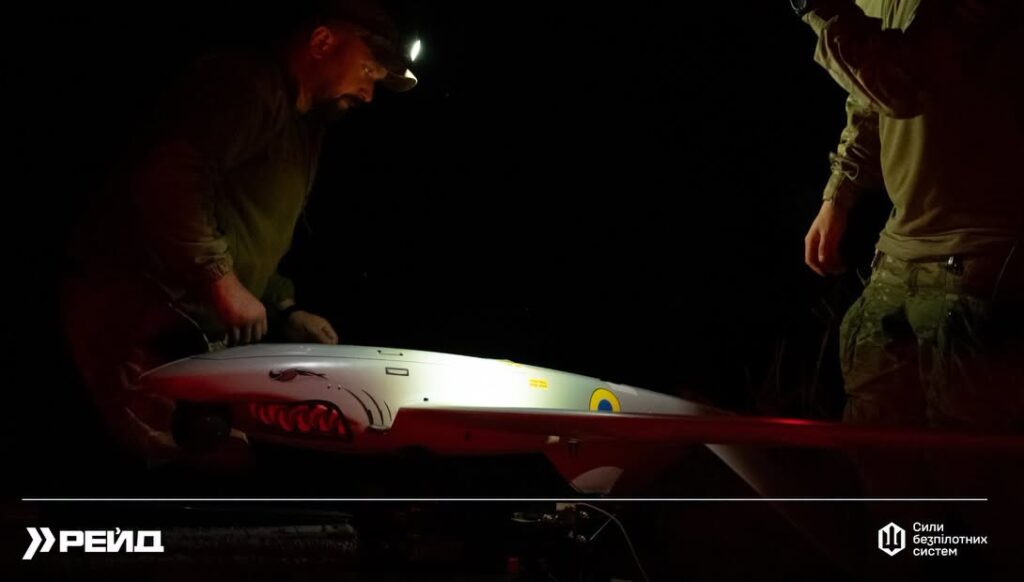
Two Ukrainian servicemembers prepare a fixed-wing reconnaissance drone on a launcher at night
Drone operators of the 413th Separate Unmanned Systems Regiment Reid prepare a Shark reconnaissance drone for a sortie. Illustrative photo: Unmanned Systems Forces of Ukraine / Facebook

Why Ukraine is turning to drones

The expansion of unmanned systems brigades is part of a broader effort initiated by Robert Brovdi, callsign Madyar, to increase the role of the SBS within Ukraine's Defense Forces, Militarnyi notes.

Brovdi told Reuters in June that he wants to raise the drone forces from about 2.5% of Ukraine's armed forces to 5%, a goal he first stated publicly in September 2025. At that share, the drone units accounted for roughly a third of Russian losses over the previous 12 months, according to figures the force gave Reuters, which said it could not verify them independently.

Then Commander-in-Chief of the Armed Forces of Ukraine Oleksandr Syrskyi described unmanned systems as one of the key factors shaping modern warfare. Current Commander-in-Chief of the Armed Forces of Ukraine Mykhailo Drapatyi stated that one of his priorities is the development and scaling of the unmanned component.

Overall, the SBS struck 58,465 targets in August, its own tally for 1–31 August shows.

  • ✇Euromaidan Press
  • Armenia drops Russia’s ‘strategic partner’ label, but foreign minister says alliance remains
    Foreign Minister Ararat Mirzoyan said in an interview aired on 31 August that Russia remains "more than a strategic partner" because existing treaties make the two countries allies, adding that the change in the government program's wording should not be interpreted as an end to that relationship. Mirzoyan was responding to Armenia's new 2026–2031 government program, which replaces the "strategic ally" and "strategic partnership" language used in the previous five-year
     

Armenia drops Russia’s ‘strategic partner’ label, but foreign minister says alliance remains

1 septembre 2026 à 08:54

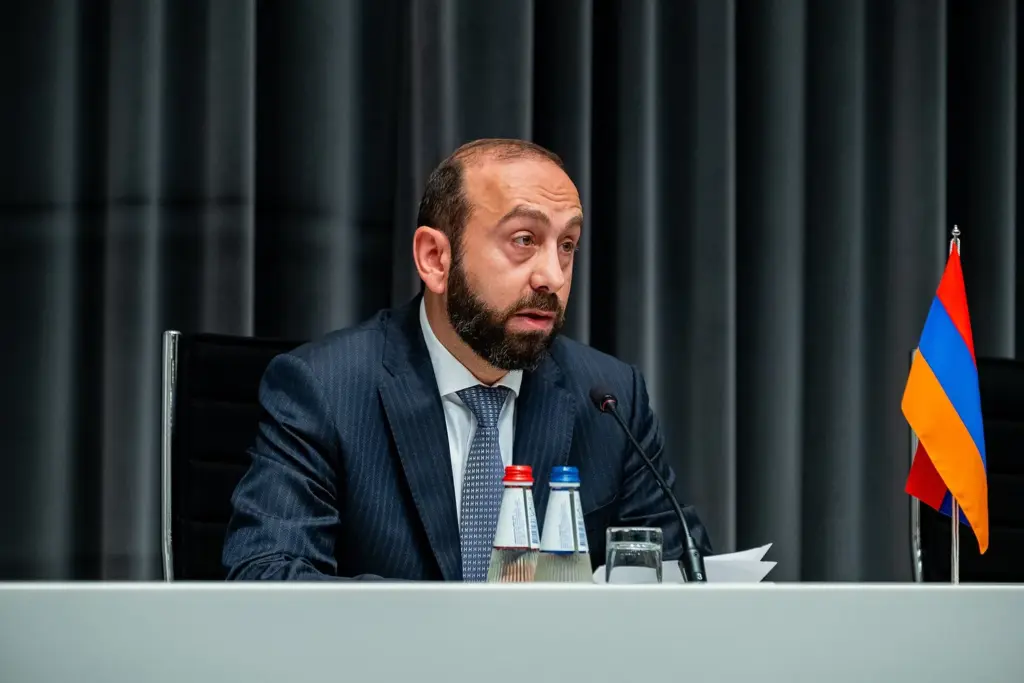
Estonian Foreign Ministry Ararat Mirzoyan

Foreign Minister Ararat Mirzoyan said in an interview aired on 31 August that Russia remains "more than a strategic partner" because existing treaties make the two countries allies, adding that the change in the government program's wording should not be interpreted as an end to that relationship.

Mirzoyan was responding to Armenia's new 2026–2031 government program, which replaces the "strategic ally" and "strategic partnership" language used in the previous five-year plan with a commitment to "transform and deepen" relations with Russia. The previous program referred to an "Armenian-Russian strategic alliance" and pledged to strengthen "allied relations and strategic partnership" with Moscow.

Prime Minister Nikol Pashinyan explained on 27 August that keeping the strategic-partnership language would raise questions about why Russia and the Russia-led Collective Security Treaty Organization had failed to fulfill their security obligations to Armenia in 2022.

Armenia has removed the language of alliance from its government program without ending the treaties, CSTO membership, or energy ties that still bind it to Moscow.

Azerbaijan attacked Armenian territory near Jermuk in September 2022, striking positions inside sovereign Armenia rather than the disputed Nagorno-Karabakh region. Yerevan invoked Article 4 of the Collective Security Treaty, the clause treating an attack on one member as an attack on all, and requested assistance. The alliance sent a fact-finding mission but no troops. requested military assistance. Armenia froze its participation in the CSTO at all levels in 2024, stopped financing it, and has boycotted its summits and military exercises.

Why the alliance frayed

Armenian trust in Moscow had deteriorated further by September 2023, when Azerbaijan retook Nagorno-Karabakh after a brief offensive and Russian peacekeepers deployed to the region did not intervene. Armenian officials accused them of failing to protect the enclave's population.

Yerevan has since moved closer to the European Union. In March 2025, Armenia's parliament passed a law to launch the accession process, though Pashinyan has said any actual membership would require a referendum, and Armenia has not applied to join.

What still ties Armenia to Russia

Even so, Armenia remains heavily dependent on Russia for energy. Russia supplied the bulk of Armenia's natural gas in 2021, and Armenia imports all of its nuclear fuel from Russia, leaving it effectively reliant on imported fuel for nearly 70% of its electricity, according to the International Energy Agency. The country remains a member of the Russian-led Eurasian Economic Union.

Mirzoyan acknowledged that strains had emerged in recent years, citing statements by Russian officials, coverage in Russian media, and Moscow's restrictions on imports of Armenian goods. He called for relations to be made "healthier" and returned to a course of "mutual respect," and said Yerevan did not want a "war of words" with Moscow. Pashinyan said on 1 September that he expected to meet Russian President Vladimir Putin later that day in Bishkek.

  • ✇Euromaidan Press
  • Latvia blocks Russian and Belarusian books, clothes and toys
    On 1 September 2026, Latvia banned imports of Russian- and Belarusian-made books, clothing, toys, and other consumer goods, including shipments routed through third countries, Latvian Public Media reported. The restricted goods were worth approximately €12.5 million ($14.5 million) in 2025, or 6.5% of Latvia’s remaining imports from the two countries. Although modest economically, the measure goes beyond EU-wide sanctions and advances Riga’s effort to deny Moscow and Mi
     

Latvia blocks Russian and Belarusian books, clothes and toys

1 septembre 2026 à 08:52

Latvian flag flying from a white flagpole against a blue, lightly clouded sky.

On 1 September 2026, Latvia banned imports of Russian- and Belarusian-made books, clothing, toys, and other consumer goods, including shipments routed through third countries, Latvian Public Media reported.

The restricted goods were worth approximately €12.5 million ($14.5 million) in 2025, or 6.5% of Latvia’s remaining imports from the two countries. Although modest economically, the measure goes beyond EU-wide sanctions and advances Riga’s effort to deny Moscow and Minsk revenue during Russia’s war against Ukraine.

The restrictions cover the following:

  • Books, newspapers, and other printed material
  • Clothing, textiles, footwear, and headwear
  • Toys, games, and sporting equipment.

Latvia’s Cabinet approved the final product list on 25 August following a Foreign Ministry proposal, completing restrictions parliament authorized on 23 July.

The ban applies regardless of whether the products arrive directly or through another country. Russian- and Belarusian-made goods may still transit Latvia on their way to other EU markets, Meduza reported.

Food and beverages are not covered. The restrictions are scheduled to remain in force until 1 July 2027 and will be reviewed annually.

The Foreign Ministry said the measure is also intended to limit the entry of Russian propaganda material. The targeted products accounted for only 0.05% of Latvia’s total imports in 2025, according to Euronews.

How Latvia has been cutting off trade with Russia and Belarus

Latvia’s combined imports from Russia and Belarus have already fallen by 91%, from €2.13 billion ($2.47 billion) in 2022 to €193 million ($224 million) in 2025, according to Latvian Public Media. Much of that decline followed the country’s departure from Russian energy supplies and the Baltic states’ disconnection from the Russian and Belarusian electricity grids.

The latest prohibition blocks consumer goods that Brussels has not collectively banned.

Latvian Prime Minister Andris Kulbergs previously pledged to eliminate the country’s remaining commercial links with Russia and Belarus, although pharmaceutical exporters were expected to remain exempt.

In August, Latvia also resumed publishing a monthly register of businesses trading with either country, naming 171 companies. Inclusion on the list does not itself indicate a sanctions violation.

  • ✇Euromaidan Press
  • Russia promised a scramjet superweapon. Ukraine says Zircon runs on solid fuel
    Russia's Zircon runs on two solid-propellant motors, a booster and a sustainer, Ukraine's military intelligence (HUR) said in a breakdown of the missile's structure and components. That leaves no room for the scramjet Moscow advertised, Defense Express wrote. Russia presented Zircon as a hypersonic missile capable of penetrating modern air defenses. HUR says it instead uses solid-propellant motors, which Defense Express reads as demolishing Moscow's claims about a super
     

Russia promised a scramjet superweapon. Ukraine says Zircon runs on solid fuel

1 septembre 2026 à 08:34

russia touted zircon hypersonic superweapon ukraine says its technology far less exotic · post missile launch warship russian defense ministry militarnyi polish_20260120_110147292jpg news ukrainian reports

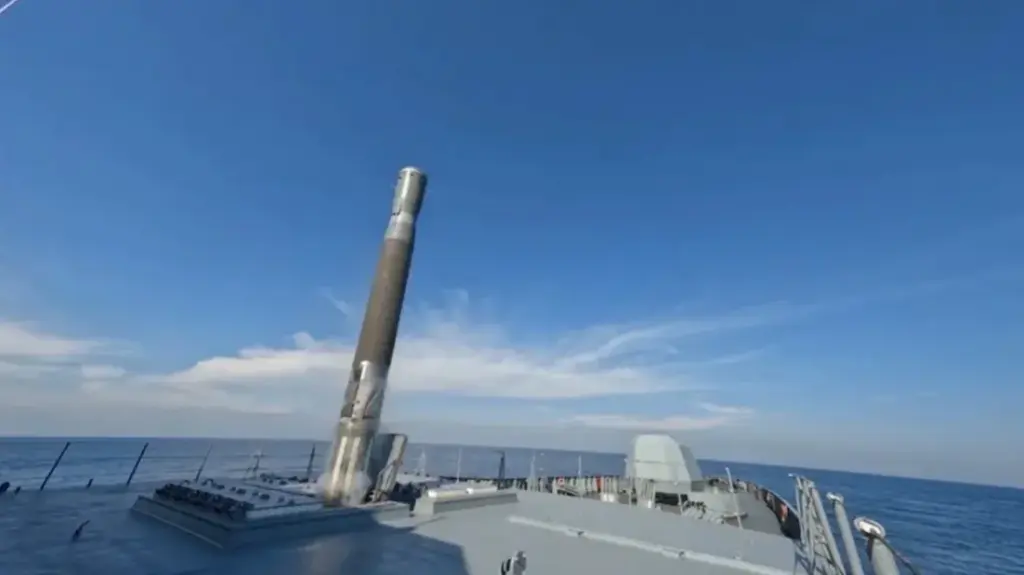
Russia's Zircon runs on two solid-propellant motors, a booster and a sustainer, Ukraine's military intelligence (HUR) said in a breakdown of the missile's structure and components. That leaves no room for the scramjet Moscow advertised, Defense Express wrote.

Russia presented Zircon as a hypersonic missile capable of penetrating modern air defenses. HUR says it instead uses solid-propellant motors, which Defense Express reads as demolishing Moscow's claims about a superweapon. The intelligence agency also listed an Altera programmable chip and a TriQuint amplifier among the missile's components, the same finding investigators keep making in Russian weapons.

HUR published an interactive 3D model of Zircon through its War&Sanctions database, the latest in a series on Russian ballistic weapons. The agency said the recorded maximum speed to date does not exceed Mach 6.8—about seven times the speed of sound—and that the missile does not hold it through the whole flight. Russia claims Mach 9 at some stages of flight. Zircon carries a roughly 120-kilogram warhead.

Side-view 3D model of Russia’s 3M22 Zircon missile against a black background.
A 3D render of a 3M22 Zircon. Source: HUR, Ukraine's military intelligence agency

Defense Express reported that a 2010 contract with solid-fuel specialist NPO Iskra indicates that this propulsion system was planned from the earliest stages of Zircon's development.

Built for ships, moved onto a coastal launcher

Zircon is a Russian anti-ship missile developed for surface ships and nuclear-powered submarines. Russia later adapted it for Bastion-M coastal launchers amid difficulties operating its Black Sea Fleet, HUR said.

Ukrainian forensic experts first confirmed Russia had fired a Zircon at Kyiv in February 2024. Defense Express reported that Ukraine intercepted two more over the capital the following month. Russia has continued using Zircon against land targets: in February 2026, it launched four at Ukraine’s power grid, of which Ukrainian air defenses downed two.

What solid-fuel propulsion changes

Solid fuel does not make Zircon slow: Mach 6.8 is still hypersonic. A scramjet draws oxygen from the atmosphere to sustain hypersonic flight; Zircon instead flies on self-contained rocket motors. HUR calls it a ballistic missile rather than the hypersonic cruise missile Russia advertised, and notes its onboard computer is the type fitted to all Russian ballistic missiles. Defense Express says the trajectory may be aeroballistic and the motor possibly dual-pulse, given the range Russia wanted from a missile that had to fit a ship's launch silo.

Russian President Vladimir Putin claimed in 2019 that the missile could reach Mach 9 and travel 1,000 kilometers, up from earlier official figures of Mach 6 to 8 and 400 to 500 kilometers. A year earlier, the former head of its manufacturer said it flew on a jet engine, Defense Express said.

In February 2024, Kyiv's forensic institute concluded from the debris that the engine was air-breathing rather than solid-fuel, and Defense Express went further the following month, reporting from its own sources that Russia had built a working scramjet. The outlet has since appended a correction to that article, noting that HUR found a solid-fuel 3L2211 motor from NPO Iskra where the scramjet was supposed to be.

The US chips inside Zircon

HUR identified two components from US manufacturers inside Zircon: a programmable gate array from Altera, now part of Intel, and a TGA2704 amplifier from TriQuint Semiconductor, now Qorvo. It also mapped 70 companies involved in its production, along with their personnel and foreign manufacturing equipment.

The finding fits a wider pattern. Investigators have found Western electronics in Russia's UMPK glide-bomb kits and traced at least 28 foreign parts from 15 companies in the Kh-101 that struck Kyiv's Okhmatdyt children's hospital.

A 2026 examination found 62 US-made parts in an Iskander missile, while a Russian Geran drone combined a Soviet missile with Western electronics and a Chinese modem.

  • ✇Euromaidan Press
  • Indonesia is examining whether traffickers put its citizens into Russia’s war on Ukraine
    Indonesia's Foreign Ministry is verifying reports that Russia recruited one of its citizens into its armed forces to fight against Ukraine, the Indonesian state news agency Antara reported on 31 August. Ukraine named eight Indonesians serving in the Russian army. Russia is fighting a war it can no longer man from its own population—losses have outrun replacement for months, and the Kremlin keeps publicly denying that a new mass mobilization is coming, which leaves forei
     

Indonesia is examining whether traffickers put its citizens into Russia’s war on Ukraine

1 septembre 2026 à 07:13

indonesia examining whether traffickers put its citizens russia's war ukraine · post notification russian foreign ministry's consular department granting e-visa indonesian citizen valid 13 10 2026 holder's name eyes obscured

Indonesia's Foreign Ministry is verifying reports that Russia recruited one of its citizens into its armed forces to fight against Ukraine, the Indonesian state news agency Antara reported on 31 August. Ukraine named eight Indonesians serving in the Russian army.

Russia is fighting a war it can no longer man from its own population—losses have outrun replacement for months, and the Kremlin keeps publicly denying that a new mass mobilization is coming, which leaves foreign recruits the option that costs it least at home. Moscow keeps filling the ranks of its illegal war with local contract soldiers and foreign nationals, and Jakarta is now establishing how its citizens entered that pipeline. 

Jakarta cannot yet name the citizen in the Russian ranks

Indonesian diplomatic missions are running the verification together with other government agencies, Foreign Ministry spokesperson Yvonne Mewengkang said on 31 August. She said information on the man's identity, citizenship status, and recruitment process "still requires further confirmation." Mewengkang added that Indonesia would not treat a confirmed enlistment as anything the state endorsed or authorized.

Russia feeds foreign recruits into the illegal war it started against Ukraine. The Indonesian government is checking whether its nationals were trafficked, misled, or hired through fake vacancies before they ended up in uniform. Anyone shown to have been deceived that way will get whatever protection Indonesian law allows, Mewengkang said.

A Kenyan man holds two printed photographs of his son killed fighting for Russia.
Explore further

Nearly 500 Africans recruited into Russia’s army have died, Ukraine says

Indonesian law contains clear provisions on citizens who join foreign militaries, and the consequences are severe, including the potential loss of Indonesian citizenship once the facts have been fully verified, according to the ministry. 

Ukraine's intelligence traced the scheme into Southeast Asia

Ukraine's Foreign Intelligence Service reported on 27 August that it has obtained documents on at least eight Indonesian citizens recruited into the Russian army. Recruiters offer high pay, non-combat work, and fast-tracked Russian citizenship, and many of those who sign have no idea where they will be sent, the service said.

extends russian-oil waiver second time — one bessent had told allies wouldn't make · post filipino mercenary john patrick other russian soldiers forest belt donetsk oblast philippines- mercenary-john-patrick-killed-near-donetsk has extended
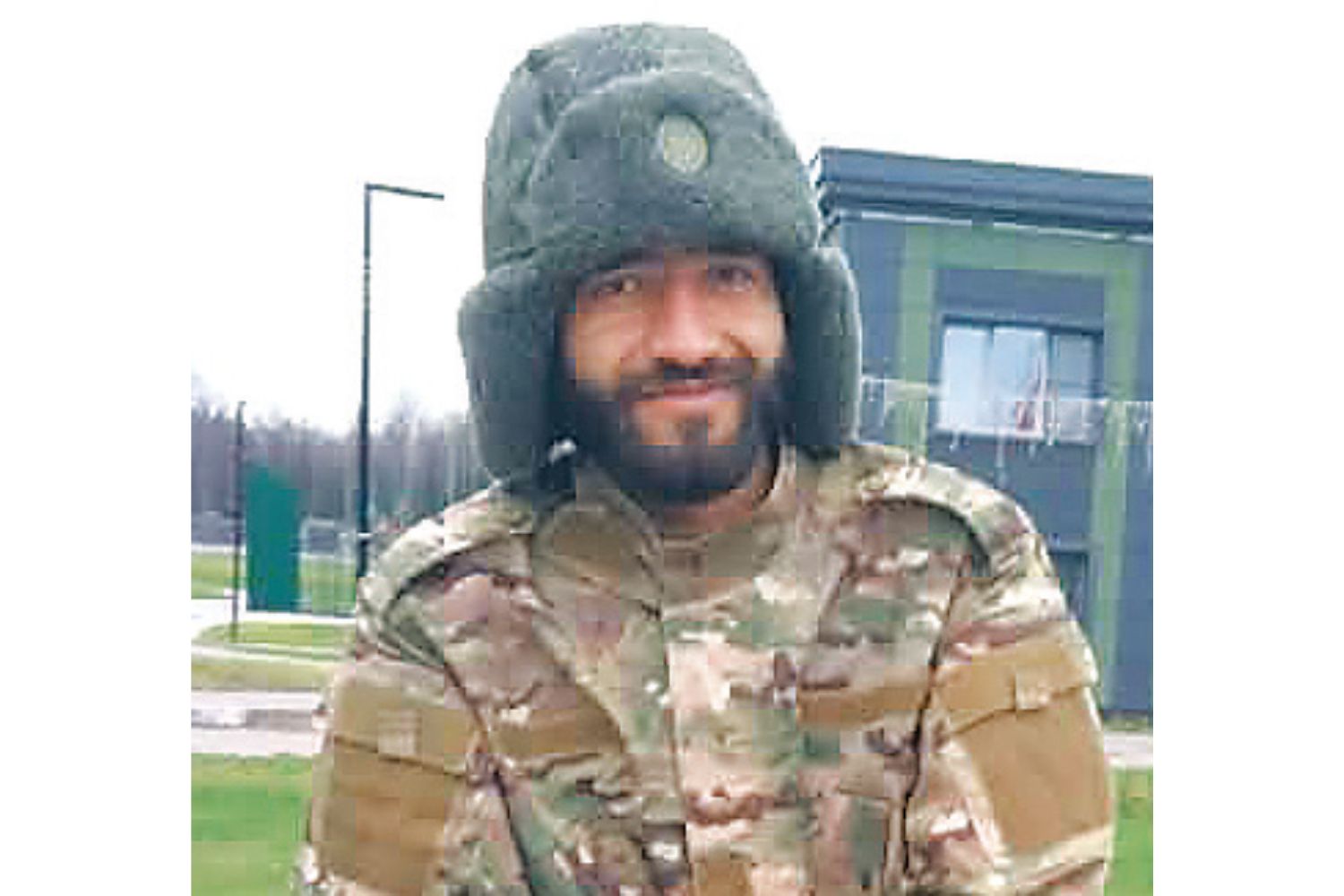
Filipino mercenary John Patrick with other Russian soldiers in a forest belt in Donetsk Oblast. Photo: HUR

Each foreigner fills a personnel gap at the front and doubles as propaganda about supposed global support for the war, according to the same report. 

Kyiv had documented the identical model working earlier on citizens of Nepal, Cuba, Kenya, and India.

signed up kill africa refused die ukraine russia's corps recruit flees philippines after gru unit rerouted front · post left russian mercenary georgy kochkin full gear training base mulino nizhny
Explore further

Signed up to kill in Africa, refused to die in Ukraine: Russia’s Africa Corps recruit flees to Philippines after GRU unit rerouted him to the front

Governments elsewhere are counting their dead and missing

Ukrainian intelligence data show that Russia uses the recruitment of foreigners to fill out its personnel. Russia has taken in at least 27,000 foreign nationals from more than 130 countries since February 2022, a joint report by the International Federation for Human Rights and Truth Hounds found in April.

More than a quarter of the 459 Peruvians who joined Russian forces are dead or unaccounted for, official figures show, with the missing far outnumbering the confirmed dead. A Colombia-registered recruiter sent Peruvians into the war on a welcome bonus that never arrived. 

extends russian-oil waiver second time — one bessent had told allies wouldn't make · post nepali man manoj singh bhatta russian military uniform date location unspecified provided kathmandu has extended
Nepali man Manoj Singh Bhatta in Russian military uniform, date and location unspecified. Photo: Provided to The Kathmandu Post.

India has confirmed cases among its own nationals, and Ukrainian intelligence has counted hundreds of dead Africans in Russian units. Ghana accused Russia of luring its citizens into the war after Kenya and South Africa raised the same complaint.

  • ✇Euromaidan Press
  • Russia keeps striking Ukraine’s energy system. Winter resilience plans are less than half complete
    Russia keeps striking Ukraine’s energy system before winter, while Ukraine’s regional resilience plans were only 47% complete when audited.Prime Minister Serhii Koretskyi told parliament on 21 August that some regions were ahead, others behind, and some deadlines would slip. The public transcript does not say when the audit was conducted.The parliamentary audit covered regional resilience plans. The ministry’s preparation figures measure two separate things: routine heatin
     

Russia keeps striking Ukraine’s energy system. Winter resilience plans are less than half complete

1 septembre 2026 à 06:31

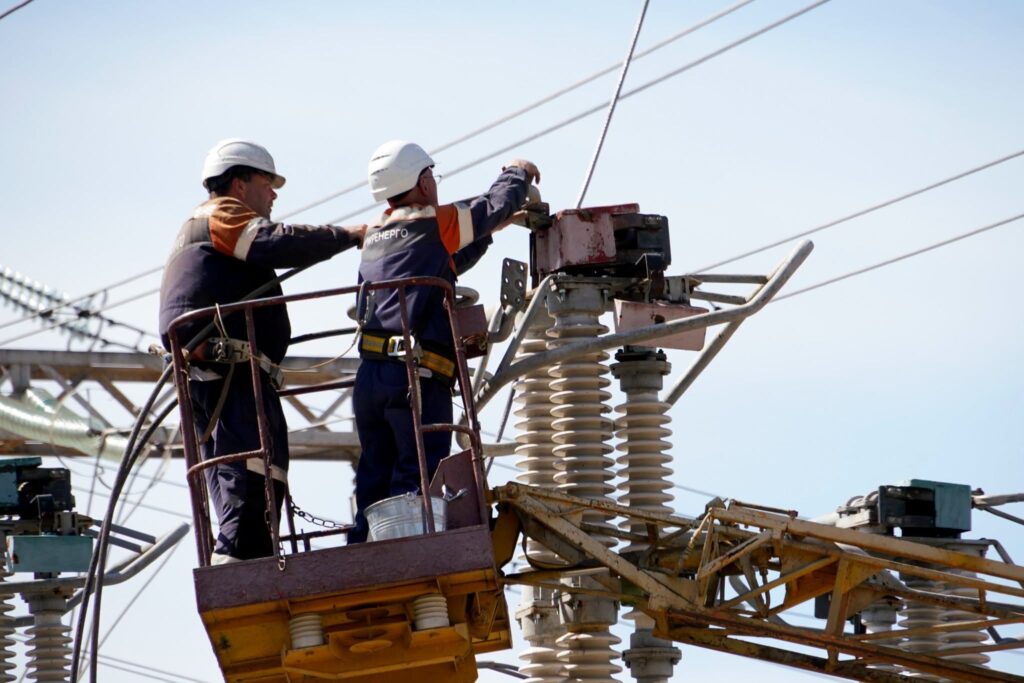
ukrenergo repair team

Russia keeps striking Ukraine’s energy system before winter, while Ukraine’s regional resilience plans were only 47% complete when audited.

Prime Minister Serhii Koretskyi told parliament on 21 August that some regions were ahead, others behind, and some deadlines would slip. The public transcript does not say when the audit was conducted.

The parliamentary audit covered regional resilience plans. The ministry’s preparation figures measure two separate things: routine heating-season maintenance and backup power at heat and water facilities.

Russia had damaged more than 250 Ukrainian locomotives over six months and nearly 500 since the full-scale invasion began.

Almost 300 megawatts still missing

The latest nationwide preparation figures showed that around three in five residential buildings, boiler houses, and social facilities had completed their scheduled winter work by 1 August.

By 12 August, heat and water facilities had 920 megawatts of backup power against a need of 1,215 megawatts—a shortfall of almost 300 megawatts. The ministry expects all scheduled preparations to be completed by 1 October.

An August funding allocation brought the government’s stated total for resilience and infrastructure protection to 63 billion hryvnias ($1.4 billion). The announcement says where the money was allocated, but not how much had already been contracted or spent.

Energy Minister Denys Shmyhal told parliament that 1.8 gigawatts of small gas-fired generation was operational nationwide. Another 1.1 gigawatts was being installed or prepared by communities and state companies.

The 1.8-gigawatt total includes generation beyond the heat and water facilities facing the 300-megawatt backup-power shortfall.

A July energy assessment found that generators and cogeneration units still require working connections, fuel, maintenance, trained operators, and full-load testing. Utilities also need compatible spare parts and repair crews for prolonged outages.

President Volodymyr Zelenskyy’s decree requires regions to increase the backup-power capacity specified in their resilience plans by 20%. Local governments must also keep enough fuel on hand to operate essential services for at least two weeks.

The published decision gives no figure for how many facilities already meet the fuel requirement. It orders the government to revise the plans according to what can realistically be completed before the heating season and to seek additional financing.

kyiv oblast kindergarten hit hours after russia's ceasefire ended · post locomotive damaged russian drone strike railway infrastructure dnipropetrovsk 12 2026 рф атакувала залізничну інфраструктуру дніпропетровської області травня року фото
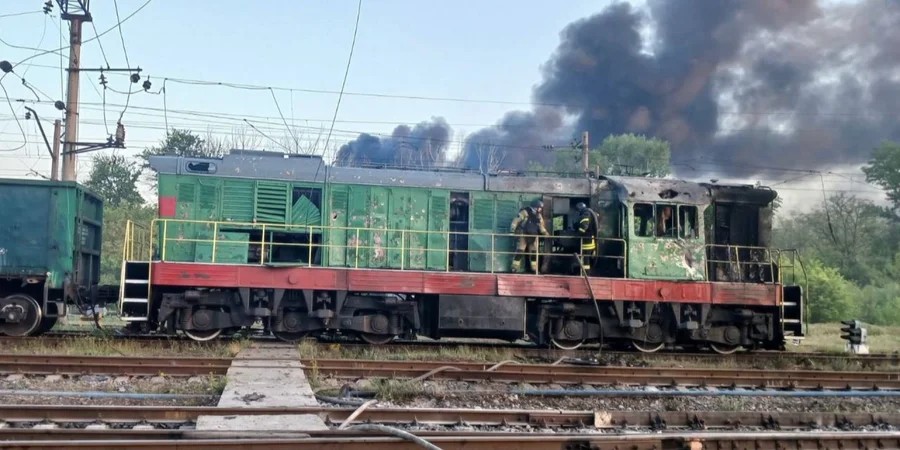
A locomotive damaged in a Russian drone strike on railway infrastructure in Dnipropetrovsk Oblast, 12 May 2026. Photo: Oleksii Kuleba/Telegram

New locomotives will not arrive before winter

The same presidential decision also makes damaged locomotives part of Ukraine’s winter preparations. It directs the government to consider state aid, international financing, faster procurement, and the purchase or lease of used locomotives.

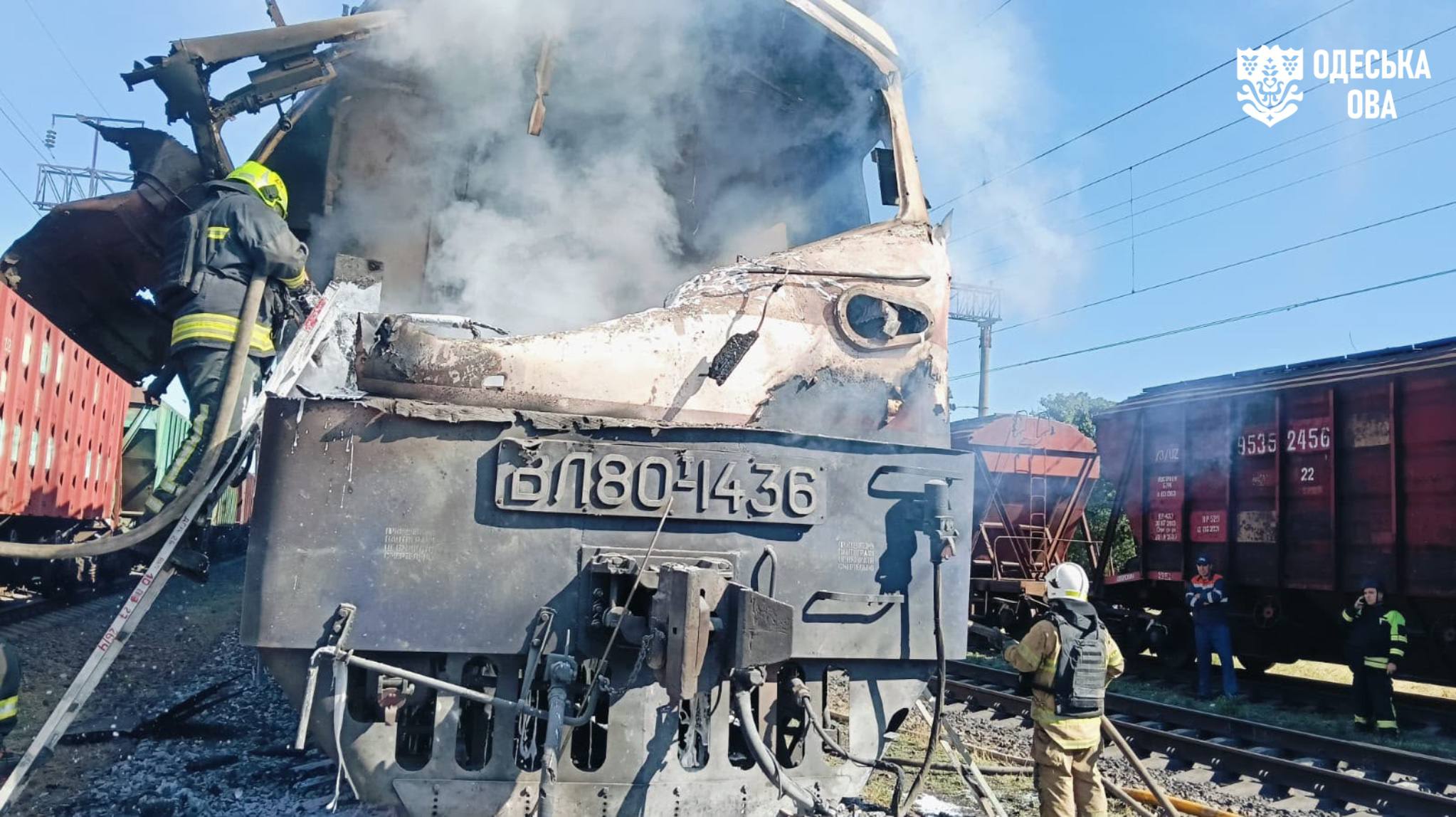
Russia had damaged more than 250 Ukrainian locomotives over six months and nearly 500 since the full-scale invasion began. Some were beyond repair.

locomotive, Odesa Oblast
Explore further

Russia drove most ships from Ukraine’s ports. Now its drones are hunting the trains

The losses reach beyond passenger services. Russian attacks have reduced commercial traffic through Ukraine’s Black Sea ports, increasing pressure on rail and Danube routes that carry agricultural exports. Neither has enough capacity to replace the deep-water ports.

Ukrzaliznytsia’s published delivery schedule shows that the first of 55 new Alstom freight locomotives will arrive only in early 2027. Deliveries will continue through 2029, leaving repairs, used purchases, and leases as the short-term options.

  • ✇Euromaidan Press
  • Drone attack damages Russia’s Baltic oil port as drone crosses Latvia into Estonia
    Russian authorities reported damage and a fire at Ust-Luga port during an overnight drone attack on 1 September. One drone crossed Latvian and Estonian airspace, prompting NATO to scramble Turkish F-16s. The attack hit a major outlet for Russian energy exports. Reuters reported that Ust-Luga loads about 700,000 barrels of crude a day and exported 32.9 million metric tons of oil products in 2025. Its terminals also serve shadow-fleet tankers used to bypass sanctions.
     

Drone attack damages Russia’s Baltic oil port as drone crosses Latvia into Estonia

1 septembre 2026 à 06:26

A thick gray plume of smoke rises above a distant tree line beneath a pink early-morning sky.

Russian authorities reported damage and a fire at Ust-Luga port during an overnight drone attack on 1 September. One drone crossed Latvian and Estonian airspace, prompting NATO to scramble Turkish F-16s.

The attack hit a major outlet for Russian energy exports. Reuters reported that Ust-Luga loads about 700,000 barrels of crude a day and exported 32.9 million metric tons of oil products in 2025. Its terminals also serve shadow-fleet tankers used to bypass sanctions.

Leningrad Oblast Governor Alexander Drozdenko said emergency crews were working in Ust-Luga’s port zone while the damage was being assessed. He later claimed Russian air defenses downed 52 drones over Leningrad Oblast and reported no casualties.

Drozdenko did not identify the damaged facility or specify the scale of the fire.

Militarnyi published an image attributed to the Exilenova+ monitoring channel showing a blaze near the port. The image’s time and precise location have not been independently verified.

🇷🇺 🔥 **𝗗𝗥𝗢𝗡𝗘𝗦 𝗛𝗜𝗧 𝗨𝗦𝗧-𝗟𝗨𝗚𝗔 𝗣𝗢𝗥𝗧 𝗔𝗡𝗗 𝗧𝗢𝗟𝗬𝗔𝗧𝗧𝗜 𝗢𝗩𝗘𝗥𝗡𝗜𝗚𝗛𝗧, 𝗙𝗜𝗥𝗘𝗦 𝗕𝗥𝗘𝗔𝗞 𝗢𝗨𝗧 𝗔𝗧 𝗕𝗢𝗧𝗛

🔥 Drones struck the port zone of Ust-Luga in Leningrad region overnight into September 1, sparking a fire, governor Alexander Drozdenko… pic.twitter.com/lGEesBMOBN

🇺🇦 Vortex Report (@VortexReportX) September 1, 2026

There was no immediate information on whether the attack disrupted port operations. Ukraine had not claimed responsibility at the time of publication.

The regional warnings coincided with a broader drone attack on western Russia that included Ust-Luga, although authorities did not specifically link the drones approaching or entering NATO airspace to the port strike.

Baltic states issue warnings as NATO fighters scramble, while Finland restricts traffic

Estonia warned residents in eight counties and scrambled Turkish fighter jets serving in NATO’s Baltic Air Defense Mission, which protects the skies of Estonia, Latvia, and Lithuania.

Estonian Air Force Commander Brigadier General Riivo Valge said around a dozen drones had moved near the country’s border. One briefly entered southeastern Estonia, while another approached Narva before turning back into Russia. The fighters did not open fire, and the warnings were lifted by about 5:30 a.m.

Latvia issued two warnings overnight, first in the Ludza municipality and then in the Alūksne municipality. Latvia’s Armed Forces said a drone crossed Latvian airspace and continued into Estonia, where NATO fighters searched for it. The Latvian alerts ended at around 4:20 a.m.

Finland’s Armed Forces introduced temporary air and sea restrictions over the eastern Gulf of Finland at 3:37 a.m.

The military lifted both restrictions shortly after 6 a.m., saying no drones had strayed into Finland.

Repeated strikes on Ust-Luga

Ust-Luga lies around 110 kilometers west of St. Petersburg and some 900 kilometers from Ukraine. It is the endpoint of the Baltic Pipeline System-II, which carries Russian crude to the port for export. The area hosts facilities operated by Russian gas producer NOVATEK and fertilizer maker EuroChem.

Ukraine began its series of 2026 attacks on Ust-Luga overnight on 24–25 March. The Security Service of Ukraine, the country’s counterintelligence agency, and the military’s elite Special Operations Forces confirmed that they had struck NOVATEK’s gas-condensate complex, which processes liquid hydrocarbons into fuels.

Further attacks followed in late March. They set fuel-storage tanks ablaze, damaged a pier and pumping equipment, and temporarily halted port operations, according to Russian Telegram channel Astra.

On 7 April, Ukraine’s General Staff, the military’s senior command, confirmed another strike on Ust-Luga’s oil terminal, saying three oil storage tanks were destroyed. Another attack on 14 August again caused damage and a fire, Drozdenko reported at the time.

  • ✇Euromaidan Press
  • UN counted 183 Ukrainian children killed or wounded in July, the highest since 2022
    July 2026 was the worst month for Ukrainian children since April 2022 by the number killed and injured, the Ukrainian military's strategic communications directorate reported. It cited UNICEF data, Ukraine's state register of children affected by the war, and figures from the UN monitoring mission. The directorate published the count on 1 September—the day the school year begins. Russian strikes on Ukrainian cities and villages have not paused, and UN monitors have been
     

UN counted 183 Ukrainian children killed or wounded in July, the highest since 2022

1 septembre 2026 à 06:12

un monitors counted 183 ukrainian children killed wounded highest since 2022 · post rubble destroyed home after russian attack kyiv oblast ukraine 1 2026 5238173042721104224 news reports

July 2026 was the worst month for Ukrainian children since April 2022 by the number killed and injured, the Ukrainian military's strategic communications directorate reported. It cited UNICEF data, Ukraine's state register of children affected by the war, and figures from the UN monitoring mission. The directorate published the count on 1 September—the day the school year begins.

Russian strikes on Ukrainian cities and villages have not paused, and UN monitors have been recording the civilian cost month by month—with small drones killing more people than any other weapon in the spring. Meanwhile, Russia's missiles and long-range drones target Ukrainian cities in the rear.

July broke a four-year record

The directorate reported that 17 children died in July 2026 and 166 were injured. That is half again more than in June. The UN monitoring mission has not recorded a higher number of Ukrainian children hurt by Russian aggression since April 2022, the first spring of the full-scale invasion, when at least 62 children were killed and 149 injured.

As of 1 September, Russia had killed 739 Ukrainian children and injured 2,840 since the full-scale invasion began, according to the directorate, while the UN's own verified count for the same period is higher, at 820 children killed and 3,126 injuredRussia has illegally deported or displaced a further 20,610—abducted, in the directorate's words. Europol has previously traced 45 deported children all the way to the military units that moved them and handed the evidence to Kyiv.

In March 2023, the International Criminal Court in The Hague issued an arrest warrant for Russian President Vladimir Putin over the unlawful deportation of Ukrainian children from occupied territory.

kyiv attack
Explore further

437 killed, over 2,600 injured: Ukraine’s deadliest month for civilians since 2022, UN says

Empty classrooms are one part of it

Many schools did not open on 1 September because Russia keeps Ukrainian cities under constant fire, the directorate said. It argued that Russia's "genocidal practices" reach beyond education and culture.

In the occupied territories, Russia works on the children it already controls. It sent 582,000 children in 2,000 schools a first lesson on the unity of the peoples of Russia, with no Ukrainian language taught.

What these months look like on the ground

The monthly figure is built from strikes like the one near Kryvyi Rih, where rescuers pulled two children alive from the rubble of a village house and three others did not survive. In June, a Russian strike injured three children on a beach in Zaporizhzhia. 

Ukrainian rescuers are helping the victims of a Russian 1 September attack. Source: The State Emergency Service
Explore further

Russia’s 6-day attack on Kyiv that started two days after CIA head’s visit to Moscow, culminates with massive ballistic missile strike on eve of school year

In August, Russian ballistic and hypersonic missiles damaged a children's hospital in Kyiv. The capital and other cities have been under repeated attack for days at a stretch.

  • ✇Euromaidan Press
  • Former Ukrainian president has made offer to Zelenskyy amid Russia’s new type of war on Kyiv
    Former Ukrainian President Petro Poroshenko, leader of the opposition European Solidarity party, has offered to unite with President Volodymyr Zelenskyy in a new type of government. He has explained his initiative as necessary to save the country and adopt crisis-response measures amid a new phase of the war. Russia's strike campaign has become a governance problem as much as a military one. Each attack on Kyiv costs the city about $12 million, and they now arrive a
     

Former Ukrainian president has made offer to Zelenskyy amid Russia’s new type of war on Kyiv

1 septembre 2026 à 05:58

Former Ukrainian President Petro Poroshenko, leader of the opposition European Solidarity party. Source: European Solidarity

Former Ukrainian President Petro Poroshenko, leader of the opposition European Solidarity party, has offered to unite with President Volodymyr Zelenskyy in a new type of government. He has explained his initiative as necessary to save the country and adopt crisis-response measures amid a new phase of the war.

Russia's strike campaign has become a governance problem as much as a military one. Each attack on Kyiv costs the city about $12 million, and they now arrive almost twice a week. Agriculture Minister Taras Vysotskyi said on 28 August that, roughly speaking, 90% of retail chains' food logistics had been destroyed in the latest attacks, which included jet-powered drones that trigger an air alert in Kyiv every hour.

"We are the opposition, but we are ready to cooperate with the authorities in the legislative provision of all necessary decisions, up to the creation of a coalition and a government of national unity," he said.

Speaking in a video address on 31 August, he set out five issues to solve for the parliamentary session.

One: keep the capital running

The current barrage has forced Kyiv to a near-standstill, with alerts sounding through the working day. If they are permanent, Poroshenko argued, the rules for how the city runs must change, and the government, military, transport operators, and business must agree on a single published procedure. When the capital is shut down for hours, much of the economy stops with it, and the lost billions never reach the army, he added.

"Let us say honestly what Putin is doing. He wants to switch Kyiv off. To make people finally say: it is impossible to live here," Poroshenko said.

Two: give parents a school plan

The school year opens on 1 September under a rule allowing in-person classes only where a school has a shelter with room for everyone. Kyiv's administration told UNN that 94% of city schools have basic shelters, but capacity limits set the ceiling, forcing shifts or blended formats when a shelter cannot hold every child at once.

"Tomorrow is 1 September. Thousands of parents still do not understand how their children will study, especially where there are no proper shelters," Poroshenko said.

Three: return Kyiv's money

Kyiv has lost revenue to the central budget even as its defense costs climb, a dispute with the government that predates the barrage. Poroshenko demanded the return of about $180 million to the budget, along with the personal income tax paid by combat brigades.

"This week Kyiv is forced to carry out a budget sequester for the first time," he explained, cutting spending on doctors, teachers, and the socially vulnerable to fund the city's own defense.

Four: scale up war-risk insurance

Russia's strikes have hit businesses faster than any recovery system can answer, with warehouses and logistics hubs among the targets this month. Business needs war-risk insurance, money for rapid recovery after strikes, new logistics, and the ability to invest in its own protection, including private air defense, Poroshenko said.

Five: fund energy resilience now

Putin has named energy as his main target, the former president pointed out, and the coming winter is the pressure point. Kyiv's small, maneuverable generation, cogeneration, and backup power for hospitals, water utilities, and communications must be installed now, he added.

  • ✇Euromaidan Press
  • Russian drone struck a Ukrainian fire truck on its way to a house fire—four rescuers injured
    A Russian drone hit a fire truck driving to a call in the village of Kushuhum outside Zaporizhzhia on 1 September, injuring four rescuers, the head of Zaporizhzhia Oblast, Ivan Fedorov, reported. The crew was on its way to a house fire that Russian shelling had started. The strike came hours after a countrywide Russian air assault overnight. Russian drones reach Ukrainian towns every day, the capital took a mass missile and drone strike overnight, and Russia often g
     

Russian drone struck a Ukrainian fire truck on its way to a house fire—four rescuers injured

1 septembre 2026 à 04:28

russian drone struck ukrainian fire truck its way house fire—four rescuers injured · post damaged roof equipment ladders state emergency service hit kushuhum zaporizhzhia oblast ukraine 1 2026 ru zapo

A Russian drone hit a fire truck driving to a call in the village of Kushuhum outside Zaporizhzhia on 1 September, injuring four rescuers, the head of Zaporizhzhia Oblast, Ivan Fedorov, reported. The crew was on its way to a house fire that Russian shelling had started. The strike came hours after a countrywide Russian air assault overnight.

Russian drones reach Ukrainian towns every day, the capital took a mass missile and drone strike overnight, and Russia often goes after the crews who answer those strikes.

A drone hit the crew before they reached the fire

Fedorov said a Russian drone struck the State Emergency Service vehicle in Kushuhum as it drove to put out a fire. The truck took damage, and the crew was hurt. He said the men were under the supervision of medics.

The Main Directorate of the State Emergency Service in Zaporizhzhia Oblast confirmed the attack, and added that all four injured firefighters had been taken to hospital with injuries of differing severity. The directorate specified what the crew had been sent to: a fire in a detached house in the suburb, started by Russian shelling.

russian drone struck ukrainian fire truck its way house fire—four rescuers injured · post damaged cab door open after strike kushuhum zaporizhzhia oblast ukraine 1 2026 hit ru zapo dsns
The damaged fire truck with its cab door open after the Russian drone strike in Kushuhum, Zaporizhzhia Oblast, Ukraine, 1 September 2026. Photo: State Emergency Service in Zaporizhzhia Oblast

Over the past 24 hours, Russian attacks on Zaporizhzhia city and district killed two people and injured eight, Fedorov said. Russian forces carried out strikes on 57 settlements across the region.

The night before: a countrywide strike

Overnight into 1 September, Russia attacked with ballistic and cruise missiles, anti-radar missiles, Banderol munitions, and 218 Shahed-type strike drones, about a third of them jet-powered, Ukraine's Air Force reported. By preliminary data, air defenses downed or suppressed 199 targets. Odesa and Kyiv oblasts were the main directions of the strike.

russian drone struck ukrainian fire truck its way house fire—four rescuers injured · post damaged cab door open after strike kushuhum zaporizhzhia oblast ukraine 1 2026 hit ru zapo dsns
The damaged fire truck with its cab door open after the Russian drone strike in Kushuhum, Zaporizhzhia Oblast, Ukraine, 1 September 2026. Photo: State Emergency Service in Zaporizhzhia Oblast

Russia killed 12 people across Ukraine, among them a citizen of India, and injured dozens, Ukrainian President Volodymyr Zelenskyy said. Russia killed four people and injured 13 and damaged a five-story residential building, and 50 people were evacuated. Nearly 350 rescuers worked in Kyiv and the surrounding oblast alone.

Ukrainian rescuers are helping the victims of a Russian 1 September attack. Source: The State Emergency Service
Explore further

Russia’s 6-day attack on Kyiv that started two days after CIA head’s visit to Moscow, culminates with massive ballistic missile strike on eve of school year

In Kyiv, a ballistic strike on Ukrzaliznytsia railway facilities killed seven people, six of them railway workers, and one more employee remains hospitalized. The capital's overall toll for the night stood at eight killed.

In Odesa Oblast, Russian drones, guided bombs, and missiles injured seven civilian men, four of whom went to hospital, and struck the Orlivka ferry crossing on the border with Romania again, the regional prosecutor's office found

Ukraine has documented Russia striking the people who respond

As of May, Ukraine has documented 11,000 Russian first-person-view drone attacks on civilians, among them repeat strikes on the same spot once medics and firefighters arrive. Ukraine's UN envoy has built part of the case for expelling Russia from the Security Council on that practice.

Rescue workers in Zaporizhzhia have been caught that way before. After a strike on a Poltava Oblast gas site, Russia hit the crews who came to the fire. Firefighters in Chernihiv Oblast went to hospital mid-rescue. In Kryvyi Rih in August, a second Russian attack reached rescue workers thirty minutes after a drone strike on a shopping center, and a repeat strike killed a 20-year-old volunteer paramedic in Kyiv the same month.

Russia’s 6-day attack on Kyiv that started two days after CIA head’s visit to Moscow, culminates with massive ballistic missile strike on eve of school year

1 septembre 2026 à 02:18

Ukrainian rescuers are helping the victims of a Russian 1 September attack. Source: The State Emergency Service

On 1 September — the day Ukraine marks Knowledge Day, when schoolchildren and students are meant to begin the new academic year — Russia launched a massive attack on Kyiv and its region with ballistic missiles and jet-powered drones. Moscow used different types of its fast, deadly weapons, including ship-launched Kalibr, and hypersonic Zircon missiles, and jet-powered drones to target the Ukrainian capital.

This attack was the culmination of a 6-day assault on the capital and region that began on 27 August. It started two days after CIA Director John Ratcliffe arrived in Moscow on 25 August. US President Donald Trump announced that the visit was linked with US-initiated peace efforts to end the war against Ukraine. Throughout this 5-day period, air raid sirens sounded every hour in the capital and region, paralyzing life in Kyiv, according to Sky News.

As early as the day after the 5-day attack began, Agriculture Minister Taras Vysotsky stated that Russia had destroyed about 90% of the food logistics infrastructure of retail chains, according to UkrInform.

Russia injures three children and continues the attack

As a result of the "ballistic" attack on Kyiv and the region, hits from enemy missiles and strike drones were recorded at 28 locations, and debris from downed targets fell at 10 locations, according to the Air Force of Ukraine.

In addition, some enemy missiles did not reach their targets, and the locations of those missiles are being clarified.

"Unfortunately, as a result of the Russian attack, there are dead and injured. The attack continues, with more than ten Russian drones in the airspace," the military reported.

According to the Kyiv City Military Administration, civilian infrastructure was damaged in 5 of Kyiv's 10 districts — Holosiivskyi, Darnytskyi, Dniprovskyi, Sviatoshynskyi, and Solomianskyi.

"As a result of the attack, unfortunately, 8 people died. Another 7 people were injured, including 3 children," the Kyiv authorities said.

Railway workers are still receiving treatment and remain hospitalized

Russia struck a railway facility, a critical link in the country's logistics chain, as its airways have been closed since 2022.

Oleksandr Pertsovskyi, head of the board of Ukrzaliznytsia (Ukrainian Railways), stated that Russia carried out a targeted ballistic attack on Kyiv's railway infrastructure. Russia killed six railway workers.

According to him, another employee was injured and is in the hospital, where they are receiving the necessary care.

He added that dozens of employees managed to take shelter and survive the attack. They are now being helped to recover from what they experienced.

Pertsovskyi noted that the strike caused "extensive destruction," including the complete destruction of one workshop, and that efforts to extinguish fires at the facility were still ongoing.

He said that, due to the attack's consequences, movement was temporarily restricted on two railway sections, but it was later restored.

Earlier, a source close to the Russian president told The Economist that Vladimir Putin most likely regarded Ratcliffe's visit as a sign of American weakness. He already interpreted former CIA Head Bill Burns' meeting with Russian authorities in 2021 the same way, where he warned about the consequences of Russia's war against Ukraine. Three months after the meeting, Russia launched the full-scale invasion.

  • ✇Euromaidan Press
  • Russo-Ukrainian war, day 1650: Ukraine isolates 2,500 Russian troops on port-controlling spit
    Exclusives Ukraine has five ways to stop Russia's Iskanders. Only one arrives before the strikes on the grid begin. It means finding a launcher in a forest during the twenty minutes it spends above ground. A rare Ukrainian Bulat tank turned up in a brigade that never had them. Ukraine wanted 400 of the up-armored T-64s and built about 80. Nobody can say how the 57th Motorized Brigade got one. Military 800 jet drones in four days: Russia is now firing type Ukraine's i
     

Russo-Ukrainian war, day 1650: Ukraine isolates 2,500 Russian troops on port-controlling spit

1 septembre 2026 à 01:39

Russo-Ukrainian war (daily review)

Exclusives

Ukraine has five ways to stop Russia's Iskanders. Only one arrives before the strikes on the grid begin. It means finding a launcher in a forest during the twenty minutes it spends above ground.
A rare Ukrainian Bulat tank turned up in a brigade that never had them. Ukraine wanted 400 of the up-armored T-64s and built about 80. Nobody can say how the 57th Motorized Brigade got one.

Military

800 jet drones in four days: Russia is now firing type Ukraine's interceptors cannot catch. Of more than 1,500 drones launched over four days, about 800 have been jet-powered.

"In intercepts, they're screaming": Russia occupied this spit to control Ukraine's ports. Military says it has now isolated 2,500-strong grouping and destroyed all its artillery. Drone strikes and remote mining have cut supply, the Ukrainian soldiers say.

Intelligence and technology

Ukrainian company builds single device that detects FPV drone, reads its video feed, and jams it. Brama has passed lab and combat testing and is now going through codification.

About $150 for airframe, about $875 for finished glider: Ukraine's BlueBird is selling its drone at every stage of assembly. Units pick the control system, camera, and electronics themselves; the bare airframe starts near $150.

International

Fired Ukrainian minister offers to help build America's drone army— for Patriot missiles in return. Mykhailo Fedorov is courting US investors for a fund that would build defense tech companies itself, not just back them.

The US built itself a Russo-Ukrainian drone-war drill—Poland is the first ally in. A Green Beret officer expects most of NATO's 32 members to want a look, as Ukraine's war experience reshapes how the alliance trains.

Russia's shadow war on Europe is widening—NATO still sees no attack coming. A Polish warning, a US spy chief's Moscow trip, and an explosive drone found beside a cargo plane at a German airport all preceded the alliance's assessment.

New developments

Someone placed funeral wreaths near defense companies in Lithuania and Czechia. The head of a Lithuanian defense company called it "ordinary intimidation" by Russians.

Read our earlier daily review here.

Reçu — 31 août 2026 Euromaidan Press
  • ✇Euromaidan Press
  • Ukrainian company builds single device that detects FPV drone, reads its video feed, and jams it
    A Ukrainian defense company has built a single device that finds an FPV drone, reads its video feed, and jams it. Rebel Group has developed Brama, a stationary electronic warfare and reconnaissance system to counter FPV drones, which it plans to codify for use by the Defense Forces, the company's press service told Oboronka. Brama can both detect a drone's signal and jam it, allowing an operator to move from spotting a drone to suppressing it. Two jobs from one poin
     

Ukrainian company builds single device that detects FPV drone, reads its video feed, and jams it

31 août 2026 à 16:04

The Brama system by Rebel Group. Source: Rebel Group

A Ukrainian defense company has built a single device that finds an FPV drone, reads its video feed, and jams it. Rebel Group has developed Brama, a stationary electronic warfare and reconnaissance system to counter FPV drones, which it plans to codify for use by the Defense Forces, the company's press service told Oboronka.

Brama can both detect a drone's signal and jam it, allowing an operator to move from spotting a drone to suppressing it.

Two jobs from one point

Brama can detect the frequency of an analog video signal, decode it, and then apply directed electronic warfare to suppress both the video channel and the drone's control link, the press service explained. Once an operator receives target data and locates a drone, they can suppress it immediately without additional equipment, Militarnyi reports.

"Both functions are implemented in a single device, so the operator does not need to use additional equipment to move from detection to suppression," a Rebel Group representative says.

Rebel Group is seeking codification

Brama has already passed laboratory testing and trials in combat conditions, according to the company. It is now going through Ukraine's military codification procedure, the required step before defense equipment can be approved for broader use by the armed forces.

Its producer company, Rebel Group, specializes in electronic warfare and reconnaissance systems, and some of its equipment has already been codified and tested at the General Staff's proving grounds, the press service noted.

It joins a widening Ukrainian EW effort

Brama is one of several recent Ukrainian counter-drone systems. In July, Ukraine unveiled Lima Quant, an upgraded electronic warfare system built to defeat the advanced satellite-navigation antennas Russia now fits to Shahed drones, cruise and ballistic missiles, and guided bombs, United24 reported.

Those antennas, newer 12- and 16-element arrays, had proven resistant to earlier jammers, which is why each side keeps building the next countermeasure as the other adapts.

  • ✇Euromaidan Press
  • 800 jet drones in four days: Russia is now firing type Ukraine’s interceptors cannot catch
    More than half the drones Russia fired at Ukraine over the past four days were jet-powered, and Kyiv was the main target. Of the more than 1,500 drones launched, about 800 were jet-powered, Colonel Yurii Ihnat, head of the communications department of Ukraine's Air Force Command, said, UNIAN reports. A massive attack on Kyiv and the Kyiv region began on 27 August, two days after US Central Intelligence Agency (CIA) Director John Ratcliffe’s visit to Moscow. According t
     

800 jet drones in four days: Russia is now firing type Ukraine’s interceptors cannot catch

31 août 2026 à 15:36

A fire burns at a Nova Poshta fulfillment and sorting center in Sviatopetrivske, Kyiv Oblast, after a Russian drone strike on 28 August 2026. More than 60,000 books were destroyed in the attack. Photo: Readeat

More than half the drones Russia fired at Ukraine over the past four days were jet-powered, and Kyiv was the main target. Of the more than 1,500 drones launched, about 800 were jet-powered, Colonel Yurii Ihnat, head of the communications department of Ukraine's Air Force Command, said, UNIAN reports.

A massive attack on Kyiv and the Kyiv region began on 27 August, two days after US Central Intelligence Agency (CIA) Director John Ratcliffe’s visit to Moscow. According to President Donald Trump, the visit was related to efforts to broker an end to Russia’s war against Ukraine, per Sky News.

Previous interceptors won't work

The attack on Kyiv and the surrounding region, accompanied by repeated air-raid alerts, has continued for all five days since then.

A jet-powered Shahed is a version of the strike drone fitted with a turbojet engine in place of a propeller, which makes it three times faster and far harder to shoot down.

Ukraine intercepts about 88 to 90 percent of all drones, but the rate against jet-powered ones is lower precisely because of their speed, Ihnat noted.

The problem is structural: Ukraine's interceptor drones reach roughly 300 kilometers per hour and physically cannot catch a target moving faster and flying at about five kilometers' altitude, beyond the reach of mobile fire teams and portable SAM systems.

Russia adds jet drones every month

Moscow began using jet-powered UAVs in large numbers in July, launching five times as many as in June, Ihnat noted. Their number may rise further by the end of August, he added.

The jet-drone attacks come from every direction. Ihnat said the debris of recovered Shaheds shows they were manufactured just two weeks earlier, meaning production is running without pause.

Banderols fly like cruise missiles

Russia has also stepped up its use of Banderols, systems that combine features of drones and missiles and fly at up to 600 kilometers per hour, Ihnat said. They are harder to shoot down, so short-range surface-to-air missile systems and aircraft with air-to-air missiles are used against them.

Jet-powered drones are significantly more expensive than conventional ones, Ihnat noted.

The strikes hit specific targets

Russia's attacks are aimed not only at psychological pressure on the capital's residents but at specific targets, Ihnat said. These are logistics and shopping centers, postal terminals, critical infrastructure, and other strategic sites.

Strikes of this kind have destroyed about 90 percent of Ukraine's modern warehouse space in recent weeks and slowed grain exports through the Black Sea corridor.

“In intercepts, they’re screaming”: Russia occupied this spit to control Ukraine’s ports. Military says it has now isolated 2,500-strong grouping and destroyed all its artillery

31 août 2026 à 12:06

Location of Kinburn Spit. Map: Euromaidan Press

Ukrainian troops say they have trapped about 2,500 Russian soldiers on the Kinburn Spit. Systematic drone strikes and remote mining have let them cut the Russian supply lines and destroy almost all of Russia's artillery on the spit, scouts told Radio Free Europe/Radio Liberty's "Crimea.Realities" project.

The Kinburn Spit is a narrow sandy peninsula about 40 kilometers long, between the Dnipro-Buh Estuary and the Black Sea, the last part of Mykolaiv Oblast that Russia has held since 2022. Whoever controls the spit controls the sea exit from the ports, which is why Moscow kept artillery there to shell the southern coast, said former Head of the Mykolaiv Regional State Administration Vitali Kim.

Now, the troops say, Russia can reach the coastal zone of Mykolaiv Oblast only with long-range guns from occupied Kherson Oblast.

Supply runs through a single corridor

The Russian force has one way in — a single land route Ukrainian troops keep under fire, from Zaliznyi Port through Heroiske.

"Our task here is to neutralize everything that drives onto the Kinburn Spit. Since we started destroying Russian troops at a rapid pace, they cannot bring in anything effective," reconnaissance unit commander with the call sign "Yava" explained.

A scout calls the spit a trap

Intercepts show panic among the Russian units, the troops say.

"In the intercepts, they're screaming that they can't do logistics, that they don't want to go in, because it's death. The road is cut, and they have very little ammunition. The spit is a trap for them," the scout said.

Mining the supply routes is the main method

The problem, the troops say, is that the occupiers disguise themselves as civilians, changing into civilian clothes, which places limits on when Ukrainian soldiers can strike. The main method is catching the Russians on logistics by mining their routes.

"A vehicle hit a mine that was dropped maybe a week ago, maybe yesterday. The first thing is cutting Russia's logistics — the vehicles, the resupply by quad bikes and motorcycles," deputy reconnaissance company commander with the call sign "Holova" explained.

About $150 for airframe, about $875 for finished glider: Ukraine’s BlueBird is selling its drone at every stage of assembly

31 août 2026 à 11:33

The Bebradron KIT. Source: BlueBird Tech

A Ukrainian drone maker is selling its unmanned aerial vehicle as a kit that users assemble themselves. BlueBird Tech has unveiled the Bebradrone Kit, a modular drone whose configuration the buying unit sets when it orders, choosing the control system, video transmitter, camera, flight electronics, and navigation gear, Defender Media reports.

The name Bebradron comes from the Ukrainian joke meme “nyukhai bebru” (“sniff the bebra”), a humorous euphemism for the male genitalia.

The airframe comes in three grades

Units choose how much is pre-assembled. The Base version is a bare mechanical airframe for self-installation, at about $150, according to Brave1 Market. The ARF adds pre-installed motors for about $335, and the Pro comes with a configured flight controller for about $130.

A fully built Bebradrone glider without added configuration runs about $875 on the marketplace. BlueBird also offers a custom option, with its own engineers selecting and integrating equipment for a specific mission.

The specifications hold in the base build

In its base configuration, the Bebradrone Kit cruises at 90 kilometers per hour and reaches up to 150. Its tactical radius is up to 45 kilometers, and it carries up to 7.5 kilograms.

Flight time can reach 30 minutes, with a working altitude of 150 to 500 meters. The drone launches from a pneumatic catapult, which needs no runway or prepared strip.

The company grew from a volunteer group

BlueBird describes itself as having started with a small group of enthusiasts testing drone ideas and learning from their own mistakes. That grew into an R&D operation and production workshops, with separate units for development, manufacturing, quality control, service, and military contact.

The company now employs more than 350 specialists across several Ukrainian cities, building electronic warfare, drone detection, strike FPV, and communications systems. Its products are tested under real-world conditions and refined based on feedback from the front lines.

  • ✇Euromaidan Press
  • Someone placed funeral wreaths near defense companies in Lithuania and Czechia
    In Lithuania, a photograph of a company executive with a black mourning ribbon was placed next to funeral wreaths, and similar objects turned up near a Czech defense company, Delfi reported on 30 August. Law enforcement officials are investigating whether the two incidents are connected. Russia is trying to obstruct the defense assistance that NATO countries provide to Ukraine. To this end, Russia uses various forms of intimidation: exerting political pressure, carr
     

Someone placed funeral wreaths near defense companies in Lithuania and Czechia

31 août 2026 à 10:09

someone placed funeral wreaths near defense companies lithuania czechia · post getty images getty_images_funeral ukraine news ukrainian reports

In Lithuania, a photograph of a company executive with a black mourning ribbon was placed next to funeral wreaths, and similar objects turned up near a Czech defense company, Delfi reported on 30 August. Law enforcement officials are investigating whether the two incidents are connected.

Russia is trying to obstruct the defense assistance that NATO countries provide to Ukraine. To this end, Russia uses various forms of intimidation: exerting political pressure, carrying out cyberattacks, and recruiting people to conduct sabotage against foreign defense companies. Russia is suspected of using a new form of psychological pressure against the executives of companies that supply aid to Ukraine: through the use of elements symbolically associated with death.

Wreaths outside a Vilnius drone maker, and a suspect in custody

In Vilnius, funeral wreaths were left near the offices of RSI Europe, a company that manufactures unmanned systems and supplies Ukraine with FPV drones and remote detonation systems. Next to the wreaths, unknown individuals placed a photograph of company head Tomas Milašauskas, tied with a black mourning ribbon. Milašauskas is alive and well.

"We are not afraid. This is ordinary intimidation, a provocation, the usual methods of Russians' work. Our reaction is absolutely normal—we continue to work, we do not react and do not get distracted, because their goal is to distract our attention and direct it where it should not go," Milašauskas told LNK Žinios, as relayed by Delfi.

Milašauskas said that this was the first time RSI Europe had faced such a provocation. But the company had previously faced attempts to interfere with its operations, including cyberattacks.

A similar incident occurred in Czechia at almost the same time. Funeral wreaths also appeared near the offices of Czech defense group CSG, which makes ammunition and military equipment. A photograph of CSG executive director David Chour was placed nearby, Delfi reported.

Lithuanian police have already detained one suspect and launched a pre-trial investigation. National Crisis Management Centre head Vilmantas Vitkauskas said he believed the monitoring and the measures taken after earlier talks with defense firms made the detention possible. The detainee is a Ukrainian citizen, LNK's sources said. Preliminary information suggests that he may have been hired to deliver the wreaths, while the person who ordered them may have been a Belarusian citizen.

Funeral wreaths left outside the office of RSI Europe, a Vilnius-based drone manufacturer supplying Ukraine, in a suspected Russian-linked intimidation campaign targeting defense companies in Lithuania and Czechia. August, 2026. Screenshot: LNK Žinios via Delfi
Funeral wreaths outside the office of RSI Europe, a drone manufacturer supplying Ukraine, in Vilnius, Lithuania, August 2026. Screenshot: LNK Žinios via Delfi

“This is probably only the beginning”

Lithuanian officials are treating the use of mourning symbols against defense companies as a possible provocation linked to Russian intelligence, after warning the sector to expect such attempts. Remigijus Motuzas, chairman of the Lithuanian parliament's Foreign Affairs Committee, said:

"I think that such cases may become more frequent—and they have already become more frequent. This is probably only the beginning," he said.

He said the warnings are serious enough to require particular vigilance, although security at infrastructure facilities in the country has already been strengthened.

The Lithuanian authorities are also paying particular attention to the fact that photographs and videos of the wreaths quickly spread on social media and Telegram channels following the incidents. Posts accompanying the material promoted claims that NATO is allegedly fighting Russia with Ukraine’s hands, while European companies assisting Kyiv are supposedly making money from the war. Lithuanian officials consider this information component characteristic of information operations by Russian intelligence services.

  • ✇Euromaidan Press
  • Fired Ukrainian minister offers to help build America’s drone army— for Patriot missiles in return
    Ukraine's former defense minister Mykhailo Fedorov has offered to help the United States build a fleet of attack drones if Washington sends Ukraine the Patriot interceptor missiles it needs to get through winter, he told the Financial Times. The idea is Fedorov's own proposal, not a deal, and he holds no government post that would let him negotiate one for Kyiv. He is in Washington mainly to raise American money for a fund that would both invest in Ukrainian defense-tech c
     

Fired Ukrainian minister offers to help build America’s drone army— for Patriot missiles in return

31 août 2026 à 10:06

mykhailo fedorov

Ukraine's former defense minister Mykhailo Fedorov has offered to help the United States build a fleet of attack drones if Washington sends Ukraine the Patriot interceptor missiles it needs to get through winter, he told the Financial Times. The idea is Fedorov's own proposal, not a deal, and he holds no government post that would let him negotiate one for Kyiv. He is in Washington mainly to raise American money for a fund that would both invest in Ukrainian defense-tech companies and build new ones of its own.

Over the past year, Ukraine's partners have shifted from handing over weapons off their shelves to funding and co-producing Ukrainian-designed drones and missiles, inside and outside the country.

What the fund would do

Fedorov used his working trip to Washington to line up venture funds, entrepreneurs and tech companies as backers, Suspilne reported. The fund would not simply invest in existing Ukrainian defense-tech firms, he wrote; it would also create new companies around the technologies the front line needs most. He set out three targets: battlefield robots to replace soldiers in the most dangerous positions, jet-powered interceptor drones to bring down Russia's faster new attack drones, and cheap missiles that use artificial intelligence. He did not say what his own role would be, or whether he would profit. He said the next step is to assemble a team and launch the first projects.

A column of protesters demanding reinstatement of Mykhailo Fedorov as Defense MInister walks in vul. Khreschatyk in Kyiv, 1 August 2026. Photo: Serge Kostezh/Kyivpost
Explore further

The Fedorov protesters lost. But they backed a man for what he built, not what he promised—and that may be new in Ukraine.

The interceptors behind the offer

Fedorov framed the drone help as a straight swap.

"I'm ready to make that trade," he told the FT.

Ukraine is running low on interceptor missiles for its Patriot batteries, one of the few air-defense systems able to reliably stop Russia's ballistic missiles. Fedorov declined to say whether he would meet anyone from the Trump administration.

Ukraine's ex-minister turns open critic

President Volodymyr Zelenskyy dismissed Fedorov on 15 July, after six months in the job. Fedorov said a feud with Commander-in-Chief Oleksandr Syrskyi, who he says blocked his reforms, drove the split, Zelenskyy removed Syrskyi on 21 July as protests spread. in an interview with Reuters published on 25 August.

"it looks as though we're gradually, slowly losing," he said in an interview with Reuters.

  • ✇Euromaidan Press
  • The US built itself a Russo-Ukrainian drone-war drill—Poland is the first ally in
    US Army Green Berets have begun training Poland's special forces to move and strike on the kind of drone-saturated ground Ukraine fights on, the Associated Press reported. No ally besides the US had taken on the drone-heavy drill until now, and US instructors built it only months ago from Ukraine's battlefield lessons. Ukraine has turned from an aid recipient into a source of tactics, feeding allies the counter-drone methods and strike tactics it forged against Russia's
     

The US built itself a Russo-Ukrainian drone-war drill—Poland is the first ally in

31 août 2026 à 08:59

Green Berets during Falcon Talon 2022 military exercise in Pakistan

US Army Green Berets have begun training Poland's special forces to move and strike on the kind of drone-saturated ground Ukraine fights on, the Associated Press reported. No ally besides the US had taken on the drone-heavy drill until now, and US instructors built it only months ago from Ukraine's battlefield lessons.

Ukraine has turned from an aid recipient into a source of tactics, feeding allies the counter-drone methods and strike tactics it forged against Russia's invasion. NATO is still behind: an alliance war game in February exposed how badly its own forces fare against drone warfare of that kind.

Bavaria plays the part of Russia

The drill spans a 1,100-square-mile (3,000 km²) stretch of Bavarian countryside around the US Army's Hohenfels training center, an hour southeast of Nuremberg. Polish commandos must slip past a US airborne unit playing the enemy, then move about 60 miles (100 km) north to Grafenwoehr and blow up a mock target.

In earlier runs, Green Berets removed their uniforms to blend in, a senior enlisted soldier familiar with the scenario said. He and a Green Beret officer at the training complex spoke anonymously, under a US policy against naming special forces personnel.

"This is supposed to be Russia and you're going to stand out in Russia," he said.

Farms, villages, cameras, and a populous city line the route. German civilians, largely unaware of the exercise, become the test: any tip they phone to police can help the military pinpoint the team. Once a team is spotted, "now you have the entire Russian arsenal coming at you," the soldier said. The US side can send military police with dogs or direct more drones to the area, and had more than 100 available in earlier runs.

British defense firm to maintain UK-donated artillery in Ukraine under new deal
Explore further

Ukraine’s drones crushed a US armored brigade in a war game in Germany

Allies want Ukraine's lessons—the US Army is stepping back

A Green Beret officer said the drill tries to replicate "all of those effects that we're seeing either Russia or Ukraine having to overcome." Ukraine pioneered this kind of drone warfare across four and a half years of fighting Russia. Its combat experience has been entering NATO training elsewhere in Poland, and its drone crews recently outmatched a US brigade in another German drill. The exercise has run just twice before, both this year with US teams, and the officer said he expects most, if not all, of NATO's 32 members to show interest in trying it.

The wider US message on drones has been mixed, AP said. On 20 August, the Army's acting chief of staff ordered a Europe-based drone unit back to infantry duty. US President Donald Trump has also wavered on cutting troop levels in Europe, and his administration launched a force review.

Ukrainian President Volodymyr Zelenskyy said in March that Ukraine was already helping five Middle East and Gulf states counter Iranian drones fired during the US-Israeli war on Iran, and that US and European governments had asked for help too, AP reported.

  • ✇Euromaidan Press
  • Russia’s shadow war on Europe is widening—NATO still sees no attack coming
    NATO said on 30 August 2026 it sees no imminent threat of attack from Russia, Reuters reported. Russia is stepping up covert operations across Europe alongside its war on Ukraine, a NATO official said. The statement followed a week of warnings from Western capitals. Russia's sabotage campaign in Europe has grown steeply since the full-scale invasion, reaching from Molotov cocktails thrown at a French drone plant to severed undersea cables and attacks on railways. Record
     

Russia’s shadow war on Europe is widening—NATO still sees no attack coming

31 août 2026 à 04:31

Lithuanian soldiers of the Iron Wolf Mechanized Infantry Brigade during Combined Resolve II NATO exercise in Germany

NATO said on 30 August 2026 it sees no imminent threat of attack from Russia, Reuters reported. Russia is stepping up covert operations across Europe alongside its war on Ukraine, a NATO official said. The statement followed a week of warnings from Western capitals.

Russia's sabotage campaign in Europe has grown steeply since the full-scale invasion, reaching from Molotov cocktails thrown at a French drone plant to severed undersea cables and attacks on railways. Recorded attacks in Europe hit 34 in 2024, nearly triple the 12 counted a year earlier by the Center for Strategic and International Studies, which says Western states have yet to build an effective answer to a campaign pitched below the threshold that would trigger a military response.

Attacks on Ukraine and covert acts in Europe are both rising

Russia is attacking Ukraine harder and running more covert operations in Europe at the same time, the official said.

"Even as the Russians are facing very substantial resistance from Ukraine, they are stepping up attacks on Ukraine as well as hybrid acts in Europe," the official said, adding: "As always, NATO remains vigilant and alert to the variety of threats we face. At this time, we see no imminent threat of attack."

Hybrid acts mean covert moves—sabotage, arson, drone flights—that stop short of open war.

A week of alarms

Three developments that week bore on the same question—whether Russia would strike a NATO country, not only Ukraine. Polish Prime Minister Donald Tusk warned on 28 August that Russia is preparing to escalate both in Ukraine and across the region, putting the critical window at seven or eight months.

Days earlier, CIA Director John Ratcliffe flew to Moscow to meet intelligence counterparts. Two people familiar with the meeting told Reuters that Ratcliffe did raise the prospect of Russia acting against a NATO state, though whether the trip had any other aim stayed unclear. One source said several topics came up, including Russia's support for Iran. US President Donald Trump dismissed that reading two days later, saying Russian President Vladimir Putin will not attack NATO territory and that Ratcliffe carried no message.

Ukrainian soldiers at NATO's Baltic Trust 2026 exercise in Latvia. Source: NATO
Explore further

650 participants from 24 countries: Ukraine brings its battle-tested drone-defense experience to NATO’s Baltic Trust 2026 exercise

On 25 August, German Chancellor Friedrich Merz said at a coalition summit that his government will soon name who was behind the 4 August drone attack attempt at Leipzig/Halle airport. Russia denies any role in sabotage on European soil and dismisses such accusations as Western scaremongering.

Reçu — 30 août 2026 Euromaidan Press

Russo-Ukrainian war, day 1649: Russia keeps Kyiv under fire for a fourth day as Ukraine tests new interceptors and strikes back at Russian oil

30 août 2026 à 16:16

Exclusives

Ukraine has five ways to stop Russia’s Iskanders. Only one arrives before the strikes on the grid begin. It means finding a launcher in a forest during the twenty minutes it spends above ground.
A rare Ukrainian Bulat tank turned up in a brigade that never had them. Ukraine wanted 400 of the up-armored T-64s and built about 80. Nobody can say how the 57th Motorized Brigade got one.
Russia drove most ships from Ukraine’s ports. Now its drones are hunting the trains. By late August, Ukraine had exported only a third of its normal volume of farm goods. Russia damaged more than 250 locomotives in six months.

Military

Ukraine is testing four new drone interceptors as Russia floods its skies with faster Gerans. Kyiv is racing to scale new defences after Russia used more than 2,500 jet-powered drones in August alone.

Ukraine strikes Russia's second-largest oil refinery again in major overnight attack, also hitting airfield and drone launch site. The refinery has been targeted repeatedly during the full-scale war as Ukraine strikes infrastructure supporting Russia's military and economy.

Four days of Russian attacks keep Kyiv under near-constant fire. Ukraine is struggling to defend its skies. Russia has launched nearly 2,000 attack drones, more than 1,600 guided bombs and 31 missiles against Ukraine this week, while Kyiv faces repeated strikes and a shortage of critical air defence interceptors.

Ukrainian ground-robot maker has moved into air: Ratel's first strike drone flies 30 kilometres on Starlink link. The Ratel K1 carries two kilograms, the maker says.

"We have surprises for our neighbors": Ukraine's aviation commander says new aircraft developments are essentially finished and already in testing. Ukraine has already rebuilt what it flies. Its crews turned the 1970s-era Su-24 bomber into a launcher for SCALP cruise missiles.

Russia launches third attack on Ukraine's largest Danube port this month, during peak of wheat harvest. Five trucks loaded with grain were destroyed and three more damaged in the Izmail district.

Ukraine chooses three Western fighters to build its air force around. One of them can fly again from stretch of road in 15 to 20 minutes. The Air Force settled on them after weighing cost, logistics, and repair speed.

Fix for Ukraine's interceptors is radar seeker head, and American firm is selling one for $4,000, says president's tech adviser. Serhii "Flash" Beskrestnov says cloud and fog collapse interceptor hit rates, and a seeker head is the way out.

Four ground robots for one evacuation: Russia is targeting Ukraine's robotic medevac missions. Ground robots are helping evacuate wounded troops from exposed positions, but the systems themselves have come under intense Russian fire.

Ukrainian robot commander calls ground robots "Persian elephants." What army really needs are "Arabian steeds," he says. A "Khartia" robot commander says FPV drones and mines have collapsed the machines' lifespan.

Russia destroyed last of Kherson's heat and power equipment on 26 August. Ukraine's new defence minister arrived days later. Yevhenii Khmara met the regional governor days after glide bombs wrecked the city's power plant.

Ukraine has built twin-Kalashnikov turret for cheap ground robots. Security Service has already used one to destroy Russian ambushes. A Brave1 turret carries two AKs and went from idea to prototype in under six months.

Ukraine struck Tu-95 at base Russia launches its cruise missiles on Ukraine's civilians. Satellite image shows third of right wing gone. SBU Alpha struck the strategic bomber at Engels-2.

Kyiv has been under attack for 2 days nonstop. Russia is targeting the capital's civilian supply chains. Russian jet-powered drones have repeatedly struck warehouses, businesses and logistics facilities around the capital, disrupting supplies while rescuers work under threat of further attacks.

Intelligence and technology

Ukraine's intelligence: Russia is running its Nepal, Cuba, Kenya, and India recruitment scheme in Indonesia now. Ukraine's foreign intelligence says it holds documents on at least eight recruited Indonesian citizens.

Partisans say Russian recruiters in occupied Donetsk are taking drunk men from bars straight to enlistment offices. An ATESH agent inside the Dnepr grouping headquarters reports a new scheme.

Russians bought $300 million in body armor, thermal sights, and drone parts on Ozon marketplace Ukraine is bombing. Russians bought 157,700 body armour vests there.

International

After CIA head's visit to Moscow, Poland's PM warns Russia is preparing to escalate war. He puts critical window at seven or eight months. Poland's prime minister says there are signals of serious Russian preparation.

Ukraine dismissed its defence minister in July. He is now advising NATO country on defence innovation. Guido Crozetto called the dismissed Ukrainian minister the day after Kyiv let him go.

From the Gripen sale to coast guard boats: Sweden sends 10 vessels to Ukraine. Ukraine's emergency service will use the boats for waterborne rescue work, including clearing mines from river beds. Stockholm's contributions to the US-led PURL programme now total $552 million.

Humanitarian and social impact

Russia has burned millions of Ukrainian books, striking at the infrastructure of Ukrainian culture. More than 60,000 books were destroyed in a single warehouse strike near Kyiv this week, adding to losses that publishers say are becoming impossible to absorb.

Russia has destroyed 90% of Ukraine's modern commercial storage capacity. Retail logistics are being reshaped. Agriculture Minister Taras Vysotskyi says the country faces no threat of famine, but warns stores could see a narrower range of products.

Political and legal developments

What does Ukraine's new defence minister wear on his wrist? He did not mention it until reporter asked. Yevhenii Khmara's bracelet carries the names of fallen comrades, a US magazine reported.

"Territory that will allow us to export our energy resources to Europe": Russia's deputy Duma chairman calls for massed bombing of Ukrainian cities. Duma vice-speaker Pyotr Tolstoy said the aim is to demoralise civilians until they give up.

Read our previous daily review here.
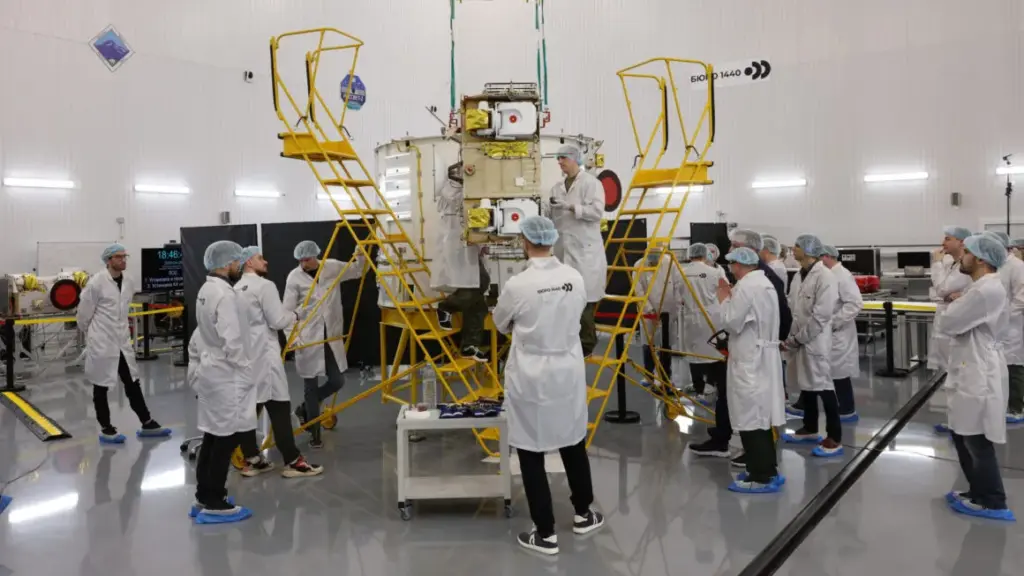
  • ✇Euromaidan Press
  • Ukraine is testing four new drone interceptors as Russia floods its skies with faster Gerans 
    Ukraine has four potential interceptor systems that could shoot down Russia’s increasingly common jet-powered Geran attack drones, Ukrainian Defense Minister Yevhen Khmara said on 30 August, according to Suspilne. Russia has sharply increased its use of the faster drones against Ukrainian cities, causing major damage to civilian infrastructure and many civilian casualties. The attacks are putting near-unprecedented strain on Ukraine’s air defenses. All four intercept
     

Ukraine is testing four new drone interceptors as Russia floods its skies with faster Gerans 

30 août 2026 à 15:49

Russia’s new “Geran-4 Seeker” Shahed variant uses machine-vision AI for targeting. Source: Dyki Shershni

Ukraine has four potential interceptor systems that could shoot down Russia’s increasingly common jet-powered Geran attack drones, Ukrainian Defense Minister Yevhen Khmara said on 30 August, according to Suspilne.

Russia has sharply increased its use of the faster drones against Ukrainian cities, causing major damage to civilian infrastructure and many civilian casualties. The attacks are putting near-unprecedented strain on Ukraine’s air defenses.

All four interceptor systems have undergone field testing, Khmara said. Ukraine now aims to bring them to the required level as quickly as possible and scale production to thousands of units.

“The search for countermeasures against jet-powered drones continues,” Khmara told journalists, according to Suspilne. “There are already four potential interceptors that can shoot down jet-powered ‘Shaheds.’ Field tests have already been conducted on them.”

Russia is rapidly expanding Geran attacks

Russia's Gerans are jet-powered adaptations of the Iranian-designed Shahed attack drones that Russia has produced domestically throughout the full-scale war. The faster Geran variants give Ukrainian air defenses less time to detect and engage them.

Ukrainian defense technology adviser Serhii “Flash” Beskrestnov said Russia used more than 2,500 jet-powered Gerans against Ukraine in August, up from about 1,500 in July.

He also said the drones are being launched against Ukraine almost directly from Russian factories, highlighting the rapid expansion of their production and use.

Zelenskyy calls for faster production

Ukrainian President Volodymyr Zelenskyy has made countering the Gerans a priority as Russia sustains repeated attacks on Ukrainian cities.

At a 28 August meeting of Ukraine’s military leadership, Zelenskyy said the country needed to maximize domestic weapons production, with the immediate focus on defending against jet-powered Gerans and increasing Ukraine’s own long-range strikes against Russia.

“[The] main thing is our defense against jet-powered ‘Shaheds,’” Zelenskyy said in his evening address.

He said Russia had adopted a tactic of keeping Kyiv and other cities under repeated air raid alerts, with Gerans reaching the capital as well as cities including Kharkiv and Zaporizhzhia.

Rescue workers respond to the site of a Russian strike on an apartment building in Kyiv, 30 August 2026. Photo: Ukraine's State Emergency Service
Explore further

Four days of Russian attacks keep Kyiv under near-constant fire. Ukraine is struggling to defend its skies

“All our means of countering [them] are already being used,” Zelenskyy said, adding that Ukraine needs a significant acceleration in production of interceptors specifically designed for the jet-powered drones.

Khmara said the four potential interceptors are now at the field-testing stage, with the next step being to bring them into production at a scale of thousands of units.

For Ukraine, that scale is critical. The country must defend a large territory against increasingly large Russian drone barrages while also preserving limited air-defense resources for ballistic and other missiles that require more advanced interceptors.

  • ✇Euromaidan Press
  • Russia has burned millions of Ukrainian books, striking at the infrastructure of Ukrainian culture
    Another Russian strike has destroyed tens of thousands of Ukrainian books around Kyiv, adding to a summer of attacks that has wiped out millions of copies and damaged the warehouses, printing plants and markets that keep Ukraine’s publishing industry running. Since Russia’s full-scale invasion began in 2022, Ukrainian publishers, printers, bookstores, warehouses and other parts of the literature industry have repeatedly been hit by Russian attacks.  The destruction h
     

Russia has burned millions of Ukrainian books, striking at the infrastructure of Ukrainian culture

30 août 2026 à 12:28

A fire burns at a Nova Poshta fulfillment and sorting center in Sviatopetrivske, Kyiv Oblast, after a Russian drone strike on 28 August 2026. More than 60,000 books were destroyed in the attack. Photo: Readeat

Another Russian strike has destroyed tens of thousands of Ukrainian books around Kyiv, adding to a summer of attacks that has wiped out millions of copies and damaged the warehouses, printing plants and markets that keep Ukraine’s publishing industry running.

Since Russia’s full-scale invasion began in 2022, Ukrainian publishers, printers, bookstores, warehouses and other parts of the literature industry have repeatedly been hit by Russian attacks. 

The destruction has drawn comparisons to earlier Russian and Soviet efforts to suppress the Ukrainian language, culture and national identity, with publishers and cultural figures warning that the current attacks are damaging not only businesses and infrastructure but the means through which Ukrainian culture is produced and preserved.

The latest loss came on 28 August, when a Russian drone struck a Nova Post fulfillment and sorting center in Sviatopetrivske, Kyiv Oblast. More than 60,000 books stored there were destroyed, including books belonging to Ukrainian publishers and retailers such as Vivat, A-BA-BA-HA-LA-MA-HA, Osnovy, Readeat and Book.ua.

The destruction is taking a growing toll on Ukrainian culture

Nova Post director Yevhen Tafiichuk said the strike destroyed the company's most modern robotic fulfillment center, along with books from several publishers and stores. He said the company is working with affected partners to compensate their losses and is moving toward a decentralized fulfillment system to reduce the risk of losing large inventories in a single strike.

“For centuries, the enemy has tried to destroy the Ukrainian language, culture and memory. Once, it burned libraries and banned printing; today, it launches missiles at printing plants and warehouses filled with books,” Tafiichuk said. 

The latest destruction comes after the Ukrainian publishing industry estimated that Russian attacks had already destroyed about 13 million books in July and August – nearly a third of the number of books Ukrainian publishers printed during all of 2025.

The burnt books in Kharkiv may 2024
Explore further

Russia has burned 13 million Ukrainian books in three months, nearly third of everything country printed in 2025

Another warehouse full of books goes up in flames

The Sviatopetrivske strike hit a logistics facility rather than a publishing house itself, but the consequences spread across much of the book market.

Readeat founder Dmytro Feliksov said more than 60,000 physical books were destroyed and estimated his company's losses at more than UAH 23 million. The warehouse held stock for several publishers and booksellers.

Vivat CEO Yuliia Orlova said the publisher also lost books stored at the Kyiv warehouse in the attack. The company had already begun moving some print runs to other parts of Ukraine, including Lviv, after earlier Russian strikes destroyed publishing infrastructure. But many new releases and books by Ukrainian authors remained in Kyiv.

The same attack destroyed a warehouse used by A-BA-BA-HA-LA-MA-HA to fulfill direct orders. The losses came as publishers were already trying to spread their inventories across multiple locations to reduce the risk posed by Russian strikes.

Millions of books destroyed across Ukraine, publishers hit again and again

On 1 August, a Russian strike on the warehouses of RNK-Ranok destroyed nearly 8 million books, including hundreds of thousands of school textbooks. The Ukrainian Book Institute said the loss from that strike alone was equivalent to about 30% of the country's annual book production.

A separate Russian strike on 19 July destroyed the Konvi printing facility and about 250,000 books belonging to Knyholav, along with print runs and materials belonging to numerous other publishers.

BookChef has suffered some of the largest losses around Kyiv. A Russian strike in July destroyed about 800,000 books at its main warehouse. A second strike in August hit a backup warehouse opened after the first loss, destroying more than 100,000 additional books, Interfax-Ukraine reported.

The attacks have also damaged publishing offices and warehouses. On 16 August, Russian strikes near Kyiv’s Pochaina metro station damaged the offices and warehouses of BookChef and RM, including areas where books were stored.

Kyiv’s Pochaina market also burned

The damage is not limited to modern distribution centers.

On 16 August, a Russian strike set fire to Kyiv’s Pochaina book market, one of the capital’s best-known places to buy new, used and second-hand books. Much of the market burned, with the fire covering more than 2,000 square meters of commercial space.

The market, formerly known as Petrivka, had operated for about 30 years and was a major hub for second-hand books and other goods. Dozens of thousands of books were destroyed, according to local reporting.

Kyiv’s Pochaina book market was hit again during Russia’s overnight missile attack, with rows of stalls burned and books damaged.

“Pochaina Book Market is finished. Three missiles hit the stalls. This time, the story is over,” Oleksandr Krasovytskyi, CEO of Folio publishing… pic.twitter.com/fum3LNN5Dt

— Euromaidan Press (@EuromaidanPress) August 16, 2026

The destruction was extensive enough that 60–70% of the market's commercial space was lost. The surviving Bukinist section began reopening later in August, with booksellers returning to trade where their stock had survived, RBC reported.

The market's destruction also meant the loss of a part of Kyiv's book culture that cannot simply be replaced by reprinting new editions. Second-hand books, older editions and used collections had been traded there for generations.

Three firefighters work amid flames and thick smoke at night.
Explore further

Kyiv’s largest book market hit by Russian missiles

The losses are hitting an already fragile industry

The Ukrainian publishing sector had been growing before Russia's latest attacks, helped in part by rising demand for Ukrainian-language books during the full-scale invasion.

But publishers now face the repeated cost of replacing destroyed print runs, warehouses and equipment while also trying to keep books moving to stores and readers.

Olesia Ostrovska-Liuta, director general of Mystetskyi Arsenal, said the Ukrainian book industry had only recently begun to grow, making the latest losses especially painful.

“Losses are accumulating, while the tools to minimize them are being built extremely slowly,” she said. “Culture will not disappear, but it will once again be drained of its strength.”

Publishers seek help to rebuild and protect a supply chain under attack

The Ukrainian Publishing Association has called for additional support, including war-risk insurance for book stocks, affordable financing to rebuild printing capacity and the restoration of state purchases of books for libraries.

The Ukrainian Book Institute has also appealed for international support for the publishing sector, saying Russia has systematically targeted publishing houses, bookstores, printing facilities and warehouses since the start of the full-scale invasion.

For publishers, the latest strikes show that moving books from a printer to a reader has itself become a wartime vulnerability. A single warehouse can contain the output of dozens of publishers, and losing it can erase months of work and leave books unavailable even when the companies themselves survive.

Nova Post says it is responding by distributing inventory across more locations rather than relying on large centralized facilities. The strategy may help reduce future losses, but it also reflects how deeply Russia’s ongoing attacks have altered the basic infrastructure through which Ukrainians produce, store and buy books.

Ukraine strikes Russia’s second-largest oil refinery again in major overnight attack, also hitting airfield and drone launch site

30 août 2026 à 09:12

Fire reported at Russia's Kirishi/KINEF oil refinery following an overnight Ukrainian drone attack, 29-30 August 2026. Photo: Exilenova+

Ukraine’s Defense Forces struck three Russian military and energy targets overnight on 29-30 August, including a major oil refinery in Leningrad Oblast, a site used to store and launch attack drones in Rostov Oblast, and an airfield in Krasnodar Krai, Ukraine’s General Staff said.

Ukraine has increasingly targeted energy and military infrastructure inside Russia as part of an effort to disrupt the resources supporting Moscow’s war effort. Russia’s military relies heavily on fuel and other petroleum products produced at major refineries, while oil exports provide revenue that helps fund the war. 

The General Staff said the strikes caused fires at all three sites. The extent of the damage is still being assessed.

Ukraine strikes one of Russia’s largest oil refineries

In Kirishi, Leningrad Oblast, Ukrainian forces struck the Kirishi oil refinery, also known as KINEF, Russia’s 2nd largest oil refinery.

The refinery has an annual processing capacity of about 20 million metric tons of crude oil and produces motor fuels, aviation fuel, diesel and other petroleum products, according to the General Staff. It also supplies fuel for Russia’s military.

KINEF has been targeted repeatedly since Russia launched its full-scale invasion. The latest strike is at least the sixth reported Ukrainian attack on the refinery.

Ukraine struck Russia’s second-largest oil refinery, KINEF in Leningrad Oblast, overnight, causing a fire at the site.

The refinery has been repeatedly targeted by Ukraine since Russia launched its full-scale invasion.

📹Supernova+ pic.twitter.com/fYoNvXCsXV

— Euromaidan Press (@EuromaidanPress) August 30, 2026

Russian authorities acknowledged damage in Kirishi following the overnight attack, according to Russian OSINT outlet ASTRA. Leningrad Oblast Governor Alexander Drozdenko claimed several residential buildings were damaged, with windows blown out in some apartments, while a fire broke out in the city’s industrial zone. He said the industrial fire and fires from drone debris had been extinguished.

ASTRA reported that videos from residents showed a large fire at what appeared to be the KINEF refinery. ASTRA also geolocated footage of an explosion at the upper floors of an apartment building in Kirishi, where residents reported hearing air defense activity. The footage has not been independently verified.

Drone launch site struck in Rostov Oblast

Ukrainian forces also struck a site in Millerovo, Rostov Oblast, used to store, prepare and launch attack drones.

The General Staff said a fire was reported at the facility following the strike.

Millerovo has been repeatedly used by Russian forces as a base for launching attacks against Ukraine. Striking drone infrastructure can disrupt the storage, preparation and deployment of the weapons used in Russia’s ongoing aerial campaign.

Smoke rises from a Russian Bastion missile system position in occupied Crimea after a Ukrainian strike on 16 August 2026. Screenshot from video: Ukrainian Navy
Explore further

One alternative to air defense: Ukraine strikes Russian Bastion system used to attack Ukrainian cities from Crimea

Fire reported at Yeysk airfield

A Ukrainian strike also hit Yeysk airfield in Russia’s Krasnodar Krai, according to the General Staff.

A fire was reported at the site after the strike. The General Staff did not provide details on which facilities or equipment at the airfield were damaged.

The three strikes were part of a broader Ukrainian campaign against Russian military infrastructure and the energy facilities supporting Russia’s war effort.

Russia’s Defense Ministry claimed that its air defenses intercepted or destroyed 494 fixed-wing drones overnight across Russia and occupied Ukrainian territory. It said the drones were detected over Leningrad, Bryansk, Belgorod, Kaluga, Kursk, Tver, Smolensk, Oryol, Pskov, Tula, Novgorod and Rostov oblasts, as well as Krasnodar Krai, Moscow, occupied Crimea and the Azov and Black seas.

The General Staff said operations against key Russian targets are continuing, while the extent of the damage from the overnight strikes is still being determined.

  • ✇Euromaidan Press
  • Four days of Russian attacks keep Kyiv under near-constant fire. Ukraine is struggling to defend its skies
    Russia has kept Kyiv and surrounding areas under near-continuous attack for four days, repeatedly sending drones and missiles toward the capital and other Ukrainian regions. The prolonged attacks have kept air defense crews and emergency workers operating almost constantly, while disrupting civilian life across Kyiv and the surrounding oblast. Ukrainian President Volodymyr Zelenskyy said on 30 August that Russia had launched nearly 2,000 attack drones, more than 1,60
     

Four days of Russian attacks keep Kyiv under near-constant fire. Ukraine is struggling to defend its skies

30 août 2026 à 08:05

Rescue workers respond to the site of a Russian strike on an apartment building in Kyiv, 30 August 2026. Photo: Ukraine's State Emergency Service

Russia has kept Kyiv and surrounding areas under near-continuous attack for four days, repeatedly sending drones and missiles toward the capital and other Ukrainian regions.

The prolonged attacks have kept air defense crews and emergency workers operating almost constantly, while disrupting civilian life across Kyiv and the surrounding oblast.

Ukrainian President Volodymyr Zelenskyy said on 30 August that Russia had launched nearly 2,000 attack drones, more than 1,600 guided aerial bombs and 31 missiles of various types against Ukraine over the past week. The missiles included North Korean ballistic weapons.

The current attacks follow months of increasingly heavy Russian aerial strikes against Kyiv and other Ukrainian cities. Russia has ramped up its use of ballistic missiles while also expanding its use of newer jet-powered Geran drones, which have repeatedly targeted the capital and surrounding areas.

Four days of attacks

Kyiv and Kyiv Oblast have been under repeated attack since 27 August, with waves of drones arriving throughout the day and night.

The attacks have hit residential buildings, warehouses, businesses and other civilian infrastructure. They have also repeatedly forced firefighters and rescue crews to stop their work and move to safety before returning once the immediate threat passes.

At least three people were injured in a Russian overnight attack on Kyiv, as the capital entered a fourth consecutive day of near-continuous Russian attacks.

In the Obolonskyi district, a strike caused a fire from the second to fifth floors of a 12-story residential building.… pic.twitter.com/rTT5TZvNEA

— Euromaidan Press (@EuromaidanPress) August 30, 2026

In Myla, Kyiv Oblast, rescue workers are still clearing the aftermath of the 28 August attack that killed 38 people, injured 20 and left four people missing.

Rescue crews continue working in Myla, Kyiv Oblast, clearing debris, extinguishing fires, and searching for explosive remnants after Russia’s deadly attack on 28 August.

The attack killed 38 people and injured 20.

Bomb disposal teams are checking roads and nearby areas for… pic.twitter.com/JBL2QOhe66

— Euromaidan Press (@EuromaidanPress) August 30, 2026

The continuing attacks have also affected movement around the capital. Air raid alerts, damaged infrastructure and the threat of further strikes have disrupted traffic and travel both within Kyiv and on routes connecting the city with the surrounding region.

Aftermath of a Russian strike on Kyiv Oblast, 28 August 2026. Photo: Ukraine's State Emergency Service
Explore further

Kyiv has been under attack for 2 days nonstop. Russia is targeting the capital’s civilian supply chains

Air defenses under pressure

The attacks are putting Ukraine's air defense network under some of its heaviest pressure since the full-scale invasion began.

Ukraine has to defend a vast area against increasingly large drone barrages while also dealing with ballistic and other missiles that are more difficult to intercept.

Ukraine relies on US-made Patriot systems to counter ballistic missiles, but limited stocks of Patriot interceptors and insufficient deliveries from partners have left a critical gap in its air defenses, which Russia is now exploiting to cause major damage to civilian infrastructure and greater civilian casualties. 

The repeated use of jet-powered drones adds another challenge. Russia has increasingly deployed these faster Geran drones, adapted from the Iranian Shahed design, in attacks on Kyiv and other Ukrainian cities, including against civilian infrastructure.

Zelenskyy said the government’s priority now is to provide greater protection against the Russian attacks.

Attacks continue across Ukraine

The pressure is not limited to Kyiv.

Zelenskyy said Russian forces are carrying out attacks virtually around the clock against frontline and border communities, including Nikopol, Kramatorsk, Kherson and communities in Kharkiv, Zaporizhzhia, Dnipropetrovsk, Donetsk and Sumy oblasts.

Russian forces attacked Donetsk Oblast 30 times on 30 August, damaging residential areas and causing four fires, Ukraine’s State Emergency Service reported.

In Sloviansk, Russian shelling set balconies and apartments on fire on the fifth through seventh floors of a nine-story… pic.twitter.com/12GbUDsRpL

— Euromaidan Press (@EuromaidanPress) August 30, 2026

Across these areas, the attacks are keeping emergency services active while damaging homes, businesses and civilian infrastructure.

In Kyiv, meanwhile, the fourth day of attacks has left residents dealing with repeated air raid alerts, disrupted movement and the continuing risk of new strikes even as crews are still clearing the damage from previous ones.

Ukrainian ground-robot maker has moved into air: Ratel’s first strike drone flies 30 kilometers on Starlink link

30 août 2026 à 01:14

A Ratel kamikaze drone. Source: Ratel

A Ukrainian maker known for ground robots has built a flying attack drone. Ratel Robotics has unveiled the Ratel K1, a strike FPV drone for ground targets with a tactical range of up to 30 kilometers, according to Defender Media.

The K1 will likely join the number of weapons that clear out Russian logistics. The campaign scales medium-range drone strikes against Russian supply convoys, depots, command nodes, and air defenses 20 to 200 kilometers behind the front. On 29 May, Ukrainian forces destroyed 483 Russian vehicles in a single day, an all-time record that pushed cumulative Russian motor-transport losses past 100,000.

A 30-kilometer FPV sits at the near edge of that fight, reaching supply routes and second-line positions that shorter drones cannot.

The company came from ground robots

Ratel Robotics is a Ukrainian ground robotics maker whose fielded line includes logistics, casualty evacuation, mining, and demining platforms. The K1 is its move into aerial strike, and the company brings a wartime production record to it rather than starting from scratch.

Ratel's ground systems took part in the military parade in Kyiv on 24 August, marking Ukraine's 35th Independence Day, the company said. The firm has also joined a campaign, with the National WWII Museum and the Tallboy brand, to raise nearly $447,000 for a planned museum of modern military technologies, according to Ratel.

The specifications come from the maker

The K1 is built on a 22-inch frame, reaches a top speed of 75 kilometers per hour, remains airborne for up to 35 minutes, and carries up to 2 kilograms.

The drone uses a digital video system and a daytime camera and is controlled via a satellite link through Starlink. Per Brave1 Market, it has no built-in autonomous navigation, no auto-takeoff, and no automatic return-to-home landing.

The manufacturer is currently working on the next iteration of the Ratel K1, refining the system based on test results and operational experience.

  • ✇Euromaidan Press
  • Russo-Ukrainian war, day 1648: Russia hunts Ukraine’s grain trains
    Exclusives Ukraine has five ways to stop Russia's Iskanders. Only one arrives before the strikes on the grid begin. It means finding a launcher in a forest during the twenty minutes it spends above ground. A rare Ukrainian Bulat tank turned up in a brigade that never had them. Ukraine wanted 400 of the up-armored T-64s and built about 80. Nobody can say how the 57th Motorized Brigade got one. Russia drove most ships from Ukraine's ports. Now its drones are huntin
     

Russo-Ukrainian war, day 1648: Russia hunts Ukraine’s grain trains

30 août 2026 à 00:31

Russo-Ukrainian war (daily review)

Exclusives

Ukraine has five ways to stop Russia's Iskanders. Only one arrives before the strikes on the grid begin. It means finding a launcher in a forest during the twenty minutes it spends above ground.
A rare Ukrainian Bulat tank turned up in a brigade that never had them. Ukraine wanted 400 of the up-armored T-64s and built about 80. Nobody can say how the 57th Motorized Brigade got one.
Russia drove most ships from Ukraine's ports. Now its drones are hunting the trains. By late August, Ukraine had exported only a third of its normal volume of farm goods. Russia damaged more than 250 locomotives in six months.

Intelligence and technology

"We have surprises for our neighbors": Ukraine's aviation commander says new aircraft developments are essentially finished and already in testing. Ukraine has already rebuilt what it flies. Its crews turned the 1970s-era Su-24 bomber into a launcher for SCALP cruise missiles.

Ukraine chooses three Western fighters to build its air force around. One of them can fly again from stretch of road in 15 to 20 minutes. The Air Force settled on them after weighing cost, logistics, and repair speed.

Ukraine's intelligence: Russia is running its Nepal, Cuba, Kenya, and India recruitment scheme in Indonesia now. Ukraine's foreign intelligence says it holds documents on at least eight recruited Indonesian citizens.

International

After CIA head's visit to Moscow, Poland's PM warns Russia is preparing to escalate war. He puts critical window at seven or eight months. Poland's prime minister says there are signals of serious Russian preparation.

Humanitarian and social impact

Russia launches third attack on Ukraine's largest Danube port this month, during peak of wheat harvest. Five trucks loaded with grain were destroyed and three more damaged in the Izmail district.

New developments

What does Ukraine's new defense minister wear on his wrist? He did not mention it until reporter asked. Yevhenii Khmara's bracelet carries the names of fallen comrades, a US magazine reported.

Read our earlier daily review here.

Reçu — 29 août 2026 Euromaidan Press

“We have surprises for our neighbors”: Ukraine’s aviation commander says new aircraft developments are essentially finished and already in testing

29 août 2026 à 15:37

A Ukrainian Sukhoi Su-27.

The Ukrainian military is completing work on new aviation developments. They are essentially finished and already in testing, and the aircraft carrying them will enter combat, aviation commander Colonel Oleksandr Diakiv said in an Air Force Command segment.

Ukraine has already done with jets built decades ago. Its crews turned the 1970s-era Su-24 bomber into a launcher for British-French Storm Shadow and SCALP cruise missiles, which carry a 450-kilogram warhead to about 250 kilometers, and used them to strike a Russian command post in occupied Luhansk Oblast on 25 May.

A commander whose air force already remade its Soviet fleet this way is probably not making an empty promise when he says more is coming.

The commander hints at what is coming

Ukraine's aircraft are not done gaining capability, Diakiv said. Standing in front of his own aircraft, he said it would still prove itself.

"We have ideas, we have developments, and we are working on this. We have surprises for our neighbors," Diakiv said.

Part of the work is already in testing, and he tied it directly to combat.

"They are starting to work, they are going through their trials. And it is not for nothing that I say these aircraft will enter combat. Let it be a surprise," he noted.

The old jets already took on new roles

The track record runs across the fleet. The MiG-29 and Su-27 now serve as multirole fighters that strike both air and ground targets, Diakiv said, a shift Ukraine achieved by mastering new weapon types during the full-scale war.

That adaptation is documented. US contractors helped Ukrainian crews modify Su-27s and MiG-29s to fire American AGM-88 HARM anti-radiation missiles at Russian air defenses, and the jets also drop Western precision glide bombs.

The war has no template

Ukrainian aviation adapts constantly to Russian air defenses, fighters, and electronic warfare, Diakiv said. Pilots complete missions and return to base.

This kind of prolonged, high-technology war, fought across many domains, has no precedent, he added, and Ukraine's combat experience is becoming the basis for further developing its aviation.

  • ✇Euromaidan Press
  • Russia launches third attack on Ukraine’s largest Danube port this month, during peak of wheat harvest
    A Russian strike on southern Odesa Oblast killed one person overnight and set grain trucks on fire. Five trucks loaded with grain were destroyed and three more damaged, with one person killed and three injured, the head of the Odesa Regional Military Administration, Oleh Kiper, said. The strike hit the Izmail district, home to Ukraine's largest Danube port. The port became a maritime lifeline after Russia's 2022 Black Sea blockade, carrying the overflow whenever the sea
     

Russia launches third attack on Ukraine’s largest Danube port this month, during peak of wheat harvest

29 août 2026 à 15:22

ukraine grain

A Russian strike on southern Odesa Oblast killed one person overnight and set grain trucks on fire. Five trucks loaded with grain were destroyed and three more damaged, with one person killed and three injured, the head of the Odesa Regional Military Administration, Oleh Kiper, said.

The strike hit the Izmail district, home to Ukraine's largest Danube port. The port became a maritime lifeline after Russia's 2022 Black Sea blockade, carrying the overflow whenever the sea lanes are constrained, National Security Journal reported. The attack is part of a campaign against the food supply.

Ukraine is one of the world's largest suppliers of wheat, maize, and sunflower, so the strikes register far beyond its borders, in the import-dependent countries that buy its grain.

Fire destroyed eight trucks

The attack set eight cargo trucks and dry grass nearby alight, the press service of the State Emergency Service in Odesa Oblast reported. Rescuers have since put out the fires.

"Unfortunately, a person was killed in the attack, and three more were injured," the service said.

The strike hit transport infrastructure

Russia struck the Izmail district overnight on 29 August, damaging transport infrastructure, the Izmail District State Administration reported. The district sits on the Danube close to the Romanian border.

"There are casualties. Sadly, a person has been killed. The injured have been given the necessary help. Representatives of the security structures and medical workers are working at the scene," the administration said.

The Danube corridor is a standing target

The strike fits a pattern. Russia hit Izmail's port infrastructure on 13 August, cutting power in parts of the city, and struck it again days later, damaging a Togo-flagged civilian vessel. The attacks come during Ukraine's peak wheat harvest, expected at around 60 million metric tons this year, close to the 2025 crop. Farmers need the export revenue now to finance next year's sowing, and storage is filling as grain goes unshipped.

Russia's Defense Ministry has described its Izmail strikes as hitting berthing terminals for military cargo and depots for Western-supplied weapons. The trucks burned in this strike were carrying grain.

After CIA head’s visit to Moscow, Poland’s PM warns Russia is preparing to escalate war. He puts critical window at seven or eight months

29 août 2026 à 10:50

tusk polish prime minister

Poland's prime minister says the next seven or eight months could decide the region's security. Donald Tusk said there are signs of serious Russian preparations to escalate tensions, both in the war against Ukraine and across the region, according to Ukrinform.

Tusk's warning follows weeks of similar alarms from the countries on NATO's eastern edge. Lithuanian President Gitanas Nausėda said on 15 July that intelligence pointed to possible Russian strikes on critical infrastructure in the Baltic states or Poland, according to Defense News.

Poland is the main transit route for Western military aid to Ukraine, which makes its security inseparable from Ukraine's. Tusk himself said in July that Russia could be ready for a confrontation with Europe as early as 2027.

The CIA visit was not the whole of it

At the meeting, reporters asked Tusk about the recent visit of CIA Director John Ratcliffe to Moscow. Poland is in constant contact with the agency's leadership and was not caught off guard by news of Ratcliffe's activity, he said.

Some security information must stay confidential, Tusk added, but that does not mean the public should be deprived of information about the most important threats.

The signals go beyond one trip

The matter is no longer only the CIA director's visit to Moscow, Tusk said. Over recent weeks, numerous public signals have pointed to Russian preparation for escalation.

Russia is very seriously preparing to escalate tensions, both in the war with Ukraine and across the whole region, and that for Russia this fall and winter are meant to be key, he claimed.

Moscow states its aims openly

Some Russian figures have described the war's purpose in plain terms. This week, State Duma vice-speaker Pyotr Tolstoy said Russia views Ukraine as a "territory" that would allow Moscow to export its energy to Europe via a short route, not as a sovereign country.

Tolstoy, whom the EU sanctioned in 2022 as a central figure in Russian state propaganda, also called for massed bombing of Ukrainian cities to break the population into surrender. His remarks are one more public signal of the kind Tusk pointed to.

  • ✇Euromaidan Press
  • What does Ukraine’s new defense minister wear on his wrist? He did not mention it until reporter asked
    Ukraine's new defense minister wears his war on his wrist. Yevhenii Khmara's bracelet carries, on each of its chains, the engraved name of a comrade who did not come back from the war, The National Interest reported. Khmara took over the Defense Ministry on 19 August, replacing Mykhailo Fedorov, whose July dismissal set off nationwide protests. He came to the job from the SBU, Ukraine's Security Service, which he had led for seven months when Ukraine's campaign against
     

What does Ukraine’s new defense minister wear on his wrist? He did not mention it until reporter asked

29 août 2026 à 10:29

Zelenskyy Khmara SBU

Ukraine's new defense minister wears his war on his wrist. Yevhenii Khmara's bracelet carries, on each of its chains, the engraved name of a comrade who did not come back from the war, The National Interest reported.

Khmara took over the Defense Ministry on 19 August, replacing Mykhailo Fedorov, whose July dismissal set off nationwide protests. He came to the job from the SBU, Ukraine's Security Service, which he had led for seven months when Ukraine's campaign against Russian oil refining reached its widest scale.

He did not volunteer the story

Khmara did not explain the bracelet until a reporter asked him about it over dinner in Kyiv this month. The names now travel with him into the meetings where decisions about Ukraine's defense are made.

He ran the SBU during the oil campaign

Alpha, the SBU's special operations unit, is a tiny share of Ukraine's armed forces, yet the service's own accounting credits it with an outsized share of the damage inflicted on Russia, up to 20 percent of all enemy infantry losses.

More telling is what happened to Russian oil during his seven months in charge of the service. Ukraine's General Staff now estimates that nearly 43 percent of Russia's refining capacity has been knocked out. To a large extent, this is the result of the campaign Khmara helped oversee.

Khmara also developed a doctrine of ruthless cost asymmetry: strike operations designed to cost roughly 2 percent of the economic damage they inflict, targeting not individual facilities but critical nodes within the system.

Khmara insisted that part of the staff of the previous minister stayed

Earlier, Khmara has proposed that the core of the former Defense Ministry team remain in their positions. In particular, this concerns specialists responsible for procurement reform.

Mstyslav Banik, who served as a deputy to Fedorov, confirmed that he was staying on under the newly appointed defense minister. He led a central part of the ministry's modernization and is responsible for implementing the defense procurement reform.

Ukraine chooses three Western fighters to build its air force around. One of them can fly again from stretch of road in 15 to 20 minutes

29 août 2026 à 09:47

dassault says it’s ready send rafales ukraine — kyiv asks · post rafale fighter jet aviation da00044906_s french aircraft manufacturer has confirmed deliver jets requests le journal du dimanche reports

Ukraine has decided which Western fighters it will build its air force around. The Air Force settled on three platforms, the Swedish JAS 39 Gripen, the French Rafale, and the American F-16, aviation commander Colonel Oleksandr Diakiv said in a segment by the Air Force Command.

Ukraine entered the full-scale war flying Soviet-era jets and has spent three years assembling a Western fleet. F-16s arrived in 2024 and now fly combat missions. France has delivered Mirage 2000s, and Sweden has pledged to deliver Gripen. The choice narrows Ukraine's field to three types it can sustain, arm, and repair at war tempo.

The choice weighed more than performance

Ukraine assessed every platform that might suit it, Diakiv said, and concluded it could operate three with maximum effectiveness. The decision turned on aircraft and operating costs, weapons, logistics, parts availability, what Ukrainian infrastructure can support, and the speed of repairs and battle-damage recovery.

"We went through all the platforms that were possibly acceptable for us. And we came to the conclusion that Ukraine can use three platforms with maximum effectiveness," Diakiv explained.

The F-16 already operates in Ukraine, so the Air Force has both the aircraft and trained pilots, technicians, and specialists who know its quirks. That experience will speed the adoption of the other Western types, according to Diakiv.

The Gripen suits a country under fire

Also, Diakiv singled out the Gripen, a multirole fighter that can strike air and ground targets and carries Swedish and other European weapons. Its main advantage is that it demands little infrastructure.

The jet can operate from unprepared surfaces and stretches of road and requires minimal ground crew to prepare for another flight in 15 to 20 minutes, according to the commander.

The aircraft is only part of the system

Taking on a new platform is not a matter of handing over jets, Diakiv believes. Weapons, ground support, parts, logistics, and trained people all have to arrive together, and Ukrainian pilots, engineers, and logistics specialists are now training abroad.

"You can buy a plane, you can buy a missile, you can buy a bomb, but you cannot buy experience," Diakiv said.

That combat experience, according to the colonel, is increasingly shaping the aviation coalition, with allies helping Ukraine realize ideas drawn from its own fighting rather than only offering finished solutions.

  • ✇Euromaidan Press
  • Ukraine has five ways to stop Russia’s Iskanders. Only one arrives before the strikes on the grid begin
    Desperately short of missiles for its roughly 10 Patriot air defense batteries, Ukraine has just a few options as colder weather looms—and the Russians prepare to fire even more hard-to-intercept Iskander ballistic missiles at Ukrainian cities and power plants. The Iskander is a unique threat, and Ukraine is uniquely vulnerable. The Patriot is one of just a few systems that stands any chance of hitting an incoming Iskander as the Russian missile barrels in at six or sev
     

Ukraine has five ways to stop Russia’s Iskanders. Only one arrives before the strikes on the grid begin

Par : David Axe
29 août 2026 à 09:34

A Patriot air defense missile launcher. Photo: South Korean defense ministry.

Desperately short of missiles for its roughly 10 Patriot air defense batteries, Ukraine has just a few options as colder weather looms—and the Russians prepare to fire even more hard-to-intercept Iskander ballistic missiles at Ukrainian cities and power plants.

The Iskander is a unique threat, and Ukraine is uniquely vulnerable. The Patriot is one of just a few systems that stands any chance of hitting an incoming Iskander as the Russian missile barrels in at six or seven times the speed of sound. And the Patriot is, or was, the most plentiful anti-ballistic interceptor. It usually takes two or three of them to bring down one Iskander.

Then came Iran. Coalition forces fired an average of 225 interceptors a day during the first four days of the war against Lockheed Martin's production rate of 1.7 a day, the Foreign Policy Research Institute calculated—a 132-to-one gap between use and manufacture. Lockheed built 620 Patriots in all of 2025. And every Patriot the Americans fire at an Iranian missile is a Patriot Ukraine won't be able to fire at a Russian missile.

Specifications of Russia's Iskander-M ballistic missile system
Chart: Euromaidan Press

Ukrainian batteries have so few missiles that air defenders can do little more than watch as the 3.8-ton Iskanders and other heavy Russian missiles barrel in. "This is a really heartbreaking sight when you have equipment but you're not able to intercept any missile," Dmytro, the chief engineer of Ukraine's Patriot fleet, told CNN. "Ballistic missiles are flying over your head and you are not able to do anything with it, and behind you, there are civilians." He first ran out of interceptors in December 2025.

Across the 39-day campaign, CSIS estimates 1,060 to 1,430 Patriots were expended—more than half the US prewar inventory. At Lockheed's rate, replacing them takes three years.

And a Patriot cannot be conjured. A single PAC-3 MSE takes about 24 months to build, its solid rocket motor 30. In January the Pentagon signed a seven-year deal for Lockheed to reach 2,000 Patriots a year—by 2030, by which point the Russo-Ukrainian war will be eight years old. Far too late to save Ukraine from the coming hard winter.

The Ukrainian air force has two other batteries that can intercept ballistic missiles, both French-Italian SAMP/Ts, and they are short of missiles too. France agreed in November to send eight next-generation SAMP/Ts over two years—a schedule, not a stockpile.

Transporter-loader vehicle of Russia's Iskander ballistic missile system
Transporter-loader vehicle 9T250 of Russia's Iskander missile system. Photo via Militarnyi.

Winter looms

The interceptor crisis will only worsen as winter looms and the supply of electricity for residential heating once again becomes a matter of life and death for millions of Ukrainians. Iskanders "could hit all significant non-nuclear electricity generation," Jakub Janovsky, a Czech military analyst, explained to Euromaidan Press. The Kremlin has cut production of several other missile types—including, as Euromaidan Press reported this month, the Kinzhal—to pour more into the Iskander.

"I wanted to secure 300 missiles for the Patriot systems as part of the winter package. The request from our Air Force is for 360," Ukrainian President Volodymyr Zelenskyy told journalists on 23 August, in remarks posted to X. "But when only 600 are produced a year, 360 is not easy to obtain." He has asked Washington for 5% or 10% of the US stockpile, and says Ukraine will pay. By his own account it holds about 1%.

Russia could have up to 1,300 ballistic missiles a year. Right now, they have 600–630. We have an approximate understanding of the volume they are counting on from today and through the end of winter. Roughly speaking, they could have 100 ballistic missiles a month. But they are…

— Volodymyr Zelenskyy / Володимир Зеленський (@ZelenskyyUa) August 23, 2026

What are Ukraine's non-Patriot options?

Its own ballistic interceptor

Frantic for air defenses, Ukraine is developing its own. In May, Kyiv munitions-maker Fire Point unveiled Freya, a pan-European anti-ballistic project built around the FP-7.x—a 7.25-m composite interceptor derived from the company's FP-7 surface-to-surface missile. Cued by European radars and guided in the final moments by an infrared seeker from Germany's Diehl Defence, it is meant to cost around $700,000 a shot against a Patriot's $3.8 million.

Fire Point had run at least five tests by the end of July, and co-founder Denys Shtilerman told the Financial Times mass production could begin as early as this month. But the first attempt at intercepting an actual ballistic target is planned for around July 2027—a winter away, and then some. Infrared guidance is also reckoned less reliable than radar, since spoofing can mislead the seeker.

Sanctions on the Iskander supply chain

Sanctions may seem attractive, and there is a narrow chokepoint. Ammonium perchlorate makes up 45% to 52% of the Iskander's solid fuel, and Russia has exactly one plant that makes it—the state-owned ANOSIT—according to the Economic Security Council of Ukraine.

That plant depends on imported sodium chlorate, a chemical Russia lost the ability to make when the USSR collapsed. Russia bought more than $40 million of it in 2024 and the first half of 2025, 61% from China and most of the rest from the Farg'onaazot chemical plant in Uzbekistan. The largest Russian importer, Pioneer Trade, sells on to firms that supply the Iskander's designer, its cluster-warhead maker, and the Votkinsk plant that builds the missile.

But Russia gets around sanctions by buying through third parties. And while the European Union already restricts the export of sodium chlorate to Russia, neither Farg'onaazot nor any of the Russian importers moving it is under blocking sanctions. Even where the bans hold, they just "make things more costly and less convenient," Janovsky told Euromaidan Press. "They can't stop things from happening if the other side really wants to do something."

Map of factories in Russia and Uzbekistan supplying Iskander-M production
Map: Euromaidan Press
Deep strikes against the Iskander supply chain

Ukraine has already tried this one. The main Iskander factory is in Votkinsk, 1,400 km from the border, and on the night of 20–21 February Ukrainian Flamingo cruise missiles hit it. Zelenskyy said every missile launched reached the plant. Satellite imagery confirmed damage to a workshop where Iskanders and Oreshniks are assembled; local officials reported two shops damaged and 11 people injured.

Iskander production rose anyway. So the question is not whether Ukraine can reach Votkinsk—it can, and did—but whether it can launch enough munitions at once to inflict damage that lasts. "Ukraine can try a massive saturation strike with hundreds of drones and dozens of cruise missiles to overwhelm local defenses and wreck enough of the factory complex to at least temporarily disable the production," Janovsky said. That might take essentially the entire Ukrainian deep strike force—and if it failed, Russian industry would get a months-long reprieve.

Kill the launchers before they shoot

This is the hardest one. Russian crews keep their Iskander launchers 140 to 150 km behind the front line, beyond the reach of Ukraine's HIMARS, and move them to firing positions along forest roads—sometimes for five hours—to stay out of satellite view. Once in position, a launcher needs about 16 minutes to send its first missile and four for the second, then it leaves. Twenty minutes, in the open, somewhere in a forest, a hundred and fifty kilometers away.

Ukraine is trying anyway. On 23 August, Zelenskyy said Ukrainian forces had struck an Iskander launcher near the border, and described a dedicated program to hunt the launch sites. Euromaidan Press could not independently verify the strike. He was explicit about why the program exists. "When our anti-ballistic missile stocks are at a minimum, there is another tactic," he said. "It is more difficult, and we developed it."

All options but one arrive after the cold

OptionWhen it delivers
Patriots from alliesUkraine's air force asked for 360; Zelenskyy sought 300 for the winter package. Output is 600 a year, and CSIS says about half of it goes to allies and partners
Lockheed's expansion to 2,000 a yearThat rate is not reached until 2030
Freya / FP-7.x interceptorsFirst attempt at intercepting a ballistic target planned for around July 2027
Sanctions on the supply chainThe chemical is restricted; none of the companies moving it is designated
Deep strike on the Votkinsk factoryTried in February. Workshops hit, production still rose
Hunting the launchersNow—one strike claimed on 23 August, not independently verified
Winter heating season begins in November.

Unable to shoot down all the Iskanders, Ukraine may have no choice but try everything all at once: sanction the suppliers, attack the supply chain, hunt the launchers, and scurry to deploy homemade interceptors. All while continuing to beg for every available Patriot.

Ukrainian Navy CB90 assault boats sailing Black Sea patrol operations coastal defense against Russian drones
Explore further

Ukraine may have just lost its first Swedish assault boat—to a Russian jet drone

  • ✇Euromaidan Press
  • A rare Ukrainian Bulat tank turned up in a brigade that never had them
    The rare T-64BM Bulat tank is now part of the Ukrainian army's 57th Motorized Brigade But the army never had very many T-64BMs, so where did the reassigned tanks come from? It's possible the Ukrainians are poaching training units in order to keep combat units in fighting shape A rare armored vehicle has made a surprise appearance in the Ukrainian order of battle. A recent official photo depicts a three-person, 49-ton T-64BM alongside tankers from the Ukrainian
     

A rare Ukrainian Bulat tank turned up in a brigade that never had them

Par : David Axe
29 août 2026 à 05:02

A T-64BM Bulat in the 57th Motorized Brigade. Photo by the brigade

  • The rare T-64BM Bulat tank is now part of the Ukrainian army's 57th Motorized Brigade
  • But the army never had very many T-64BMs, so where did the reassigned tanks come from?
  • It's possible the Ukrainians are poaching training units in order to keep combat units in fighting shape

A rare armored vehicle has made a surprise appearance in the Ukrainian order of battle. A recent official photo depicts a three-person, 49-ton T-64BM alongside tankers from the Ukrainian army's 57th Motorized Brigade. The brigade holds the line in northern Ukraine around 30 km northwest of Kharkiv.

What's unusual is that the 57th Motorized Brigade was known to operate the lighter T-64BV tank, the standard tank in Ukrainian service. Moreover, the Ukrainian army doesn't have many T-64BMs. There were around 80 in the Ukrainian inventory on the eve of the wider Russian invasion in February 2022, and at the time all but a handful belonged to the 1st Tank Brigade and the 12th Independent Tank Battalion.

Both units had a single T-64BM battalion with around 31 tanks.

In 54 months of hard fighting, the 12th Independent Tank Battalion and 1st Tank Brigade—the latter now reorganized into the less tank-heavy 1st Heavy Mechanized Brigade—has lost around a quarter of their T-64BMs. Even if the units cannibalized a few T-64BMs from training grounds, today they'd both struggle to field a full battalion of T-64BMs.

1⃣Naissance du T-64BM "Bulat"

Le T-64BM "Bulat" ("acier damassé" en ukrainien) fait partie des projets de modernisation du parc de chars soviétiques vieillissant dans les années 1990.
Le bureau Morozov propose en 1999 une version revalorisée du T-64B en y ajoutant des éléments… pic.twitter.com/S41m4JMFun

— STEVIUS (@Stevius21) August 26, 2026

Given the thin supply, where did the 57th Motorized Brigade's T-64BMs come from? It's a question that vexes French historian Stevius. And it may point to a growing shortage of the best tanks in the Ukrainian armed forces as losses deepen and years of combat take their toll on vehicles' material condition. "The use of a few specimens from training units to fill the gaps ... would tend to show that the Ukrainians have practically exhausted their stock of tanks that they can bring back to operational condition," Stevius noted.

Overall, the Ukrainians have lost no fewer than 1,400 tanks, according to a tally by the Oryx open-source intelligence collective. That's more tanks the the Ukrainian armed forces had in their inventory in 2022. The Ukrainians have largely made good their losses by restoring old stored T-64s and T-72s while also accepting donations of hundreds of surplus tanks from foreign allies.

But even with the restored and donated tanks, there's still a shortfall. It's fortunate, then, that tanks are growing less important by the day as tiny drones—which are lethal to tanks—fill the sky over the 1,200-km disputed gray zone in Ukraine.

T-64BM Bulat. Photo: Viktor Kovalenko

Up-armored T-64

The $2.5-million T-64BM is a better-protected variant of the standard T-64, which the tank factory in Kharkiv produced first for Soviet forces and, later, for Ukrainian forces. To produce a T-64BM, the Kharkiv Tank Plant swapped in the 125-mm main gun from the newer T-80 tank, tweaked the fire controls and added slabs of Nozh modular armor on the front of the hull, the turret face and the roof.

The problem was, and still is, that the add-on armor weighs three tons. "The weight of the Nozh armor modules unbalances the tank toward the front and strains the shock absorbers," Stevius explained. Even replacing the T-64's 700-hp diesel engine with a more powerful 850-hp model didn't fully compensate for the added weight. That "results in the T-64BM Bulat suffering from underpowering, regularly causing engine overheating," Stevius pointed out.

Still, the type fought hard in the initial Russian invasion of eastern Ukraine starting in 2014. And eight years later, T-64BMs with the 1st Tank Brigade successfully defended the city of Chernihiv from invading Russian forces. "The faster autoloader on the T-64 allowed Ukrainian tank crews to achieve significant damage against surprised Russian units," Mykhaylo Zabrodskyi, Jack Watling, Oleksandr Danylyuk and Nick Reynolds wrote in a 2022 report for the Royal United Services Institute in London.

A Bulat nearby the 118th Territorial Defense Brigade.
A Bulat nearby the 118th Territorial Defense Brigade. 118th Territorial Defense Brigade photo.

As the war ground on and drones replaced heavy vehicles as the main means of attack and defense for both sides, the T-64BMs lost some relevance. Yes, both sides still deploy tanks—but mostly as mobile artillery firing at targets located by drones many kilometers away.

The lighter usage of tanks belies the shortage of functional tanks owing to combat losses and wear and tear, however, especially on the Ukrainian side. A sweeping reorganization of Ukrainian force structure last year eliminated many tank battalions, but the tank shortage persisted even after the unit reduction.

Stevius is stumped. "The presence of a T-64BM Bulat in the 57th Motorized Brigade, which until now has only used T-64BV, is therefore a surprise because their number is insufficient to equip both two or even one tank battalion of the 1st [Heavy Mechanized Brigade] and the ranks of the 12th Independent Tank Battalion," Stevius mused.

The likeliest explanation is the most worrying. The Ukrainians stripped tanks away from training units while also compelling front-line battalions to go into battle with fewer tanks. All in order to make sure all the tank units have at least a few tanks.

A BMP-T in 2026.
Explore further

Russia’s weirdest armored vehicle was built to fight infantry. The infantry stopped coming

Reçu — 28 août 2026 Euromaidan Press

Ukraine’s intelligence: Russia is running its Nepal, Cuba, Kenya, and India recruitment scheme in Indonesia now

28 août 2026 à 17:04

Russian soldiers in camouflage uniforms and helmets stand in formation outdoors.

Russia is looking for its next foreign recruits in Indonesia, Kyiv says. Ukraine's Foreign Intelligence Service reports that it has obtained documents on at least eight Indonesian citizens recruited into the Russian occupation army.

Russia has recruited at least 27,000 foreign nationals from more than 130 countries since February 2022, a joint report by the International Federation for Human Rights and Truth Hounds found in April, separate from roughly 14,000 North Korean troops. Up to 20% of these fighters do not survive the first four months.

The scheme runs on false promises

"The scheme by which Moscow seeks foreign cannon fodder has already been tested on dozens of other countries," the Foreign Intelligence Service said.

Recruiters offer high pay, non-combat work, fast-tracked Russian citizenship, and social guarantees, drawing in people who often have no idea where they are actually being sent, the service said. The same model worked earlier on citizens of Nepal, Cuba, Kenya, and India, and most ended up on the front line without training, with some dying in the first weeks.

Recruitment fills three needs at once

Each foreigner serves several functions for the Kremlin, the service said. A recruit fills a personnel gap at the front and doubles as propaganda about supposed global support for the war.

The third driver is domestic. Discontent over the economy, the war, and plans for a new wave of mobilization has cut the number of Russians willing to sign contracts, bringing dissatisfaction to 69 percent.

The pattern is widening by design

Indonesia is the latest example of Russia's system to fight with its hands of foreign mercenaries.

"Indonesia, the world's largest Muslim country with a population of over 280 million, has joined the list of countries that have become the Kremlin's latest market for cheap human labor for the war," the service said.

Russo-Ukrainian war, day 1647: Kyiv is under nonstop attack for a second day as Russia’s strikes wipe out 90% of Ukraine’s modern commercial storage

28 août 2026 à 17:00

Exclusives

Russia drove most ships from Ukraine’s ports. Now its drones are hunting the trains. By late August, Ukraine had exported only a third of its normal volume of farm goods. Russia damaged more than 250 locomotives in six months.
Shares in Russia’s second-largest bank hit record low as Wildberries-linked offering price holds steady. VTB sought access to Wildberries’ 80 million customers. After drone strikes hit the retailer’s warehouses, Moscow considered making the bank central to a support plan.
Fifth drone-related NORSI shutdown in under five months leaves all major Lukoil refineries offline. Russia’s second-largest gasoline producer is offline as Moscow orders fuel redistribution and regional authorities tighten sales limits.

Military

Fix for Ukraine's interceptors is radar seeker head, and American firm is selling one for $4,000, says president's tech adviser. Serhii "Flash" Beskrestnov says cloud and fog collapse interceptor hit rates, and a seeker head is the way out.

Four ground robots for one evacuation: Russia is targeting Ukraine's robotic medevac missions. Ground robots are helping evacuate wounded troops from exposed positions, but the systems themselves have come under intense Russian fire.

Ukrainian robot commander calls ground robots "Persian elephants." What army really needs are "Arabian steeds", he says. A "Khartia" robot commander says FPV drones and mines have collapsed the machines' lifespan.

Ukraine has built twin-Kalashnikov turret for cheap ground robots. Security Service has already used one to destroy Russian ambushes. A Brave1 turret carries two AKs and went from idea to prototype in under six months.

Ukraine struck Tu-95 at base Russia launches its cruise missiles on Ukraine's civilians. Satellite image shows third of right wing gone. SBU Alpha struck the strategic bomber at Engels-2.

Kyiv has been under attack for 2 days nonstop. Russia is targeting the capital's civilian supply chains. Russian jet-powered drones have repeatedly struck warehouses, businesses and logistics facilities around the capital, disrupting supplies while rescuers work under threat of further attacks.

Intelligence and technology

Partisans say Russian recruiters in occupied Donetsk are taking drunk men from bars straight to enlistment offices. An ATESH agent inside the Dnepr grouping headquarters reports a new scheme.

Russians bought $300 million in body armor, thermal sights, and drone parts on Ozon marketplace Ukraine is bombing. Russians bought 157,700 body armor vests there.

Russia is secretly building a mortar-launched drone-killer—and a resistance group just leaked the blueprints. Leaked documents describe a swept-wing drone built to hunt other drones at up to 300 km/h. Russian firm NIK allegedly cooperated with Boeing.

International

Ukraine dismissed its defense minister in July. He is now advising NATO country on defense innovation. Guido Crozetto called the dismissed Ukrainian minister the day after Kyiv let him go.

From the Gripen sale to coast guard boats—Sweden sends 10 vessels to Ukraine. Ukraine's emergency service will use the boats for waterborne rescue work, including clearing mines from river beds. Stockholm's contributions to the US-led PURL program now total $552 million.

Poland kept selling itself as Kyiv's gateway to Europe—Ukraine stopped needing one, Polish journalist argues. Russian disinformation moved into the gap the two governments left, hardening a rupture neither of them prepared for, he wrote.

Sofia gets seven minehunters from Belgium and the Netherlands for a sea Russia mined. Parliament signed off on two separate agreements this week, one a purchase and one a transfer, with the Dutch side restoring part of the fleet before it changes hands.

Moldova is investing in air defense against the Russian drones crossing from Ukraine—Romania shoots down the ones that reach it. Allied fighters over the neighboring NATO member have destroyed intruding drones repeatedly this year, while the neutral country in between can track them crossing but not shoot them down.

A suspected Russian scheme to obtain Finnish citizenship ran for more than 20 years before Finland noticed. Police and the Border Guard say the size of what they uncovered took them by surprise, and that several naturalizations were still moving through the system when the inquiry opened.

Humanitarian and social impact

Russia destroyed last of Kherson's heat and power equipment on 26 August. Ukraine's new defense minister arrived days later. Yevhenii Khmara met the regional governor days after glide bombs wrecked the city's power plant.

Russia has destroyed 90% of Ukraine's modern commercial storage capacity. Retail logistics are being reshaped. Agriculture Minister Taras Vysotskyi says the country faces no threat of famine, but warns stores could see a narrower range of products.

Political and legal developments

“Territory that will allow us to export our energy resources to Europe”: Russia's deputy Duma chairman calls for massed bombing of Ukrainian cities. Duma vice-speaker Pyotr Tolstoy said the aim is to demoralize civilians until they give up.

Read our previous daily review here.

Fix for Ukraine’s interceptors is radar seeker head, and American firm is selling one for $4,000, says president’s tech adviser

28 août 2026 à 16:45

russia steers its long-range drones ground towers—kyiv says hit one occupied crimea · post russia’s new “geran-4 seeker” shahed variant uses machine-vision ai targeting geran 4 ukraine news ukrainian reports

Ukraine's drone interceptors work until the weather turns. On 28 July, Presidential advisor Serhii "Flash" Beskrestnov wrote that fog and cloud in fall, winter, and spring can leave an interceptor pilot unable to see more than a dozen meters, and that success rates fall as soon as winter begins, a problem that is especially severe over the sea.

Cheap interceptor drones have become one of Ukraine's main answers to Shahed saturation. But nearly every system shares the flaw Beskrestnov names: it depends on a pilot or camera seeing the target. Ukrainian and foreign teams are all racing toward the same fix, an onboard seeker head.

The method started simple

The earliest approach was primitive but cheap and effective, Beskrestnov said. A pilot flies the interceptor to the right point using the radar network, then finds the target by eye, chases it, and attacks.

Russia answered not only with jet Shaheds but with onboard electronic warfare, evasion systems, in-flight maneuvers, and rear-facing cameras to watch the sky behind, he explained. Ukraine replied with machine-vision target capture and guidance.

Bad weather remains unsolved

None of that fixes visibility, Beskrestnov wrote, and the problem hits both ordinary and jet interceptors. The way out, he argued, is an autonomous seeker head, acoustic, thermal, or radar, mounted on the interceptor itself.

A radar seeker is the ideal, in his view, because it opens the door to a fully autonomous system with no human in the loop: the network sees the target, launches the nearest interceptor, guides it by tactical radar, and the seeker locks on for the kill.

A US firm has put a price on it

Building a radar small enough for an interceptor has proven hard, and teams in Ukraine and abroad are working on it, Beskrestnov said, adding that he would not discuss the Ukrainian efforts because the subject is sensitive.

He pointed to the American company Archimedes, which he said announced a radar days ago, operating at 24 gigahertz with a 25-by-14-degree field of view and a one-kilometer lock-on range, shown in a promotional video mounted on several Ukrainian interceptors, at about $4,000 per unit. Whether it works remains to be seen, he added, given how hard the problem is.

  • ✇Euromaidan Press
  • Four ground robots for one evacuation: Russia is targeting Ukraine’s robotic medevac missions
    Ukrainian forces are using unmanned ground vehicles (UGVs) to evacuate wounded troops from frontline positions, but the robotic systems themselves have become targets for Russian drones and artillery. Ukraine has increasingly turned to ground robots for casualty evacuation as Russian surveillance and strike capabilities make traditional evacuation routes more dangerous. The systems help deny Russia another opportunity to target medics and evacuation crews. Now, the robo
     

Four ground robots for one evacuation: Russia is targeting Ukraine’s robotic medevac missions

28 août 2026 à 16:35

Ground drone UGV medical evacuations

Ukrainian forces are using unmanned ground vehicles (UGVs) to evacuate wounded troops from frontline positions, but the robotic systems themselves have become targets for Russian drones and artillery.

Ukraine has increasingly turned to ground robots for casualty evacuation as Russian surveillance and strike capabilities make traditional evacuation routes more dangerous. The systems help deny Russia another opportunity to target medics and evacuation crews. Now, the robots themselves come under Russian fire during evacuation missions.

Maksym Shtrul, commander of the 3rd Medical Company of Ukraine’s 1st Separate Medical Battalion, said Russian forces try to strike anything that moves. He described the challenges of robotic medical evacuations in an interview with Army FM, reported by ArmyInform on 27 August.

In one of the first major operations of this kind, around four UGVs were used to evacuate a single wounded soldier. During one mission, a robotic vehicle moving across an exposed area came under attack from about 15 Russian FPV drones as well as artillery fire.

Russian fire is only one part of the danger

Shtrul said it would be inaccurate to describe Russia as systematically hunting UGVs specifically, but concentrated attacks on robotic systems have occurred.

The robots also face the physical challenges of the battlefield. Evacuation routes are planned in advance, but Russian strikes can suddenly make them impassable. A glide-bomb strike can leave a crater around five meters deep in a road, while a fallen tree can block a route with no way around it.

UGVs cannot cross rivers and can also become stuck in mud, fall into holes or become trapped on difficult terrain. Engineers may need to assist operators when a vehicle encounters such obstacles.

A robotic evacuation takes a team

Getting a wounded soldier out with a UGV requires far more than an operator driving a robot.

A specialist prepares the mission and route, while a medic maintains contact with the wounded soldier and helps prepare them for loading. Operators must also continuously monitor communications, which can deteriorate suddenly at the front.

When a communications problem is expected, the robot can be temporarily moved into cover. Engineers are available to help operators deal with mechanical or terrain-related problems during the mission.

Why Ukraine uses UGVs

Despite becoming targets themselves, UGVs can reduce the number of people exposed to Russian fire during medical evacuation.

Shtrul said the systems are less visible than large tracked or wheeled vehicles and can be more easily concealed under trees or in vegetation. They also generate less heat, making them harder to detect with thermal imaging.

The systems cannot replace medical personnel entirely. Medical treatment available during the journey is limited, and a UGV may have to stop near another Ukrainian position if the wounded soldier needs immediate care.

The growing use of robotic evacuation reflects the increasingly dangerous conditions faced by Ukrainian medics at the front. Even when no medic is physically sent into the exposed area, the vehicle carrying a wounded soldier can still draw Russian drones and artillery fire.

A 77-year-old woman was evacuated from a frontline area around Lyman, Donetsk Oblast, using a ground robot after she was spotted walking alone along a shelled road.

Drone operators from Ukraine’s 60th Mechanized Brigade saw her moving through craters and past the bodies of… pic.twitter.com/DscHXDECjV

— Euromaidan Press (@EuromaidanPress) May 5, 2026

Ukrainian robot commander calls ground robots “Persian elephants.” What army really needs are “Arabian steeds”, he says

28 août 2026 à 16:26

ukraine’s war logistics go robotic battle zones · post ground complex termit cargo board наземний роботизований комплекс «терміт» із вантажем на борту фото тencore several ukrainian combat brigades have shifted

A Ukrainian ground robot used to run 12-15 missions. Near Kupiansk, it now survives three or four. The lifespan is collapsing under the denser Russian FPV drone and mining fire, Andrii Kopach, call sign "Matematyk", who commands a ground-robot unit in the "Lava" unmanned regiment of the "Khartia" corps, told Oboronka.

Ground robots have become a daily part of the front in Ukraine. Ukrainian units ran 16,676 logistics, strike, and evacuation missions with them in June, up 122 percent since January, and the military has contracted more than 22,000 for 2026, nearly double the 2025 total. That scale runs into a wall at the front, where Russia now assigns FPV crews, including fiber-optic drones, specifically to kill the robots.

The lifespan keeps shrinking

The pace of technological change is the core problem, Matematyk said. Ukrainian makers keep improving the platforms, but cannot always keep pace with how quickly the fighting evolves.

A machine may last only three or four missions now, as in Kharkiv Oblast, where it was eight or nine before and 12 to 15 earlier still, he said. Mining, Russian fiber-optic activity, FPV activity, and a targeted focus on countering robots all drive the decline.

Speed is the missing requirement

Most robots at the front are technologically outdated in speed and suspension, Matematyk said. Current figures of 10 to 15 kilometers per hour no longer allow a machine to cross logistics routes safely.

He put the problem in an image. Gun-armed combat robots, he said, are "Persian elephants", fearsome but so slow to reach the objective that "a couple of centuries" pass first. What the army needs are "Arabian steeds" that gallop in, do the job, and gallop back.

AI defense is in development

Ukrainian troops are working with Brave1 and the Digital Transformation Ministry on AI-based active-protection systems that could autonomously detect and neutralize enemy FPVs, Matematyk said. The approaches vary, from a camera to a mini-radar to a camera paired with sound.

The countermeasures could be net launchers, or for fast machines, shotgun blasts and shrapnel, he said. The detection and response are trained on models built from the data his unit has logged over previous years. Ukraine still holds a quality edge over Russian robots through better Starlink-based communications and decentralized robot groups in its units, he added.

Russia destroyed last of Kherson’s heat and power equipment on 26 August. Ukraine’s new defense minister arrived days later

28 août 2026 à 16:10

Ukrainian Defense Minister Yevhenii Khmara during his visit to Kherson on 28 July 2026. Source: Oleksandr Prokudin

Ukraine's new defense minister went to Kherson Oblast days after Russia destroyed the heat of its main city. Yevhenii Khmara visited the region and met the head of the regional military administration, Oleksandr Prokudin, to discuss the region's most urgent needs, the Defense Ministry reported.

Russia hit the Kherson combined heat and power plant with a glide bomb on 26 August, then struck it again overnight with four more, destroying all the heat- and power-generating equipment that remained, Naftogaz said.

Prokudin has urged residents to leave, warning the city may go without heat and power through the winter. He said that Russia has dropped 170 glide bombs on the oblast since 1 July, more than in the entire first half of 2026.

Air defense topped the agenda

Khmara and Prokudin discussed strengthening defenses against various types of drones and protection against aerial bombs, as well as the safety of roads and critical infrastructure, which are being attacked by Russians day and night. They also addressed giving troops in this direction more capacity to strike the Russian targets that threaten civilians and soldiers.

The needs match the threat Prokudin has described. No region of Ukraine currently has the means to shoot down jet-powered Shaheds or glide bombs, he said, and Russia has begun using both more heavily against Kherson's infrastructure.

The minister met marines and the wounded

Khmara spoke with commanders and troops of the 30th Marine Corps operating on the Prydniprovskyi direction, the ministry said. The talks covered financial support for combat units and larger purchases of strike systems.

"We have taken up the soldiers' requests that need Defense Ministry decisions," the ministry said.

Khmara also visited a medical facility treating wounded troops and presented state awards.

The ministry frames it as direct contact

The Defense Ministry said it plans to keep working directly with troops and the leadership of front-line regions to strengthen the Defense Forces and protect Ukrainian lives.

❌