❌

Vue normale

Ukrainian units hit record number of Russian air defense systems and radars in September, one of them 552 kilometers away
6 octobre 2026 à 12:53

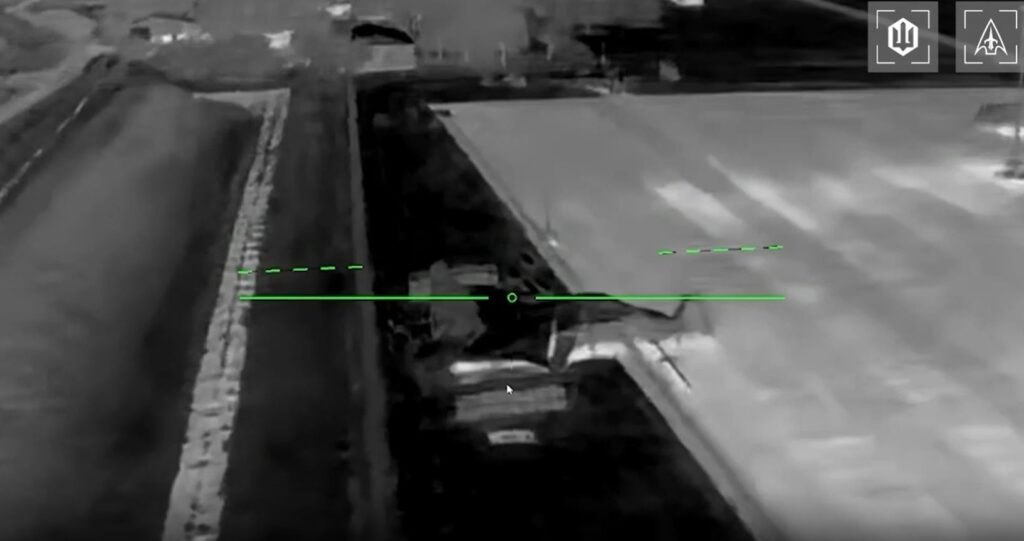
two russian fighters one spy drone hit kranodar radars anti-air systems elsewhere—ukraine forces · post combat aircraft ukrainian drone's sights vityazevo airfield krasnodar krai russia 23 2026 su-33 video sbs

In September, Ukraine struck more Russian air defense systems than in each month since 2024. Its Defense Ministry reports that Ukraine stepped up strikes on targets deep in the Russian rear, and this is how it hit this amount of protective systems, radars among them, in the history of the ePoints program.

ePoints are points that Ukrainian units earn for verified combat missions, from strikes to reconnaissance and evacuation, and spend on drones, ground robots, and electronic warfare systems on the state's Brave1 Market. In September, units confirmed hits on 33,087 Russian soldiers under the program, more than in any month this year except March and April.

Every result is recorded on video in the DELTA battlefield system and verified by the Brave1 defense innovation cluster, the ministry said. Russian losses are also growing far from the contact line, it added, and units are finding new and unconventional ways to inflict them.

The strikes are meant for "bleeding the Russian war machine," Defense Minister Yevhenii Khmara said on 4 October.

Deep strikes pass 11,000

In September, the number of hits more than 20 kilometers behind the front line exceeded 11,000 for the first time. Hits beyond 50 kilometers also set a record, most of them along the Russian logistics route between Mariupol and Crimea. One air defense system was hit 552 kilometers away.

Ukraine also now has a ballistic missile for such depths, not simply drones. It fired its first FP-7 in combat on 1 October, President Volodymyr Zelensky announced without naming a target. Its maker, Fire Point, plans an interceptor version that aims to achieve a first ballistic missile shoot down by mid-2027.

Troops down more propeller Shaheds

Even as Russia kept changing its air attack tactics and launched more jet-powered drones, Ukrainian troops shot down 28% more non-jet-powered Shahed drones in September than in August, the ministry said.

Jet drones remain the harder target. Ukraine shoots down 85 to 92% of propeller-driven Shaheds but only 50 to 60% of jet-powered ones, Zelensky said on 4 October, when he announced a new small missile called Nika for testing against them. Ukraine's military intelligence estimates that Russia builds about 3,000 jet-powered drones a month.
Year ago, only 12 Ukrainian brigades could order weapons online. Now, 500 units participate in revolutionary program that has delivered 1.3 million drones to front

23 septembre 2026 à 14:11

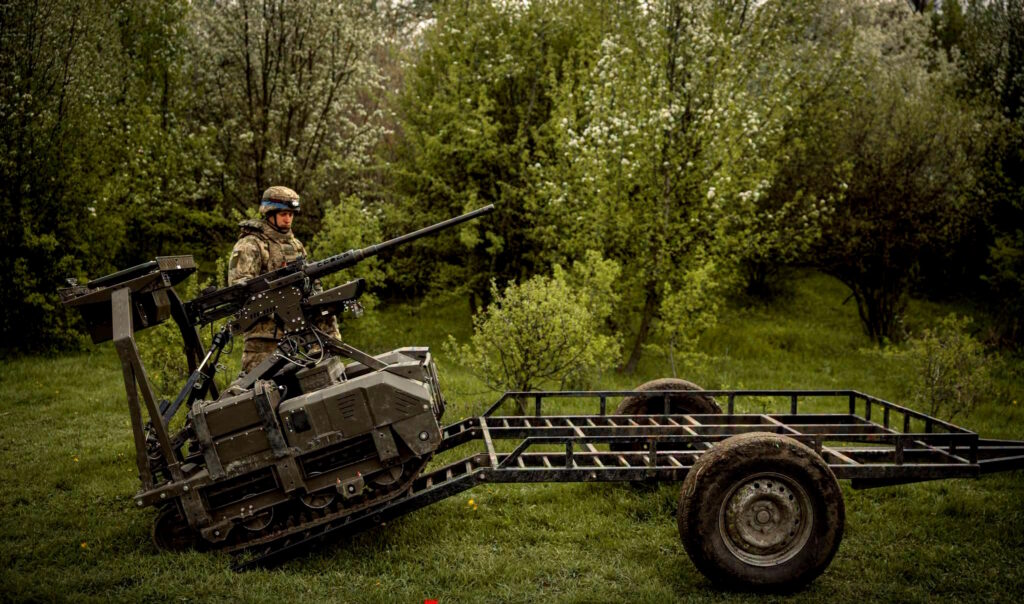
The image shows a Ukrainian soldier standing next to an unmanned ground robotic vehicle. Source: The General Staff

A year ago, 12 Ukrainian brigades could order their own weapons off a state marketplace. Now, more than 500 units can. DOT-Chain Defense, which lets frontline units order necessary supplies using state funds or bonuses with just a few clicks, has scaled across most of Ukraine's Defense Forces, the Defense Ministry said.

The platform is the delivery backbone of Ukraine's soldier-led procurement revolution. It lies in a shift in the philosophy of defense procurement. Ukraine is abandoning the Soviet principle of "fight with whatever is handed down from above" and transitioning to a market-based model that centers on the choice of the individual soldier.

Over its first year, it has put more than 1.3 million drones and other systems into units' hands, worth about $1.9 billion, and the orders show what this war runs on: 84 percent are drones, with electronic-warfare gear and ground robots making up most of the rest. It is also the engine behind the points-for-kills system that lets units bank credit for battlefield results and spend it on their own equipment.

Access jumps from 12 to 500 units

The growth has been steep. DOT-Chain Defense is now used by combat units across the armed forces, the National Guard, the border and special transport services, the police, the Security Service, and Defense Intelligence, says Deputy Defense Minister Mstyslav Banik.

Assault regiments and the "Drone Line" project have joined, ordering unmanned systems to their own specifications.

Drones dominate the orders

By the ministry's count, electronic-warfare systems make up 8.6 percent of everything ordered, ground robotic complexes 7.2 percent, and ammunition a sliver at 0.2 percent.

The gear, worth about $1.9 billion, came both through direct marketplace purchases and through the "Army of Drones. Bonus" program, the points system tied to the same platform.

The US copies the model

The approach has drawn imitators. The US has launched its own Amazon-style marketplace for military drones, explicitly modeled on Ukraine's Brave1 Market and DOT-Chain Defense. For Ukraine, the payoff is data: a running record of which weapons work on which part of the front, which the state uses to scale up what performs.

Ukraine’s new drone ferries FPV drones deep behind Russian lines and releases them there. It costs about $9,900 and does three other jobs too

23 septembre 2026 à 10:38

Kara, Ukraine's new drone ferries FPV drones deep behind Russian lines. Source: Defender Media

A Ukrainian company has disclosed a small aircraft that can bomb a target, relay radio signals, carry FPV drones behind enemy lines, or strike on its own. The KARA, a fixed-wing drone made by Ukrskytechnology, is listed on Ukraine's state Brave1 Market in three tiers, from a bare airframe to a ready-to-fly aircraft, Defender Media reported.

One airframe does the work of several, and it goes for some $9,900. The marketplace it sits on, Brave1 Market, has processed more than $235 million in orders, lists over a thousand products, and lets frontline units buy gear even before a weapon clears formal codification.

One airframe does four jobs

What the KARA does depends on how it is kitted out. Fitted one way, it drops cargo; another, it works as a signal repeater to extend a unit's radio reach; another, it ferries FPV drones deep into the enemy rear to be released; and another, it carries out strikes itself. Buyers choose among an empty glider they equip themselves, a Plug-N-Play version with basic electronics installed, and a Ready-To-Fly model.

The drone flies light and far

The specifications are modest but flexible, according to Ukrskytechnology. The KARA has a tactical radius of 70 kilometers, and a stated endurance of 2.5 hours, cruises at 90 kilometers per hour and tops out at 120, and works at 200 meters but can climb to 3,000.

It runs on either an electric motor or a combustion engine, and carries two payload blocks of up to three kilograms each under the wing. Launched by catapult and landing like a plane, it takes 10 minutes to set up.

The marketplace lists it now

The KARA is being prepared for codification, the formal approval that clears a weapon for standard state procurement, but it does not have to wait for that to reach the front. Brave1 Market was built precisely so that units can buy proven kit fast, without waiting on the slow pipelines of the past, and the KARA is already there for the price of a used car.

❌