Estonia's defense minister resigned on 2 September over a failed €70 million ammunition deal for Ukraine, ERR reported. The state procurement agency paid EU funds to companies that had never sold artillery shells. Estonian taxpayers may now have to cover the losses.
The Baltic states have poured billions into defense since Russia's full-scale invasion of Ukraine. Estonia alone redirected €500 million toward air defense and drones. It pledged 0.25% of GDP in annual aid f
Estonia's defense minister resigned on 2 September over a failed €70 million ammunition deal for Ukraine, ERR reported. The state procurement agency paid EU funds to companies that had never sold artillery shells. Estonian taxpayers may now have to cover the losses.
The Baltic states have poured billions into defense since Russia's full-scale invasion of Ukraine. Estonia alone redirected €500 million toward air defense and drones. It pledged 0.25% of GDP in annual aid for Kyiv. Defense budgets have grown faster than the procurement systems managing them.
Minister walks over "socks and ammunition"
Hanno Pevkur has held the post since 2022. Amid the scandal, he told Estonian public broadcaster ETV he would step down.
"The minister does not count socks and ammunition," Pevkur said.
RKIK's former chief countered that no major decisions were made without the ministry's approval.
Three opposition parties called for his resignation before he announced it. Prime Minister Kristen Michal said Pevkur was not personally at fault but acknowledged political responsibility applied. The resignation followed a National Audit Office report released on 28 August. Estonia's Prosecutor's Office has also opened a criminal investigation into the procurement.
The deal that fell apart
In 2024, Estonia's Center for Defense Investments (RKIK) signed four contracts with Datasel S.R.L., an Italian-registered firm. Eesti Ekspress reported that the Indian company Neco Defense Munitions owned it. Neither had ever sold a single artillery shell. RKIK paid roughly $81 million in advance using the EU's European Peace Facility. The first delivery was due in November 2024. Ammunition that arrived failed to meet quality standards. Estonia canceled the deals and filed a case at the European Court of Arbitration in Strasbourg.
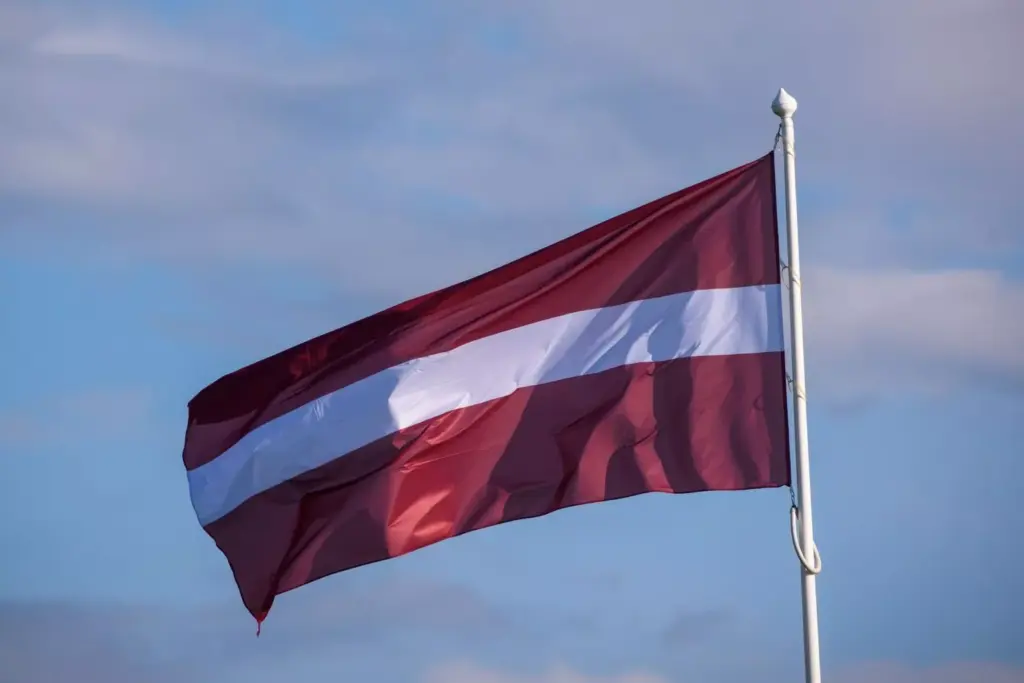
Pevkur is the second Baltic defense minister to resign in four months. Latvia's Andris Sprūds stepped down in May after drone incursions from Russia's war destabilized the country's government.
Poland will recover hundreds of millions of euros from a shared European Union fund for weapons it handed to Ukraine, the defense outlet Militarnyi reported. The money had been frozen for two years and only started moving after a change of government in Hungary lifted a veto.
Europe's ability to keep weapons moving to Ukraine rests on members trusting they will be paid back for what they give away. When that cost-sharing seizes up, national governments face the full bil
Poland will recover hundreds of millions of euros from a shared European Union fund for weapons it handed to Ukraine, the defense outlet Militarnyi reported. The money had been frozen for two years and only started moving after a change of government in Hungary lifted a veto.
Europe's ability to keep weapons moving to Ukraine rests on members trusting they will be paid back for what they give away. When that cost-sharing seizes up, national governments face the full bill alone, and the case for the next donation gets harder. A single member's veto can jam that machinery for years.
The money starts flowing again
Poland will receive up to $500 million in 2027 from the European Peace Facility (EPF), an EU fund that reimburses member states for military aid to Ukraine. Deputy Defense Minister Paweł Zalewski told the Polish news agency PAP that the ceiling combines the $465 million now secured with a possible $12–35 million more, depending on which of the two payout options the European Commission picks. Warsaw had already collected $960 million earlier, bringing its total EU reimbursement to roughly $1.4 billion.
Explore further
190 or 580 Patriot missiles? What Ukraine’s EU-loan request could buy—and why Washington still decides
The reimbursements had stalled in 2024, when Hungary blocked a $7.7 billion tranche. Budapest dropped the veto in June 2026 after a new government took over, unfreezing the funds. The bloc is now steering part of the money toward joint arms purchases and its training mission for Ukraine, rather than just reimbursement.
Where Poland stands among donors
By Militarnyi's tally of Kiel Institute figures, total Polish aid has reached $6.8 billion, with $5.2 billion of that military. That ranks Poland 11th among donors by raw volume. When weighed against each country's economy, it ranks 9th, equal to 1.021% of Polish GDP, with the military share at 0.775%.
Explore further
A masked figure got into a Polish drone-parts plant—Poland now suspects a foreign spy service set the fire
What Warsaw handed over
Poland has supplied ammunition and other weapons since early 2022, before the full-scale invasion, and has since handed over more than 350 tanks—14 Leopard 2A4, about 60 PT-91 Twardy, and roughly 280 Soviet-era T-72 variants. Warsaw also sent Krab self-propelled howitzers, Piorun shoulder-fired air-defense missiles, and Grad rocket launchers. Alongside Slovakia, it was among the first NATO states to send Ukraine fighter jets, delivering 14 MiG-29 jets and 10 Mi-24 attack helicopters between 2022 and 2024.
EU foreign ministers have given broad backing to an entry ban on Russians who fought in Ukraine and to stricter tourist visa rules for Russian citizens, DW reported. The bloc's foreign policy chief announced that support on 2 September, after an informal meeting in Wicklow, Ireland, without setting out what the tightening would involve. She tied the visa question to the risk of sabotage in Europe.
Russia has been attacking Ukraine since 2014 and at full scale since 2022
EU foreign ministers have given broad backing to an entry ban on Russians who fought in Ukraine and to stricter tourist visa rules for Russian citizens, DW reported. The bloc's foreign policy chief announced that support on 2 September, after an informal meeting in Wicklow, Ireland, without setting out what the tightening would involve. She tied the visa question to the risk of sabotage in Europe.
Russia has been attacking Ukraine since 2014 and at full scale since 2022, bombing Ukrainian cities, and for several years its agents have also worked inside Europe, cutting cables, flying drones over military bases, and setting fires at plants and warehouses that supply Ukraine. The bloc that funds much of Ukraine's defense has still not managed to keep the citizens of that state out of its own territory.
"Broad support," and nothing pinned down
EU foreign policy chief Kaja Kallas spoke to reporters after the ministers finished.
"There was broad support for moving ahead with a ban on entry to the EU for Russian ex-combatants and tougher visa restrictions for Russian tourists," she said.
She did not name the restrictions planned for Russian tourists, say when they might take effect, or say which categories of Russian citizens they would cover.
The bloc has no unified position on tightening visa rules further, Kallas acknowledged. Some member states have so far argued against additional steps in that direction, she said.
Explore further
Russia’s former soldiers may face a locked EU border—if France and Italy stop balking
Many EU countries say tourist visas serve sabotage preparation
Reporters asked Kallas about accounts that one suspect in the Leipzig attack may have entered the EU on a tourist visa issued by Italy. German authorities have to confirm or refute those accounts, she said. If the information is correct, it shows that visas can be used to enter the bloc by potential wrongdoers who intend to harm it, she added. Many EU countries pointed out that tourist visas are used in preparing sabotage, because the people who carry it out need to get onto EU territory, she said.
Berlin blamed Moscow for the hybrid attack in Leipzig on 1 September, and moved to close Russia's consulate in Bonn and end the agreement for a Moscow-backed cultural center in Berlin after the drone attack on Leipzig/Halle Airport. Lithuania has exposed a Russian military intelligence network behind attempted arson in four NATO countries, and someone left funeral wreaths outside defense companies in Lithuania and Czechia in late August.
Explore further
Russia’s ex-combatants entering the EU is a risk flagged in a leaked threat assessment
"It is not normal": Russians in Europe while Russia bombs Ukraine
Many ministers raised the visa question while the meeting was discussing Russia's war against Ukraine, Kallas said.
"It is not normal when a country bombs Ukraine, kills civilians—in July and August more than ever during this war—and at the same time Russians enter and enjoy the hospitality of European countries. That should not be," she said.
EU representatives said in July that the ban, kept separate from the tourist visa rules, was agreed in principle but still needed an evidence standard for refusing entry. The EU Council signs off after that, and the European Commission hoped at the time to finish by October.
UN monitors counted 437 civilians killed and more than 2,600 injured across Ukraine in July, the deadliest month since 2022. That count included 183 children killed or injured, also the highest since 2022. Russian drones and missiles then kept Kyiv under near-constant fire for four days at the end of August.
Ukraine's National Guard says its assault units have cleared four square kilometers of ground near Kupiansk. According to the military, fighters of the 23rd R.U.G. Assault Regiment of the Khartiia corps have pushed Russian forces out of territory between the settlements of Dvorichna and Zapadne, working with the 35th Separate Marine Brigade on one stretch.
Russia wants Kupiansk as a logistics node and a springboard for pushing deeper into Kharkiv Oblast. Just outside t
Ukraine's National Guard says its assault units have cleared four square kilometers of ground near Kupiansk. According to the military, fighters of the 23rd R.U.G. Assault Regiment of the Khartiia corps have pushed Russian forces out of territory between the settlements of Dvorichna and Zapadne, working with the 35th Separate Marine Brigade on one stretch.
Russia wants Kupiansk as a logistics node and a springboard for pushing deeper into Kharkiv Oblast. Just outside the city sits the Kupiansk-Vuzlovyi station, a key rail hub whose capture would let Russian forces move supplies and equipment far more easily.
“Overall, another 4 square kilometers of Ukrainian territory have been liberated. As long as the enemy remains on our land, the work continues,” the National Guard said.
Ukraine said its assault units have cleared another four square kilometers of ground near Kupiansk
Fighters of the 23rd R.U.G. Assault Regiment of the Khartiia corps pushed Russian forces out of the territory between the settlements of Dvorichna and Zapadne The National Guard pic.twitter.com/aOXrXm0BRw
The clearing north of the city is only one part of a contested picture. Kupiansk straddles the Oskil River: Ukraine holds the left, eastern bank, while Russian forces have pushed onto the right, western bank closer to Ukraine's rear.
On 2 September, Viktor Tregubov, head of communications for Ukraine's Joint Forces Group, said Russian troops had infiltrated part of northern Kupiansk on that right bank.
"On the right bank, the Russians are trying to hold the northern parts of the city, where they've already infiltrated some of their fighters," he told Suspilne, adding that Ukrainian forces are making trouble for them there.
The infiltrators are trying to reach the city through the village of Holubivka, he said.
On the left bank, Russian units are trying to reach the railway station.
"The Russians are pushing very hard toward it. They want to narrow our bridgehead," Tregubov reported.
No confirmed Russian advance
Back in July, Trehubov mentioned the Russian forces’ logistical problems in this direction, according to ArmyInform.
He explained that logistics for Russian forces in the area had been effectively paralyzed by a fuel shortage, with even water being delivered exclusively by drones.
The European Union is discussing export support with Ukraine and its neighboring countries, including through so-called solidarity lanes, Agriculture Commissioner Christophe Hansen told Bloomberg on 2 September.
Strikes in the Black Sea have curtailed exports from both Ukraine and Russia, while low water limits how much grain vessels can carry on the Danube, Ukraine’s main fallback when sea traffic slows. Wheat and corn prices are at multiyear highs, and the Bloomberg A
The European Union is discussing export support with Ukraine and its neighboring countries, including through so-called solidarity lanes, Agriculture Commissioner Christophe Hansen told Bloomberg on 2 September.
Strikes in the Black Sea have curtailed exports from both Ukraine and Russia, while low water limits how much grain vessels can carry on the Danube, Ukraine’s main fallback when sea traffic slows. Wheat and corn prices are at multiyear highs, and the Bloomberg Agriculture Spot Index jumped by more than 13% in August, its sharpest monthly rise in over a decade. Hansen said the EU’s role as a major food exporter means drought-driven production losses could cause shortages elsewhere.
Created after Russia's full-scale invasion, the solidarity lanes carry Ukrainian exports by road, rail, and river through neighboring countries when Black Sea shipping is disrupted.
The European Commission is separately weighing relief for drought-hit EU farmers. Hansen urged governments to use flexibilities in the Common Agricultural Policy, the EU's farm-subsidy system, including exemptions for circumstances beyond farmers' control, emergency fertilizer aid, and earlier payments, but proposed no new measures in a letter seen by Bloomberg. EU agriculture ministers are due to discuss the drought in Ireland next week and in Brussels later in September.
Russian attacks squeeze Ukraine’s export routes
Low water is only one obstacle to Ukraine’s southern export routes. Russia has repeatedly attacked ports and transport links along the Danube and on Odesa Oblast’s Black Sea coast. Some Ukrainian farmers have sold wheat below production cost as port prices fell, leaving less money for the next sowing.
Romania detected more than 100 drones during seven attacks on Danube ports in mid-August, interim Romanian Defense Minister Radu Miruță said. Russia struck Izmail, Ukraine's largest Danube port, three times in August. The 29 August attack killed one person and destroyed five grain trucks, Odesa regional authorities said.
Ukraine and Moldova have pursued a rail corridor through Moldova to Constanța, Romania’s main Black Sea port, as an alternative. Moldova later halved transit tariffs through 31 December. Ukrainian officials estimate the corridor could handle around 10% of Ukraine's grain exports, Reuters reported.
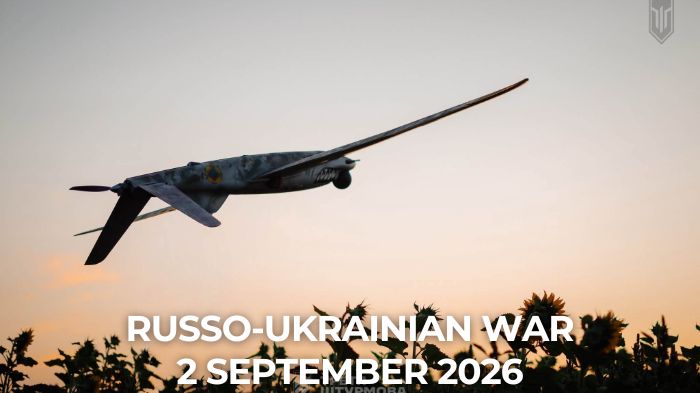
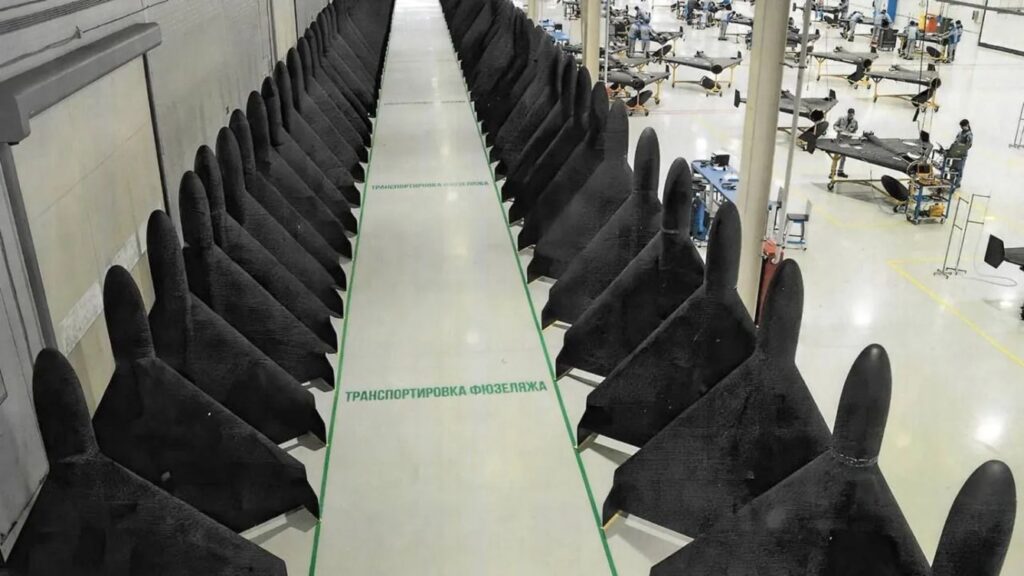
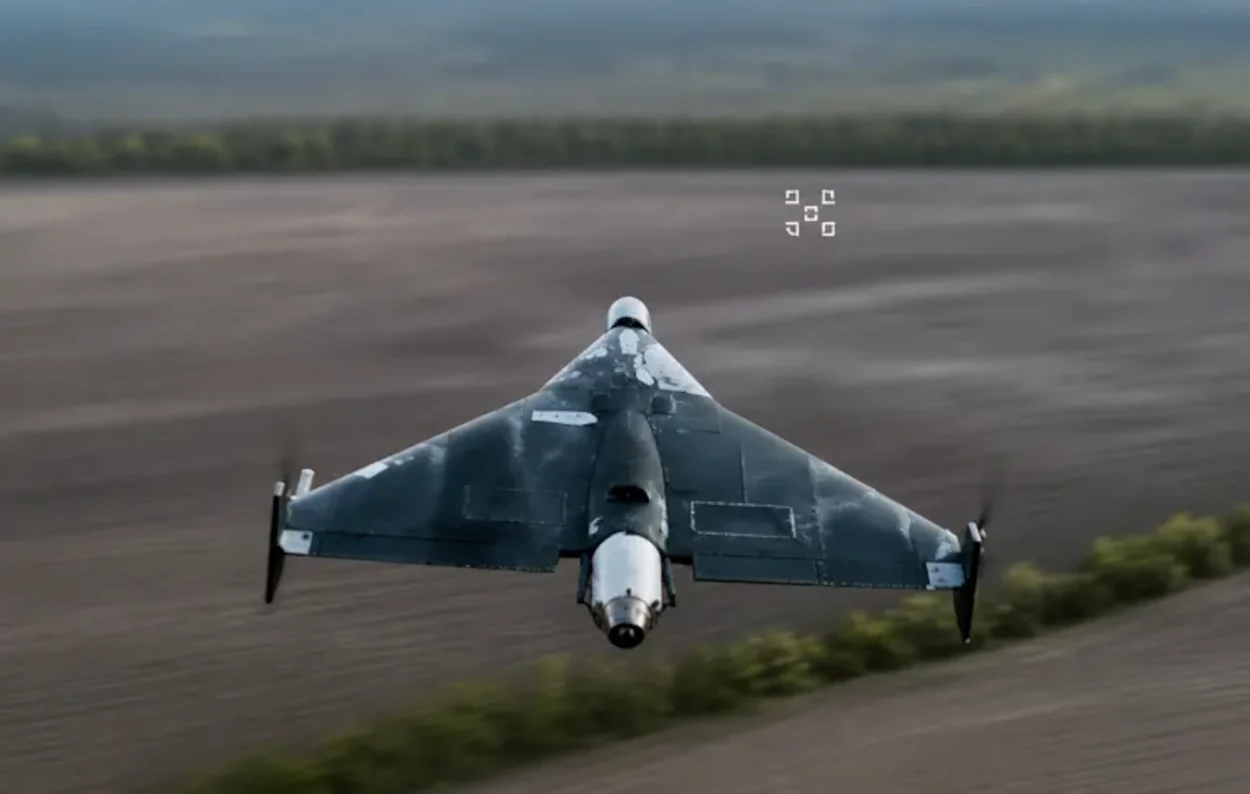
Russia has been bolting small FPV attack drones to the wings of its long-range Gerans and releasing them deep inside Ukraine, far behind the front. The tactic may now have reached Kyiv Oblast, where an FPV drone was recently recorded, though it is not confirmed that a Geran delivered it, Serhii "Flash" Beskrestnov, the president's adviser on defense technologies, told UNIAN. A Geran drop is one of the versions being weighed.
A Geran (the Russian-built version of Iran's
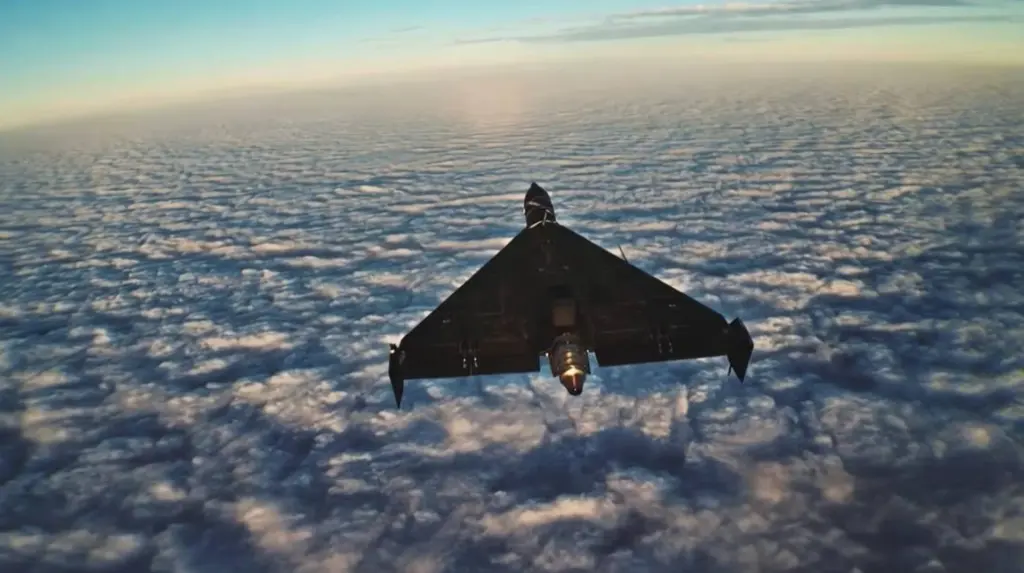
Russia has been bolting small FPV attack drones to the wings of its long-range Gerans and releasing them deep inside Ukraine, far behind the front. The tactic may now have reached Kyiv Oblast, where an FPV drone was recently recorded, though it is not confirmed that a Geran delivered it, Serhii "Flash" Beskrestnov, the president's adviser on defense technologies, told UNIAN. A Geran drop is one of the versions being weighed.
A Geran (the Russian-built version of Iran's Shahed-136) can fly hundreds of kilometers, so bolting short-range FPVs to its wings carries them far past the front line before release. Russia has done the same with its Molniya and Gerbera drones, and in May Euromaidan Press reported FPVs delivered this way, turning up dozens of kilometers from the border, on the ground, and even on the roofs of apartment buildings.
A year-old experiment, still rare
"The Russians have been running these experiments for a while. They attach two FPVs above the wings and drop them," Beskrestnov said.
He last recorded the tactic a week ago in Konotop, in Sumy Oblast, where Russian forces held two such drones on a carrier's wings and released them.
Until now, he added, it had shown up only on conventional Gerans. Holding an FPV on a jet-powered Geran is far harder because the speed is too high for a clean release, "but technologically it's entirely possible," Beskrestnov believes.
Ukrainian air defenders have brought at least one carrier down: in March, the Darknode anti-Shahed unit destroyed a Geran carrying two wing-mounted FPVs over Ukrainian airspace before it could release them, Militarnyi reported.
Low yield, mostly a scare tactic
Russia uses the tactic sparingly, and by its own measure, it does not work well.
"If you look at the number of successful strikes they've had with these FPVs, it's small," Beskrestnov explained, because controlling a drone dropped this way is difficult.
The FPVs carry no large warhead, and the launches often serve mainly to terrorize civilians, he said.
The dropped drones are usually flown over ordinary mobile networks rather than through a relay mounted on the carrier.
"There's an ordinary SIM card, and they control the FPV through it," Beskrestnov said, adding that Ukraine has been recording the practice on and off for about a year.
A gunman on a motorcycle shot a Russian Aerospace Forces officer twice in Saratov Oblast on the morning of 3 September, Radio Svoboda reported. Telegram channels identify the wounded man as Nikolai Varpakhovich, the major general who commands Russia's heavy bomber division at Engels. Ukraine's security service and prosecutors named that officer a suspect three days earlier over the missile strike on Kyiv's main children's hospital.
Russia's strikes have hit hospitals, w
A gunman on a motorcycle shot a Russian Aerospace Forces officer twice in Saratov Oblast on the morning of 3 September, Radio Svoboda reported. Telegram channels identify the wounded man as Nikolai Varpakhovich, the major general who commands Russia's heavy bomber division at Engels. Ukraine's security service and prosecutors named that officer a suspect three days earlier over the missile strike on Kyiv's main children's hospital.
Russia's strikes have hit hospitals, warehouses, railway infrastructure, residential neighborhoods, and the power system, which is a target again as winter approaches while protection work runs behind. The officers who plan and order the long-range strikes work far from any of it, so reaching one of them at all shifts a risk that has sat almost entirely on Ukrainian civilians.
Ukraine's services have pursued senior Russian officers in the rear, sometimes unofficially claiming the operation and sometimes saying nothing at all. Bombings have killedat least three generals in and around Moscow since December 2024, and a fourth died in a Moscow restaurant blast whose target Russia has never established. Nobody has claimed the Engels shooting yet, and Ukrainian officials have not commented on it.
Two shots outside Engels, then the motorcycle was gone
The attack happened in Probuzhdeniye, a settlement next to the city of Engels in Russia's Volga region. The Russian Telegram channel Shot said the officer was leaving a shop when an unknown man on a motorcycle fired twice, hitting his face and his body. Another Russian channel, Mash, reported that the gunman rode up to a detached house, that one bullet struck the abdomen and the other the head, and that surgeons removed both. The accounts of the spot and the wounds do not match.
The officer's driver was hit as well, got away, and called an ambulance himself. The attacker wore a helmet and fled, and doctors in Saratov operated before preparing the officer for a flight to Moscow.
Explore further
Forensic experts identify over 30 parts of Russian Kh-101 missile that hit Okhmatdyt hospital
Russia confirms a shooting and leaves the name out
The regional branch of Russia's Investigative Committee stated that someone had attempted to kill a serviceman and that the victim was hospitalized. Investigators stated they had recovered cartridge cases and bullets at the scene and opened a case for attempted murder and illegal weapons trafficking. They released no name.
The Telegram channel Dosye Shpiona, possibly linked to the Ukrainian special services, named the victim as Nikolai Varpakhovich, commander of the 22nd Heavy Bomber Aviation Division of Russia's long-range aviation. Meduza noted that no official source has confirmed this. Agentstvo reported that Varpakhovich comes from Ryazan, served earlier as deputy head of the 43rd flight-crew training center, and has lived in Saratov Oblast since at least 2024, with documents listing an apartment in Engels and a house in Probuzhdeniye.
Explore further
Car bomb kills Russian general who armed Russia’s war on Ukraine—fourth top officer assassinated near Moscow since late 2024
Ukraine named him a suspect on 31 August
The SBU and the Prosecutor General's Office announced an in absentia suspicion against Varpakhovich on 31 August. Investigators say he issued the combat order for the strike that hit Kyiv's Okhmatdyt children's hospital on 8 July 2024, killing two people and injuring 32. Russia's Defense Ministry claimed that day's missiles went at military-industrial sites and airbases.
It was his second notice this year. Ukraine charged him in June over a 2022 cruise-missile strike on an Odesa apartment block that killed eight, and prosecutors had notified his division's commander of suspicion back in June 2023.
Engels-2 is one of Russia's main strategic aviation bases, home to the Tu-95MS and Tu-160 bombers that fire Kh-101 cruise missiles at Ukrainian cities. Ukrainian drones have reached it repeatedly, and in late August the SBU's Alpha unit struck a Tu-95MS there, tearing off about a third of its right wing.
Ukraine formally notified the International Civil Aviation Organization (ICAO) on 2 September that Russian airspace is unsafe for civilian flights because of increased military activity, Ukrainian Foreign Minister Andrii Sybiha said. The letter behind the notification asks the organization to urge its member states to stop civil flights over Russia altogether, ZN reported.
ICAO, the UN aviation agency, cannot close Russian airspace or order carriers to reroute. European
Ukraine formally notified the International Civil Aviation Organization (ICAO) on 2 September that Russian airspace is unsafe for civilian flights because of increased military activity, Ukrainian Foreign Minister Andrii Sybiha said. The letter behind the notification asks the organization to urge its member states to stop civil flights over Russia altogether, ZN reported.
ICAO, the UN aviation agency, cannot close Russian airspace or order carriers to reroute. European and US airlines already avoid Russia's airspace, while carriers from China, Türkiye, and the Gulf states have kept flying through it. Those remaining airlines must assess the safety of flying amid drone and air defense operations. Drone alerts during reported Ukrainian attacks have repeatedly shut Russian airports and delayed hundreds of flights.
The notification follows a 1 September warning by Ukrainian President Volodymyr Zelenskyy, who told airlines, insurers, and other aviation stakeholders that Russian skies were becoming unsafe as Ukrainian drones reached deeper into the country.
Zelenskyy said Ukraine's Foreign Ministry would pass information about the risks to international organizations. The letter to ICAO came from another office—Mykola Kalashnyk, Ukraine's minister for recovery, infrastructure, and transport, whose portfolio covers aviation.
Russian President Vladimir Putin said Zelenskyy's statement amounted to "a bid for state terrorism" and that Moscow would find a way to respond if civilian "tragedies" followed.
Sybiha urged airlines to avoid Russian airspace and said the notice was meant to prevent unintended incidents, arguing that Moscow was failing to disclose the dangers its war had created. He invoked Ukraine’s inherent right to self-defense under Article 51 of the UN Charter, the provision that recognizes states’ right to defend themselves against an armed attack. The foreign minister further stated that the war was “returning home to Russia.”
In its separate statement, ICAO warned of rising threats to civil aviation worldwide. It did not mention Russia, endorse Ukraine’s assessment, or say Kyiv’s notification had prompted it.
The UN aviation body identified long-range weapons, drones, navigation-signal interference, and advanced air-defense systems as growing dangers to civilian aircraft. It reiterated that international aviation law prohibits the use of weapons against them.
ICAO urged member states to assess airspace under their control, share threat intelligence quickly, and improve military-civilian coordination.
Russian airports were already facing repeated closures
Russian airspace has not been legally or completely closed. The disruption has instead taken the form of temporary restrictions at individual airports.
From 5–7 May 2026, restrictions during reported Ukrainian attacks delayed more than 450 flights at Moscow airports, while limits at Vnukovo remained in place for nearly 18 hours.
On 6 July 2025, Moscow's Sheremetyevo airport canceled 171 flights, while airports in five other cities suspended operations. During an earlier wave on 22 May 2025, Domodedovo halted flights four times in one day and Sheremetyevo three times, while Vnukovo and Zhukovsky also restricted operations.
Airports in Kaluga, Nizhny Novgorod, Saratov, and Tambov were temporarily closed during a 27 May attack in which Moscow claimed 99 drones were intercepted. Two days later, another alert delayed 20 arrivals and 14 departures at Vnukovo, pro-Kremlin Telegram channels claimed.
Russia has started launching its strike drones during the day, not only after dark. The reason is the new jet-powered Geran drones, which fire groups cannot take down, so for Russia there is no longer any difference between attacking by day or by night, Serhii "Flash" Beskrestnov, President Zelenskyy's adviser on defense technologies, told Glavcom.
The near-hourly daytime raids are the new face of a campaign that culminated on 1 September, Knowledge Day, when Russia hit
Russia has started launching its strike drones during the day, not only after dark. The reason is the new jet-powered Geran drones, which fire groups cannot take down, so for Russia there is no longer any difference between attacking by day or by night, Serhii "Flash" Beskrestnov, President Zelenskyy's adviser on defense technologies, told Glavcom.
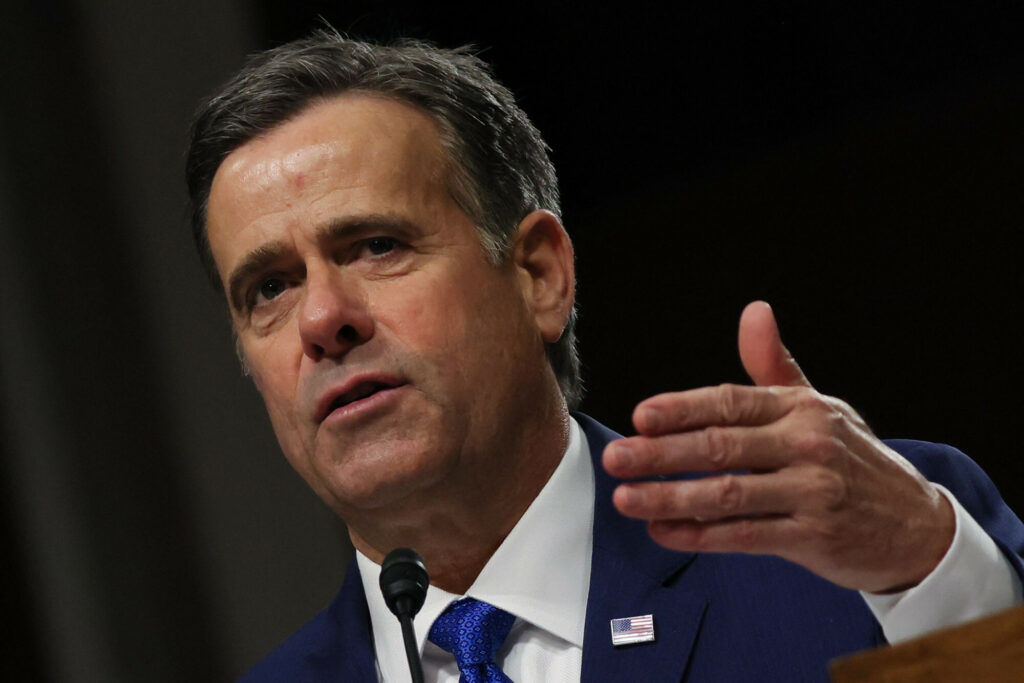
The near-hourly daytime raids are the new face of a campaign that culminated on 1 September, Knowledge Day, when Russia hit Kyiv and its region with ballistic missiles and jet-powered drones and killed 12 people. That strike culminated a six-day assault on the capital that began on 27 August, two days after CIA Director John Ratcliffe arrived in Moscow. However, even after that, the attack continued. Sirens now sound across Kyiv and the surrounding oblast roughly once an hour, around the clock.
Why the shift to daylight
The daytime raids carry an added economic and psychological weight, he said. The threat of strikes forces shops and businesses to open and close unpredictably, snarls transport, and can halt rail service.
"They understand perfectly well that daytime attacks hurt the population and business," Beskrestnov said, adding that the state railway Ukrzaliznytsia is paralyzed.
Keeping the defenders on their feet
A further aim is to hold Ukraine's air defense in a permanent state of readiness, Beskrestnov said. Round-the-clock attacks mean radar stations and generators must run without pause.
"Radar stations and generators run constantly, and that also puts a strain on our troops," he added.
Kyiv remains a Russian prime target because it carries symbolic as well as military weight, as the capital houses the government, business, and warehouses, and a strike there would resonate far more than terrorizing a small town.
Russian forces first concentrated on districts nearer the drones' launch corridors — Kyiv's Left Bank, and the Brovary and Boryspil raions — before switching to the other bank to hunt for targets. As the cold season approaches, he expects Russia to intensify strikes on the energy infrastructure it has so far spared.
Belgium's foreign minister said the kingdom's opposition to using Russia's frozen assets for Ukraine has not changed, Reuters reported. A push by four member states to revive the plan "generated little enthusiasm or appetite" among European Union foreign ministers, he said. Belgium points instead to part of an already-agreed European loan arriving sooner.
Russia's invasion has become a contest of endurance in which Moscow spends at war rates and counts on Western money
Belgium's foreign minister said the kingdom's opposition to using Russia's frozen assets for Ukraine has not changed, Reuters reported. A push by four member states to revive the plan "generated little enthusiasm or appetite" among European Union foreign ministers, he said. Belgium points instead to part of an already-agreed European loan arriving sooner.
Russia's invasion has become a contest of endurance in which Moscow spends at war rates and counts on Western money thinning out first. Ukraine's army runs on financing decided in foreign capitals, so how fast Europe settles who pays sets what Kyiv can order and field. EU governments have held some $243.7 billion of Russian central-bank money since Russia's full-scale invasion began in February 2022. About €214 billion of it sits at Euroclear, the Brussels depository at the center of the argument.
Nothing has changed, Belgium's foreign minister told the room
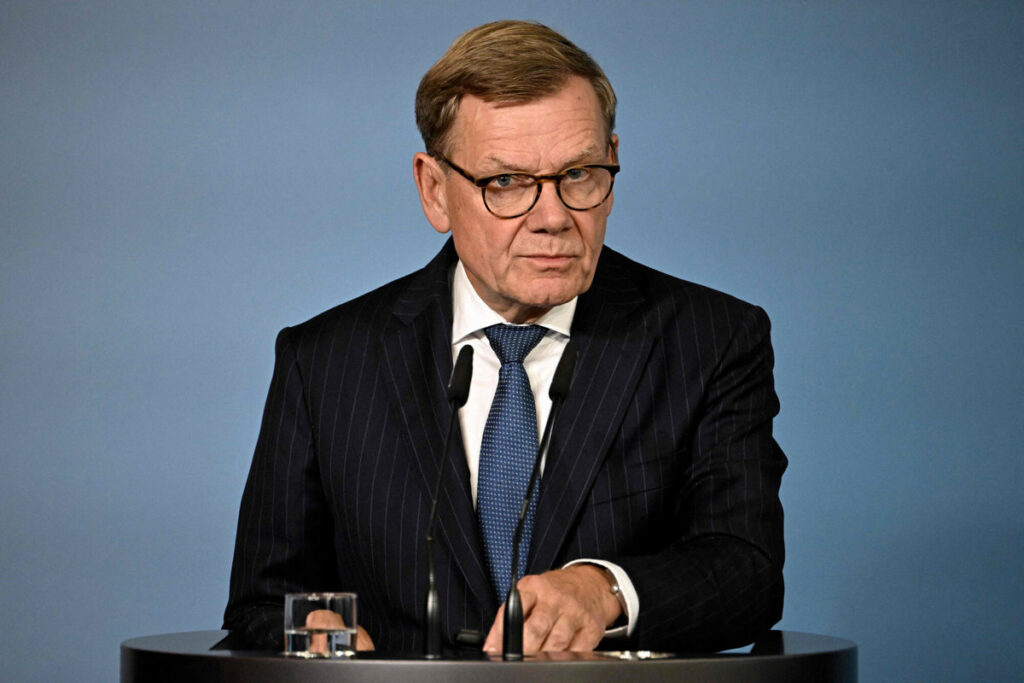
Belgian Foreign Minister Maxime Prévot spoke after an informal meeting of EU foreign ministers in Ireland on 2 September. Four countries had put the frozen-assets question back on the agenda, and his colleagues showed little interest in taking it up, he said. Belgium's own position has not moved in a year, he added. Anything that amounts to confiscating the money would carry very significant risks for his country, he said.
The country's Defense Minister Theo Francken told Flemish broadcaster VRT in remarks published on 30 August that the door is closed and the question is not open for discussion. He also said the Baltic States should be more careful about returning to it, and recalled how much support Belgium gives Lithuania, Latvia, and Estonia, The Moscow Times reported.
Explore further
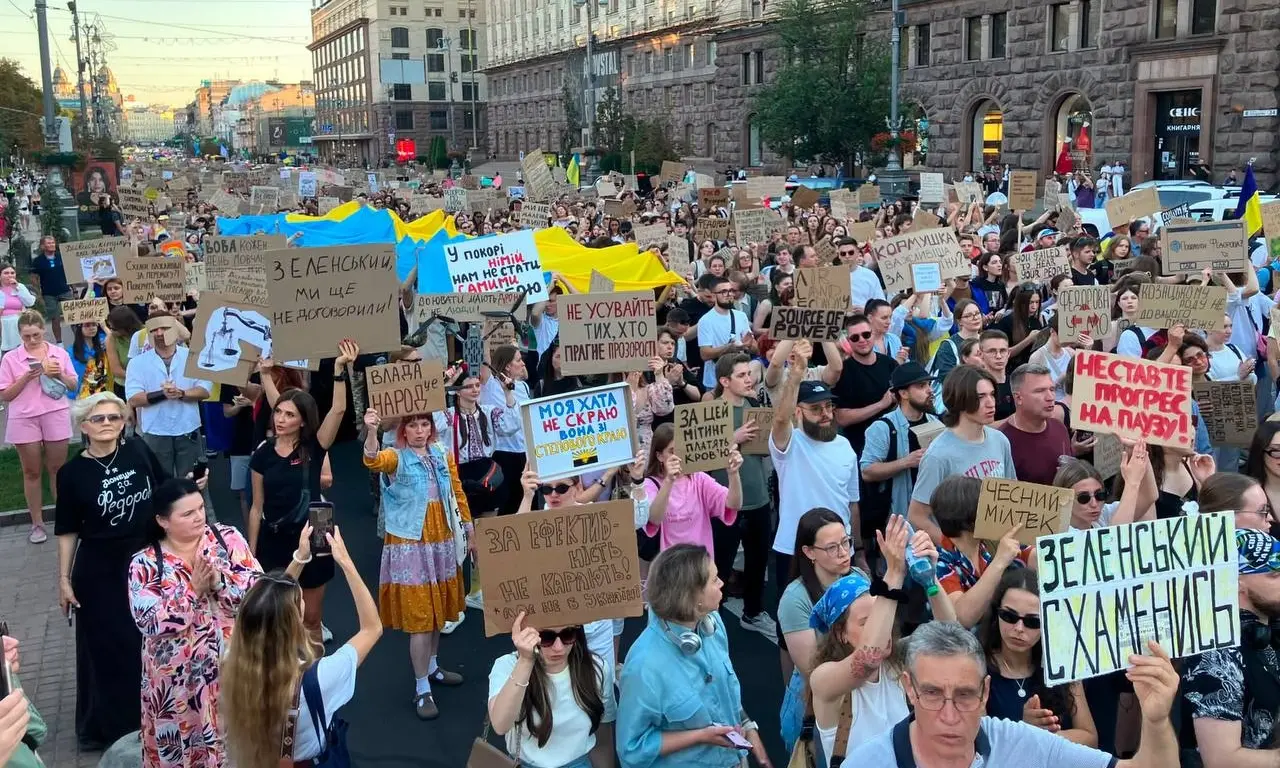
Ukrainians rally across dozens of countries to demand Europe use Russia’s frozen billions
The pace of the Russian advance across Ukraine slightly increased in August
The Russians' main objective is unchanged: to get forces in place for a siege of Kramatorsk and Sloviansk no later than next year
Ukrainian counterattacks and reinforcements could slow the Russian plan
In August, Russian gains ticked upward in key sectors along the 1,200-km front line of Russia's 55-month wider war on Ukraine.
The coming winter could slow Russian advances as the tr
The pace of the Russian advance across Ukraine slightly increased in August
The Russians' main objective is unchanged: to get forces in place for a siege of Kramatorsk and Sloviansk no later than next year
Ukrainian counterattacks and reinforcements could slow the Russian plan
In August, Russian gains ticked upward in key sectors along the 1,200-km front line of Russia's 55-month wider war on Ukraine.
The coming winter could slow Russian advances as the trees lose their leaves and infantry infiltrators have nothing to conceal them from overhead drones. But for the next month or two, the trees will still have their leaves, and the infiltrators will still have their cover.
And that means, as fall wears into winter, Ukraine may lose yet more ground in the north and especially in Donbas region in the east, where Russia enjoys a substantial manpower and firepower advantage. "Russian forces still hold the operational initiative and are slowly capturing ... Donetsk Oblast as well as border zones in Sumy and Kharkiv Oblasts," mapper Thorkill warned.
The Russian gains belie a greater truth, however. In the middle of the fifth year of wider war, the situation on the ground only changes along the margins even as thousands die.
According to Thorkill's tally, the Russians occupied just under 220 square km of Ukrainian soil in August. That's 25% more territory than they captured in July. "The situation has deteriorated sharply in the Donbas in August," mapper Clément Molin explained.
Un été difficile en Ukraine , en cause, des décisions politiques contestables.
Après un printemps bien géré par Kyiv (aide financière de l'UE, bonne situation au front, frappes réussies à l'arrière), l'été a vu un nombre de mauvaises nouvelles pour l'Ukraine.
To be fair, the Russians are advancing much more slowly than they did a year ago. "Compared to August 2025, Russian gains are down by nearly half," Molin noted. That's cold comfort to Ukrainian civilians and defenders in the areas where the Russians are still gaining ground, however. And the sheer proximity of the most aggressive Russian formations to the most vulnerable Ukrainian settlements means it might not take much more effort on the part of the Russians to turn these settlements into battlegrounds.
The Russians' main effort is still directed at the last big free cities in Donetsk. Inching forward at great cost from several directions, Russian forces are slowly closing a pincer around Kramatorsk and Sloviansk and the tens of thousands of civilians who still live in the adjacent cities.
Thorkill's map places the forwardmost Russian forces in Mykolaivka, just 4 km east of Sloviansk. This is the middle joint of the Russian pincer. The pincer's southern claw is a zone of disputed control stretching along the road between the ruins of the city of Kostiantynivka and the battleground town of Oleksiievo-Druzhkivka.
If the Russians can march through Oleksiievo-Druzhkivka, they can lay siege to the town of Druzhkivka, a few kilometers to the northwest. If they can capture Druzhkivka, they can turn north and assault Kramatorsk, a mere 6 km away.
Podsumowanie sierpnia 2026 r. wojny rosyjsko-ukraińskiej.
W sierpniu 2026 r. według wyliczeń rus konta tg Creamy_Caprice (wykres poniżej), rus wojska zdobyły niecałe 220 km kw. Był to wzrost dynamiki ich zdobyczy terenowych w stosunku do lipca (176 km kw) o 25 proc. Według… pic.twitter.com/N56TsXJrOv
The most fragile part of the claw is to the north. Bucking the overall trend of Russian gains in August, Ukrainian forces counterattacked in several sectors the same month. Most dramatically, a clutch of Ukrainian mechanized and air assault brigades extended a slow advance through the town of Nove, mostly cutting across a 100-square-km salient of Russian forces around 25 km northeast of Sloviansk.
The Nove counterattacks offer some hope that targeted Ukrainian action may slow the Russian march on Sloviansk and Kramatorsk from the north. Meanwhile, a reshuffling of Ukrainian units south of Kramatorsk could improve Ukrainian defenses against an assault on the twin cities from the south.
As new Ukrainian commander-in-chief Gen. Mykhailo Drapatyi gradually addresses some of the imbalances in the Ukrainian ground forces, certain key units are getting help. Most notably, the 425th Assault Regiment is now subordinate to the 1st Azov Corps, which is responsible for the defense of Kramatorsk.
Keenly aware that the Russians intend to slowly infiltrate front-line settlements with small teams of infantry rather than rushing them with masses of easily-droned armored vehicles, the 1st Azov Corps has assigned the aggressive 425th Assault Regiment "to clear enemy infiltrators from the brigades’ areas of defense," the corps stated.
Explore further
Glide bomb then infiltrate. This is Russia’s new way of war.
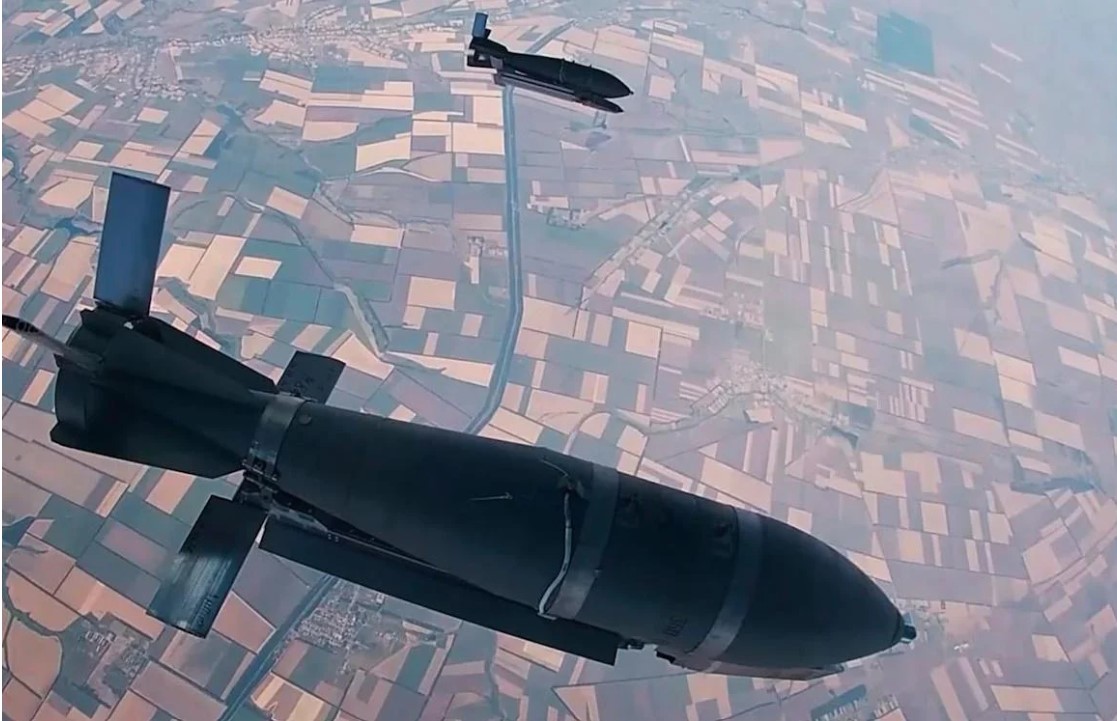
Infiltrators aren't the only problem, however. The Russians' favorite tactic combines small teams of infantry with massive aerial firepower in the form of precision-guided KAB glide bombs flung by supersonic Sukhoi Su-34 fighter bombers.
"Glide bombs hurt," Ukraine's 4th National Guard Brigade reported. "It's about 200 kg of explosives flying your way. And you can't really shoot them down like you can shoot down drones. They can collapse fortified buildings, bunkers, and entire urban blocks much more effectively than artillery."
After the dust settles from the glide bomb impacts, Russian infantry "infiltrate through the damaged areas, using the ruins for cover and concealment," the national guard brigade explained.
The same lack of long-range air defenses that exposes Ukrainian cities to relentless Russian bombardment also deprives front-line forces of protection from the Su-34s and their glide bombs. And so the Russians can keep bombing and keep infiltrating as long as the trees offer some concealment for the infantry.
Explore further
Ukraine’s secret counteroffensive takes the pressure off Sloviansk
The clock is ticking. The Russians will aim to position their forces for more direct assaults on Kramatorsk and Sloviansk no later than next year. The Ukrainians will aim to slow down the Russians, trading a little space for more time. Time Drapatyi may use to institute further reforms in the Ukrainian ground forces.
Zooming out and taking the long view, no one should expect major changes on the map of Russia's wider war as the fifth year of fighting grinds toward the sixth. Yes, the last two big free cities in the Donbas are in trouble. But "the overall situation remains unchanged since October 2023," Thorkill wrote.
The Russians slowly advance. The Ukrainians slowly fall back. And losses deepen on both sides.
A well-drawn food illustration can make a dish look irresistible, steam curling off a bowl, glossy sauce catching light, a burger stacked just right or a sweet, juicy pancake. But no matter how appetising the drawing is, it's still just sitting there, doing nothing while a real dish is sizzling, steaming, or dripping. That gap is exactly what image to video tools close, taking a still food illustration and giving it the motion that makes it genuinely mouthwatering. Dreamina
A well-drawn food illustration can make a dish look irresistible, steam curling off a bowl, glossy sauce catching light, a burger stacked just right or a sweet, juicy pancake. But no matter how appetising the drawing is, it's still just sitting there, doing nothing while a real dish is sizzling, steaming, or dripping. That gap is exactly what image to video tools close, taking a still food illustration and giving it the motion that makes it genuinely mouthwatering. Dreamina, powered by its most advanced video generation model, Seedance 2.5, turns that transformation into something any menu, brand, or food creator can pull off without a full animation team.
Why food illustrations were always missing something
So much of what makes food appealing is sensory and time-based, steam rising, cheese stretching, sauce dripping slowly down the side of a plate. A still illustration can suggest all of that, but it can't actually deliver it. It is the motion that finally makes an illustrated food look realistic and thus satisfy the craving.
What features make a food video clip appetizing?
The most successful food videos usually have some common characteristics, such as:
- Motion corresponding with the movements that the real food can do, e.g., steam coming out, dripping, melting - Warm appetizing light, not something cold and artificial - Slow enough speed to be considered delicious, not quick - The amount of motion that looks natural, but not exaggerated
How to animate your food illustration using Dreamina
Step 1: Upload your illustration and describe the motion
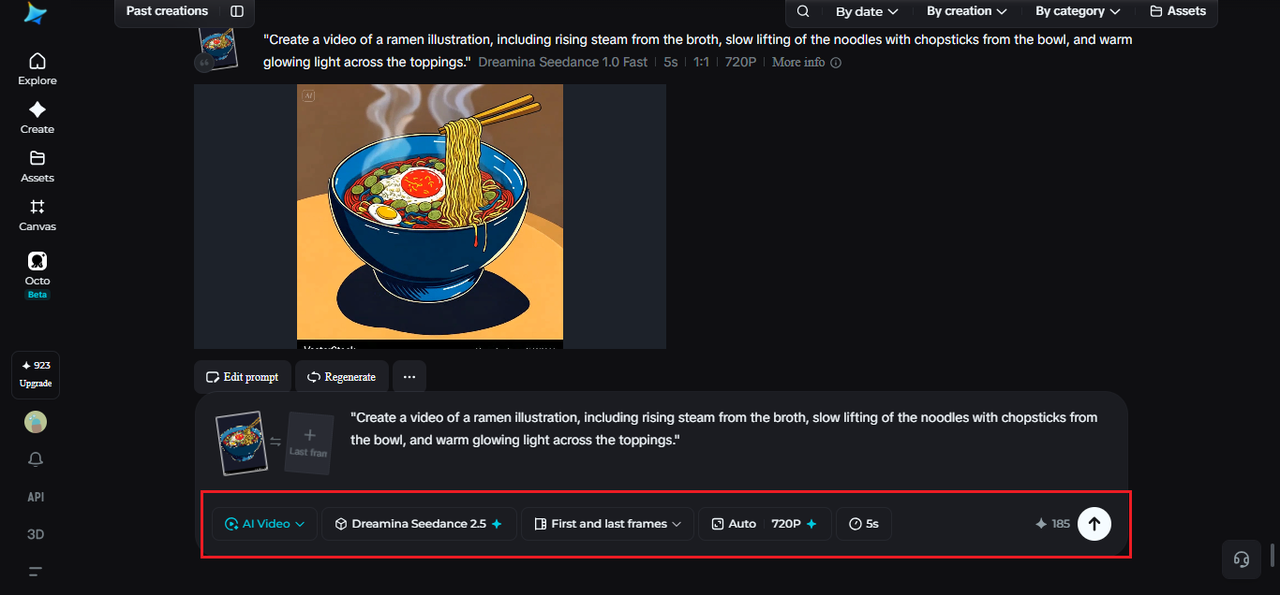
Log in to Dreamina and find the "AI Video" category. Click on "Add reference image," upload your food illustration and describe how it should move.
To create a video, use the following prompt: "Create a video of a ramen illustration, including rising steam from the broth, slow lifting of the noodles with chopsticks from the bowl, and warm glowing light across the toppings."
Step 2: Generate with Seedance 2.5
Choose the Seedance 2.5 model, set your video length, then pick an aspect ratio, 1:1 or 4:5 for a menu or social post, 9:16 for Reels and TikTok. Click Dreamina's generate icon and let the dish come alive.
Step 3: Refine and export the finished video
Use Dreamina's editing tools to finish it off. Upscale for richer detail on texture and steam, generate a soundtrack for a light ambient or sizzling audio layer, then export and use it across your menu or marketing channels.
What Seedance 2.5 adds to food visuals
Seedance 2.5, Dreamina's most advanced video generation model, is well matched to the small, sensory motion food content depends on.
Texture and warmth that feel real
Comprehensive quality improvements reduce the flat "AI look" and add believable texture and warmth, so steam, glaze, and melt all read as genuinely appetizing rather than artificial.
Precise touch-ups on a single detail
Local editing lets a single garnish or detail be adjusted without regenerating the whole scene, useful when only one part of an otherwise great shot needs a fix.
A complete creative brief
Multimodal input support means a menu description or brand style reference can be layered in alongside the illustration, giving the model more context than the image alone.
A clean file, ready for longer sequences
Stray subtitles and unwanted background music are removed automatically, and extended duration up to 180 seconds in Ultra-long mode supports a full recipe-style sequence when needed.
Writing prompts that capture texture
Naming specific sensory details — steam, glaze, melt, drip — gives the model a much clearer sense of what kind of motion to render, rather than defaulting to generic, non-specific movement across the dish that could apply to almost any plate.
Choosing the right format for your platform
A square or vertical format suits a menu screen or social feed post, while a slightly longer, wider version works well for a website hero section or a paid ad where viewers are more likely to watch a few extra seconds.
Tying movement to the mood of the meal
There is a world of difference between a quick breakfast dish and a slow-cooked meal. While a brisk movement works well with the former, there needs to be something more substantial in terms of the latter in order to do justice to its mood and nature. The best prompts are always those that match the mood of the meal and not ones where you try to use the same pace of movement for all dishes.
Mistakes that undercut a food animation
A few habits tend to weaken the result:
- Overcomplicating the prompt with too many food elements moving at once - Choosing lighting language that reads as cold or clinical instead of warm - Skipping sound entirely, which leaves an otherwise appetizing clip feeling flat - Leaving out sensory detail in the prompt, which can lead to motion that looks technically fine but not actually hungry-making
Where animated food illustrations get used
This format shows up naturally on restaurant menus, food delivery apps, recipe content, and social campaigns for food brands, where a dish that moves tends to hold attention and drive appetite far more effectively than a static illustration sitting in a grid. Delivery apps in particular have leaned into it as a way to make menu browsing feel less like scrolling a list.
A food illustration was always trying to make someone hungry, motion just finally gives it the tools to do that properly. With Dreamina and the sensory precision behind Seedance 2.5, a drawn dish can finally look as good as it was always meant to taste, without needing a real kitchen or a food stylist on set.
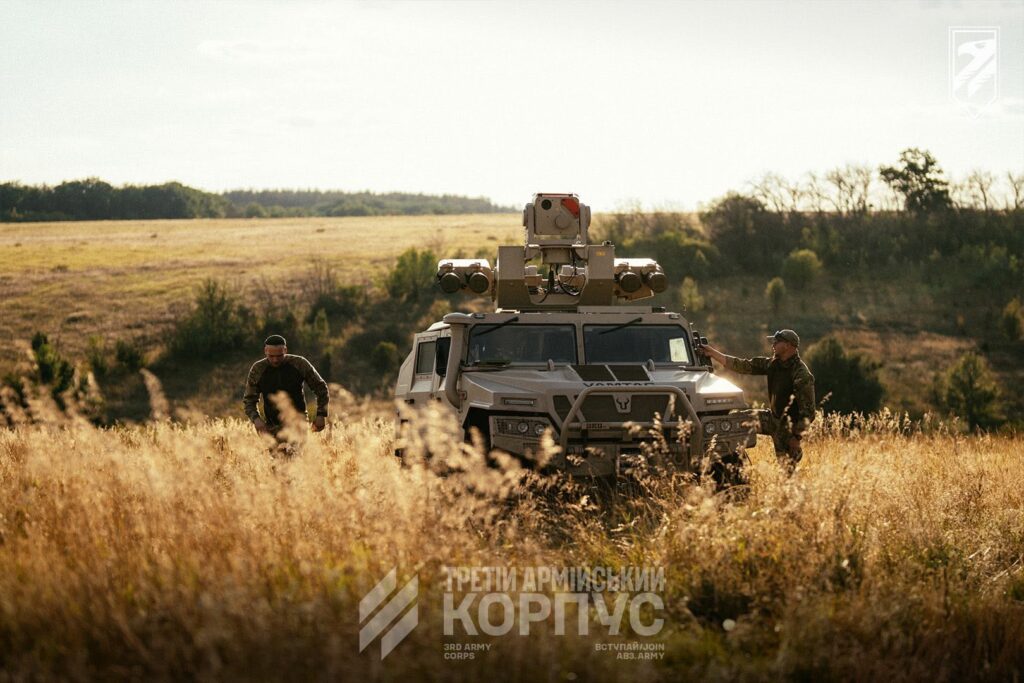
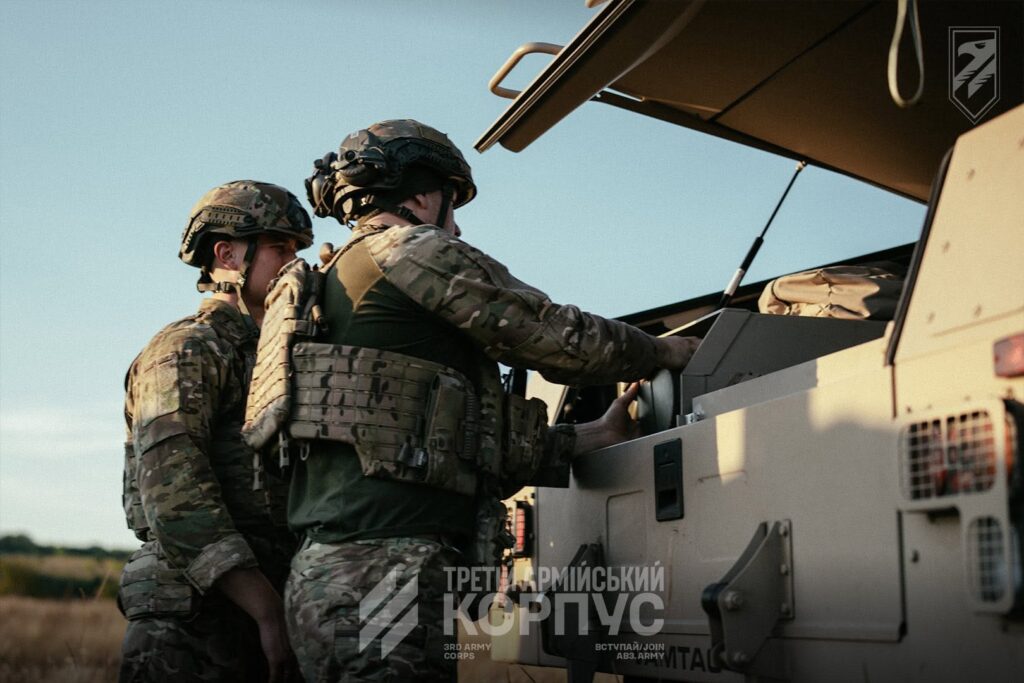
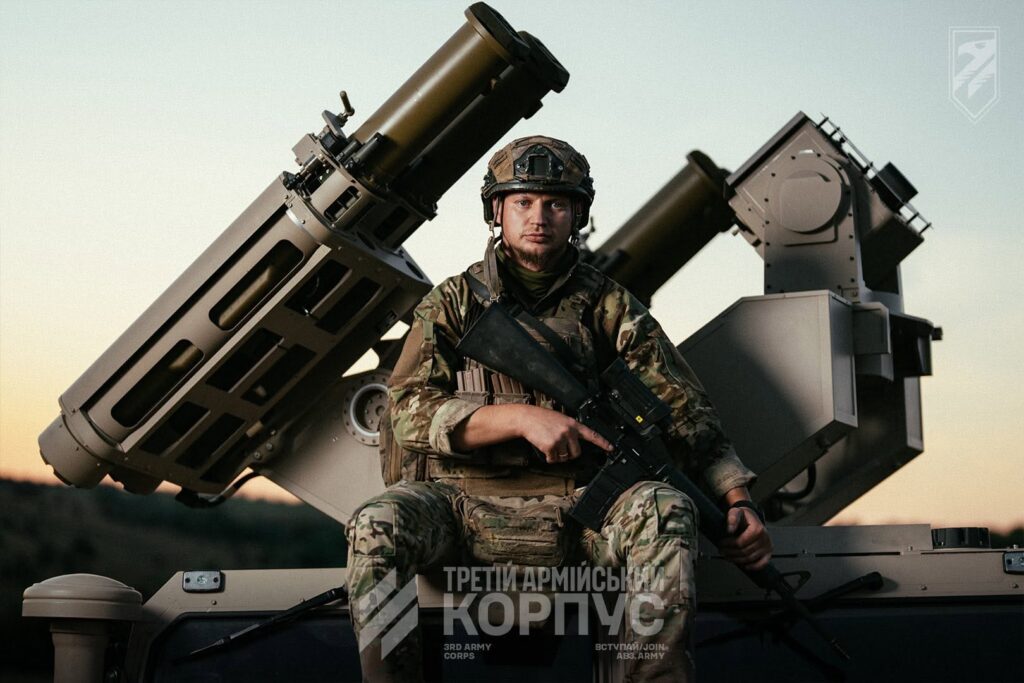
Ukraine’s Third Army Corps has released photos of the RapidRanger air defense system mounted on a URO VAMTAC armored vehicle. The troops themselves described the system as a “short-range storm.”
The system defends the sky in areas where radar cannot spot a target and other weapons cannot reach it, filling the gap between mobile fire groups and heavy, less-mobile air-defense systems. That niche — fast, cheap, and radar-independent — is exactly where Russia's Shaheds and
Ukraine’s Third Army Corps has released photos of the RapidRanger air defense system mounted on a URO VAMTAC armored vehicle. The troops themselves described the system as a “short-range storm.”
The system defends the sky in areas where radar cannot spot a target and other weapons cannot reach it, filling the gap between mobile fire groups and heavy, less-mobile air-defense systems. That niche — fast, cheap, and radar-independent — is exactly where Russia's Shaheds and small reconnaissance drones have been slipping through.
A crew from Ukraine’s 1030th “Aquila” Anti-Aircraft Missile and Artillery Regiment is loading the RapidRanger with anti-aircraft missiles ahead of a combat deployment. Source: Ukraine’s 1030th “Aquila” Anti-Aircraft Missile and Artillery Regiment
The images show a crew of the 1030th "Aquila" Anti-Aircraft Missile-Artillery Regiment arming the launcher with missiles before going on combat duty for the first time, RBC-Ukraine reports.
Light enough to ride a pickup
Rapid Ranger weighs only 500 kilograms and has a modular design that allows it to be mounted on pickups, armored cars, or even tracked platforms.
The systems in Ukrainian service ride Spanish URO VAMTAC tactical off-roaders, which reach 135 km/h, drive on public roads, and can change position quickly or cover long distances.
A crew from Ukraine’s 1030th “Aquila” Anti-Aircraft Missile and Artillery Regiment is loading the RapidRanger with anti-aircraft missiles ahead of a combat deployment. Source: Ukraine’s 1030th “Aquila” Anti-Aircraft Missile and Artillery Regiment
That mobility is the point: a launcher that can shoot and move is far harder for Russian forces to find and destroy than a fixed battery.
Laser guidance beats the decoys
The system's LMM Martlet missiles are 1.3 meters long, weigh 13 kilograms, and reach 1,800 km/h, striking targets up to seven kilometers away. Crucially, the missiles use laser guidance, not only infrared, so Rapid Ranger can hit targets with a low thermal signature or those carrying heat-emitting decoys. That makes it effective against Russian reconnaissance drones like the Orlan-10, whose small heat trail slips past heat-seeking weapons.
A crew from Ukraine’s 1030th “Aquila” Anti-Aircraft Missile and Artillery Regiment is loading the RapidRanger with anti-aircraft missiles ahead of a combat deployment. Source: Ukraine’s 1030th “Aquila” Anti-Aircraft Missile and Artillery Regiment
A 360-degree electro-optical surveillance suite gives the crew all-around coverage, and the system detects targets out to about 15 kilometers, which is more than twice its engagement range, giving the crew time to track a threat before firing.
Rapid Ranger reached Ukrainian units as part of a British military aid package, and Euromaidan Press reported in April that the system was already downing Shaheds from its Spanish mounts. The 3rd Corps' photos are the newest confirmation that Ukraine's newest Western air-defense hardware is now integrated and standing combat duty at the front.
Exclusive
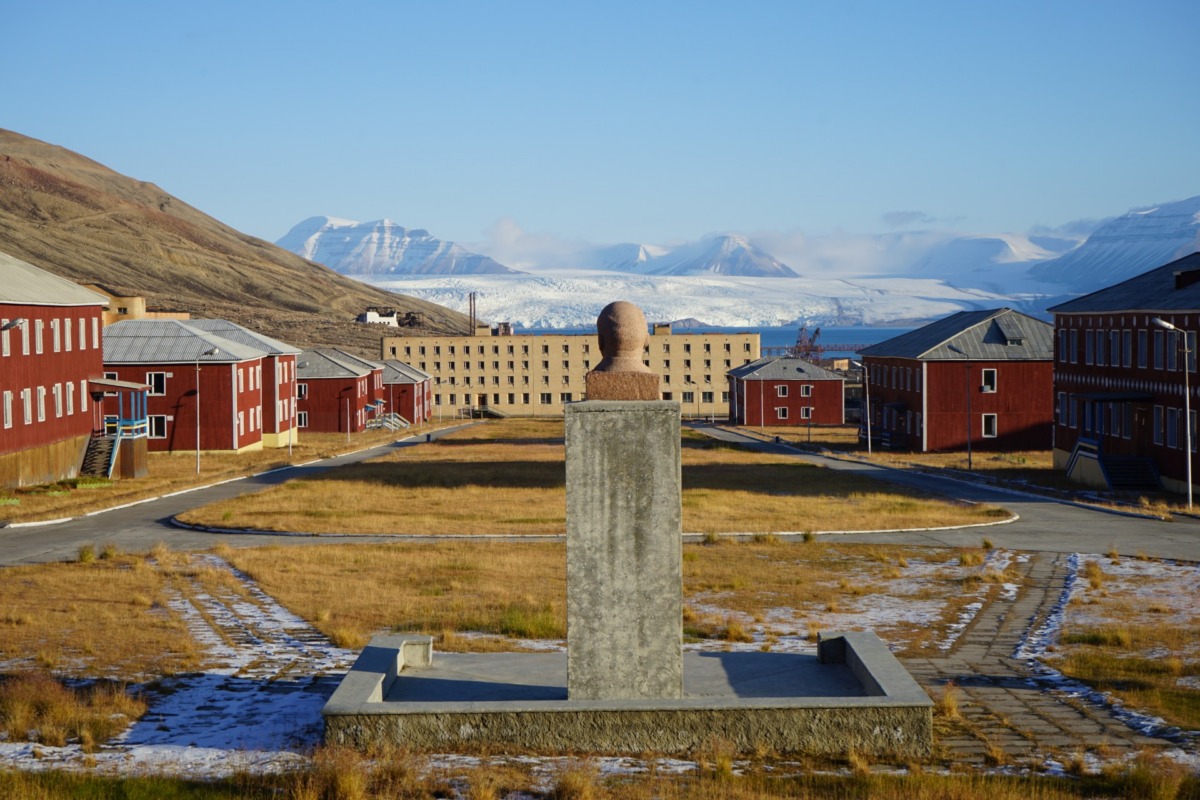
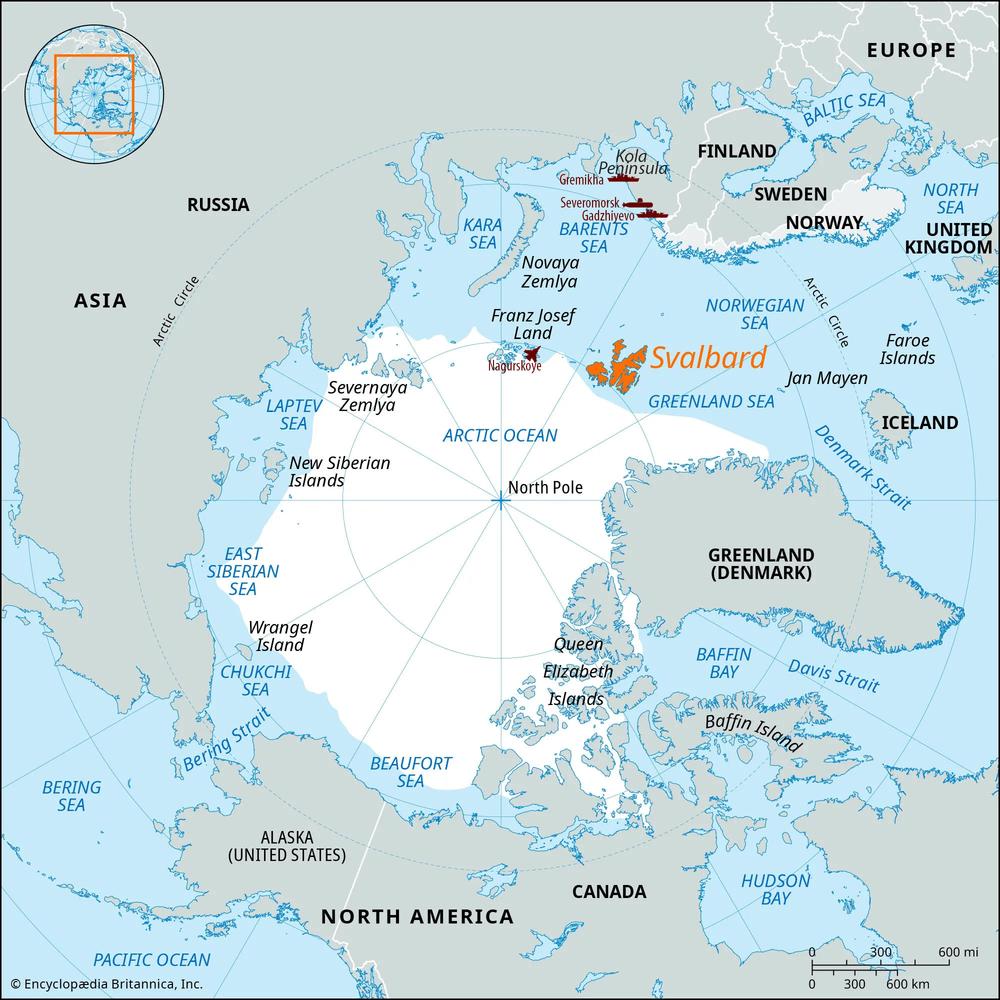
NATO vows to defend every inch. Svalbard is where Russia plans to prove it won't.. The CIA chief's visit to Moscow gave rise to warnings that Russia may be preparing to strike the Baltics. However, Russia has an easier target for the goal of paralyzing NATO.
Ukraine spent three years learning to catch Russian drones—so Russia made them fly faster. Russia's jet-powered drones don't beat Ukraine's missile defense. They threaten the cheap layer that keeps it afford
Ukraine's 58th Separate Motorized Infantry Brigade has tested a domestic dome-type electronic-warfare system, Serval Cube, against drones simulating a Russian attack. The brigade's electronic-warfare unit staged the trial under conditions close to real combat, the brigade said.
Serval Cube jams the control, navigation, and video-transmission channels a drone depends on rather than destroying it outright, Armyinform said. That kind of interference does not bring down th
Ukraine's 58th Separate Motorized Infantry Brigade has tested a domestic dome-type electronic-warfare system, Serval Cube, against drones simulating a Russian attack. The brigade's electronic-warfare unit staged the trial under conditions close to real combat, the brigade said.
Serval Cube jams the control, navigation, and video-transmission channels a drone depends on rather than destroying it outright, Armyinform said. That kind of interference does not bring down the aircraft. It strips it of the ability to complete a mission or return to its operator.
Ukraine's counter-drone field is crowded
The Serval Cube system. Source: Ukraine's 58th Separate Motorized Infantry Brigade
Ukrainian defense firms have been racing to field more of this kind of gear this year: in July, Contra Drone unveiled a 20-system counter-drone architecture combining electronic warfare, radar, and autonomous interceptors.
Another firm, Rebel Group, said this week its stationary jamming and signals intelligence system, Brama, has cleared range and lab testing and is now seeking official codification. Brama works by detecting a drone's analog video frequency, decoding it, and jamming both the video and control channels at once.
EW now shields nearly everything at the front
Electronic warfare has become one of the key elements of front-line defense, the brigade said, covering troops, positions, logistics routes, transport, shelters, and the launch sites of Ukraine's own drones against Russian FPV drones and reconnaissance UAVs.
FPV drones — small, camera-equipped quadcopters flown by a remote pilot wearing video goggles — have become a primary strike weapon for both sides along the front this year. That is why soldiers constantly test and refine the equipment they carry, the brigade said.
A scripted attack, and nothing got through
The brigade's electronic-warfare company ran the test, building a scenario meant to mirror combat as closely as possible: at one position, operators launched Mavic quadcopters, widely used for reconnaissance, alongside FPV strike drones. At another, the unit deployed the Serval Cube complex.
Serval Cube suppressed every drone launched against it during the trial — none reached its designated target, the brigade said.
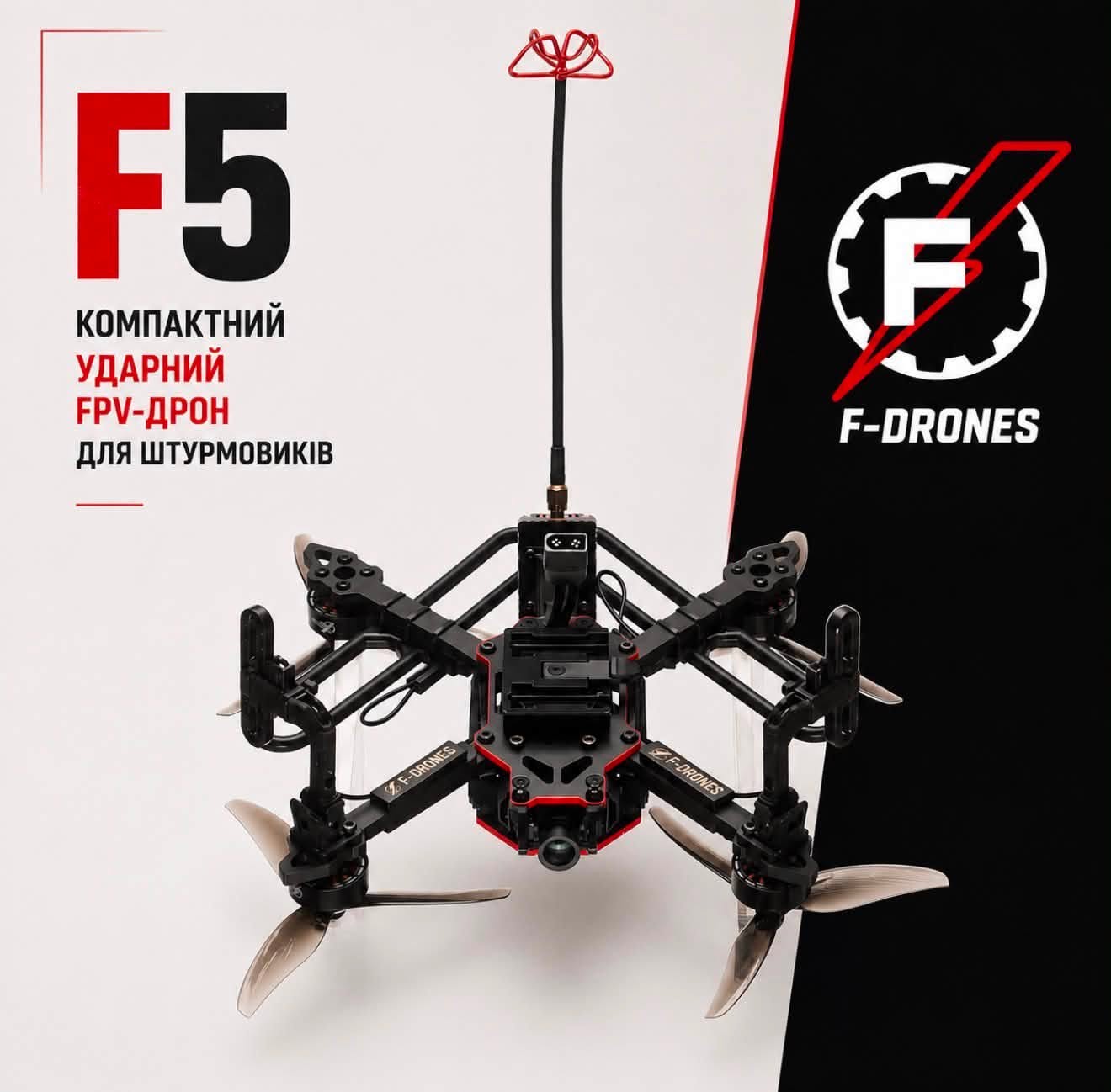
Twenty Ukrainian companies are now building jet-powered interceptors to down Russia's increasingly fast jet-powered drones. One of them, the Ukrainian-British startup Firebolt Engineering, already has an interceptor flying combat missions with two Air Force units and Ukraine's special operations forces, Defender Media reports.
Russia launched more than 2,500 jet-powered drones at Ukraine in August alone, straining air defenses built to catch the slower, piston-engine Sh
Twenty Ukrainian companies are now building jet-powered interceptors to down Russia's increasingly fast jet-powered drones. One of them, the Ukrainian-British startup Firebolt Engineering, already has an interceptor flying combat missions with two Air Force units and Ukraine's special operations forces, Defender Media reports.
Russia launched more than 2,500 jet-powered drones at Ukraine in August alone, straining air defenses built to catch the slower, piston-engine Shahed-136. Ukrainian Defense Minister Yevhen Khmara said on 30 August 2026 that four interceptor systems have cleared field testing and are being scaled toward mass production. It is unclear whether Griffen, Firebolt's drone, is among them.
Grenadyr funds a spinout
Firebolt was spun out after the UK-based investment fund Grenadyr backed the team behind the interceptor project. Grenadyr's director, Tomasz Wozniak, told the outlet that a reliable way to intercept jet-powered Shaheds "has never been more important" as Russia scales up the faster drones.
Grenadyr and Firebolt have not disclosed the size of the investment, though the fund's check ranged from $350,000 to $1.3 million.
The new company employs up to 25 people across Ukraine and the UK, split into component manufacturing, final assembly, and calibration, plus a separate R&D unit. Its CEO, who asked to be identified only as Mykola, led the interceptor project prior to the spinout.
Griffen flies, but not against jets yet
Griffen, Firebolt's first product, is a fixed-wing, jet-powered interceptor that reaches speeds above 350 km/h, altitudes above 7.5 km, and a range of up to 120 km, according to Defender Media. Mykola said the team aims to push its speed past 400 km/h through aerodynamic changes. The drone currently costs an estimated $8,300–$10,500.
Griffen still flies on Chinese engines while its British partner, Dynamic Propulsion, develops a turbojet built specifically for the drone, with test samples expected by the end of summer. Firebolt can build 30 Griffens a month and is working to add more crews to fly them, Mykola said. The drone's first confirmed kill, however, was a conventional-engine Geran — not the jet-powered variant it was designed to catch.
Autonomy waits on Ukraine's radars
Firebolt is developing a homing system meant to let Griffen find and strike targets without an operator, a goal shared by rival interceptor makers The Fourth Law, SkyFall, and F-Drones. The system is in testing and expected to ship by default by mid-fall, Mykola said.
Full autonomy, he added, is bottlenecked by Ukraine's radar coverage, which he described as too thin and fragmented to reliably feed target data to an autonomous drone. Closing that gap, he said, depends on the state buying more radars — a decision outside Firebolt's control.
Air-raid alerts covered a record share of working hours at shopping centers across Ukraine in August. Sirens ran for 21.8 percent of the hours malls were open, the Ukrainian Council of Shopping Centers reported.
For more than a fifth of the hours malls were open to serve customers, sirens instead sent staff and shoppers to shelters. The share has more than doubled in a year. The climb is related to Russia's escalating air campaign: Moscow ran a seven-day barrage of ball
Air-raid alerts covered a record share of working hours at shopping centers across Ukraine in August. Sirens ran for 21.8 percent of the hours malls were open, the Ukrainian Council of Shopping Centers reported.
For more than a fifth of the hours malls were open to serve customers, sirens instead sent staff and shoppers to shelters. The share has more than doubled in a year. The climb is related to Russia's escalating air campaign: Moscow ran a seven-day barrage of ballistic missiles and jet-powered drones against Kyiv into early September, the kind of assault that keeps sirens running through the business day.
Every tracked measure rose
The council considers four figures: the number of alerts, the number during mall working hours, the total alert duration, and the duration during working hours. All four climbed from July to August, it says.
Five regions bear the worst of it
The five regions with the most daytime alert time, between 10 a.m. and 9 p.m., barely changed over the month, the council says. Donetsk Oblast led at 82.0 percent, followed by Sumy at 76.4, Zaporizhzhia at 71.4, Kharkiv at 60.3, and Chernihiv at 40.1.
The sharpest monthly jump fell in Kyiv and Kyiv Oblast.
Faster drones drive the sirens
Russia has switched to jet-powered drones that fly more than three times faster than the propeller Shaheds Ukraine spent three years learning to shoot down. The faster a drone reaches a city, the less time defenders have to catch it.
That is what fills the sirens. Alerts sound earlier and stay on longer, which is the shared council measure.
Ukraine races to answer them
Ukraine has four interceptor systems in field testing, built to take down jet drones, Defense Minister Yevhenii Khmarasaid on 30 August. The country now wants to bring them to standard and build them in the thousands.
Until that layer works, every jet-drone raid costs Ukraine a long air alert that empties a shopping center.
Downtime piles up over years
Since the full-scale war began, the average Ukrainian mall has lost 166.8 working days to air-raid alerts, according to the report. August 2026 alone accounted for 6.4 of them.
That is more than eight working months of shuttered trading floors, and it is still climbing.
Ukraine has asked the EU to spend billions from its support loan on Patriot air-defense missiles, a request European Commission President Ursula von der Leyen confirmed the bloc is weighing. How far the money would stretch depends on a price only Washington controls.
Russia keeps firing more ballistic missiles at Ukrainian cities than the country can shoot down, the warheads hardest for its air defenses to stop. Only a US-made Patriot system can catch them, and their in
Ukraine has asked the EU to spend billions from its support loan on Patriot air-defense missiles, a request European Commission President Ursula von der Leyen confirmed the bloc is weighing. How far the money would stretch depends on a price only Washington controls.
Russia keeps firing more ballistic missiles at Ukrainian cities than the country can shoot down, the warheads hardest for its air defenses to stop. Only a US-made Patriot system can catch them, and their interceptors remain in short supply worldwide, so who pays for them and Washington that agrees or disagrees to sell them now shapes how many cities stay covered.
The exemption Kyiv needs
The European Commission has already received a payment request covering Ukraine's air defenses, including the PAC-3 interceptors that arm Patriot systems. Von der Leyen put it at "several billion euros" and said member states were reviewing it, without naming a figure.
Suspilne, citing its own sources, reported that the request seeks just over $2.3 billion, with another $4.6 billion from the loan's defense tranche going to arms manufactured in Ukraine and the EU, mostly drones.
The money would come from the EU's $104 billion support loan for 2026–27. Because PAC-3 is US technology, spending loan money on it needs an EU exemption. National representatives will take up the decision on 7 September.
What the money actually buys
Defense Express has calculated how many interceptor missiles Ukraine can get with the loan. At the $4–5 million per round the US Army pays, $2.3 billion would fund 460-580 interceptors. At the $6.61 million export price Germany paid in late 2024, about 315. At up to $12.3 million each, the US cleared for Saudi Arabia on 30 January 2026, just 190.
Why money isn't the real problem
For Ukraine, the harder question is not price but whether it can get the missiles at all. Even 315 rounds would equal about half the world's current yearly output, which the sole producer, Lockheed Martin, is straining to lift from around 600 a year to 2,000 by 2030.
Kyiv has been short of interceptors for months. In August, Zelenskyy said Ukraine reached a deal with the US for monthly Patriot deliveries, but that it still needs at least around 5% of American output to get through winter. EU Foreign Policy Chief Kaja Kallas has urged member states to hand over interceptors, especially those with shelf lives nearing their end.
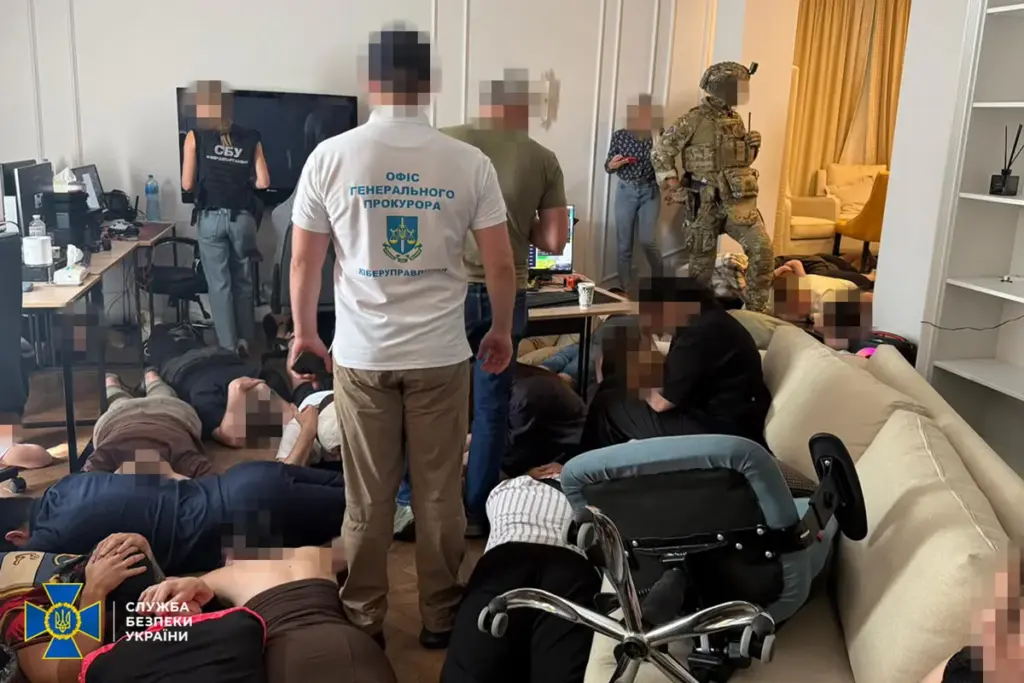
Ukraine’s Security Service (SBU) and National Police shut down a Kyiv-based network of several dozen people who allegedly used fake cryptocurrency investment platforms and malicious code to steal digital assets from citizens of EU countries, the SBU said on 1 September.
Investigators identified the alleged organizer as a 25-year-old Kyiv IT specialist, according to the SBU. The case reaches beyond Ukraine because the agency says the alleged victims were EU citizens. The
Ukraine’s Security Service (SBU) and National Police shut down a Kyiv-based network of several dozen people who allegedly used fake cryptocurrency investment platforms and malicious code to steal digital assets from citizens of EU countries, the SBU said on 1 September.
Investigators identified the alleged organizer as a 25-year-old Kyiv IT specialist, according to the SBU. The case reaches beyond Ukraine because the agency says the alleged victims were EU citizens. The agency said the network’s monthly turnover from funds obtained illegally could reach $1 million during its most lucrative periods.
The SBU said investigators had documented alleged crimes by every member of the group. However, its statement did not specify how long the network had operated, how many EU citizens were affected, which countries they lived in, or the total amount allegedly stolen.
The agency did not name any foreign law enforcement partners involved.
How the crypto ring operated
The alleged organizer of the crypto ring recruited other tech workers in the capital, the SBU said. Posing as cryptocurrency-platform representatives, they offered targets seemingly profitable ways to invest in digital assets.
The network found victims by posting about supposedly lucrative crypto projects in popular Telegram channels, then showed them fabricated trading results and fake profits to make the operation look legitimate, investigators said.
Engaged targets were sent a link to a counterfeit site that mimicked a real crypto service and were persuaded to connect their wallets and approve a transaction, the SBU said. The site carried malicious code called a “drainer” that, the agency said, let the operators withdraw the victims’ assets to addresses they controlled—emptying the wallets.
During 23 searches of the suspects’ offices and homes, officers seized phones, computers, money believed to be criminal proceeds, and 16 high-end cars, including Porsche, BMW, and Mercedes-Benz models, the SBU said.
Authorities were still deciding whether to serve notices of suspicion, while the investigation continued under the Prosecutor General’s Office, the SBU said. Those involved could face up to 12 years in prison with confiscation of property.
Ukraine’s role in combating cross-border cybercrime
Ukraine has previously joined with foreign agencies to pursue cross-border cyber threats. In April, the SBU said it worked with the FBI, EU law enforcement, and Polish counterintelligence to disrupt Russian military-intelligence spying through hacked routers. The operation blocked more than 100 servers and removed hundreds of routers in Ukraine from Russian control.
Russian losses reached one of the highest of the entire full-scale war in August, Ukraine's Defense Ministry says, citing General Staff data. Last month, Ukraine killed or wounded 42,020 invaders.
As its frontline losses climb, Russia is escalating its terror against Ukraine's civilians. Moscow uses large numbers of ballistic missiles and new jet-powered drones to do it. Russia opened its latest drone assault on 27 August, two days after CIA director John Ratcliffe arr
Russian losses reached one of the highest of the entire full-scale war in August, Ukraine's Defense Ministry says, citing General Staff data. Last month, Ukraine killed or wounded 42,020 invaders.
As its frontline losses climb, Russia is escalating its terror against Ukraine's civilians. Moscow uses large numbers of ballistic missiles and new jet-powered drones to do it. Russia opened its latest drone assault on 27 August, two days after CIA director John Ratcliffe arrived in Moscow, and has kept it up since.
For comparison, Russia lost 42,860 soldiers in July, 33,760 in May, and 39,290 in June, the ministry says.
Ukraine takes another step toward its goal
Ukraine's Defense Ministry states that effectively destroying Russian manpower and logistics is among its priorities, so that Russia's losses reach a level that forces it to abandon its plans of conquest.
"August's losses for the Russian army were another step toward reaching that goal," the Defense Ministry says.
Ukraine began its logistics lockdown late this May. It is a coordinated campaign to scale up medium-range drone strikes against Russian supply convoys, depots, command nodes, and air-defense systems 20 to 200 kilometers behind the front.
Russia loses more than men
Ukraine's Defense Forces also struck 13,835 vehicles and fuel tankers in August.
Over the month they hit an estimated:
89 tanks;
197 armored combat vehicles.
On top of that, 1,827 Russian artillery systems were destroyed or disabled.
"Inflicting such losses systematically raises the cost of continuing the war for Russia and forces it to spend ever more resources replacing manpower, equipment, and weapons," the ministry says.
How does Russia answer the losses?
Ukraine's Office of the President has said Russia is preparing an additional mobilization wave in 2026–2027, aiming to draft 300,000 people this year and 300,000 next. Those figures are a response to the steady rise in frontline losses, the office adds.
Meanwhile, Russian President Vladimir Putin called that information "nonsense" after the Shanghai Cooperation Organization summit in Bishkek.
At the same time, legal-aid organizations report a covert mobilization across Russia's regions and occupied territories. Over the past month and a half, residents of at least 17 Russian regions have complained of forcible detention, beatings, and coercion into signing contracts with the Russian Defense Ministry.
Kazakhstan’s privately owned Kondensat refinery will process Russian crude and return about 70% of the resulting petroleum products to Russia, Kazakh Energy Minister Yerlan Akkenzhenov said on 25 August, Radio Liberty reported.
Based on figures reported by Radio Liberty, the roughly 70% of Kondensat’s maximum gasoline output bound for Russia would amount to about 0.3% of the country’s daily summer gasoline demand. That makes the arrangement a limited stopgap rather than
Kazakhstan’s privately owned Kondensat refinery will process Russian crude and return about 70% of the resulting petroleum products to Russia, Kazakh Energy Minister Yerlan Akkenzhenov said on 25 August, Radio Liberty reported.
Based on figures reported by Radio Liberty, the roughly 70% of Kondensat’s maximum gasoline output bound for Russia would amount to about 0.3% of the country’s daily summer gasoline demand. That makes the arrangement a limited stopgap rather than a solution. John Roberts of the Atlantic Council nevertheless told the outlet that even small additional supplies could help during an acute shortage, including at the front: “It helps, but it doesn’t solve the problem.”
Ukrainian drone strikes have knocked dozens of Russian refineries offline in recent months, forcing Moscow to restrict fuel exports and reimpose rationing, Radio Liberty reported. Gasoline caps returned to Moscow and St. Petersburg in August, while Rosneft reportedly limited fills to 30 liters per car at every station nationwide.
Kondensat has processed Russian oil before. The refinery began handling supplies delivered through Tatneft’s TANECO refinery in 2024, when Kazakhstan and Russia agreed to permit exports of fuel produced from Russian feedstock back to Russia. The arrangement was renewed in 2025, according to Radio Liberty.
Central Asia has no spare refining capacity that could materially change Russia’s situation, Ukrainian energy analyst Hennadiy Riabtsev told Radio Liberty’s Schemes project. Possible contributions from Kazakhstan, Kyrgyzstan, India, China, and Belarus would remain a drop in the ocean for the Russian market, he said.
Prospective suppliers also understand that Russian fuel demand supports the war effort and that assisting Moscow could carry sanctions risks, Ukraine’s presidential sanctions commissioner, Vladyslav Vlasiuk, told Schemes. Kyiv therefore does not expect a queue of countries willing to supply Russia with petroleum products, he said.
Russia’s fuel shortage gives Kazakhstan room to bargain
Russia’s shortage has spread from gas station queues to farming and public transport, with fuel-sale restrictions officially covering more than 40 regions by July, Euromaidan Press reported, citing The Moscow Times. Moscow’s export restrictions have also raised prices and tightened supplies across Central Asia.
Yet Russia’s growing dependence gives Kazakhstan additional bargaining room. Ukrainian strikes have previously prompted Russian retailer Wildberries to expand its warehousing operations in Kazakhstan, while Astana has promoted domestic competitors.
Ukraine saved more than $45 million on a single army purchase by opening it to competing bidders. The purchase was 5,000 pickup trucks, carried out through the open Prozorro tender system, Ukraine's Defense Ministry said on 2 September.
Competitive tenders of this kind saved its procurement agency nearly $362 million on non-lethal supplies in 2025, about 15 percent below expected cost, the ministry reported. The trucks are one more category moved from closed contracts t
Ukraine saved more than $45 million on a single army purchase by opening it to competing bidders. The purchase was 5,000 pickup trucks, carried out through the open Prozorro tender system, Ukraine's Defense Ministry said on 2 September.
Competitive tenders of this kind saved its procurement agency nearly $362 million on non-lethal supplies in 2025, about 15 percent below expected cost, the ministry reported. The trucks are one more category moved from closed contracts to open bidding.
Volunteers used to carry this
Pickups are among the most-wanted vehicles at the front and among the longest neglected by the state, the Defense Ministry noted when it launched the tender. Until now, the need fell to volunteer drives and troops' own money.
"These are brand-new vehicles with a manufacturer's warranty, all-wheel drive, with powerful diesel engines,"Mstyslav Banik, Ukraine's deputy defense minister, said.
The trucks do everything up close
The pickups are essential for logistics, evacuation, unit mobility, and drone-crew work, former DOT director Arsen Zhumadilov said when the tender opened. That range of use is why they rank among the most-requested vehicles on the front.
The agency ran the market consultations, set the technical requirements, and vetted the suppliers for the order.
Six suppliers, not one
The order was split into lots, so six different companies will deliver the trucks rather than a single contractor. The ministry frames that as insurance: if one supplier fails, the rest still deliver. This is the largest batch of pickup trucks from the state.
The purchase began in May, so the first trucks would arrive before the cold. The full batch is due by the end of 2026.
Drones are meant to be next
Then-defense minister Mykhailo Fedorov said in May that an earlier competitive tender for 155mm shells had cut costs by more than 16 percent. The next category to move to open bidding, he said, would be FPV, mid-strike, and deep-strike drones.
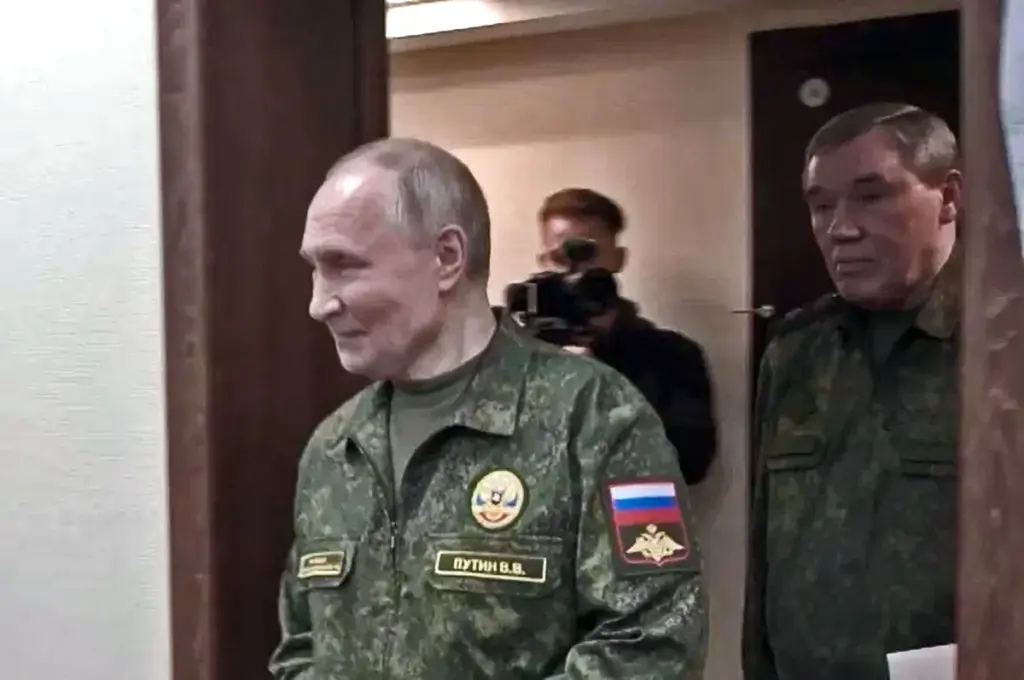
Asked about reports in Ukrainian and Western media that Russia could order a mass mobilization after September’s parliamentary elections, Vladimir Putin replied: “That’s complete nonsense. It’s an information attack on Russia,” RBC reported. He was speaking after the Shanghai Cooperation Organization summit in Bishkek.
Ukraine’s military and foreign intelligence services say Russia’s General Staff has prepared a scenario for mobilizing an additional 600,000 people durin
Asked about reports in Ukrainian and Western media that Russia could order a mass mobilization after September’s parliamentary elections, Vladimir Putin replied: “That’s complete nonsense. It’s an information attack on Russia,” RBC reported. He was speaking after the Shanghai Cooperation Organization summit in Bishkek.
Ukraine’s military and foreign intelligence services say Russia’s General Staff has prepared a scenario for mobilizing an additional 600,000 people during 2026 and 2027—300,000 each year. Their briefing described a contingency, not an issued call-up, and did not say mobilization had begun. If activated, the agencies said, the recruits would primarily reinforce units fighting Ukraine and newly formed military units.
Ukraine’s intelligence services linked the scenario to mounting battlefield losses and a slowdown in contract recruitment. They said Russia lost roughly 240,000 personnel from January through July, including at least 140,000 killed or permanently lost, while recruiting about 232,000 contract soldiers. The figures could not be independently verified.
Russia’s military also rehearsed procedures for mobilizing residents of Kaliningrad Oblast in July, Ukrainska Pravda reported, citing The Wall Street Journal.
Reports of a possible draft have generated concern inside Russia. More than 20,000 people crossed into Georgia through the Verkhny Lars checkpoint in a single day amid fears of mobilization, as EP previously reported.
Ukraine’s warnings and Russia’s denials
Ukrainian President Volodymyr Zelenskyy said in August that Moscow planned to mobilize several hundred thousand people after the elections and roughly the same number in 2027, citing military intelligence. HUR deputy chief Vadym Skibitskyi later assessed that a call-up could provide troops for a northern offensive by February 2027, while stressing that the agency saw no preparations underway at the time.
Dmitry Medvedev, Vasily Nebenzya, and the State Duma’s defense committee have all denied plans for another mass draft. Russian officials issued similar denials shortly before Putin announced the 2022 call-up. RBC notes that the decree authorizing that mobilization was never formally revoked. No new call-up has been publicly announced or reported as underway.
Ukraine’s General Staff confirmed that Ukrainian forces struck the Novatek-Ust-Luga production complex in Russia’s Leningrad Oblast on 1 September, saying the target was hit and a fire followed. The scale of the damage remains under assessment.
Russian authorities initially acknowledged damage and a fire but did not identify the facility. Ukraine’s military intelligence later named the Novatek complex as the target, and the General Staff has now confirmed the strike and
Ukraine’s General Staff confirmed that Ukrainian forces struck the Novatek-Ust-Luga production complex in Russia’s Leningrad Oblast on 1 September, saying the target was hit and a fire followed. The scale of the damage remains under assessment.
Russian authorities initially acknowledged damage and a fire but did not identify the facility. Ukraine’s military intelligence later named the Novatek complex as the target, and the General Staff has now confirmed the strike and said the facility supports Russia’s armed forces. It did not explain how, nor say whether, production was disrupted.
Ukraine’s military intelligence agency, HUR, was first to identify the target, saying on 1 September that its operators had struck the complex alongside Ukraine’s Defense Forces in a joint deep-strike operation. Key elements of the site’s oil-processing installation and other equipment were hit, and a large fire broke out, the agency said. The General Staff confirmed the strike the following day.
Video of the overnight attack on the port of Ust-Luga in Russia’s Leningrad region. pic.twitter.com/dXG5XTkhab
The Novatek complex at Ust-Luga separates stable gas condensate—a liquid produced during natural gas extraction—into fuel and petroleum components and handles their shipment through the Baltic port. Its design capacity exceeds six million tons a year, the General Staff said. The plant produces light and heavy naphtha, kerosene, a diesel fraction, and a marine-fuel component.
Explore further
Drone attack damages Russia’s Baltic oil port as drone crosses Latvia into Estonia
Ukraine has repeatedly targeted the Ust-Luga port
Before Ukraine named the target, Leningrad Oblast Governor Alexander Drozdenko acknowledged infrastructure damage and a fire at Ust-Luga on 1 September, but did not identify the specific facility. HUR subsequently named the Novatek complex as the target and reported damage to key equipment.
The operation continued Ukraine’s campaign against Ust-Luga’s energy and port infrastructure. Ukrainian agencies confirmed the first strike on Novatek’s complex overnight on 24–25 March. Drones returned on 31 March, setting fuel-storage tanks ablaze, damaging a pier and pumping equipment, and temporarily halting port operations, followed by another reported attack on 7 April. Ukrainian drones last hit the port on 14 August, marking the sixth such attack there in 2026.
Estonia is automatically diverting emails using Russia’s .ru internet domain into quarantine for additional security checks before they reach state institutions connected to the country’s secure government network, Justice and Digital Affairs Minister Liisa Pakosta told Estonia's public broadcaster ERR.
The measure is intended to protect Estonian government computer systems amid a post-2022 surge in cyberattacks that officials link to Russia. It applies only to institut
Estonia is automatically diverting emails using Russia’s .ru internet domain into quarantine for additional security checks before they reach state institutions connected to the country’s secure government network, Justice and Digital Affairs Minister Liisa Pakosta told Estonia's public broadcaster ERR.
The measure is intended to protect Estonian government computer systems amid a post-2022 surge in cyberattacks that officials link to Russia. It applies only to institutions operating inside the secure state network, leaving local governments and some state bodies outside.
Many Estonian residents, particularly Russian speakers, still use .ru email services, ERR noted. Because the filter is triggered solely by the address ending, legitimate messages will be screened alongside potentially malicious ones and may take longer to arrive.
Pakosta said the safeguard was necessary because cyberattacks against Estonia had increased “exponentially” since 2022 and that many were linked to Russia. She said such attacks had not succeeded against Estonia, while major public-sector cyberattacks had succeeded in both Latvia and Lithuania.
The rerouting is automatic and handled centrally, so agencies do not need to take any action, Pakosta said. A large proportion of state institutions have already moved behind the government’s unified cyber shield, while the transition continues.
Pakosta described the quarantine as one small measure within Estonia’s wider cybersecurity work. Estonia’s courts have gone further, saying they will ask parties in legal proceedings to stop using .ru addresses for official communication, according to ERR.
How the Baltic states are hardening against Russia
Estonia's email quarantine forms part of a broader Baltic effort to limit Russian influence and strengthen defenses against military, cyber, and covert threats.
Estonia, Latvia, and Lithuania are constructing a Baltic Defense Line, a planned network of bunkers, anti-tank ditches, and other barriers, along their borders with Russia and Belarus. Latvia has also banned imports of Russian and Belarusian books, clothing, toys, and other goods.
The threat extends beyond cyberattacks: an Estonian court found that Russia’s military intelligence agency, the GRU, ordered the 2024 firebombing of a Ukrainian restaurant in Tallinn, part of a wider Russian sabotage campaign targeting European supporters of Ukraine.
Russian President Vladimir Putin said Armenia's 2025 law launching the EU accession process "amounts to a declaration of withdrawal" from the Russia-led Eurasian Economic Union. Armenian Prime Minister Nikol Pashinyan replied that Armenia had filed no notice to leave and had violated none of the bloc's rules. The leaders met on 1 September in Bishkek, Kyrgyzstan, during a Shanghai Cooperation Organization summit.
The exchange turns Armenia's westward shift into an open
Russian President Vladimir Putinsaid Armenia's 2025 law launching the EU accession process "amounts to a declaration of withdrawal" from the Russia-led Eurasian Economic Union. Armenian Prime Minister Nikol Pashinyan replied that Armenia had filed no notice to leave and had violated none of the bloc's rules. The leaders met on 1 September in Bishkek, Kyrgyzstan, during a Shanghai Cooperation Organization summit.
The exchange turns Armenia's westward shift into an open dispute over how far it has already moved from Moscow. Yerevan is preparing an EU application and has frozen participation in Russia's military alliance, but it still belongs to the trade bloc. Russia remains Armenia's largest trade partner, accounting for about 35% of its foreign trade.
The disagreement
In the opening minutes, Putin acknowledged that Armenia's aspiration to join the EU was the country's "legitimate right," but said it "creates difficulties" given Armenia's membership in the bloc that links Russia, Belarus, Kazakhstan, Kyrgyzstan, and Armenia. He told Pashinyan that adopting a law launching the process of joining another organization "amounts to a declaration of withdrawal from ours."
Putin urged Armenia to decide quickly and repeated his call for a referendum on whether Armenia should remain in the trade bloc or pursue EU membership, telling Pashinyan to give the people a choice so the matter could be closed.
Pashinyan pushed back. He noted that the bloc's rules have no mechanism to expel a member state—only a voluntary withdrawal process requiring six months' notice—and that Armenia has filed no such notice. He told Putin the issue had not matured enough for a referendum, arguing that Armenia first needs to submit a formal EU application, receive a response, and agree on an accession roadmap.
How far Armenia has moved
Armenia's parliament passed a law launching the EU accession process in March 2025, though the government has said the law does not amount to a formal membership bid. On 24 August, Pashinyan told lawmakers that the government would begin preparing a formal application "in the near future." Armenia has also dropped the "strategic partner" label for Russia from its new government program and effectively frozen its participation in the Russian-led Collective Security Treaty Organization since early 2024.
Russia's response
Since May 2026, Moscow has imposed a series of bans on Armenian agricultural imports—including fruit, vegetables, and mineral water—citing phytosanitary concerns. The EU called the measures "economic coercion" and announced a support package of more than €50 million for Armenia in June.
Pashinyan says dialogue will continue
After the meeting, Pashinyan posted a video describing the talks as "very good" and saying the two leaders had agreed to continue a "sincere and constructive dialogue" during a future visit to Moscow. He said bilateral relations needed to be "rethought" under new circumstances.
On 1 September, Russian President Vladimir Putin said during a conversation with journalists that Russian troops had 12 km left to reach Sumy. Censor.NET estimated from DeepState’s map that Russian forces were approximately 17 km from Sumy’s administrative boundary.
Russian military commanders have systematically exaggerated their gains on the battlefield. The Institute for the Study of War (ISW) describes such claims as part of a Kremlin information campaign aimed at c
On 1 September, Russian President Vladimir Putinsaid during a conversation with journalists that Russian troops had 12 km left to reach Sumy. Censor.NET estimated from DeepState’s map that Russian forces were approximately 17 km from Sumy’s administrative boundary.
Russian military commanders have systematically exaggerated their gains on the battlefield. The Institute for the Study of War (ISW) describes such claims as part of a Kremlin information campaign aimed at creating the impression of major Russian gains. In this case, the Russian president cited exaggerated gains that, compared with his previous claims, appear to be a setback.
What Putin said
“The ‘North’ group of forces continues to create a security belt along the Russian-Ukrainian border in the border areas of the Sumy region... There are 12 km left to Sumy, to the Sumy ring road,” Putin said during the press conference.
Censor.NET reported that Russian forces were about 17 km from Sumy without specifying the reference point, while Putin did not say which section of the city’s ring road his 12 km figure referred to.
Approximate visualization of Censor.NET’s reported 17 km distance from the DeepState frontline toward Sumy. Map: DeepState / Chart: Euromaidan Press
Putin previously gave a different distance
On 28 June, during an interview with Russian propagandist Pavel Zarubin, Putin said that Russian troops had “about 10.5 km” left to reach Sumy. At the time, he also explained the offensive as the creation of a “security zone” along Russia’s border.
Putin’s claimed distance to Sumy therefore increased by approximately 1.5 km in just over two months, contradicting the Kremlin’s portrayal of a continuing advance.
Other exaggerations
In July 2026, Putin claimed that Russian forces had “completely captured” Kostiantynivka. Ukraine’s General Staff rejected the claim, saying Ukrainian forces continued defensive operations in the city. ISW also said some videos of Russian flags being raised in Kostiantynivka were likely AI-altered.
On 2 December 2025, Putin claimed that Russian forces had captured Pokrovsk in Donetsk Oblast. ISW found no evidence confirming the city’s complete capture and assessed that its fall would not enable Moscow to achieve a significant breakthrough.
US Central Intelligence Agency Director John Ratcliffe's visit to Moscow has triggered much speculation. The main thesis is that Russia may be preparing to conduct an act of aggression against a NATO member in the relatively near term to invalidate NATO's Article 5.
According to sources cited by the Wall Street Journal, Ratcliffe delivered a warning to Russia not to attack NATO countries. Estonia, Latvia, and Lithuania were singled out in a Politico report on 26
US Central Intelligence Agency Director John Ratcliffe's visit to Moscow has triggered much speculation. The main thesis is that Russia may be preparing to conduct an act of aggression against a NATO member in the relatively near term to invalidate NATO's Article 5.
According to sources cited by the Wall Street Journal, Ratcliffe delivered a warning to Russia not to attack NATO countries. Estonia, Latvia, and Lithuania were singled out in a Politico report on 26 August, citing two "sources familiar with the matter."
Every warning names the Baltics. Estonia, Latvia, and Lithuania are where the CIA pointed, where the intelligence assessments focus, where NATO has massed its tripwire forces. But the Baltics are defended. The one piece of NATO territory Russia could seize before anyone could stop it—and that hands hesitant Western capitals a ready-made excuse not to respond—lies far to the north. It is Svalbard.
CIA Director John Ratcliffe made the first known visit to Moscow by a serving CIA chief since 2021. Photo: Jemal Countess/AFP/East News.
The timeline
On 6 August, citing new US intelligence reports, the Wall Street Journal reported that "US intelligence is warning that Russia may attempt to test NATO's resolve by carrying out a limited strike against one of the Alliance's member states within the next few years." US intelligence assessments indicate that any action by Russia could occur between this autumn and 2029. This is only the latest in a series of warnings of the risk of war with Russia. Leaders of NATO's eastern flank countries recently issued public warnings, citing intelligence that Russia is preparing provocations on their territory.
The Institute for the Study of War (ISW) argues that a CIA director's personal visit to deliver a message is unusual and generally reserved for sensitive matters of the highest importance. Ratcliffe's arrival in Moscow on a C-17 military transport aircraft and his use of an American motorcade suggest that the US regarded its intelligence as urgent and sensitive—not a warning of a distant threat. The visit indicates concern about a much shorter timeline than the US intelligence reports of early August suggested.
Explore further
Latvia just moved from “Russia might attack” to “here’s where you report if it does”
That timeline is shaped by Europe's urgent effort to close its critical military vulnerabilities by 2030. Russia is unlikely to wait until Europe has regained its strength.
The last CIA director's trip to Moscow was in November 2021, when William Burns made a final effort to deter Russia's full-scale invasion of Ukraine. To state the obvious: Burns' effort failed—and he served a president friendly to NATO and to international law. Ratcliffe serves a president who treats Europe as a strategic adversary; his warning is unlikely to shift Moscow at all.
The threat: sub-threshold is over
The EU White Paper describes Russia as the "fundamental threat" to European security for the foreseeable future, citing its war economy, industrial mobilization, nuclear posture, and cooperation with Belarus, Iran, and North Korea.
According to assessments by several EU intelligence services, Russia's rapidly expanding military-production capacity could give it the ability to test the unity of Western countries and the effectiveness of Article 5 within the next three to five years. The US recently warned Poland that Russia is planning an armed provocation on Polish soil designed to test NATO's commitment to collective self-defense.
Let us be clear: Russia has been testing the unity of Western countries and the effectiveness of Article 5 for years already.
It is waging an ever-escalating hybrid war that could—and arguably should—have triggered Article 5 long ago. It is attacking critical infrastructure, conducting sabotage and cyberattacks, running influence and information operations, violating NATO airspace with missiles and drones, and flying UAV intelligence, surveillance, and reconnaissance missions over allied territory. On 23 August, The Telegraph reported, citing Western intelligence sources, that Russia has launched a new wave of attacks on weapons factories in Europe, recruiting members of local criminal gangs and testing NATO's response.
None of it has forced a response. That is the point. To test NATO's commitment to collective defense—rather than merely its patience—Russia must escalate beyond the sub-threshold. It must stage the one thing it has so far avoided: a military operation that forces NATO to confront Article 5.
To test NATO's commitment, Russia must ecalate—stage a military operation that forces NATO to confront Article 5
The window for doing so is closing. On 11 December 2025, NATO Secretary General Mark Rutte warned that Russia could attack a NATO country within five years, adding that the Alliance must "be prepared for the scale of war our grandparents or great-grandparents endured"—the first time since World War II that a secretary general has raised the prospect of a full-scale war on NATO soil. NATO's generals warn of war by 2029; Europe will not be ready until 2035. Russia has every incentive to act inside that gap, before it narrows.
The gap is real. These assessments have emerged against a backdrop of critical munitions shortages: Patriot interceptors, long-range precision-guided missiles, tactical ground-launched missile systems, 155mm artillery shells, and Stinger short-range surface-to-air missiles. US stocks have been badly depleted by weak defense-industrial production and by the Israel–US confrontation with Iran. NATO has since named Integrated Air and Missile Defense a top priority for the Alliance's survival and deterrence, calling for a 400 percent increase in air- and missile-defense capabilities. That is the measure of the shortfall. Worse, recent exercises have shown the Alliance is nowhere near ready to fight a drone war with Russia.
Most analysis fixes on the Baltics. In my opinion, there is a more likely scenario: the seizure of Norwegian sovereign territory in the High North.
Explore further
How Norway became a test target for Russia’s Arctic hybrid war
Why Svalbard: the tripwire it lacks
Admittedly, no intelligence service has ranked Svalbard above the Baltics. That is puzzling, given that while the Baltic states are a challenge for Russia, Svalbard is a challenge for NATO.
Estonia, Latvia, and Lithuania are defended by a standing tripwire. NATO permanent battlegroups operate in each—the UK leads in Estonia, Canada in Latvia, Germany in Lithuania—backed by a forward-defense posture built to stop any incursion at the border rather than liberate territory afterward. In response to Russian airspace incursions, drone provocations, and GPS jamming, NATO stood up the Eastern Sentry initiative; after repeated undersea cable cuts, it added Baltic Sentry to patrol the sea and guard the infrastructure. The Suwałki Gap—the 60-kilometer land corridor linking Poland to Lithuania between Belarus and Kaliningrad—is heavily fortified and rehearsed in large multinational exercises.
An attack on the Baltic countries hits allied forces on day one, forcing the Alliance to act, and it requires a force buildup that telegraphs intent and escalates toward exactly the general war Russia wants to avoid.
Map of selected Russian military bases in the Arctic by Encyclopedia Britannica, with edits by Euromaidan Press
Svalbard offers the opposite. There is no permanent garrison and no fortification, because Article 9 of the 1920 Svalbard Treaty bars naval bases, fortifications, and any "warlike" use of the archipelago. Norway retains the sovereign right to defend it—Coast Guard and naval vessels call at Longyearbyen, and defensive measures under Article 5 are permitted—but there is no standing tripwire, and the treaty ensures there never will be.
That is the vulnerability: Russia can seize the archipelago by surprise and present a fait accompli before any force can reach it.
And it hands hesitant Western capitals a ready-made excuse. Svalbard is Norwegian sovereign territory, and Norway holds—correctly—that Article 5 applies to it. The land-territory question is not genuinely ambiguous; Russia manufactures the ambiguity, contesting Norway's interpretation and pointing to the treaty's demilitarized character to argue that any response is itself a violation. But in a strategic environment where Western leaders seek any reason not to engage Russia, that manufactured doubt—remote outpost, unpopulated rock, a "demilitarized" treaty—is enough.
The excuse is political, not legal. And the excuse is the objective: a visibly divided Alliance, unable to agree whether or how to respond, is the entire purpose of a Russian move against a NATO member.
If Russia achieves surprise, it will meet no opposing force. The Northern Fleet operates in the area routinely; Russia's Arctic forces—roughly 15,000 to 20,000 troops across motor-rifle and naval-infantry brigades, with cold-weather armor and layered anti-access/area-denial systems—are already in place. Svalbard sits within range of Russian tactical aviation flying from the Kola Peninsula, which could establish air control fast enough to keep NATO from landing at all.
Explore further
NATO’s generals warn of war by 2029. Europe won’t be ready until 2035.
What Russia would gain
The occupation would also pay for itself many times over, shifting the balance across the entire Arctic and North Atlantic.
The primary military incentive is nuclear. The Kola Peninsula houses Russia's strategic ballistic-missile submarines, and holding Svalbard would close the shallow Barents Sea into a protected bastion where those submarines—the core of Russia's second-strike deterrent—could operate insulated from NATO. Control of the archipelago also locks the "Bear Gap," the stretch between Svalbard and Norway's North Cape. Anti-ship and anti-air batteries on the islands would let Russia choke off NATO surface and anti-submarine forces from the Barents Sea while guaranteeing its Northern Fleet unhindered breakout routes into the North Atlantic.
The Norwegian Coast Guard and Norwegian Customs were checking when the Russian Belomorye loaded fish to the Norwegian Silver Copenhagen in a fjord in Svalbard. Credit: Kystvatnek
The archipelago is also a forward platform. Using existing infrastructure such as Longyearbyen's airport, Russia could base tactical aircraft and long-range maritime patrol aircraft hundreds of kilometers further west than its current fields on Franz Josef Land. Seizing SvalSat—one of the world's largest commercial satellite ground stations—would let Moscow blind or repurpose a hub critical to Western environmental, civilian, and dual-use satellite operations. And by holding the "gateway to the Arctic," Russia would gain physical leverage over the western entrance to the Northern Sea Route, an increasingly viable shipping lane as the ice retreats.
These are gains Russia would want under any circumstances. They are not why Svalbard is the likely next target—that case rests on the tripwire it lacks and the window that is closing. But they explain why, of all the ways to test Article 5, this one carries no offsetting cost.
Explore further
Frozen front: Why Norway sees Ukraine as its Arctic security shield
Conclusion
The map confirms the logic. Baltic officials and government-affiliated analysts stress that NATO should take the Russian threat seriously but that their immediate assessment has not changed—there is no large-scale buildup along the Russian border with the Baltic states. The only NATO territory open to invasion without such a buildup is Svalbard.
According to the Norwegian Intelligence Service, Russia "will remain intent on preventing NATO from making military use of the archipelago" and aims "to increase Russian scope for action in Svalbard, to influence attitudes to Norwegian defence policy, to instil fear, polarisation and political apathy in the population and to undermine trust in Norwegian authorities—in addition to weakening support to Ukraine." Norway's proximity to the Arctic, its energy supply to Europe, and its role as a logistics and reception hub for allied forces all make it a target.
A limited attack on NATO's northern flank would aim to invalidate Article 5 by producing a situation the North Atlantic Council—which must vote unanimously to honor the mutual-defense clause—cannot resolve. Moscow would choose the operation most likely to leave NATO unable to unify on a decisive response, and thus unable to come to the aid of the member attacked.
A failure to invoke Article 5, or to act on it, would gut the credibility of the guarantee—one of Vladimir Putin's longest-standing strategic objectives beyond Ukraine.
Retaking Svalbard would mean moving NATO amphibious forces more than 1,000 kilometers across open ocean patrolled by Russian submarines and dominated by Russian aviation—an extremely risky and costly endeavor, with no guarantee of success. A Russian occupation would also feed an unhinged American president's fixation on Greenland, eroding Alliance cohesion further still.
Attacking the Baltics—defensively prepared, reinforced by allied forces, and offering none of Svalbard's advantages—makes no comparable sense.
The information war has already started. Russian Foreign Minister Sergei Lavrov published an article on 31 August accusing NATO of militarizing the Far North in a "direct threat" to Russian security and an attempt to turn the Arctic into a "new front" against Russia—laying the groundwork to frame any Russian move as a pre-emptive defense. The same day, Russia's Ambassador to Norway, Nikolay Korchunov, claimed that Norway's "creeping abandonment of its own guiding principles regarding foreign military activity on its territory undermines the country's sovereignty" and warned of "a slide into direct military conflict."
Forcing Article 5 requires a military act, and the one place where it can be staged is Svalbard.
NATO has committed, repeatedly and at every level from the Strategic Concept to the Secretary General, to defend "every inch of Allied territory." Svalbard is where Russia intends to prove that commitment empty.
Russia has exhausted the sub-threshold; forcing the Article 5 question now requires a discrete military act, and the window for it closes as Europe rearms. The one place that act can be staged—without a telegraphing buildup, against territory with no tripwire, offering a built-in political excuse for NATO to hesitate—is Svalbard.
That is why, if Russia moves, the logic points north.
Hans Petter Midttun, independent analyst on hybrid warfare, Non-Resident Fellow at the Centre for Defense Strategies, board member of the Ukrainian Institute for Security and Law of the Sea, former Defense Attaché of Norway to Ukraine, and officer (R) of the Norwegian Armed Forces.
Explore further
The alliance Russia fears isn’t NATO. It’s a coalition that will actually fight.
Russian propagandists used the Matryoshka disinformation network to circulate a digitally altered front page of the Polish regional weekly Przegląd Regionalny warning of a “hungry fall and winter” in Ukraine, the country’s Center for Countering Disinformation reported.
The fake turns genuine anxiety over Russian attacks on warehouses and food logistics into an unsupported prediction of mass starvation. The Center said Matryoshka routinely disguises fabricated material a
Russian propagandists used the Matryoshka disinformation network to circulate a digitally altered front page of the Polish regional weekly Przegląd Regionalny warning of a “hungry fall and winter” in Ukraine, the country’s Center for Countering Disinformation reported.
The fake turns genuine anxiety over Russian attacks on warehouses and food logistics into an unsupported prediction of mass starvation. The Center said Matryoshka routinely disguises fabricated material as reporting by established Western outlets, lending Russian narratives borrowed credibility while creating the impression that foreign media consider Ukraine’s situation hopeless.
The fabricated Przegląd Regionalny front page claimed Russian strikes would push 63% of Ukrainians to the brink of famine over a “hungry autumn and winter.” No such article ran—the real front page of that issue looked entirely different, and the circulated image was built using graphics-editing software, the Center said.
The image spread through Matryoshka, a network that dresses invented content in the mastheads of recognized Western outlets. In this case, the campaign was meant to frighten Ukrainians and weaken public confidence, according to the Center.
Although it impersonated a Polish outlet, the Center described Ukrainians—not Polish readers—as the campaign’s target: the Polish masthead supplied an apparently independent foreign voice for a Russian narrative.
The fake works because the disruption it points to is real. Russian attacks on warehouses and food logistics had destroyed up to 90% of Ukraine’s modern food storage capacity, and suppliers were moving stocks and changing delivery routes and storage methods in response, Agriculture Minister Taras Vysotskyisaid on 28 August 2026, according to Interfax-Ukraine.
Supermarket chain ATB has temporarily capped purchases of certain essential goods at 6 units of any single product per customer, citing both Russian strikes and resellers buying in bulk.
What the fake predicts, though, is not what officials expect. Presidential defense-technology adviser Serhii “Flash” Beskrestnov urged Ukrainians not to panic and said a systemic food shortage was not expected, ZN.UA reported.
How Russia spreads disinformation in Poland
Russia has repeatedly exploited Poland’s information space to turn political, economic, and security anxieties against Ukraine. Polish Deputy Prime Minister Krzysztof Gawkowskisaid Russian intelligence had offered Poles €3,000–€4,000 ($3,500–$4,600) to spread disinformation before the 2025 presidential election.
After Russian drones entered Poland that September, Prime Minister Donald Tusk said the Kremlin was using real fears and emotions to fuel anti-Ukrainian sentiment. False claims about Ukrainians living off Polish taxpayers have also fed hostility as bilateral relations frayed.
A fire at a Polish plant that makes drone parts for Ukraine's and Poland's militaries is being investigated as possible sabotage by a foreign intelligence service, Militarnyi reported. Poland's National Prosecutor's Office opened the case on two counts: foreign-intelligence activity against the country and a terrorist offense.
Fires and break-ins like this fit a widening pattern — the factories and supply lines that keep Ukraine armed are increasingly targets far from t
A fire at a Polish plant that makes drone parts for Ukraine's and Poland's militaries is being investigated as possible sabotage by a foreign intelligence service, Militarnyi reported. Poland's National Prosecutor's Office opened the case on two counts: foreign-intelligence activity against the country and a terrorist offense.
Fires and break-ins like this fit a widening pattern — the factories and supply lines that keep Ukraine armed are increasingly targets far from the front line. Across the continent, prosecutors keep opening the same kind of arson case against plants tied to Ukraine's defense.
A masked intruder and a two-hour fire
The fire started shortly after midnight on 31 August in the assembly hall of the WB Electronics plant in Skarżysko-Kamienna and spread to the storage rooms. Five crews put it out in under two hours. No one was hurt, but the storage rooms were destroyed, leaving at least 15 million zloty ($4 million) in damage. The plant had no permanent guards on site; a security company monitoring it remotely reported the fire.
Prosecutors say the blaze was set deliberately with a planted charge of flammable material, and no one has been charged. Security cameras recorded a masked person who climbed a fence and got onto the site.
Why Poland is looking at Moscow
Czesław Mroczek, deputy head of Poland's Interior Ministry, told RMF FM radio that many signs point to arson, and that a Russian trail is the obvious inference. An attack on the defense industry can suggest Russian involvement, he said, since European states have faced sabotage for years while backing Ukraine. Mroczek said protection plans for key defense plants must be richer than what this site had. No one has been detained, and investigators are still tracing how the intruder got in and who may have ordered it.
Explore further
After CIA head’s visit to Moscow, Poland’s PM warns Russia is preparing to escalate war. He puts critical window at seven or eight months
What the plant actually makes
WB Electronics is the core of WB Group, Poland's biggest private arms holding, whose firms build reconnaissance and strike drones such as the FlyEye and the Warmate. The Skarżysko-Kamienna site itself makes drone components for unmanned systems, used by both Polish and Ukrainian forces. Ukraine received FlyEye drones back in 2022 under its Army of Drones program, and in 2025 WB Group launched drone production inside Ukraine.
Ukraine's assault regiments, the troops built to storm trenches, have taken on a new role in 2026, reaching far into the Russian rear with their own strike drones, according to a feature by Ukrainska Pravda. Two of them merged their drone teams into a single experimental command and now plan deep strikes and ground assaults together, hitting the roads that feed Russian forces before the infantry moves.
Through 2026, Ukraine has turned drones into a way to choke the logi
Ukraine's assault regiments, the troops built to storm trenches, have taken on a new role in 2026, reaching far into the Russian rear with their own strike drones, according to a feature by Ukrainska Pravda. Two of them merged their drone teams into a single experimental command and now plan deep strikes and ground assaults together, hitting the roads that feed Russian forces before the infantry moves.
Through 2026, Ukraine has turned drones into a way to choke the logistics that keep the invasion moving, backed by dedicated funding aimed squarely at the enemy's rear. The shift now under way puts that reach in the hands of the units doing the ground fighting, so the same troops who storm a position can first starve it from dozens of kilometers away.
Assault troops with a long reach
For most of the war, deep strikes behind the front belonged to specialized drone units. That is changing. The 475th Separate Assault Regiment, known as CODE 9.2, was possibly one of the first non-specialist units to run mid-strikes, flights by medium-range attack drones that hit targets 50 to 150 kilometers past the front.
Explore further
A rare Ukrainian Bulat tank turned up in a brigade that never had them
Then CODE 9.2 and the 1st Separate Assault Regiment named after Dmytro Kotsiubailo built a joint command for multidomain operations, code-named Phalanx (Falanha), so they could plan and strike as one. Before that center existed, each unit fought its own stretch of front at its own pace. In plain terms, ground units now own part of the fight far beyond their own trenches.
Drones go in before the infantry
Reporters watched a soldier follow a live feed from a mid-strike drone called Darts as it flew over occupied Zaporizhzhia Oblast toward the Tokmak–Melitopol road, one of three the report calls key for Russian forces on that stretch. Crews log every flight in Ukraine's Delta battlefield system. When several drones go down in one area, an analyst reroutes the next ones around Russian air defenses. The goal is to wear down the enemy's supply before the infantry ever advances.
Explore further
Ukrainian drone maker is pitching its new five-inch strike FPV as assault squad’s mortar
Where the shift began
CODE 9.2 launched its first mid-strikes at the end of 2025, during the Kupiansk operation, its commander Oleksandr Nastenko, call sign Flint, recalled. In the interview, the two commanders trace the center back to a build-up of heavy bomber drones, then a plan to isolate the enemy's transport and supply. For assault units, that kind of reach is recent. The regiments had already worked together earlier in 2026 to strike Russian routes into occupied Crimea, hitting bridges and trucks that keep the peninsula fed.
Zaporizhzhia’s largest shopping and entertainment complex, City Mall, will remain closed throughout September following a Russian drone strike on a neighboring hypermarket last week.
Russia’s attacks are increasingly disrupting the basic civilian life of Ukrainian cities, as strikes on shops and other commercial facilities make it harder for businesses to operate and residents to go about their daily lives. The pattern is especially pronounced in cities close to the fro
Zaporizhzhia’s largest shopping and entertainment complex, City Mall, will remain closed throughout September following a Russian drone strike on a neighboring hypermarket last week.
Russia’s attacks are increasingly disrupting the basic civilian life of Ukrainian cities, as strikes on shops and other commercial facilities make it harder for businesses to operate and residents to go about their daily lives. The pattern is especially pronounced in cities close to the front, where Russia is unable to seize territory but can continue attacking from the air.
City Mall announced the closure on 1 September, apologizing to visitors and saying it would provide updates on when operations could resume. The complex did not give an official reason for the decision.
The announcement came four days after a Russian strike hit an Epicentr hypermarket located near the mall on 28 August. The attack sparked a fire covering about 2,000 square meters.
Russia targets Ukraine’s civilian economy
Shopping centers and other commercial facilities have increasingly been caught up in Russia’s attacks on Ukrainian cities.
In recent weeks, Russia has stepped up attacks on commercial sites and retail storage facilities, particularly in and around Kyiv, as well as other major cities closer to Russia and the frontlines.
On 21 August, a Russian drone strike on a shopping center in Kryvyi Rih killed at least 15 people and injured 130, including 23 children, according to local authorities. A second strike hit emergency responders about 30 minutes later as they worked at the scene.
The attacks have also hit Ukraine’s retail sector financially. As of August, three shopping centers had been destroyed and nine more damaged by Russian attacks since the beginning of 2026, with direct losses to the sector reaching 3.226 billion hryvnias ($72.5 million), according to industry data cited by Censor.NET.
Fear of attacks is also keeping shoppers away. Air raid alerts accounted for 21.8% of shopping centers’ operating hours in August, up from 20.1% in July and 9.4% a year earlier.
Explore further
Russia has burned millions of Ukrainian books, striking at the infrastructure of Ukrainian culture
Zaporizhzhia under Russian attack
For Zaporizhzhia, the pressure is particularly severe. The major city lies close to the front line and has faced sustained Russian attacks throughout the full-scale war.
Unable to seize the city through ground advances, Russia has repeatedly used missiles and drones to strike its infrastructure and civilian areas.
The result is a city where even businesses that survive direct strikes can be forced to close because of the continuing threat.
The head of the Moscow-based Russian Orthodox Church, Patriarch Kirill, personally consecrated Igor Pashentsev as bishop of Skadovsk and Oleshky after occupation authorities appointed him to lead the Skadovsk diocese, the Ukrainian outlet IPC-South reported, citing Russian sources.
The appointment advances the Russian church’s incorporation of occupied Ukrainian parishes into a Moscow-controlled structure created after Russia seized the area. Pashentsev will oversee chu
The head of the Moscow-based Russian Orthodox Church, Patriarch Kirill, personally consecrated Igor Pashentsev as bishop of Skadovsk and Oleshky after occupation authorities appointed him to lead the Skadovsk diocese, the Ukrainian outlet IPC-South reported, citing Russian sources.
The appointment advances the Russian church’s incorporation of occupied Ukrainian parishes into a Moscow-controlled structure created after Russia seized the area. Pashentsev will oversee churches across five occupied Kherson districts through a diocese IPC-South describes as operating illegally on Ukrainian territory.
Ukraine banned the Moscow-based Russian Orthodox Church from operating in the country in 2024 and established a court process for suspending Ukrainian religious groups that fail to sever Russian control. The measure targets Russian control, not Orthodox Christianity.
IPC-South says Pashentsev graduated from a Soviet military command school of chemical defense and served in the Soviet Defense Ministry’s 12th Main Directorate from 1981 to 1992. The Federation of American Scientists says the directorate stored, maintained, transported, and secured the Soviet Union's nuclear arsenal, but public records do not identify his duties there.
Ordained in 1993, Pashentsev completed the Moscow Theological Seminary in 1998, later led a Tambov diocesan office for relations with the armed forces and detention facilities, and served in the Barysh diocese. Known in the church as Joseph, he held the rank of archimandrite—a senior Orthodox monk—before his consecration.
During a Dormition liturgy—a major Orthodox feast honoring the Virgin Mary—Kirill gave Pashentsev an episcopal staff symbolizing a bishop’s authority and delivered instructions before his ministry began, Russian church accounts relayed by IPC-South said.
The Russian Orthodox Church created the Skadovsk diocese—a regional church administration—on 27 December 2023 after the occupation made it impossible for the existing Kherson diocese to oversee parishes on the Dnipro’s left bank. The new body incorporated parishes across the occupied Oleshky, Hola Prystan, Kalanchak, Skadovsk, and Chaplynka districts. IPC-South describes it as operating illegally on Ukrainian territory.
Russia weaponizes church control while suppressing other faiths
Pashentsev’s appointment is part of the Moscow Patriarchate’s wider effort to control religious life in occupied Ukraine. Religious communities that reject Kremlin authority face interrogations, threats, closures, and confiscation.
Ukraine’s Security Service has accused church structures of recruiting and training mercenaries for Russia’s military. The Institute for the Study of War, a US-based think tank, says occupation authorities also arbitrarily detain clergy and destroy places of worship while suppressing independent Ukrainian religious identity.
A shootout involving Ukrainian security personnel in Kyiv left several people wounded on 2 September, with Ukrainian authorities now saying the confrontation occurred during an investigation into an alleged Russian plot to assassinate a Russian opposition figure in Ukraine.
The incident took place overnight in Kyiv’s Dniprovskyi district, amid reports that Stepan Kaplunov, deputy commander for combat operations of the Russian Volunteer Corps (RDK), had been abducted.
A shootout involving Ukrainian security personnel in Kyiv left several people wounded on 2 September, with Ukrainian authorities now saying the confrontation occurred during an investigation into an alleged Russian plot to assassinate a Russian opposition figure in Ukraine.
The incident took place overnight in Kyiv’s Dniprovskyi district, amid reports that Stepan Kaplunov, deputy commander for combat operations of the Russian Volunteer Corps (RDK), had been abducted.
Shootout follows reported abduction
Ukrainska Pravda reported, citing Kaplunov’s lawyer Taras Borovskyi, that law enforcement officers arrived at the serviceman’s home after his reported disappearance.
According to Borovskyi, Kaplunov’s fellow soldiers came to the location after being alerted, after which gunfire broke out. The lawyer also published video from the scene, Ukrainska Pravda reported.
The RDK had previously said that unknown individuals abducted Kaplunov from the courtyard of his home.
Ukraine’s State Bureau of Investigation confirmed to Ukrainska Pravda that it had received a complaint from Kaplunov’s lawyers alleging his abduction and was examining it for possible registration as a criminal proceeding.
Ukrainska Pravda, citing sources in Ukraine’s security services, reported that the confrontation involved the Security Service of Ukraine (SBU) and Ukraine’s Main Intelligence Directorate (HUR). Its sources said three HUR personnel had been wounded as of Wednesday morning.
SBU links confrontation to Russian plot
The SBU later said the confrontation occurred during an investigation into an alleged terrorist attack organized by Russia’s Federal Security Service (FSB).
The agency said its investigators were conducting a search at one of the addresses connected to the case when a group of people launched an armed attack on them. The group allegedly blocked the investigators’ vehicles with cars and attempted to prevent the search.
The SBU said its Alpha special operations unit was deployed to stop the armed resistance. Officers used their weapons, and several people who resisted were wounded, according to the agency.
The attackers were detained, the SBU said. Initial investigative work found that they belonged to one of Ukraine’s Defense Forces units, while weapons and documents were seized from them.
The agency did not identify the detainees or their military unit.
Alleged assassination attempt
Earlier on 2 September, the SBU said it and HUR had jointly foiled an FSB plot to assassinate a leader of a Russian opposition nationalist political movement who had traveled to Ukraine for Independence Day.
The SBU did not name the alleged target or provide details of the planned attack.
RBC-Ukraine, citing sources, reported that the target was Kaplunov. The outlet also reported that HUR later deleted a statement about the foiled attack.
The SBU’s later statement about the shootout did not name Kaplunov or explicitly identify the armed group involved as HUR personnel.
The Russian Volunteer Corps is a unit operating within Ukraine’s military intelligence structures and composed of Russian nationals fighting against Russia’s invasion.
Budanov calls for investigation
Kyrylo Budanov, head of Ukraine’s Presidential Office, said the incident should be thoroughly and impartially investigated, according to RBC-Ukraine.
He said no one should be allowed to abduct servicemen, open fire in Ukrainian cities, or give or carry out criminal orders with impunity.
The Prosecutor General’s Office has opened a pretrial investigation into threats against and an attempt on the life of a law enforcement officer, the SBU said.
Authorities have not publicly provided a full account reconciling the different reports surrounding the incident. Investigative actions are ongoing.
Ukraine and Russian opposition figures
Ukraine has become a base for some Russian opposition figures and anti-Kremlin activists since the start of Russia’s full-scale invasion. Some have joined Ukrainian military units or otherwise supported Ukraine’s war effort.
That has also made some of them targets for Russian intelligence operations.
Russian President Vladimir Putin said Moscow would “find a way to respond” if civilian “tragedies” followed President Volodymyr Zelenskyy’s warning that Ukrainian drone operations were making Russian skies unsafe. Zelenskyy told foreign airlines and insurers that the “safe moments” in Russian airspace were over.
Zelenskyy’s warning seeks to extend the cost of Russia’s war beyond damaged military and energy facilities to airlines, insurers, and travelers. It does not mea
Russian President Vladimir Putinsaid Moscow would “find a way to respond” if civilian “tragedies” followed President Volodymyr Zelenskyy’s warning that Ukrainian drone operations were making Russian skies unsafe. Zelenskyy told foreign airlines and insurers that the “safe moments” in Russian airspace were over.
Zelenskyy’s warning seeks to extend the cost of Russia’s war beyond damaged military and energy facilities to airlines, insurers, and travelers. It does not mean Russian airspace is legally or completely closed. However, carriers that continue flying over Russia face higher costs from repeated airport shutdowns during drone alerts, as well as the danger that military activity in Russian airspace could endanger civilian aircraft.
Putin spoke after a 1 September Shanghai Cooperation Organization summit in Bishkek, where Russia and China coordinate regional security. Zelenskyy’s warning amounted to “a bid for state terrorism” if he had made it publicly, the Russian president said, adding that Russia does not negotiate with “terrorists.” Putin also said Russian forces were preparing massive strikes on Ukraine’s energy infrastructure.
In his evening video address, Zelenskyy said Ukraine did not threaten civilian aircraft but would keep striking Russian military targets and parts of the economy supporting the war. Ukraine’s Presidential Office head Kyrylo Budanovbacked the decision, saying long-range weapons would systematically strike military targets in Russia while the invasion continued.
Explore further
“Russian airspace will effectively be closing”: Zelenskyy warns airlines Russian skies are no longer safe
Shares in Aeroflot, Russia’s national airline, fell to an intraday low of 30.36 rubles at about 20:40 Moscow time, down 5.11%, Meduza reported, citing Moscow Exchange data. The timing does not establish that Zelenskyy’s speech alone drove the decline.
Wall Street Journal correspondent Yaroslav Trofimovposted a chart of the decline on X, writing, “Aeroflot shares after Zelensky’s warning.”
European and US carriers already avoid Russian airspace, but airlines from China, Türkiye, the United Arab Emirates, and other Gulf states continue using it, Reuters reported. Aviation-risk firm Osprey Flight Solutions assessed that daily attacks deep inside Russia were nearly certain through 2026 and warned of possible misidentification.
Andrii Kovalenko, head of Ukraine’s Center for Countering Disinformation, said it was “strange” to hear terrorism accusations from “the leader of a terrorist organization masquerading as the Russian state.” Putin’s reaction showed Moscow feared pressure on its airspace, he argued.
Previous closures of Russian airspace due to Ukrainian attacks
Russian airports were repeatedly shut during Ukrainian drone alerts well before Zelenskyy’s warning. On 6 July 2025, Moscow airports canceled 171 flights while airports in five other cities suspended operations.
Large companies often need help when they hold crypto. They may have many staff members, company rules, and legal rules to follow. They also need a clear record of every payment. For this reason, many institutional investors use special custody companies.
Crypto custody providers keep digital assets for their clients. They protect private keys, which are secret codes used to access crypto. They can also control who is allowed to send funds. This gives a company more control over i
Large companies often need help when they hold crypto. They may have many staff members,company rules, and legal rules to follow. They also need a clear record of every payment. Forthis reason, many institutional investors use special custody companies.
Crypto custody providers keep digital assets for their clients. They protect private keys, whichare secret codes used to access crypto. They can also control who is allowed to send funds.This gives a company more control over its money.
How institutional custody works
Institutional crypto custody is different from using a personal wallet. In a company, one personmay prepare a payment and another person may approve it. Some providers ask two or threepeople to approve a large transfer. This can lower the risk of a mistake or theft.The provider may keep private keys in offline storage. This means the keys are not alwaysconnected to the internet. It may also give each team member a different role. One person canview the balance, while another can send funds.
A company can learn about fees, supported coins, and account tools when it studies differentinstitutional crypto services. It should also read information from other providers. The servicesmay look similar, but the rules and costs can be different.
How providers support Ethereum Classic
Ethereum Classic uses ETC as its coin. A custody provider must support the ETC networkbefore it can offer this asset to clients. It needs to create ETC wallet addresses and checkpayments on the network.
When a company receives ETC, the provider may wait for several confirmations. A confirmationshows that the payment was added to the blockchain. More confirmations can make thepayment harder to change. Each provider may use a different number.
Digital asset custody also gives companies a record of their ETC activity. The account can showwhen coins came in, when they went out, and who approved the payment. This is useful forreports and company checks.
What should a company check?
First, the company should check if the provider supports ETC in its country. It should ask aboutfees, withdrawal times, security, insurance, and customer support. It should also check whathappens if the network has a problem.
Institutional crypto services can make crypto easier to manage, but they cannot remove everyrisk. A company should compare several providers and choose one that fits its daily work andbudget.
This content is provided for informational purposes only and shall not be construed as financial,investment, trading, or any other form of professional advice. Nothing herein constitutes arecommendation or solicitation to engage in any transaction or investment activity.
Exclusives
Ukraine spent three years learning to catch Russian drones—so Russia made them fly faster. Russia's jet-powered drones don't beat Ukraine's missile defense. They threaten the cheap layer that keeps it affordable—and they are turning the war into a contest over reaction time.
Russia keeps striking Ukraine’s energy system. Winter resilience plans are less than half complete. Ukraine is racing to shield heat, water, and rail from Russian strikes—but new locomotive
Ukrainian President Volodymyr Zelenskyy warned airlines, insurers, and other aviation stakeholders on 1 September that Russian airspace is becoming increasingly dangerous as Ukrainian drones operate deeper inside the country.
The warning comes as Ukraine has increasingly carried out long-range drone strikes deep inside Russia, targeting military, energy, industrial, and other infrastructure. Russian authorities have repeatedly reported temporary airport closures and fli
Ukrainian President Volodymyr Zelenskyy warned airlines, insurers, and other aviation stakeholders on 1 September that Russian airspace is becoming increasingly dangerous as Ukrainian drones operate deeper inside the country.
The warning comes as Ukraine has increasingly carried out long-range drone strikes deep inside Russia, targeting military, energy, industrial, and other infrastructure. Russian authorities have repeatedly reported temporary airport closures and flight disruptions during drone attacks as part of air defense measures.
“We want to warn every airline that uses Russian airspace, every insurer, and everyone who still uses Russia’s key airports: Russian airspace is becoming completely unsafe,” Zelenskyy said.
“Russian airspace will effectively be closing”
Zelenskyy said Ukraine does not intend to threaten civilian aviation or civilian aircraft, but warned that the growing presence of drones over Russia means airlines must account for the risks.
“We in Ukraine do not want innocent lives to be lost. That is why we are warning our partners: the safe days in Russia’s skies are over,” he said.
Zelenskyy accused Russian authorities of failing to properly inform airlines about the risks, saying they have not adequately communicated the growing danger posed by drones in Russian airspace.
“Although the Russian authorities are not properly informing people about this, Russian airspace will effectively be closing,” Zelenskyy said, arguing that Russia’s war against Ukraine is making its own airspace unsafe.
Zelenskyy warned that the growing scale of Ukrainian drone operations over Russia will have to be factored into aviation risks. “There will simply be drones in Russia’s skies on a scale that has to be taken into account,” he said.
He called on foreign ambassadors in Ukraine and Russia to relay the warning to their governments, and said Ukraine’s Foreign Ministry and other institutions would provide international organizations with information about the risks to Russian airspace.
“Drone-infested skies are no place for civilian aviation,” Zelenskyy said.
Ukraine closed its skies in 2022. Russia has kept flying
The warning highlights a stark difference between the two countries. Ukraine has kept its airspace closed to civilian aviation since Russia launched its full-scale invasion in February 2022.
The risk is familiar to Ukraine. Russian forces have repeatedly attacked Ukrainian airports and aviation infrastructure during the full-scale invasion, making the continued operation of civilian aviation impossible.
Russia is also responsible for the 2014 downing of Malaysia Airlines Flight MH17 over occupied eastern Ukraine, which killed all 298 people aboard, showing the danger Russia’s military activities can pose to civilian aviation.
Russia, meanwhile, has continued operating major airports and regular passenger flights despite Ukrainian drones increasingly reaching deep into its territory. EASA has warned that Russian air defenses responding to Ukrainian drone and missile attacks could pose risks to civilian aircraft, including through misidentification, particularly around major airports.
Russian airports increasingly disrupted by Ukrainian drones
Russian authorities have repeatedly restricted or suspended flights at Moscow and other airports during Ukrainian drone attacks. The disruptions have generally come as Russia activates air defenses against drones targeting military, energy, industrial, and logistics infrastructure.
Russia has also moved toward broader restrictions on civilian aviation. In June, Russia imposed new restrictions on light aircraft around Moscow and neighboring regions, while regular passenger and charter flights remained exempt.
The result is a growing disruption to Russian aviation even as Moscow continues to keep its main passenger airspace open: Ukrainian drones are not being used to target civilian aircraft, but their increasing presence is making normal aviation operations more difficult and forcing Russia to restrict or suspend flights during attacks.
The Rassvet communications satellites Moscow launched in July are likely to have shorter operational lifespans than planned because atmospheric drag increases at their current altitudes, the Institute for the Study of War (ISW) reported.
Moscow accelerated Rassvet’s deployment after its forces lost unauthorized Starlink access in February. A complete network could support battlefield communications and remotely controlled strikes against Ukraine, but existing satellites
The Rassvet communications satellites Moscow launched in July are likely to have shorter operational lifespans than planned because atmospheric drag increases at their current altitudes, the Institute for the Study of War (ISW) reported.
Moscow accelerated Rassvet’s deployment after its forces lost unauthorized Starlink access in February. A complete network could support battlefield communications and remotely controlled strikes against Ukraine, but existing satellites provide only brief connectivity windows. The latest setback will likely delay continuous coverage, ISW assessed.
Russian forces had relied heavily on unauthorized Starlink terminals for frontline communications, drone operations, and command-and-control. Ukraine and SpaceX blocked them on 5 February, disrupting Russian communications and assaults across several sectors. A Russian-controlled network could reduce Moscow’s dependence on SpaceX and illicit supply chains for terminals.
None of the 16 satellites launched on 19 July had reached 550 kilometers as of 31 August, according to N2YO tracking data cited by ISW. Many remained between 300 and 400 kilometers, some were gradually losing altitude, and at least two were reportedly heading toward atmospheric reentry.
ISW identified 550 kilometers as the altitude reached by the successful first-batch satellites, while reporting 870 kilometers as Rassvet’s intended operational altitude. At lower altitudes, satellites must use more fuel to counter greater atmospheric drag, shortening their operating lives.
Of the 32 Rassvet satellites launched in 2026, only 12—all from the first batch launched on 24 March—reached sustainable altitudes. They remained at roughly 550 kilometers and provided two daily connectivity windows over Ukraine totaling up to 90 minutes, ISW reported.
Russia needs at least 200–300 working satellites for stable, round-the-clock coverage, presidential defense-technology adviser Serhii “Flash” Beskrestnov assessed. Bureau 1440 plans “dozens” more launches and “hundreds” more satellites, but Russia depends on the scarce, costly Soyuz-2.1b rocket.
Only six to eight Soyuz-2.1b launches of all types have occurred since 2022, limiting Russia to a maximum of 128 Rassvet satellites over four years at that rate, ISW assessed.
Ukraine struck the Progress Space Rocket Center, which builds Soyuz-type vehicles, on 14–15 August and attempted to strike Plesetsk Cosmodrome on 23 August, ISW noted. Both Rassvet batches launched from Plesetsk, showing Ukraine can threaten the rockets and launch infrastructure required to expand the constellation, the institute assessed.
What is Rassvet?
Rassvet, meaning “Dawn,” is a low-Earth-orbit broadband constellation developed by Bureau 1440 as Russia’s domestic alternative to Starlink. Its 5G-based satellites are intended to provide high-speed, low-latency internet independently of SpaceX.
Although initially designed for civilian communications, a mature network could provide Russian forces with battlefield connectivity, command-and-control links, and connections to long-range drones. Moscow aims to place 292 satellites in orbit by the end of 2027 and 924 by 2035.
Former Ukrainian Defense Minister Mykhailo Fedorov has announced the launch of a new defense technology company, with Palantir CEO Alex Karp set to become its first major investor.
The venture comes after Fedorov’s five months as defense minister ended with his dismissal in July, a decision that triggered weeks of protests demanding his return. He is now taking his focus on drones, AI and other military technologies into the private sector, while partnering with a compa
Former Ukrainian Defense Minister Mykhailo Fedorov has announced the launch of a new defense technology company, with Palantir CEO Alex Karp set to become its first major investor.
The venture comes after Fedorov’s five months as defense minister ended with his dismissal in July, a decision that triggered weeks of protests demanding his return. He is now taking his focus on drones, AI and other military technologies into the private sector, while partnering with a company whose growing role in warfare and government data has also drawn criticism.
Fedorov announced the venture on X on 1 September with little other information, saying more details would be released soon.
In a video released alongside the announcement, Karp said he and Fedorov had worked together for five years and that he was excited to help turn Ukraine’s experience of modern warfare into products for allied countries.
“Our ambitious new project will strengthen Ukraine and help build a safer future for the entire world,” Fedorov wrote.
From digital minister to defense reformer
Fedorov, 35, became one of the most prominent figures in Ukraine’s drive to use technology to transform its military during the full-scale war. Before becoming defense minister, he served as minister of digital transformation, where he helped build Ukraine’s digital government infrastructure and became closely associated with the country’s rapid adoption of drones and other military technologies.
He became defense minister in February 2026 and spent roughly five months in the post before President Volodymyr Zelenskyy dismissed him on 15 July as part of a broader government reshuffle. The dismissal reportedly followed a prolonged conflict between Fedorov and then-Commander-in-Chief Oleksandr Syrskyi over the direction of Ukraine’s military. Zelenskyy later said the relationship between the two had broken down.
Fedorov had pushed for a more technology-driven military, including greater use of drones, robotics, artificial intelligence and data-based decision-making. During his tenure, his team also pursued changes to defense procurement and logistics.
His dismissal triggered rare wartime protests across Ukraine. Demonstrators in Kyiv and several other major cities demanded his reinstatement, arguing that his removal threatened the military-technology reforms they credited with improving Ukraine’s ability to fight Russia.
The protests continued for roughly a month but failed to reverse the decision. Parliament approved Yevhenii Khmara as defense minister on 19 August.
The movement later lost momentum after Fedorov called for wartime elections, a position that protesters rejected amid the ongoing war. The episode nevertheless made his dismissal an unusually public political dispute, with supporters defending his record while Zelenskyy and others pointed to disagreements over military leadership and policy.
Explore further
The Fedorov protesters lost. But they backed a man for what he built, not what he promised—and that may be new in Ukraine.
What Fedorov did after leaving office
Since leaving the Defense Ministry, Fedorov has remained focused on defense technology rather than returning to another Ukrainian government position.
In late August, Italian Defense Minister Guido Crosetto said he had offered Fedorov a position as an adviser on modern warfare and defense innovation. Fedorov agreed to provide advice remotely and on a non-staff basis, while keeping his main work focused on Ukraine’s defense-tech sector.
Fedorov has also been working to establish a defense-tech investment fund and has been seeking US investors for it. During a working trip to Washington in August, he pitched a fund that would not only invest in existing Ukrainian defense-tech companies but also build new ones around technologies he considers critical to the war.
He identified three priorities: battlefield robots that can replace soldiers in the most dangerous positions, jet-powered interceptor drones capable of countering Russia’s faster attack drones, and inexpensive AI-enabled missiles.
Fedorov also proposed helping the United States develop an attack-drone fleet in exchange for additional Patriot interceptor missiles for Ukraine. He described the idea as a potential trade, but it is his own proposal rather than an agreement with the US government, and he no longer holds a government position that would allow him to negotiate such a deal.
In a recent Reuters interview, Fedorov also emerged as a more outspoken critic of Ukraine’s wartime trajectory, saying that “it looks as though we’re gradually, slowly losing.” His comments came after his dismissal and amid his continuing disagreements with the military leadership over the direction of Ukraine’s war effort.
The new company announced on 1 September appears to build on this work, moving from plans to invest in and create defense-tech companies toward establishing a company of Fedorov’s own.
Why Palantir matters
Karp’s involvement connects Fedorov’s new venture to one of the world’s largest defense and intelligence technology companies.
Palantir develops software for large-scale data analysis, artificial intelligence and military and government operations. Its products are used to integrate data from different sources and support operational planning and decision-making. Palantir has also worked with Ukraine during the full-scale war, including on AI and data-analysis initiatives.
The company has become increasingly involved in military technology, while also facing criticism over its work with governments and armed forces. Its ties to Israel and its role in military applications, particularly in relation to the war in Gaza, have generated protests and scrutiny over the use of AI and data technologies in warfare.
Palantir has faced separate concerns in the UK over its access to sensitive government and health data, with critics questioning how effectively safeguards around such information can be independently verified.
For Fedorov, the partnership marks a shift from trying to change Ukraine’s military from inside government to building defense technology outside it. For Karp and Palantir, the investment offers a direct connection to a former Ukrainian defense minister whose team worked on military technologies during a war that has rapidly changed how drones, AI, robotics and data are used on the battlefield.
An explosives-laden drone aimed at a Ukrainian cargo aircraft at Leipzig/Halle Airport was part of a Russian state operation, Interior Minister Alexander Dobrindt said on 1 September.
Germany has moved from suspecting foreign sabotage to formally blaming Russia for the Leipzig attack. The finding has prompted diplomatic and security measures against Moscow while the criminal investigation continues.
Police investigations, the attack pattern, and intelligence findings
An explosives-laden drone aimed at a Ukrainian cargo aircraft at Leipzig/Halle Airport was part of a Russian state operation, Interior Minister Alexander Dobrindt said on 1 September.
Germany has moved from suspecting foreign sabotage to formally blaming Russia for the Leipzig attack. The finding has prompted diplomatic and security measures against Moscow while the criminal investigation continues.
Police investigations, the attack pattern, and intelligence findings established Russian responsibility, Dobrindt said. The drones' configuration, components, explosives, and detonation systems resembled those used in other Russian hybrid operations—covert sabotage and disruption below the threshold of open war—and in Russia's war against Ukraine, Foreign Minister Johann Wadephul said.
The first drone, carrying explosives, was found near a Ukrainian cargo aircraft on the evening of 4 August and defused. Investigators believe a DHL freighter may have collided with a second drone while aborting its landing after the airport closed; that drone was never recovered. A third drone was found on 14 August in a field at Kabelsketal, where investigators subsequently discovered roughly 50 grams of suspected military explosive.
Leipzig/Halle is an international freight hub used by Ukrainian Antonov aircraft and NATO's strategic airlift program, through which allies charter heavy transport aircraft to move oversized military cargo.
Berlin will close the Bonn consulate on 18 September, end the operating agreement for the Russian House, a Moscow-backed cultural center, tighten entry controls for Russian nationals, seek to add more targets to EU sanctions lists, and pressure Russia's shadow fleet—opaquely owned tankers used to move Russian oil outside Western restrictions. Wadephul also summoned the Russian ambassador. Russia's Berlin embassy will remain open.
Russian Foreign Ministry spokesperson Maria Zakharova told Interfax that Moscow would respond to Germany's “anti-Russian action,” without specifying how.
NATO Secretary General Mark Rutte said the alliance stood in full solidarity with Germany, and European Commission President Ursula von der Leyen described Berlin's measures as a strong response.
Dobrindt said Germany expects further Russian hybrid attacks. The Leipzig incident follows a widening campaign of suspected Russian sabotage across Europe, including a 2024 incendiary-device attack at the same airport that Western security officials suspected Russian intelligence organized.
How the Leipzig attack unfolded
Euromaidan Press reported on 12 August, citing Die Zeit, that footage showed an explosives-laden quadcopter striking the wing of a parked Ukrainian Antonov An-124 before falling without detonating. The article also noted that a US Defense Department official told CNN that Washington assessed the drone belonged to Russian intelligence.
On 25 August, EP reported, citing Tagesschau’s NDR/WDR/SZ investigation, that investigators had expanded the case to three drones and found the third with suspected military explosive nearby in Kabelsketal, 10 days after the original attempt.
Wolfgang Kubicki, chair of Germany’s pro-business liberal Free Democratic Party (FDP), proposed that Berlin summon Russia’s ambassador and use the prospect of Taurus missiles for Ukraine as leverage against further hybrid attacks during an appearance on German broadcaster ntv.
Kubicki’s proposal does not change German policy. The FDP has no seats in the Bundestag, Germany’s federal parliament, while Chancellor Friedrich Merz has ruled out supplying the missiles. However
Wolfgang Kubicki, chair of Germany’s pro-business liberal Free Democratic Party (FDP), proposed that Berlin summon Russia’s ambassador and use the prospect of Taurus missiles for Ukraine as leverage against further hybrid attacks during an appearance on German broadcaster ntv.
Kubicki’s proposal does not change German policy. The FDP has no seats in the Bundestag, Germany’s federal parliament, while Chancellor Friedrich Merz has ruled out supplying the missiles. However, it recasts military aid to Ukraine as a potential cost Moscow would face for hybrid attacks inside Germany. Berlin has since formally blamed Russia for the Leipzig/Halle operation that prompted his remarks.
Kubicki said “a reasonable person” would tell the ambassador that Germany had so far withheld Taurus missiles. If the hybrid threat continued, Berlin should do everything possible to ensure Ukraine received the weapons it needed to defend itself against Russia, he added.
Taurus, the weapon Kubicki spoke about, is a German-Swedish cruise missile launched from military aircraft, with a range exceeding 500 kilometers. Ukraine has sought it for years to strike military targets far behind Russian lines.
Germany refused to supply Taurus missiles in 2025 while funding hundreds of Ukrainian-made long-range systems. Merz again ruled out a transfer in March, arguing that Ukrainian weapons were more effective.
Leipzig sharpens Germany’s hybrid-war debate
Germany formally blamed Russia on 1 September for the attempted drone attack at Leipzig/Halle Airport and said it would close the Russian consulate in Bonn and terminate the agreement under which the Russian House cultural center operates in Berlin, DW reported. Interior Minister Alexander Dobrindt cited evidence from German and allied intelligence services, as well as investigations across Europe. Russia has denied involvement.
The operation that prompted Kubicki’s warning involved an explosives-laden drone that struck the wing of a Ukrainian Antonov An-124 heavy cargo aircraft on the evening of 4 August but failed to detonate, Die Zeit reported. The airport handles civilian freight and NATO logistics, while Ukraine’s Antonov Airlines uses it as a base.
Investigators later found evidence that three drones were involved and discovered about 50 grams of suspected military explosive near the runways.
Russia is sending jet-powered drones against Ukrainian cities in growing numbers—no longer only the Iranian Shahed-238 it fields as the Geran-3, but the newer, faster Geran-4 and Geran-5. The fear everyone voices is their speed, but speed breaks the cheap layer, not the missiles.
Ukraine's expensive air-defense missiles already routinely shoot down cruise missiles, and to them, a fast drone is just one more target. The strain falls on the cheap layer instead—the interce
Russia is sending jet-powered drones against Ukrainian cities in growing numbers—no longer only the Iranian Shahed-238 it fields as the Geran-3, but the newer, faster Geran-4 and Geran-5. The fear everyone voices is their speed, but speed breaks the cheap layer, not the missiles.
Ukraine's expensive air-defense missiles already routinely shoot down cruise missiles, and to them, a fast drone is just one more target. The strain falls on the cheap layer instead—the interceptor drones Ukraine built to down thousands of Shaheds a month for a few thousand dollars each, a fraction of a missile's price.
Those were designed to catch slow drones, and against jet speed, they struggle. If that layer breaks, the cost of defending Ukraine's skies climbs—and the Defense Ministry has already started paying to keep it from breaking.
The shift is not marginal, and it continues to accelerate. Russia had sent more than 2,500 jet-powered Shaheds against Ukraine by 30 August, against roughly 1,500 in July, informal presidential adviser Serhii "Flash" Beskrestnov wrote—the drones, he noted, were launched practically straight from the factory. Russia fired roughly 1,400 jet-powered drones since the start of 2026 to June, and air defenses recorded about 180 in all of 2025, Colonel Oleksandr Zaruba of Ukraine's State Research Institute said.
Geran-5 (above) and Geran-4 (below). Image: TurDef
A record month, and the weapon built to beat it
Ukrainian interceptor drones destroyed more than 33,000 Russian drones of all types in March 2026—roughly double the February total and a record for the cheapest layer of Ukraine's air defense, then-Defense Minister Mykhailo Fedorov said.
Russia sent Shaheds—cheap, propeller-driven, long-range, lumbering in at about 185 kilometers per hour (115 mph)—in mass raids meant to swamp Ukraine's defenses. Ukraine adapted, with mobile fire teams, electronic warfare, and layered engagement, then added interceptor drones that destroy incoming drones for a fraction of a surface-to-air missile's cost.
As Ukraine got better at catching propeller drones, Russia reached for speed—jet-powered versions that fly more than three times faster than the Shaheds Ukraine spent three years learning to intercept.
Iranian-designed Shahed-136 drone hulls at a Russian drone factory. Photo via TWZ
By August, Ukraine's military intelligence said Russia had stopped building the Geran-3 and shifted to the newer jets, producing roughly 3,000 of them a month.
Conventional air defense already handles this
The worry centers on velocity: a jet drone flies several times faster than a propeller-driven or electric one, reducing the time defenders have to detect, identify, and hit it. But the fear aims at the wrong place, said Oleksii Kolesnyk, director of the Ukrainian firm Reactive Drones.
"A jet-powered UAV is, in many ways, similar to a cruise missile. For conventional air defense, jet-powered drones are simply another aerial target," he told Euromaidan Press.
Ukraine's surface-to-air systems routinely intercept cruise missiles. A fast drone is standard work for them—though Zelenskyy said in late August that the jets are the hardest to intercept, and that combat aircraft now mainly protect against them.
The strain lands on the interceptor drones
An interceptor drone, unlike a ground-launched missile, has to chase its target down and ram it, which worked against slow Shaheds. Against something near cruise-missile speed, the geometry breaks.
The problem exists almost only for interceptor drones, Kolesnyk said—they were never designed for these speeds. At jet velocities, guidance, target tracking, and the final homing onto the target all hit technical ceilings, and faster interceptors alone will not fix it.
"New technical solutions will be needed," he said.
Interceptor drones are why Ukraine can answer mass raids without firing a missile worth hundreds of thousands of dollars at each incoming drone. Break that math, and the affordability of Ukraine's whole air defense shifts.
The Defense Ministry's answer
Through the defense-tech accelerator Brave1, Ukraine backed 12 technologies under the EU4UA Defence Tech grant program, offering up to €150,000 each for high-speed interceptors capable of reaching 450 kilometers per hour (about 280 mph) or more.
Explore further
Ukraine is testing four new drone interceptors as Russia floods its skies with faster Gerans
That push has since produced candidates. By late August, Ukraine had four interceptor systems built to run down the jets, all already in field testing, Defense Minister Yevhenii Khmara said, and the Alexa Spatium had entered service. Ukraine now wants to bring them up to standard and build them in the thousands.
Not a revolution, but an evolution with a long history
Colonel Oleksandr Saienko, a former Ukrainian brigade commander, rejected the idea that any of this is new.
"This is better described as an evolution of unmanned systems rather than a completely new stage of warfare," he said.
Jet drones long predate this war. "The first jet-powered UAVs appeared back in the 1970s," he said, pointing to Soviet reconnaissance drones beginning with the Tu-143 and continuing with the Tu-141 and Tu-243—platforms Ukraine itself later flew in the Donbas war and the full-scale invasion. What has changed is scale, and the problem the drones now solve: arriving before the defender can react.
Explore further
Ukrainian intelligence: Russia’s new jet-powered Geran-4 attack drone runs on Chinese turbojets
Saienko's warning points past the engine.
"The decisive advantage will not belong to whoever simply has a jet engine. It will belong to whoever integrates these platforms into an effective reconnaissance-strike system, protects them against electronic warfare, manufactures them at scale, and keeps costs manageable," he said.
His frame is the kill chain—detect, identify, decide, engage—and every gain in speed compresses that cycle. "If a target is flying at 500 to 700 kilometers per hour, even a delay of several dozen seconds may make interception impossible," he said, adding: "Radars must see sooner, command systems must classify automatically, and operators get less time—until automation becomes a requirement."
Why hasn't every drone gone jet-powered
Speed solves one problem and creates several. "They are simply another category of strike UAV," Kolesnyk said.
"One solution does not replace another."
Oleksii Kolesnyk, Reactive Drones.
Compact turbojets are expensive and hard to source for smaller drones. Bigger airframes have to be reinforced to take the loads and vibration, which adds weight and cost. Fuel burn climbs far above that of the electric or piston drones built for endurance, and higher speed leaves less room for navigation errors.
So, jet drones fill a niche rather than taking over the whole strike fleet. "They are most effective at ranges of roughly 200 to 600 kilometers," Kolesnyk said—fast strikes on high-value or time-sensitive targets, where getting there quickly matters more than flying cheaply or far.
Explore further
Russia unleashes its Geran-5 air defense killer on Ukraine, equipped with British Raspberry Pi microcomputer tracker
Ukraine didn't drop first-person-view (FPV) drones when fiber-optic ones arrived, and jam-resistant drones didn't replace the rest. Each capability added a layer rather than erasing the previous one. Saienko expects the same. "The emergence of jet aviation did not eliminate piston-engine aircraft. The same principle applies," he said. Cheap propeller drones are ideal for mass attacks, while jet platforms handle speed.
The next fight is over reaction time
Jet drones force defenders to decide faster, and that is the harder demand. A slow propeller drone is a wasteful target for an expensive missile. A cruise missile demands an instant answer. A jet drone sits in between—and an operator has to sort which weapon meets which target in seconds, while holding scarce interceptors back for the worst threats. Every misjudgment costs something.
"The challenge is no longer only interception—it is detecting, identifying, and assigning the target quickly enough," Saienko said.
Both experts reach the same conclusion from opposite ends: Kolesnyk through the technical limits of the interceptor drone, Saienko through the entire defensive network. Both land on automation—AI-driven target recognition, distributed sensors, and fast data sharing to shrink the gap between spotting a target and hitting it. The winner won't necessarily fly the fastest aircraft. It will process information faster than its opponent.
Over four days at the end of August, Russia fired about 800 jet drones at Ukraine, Ukraine's president said—a type most of Ukraine's cheap interceptors still cannot catch. And the problem won't stay Ukraine's alone. Drones from the same broad Shahed family have already strayed into NATO airspace and turned up in other wars. The interception race Ukraine is running now is one everyone will eventually run.
Ukrainian president Volodymyr Zelenskyy marked the start of the academic year with children at a Kyiv Oblast school rebuilt after Russian forces destroyed it in 2022, before an air attack forced their first lessons into the shelter on 1 September 2026, the Kyiv Oblast Military Administration said.
Knowledge Day, Ukraine’s traditional start of the academic year, fell during the full-scale invasion for the fifth time. Russia’s war now determines whether children can learn
Ukrainian president Volodymyr Zelenskyy marked the start of the academic year with children at a Kyiv Oblast school rebuilt after Russian forces destroyed it in 2022, before an air attack forced their first lessons into the shelter on 1 September 2026, the Kyiv Oblast Military Administration said.
Knowledge Day, Ukraine’s traditional start of the academic year, fell during the full-scale invasion for the fifth time. Russia’s war now determines whether children can learn alongside their classmates: local security and shelter access govern classroom returns, while about 200,000 pupils near the front will remain fully remote.
Around three million pupils began the 2026–2027 academic year, including roughly 240,000 first-graders, 10% fewer than a year earlier, Member of Parliament Iryna Borzova of the Verkhovna Rada’s Committee on Youth and Sports told Ukrinform. Most will learn in person or through a blended format, but some 200,000 children near the front will study entirely online, she said.
More than 82% of school pupils and preschoolers can access shelters, Education Minister Andrii Butenko said. The government has allocated UAH 6 billion this year to expand access to shelters and other educational safety infrastructure.
Russian forces destroyed the school Zelenskyy visited in March 2022. It reopened only last autumn with a shelter and backup power, according to the Kyiv Oblast Military Administration.
An exhibition shows damage inflicted when Russian forces destroyed the Kyiv Oblast school in March 2022. The school reopened in autumn 2025. Photo: Office of the President of Ukraine
Zelenskyy said Russia had spent the preceding two weeks attacking infrastructure partly to disrupt the start of the academic year.
Ahead of Knowledge Day, Kyiv Oblast Military Administration head Tymur Tkachenko advised schools in high-risk communities not to hold mass opening ceremonies. Each school was to decide whether to proceed based on the security situation in its community.
“First and foremost, there must be safety,” Tkachenko said. If a ceremony went ahead, he recommended holding it directly in a shelter where possible. For events outside shelters, attendance was not to exceed the capacity of the nearest protective facility, and schools were told to avoid large gatherings of pupils, parents, and staff.
How Russia’s invasion has devastated Ukrainian education
Ukraine’s 2026 Knowledge Day began after six consecutive days of Russian attacks on Kyiv and its surrounding region, culminating overnight in a massed missile and drone strike. Eight people were killed, and seven were injured, including three children, while civilian infrastructure was damaged across five Kyiv districts.
Russia’s invasion has turned school safety and reconstruction into central parts of Ukraine's education policy. By September 2024, more than 3,500 educational institutions had been damaged and nearly 400 destroyed, with the World Bank estimating that almost $14 billion would be needed to rebuild them.
Attacks on Ukraine’s energy system have also left classrooms without heat or electricity, forcing prolonged holidays and renewed distance learning.
Career disruption can change priorities faster than a long-term plan can adapt. Redundancy, relocation, caring responsibilities or a move into another sector may interrupt a familiar routine, yet professional development can continue.
When circumstances shift, structured learning can provide direction. Professionals comparing options may review https://ihcl.org.uk/courses while deciding which type of study could help them keep building relevant knowledge through the transition.
Why
Career disruption can change priorities faster than a long-term plan can adapt. Redundancy, relocation, caring responsibilities or a move into another sector may interrupt a familiar routine, yet professional development can continue.
When circumstances shift, structured learning can provide direction. Professionals comparing options may review https://ihcl.org.uk/courses while deciding which type of study could help them keep building relevant knowledge through the transition.
Why does career continuity matter during prolonged uncertainty?
A break in employment does not remove previous experience, but it can make ongoing development more important. Employers may want recent evidence that a candidate has kept their knowledge current.
Career continuity does not mean following the same path at any cost. It means maintaining enough professional activity to keep future options open through study, project work, volunteering or other relevant practice.
During a longer transition, this helps people identify changes in their field. They can return to the market with a clearer view of current requirements instead of relying only on older experience.
Which skills travel well between vountries and industries?
Some abilities remain useful even when a person changes country, sector or employer. For international mobility, the most practical ones are:
negotiation — finding workable agreements when priorities differ;
research — locating reliable sources and turning unfamiliar information into useful context;
professional writing — preparing clear briefs, reports or handover documents;
remote collaboration — working effectively across time zones, platforms or distributed teams;
cultural awareness — recognising different workplace norms and responding appropriately.
These skills are useful in roles where people regularly work across borders or organisational cultures. They also help professionals transfer their experience into a new environment more convincingly.
Which learning format fits a busy schedule?
A career transition rarely produces a predictable timetable. Interviews, temporary work, family duties or relocation tasks may appear with little notice, so rigid study arrangements can become difficult to sustain.
A better fit is a format built around manageable units, visible milestones and materials available outside fixed class times. This gives learners a clear weekly direction while leaving room for changes in availability.
It is also worth checking how assessments are organised. Practical tasks completed in stages are easier to fit around an uneven schedule than several large assignments due at the same time.
What should learners prioritise when choosing a programme?
Start with the outcome rather than the course title. Check if the curriculum supports the roles you are considering, whether assessments produce work you can discuss in interviews and how much guidance is available when plans change.
Recognition, workload and access also deserve attention if you expect to move between countries. The programme should be understandable to future employers and realistic to complete from wherever you may be based.
During a career transition, progress is easier to maintain when the next task is clear and support is close at hand. IHCL brings this together through its ACEL approach, personal mentorship and custom-made LMS, helping learners keep moving even when work, location or long-term plans are changing.
US Treasury Secretary Scott Bessent told Russian Finance Minister Anton Siluanov that “nothing is possible until the war is over” during their 31 August meeting, a source familiar with the exchange told Reuters.
Siluanov’s return marked the first in-person G20 appearance by Russia’s finance minister since 2022, raising European concerns that Moscow was being treated as a normal partner again. Bessent’s response indicated that renewed contact would not bring economic rel
US Treasury Secretary Scott Bessent told Russian Finance Minister Anton Siluanov that “nothing is possible until the war is over” during their 31 August meeting, a source familiar with the exchange told Reuters.
Siluanov’s return marked the first in-person G20 appearance by Russia’s finance minister since 2022, raising European concerns that Moscow was being treated as a normal partner again. Bessent’s response indicated that renewed contact would not bring economic relief while the war continues, although Washington announced no new sanctions or steps to enforce existing ones.
Bessent and Siluanov met on the sidelines of a G20 finance meeting, a forum of major economies, in Asheville, North Carolina. A US official said the talks focused on President Donald Trump’s peace plan for Ukraine. Russia’s Finance Ministry said it discussed Russian-American financial cooperation and work within the G20.
The condition also covered agreements in other areas, Reuters’ source said. Reuters did not specify what form of economic relief Bessent meant. Asked why Washington received Siluanov, White House spokesman Kush Desai said to AFP that the administration was working with Russia to end the bloodshed.
Siluanov last joined a G20 finance meeting virtually in April 2022, prompting Western officials to walk out.
Europe warns against normalization
European officials were preparing further sanctions against Moscow, and German Finance Minister Lars Klingbeil said they wanted Washington’s cooperation. He called Siluanov’s reception a “quite troubling” signal and said relations with Russia could not be normalized while the war continued, Reuters reported.
Klingbeil said European officials agreed that dialogue could help deliver a frank message to Moscow. They nevertheless refused to join the customary group photograph with Siluanov, which organizers ultimately took without him.
US eased Russian oil sanctions during Iran war
Washington sanctioned major Russian oil companies in October 2025. After the US-Israeli war with Iran disrupted supplies through the Strait of Hormuz, however, the Treasury issued temporary licenses allowing Russian oil already at sea to reach buyers.
Bessent defended the relief as a way to prevent a sharper oil price spike, while senators warned that it increased Moscow’s war revenue, Euromaidan Press reported. The waiver briefly lapsed in mid-May before Bessent extended it for another 30 days, despite telling European allies he would not do so, according to Politico.
The licenses were intended to stabilize global supplies but also kept revenue flowing to Moscow. Washington has not announced a new Russia-related enforcement measure or timetable following Bessent’s meeting with Siluanov.
Ukraine's Armed Forces are forming the 446th Separate Unmanned Systems Brigade, which is recruiting servicemembers while formation continues, MilitaryLand reported. The new unit joins a force that hit 32,485 Russian personnel over the summer alone, the Unmanned Systems Forces (SBS) reported on 1 September.
Ukraine is facing a shortage of military personnel, yet the Armed Forces are forming their second separate unmanned systems brigade this year. The force's command
Ukraine's Armed Forces are forming the 446th Separate Unmanned Systems Brigade, which is recruiting servicemembers while formation continues, MilitaryLand reported. The new unit joins a force that hit 32,485 Russian personnel over the summer alone, the Unmanned Systems Forces (SBS) reported on 1 September.
Ukraine is facing a shortage of military personnel, yet the Armed Forces are forming their second separate unmanned systems brigade this year. The force's commander wants unmanned systems covering the entire front at tactical, operational, and strategic depths.
What is known about the 446th Brigade
Military personnel from other units can apply for a transfer through Army+, according to MilitaryLand.
The first of the two was the 445th Separate Unmanned Systems Brigade Chata, whose formation became known in July. Both units are recruiting for posts running from operators of ground robots, FPV, bomber, and interceptor drones to psychological-support officers, analysts, and accountants, Militarnyi reported.
The deployment of such units is part of the Ukrainian Armed Forces' broader effort to increase the number of unmanned systems in the military. Ukrainian drones accounted for about 96% of Russian casualties in March—33,988 of roughly 35,000 killed or severely wounded—Zelenskyy said in April.
Drone operators of the 413th Separate Unmanned Systems Regiment Reid prepare a Shark reconnaissance drone for a sortie. Illustrative photo: Unmanned Systems Forces of Ukraine / Facebook
Why Ukraine is turning to drones
The expansion of unmanned systems brigades is part of a broader effort initiated by Robert Brovdi, callsign Madyar, to increase the role of the SBS within Ukraine's Defense Forces, Militarnyi notes.
Brovdi told Reuters in June that he wants to raise the drone forces from about 2.5% of Ukraine's armed forces to 5%, a goal he first stated publicly in September 2025. At that share, the drone units accounted for roughly a third of Russian losses over the previous 12 months, according to figures the force gave Reuters, which said it could not verify them independently.
Then Commander-in-Chief of the Armed Forces of Ukraine Oleksandr Syrskyi described unmanned systems as one of the key factors shaping modern warfare. Current Commander-in-Chief of the Armed Forces of Ukraine Mykhailo Drapatyi stated that one of his priorities is the development and scaling of the unmanned component.
Overall, the SBS struck 58,465 targets in August, its own tally for 1–31 August shows.
Foreign Minister Ararat Mirzoyan said in an interview aired on 31 August that Russia remains "more than a strategic partner" because existing treaties make the two countries allies, adding that the change in the government program's wording should not be interpreted as an end to that relationship.
Mirzoyan was responding to Armenia's new 2026–2031 government program, which replaces the "strategic ally" and "strategic partnership" language used in the previous five-year
Foreign Minister Ararat Mirzoyansaid in an interview aired on 31 August that Russia remains "more than a strategic partner" because existing treaties make the two countries allies, adding that the change in the government program's wording should not be interpreted as an end to that relationship.
Mirzoyan was responding to Armenia's new 2026–2031 government program, which replaces the "strategic ally" and "strategic partnership" language used in the previous five-year plan with a commitment to "transform and deepen" relations with Russia. The previous program referred to an "Armenian-Russian strategic alliance" and pledged to strengthen "allied relations and strategic partnership" with Moscow.
Prime Minister Nikol Pashinyanexplained on 27 August that keeping the strategic-partnership language would raise questions about why Russia and the Russia-led Collective Security Treaty Organization had failed to fulfill their security obligations to Armenia in 2022.
Armenia has removed the language of alliance from its government program without ending the treaties, CSTO membership, or energy ties that still bind it to Moscow.
Azerbaijan attacked Armenian territory near Jermuk in September 2022, striking positions inside sovereign Armenia rather than the disputed Nagorno-Karabakh region. Yerevan invoked Article 4 of the Collective Security Treaty, the clause treating an attack on one member as an attack on all, and requested assistance. The alliance sent a fact-finding mission but no troops. requested military assistance. Armenia froze its participation in the CSTO at all levels in 2024, stopped financing it, and has boycotted its summits and military exercises.
Why the alliance frayed
Armenian trust in Moscow had deteriorated further by September 2023, when Azerbaijan retook Nagorno-Karabakh after a brief offensive and Russian peacekeepers deployed to the region did not intervene. Armenian officials accused them of failing to protect the enclave's population.
Yerevan has since moved closer to the European Union. In March 2025, Armenia's parliament passed a law to launch the accession process, though Pashinyan has said any actual membership would require a referendum, and Armenia has not applied to join.
What still ties Armenia to Russia
Even so, Armenia remains heavily dependent on Russia for energy. Russia supplied the bulk of Armenia's natural gas in 2021, and Armenia imports all of its nuclear fuel from Russia, leaving it effectively reliant on imported fuel for nearly 70% of its electricity, according to the International Energy Agency. The country remains a member of the Russian-led Eurasian Economic Union.
Mirzoyan acknowledged that strains had emerged in recent years, citing statements by Russian officials, coverage in Russian media, and Moscow's restrictions on imports of Armenian goods. He called for relations to be made "healthier" and returned to a course of "mutual respect," and said Yerevan did not want a "war of words" with Moscow. Pashinyan said on 1 September that he expected to meet Russian President Vladimir Putin later that day in Bishkek.
On 1 September 2026, Latvia banned imports of Russian- and Belarusian-made books, clothing, toys, and other consumer goods, including shipments routed through third countries, Latvian Public Media reported.
The restricted goods were worth approximately €12.5 million ($14.5 million) in 2025, or 6.5% of Latvia’s remaining imports from the two countries. Although modest economically, the measure goes beyond EU-wide sanctions and advances Riga’s effort to deny Moscow and Mi
On 1 September 2026, Latvia banned imports of Russian- and Belarusian-made books, clothing, toys, and other consumer goods, including shipments routed through third countries, Latvian Public Media reported.
The restricted goods were worth approximately €12.5 million ($14.5 million) in 2025, or 6.5% of Latvia’s remaining imports from the two countries. Although modest economically, the measure goes beyond EU-wide sanctions and advances Riga’s effort to deny Moscow and Minsk revenue during Russia’s war against Ukraine.
The restrictions cover the following:
Books, newspapers, and other printed material
Clothing, textiles, footwear, and headwear
Toys, games, and sporting equipment.
Latvia’s Cabinet approved the final product list on 25 August following a Foreign Ministry proposal, completing restrictions parliament authorized on 23 July.
The ban applies regardless of whether the products arrive directly or through another country. Russian- and Belarusian-made goods may still transit Latvia on their way to other EU markets, Meduza reported.
Food and beverages are not covered. The restrictions are scheduled to remain in force until 1 July 2027 and will be reviewed annually.
The Foreign Ministry said the measure is also intended to limit the entry of Russian propaganda material. The targeted products accounted for only 0.05% of Latvia’s total imports in 2025, according to Euronews.
How Latvia has been cutting off trade with Russia and Belarus
Latvia’s combined imports from Russia and Belarus have already fallen by 91%, from €2.13 billion ($2.47 billion) in 2022 to €193 million ($224 million) in 2025, according to Latvian Public Media. Much of that decline followed the country’s departure from Russian energy supplies and the Baltic states’ disconnection from the Russian and Belarusian electricity grids.
The latest prohibition blocks consumer goods that Brussels has not collectively banned.
Latvian Prime Minister Andris Kulbergs previously pledged to eliminate the country’s remaining commercial links with Russia and Belarus, although pharmaceutical exporters were expected to remain exempt.
In August, Latvia also resumed publishing a monthly register of businesses trading with either country, naming 171 companies. Inclusion on the list does not itself indicate a sanctions violation.
Russia's Zircon runs on two solid-propellant motors, a booster and a sustainer, Ukraine's military intelligence (HUR) said in a breakdown of the missile's structure and components. That leaves no room for the scramjet Moscow advertised, Defense Express wrote.
Russia presented Zircon as a hypersonic missile capable of penetrating modern air defenses. HUR says it instead uses solid-propellant motors, which Defense Express reads as demolishing Moscow's claims about a super
Russia's Zircon runs on two solid-propellant motors, a booster and a sustainer, Ukraine's military intelligence (HUR) said in a breakdown of the missile's structure and components. That leaves no room for the scramjet Moscow advertised, Defense Express wrote.
Russia presented Zircon as a hypersonic missile capable of penetrating modern air defenses. HUR says it instead uses solid-propellant motors, which Defense Express reads as demolishing Moscow's claims about a superweapon. The intelligence agency also listed an Altera programmable chip and a TriQuint amplifier among the missile's components, the same finding investigators keep making in Russian weapons.
HUR published an interactive 3D model of Zircon through its War&Sanctions database, the latest in a series on Russian ballistic weapons. The agency said the recorded maximum speed to date does not exceed Mach 6.8—about seven times the speed of sound—and that the missile does not hold it through the whole flight. Russia claims Mach 9 at some stages of flight. Zircon carries a roughly 120-kilogram warhead.
A 3D render of a 3M22 Zircon. Source: HUR, Ukraine's military intelligence agency
Defense Express reported that a 2010 contract with solid-fuel specialist NPO Iskra indicates that this propulsion system was planned from the earliest stages of Zircon's development.
Built for ships, moved onto a coastal launcher
Zircon is a Russian anti-ship missile developed for surface ships and nuclear-powered submarines. Russia later adapted it for Bastion-M coastal launchers amid difficulties operating its Black Sea Fleet, HUR said.
Ukrainian forensic experts first confirmed Russia had fired a Zircon at Kyiv in February 2024. Defense Express reported that Ukraine intercepted two more over the capital the following month. Russia has continued using Zircon against land targets: in February 2026, it launched four at Ukraine’s power grid, of which Ukrainian air defenses downed two.
What solid-fuel propulsion changes
Solid fuel does not make Zircon slow: Mach 6.8 is still hypersonic. A scramjet draws oxygen from the atmosphere to sustain hypersonic flight; Zircon instead flies on self-contained rocket motors. HUR calls it a ballistic missile rather than the hypersonic cruise missile Russia advertised, and notes its onboard computer is the type fitted to all Russian ballistic missiles. Defense Express says the trajectory may be aeroballistic and the motor possibly dual-pulse, given the range Russia wanted from a missile that had to fit a ship's launch silo.
Russian President Vladimir Putin claimed in 2019 that the missile could reach Mach 9 and travel 1,000 kilometers, up from earlier official figures of Mach 6 to 8 and 400 to 500 kilometers. A year earlier, the former head of its manufacturer said it flew on a jet engine, Defense Express said.
In February 2024, Kyiv's forensic institute concluded from the debris that the engine was air-breathing rather than solid-fuel, and Defense Express went further the following month, reporting from its own sources that Russia had built a working scramjet. The outlet has since appended a correction to that article, noting that HUR found a solid-fuel 3L2211 motor from NPO Iskra where the scramjet was supposed to be.
The US chips inside Zircon
HUR identified two components from US manufacturers inside Zircon: a programmable gate array from Altera, now part of Intel, and a TGA2704 amplifier from TriQuint Semiconductor, now Qorvo. It also mapped 70 companies involved in its production, along with their personnel and foreign manufacturing equipment.
The finding fits a wider pattern. Investigators have found Western electronics in Russia's UMPK glide-bomb kits and traced at least 28 foreign parts from 15 companies in the Kh-101 that struck Kyiv's Okhmatdyt children's hospital.
A 2026 examination found 62 US-made parts in an Iskander missile, while a Russian Geran drone combined a Soviet missile with Western electronics and a Chinese modem.

 Connexion
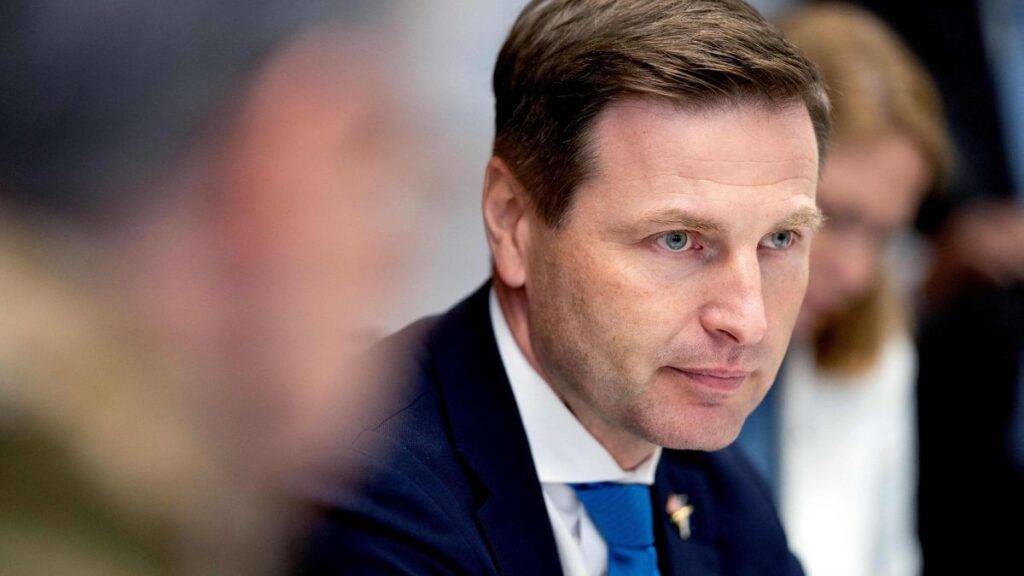
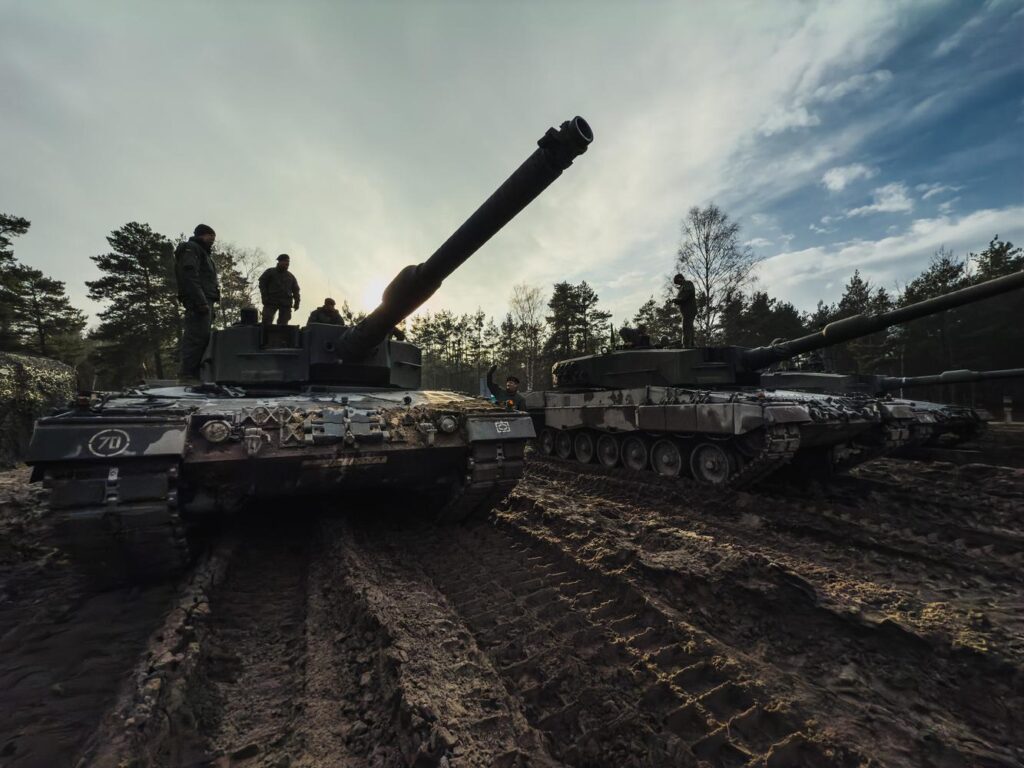
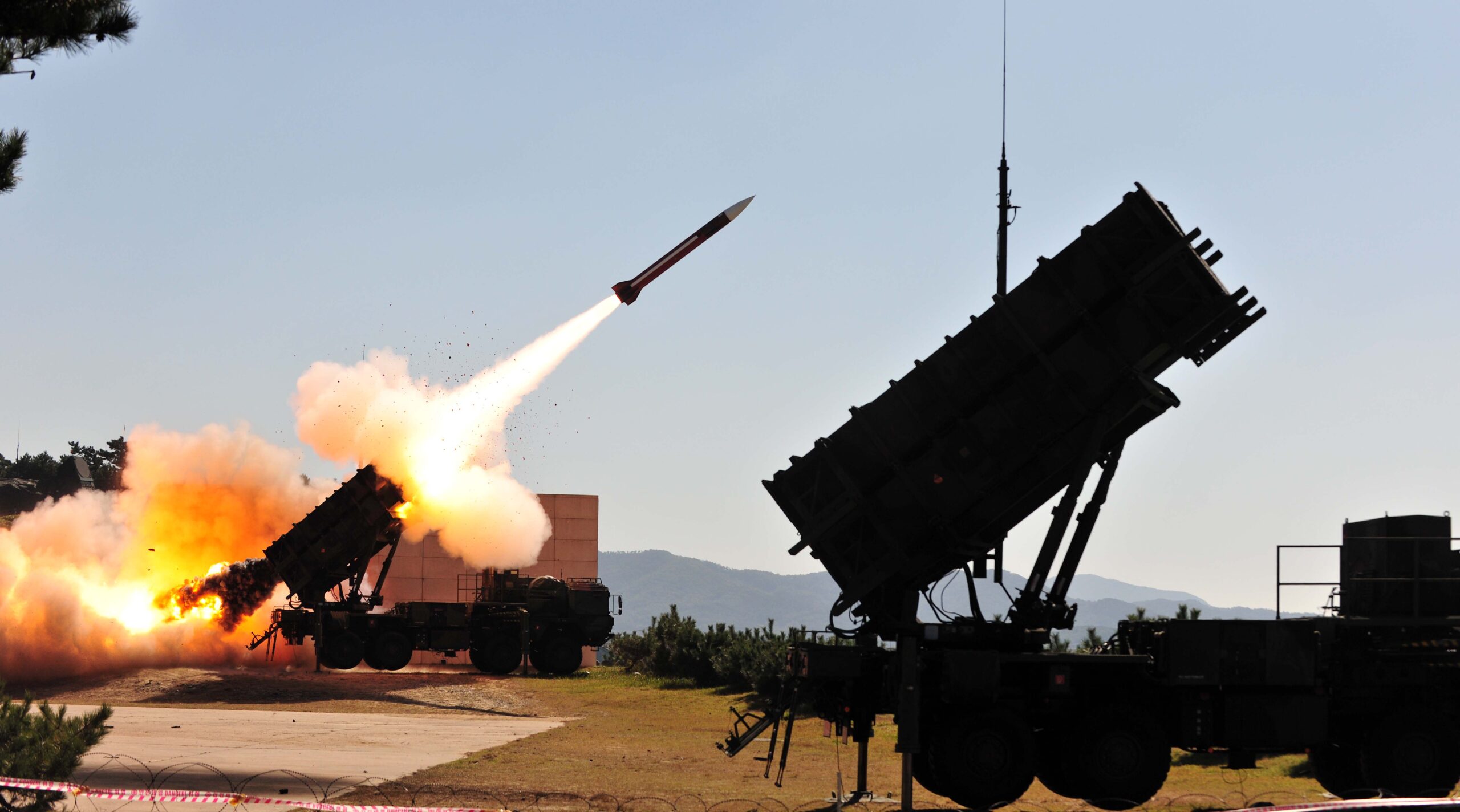
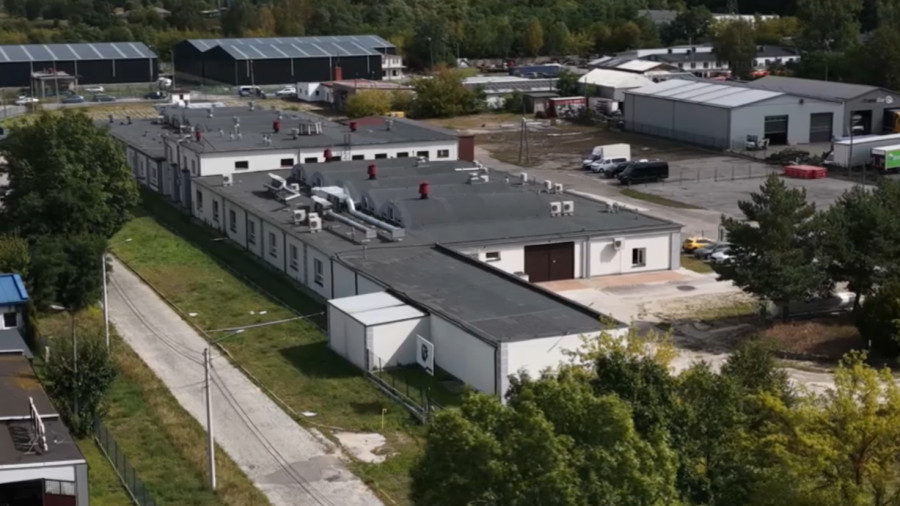
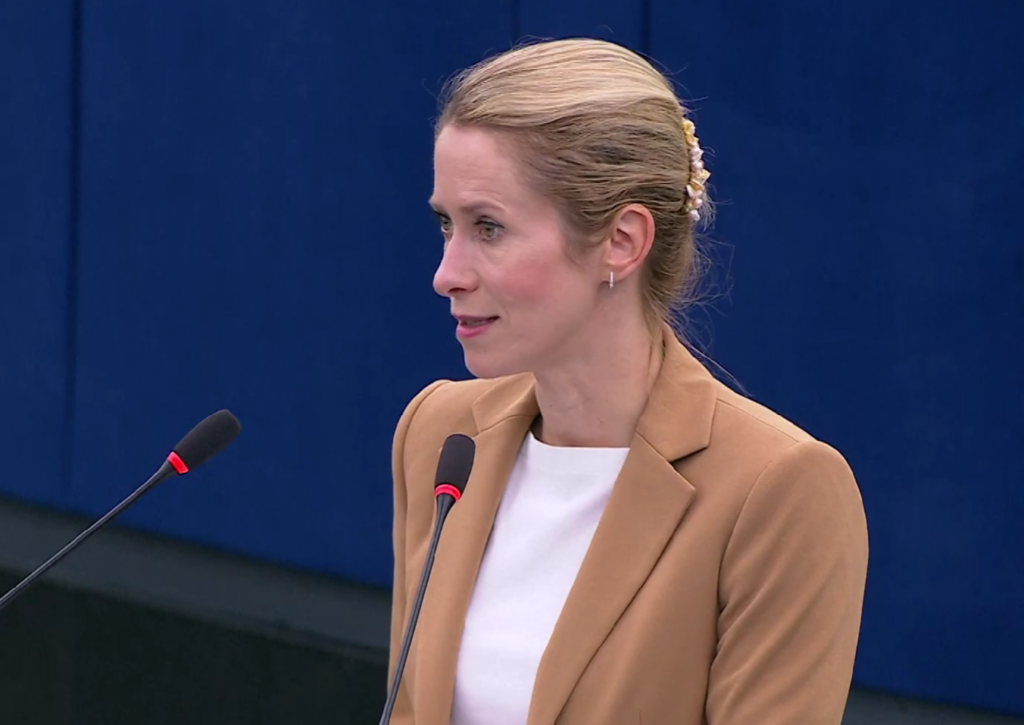


 The National Guard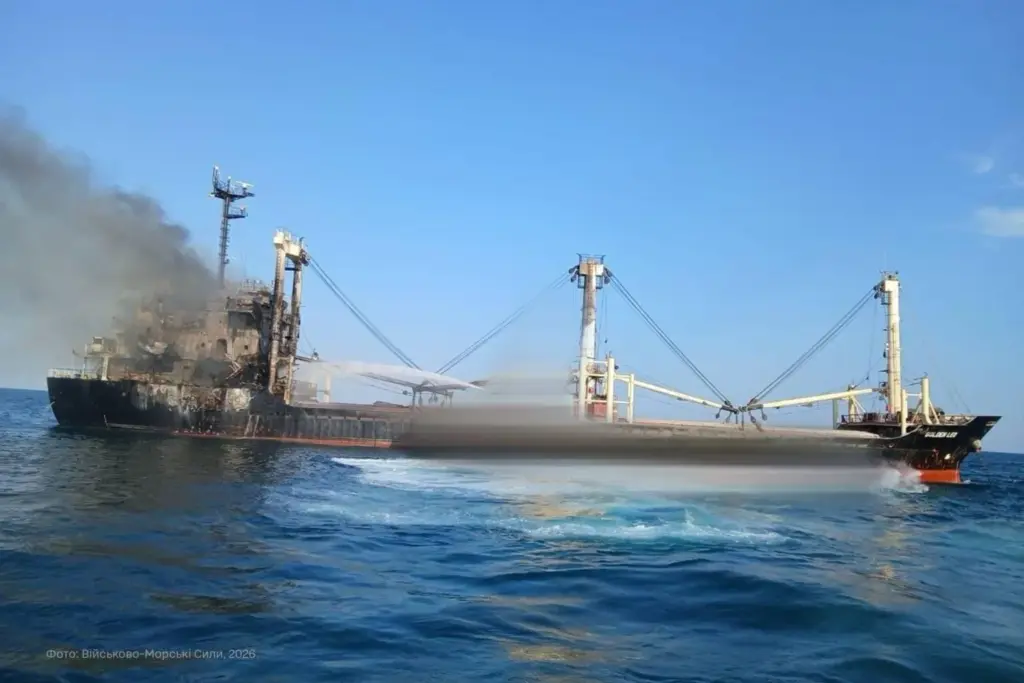
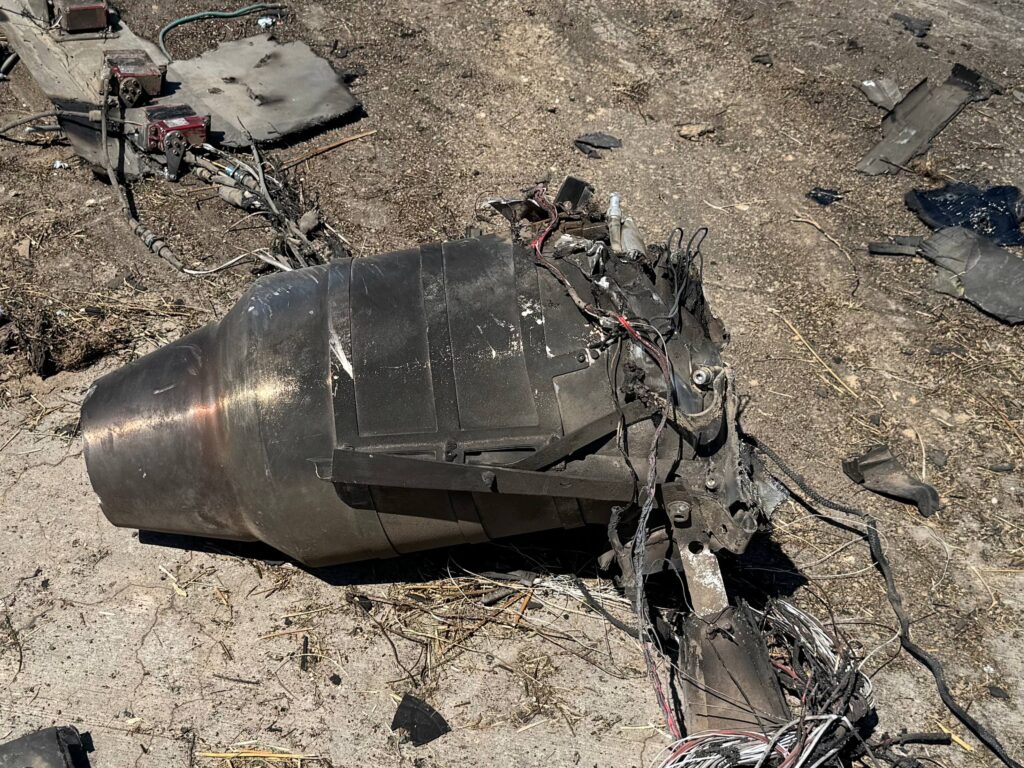
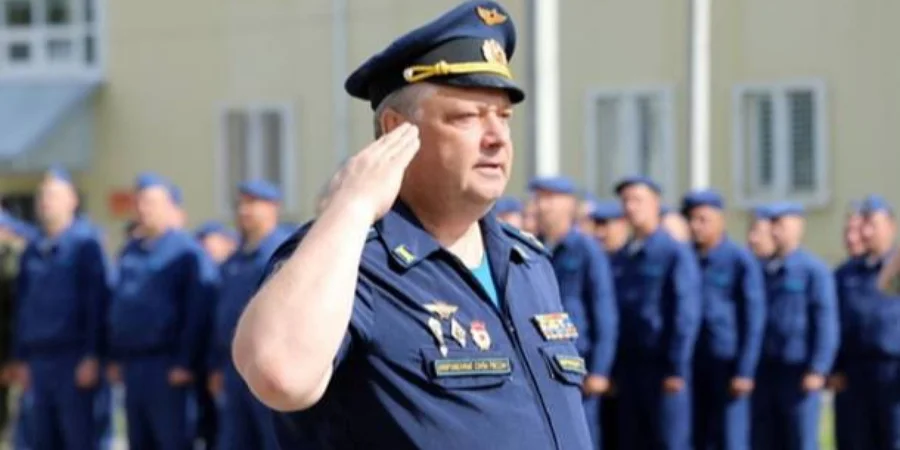
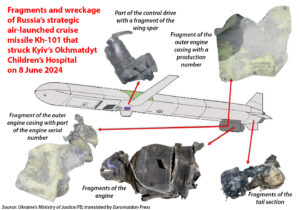
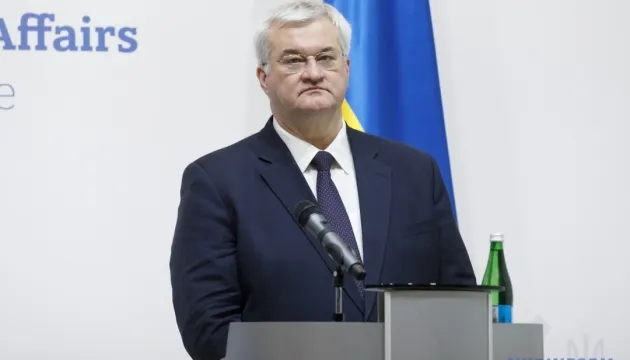
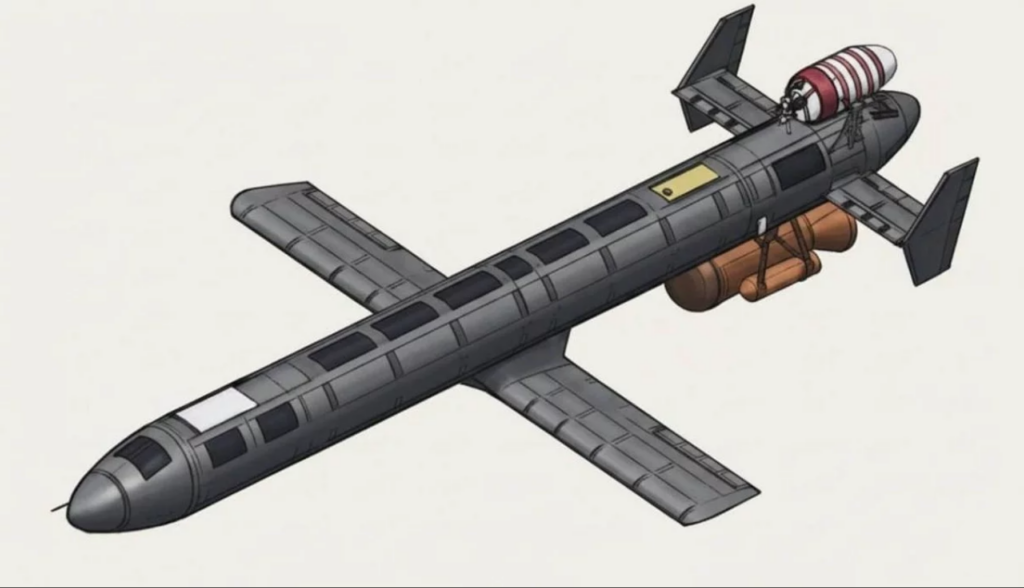
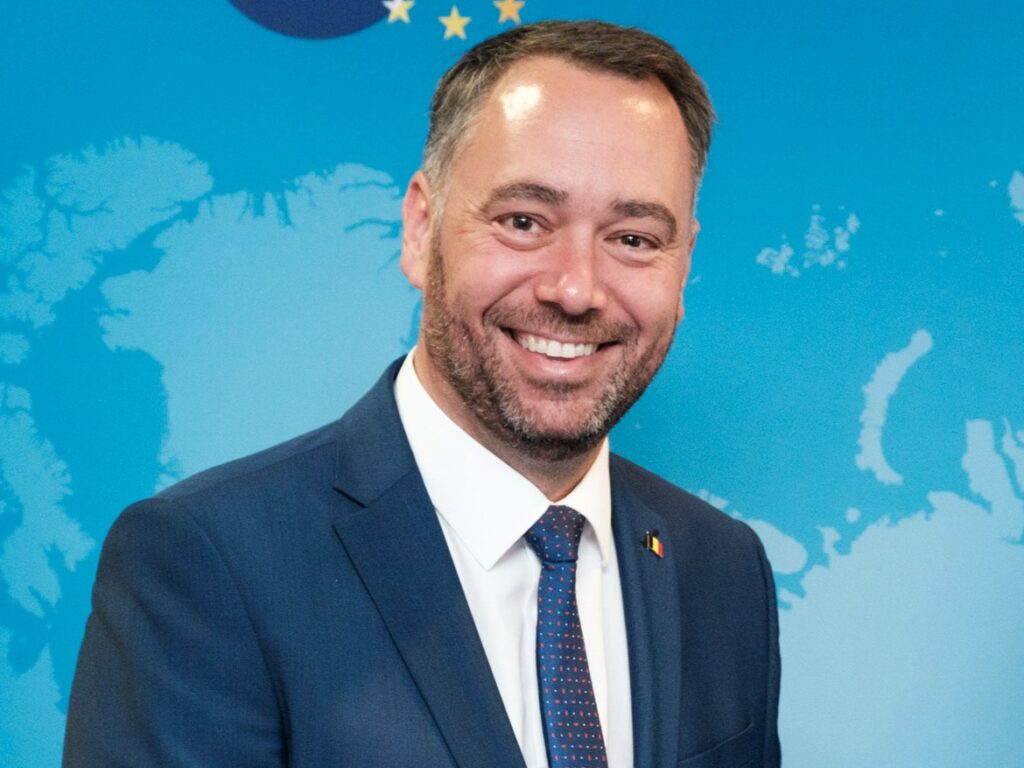

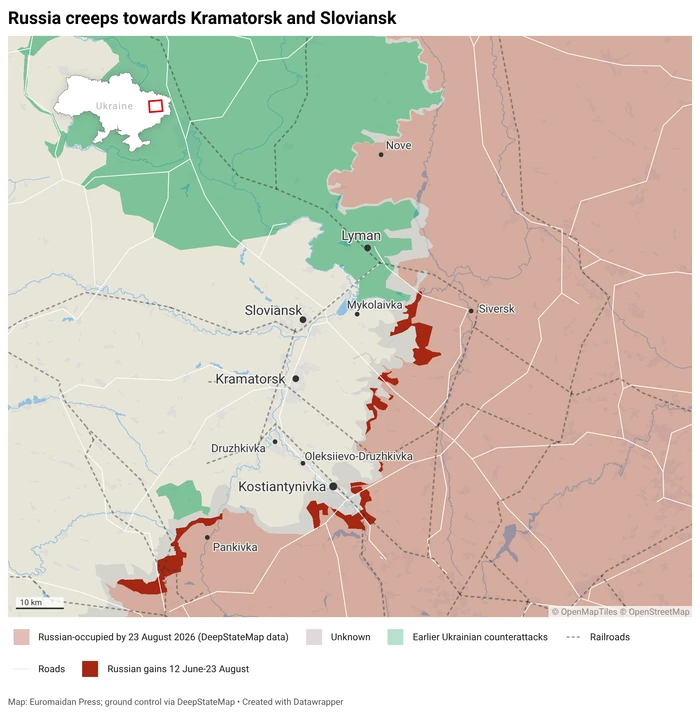
 , en cause, des décisions politiques contestables.
 La décision…