
 Connexion
Desperate to save Sloviansk and Kramatorsk, Ukrainian forces counterattack and reinforce
- The pace of the Russian advance across Ukraine slightly increased in August
- The Russians' main objective is unchanged: to get forces in place for a siege of Kramatorsk and Sloviansk no later than next year
- Ukrainian counterattacks and reinforcements could slow the Russian plan
In August, Russian gains ticked upward in key sectors along the 1,200-km front line of Russia's 55-month wider war on Ukraine.
The coming winter could slow Russian advances as the trees lose their leaves and infantry infiltrators have nothing to conceal them from overhead drones. But for the next month or two, the trees will still have their leaves, and the infiltrators will still have their cover.
And that means, as fall wears into winter, Ukraine may lose yet more ground in the north and especially in Donbas region in the east, where Russia enjoys a substantial manpower and firepower advantage. "Russian forces still hold the operational initiative and are slowly capturing ... Donetsk Oblast as well as border zones in Sumy and Kharkiv Oblasts," mapper Thorkill warned.
The Russian gains belie a greater truth, however. In the middle of the fifth year of wider war, the situation on the ground only changes along the margins even as thousands die.
According to Thorkill's tally, the Russians occupied just under 220 square km of Ukrainian soil in August. That's 25% more territory than they captured in July. "The situation has deteriorated sharply in the Donbas in August," mapper Clément Molin explained.
Un été difficile en Ukraine
— Clément Molin (@clement_molin) August 30, 2026, en cause, des décisions politiques contestables.
Après un printemps bien géré par Kyiv (aide financière de l'UE, bonne situation au front, frappes réussies à l'arrière), l'été a vu un nombre de mauvaises nouvelles pour l'Ukraine.La décision… pic.twitter.com/gFe7zJqS39
To be fair, the Russians are advancing much more slowly than they did a year ago. "Compared to August 2025, Russian gains are down by nearly half," Molin noted. That's cold comfort to Ukrainian civilians and defenders in the areas where the Russians are still gaining ground, however. And the sheer proximity of the most aggressive Russian formations to the most vulnerable Ukrainian settlements means it might not take much more effort on the part of the Russians to turn these settlements into battlegrounds.
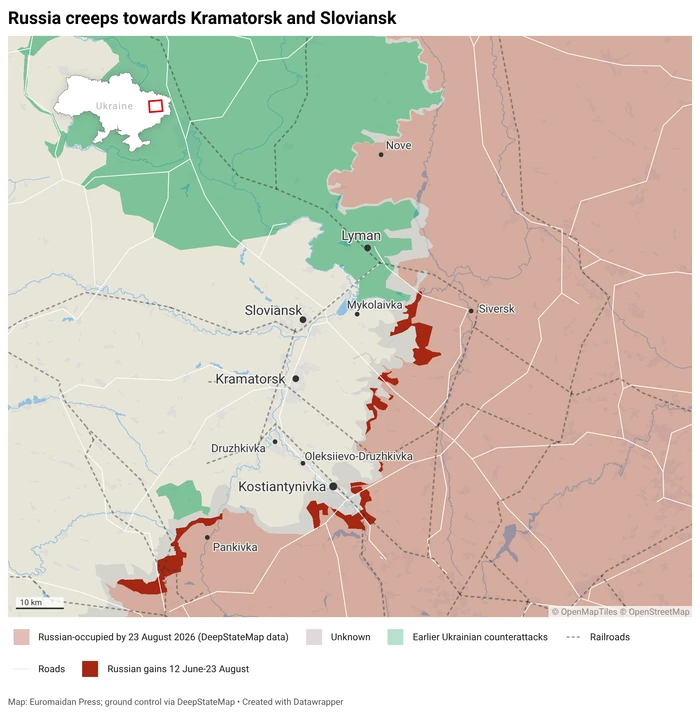
The Russians' main effort is still directed at the last big free cities in Donetsk. Inching forward at great cost from several directions, Russian forces are slowly closing a pincer around Kramatorsk and Sloviansk and the tens of thousands of civilians who still live in the adjacent cities.
Thorkill's map places the forwardmost Russian forces in Mykolaivka, just 4 km east of Sloviansk. This is the middle joint of the Russian pincer. The pincer's southern claw is a zone of disputed control stretching along the road between the ruins of the city of Kostiantynivka and the battleground town of Oleksiievo-Druzhkivka.
If the Russians can march through Oleksiievo-Druzhkivka, they can lay siege to the town of Druzhkivka, a few kilometers to the northwest. If they can capture Druzhkivka, they can turn north and assault Kramatorsk, a mere 6 km away.
Podsumowanie sierpnia 2026 r. wojny rosyjsko-ukraińskiej.
— Thorkill (@Thorkill65) September 2, 2026
W sierpniu 2026 r. według wyliczeń rus konta tg Creamy_Caprice (wykres poniżej), rus wojska zdobyły niecałe 220 km kw. Był to wzrost dynamiki ich zdobyczy terenowych w stosunku do lipca (176 km kw) o 25 proc. Według… pic.twitter.com/N56TsXJrOv
Ukrainian counterattacks
The most fragile part of the claw is to the north. Bucking the overall trend of Russian gains in August, Ukrainian forces counterattacked in several sectors the same month. Most dramatically, a clutch of Ukrainian mechanized and air assault brigades extended a slow advance through the town of Nove, mostly cutting across a 100-square-km salient of Russian forces around 25 km northeast of Sloviansk.
The Nove counterattacks offer some hope that targeted Ukrainian action may slow the Russian march on Sloviansk and Kramatorsk from the north. Meanwhile, a reshuffling of Ukrainian units south of Kramatorsk could improve Ukrainian defenses against an assault on the twin cities from the south.
As new Ukrainian commander-in-chief Gen. Mykhailo Drapatyi gradually addresses some of the imbalances in the Ukrainian ground forces, certain key units are getting help. Most notably, the 425th Assault Regiment is now subordinate to the 1st Azov Corps, which is responsible for the defense of Kramatorsk.
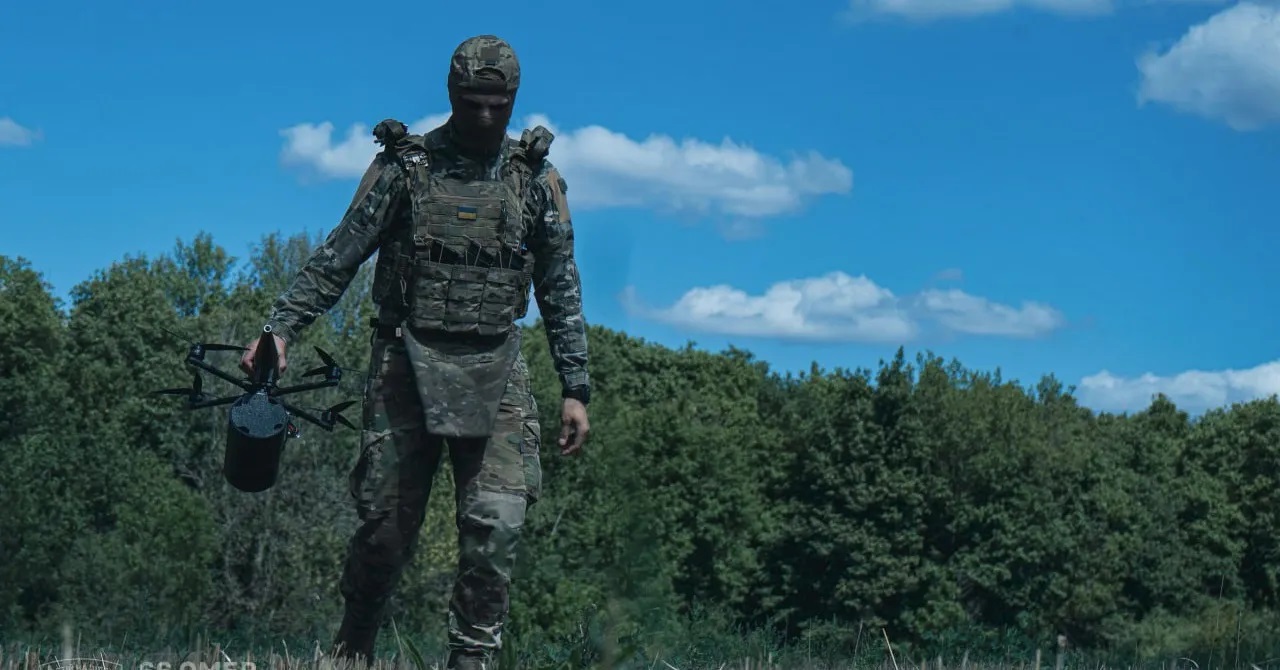
Keenly aware that the Russians intend to slowly infiltrate front-line settlements with small teams of infantry rather than rushing them with masses of easily-droned armored vehicles, the 1st Azov Corps has assigned the aggressive 425th Assault Regiment "to clear enemy infiltrators from the brigades’ areas of defense," the corps stated.
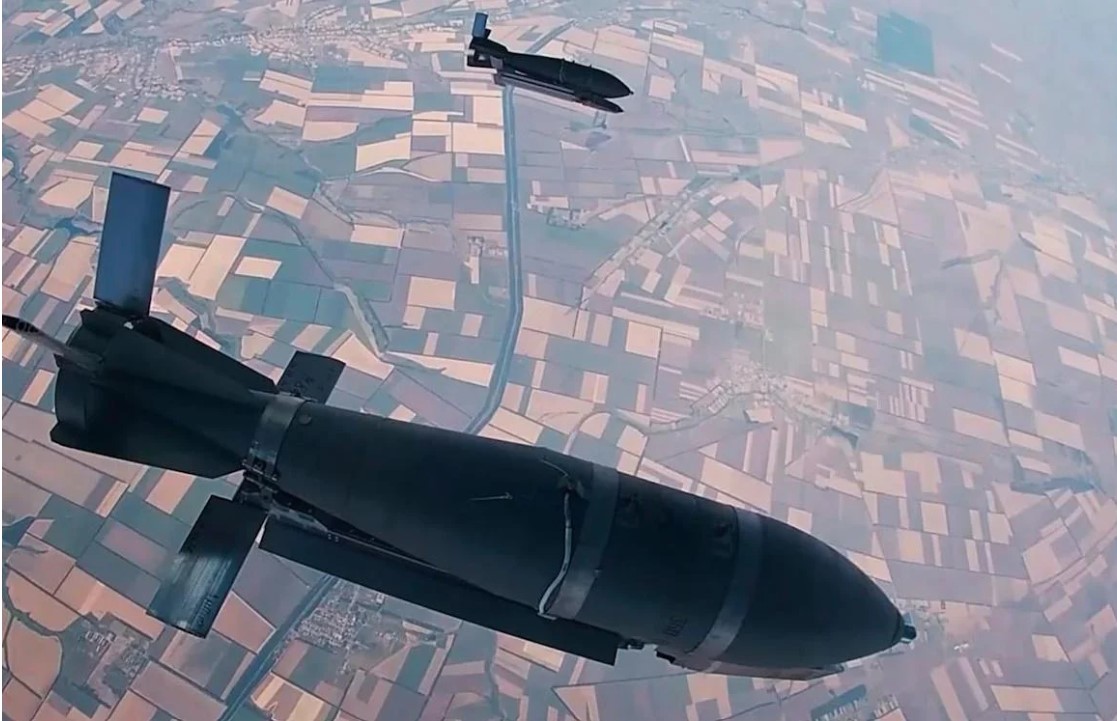
Infiltrators aren't the only problem, however. The Russians' favorite tactic combines small teams of infantry with massive aerial firepower in the form of precision-guided KAB glide bombs flung by supersonic Sukhoi Su-34 fighter bombers.
"Glide bombs hurt," Ukraine's 4th National Guard Brigade reported. "It's about 200 kg of explosives flying your way. And you can't really shoot them down like you can shoot down drones. They can collapse fortified buildings, bunkers, and entire urban blocks much more effectively than artillery."
After the dust settles from the glide bomb impacts, Russian infantry "infiltrate through the damaged areas, using the ruins for cover and concealment," the national guard brigade explained.
The same lack of long-range air defenses that exposes Ukrainian cities to relentless Russian bombardment also deprives front-line forces of protection from the Su-34s and their glide bombs. And so the Russians can keep bombing and keep infiltrating as long as the trees offer some concealment for the infantry.
The clock is ticking. The Russians will aim to position their forces for more direct assaults on Kramatorsk and Sloviansk no later than next year. The Ukrainians will aim to slow down the Russians, trading a little space for more time. Time Drapatyi may use to institute further reforms in the Ukrainian ground forces.
Zooming out and taking the long view, no one should expect major changes on the map of Russia's wider war as the fifth year of fighting grinds toward the sixth. Yes, the last two big free cities in the Donbas are in trouble. But "the overall situation remains unchanged since October 2023," Thorkill wrote.
The Russians slowly advance. The Ukrainians slowly fall back. And losses deepen on both sides.
