Vue lecture

“Russian airspace will effectively be closing”: Zelenskyy warns airlines Russian skies are no longer safe
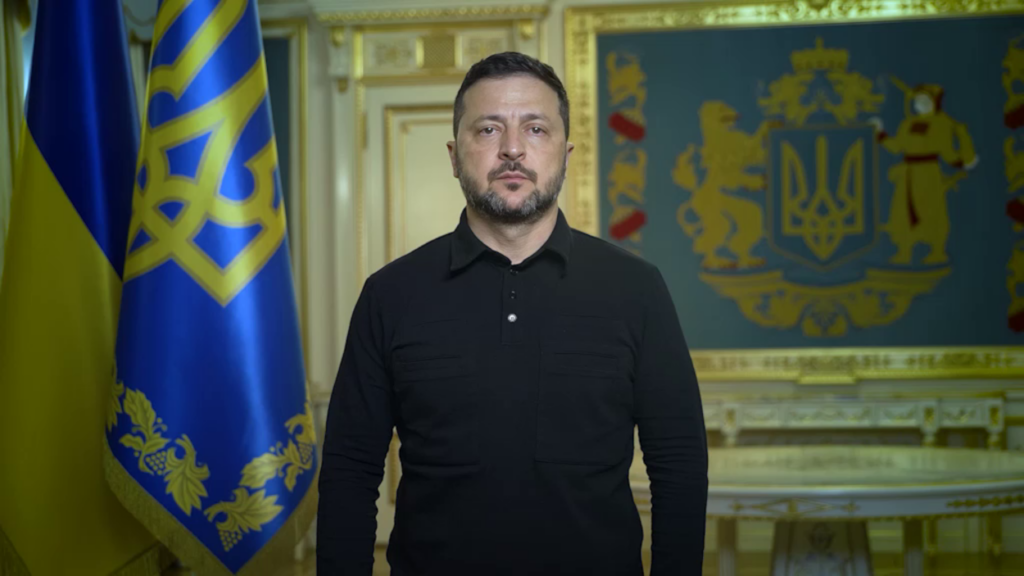
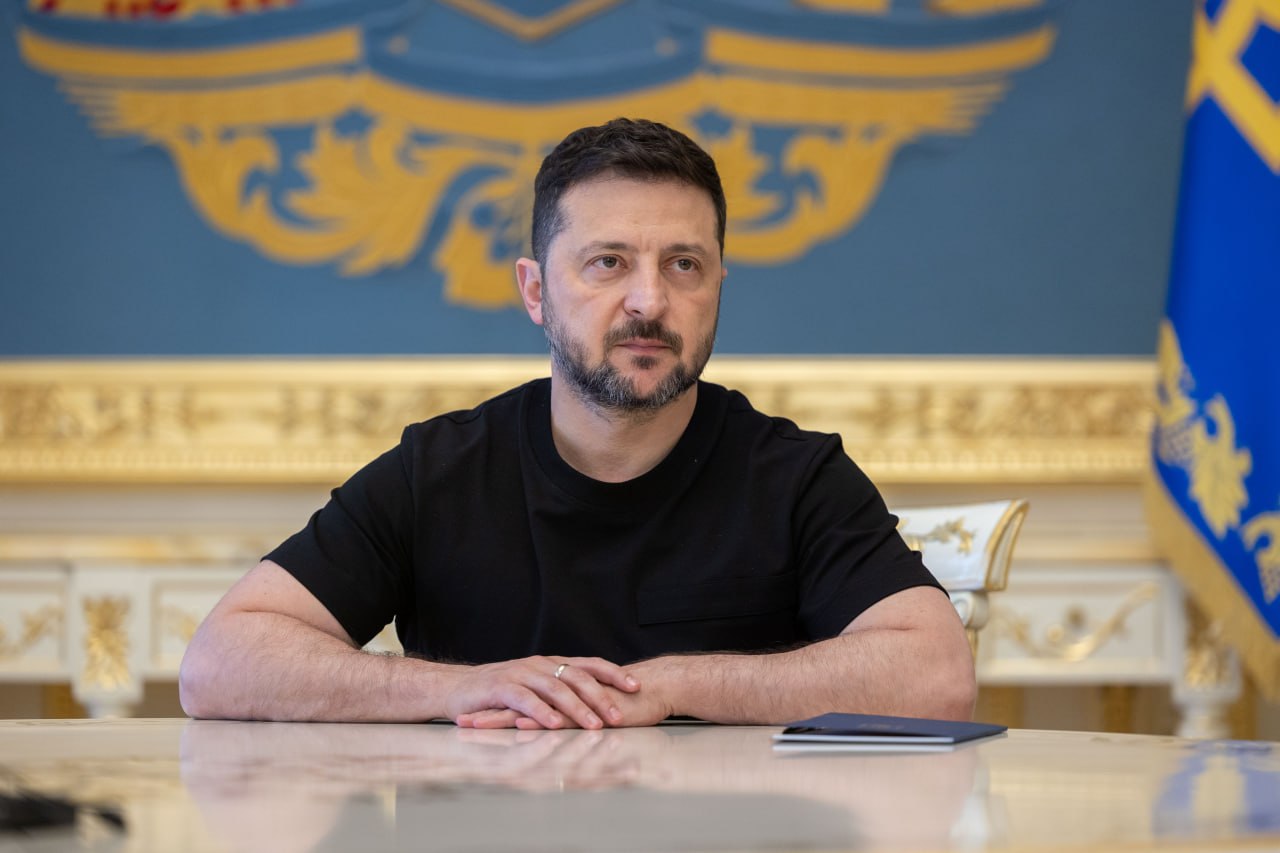
Ukrainian President Volodymyr Zelenskyy during his evening address, 1 September 2026. Screenshot from video: Zelenskyy

Ukrainian President Volodymyr Zelenskyy warned airlines, insurers, and other aviation stakeholders on 1 September that Russian airspace is becoming increasingly dangerous as Ukrainian drones operate deeper inside the country.

The warning comes as Ukraine has increasingly carried out long-range drone strikes deep inside Russia, targeting military, energy, industrial, and other infrastructure. Russian authorities have repeatedly reported temporary airport closures and flight disruptions during drone attacks as part of air defense measures.

“We want to warn every airline that uses Russian airspace, every insurer, and everyone who still uses Russia’s key airports: Russian airspace is becoming completely unsafe,” Zelenskyy said.

“Russian airspace will effectively be closing”

Zelenskyy said Ukraine does not intend to threaten civilian aviation or civilian aircraft, but warned that the growing presence of drones over Russia means airlines must account for the risks.

“We in Ukraine do not want innocent lives to be lost. That is why we are warning our partners: the safe days in Russia’s skies are over,” he said.

Zelenskyy accused Russian authorities of failing to properly inform airlines about the risks, saying they have not adequately communicated the growing danger posed by drones in Russian airspace.

“Although the Russian authorities are not properly informing people about this, Russian airspace will effectively be closing,” Zelenskyy said, arguing that Russia’s war against Ukraine is making its own airspace unsafe.

Zelenskyy warned that the growing scale of Ukrainian drone operations over Russia will have to be factored into aviation risks. “There will simply be drones in Russia’s skies on a scale that has to be taken into account,” he said.

He called on foreign ambassadors in Ukraine and Russia to relay the warning to their governments, and said Ukraine’s Foreign Ministry and other institutions would provide international organizations with information about the risks to Russian airspace.

“Drone-infested skies are no place for civilian aviation,” Zelenskyy said.

Ukraine closed its skies in 2022. Russia has kept flying

The warning highlights a stark difference between the two countries. Ukraine has kept its airspace closed to civilian aviation since Russia launched its full-scale invasion in February 2022. 

The risk is familiar to Ukraine. Russian forces have repeatedly attacked Ukrainian airports and aviation infrastructure during the full-scale invasion, making the continued operation of civilian aviation impossible.

Russia is also responsible for the 2014 downing of Malaysia Airlines Flight MH17 over occupied eastern Ukraine, which killed all 298 people aboard, showing the danger Russia’s military activities can pose to civilian aviation. 

Russia, meanwhile, has continued operating major airports and regular passenger flights despite Ukrainian drones increasingly reaching deep into its territory. EASA has warned that Russian air defenses responding to Ukrainian drone and missile attacks could pose risks to civilian aircraft, including through misidentification, particularly around major airports.

Russian airports increasingly disrupted by Ukrainian drones

Russian authorities have repeatedly restricted or suspended flights at Moscow and other airports during Ukrainian drone attacks. The disruptions have generally come as Russia activates air defenses against drones targeting military, energy, industrial, and logistics infrastructure.

Russia has also moved toward broader restrictions on civilian aviation. In June, Russia imposed new restrictions on light aircraft around Moscow and neighboring regions, while regular passenger and charter flights remained exempt.

The result is a growing disruption to Russian aviation even as Moscow continues to keep its main passenger airspace open: Ukrainian drones are not being used to target civilian aircraft, but their increasing presence is making normal aviation operations more difficult and forcing Russia to restrict or suspend flights during attacks.

  •  

Russia’s Starlink rival falters as latest satellite batch stalls in low orbit, ISW says

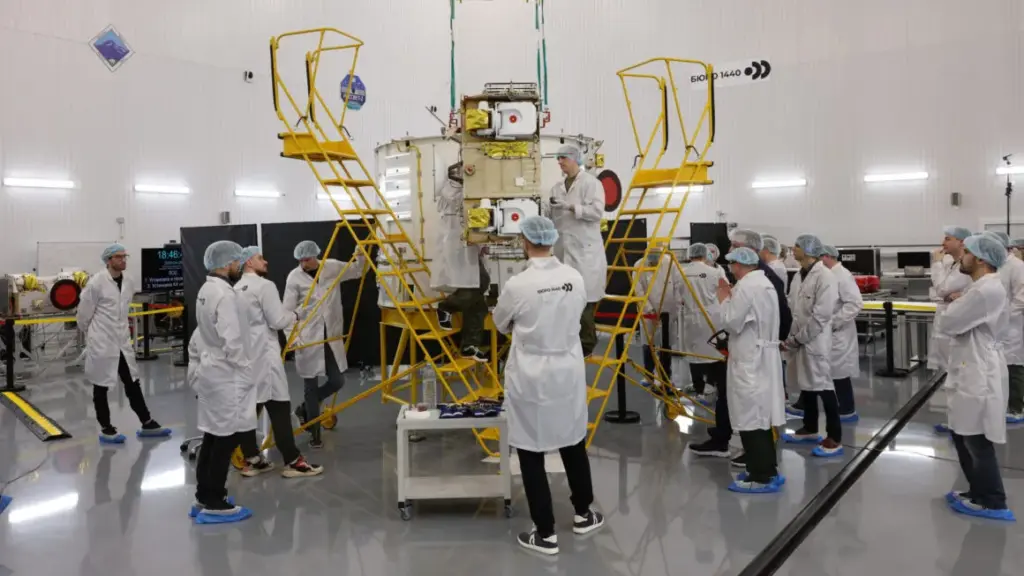
Employees of Russian company Bureau 1440 work on a Rassvet communications satellite.

The Rassvet communications satellites Moscow launched in July are likely to have shorter operational lifespans than planned because atmospheric drag increases at their current altitudes, the Institute for the Study of War (ISW) reported.

Moscow accelerated Rassvet’s deployment after its forces lost unauthorized Starlink access in February. A complete network could support battlefield communications and remotely controlled strikes against Ukraine, but existing satellites provide only brief connectivity windows. The latest setback will likely delay continuous coverage, ISW assessed.

Russian forces had relied heavily on unauthorized Starlink terminals for frontline communications, drone operations, and command-and-control. Ukraine and SpaceX blocked them on 5 February, disrupting Russian communications and assaults across several sectors. A Russian-controlled network could reduce Moscow’s dependence on SpaceX and illicit supply chains for terminals.

None of the 16 satellites launched on 19 July had reached 550 kilometers as of 31 August, according to N2YO tracking data cited by ISW. Many remained between 300 and 400 kilometers, some were gradually losing altitude, and at least two were reportedly heading toward atmospheric reentry.

ISW identified 550 kilometers as the altitude reached by the successful first-batch satellites, while reporting 870 kilometers as Rassvet’s intended operational altitude. At lower altitudes, satellites must use more fuel to counter greater atmospheric drag, shortening their operating lives.

Of the 32 Rassvet satellites launched in 2026, only 12—all from the first batch launched on 24 March—reached sustainable altitudes. They remained at roughly 550 kilometers and provided two daily connectivity windows over Ukraine totaling up to 90 minutes, ISW reported.

Russia needs at least 200–300 working satellites for stable, round-the-clock coverage, presidential defense-technology adviser Serhii “Flash” Beskrestnov assessed. Bureau 1440 plans “dozens” more launches and “hundreds” more satellites, but Russia depends on the scarce, costly Soyuz-2.1b rocket.

Only six to eight Soyuz-2.1b launches of all types have occurred since 2022, limiting Russia to a maximum of 128 Rassvet satellites over four years at that rate, ISW assessed.

Ukraine struck the Progress Space Rocket Center, which builds Soyuz-type vehicles, on 14–15 August and attempted to strike Plesetsk Cosmodrome on 23 August, ISW noted. Both Rassvet batches launched from Plesetsk, showing Ukraine can threaten the rockets and launch infrastructure required to expand the constellation, the institute assessed.

What is Rassvet?

Rassvet, meaning “Dawn,” is a low-Earth-orbit broadband constellation developed by Bureau 1440 as Russia’s domestic alternative to Starlink. Its 5G-based satellites are intended to provide high-speed, low-latency internet independently of SpaceX.

Although initially designed for civilian communications, a mature network could provide Russian forces with battlefield connectivity, command-and-control links, and connections to long-range drones. Moscow aims to place 292 satellites in orbit by the end of 2027 and 924 by 2035.

  •  

Fired Ukraine defense chief Fedorov launches defense-tech company with Palantir CEO backing

Former Ukrainian Defense Minister Mykhailo Fedorov and Palantir CEO Alex Karp announce the launch of Fedorov’s new defense technology company. Screenshot from video: Mykhailo Fedorov

Former Ukrainian Defense Minister Mykhailo Fedorov has announced the launch of a new defense technology company, with Palantir CEO Alex Karp set to become its first major investor.

The venture comes after Fedorov’s five months as defense minister ended with his dismissal in July, a decision that triggered weeks of protests demanding his return. He is now taking his focus on drones, AI and other military technologies into the private sector, while partnering with a company whose growing role in warfare and government data has also drawn criticism.

Fedorov announced the venture on X on 1 September with little other information, saying more details would be released soon.

In a video released alongside the announcement, Karp said he and Fedorov had worked together for five years and that he was excited to help turn Ukraine’s experience of modern warfare into products for allied countries.

“Our ambitious new project will strengthen Ukraine and help build a safer future for the entire world,” Fedorov wrote.

From digital minister to defense reformer

Fedorov, 35, became one of the most prominent figures in Ukraine’s drive to use technology to transform its military during the full-scale war. Before becoming defense minister, he served as minister of digital transformation, where he helped build Ukraine’s digital government infrastructure and became closely associated with the country’s rapid adoption of drones and other military technologies.

He became defense minister in February 2026 and spent roughly five months in the post before President Volodymyr Zelenskyy dismissed him on 15 July as part of a broader government reshuffle. The dismissal reportedly followed a prolonged conflict between Fedorov and then-Commander-in-Chief Oleksandr Syrskyi over the direction of Ukraine’s military. Zelenskyy later said the relationship between the two had broken down.

Fedorov had pushed for a more technology-driven military, including greater use of drones, robotics, artificial intelligence and data-based decision-making. During his tenure, his team also pursued changes to defense procurement and logistics.

His dismissal triggered rare wartime protests across Ukraine. Demonstrators in Kyiv and several other major cities demanded his reinstatement, arguing that his removal threatened the military-technology reforms they credited with improving Ukraine’s ability to fight Russia.

The protests continued for roughly a month but failed to reverse the decision. Parliament approved Yevhenii Khmara as defense minister on 19 August.

The movement later lost momentum after Fedorov called for wartime elections, a position that protesters rejected amid the ongoing war. The episode nevertheless made his dismissal an unusually public political dispute, with supporters defending his record while Zelenskyy and others pointed to disagreements over military leadership and policy.

A column of protesters demanding reinstatement of Mykhailo Fedorov as Defense MInister walks in vul. Khreschatyk in Kyiv, 1 August 2026. Photo: Serge Kostezh/Kyivpost
Explore further

The Fedorov protesters lost. But they backed a man for what he built, not what he promised—and that may be new in Ukraine.

What Fedorov did after leaving office

Since leaving the Defense Ministry, Fedorov has remained focused on defense technology rather than returning to another Ukrainian government position.

In late August, Italian Defense Minister Guido Crosetto said he had offered Fedorov a position as an adviser on modern warfare and defense innovation. Fedorov agreed to provide advice remotely and on a non-staff basis, while keeping his main work focused on Ukraine’s defense-tech sector.

Fedorov has also been working to establish a defense-tech investment fund and has been seeking US investors for it. During a working trip to Washington in August, he pitched a fund that would not only invest in existing Ukrainian defense-tech companies but also build new ones around technologies he considers critical to the war.

He identified three priorities: battlefield robots that can replace soldiers in the most dangerous positions, jet-powered interceptor drones capable of countering Russia’s faster attack drones, and inexpensive AI-enabled missiles.

Fedorov also proposed helping the United States develop an attack-drone fleet in exchange for additional Patriot interceptor missiles for Ukraine. He described the idea as a potential trade, but it is his own proposal rather than an agreement with the US government, and he no longer holds a government position that would allow him to negotiate such a deal.

In a recent Reuters interview, Fedorov also emerged as a more outspoken critic of Ukraine’s wartime trajectory, saying that “it looks as though we’re gradually, slowly losing.” His comments came after his dismissal and amid his continuing disagreements with the military leadership over the direction of Ukraine’s war effort.

The new company announced on 1 September appears to build on this work, moving from plans to invest in and create defense-tech companies toward establishing a company of Fedorov’s own.

Why Palantir matters

Karp’s involvement connects Fedorov’s new venture to one of the world’s largest defense and intelligence technology companies.

Palantir develops software for large-scale data analysis, artificial intelligence and military and government operations. Its products are used to integrate data from different sources and support operational planning and decision-making. Palantir has also worked with Ukraine during the full-scale war, including on AI and data-analysis initiatives.

The company has become increasingly involved in military technology, while also facing criticism over its work with governments and armed forces. Its ties to Israel and its role in military applications, particularly in relation to the war in Gaza, have generated protests and scrutiny over the use of AI and data technologies in warfare.

Palantir has faced separate concerns in the UK over its access to sensitive government and health data, with critics questioning how effectively safeguards around such information can be independently verified.

For Fedorov, the partnership marks a shift from trying to change Ukraine’s military from inside government to building defense technology outside it. For Karp and Palantir, the investment offers a direct connection to a former Ukrainian defense minister whose team worked on military technologies during a war that has rapidly changed how drones, AI, robotics and data are used on the battlefield.

  •  

Germany blames Moscow for Leipzig drone attack, closes consulate and cultural center among sweeping diplomatic measures

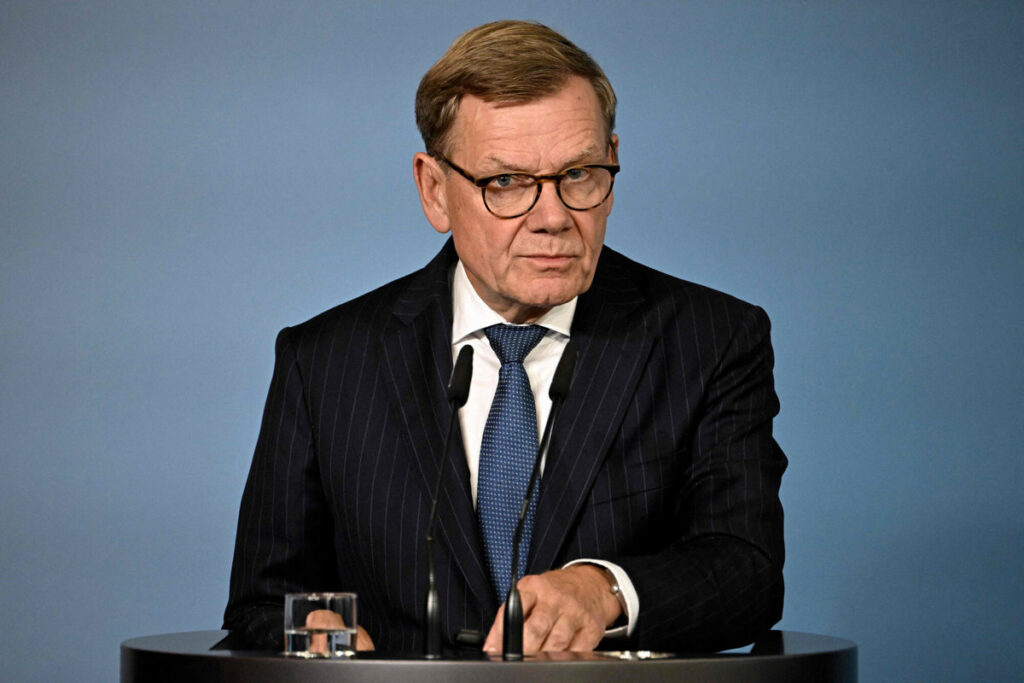
German Foreign Minister Johann Wadephul stands behind a lectern during a press conference.

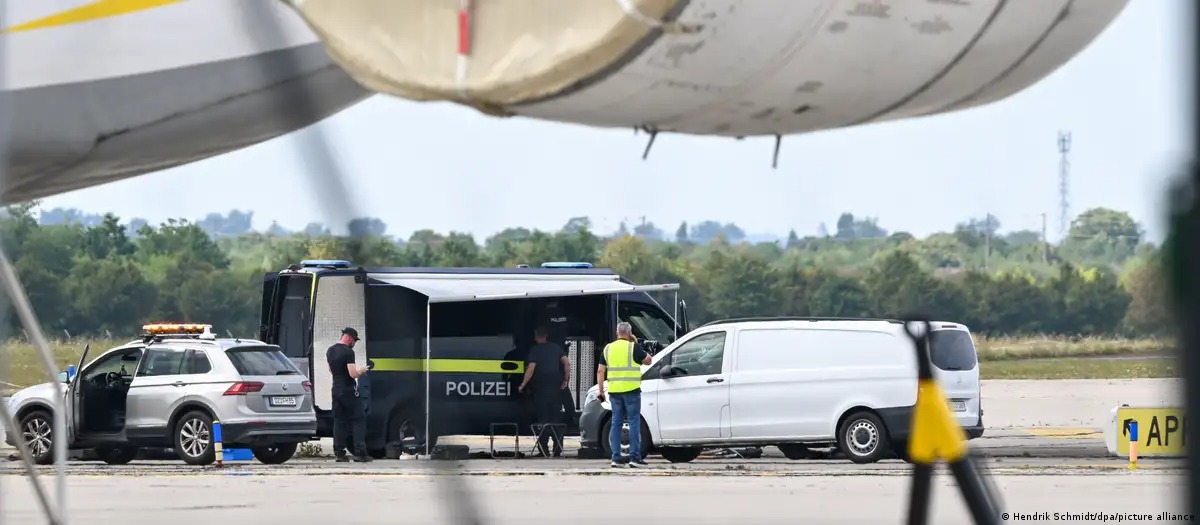
An explosives-laden drone aimed at a Ukrainian cargo aircraft at Leipzig/Halle Airport was part of a Russian state operation, Interior Minister Alexander Dobrindt said on 1 September.

Germany has moved from suspecting foreign sabotage to formally blaming Russia for the Leipzig attack. The finding has prompted diplomatic and security measures against Moscow while the criminal investigation continues.

Police investigations, the attack pattern, and intelligence findings established Russian responsibility, Dobrindt said. The drones' configuration, components, explosives, and detonation systems resembled those used in other Russian hybrid operations—covert sabotage and disruption below the threshold of open war—and in Russia's war against Ukraine, Foreign Minister Johann Wadephul said.

The first drone, carrying explosives, was found near a Ukrainian cargo aircraft on the evening of 4 August and defused. Investigators believe a DHL freighter may have collided with a second drone while aborting its landing after the airport closed; that drone was never recovered. A third drone was found on 14 August in a field at Kabelsketal, where investigators subsequently discovered roughly 50 grams of suspected military explosive.

Leipzig/Halle is an international freight hub used by Ukrainian Antonov aircraft and NATO's strategic airlift program, through which allies charter heavy transport aircraft to move oversized military cargo.

Berlin will close the Bonn consulate on 18 September, end the operating agreement for the Russian House, a Moscow-backed cultural center, tighten entry controls for Russian nationals, seek to add more targets to EU sanctions lists, and pressure Russia's shadow fleet—opaquely owned tankers used to move Russian oil outside Western restrictions. Wadephul also summoned the Russian ambassador. Russia's Berlin embassy will remain open.

Russian Foreign Ministry spokesperson Maria Zakharova told Interfax that Moscow would respond to Germany's “anti-Russian action,” without specifying how.

NATO Secretary General Mark Rutte said the alliance stood in full solidarity with Germany, and European Commission President Ursula von der Leyen described Berlin's measures as a strong response.

Dobrindt said Germany expects further Russian hybrid attacks. The Leipzig incident follows a widening campaign of suspected Russian sabotage across Europe, including a 2024 incendiary-device attack at the same airport that Western security officials suspected Russian intelligence organized.

How the Leipzig attack unfolded

Euromaidan Press reported on 12 August, citing Die Zeit, that footage showed an explosives-laden quadcopter striking the wing of a parked Ukrainian Antonov An-124 before falling without detonating. The article also noted that a US Defense Department official told CNN that Washington assessed the drone belonged to Russian intelligence.

On 25 August, EP reported, citing Tagesschau’s NDR/WDR/SZ investigation, that investigators had expanded the case to three drones and found the third with suspected military explosive nearby in Kabelsketal, 10 days after the original attempt.

  •  

Russian air attack interrupts lessons on first day of school in Ukraine

President Volodymyr Zelenskyy watches as a pupil in an embroidered shirt speaks at a school event decorated with Ukrainian-colored balloons.

Ukrainian president Volodymyr Zelenskyy marked the start of the academic year with children at a Kyiv Oblast school rebuilt after Russian forces destroyed it in 2022, before an air attack forced their first lessons into the shelter on 1 September 2026, the Kyiv Oblast Military Administration said.

Knowledge Day, Ukraine’s traditional start of the academic year, fell during the full-scale invasion for the fifth time. Russia’s war now determines whether children can learn alongside their classmates: local security and shelter access govern classroom returns, while about 200,000 pupils near the front will remain fully remote.

Around three million pupils began the 2026–2027 academic year, including roughly 240,000 first-graders, 10% fewer than a year earlier, Member of Parliament Iryna Borzova of the Verkhovna Rada’s Committee on Youth and Sports told Ukrinform. Most will learn in person or through a blended format, but some 200,000 children near the front will study entirely online, she said.

More than 82% of school pupils and preschoolers can access shelters, Education Minister Andrii Butenko said. The government has allocated UAH 6 billion this year to expand access to shelters and other educational safety infrastructure.

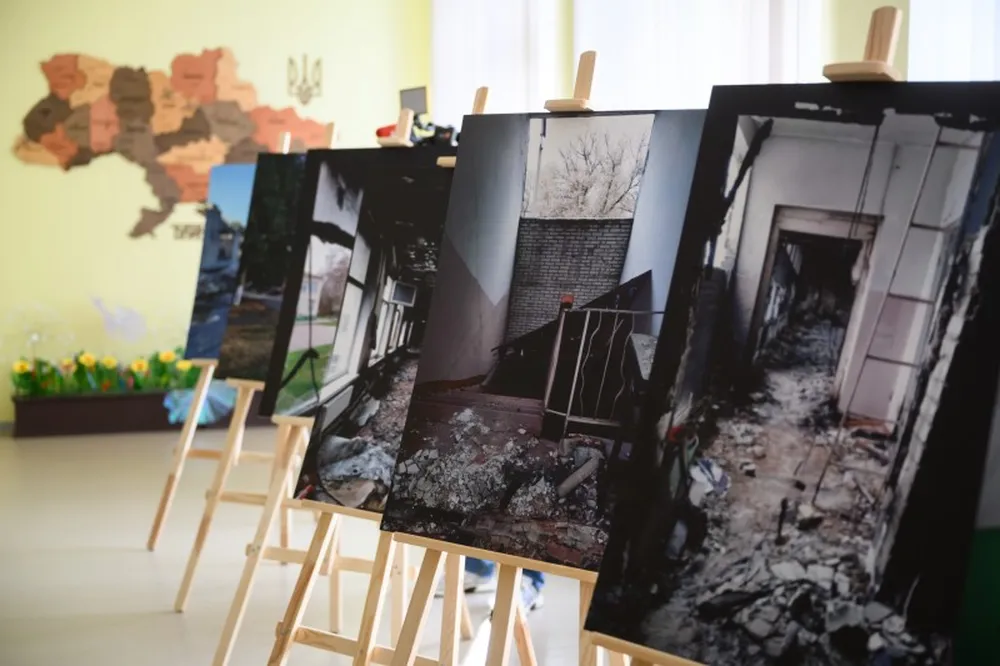
Russian forces destroyed the school Zelenskyy visited in March 2022. It reopened only last autumn with a shelter and backup power, according to the Kyiv Oblast Military Administration.

Photographs of burned and rubble-filled school interiors displayed on easels inside the rebuilt school.
An exhibition shows damage inflicted when Russian forces destroyed the Kyiv Oblast school in March 2022. The school reopened in autumn 2025. Photo: Office of the President of Ukraine

Zelenskyy said Russia had spent the preceding two weeks attacking infrastructure partly to disrupt the start of the academic year.

Ahead of Knowledge Day, Kyiv Oblast Military Administration head Tymur Tkachenko advised schools in high-risk communities not to hold mass opening ceremonies. Each school was to decide whether to proceed based on the security situation in its community.

“First and foremost, there must be safety,” Tkachenko said. If a ceremony went ahead, he recommended holding it directly in a shelter where possible. For events outside shelters, attendance was not to exceed the capacity of the nearest protective facility, and schools were told to avoid large gatherings of pupils, parents, and staff.

How Russia’s invasion has devastated Ukrainian education

Ukraine’s 2026 Knowledge Day began after six consecutive days of Russian attacks on Kyiv and its surrounding region, culminating overnight in a massed missile and drone strike. Eight people were killed, and seven were injured, including three children, while civilian infrastructure was damaged across five Kyiv districts.

Russia’s invasion has turned school safety and reconstruction into central parts of Ukraine's education policy. By September 2024, more than 3,500 educational institutions had been damaged and nearly 400 destroyed, with the World Bank estimating that almost $14 billion would be needed to rebuild them.

Attacks on Ukraine’s energy system have also left classrooms without heat or electricity, forcing prolonged holidays and renewed distance learning.

  •  

Latvia blocks Russian and Belarusian books, clothes and toys

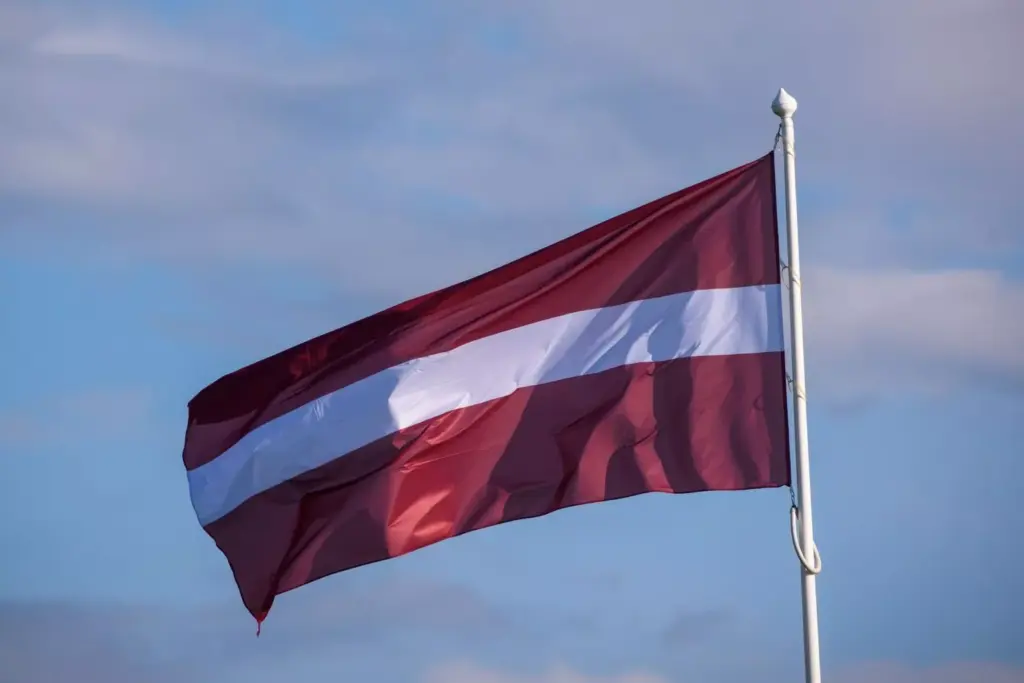
Latvian flag flying from a white flagpole against a blue, lightly clouded sky.

On 1 September 2026, Latvia banned imports of Russian- and Belarusian-made books, clothing, toys, and other consumer goods, including shipments routed through third countries, Latvian Public Media reported.

The restricted goods were worth approximately €12.5 million ($14.5 million) in 2025, or 6.5% of Latvia’s remaining imports from the two countries. Although modest economically, the measure goes beyond EU-wide sanctions and advances Riga’s effort to deny Moscow and Minsk revenue during Russia’s war against Ukraine.

The restrictions cover the following:

  • Books, newspapers, and other printed material
  • Clothing, textiles, footwear, and headwear
  • Toys, games, and sporting equipment.

Latvia’s Cabinet approved the final product list on 25 August following a Foreign Ministry proposal, completing restrictions parliament authorized on 23 July.

The ban applies regardless of whether the products arrive directly or through another country. Russian- and Belarusian-made goods may still transit Latvia on their way to other EU markets, Meduza reported.

Food and beverages are not covered. The restrictions are scheduled to remain in force until 1 July 2027 and will be reviewed annually.

The Foreign Ministry said the measure is also intended to limit the entry of Russian propaganda material. The targeted products accounted for only 0.05% of Latvia’s total imports in 2025, according to Euronews.

How Latvia has been cutting off trade with Russia and Belarus

Latvia’s combined imports from Russia and Belarus have already fallen by 91%, from €2.13 billion ($2.47 billion) in 2022 to €193 million ($224 million) in 2025, according to Latvian Public Media. Much of that decline followed the country’s departure from Russian energy supplies and the Baltic states’ disconnection from the Russian and Belarusian electricity grids.

The latest prohibition blocks consumer goods that Brussels has not collectively banned.

Latvian Prime Minister Andris Kulbergs previously pledged to eliminate the country’s remaining commercial links with Russia and Belarus, although pharmaceutical exporters were expected to remain exempt.

In August, Latvia also resumed publishing a monthly register of businesses trading with either country, naming 171 companies. Inclusion on the list does not itself indicate a sanctions violation.

  •  

Russia promised a scramjet superweapon. Ukraine says Zircon runs on solid fuel

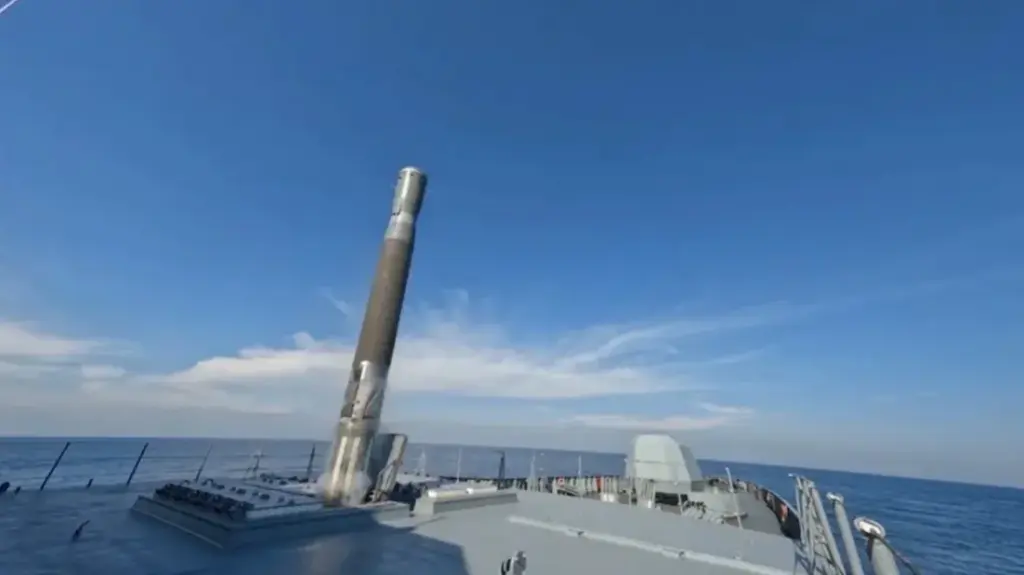
russia touted zircon hypersonic superweapon ukraine says its technology far less exotic · post missile launch warship russian defense ministry militarnyi polish_20260120_110147292jpg news ukrainian reports

Russia's Zircon runs on two solid-propellant motors, a booster and a sustainer, Ukraine's military intelligence (HUR) said in a breakdown of the missile's structure and components. That leaves no room for the scramjet Moscow advertised, Defense Express wrote.

Russia presented Zircon as a hypersonic missile capable of penetrating modern air defenses. HUR says it instead uses solid-propellant motors, which Defense Express reads as demolishing Moscow's claims about a superweapon. The intelligence agency also listed an Altera programmable chip and a TriQuint amplifier among the missile's components, the same finding investigators keep making in Russian weapons.

HUR published an interactive 3D model of Zircon through its War&Sanctions database, the latest in a series on Russian ballistic weapons. The agency said the recorded maximum speed to date does not exceed Mach 6.8—about seven times the speed of sound—and that the missile does not hold it through the whole flight. Russia claims Mach 9 at some stages of flight. Zircon carries a roughly 120-kilogram warhead.

Side-view 3D model of Russia’s 3M22 Zircon missile against a black background.
A 3D render of a 3M22 Zircon. Source: HUR, Ukraine's military intelligence agency

Defense Express reported that a 2010 contract with solid-fuel specialist NPO Iskra indicates that this propulsion system was planned from the earliest stages of Zircon's development.

Built for ships, moved onto a coastal launcher

Zircon is a Russian anti-ship missile developed for surface ships and nuclear-powered submarines. Russia later adapted it for Bastion-M coastal launchers amid difficulties operating its Black Sea Fleet, HUR said.

Ukrainian forensic experts first confirmed Russia had fired a Zircon at Kyiv in February 2024. Defense Express reported that Ukraine intercepted two more over the capital the following month. Russia has continued using Zircon against land targets: in February 2026, it launched four at Ukraine’s power grid, of which Ukrainian air defenses downed two.

What solid-fuel propulsion changes

Solid fuel does not make Zircon slow: Mach 6.8 is still hypersonic. A scramjet draws oxygen from the atmosphere to sustain hypersonic flight; Zircon instead flies on self-contained rocket motors. HUR calls it a ballistic missile rather than the hypersonic cruise missile Russia advertised, and notes its onboard computer is the type fitted to all Russian ballistic missiles. Defense Express says the trajectory may be aeroballistic and the motor possibly dual-pulse, given the range Russia wanted from a missile that had to fit a ship's launch silo.

Russian President Vladimir Putin claimed in 2019 that the missile could reach Mach 9 and travel 1,000 kilometers, up from earlier official figures of Mach 6 to 8 and 400 to 500 kilometers. A year earlier, the former head of its manufacturer said it flew on a jet engine, Defense Express said.

In February 2024, Kyiv's forensic institute concluded from the debris that the engine was air-breathing rather than solid-fuel, and Defense Express went further the following month, reporting from its own sources that Russia had built a working scramjet. The outlet has since appended a correction to that article, noting that HUR found a solid-fuel 3L2211 motor from NPO Iskra where the scramjet was supposed to be.

The US chips inside Zircon

HUR identified two components from US manufacturers inside Zircon: a programmable gate array from Altera, now part of Intel, and a TGA2704 amplifier from TriQuint Semiconductor, now Qorvo. It also mapped 70 companies involved in its production, along with their personnel and foreign manufacturing equipment.

The finding fits a wider pattern. Investigators have found Western electronics in Russia's UMPK glide-bomb kits and traced at least 28 foreign parts from 15 companies in the Kh-101 that struck Kyiv's Okhmatdyt children's hospital.

A 2026 examination found 62 US-made parts in an Iskander missile, while a Russian Geran drone combined a Soviet missile with Western electronics and a Chinese modem.

  •  

Drone attack damages Russia’s Baltic oil port as drone crosses Latvia into Estonia

A thick gray plume of smoke rises above a distant tree line beneath a pink early-morning sky.

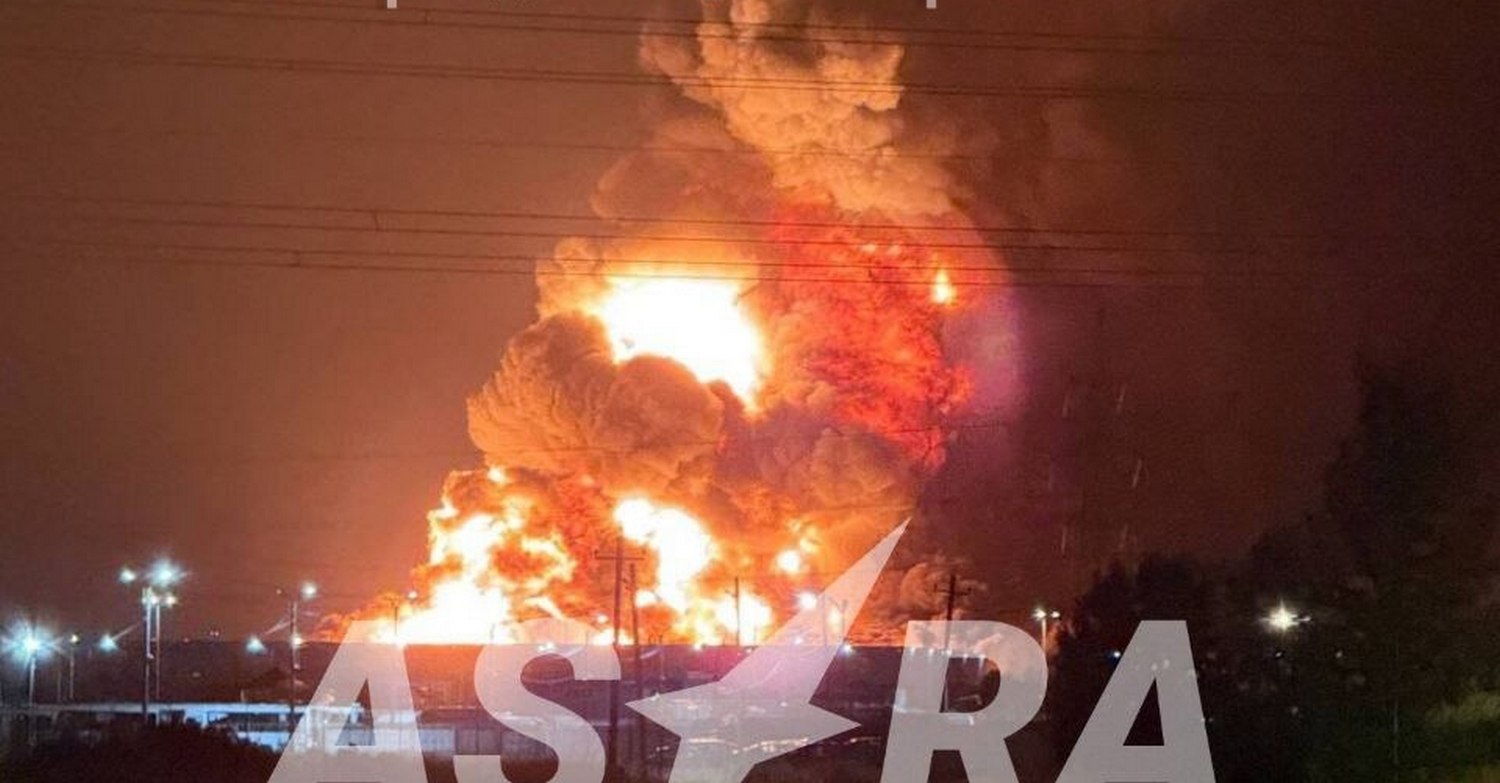
Russian authorities reported damage and a fire at Ust-Luga port during an overnight drone attack on 1 September. One drone crossed Latvian and Estonian airspace, prompting NATO to scramble Turkish F-16s.

The attack hit a major outlet for Russian energy exports. Reuters reported that Ust-Luga loads about 700,000 barrels of crude a day and exported 32.9 million metric tons of oil products in 2025. Its terminals also serve shadow-fleet tankers used to bypass sanctions.

Leningrad Oblast Governor Alexander Drozdenko said emergency crews were working in Ust-Luga’s port zone while the damage was being assessed. He later claimed Russian air defenses downed 52 drones over Leningrad Oblast and reported no casualties.

Drozdenko did not identify the damaged facility or specify the scale of the fire.

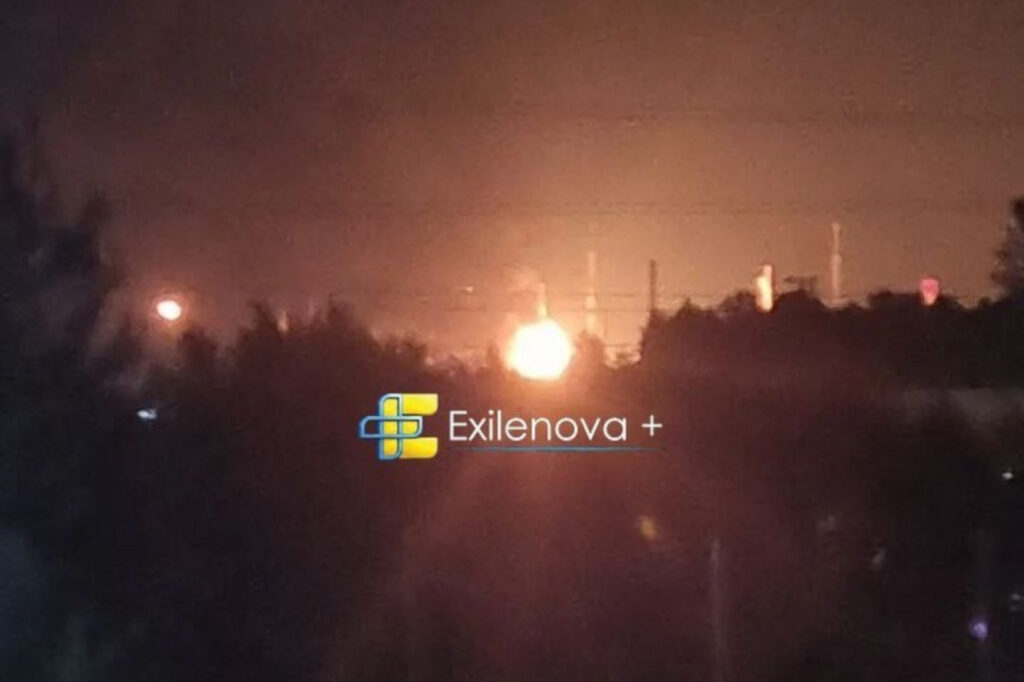
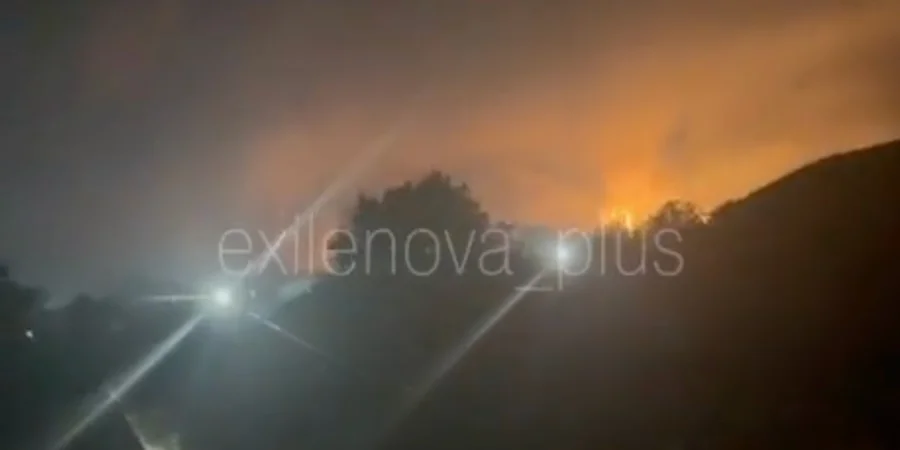
Militarnyi published an image attributed to the Exilenova+ monitoring channel showing a blaze near the port. The image’s time and precise location have not been independently verified.

🇷🇺 🔥 **𝗗𝗥𝗢𝗡𝗘𝗦 𝗛𝗜𝗧 𝗨𝗦𝗧-𝗟𝗨𝗚𝗔 𝗣𝗢𝗥𝗧 𝗔𝗡𝗗 𝗧𝗢𝗟𝗬𝗔𝗧𝗧𝗜 𝗢𝗩𝗘𝗥𝗡𝗜𝗚𝗛𝗧, 𝗙𝗜𝗥𝗘𝗦 𝗕𝗥𝗘𝗔𝗞 𝗢𝗨𝗧 𝗔𝗧 𝗕𝗢𝗧𝗛

🔥 Drones struck the port zone of Ust-Luga in Leningrad region overnight into September 1, sparking a fire, governor Alexander Drozdenko… pic.twitter.com/lGEesBMOBN

🇺🇦 Vortex Report (@VortexReportX) September 1, 2026
There was no immediate information on whether the attack disrupted port operations. Ukraine had not claimed responsibility at the time of publication.

The regional warnings coincided with a broader drone attack on western Russia that included Ust-Luga, although authorities did not specifically link the drones approaching or entering NATO airspace to the port strike.

Baltic states issue warnings as NATO fighters scramble, while Finland restricts traffic

Estonia warned residents in eight counties and scrambled Turkish fighter jets serving in NATO’s Baltic Air Defense Mission, which protects the skies of Estonia, Latvia, and Lithuania.

Estonian Air Force Commander Brigadier General Riivo Valge said around a dozen drones had moved near the country’s border. One briefly entered southeastern Estonia, while another approached Narva before turning back into Russia. The fighters did not open fire, and the warnings were lifted by about 5:30 a.m.

Latvia issued two warnings overnight, first in the Ludza municipality and then in the Alūksne municipality. Latvia’s Armed Forces said a drone crossed Latvian airspace and continued into Estonia, where NATO fighters searched for it. The Latvian alerts ended at around 4:20 a.m.

Finland’s Armed Forces introduced temporary air and sea restrictions over the eastern Gulf of Finland at 3:37 a.m.

The military lifted both restrictions shortly after 6 a.m., saying no drones had strayed into Finland.

Repeated strikes on Ust-Luga

Ust-Luga lies around 110 kilometers west of St. Petersburg and some 900 kilometers from Ukraine. It is the endpoint of the Baltic Pipeline System-II, which carries Russian crude to the port for export. The area hosts facilities operated by Russian gas producer NOVATEK and fertilizer maker EuroChem.

Ukraine began its series of 2026 attacks on Ust-Luga overnight on 24–25 March. The Security Service of Ukraine, the country’s counterintelligence agency, and the military’s elite Special Operations Forces confirmed that they had struck NOVATEK’s gas-condensate complex, which processes liquid hydrocarbons into fuels.

Further attacks followed in late March. They set fuel-storage tanks ablaze, damaged a pier and pumping equipment, and temporarily halted port operations, according to Russian Telegram channel Astra.

On 7 April, Ukraine’s General Staff, the military’s senior command, confirmed another strike on Ust-Luga’s oil terminal, saying three oil storage tanks were destroyed. Another attack on 14 August again caused damage and a fire, Drozdenko reported at the time.

  •  

Former Ukrainian president has made offer to Zelenskyy amid Russia’s new type of war on Kyiv

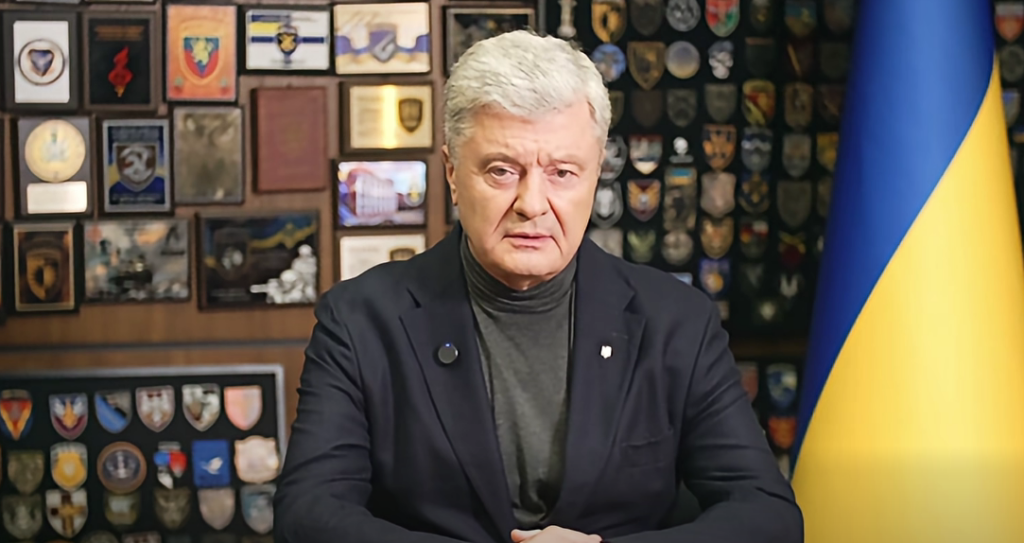
Former Ukrainian President Petro Poroshenko, leader of the opposition European Solidarity party. Source: European Solidarity

Former Ukrainian President Petro Poroshenko, leader of the opposition European Solidarity party, has offered to unite with President Volodymyr Zelenskyy in a new type of government. He has explained his initiative as necessary to save the country and adopt crisis-response measures amid a new phase of the war.

Russia's strike campaign has become a governance problem as much as a military one. Each attack on Kyiv costs the city about $12 million, and they now arrive almost twice a week. Agriculture Minister Taras Vysotskyi said on 28 August that, roughly speaking, 90% of retail chains' food logistics had been destroyed in the latest attacks, which included jet-powered drones that trigger an air alert in Kyiv every hour.

"We are the opposition, but we are ready to cooperate with the authorities in the legislative provision of all necessary decisions, up to the creation of a coalition and a government of national unity," he said.

Speaking in a video address on 31 August, he set out five issues to solve for the parliamentary session.

One: keep the capital running

The current barrage has forced Kyiv to a near-standstill, with alerts sounding through the working day. If they are permanent, Poroshenko argued, the rules for how the city runs must change, and the government, military, transport operators, and business must agree on a single published procedure. When the capital is shut down for hours, much of the economy stops with it, and the lost billions never reach the army, he added.

"Let us say honestly what Putin is doing. He wants to switch Kyiv off. To make people finally say: it is impossible to live here," Poroshenko said.

Two: give parents a school plan

The school year opens on 1 September under a rule allowing in-person classes only where a school has a shelter with room for everyone. Kyiv's administration told UNN that 94% of city schools have basic shelters, but capacity limits set the ceiling, forcing shifts or blended formats when a shelter cannot hold every child at once.

"Tomorrow is 1 September. Thousands of parents still do not understand how their children will study, especially where there are no proper shelters," Poroshenko said.

Three: return Kyiv's money

Kyiv has lost revenue to the central budget even as its defense costs climb, a dispute with the government that predates the barrage. Poroshenko demanded the return of about $180 million to the budget, along with the personal income tax paid by combat brigades.

"This week Kyiv is forced to carry out a budget sequester for the first time," he explained, cutting spending on doctors, teachers, and the socially vulnerable to fund the city's own defense.

Four: scale up war-risk insurance

Russia's strikes have hit businesses faster than any recovery system can answer, with warehouses and logistics hubs among the targets this month. Business needs war-risk insurance, money for rapid recovery after strikes, new logistics, and the ability to invest in its own protection, including private air defense, Poroshenko said.

Five: fund energy resilience now

Putin has named energy as his main target, the former president pointed out, and the coming winter is the pressure point. Kyiv's small, maneuverable generation, cogeneration, and backup power for hospitals, water utilities, and communications must be installed now, he added.

  •  

Russia’s 6-day attack on Kyiv that started two days after CIA head’s visit to Moscow, culminates with massive ballistic missile strike on eve of school year

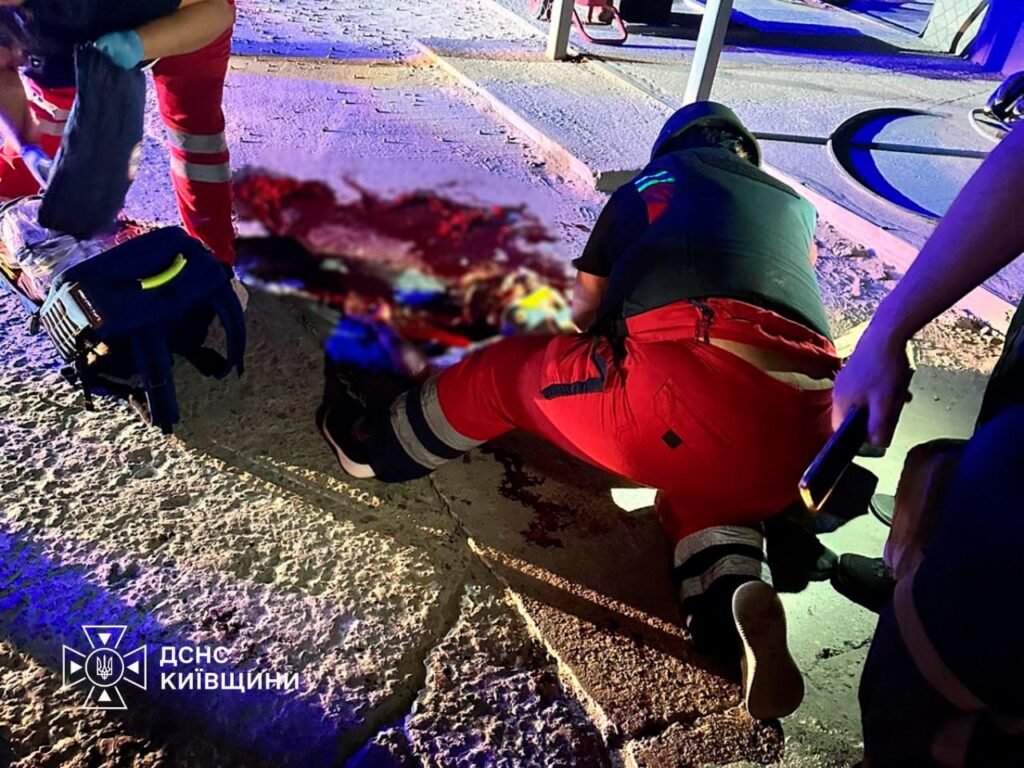
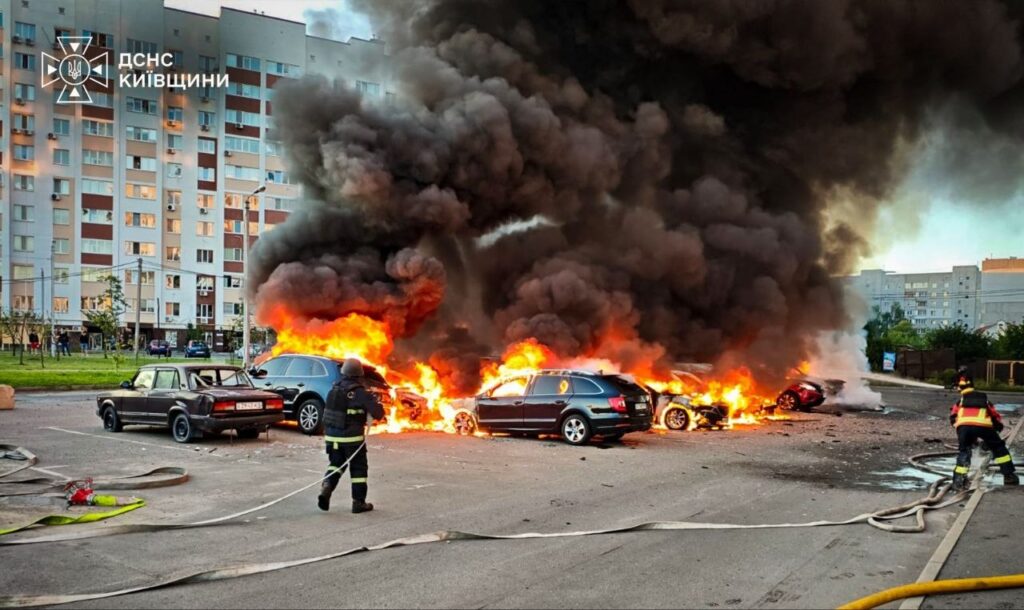
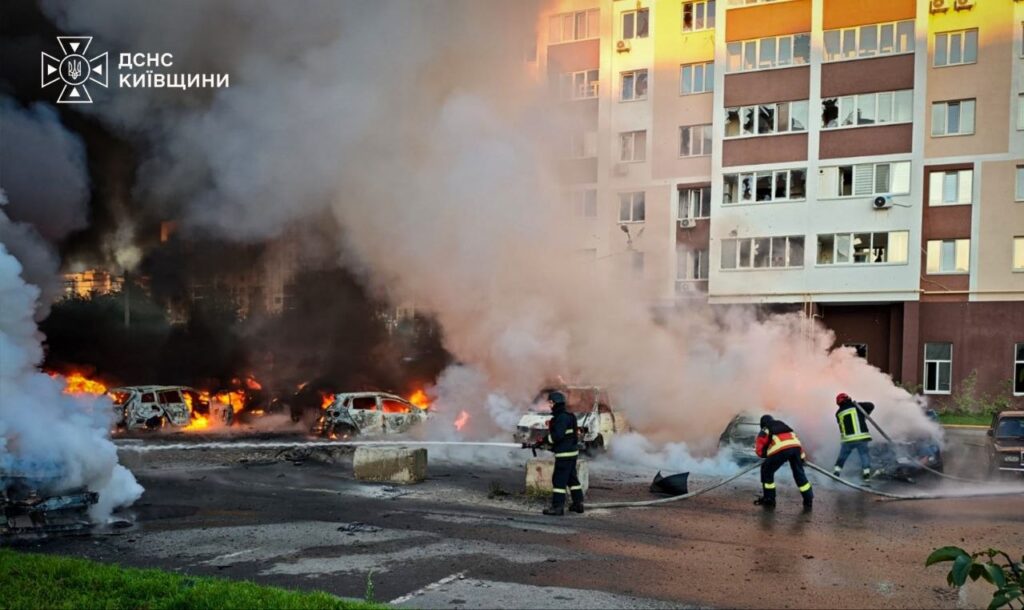
Ukrainian rescuers are helping the victims of a Russian 1 September attack. Source: The State Emergency Service

On 1 September — the day Ukraine marks Knowledge Day, when schoolchildren and students are meant to begin the new academic year — Russia launched a massive attack on Kyiv and its region with ballistic missiles and jet-powered drones. Moscow used different types of its fast, deadly weapons, including ship-launched Kalibr, and hypersonic Zircon missiles, and jet-powered drones to target the Ukrainian capital.

This attack was the culmination of a 6-day assault on the capital and region that began on 27 August. It started two days after CIA Director John Ratcliffe arrived in Moscow on 25 August. US President Donald Trump announced that the visit was linked with US-initiated peace efforts to end the war against Ukraine. Throughout this 5-day period, air raid sirens sounded every hour in the capital and region, paralyzing life in Kyiv, according to Sky News.

As early as the day after the 5-day attack began, Agriculture Minister Taras Vysotsky stated that Russia had destroyed about 90% of the food logistics infrastructure of retail chains, according to UkrInform.

Russia injures three children and continues the attack

As a result of the "ballistic" attack on Kyiv and the region, hits from enemy missiles and strike drones were recorded at 28 locations, and debris from downed targets fell at 10 locations, according to the Air Force of Ukraine.

In addition, some enemy missiles did not reach their targets, and the locations of those missiles are being clarified.

"Unfortunately, as a result of the Russian attack, there are dead and injured. The attack continues, with more than ten Russian drones in the airspace," the military reported.

According to the Kyiv City Military Administration, civilian infrastructure was damaged in 5 of Kyiv's 10 districts — Holosiivskyi, Darnytskyi, Dniprovskyi, Sviatoshynskyi, and Solomianskyi.

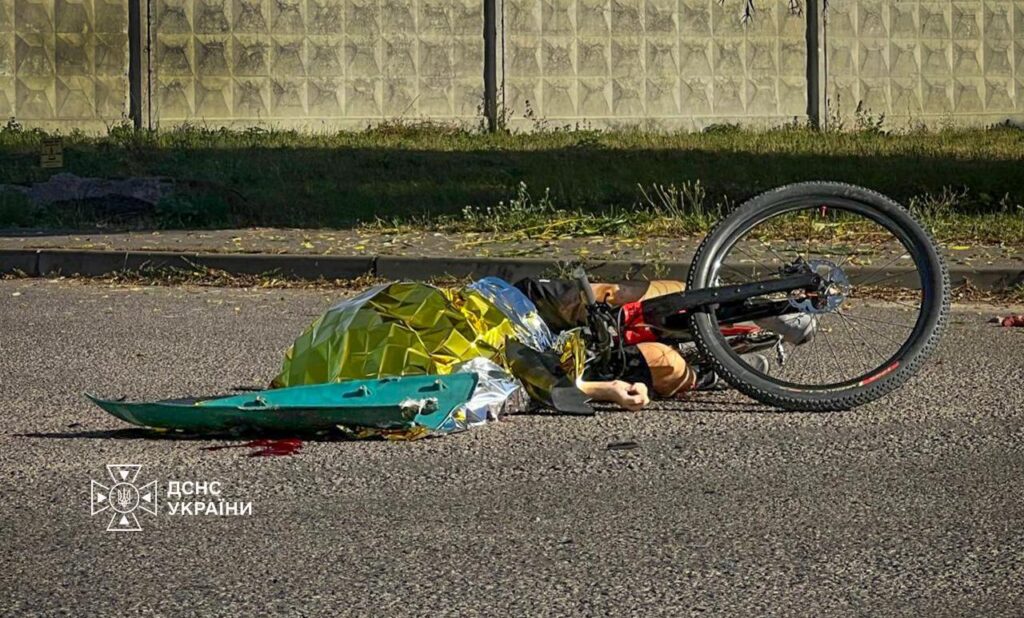
"As a result of the attack, unfortunately, 8 people died. Another 7 people were injured, including 3 children," the Kyiv authorities said.

Railway workers are still receiving treatment and remain hospitalized

Russia struck a railway facility, a critical link in the country's logistics chain, as its airways have been closed since 2022.

Oleksandr Pertsovskyi, head of the board of Ukrzaliznytsia (Ukrainian Railways), stated that Russia carried out a targeted ballistic attack on Kyiv's railway infrastructure. Russia killed six railway workers.

According to him, another employee was injured and is in the hospital, where they are receiving the necessary care.

He added that dozens of employees managed to take shelter and survive the attack. They are now being helped to recover from what they experienced.

Pertsovskyi noted that the strike caused "extensive destruction," including the complete destruction of one workshop, and that efforts to extinguish fires at the facility were still ongoing.

He said that, due to the attack's consequences, movement was temporarily restricted on two railway sections, but it was later restored.

Earlier, a source close to the Russian president told The Economist that Vladimir Putin most likely regarded Ratcliffe's visit as a sign of American weakness. He already interpreted former CIA Head Bill Burns' meeting with Russian authorities in 2021 the same way, where he warned about the consequences of Russia's war against Ukraine. Three months after the meeting, Russia launched the full-scale invasion.

  •  

Ukrainian company builds single device that detects FPV drone, reads its video feed, and jams it

The Brama system by Rebel Group. Source: Rebel Group

A Ukrainian defense company has built a single device that finds an FPV drone, reads its video feed, and jams it. Rebel Group has developed Brama, a stationary electronic warfare and reconnaissance system to counter FPV drones, which it plans to codify for use by the Defense Forces, the company's press service told Oboronka.

Brama can both detect a drone's signal and jam it, allowing an operator to move from spotting a drone to suppressing it.

Two jobs from one point

Brama can detect the frequency of an analog video signal, decode it, and then apply directed electronic warfare to suppress both the video channel and the drone's control link, the press service explained. Once an operator receives target data and locates a drone, they can suppress it immediately without additional equipment, Militarnyi reports.

"Both functions are implemented in a single device, so the operator does not need to use additional equipment to move from detection to suppression," a Rebel Group representative says.

Rebel Group is seeking codification

Brama has already passed laboratory testing and trials in combat conditions, according to the company. It is now going through Ukraine's military codification procedure, the required step before defense equipment can be approved for broader use by the armed forces.

Its producer company, Rebel Group, specializes in electronic warfare and reconnaissance systems, and some of its equipment has already been codified and tested at the General Staff's proving grounds, the press service noted.

It joins a widening Ukrainian EW effort

Brama is one of several recent Ukrainian counter-drone systems. In July, Ukraine unveiled Lima Quant, an upgraded electronic warfare system built to defeat the advanced satellite-navigation antennas Russia now fits to Shahed drones, cruise and ballistic missiles, and guided bombs, United24 reported.

Those antennas, newer 12- and 16-element arrays, had proven resistant to earlier jammers, which is why each side keeps building the next countermeasure as the other adapts.

  •  

800 jet drones in four days: Russia is now firing type Ukraine’s interceptors cannot catch

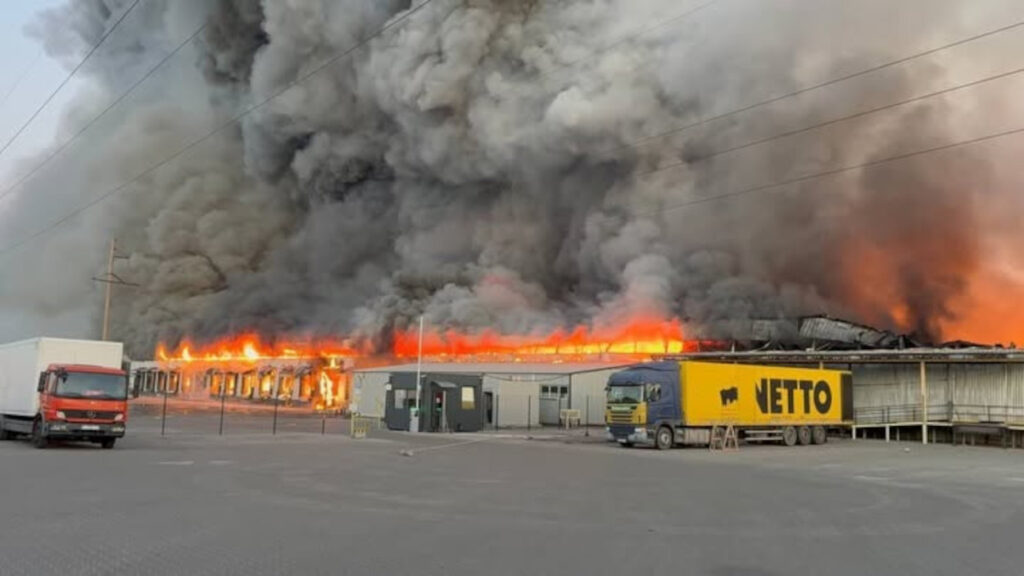
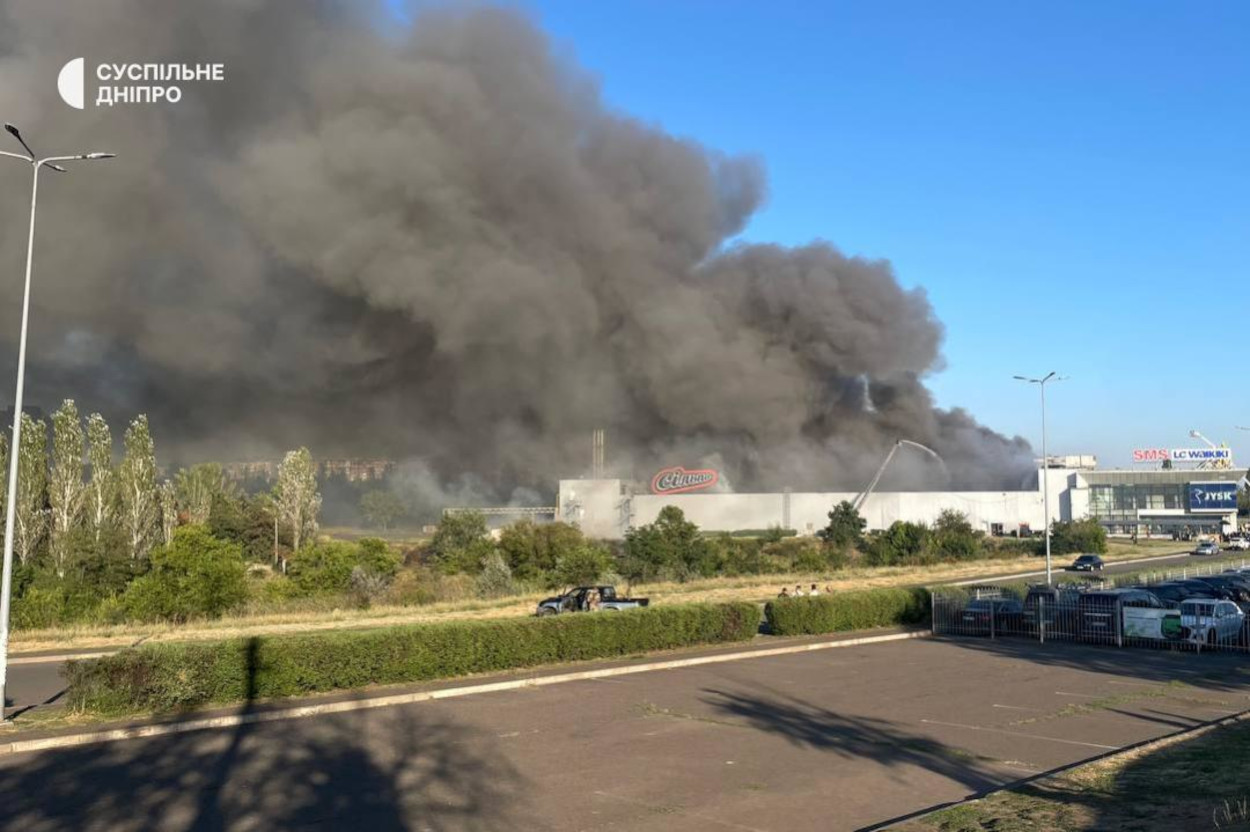
A fire burns at a Nova Poshta fulfillment and sorting center in Sviatopetrivske, Kyiv Oblast, after a Russian drone strike on 28 August 2026. More than 60,000 books were destroyed in the attack. Photo: Readeat

More than half the drones Russia fired at Ukraine over the past four days were jet-powered, and Kyiv was the main target. Of the more than 1,500 drones launched, about 800 were jet-powered, Colonel Yurii Ihnat, head of the communications department of Ukraine's Air Force Command, said, UNIAN reports.

A massive attack on Kyiv and the Kyiv region began on 27 August, two days after US Central Intelligence Agency (CIA) Director John Ratcliffe’s visit to Moscow. According to President Donald Trump, the visit was related to efforts to broker an end to Russia’s war against Ukraine, per Sky News.

Previous interceptors won't work

The attack on Kyiv and the surrounding region, accompanied by repeated air-raid alerts, has continued for all five days since then.

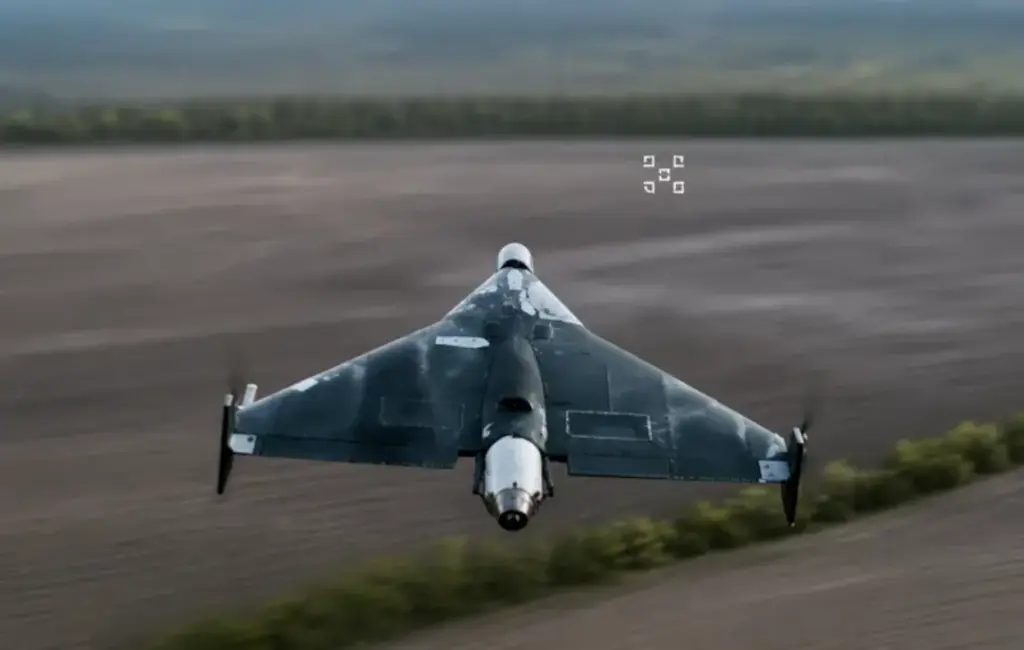
A jet-powered Shahed is a version of the strike drone fitted with a turbojet engine in place of a propeller, which makes it three times faster and far harder to shoot down.

Ukraine intercepts about 88 to 90 percent of all drones, but the rate against jet-powered ones is lower precisely because of their speed, Ihnat noted.

The problem is structural: Ukraine's interceptor drones reach roughly 300 kilometers per hour and physically cannot catch a target moving faster and flying at about five kilometers' altitude, beyond the reach of mobile fire teams and portable SAM systems.

Russia adds jet drones every month

Moscow began using jet-powered UAVs in large numbers in July, launching five times as many as in June, Ihnat noted. Their number may rise further by the end of August, he added.

The jet-drone attacks come from every direction. Ihnat said the debris of recovered Shaheds shows they were manufactured just two weeks earlier, meaning production is running without pause.

Banderols fly like cruise missiles

Russia has also stepped up its use of Banderols, systems that combine features of drones and missiles and fly at up to 600 kilometers per hour, Ihnat said. They are harder to shoot down, so short-range surface-to-air missile systems and aircraft with air-to-air missiles are used against them.

Jet-powered drones are significantly more expensive than conventional ones, Ihnat noted.

The strikes hit specific targets

Russia's attacks are aimed not only at psychological pressure on the capital's residents but at specific targets, Ihnat said. These are logistics and shopping centers, postal terminals, critical infrastructure, and other strategic sites.

Strikes of this kind have destroyed about 90 percent of Ukraine's modern warehouse space in recent weeks and slowed grain exports through the Black Sea corridor.

  •  

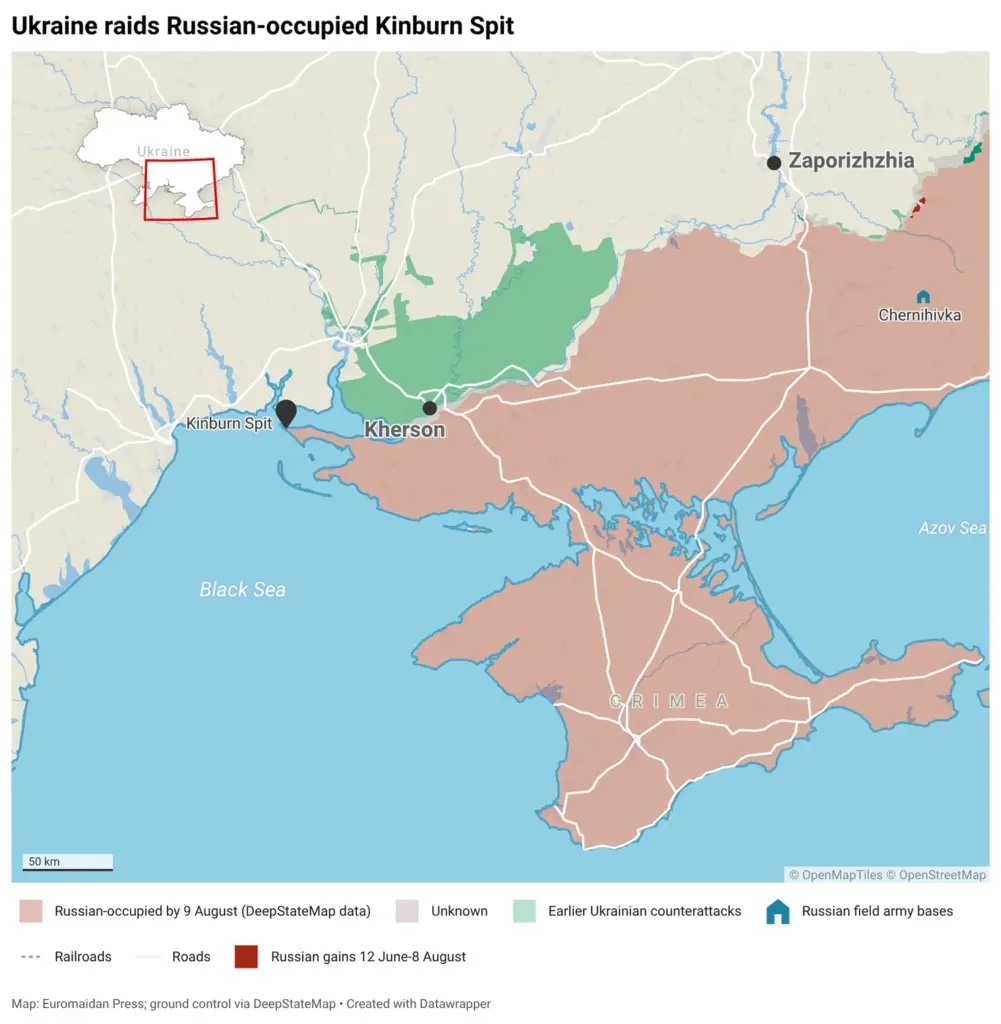
“In intercepts, they’re screaming”: Russia occupied this spit to control Ukraine’s ports. Military says it has now isolated 2,500-strong grouping and destroyed all its artillery

Location of Kinburn Spit. Map: Euromaidan Press

Ukrainian troops say they have trapped about 2,500 Russian soldiers on the Kinburn Spit. Systematic drone strikes and remote mining have let them cut the Russian supply lines and destroy almost all of Russia's artillery on the spit, scouts told Radio Free Europe/Radio Liberty's "Crimea.Realities" project.

The Kinburn Spit is a narrow sandy peninsula about 40 kilometers long, between the Dnipro-Buh Estuary and the Black Sea, the last part of Mykolaiv Oblast that Russia has held since 2022. Whoever controls the spit controls the sea exit from the ports, which is why Moscow kept artillery there to shell the southern coast, said former Head of the Mykolaiv Regional State Administration Vitali Kim.

Now, the troops say, Russia can reach the coastal zone of Mykolaiv Oblast only with long-range guns from occupied Kherson Oblast.

Supply runs through a single corridor

The Russian force has one way in — a single land route Ukrainian troops keep under fire, from Zaliznyi Port through Heroiske.

"Our task here is to neutralize everything that drives onto the Kinburn Spit. Since we started destroying Russian troops at a rapid pace, they cannot bring in anything effective," reconnaissance unit commander with the call sign "Yava" explained.

A scout calls the spit a trap

Intercepts show panic among the Russian units, the troops say.

"In the intercepts, they're screaming that they can't do logistics, that they don't want to go in, because it's death. The road is cut, and they have very little ammunition. The spit is a trap for them," the scout said.

Mining the supply routes is the main method

The problem, the troops say, is that the occupiers disguise themselves as civilians, changing into civilian clothes, which places limits on when Ukrainian soldiers can strike. The main method is catching the Russians on logistics by mining their routes.

"A vehicle hit a mine that was dropped maybe a week ago, maybe yesterday. The first thing is cutting Russia's logistics — the vehicles, the resupply by quad bikes and motorcycles," deputy reconnaissance company commander with the call sign "Holova" explained.

  •  

Fired Ukrainian minister offers to help build America’s drone army— for Patriot missiles in return

mykhailo fedorov

Ukraine's former defense minister Mykhailo Fedorov has offered to help the United States build a fleet of attack drones if Washington sends Ukraine the Patriot interceptor missiles it needs to get through winter, he told the Financial Times. The idea is Fedorov's own proposal, not a deal, and he holds no government post that would let him negotiate one for Kyiv. He is in Washington mainly to raise American money for a fund that would both invest in Ukrainian defense-tech companies and build new ones of its own.

Over the past year, Ukraine's partners have shifted from handing over weapons off their shelves to funding and co-producing Ukrainian-designed drones and missiles, inside and outside the country.

What the fund would do

Fedorov used his working trip to Washington to line up venture funds, entrepreneurs and tech companies as backers, Suspilne reported. The fund would not simply invest in existing Ukrainian defense-tech firms, he wrote; it would also create new companies around the technologies the front line needs most. He set out three targets: battlefield robots to replace soldiers in the most dangerous positions, jet-powered interceptor drones to bring down Russia's faster new attack drones, and cheap missiles that use artificial intelligence. He did not say what his own role would be, or whether he would profit. He said the next step is to assemble a team and launch the first projects.

A column of protesters demanding reinstatement of Mykhailo Fedorov as Defense MInister walks in vul. Khreschatyk in Kyiv, 1 August 2026. Photo: Serge Kostezh/Kyivpost
Explore further

The Fedorov protesters lost. But they backed a man for what he built, not what he promised—and that may be new in Ukraine.

The interceptors behind the offer

Fedorov framed the drone help as a straight swap.

"I'm ready to make that trade," he told the FT.

Ukraine is running low on interceptor missiles for its Patriot batteries, one of the few air-defense systems able to reliably stop Russia's ballistic missiles. Fedorov declined to say whether he would meet anyone from the Trump administration.

Ukraine's ex-minister turns open critic

President Volodymyr Zelenskyy dismissed Fedorov on 15 July, after six months in the job. Fedorov said a feud with Commander-in-Chief Oleksandr Syrskyi, who he says blocked his reforms, drove the split, Zelenskyy removed Syrskyi on 21 July as protests spread. in an interview with Reuters published on 25 August.

"it looks as though we're gradually, slowly losing," he said in an interview with Reuters.

  •  

Ukraine is testing four new drone interceptors as Russia floods its skies with faster Gerans 

Russia’s new “Geran-4 Seeker” Shahed variant uses machine-vision AI for targeting. Source: Dyki Shershni

Ukraine has four potential interceptor systems that could shoot down Russia’s increasingly common jet-powered Geran attack drones, Ukrainian Defense Minister Yevhen Khmara said on 30 August, according to Suspilne.

Russia has sharply increased its use of the faster drones against Ukrainian cities, causing major damage to civilian infrastructure and many civilian casualties. The attacks are putting near-unprecedented strain on Ukraine’s air defenses.

All four interceptor systems have undergone field testing, Khmara said. Ukraine now aims to bring them to the required level as quickly as possible and scale production to thousands of units.

“The search for countermeasures against jet-powered drones continues,” Khmara told journalists, according to Suspilne. “There are already four potential interceptors that can shoot down jet-powered ‘Shaheds.’ Field tests have already been conducted on them.”

Russia is rapidly expanding Geran attacks

Russia's Gerans are jet-powered adaptations of the Iranian-designed Shahed attack drones that Russia has produced domestically throughout the full-scale war. The faster Geran variants give Ukrainian air defenses less time to detect and engage them.

Ukrainian defense technology adviser Serhii “Flash” Beskrestnov said Russia used more than 2,500 jet-powered Gerans against Ukraine in August, up from about 1,500 in July.

He also said the drones are being launched against Ukraine almost directly from Russian factories, highlighting the rapid expansion of their production and use.

Zelenskyy calls for faster production

Ukrainian President Volodymyr Zelenskyy has made countering the Gerans a priority as Russia sustains repeated attacks on Ukrainian cities.

At a 28 August meeting of Ukraine’s military leadership, Zelenskyy said the country needed to maximize domestic weapons production, with the immediate focus on defending against jet-powered Gerans and increasing Ukraine’s own long-range strikes against Russia.

“[The] main thing is our defense against jet-powered ‘Shaheds,’” Zelenskyy said in his evening address.

He said Russia had adopted a tactic of keeping Kyiv and other cities under repeated air raid alerts, with Gerans reaching the capital as well as cities including Kharkiv and Zaporizhzhia.

Rescue workers respond to the site of a Russian strike on an apartment building in Kyiv, 30 August 2026. Photo: Ukraine's State Emergency Service
Explore further

Four days of Russian attacks keep Kyiv under near-constant fire. Ukraine is struggling to defend its skies

“All our means of countering [them] are already being used,” Zelenskyy said, adding that Ukraine needs a significant acceleration in production of interceptors specifically designed for the jet-powered drones.

Khmara said the four potential interceptors are now at the field-testing stage, with the next step being to bring them into production at a scale of thousands of units.

For Ukraine, that scale is critical. The country must defend a large territory against increasingly large Russian drone barrages while also preserving limited air-defense resources for ballistic and other missiles that require more advanced interceptors.

  •  

Russia has burned millions of Ukrainian books, striking at the infrastructure of Ukrainian culture

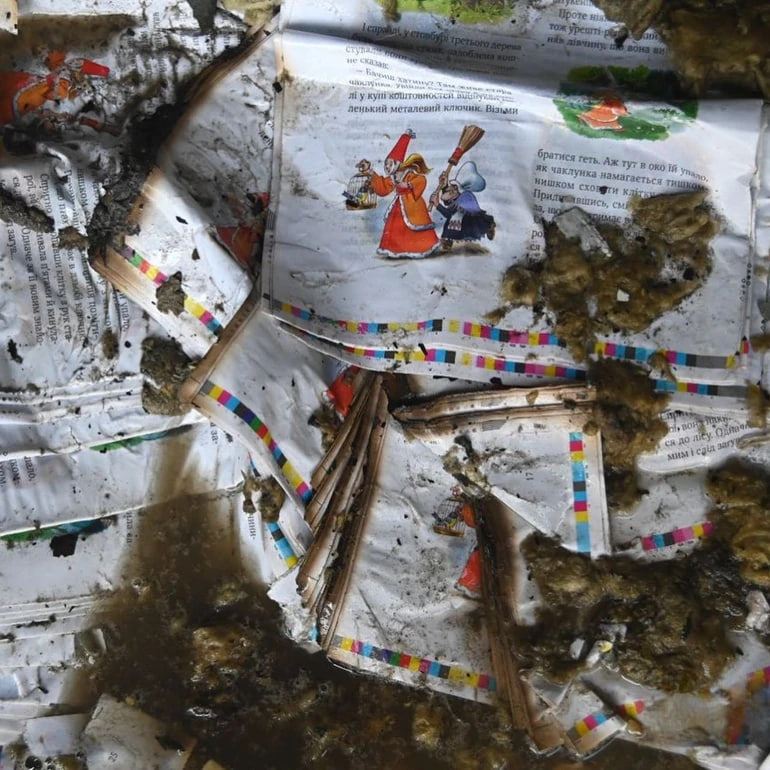
A fire burns at a Nova Poshta fulfillment and sorting center in Sviatopetrivske, Kyiv Oblast, after a Russian drone strike on 28 August 2026. More than 60,000 books were destroyed in the attack. Photo: Readeat

Another Russian strike has destroyed tens of thousands of Ukrainian books around Kyiv, adding to a summer of attacks that has wiped out millions of copies and damaged the warehouses, printing plants and markets that keep Ukraine’s publishing industry running.

Since Russia’s full-scale invasion began in 2022, Ukrainian publishers, printers, bookstores, warehouses and other parts of the literature industry have repeatedly been hit by Russian attacks. 

The destruction has drawn comparisons to earlier Russian and Soviet efforts to suppress the Ukrainian language, culture and national identity, with publishers and cultural figures warning that the current attacks are damaging not only businesses and infrastructure but the means through which Ukrainian culture is produced and preserved.

The latest loss came on 28 August, when a Russian drone struck a Nova Post fulfillment and sorting center in Sviatopetrivske, Kyiv Oblast. More than 60,000 books stored there were destroyed, including books belonging to Ukrainian publishers and retailers such as Vivat, A-BA-BA-HA-LA-MA-HA, Osnovy, Readeat and Book.ua.

The destruction is taking a growing toll on Ukrainian culture

Nova Post director Yevhen Tafiichuk said the strike destroyed the company's most modern robotic fulfillment center, along with books from several publishers and stores. He said the company is working with affected partners to compensate their losses and is moving toward a decentralized fulfillment system to reduce the risk of losing large inventories in a single strike.

“For centuries, the enemy has tried to destroy the Ukrainian language, culture and memory. Once, it burned libraries and banned printing; today, it launches missiles at printing plants and warehouses filled with books,” Tafiichuk said. 

The latest destruction comes after the Ukrainian publishing industry estimated that Russian attacks had already destroyed about 13 million books in July and August – nearly a third of the number of books Ukrainian publishers printed during all of 2025.

The burnt books in Kharkiv may 2024
Explore further

Russia has burned 13 million Ukrainian books in three months, nearly third of everything country printed in 2025

Another warehouse full of books goes up in flames

The Sviatopetrivske strike hit a logistics facility rather than a publishing house itself, but the consequences spread across much of the book market.

Readeat founder Dmytro Feliksov said more than 60,000 physical books were destroyed and estimated his company's losses at more than UAH 23 million. The warehouse held stock for several publishers and booksellers.

Vivat CEO Yuliia Orlova said the publisher also lost books stored at the Kyiv warehouse in the attack. The company had already begun moving some print runs to other parts of Ukraine, including Lviv, after earlier Russian strikes destroyed publishing infrastructure. But many new releases and books by Ukrainian authors remained in Kyiv.

The same attack destroyed a warehouse used by A-BA-BA-HA-LA-MA-HA to fulfill direct orders. The losses came as publishers were already trying to spread their inventories across multiple locations to reduce the risk posed by Russian strikes.

Millions of books destroyed across Ukraine, publishers hit again and again

On 1 August, a Russian strike on the warehouses of RNK-Ranok destroyed nearly 8 million books, including hundreds of thousands of school textbooks. The Ukrainian Book Institute said the loss from that strike alone was equivalent to about 30% of the country's annual book production.

A separate Russian strike on 19 July destroyed the Konvi printing facility and about 250,000 books belonging to Knyholav, along with print runs and materials belonging to numerous other publishers.

BookChef has suffered some of the largest losses around Kyiv. A Russian strike in July destroyed about 800,000 books at its main warehouse. A second strike in August hit a backup warehouse opened after the first loss, destroying more than 100,000 additional books, Interfax-Ukraine reported.

The attacks have also damaged publishing offices and warehouses. On 16 August, Russian strikes near Kyiv’s Pochaina metro station damaged the offices and warehouses of BookChef and RM, including areas where books were stored.

Kyiv’s Pochaina market also burned

The damage is not limited to modern distribution centers.

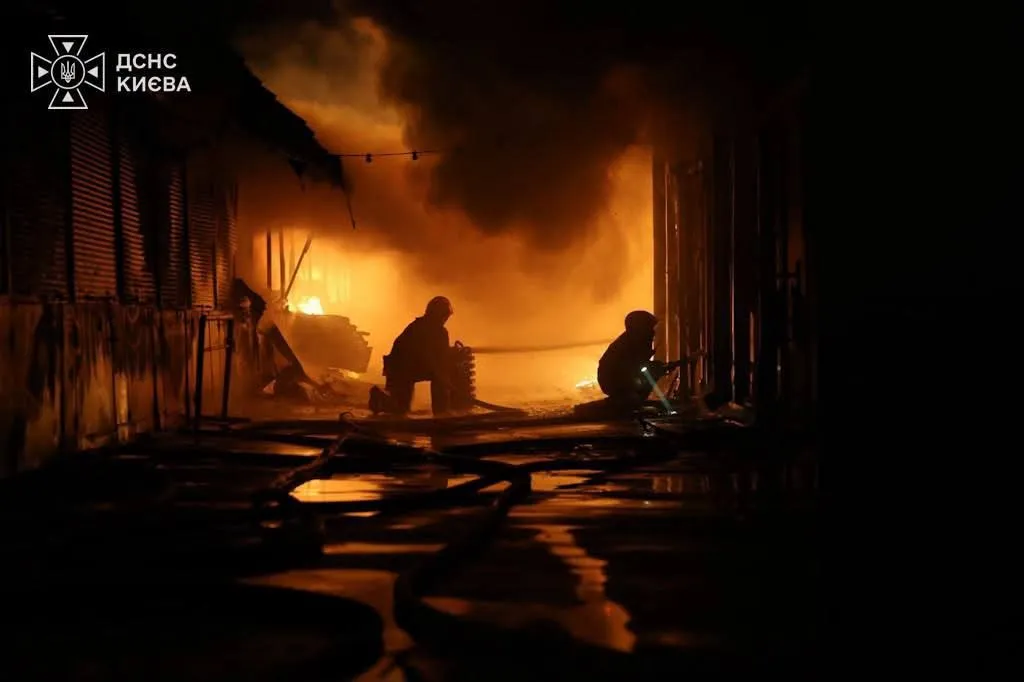
On 16 August, a Russian strike set fire to Kyiv’s Pochaina book market, one of the capital’s best-known places to buy new, used and second-hand books. Much of the market burned, with the fire covering more than 2,000 square meters of commercial space.

The market, formerly known as Petrivka, had operated for about 30 years and was a major hub for second-hand books and other goods. Dozens of thousands of books were destroyed, according to local reporting.

Kyiv’s Pochaina book market was hit again during Russia’s overnight missile attack, with rows of stalls burned and books damaged.

“Pochaina Book Market is finished. Three missiles hit the stalls. This time, the story is over,” Oleksandr Krasovytskyi, CEO of Folio publishing… pic.twitter.com/fum3LNN5Dt

— Euromaidan Press (@EuromaidanPress) August 16, 2026

The destruction was extensive enough that 60–70% of the market's commercial space was lost. The surviving Bukinist section began reopening later in August, with booksellers returning to trade where their stock had survived, RBC reported.

The market's destruction also meant the loss of a part of Kyiv's book culture that cannot simply be replaced by reprinting new editions. Second-hand books, older editions and used collections had been traded there for generations.

Three firefighters work amid flames and thick smoke at night.
Explore further

Kyiv’s largest book market hit by Russian missiles

The losses are hitting an already fragile industry

The Ukrainian publishing sector had been growing before Russia's latest attacks, helped in part by rising demand for Ukrainian-language books during the full-scale invasion.

But publishers now face the repeated cost of replacing destroyed print runs, warehouses and equipment while also trying to keep books moving to stores and readers.

Olesia Ostrovska-Liuta, director general of Mystetskyi Arsenal, said the Ukrainian book industry had only recently begun to grow, making the latest losses especially painful.

“Losses are accumulating, while the tools to minimize them are being built extremely slowly,” she said. “Culture will not disappear, but it will once again be drained of its strength.”

Publishers seek help to rebuild and protect a supply chain under attack

The Ukrainian Publishing Association has called for additional support, including war-risk insurance for book stocks, affordable financing to rebuild printing capacity and the restoration of state purchases of books for libraries.

The Ukrainian Book Institute has also appealed for international support for the publishing sector, saying Russia has systematically targeted publishing houses, bookstores, printing facilities and warehouses since the start of the full-scale invasion.

For publishers, the latest strikes show that moving books from a printer to a reader has itself become a wartime vulnerability. A single warehouse can contain the output of dozens of publishers, and losing it can erase months of work and leave books unavailable even when the companies themselves survive.

Nova Post says it is responding by distributing inventory across more locations rather than relying on large centralized facilities. The strategy may help reduce future losses, but it also reflects how deeply Russia’s ongoing attacks have altered the basic infrastructure through which Ukrainians produce, store and buy books.

  •  

Ukraine strikes Russia’s second-largest oil refinery again in major overnight attack, also hitting airfield and drone launch site

Fire reported at Russia's Kirishi/KINEF oil refinery following an overnight Ukrainian drone attack, 29-30 August 2026. Photo: Exilenova+

Ukraine’s Defense Forces struck three Russian military and energy targets overnight on 29-30 August, including a major oil refinery in Leningrad Oblast, a site used to store and launch attack drones in Rostov Oblast, and an airfield in Krasnodar Krai, Ukraine’s General Staff said.

Ukraine has increasingly targeted energy and military infrastructure inside Russia as part of an effort to disrupt the resources supporting Moscow’s war effort. Russia’s military relies heavily on fuel and other petroleum products produced at major refineries, while oil exports provide revenue that helps fund the war. 

The General Staff said the strikes caused fires at all three sites. The extent of the damage is still being assessed.

Ukraine strikes one of Russia’s largest oil refineries

In Kirishi, Leningrad Oblast, Ukrainian forces struck the Kirishi oil refinery, also known as KINEF, Russia’s 2nd largest oil refinery.

The refinery has an annual processing capacity of about 20 million metric tons of crude oil and produces motor fuels, aviation fuel, diesel and other petroleum products, according to the General Staff. It also supplies fuel for Russia’s military.

KINEF has been targeted repeatedly since Russia launched its full-scale invasion. The latest strike is at least the sixth reported Ukrainian attack on the refinery.

Ukraine struck Russia’s second-largest oil refinery, KINEF in Leningrad Oblast, overnight, causing a fire at the site.

The refinery has been repeatedly targeted by Ukraine since Russia launched its full-scale invasion.

📹Supernova+ pic.twitter.com/fYoNvXCsXV

— Euromaidan Press (@EuromaidanPress) August 30, 2026

Russian authorities acknowledged damage in Kirishi following the overnight attack, according to Russian OSINT outlet ASTRA. Leningrad Oblast Governor Alexander Drozdenko claimed several residential buildings were damaged, with windows blown out in some apartments, while a fire broke out in the city’s industrial zone. He said the industrial fire and fires from drone debris had been extinguished.

ASTRA reported that videos from residents showed a large fire at what appeared to be the KINEF refinery. ASTRA also geolocated footage of an explosion at the upper floors of an apartment building in Kirishi, where residents reported hearing air defense activity. The footage has not been independently verified.

Drone launch site struck in Rostov Oblast

Ukrainian forces also struck a site in Millerovo, Rostov Oblast, used to store, prepare and launch attack drones.

The General Staff said a fire was reported at the facility following the strike.

Millerovo has been repeatedly used by Russian forces as a base for launching attacks against Ukraine. Striking drone infrastructure can disrupt the storage, preparation and deployment of the weapons used in Russia’s ongoing aerial campaign.

Smoke rises from a Russian Bastion missile system position in occupied Crimea after a Ukrainian strike on 16 August 2026. Screenshot from video: Ukrainian Navy
Explore further

One alternative to air defense: Ukraine strikes Russian Bastion system used to attack Ukrainian cities from Crimea

Fire reported at Yeysk airfield

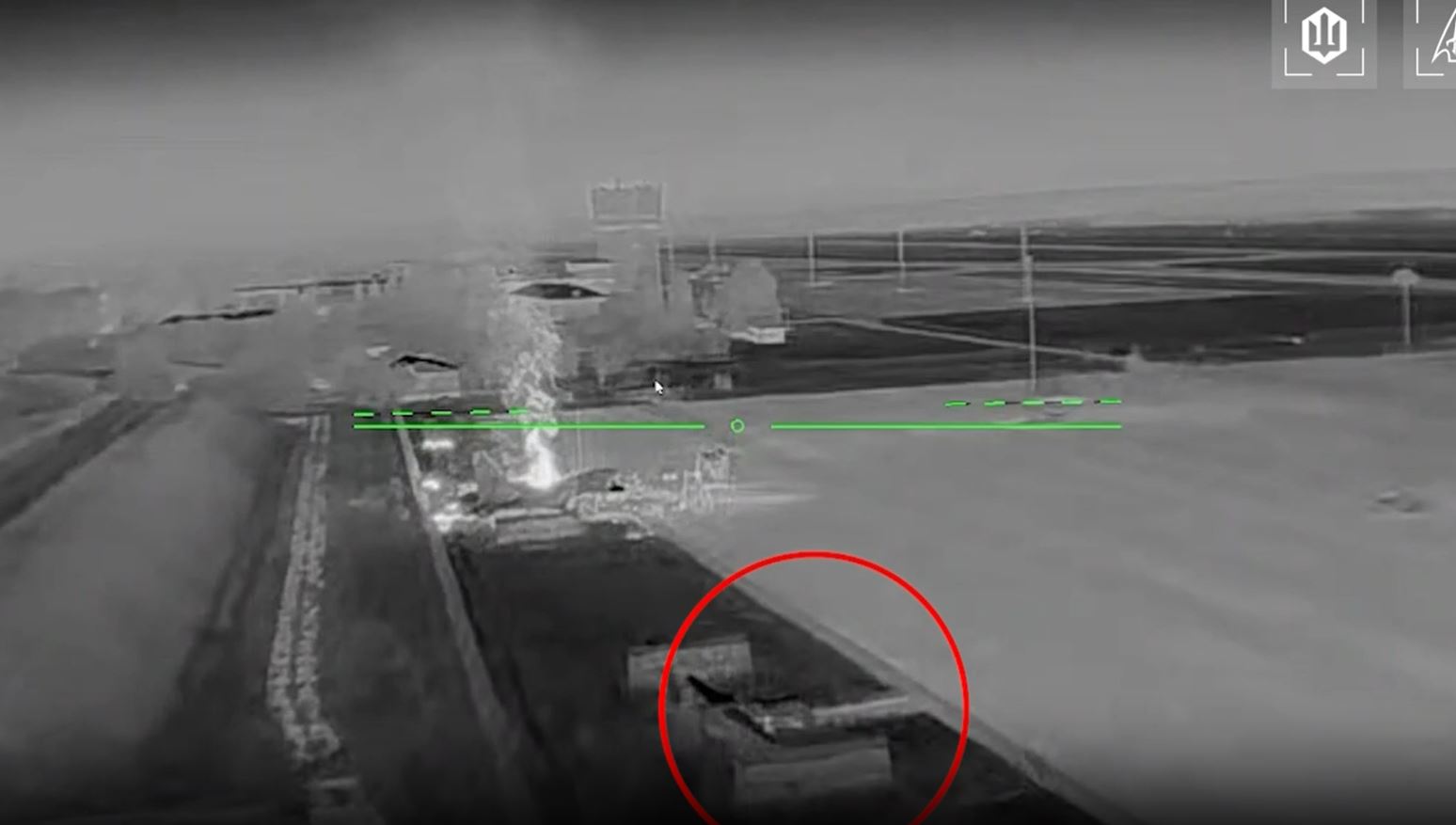
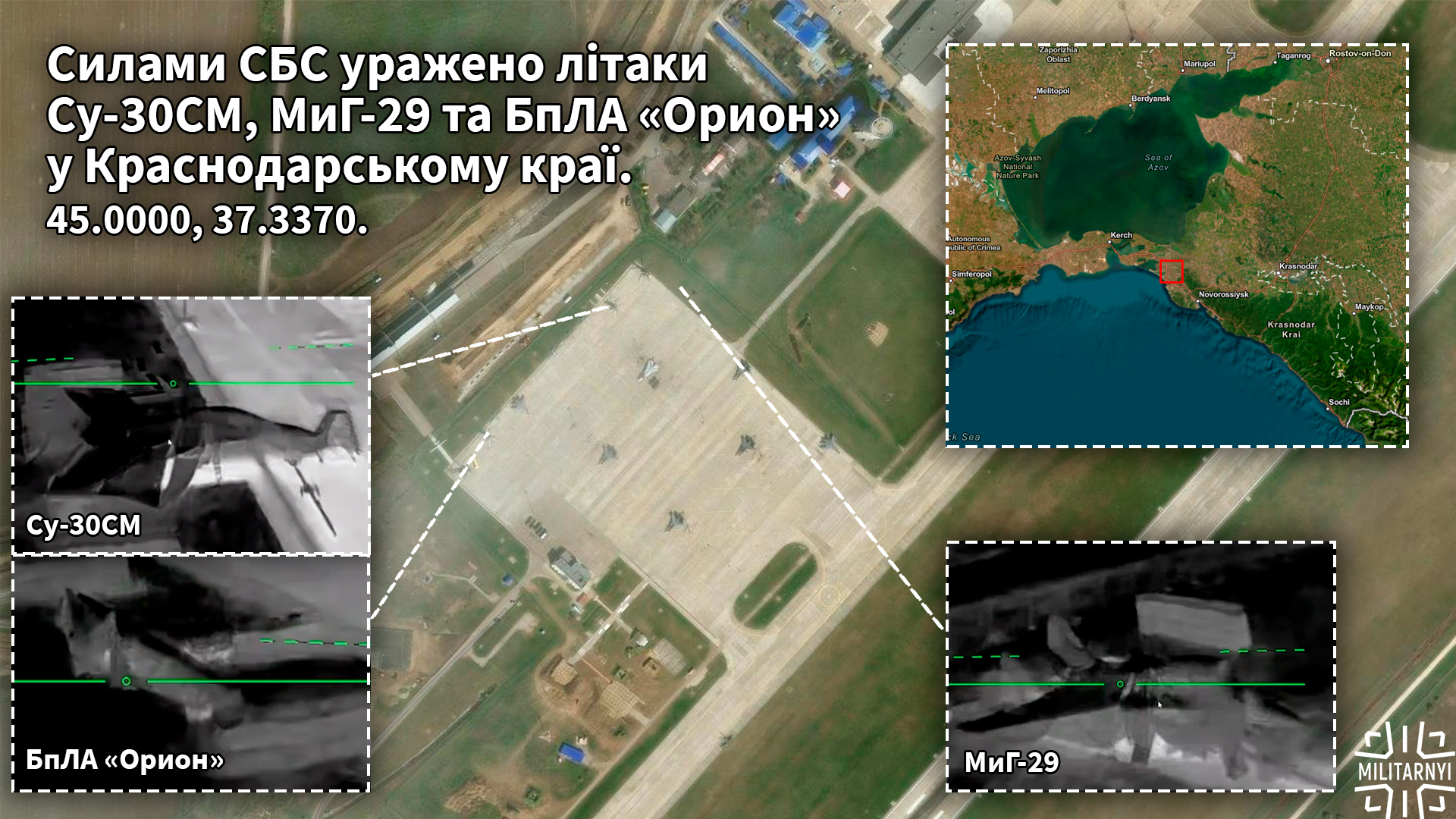
A Ukrainian strike also hit Yeysk airfield in Russia’s Krasnodar Krai, according to the General Staff.

A fire was reported at the site after the strike. The General Staff did not provide details on which facilities or equipment at the airfield were damaged.

The three strikes were part of a broader Ukrainian campaign against Russian military infrastructure and the energy facilities supporting Russia’s war effort.

Russia’s Defense Ministry claimed that its air defenses intercepted or destroyed 494 fixed-wing drones overnight across Russia and occupied Ukrainian territory. It said the drones were detected over Leningrad, Bryansk, Belgorod, Kaluga, Kursk, Tver, Smolensk, Oryol, Pskov, Tula, Novgorod and Rostov oblasts, as well as Krasnodar Krai, Moscow, occupied Crimea and the Azov and Black seas.

The General Staff said operations against key Russian targets are continuing, while the extent of the damage from the overnight strikes is still being determined.

  •  

Four days of Russian attacks keep Kyiv under near-constant fire. Ukraine is struggling to defend its skies

Rescue workers respond to the site of a Russian strike on an apartment building in Kyiv, 30 August 2026. Photo: Ukraine's State Emergency Service

Russia has kept Kyiv and surrounding areas under near-continuous attack for four days, repeatedly sending drones and missiles toward the capital and other Ukrainian regions.

The prolonged attacks have kept air defense crews and emergency workers operating almost constantly, while disrupting civilian life across Kyiv and the surrounding oblast.

Ukrainian President Volodymyr Zelenskyy said on 30 August that Russia had launched nearly 2,000 attack drones, more than 1,600 guided aerial bombs and 31 missiles of various types against Ukraine over the past week. The missiles included North Korean ballistic weapons.

The current attacks follow months of increasingly heavy Russian aerial strikes against Kyiv and other Ukrainian cities. Russia has ramped up its use of ballistic missiles while also expanding its use of newer jet-powered Geran drones, which have repeatedly targeted the capital and surrounding areas.

Four days of attacks

Kyiv and Kyiv Oblast have been under repeated attack since 27 August, with waves of drones arriving throughout the day and night.

The attacks have hit residential buildings, warehouses, businesses and other civilian infrastructure. They have also repeatedly forced firefighters and rescue crews to stop their work and move to safety before returning once the immediate threat passes.

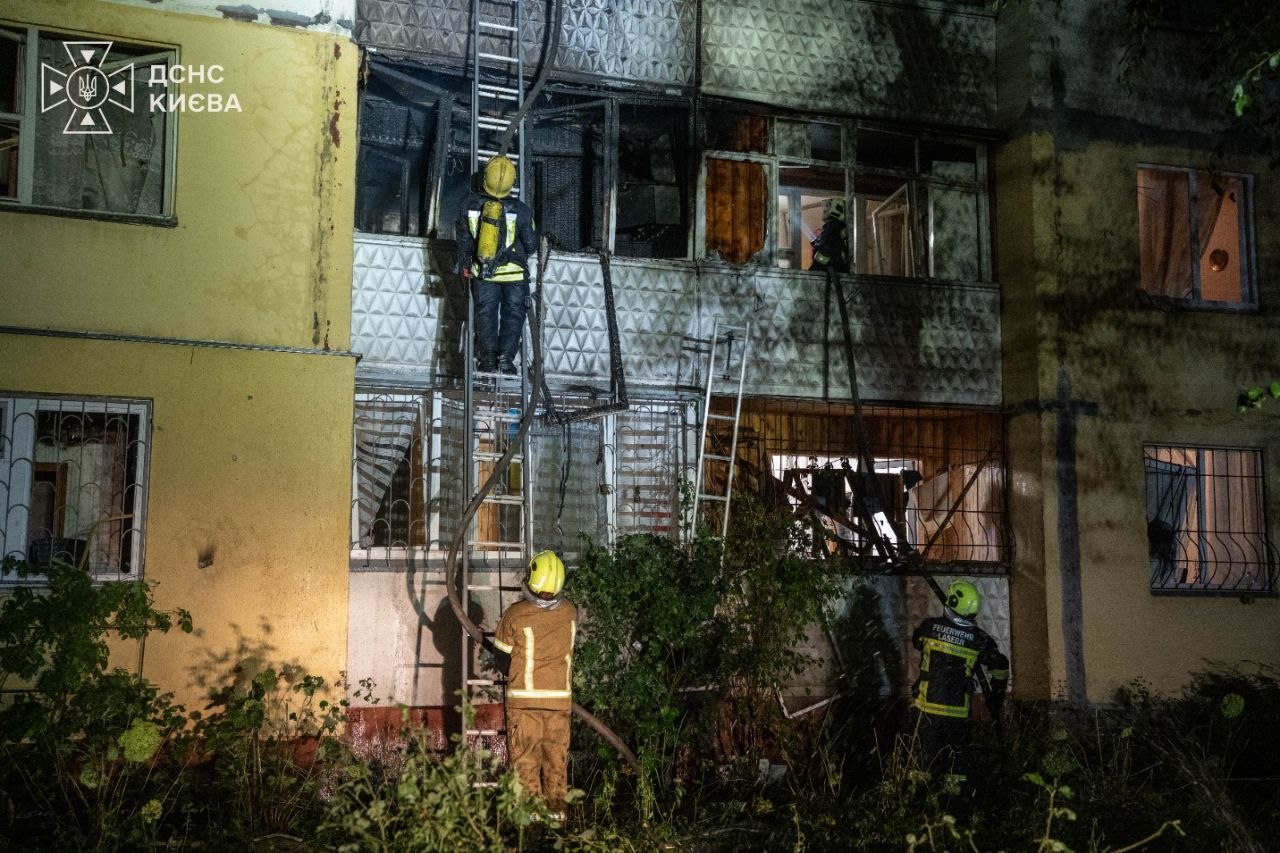
At least three people were injured in a Russian overnight attack on Kyiv, as the capital entered a fourth consecutive day of near-continuous Russian attacks.

In the Obolonskyi district, a strike caused a fire from the second to fifth floors of a 12-story residential building.… pic.twitter.com/rTT5TZvNEA

— Euromaidan Press (@EuromaidanPress) August 30, 2026

In Myla, Kyiv Oblast, rescue workers are still clearing the aftermath of the 28 August attack that killed 38 people, injured 20 and left four people missing.

Rescue crews continue working in Myla, Kyiv Oblast, clearing debris, extinguishing fires, and searching for explosive remnants after Russia’s deadly attack on 28 August.

The attack killed 38 people and injured 20.

Bomb disposal teams are checking roads and nearby areas for… pic.twitter.com/JBL2QOhe66

— Euromaidan Press (@EuromaidanPress) August 30, 2026

The continuing attacks have also affected movement around the capital. Air raid alerts, damaged infrastructure and the threat of further strikes have disrupted traffic and travel both within Kyiv and on routes connecting the city with the surrounding region.

Aftermath of a Russian strike on Kyiv Oblast, 28 August 2026. Photo: Ukraine's State Emergency Service
Explore further

Kyiv has been under attack for 2 days nonstop. Russia is targeting the capital’s civilian supply chains

Air defenses under pressure

The attacks are putting Ukraine's air defense network under some of its heaviest pressure since the full-scale invasion began.

Ukraine has to defend a vast area against increasingly large drone barrages while also dealing with ballistic and other missiles that are more difficult to intercept.

Ukraine relies on US-made Patriot systems to counter ballistic missiles, but limited stocks of Patriot interceptors and insufficient deliveries from partners have left a critical gap in its air defenses, which Russia is now exploiting to cause major damage to civilian infrastructure and greater civilian casualties. 

The repeated use of jet-powered drones adds another challenge. Russia has increasingly deployed these faster Geran drones, adapted from the Iranian Shahed design, in attacks on Kyiv and other Ukrainian cities, including against civilian infrastructure.

Zelenskyy said the government’s priority now is to provide greater protection against the Russian attacks.

Attacks continue across Ukraine

The pressure is not limited to Kyiv.

Zelenskyy said Russian forces are carrying out attacks virtually around the clock against frontline and border communities, including Nikopol, Kramatorsk, Kherson and communities in Kharkiv, Zaporizhzhia, Dnipropetrovsk, Donetsk and Sumy oblasts.

Russian forces attacked Donetsk Oblast 30 times on 30 August, damaging residential areas and causing four fires, Ukraine’s State Emergency Service reported.

In Sloviansk, Russian shelling set balconies and apartments on fire on the fifth through seventh floors of a nine-story… pic.twitter.com/12GbUDsRpL

— Euromaidan Press (@EuromaidanPress) August 30, 2026

Across these areas, the attacks are keeping emergency services active while damaging homes, businesses and civilian infrastructure.

In Kyiv, meanwhile, the fourth day of attacks has left residents dealing with repeated air raid alerts, disrupted movement and the continuing risk of new strikes even as crews are still clearing the damage from previous ones.

  •  

Ukrainian ground-robot maker has moved into air: Ratel’s first strike drone flies 30 kilometers on Starlink link

A Ratel kamikaze drone. Source: Ratel

A Ukrainian maker known for ground robots has built a flying attack drone. Ratel Robotics has unveiled the Ratel K1, a strike FPV drone for ground targets with a tactical range of up to 30 kilometers, according to Defender Media.

The K1 will likely join the number of weapons that clear out Russian logistics. The campaign scales medium-range drone strikes against Russian supply convoys, depots, command nodes, and air defenses 20 to 200 kilometers behind the front. On 29 May, Ukrainian forces destroyed 483 Russian vehicles in a single day, an all-time record that pushed cumulative Russian motor-transport losses past 100,000.

A 30-kilometer FPV sits at the near edge of that fight, reaching supply routes and second-line positions that shorter drones cannot.

The company came from ground robots

Ratel Robotics is a Ukrainian ground robotics maker whose fielded line includes logistics, casualty evacuation, mining, and demining platforms. The K1 is its move into aerial strike, and the company brings a wartime production record to it rather than starting from scratch.

Ratel's ground systems took part in the military parade in Kyiv on 24 August, marking Ukraine's 35th Independence Day, the company said. The firm has also joined a campaign, with the National WWII Museum and the Tallboy brand, to raise nearly $447,000 for a planned museum of modern military technologies, according to Ratel.

The specifications come from the maker

The K1 is built on a 22-inch frame, reaches a top speed of 75 kilometers per hour, remains airborne for up to 35 minutes, and carries up to 2 kilograms.

The drone uses a digital video system and a daytime camera and is controlled via a satellite link through Starlink. Per Brave1 Market, it has no built-in autonomous navigation, no auto-takeoff, and no automatic return-to-home landing.

The manufacturer is currently working on the next iteration of the Ratel K1, refining the system based on test results and operational experience.

  •  

After CIA head’s visit to Moscow, Poland’s PM warns Russia is preparing to escalate war. He puts critical window at seven or eight months

tusk polish prime minister

Poland's prime minister says the next seven or eight months could decide the region's security. Donald Tusk said there are signs of serious Russian preparations to escalate tensions, both in the war against Ukraine and across the region, according to Ukrinform.

Tusk's warning follows weeks of similar alarms from the countries on NATO's eastern edge. Lithuanian President Gitanas Nausėda said on 15 July that intelligence pointed to possible Russian strikes on critical infrastructure in the Baltic states or Poland, according to Defense News.

Poland is the main transit route for Western military aid to Ukraine, which makes its security inseparable from Ukraine's. Tusk himself said in July that Russia could be ready for a confrontation with Europe as early as 2027.

The CIA visit was not the whole of it

At the meeting, reporters asked Tusk about the recent visit of CIA Director John Ratcliffe to Moscow. Poland is in constant contact with the agency's leadership and was not caught off guard by news of Ratcliffe's activity, he said.

Some security information must stay confidential, Tusk added, but that does not mean the public should be deprived of information about the most important threats.

The signals go beyond one trip

The matter is no longer only the CIA director's visit to Moscow, Tusk said. Over recent weeks, numerous public signals have pointed to Russian preparation for escalation.

Russia is very seriously preparing to escalate tensions, both in the war with Ukraine and across the whole region, and that for Russia this fall and winter are meant to be key, he claimed.

Moscow states its aims openly

Some Russian figures have described the war's purpose in plain terms. This week, State Duma vice-speaker Pyotr Tolstoy said Russia views Ukraine as a "territory" that would allow Moscow to export its energy to Europe via a short route, not as a sovereign country.

Tolstoy, whom the EU sanctioned in 2022 as a central figure in Russian state propaganda, also called for massed bombing of Ukrainian cities to break the population into surrender. His remarks are one more public signal of the kind Tusk pointed to.

  •  

Ukraine chooses three Western fighters to build its air force around. One of them can fly again from stretch of road in 15 to 20 minutes

dassault says it’s ready send rafales ukraine — kyiv asks · post rafale fighter jet aviation da00044906_s french aircraft manufacturer has confirmed deliver jets requests le journal du dimanche reports

Ukraine has decided which Western fighters it will build its air force around. The Air Force settled on three platforms, the Swedish JAS 39 Gripen, the French Rafale, and the American F-16, aviation commander Colonel Oleksandr Diakiv said in a segment by the Air Force Command.

Ukraine entered the full-scale war flying Soviet-era jets and has spent three years assembling a Western fleet. F-16s arrived in 2024 and now fly combat missions. France has delivered Mirage 2000s, and Sweden has pledged to deliver Gripen. The choice narrows Ukraine's field to three types it can sustain, arm, and repair at war tempo.

The choice weighed more than performance

Ukraine assessed every platform that might suit it, Diakiv said, and concluded it could operate three with maximum effectiveness. The decision turned on aircraft and operating costs, weapons, logistics, parts availability, what Ukrainian infrastructure can support, and the speed of repairs and battle-damage recovery.

"We went through all the platforms that were possibly acceptable for us. And we came to the conclusion that Ukraine can use three platforms with maximum effectiveness," Diakiv explained.

The F-16 already operates in Ukraine, so the Air Force has both the aircraft and trained pilots, technicians, and specialists who know its quirks. That experience will speed the adoption of the other Western types, according to Diakiv.

The Gripen suits a country under fire

Also, Diakiv singled out the Gripen, a multirole fighter that can strike air and ground targets and carries Swedish and other European weapons. Its main advantage is that it demands little infrastructure.

The jet can operate from unprepared surfaces and stretches of road and requires minimal ground crew to prepare for another flight in 15 to 20 minutes, according to the commander.

The aircraft is only part of the system

Taking on a new platform is not a matter of handing over jets, Diakiv believes. Weapons, ground support, parts, logistics, and trained people all have to arrive together, and Ukrainian pilots, engineers, and logistics specialists are now training abroad.

"You can buy a plane, you can buy a missile, you can buy a bomb, but you cannot buy experience," Diakiv said.

That combat experience, according to the colonel, is increasingly shaping the aviation coalition, with allies helping Ukraine realize ideas drawn from its own fighting rather than only offering finished solutions.

  •  

Ukraine has five ways to stop Russia’s Iskanders. Only one arrives before the strikes on the grid begin

Par : David Axe

A Patriot air defense missile launcher. Photo: South Korean defense ministry.

Desperately short of missiles for its roughly 10 Patriot air defense batteries, Ukraine has just a few options as colder weather looms—and the Russians prepare to fire even more hard-to-intercept Iskander ballistic missiles at Ukrainian cities and power plants.

The Iskander is a unique threat, and Ukraine is uniquely vulnerable. The Patriot is one of just a few systems that stands any chance of hitting an incoming Iskander as the Russian missile barrels in at six or seven times the speed of sound. And the Patriot is, or was, the most plentiful anti-ballistic interceptor. It usually takes two or three of them to bring down one Iskander.

Then came Iran. Coalition forces fired an average of 225 interceptors a day during the first four days of the war against Lockheed Martin's production rate of 1.7 a day, the Foreign Policy Research Institute calculated—a 132-to-one gap between use and manufacture. Lockheed built 620 Patriots in all of 2025. And every Patriot the Americans fire at an Iranian missile is a Patriot Ukraine won't be able to fire at a Russian missile.

Specifications of Russia's Iskander-M ballistic missile system
Chart: Euromaidan Press

Ukrainian batteries have so few missiles that air defenders can do little more than watch as the 3.8-ton Iskanders and other heavy Russian missiles barrel in. "This is a really heartbreaking sight when you have equipment but you're not able to intercept any missile," Dmytro, the chief engineer of Ukraine's Patriot fleet, told CNN. "Ballistic missiles are flying over your head and you are not able to do anything with it, and behind you, there are civilians." He first ran out of interceptors in December 2025.

Across the 39-day campaign, CSIS estimates 1,060 to 1,430 Patriots were expended—more than half the US prewar inventory. At Lockheed's rate, replacing them takes three years.

And a Patriot cannot be conjured. A single PAC-3 MSE takes about 24 months to build, its solid rocket motor 30. In January the Pentagon signed a seven-year deal for Lockheed to reach 2,000 Patriots a year—by 2030, by which point the Russo-Ukrainian war will be eight years old. Far too late to save Ukraine from the coming hard winter.

The Ukrainian air force has two other batteries that can intercept ballistic missiles, both French-Italian SAMP/Ts, and they are short of missiles too. France agreed in November to send eight next-generation SAMP/Ts over two years—a schedule, not a stockpile.

Transporter-loader vehicle of Russia's Iskander ballistic missile system
Transporter-loader vehicle 9T250 of Russia's Iskander missile system. Photo via Militarnyi.

Winter looms

The interceptor crisis will only worsen as winter looms and the supply of electricity for residential heating once again becomes a matter of life and death for millions of Ukrainians. Iskanders "could hit all significant non-nuclear electricity generation," Jakub Janovsky, a Czech military analyst, explained to Euromaidan Press. The Kremlin has cut production of several other missile types—including, as Euromaidan Press reported this month, the Kinzhal—to pour more into the Iskander.

"I wanted to secure 300 missiles for the Patriot systems as part of the winter package. The request from our Air Force is for 360," Ukrainian President Volodymyr Zelenskyy told journalists on 23 August, in remarks posted to X. "But when only 600 are produced a year, 360 is not easy to obtain." He has asked Washington for 5% or 10% of the US stockpile, and says Ukraine will pay. By his own account it holds about 1%.

Russia could have up to 1,300 ballistic missiles a year. Right now, they have 600–630. We have an approximate understanding of the volume they are counting on from today and through the end of winter. Roughly speaking, they could have 100 ballistic missiles a month. But they are…

— Volodymyr Zelenskyy / Володимир Зеленський (@ZelenskyyUa) August 23, 2026

What are Ukraine's non-Patriot options?

Its own ballistic interceptor

Frantic for air defenses, Ukraine is developing its own. In May, Kyiv munitions-maker Fire Point unveiled Freya, a pan-European anti-ballistic project built around the FP-7.x—a 7.25-m composite interceptor derived from the company's FP-7 surface-to-surface missile. Cued by European radars and guided in the final moments by an infrared seeker from Germany's Diehl Defence, it is meant to cost around $700,000 a shot against a Patriot's $3.8 million.

Fire Point had run at least five tests by the end of July, and co-founder Denys Shtilerman told the Financial Times mass production could begin as early as this month. But the first attempt at intercepting an actual ballistic target is planned for around July 2027—a winter away, and then some. Infrared guidance is also reckoned less reliable than radar, since spoofing can mislead the seeker.

Sanctions on the Iskander supply chain

Sanctions may seem attractive, and there is a narrow chokepoint. Ammonium perchlorate makes up 45% to 52% of the Iskander's solid fuel, and Russia has exactly one plant that makes it—the state-owned ANOSIT—according to the Economic Security Council of Ukraine.

That plant depends on imported sodium chlorate, a chemical Russia lost the ability to make when the USSR collapsed. Russia bought more than $40 million of it in 2024 and the first half of 2025, 61% from China and most of the rest from the Farg'onaazot chemical plant in Uzbekistan. The largest Russian importer, Pioneer Trade, sells on to firms that supply the Iskander's designer, its cluster-warhead maker, and the Votkinsk plant that builds the missile.

But Russia gets around sanctions by buying through third parties. And while the European Union already restricts the export of sodium chlorate to Russia, neither Farg'onaazot nor any of the Russian importers moving it is under blocking sanctions. Even where the bans hold, they just "make things more costly and less convenient," Janovsky told Euromaidan Press. "They can't stop things from happening if the other side really wants to do something."

Map of factories in Russia and Uzbekistan supplying Iskander-M production
Map: Euromaidan Press
Deep strikes against the Iskander supply chain

Ukraine has already tried this one. The main Iskander factory is in Votkinsk, 1,400 km from the border, and on the night of 20–21 February Ukrainian Flamingo cruise missiles hit it. Zelenskyy said every missile launched reached the plant. Satellite imagery confirmed damage to a workshop where Iskanders and Oreshniks are assembled; local officials reported two shops damaged and 11 people injured.

Iskander production rose anyway. So the question is not whether Ukraine can reach Votkinsk—it can, and did—but whether it can launch enough munitions at once to inflict damage that lasts. "Ukraine can try a massive saturation strike with hundreds of drones and dozens of cruise missiles to overwhelm local defenses and wreck enough of the factory complex to at least temporarily disable the production," Janovsky said. That might take essentially the entire Ukrainian deep strike force—and if it failed, Russian industry would get a months-long reprieve.

Kill the launchers before they shoot

This is the hardest one. Russian crews keep their Iskander launchers 140 to 150 km behind the front line, beyond the reach of Ukraine's HIMARS, and move them to firing positions along forest roads—sometimes for five hours—to stay out of satellite view. Once in position, a launcher needs about 16 minutes to send its first missile and four for the second, then it leaves. Twenty minutes, in the open, somewhere in a forest, a hundred and fifty kilometers away.

Ukraine is trying anyway. On 23 August, Zelenskyy said Ukrainian forces had struck an Iskander launcher near the border, and described a dedicated program to hunt the launch sites. Euromaidan Press could not independently verify the strike. He was explicit about why the program exists. "When our anti-ballistic missile stocks are at a minimum, there is another tactic," he said. "It is more difficult, and we developed it."

All options but one arrive after the cold

OptionWhen it delivers
Patriots from alliesUkraine's air force asked for 360; Zelenskyy sought 300 for the winter package. Output is 600 a year, and CSIS says about half of it goes to allies and partners
Lockheed's expansion to 2,000 a yearThat rate is not reached until 2030
Freya / FP-7.x interceptorsFirst attempt at intercepting a ballistic target planned for around July 2027
Sanctions on the supply chainThe chemical is restricted; none of the companies moving it is designated
Deep strike on the Votkinsk factoryTried in February. Workshops hit, production still rose
Hunting the launchersNow—one strike claimed on 23 August, not independently verified
Winter heating season begins in November.

Unable to shoot down all the Iskanders, Ukraine may have no choice but try everything all at once: sanction the suppliers, attack the supply chain, hunt the launchers, and scurry to deploy homemade interceptors. All while continuing to beg for every available Patriot.

Ukrainian Navy CB90 assault boats sailing Black Sea patrol operations coastal defense against Russian drones
Explore further

Ukraine may have just lost its first Swedish assault boat—to a Russian jet drone

  •  

“Territory that will allow us to export our energy resources to Europe”: Russia’s deputy Duma chairman calls for massed bombing of Ukrainian cities

state duma building in moscow

A senior Russian official said out loud what Russia's missiles do every night. Pyotr Tolstoy, deputy chairman of the State Duma and great-great-grandson of Russian writer Lev Tolstoy, has called for massed bombing of Ukrainian cities to break the resistance of the people living in them and force a surrender, the news outlet 24 Kanal reported.

Russia denies striking civilians and claims after each attack that it hit military targets, even as its missiles land on homes, hospitals, power plants, and food depots. Ukraine's Foreign Ministry Spokesperson Heorhii Tykhyi said Tolstoy's words should be grounds for an International Criminal Court arrest warrant, calling them a Russian official's demand for war crimes.

What Tolstoy has urged in public, Russian forces have done for more than 12 years while denying it.

The presenter proposed emptying the cities

On the state talk show Vremya Pokazhet, which Tolstoy hosts, he was reminded that more than 20 million people live in Ukraine and asked what would become of them if the country were turned to scorched earth. He proposed warning residents a day before strikes so they could flee their homes.

"You think we are calling for cruelty? We are calling for demoralizing the population so thoroughly that it comes out to meet our troops with its little paws up," Tolstoy said.

Then he named the reason

In the end, Tolstoy described what Ukraine means for Russia's plans.

"[Ukraine] is the kind of territory that will allow us to export our energy resources to Europe by the short route," he said.

He also characterized European leaders in the same speech.

"So gray-haired dwarves from Europe greet them (Ukrainians), and all these notorious Ursulas and Kaja Kallases, do they represent any value to us? No," Tolstoy claimed.

The descendant of a novelist, sanctioned in 2022

Tolstoy trained in France and worked with Le Monde and Agence France-Presse before working with the Russian state television and politics.

The European Union placed him on its sanctions list on 23 February 2022, the day before the full-scale war, naming him a central figure in Russian state propaganda. In 2024, he told the French channel BFMTV that Russian forces would kill French soldiers if they deployed to Ukraine.

  •  

Kyiv has been under attack for 2 days nonstop. Russia is targeting the capital’s civilian supply chains

Aftermath of a Russian strike on Kyiv Oblast, 28 August 2026. Photo: Ukraine's State Emergency Service

Russia has spent the past two days repeatedly attacking Kyiv and Kyiv Oblast with jet-powered drones, hitting commercial and logistics infrastructure and disrupting businesses and supply chains around the capital.

The attacks have struck civilian enterprises, food warehouses, hypermarkets, postal terminals, and warehouses storing books, according to Ukraine’s Interior Minister Ivan Vyhivskyi. Fires have broken out at multiple warehouse sites, while repeated strikes have forced emergency crews to repeatedly stop their work and seek shelter.

The attacks are also affecting the movement and storage of essential goods around Kyiv, with damage to food warehouses and other logistics facilities contributing to supply disruptions and shortages.

Russia expands its aerial campaign against Kyiv

The latest wave comes after Russia dramatically ramped up its use of ballistic missiles against Kyiv and other Ukrainian cities in recent months. Now, improved Russian jet-powered drones are being used to sustain repeated attacks on the capital and surrounding oblast.

Russian forces have been launching the jet-powered drones at Ukrainian regions almost continuously for the previous two days.

The pattern has left Kyiv and Kyiv Oblast under prolonged air raid alerts while putting emergency crews under the threat of repeated strikes.

In Kyiv alone, air raid alerts were issued 13 times on 27 August and lasted for more than 14 hours in total. 

Across Ukraine, Russian attacks killed 16 people and injured another 50 during the day, Vyhivskyi said.

https://twitter.com/EuromaidanPress/status/2093356865073631424

38 attacks hit Kyiv Oblast

Kyiv Oblast has been among the hardest-hit areas. Ukraine’s State Emergency Service (DSNS) said on Friday morning the oblast had come under 38 Russian attacks since the first strike overnight on 27 August.

In Bucha district, firefighters worked at several locations where Russian drone strikes caused fires at warehouses and damaged vehicles.

At one site, a drone struck again while rescuers were working. After checking the area, emergency crews returned to the site and continued fighting the fire.

Firefighters also extinguished a fire involving 13 passenger cars. A nearby apartment building was damaged by the blast wave, which shattered windows.

At three locations, crews were still working to extinguish fires at warehouse buildings caused by the repeated attacks.

Aftermath of a Russian strike on Kyiv Oblast, 28 August 2026. Photo: Ukraine's State Emergency Service

Repeat strikes put rescuers at risk

The repeated attacks have made emergency operations particularly dangerous. Since rescuers began working, air raid alerts in the oblast had sounded 20 times as of Friday morning, according to the DSNS.

Firefighters have repeatedly been forced to stop their work and move to shelters or safe distances because of the threat of another strike, before returning to the fires once the danger passes.

Vyhivskyi said one person was killed and others injured in Kyiv Oblast on the morning of 28 August after civilians remained near a site where crews were clearing the aftermath of an earlier strike despite the threat of another attack.

Russia’s latest attacks on Kyiv Oblast have repeatedly put emergency crews in danger, with firefighters forced to halt their work and move to safety as follow-up strikes hit the area.

Ukraine's State Emergency Service said that on 27 August, the oblast came under 28 additional… pic.twitter.com/cPdkj6Wxwa

— Euromaidan Press (@EuromaidanPress) August 28, 2026

Commercial sites targeted across Ukraine

The attacks on Kyiv and Kyiv Oblast are part of a broader recent pattern of Russian strikes on commercial infrastructure across Ukraine. In recent weeks, Russian drones have hit shopping centers, hypermarkets, warehouses, postal terminals and other civilian businesses.

In Kharkiv, a Russian jet-powered drone struck a closed shopping center in the city’s Kyivskyi district on 28 August, partially damaging the building and starting a fire among equipment and furniture. Firefighters extinguished the blaze despite the threat of repeat strikes. No casualties were reported.

Russia has struck another shopping center in Kharkiv with a jet-powered drone, hitting a closed commercial facility in the city’s Kyivskyi district.

The strike comes amid Russia’s intensified campaign against commercial sites across Ukraine, including shopping centers,… pic.twitter.com/KSj719sSKz

— Euromaidan Press (@EuromaidanPress) August 28, 2026

In Zaporizhzhia, another Russian drone strike injured five people and set a shopping center on fire. The blaze covered about 14,000 square meters, and firefighters had to repeatedly take shelter because of the threat of follow-up attacks.

A Russian drone strike on Zaporizhzhia injured five people and sparked a massive fire at a shopping center, with the blaze spreading across about 14,000 square meters.

The attack comes amid Russia’s intensified targeting of commercial and logistics sites across Ukraine,… pic.twitter.com/Iu5OyoGCGx

— Euromaidan Press (@EuromaidanPress) August 28, 2026

The strikes are adding pressure to Ukraine’s civilian supply and logistics networks, particularly around major population centers. Damage to food warehouses, retail facilities and logistics sites can disrupt the storage and movement of goods, contributing to shortages and delays for businesses and consumers.

A shopping center burns after a Russian drone attack in Kryvyi Rih, Dnipropetrovsk Oblast, Ukraine, on 21 August 2026. Photo: Suspilne Dnipropetrovsk
Explore further

Russian drone strike on Kryvyi Rih shopping center kills 15, injures 130. Second attack targeted rescue workers 30 minutes later

Authorities warn civilians to stay away

Ukrainian authorities have urged residents to remain in shelters or other safe locations during air raid alerts and avoid areas where emergency crews are working.

The DSNS warned people not to approach sites where the aftermath of Russian strikes is being cleared, citing the continuing threat of repeat attacks.

Vyhivskyi also urged residents to treat every air raid alert as a signal to move to a shelter or other safe location, warning that no urgent task is worth risking a life.

Victim of a Russian strike on Kyiv Oblast, 28 August 2026. Photo: Ukraine's State Emergency Service
  •  

Russia’s number two online retailer reports drone attacks on logistics hubs in two regions

russia's number two online retailer reports drone attacks logistics hubs regions · post smoke rising beyond residential area blagoveshchensk bashkortostan russia 27 2026 exilenova ukraine news ukrainian

Ukrainian drones attacked two Ozon logistics centers overnight on 27 August, one in Ufa and one in Orenburg Oblast, Russia's second-largest online store said. Staff were evacuated at both sites, and preliminary information indicated no casualties. Video published by Ukrainian monitoring channel Exilenova+ shows a drone reaching the Bashkortostan warehouse and exploding.

Ukraine's deep-strike campaign has spread across Russian refineries and fuel depots, chemical plants, arms factories, railways, and the warehouses that move consumer goods. Together the strikes take refining capacity, storage space, and freight throughput out of service repeatedly, and sanctions leave Russia fewer parts and crews to restore them with.

The strike on camera

Exilenova+ reported in the morning that an Ozon warehouse was burning after impacts in Blagoveshchensk, a town north of Ufa. The Bashkortostan capital lies roughly 1,300 kilometers from the war zone in Ukraine. Around midday the channel published eyewitness video of what it called the moment of a drone attack on the site, and said the warehouse had not caught fire. The footage shows a drone reaching the site and detonating there.

Drone hit another Russian warehouse

Eyewitness video from Blagoveshchensk in Bashkortostan shows the moment a Ukrainian drone reached Ozon's fulfillment center — the largest logistics complex the online retailer runs in the Volga area — and detonated. The channel that published… pic.twitter.com/oHUgjRz0v0

— Euromaidan Press (@EuromaidanPress) August 27, 2026

Earlier, the channel reported that residents of Sterlitamak, Bashkortostan's second-largest city, about 120 kilometers from Ufa, had written about explosions, with nothing then known about impacts. Astra later placed smoke over what it said was probably the Bashkir Soda Company works there.


Ozon said the Orenburg site—about 1,200 kilometers from the war zone—has resumed work. The one it placed in Ufa sustained what it called minor damage but remains closed, because the grounds need a thorough inspection. It is not accepting deliveries.

Russian news Telegram channel Astra identified the damaged facility from the eyewitness footage as Ozon's UFA_RFC fulfillment center in Blagoveshchensk. When it opened in late 2024 it was billed as the largest Ozon logistics complex in Russia's Volga federal district, with a total area of 93,000 square meters.

Smoke over the Ufa refineries

Astra also traced smoke in eyewitness footage to the Bashneft-Ufaneftekhim refinery in Ufa. The plant is one of Rosneft's leading refineries and a dual-use site: it supplies specialized fuel to Russia's armed forces and petrochemical feedstock for defense-grade materials. It burned after a strike on 1 August.

Bashneft runs three refineries side by side in Ufa's northern industrial zone—Ufaneftekhim, Novoil, and UNPZ—forming one of Russia's largest refining complexes, with a combined capacity of up to 23.5 million tons of feedstock a year.
Thick black smoke and flames rise from an Ozon warehouse in Chapayevsk, Russia, at sunset.
Explore further

Ukrainian drones hit warehouse belonging to Russian online retailer Ozon for the first time

What officials said, and didn't

Bashkortostan's authorities did not report the attack. Orenburg Oblast governor Yevgeny Solntsev mentioned drone danger in his region but gave no account of consequences. Ufa closed its airport.

Russia's Defense Ministry claimed air defenses destroyed 267 Ukrainian fixed-wing drones overnight across Russian regions, Bashkortostan among them.

The campaign so far

Ukraine's warehouse campaign began with Wildberries, Russia's largest online marketplace, which lost eight warehouses and roughly 860,000 square meters of storage in July alone. It reached Ozon for the first time on 22 August at Chapayevsk in Samara Oblast, where more than 500 employees evacuated and people were hurt. Four more Ozon hubs were hit across southern Russia two nights later.

  •  

Shares in Russia’s second-largest bank hit record low as Wildberries-linked offering price holds steady

vtb bank branch in svietlahorsk, belarus

Shares in Russia’s second-largest bank VTB fell to an all-time intraday low of just under 50 rubles ($0.60) on 26 August, RBC’s exchange data showed. That was more than 40% below the 87-ruble (about $1) price set for a share sale partly intended to finance its Wildberries partnership. At that price, offering participants would pay about 75% more than investors buying the same shares on the stock market.

In the second quarter, the bank set aside 28% more for troubled loans while its profit fell by one-third.

VTB’s drop came amid a wider decline in Russian stocks. Kommersant’s market report said analysts also linked the fall to VTB’s own large new share issue.

Share issue could cut existing stakes by one-third

Under the bank’s offering plan, VTB could issue almost one new share for every two already in circulation. If VTB sold the full amount, an existing shareholder who bought no new shares would see their ownership stake fall by about one-third. VTB planned to finish the sale and close its Wildberries deal by 1 September.

The bank expected to raise 300–400 billion rubles ($3.6–$4.7 billion). VTB said it had assembled a group of large investors willing to participate but would not disclose who they were. Those investors would receive the same class of shares traded on the Moscow Exchange, but at the price fixed by VTB.

VTB described the partnership primarily as a route into Wildberries’ 80 million users—more than twice the bank’s own customer base. VTB would initially acquire a 5% stake in Wildberries’ banking arm, with the option to increase its holding later.

Reuters described both companies—Wildberries and rival Ozon—as central to Moscow’s plans to use online commerce as an engine of economic growth.

VTB held its price as shares fell

On 9 July, VTB kept its price even after the stock had fallen well below the offering price. The bank said its large, long-term investors were willing to look past short-term price swings.

On 16 July, VTB hit another low as investors prepared for its dividend cutoff and the new share issue. The first drone strikes on Wildberries warehouses followed two days later.

logistics centre in Bashkortostan, Russia,
Explore further

Is a fifth or well over half of Wildberries gone—or can both counts be right?

VTB’s first-half results showed that its profit fell by one-fifth from a year earlier. In the second quarter, the bank set aside 28% more for troubled loans while its profit fell by one-third.

After the attacks, Moscow considered supporting Wildberries and its sellers, with VTB expected to play a central role. VTB shares fell 2.5% on 28 July amid uncertainty over the partnership. “If we receive such a request, we will, of course, be open to various forms of lending support,” VTB’s first deputy CEO Dmitry Pyanov told Reuters.

  •  

Norway’s Air Force put its first anti-drone system into service at the fighter base—and wants its own drones doing the same job

norway's first drone defense went live fighter base—and it's training its own drones do same job · post launcher norway has acquired specifically shoot down mounted beside runway ørland base

Norway's Air Force has put its first counter-drone system into service at Ørland, the country's only combat aircraft base, NRK reported. A launcher now stands beside the runway where Norway's F-35 stealth fighters are parked, bought specifically to bring drones down. The deployment follows a wave of drone sightings across Europe last autumn and will be phased in at other Norwegian bases.

Since Russia's full-scale invasion, European states have logged drone sightings over airports and bases, airspace violations, sabotage, and arrests for espionage, much of it attributed to Moscow, which denies involvement. This month, a suspected case turned physical: an explosive drone struck a Ukrainian cargo plane at a German airport but failed to detonate.

The launcher came from the British company ISS Aerospace and works as one of several effectors inside a system the military calls Counter Unmanned Aerial Systems, or C-UAS. Radars and other sensors spot the drones first. It is built to protect fixed installations against drones weighing up to 150 kilograms, and it can either jam a machine or destroy it. Ørland already has NASAMS air defenses, the Norwegian-American missile system Ukraine also uses, but firing interceptor missiles at small drones is expensive and described as shooting sparrows with cannons.

"We received a system in the spring, which we are introducing now, and it gives us a hugely increased capacity in drone defense," said the head of the counter-drone unit at the base, Sondre Steinsvik.

norway's first drone defense went live fighter base—and it's training its own drones do same job · post officers base battalion counter-drone unit beside british-supplied launcher ørland norway 26 2026
Officers of the base defense battalion and the counter-drone unit beside the British-supplied launcher at the Ørland fighter base in Norway, 26 August 2026. Photo: Ingrid Lindgaard Stranden / NRK

What pushed it forward

Police reported observations of possible drones near the base in September last year, part of a wider wave across Europe that also closed Oslo airport. Trøndelag police later concluded the lights had most likely been blinking celestial bodies. The purchase was already underway, but the sightings accelerated it, and the new sensors are meant to make such calls easier in future. Ørland's mayor said at the time the drone defense was arriving far too late.

norway's first drone defense went live fighter base—and it's training its own drones do same job · post nasams air launcher ørland base norway 26 2026 kampflybasen er godt beskyttet
A NASAMS air defense launcher at the Ørland fighter base in Norway, 26 August 2026. Photo: Ingrid Lindgaard Stranden / NRK

Small drones have become easily available, are relatively easy to smuggle in or rebuild locally, and could potentially do serious damage to aircraft parked in the open, according to Lars Peder Haga of Norway's Air Force Academy, who said that from a defense standpoint, such purchases can never move fast enough.

fifty grams hexogen ten days late what germany missed after attack ukraine's plane · post german police vehicles officers apron beneath wing ukrainian cargo aircraft leipzig/halle airport 2026 leipzig halle
Explore further

About 50 grams of suspected military explosive lay in a German field 10 days after the attempt on Ukraine’s plane

Next bases, and Norway's own drones

Evenes air station, which handles Norway's quick-reaction alert mission among other duties, is among the sites due to receive it, NRK reported. Parliament's long-term plan set aside nearly $2 billion for drones, electronic warfare, and autonomy through 2036.

The base has also built a drone troop of its own, flying machines for search and mapping, with the aim of arming them to strike other drones. 

"That is the direction we want to go. We see it is very effective in Ukraine," said the head of the base defense battalion, Tormod Overland.

  •  

Fifth drone-related NORSI shutdown in under five months leaves all major Lukoil refineries offline

lukoil’s norsi refinery in kstovo, nizhny novgorod oblast

All of Lukoil’s major refineries in Russia are now offline after a Ukrainian drone strike halted crude processing at its NORSI plant on 26 August, Reuters reported the shutdown. NORSI is Russia’s fourth-largest refinery and second-largest gasoline producer.

The latest attack produced the plant’s fifth drone-related shutdown in less than five months.

Ukraine’s General Staff said it had struck the refinery in Kstovo, Nizhny Novgorod Oblast, where a fire subsequently broke out. It said the refinery helps supply Russia’s armed forces.

Industry sources told Reuters that several processing units and other plant infrastructure had been damaged. No repair timetable is available, and Lukoil did not respond to the agency’s request for comment.

NORSI can process about 15 million tons of crude annually and produce about 5 million tons of gasoline and more than 5 million tons of diesel, according to Reuters.

A Reuters dispatch in The Moscow Times said Lukoil listed no NORSI-made gasoline, diesel, or other petroleum products for sale on the St. Petersburg International Mercantile Exchange after the shutdown.

a car refuels at a gas station russia as gasoline shortage deepens
Explore further

Russia diverts defense-industry chemicals to gasoline—but stations still run dry

NORSI’s closure followed the complete shutdown of Lukoil’s Perm refinery after a 21 August drone strike. The company’s Volgograd plant had already stopped processing on 31 July.

The Moscow Times listed four previous occasions this year when drone strikes stopped NORSI from processing crude: 5 April, 20 May, 24 June, and 2 July. The latest attack, therefore, produced the plant’s fifth drone-related shutdown in less than five months.

Lukoil also operates a smaller refinery in Ukhta, which remains active.

Kremlin threatens retaliation

Nizhny Novgorod Oblast Governor Gleb Nikitin wrote that Russian forces had “repelled” more than 40 drones. He also reported damage to an unnamed industrial enterprise, several homes, and cars.

A day later, Kremlin spokesperson Dmitry Peskov promised a “harsh response” to Ukrainian strikes on Russia’s economic and trade infrastructure.

Russia is facing its second bout of fuel shortages this summer. Gasoline sales limits have returned to Moscow and St. Petersburg, while Rosneft has capped purchases at 30 liters per vehicle across its filling-station network, The Moscow Times reported.

Kommersant reported that Astrakhan Oblast had capped gasoline purchases at 30 liters and was serving drivers according to odd- and even-numbered license plates. Orenburg Oblast introduced a similar system and capped purchases at 30 liters to preserve supplies for emergency services and public transport, Governor Yevgeny Solntsev announced.

Five days before NORSI stopped, the Russian government ordered officials to distribute available fuel more evenly between and within regions. Russia also plans to extend its diesel export ban through September as refinery outages constrain domestic supplies.

  •  

Up to 60 railcars: Belarus wires a border base to take in military trains

An illustrative image. Railway tracks

Belarus is fitting a new base near its border with Ukraine to receive heavy military hardware by rail, according to Radio Svaboda, the Belarus service of Radio Free Europe/Radio Liberty. On paper it is a training ground—but the leaked design documents describe a site built to unload trainloads of vehicles. The work is moving ahead even as Belarusian commanders have begun saying there is no real threat from the West.

Belarus keeps adding permanent military infrastructure on its Ukrainian frontier even as its own commanders now drop the Western-threat case behind it.

A rail line sized for military trains

Construction is under way near the village of Yakimaŭka in Homiel Oblast, the part of Belarus that runs along Ukraine's northern edge. Radio Svaboda reported that the new rail infrastructure is designed to receive military trains. The finding rests on project documents obtained by a community of Belarusian railway workers.

The papers describe a separate access track sized for up to 60 railcars and a cargo platform with a ramp for unloading wheeled and tracked vehicles. A state military-design institute, Vaenpraekt, is listed as the client.

A base for a new assault brigade

The papers pin the range only to Homiel Oblast, but Radio Svaboda links it to a wider military complex built near Homiel since late 2023. That complex is the planned home of the 37th separate air-assault brigade of Belarus's Special Operations Forces. Cadastral maps split it into an eastern "military town" and a western "training-tactical field."

Alyaksandr Lukashenka's government created the brigade in 2025 to strengthen the country's southern sector, ostensibly against a threat from Ukraine. Part of the military town was reported finished in June 2026, and crews have since moved to the rail tracks.

Belarus drops its own threat talk

For months, Belarusian officials have claimed the West was preparing to attack. In June 2026, the Minister of Defense of Belarus Viktar Khrenin pressed the line at a meeting of defense ministers from the Russia-led Collective Security Treaty Organization (CSTO) in Moscow, and again at an "anti-fascist congress" in Minsk, where he accused Europeans of a "Nazi mentality."

Khrenin told Lukashenka the situation around Belarus was calm, with no sign that neighbors were preparing to act. On 16 August, the commander of Belarus's air force and air defense, Andrei Lukyanovich, said there was no external threat and that operational contacts with Latvia, Lithuania, and Poland were ongoing.

  •  

Ukraine’s secret counteroffensive is more successful than we thought

Par : David Axe

  • Ukraine's quiet counteroffensive north of Lyman has produced dramatic results since April
  • Now two Russian regiments are in danger of encirclement
  • Escape is still likely for the Russians, but their retreat buys time for the Ukrainian defenders of Lyman and nearby Sloviansk

Ukraine secret eastern counteroffensive seems to have been even more successful than some observers reported. It's possible that, in the sector just north of the town of Lyman in eastern Ukraine's Donetsk Oblast, the Ukrainian 3rd Army Corps is just a few kilometers short of encircling two Russian regiments.

That doesn't mean the Russian units can't escape. After all, there isn't a contiguous line of Ukrainian forces—nor a contiguous line of Russian forces for that matter—anywhere along the 1,200-km disputed gray zone that threads across eastern and southern Ukraine.

Situation near Nove as of 23 August
Situation near Nove as of 23 August. Map: Euromaidan Press

But the closing pincer around elements of the Russian 2nd and 144th Motor Rifle Divisions could strain the Russians' logistics and compel the Russians to reconsolidate in order to preserve their combat power—by retreating east. That would take a lot of pressure off Lyman and, by extension, also take a lot of pressure off Sloviansk and Kramatorsk, the last two big free cities in Donetsk.

Lyman, which lies 15 km northeast of Sloviansk—the northernmost of the free cities—is the main obstacle between at least six Russian regiments and Sloviansk. The Russians have been inching toward Sloviansk and Kramatorsk from several directions for months now, racing against the coming winter to position forces for a possible siege of the twin cities next year. Winter in Ukraine punishes any attacker by depriving them of the leafy tree canopy that can conceal infiltrating troops during warmer months.

According to the most recent map from analyst and mapper Thorkill, one of the more reliable observers of unit-level action in Ukraine, the Ukrainian 3rd Assault Brigade is just a few kilometers away from linking up with the 60th Mechanized Brigade in or around the village of Kolodyazi.

Sytuacja w rejonie Nowego (Łyman), część II.

Jednym z odcinków frontu w Donbasie, na którym wojska ukraińskie prowadzą obecnie działania zaczepne, jest rejon Kateryniwka - Nowe – Zełena Dolyna, na północ od Łymanu. Od połowy maja 2026 r. pozycje rosyjskiej 144 Dywizji Strzelców… pic.twitter.com/AIvInwHGX3

— Thorkill (@Thorkill65) August 25, 2026

Galloping advance

If true, that means the 3rd Assault Brigade and adjacent units from the 3rd Army Corps have carried out one of the more successful Ukrainian counteroffensives in memory. In April they first exploited gaps in Russian defenses north of the village of Nove. In May and June they advanced toward the village. In July they captured it.

After that, the attacking Ukrainians kept pushing south into the right flank of a 10-km-by-10-km salient that advancing Russian regiments created as they maneuvered around Lyman from the north, aiming to surround the town instead of directly assaulting it on their way toward Sloviansk.

Leaving their flank exposed, the Russians trying to encircle Lyman found themselves at risk of encirclement, instead. If the 3rd Assault Brigade or 60th Mechanized Brigade—together possessing thousands of troops, on paper—can march through Kolodyazi, they will have closed a ring of loose Ukrainian control around at least two Russian regiments, also with potentially thousands of troops.

Emphasis on loose control. Again, there aren't enough Ukrainian forces on the ground north of Lyman to prevent any "encircled" Russians from retreating back to the east. But that retreat would represent a major victory for the Ukrainian defenders north and east of Sloviansk. "The fall of this salient [north of Lyman] would significantly delay the fall of Lyman," analyst and mapper AMK Mapping predicted.

Situational update on the Lyman direction:

The Ukrainian counterattacks north of Lyman are now entering their fourth month, as they come closer and closer to cutting off the Russian salient. Two pincers have been formed, which are both dangerously close to cutting the Russians… pic.twitter.com/mu2kZ4S3Jv

— AMK Mapping 🇳🇿 (@AMK_Mapping_) August 26, 2026

No one expects the Russians to halt their offensive toward Sloviansk and Kramatorsk. But in potentially taking two steps forward and one step back in their northerly march on the free cities, the Russians sacrifice time. Time the Ukrainians can use to stiffen their defenses in Sloviansk and Kramatorsk and evacuate more of the tens of thousands of civilians who remain in the cities despite the constant danger from Russian drones and bombs.

The possible extent of the Ukrainian gains north of Lyman—a 10-km march since April—is impressive given Russia's overall advantage in manpower and firepower in the east. Equally impressive is the operational security, or OPSEC, that cloaked the offensive until now. Sure, there were a few videos of action around Nove that hinted at a major Ukrainian action.

But the units involved exercised surprising discipline, and prevented too much information from leaking. "Someone in the 3rd Corps responsible for [OPSEC] is actually trying to do their job diligently and has quite effectively cut off information," Thorkill noted. The secrecy may have facilitated the Ukrainian advance by delaying any sense of panic among the Russian commanders who are responsible for reinforcing the Lyman salient, but who also tend to ignore bad news as long as possible because they know it could reflect poorly on them.

News of the counteroffensive is now available for all to see, even if official Ukrainian sources have yet to confirm it. That may mean time is running out for the 3rd Army Corps to close its pincer before the Russians retreat or reinforce. AMK Mapping has already seen some evidence of a "partial withdrawal from the most vulnerable positions in the salient.

A 53rd Mechanized Brigade trooper.
Explore further

Can Ukrainian forces save Sloviansk and Kramatorsk?

  •  

“This is smart war”: Ukraine is reinforcing two Donetsk groupings, as Russia pushes at fortress cities. Azov commanders will lead both

Aftermath of a Russian guided bomb attack on Sloviansk, Donetsk Oblast, Ukraine, 24 July 2026. Photo: Ukraine's State Emergency Service

President of Ukraine Volodymyr Zelenskyy has announced a reinforcement of Ukrainian positions in Donetsk Oblast. This comes amid a Russian offensive against the fortress cities that have defended the region since 2014. Zelenskyy announced the decision after a meeting with Commander-in-Chief Mykhailo Drapatyi.

Russian President Vladimir Putin has ordered his army to seize the entire territory of Donetsk and Luhansk oblasts by the end of this year, Zelenskyy said earlier. This comes amid plans in Russia to mobilize 300,000 Russians in the autumn, UNIAN reports.

After speaking with the military and hearing General Staff reports, Zelenskyy said he, Drapatyi, and Defense Minister Yevhenii Khmara determined the next steps to strengthen Ukrainian positions. Two renewed groupings in Donetsk Oblast will be reinforced.

Two Azov commanders take the groupings

The groupings will be led by Hero of Ukraine Denys Prokopenko and Hero of Ukraine Andrii Biletskyi, Zelenskyy said. Prokopenko commands the 1st Azov Corps of the National Guard and led the defense of Mariupol in 2022. Biletskyi founded the Azov movement in 2014 and now commands the 3rd Army Corps.

Prepare for the worst

Robert “Madiar” Brovdi, commander of Ukraine’s Unmanned Systems Forces, has commented on the decision.

“This is Smart War. Total synchronization with the Unmanned Systems Forces grouping, the shortest possible ‘sensor-to-shooter’ chain,” he said, adding that Russian forces should prepare for the worst possible consequences.

Analysts urged the move before it came

Earlier, two experts had also called for such a decision: Oleksandr Kovalenko of Information Resistance and Yurii Butusov, a drone company commander in the National Guard’s Khartia Corps.

"The eastern flank of the Sloviansk-Kramatorsk agglomeration is taking on an increasingly threatening character," said Kovalenko, suggesting Andrii Biletskyi's 3rd Army Corps, often described as one of the most capable formations in Ukraine's forces, can be used to stop the catastrophe.

Yurii Butusov said that if Ukraine's forces retreat from Sloviansk and Kramatorsk, it could ultimately lead to the loss of the Donbas.

  •  

Belarus built base near Ukraine. Now it’s laying rail that can unload 60 wagons of military equipment

Parliament-building-Minsk-Belarus

Belarus is building railway infrastructure capable of receiving military trains near the village of Yakimauka in Homiel Oblast, according to Radio Free Europe/Radio Liberty. Project documentation obtained by the Belarusian Association of Railway Workers confirms that separate railway infrastructure is being designed for a facility officially called "Construction of a training ground in Homiel Oblast," with the Military Design Institute named as the client.

Minsk backed Russia's aggression against Ukraine and opened its military infrastructure and airspace to the Russian army for the war and for strikes on Ukrainian cities. The first ballistic missiles in 2022 to Kyiv Oblast were launched from the territory of Belarus, killing dozens of civilians.

The site under construction lies about 40 kilometers from the Ukrainian border, and Belarus's three existing air assault brigades sit in Vitsebsk, Brest, and Maryina Horka, none of them on the southern frontier.

The documents specify 60 wagons

The project includes a separate access track designed for up to 60 wagons and a freight platform with a ramp for unloading wheeled and tracked equipment, according to the documentation. The exact location of the new training ground is not yet known.

A new base against "threats from Ukraine"

Large-scale construction of a military base has been underway near Homiel since late 2023, and the 37th Separate Air Assault Brigade of Belarus's Special Operations Forces is likely to be deployed there. Part of the new military town was finished in June 2026, and rail construction continues.

Belarus has formed one battalion of the brigade and plans a second this year, along with combat support, artillery, air defense, and reconnaissance units, Special Operations Forces commander Colonel Aliaksandr Iliukevich said, according to Dzerkalo Tyzhnia.

The government of Alexander Lukashenka established this brigade to “strengthen the southern sector,” ostensibly to counter threats from Ukraine. The eastern part of the new facility is designated on Belarusian state cadastral maps as a “military camp,” while the western section is marked as a “training and tactical field.”

  •  

Biggest Magura sea drone doesn’t ram ships. It carries other drones and stays out seven days

MV11 from the MAGURA family

Ukraine has unveiled the largest robot boat in its Magura sea-drone family, and this one is built to carry and launch other drones instead of ramming enemy ships, the company UFORCE told Militarnyi. UFORCE showed the new V11 during Ukraine's Independence Day drone parade, signaling a move from single-use attack craft toward a floating base at sea.

Ukraine has fought its Black Sea war with throwaway robot boats—cheap, one-way, built to hit a ship and go down with it. Shifting toward reusable platforms that keep other machines running far from any coast marks a different bet.

A floating base, not a battering ram

The V11 is the biggest drone in its class. Earlier, Magura boats were made to hit warships. This one is a transport platform that carries other unmanned systems and gear. Its main feature is the ability to launch a larger number of unmanned systems straight from its deck, turning one boat into a mobile base for them. The company refers to the drone as both the V11 and the MV11.

australia spending billions drones — ukraine says can make money count new ukrainian maritime magura v7 (left) older v5 2025 militarnyi has offered share its combat-tested drone technology battlefield expertise
Explore further

American defense company Red Cat announces serial production of copy of Ukraine’s Magura V7 and says it’s their own development

What the V11 can do

UFORCE says the drone carries up to 2,200 kg (about 4,850 pounds) and can stay at sea for up to seven days. The company built it for reconnaissance, surveillance, support of landing operations, and resupplying fuel and equipment to other naval drones.

"It is a platform that provides multi-domain capability: one carrier that carries and launches other unmanned systems far from shore for operations across all domains," said Oleh Rogynskyy, CEO of UFORCE.

He said the investment the company attracts works for Ukraine's Defense Forces.

From strikes to a US production line

UFORCE's design and engineering office in Portugal developed the V11, drawing on international investment and aiming at the needs of Ukraine's Defense Forces. Its work there was first reported in September 2025.

meet magura w6 ukraine's latest threat russian warships drone funded pumb bank being presented hur 2025 5398010383781982294 ukrainian military intelligence has received new-generation maritime part its continued efforts challenge naval
Explore further

Meet the Magura W6: Ukraine’s latest threat to Russian warships

In July, the company and the US firm ReconCraft signed a memorandum for the licensed production of Magura naval drones in the US. Ukraine's Magura boats have forced Russia's Black Sea Fleet back to safer ports, and some versions have even shot down Russian fighter jets.

  •  

A gasoline and polystyrene mix—police call it napalm—was meant for a Ukrainian drone plant in Slovakia

gasoline polystyrene—the mix police call napalm—was meant ukrainian drone plant slovakia · post man detained suspicion preparing arson attack items seized site eastern 2026 slovak ukraine news reports

Slovak police foiled a planned arson attack on a drone factory in the country's east, the force said on 25 August. Investigators charged three foreigners with preparing the attack on commission and seized incendiary material and equipment at the scene. The plant belongs to the Ukrainian drone maker Skyeton, Militarnyi reported.

Russia's war has an arm inside Europe that usually works without missiles against Ukraine supporters — agents and recruited locals, carrying out arsons, parcel fires, flying an explosive drone at a Ukrainian cargo plane in Germany, plotting against arms-industry figures — and the point of hiring strangers to light fires is that a burned production hall costs Moscow nothing it can be held to account for.

Had the attack in Slovakia gone ahead, it risked a large fire, danger to life and health, and damage on a large scale, police stated. About 70 employees could have been in the building at the time, by preliminary estimates. Property inside the production hall is worth tens of millions of euros, according to the findings so far.

Officers seized a larger quantity of incendiary mixture, along with tools, mobile phones, an action camera, and a hand-made plan. The police Criminalistics and Expertise Institute gave a preliminary finding that the substance was a mixture of gasoline and polystyrene, commonly called napalm. Slovakia's anti-crime unit ÚBOK, part of the Police Presidium, identified the people preparing the attack and stopped it. Nobody was hurt and no property was damaged, police said.

gasoline polystyrene—the mix police call napalm—was meant ukrainian drone plant slovakia · post items seized during operation one detained men eastern 2026 ukraine news reports
Items seized during the operation, and one of the detained men, eastern Slovakia, August 2026. Photo: Police of the Slovak Republic

The charges, and where the three were detained

An ÚBOK investigator charged the three foreigners with preparing a particularly serious crime of general endangerment, committed as co-perpetrators on order. Officers detained two of them in Slovakia, and the investigator moved to have both taken into custody. German authorities detained the third on a European arrest warrant. The investigation continues, and the legal classification of the men's actions may still change.

fifty grams hexogen ten days late what germany missed after attack ukraine's plane · post german police vehicles officers apron beneath wing ukrainian cargo aircraft leipzig/halle airport 2026 leipzig halle
Explore further

About 50 grams of suspected military explosive lay in a German field 10 days after the attempt on Ukraine’s plane

The plant, and a company Russia has already hit

Slovakia, a NATO and EU member, borders Ukraine on its eastern edge. Skyeton builds the Raybird, a fixed-wing reconnaissance drone that has served with Ukraine's Armed Forces since 2018 and stays airborne for up to 28 hoursThe company began production in Slovakia in 2024, and more than €10 million in foreign investment went into the plant, one of several sites Ukrainian firms opened abroad to cut the risk of Russian attacks.

That risk is not theoretical. Russia destroyed Skyeton's Kyiv office in May, and the company said it had already spread production capacity across Ukraine and abroad in anticipation.

A Skyeton representative told Militarnyi:

"The recent attempt on our production in Slovakia is another sign that Ukrainian arms makers are already a bone in their throat, which means we are on the right path." 

Russian sabotage defense factories
2024

WSJ: Russian sabotage groups suspected for arson attack on plant producing air defense systems for Ukraine

Arson against Ukraine's defense partners in Europe

Companies working for Ukraine have been hit across several countries this year and earlier. 

In March, suspects who claimed a pro-Palestinian motive set fire to the Pardubice production of Archer, a Ukrainian maker of thermal imaging sights, destroying nearly all of the company's capacity in Czechia.

Estonia opened a Russian-link investigation this month into a suspected arson at a military robot maker supplying Ukraine, and Lithuania charged six people in January over an attempt to burn a factory that supplied radio-wave scanners. 

A powerful explosion of undetermined cause hit EMCO, one of Bulgaria's largest private arms makers, which produces artillery ammunition for Ukraine, on 10 August.

  •  

Ukraine has wrecked more than 100,000 Russian vehicles by hitting the roads, and this new drone is built exactly for that job

The new fixed-wing Baton. Source: The Technological Forces of Ukraine

The Technological Forces of Ukraine have presented a strike drone built to cut Russian logistics. The new fixed-wing Baton is designed to hit firing positions, supply routes, and other targets at tactical depth, out to 90 kilometers, according to the association's announcement.

Everything Russian troops eat, fire, and drive reaches them by road and train. Ukraine has pushed cumulative Russian motor-transport losses past 100,000 vehicles by working that ground, destroying 483 in a single day on 29 May, the highest daily figure since February 2022. Baton is built for that band.

The numbers come from the association

Baton carries three kilograms over a stated range of up to 90 kilometers, stays airborne for 50 minutes, and cruises at 105 kilometers per hour, with a maximum of 140 kilometers per hour, according to the announcement. Its working altitude ranges from 150 to 500 meters, with a ceiling of 1,500 meters.

Eight airframes fit in one pickup, launch comes from a catapult under ground-station control, and preparation takes about 15 minutes, the association said.

Autonomy takes over at two kilometers

The drone locks onto a target and flies to it automatically from up to 2 kilometers away and at altitudes up to 500 meters, the association said. That final stretch is where Russian jamming would otherwise break the link.

Depending on the version, it carries analog or digital video, communicates over LTE or Starlink, and navigates a route autonomously with real-time positioning, according to the announcement.

Two figures do not sit together

Fifty minutes at the stated cruising speed covers roughly 87 kilometers. The 90-kilometer range is therefore a one-way distance at near-full endurance rather than an operating radius.

Earlier, a Ukrainian drone maker pitched a weapon that functions like a mortar, rather than a drone. F-Drones unveiled the F5, a compact five-inch strike FPV built for assault units working treelines, built-up areas, and position support at short range.

  •  

For first time, Ukraine is tendering ground robots to ministry-set specifications and no maker can take more than half of any class

The MAUL unmanned ground vehicle. Source: AIDronesUA

Ukraine's ground robots ran more than 100,000 missions in the first eight months of 2026. The Defense Procurement Agency will now buy logistics and strike ground robotic complexes according to specifications set by the Defense Ministry, rather than approving models one at a time, the ministry announced.

The mechanism is three days old. The agency applied the same structure to fiber-optic FPV drones on 22 August—classes, multiple lots each, no supplier above half a class. Ukraine is standardizing how it buys entire weapons categories, one category at a time.

The rules sort makers by class

Complexes will be divided into classes by operating range and payload, with four to five lots per class. No single manufacturer may take more than half the order within one class.

Suppliers must meet the technical specifications and hold at least one codified ground robotic complex. The procurement runs in a closed environment under defense security requirements.

"A tender is one of the best instruments for this, because we can buy more equipment for the same money and minimize the risk of supply disruptions by splitting the order among different manufacturers," Deputy Defense Minister Mstyslav Banik said.

Mission volume keeps climbing

Monthly figures of ground robot missions logged in the DELTA combat system rose almost without interruption: 7,511 in January, 11,028 in April, 19,969 in July. Units recorded another 15,729 between 1 and 20 August, about 790 a day compared with roughly 640 a day in July, The Defense Post reported.

Ukraine has contracted more than 22,000 ground robots since January, nearly double the total for all of 2025. The number of units operating them grew from 117 at the end of 2025 to 230 by mid-2026.

A commander disputes the evacuation case

The ministry lists casualty evacuation as one of the tender's purposes. A frontline officer challenged that three days ago.

Tetiana Chornovol, who commands an anti-tank guided missile platoon, said ground robots are too slow for evacuation and often easy targets for Russian drones, arguing brigades need staffed evacuation teams and small light-armored vehicles instead.

  •  

The fifth fire at the same refinery this year—and Russia still calls it debris

fifth fire same refinery year—and russia still calls debris · post afipsky oil seen road night krasnodar krai 25 2026 сили оборони завдали удару по афіпському нпз у росії exilenova+

Ukrainian drones struck the Afipsky oil refinery in southern Russia overnight on 25 August, monitoring Telegram channels reported. Regional authorities claimed falling drone debris caused fires. Ukraine's General Staff later confirmed the strike, and, in the same post, a hit on a gas processing plant in Astrakhan Oblast the night before. 

Ukraine's long-range drones reach deep into Russia against refineries and fuel depots, but also arms plants, military bases, rail nodes, and the warehouses of Russia's biggest online retailers — straining the economy and cutting the oil revenues that feed the war machine.

Fire at the plant, and Russia's debris account

Initially, the Ukrainian monitoring Telegram channels Exilenova+ and Supernova+ reported the strike, publishing footage of the fire and placing one burning storage tank on the plant's grounds. NASA's FIRMS satellite fire data confirmed the burning site, Militarnyi reported.
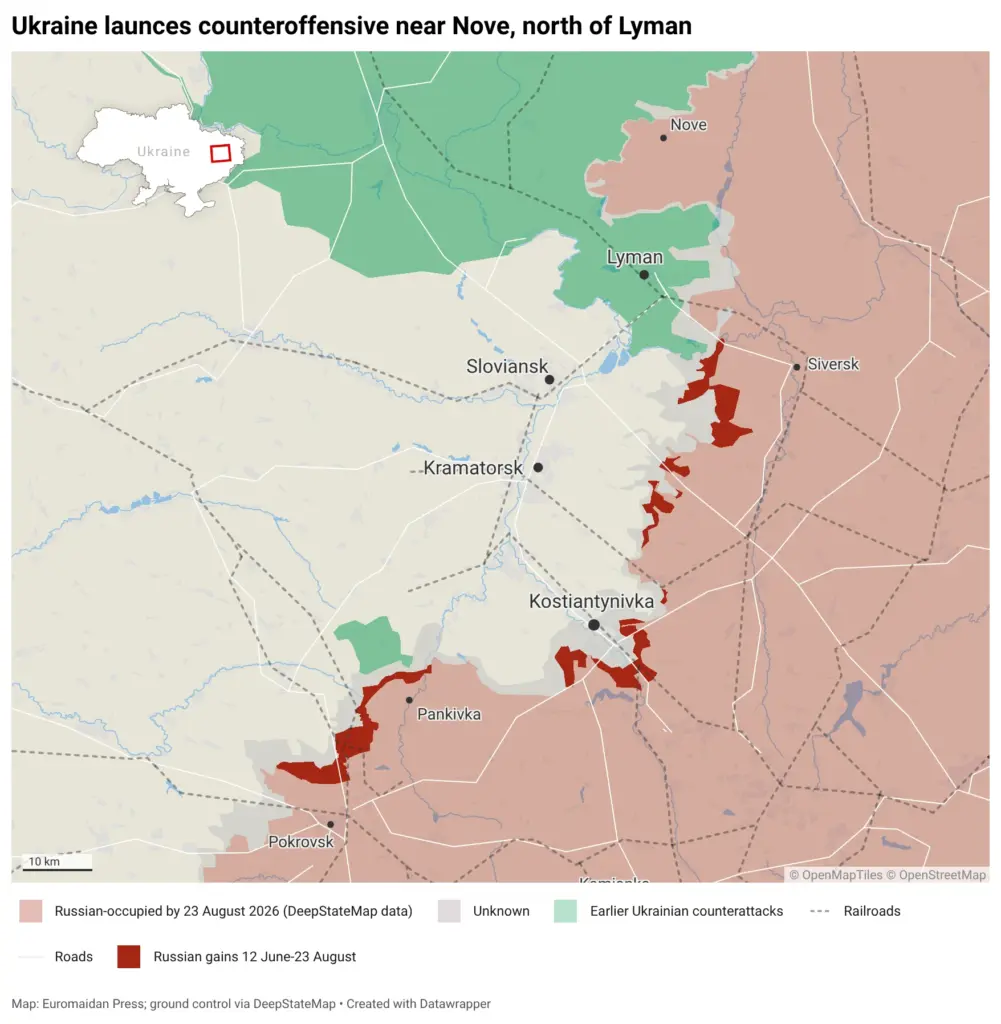
fifth fire same refinery year—and russia still calls debris · post fire-detection points afipsky oil settlement krasnodar krai 25 2026 insets plant its location southwest night пожежа на афіпському нпз
Fire-detection points at the Afipsky oil refinery and in Afipsky settlement, Krasnodar Krai, Russia, 25 August 2026, with insets showing the plant, its location southwest of Krasnodar, and the fire at night. Map: Militarnyi analysis using ESRI mapping and NASA FIRMS data

The Krasnodar Krai operational headquarters stated that falling drone parts started the fire. Governor Veniamin Kondratyev claimed that debris fell on the grounds of the Afipskaya railway station, killing two people and injuring two more, and stated that fires broke out in the nearby settlement and at the refinery itself.

Ukrainian forces struck two U-272 gas separation units at the Astrakhan gas processing plant the night before, the General Staff wrote in the same post. That plant makes technical sulfur, which goes into explosives. 

Drones also attacked Rostov Oblast overnight, with the Novoshakhtinsk refinery as the target, according to Supernova+.

Afipsky ranks among the largest refineries in southern Russia and handles more than 2% of the country's refining, Ukrainian sources said. Reuters, citing industry sources, put 2024 throughput at the plant together with the linked Krasnodar refinery at 7.2 million tons. Reuters also described it as export-oriented and not currently making commercial gasoline or diesel for the domestic market, a narrower picture than the product list Ukrainian sources give. Ukraine's military has previously described Afipsky as a producer of motor fuels for Russia, involved in supplying the Russian army.

The refinery Ukraine keeps targeting

Drones have reached the plant repeatedly this year, in January, March, June, and July, making the latest hit the fifth since the start of the year, The Moscow Times counted. In the July case, the Russian news Telegram channel Astra said the fire started near the tank farm.

Ukrainian drones have attacked Russian refineries more than 70 times since the start of 2026 and knocked several dozen plants out of service, The Moscow Times said, while Ukraine's General Staff counted 194 strikes on refineries in the first half of the year alone. Five stopped processing entirely after strikes since 1 August: Permnefteorgsintez, Orsknefteorgsintez, Zapsibneftekhim, and the Saratov and Volgograd refineries, the outlet said.

  •  

A Russian drone chose its own target and killed three. The code that told it what to look for was readable

russian drone chose its own target killed three code told what look readable · post molniya general cherry video equipped artificial intelligence shot down over zaporizhzhia ukraine news ukrainian reports

Ukrainian investigators recovered an unencrypted American AI module from a Russian Molniya drone that killed three civilians near a Zaporizhzhia gas station on 6 July, and read the code that guided its targeting, the New York Times reported. No human operator made the final call.

Commercially sold AI boards have been turning up inside Russian strike weapons for more than a year, and autonomy is the direction both armies are moving in. What changed is the evidence rather than the technology. Until now, autonomy had to be inferred from what a wreck lacked—an antenna, a radio trace.

Tetiana Bubynets, a 19-year-old accounting student at Zaporizhzhia National University, was declared dead at a hospital, one of her professors said. Oleksii Svirin, 41, and Roman Karpii, 48, later died of their injuries. The drone had attempted to navigate around an apartment building toward the gas station's propane tanks but struck a wall and detonated near people sheltering there.

What investigators found in the wreckage

The wreckage contained an Nvidia Jetson Orin minicomputer, an off-the-shelf AI module that costs a few hundred dollars. The chip was not encrypted. Ukrainian officials said they could read the terrain imagery loaded for visual navigation and the object-detection code that defined what the drone was trained to target, NYT reported. The drone carried no radio antennas and was flying in a wave of approximately six, none of them transmitting. A missing antenna alone would not prove self-targeting—a drone flying a preprogrammed route needs no antenna either, but it would have no use for an Nvidia chip.

Human operators had programmed the drone to fly toward the gas station and set the general target area before launch. Once near the site, the onboard system identified and selected the specific object—most likely propane tanks it had been trained to recognize—on its own, drone experts and military officials said. Vadym Kushnikov, a drone expert at the Kharkiv Aviation Institute, described the drone as "a preprogrammed tool trained in virtual reality to track specific objects," NYT reported.

russian drone chose its own target killed three code told what look readable · post molniya kamikaze photos sources militarnyi ukraine news ukrainian reports
Russian Molniya kamikaze drones. Photos from Russian sources via Militarnyi

Where else the Nvidia module has turned up

Kateryna Bondar, a senior fellow at the Wadhwani AI Center at the Center for Strategic and International Studies in Washington, told NYT that no earlier Russian strike by a self-targeting drone has been documented killing civilians, which would make 6 July the first such case on record. She called the Nvidia module "the best proof" that Russia was experimenting with autonomous AI.

The Jetson Orin is not new to the battlefield. The module is made by the American chipmaker Nvidia. Ukraine's sanctions on Russia's AI drone supply networks, imposed in August 2025, hit Russian, Chinese, and Belarusian drone developers and component suppliers—not Nvidia.

Ukrainian intelligence first identified the module in the V2U autonomous strike drone in June 2025, mounted in a Chinese Leetop A203 minicomputer. It has since reported Jetson-based AI modules in Russia's Lancet and Klin drones—the Klin an older Jetson TX2—and, most recently, in the S-71 Monokhrom cruise missile.

In those cases, the finding was the hardware, and what Ukrainian intelligence inferred from it. This time, the code itself was legible.

Nvidia confirmed to NYT that the photographed board was a Jetson Orin. The company said the minicomputer is a consumer-grade product "sold to students, developers and start-ups for a wide range of beneficial applications," that it does not sell the computer in Russia, and that it is widely available through resellers.

Zaporizhzhia as testing ground

Russia began test flights of AI-guided Molniya drones in May, and had begun testing self-targeting systems in the V2U several months earlier, some of those for last-mile guidance only, Ukrainian air defense experts told NYT. Local air defense officials said Russia has been aiming at civilian objects—pumps and propane tanks at gas stations—along with military recruitment centers while trying out autonomous drones in Zaporizhzhia. Why those targets were chosen for the tests is not clear.

Gas stations have been under sustained attack independently of the AI trials. Russia has destroyed approximately 200 across Ukraine since spring, around 50 in June alone, by UNITED24 Media's count.

In Zaporizhzhia, gas stations now prop plastic sheeting at odd angles around propane tanks to confuse the drones' image recognition, and Ukraine has turned to shooting down drones that electronic warfare cannot jam.

  •  

Ukraine’s secret counteroffensive takes the pressure off Sloviansk

Par : David Axe

A Ukrainian soldier carries an FPV drone.

  • Without much fanfare, Ukrainian forces have been counterattacking north of Lyman in eastern Ukraine's Donetsk Oblast
  • The Ukrainian advance takes some pressure off the free city of Sloviansk, just 20 km to the southwest
  • The problem is: the Russians are advancing toward Sloviansk and Kramatorsk from several other directions

Russian forces are fighting against time to close a pincer around the last free cities in eastern Ukraine. The deadline: the coming winter, which will strip the leaves from the trees and leave any attacking force exposed to overhead surveillance and attack.

But in one key sector, Ukrainian forces are spoiling the coordinated Russian operation to partially surround Sloviansk and neighboring Kramatorsk. With admirable operational security, or OPSEC, a clutch of Ukrainian brigades under the 3rd Army Corps hasn't just blunted the advance of the Russian Center Group of Forces—it has pushed the Russians back.

This Ukrainian counterattack along the axis through the town of Lyman, ongoing since May, has largely escaped widespread notice. Yes, there is some scant video evidence of Ukrainian attacks. And yes, a few analysts have adjusted their maps to account for apparent Ukrainian advances, especially in the direction of Nove, a Russian-occupied village 15 km north of Lyman, which itself lies 15 km north of Sloviansk.

Ukrainian 🇺🇦 forces have been conducting for weeks two unnoticed counter-attacks in two directions of the frontline.

With barely any geolocation, the Ukrainians kept a good level of OPSEC and the russians have been reluctant to publish videos from these areas.

In the Ivanivka… pic.twitter.com/hNJy4YhkxG

— Clément Molin (@clement_molin) June 10, 2026
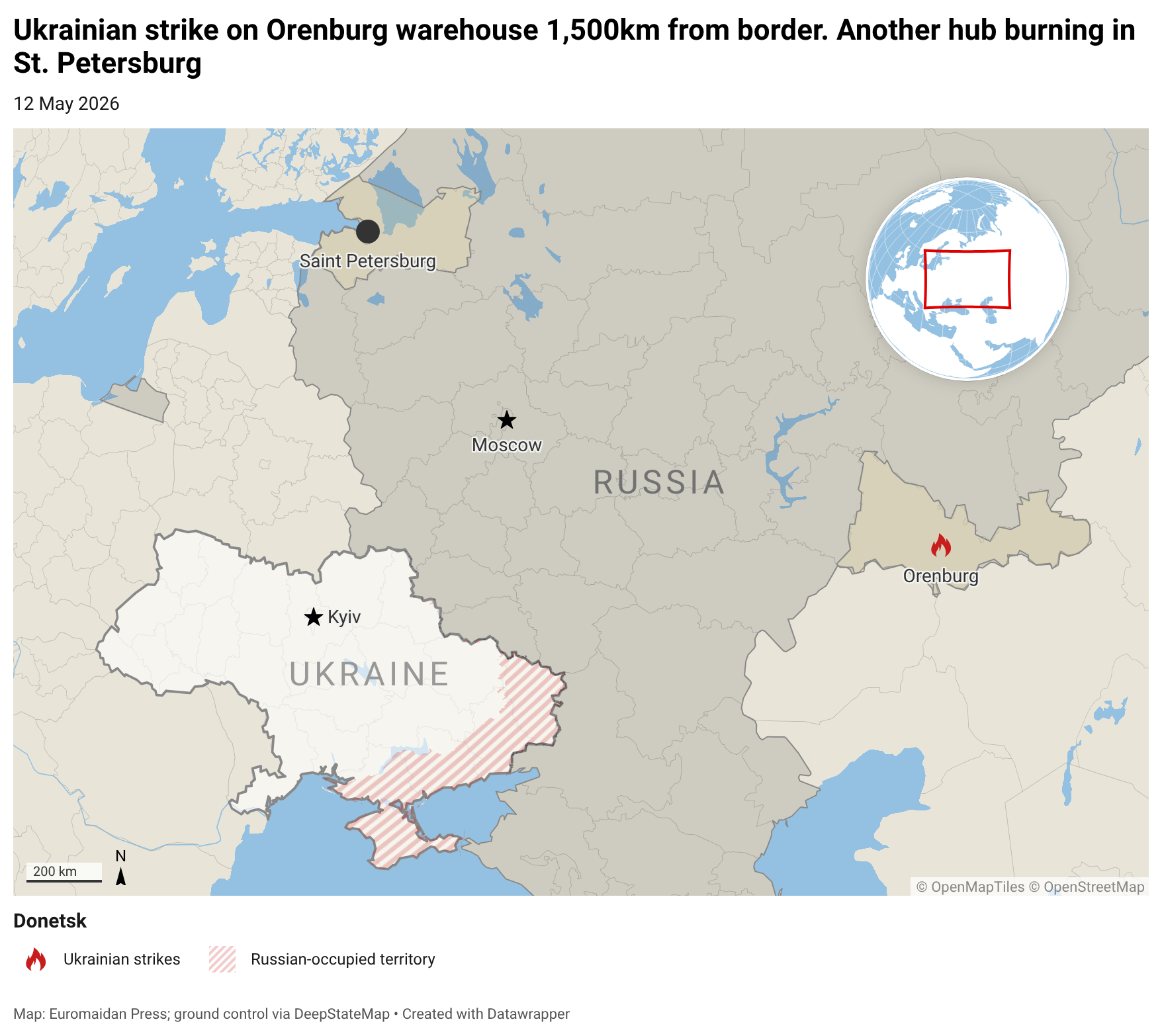
But for the most part, Ukrainian and Russian sources have avoided talking about Lyman. "The Ukrainians kept a good level of OPSEC and the Russians have been reluctant to publish videos from these areas" depicting their retreats, analyst and mapper Clément Molin noted in June, just a few weeks after the Ukrainians attacked toward Nove.

Molin, for one, expects the OPSEC to lift in the coming days. "By the end of the month, we should have an official update on the good results of a Ukrainian offensive that has largely remained secret," he wrote on Monday.

Situation near Nove as of 23 August
Situation near Nove as of 23 August. Map: Euromaidan Press

April offensive

The Ukrainians' limited counteroffensive around Lyman apparently kicked off on in mid-April. One of the first attacks that left any real evidence occurred on 22 May, when a small Ukrainian mechanized force—perhaps from the 60th or 66th Mechanized Brigade, the 77th Air Assault Brigade, or the Presidential Brigade—attacked in armored trucks and M-113, Stryker, and BTR-4 armored personnel carriers. Heavy bomber drones flew top cover.

The Russian 144th Motor Rifle Division fought back with its own drones. Interceptor drones took aim at the bombers. First-person-view and heavy bomber drones blasted at least one BTR-4, hitting it before and after it dropped off its infantry passengers. Drones struck some of the disembarked Ukrainian infantry.

How many Ukrainian troops survived and entrenched in new positions on 22 May is unclear. Regardless, the Ukrainian 3rd Army Corps wasn't done with Nove. Attacks continued. And sometime after the 22 May assault on Nove, "the Ukrainians managed to consolidate their gains," Molin concluded after scrutinizing a few videos and some satellite imagery.

By early July, Ukrainian forces had succeeded in "operationally encircl[ing] the Russian forces defending the village of Nove," according to analyst and mapper Thorkill. "Fierce fighting is currently underway to expel the Russians from that locality," Thorkill reported at the time.

Sytuacja w rejonie Nowego (Łyman).

Jednym z odcinków frontu w Donbasie, na którym wojska ukraińskie prowadzą obecnie działania zaczepne, jest rejon wsi: Nowe – Zełena Dolyna, na północ od Łymanu. Od połowy maja 2026 r. pozycje rosyjskiej 144 Dywizji Strzelców Zmotoryzowanych… pic.twitter.com/2EJQgz4eps

— Thorkill (@Thorkill65) July 8, 2026

The aim of the Ukrainian counterattacks is obvious. The 3rd Army Corps intends to put pressure on the northern right flank of 10 km-by-10-km salient jutting into the battleground north of Lyman. The Russian 144th Motor Rifle Division has been pouring troops into the salient, clearly intending to surround and isolate Lyman instead of directly assaulting it—all in order to clear a path toward Sloviansk.

Salients are risky for both sides, however. The farther the Russians extend their Lyman salient, the more exposed they are on their flanks. The Ukrainians know this. And even if the 3rd Army Corps can't fully cut across the salient in order to surround the Russians inside of it, the corps can at least take advantage of the salient's exposed flanks.

Capturing Nove, on the very northern edge of the salient, could allow the Ukrainians to bring to bear more artillery and drones on the Russians south of Nove. The 3rd Army Corps doesn't have to fully encircle the Russian troops closest to Lyman in order to hammer them with withering firepower.

Soldiers of Ukraine's 79th Air Assault Brigade.
Explore further

Ukraine’s quiet counteroffensive took 745 square km. Russia’s dead Starlink is how

Just how successful the 3rd Army Corps has been in its local counteroffensive could become clearer very soon. That won't spell lasting relief for Sloviansk and Kramatorsk, however. Fighting against the clock as summer begins turning into fall and then winter, the Russians are slowly advancing toward the twin cities from several directions.

The siege of Kramatorsk and Sloviansk is coming. Perhaps not this year, but surely by 2027. To fully safeguard the twin cities, the Ukrainians would need to duplicate their success north of Lyman along several other directions.

That's a big ask of a Ukrainian force that's overall still outnumbered and outgunned.

  •  

Russia turns failed drone defenses into grounds for state control of company assets

putin at the eastern economic forum in vladivostok on 5 september 2025

Russian President Vladimir Putin has made inadequate drone defenses and slow repairs grounds for putting private assets under state management. His 24 August security decree opens a new way to government control over Russia’s economy.

It expands a mechanism Russia has used against foreign-owned businesses since 2023, according to research by Nektorov, Saveliev and Partners (NSP), a Russian law firm that tracks state takeovers.

The text does not specify what counts as “ineffective” drone protection or how quickly a facility must be restored.

A business need not lose a facility before the measure can apply. Decree No. 604 allows action over late security measures, safety violations, conduct that endangers normal operations, ineffective counter-drone steps, or delayed restoration.

The text does not specify what counts as “ineffective” drone protection or how quickly a facility must be restored. Covered sectors include energy, industry, communications, utilities, transport, logistics, and life-support infrastructure, plus any sites deemed important to Russia’s security or economic stability.

Foreign controllers are also covered, including foreign organizations and citizens controlling Russian companies. Temporary management can reach all or part of an entity’s Russian property, securities, stakes in Russian companies, and other property rights—the rule is not limited to the damaged or vulnerable facility alone.

russian mobile air-fefense radar
A mobile Russian air-defense radar pictured in April 2024. Russia’s new decree lets the state take control of wider company assets when drone defenses are deemed inadequate. Photo: United Russia.

“Temporary” control has no deadline

At the same time, the text mentions no automatic return deadline. Putin must instruct the government to begin temporary management and then end it. By default, the Federal Property Management Agency assumes the owner’s powers, except for the right to dispose of the assets. The assets’ costs will be covered from its income.

Interfax published Denis Manturov’s remarks. The first deputy prime minister said the measure would be used selectively for specific security tasks and would leave formal ownership unchanged.

Komsomolskaya Pravda’s Alexander Kots raised a practical problem: Russian law, he wrote, gives businesses no instructions for defending sites against drones or cruise missiles, while barriers require extensive approvals, and private guards cannot easily be given weapons more powerful than shotguns.

The decree followed weeks of Ukrainian attacks on Russian refineries, ports, and warehouses. Ozon reported six disruptions at its facilities after 22 August. The listed retailer’s shares fell as much as 29.09% from Friday’s close on Monday, after five weeks of strikes on privately held Wildberries.

Thick black smoke and flames rise from an Ozon warehouse in Chapayevsk, Russia, at sunset.
Explore further

Why did Ozon fall as much as 29% while Russia’s market lost 2.9%?

Refining hit two-decade lows as strikes forced Russia to import gasoline, while a sixth Ust-Luga attack since March struck the country’s largest Baltic port.

NSP’s nationalization study records more than 100 cases since 2022 and about 6.5 trillion rubles (about $78 billion) in seized assets. It says cases averaged one court hearing and roughly two months.

The NSP temporary-management table lists several foreign-owned businesses placed under “temporary” management from 2023 whose owners still lack access because the arrangements remain indefinite.

  •  

Second Russian MiG-29 in two days: Ukraine’s drones worked over Millerovo airbase

second russian mig-29 two days ukraine's drones worked over millerovo airbase · post fighter jet beside shelter rostov oblast russia ukrainian drone's sights 24 2026 telegram madyar ukraine news reports

Ukrainian drones worked over dozens of Russian military and industrial sites overnight on 24 August, reaching from occupied Ukraine and the Black Sea to southern Russia, the commander of Ukraine's Unmanned Systems Forces (SBS) reportedThe night's targets included a fighter jet at a Russian airbase, air-defense radars, fuel and propellant facilities, and vessels of Russia's sanctions-evading shadow fleet. A fuller breakdown released later in the day named the site of each strike and the unit that carried it out. Footage released with the breakdown shows the strikes.

Ukraine has been running mid-range strikes across the belt from occupied Crimea to Rostov Oblast for months, taking out the radars, missile batteries, and the aircraft that fly air-defense patrols over it — a rolling effort to thin the cover that meets every deeper Ukrainian strike.

A fighter jet and a decoy at the same airbase

Robert Brovdi, callsign Madyar, said his crews hit 66 targets in the operational depth of the Russian rear. Among them was a MiG-29 at Dolotinka, on the grounds of the Millerovo airbase in Rostov Oblast. The 1st Separate Center of the SBS carried out that strike.

second russian mig-29 two days ukraine's drones worked over millerovo airbase · post ka-52 helicopter mockup rostov oblast russia ukrainian drone's sights 24 2026 heli ukraine news reports
A Ka-52 helicopter mockup at Millerovo airbase in Rostov Oblast, Russia, in a Ukrainian drone's sights, 24 August 2026. Photo: Telegram/Robert Brovdi

The same unit hit a mockup of a Ka-52 Alligator attack helicopter at the same location. Russia uses such decoys to draw drones away from real aircraft.

two russian fighters one spy drone hit kranodar radars anti-air systems elsewhere—ukraine forces · post combat aircraft ukrainian drone's sights vityazevo airfield krasnodar krai russia 23 2026 su-33 video sbs
Explore further

Ukraine’s drones hit two Russian fighters and a spy drone—and blinded radars from occupied Crimea to Rostov

It was the third Russian fighter jet Ukrainian drones reached in two days. Crews struck another MiG-29, a jet SBS identified as a Su-33 and Militarnyi assessed as a Su-30SM, and an Orion strike-reconnaissance drone at Vityazevo in Krasnodar Krai on 23 August. Ukrainian drones have caught a MiG-29 on a Russian airfield before, at Kursk in July.

Four radars, from Rostov Oblast to occupied Crimea

Crews hit four radar systems overnight. Two Kasta-2E2 sets went down at Geraskin and Karaichev in Rostov Oblast, and a Nebo-SV at Gukovo in the same oblast. All three fell to the 1st Separate Center.

The fourth, an ST-68, stood at Rozdolne in occupied Crimea. The 9th Kairos battalion of the 414th Madyar's Birds brigade struck it.

The radar work is part of a campaign against Russian sensors and launchers that has run for months without a pause.

Rocket propellant, fuel, and two ships

The 1st Separate Center struck the Kamensky Combine at Kamensk-Shakhtinsky in Rostov Oblast, a plant producing solid rocket fuel, according to SBS. The 9th Kairos battalion hit a fuel tank at Yeysk in Krasnodar Krai. In occupied Luhansk Oblast, the 20th K-2 brigade struck a fuel depot belonging to the 106th material support brigade of Russia's 41st Army at Dovzhansk. 

Brovdi also said his crews hit and destroyed two shadow-fleet vessels, a tanker and a bulk carrier, in the Black Sea. No independent account of either loss has appeared.

A drone school, relays, and a base in occupied Kherson Oblast

In occupied Kherson Oblast, Ukrainian crews destroyed the quarters of a Russian National Guard rapid-response unit and hit two relay stations for Geran attack drones, according to the SBS breakdown.

second russian mig-29 two days ukraine's drones worked over millerovo airbase · post explosions base national guard rapid-response unit strilkove occupied kherson oblast 24 2026 - seen ukraine news ukrainian
Explosions at the base of a Russian National Guard rapid-response unit in Strilkove, occupied Kherson Oblast, 24 August 2026. Photo: Telegram/Robert Brovdi

They also struck a shelter for a Zala reconnaissance drone crew in occupied Crimea, a drone school in occupied Zaporizhzhia Oblast, and a drone laboratory in occupied Donetsk Oblast.

Brovdi also reported 11 Russian rear deployment points burning across occupied Zaporizhzhia, Donetsk, and Luhansk oblasts, along with strikes on energy nodes in occupied territory.

  •  

Why did Ozon fall as much as 29% while Russia’s market lost 2.9%?

Thick black smoke and flames rise from an Ozon warehouse in Chapayevsk, Russia, at sunset.

Ukrainian strikes on Ozon’s warehouses sent the listed retailer’s shares down 29.09% from Friday’s close at Monday’s low, RBC’s market report said. The Moscow Exchange shifted Ozon’s main trading session to a 30-minute auction, while other trading modes remained open, exchange rules show.

Unlike privately held Wildberries, Ozon’s listing made investors’ response to the disruption immediately visible.

Unlike privately held Wildberries, Ozon’s listing made investors’ response to the disruption immediately visible. The sell-off came before Ozon had calculated the physical damage, which the company said it would assess later in its statement on Chapayevsk.

Since 22 August, Ozon has reported disruption at six facilities: warehouses in Chapayevsk and Orenburg, three facilities in southern Russia, and another warehouse in Krasnodar.

Thick black smoke and flames rise from an Ozon warehouse in Chapayevsk, Russia, at sunset.
Explore further

Ukrainian drones hit warehouse belonging to Russian online retailer Ozon for the first time

Russia was simultaneously attacking Ukraine’s retail and logistics infrastructure. Russian strikes burned two Epicentr hypermarkets in Odesa on Monday morning and caused fires at food warehouses in the city, regional authorities said.

Two days earlier, President Vladimir Putin had said Kyiv should “expect a response targeting your most sensitive economic sectors” in comments published by state journalist Pavel Zarubin.

Ozon falls farther than the market

The MOEX index fell about 2.9% on 24 August. Ozon’s 29.09% decline went far beyond the broader sell-off, indicating that investors were reacting to company-specific risk rather than merely following the Russian market.

That risk had appeared before Ozon’s warehouses were struck. Its shares fell 2.3% on 22 July over concerns that the retailer might become a target. Six days later, VTB Bank fell 2.5%, with analysts attributing part of the decline to uncertainty surrounding its Wildberries partnership.

Wildberries, Ozon, and their smaller rivals sell goods and services worth the equivalent of 8.5% of Russia’s GDP and employ 4 million people—more than 5% of the country’s workforce.

The August attacks turned that risk into operational disruption. Ozon reported fires at its Makhachkala facility and Krasnodar warehouse. In Chapayevsk, the company evacuated more than 500 workers, suspended operations, and redirected shipments. The following day, it evacuated more than 300 workers and closed its Orenburg warehouse.

dagestan stavropol krai adygea ukraine's drones worked straight down delivery russia's 2 online store · post fire ozon logistics complex tyube settlement 24 2026 пожежа на території логістичного комплексу у
Explore further

Dagestan, Stavropol Krai, Adygea: Ukraine’s drones worked straight down the delivery map of Russia’s No. 2 online store

Rerouting allowed Ozon to keep orders moving by transferring the workload to facilities that remained open. That is the business risk investors were pricing: a distributed warehouse network can absorb an isolated closure, while repeated attacks progressively reduce the capacity available to absorb the next one.

ozon delivery truck outside of a warehouse
An Ozon delivery truck outside one of the Russian retailer’s logistics centers. Photo: Retail.ru

Each strike leaves fewer warehouses

Ukraine’s campaign against Wildberries shows how warehouse losses accumulate across a retail network. By the end of July, Verstka counted eight affected warehouses covering 860,000 square meters, or 15.4% of the company’s total warehouse space.

By mid-August, ISW counted seven of its ten largest hubs knocked out. The two estimates measure different things, but both show disruption spreading through the network.

A distributed warehouse system can absorb an isolated closure by moving shipments through other hubs. As more sites are lost, fewer alternatives are available to carry out that work. The economic effect, therefore, depends not only on the value of the buildings or goods destroyed, but on how much spare capacity remains after each strike.

Russia’s attacks on Ukraine illustrate the same logistical resilience. Two strikes destroyed warehouse buildings at Aurora’s distribution center, CEO Taras Panasenko said, but the retailer kept its stores open. Ozon similarly redirected shipments after closing warehouses in Russia.

Continued sales do not mean that the strikes had no economic effect. They show that retailers can absorb individual losses by relying on the rest of their networks. Repeated attacks gradually consume that protection, and Ozon’s public listing allowed investors to price the risk before the company could calculate the damage.

  •  

“You wanted our land. You lost your refineries and your fleet.”—Ukraine’s anniversary message to Russia

wanted land lost refineries fleet—ukraine's anniversary message russia · post ukrainian president volodymyr zelenskyy delivers independence day address front st michael's golden-domed monastery kyiv 24 2026 presidentgovua download ukraine news

Ukraine celebrated 35 years of independence on 24 August, and Ukrainian President Volodymyr Zelenskyy marked the day with an address listing what the invasion has cost Russia, published by the President's Office. He said Putin is mortal and out of time to understand Ukraine, and said Ukraine will not hand over Donbas or save the Kremlin half a million soldiers. He also asked partners for sanctions and weapons strong enough to force an end to the war.

Russia has been invading Ukraine since 2014 and fighting a full-scale war on it since 2022, and Ukraine now supplies a growing share of the missiles and drones it fights back with, while the air defense shielding its cities still hangs on decisions taken in Washington and European capitals—which is what makes a holiday speech a statement of what Kyiv will not trade and what it needs built or delivered next.

The losses he read back to Moscow

President Zelenskyy turned from his own citizens to Russia partway through the speech. 

"You wanted to take all our Ukraine, all our land; instead, you lost your oil refineries, your fleet, your profits, your entire generation that you sent into the meat grinder," he said. 

A country that wanted Ukraine erased from the map, he added, is now absent from the international agenda of the future civilization.

For five years now, Russia has tried to exhaust and break Ukrainians — cutting light and heat, destroying homes, Kyiv Mayor Klitschko said on Ukraine's 35th Independence Day

"The aggressor failed to understand one fundamental thing: above all else, Ukrainians love freedom," he… pic.twitter.com/NvVVKSKIK1

— Euromaidan Press (@EuromaidanPress) August 24, 2026

He set Moscow's self-image against its filling stations. 

"For 27 years, the head of Russia has talked about greatness, while Russia is standing in lines for gasoline," Zelenskyy said. 

Moscow and St. Petersburg brought back gasoline rationing this month, and Rosneft capped fills at every station in the country.

On the Russian leader he was blunt. 

"Putin hopes that we are tired. But we know that he is mortal," he said, adding that Putin never understood Ukraine and now will not have the time to.

A fifth Independence Day at war

Before the holiday, Russian ballistic missiles hit Kyiv and its main airport hub twice in 24 hours. A solution to Russian ballistic terror must be found, Zelenskyy said, and that gamble must not pay off. 

Russia does not want peace, it wants mobilization, the president said. Ukraine will not let Moscow seize the initiative or convince Europe that surrendering Donbas ends the war. Russia keeps pushing back the dates for taking all of Donetsk Oblast and will keep pushing them back, he said.

The president called Ukraine's defense industry a giant that forges independence around the clock, and demanded more from it. Mid-range strikes cut Russian logistics and long-range weapons cut Russian profits, he said, listing Moscow, Tuapse, Tula, Ryazan, Olenya, and Omsk among the places already hit. 

two russian fighters one spy drone hit kranodar radars anti-air systems elsewhere—ukraine forces · post combat aircraft ukrainian drone's sights vityazevo airfield krasnodar krai russia 23 2026 su-33 video sbs
Explore further

Ukraine’s drones hit two Russian fighters and a spy drone—and blinded radars from occupied Crimea to Rostov

Ukraine's home-built Flamingo cruise missiles should stop being a rare species and arrive en masse: "They must 'winter' in Russia," Zelenskyy noted. 

Previously, Flamingos have hit defense plants more than 1,000 km from the border, though they still appear in strikes in small numbers.

"China should no longer remain silent"

Ukraine is not asking anyone to fight for it, the president said — only for everything needed to stop the war before Putin starts the next one. He wants sanctions that make Russians howl and Moscow at a negotiating table, and said Washington has lost its illusions about Russian intentions. Europe must be Europe, he said: united, ambitious, brave. 

"China should no longer remain silent," he added, saying Beijing must cool the ardor of someone who puts on a sailor's uniform and cap and talks about a nuclear strike—a description that fits Putin.

  •  

Dagestan, Stavropol Krai, Adygea: Ukraine’s drones worked straight down the delivery map of Russia’s No. 2 online store

dagestan stavropol krai adygea ukraine's drones worked straight down delivery russia's 2 online store · post fire ozon logistics complex tyube settlement 24 2026 пожежа на території логістичного комплексу у

Ukrainian drones struck three warehouses of the Russian online retailer Ozon across the country's south overnight on 24 August, monitoring Telegram channels reported. Ozon is Russia's second-largest online store, an Amazon-style marketplace, shipping customer orders out of huge regional depots. Fires broke out, the company closed one hub, and its shares fell in Monday trading.

Kyiv's deep-strike campaign has moved from refineries and fuel depots onto the freight network that carries Russian consumer goods and dual-use parts, where the sprawling marketplace hubs make wide, flat targets that Russian air defenses have failed to cover, so each fire takes storage out of use faster than the retailers can rent replacements.

Three warehouses, 314,714 square meters

The three struck sites cover 314,714 m² in three Russian regions, Militarnyi calculated. The largest, about 130,000 m², stands in Tyube in Dagestan, 800 to 900 km from Ukraine's border. Russian news Telegram channel Astra called it the company's biggest warehouse in the North Caucasus. Residents said the fire was visible up to 10 kilometers away.

Dagestan Ozon, moment of attack pic.twitter.com/z52qNTlGV9

— Exilenova+ (@Exilenova_plus) August 24, 2026

Nevinnomyssk in Stavropol Krai holds the second site, 93,514 m². The third, 91,200 m², sits near Enem in Adygea, on the boundary with Krasnodar Krai. Drones have now hit five Ozon warehouses, Militarnyi noted.

dagestan stavropol krai adygea ukraine's drones worked straight down delivery russia's 2 online store · post locations three ozon logistics warehouses struck 24 2026 логістичні склади компанії атаковані серпня року
Locations of three Ozon logistics warehouses struck in Adygea, Stavropol Krai, and Dagestan, 24 August 2026. Map: Militarnyi/ESRI

The company's account differs

Ozon said fires started at its Dagestan and Krasnodar warehouses and that people were injured in Dagestan. In Nevinnomyssk it evacuated staff, closed the site, and stated that the facilities and the goods inside were "in order."

Six of the retailer's complexes have come under drone attack in three days, according to the company. The company also said the Adygeysk and Nevinnomyssk warehouses escaped damage. Monitoring data places a struck 93,514 m² warehouse in Nevinnomyssk.

Russian officials blame falling debris

Krasnodar Krai Governor Veniamin Kondratyev claimed drone debris allegedly killed two children at a private children's center in Krasnodar, with the injured count later put at 12.

one russian warehouse smolders near kazakhstan while bigger fire rages st petersburg · post ukrainian drone over ozon logistics complex orenburg russia 23 2026 fp-1 hitting ozone exilenova ukraine news
Explore further

One Russian warehouse smolders near Kazakhstan while a bigger fire rages near St. Petersburg

Head of Adygea Murat Kumpilov confirmed a fire at the Ozon center in Takhtamukaysky district. Acting head of Dagestan Fyodor Shchukin claimed falling drone fragments started the Kumtorkalinsky district fire and hurt nobody, which the company contradicts. Stavropol Krai Governor Vladimir Vladimirov claimed air defenses were repelling a raid on Nevinnomyssk's industrial zone.

Rostov Oblast head Yuri Slyusar claimed 120 drones were downed over the oblast. Russia's Defense Ministry claimed 351 Ukrainian drones destroyed across 10 Russian regions and occupied Crimea, without saying how many got through.

Ozon shares dropped 28% on Monday morning, state agency TASS reported, while Reuters put the fall at almost 13%.

The third night in a row

Ukraine has destroyed or damaged 29 marketplace warehouses since 18 July, RFE/RL said, mapping them with satellite imagery. Drones struck the Orenburg complex on 23 August, where the company pulled more than 300 workers out. On 22 August they hit the Chapayevsk warehouse in Samara Oblast, the first strike on the company, where people were injured.

Custom Code

Before Ozon, Ukrainian drones spent weeks on Wildberries, Russia's largest marketplace, wrecking about 15.4% of its storage space in July alone.

  •  

Independence Day gift from inside Russian army: Partisans say soldier whose comrades were killed over extortion money destroyed truck resupplying Kostiantynivka front

The destroyed KamAZ truck by a partisan in the Atesh group. Source: Atesh

Ukrainian partisans have dedicated their new “catch” to Ukraine’s Independence Day. According to ATESH, they destroyed a military KamAZ truck that was used in assaults on Donetsk Oblast and was stationed with Russian occupation forces in Rostov Oblast.

ATESH is a Ukrainian-Crimean Tatar partisan movement founded in September 2022 in response to Russia's full-scale invasion. The group operates in occupied Ukrainian territories and in Russia itself, with members including Crimean Tatars, Ukrainians, and Russians who were mobilized into the Russian army but now work for Ukraine.

The operation was carried out without the partisans even having to do it themselves. The vehicle was used in the offensive toward Kostiantynivka, one of the hottest sectors of the current fighting, alongside the Russian advances toward Sloviansk and Kramatorsk.

The sabotage was carried out by a soldier from the Russian Armed Forces’ “Center” Group of Forces, which is assaulting Kostiantynivka. The vehicle was actively used to supply the advancing forces, and its loss disrupts Russian logistics.

Putin has a primary target, Zelenskyy says

Earlier, President Zelenskyy said that the offensive toward Kostiantynivka would remain one of the Russian military’s main priorities through the end of the year, according to Suspilne.

“Putin’s unchanged primary objective on the front is Kostiantynivka–Sloviansk. The latest deadline he has given his generals is to complete the occupation of Donetsk and Luhansk oblasts by the end of the year,” he said.

Since the beginning of 2026, Russia has lost 267,000 personnel along the entire front line, including approximately 155,000 killed, according to the figures cited in the report. Russian forces are suffering their heaviest losses specifically in the sector stretching from Sloviansk to Kostiantynivka.

How was the operation carried out?

The agent joined the movement out of revenge: his commanders killed his fellow soldiers after he refused to pay extortionate demands. The partisans said that such abuses in the Russian army are commonplace, and that the only way to survive and punish those responsible is to resist from within.

Earlier, the partisans reported that Russia’s 64th Motor Rifle Brigade, which has been implicated in crimes in Bucha, was concealing its actual losses. The command allegedly registers many of the dead as “missing in action” in order to reduce the official death toll and avoid payments to their families.

Meanwhile, security and counterintelligence services are reportedly putting pressure on the women, threatening them with criminal charges for “discrediting” the army and the complete loss of any payments if they continue searching for their missing relatives.

  •  

Ukraine’s drones hit two Russian fighters and a spy drone—and blinded radars from occupied Crimea to Rostov

two russian fighters one spy drone hit kranodar radars anti-air systems elsewhere—ukraine forces · post combat aircraft ukrainian drone's sights vityazevo airfield krasnodar krai russia 23 2026 su-33 video sbs

Ukraine's drones hit three Russian aircraft and eleven air-defense targets in one day, its Unmanned Systems Forces reported on 23 August. The strikes reached from occupied Crimea to airbases hundreds of kilometers inside Russia. They pushed the force's August count of struck Russian air-defense assets to 20, the latest run in a Ukrainian campaign against Russia's radars and launchers that has not paused for months.

Russia leans on a layered net of radars and mobile launchers to keep Ukrainian drones and missiles away from its airfields, fuel plants, and occupied land, so every set burned off that net widens the corridors its long-range weapons fly through. With its S-400 battery caught in the open again and jets chased off Crimea still within reach, Russia has shrinking safe ground for the aircraft and air defenses covering its south — a squeeze already visible when Ukraine caught a fighter and its protecting launcher on the same airfield weeks earlier.

A one-day sweep of 14 targets

The Unmanned Systems Forces (SBS) commander, Robert Brovdi, callsign Madyar, put the 23 August haul at 14 targets. They included two fighter jets, a strike-reconnaissance drone, eight radar systems, a Tor and a Pantsir short-range launcher, and a position of an S-400 — a Russian long-range air-defense system.

Eleven of the 14 fell in Rostov Oblast and Krasnodar Krai in southern Russia. The other three were in occupied Crimea. 

two russian fighters one spy drone hit kranodar radars anti-air systems elsewhere—ukraine forces · post aftermath strike combat aircraft seen another ukrainian vityazevo airfield krasnodar krai russia 23 2026 дорозвідка
Aftermath of the strike on a Russian combat aircraft as seen from another Ukrainian drone at Vityazevo airfield in Krasnodar Krai, Russia, 23 August 2026. Screenshot: SBS

Jets that fled Crimea, caught on the mainland

The three aircraft were struck at Vityazevo, a Krasnodar Krai airfield about 300 km from the front line, the 1st Separate Center of the Unmanned Systems Forces said. Militarnyi assessed that the jet SBS called a Su-33 was likely a two-seat Su-30SM, judging by its cockpit hump.

two russian fighters one spy drone hit kranodar radars anti-air systems elsewhere—ukraine forces · post ukrainian strikes su-30sm fighter mig-29 orion strike-reconnaissance vityazevo airfield krasnodar krai russia 23 2026 airfield's
Ukrainian drone strikes on a Su-30SM fighter, a MiG-29 fighter, and an Orion strike-reconnaissance drone at the Vityazevo airfield in Krasnodar Krai, Russia, 23 August 2026, with the airfield's location marked on the map. Collage: Militarnyi

Russia flies the Su-30 from its southern bases to attack Odesa and Mykolaiv oblasts, to hunt Ukrainian sea drones, and to patrol occupied territory. The struck jet likely belonged to a naval aviation regiment pushed off Crimea by repeated Ukrainian strikes on the peninsula.

two russian fighters one spy drone hit kranodar radars anti-air systems elsewhere—ukraine forces · post strike podlyot radar holovativka rostov oblast russia 23 2026 sbs ukraine news ukrainian reports
A strike on a Russian Podlyot radar at Holovativka in Rostov Oblast, Russia, 23 August 2026. Screenshot: SBS

Based on the SBS footage, Militarnyi says one drone could not hit the fighter cleanly. It exploded beside the aircraft and set off a fire that Russian crews tried to put out — a near miss, but enough to sideline the jet for a long stretch. A second drone then found the MiG-29 fighter jet and scored a direct hit, starting a large fire. A third caught the Orion, a strike-reconnaissance drone Russia uses to launch small cruise missiles and to track Ukrainian naval drones in the Black Sea.

Radars, launchers, and an S-400 on the coast

The air-defense targets ran across three regions. In occupied Crimea, crews hit a Nebo-U long-range radar at Sevastopol, the ST-68 at Yevpatoria some 30 km from the front, and a 36D6M at Uiutne. In Rostov Oblast and Krasnodar Krai they knocked out more radars, including two Kasta-2E2 sets and two Podlyot radars, plus the Tor at Pudovy and the Pantsir at Yeysk.

The 413th Reid regiment of the SBS reported hitting the S-400 position near Gelendzhik on the Krasnodar coast — the same stretch where drone crews have caught the system out in the open before.

two russian fighters one spy drone hit kranodar radars anti-air systems elsewhere—ukraine forces · post enhanced colorized frame thermal footage view ukrainian closing st-68 radar moments before impact yevpatoria occupied
Enhanced and colorized frame from the drone thermal footage showing the view from a Ukrainian drone closing on a Russian ST-68 radar moments before impact at Yevpatoria in occupied Crimea, 23 August 2026. Screenshot: Ukraine's Unmanned Systems Forces (SBS)

An August of hunting Russia's air shield

A battlefield video counter run by the force reached 20 Russian air-defense assets struck through August. The month's work extended a campaign that has steadily burned through the sensors and launchers guarding Russian airfields and occupied territory. 

  •  

One Russian warehouse smolders near Kazakhstan while a bigger fire rages near St. Petersburg

one russian warehouse smolders near kazakhstan while bigger fire rages st petersburg · post ukrainian drone over ozon logistics complex orenburg russia 23 2026 fp-1 hitting ozone exilenova ukraine news

Ukrainian drones struck a logistics complex belonging to Russian online retailer Ozon in Orenburg on 23 August, the second Ozon warehouse hit in two days, monitoring Telegram channels reported. The site sits about 1,200 km from the war zone, near Russia's border with Kazakhstan. Hours earlier, a large fire tore through a separate warehouse outside St. Petersburg, roughly 900 km north of Ukraine, though local authorities declared no drone or missile threat.

Kyiv's long-range drone program has pushed its reach ever deeper into the Russian rear, turning fuel depots, factories, and delivery hubs far behind the lines into routine targets, and retail networks have drawn special attention because their warehouses double as arteries for the wider war economy. Each strike this far inside Russia forces Moscow to stretch air defenses across a country too vast to shield everywhere at once. Disrupted e-commerce warehouses also add to pressure already showing at the pumps, where fuel shortages have brought rationing to major cities.

Drones hit Russia's biggest Ozon warehouse

Ukrainian monitoring channel Exilenova+ published video of the strike moment, after which a fire took hold on the site. Independent Russian outlet Astra analyzed eyewitness footage showing an emergency vehicle racing toward the depot. The complex spans more than 200,000 m² and was designed to hold over 31 million items, ranking among Ozon's biggest in Russia.

one russian warehouse smolders near kazakhstan while bigger fire rages st petersburg · post smoke rising over ozon logistics complex orenburg russia 23 2026 заявлено як задимлення на території складу
Smoke rising over the Ozon logistics complex in Orenburg, Russia, 23 August 2026. Photo: Exilenova+

The warehouse stands inside the city's special economic zone, a tax-favored industrial park on the eastern edge of European Russia. The first phase opened in August 2024, and a second building followed in 2025.

Orenburg mayor Albert Yumadilov claimed several drones were downed over the special economic zone and that debris fell on the Ozon complex, starting a fire that crews quickly put out with no one hurt. 

Ozon confirmed the strike, saying it evacuated more than 300 workers, pulled its goods from the marketplace and stopped taking new deliveries while the site sat idle. 

A second fire near St. Petersburg, with no air-raid alert

Overnight, a large blaze hit a warehouse in the Kolpino area south of St. Petersburg. Astra established that the warehouse stood about 350 m from an Ozon site, and witnesses said they heard no drones or air defense. Ukrainian Telegram channel Exile+ identified the burning facility as a storage warehouse run by Logistera.

one russian warehouse smolders near kazakhstan while bigger fire rages st petersburg · post large complex kolpino area russia 23 2026 saint astra ukraine news ukrainian reports
A large fire at a warehouse complex in the Kolpino area of St. Petersburg, Russia, 23 August 2026. Photo: Astra

Part of a widening campaign on Russian marketplace logistics

The Orenburg hit followed the first-ever Ozon strike a day earlier, at a warehouse in Chapaevsk, Samara Oblast. Before turning to Ozon, Ukrainian drones had struck more than 10 warehouses belonging to the larger Russian marketplace Wildberries. Such marketplace hubs move not only consumer goods but dual-use items like electronics and drone components that can reach Russia's military.

  •  

Ukraine says it hit an Iskander launcher near the border—part of a dedicated hunt for Russia’s ballistic launch sites

ukraine says hit iskander launcher near border—part dedicated hunt russia’s ballistic launch sites · post russian missile under ukrainian drone attack taganrog russia 30 2026 1st separate center unmanned systems

Ukraine has struck a Russian Iskander launcher near its border as part of a dedicated operation against nearby ballistic-missile launch positions, Ukrainian President Volodymyr Zelenskyy told journalists, according to Ukrinform

Russia continues using ballistic missiles against Ukrainian cities while Ukraine has rationed Patriot interceptors and warned of acute shortages, pushing Kyiv to combine interception with strikes on the systems and positions used to launch those missiles.

President says Ukraine hit an Iskander launcher

President Zelenskyy described the strike as a success but said the sensitivity of the operation prevented him from providing many details.

We struck an Iskander launcher near our borders,” he said. “I am grateful to our warriors who are carrying this out. This is our operation to hunt their systems positioned nearby.”

The president, however, didn't disclose where the launcher was located or what weapon Ukrainian forces used to hit it.

Zelenskyy said strikes on launchers are one way Ukraine is trying to counter Russian ballistic attacks when anti-ballistic interceptor stocks are limited.

When our anti-ballistic missile stocks are at a minimum, there is another tactic. It is more difficult, and we developed it,” he said. “It is hunting their nearby positions from which ballistic missiles are launched.

He described the effort as a separate program and operation. Euromaidan Press could not independently verify the reported strike.

Russian Iskander-M missile system, 2020. Illustrative photo. Photo from Russian government sources via Militarnyi

Ukraine has already targeted Russian ballistic missile infrastructure in several operations this year. In April, Ukrainian drone forces reported strikes on two bases linked to Iskander systems in occupied Crimea.

On 30 May, Ukraine’s Unmanned Systems Forces said they destroyed an Iskander system at a launch position near Taganrog in Russia’s Rostov Oblast.

Ukrainian President Volodymyr Zelenskyy, 7 July 2026. Photo: Zelenskyy / Telegram
Explore further

5% of US Patriot stocks gets Ukraine through winter, 10% ends the ballistic threat — and Zelenskyy has just 1%, he tells CNN

SpaceX rejected Ukraine’s request to use Starlink inside Russia

The launcher strike comes as Ukraine is also looking for better ways to operate long-range drones against military targets in Russia. Zelenskyy said SpaceX ultimately refused to let Ukraine use Starlink inside Russia because of escalation concerns.

Kyiv had wanted Starlink to work over Russian territory for defense operations, including drone strikes on Russian ballistic-missile launchers near the border. The Defense Ministry asked him in the first half of 2026 to raise the issue with US President Donald Trump, Zelenskyy said. Zelenskyy said Trump relayed that decision to him at a later meeting. Ukraine continues discussing the issue with the US side.

Ukraine and European partners are separately developing the FREYJA anti-ballistic system, with Kyiv seeking a prototype capable of demonstrating practical results by mid-2027. The project is intended to combine Ukrainian missile technology with European radars, sensors, and command systems.

  •  

Zelenskyy awarded Vikings star, ballistic missile CEO took stage, and strike drone got signed with messages to Russians: Ukraine’s major UNITED24 platform turns four

Ukrainian President Volodymyr Zelenskyy at United24 MODE Summit 2026 on 22 August 2026, in Kyiv. Source: Ukraine's Presidential Office

Kyiv held the UNITED24 MODE Summit 2026, dedicated to the results of four years of work by UNITED24, the president’s fundraising platform. The event came two days before Ukraine's Independence Day.

Since its launch in 2022, the initiative has raised nearly $4 billion to support Ukraine. The platform has become an important fundraising tool, bringing together millions of donors from 145 countries.

The largest contributions through UNITED24 have come from the US, Germany, France, Canada, Australia, Switzerland, Sweden, the Netherlands, Finland, Denmark, Austria, Italy, Norway, Belgium, Ireland, Japan, Poland, Lithuania, Türkiye, Singapore, Paraguay, El Salvador, and Guinea-Bissau.

Zelenskyy awarded Vikings star

During the event, Ukrainian President Volodymyr Zelenskyy awarded several prominent UNITED24 ambassadors, volunteers, and philanthropists for their significant support of Ukraine.

Liev Schreiber, the American actor and director, received the Order of Merit. Katheryn Winnick, the Canadian actress best known for Vikings, received the Order of Princess Olga, 3rd Class. Both of them are UNITED24 ambassadors, according to Ukraine's Presidential Office.

Ballistic missile developer attended event

The main topic of the summit was the further development of Ukrainian defense technologies — from creating new solutions to serial production, scaling, and international cooperation, ArmyInform reports.

The discussion featured Fire Point CEO Iryna Terekh, STARK Ukraine COO Maksym Cherkis, and Brave1 head Andrii Hrytseniuk.

Fire Point is the company that is working on the development of the first Ukrainian ballistic missiles.

Behind buying military equipment, platform helped healing Ukrainians

Overall, donors and philanthropists have also contributed to the purchase of medical equipment.

During this period, more than 117,000 medical devices and pieces of equipment were purchased for a total of more than $51.6 million, according to Ukraine's Health Ministry. These included:

Ambulances: 247 vehicles worth $15.0 million.

Armored evacuation vehicles for military medics: 43 vehicles worth $10.6 million.

Anesthesia machines: 83 units worth $2.6 million.

Neurosurgical microscopes: 10 units worth $2.1 million.

C-arm X-ray systems: 39 units worth $3.1 million.

What are platform's next tasks

The panel was moderated by Hanna Hvozdiar, an adviser to Ukraine’s defense minister, who outlined the state’s key priorities for developing Ukraine’s defense technology sector. She said Ukrainian Defense Tech had already demonstrated its ability to respond extremely quickly to the challenges of war.

Over the past several years, a new industry has effectively emerged in Ukraine, in which a battlefield need can be turned into a technological solution several times faster than in the traditional defense industry.

“The next task is to preserve this speed, scale up the strongest developments, and turn the technological advantage Ukraine is creating today into a long-term strength of the state,” she said.

Particular attention was also paid to Ukraine’s technological independence, including the development of its own critical technologies and component base alongside deeper international partnerships.

“Ukraine continues to develop cooperation with Ukrainian manufacturers, the technology community, and international partners so that promising developments can be scaled up faster,” the Defense Ministry said.

Participants left message to Russians on wings of drone

At the summit, Fire Point presented its FP-1 long-range drone, whose wings were signed with messages to Russians by summit participants, according to UNN.

Foreign Minister Andrii Sybiha also left his message to Russians on the wings of the FP-1.

“The farther our special long-range ‘sanctions’ fly, the closer peace and our victory come,” he wrote.

  •  

From Warsaw to New York, Ukrainians will form human chains on Independence Day

People line Prague’s Charles Bridge holding a long Ukrainian flag, with Prague Castle visible in the background.

Ukrainians and supporters will form human chains in cities abroad at 19:00 (7 p.m.) on 24 August 2026 to mark Independence Day, Ukraine’s Mission to the European Union announced on 20 August.

Russia’s invasion has driven more than 5.6 million Ukrainians to seek refugee or other international protection abroad, according to the UN Refugee Agency. The human chains will help displaced Ukrainians and established diaspora communities show that Ukraine still needs their host countries’ support, the organizers say. Participants follow in the footsteps of Ukrainians in the Soviet era who formed human chains to demonstrate their desire for independence.

The 2026 Chain of Unity campaign website listed 55,600 participants on 22 August. Ukrainians and their supporters will gather on central streets and squares in Warsaw, London, Berlin, Rome, Toronto, New York, and other cities, where they will hold hands in local chains.

An interactive map allows people to find, join, or organize a local chain. Ukraine’s Cultural and Foreign Ministries support the action, which is being held only outside the country.

Ukrainians abroad will use Independence Day in other ways to draw attention to Ukraine’s wartime needs. Ukrainian community groups have organized rallies in 11 cities across 10 countries, calling on European governments to use Russian central bank reserves frozen under sanctions to fund Ukraine.

Why human chains still matter to Ukraine

Human chains became a powerful symbol of Ukrainian unity as Soviet rule weakened and the independence movement moved into the open.

On 21 January 1990, hundreds of thousands of Ukrainians formed the nearly 700-kilometer “Ukrainian Wave” from Ivano-Frankivsk through Lviv to Kyiv. It became late-Soviet Ukraine’s largest public demonstration and helped build momentum for independence the following year.

The pro-independence People’s Movement of Ukraine (Rukh) spent five months organizing the chain. When gaps appeared, organizers bused volunteers from Lviv and Ivano-Frankivsk to fill them, while participants supplied their own fuel.

Human chain formed during the Soviet-era independence movement
Representatives of Donetsk and Kharkiv at the Human Chain in Kyiv. The sign reads, "Kharkiv and Donetsk are Ukrainian from time immemorial." Source: Radio Svoboda

The 1990 chain marked the anniversary of the 1919 union of the Ukrainian People’s Republic and Western Ukrainian People’s Republic, two Ukrainian states that emerged after World War I. By joining hands across regions while their country remained part of the Soviet Union, participants showed broad support for restoring Ukraine's sovereignty and unity.

After 1991, Ukrainians kept the tradition on Unity Day, the 22 January holiday marking that union. They often joined hands across Dnipro bridges to symbolize east-west unity. This year’s action takes the gesture abroad: refugees, established Ukrainian communities, and supporters are using it to show they remain part of one nation.

  •  
❌