Vue normale

Russian electric locomotive was named target of Ukrainian partisan operation. It carried military supplies toward Kharkiv front
10 août 2026 à 01:09

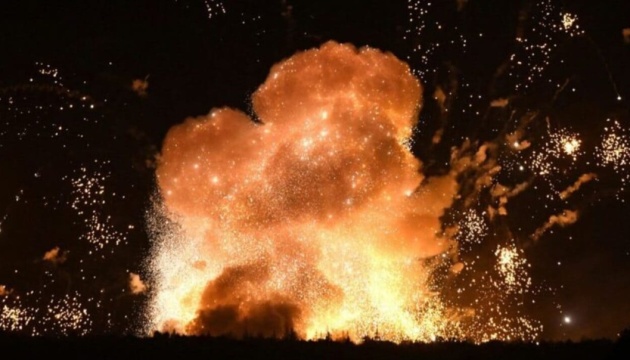
An explosion. Credit: UkrInform

Ukrainian partisans say they crippled a locomotive moving Russian military supplies to the front. Agents of the ATESH movement carried out a sabotage operation near Voronezh, destroying the cab of an electric locomotive used to support military transport, ATESH reported.

Disabling a single locomotive cripples the entire supply line. The locomotive was supposed to continue its journey toward the Kupiansk direction, and after the cab was damaged, operating the machine at its former pace became impossible, disrupting the schedule for forming and dispatching the next trains.

The target was a rail supply line to the front

ATESH said the sabotage hit a link in Russia's military logistics chain. The locomotive was part of the rail transport that moves Russian military cargo, and it was bound for the Kupiansk direction, one of the active sectors of the front in Kharkiv Oblast.

Russia depends heavily on railways to supply its forces. Its army moves ammunition, fuel, weapons, and heavy equipment to the front largely by rail, so the locomotives and the lines they run on are critical arteries of its war effort. A partisan network can reach them behind the front lines at a vulnerable point.

One damaged locomotive slows the whole chain

ATESH framed the value of the strike in terms of the cascade it sets off. The loss of even one link in the mainline causes delays in the delivery of ammunition, fuel, weapons, and heavy equipment.

Those delays compound at the front. When rear supply operations are interrupted, units lose combat effectiveness and suffer significant personnel losses, ATESH said, casting a single sabotaged locomotive as a blow that reaches the soldiers, depending on what it was carrying.

The strike fits ATESH's partisan campaign

Euromaidan Press cannot independently verify the Voronezh sabotage, which is ATESH's own account. But rail sabotage is a documented feature of the war behind Russian lines, and the movement's focus on the logistics that feed the front reflects a real vulnerability in an army that runs on rail.

Occupation official told Putin the Crimea highway is drone-proof—Russia’s own milbloggers refuted him within hours

21 juillet 2026 à 04:11

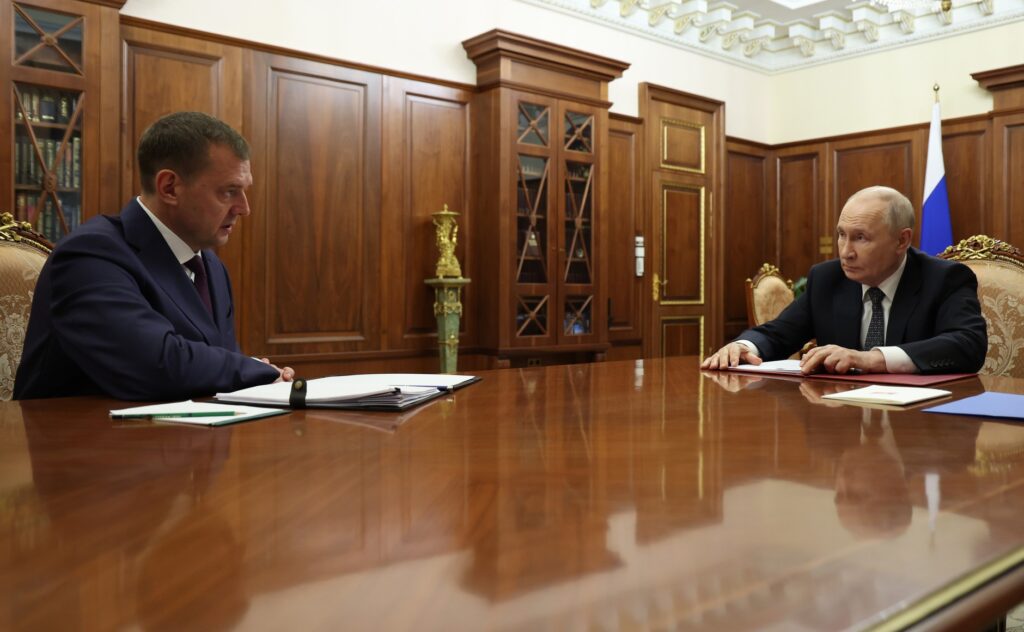
occupation official told putin crimea highway drone-proof—russia's own milbloggers refuted within hours · post russian-appointed governor occupied part pf zaporizhzhia oblast yevgeny balitsky (left) meets russian president vladimir 20 2026

Russia's own pro-war military bloggers have rejected official assurance that the main land route to occupied Crimea is protected from Ukrainian drones, according to the Institute for the Study of War (ISW). The pushback followed a Kremlin meeting where the occupation head of a region in southern Ukraine reported the road as fully secured. The dispute concerns an artery Ukraine has spent months hammering.

Ukraine's middle-range drone campaign is severing the bridges, rail lines, and crossings that feed Russia's southern grouping, working to turn occupied Crimea into an island. The land route to the peninsula runs through the occupied parts of Donetsk, Zaporizhzhia, and Kherson oblasts. Fuel and supply trucks have been targeted on the highway.

"Complete control" claimed at Putin's desk

Russian leader Vladimir Putin met Yevgeny Balitsky, the Russian-installed head of occupied Zaporizhzhia Oblast, on 20 July. Balitsky told Putin his forces now held "complete control" of the M-14 road linking Rostov to Crimea, which occupation officials label the R-280. ISW noted the claim likely referred to security against Ukrainian drone strikes. Balitsky also claimed Russian defenses had sharply blunted Ukrainian drone activity over the road and shielded every energy facility from attack.

Russia's war cheerleaders refused to play along

The statements provoked backlash across Russia's ultranationalist information space. One Russian milblogger called Balitsky's claims "incorrect," pointing out that Ukrainian forces regularly strike the M-14. Those strikes keep pushing up what insurers charge to cover the fuel runs into the occupied peninsula, he added. Ukrainian drones also routinely cross the road's airspace while hunting Russian naval assets in the Azov Sea, part of Kyiv's widened middle-range campaign.

A Kremlin-affiliated milblogger conceded that strikes on vehicles along the route have grown rarer recently. His explanation cut against Balitsky's: traffic has collapsed under the constant drone threat, not because Russian air defenses work better.

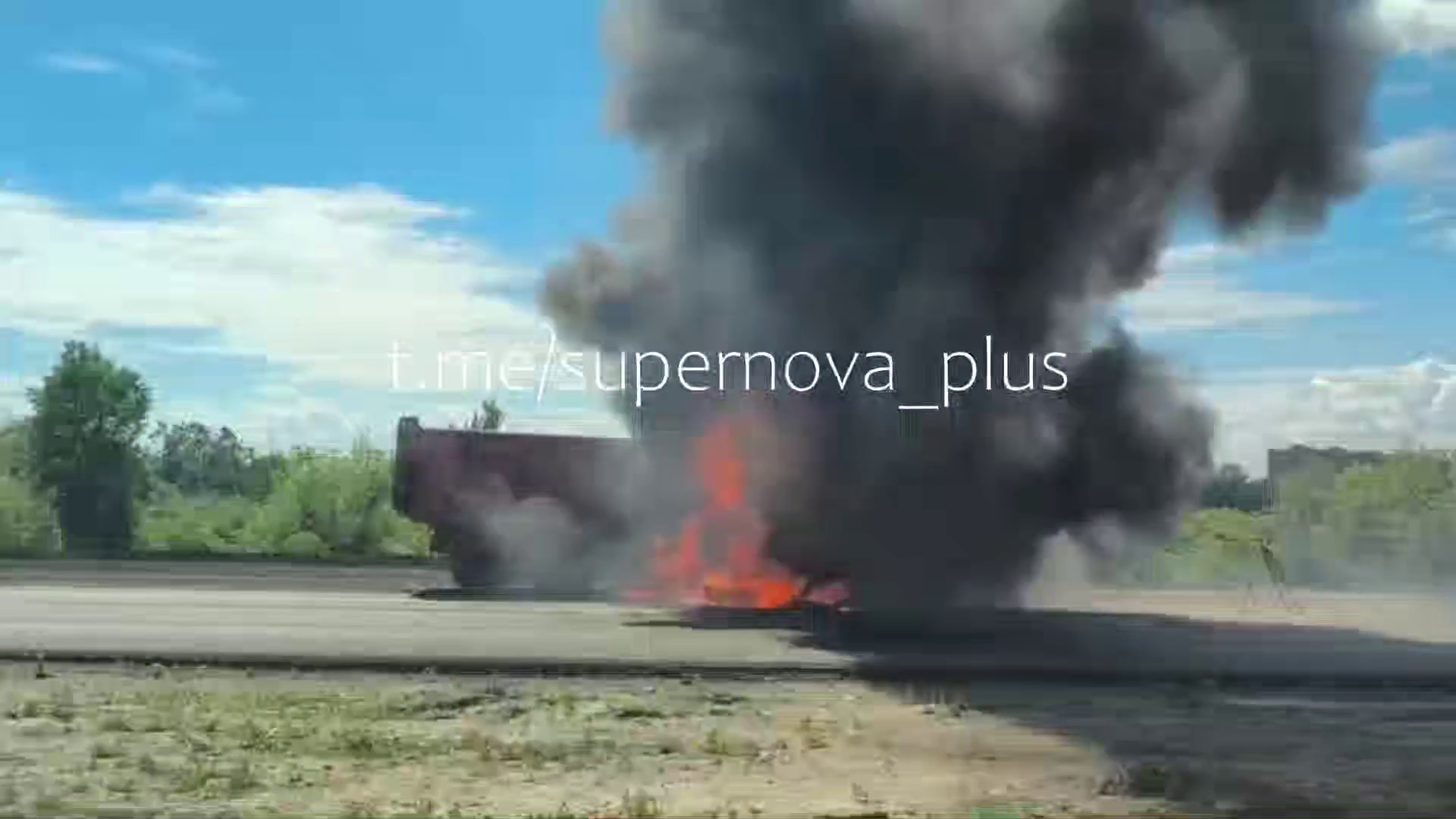
Russian military truck on fire after a Ukrainian drone strike near occupied Horlivka, Donetsk Oblast, 5 June 2026. Screenshot from video: Supernova+
Explore further

Ukraine doubles deep strikes beyond 50 km as “Logistics Lockdown” shifts priority deeper into Russia’s transport nodes and rear logistics chains

ISW observed evidence of at least four Ukrainian strikes along the M-14 between 1 and 20 July. TThey followed weeks of heavy pressure on the same route through May and June. Freight traffic on the route had already fallen by 71% by early June, and Russian authorities closed the road to civilian traffic in May. 

The campaign has forced Russian commanders to divert troops and hardware — drone operators and interceptor drones among them — to keeping the route usable, ISW noted. 

"It is notable that the strike campaign has prompted continued responses from Putin and other Kremlin officials, and that Russian ultranationalists are challenging the official fictitious narrative about the success of Russian efforts to defend against Ukrainian strikes," ISW wrote.

❌