Vue normale

“This is smart war”: Ukraine is reinforcing two Donetsk groupings, as Russia pushes at fortress cities. Azov commanders will lead both

26 août 2026 à 14:59

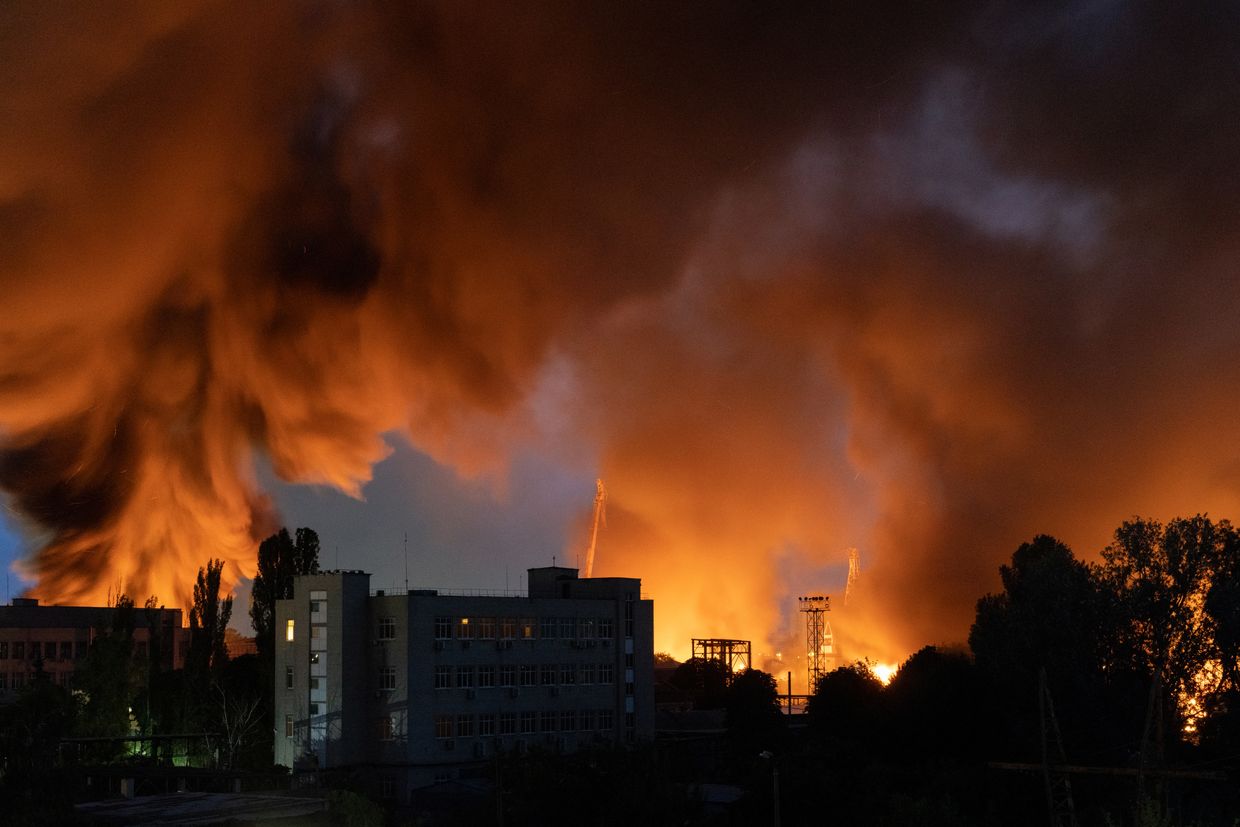
Aftermath of a Russian guided bomb attack on Sloviansk, Donetsk Oblast, Ukraine, 24 July 2026. Photo: Ukraine's State Emergency Service

President of Ukraine Volodymyr Zelenskyy has announced a reinforcement of Ukrainian positions in Donetsk Oblast. This comes amid a Russian offensive against the fortress cities that have defended the region since 2014. Zelenskyy announced the decision after a meeting with Commander-in-Chief Mykhailo Drapatyi.

Russian President Vladimir Putin has ordered his army to seize the entire territory of Donetsk and Luhansk oblasts by the end of this year, Zelenskyy said earlier. This comes amid plans in Russia to mobilize 300,000 Russians in the autumn, UNIAN reports.

After speaking with the military and hearing General Staff reports, Zelenskyy said he, Drapatyi, and Defense Minister Yevhenii Khmara determined the next steps to strengthen Ukrainian positions. Two renewed groupings in Donetsk Oblast will be reinforced.

Two Azov commanders take the groupings

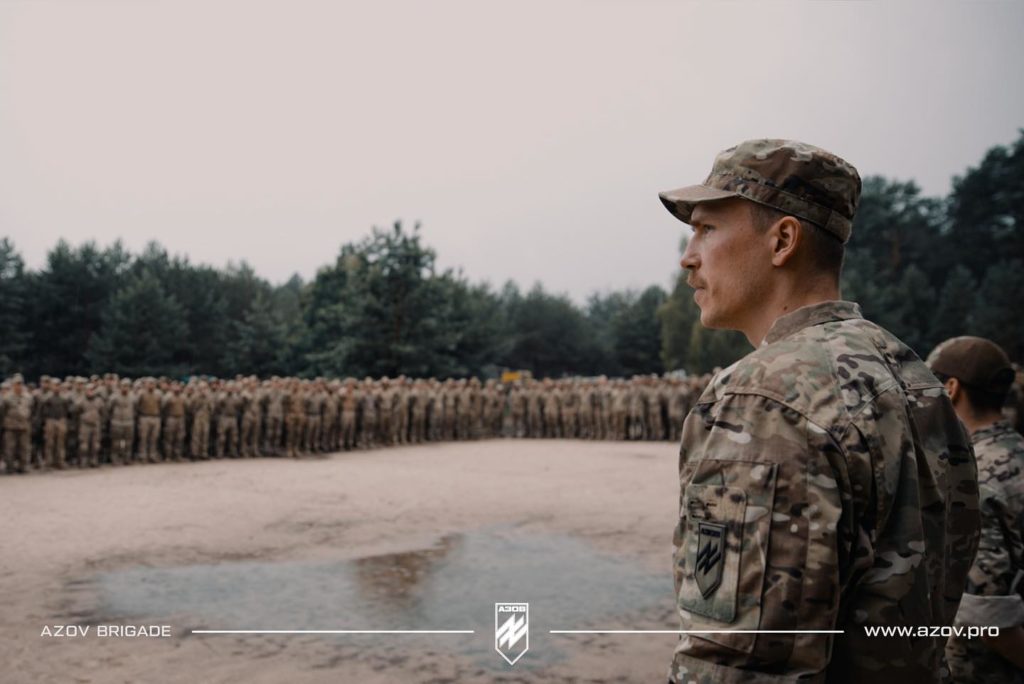
The groupings will be led by Hero of Ukraine Denys Prokopenko and Hero of Ukraine Andrii Biletskyi, Zelenskyy said. Prokopenko commands the 1st Azov Corps of the National Guard and led the defense of Mariupol in 2022. Biletskyi founded the Azov movement in 2014 and now commands the 3rd Army Corps.

Prepare for the worst

Robert “Madiar” Brovdi, commander of Ukraine’s Unmanned Systems Forces, has commented on the decision.

“This is Smart War. Total synchronization with the Unmanned Systems Forces grouping, the shortest possible ‘sensor-to-shooter’ chain,” he said, adding that Russian forces should prepare for the worst possible consequences.

Analysts urged the move before it came

Earlier, two experts had also called for such a decision: Oleksandr Kovalenko of Information Resistance and Yurii Butusov, a drone company commander in the National Guard’s Khartia Corps.

"The eastern flank of the Sloviansk-Kramatorsk agglomeration is taking on an increasingly threatening character," said Kovalenko, suggesting Andrii Biletskyi's 3rd Army Corps, often described as one of the most capable formations in Ukraine's forces, can be used to stop the catastrophe.

Yurii Butusov said that if Ukraine's forces retreat from Sloviansk and Kramatorsk, it could ultimately lead to the loss of the Donbas.

  • ✇Euromaidan Press
  • Russia jails 61-year-old Ukrainian for alleged Azov service, names no specific act
    A Russian court in Rostov-on-Don sentenced 61-year-old Ukrainian Andrii Hulak to five years and four months in a penal colony over alleged service in Ukraine’s Azov brigade, Mediazona reported on 17 August 2026. The court gave no details of when he allegedly served in Azov, what role he supposedly held, or any specific act Hulak was accused of committing. Russia declared Azov a “terrorist organization” in August 2022 and has since prosecuted Ukrainians it claims served
     

Russia jails 61-year-old Ukrainian for alleged Azov service, names no specific act

18 août 2026 à 16:47

Entrance to the Southern District Military Court building in Rostov-on-Don, Russia.

A Russian court in Rostov-on-Don sentenced 61-year-old Ukrainian Andrii Hulak to five years and four months in a penal colony over alleged service in Ukraine’s Azov brigade, Mediazona reported on 17 August 2026. The court gave no details of when he allegedly served in Azov, what role he supposedly held, or any specific act Hulak was accused of committing.

Russia declared Azov a “terrorist organization” in August 2022 and has since prosecuted Ukrainians it claims served in or were connected to the brigade. Mediazona says Russian courts have treated an alleged connection to units such as Azov as enough to bring charges.

Azov is a Ukrainian National Guard brigade that became a symbol of Ukrainian resistance during the defense of Mariupol. The military unit has since become a primary target of Russian propaganda campaigns aimed at defaming Ukraine.

Hulak’s detention date and location remain unknown

The human rights group Memorial identified the charge as Part 2 of Article 205.4 of Russia’s Criminal Code, which covers participation in a “terrorist group.”

Hulak was born in Prymorske, Donetsk Oblast, and lived in Russian-occupied Urzuf near Mariupol before his detention, Mediazona reported. Memorial says Russia added him to its state register of “extremists and terrorists” on 21 October 2025 and lists him as a political prisoner.

His detention date and current location remain unknown.

Russia prosecutes Ukrainians in occupied territories

Hulak’s case is part of a broader pattern of Russian prosecutions of Ukrainians from occupied territories, including civilians accused of supporting Kyiv and service members prosecuted over their military affiliations.

In occupied Crimea, rights monitors documented 520 Ukrainians facing politically motivated criminal charges by April 2026—more than twice the number recorded when the full-scale invasion began. Of those, 351 were in pre-trial detention or serving sentences.

Outside Crimea, a Russian-installed court in occupied Donetsk sentenced a 17-year-old to six and a half years for allegedly sharing military information with Ukraine’s Security Service. In occupied Zaporizhzhia Oblast, a Russian court gave two women from Enerhodar 14-year sentences over alleged donations of $120 and $57 to Ukrainian forces.

  • ✇Euromaidan Press
  • Operation Hell-2: Azov says it burned 4,221 tons of Russian fuel in occupied Donetsk Oblast
    The 1st Corps of Ukraine's National Guard, known as Azov, says it destroyed 67 Russian fuel tanks holding 4,221 tons of fuel in occupied Donetsk Oblast, in an operation it named Hell-2. The unit released video of the strikes on 17 August, saying it had spent a month tracking where Russian forces moved and stored the fuel before hitting it. Fuel is the blood of Russia's war, which is why its forces increasingly hide storage sites and route deliveries through improvised l
     

Operation Hell-2: Azov says it burned 4,221 tons of Russian fuel in occupied Donetsk Oblast

18 août 2026 à 11:27

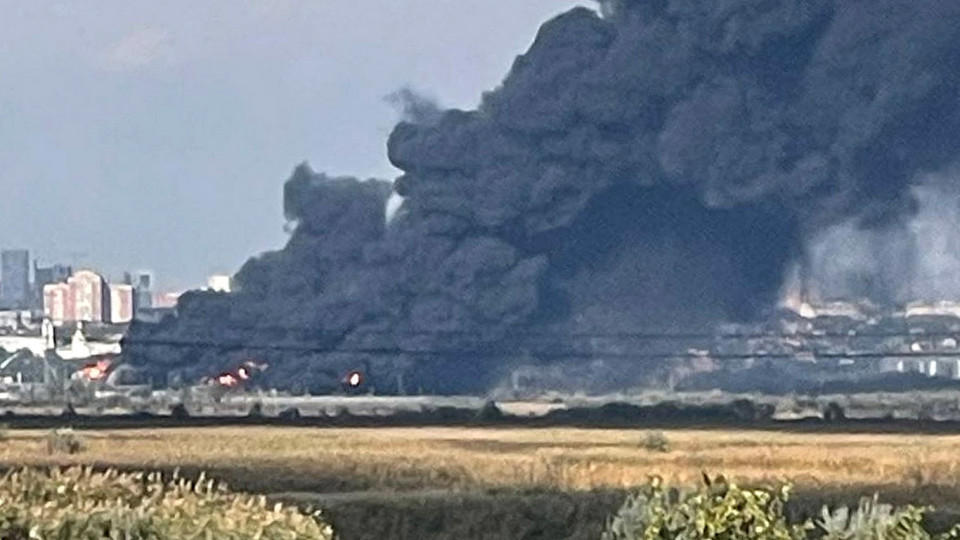
Aftermath of a strike on Russian fuel infrastructure during the Hell-2 operation in occupied Donetsk Oblast. 2026. Screenshot: National Guard of Ukraine

The 1st Corps of Ukraine's National Guard, known as Azov, says it destroyed 67 Russian fuel tanks holding 4,221 tons of fuel in occupied Donetsk Oblast, in an operation it named Hell-2. The unit released video of the strikes on 17 August, saying it had spent a month tracking where Russian forces moved and stored the fuel before hitting it.

Fuel is the blood of Russia's war, which is why its forces increasingly hide storage sites and route deliveries through improvised logistics hubs. Strikes on those hubs strip Russian units of what they need to move, supply, and fight. There have already been cases of Russian forces concealing fuel in grain trucks in occupied territories.

Azov warned the Russian forces before the strike

Azov says it flagged the fuel sites a month before hitting them, and struck when the Russians kept using them anyway.

“A month ago, we warned the occupier: ‘Azov sees your movements and will strike at the right moment.’ But some units of the Russian Armed Forces continued to store fuel in occupied Donetsk Oblast,” Azov said.

1 корпус НГУ «Азов» карає окупантів за спроби перевезення і зберігання військових вантажів. Задіяні у зберіганні та постачанні палива об’єкти росіян залишаються лише на картах, у реальності на їхньому місці – випалена земля. pic.twitter.com/FGgdn4J34k

— НГУ (@ng_ukraine) August 17, 2026

Azov emphasizes that it does not attack civilian gas stations or civilians. The operation targeted facilities used to supply Russian occupation forces. At the same time, according to Azov fighters, Russian military infrastructure remains a legitimate target.

The Russians didn’t get the message the first time

Hell-2 is likely a follow-up to the Hell operation, during which the first series of strikes, Azov also targeted the fuel logistics of Russian forces in occupied Donetsk Oblast.

On 12 July, Azov reported striking a secret Russian fuel base in Novoamvrosiivka. Drone operators from the 1st Azov Corps of the National Guard conducted reconnaissance and used Hornet drones to strike the facility. The strikes damaged fuel tanks and the base’s infrastructure and blocked the railway track.

According to the report, the Russians used the facility as a logistics hub to supply their occupation forces. After the strike, they were forced to abandon the base and move their logistics operations from the occupied territory into Russia.

  • ✇Euromaidan Press
  • Ukraine puts controversial Skelia regiment under Azov command as Drapatyi pushes military reforms
    Ukraine’s 425th Separate Assault Regiment Skelia is moving under the operational command of the 1st National Guard Corps Azov, as the Ukrainian military works to consolidate scattered Skelia units under a single command and eventually deploy them on the same section of the front. The move comes amid scrutiny of Skelia following an investigation into dozens of non-combat deaths among its recruits and ongoing criminal proceedings over alleged abuse. It also forms part of
     

Ukraine puts controversial Skelia regiment under Azov command as Drapatyi pushes military reforms

13 août 2026 à 16:10

Soldiers of Ukraine’s 425th Separate Assault Regiment Skelia. Photo: Skelia

Ukraine’s 425th Separate Assault Regiment Skelia is moving under the operational command of the 1st National Guard Corps Azov, as the Ukrainian military works to consolidate scattered Skelia units under a single command and eventually deploy them on the same section of the front.

The move comes amid scrutiny of Skelia following an investigation into dozens of non-combat deaths among its recruits and ongoing criminal proceedings over alleged abuse. It also forms part of broader reforms being carried out by newly appointed Commander-in-Chief Mykhailo Drapatyi, who made the decision to place Skelia under Azov’s operational command, according to the regiment.

Oleksii Bratushchak, head of communications for the Skelia regiment, announced the change on 13 August on the YouTube channel “Butusov Plus”. He stressed that Skelia is not becoming part of Azov’s organizational structure. The arrangement concerns operational command, meaning Azov will direct the regiment’s combat employment.

Skelia’s scattered units are being brought together

Bratushchak said Skelia is currently carrying out combat orders under Azov Corps command, although not all of its units have yet been transferred.

The regiment’s units have been spread across several areas and operating under different higher commands. The plan is to gradually bring them together so they can operate on the same part of the front.

Part of Skelia will move to the Dobropillia direction, where Azov Corps is deployed. Other elements remain on their current assignments for now, including the Pokrovsk, Kharkiv, and Kostiantynivka directions.

Bratushchak said Skelia’s command has already met with Azov and established cooperation. He described the decision as one made by Drapatyi and said the regiment views it positively.

The move follows personnel changes that began earlier in August. On 7 August, Ukrainska Pravda reported that Skelia had begun transferring soldiers to around 10 other units, citing sources in the regiment and Ukraine’s Defense Forces. 

The regiment confirmed that personnel were being reassigned on orders from higher command, while stressing that its units remained at their positions and continued carrying out combat tasks. The number of troops being transferred was not disclosed.

The move is part of Drapatyi’s ongoing reforms of Ukraine’s armed forces following his appointment as commander-in-chief. In July, the General Staff launched an audit of how personnel are distributed among brigades, regiments, and corps, reflecting Drapatyi’s focus on addressing imbalances in how Ukraine’s forces are manned.

A Ukrainian soldier. Source: The 8th Special Purpose Regiment of the Special Operations Forces named after Prince Iziaslav Mstyslavych
Explore further

Ukraine’s army has some brigades starved of soldiers and others overstaffed. New commander is now auditing why

Skelia remains a separate regiment under Azov’s operational command

The change does not dissolve Skelia or turn it into an Azov unit. The regiment remains a separate military formation, while Azov Corps takes operational control over its forces for combat tasks.

Ukraine has been reorganizing its ground forces around corps-level commands, intended to give commanders greater control over multiple brigades and regiments operating in the same area.

Azov itself is now the core of Ukraine’s 1st National Guard Corps, commanded by Brigadier General Denys Prokopenko, known by his call sign “Redis.” The corps has been operating in the Donetsk region as part of Ukraine’s effort to consolidate forces and command structures on the battlefield.

The backdrop: deaths and abuse allegations inside Skelia

The reorganization comes less than two months after a major investigation into conditions inside Skelia’s training system triggered criminal and institutional investigations.

Babel’s investigation published in June documented 25 non-combat deaths among Skelia recruits between late 2025 and spring 2026, including cases where forensic findings raised questions about reported causes of death. Ukraine’s State Bureau of Investigations opened a criminal case, and Skelia’s commander was suspended pending the investigation.

Skelia confirmed that 25 of the 26 deaths cited in the investigation had occurred but disputed some of the reported circumstances. The regiment has denied that abuse was systemic.

Training in the Skelia regiment.
Explore further

Ukraine opened a criminal case over 25 non-combat deaths at its largest assault regiment. Serving soldier’s response was to call reporter “media killer”

The investigation has since produced further legal action. Two Skelia servicemen were placed in pretrial detention in July over allegations of illegally detaining and beating fellow soldiers. 

On 11 August, Ukrainian lawmaker Oleksandr Fediyenko said, citing National Police data, that 103 criminal proceedings had been opened in 2026 over non-combat deaths in the regiment, with three people charged and one case sent to court.

The new operational arrangement does not itself indicate a change in the status of those investigations. Skelia’s communications office has said personnel transfers and organizational decisions are matters for higher military command and part of the management of Ukraine’s armed forces during wartime.

UN analysis finds Russia responsible for 2022 Olenivka prison explosion killing Ukrainian POWs, ombudsman says

30 juin 2025 à 23:24
UN analysis finds Russia responsible for 2022 Olenivka prison explosion killing Ukrainian POWs, ombudsman says

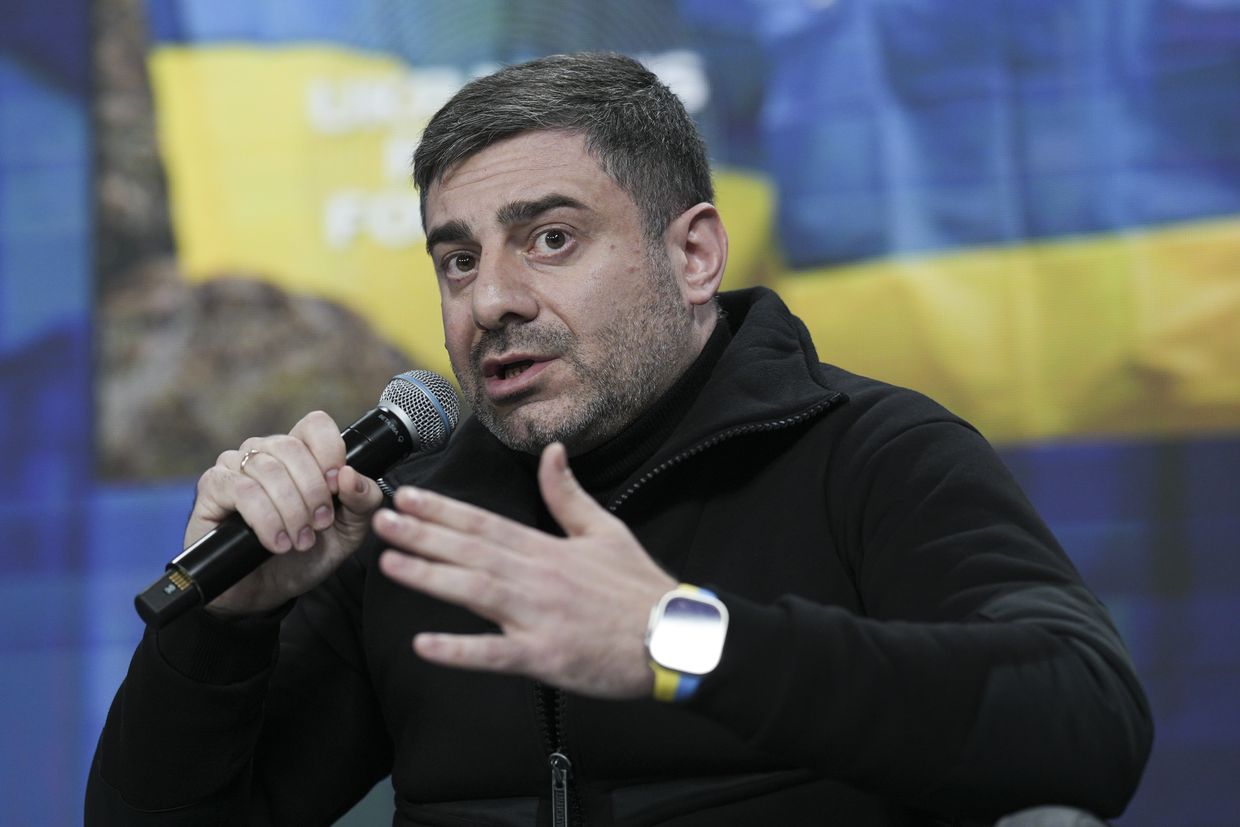
An internal U.N. analysis has found Russia responsible for a 2022 explosion at Olenivka prison, which killed over 50 Ukrainian prisoners of war (POWs), Ombudsman Dmytro Lubinets said on June 30.

"(A)n internal analysis of the U.N. showed that it was the Russian Federation that planned and carried out the attack," he said in a post to social media.

Lubinets referred to a report by the Center for Human Rights in Armed Conflict, whose website features only the investigation into the Olenivka explosion.

The investigation, published on June 26, reads that an "internal U.N. analysis concluded that it was the Russian Federation who planned and executed the attack," though the U.N. did not publicly acknowledge Russia's responsibility.

Russia has denied being responsible for the attack but prevented efforts by the international community to independently investigate the attack and contaminated evidence at the site, according to a report published by the U.N.

Kyiv has said that days before the July 2022 attack, Russia deliberately put Ukrainian members of the Azov Regiment, who were awaiting a prisoner exchange, in a separate part of the Olenivka prison building that was later destroyed in the explosion.

"The report identifies the weapons and ammunition that the Russian Armed Forces used to kill Ukrainian prisoners of war, and also examines in detail the planning, organization, and execution of the murder," Lubinets said.

The ombudsman noted that the U.N. fact-finding mission on Olenivka was disbanded due to a lack of security guarantees, adding that the mission has previously refused to review evidence provided by Ukraine.

Russia has repeatedly violated international conventions protecting the rights of POWs as it continues to carry out its war against Ukraine.

A Russian military court has convicted 184 Ukrainian POWs captured in Kursk Oblast of acts of terrorism, Mediazona reported on June 25.

The POWs captured in Kursk were charged with carrying out a grave terrorist act by a group of individuals, as outlined by the Russian Criminal Code.

Junior Lieutenant Yevhen Hoch was convicted of allegedly carrying out an act of terrorism by taking part in Ukraine's Kursk Oblast incursion.

Smashing previous monthly record, Russia launches 5,337 kamikaze drones against Ukraine during June
Russia launched a record 5,337 Shahed-type drones against Ukraine in June, according to data from the Ukrainian Air Force and Dragon Capital, smashing the previous record of 4,198 set in March. Russia’s bombardments, a fact of life after three years of full-scale war, have intensified dramatically in May
UN analysis finds Russia responsible for 2022 Olenivka prison explosion killing Ukrainian POWs, ombudsman saysThe Kyiv IndependentYuliia Taradiuk
UN analysis finds Russia responsible for 2022 Olenivka prison explosion killing Ukrainian POWs, ombudsman says
❌