
 Connexion
Dagestan, Stavropol Krai, Adygea: Ukraine’s drones worked straight down the delivery map of Russia’s No. 2 online store
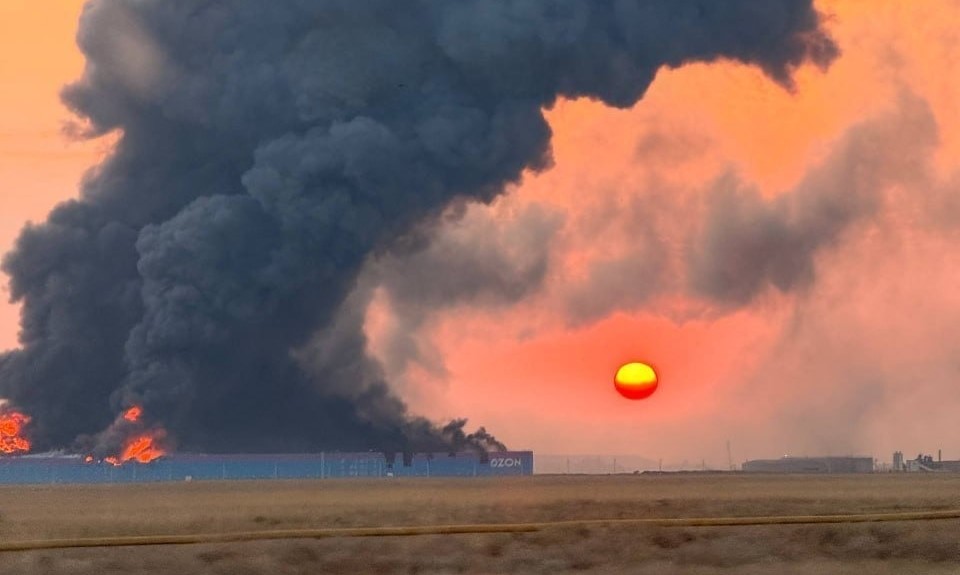
Ukrainian drones struck three warehouses of the Russian online retailer Ozon across the country's south overnight on 24 August, monitoring Telegram channels reported. Ozon is Russia's second-largest online store, an Amazon-style marketplace, shipping customer orders out of huge regional depots. Fires broke out, the company closed one hub, and its shares fell in Monday trading.
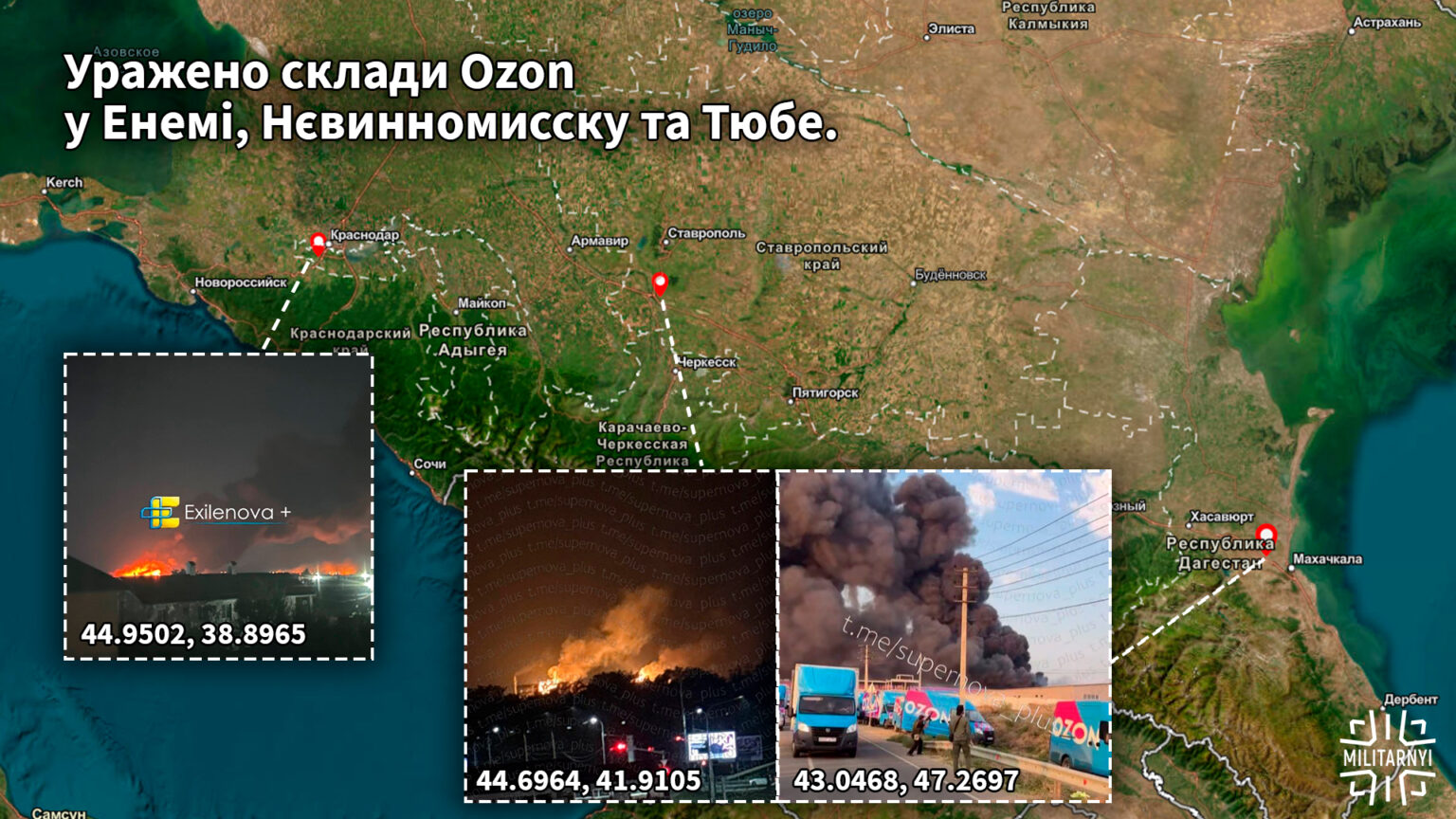
Three warehouses, 314,714 square meters
The three struck sites cover 314,714 m² in three Russian regions, Militarnyi calculated. The largest, about 130,000 m², stands in Tyube in Dagestan, 800 to 900 km from Ukraine's border. Russian news Telegram channel Astra called it the company's biggest warehouse in the North Caucasus. Residents said the fire was visible up to 10 kilometers away.
Dagestan Ozon, moment of attack pic.twitter.com/z52qNTlGV9
— Exilenova+ (@Exilenova_plus) August 24, 2026
Nevinnomyssk in Stavropol Krai holds the second site, 93,514 m². The third, 91,200 m², sits near Enem in Adygea, on the boundary with Krasnodar Krai. Drones have now hit five Ozon warehouses, Militarnyi noted.
The company's account differs
Ozon said fires started at its Dagestan and Krasnodar warehouses and that people were injured in Dagestan. In Nevinnomyssk it evacuated staff, closed the site, and stated that the facilities and the goods inside were "in order."
Six of the retailer's complexes have come under drone attack in three days, according to the company. The company also said the Adygeysk and Nevinnomyssk warehouses escaped damage. Monitoring data places a struck 93,514 m² warehouse in Nevinnomyssk.
Russian officials blame falling debris
Krasnodar Krai Governor Veniamin Kondratyev claimed drone debris allegedly killed two children at a private children's center in Krasnodar, with the injured count later put at 12.

One Russian warehouse smolders near Kazakhstan while a bigger fire rages near St. Petersburg
Head of Adygea Murat Kumpilov confirmed a fire at the Ozon center in Takhtamukaysky district. Acting head of Dagestan Fyodor Shchukin claimed falling drone fragments started the Kumtorkalinsky district fire and hurt nobody, which the company contradicts. Stavropol Krai Governor Vladimir Vladimirov claimed air defenses were repelling a raid on Nevinnomyssk's industrial zone.
Rostov Oblast head Yuri Slyusar claimed 120 drones were downed over the oblast. Russia's Defense Ministry claimed 351 Ukrainian drones destroyed across 10 Russian regions and occupied Crimea, without saying how many got through.
Ozon shares dropped 28% on Monday morning, state agency TASS reported, while Reuters put the fall at almost 13%.
The third night in a row
Ukraine has destroyed or damaged 29 marketplace warehouses since 18 July, RFE/RL said, mapping them with satellite imagery. Drones struck the Orenburg complex on 23 August, where the company pulled more than 300 workers out. On 22 August they hit the Chapayevsk warehouse in Samara Oblast, the first strike on the company, where people were injured.
Custom Code
Before Ozon, Ukrainian drones spent weeks on Wildberries, Russia's largest marketplace, wrecking about 15.4% of its storage space in July alone.
