Vue normale

  • ✇Euromaidan Press
  • From Warsaw to New York, Ukrainians will form human chains on Independence Day
    Ukrainians and supporters will form human chains in cities abroad at 19:00 (7 p.m.) on 24 August 2026 to mark Independence Day, Ukraine’s Mission to the European Union announced on 20 August. Russia’s invasion has driven more than 5.6 million Ukrainians to seek refugee or other international protection abroad, according to the UN Refugee Agency. The human chains will help displaced Ukrainians and established diaspora communities show that Ukraine still needs their host
     

From Warsaw to New York, Ukrainians will form human chains on Independence Day

22 août 2026 à 12:47

People line Prague’s Charles Bridge holding a long Ukrainian flag, with Prague Castle visible in the background.

Ukrainians and supporters will form human chains in cities abroad at 19:00 (7 p.m.) on 24 August 2026 to mark Independence Day, Ukraine’s Mission to the European Union announced on 20 August.

Russia’s invasion has driven more than 5.6 million Ukrainians to seek refugee or other international protection abroad, according to the UN Refugee Agency. The human chains will help displaced Ukrainians and established diaspora communities show that Ukraine still needs their host countries’ support, the organizers say. Participants follow in the footsteps of Ukrainians in the Soviet era who formed human chains to demonstrate their desire for independence.

The 2026 Chain of Unity campaign website listed 55,600 participants on 22 August. Ukrainians and their supporters will gather on central streets and squares in Warsaw, London, Berlin, Rome, Toronto, New York, and other cities, where they will hold hands in local chains.

An interactive map allows people to find, join, or organize a local chain. Ukraine’s Cultural and Foreign Ministries support the action, which is being held only outside the country.

Ukrainians abroad will use Independence Day in other ways to draw attention to Ukraine’s wartime needs. Ukrainian community groups have organized rallies in 11 cities across 10 countries, calling on European governments to use Russian central bank reserves frozen under sanctions to fund Ukraine.

Why human chains still matter to Ukraine

Human chains became a powerful symbol of Ukrainian unity as Soviet rule weakened and the independence movement moved into the open.

On 21 January 1990, hundreds of thousands of Ukrainians formed the nearly 700-kilometer “Ukrainian Wave” from Ivano-Frankivsk through Lviv to Kyiv. It became late-Soviet Ukraine’s largest public demonstration and helped build momentum for independence the following year.

The pro-independence People’s Movement of Ukraine (Rukh) spent five months organizing the chain. When gaps appeared, organizers bused volunteers from Lviv and Ivano-Frankivsk to fill them, while participants supplied their own fuel.

Human chain formed during the Soviet-era independence movement
Representatives of Donetsk and Kharkiv at the Human Chain in Kyiv. The sign reads, "Kharkiv and Donetsk are Ukrainian from time immemorial." Source: Radio Svoboda

The 1990 chain marked the anniversary of the 1919 union of the Ukrainian People’s Republic and Western Ukrainian People’s Republic, two Ukrainian states that emerged after World War I. By joining hands across regions while their country remained part of the Soviet Union, participants showed broad support for restoring Ukraine's sovereignty and unity.

After 1991, Ukrainians kept the tradition on Unity Day, the 22 January holiday marking that union. They often joined hands across Dnipro bridges to symbolize east-west unity. This year’s action takes the gesture abroad: refugees, established Ukrainian communities, and supporters are using it to show they remain part of one nation.

  • ✇Euromaidan Press
  • Man and woman attacked two children for speaking Ukrainian, Gdańsk consulate says
    Two adults allegedly attacked a 14-year-old Ukrainian girl and her 12-year-old brother after hearing them speak Ukrainian, Ukraine’s Consulate General in Gdańsk said. The attack occurred on 14 August 2026 in a park near a railway station in Bydgoszcz, north-central Poland. The case comes amid a documented rise in anti-Ukrainian violence in Poland, with recent attacks reported throughout the country. Recent incidents include attacks on Ukrainians in Poznań and Wrocław, a
     

Man and woman attacked two children for speaking Ukrainian, Gdańsk consulate says

17 août 2026 à 05:24

Demonstrators carrying Polish flags march behind a banner in Polish and Ukrainian colors reading “UKRO POLIN STOP!!” with a crossed-out Star of David.

Two adults allegedly attacked a 14-year-old Ukrainian girl and her 12-year-old brother after hearing them speak Ukrainian, Ukraine’s Consulate General in Gdańsk said. The attack occurred on 14 August 2026 in a park near a railway station in Bydgoszcz, north-central Poland.

The case comes amid a documented rise in anti-Ukrainian violence in Poland, with recent attacks reported throughout the country. Recent incidents include attacks on Ukrainians in Poznań and Wrocław, as well as on people mistaken for Ukrainians or defending them. Police data obtained by the Polish newspaper Rzeczpospolita showed 180 hate-crime reports involving Ukrainian citizens in the first half of 2026, over 30% more than a year earlier.

The pair, a man and woman with a small dog, shouted obscenities and made nationality-based threats, the consulate said.

They twisted a child’s arm, broke a toy drone, and threw fragments at the boy,” the Ukrainian consulate said, adding that the fragments scratched him.

The consulate said a complaint had been filed, police were searching for the pair, and the children were physically safe but severely stressed. It urged witnesses to contact the police. Polish police had not commented by the time of publication.

Other attacks on Ukrainians in Poland

The attack on the children came amid a string of assaults on Ukrainians across Polish cities.

Shortly after midnight on 13 August 2026, an intoxicated woman insulted two Ukrainian men, spat at one, and struck one of them outside a restaurant in Poznań, according to Polish media. Police detained her and another woman the following day.

In July, three men allegedly beat a young Ukrainian couple in Wrocław after first asking whether they were Ukrainian. Police detained two suspects and continued searching for the third.

That month, a man in Łódź attacked a passerby he supposedly mistook for a Ukrainian, breaking his nose and jaw. Three men also reportedly beat a 60-year-old Pole who intervened when they harassed a Ukrainian teenager on a Poznań tram.

The deepening Polish-Ukrainian rift and decline in relations

The attacks coincide with a broader decline in Polish-Ukrainian relations. Polish support for accepting Ukrainian refugees fell from 94% in March 2022 to 48% by early 2026, while politicians increasingly use Ukraine as a wedge issue.

Much of the fallout stems from disputes over the Volhynia massacres—the 1943–44 mass killings of Polish civilians by the Ukrainian Insurgent Army (UPA) and Polish retaliatory violence against Ukrainian civilians.

The dispute escalated after President Volodymyr Zelenskyy signed a 26 May decree granting a Ukrainian special forces unit the honorary title “Heroes of the UPA.” Polish President Karol Nawrocki responded on 19 June by stripping Zelenskyy of the Order of the White Eagle, Poland's highest state honor.

“Get the f*ck back to Ukraine”: Two intoxicated Polish women attack Ukrainian men amid rise in anti-Ukrainian violence in Poland

16 août 2026 à 04:07

A woman with her hands behind her back walks between two masked police officers down a white corridor.

Polish police detained two women in connection with an attack on Ukrainian men outside a Poznań restaurant, Interior Minister Marcin Kierwiński announced. The incident comes as Polish-Ukrainian relations grow more strained and public attitudes toward Ukrainians worsen. The incident occurred shortly after midnight on 13 August on Półwiejska Street.

Police data obtained by Rzeczpospolita show 180 hate-crime reports involving Ukrainian citizens in the first half of 2026, over 30% more than a year earlier. Police have not said whether they are treating the Poznań case as a hate crime, although the recording includes nationality-based abuse.

One woman insulted two Ukrainian men, spat at one, knocked over a restaurant parasol, and struck one of the men, the Polish radio station RMF FM reported.

Półwiejska core pic.twitter.com/n2KGfyDRA7

— poznan_moment (@poznan_moment) August 13, 2026

Regional police spokesperson Iwona Liszczyńska said officers responded to reports of two apparently intoxicated women. However, the women had left before officers arrived. Police contacted the restaurant manager, who filed a formal complaint on the morning of 14 August. Officers had already begun identifying the women before the complaint was filed.

Kierwiński first reported that police had detained one woman and identified the other. He later announced the second woman’s detention and declared “zero tolerance for aggression and hatred.”

Previous attacks on Ukrainians in Poland

Kierwiński’s warning followed a series of attacks against Ukrainians in Poland this year. In July, three men allegedly beat a Ukrainian couple in Wrocław after asking whether the woman was Ukrainian. Police detained two suspects and treated the assault as a nationality-motivated hate crime.

In May, police detained five suspects aged 15 to 18 after an attack on three Ukrainian teenagers in Warsaw. One of them, 16-year-old Artem, suffered a fractured skull. 

Earlier in July, two men linked to Poland’s far right confronted a Ukrainian woman at her legal-aid office in Poznań. They demanded entry and asked whether she supported Stepan Bandera, a WWII-era Ukrainian nationalist disliked by many Poles.

Historical dispute deepens political rift

The Poznań incident comes as anti-Ukrainian themes have gained ground in Polish far-right politics, while Warsaw and Kyiv remain divided over the WWII-era Ukrainian Insurgent Army. Many Ukrainians honor the UPA for resisting Soviet rule. Poland holds it responsible for massacring Polish civilians. 

Poland and Ukraine’s dispute over the Volhynia massacres, exhumations, and UPA symbols has prompted protests and a diplomatic clash over state honors. Police have not linked the Poznań attack to that dispute. 

  • ✇The Kyiv Independent
  • EU names special envoy for Ukrainian refugees, POLITICO reports
    Ylva Johansson, former European Commissioner for Home Affairs, will serve as the European Union's new special envoy for Ukrainians in the bloc, POLITICO reported on June 12.According to anonymous officials that spoke to POLITICO, Johansson will fill the newly created post, overseeing the Commission's long-term strategy for Ukrainian refugees currently residing in the European Union.Johansson, a former Swedish minister and European Commission official, previously visited Ukraine on several occasi
     

EU names special envoy for Ukrainian refugees, POLITICO reports

12 juin 2025 à 18:45
EU names special envoy for Ukrainian refugees, POLITICO reports

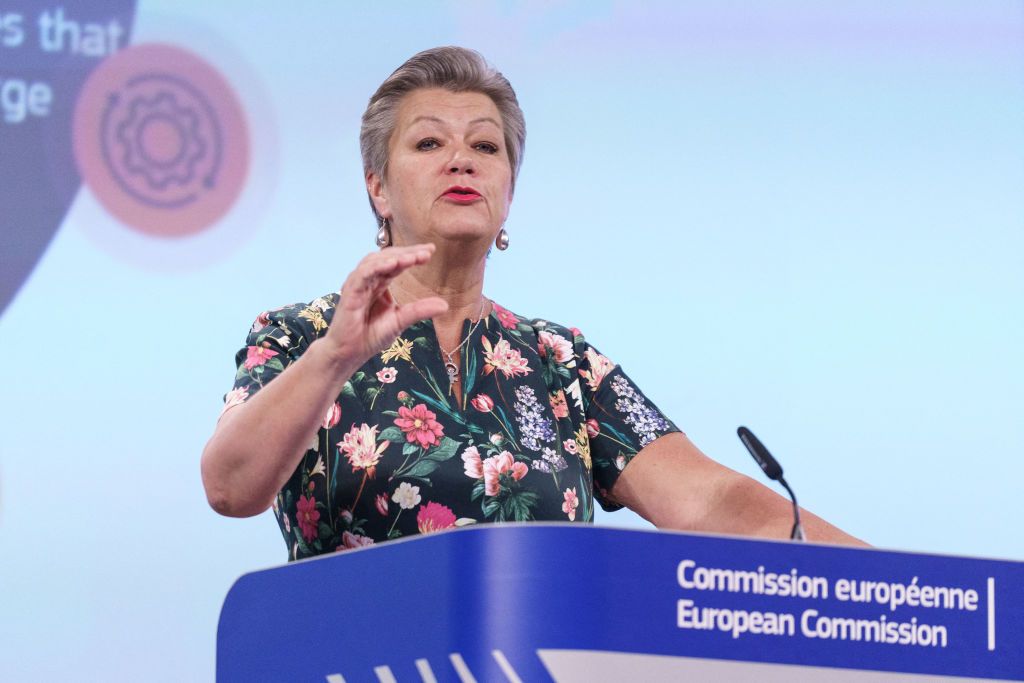
Ylva Johansson, former European Commissioner for Home Affairs, will serve as the European Union's new special envoy for Ukrainians in the bloc, POLITICO reported on June 12.

According to anonymous officials that spoke to POLITICO, Johansson will fill the newly created post, overseeing the Commission's long-term strategy for Ukrainian refugees currently residing in the European Union.

Johansson, a former Swedish minister and European Commission official, previously visited Ukraine on several occasions, including a refugee camp on the border with Romania. She received the Ukrainian order of merit in September 2024.

As special envoy, Johansson will be responsible for EU initiatives focused on helping Ukrainian refugees transition into permanent legal statuses or return home.

As part of these initiatives, the EU will launch "unity hubs" – information centers jointly managed with the Ukrainian government. The hubs will support Ukrainian refugees to integrate with EU host countries or repatriate to Ukraine.

Germany, which has has taken in more than 1 million Ukrainian refugees since the start of the full-scale invasion, recently committed to establishing unity hubs in Berlin. The unity hubs in Berlin will provide Ukrainians with access to educational and career opportunities both in Ukraine and Germany.

The European Commission also recently extended temporary protection Ukrainian refugees who fled to the EU following Russia's invasion of Ukraine.

According to Eurostat, 4.26 million Ukrainians currently hold temporary protection status in the EU as of April 2025.

Germany to supply new Iris-T air defense systems to Ukraine, rules out Taurus missiles
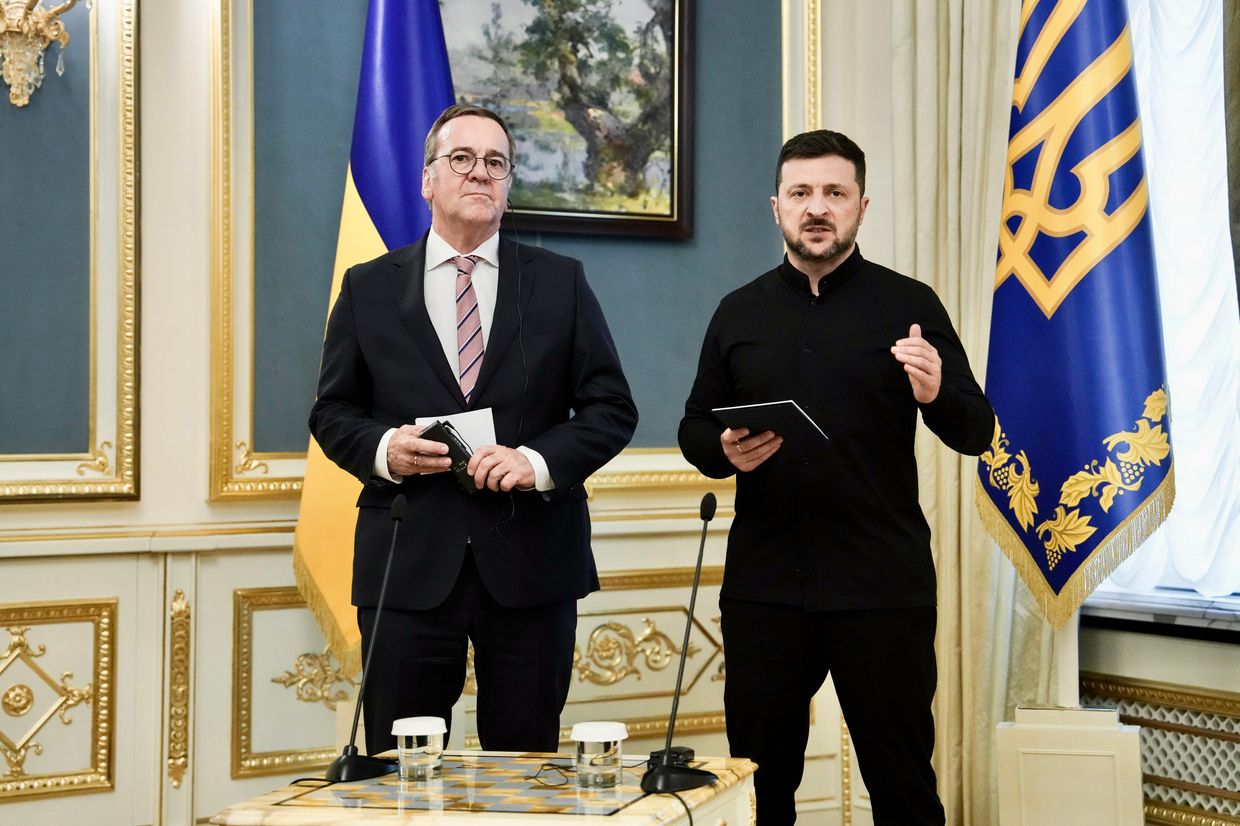
Germany will deliver new IRIS-T air defense systems to Ukraine under a three-year supply plan, President Volodymyr Zelensky said during a joint press conference with German Defense Minister Boris Pistorius, who said Berlin has no plans to provide Taurus long-range missiles.
EU names special envoy for Ukrainian refugees, POLITICO reportsThe Kyiv IndependentTim Zadorozhnyy
EU names special envoy for Ukrainian refugees, POLITICO reports
❌