Vue normale

Reçu — 5 septembre 2026 Euromaidan Press

“If you’re gonna f*ck, f*ck a queen, if you’re gonna steal, steal a million”: Ukraine’s anti-corruption bureau says senior official ran criminal ring inside Prosecutor General’s Office
5 septembre 2026 à 13:32

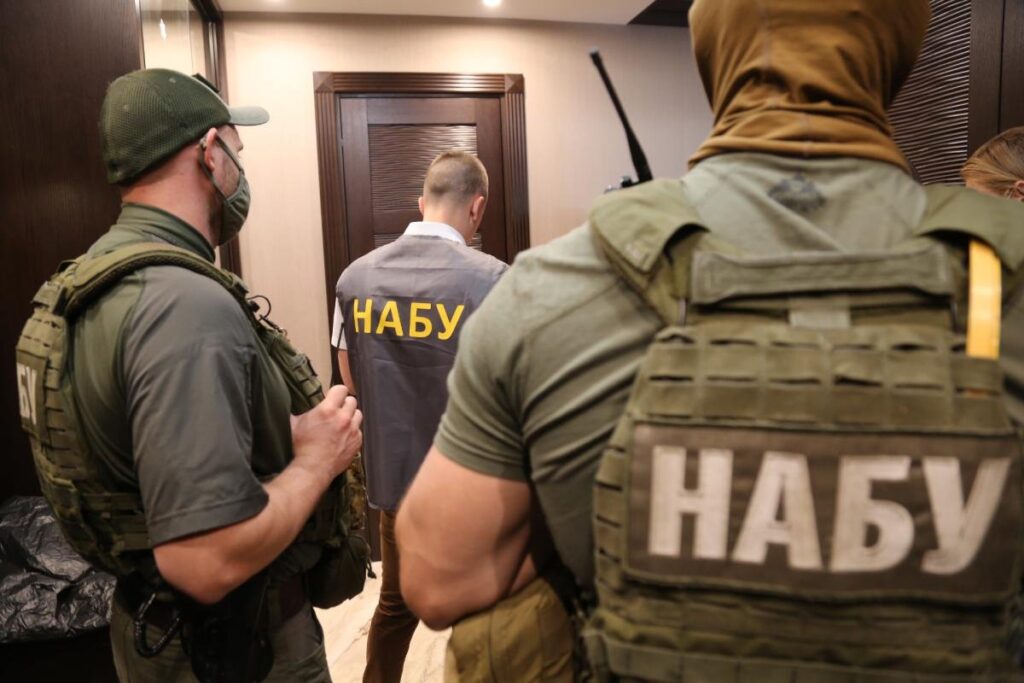
wiretaps mocking codename seized playbook—ukraine's anti-graft bureau reaches president's office again · post national anti-corruption (nabu) officers during search forest gump operation 19 2026 nabu ukraine news ukrainian reports

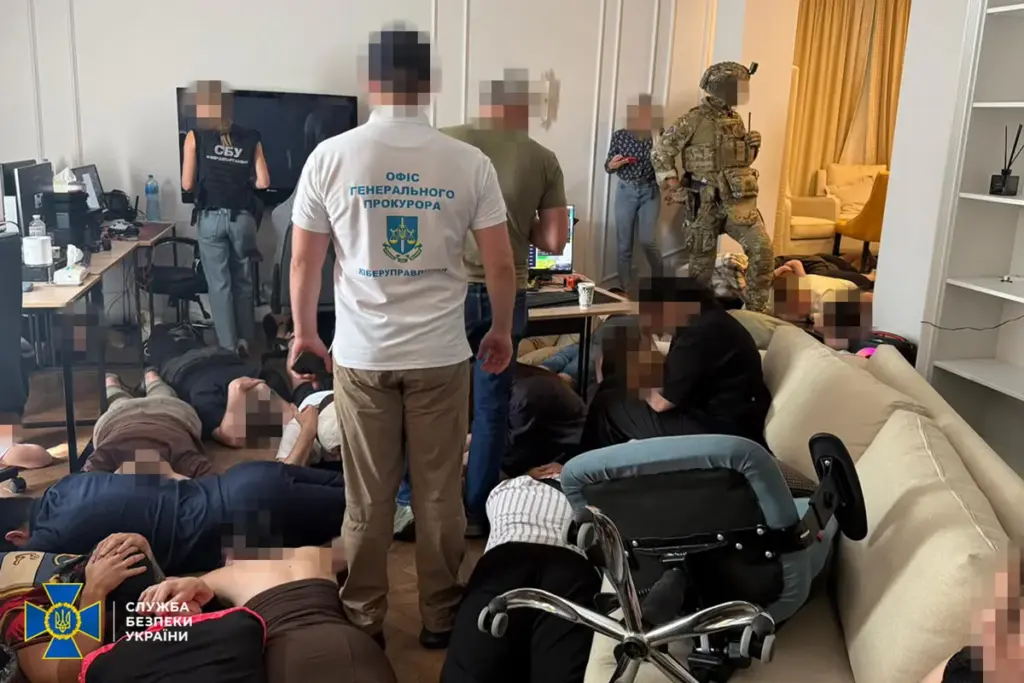
Ukraine's anti-corruption investigators say a senior official in the Office of the Prosecutor General set up and ran a criminal organization from within the office. The National Anti-Corruption Bureau (NABU) and the Specialized Anti-Corruption Prosecutor's Office (SAPO) said in a statement on 5 September that the group took bribes to allow fraudulent call centers to operate and laundered millions.

The case cuts into Ukraine's own prosecution service, the body meant to bring such crimes to court. NABU, widely regarded as the country's most independent anti-corruption institution, and SAPO opened the operation this week, at a time when fraudulent call centers have become a major problem for organized crime. Meanwhile, authorities are pursuing hundreds of suspected operations at home and abroad.

More than $450,000 was spent on real estate

According to the investigation, a head of a structural unit at the Office of the Prosecutor General created and led the organization in mid-2025, recruiting both serving prosecutors and close associates. Members allegedly took systematic bribes in exchange for not obstructing the so-called call centers, which defraud Ukrainian citizens and foreigners on a mass scale. Such operations run phone and online scams that strip money from victims at home and abroad.

The proceeds were laundered, investigators say. More than $450,000 was spent on real estate, jewelry, and other valuables, while roughly $225,000 was placed in associates' bank accounts and passed off as business income. The alleged organizer also re-registered previously acquired assets to third parties to hide his ownership, including property in a popular apartment complex near the Carpathian Mountains worth at least $270,000.

According to NABU, the criminal group included:

  • "Chancellor", its leader
  • "Muza", a close friend of the Chancellor
  • "Comrade", Chancellor’s driver
  • "Flash", Chancellor’s assistant

The investigation shows that the "Chancellor" has managed to consolidate all the levers of influence over fraudulent call centers in his hands. The individual decided which call centers to “protect” and which ones to shut down. Bribes were also allegedly paid to secure appointments to senior positions in the prosecution service.

“I can’t just go to work for the sake of going to work. I need to live there, not just exist. If you’re going to do something, then go all in. But I prefer it this way: if you’re gonna f*ck, f*ck a queen, if you’re gonna steal, steal a million,” Chancellor says in an audio recording released by NABU.

Five charged, more expected

Five people have been exposed so far, suspected of creating, leading, or participating in a criminal organization and of laundering money. The investigation is continuing, and NABU says it is identifying other possible participants.

The Office of the Prosecutor General said it would assist the anti-corruption agencies and suspended the employee in question for the duration of the pre-trial investigation.

"I have a Porsche, Loro Piana, Mimi, flowers"

At the same time, the Prosecutor General’s Office is calling for an assessment of the legality of NABU’s nighttime searches. It says the searches of the offices of senior officials and the investigators’ access to materials from other criminal proceedings require a legal assessment.

Meanwhile, the recordings show that after NABU began searching the people involved in the scheme, they panicked and covered up the most obvious traces of their alleged wrongdoing, including deleting photos of their luxurious lifestyles from social media.

“I need to delete everything… I have a Porsche, Loro Piana, Mimi, flowers, watches, bracelets, bags here. I need to delete everything,” an accomplice in the scheme, known by the pseudonym "Muza", tells "Chancellor" in the recordings.

Earlier, Ukrainska Pravda reported, citing its own sources, that on 4 September NABU detained Serhii Kropyva, deputy head of the Department of International Legal Cooperation at the Prosecutor General’s Office.

  • ✇Euromaidan Press
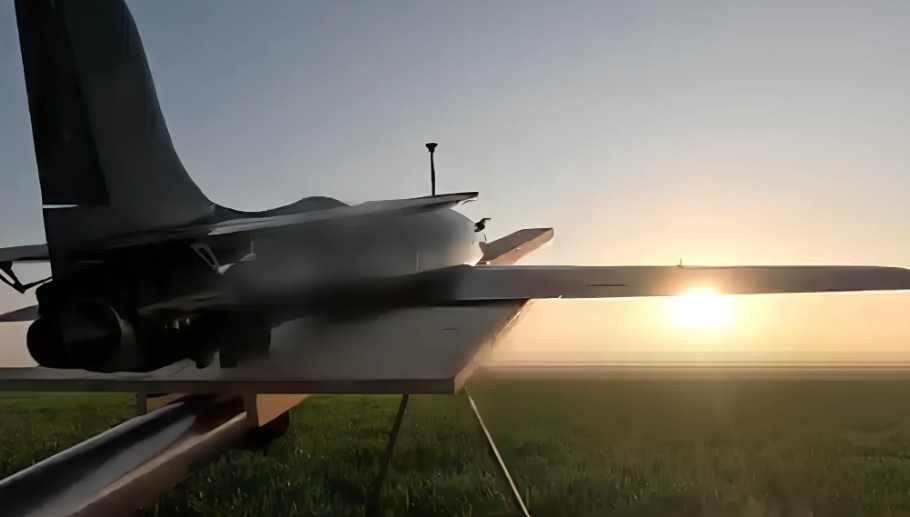
  • Ukraine’s Lasar’s Group says its bomber drones destroyed rare Russian Zhitel jammer 55 km behind front
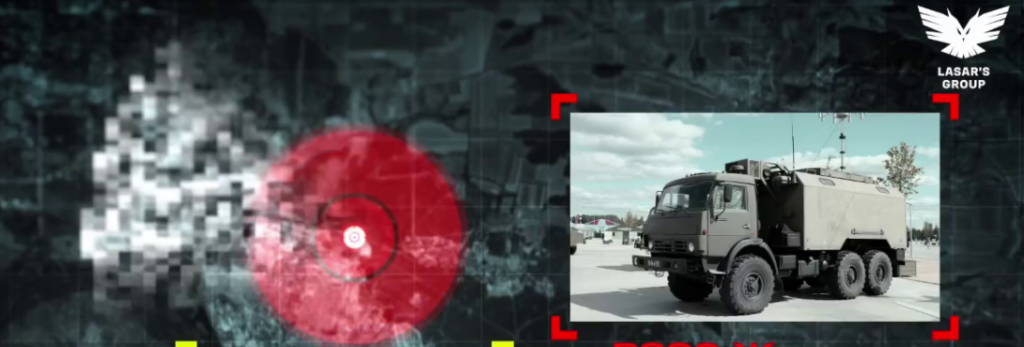
    A Ukrainian National Guard unit says it destroyed one of Russia's rarer electronic-warfare stations, 55 kilometers behind the front. Lasar's Group said its own bomber drones hunted down an R-330Zh Zhitel jamming station near Sievierodonetsk in mid-summer, in a statement on its Telegram channel. The Zhitel is worth the effort. It detects and jams GPS, satellite, and cellular signals, and Russian forces have been using it to blind Ukrainian reconnaissance drones over the
     

Ukraine’s Lasar’s Group says its bomber drones destroyed rare Russian Zhitel jammer 55 km behind front

5 septembre 2026 à 12:36

The R-330Zh Zhitel jamming station. Source: Lasar's Group

A Ukrainian National Guard unit says it destroyed one of Russia's rarer electronic-warfare stations, 55 kilometers behind the front. Lasar's Group said its own bomber drones hunted down an R-330Zh Zhitel jamming station near Sievierodonetsk in mid-summer, in a statement on its Telegram channel.

The Zhitel is worth the effort. It detects and jams GPS, satellite, and cellular signals, and Russian forces have been using it to blind Ukrainian reconnaissance drones over the Sievierodonetsk area. Mounted on a KamAZ truck, it can operate alone or be integrated into a wider jamming network, Militarnyi reported.

How the unit says it did it

The strike was the unit's own from start to finish, Lasar's Group said. Its intelligence analysts, working with the unit's aerial reconnaissance crews, pinpointed the Zhitel's exact position.

Ukrainian soldiers from "Lasar's Group" of the National Guard destroyed a rare Russian R-330Zh "Zhitel" jamming station deep in Russian-held territory

Russian troops had used the system mainly to blind Ukrainian reconnaissance drones over the Siverskodonetsk
🎥 Lasar's Group pic.twitter.com/JEQeADMSBk

— Euromaidan Press (@EuromaidanPress) September 5, 2026

Strike crews then flew in-house-built LASAR bomber drones 55 kilometers deep to destroy it.

The rationale is simple: the fewer electronic warfare systems the Russians have, the freer Ukrainian drones are at the front, which is why such systems sit high on the Lasars' target list. The Zhitel they hit had been used mainly against reconnaissance drones, keeping Ukraine's forces from monitoring the area around Sievierodonetsk.

Not the unit's first

It is at least the second Zhitel Lasar's Group has claimed this year. In April, the unit destroyed a Zhitel and a command-and-staff vehicle in Kharkiv Oblast. The unit has made a specialty of hunting high-value Russian assets deep in the rear: in March, its drone crews tracked down a roughly $50-million Yastreb-AV counter-battery radar in occupied Luhansk Oblast, one pilot even landing a drone on the vehicle to follow it as Russian forces tried to move it to safety.

Taking out a jamming node like the Zhitel has an outsized effect: it restores freedom of movement for Ukrainian drones, brings back GPS-dependent navigation and weapons in the area, and makes it harder for Russia to blind Ukrainian reconnaissance.

Ukraine is running short of its best missiles for hunting Russia’s jet drones. Now MiG-29s are firing 1970s weapons

Par : David Axe
5 septembre 2026 à 11:21

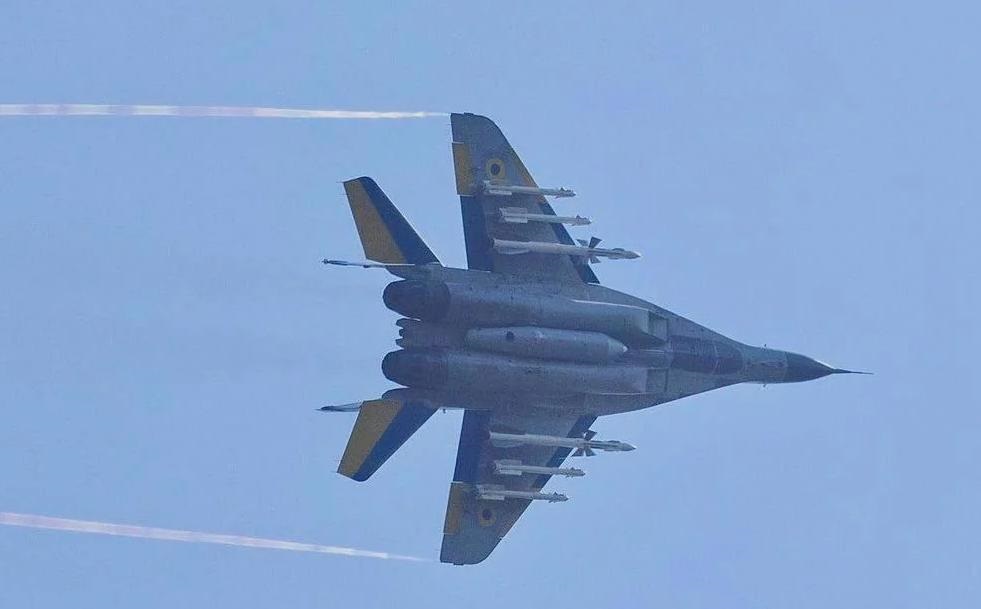
MiG-29 with R-27s and R-73s.

  • Russia is launching more jet-propelled Geran drones and Banderol missiles
  • Speeding along as fast as 700 km/hr, these munitions are hard to intercept
  • Ukraine's fighters are up to the task—but they are reaching for missiles designed in the 1970s

Russia is launching more of its best jet-propelled attack drones and miniature cruise missiles at Ukrainian ports, cities, warehouses, and power plants. The speedy Geran-3, Geran-4, and Geran-5 drones and Banderol missiles can zoom right past Ukraine's ground-based guns and slower interceptor drones, so the Ukrainian air force is deploying more supersonic fighters to chase down the Russian munitions.

But there's a problem. The Ukrainian jets are running short of the missiles that work best against them.

A deepening shortage of infrared-guided AIM-9 missiles and radar-guided AIM-120 missiles for the Ukrainian air force's ex-European Lockheed Martin F-16 fighters has been reported elsewhere. Less well known is what has been happening to the Soviet-era missiles carried by Ukraine's older Mikoyan MiG-29 fighters.

The F-16 is probably the most numerous Ukrainian fighter type, with around 50 in service. But the MiG-29 is a close second. Despite steep losses of MiG-29s in the 55 months since Russia widened its war on Ukraine, Ukrainian aviation brigades may still fly dozens of the classic Soviet-made fighters. MiG-29s are daily sights in the sky over the port of Odesa in southern Ukraine as the twin-engine fighters chase down Russian missiles and drones.

The missile shortage spreading to F-16s really concerns me.
Because at the same time out of nowhere we are seeing Ukrainian MiGs flying combat sorties with older R-60 missiles and not R-73s.

Here’s a recent video of an R-60 being used against a banderol cruise missile : pic.twitter.com/UMhtXW2o2p

— capt. Wild Bill Kelso (@_wild_billkelso) September 4, 2026

The MiG-29 can carry the full array of Soviet-style air-to-air missiles in the Ukrainian inventory including the infrared-guided R-60 and R-73 and the radar-guided R-27. But the missile of choice for intercepting the 500 km/hr Gerans and 700 km/hr Banderols is the more modern R-73. The $300,000 heat-seeking missile is maneuverable and accurate at the close ranges that are typical of fighter-on-drone engagements. Its one known weakness is cloud: a Ukrainian pilot said in 2022 that the R-73 tracks poorly through it, which is part of why pilots sometimes fall back on the cannon.

Ukraine went to war in 2022 with substantial stocks of R-73s and surely received additional copies from allies. While Ukrainian industry built some components for the 1980s-vintage missiles, they were and still are assembled in Russia—so the supply is finite. And the rate of expenditure rose sharply as Ukraine pushed the R-73 into roles it was never built for: onto ground-based launchers, after the 9M33 missiles for its Soviet Osa air defense systems ran short, and even onto some of its robotic boats.

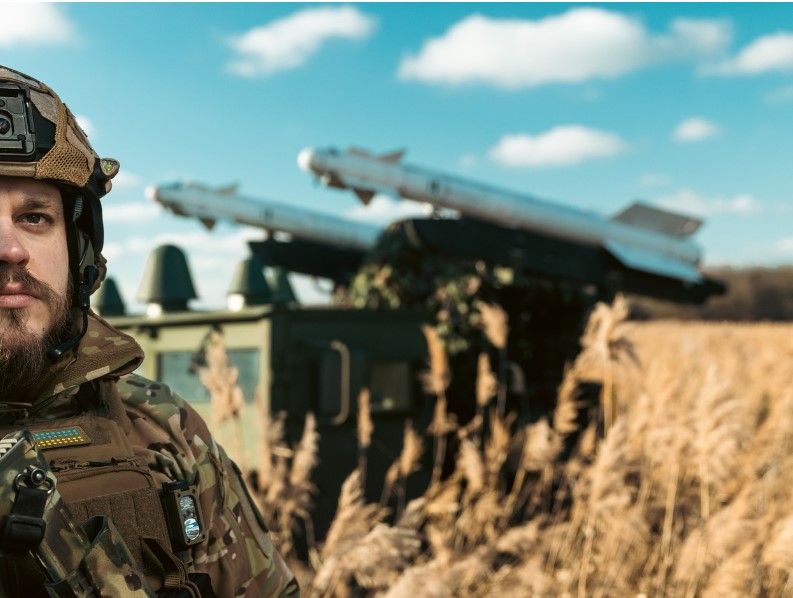
Ukrainian mobile air defense system firing Soviet R-73 air-to-air missiles
Mobile air defense system with R-73 missiles from the 3rd Separate Assault Brigade, March 2025. Photo: Maksym Zaichenko

Down to the 1970s stock

The sign of that pressure is the return of the R-60—a missile designed in the 1970s and considered obsolete when Russia widened the war. Last month an R-60 was visible in the wreckage following the crash of a Ukrainian MiG-29. And this week, video circulated of a MiG-29 downing a Banderol with one at extremely low altitude.

Ukraine's air force had enough R-73s in 2022 that nobody expected to see R-60s again. Continuous interception of Russian cruise missiles and Shahed-type drones changed that, Militarnyi reported. Nor is this improvisation: since November 2025 Ukraine has been running a program to modernize the R-60, replacing analog seeker components with digital ones to sharpen its infrared sensitivity, and adapting it for ground launch. Ihor Fedirko of the Ukrainian Council of Defense Industry called it a temporary way to put otherwise unusable missiles to work.

It's not that the R-60 isn't suitable for downing a Geran or Banderol. It's that it's less suitable than an R-73. "I don't think Ukraine would be using R-60 missiles unless it had nothing else left," one close observer of the Ukrainian air force noted.

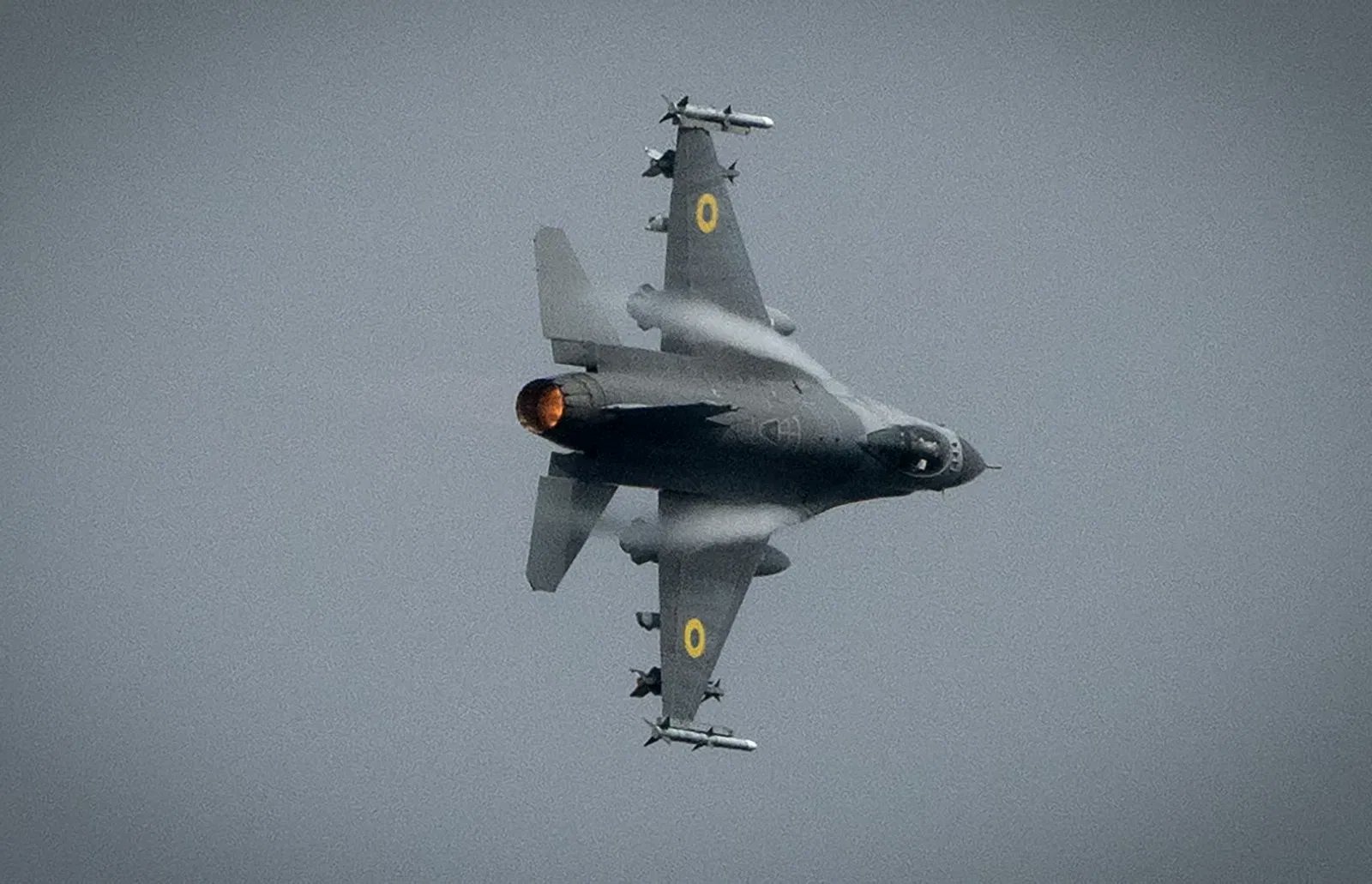
A Ukrainian air force F-16.
Explore further

Ukraine’s F-16s are so short of Western missiles that pilots fall back on jet’s built-in M61A1 Vulcan cannon, which risks killing civilians below

The only other alternative is for a fighter to use its gun. But that's risky, as the pilot must fly dangerously close to a drone or missile before opening fire; the resulting explosion could take out both the interceptee and the interceptor.

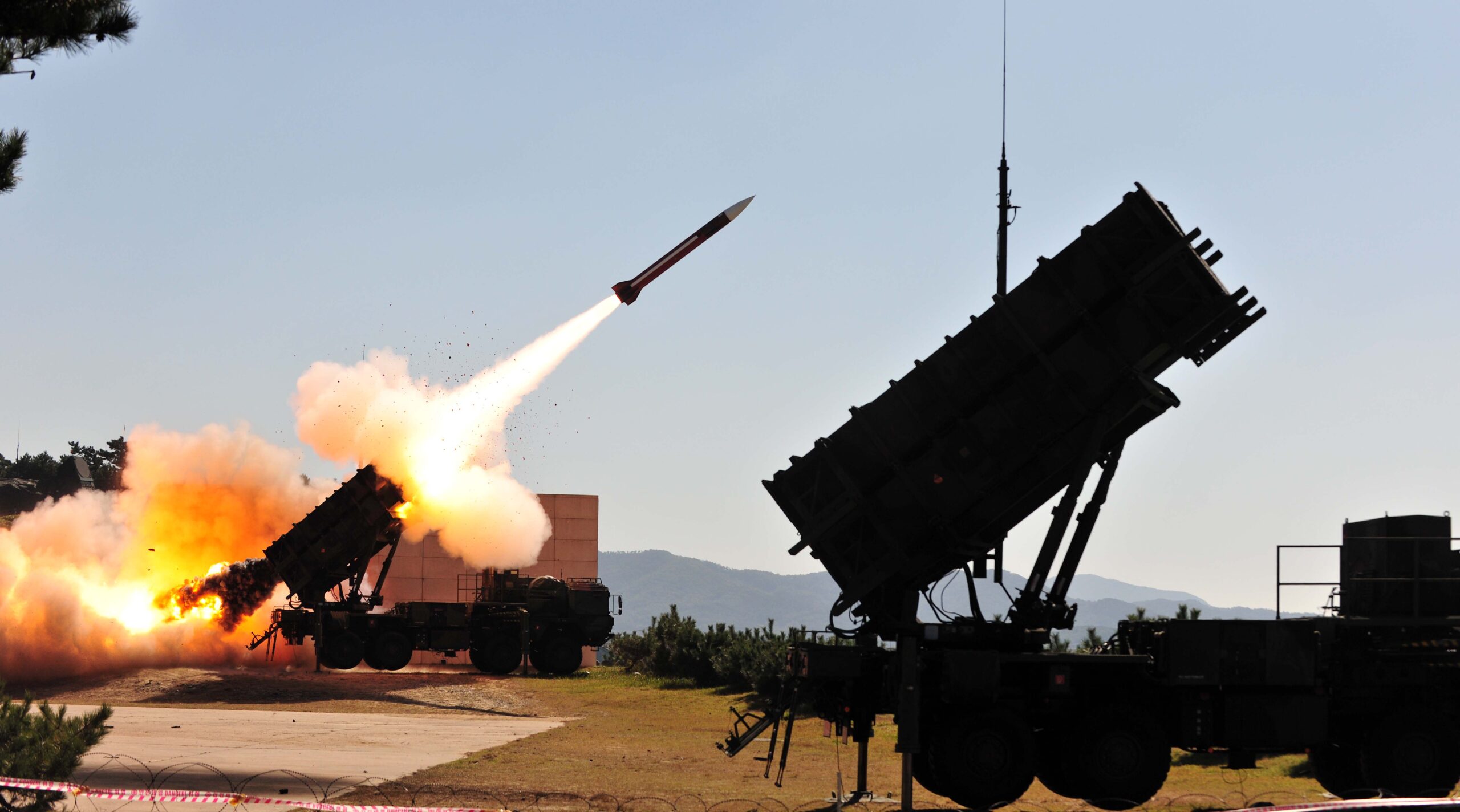
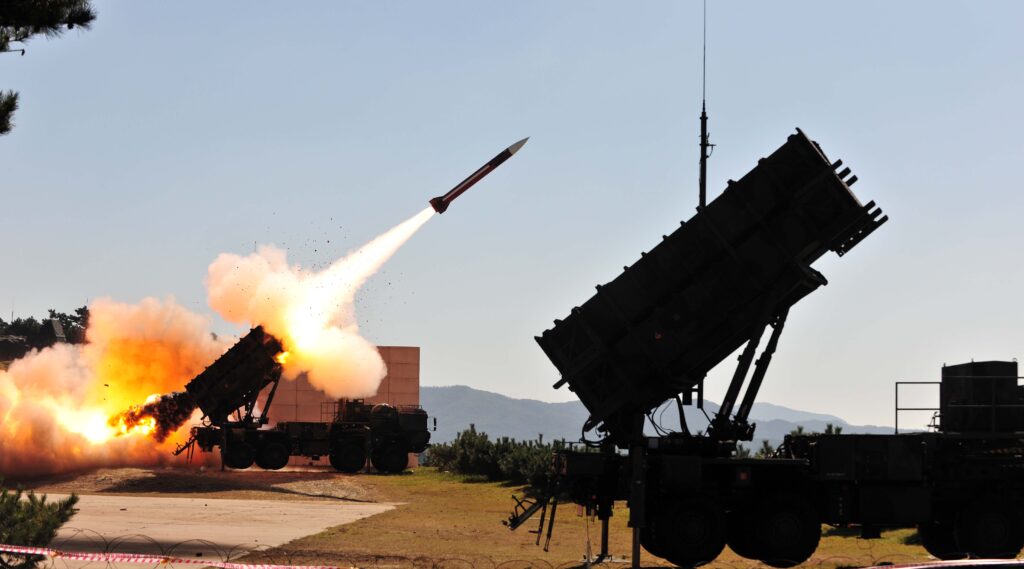
In the same way Russia is exhausting Ukraine's long-range surface-to-air missile batteries by firing more ballistic missiles than Ukrainian forces can intercept with their dwindling supply of Patriot missiles, Russia may also be exhausting Ukraine's fighters and their limited stocks of short-range air-to-air missiles.

As the Ukrainian missiles run out, more of the Russian missiles and drones get through—and strike their targets.

I’m not a missile expert but the missile on the left looks like an R-60. Perhaps Ukraine was trying to burn through some old R-60s it had and one malfunctioned.
It could also just be An R-27 but I don’t know.
The missile on the right looks to be an R-73 pic.twitter.com/yyZ0tSmaf4

— capt. Wild Bill Kelso (@_wild_billkelso) August 11, 2026

The problem is going to get worse before it gets better. Russian industry is ramping up production of both the jet-propelled Geran models and the Banderol, and jet output overtook piston output in August. The Russians launched a reported 1,500 jet Gerans in July and 2,500 in August. Interception rates for the fast drones specifically ran as low as 50% in July, though they may have ticked up to 60% or even 70%.

But that's still too low considering that Ukrainian air defenders usually shoot down 90% of slower propeller-driven Geran-1s and Geran-2s. "Nobody wants interception rates in the 60s/70s," explained Michael Bohnert, an analyst for the RAND think tank in California.

New models of faster interceptor drones, which several Ukrainian manufacturers are scrambling to deliver to front-line forces, may help restore the 90% kill rate for even the fastest Gerans. But "jet-interceptor output has been behind jet-drone output," Bohnert noted. So it's likely that, for a few months at least, the Russians will have the numerical edge, and the Ukrainians will have no choice but to continue sortieing F-16s and MiG-29s to reinforce ground-launched air defenses.

But what happens when the fighters run out of even their oldest missiles?

More than 400 defense firms ask Kyiv to create one state body with real authority over $6.8 billion industry

5 septembre 2026 à 10:50

Griffen, Ukraine's jet-powered interceptor. Source: Firebolt Engineering

Ukraine's private defense industry says no single part of the government is actually responsible for it. The Ukrainian Council of Defense Industry, an alliance of more than 400 companies, has called on the authorities to create a state body with clear powers over defense-industry policy.

The gap sits under a fast-growing sector: Ukraine's top defense-market segments more than doubled to $6.8 billion in 2025, and the private arms market has grown roughly tenfold since 2022. By industry estimates, the sector now employs on the order of 300,000 people. The council argues that a sector of that scale has no government home with the authority to steer it.

Responsibility with no owner

The council traces the problem to July 2025, when the government merged the Ministry of Strategic Industries into the Ministry of Defense, a move meant to unify defense management. More than a year on, the council says the relevant functions remain split among the Defense Ministry, the ministries of economy, finance, and digital transformation, the National Security and Defense Council, and various state agencies.

Each institution handles one slice, the council says, but none holds enough authority or bears comprehensive responsibility for developing the defense industry. That, it argues, makes it harder to solve producers' problems, coordinate policy, attract investment, scale production, and enter foreign markets.

What the council wants

The council stresses that it is not demanding the restoration of the Strategic Industries Ministry. Instead, it wants a capable body with clear powers, adequate resources, and defined political responsibility — a single point of contact between the state and Ukrainian producers.

Such an institution should:

  • Develop a medium-term defense-industrial policy aligned with the needs of the Defense Forces and budget planning;
  • Coordinate the development of production capabilities, technologies, testing infrastructure, investment, and joint production;
  • Serve as the state’s single point of contact with Ukrainian defense manufacturers;
  • Ensure the systematic promotion of Ukrainian defense products abroad and protect the interests of Ukrainian companies in international partnerships;
  • Involve manufacturers and relevant industry associations in developing decisions that affect the sector.

    The council, chaired by presidential adviser Oleksandr Kamyshyn, groups more than 360 private producers, 28 drone-pilot schools, and 20 defense venture funds.

    "We represent the industry's common position and help producers work with the state, the military, and international partners," it says of its role.

    The defense-industrial complex is critical to Ukraine's ability to defend itself, the council says, and its scale now demands a matching system of state management.

    Slovakia, led by one of EU’s most Russia-friendly governments, condemns Russia’s drone strike on Ukraine’s Security Service building

    5 septembre 2026 à 10:30

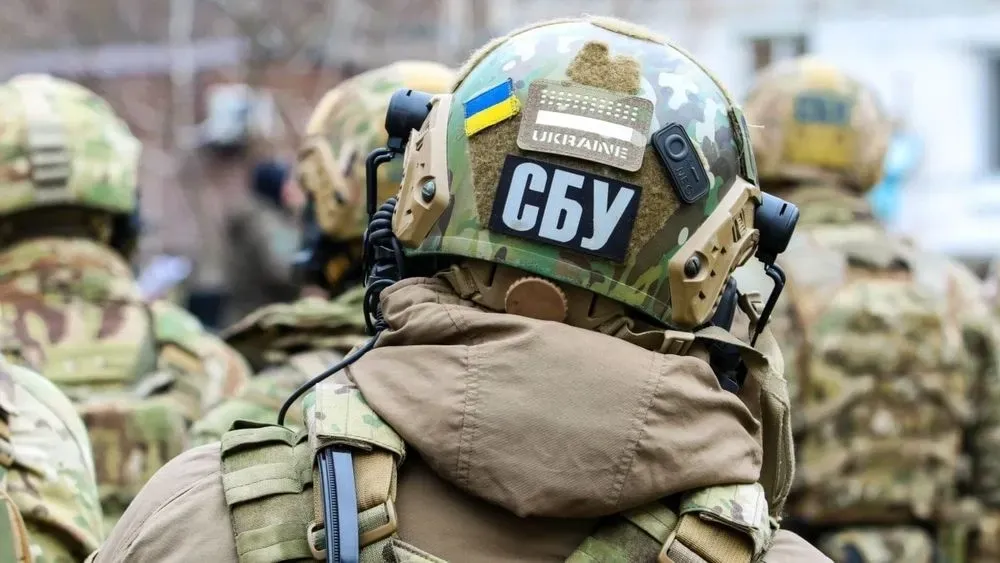
    sbu busts agitator trio propaganda rubles tiktok defense bucha massacre · post officer security service ukraine unn news ukrainian reports

    The Russian drone that hit Ukraine's Security Service headquarters in Kyiv came down next to Slovakia's consular section in central Kyiv. Bratislava condemned the strike and ordered Russia's ambassador summoned, Slovak Foreign Minister Juraj Blanár said on 5 September, a day after the attack, according to the Slovak Foreign Ministry.

    The response is a rare rebuke from a government that has been among the EU's friendliest to Moscow. The jet-powered Geran drone struck the SBU's central building on 4 September, injuring 12, in what Ukraine called a deliberate hit on the office of its Acting Security Service chief, Oleksandr Poklad, who was unharmed.

    What Blanár said

    "We strongly condemn today's Russian attack with a jet-powered drone on the building of the Ukrainian Security Service, which is located near the consular section of the Slovak Embassy in Kyiv," Blanár said.

    The building has been operating on a limited basis for security reasons, he added, and no one was inside during the attack.

    Blanár said Slovakia would not confine itself to a statement.

    "I have ordered the Russian ambassador to the Slovak Republic to be summoned," he said, to seek an explanation from Moscow, and called on Russia to refrain from actions that could endanger civilians.

    A condemnation with a hedge

    He paired the rebuke with an appeal that treated the war as a two-sided problem, urging "both sides" to avoid further escalation and pointing to a "peaceful settlement." The strike, however, was carried out by Russia against Ukraine.

    The symmetry fits Bratislava's stance under Prime Minister Robert Fico, whose government has been the most openly pro-Moscow in the EU and repeatedly at odds with Kyiv. Relations soured over Ukraine's decision to end Russian gas transit to Europe, and Fico has called President Zelenskyy an "enemy" of Slovakia. Meanwhile, Kyiv has accused him of acting as a "mouthpiece" for the Kremlin.

    Russia made 500 Ukrainian schoolchildren in occupied Donetsk take part in “anti-terrorism dictation”. It taught them they can be jailed for a repost at 14

    5 septembre 2026 à 08:09

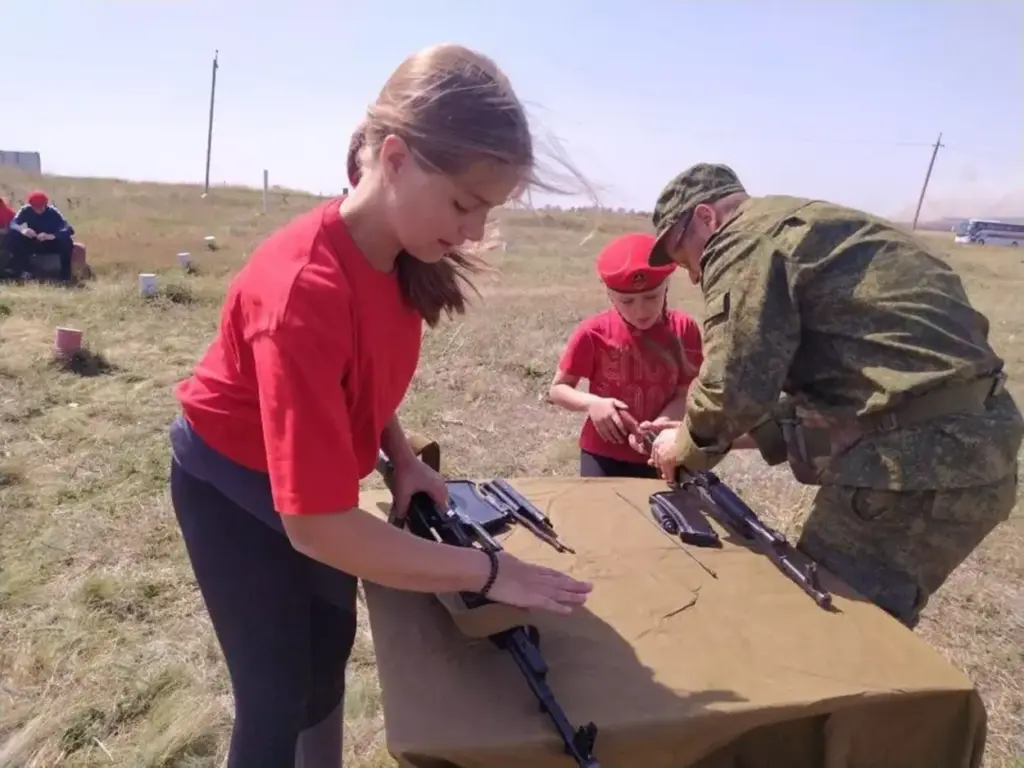
    Two children handle rifles as a uniformed man demonstrates a weapon on a table outdoors.

    In occupied Donetsk Oblast, the Russian occupation authorities had some 500 schoolchildren take part in an "anti-terrorist dictation." The rights group Zmina says the occupiers and their collaborators stage such events deliberately to intimidate local residents, children, and teenagers among them.

    The exercise is one instrument of a documented system. In July 2026, an OSCE expert mission invoked by 41 states found that Russia's use of terrorism and extremism legislation against Ukrainian children may amount to a crime against humanity.

    Only in 2025, occupation authorities sent 48 Ukrainian children in Donetsk Oblast to psychiatric hospitals on extremism charges. For example, teenager Maksym Lypkan is being forcibly subjected to psychiatric treatment because he said that the war against Ukraine is an act of villainy.

    The test drilled Russian criminal law

    The dictation was held in 17 schools across occupied Donetsk, Mariupol, Makiivka, and Volnovakha, with pupils in grades eight through eleven answering questions in writing, according to the occupation's Donetsk News Agency, cited by Zmina.

    The three themes were basic definitions, criminal responsibility, and the roles of the state and citizens in combating terrorism, with an emphasis on Russian criminal code provisions on terrorism and extremism.

    Some questions were situational. In one, pupils were told that an internet user had shared someone else's post containing banned content, and then asked whether only the original author bore responsibility, or whether the person who reposted it had also broken the law.

    Afterward, teachers walked the teenagers through the correct answers. Particular attention was given to the point that criminal liability for terrorism offenses begins at age 14, said Marharyta Kucheriava, who heads a committee on information policy and countering extremism and terrorism within the occupation's "youth parliament" in Donetsk Oblast.

    One arm of a wider effort

    The dictation sits alongside a broader remaking of occupied schools. From 1 September, the occupation authorities introduced a compulsory Russian-identity subject, a separate military-training track, and behavior grades for children as young as second grade.

    From HQ to the zero line: Ukraine’s Hrafit system answers one important question on an ordinary phone in a trench and on the road

    5 septembre 2026 à 07:49

    Ukrainian soldiers. Source: The Third Separate Assault Brigade of the Ukrainian Ground Forces

    A Ukrainian soldier in a trench or in a vehicle can now get a short alert on their phone the moment a Russian FPV drone or glide bomb starts closing in. The system behind it, Hrafit (Graphite), pulls together data from nearly all available radio-technical intelligence and surveillance into a single picture, ArmyInform reported.

    The threat no longer stops at a command post. The warning reaches the soldier at an observation point, the sector command, and the commander-in-chief at once. To use it in a position, a soldier needs only a protected smartphone and satellite internet, including Starlink, and on the ground, it comes down to one short push notification.

    Hrafit answers one question: Is the sky clear?

    In modern combat, a second's hesitation can be enough for an infantry soldier in a trench or a crew in a vehicle to be caught by an FPV drone or a guided glide bomb. Hrafit is the Ukrainian answer, moving situational awareness onto an ordinary phone.

    Military programmers built it for Ukraine's Defense Forces to answer the one question that matters most in the field: is the sky clear? Militarnyi reported that the system is being supplied to the Armed Forces, the National Guard, the Security Service, and the Border Guard Service.

    It tracks drones and glide bombs

    Working in real time, Hrafit flags a wide range of incoming threats:

    • FPV drones, both kamikaze and loitering types
    • tactical quadcopters such as the DJI Mavic, which are often used to direct fire
    • winged Russian drones like the Molniya and Privet
    • guided glide bombs and other aerial munitions

    Three versions run from HQ to the trench

    Hrafit runs on Android, iOS, and the web, in three versions.

    The full version, for analysts, commanders, and electronic warfare and air defense operators, adds reporting, filters, frequency-band analysis, and a global map of the fighting.

    For instance, Hrafit Lite strips down the interface for troops on the zero line, showing only the local area, so nothing distracts from the fight.

    A third module, Sova (Owl), is built for logistics crews, drivers, and medical evacuation: it runs during a drive, moves its monitoring sector across the map with the vehicle, and warns of danger along the way.

    Soldiers can learn the system through an official online course in the Army+ app, which teaches them to operate and configure Hrafit and issues a completion certificate.

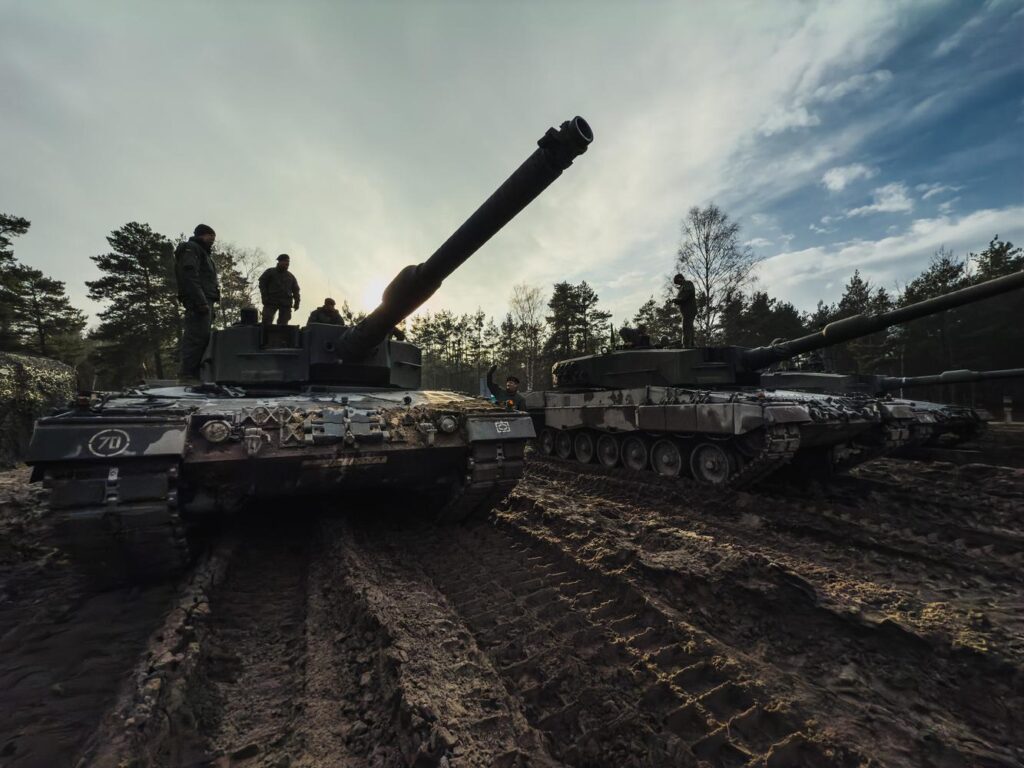
    Ukraine is taking 1980s Leopards from across Europe and giving them radar-guided anti-drone guns and gunner-less turrets

    Par : David Axe
    5 septembre 2026 à 07:45

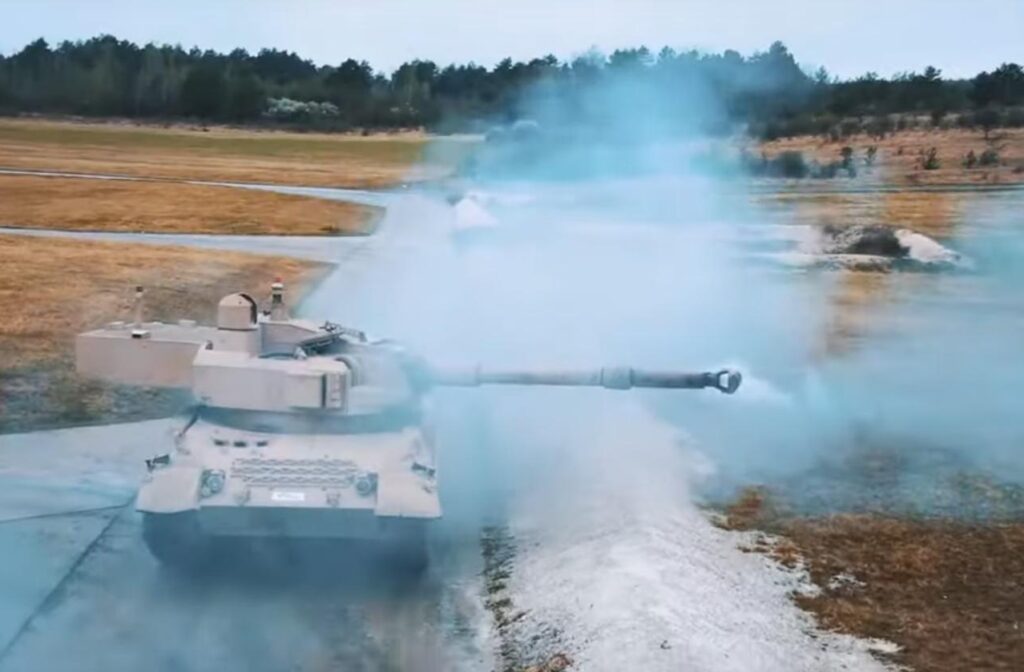
    A Leopard 1A5 with a C3105 turret.

    • Ukraine is getting 170 Leopard 1A5 tanks from a European consortium
    • Most fight as tanks, but some are becoming air defense vehicles—built in Rome, paid for with frozen Russian money
    • A second program swaps in an unmanned Belgian turret and drops the crew to three
    • Europe's warehouses hold enough spare hulls to feed both

    Ukraine has lost a quarter of its German-designed Leopard 1A5 tanks. But it could get many more of the nimble, 40-ton tanks. And some could have brand-new turrets that make them lighter, faster, farther-shooting, and more survivable.

    The hulls are 1980s West German. The refurbishment is done in Germany, the air defense turrets are built in Rome, the tank turrets are designed in Belgium, and one of the two programs is paid for out of frozen Russian assets. Ukraine's newest armored vehicles are being assembled from the leftovers of a war Europe spent forty years preparing for and never fought.

    In 2023, a German-Danish-Dutch consortium pledged 170 Leopard 1A5s to Ukraine. The 1980s-vintage tanks have come from German, Danish, and Belgian surplus stocks.

    Refurbished in Germany by tank-maker Rheinmetall and fitted with add-on anti-drone armor in Ukraine, the first 135 or so Leopard 1A5s now equip at least five units: the 44th Mechanized Brigade, 5th Heavy Mechanized Brigade, the 425th Assault Regiment, the 142nd Mechanized Brigade, and the 13th National Guard Brigade.

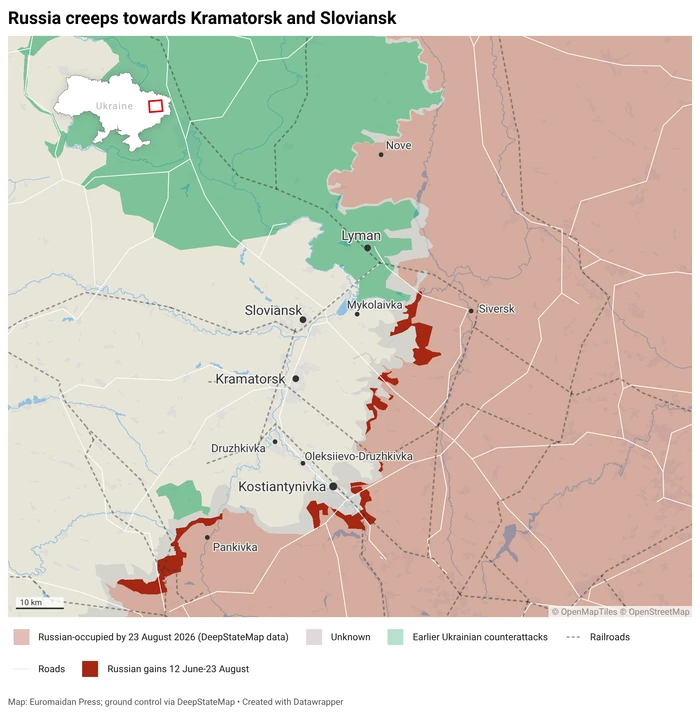
    Losses have been heavy. The Russians have struck no fewer than 37 of the four-person tanks, destroying at least 30 of them. The 44th Mechanized Brigade, which is fighting a defensive action south of the cities of Kramatorsk and Sloviansk in eastern Ukraine's Donetsk Oblast, has been hit the hardest. The brigade has written off around half of its original allotment of 31 or so Leopard 1A5s.

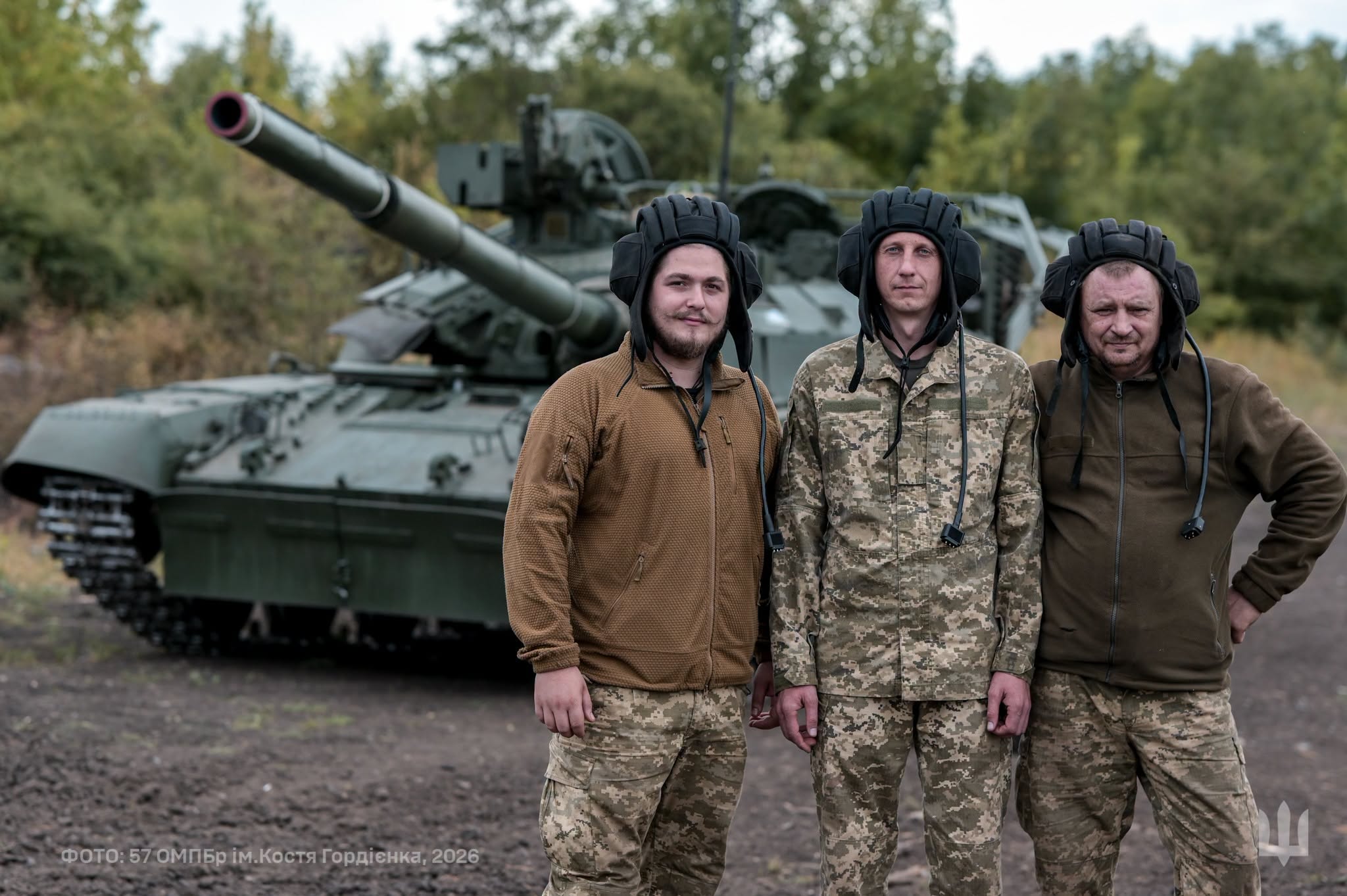
    A T-64BM Bulat in the 57th Motorized Brigade. Photo by the brigade
    Explore further

    A rare Ukrainian Bulat tank turned up in a brigade that never had them

    Another 35 Leopard 1A5s from the 2023 pledge should eventually reach Ukrainian units, potentially making good those losses.

    But Kyiv is diverting some of those initial 170 Leopard 1A5s to a pair of conversion programs that are reinforcing Ukraine's air defense while also re-equipping the ground forces with a new generation of tank.

    The first conversion program, overseen by Rheinmetall, plucks the old turrets with their 105-millimeter cannons off some Leopard 1A5s and drops in a new turret with a faster-firing 35-millimeter anti-aircraft gun. Effectively a next-generation Gepard, the resulting Skyranger 35 is a mobile, armored drone-killer that can post up between Russian drone launch sites and Ukrainian cities in order to down incoming Geran drones before they can strike.

    Its revolver cannon fires 1,000 rounds a minute out to 4 km, using airburst ammunition that scatters tungsten pellets in the path of an incoming drone. An unnamed EU country is paying for the systems out of proceeds from frozen Russian assets, and Rheinmetall builds them at its subsidiary in Rome. Germany's own army has ordered 19 and is discussing hundreds more; Ukraine's arrived first.

    The first imagery of a Skyranger 35 in Ukrainian service circulated online this week, with the 1020th Anti-Aircraft Missile Regiment.

    It seems that Ukraine's 1020th Anti-Aircraft Missile Regiment which belongs to the Ground Forces has taken delivery of the first Skyranger 35 SPAAGs mounted on a Leopard 1 chassis made by @RheinmetallAG.

    A contract for the delivery of the Skyranger 35 SPAAGs was signed in H2 of… pic.twitter.com/VRWhGx1LCa

    — GAU (@deaidua) September 3, 2026

    Old tank, new turret

    The second conversion program won't produce combat-ready vehicles for another year or so. This program will swap out the turrets on 31 Leopard 1A5s. The new turret, produced by John Cockerill Defense in Belgium, is unmanned: the commander and gunner move down into the hull alongside the driver, and an autoloader replaces the human loader. That drops the crew from four to three and takes everyone out of the part of the tank most likely to be hit.

    🇺🇦 A spokesperson from Cockerill confirmed to me at Eurosatory that the company has been contracted to deliver 30 C3105 turret to Ukraine to be mounted on the countries Leopard 1 main battle tanks.

    The first five systems will be delivered in June of 2027 with the remainder to be… https://t.co/uAAIUR1ZDr pic.twitter.com/mnLxXSJBcb

    — Jeff2146🇧🇪 (@Jeff21461) June 15, 2026

    The new turret is welded from ballistic aluminum instead of steel, shaving three tons off the tank's 40 and freeing weight for reactive armor, anti-drone netting, or electronic warfare kit.

    As a bonus, the 105-millimeter gun in the multi-million-dollar Cockerill 3105 turret also elevates far higher than the gun in the existing turret—42 degrees, against roughly 20 on the original. That confers greater range when a tank functions as artillery, firing its cannon at targets over the horizon: Cockerill says no other Western main battle tank can shoot indirectly the way this one does, and Ukrainian trials reached 10 km from a covered position.

    Kyiv has ordered 30 of the turrets and holds one more it bought for testing last year. Some time in 2027, that is a battalion of new medium tanks: a cutting-edge turret on a chassis built when Leonid Brezhnev was alive.

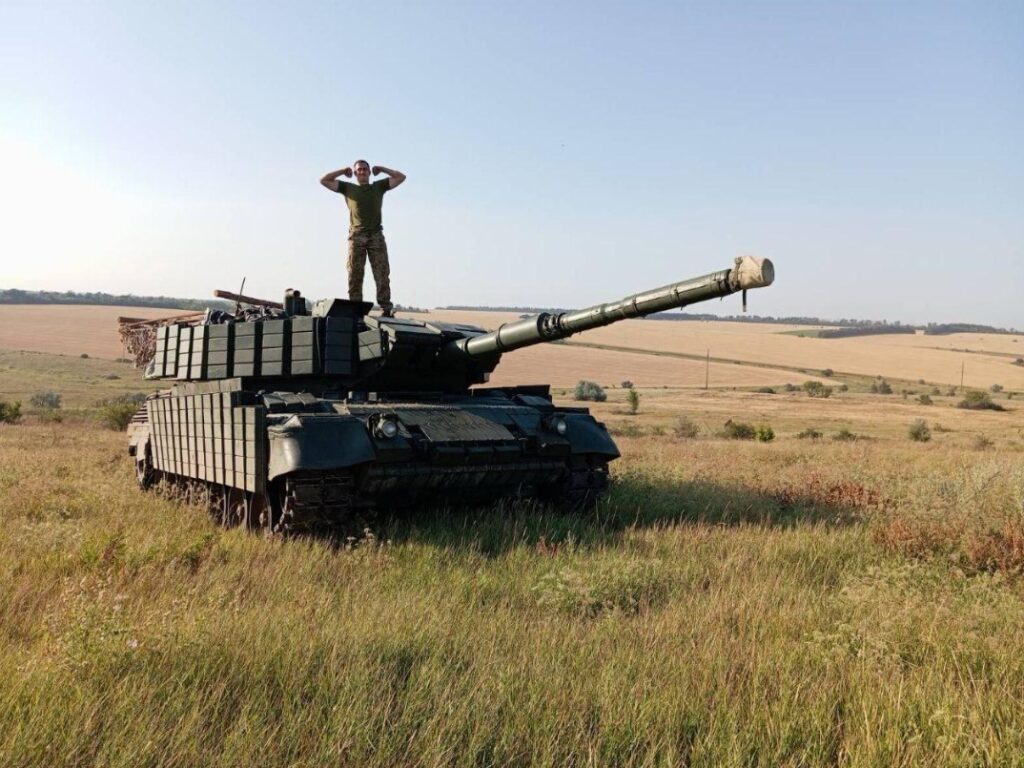
    A Ukrainian soldier standing on a Leopard 1A5 tank
    Ukrainian soldier standing on the Leopard 1A5 tank. Photo: Army Inform

    To provide hulls for the 31 Cockerill-converted Leopard 1A5s while also sustaining the Skyranger 35 program, Ukraine must make a choice. Combined, the two programs need potentially 50 or more tank chassis, but just 35 Leopard 1A5s from the initial 170-tank pledge are still in the queue for delivery to Ukraine.

    A T-72B3A the moment before a Ukrainian drone strikes.
    Explore further

    Russia took the cages off its newest tanks. The new Arena-M shield bought them a few minutes.

    Ukraine's ground forces are already short on tanks; taking Leopard 1A5s from the five brigades and regiments that operate the type could deprive those units of desperately needed firepower. Fortunately for Ukraine, there are still hundreds of old Leopard 1A5s in warehouses in Europe and farther abroad—and Rheinmetall is pulling the Skyranger hulls from storage rather than from Ukraine's active fleet.

    French historian Stevius made a count and concluded "the stocks in Europe are far from exhausted." As recently as 2022, German firm Flensburger Fahrzeugbau Gesellschaft held 99 Leopard 1A5s. Rheinmetall held 88 of the tanks in 2022 and, in 2023, bought 50 more from OIP Land Systems in Belgium. That's 237 tanks: 67 more than the Europeans pledged to the Ukrainians in 2023.

    Some of those 67 excess Leopard 1A5 hulls are unusable owing to rust and other wear and tear. Even so, there should be enough Leopard 1A5s left in Europe to feed the Skyranger and Cockerill conversion efforts. And once those run out, there are still some ex-Italian and ex-Greek Leopard 1A5s that Ukraine could acquire.

    And if it can secure the financing, Ukraine could convert those additional tanks—or even some of its existing ones—into faster, farther-firing Leopard 1A5s with Cockerill C3105 turrets. Cockerill has already proposed doing the whole active fleet, around 100 tanks.

    “Everyone is absolutely livid”: Expert says Russian agent may have activated MESH relay within 5 km of attack on Security Service, enraging Ukraine and Europe

    5 septembre 2026 à 07:27

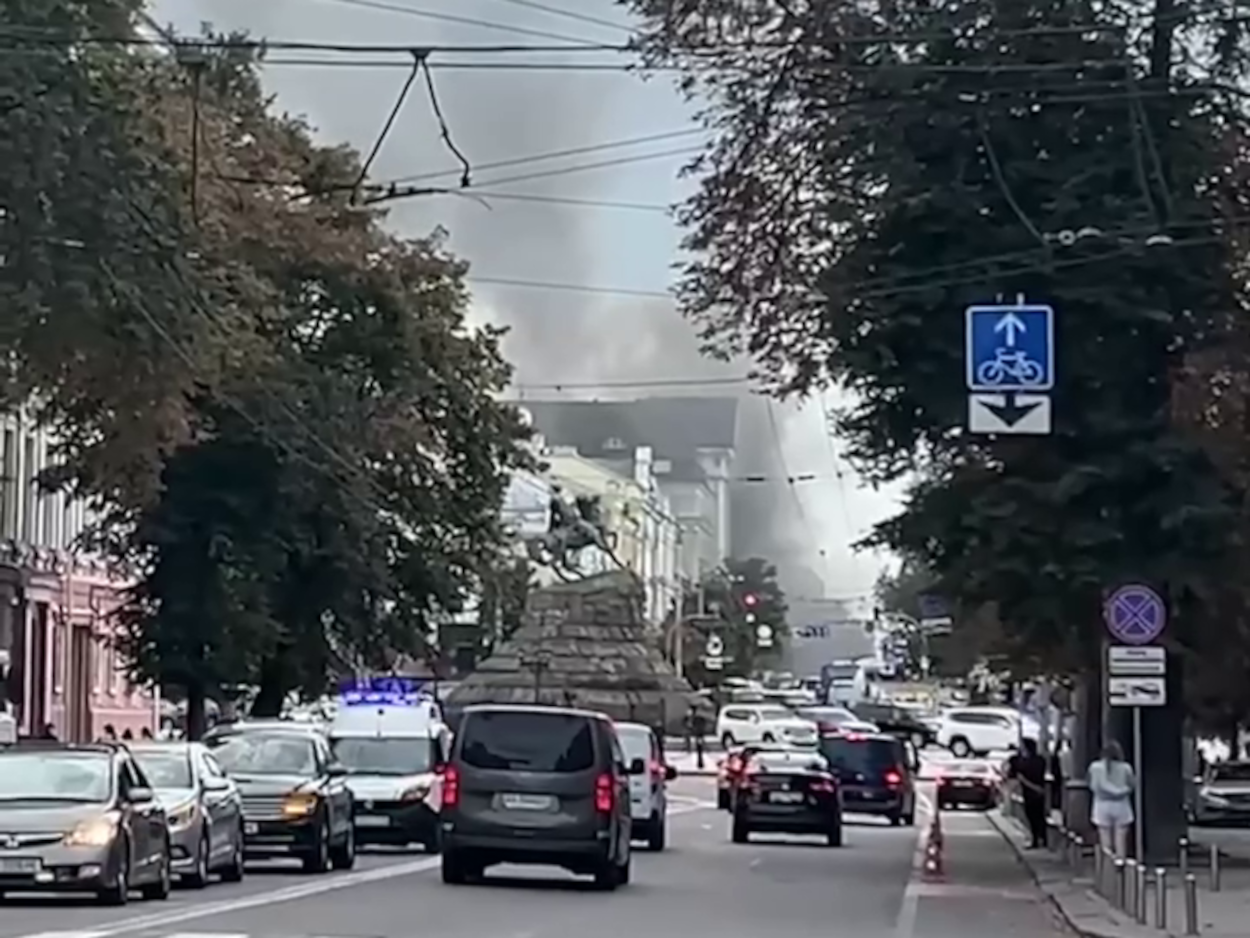
    Smoke seen from the damaged SBU headquarters building on Volodymyrska Street in central Kyiv following a Russian drone strike on 4 September, 2026. Screenshot from video: Suspilne

    On the afternoon of 4 September, a Russian drone struck the building of Ukraine's Security Service in Kyiv, flying straight at the office of the acting chief, Oleksandr Poklad. One source close to the security services was blunt about the mood afterward, telling LIGA.net that everyone was "not just furious — everyone is absolutely livid."

    It was a rare direct hit on a top government building — the first time the SBU headquarters had been struck in the four-and-a-half-year war. The central building stands on Volodymyrska Street opposite St. Sophia's Cathedral, a UNESCO World Heritage site.

    Poklad was unharmed, and President Volodymyr Zelenskyy said he had ordered a response that mirrors the attack.

    Beskrestnov: a planned operation, guided from the ground

    Serhii "Flash" Beskrestnov, President Zelenskyy's adviser on defense technologies, argued the strike was too precise to be a stray hit.

    "My personal opinion: the Geran was controlled and guided online through a MESH radio relay with internet access, which a Russian agent switched on somewhere nearby — within five kilometers — for a short period during the attack," he wrote.

    Such a relay is small, about the size of half a school backpack, he said. He added that no other jet-powered Gerans were in the air over Kyiv at the moment of the strike, which, in his view, rules out the drone being flown along a relay chain reaching back into Russia and points instead to local control.

    Europe calls it a major escalation

    Katarína Mathernová, head of the EU Delegation to Ukraine, said the drone hit near where she and her colleagues live and work, and her Kyiv staff again had to leave their desks for shelter. Under her post, former EU Ambassador to Ukraine José Manuel Pinto Teixeira called Russia a terror state.

    "Time for Ukrainian drones visiting the center of Moscow," he said.

    Estonian Foreign Minister Margus Tsahkna said Russian drones had struck "the very heart of Kyiv," and pressed for tighter sanctions and deeper isolation of Moscow.

    "The Kremlin’s objective remains unchanged: inflict maximum carnage, sow terror, and trample every norm of international law," he said.

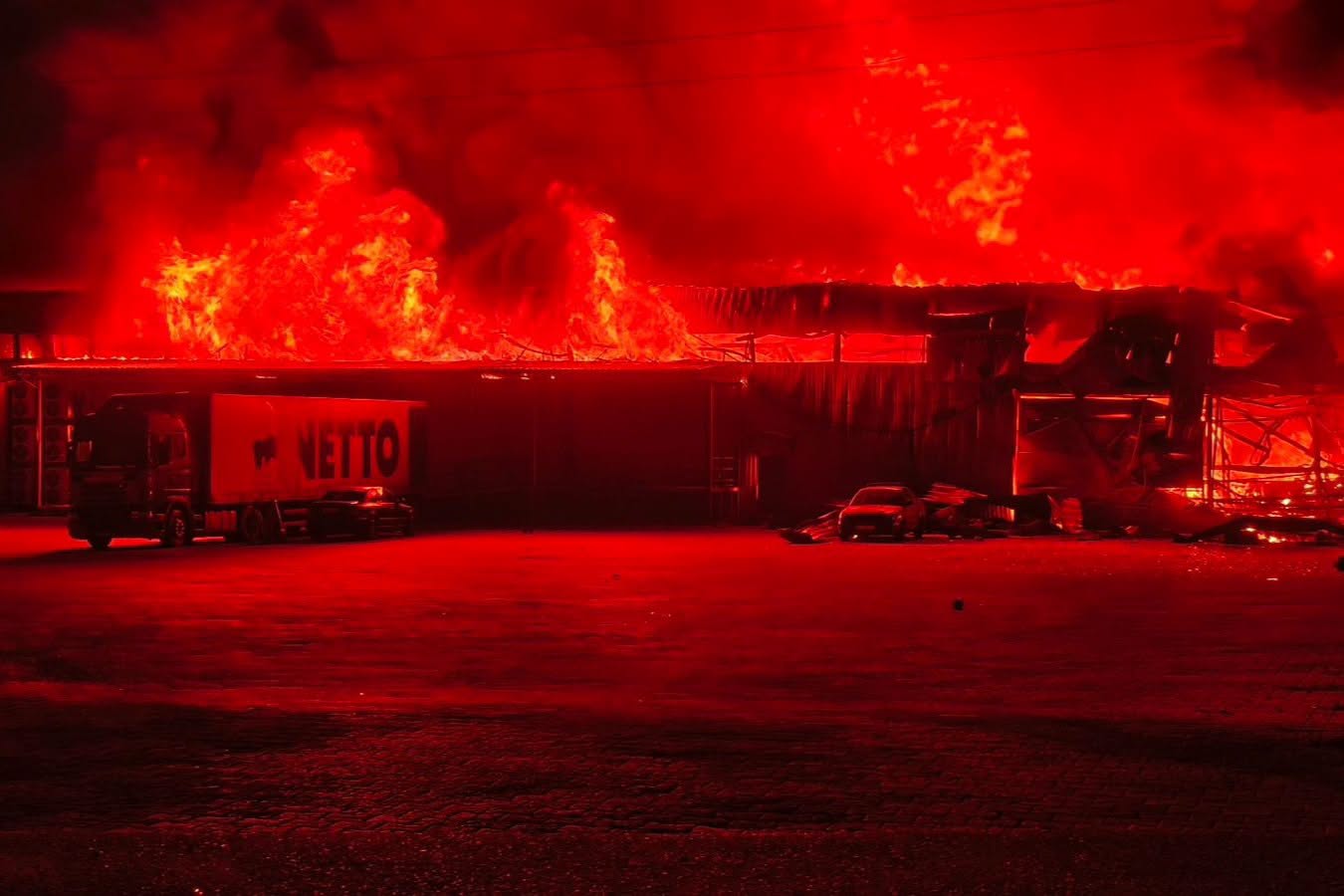
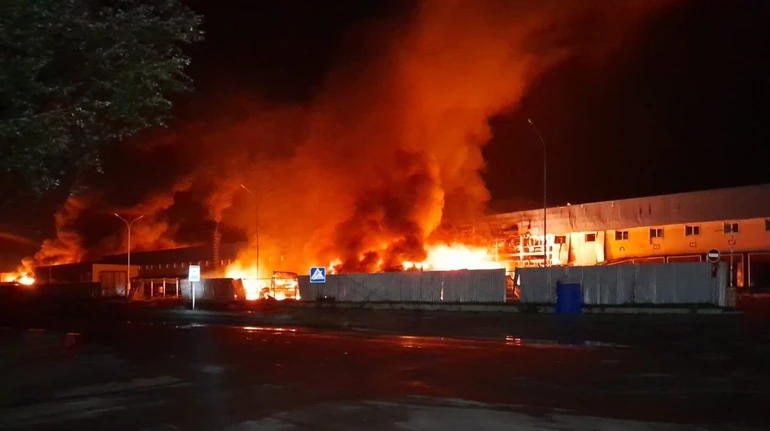
    Russia destroyed most of Ukraine’s big warehouses. Now the country is scrambling to build small ones everywhere

    5 septembre 2026 à 06:45

    Grocery shortage

    On the morning of 30 August, I went to a central Lviv branch of Silpo, a Ukrainian supermarket chain operated by Fozzy Group. It had run out of buckwheat, peas, pearl barley, and other dry goods.

    Telegram reports from Lviv showed partially empty shelves at other supermarkets as shoppers stocked up on flour, salt, and cereals. Similar gaps appeared in Kharkiv, Ivano-Frankivsk, and Vinnytsia. Russian strikes have also damaged some of Ukraine's largest wine warehouses, raising the prospect of shortages of wine and other alcoholic beverages.

    As replacement space runs short, the state has stepped in: on 4 September, on Zelenskyy's order, oblast military administrations switched to round-the-clock operation, opening a single window for businesses and forming working groups to find them relocation sites and connect utilities, deputy Head of the President's office Viktor Mykyta said.

    Overall, Russia has destroyed about 90% of Ukraine's modern storage—including 80% of the refrigerated warehouses around Kyiv—faster than it can be rebuilt. So retailers, parcel carriers, and now the government are scrambling to replace one centralized system with dozens of scattered sites. Whether they can do it before winter, and at what cost to prices, is the question now hanging over the country's food supply.

    Replacement warehouses become new targets

    Aftermath of Russian strikes on a Nova Poshta warehouse in Sviatopetrivske near Kyiv on 28 August 2026. Photo: Anton Ovsienko/Facebook
    Aftermath of Russian strikes on a Nova Poshta warehouse in Sviatopetrivske near Kyiv on 28 August 2026. Photo: Anton Ovsienko/Facebook

    Each time a company disperses its stock to survive, the new sites become the next targets. Russia hit a warehouse used by Fora, a nationwide "store next door" Ukrainian grocery chain, four days after the company began using it—the third strike on Fora's logistics in 22 days, and the chain had only just spread its stock across several warehouses to reduce exactly this risk. Another warehouse added during that rebuilding was destroyed on 20 August, one week after Fora began using it.

    The same pattern caught Ukraine's largest private parcel carrier Nova Poshta: lost its most advanced robotic fulfillment center and a sorting depot in Sviatopetrivske near Kyiv overnight on 28 August and is now doing what Fora did—pushing stock out to its local branches, according to CEO Yevhen Tafiichuk's Facebook statement. "Nova Poshta's cargo and postal branches across the country are becoming local warehouses," he wrote.

    Clients' stock will be divided among those locations, reducing dependence on a few large centers. Nova Poshta is also contacting publishers and shops whose books were destroyed and will compensate them for their losses, Tafiichuk said.

    And it continues daily. On 29–30 August alone, Russian strikes hit PepsiCo, an Auchan warehouse, and food stores in Odesa Oblast.

    The Agriculture Ministry told Euromaidan Press that Ukrainian farms continued to supply the domestic market in full and that the country faced no danger of famine. Individual supermarket chains could nevertheless carry a narrower selection.

    Fozzy freezes office hiring

    Aftermath of a Russian attack on Silpo's distribution centers and NOVUS's main logistics center on 5 August in Kyiv.
Photo: Fozzy Group press office
    Aftermath of a Russian attack on Silpo's distribution centers and NOVUS's main logistics center on 5 August in Kyiv. Photo: Fozzy Group press office

    Fora's parent company, the Fozzy chain of wholesale supermarkets, told Forbes Ukraine that ten of its distribution centers had been damaged during August. Rebuilding delivery routes and restoring supplies had substantially increased logistics costs.

    The increased costs have hit company development. Fozzy has frozen office hiring and canceled its planned autumn salary review for office employees. However, recruitment for supermarkets, warehouses, and production continues. The company will reconsider the restrictions once its financial results and cash flow become clearer.

    Replacement storage falls short

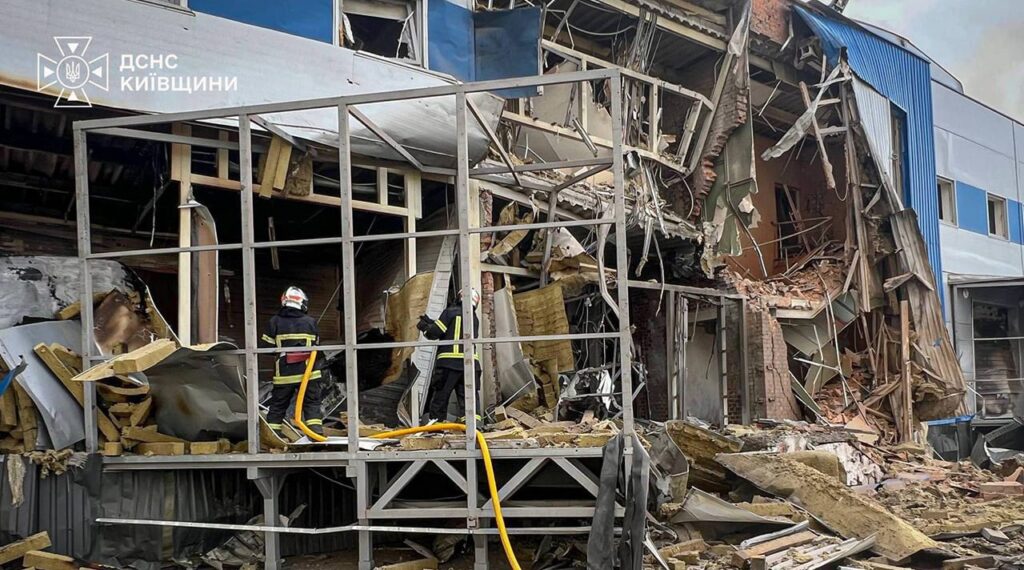
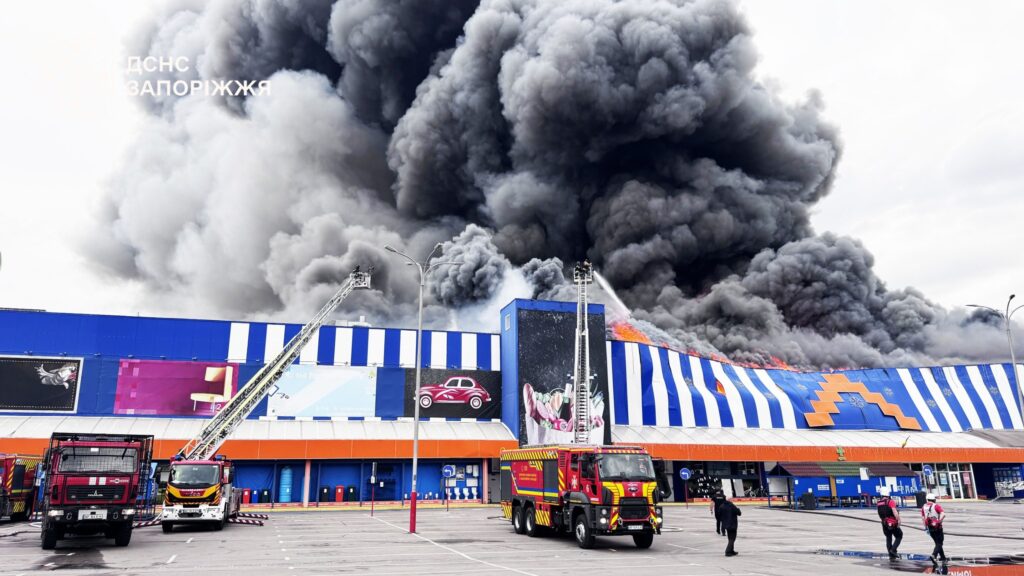
    A Russian attack on 3 September destroyed warehouses of the Teva pharmaceutical company. Photo: DSNS
    A Russian attack on 3 September destroyed warehouses of the Teva pharmaceutical company. Photo: DSNS

    Kyiv's commercial warehouse space had returned to prewar levels by the end of 2025. Yet only 2.5% was vacant at the end of June 2026, according to Yaroslav Horbushko's August assessment. Horbushko, an executive at commercial property consultancy Expandia, said a business seeking a 10,000-square-meter warehouse could not find one because only scattered smaller premises remained available.

    Available refrigerated storage in and around Kyiv could replace only 20–30% of the refrigerated space destroyed by Russian attacks, Investment Programs Bureau CEO Oleksandr Bondarenko estimated on 11 August. He put the destroyed space at 80,000–100,000 square meters, compared with 20,000–30,000 square meters still available to rent.

    The destroyed warehouses kept meat, dairy products, fruit, and vegetables chilled before delivery to shops. Even a small new refrigerated terminal would take six to twelve months to build.

    Logistics company Global Ocean Link outlined one option on 17 August: keeping some imported stock in Central European warehouses and bringing it into Ukraine in smaller batches. Factories can also bypass distribution centers and deliver directly to shops. However, three-quarters of Ukrainian dairy producers lack enough vehicles and staff to supply individual stores across large retail networks, said Arsen Didur, executive director of the Union of Dairy Enterprises of Ukraine.

    Export bottleneck strains grain storage

    A separate shortage is developing in the storage of crops awaiting export. The Agriculture Ministry expects Ukraine to harvest approximately 84 million tonnes of grain and oilseeds this season—far more than the country consumes—while civilian agricultural exports through deepwater sea routes have stopped completely following intensified attacks on ports and warehouses.

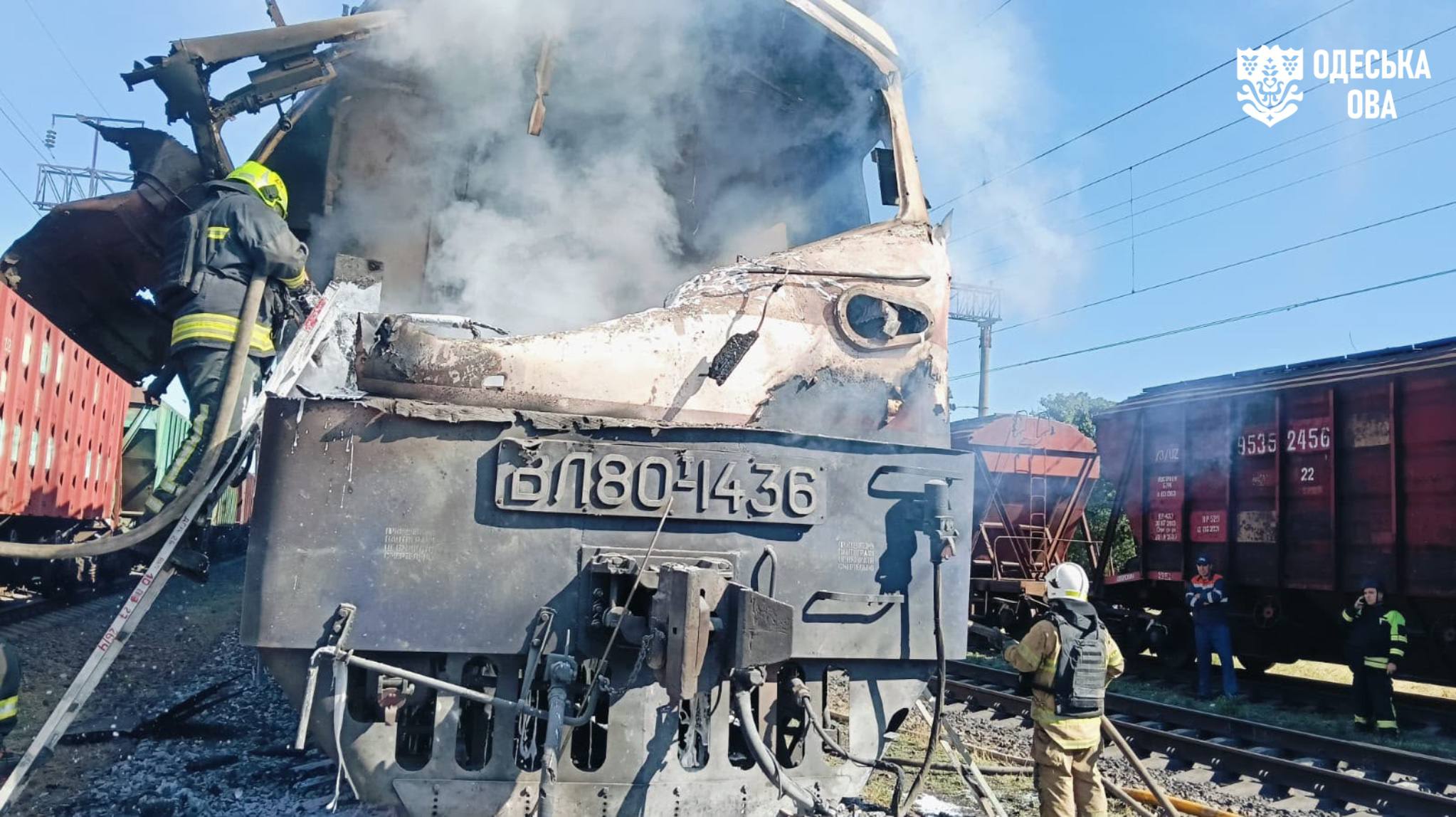
    locomotive, Odesa Oblast
    Explore further

    Russia drove most ships from Ukraine’s ports. Now its drones are hunting the trains

    Alternative routes carried approximately 1.5 million tonnes of agricultural products in August, only 33% of the estimated requirement, the ministry told Euromaidan Press. Grain shipments reached 822,000 tonnes, or 21% of potential export demand.

    Even if fully expanded, the Danube ports, railways, and roads could carry no more than half of the required export volume. Slower exports could leave Ukraine short of storage for 11 million tonnes of agricultural products by November.

    The government is seeking temporary storage capacity. With international donors, it is also providing large polymer sleeves to farmers whose warehouses have been damaged in nine oblasts. The sleeves allow crops to be stored temporarily at individual farms.

    Who pays for new routes?

    Bondarenko's cost estimates suggest that replacing one large refrigerated warehouse with several smaller facilities could increase logistics costs by 10–15%. He estimated that the smaller sites would collectively require 60–70 workers, compared with 20–30 at one large automated warehouse, as well as additional loading and sorting equipment.

    Some retail chains were demanding that manufacturers cover all logistics risks, according to Didur's RBC-Ukraine interview. He warned that suppliers could seek other sales channels if those demands spread.

    Ukrainian supermarket chain VARUS, the fifth-largest on the Ukrainian market, said it was trying to absorb additional logistics costs. Higher delivery costs would not automatically raise shelf prices by the same percentage, the chain said, because purchasing costs, exchange rates, and other factors also influence what shoppers pay.

    Shops remain open, and the ministry sees no famine threat. The lasting damage appears in the capacity and money consumed by each workaround: more workers and vehicles, smaller shipments, deferred hiring and salary reviews, and fewer warehouses available when the next strike comes.

    In the pessimistic scenario, producers would refuse to work under the new logistics rules and prefer going down the export route, which would lead to a stable deficit of goods on the shelves of Ukrainian supermarkets by October-November, Bondarenko assessed.

    But from a broader perspective, if the pace of Russian strikes continues, Ukrainian businesses could be forced to close or relocate their production facilities to neighboring Romania, Slovakia, and Poland—leading to losses in employment and taxes to the Ukrainian budget, he added.

    Reçu — 4 septembre 2026 Euromaidan Press

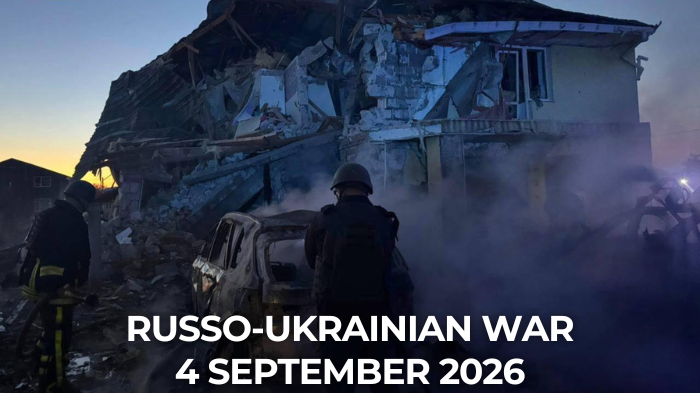
    Russo-Ukrainian war, day 1654: Ukraine orders a three-day ceasefire as US envoys head to Moscow, and Kyiv’s sirens sound anyway

    4 septembre 2026 à 17:44

    Exclusives

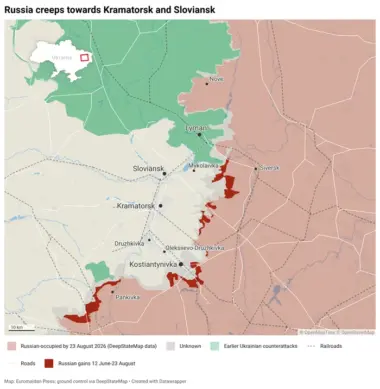
    Desperate to save Sloviansk and Kramatorsk, Ukrainian forces counterattack and reinforce. A Russian pincer is slowly closing around the last two big free cities in eastern Ukraine's Donbas region. Winter will be a brief reprieve.

    Military

    Ukraine's Khartiia soldiers clear 4 km² near Kupiansk, while Russia pushes for main rail hub (VIDEO). On the left bank, Russian supply was so broken that they delivered water by drone.

    Drones hit fuel depots in Sochi and an explosives plant 1,300 km away on the same night.

    Spain keeps arming Ukraine against Russia's ballistic missiles, and promises even more. Madrid is readying a fresh batch of interceptors for Kyiv, and has ordered four new Patriot systems of its own in a $1.7 billion Raytheon deal.

    Ukraine's F-16s are so short of Western missiles that pilots fall back on jet's built-in M61A1 Vulcan cannon, which risks killing civilians below. The AIM missiles the jets are rationing are the same ones defending Kyiv from the ground.

    Ukraine says it struck a Bastion in Crimea, the launcher Russia pairs Zircon and Oniks missiles on. One of those missiles flies at hypersonic speed, and Russia has aimed both at targets far from any coastline.

    Russian drone strikes SBU headquarters in central Kyiv. Zelenskyy says "geography" of Ukraine's response is set. The midday strike injured 12 people and damaged the nearby Sofia Kyivska historic complex, as Russia continues its relentless drone campaign against the capital.

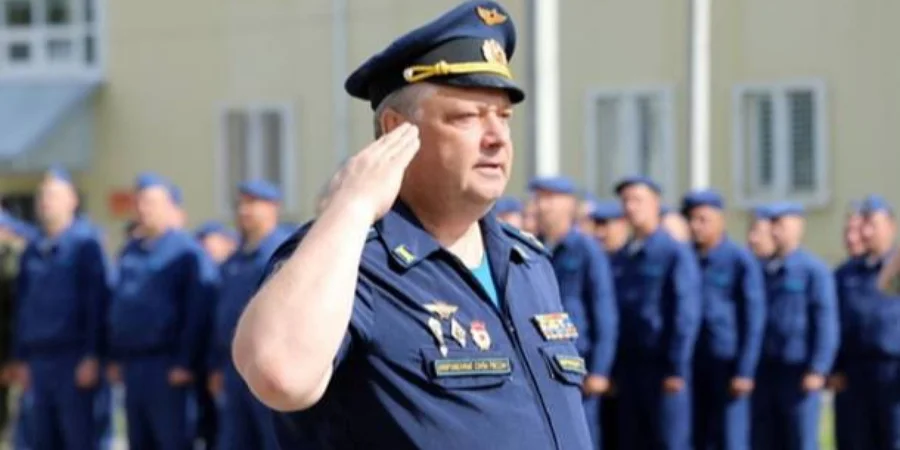
    Gunman on a motorcycle shoots the Russian air force general Ukraine says ordered the strike on Kyiv's children's hospital. The officer was hit twice as he stepped outside in a settlement near Engels, and surgeons in Saratov worked through the morning to keep him alive.

    For first time, Ukraine shows its British Rapid Ranger air-defense system mounted on Spanish off-road chassis. Its crews call it "close-range storm". This 500-kilogram missile system is designed to catch what radar misses.

    Intelligence and technology

    Russia's answer to Starlink was written off as a failure, its satellites are still climbing. Forty-six days after their 19 July launch, the new craft sit at a median 365 km, higher than Russia's already-working first batch was at the same age.

    Russia straps two small attack drones to wings of its long-range Gerans and releases them deep inside Ukraine. It rarely works, Flash says. An FPV drone drop was recently recorded in Kyiv Oblast, but there is no confirmation yet that it was carried out using a Gerbera.

    Russia now hunts Kyiv by daylight too, Flash explains why.

    International

    Germany suspects Russian intelligence behind arson attack as hybrid warfare threat grows across Europe. The Munich attack follows attempts to disrupt Germany's power grid and comes amid mounting evidence of Russian covert operations targeting European countries supporting Ukraine.

    Witkoff and Kushner to visit Kyiv and Moscow to revive peace talks as Russia ramps up attacks across Ukraine. The US envoys will meet Russian and Ukrainian leaders as Washington attempts to put peace talks back on track.

    Finland ran Europe's largest civil defense drill since World War II inside a shelter carved under a sports arena. More than two thousand people spent hours underground in Kuopio while rescue services tested a facility that had never once been used for its wartime purpose.

    Germany will close Russia's Bonn consulate after attributing Leipzig Airport drone attack to Moscow. Germany is tightening its response to Russia after the Leipzig drone plot, with new restrictions targeting Russian institutions and citizens as investigators identify two suspects.

    Estonia paid $81 million for Ukraine's shells to firm that had never made one, now its defense minister is out. Estonia may have to repay €70 million in EU funds. The ammunition failed quality standards.

    Poland sent Ukraine 350 tanks, Europe just agreed to refund it half a billion dollars. Once Hungary lifted its two-year veto, Warsaw's total refund for arming Kyiv is nearing $1.4 billion, with $500 million more due in 2027.

    EU foreign ministers want Russia's ex-fighters out. Nobody has written down what counts as proof. Each member state would have to judge individual cases, and the bloc set itself a June deadline for the plan that its council still cannot approve.

    Russian Black Sea attacks, low Danube waters push EU to seek alternative routes for Ukrainian grain exports. Ukraine's two main wartime export outlets are under pressure at once, threatening farm revenue as global crop prices climb.

    Ukraine takes Zelenskyy's Russian airspace warning to UN aviation body. Kyiv's letter asks the UN aviation body to recommend that member states stop flying over Russia.

    Belgium points Ukraine to next year's European loan instead of Russia's frozen cash. Earnings from the immobilized money underwrite an earlier European loan, while the sum they come from stays behind one government's objections.

    Humanitarian and social impact

    Ukraine adopts two-tier air raid alert system as Russia's mass drone attacks become the new normal. The new system will distinguish drone threats from the heightened threat of missile or combined strikes, changing how businesses and cities respond to air raids.

    Political and legal developments

    Ukraine orders temporary ceasefire as US envoys visit Moscow. Air raid alert sounds in Kyiv immediately as pause begins. The reported order covers 5–8 September as Washington seeks to restart peace talks after months of stalled negotiations, but Russian attacks continued as the pause was due to begin.

    After years of disputes, Hungary finds common ground with Ukraine, on honoring Soviet deportations from Zakarpattia. A Rada resolution honors thousands who died in a Soviet deportation campaign targeting Hungarian- and German-speaking Zakarpattia residents.

    Ukraine's anti-corruption agencies target Prosecutor General's Office official linked to fraudulent call centers. The operation targets an alleged criminal organization linked to a network of fraudulent call centers and asset laundering.

    Read our previous daily review here.

    Ukraine orders temporary ceasefire as US envoys visit Moscow. Air raid alert sounds in Kyiv immediately as pause begins

    4 septembre 2026 à 17:25

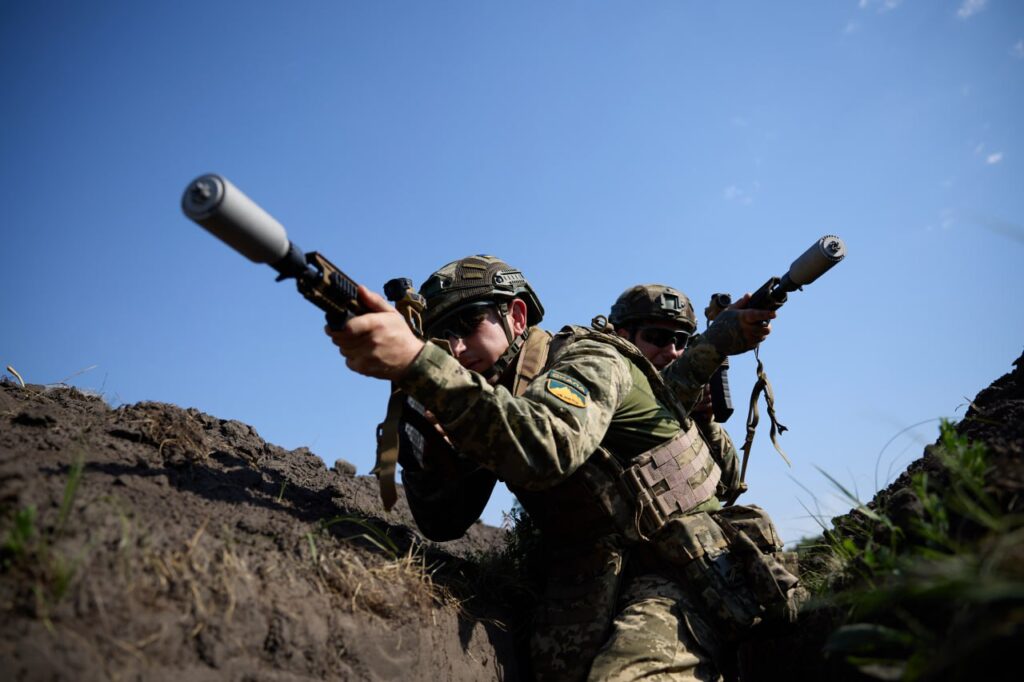
    Ukrainian soldier. Illustrative image. Photo: General Staff of Ukraine's Armed Forces

    Ukrainian Defense Forces units have been ordered to temporarily observe a ceasefire along the line of contact from 00:00 on 5 September through 23:59 on 8 September, Ukrainska Pravda reported, citing sources in several military brigades and a senior security official.

    The order comes as US President Donald Trump’s special envoys Steve Witkoff and Jared Kushner are expected to visit Moscow and Kyiv this weekend for talks aimed at ending Russia’s war against Ukraine.

    According to Ukrainska Pravda’s sources, Ukrainian units operating across the front have received instructions to observe the temporary “silence regime” during the four-day period.

    An air raid alert was issued in Kyiv at 00:00 on 5 September just as the temporary ceasefire was due to take effect, with Russian drones reported over Kyiv and Kharkiv oblasts.

    Pause coincides with US envoys’ visits

    Witkoff and Kushner are expected to meet Russian President Vladimir Putin in Moscow on 5 September before traveling to Kyiv for talks with Ukrainian President Volodymyr Zelenskyy on 6 September.

    Their visit comes after months of stalled negotiations. US-mediated talks between Russia and Ukraine froze in February following the outbreak of war between the US, Israel and Iran, while subsequent contacts between US, Russian and Ukrainian officials have failed to produce a breakthrough.

    US envoys Steve Witkoff and Jared Kushner at the Coalition of the Willing summit at the Élysée Palace, 6 January 2026. Photo: Presidential Office
    Explore further

    Witkoff and Kushner to visit Kyiv and Moscow to revive peace talks as Russia ramps up attacks across Ukraine

    Zelenskyy said on 4 September that Ukraine would ensure conditions for the US envoys’ safe travel and called for Russia to reciprocate by refraining from strikes during the period needed for the meetings and related logistics.

    The reported Ukrainian order would extend the pause beyond the envoys’ visits, covering 5–8 September.

    Russia has continued its intensive drone campaign against Ukrainian cities even as diplomatic contacts have resumed. Kyiv remains skeptical of Moscow’s willingness to accept a genuine ceasefire, with Ukrainian officials warning that Russia may use negotiations to buy time while continuing its military campaign.

    • ✇Euromaidan Press
    • Germany suspects Russian intelligence behind arson attack as hybrid warfare threat grows across Europe
      German security authorities have found strong indications that a suspected arson attack near defense companies in Munich may have been carried out on behalf of a Russian intelligence service, German broadcaster Tagesschau reported on 3 September. The attack is part of a growing series of suspected sabotage and espionage operations in Germany as European governments warn that Russia is using covert methods to target countries supporting Ukraine. Two Bulgarian national
       

    Germany suspects Russian intelligence behind arson attack as hybrid warfare threat grows across Europe

    4 septembre 2026 à 17:03

    German Federal police officer protecting the city

    German security authorities have found strong indications that a suspected arson attack near defense companies in Munich may have been carried out on behalf of a Russian intelligence service, German broadcaster Tagesschau reported on 3 September.

    The attack is part of a growing series of suspected sabotage and espionage operations in Germany as European governments warn that Russia is using covert methods to target countries supporting Ukraine.

    Two Bulgarian nationals were arrested after allegedly throwing incendiary devices at a construction site near the headquarters of Rohde & Schwarz in Munich. One device started a fire, while another was found unexploded and neutralized by police specialists. No one was injured and there was no major damage. The two suspects were placed in pre-trial detention on 4 September, according to Tagesschau.

    Rohde & Schwarz develops defense and security technology, including systems used to detect, track and jam drones. The construction site is also near the headquarters of Helsing, a German defense company that produces AI-enabled combat drones and supplies Ukraine’s armed forces.

    It has not been established whether either company was specifically targeted.

    Investigators suspect Russian intelligence link

    According to Tagesschau, German security authorities have strong indications that the Munich attack could have been carried out by so-called “low-level” or disposable agents working for Russian intelligence services.

    Such agents can be recruited through intermediaries to carry out individual tasks for payment, ranging from photographing defense companies to conducting sabotage operations.

    German authorities have already identified other cases in which people were allegedly recruited to gather information on defense companies involved in supporting Ukraine.

    In August, German authorities arrested a 33-year-old Ukrainian citizen in Thuringia who is accused of photographing a Bavarian defense company in June and sending the images to an alleged handler. Investigators suspect the activity was preparation for a sabotage operation, according to Tagesschau.

    German authorities also arrested two people in March over an alleged plot to spy on a Bavarian drone manufacturer and its managing director. Investigators said they believed the operation may have been intended to prepare the man’s assassination.

    Power-grid attacks remain unresolved

    The Munich attack came days after two attempts to sabotage Germany’s electricity grid in Brandenburg and North Rhine-Westphalia.

    The attacks involved improvised devices apparently designed to cause short circuits on high-voltage lines. German investigators are treating the cases as possible terrorism or anti-constitutional sabotage, according to Tagesschau.

    Authorities believe the two attacks may be connected, but have not established who was behind them. A Russian intelligence connection remains possible, although investigators currently have no evidence linking the power-grid attacks to the suspected Russian operation in Munich.

    German authorities are investigating multiple possible forms of hybrid activity rather than assuming that every recent sabotage incident has the same origin.

    More than 165 suspected sabotage cases and 747 suspicious drone incidents in Germany this year

    The incidents come amid a broader increase in suspected sabotage and espionage activity in Germany.

    A confidential assessment by Germany’s Federal Criminal Police Office (BKA) recorded more than 165 suspected sabotage cases across Germany between January and the end of August, according to Tagesschau.

    The assessment also recorded 112 crimes linked to espionage, including 26 cases in which authorities suspect agent activity for sabotage purposes.

    German authorities recorded 747 suspicious drone incidents during the same period, involving 1,068 drones spotted over critical infrastructure, military facilities and defense companies.

    The figures do not establish that Russia was responsible for all of these incidents. But German authorities have increasingly identified Russian intelligence services as a potential source of sabotage and espionage as Moscow seeks to pressure European countries supporting Ukraine.

    Germany and its allies have also accused Russia of being behind an August drone attack at Leipzig/Halle Airport, which Berlin and its partners described as part of a Russian hybrid campaign intended to intimidate and divide European countries supporting Ukraine.

    German Foreign Minister Johann Wadephul stands behind a lectern during a press conference.
    Explore further

    Germany blames Moscow for Leipzig drone attack, closes consulate and cultural center among sweeping diplomatic measures

    The suspected Munich attack adds to growing evidence that Russia’s war against Ukraine is being accompanied by covert operations targeting the defense industry and critical infrastructure of countries helping Kyiv.

    After years of disputes, Hungary finds common ground with Ukraine—on honoring Soviet deportations from Zakarpattia

    4 septembre 2026 à 15:53

    Aerial view of Ukraine’s Verkhovna Rada building in Kyiv, topped by the Ukrainian flag.

    Budapest praised the Verkhovna Rada—Ukraine’s parliament—after it voted 261–0 to classify mass arrests, deportations, and persecution by the Soviet military administration in Zakarpattia (also known as Transcarpathia) from 1944 to 1946 as crimes of the communist regime.

    The vote makes the Verkhovna Rada the first state body in the world to recognize the repression of Zakarpattia’s Hungarian community as a crime, according to European Pravda. It creates an opening for historical reconciliation after years of minority-rights disputes, strained relations, and blocking Ukraine’s EU accession. However, Budapest continues to press Kyiv for further concessions.

    After Soviet forces took control of Zakarpattia—Ukraine’s westernmost region, bordering Hungary and home to the country’s largest ethnic Hungarian community—the NKVD, Stalin’s secret police, and SMERSH, Soviet military counterintelligence, detained civilian men aged 18 to 50 under the pretext of mobilization.

    The men were deported without trial to labor camps and the Soviet Gulag prison-camp system. Hungary’s Foreign Ministry said tens of thousands of Hungarian- and German-speaking men were deported, and many thousands died under the inhumane conditions of forced labor.

    The campaign became known in Hungarian as malenkij robot. Derived from a Russian phrase meaning “a little work,” Soviet troops used this deceptive phrase when taking people away.

    Hungarian Foreign Minister Anita Orbán—no relation to former Prime Minister Viktor Orbán—called the declaration “a fitting tribute” to thousands targeted by Soviet terror because of their Hungarian identity. She said Hungary was ready to help uncover the truth about the past and honor the victims.

    Hungary welcomes the Ukrainian parliament’s declaration condemning Soviet authorities' coercive measures against the Hungarian community in Transcarpathia between 1944 and 1946. The declaration is a fitting tribute to the thousands of victims of deportation and forced labor…

    — Anita Orban (@_OrbanAnita) September 3, 2026

    The resolution calls for memorials, archival publications, research, and the inclusion of the repression in educational programs. It also draws a parallel with Russia’s present-day occupation practices, saying Moscow is committing similar large-scale repression against civilians in occupied Ukraine.

    Marton Hajdu, chair of the Hungarian parliament’s foreign affairs committee, nevertheless said reconciliation must be accompanied by Kyiv’s full implementation of its June agreement with Budapest on minority rights.

    A cautious thaw in Hungarian-Ukrainian relations

    The exchange adds to tentative signs of improving relations since Péter Magyar ended Viktor Orbán’s 16 years in power in April. Magyar’s government summoned Russia’s ambassador after Moscow struck Zakarpattia and later closed a money-laundering case involving $82 million belonging to Ukraine’s state-owned Oschadbank, reversing another Orbán-era dispute.

    Budapest and Kyiv also reached a June agreement covering Hungarian-language education and the use of Hungarian in public services. Yet Magyar’s government has continued to slow parts of Ukraine’s EU accession process amid domestic pressure to defend Zakarpattia’s Hungarian community. The recognition of Soviet crimes, therefore, provides new common ground without settling the wider disagreements between the neighbors.

    Ukraine’s anti-corruption agencies target Prosecutor General’s Office official linked to fraudulent call centers

    4 septembre 2026 à 14:19

    nabu

    Ukraine’s National Anti-Corruption Bureau (NABU) and Specialized Anti-Corruption Prosecutor’s Office (SAPO) have launched an operation targeting an alleged criminal organization headed by an official of the Prosecutor General’s Office and involved in protecting a network of fraudulent call centers and laundering assets.

    Fraudulent call centers have become a major organized-crime problem in Ukraine, with authorities investigating hundreds of suspected operations and working with international partners to pursue these networks.

    NABU announced the operation on 4 September, saying further details would be released later.

    Deputy department head reportedly detained

    Ukrainska Pravda, citing sources, reported that NABU and SAPO had detained Serhii Kropyva, deputy head of the Prosecutor General’s Office’s Department of International Legal Cooperation.

    Ukrainska Pravda also reported that investigators were carrying out searches at the Prosecutor General’s Office. The outlet published footage showing NABU employees entering the building, including climbing over its fence with ladders.

    The allegations against Kropyva have not been detailed publicly by NABU, and his detention has not been officially confirmed by the Prosecutor General’s Office.

    Prosecutor General’s Office pledges cooperation

    The Prosecutor General’s Office said the circumstances surrounding the possible involvement of one of its employees in illegal activity connected to fraudulent call centers must be established by investigators.

    The office said it would provide anti-corruption authorities with all information and assistance required by law and that the case should receive an objective legal assessment.

    The employee under investigation will be suspended from official duties for the duration of the pre-trial investigation, according to the Prosecutor General’s Office.

    Ukraine has been targeting fraudulent call centers

    The Prosecutor General’s Office said authorities have carried out more than 1,050 searches over the past 12 months and shut down around 340 fraudulent call centers comprising more than 5,000 operator positions.

    Ukrainian prosecutors have also participated in 37 international joint investigation teams coordinated by Eurojust and supported by Europol, the office said.

    Authorities are currently investigating 147 criminal proceedings related to the activity. More than 183 people have been notified of suspicion, while indictments against 93 people have been sent to court, according to the Prosecutor General’s Office.

    The established losses suffered by victims amount to tens of millions of hryvnias, it said.

    Kropyva’s previous positions

    According to Ukrainska Pravda, Kropyva previously worked in Ukraine’s Cyber Police, where he headed its Kyiv department and later served as first deputy head.

    The outlet reported that former Prosecutor General Iryna Venediktova appointed Kropyva to head a newly created department in 2022 without a competitive selection process. The department was responsible for economic crimes and state cybersecurity, according to Ukrainska Pravda.

    Before joining the Prosecutor General’s Office, Kropyva reportedly served as deputy head of the Odesa Regional State Administration under Oleh Kiper.

    The investigation is ongoing, and the allegations have not yet been adjudicated by a court.

    • ✇Euromaidan Press
    • Ukraine adopts two-tier air raid alert system as Russia’s mass drone attacks become the new normal
      The Cabinet of Ministers of Ukraine adopted a decision to introduce two levels of air alerts, with yellow for drone attacks and red for a heightened threat of missile or combined strikes, Prime Minister Serhii Koretskyi said on 3 September. Under the yellow level, designated businesses can operate if they meet safety requirements, while a red alert will require work to stop and people to move to shelters. Russia continues to attack Ukrainian cities with drones and other
       

    Ukraine adopts two-tier air raid alert system as Russia’s mass drone attacks become the new normal

    4 septembre 2026 à 13:53

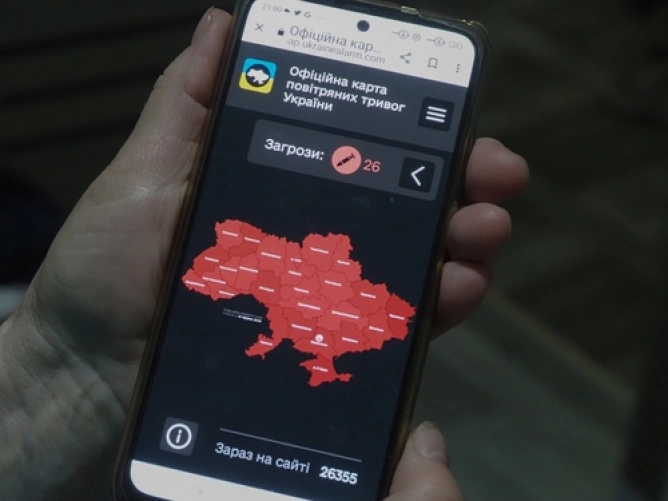
    the Official Map of Air Alerts in Ukraine

    The Cabinet of Ministers of Ukraine adopted a decision to introduce two levels of air alerts, with yellow for drone attacks and red for a heightened threat of missile or combined strikes, Prime Minister Serhii Koretskyi said on 3 September. Under the yellow level, designated businesses can operate if they meet safety requirements, while a red alert will require work to stop and people to move to shelters.

    Russia continues to attack Ukrainian cities with drones and other long-range weapons, repeatedly disrupting civilian and economic activity. Ukrainian President Volodymyr Zelenskyy said Russia is using mass drone attacks to wear down civilian life and economic activity, while the existing system of signaling all aerial threats in the same way no longer fits Russia's tactics.

    How it will work

    Businesses cleared to operate under a yellow alert must ensure staff and visitors can reach shelters. Where that access is missing, the Cabinet is giving businesses three months to provide it.

    The General Staff, the Air Force, the government, the Defense Ministry, the Interior Ministry, and the State Emergency Service will set the specific indicators for declaring each level weekly, Zelenskyy said.

    What still has to be worked out

    Zelenskyy also directed officials to develop geographic targeting for alerts, so warnings can be limited to areas facing an actual threat. The measure is still being worked out and is not yet part of the new system.

    The new approach is intended to allow economic activity to continue during drone threats while preserving stricter measures for more serious attacks. The government has not yet finalized which businesses will qualify to remain open under a yellow alert or all of the criteria for applying the two levels.

    • ✇Euromaidan Press
    • Witkoff and Kushner to visit Kyiv and Moscow to revive peace talks as Russia ramps up attacks across Ukraine
      US President Donald Trump’s special envoys Steve Witkoff and Jared Kushner are expected to travel to Moscow and Kyiv this weekend for talks aimed at restarting efforts to end Russia’s war against Ukraine, Axios reported, citing US officials. The planned trip comes as Washington seeks to revive negotiations that stalled earlier this year and as Russia continues its military campaign against Ukraine. Russia has dramatically stepped up its attacks on Ukraine in recent week
       

    Witkoff and Kushner to visit Kyiv and Moscow to revive peace talks as Russia ramps up attacks across Ukraine

    4 septembre 2026 à 13:23

    US envoys Steve Witkoff and Jared Kushner at the Coalition of the Willing summit at the Élysée Palace, 6 January 2026. Photo: Presidential Office

    US President Donald Trump’s special envoys Steve Witkoff and Jared Kushner are expected to travel to Moscow and Kyiv this weekend for talks aimed at restarting efforts to end Russia’s war against Ukraine, Axios reported, citing US officials.

    The planned trip comes as Washington seeks to revive negotiations that stalled earlier this year and as Russia continues its military campaign against Ukraine. Russia has dramatically stepped up its attacks on Ukraine in recent weeks, launching increasingly large waves of drones and missiles against Ukrainian cities and infrastructure.

    Moscow talks Saturday, Kyiv on Sunday

    Witkoff and Kushner are expected to travel to Moscow on Friday, 4 September, and meet Russian President Vladimir Putin on Saturday, 5 September, Axios reported.

    They are then scheduled to travel to Kyiv for talks with Ukrainian President Volodymyr Zelenskyy on Sunday, 6 September. Zelenskyy confirmed the planned meetings on 4 September.

    The Kyiv visit would be the first by Witkoff and Kushner since Trump returned to the White House. The two envoys have traveled to Moscow several times to meet Putin but have not previously visited Kyiv during the current Trump administration.

    Ukrainian and US officials have discussed a Kyiv visit for several months, but it has reportedly been postponed multiple times for various reasons.

    Zelenskyy confirms visit, calls for reciprocal pause in strikes

    Zelenskyy said Ukraine is preparing for the envoys’ visit and will ensure the necessary conditions for their safe arrival.

    He said Ukraine would refrain from airstrikes against Russia for the period required for the talks and related logistics, and called on Moscow to provide a reciprocal pause in its air attacks.

    “We care specifically about them, not Russia,” Zelenskyy said, adding that Kyiv expects Russia to “mirror” the pause.

    Zelenskyy said Ukraine wants the visit and negotiations to be as constructive and substantive as possible, while acknowledging that the outcome will depend on the proposals Witkoff and Kushner bring and Russia’s response to them.

    Talks stalled earlier this year

    The Trump administration’s mediation between Russia and Ukraine was effectively frozen in February after the outbreak of the US-Israeli war with Iran.

    Witkoff and Kushner have continued holding separate discussions with Russian and Ukrainian negotiators in the months since, but the talks have produced little significant progress.

    The renewed push comes as Washington has again sought a path toward direct negotiations. CIA Director John Ratcliffe also recently traveled to Moscow and discussed the possibility of restarting diplomatic efforts, including a potential Trump-Putin-Zelenskyy summit.

    Kyiv remains skeptical of Moscow’s intentions

    The diplomatic effort comes alongside continued Russian attacks and an increasingly escalatory military situation.

    Kyiv has faced near-constant large-scale drone attacks in recent weeks, while Ukrainian officials have warned that Russia may be preparing further military escalation. Axios reported that Ukrainian officials remain highly skeptical of Putin’s intentions and believe Russia could be preparing a major escalation in the war.

    Smoke seen from the damaged SBU headquarters building on Volodymyrska Street in central Kyiv following a Russian drone strike on 4 September, 2026. Screenshot from video: Suspilne
    Explore further

    Russian drone strikes SBU headquarters in central Kyiv. Zelenskyy says “geography” of Ukraine’s response is set

    At the same time, Ukrainian officials have continued to argue that negotiations should not be abandoned.

    Kyrylo Budanov, Zelenskyy’s chief of staff and former military intelligence chief, told The New York Times that US-mediated talks could resume in September. He said, however, that conditions for a ceasefire were unlikely to emerge before spring 2027.

    Budanov has argued that Ukraine must keep diplomatic channels open even while fighting continues, saying that “the war cannot be eternal.”

    The planned meetings will therefore take place against a backdrop of continued battlefield fighting and increased air attacks, with major disagreements still unresolved between Kyiv and Moscow.

    Russian drone strikes SBU headquarters in central Kyiv. Zelenskyy says “geography” of Ukraine’s response is set

    4 septembre 2026 à 12:06

    Smoke seen from the damaged SBU headquarters building on Volodymyrska Street in central Kyiv following a Russian drone strike on 4 September, 2026. Screenshot from video: Suspilne

    A Russian drone struck the central building of Ukraine’s Security Service (SBU) on Volodymyrska Street in central Kyiv on September 4, injuring 12 people, according to Ukrainian officials.

    The strike hit the SBU’s central headquarters directly opposite St. Sophia’s Cathedral, one of Kyiv’s best-known historic landmarks.

    Kyiv Mayor Vitali Klitschko said nine of the injured were hospitalized, with two in serious condition.

    Drone targeted SBU chief’s office

    Ukrainian President Volodymyr Zelenskyy said the drone was directed toward the office of SBU chief Oleksandr Poklad inside the building.

    The SBU confirmed that the strike was deliberately aimed at Poklad’s office, but said he was not injured.

    Zelenskyy said he had ordered Poklad to prepare a “meaningful” and, if possible, symmetrical response to the Russian attack, with Ukraine’s military supporting the operation.

    Later, Zelenskyy said Ukraine had already determined the "geography" of its response and would choose the timing based on when it could achieve an effective result.

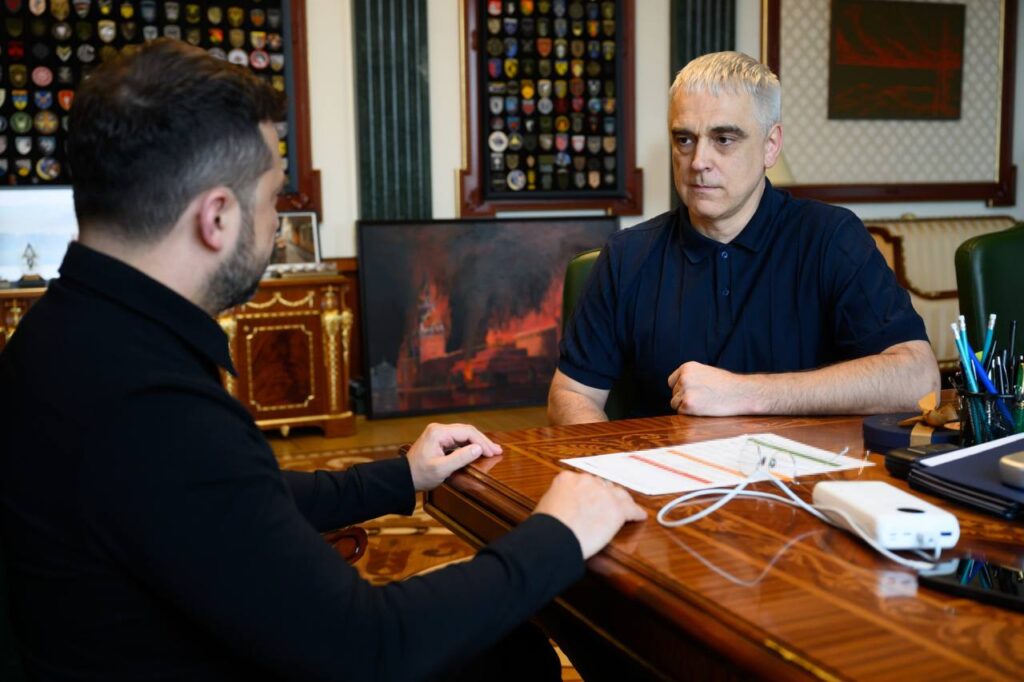
    SBU chief Oleksandr Poklad meets with Ukrainian President Volodymyr Zelenskyy following a Russian drone strike on SBU headquarters in Kyiv, 4 September 2026. Photo: Zelenskyy
    SBU chief Oleksandr Poklad meets with Ukrainian President Volodymyr Zelenskyy following a Russian drone strike on SBU headquarters in Kyiv, 4 September 2026. Photo: Zelenskyy

    Ukrainian Foreign Minister Andrii Sybiha called the strike on the SBU headquarters “major escalation that demands resolute responses,” saying it showed Moscow’s rejection of diplomacy during a renewed push for peace.

    The Russian attack on Ukraine’s Security Service Headquarters is a major escalation that demands resolute responses.

    Moscow launched this strike during a renewed push for peace — laying bare its true rejection of diplomacy.

    Located nearby, the UNESCO World Heritage Site — St.… https://t.co/3gjvVXJJfl

    — Andrii Sybiha 🇺🇦 (@andrii_sybiha) September 4, 2026

    Kyiv faces near-daily Russian drone attacks

    The strike occurred in the middle of the day in one of central Kyiv’s busiest areas, with large numbers of civilians and vehicles on nearby streets, according to Euromaidan Press sources on the ground.

    The attack came amid a sustained Russian campaign of drone attacks on Kyiv and the surrounding oblast, with the capital repeatedly targeted by large waves of jet-powered Geran drones and other weapons.

    The attacks have increasingly brought explosions, fires and falling debris to residential and civilian areas across the capital and its suburbs, forcing emergency crews to respond repeatedly as the city remains under a persistent aerial threat.

    Russia’s new models of Geran drones, developed from Iranian-designed Shaheds, are harder for Ukrainian air defenses to intercept. Moscow is deploying them in growing numbers, increasing the chances that drones reach Ukrainian cities and intensifying the threat to civilians.

    Building damaged and fire breaks out

    The drone strike caused a fire in the building, which emergency crews later extinguished.

    Klitschko said sections of the building’s ceiling and an exterior wall were destroyed. Emergency services remained at the scene after the fire was brought under control.

    The SBU said the damaged headquarters would be restored.

    The agency also vowed that Russia would face a response through further Ukrainian operations, including strikes against Russian assets and networks.

    A Russian drone struck the Ukrainian Security Service (SBU) headquarters on Volodymyrska Street in central Kyiv on September 4, injuring 12 people.

    The drone was deliberately directed at the office of SBU chief Oleksandr Poklad, according to Ukrainian officials, but he was not… pic.twitter.com/DQ76MyAEeO

    — Euromaidan Press (@EuromaidanPress) September 4, 2026

    Historic Sofia Kyivska complex damaged

    The Russian strike also damaged a building within the National Conservation Area “Sofia Kyivska,” located directly across Volodymyrska Street from the SBU headquarters, according to Suspilne.

    According to the reserve’s director general Nelia Kukovalska, the blast shattered windows and destroyed the glass entrance structure of the complex’s Consistory building, whose exterior faces Volodymyrska Street.

    No one at the reserve was injured, as staff and visitors took shelter. The historic St. Sophia Cathedral itself was not damaged, according to Kukovalska.

    The St. Sophia Cathedral in Kyiv was founded in 1011, under the reign of Volodymyr the Great, the king who ruled Kyivan Rus from 980 to 1015. (Photo: ukrmandry.com.ua)
    The St. Sophia Cathedral in Kyiv was founded in 1011, under the reign of Volodymyr the Great, the king who ruled Kyivan Rus from 980 to 1015. (Photo: ukrmandry.com.ua)

    The nearby Zavertailo bakery was also damaged, though all staff and customers survived after taking shelter in the basement.

    • ✇Euromaidan Press
    • Russia’s answer to Starlink was written off as a failure—its satellites are still climbing
      Russia's newest batch of Starlink-style satellites is gaining altitude sooner and sitting higher than the country's already-working first batch did at the same point, an analysis by Ukrainian defense outlet Militarnyi found. That complicates recent reports that the batch will stay far below its working altitude—though a few of the craft clearly have malfunctioned. Moscow is racing to field its own orbital network to replace the Starlink service its troops used without a
       

    Russia’s answer to Starlink was written off as a failure—its satellites are still climbing

    4 septembre 2026 à 09:40

    Video still from Bureau 1440's recent launch of 16 Rassvet satellites into low earth orbit

    Russia's newest batch of Starlink-style satellites is gaining altitude sooner and sitting higher than the country's already-working first batch did at the same point, an analysis by Ukrainian defense outlet Militarnyi found. That complicates recent reports that the batch will stay far below its working altitude—though a few of the craft clearly have malfunctioned.

    Moscow is racing to field its own orbital network to replace the Starlink service its troops used without authorization, a system experts warn could one day relay commands to long-range strike drones.

    Where the "failure" verdict came from

    Business Insider reported that all 16 satellites in the second Rassvet batch—launched 19 July—had fallen short of their target orbit, citing public US Space Force tracking data. The Institute for the Study of War (ISW) noted that many of the craft sat between 300 and 400 kilometers, well below their intended orbit. Russia looks unprepared to deploy at this pace and will likely face further delays, ISW assessed. At those low heights, thicker air drags on satellites and shortens their lives. Rassvet—Russian for "Dawn"—is built by the Russian firm Bureau 1440. Moscow rushed the network in after SpaceX cut off Russian forces' access to Starlink.

    What the altitude data shows

    Militarnyi's own reading of the tracking record points the other way. A rocket drops the satellites near 300 kilometers, and they raise themselves over months on their own engines. The July batch fired those engines days earlier than the March group, giving it a head start. By day 46, the new batch's median altitude was 365 kilometers, against 314 for the first. Thirteen of the new craft had passed 320 kilometers and ten cleared 350, against five and one for the first batch. The newer craft climb at a slower daily pace, but the early start left them well ahead on height.

    Militarnyi cautions that the batch cannot be judged before roughly 100 to 125 days after launch—around late October—the window in which most of the March craft passed 500 kilometers.

    The malfunctions are real

    Two satellites show no real climb and are sinking toward the atmosphere, a third rose and slipped back, and a fourth stalled with the cause unclear. The March launch lost one craft outright and left two more stuck below working height. The company had listed a target orbit near 800 kilometers, yet the first batch settled far lower and still works. Militarnyi counts thirteen of its satellites in a stable orbit near 508 kilometers, where Business Insider and ISW put twelve of them at roughly 550. By its count, they now open at least two communication windows over Ukraine each day, each running longer than an hour.

    • ✇Euromaidan Press
    • Drones hit fuel depots in Sochi and an explosives plant 1,300 km away on the same night
      Ukrainian drones set fire to two fuel depots around Sochi and hit a Russian air defense position overnight on 4 September, according to monitoring channels. They also reported that drones struck an explosives factory and a petrochemical plant in Bashkortostan the same night, more than a thousand kilometers from Ukraine. Russian officials acknowledged the depot fire and said nothing about the air defense site. The strikes are part of Ukraine's long-range campaign against
       

    Drones hit fuel depots in Sochi and an explosives plant 1,300 km away on the same night

    4 septembre 2026 à 09:28

    drones hit fuel depots sochi explosives plant 1300 km away same night · post fires russian city after ukrainian drone strike 4 2026 пожежі у російському місті сочі внаслідок удару

    Ukrainian drones set fire to two fuel depots around Sochi and hit a Russian air defense position overnight on 4 September, according to monitoring channels. They also reported that drones struck an explosives factory and a petrochemical plant in Bashkortostan the same night, more than a thousand kilometers from Ukraine. Russian officials acknowledged the depot fire and said nothing about the air defense site.

    The strikes are part of Ukraine's long-range campaign against Russian refineries, fuel depots, and military plants, run with cheap drones deep inside Russia. Oil proceeds fuel Russia's war machine and its whole economy.

    Two depots burned behind their anti-drone screens

    Astra's OSINT analysts geolocated the fires to the Rosneft-Kubannefteprodukt depot in Sochi's Adler district and to the Lukoil-Yugneftprodukt depot on the federal territory of Sirius. Sochi mayor Andrei Proshunin confirmed a fire at a depot. The regional operational headquarters claimed there were no casualties. Sochi is a Russian resort city on the eastern Black Sea coast, about 600 km from the frontline in Ukraine.

    Fires broke out at two fuel depots in and beside Sochi, southern Russia, after drones struck overnight

    One is a Rosneft depot in the resort's Adler district, the other a Lukoil site on the federal territory of Sirius, reported the Russian news Telegram channel Astra, which… pic.twitter.com/JqXiw2pRYG

    — Euromaidan Press (@EuromaidanPress) September 4, 2026

    The Ukrainian OSINT channel Cyberboroshno identified one of the hit sites as the BATO aviation fuel terminal, which fuels aircraft at airports across Krasnodar Krai. Every tank there stood behind purpose-built protective structures, Militarnyi reported, and the Lukoil site holds 12 tanks with a combined volume of about 8,400 m³. The burning depot sits roughly 100 meters from Sochi international airport, Russia's fifth-busiest by passenger traffic in 2024, the Russian outlet Agentstvo found.

    drones hit fuel depots sochi explosives plant 1300 km away same night · post protective structures around tanks bato aviation terminal russia 2026 захист резервуарів на тзк тов “базовий авіатопливний
    Protective structures around the fuel tanks at the BATO aviation fuel terminal in Sochi, Russia, September 2026. Photo: Cyberboroshno

    Panoramic imagery from this year shows anti-drone netting around the tanks at both depots. Two days before the strikes, Russian Deputy Prime Minister Aleksandr Novak claimed Russian refineries were better protected than those in the UAE, and Russian President Vladimir Putin said their protection level was now completely different.

    sochi sterlitamak map

    An air defense position caught fire near the Abkhazia border

    Astra analyzed eyewitness footage and placed a detonation and fire at a launch position near the settlement of Sirius, by the Psou river on the Abkhazia border, where an S-300 or S-400 system is based. The Ukrainian monitoring channels Exilenova+ and Supernova+ said drones struck the air defenses directly. Russia's Defense Ministry and local authorities reported nothing about it.

    drones hit fuel depots sochi explosives plant 1300 km away same night · post site strike russian air defense positions russia 4 2026 місце ураження позицій російської ппо в сочі
    The site of the strike on Russian air defense positions in Sochi, Russia, 4 September 2026. Photo: Exilenova+

    Drones had tried the same area in May. A Ukrainian sea drone struck the Russian supply vessel Nefrit at Sochi port the previous day.

    pic.twitter.com/V31JXjqaTD

    — Exilenova+ (@Exilenova_plus) September 3, 2026

    Explosives and petrochemicals hit in Bashkortostan

    Drones reached Sterlitamak on the morning of 4 September, hitting the Avangard plant and the Sterlitamak Petrochemical Plant, footage published by Supernova+ shows. Residents reported a series of explosions, and one man said on video that about a dozen drones had already flown toward the petrochemical works. The frames show Ukrainian FP-1 strike drones. 

    drones hit fuel depots sochi explosives plant 1300 km away same night · post smoke over sterlitamak russia after strike avangard 4 2026 наслідки ураження заводу фкп «авангард» у російському
    Smoke over Sterlitamak, Russia, after the strike on the Avangard plant, 4 September 2026. Photo: Supernova+

     Russia's Defense Ministry claimed it downed 490 drones overnight across several regions, occupied Crimea, and the Black Sea.

    Avangard makes explosives, ammunition, and casings on Russian state defense orders, and also disposes of ballistic missile solid fuel. It belongs to Rostec and sits on the sanctions lists of several countries. The petrochemical plant, about 1,300 km from Ukraine's border, produces rubber, aviation gasoline, and the additive ionol for Russian industry, Militarnyi said. Drones have hit it in November 2025 and in January and April 2026.
    • ✇Euromaidan Press
    • Spain keeps arming Ukraine against Russia’s ballistic missiles—and promises even more
      Spain will send Ukraine more Patriot interceptor missiles, Foreign Minister José Manuel Albares confirmed, according to Le Monde. Patriot interceptors are among the few weapons Ukraine has that can stop Russian ballistic missiles. The specialized rounds are scarce worldwide, and manufacturer Raytheon cannot build them fast enough to meet demand. Each costs $3 million to $4 million. Spain confirms the flow will grow Albares spoke at an informal meeting of European
       

    Spain keeps arming Ukraine against Russia’s ballistic missiles—and promises even more

    4 septembre 2026 à 08:42

    Patriot ukraine air defense

    Spain will send Ukraine more Patriot interceptor missiles, Foreign Minister José Manuel Albares confirmed, according to Le Monde.

    Patriot interceptors are among the few weapons Ukraine has that can stop Russian ballistic missiles. The specialized rounds are scarce worldwide, and manufacturer Raytheon cannot build them fast enough to meet demand. Each costs $3 million to $4 million.

    Spain confirms the flow will grow

    Albares spoke at an informal meeting of European Union foreign ministers in Ireland on 2 September. He reaffirmed Madrid's support as Kyiv pressed for more interceptors. "We have been doing this for a long time, and we will continue to do so," he said. He confirmed that Madrid is preparing a new batch. EU foreign policy chief Kaja Kallas said the bloc is also working with non-member states to lift Ukraine's air defenses.

    Madrid and Kyiv meet in Wicklow

    The confirmation followed talks with Ukrainian Foreign Minister Andrii Sybiha. They met on the sidelines of the same EU gathering, in Wicklow. Sybiha said he pressed Ukraine's urgent need to strengthen its air and ballistic missile defenses. He also thanked Spain for its solidarity. Albares reaffirmed Spain's role as a founding member of the Integrated Anti-Ballistic Missile Coalition, which ten countries launched in Paris on 13 July. The group aims to build a shared anti-ballistic capability, and its declaration calls the coalition purely defensive. Spanish military instructors are training Ukrainian technicians to maintain the systems.

    What Spain has promised so far

    Spain is not just giving—it is also buying. In December 2025, Madrid signed a $1.7 billion contract with US arms maker Raytheon for four new Patriot systems. It was Spain's largest Patriot order yet. The deal covers radars, launchers, command-and-control stations, and training. Spanish firm Sener builds the control system for the GEM-T interceptor those launchers fire. Spain is one of only a handful of European countries that operate Patriots.

    What Spain has already sent

    Spain has supplied Ukraine with Patriot missiles before. In March, Madrid pledged five older PAC-2 interceptors from an air-defense artillery regiment at Marines, near Valencia. Madrid has pledged €1 billion ($1.16 billion) in military aid for 2026. Ukraine has spent months urging partners to release interceptors from their stockpiles.

    Finland ran Europe’s largest civil defense drill since World War II inside a shelter carved under a sports arena

    4 septembre 2026 à 06:24

    finland ran europe's largest civil defense drill since world war ii inside shelter carved under sports arena · post students luola underground divided rooms green partitions during finland's exercise kuopio

    Finland shut more than 2,000 people into a rock-hewn shelter that is normally a sports hall in Kuopio on 2 September, with some remaining overnight to practice operating the facility, the Associated Press reportedThe two-day exercise, Shelter 2026, was the largest civil defense drill in Europe since World War II, by AP's account. Its scenario had cyberattacks cutting power and water while the threat of Russian missile strikes grew.

    Russia attacks Ukrainian cities from the air night after night, striking apartment blocks, hospitals, and the power grid because its army cannot take the country on the ground, and the raids have grown heavier.  In places, Ukrainians answered by moving part of daily life underground, where tens of thousands now sleep in metro stations each night, and some schools operate in shelters. Finland has had its own extensive network of underground shelters since the Cold War era.

    What two hours underground exposed

    Three colleges got the alarm at 11:30 on 2 September, and students had about half an hour to reach the shelter, called Luola, or the Cave, Yle reported that evening. Staff barred the doors behind them. Partitions divided the sports hall into rooms of about 200 people. There were not enough beds, so people rested in shifts, and 60 dry toilets served everyone. The internet worked poorly, and the air grew heavy after an hour. The site holds up to 7,000 people under emergency law.

    Antti Haataja, preparedness chief at the North Savo Rescue Department, said the move underground went calmly and faster than he expected. A real emergency would put those inside to work, he added, including emptying the toilets. More than a hundred people stayed through the night into 3 September, Yle said, while AP described hundreds sleeping on trestle beds.

    Flags of Finland and NATO. Photo via Wikimedia Commons
    Explore further

    Finland ends nuclear weapons ban as parliament approves major NATO-aligned defense shift

    Finland is reading Ukraine's experience

    Retired Finnish Army Colonel Asko Muhonen, who organized the drill, said Finland has to learn from Ukraine, where people sometimes have only minutes to reach a metro station. What matters is cover they can actually get to, not a shelter that survives a nuclear blast. Ukraine's parliament is advancing a Finnish-style bill that would put one within 10 minutes of everyone.

    Dmytro Untila, 20, a Ukrainian student in Kuopio, was at home in Odesa when Russian missiles hit the city on 24 February 2022, and waited the strike out in his building's entrance hall, having nowhere better to go. Training like this would have helped in Ukraine, he said, "because nobody knew this could happen."

    The pressure Finland and its neighbors are drilling against

    Finland shares more than 1,300 km of border with Russia and joined NATO with Sweden after the full-scale invasion of Ukraine. Shelters answer only part of the pressure. Russia is running a campaign of sabotage across Europe, Western officials say, a Russian aircraft is suspected of having entered Finnish airspace on 20 August, and US intelligence has warned that Poland and the Baltic states may face wider Russian hybrid attacks for backing Kyiv.

    • ✇Euromaidan Press
    • Ukraine says it struck a Bastion in Crimea, the launcher Russia pairs Zircon and Oniks missiles on
      On 4 September, Ukraine's military intelligence agency HUR published drone footage of an August operation against a Russian coastal missile launcher in occupied Crimea, it said on Telegram. Its special unit Group 13 struck the launcher and hit fuel trucks and a command vehicle on the peninsula in the same operation.  Russia fires missiles and drones into Ukrainian cities every day, and much of what reaches the south lifts off from the occupied peninsula, which also carr
       

    Ukraine says it struck a Bastion in Crimea, the launcher Russia pairs Zircon and Oniks missiles on

    4 septembre 2026 à 04:46

    ukraine says struck bastion crimea launcher russia pairs zircon oniks missiles · post equipment under camouflage netting ukrainian drone's crosshairs occupied 2026 possibly covered nets news reports

    On 4 September, Ukraine's military intelligence agency HUR published drone footage of an August operation against a Russian coastal missile launcher in occupied Crimea, it said on Telegram. Its special unit Group 13 struck the launcher and hit fuel trucks and a command vehicle on the peninsula in the same operation. 

    Russia fires missiles and drones into Ukrainian cities every day, and much of what reaches the south lifts off from the occupied peninsula, which also carries the supply lines and air defense cover for Russia's southern front. Ukraine has spent the past year working through that base piece by piece — power, radars, launchers, bridges — to turn it into an island that has to be resupplied under fire.

    What HUR says its operators hit

    The target was a Bastion, the carrier of Zircon and Oniks missiles. Russia uses those missiles for terrorist strikes against Ukraine, HUR said.

    Group 13 operators destroyed and struck two fuel trucks and a command-and-staff vehicle belonging to Russian forces, the agency said. It placed the work in August 2026 without giving a date or a place on the peninsula.

    ukraine says struck bastion crimea launcher russia pairs zircon oniks missiles · post tanker trucks other vehicles russian position occupied filmed ukrainian drone 2026 hur news reports
    Tanker trucks and other vehicles at a Russian position in occupied Crimea, Ukraine, filmed from a Ukrainian drone in August 2026. Screenshot: HUR

    The footage shows the view from drone cameras closing on the targets. HUR did not say what kind of drones its operators used, and the unit works with both aerial and naval systems, including naval drones rigged to carry FPV drones.

    Designated 3K55, the system defends a shoreline and hits both surface and ground targets, warships among them. It takes up to five minutes to deploy, fires supersonic P-800 Oniks and hypersonic Zircon missiles, and reaches from 300 to 600 km depending on the missile and the mode of use. It doubles as an air defense asset, tracking up to 50 objects along the horizon at up to 250 km with passive radar and 450 km with active radar. Russia has fielded it since 2010 and builds it in a mobile version and a silo-based one.

    Other Ukrainian services have hit Bastions before

    Ukraine's Navy said its forces struck a Bastion's launch positions and deployment site on the peninsula overnight on 16 August, without naming a unit. Ukrainian forces hit a Bastion launcher in the occupied village of Aktachi in March, and in February they struck the concentration area of the Russian brigade that operates the system in Crimea.

    The Bastion coastal missile system.
    The Bastion coastal missile system. Illustrative photo from open sources.

    In an operation earlier in the summer, one of Group 13's uncrewed boats launched attack drones at two Russian radars in occupied Crimea without the vessel ever reaching shore.

    Strikes on the peninsula continued overnight

    Drone attacks on occupied Crimea have been running for weeks, and they continued into 4 September, though what was hit this time is not yet known. 

    Explosions sounded in Sevastopol and Dzhankoi district, Suspilne reported. Monitoring channels logged blasts and drone flights past 04:00, and satellite imagery showed a fire west of the airfield at Hvardiiske, with the cause unconfirmed. Russia's Defense Ministry claimed 490 drones downed over Crimea, other occupied territories, and Russian regions.

    Ukraine’s F-16s are so short of Western missiles that pilots fall back on jet’s built-in M61A1 Vulcan cannon, which risks killing civilians below

    4 septembre 2026 à 05:11

    A Ukrainian air force F-16.

    Ukraine's F-16 pilots are so short of air-to-air missiles that on some daytime sorties they go up with nothing but the plane's gun. Instead of using effective AIM-120 Advanced Medium-Range Air-to-Air Missile (AMRAAM) and the shorter-range AIM-9 Sidewinder, Ukrainian forces are left with the M61A1 Vulcan 20mm rotary cannon, which can pose a grave danger to civilians, the War Zone reports.

    Destroying Russian targets with the M61A1 Vulcan 20mm rotary cannon carries risks: the cannon rounds, similar to grenades, can strike a fairly wide area when they hit the ground, potentially killing innocent people.

    Worse, the AIM missiles the F-16s are rationing are the same ones that arm the NASAMS batteries defending Kyiv, so every jet-fired round competes with ground air defense for the same scarce stock.

    A 107th Wing commander using the callsign "Phantom" confirmed the shortage when a journalist asked him directly whether Ukraine was severely short of missiles for its F-16s.

    “Yes, that’s true. Any aircraft without weapons is … useless,” Phantom said.

    Kyiv wants the missiles, and a way to make them

    Stopping as many Russian Geran drones and cruise missiles as possible before they reach Ukrainian cities takes missiles, and Phantom was blunt about what the fleet needs. He called for more air-to-air missiles and for interceptors to reload the US-made ground-based Patriot batteries.

    "We require more means of protection, such as Patriot missiles and air-to-air missiles, AIM-9s or AIM-120s to our fleet," he said.

    The fix he wants outlasts any single shipment: "At least we need to try to increase the production, or at least to allow Ukraine to localize the production in Ukraine or other European countries."

    Until that exists, the arithmetic stays brutal, as every missile fired at a Russian drone or cruise missile is one fewer for the next attack.

    A cheaper rocket enters the mix

    One weapon Phantom did not mention may ease that math. Ukrainian F-16s now appear to carry the laser-guided 70mm APKWS II rocket.

    Built from a standard unguided rocket fitted with a laser-guidance kit, it is far cheaper than an AMRAAM and has already become a primary anti-drone weapon for US jets in the Middle East — a lower-cost way to knock down drones and subsonic cruise missiles without spending a scarce air-to-air missile on each one.

    • ✇Euromaidan Press
    • Germany will close Russia’s Bonn consulate after attributing Leipzig Airport drone attack to Moscow
      Germany will close Russia’s General Consulate in Bonn, terminate the agreement concerning the Russian House in Berlin, and tighten entry controls for Russian citizens. Foreign Minister Johann Wadephul announced this at a joint press conference with Interior Minister Alexander Dobrindt on 1 September, after German authorities formally attributed the attack at Leipzig/Halle Airport to Russia. German investigators have identified two suspects allegedly linked to the operat
       

    Germany will close Russia’s Bonn consulate after attributing Leipzig Airport drone attack to Moscow

    4 septembre 2026 à 04:18

    Germany will close Russia’s General Consulate in Bonn, terminate the agreement concerning the Russian House in Berlin, and tighten entry controls for Russian citizens. Foreign Minister Johann Wadephul announced this at a joint press conference with Interior Minister Alexander Dobrindt on 1 September, after German authorities formally attributed the attack at Leipzig/Halle Airport to Russia.

    German investigators have identified two suspects allegedly linked to the operation: a Russian-born man with a Latvian passport and a Belarusian man with a Russian passport. This information was reported by Süddeutsche Zeitung. Investigators believe both have links to Russian state structures, according to the report.

    Both men have already left Germany, complicating efforts to bring them to justice, Tagesschau reports. One of Berlin’s responses was the closure of Russia’s Consulate General in Bonn — the last Russian consulate general remaining in Germany.

    Table of The Russian Consulate General in Bonn, Germany. Photo: Marc John/IMAGO
    Table of The Russian Consulate General in Bonn, Germany. Photo: Marc John/IMAGO

    Germany tightens its Russia policy

    Russia’s General Consulate in Bonn will close on 18 September, according to Wadephul. Germany will also seek additional EU sanctions against people linked to Russian hybrid attacks, increase pressure on Russia’s “shadow fleet,” and strengthen entry controls for Russian nationals.

    He stated that since the beginning of "the unlawful war of aggression" against Ukraine, Germany's goal has been to bring the war to an end, restore the peace order in Europe, and return to a constructive relationship.

    "However, this requires a minimum level of willingness on the Russian side. We must acknowledge that Russia shows no willingness to reach an accommodation,” Wadephul said.

    Moscow rejected the accusations. Russian President Vladimir Putin called Germany’s response a “grave mistake,” TASS reports.

    The investigation leads to two suspects

    According to German investigators, the Belarusian suspect left DNA traces on one of the drones, inside a container containing explosives, and on an antenna found near the airport. The Russian-born suspect, who holds a Latvian passport, is believed to have coordinated and directed the operation, entered Germany through Berlin, and then traveled toward Saxony.

    The Russian-born suspect left Germany two days before the attack, while the Belarusian suspect also left the country.

    Drone found near a Ukrainian An-124 aircraft in Leipzig, Germany, on 5 August, 2026. Photo: screenshot from Bild video
    Drone found near a Ukrainian An-124 aircraft in Leipzig, Germany, on 5 August, 2026. Photo: screenshot from Bild video

    What happened at Leipzig Airport

    The diplomatic response stems from a sabotage attempt on 4 August, when a bomb-laden drone struck a Ukrainian An-124 cargo aircraft but failed to detonate. The drone, carrying explosives, remained unnoticed for about four hours before being discovered, while later analysis indicated it had been aimed at the aircraft near its fuel tanks.

    Russo-Ukrainian war, day 1653: Russian troops are grinding closer from multiple directions around Sloviansk and Kramatorsk

    4 septembre 2026 à 01:28

    Russo-Ukrainian war (daily review)

    Exclusives

    Desperate to save Sloviansk and Kramatorsk, Ukrainian forces counterattack and reinforce. A Russian pincer is slowly closing around the last two big free cities in eastern Ukraine's Donbas region. Winter will be a brief reprieve.
    NATO vows to defend every inch. Svalbard is where Russia plans to prove it won't.. The CIA chief's visit to Moscow gave rise to warnings that Russia may be preparing to strike the Baltics. However, Russia has an easier target for the goal of paralyzing NATO.

    Military

    Ukraine's Khartiia soldiers clear 4 km² near Kupiansk, while Russia pushes for main rail hub (VIDEO). On the left bank, Russian supply was so broken that they delivered water by drone.

    Gunman on a motorcycle shoots the Russian air force general Ukraine says ordered the strike on Kyiv's children's hospital. The officer was hit twice as he stepped outside in a settlement near Engels, and surgeons in Saratov worked through the morning to keep him alive.

    Russia now hunts Kyiv by daylight too, Flash explains why.

    Intelligence and technology

    Poland sent Ukraine 350 tanks—Europe just agreed to refund it half a billion dollars. Once Hungary lifted its two-year veto, Warsaw's total refund for arming Kyiv is nearing $1.4 billion—with $500 million more due in 2027.

    Russia straps two small attack drones to wings of its long-range Gerans and releases them deep inside Ukraine. It rarely works, Flash says. An FPV drone drop was recently recorded in Kyiv Oblast, but there is no confirmation yet that it was carried out using a Gerbera.

    For first time, Ukraine shows its British Rapid Ranger air-defense system mounted on Spanish off-road chassis. Its crews call it "close-range storm". This 500-kilogram missile system is designed to catch what radar misses.

    Ukrainian brigade trials Serval Cube EW dome in combat-like conditions, suppresses every drone launched at it. Serval Cube jams the control, navigation, and video-transmission channels a drone depends on rather than destroying it outright.

    International

    Ukraine takes Zelenskyy's Russian airspace warning to UN aviation body. Kyiv's letter asks the UN aviation body to recommend that member states stop flying over Russia.

    Humanitarian and social impact

    Russian Black Sea attacks, low Danube waters push EU to seek alternative routes for Ukrainian grain exports. Ukraine's two main wartime export outlets are under pressure at once, threatening farm revenue as global crop prices climb.

    Political and legal developments

    Estonia paid $81 million for Ukraine's shells to firm that had never made one—now its defense minister is out. Estonia may have to repay €70 million in EU funds. The ammunition failed quality standards.

    EU foreign ministers want Russia's ex-fighters out. Nobody has written down what counts as proof. Each member state would have to judge individual cases, and the bloc set itself a June deadline for the plan that its council still cannot approve.

    Belgium points Ukraine to next year's European loan instead of Russia's frozen cash. Earnings from the immobilized money underwrite an earlier European loan, while the sum they come from stays behind one government's objections.

    Read our earlier daily review here.

    Reçu — 3 septembre 2026 Euromaidan Press

    Estonia paid $81 million for Ukraine’s shells to firm that had never made one—now its defense minister is out

    3 septembre 2026 à 14:04

    Estonia's Defense Minister Hanno Pevkur.

    Estonia's defense minister resigned on 2 September over a failed €70 million ammunition deal for Ukraine, ERR reported. The state procurement agency paid EU funds to companies that had never sold artillery shells. Estonian taxpayers may now have to cover the losses.

    The Baltic states have poured billions into defense since Russia's full-scale invasion of Ukraine. Estonia alone redirected €500 million toward air defense and drones. It pledged 0.25% of GDP in annual aid for Kyiv. Defense budgets have grown faster than the procurement systems managing them.

    Minister walks over "socks and ammunition"

    Hanno Pevkur has held the post since 2022. Amid the scandal, he told Estonian public broadcaster ETV he would step down.

    "The minister does not count socks and ammunition," Pevkur said.

    RKIK's former chief countered that no major decisions were made without the ministry's approval.

    Three opposition parties called for his resignation before he announced it. Prime Minister Kristen Michal said Pevkur was not personally at fault but acknowledged political responsibility applied. The resignation followed a National Audit Office report released on 28 August. Estonia's Prosecutor's Office has also opened a criminal investigation into the procurement.

    The deal that fell apart

    In 2024, Estonia's Center for Defense Investments (RKIK) signed four contracts with Datasel S.R.L., an Italian-registered firm. Eesti Ekspress reported that the Indian company Neco Defense Munitions owned it. Neither had ever sold a single artillery shell. RKIK paid roughly $81 million in advance using the EU's European Peace Facility. The first delivery was due in November 2024. Ammunition that arrived failed to meet quality standards. Estonia canceled the deals and filed a case at the European Court of Arbitration in Strasbourg.

    Pevkur is the second Baltic defense minister to resign in four months. Latvia's Andris Sprūds stepped down in May after drone incursions from Russia's war destabilized the country's government.

    • ✇Euromaidan Press
    • Poland sent Ukraine 350 tanks—Europe just agreed to refund it half a billion dollars
      Poland will recover hundreds of millions of euros from a shared European Union fund for weapons it handed to Ukraine, the defense outlet Militarnyi reported. The money had been frozen for two years and only started moving after a change of government in Hungary lifted a veto. Europe's ability to keep weapons moving to Ukraine rests on members trusting they will be paid back for what they give away. When that cost-sharing seizes up, national governments face the full bil
       

    Poland sent Ukraine 350 tanks—Europe just agreed to refund it half a billion dollars

    3 septembre 2026 à 13:44

    Ukrainian troops train in Poland to master Allied Leopard 2 tanks

    Poland will recover hundreds of millions of euros from a shared European Union fund for weapons it handed to Ukraine, the defense outlet Militarnyi reported. The money had been frozen for two years and only started moving after a change of government in Hungary lifted a veto.

    Europe's ability to keep weapons moving to Ukraine rests on members trusting they will be paid back for what they give away. When that cost-sharing seizes up, national governments face the full bill alone, and the case for the next donation gets harder. A single member's veto can jam that machinery for years.

    The money starts flowing again

    Poland will receive up to $500 million in 2027 from the European Peace Facility (EPF), an EU fund that reimburses member states for military aid to Ukraine. Deputy Defense Minister Paweł Zalewski told the Polish news agency PAP that the ceiling combines the $465 million now secured with a possible $12–35 million more, depending on which of the two payout options the European Commission picks. Warsaw had already collected $960 million earlier, bringing its total EU reimbursement to roughly $1.4 billion.

    A Patriot air defense missile launcher. Photo: South Korean defense ministry.
    Explore further

    190 or 580 Patriot missiles? What Ukraine’s EU-loan request could buy—and why Washington still decides

    The reimbursements had stalled in 2024, when Hungary blocked a $7.7 billion tranche. Budapest dropped the veto in June 2026 after a new government took over, unfreezing the funds. The bloc is now steering part of the money toward joint arms purchases and its training mission for Ukraine, rather than just reimbursement.

    Where Poland stands among donors

    By Militarnyi's tally of Kiel Institute figures, total Polish aid has reached $6.8 billion, with $5.2 billion of that military. That ranks Poland 11th among donors by raw volume. When weighed against each country's economy, it ranks 9th, equal to 1.021% of Polish GDP, with the military share at 0.775%.

    View of the WB Group factory building in Skarżysko-Kamienna, Poland. August 2026.
    Explore further

    A masked figure got into a Polish drone-parts plant—Poland now suspects a foreign spy service set the fire

    What Warsaw handed over

    Poland has supplied ammunition and other weapons since early 2022, before the full-scale invasion, and has since handed over more than 350 tanks—14 Leopard 2A4, about 60 PT-91 Twardy, and roughly 280 Soviet-era T-72 variants. Warsaw also sent Krab self-propelled howitzers, Piorun shoulder-fired air-defense missiles, and Grad rocket launchers. Alongside Slovakia, it was among the first NATO states to send Ukraine fighter jets, delivering 14 MiG-29 jets and 10 Mi-24 attack helicopters between 2022 and 2024.

    • ✇Euromaidan Press
    • EU foreign ministers want Russia’s ex-fighters out. Nobody has written down what counts as proof
      EU foreign ministers have given broad backing to an entry ban on Russians who fought in Ukraine and to stricter tourist visa rules for Russian citizens, DW reported. The bloc's foreign policy chief announced that support on 2 September, after an informal meeting in Wicklow, Ireland, without setting out what the tightening would involve. She tied the visa question to the risk of sabotage in Europe. Russia has been attacking Ukraine since 2014 and at full scale since 2022
       

    EU foreign ministers want Russia’s ex-fighters out. Nobody has written down what counts as proof

    3 septembre 2026 à 11:33

    eu foreign ministers want russia's ex-fighters out nobody has written down what counts proof · post kaja kallas high representative affairs security policy 9 2025 ukraine news ukrainian reports

    EU foreign ministers have given broad backing to an entry ban on Russians who fought in Ukraine and to stricter tourist visa rules for Russian citizens, DW reported. The bloc's foreign policy chief announced that support on 2 September, after an informal meeting in Wicklow, Ireland, without setting out what the tightening would involve. She tied the visa question to the risk of sabotage in Europe.

    Russia has been attacking Ukraine since 2014 and at full scale since 2022, bombing Ukrainian cities, and for several years its agents have also worked inside Europe, cutting cables, flying drones over military bases, and setting fires at plants and warehouses that supply Ukraine. The bloc that funds much of Ukraine's defense has still not managed to keep the citizens of that state out of its own territory.

    "Broad support," and nothing pinned down

    EU foreign policy chief Kaja Kallas spoke to reporters after the ministers finished. 

    "There was broad support for moving ahead with a ban on entry to the EU for Russian ex-combatants and tougher visa restrictions for Russian tourists," she said.

    She did not name the restrictions planned for Russian tourists, say when they might take effect, or say which categories of Russian citizens they would cover.

    The bloc has no unified position on tightening visa rules further, Kallas acknowledged. Some member states have so far argued against additional steps in that direction, she said.

    greece blocked gas ban france italy softened entry ban—now brussels tries 1600 companies helping russia's war · post 9 parade moscow 2025 youtube/kremlin grate patriotic warr shitshow ukraine news ukrainian
    Explore further

    Russia’s former soldiers may face a locked EU border—if France and Italy stop balking

    Many EU countries say tourist visas serve sabotage preparation

    Reporters asked Kallas about accounts that one suspect in the Leipzig attack may have entered the EU on a tourist visa issued by Italy. German authorities have to confirm or refute those accounts, she said. If the information is correct, it shows that visas can be used to enter the bloc by potential wrongdoers who intend to harm it, she added. Many EU countries pointed out that tourist visas are used in preparing sabotage, because the people who carry it out need to get onto EU territory, she said.

    Berlin blamed Moscow for the hybrid attack in Leipzig on 1 September, and moved to close Russia's consulate in Bonn and end the agreement for a Moscow-backed cultural center in Berlin after the drone attack on Leipzig/Halle Airport. Lithuania has exposed a Russian military intelligence network behind attempted arson in four NATO countries, and someone left funeral wreaths outside defense companies in Lithuania and Czechia in late August.
    russia's ex-combatants entering eu risk flagged leaked threat assessment · post russian soldier captured perspective ukrainian fpv drone moments before impact 2025 birds magyar about strike ukraine news reports
    Explore further

    Russia’s ex-combatants entering the EU is a risk flagged in a leaked threat assessment

    "It is not normal": Russians in Europe while Russia bombs Ukraine

    Many ministers raised the visa question while the meeting was discussing Russia's war against Ukraine, Kallas said.

    "It is not normal when a country bombs Ukraine, kills civilians—in July and August more than ever during this war—and at the same time Russians enter and enjoy the hospitality of European countries. That should not be," she said.

    EU representatives said in July that the ban, kept separate from the tourist visa rules, was agreed in principle but still needed an evidence standard for refusing entry. The EU Council signs off after that, and the European Commission hoped at the time to finish by October.

    UN monitors counted 437 civilians killed and more than 2,600 injured across Ukraine in July, the deadliest month since 2022. That count included 183 children killed or injured, also the highest since 2022. Russian drones and missiles then kept Kyiv under near-constant fire for four days at the end of August.
    • ✇Euromaidan Press
    • Ukraine’s Khartiia soldiers clear 4 km² near Kupiansk, while Russia pushes for main rail hub (VIDEO)
      Ukraine's National Guard says its assault units have cleared four square kilometers of ground near Kupiansk. According to the military, fighters of the 23rd R.U.G. Assault Regiment of the Khartiia corps have pushed Russian forces out of territory between the settlements of Dvorichna and Zapadne, working with the 35th Separate Marine Brigade on one stretch. Russia wants Kupiansk as a logistics node and a springboard for pushing deeper into Kharkiv Oblast. Just outside t
       

    Ukraine’s Khartiia soldiers clear 4 km² near Kupiansk, while Russia pushes for main rail hub (VIDEO)

    3 septembre 2026 à 11:10

    Aerial photo of Kupiansk in Ukraine’s Kharkiv Oblast, August 2026. Photo: 41st Separate Mechanized Brigade

    Ukraine's National Guard says its assault units have cleared four square kilometers of ground near Kupiansk. According to the military, fighters of the 23rd R.U.G. Assault Regiment of the Khartiia corps have pushed Russian forces out of territory between the settlements of Dvorichna and Zapadne, working with the 35th Separate Marine Brigade on one stretch.

    Russia wants Kupiansk as a logistics node and a springboard for pushing deeper into Kharkiv Oblast. Just outside the city sits the Kupiansk-Vuzlovyi station, a key rail hub whose capture would let Russian forces move supplies and equipment far more easily.

    “Overall, another 4 square kilometers of Ukrainian territory have been liberated. As long as the enemy remains on our land, the work continues,” the National Guard said.

    Ukraine said its assault units have cleared another four square kilometers of ground near Kupiansk

    Fighters of the 23rd R.U.G. Assault Regiment of the Khartiia corps pushed Russian forces out of the territory between the settlements of Dvorichna and Zapadne
    🎥The National Guard pic.twitter.com/aOXrXm0BRw

    — Euromaidan Press (@EuromaidanPress) September 3, 2026

    A city fought over from both banks

    The clearing north of the city is only one part of a contested picture. Kupiansk straddles the Oskil River: Ukraine holds the left, eastern bank, while Russian forces have pushed onto the right, western bank closer to Ukraine's rear.

    On 2 September, Viktor Tregubov, head of communications for Ukraine's Joint Forces Group, said Russian troops had infiltrated part of northern Kupiansk on that right bank.

    "On the right bank, the Russians are trying to hold the northern parts of the city, where they've already infiltrated some of their fighters," he told Suspilne, adding that Ukrainian forces are making trouble for them there.

    The infiltrators are trying to reach the city through the village of Holubivka, he said.

    On the left bank, Russian units are trying to reach the railway station.

    "The Russians are pushing very hard toward it. They want to narrow our bridgehead," Tregubov reported.

    No confirmed Russian advance

    Back in July, Trehubov mentioned the Russian forces’ logistical problems in this direction, according to ArmyInform.

    He explained that logistics for Russian forces in the area had been effectively paralyzed by a fuel shortage, with even water being delivered exclusively by drones.

    • ✇Euromaidan Press
    • Russian Black Sea attacks, low Danube waters push EU to seek alternative routes for Ukrainian grain exports
      The European Union is discussing export support with Ukraine and its neighboring countries, including through so-called solidarity lanes, Agriculture Commissioner Christophe Hansen told Bloomberg on 2 September. Strikes in the Black Sea have curtailed exports from both Ukraine and Russia, while low water limits how much grain vessels can carry on the Danube, Ukraine’s main fallback when sea traffic slows. Wheat and corn prices are at multiyear highs, and the Bloomberg A
       

    Russian Black Sea attacks, low Danube waters push EU to seek alternative routes for Ukrainian grain exports

    3 septembre 2026 à 10:36

    russian black sea attacks low danube waters push eu seek alternative routes ukrainian grain exports · post civilian bulk carrier golden leo ablaze after missiles hit left odesa cargo corn

    The European Union is discussing export support with Ukraine and its neighboring countries, including through so-called solidarity lanes, Agriculture Commissioner Christophe Hansen told Bloomberg on 2 September.

    Strikes in the Black Sea have curtailed exports from both Ukraine and Russia, while low water limits how much grain vessels can carry on the Danube, Ukraine’s main fallback when sea traffic slows. Wheat and corn prices are at multiyear highs, and the Bloomberg Agriculture Spot Index jumped by more than 13% in August, its sharpest monthly rise in over a decade. Hansen said the EU’s role as a major food exporter means drought-driven production losses could cause shortages elsewhere.

    Created after Russia's full-scale invasion, the solidarity lanes carry Ukrainian exports by road, rail, and river through neighboring countries when Black Sea shipping is disrupted.

    The European Commission is separately weighing relief for drought-hit EU farmers. Hansen urged governments to use flexibilities in the Common Agricultural Policy, the EU's farm-subsidy system, including exemptions for circumstances beyond farmers' control, emergency fertilizer aid, and earlier payments, but proposed no new measures in a letter seen by Bloomberg. EU agriculture ministers are due to discuss the drought in Ireland next week and in Brussels later in September.

    Russian attacks squeeze Ukraine’s export routes

    Low water is only one obstacle to Ukraine’s southern export routes. Russia has repeatedly attacked ports and transport links along the Danube and on Odesa Oblast’s Black Sea coast. Some Ukrainian farmers have sold wheat below production cost as port prices fell, leaving less money for the next sowing.

    Romania detected more than 100 drones during seven attacks on Danube ports in mid-August, interim Romanian Defense Minister Radu Miruță said. Russia struck Izmail, Ukraine's largest Danube port, three times in August. The 29 August attack killed one person and destroyed five grain trucks, Odesa regional authorities said.

    Ukraine and Moldova have pursued a rail corridor through Moldova to Constanța, Romania’s main Black Sea port, as an alternative. Moldova later halved transit tariffs through 31 December. Ukrainian officials estimate the corridor could handle around 10% of Ukraine's grain exports, Reuters reported.

    Russia straps two small attack drones to wings of its long-range Gerans and releases them deep inside Ukraine. It rarely works, Flash says

    3 septembre 2026 à 10:26

    The image shows a fragment of a Russian drone Geran-4 in Kyiv Oblast. Source: Serhii "Flash" Beskrestnov

    Russia has been bolting small FPV attack drones to the wings of its long-range Gerans and releasing them deep inside Ukraine, far behind the front. The tactic may now have reached Kyiv Oblast, where an FPV drone was recently recorded, though it is not confirmed that a Geran delivered it, Serhii "Flash" Beskrestnov, the president's adviser on defense technologies, told UNIAN. A Geran drop is one of the versions being weighed.

    A Geran (the Russian-built version of Iran's Shahed-136) can fly hundreds of kilometers, so bolting short-range FPVs to its wings carries them far past the front line before release. Russia has done the same with its Molniya and Gerbera drones, and in May Euromaidan Press reported FPVs delivered this way, turning up dozens of kilometers from the border, on the ground, and even on the roofs of apartment buildings.

    A year-old experiment, still rare

    "The Russians have been running these experiments for a while. They attach two FPVs above the wings and drop them," Beskrestnov said.

    He last recorded the tactic a week ago in Konotop, in Sumy Oblast, where Russian forces held two such drones on a carrier's wings and released them.

    Until now, he added, it had shown up only on conventional Gerans. Holding an FPV on a jet-powered Geran is far harder because the speed is too high for a clean release, "but technologically it's entirely possible," Beskrestnov believes.

    Ukrainian air defenders have brought at least one carrier down: in March, the Darknode anti-Shahed unit destroyed a Geran carrying two wing-mounted FPVs over Ukrainian airspace before it could release them, Militarnyi reported.

    Low yield, mostly a scare tactic

    Russia uses the tactic sparingly, and by its own measure, it does not work well.

    "If you look at the number of successful strikes they've had with these FPVs, it's small," Beskrestnov explained, because controlling a drone dropped this way is difficult.

    The FPVs carry no large warhead, and the launches often serve mainly to terrorize civilians, he said.

    The dropped drones are usually flown over ordinary mobile networks rather than through a relay mounted on the carrier.

    "There's an ordinary SIM card, and they control the FPV through it," Beskrestnov said, adding that Ukraine has been recording the practice on and off for about a year.

    Gunman on a motorcycle shoots the Russian air force general Ukraine says ordered the strike on Kyiv’s children’s hospital

    3 septembre 2026 à 10:25

    gunman motorcycle shoots russian air force general ukraine says ordered strike kyiv's children's hospital · post major nikolai varpakhovich commander russia's 22nd heavy bomber aviation division николая варпаховича news ukrainian

    A gunman on a motorcycle shot a Russian Aerospace Forces officer twice in Saratov Oblast on the morning of 3 September, Radio Svoboda reported. Telegram channels identify the wounded man as Nikolai Varpakhovich, the major general who commands Russia's heavy bomber division at Engels. Ukraine's security service and prosecutors named that officer a suspect three days earlier over the missile strike on Kyiv's main children's hospital.

    Russia's strikes have hit hospitals, warehouses, railway infrastructure, residential neighborhoods, and the power system, which is a target again as winter approaches while protection work runs behind. The officers who plan and order the long-range strikes work far from any of it, so reaching one of them at all shifts a risk that has sat almost entirely on Ukrainian civilians. 

    Ukraine's services have pursued senior Russian officers in the rear, sometimes unofficially claiming the operation and sometimes saying nothing at all. Bombings have killed at least three generals in and around Moscow since December 2024, and a fourth died in a Moscow restaurant blast whose target Russia has never established. Nobody has claimed the Engels shooting yet, and Ukrainian officials have not commented on it.

    Two shots outside Engels, then the motorcycle was gone

    The attack happened in Probuzhdeniye, a settlement next to the city of Engels in Russia's Volga region. The Russian Telegram channel Shot said the officer was leaving a shop when an unknown man on a motorcycle fired twice, hitting his face and his body. Another Russian channel, Mash, reported that the gunman rode up to a detached house, that one bullet struck the abdomen and the other the head, and that surgeons removed both. The accounts of the spot and the wounds do not match.

    The officer's driver was hit as well, got away, and called an ambulance himself. The attacker wore a helmet and fled, and doctors in Saratov operated before preparing the officer for a flight to Moscow. 

    Kh-101 Russian missile hospital strike
    Explore further

    Forensic experts identify over 30 parts of Russian Kh-101 missile that hit Okhmatdyt hospital

    Russia confirms a shooting and leaves the name out

    The regional branch of Russia's Investigative Committee stated that someone had attempted to kill a serviceman and that the victim was hospitalized. Investigators stated they had recovered cartridge cases and bullets at the scene and opened a case for attempted murder and illegal weapons trafficking. They released no name.

    The  Telegram channel Dosye Shpiona, possibly linked to the Ukrainian special services, named the victim as Nikolai Varpakhovich, commander of the 22nd Heavy Bomber Aviation Division of Russia's long-range aviation. Meduza noted that no official source has confirmed this. Agentstvo reported that Varpakhovich comes from Ryazan, served earlier as deputy head of the 43rd flight-crew training center, and has lived in Saratov Oblast since at least 2024, with documents listing an apartment in Engels and a house in Probuzhdeniye.

    GRAU
    Explore further

    Car bomb kills Russian general who armed Russia’s war on Ukraine—fourth top officer assassinated near Moscow since late 2024

    Ukraine named him a suspect on 31 August

    The SBU and the Prosecutor General's Office announced an in absentia suspicion against Varpakhovich on 31 August. Investigators say he issued the combat order for the strike that hit Kyiv's Okhmatdyt children's hospital on 8 July 2024, killing two people and injuring 32. Russia's Defense Ministry claimed that day's missiles went at military-industrial sites and airbases.

    It was his second notice this year. Ukraine charged him in June over a 2022 cruise-missile strike on an Odesa apartment block that killed eight, and prosecutors had notified his division's commander of suspicion back in June 2023.

    Engels-2 is one of Russia's main strategic aviation bases, home to the Tu-95MS and Tu-160 bombers that fire Kh-101 cruise missiles at Ukrainian cities. Ukrainian drones have reached it repeatedly, and in late August the SBU's Alpha unit struck a Tu-95MS there, tearing off about a third of its right wing.
    • ✇Euromaidan Press
    • Ukraine takes Zelenskyy’s Russian airspace warning to UN aviation body
      Ukraine formally notified the International Civil Aviation Organization (ICAO) on 2 September that Russian airspace is unsafe for civilian flights because of increased military activity, Ukrainian Foreign Minister Andrii Sybiha said. The letter behind the notification asks the organization to urge its member states to stop civil flights over Russia altogether, ZN reported. ICAO, the UN aviation agency, cannot close Russian airspace or order carriers to reroute. European
       

    Ukraine takes Zelenskyy’s Russian airspace warning to UN aviation body

    3 septembre 2026 à 06:58

    Ukrainian Foreign Minister Andrii Sybiha stands behind a lectern with a microphone and a Ukrainian flag in the background.

    Ukraine formally notified the International Civil Aviation Organization (ICAO) on 2 September that Russian airspace is unsafe for civilian flights because of increased military activity, Ukrainian Foreign Minister Andrii Sybiha said. The letter behind the notification asks the organization to urge its member states to stop civil flights over Russia altogether, ZN reported.

    ICAO, the UN aviation agency, cannot close Russian airspace or order carriers to reroute. European and US airlines already avoid Russia's airspace, while carriers from China, Türkiye, and the Gulf states have kept flying through it. Those remaining airlines must assess the safety of flying amid drone and air defense operations. Drone alerts during reported Ukrainian attacks have repeatedly shut Russian airports and delayed hundreds of flights.

    The notification follows a 1 September warning by Ukrainian President Volodymyr Zelenskyy, who told airlines, insurers, and other aviation stakeholders that Russian skies were becoming unsafe as Ukrainian drones reached deeper into the country.

    Zelenskyy said Ukraine's Foreign Ministry would pass information about the risks to international organizations. The letter to ICAO came from another office—Mykola Kalashnyk, Ukraine's minister for recovery, infrastructure, and transport, whose portfolio covers aviation.

    Russian President Vladimir Putin said Zelenskyy's statement amounted to "a bid for state terrorism" and that Moscow would find a way to respond if civilian "tragedies" followed.

    Sybiha urged airlines to avoid Russian airspace and said the notice was meant to prevent unintended incidents, arguing that Moscow was failing to disclose the dangers its war had created. He invoked Ukraine’s inherent right to self-defense under Article 51 of the UN Charter, the provision that recognizes states’ right to defend themselves against an armed attack. The foreign minister further stated that the war was “returning home to Russia.”

    In its separate statement, ICAO warned of rising threats to civil aviation worldwide. It did not mention Russia, endorse Ukraine’s assessment, or say Kyiv’s notification had prompted it.

    The UN aviation body identified long-range weapons, drones, navigation-signal interference, and advanced air-defense systems as growing dangers to civilian aircraft. It reiterated that international aviation law prohibits the use of weapons against them.

    ICAO urged member states to assess airspace under their control, share threat intelligence quickly, and improve military-civilian coordination.

    Russian airports were already facing repeated closures

    Russian airspace has not been legally or completely closed. The disruption has instead taken the form of temporary restrictions at individual airports.

    From 5–7 May 2026, restrictions during reported Ukrainian attacks delayed more than 450 flights at Moscow airports, while limits at Vnukovo remained in place for nearly 18 hours.

    On 6 July 2025, Moscow's Sheremetyevo airport canceled 171 flights, while airports in five other cities suspended operations. During an earlier wave on 22 May 2025, Domodedovo halted flights four times in one day and Sheremetyevo three times, while Vnukovo and Zhukovsky also restricted operations.

    Airports in Kaluga, Nizhny Novgorod, Saratov, and Tambov were temporarily closed during a 27 May attack in which Moscow claimed 99 drones were intercepted. Two days later, another alert delayed 20 arrivals and 14 departures at Vnukovo, pro-Kremlin Telegram channels claimed.

    • ✇Euromaidan Press
    • Russia now hunts Kyiv by daylight too, Flash explains why
      Russia has started launching its strike drones during the day, not only after dark. The reason is the new jet-powered Geran drones, which fire groups cannot take down, so for Russia there is no longer any difference between attacking by day or by night, Serhii "Flash" Beskrestnov, President Zelenskyy's adviser on defense technologies, told Glavcom. The near-hourly daytime raids are the new face of a campaign that culminated on 1 September, Knowledge Day, when Russia hit
       

    Russia now hunts Kyiv by daylight too, Flash explains why

    3 septembre 2026 à 06:07

    geran-5

    Russia has started launching its strike drones during the day, not only after dark. The reason is the new jet-powered Geran drones, which fire groups cannot take down, so for Russia there is no longer any difference between attacking by day or by night, Serhii "Flash" Beskrestnov, President Zelenskyy's adviser on defense technologies, told Glavcom.

    The near-hourly daytime raids are the new face of a campaign that culminated on 1 September, Knowledge Day, when Russia hit Kyiv and its region with ballistic missiles and jet-powered drones and killed 12 people. That strike culminated a six-day assault on the capital that began on 27 August, two days after CIA Director John Ratcliffe arrived in Moscow. However, even after that, the attack continued. Sirens now sound across Kyiv and the surrounding oblast roughly once an hour, around the clock.

    Why the shift to daylight

    The daytime raids carry an added economic and psychological weight, he said. The threat of strikes forces shops and businesses to open and close unpredictably, snarls transport, and can halt rail service.

    "They understand perfectly well that daytime attacks hurt the population and business," Beskrestnov said, adding that the state railway Ukrzaliznytsia is paralyzed.

    Keeping the defenders on their feet

    A further aim is to hold Ukraine's air defense in a permanent state of readiness, Beskrestnov said. Round-the-clock attacks mean radar stations and generators must run without pause.

    "Radar stations and generators run constantly, and that also puts a strain on our troops," he added.

    Kyiv remains a Russian prime target because it carries symbolic as well as military weight, as the capital houses the government, business, and warehouses, and a strike there would resonate far more than terrorizing a small town.

    Russian forces first concentrated on districts nearer the drones' launch corridors — Kyiv's Left Bank, and the Brovary and Boryspil raions — before switching to the other bank to hunt for targets. As the cold season approaches, he expects Russia to intensify strikes on the energy infrastructure it has so far spared.

    • ✇Euromaidan Press
    • Belgium points Ukraine to next year’s European loan instead of Russia’s frozen cash
      Belgium's foreign minister said the kingdom's opposition to using Russia's frozen assets for Ukraine has not changed, Reuters reported. A push by four member states to revive the plan "generated little enthusiasm or appetite" among European Union foreign ministers, he said. Belgium points instead to part of an already-agreed European loan arriving sooner. Russia's invasion has become a contest of endurance in which Moscow spends at war rates and counts on Western money
       

    Belgium points Ukraine to next year’s European loan instead of Russia’s frozen cash

    3 septembre 2026 à 05:20

    belgium points ukraine next year's european loan instead russia's frozen cash · post belgian foreign minister maxime prévot belgiumbe news ukrainian reports

    Belgium's foreign minister said the kingdom's opposition to using Russia's frozen assets for Ukraine has not changed, Reuters reported. A push by four member states to revive the plan "generated little enthusiasm or appetite" among European Union foreign ministers, he said. Belgium points instead to part of an already-agreed European loan arriving sooner.

    Russia's invasion has become a contest of endurance in which Moscow spends at war rates and counts on Western money thinning out first. Ukraine's army runs on financing decided in foreign capitals, so how fast Europe settles who pays sets what Kyiv can order and field. EU governments have held some $243.7 billion of Russian central-bank money since Russia's full-scale invasion began in February 2022. About €214 billion of it sits at Euroclear, the Brussels depository at the center of the argument.

    Nothing has changed, Belgium's foreign minister told the room

    Belgian Foreign Minister Maxime Prévot spoke after an informal meeting of EU foreign ministers in Ireland on 2 September. Four countries had put the frozen-assets question back on the agenda, and his colleagues showed little interest in taking it up, he said. Belgium's own position has not moved in a year, he added. Anything that amounts to confiscating the money would carry very significant risks for his country, he said.

    The country's Defense Minister Theo Francken told Flemish broadcaster VRT in remarks published on 30 August that the door is closed and the question is not open for discussion. He also said the Baltic States should be more careful about returning to it, and recalled how much support Belgium gives Lithuania, Latvia, and Estonia, The Moscow Times reported.

    icuv demonstration at the eu commission on 12 december 2025
    Explore further

    Ukrainians rally across dozens of countries to demand Europe use Russia’s frozen billions

    • ✇Euromaidan Press
    • Desperate to save Sloviansk and Kramatorsk, Ukrainian forces counterattack and reinforce
      The pace of the Russian advance across Ukraine slightly increased in August The Russians' main objective is unchanged: to get forces in place for a siege of Kramatorsk and Sloviansk no later than next year Ukrainian counterattacks and reinforcements could slow the Russian plan In August, Russian gains ticked upward in key sectors along the 1,200-km front line of Russia's 55-month wider war on Ukraine. The coming winter could slow Russian advances as the tr
       

    Desperate to save Sloviansk and Kramatorsk, Ukrainian forces counterattack and reinforce

    Par : David Axe
    3 septembre 2026 à 05:08

    Sloviansk kramatorsk mykolaivka map

    • The pace of the Russian advance across Ukraine slightly increased in August
    • The Russians' main objective is unchanged: to get forces in place for a siege of Kramatorsk and Sloviansk no later than next year
    • Ukrainian counterattacks and reinforcements could slow the Russian plan

    In August, Russian gains ticked upward in key sectors along the 1,200-km front line of Russia's 55-month wider war on Ukraine.

    The coming winter could slow Russian advances as the trees lose their leaves and infantry infiltrators have nothing to conceal them from overhead drones. But for the next month or two, the trees will still have their leaves, and the infiltrators will still have their cover.

    And that means, as fall wears into winter, Ukraine may lose yet more ground in the north and especially in Donbas region in the east, where Russia enjoys a substantial manpower and firepower advantage. "Russian forces still hold the operational initiative and are slowly capturing ... Donetsk Oblast as well as border zones in Sumy and Kharkiv Oblasts," mapper Thorkill warned.

    The Russian gains belie a greater truth, however. In the middle of the fifth year of wider war, the situation on the ground only changes along the margins even as thousands die.

    According to Thorkill's tally, the Russians occupied just under 220 square km of Ukrainian soil in August. That's 25% more territory than they captured in July. "The situation has deteriorated sharply in the Donbas in August," mapper Clément Molin explained.

    Un été difficile en Ukraine 🇺🇦, en cause, des décisions politiques contestables.

    Après un printemps bien géré par Kyiv (aide financière de l'UE, bonne situation au front, frappes réussies à l'arrière), l'été a vu un nombre de mauvaises nouvelles pour l'Ukraine.

    🔸La décision… pic.twitter.com/gFe7zJqS39

    — Clément Molin (@clement_molin) August 30, 2026

    To be fair, the Russians are advancing much more slowly than they did a year ago. "Compared to August 2025, Russian gains are down by nearly half," Molin noted. That's cold comfort to Ukrainian civilians and defenders in the areas where the Russians are still gaining ground, however. And the sheer proximity of the most aggressive Russian formations to the most vulnerable Ukrainian settlements means it might not take much more effort on the part of the Russians to turn these settlements into battlegrounds.

    The Russians' main effort is still directed at the last big free cities in Donetsk. Inching forward at great cost from several directions, Russian forces are slowly closing a pincer around Kramatorsk and Sloviansk and the tens of thousands of civilians who still live in the adjacent cities.

    Thorkill's map places the forwardmost Russian forces in Mykolaivka, just 4 km east of Sloviansk. This is the middle joint of the Russian pincer. The pincer's southern claw is a zone of disputed control stretching along the road between the ruins of the city of Kostiantynivka and the battleground town of Oleksiievo-Druzhkivka.

    If the Russians can march through Oleksiievo-Druzhkivka, they can lay siege to the town of Druzhkivka, a few kilometers to the northwest. If they can capture Druzhkivka, they can turn north and assault Kramatorsk, a mere 6 km away.

    Podsumowanie sierpnia 2026 r. wojny rosyjsko-ukraińskiej.

    W sierpniu 2026 r. według wyliczeń rus konta tg Creamy_Caprice (wykres poniżej), rus wojska zdobyły niecałe 220 km kw. Był to wzrost dynamiki ich zdobyczy terenowych w stosunku do lipca (176 km kw) o 25 proc. Według… pic.twitter.com/N56TsXJrOv

    — Thorkill (@Thorkill65) September 2, 2026

    Ukrainian counterattacks

    The most fragile part of the claw is to the north. Bucking the overall trend of Russian gains in August, Ukrainian forces counterattacked in several sectors the same month. Most dramatically, a clutch of Ukrainian mechanized and air assault brigades extended a slow advance through the town of Nove, mostly cutting across a 100-square-km salient of Russian forces around 25 km northeast of Sloviansk.

    The Nove counterattacks offer some hope that targeted Ukrainian action may slow the Russian march on Sloviansk and Kramatorsk from the north. Meanwhile, a reshuffling of Ukrainian units south of Kramatorsk could improve Ukrainian defenses against an assault on the twin cities from the south.

    As new Ukrainian commander-in-chief Gen. Mykhailo Drapatyi gradually addresses some of the imbalances in the Ukrainian ground forces, certain key units are getting help. Most notably, the 425th Assault Regiment is now subordinate to the 1st Azov Corps, which is responsible for the defense of Kramatorsk.

    Keenly aware that the Russians intend to slowly infiltrate front-line settlements with small teams of infantry rather than rushing them with masses of easily-droned armored vehicles, the 1st Azov Corps has assigned the aggressive 425th Assault Regiment "to clear enemy infiltrators from the brigades’ areas of defense," the corps stated.

    Glide bombs drop away from a Russian jet.
    Explore further

    Glide bomb then infiltrate. This is Russia’s new way of war.

    Infiltrators aren't the only problem, however. The Russians' favorite tactic combines small teams of infantry with massive aerial firepower in the form of precision-guided KAB glide bombs flung by supersonic Sukhoi Su-34 fighter bombers.

    "Glide bombs hurt," Ukraine's 4th National Guard Brigade reported. "It's about 200 kg of explosives flying your way. And you can't really shoot them down like you can shoot down drones. They can collapse fortified buildings, bunkers, and entire urban blocks much more effectively than artillery."

    After the dust settles from the glide bomb impacts, Russian infantry "infiltrate through the damaged areas, using the ruins for cover and concealment," the national guard brigade explained.

    The same lack of long-range air defenses that exposes Ukrainian cities to relentless Russian bombardment also deprives front-line forces of protection from the Su-34s and their glide bombs. And so the Russians can keep bombing and keep infiltrating as long as the trees offer some concealment for the infantry.

    A Ukrainian soldier carries an FPV drone.
    Explore further

    Ukraine’s secret counteroffensive takes the pressure off Sloviansk

    The clock is ticking. The Russians will aim to position their forces for more direct assaults on Kramatorsk and Sloviansk no later than next year. The Ukrainians will aim to slow down the Russians, trading a little space for more time. Time Drapatyi may use to institute further reforms in the Ukrainian ground forces.

    Zooming out and taking the long view, no one should expect major changes on the map of Russia's wider war as the fifth year of fighting grinds toward the sixth. Yes, the last two big free cities in the Donbas are in trouble. But "the overall situation remains unchanged since October 2023," Thorkill wrote.

    The Russians slowly advance. The Ukrainians slowly fall back. And losses deepen on both sides.

    • ✇Euromaidan Press
    • Bringing food illustrations to life with motion
      A well-drawn food illustration can make a dish look irresistible, steam curling off a bowl, glossy sauce catching light, a burger stacked just right or a sweet, juicy pancake. But no matter how appetising the drawing is, it's still just sitting there, doing nothing while a real dish is sizzling, steaming, or dripping. That gap is exactly what image to video tools close, taking a still food illustration and giving it the motion that makes it genuinely mouthwatering. Dreamina
       

    Bringing food illustrations to life with motion

    3 septembre 2026 à 04:32

    A food illustration

    A well-drawn food illustration can make a dish look irresistible, steam curling off a bowl, glossy sauce catching light, a burger stacked just right or a sweet, juicy pancake. But no matter how appetising the drawing is, it's still just sitting there, doing nothing while a real dish is sizzling, steaming, or dripping. That gap is exactly what image to video tools close, taking a still food illustration and giving it the motion that makes it genuinely mouthwatering. Dreamina, powered by its most advanced video generation model, Seedance 2.5, turns that transformation into something any menu, brand, or food creator can pull off without a full animation team.

    Why food illustrations were always missing something

    So much of what makes food appealing is sensory and time-based, steam rising, cheese stretching, sauce dripping slowly down the side of a plate. A still illustration can suggest all of that, but it can't actually deliver it. It is the motion that finally makes an illustrated food look realistic and thus satisfy the craving.

    What features make a food video clip appetizing?

    The most successful food videos usually have some common characteristics, such as:

    - Motion corresponding with the movements that the real food can do, e.g., steam coming out, dripping, melting
    - Warm appetizing light, not something cold and artificial
    - Slow enough speed to be considered delicious, not quick
    - The amount of motion that looks natural, but not exaggerated

    How to animate your food illustration using Dreamina

    Step 1: Upload your illustration and describe the motion

    Log in to Dreamina and find the "AI Video" category. Click on "Add reference image," upload your food illustration and describe how it should move.

    To create a video, use the following prompt: "Create a video of a ramen illustration, including rising steam from the broth, slow lifting of the noodles with chopsticks from the bowl, and warm glowing light across the toppings."

    Step 2: Generate with Seedance 2.5

    Choose the Seedance 2.5 model, set your video length, then pick an aspect ratio, 1:1 or 4:5 for a menu or social post, 9:16 for Reels and TikTok. Click Dreamina's generate icon and let the dish come alive.

    Step 3: Refine and export the finished video

    Use Dreamina's editing tools to finish it off. Upscale for richer detail on texture and steam, generate a soundtrack for a light ambient or sizzling audio layer, then export and use it across your menu or marketing channels.

    What Seedance 2.5 adds to food visuals

    Seedance 2.5, Dreamina's most advanced video generation model, is well matched to the small, sensory motion food content depends on.

    Texture and warmth that feel real

    Comprehensive quality improvements reduce the flat "AI look" and add believable texture and warmth, so steam, glaze, and melt all read as genuinely appetizing rather than artificial.

    Precise touch-ups on a single detail

    Local editing lets a single garnish or detail be adjusted without regenerating the whole scene, useful when only one part of an otherwise great shot needs a fix.

    A complete creative brief

    Multimodal input support means a menu description or brand style reference can be layered in alongside the illustration, giving the model more context than the image alone.

    A clean file, ready for longer sequences

    Stray subtitles and unwanted background music are removed automatically, and extended duration up to 180 seconds in Ultra-long mode supports a full recipe-style sequence when needed.

    Writing prompts that capture texture

    Naming specific sensory details — steam, glaze, melt, drip — gives the model a much clearer sense of what kind of motion to render, rather than defaulting to generic, non-specific movement across the dish that could apply to almost any plate.

    Choosing the right format for your platform

    A square or vertical format suits a menu screen or social feed post, while a slightly longer, wider version works well for a website hero section or a paid ad where viewers are more likely to watch a few extra seconds.

    Tying movement to the mood of the meal

    There is a world of difference between a quick breakfast dish and a slow-cooked meal. While a brisk movement works well with the former, there needs to be something more substantial in terms of the latter in order to do justice to its mood and nature. The best prompts are always those that match the mood of the meal and not ones where you try to use the same pace of movement for all dishes.

    Mistakes that undercut a food animation

    A few habits tend to weaken the result:

    - Overcomplicating the prompt with too many food elements moving at once
    - Choosing lighting language that reads as cold or clinical instead of warm
    - Skipping sound entirely, which leaves an otherwise appetizing clip feeling flat
    - Leaving out sensory detail in the prompt, which can lead to motion that looks technically fine but not actually hungry-making

    Where animated food illustrations get used

    This format shows up naturally on restaurant menus, food delivery apps, recipe content, and social campaigns for food brands, where a dish that moves tends to hold attention and drive appetite far more effectively than a static illustration sitting in a grid. Delivery apps in particular have leaned into it as a way to make menu browsing feel less like scrolling a list.

    A food illustration was always trying to make someone hungry, motion just finally gives it the tools to do that properly. With Dreamina and the sensory precision behind Seedance 2.5, a drawn dish can finally look as good as it was always meant to taste, without needing a real kitchen or a food stylist on set.


    For first time, Ukraine shows its British Rapid Ranger air-defense system mounted on Spanish off-road chassis. Its crews call it “close-range storm”

    3 septembre 2026 à 03:00

    A crew from Ukraine’s 1030th “Aquila” Anti-Aircraft Missile and Artillery Regiment is loading the RapidRanger with anti-aircraft missiles ahead of a combat deployment. Source: Ukraine’s 1030th “Aquila” Anti-Aircraft Missile and Artillery Regiment

    Ukraine’s Third Army Corps has released photos of the RapidRanger air defense system mounted on a URO VAMTAC armored vehicle. The troops themselves described the system as a “short-range storm.”

    The system defends the sky in areas where radar cannot spot a target and other weapons cannot reach it, filling the gap between mobile fire groups and heavy, less-mobile air-defense systems. That niche — fast, cheap, and radar-independent — is exactly where Russia's Shaheds and small reconnaissance drones have been slipping through.

    A crew from Ukraine’s 1030th “Aquila” Anti-Aircraft Missile and Artillery Regiment is loading the RapidRanger with anti-aircraft missiles ahead of a combat deployment. Source: Ukraine’s 1030th “Aquila” Anti-Aircraft Missile and Artillery Regiment
    A crew from Ukraine’s 1030th “Aquila” Anti-Aircraft Missile and Artillery Regiment is loading the RapidRanger with anti-aircraft missiles ahead of a combat deployment. Source: Ukraine’s 1030th “Aquila” Anti-Aircraft Missile and Artillery Regiment

    The images show a crew of the 1030th "Aquila" Anti-Aircraft Missile-Artillery Regiment arming the launcher with missiles before going on combat duty for the first time, RBC-Ukraine reports.

    Light enough to ride a pickup

    Rapid Ranger weighs only 500 kilograms and has a modular design that allows it to be mounted on pickups, armored cars, or even tracked platforms.

    The systems in Ukrainian service ride Spanish URO VAMTAC tactical off-roaders, which reach 135 km/h, drive on public roads, and can change position quickly or cover long distances.

    A crew from Ukraine’s 1030th “Aquila” Anti-Aircraft Missile and Artillery Regiment is loading the RapidRanger with anti-aircraft missiles ahead of a combat deployment. Source: Ukraine’s 1030th “Aquila” Anti-Aircraft Missile and Artillery Regiment
    A crew from Ukraine’s 1030th “Aquila” Anti-Aircraft Missile and Artillery Regiment is loading the RapidRanger with anti-aircraft missiles ahead of a combat deployment. Source: Ukraine’s 1030th “Aquila” Anti-Aircraft Missile and Artillery Regiment

    That mobility is the point: a launcher that can shoot and move is far harder for Russian forces to find and destroy than a fixed battery.

    Laser guidance beats the decoys

    The system's LMM Martlet missiles are 1.3 meters long, weigh 13 kilograms, and reach 1,800 km/h, striking targets up to seven kilometers away. Crucially, the missiles use laser guidance, not only infrared, so Rapid Ranger can hit targets with a low thermal signature or those carrying heat-emitting decoys. That makes it effective against Russian reconnaissance drones like the Orlan-10, whose small heat trail slips past heat-seeking weapons.

    A crew from Ukraine’s 1030th “Aquila” Anti-Aircraft Missile and Artillery Regiment is loading the RapidRanger with anti-aircraft missiles ahead of a combat deployment. Source: Ukraine’s 1030th “Aquila” Anti-Aircraft Missile and Artillery Regiment
    A crew from Ukraine’s 1030th “Aquila” Anti-Aircraft Missile and Artillery Regiment is loading the RapidRanger with anti-aircraft missiles ahead of a combat deployment. Source: Ukraine’s 1030th “Aquila” Anti-Aircraft Missile and Artillery Regiment

    A 360-degree electro-optical surveillance suite gives the crew all-around coverage, and the system detects targets out to about 15 kilometers, which is more than twice its engagement range, giving the crew time to track a threat before firing.

    Rapid Ranger reached Ukrainian units as part of a British military aid package, and Euromaidan Press reported in April that the system was already downing Shaheds from its Spanish mounts. The 3rd Corps' photos are the newest confirmation that Ukraine's newest Western air-defense hardware is now integrated and standing combat duty at the front.

    • ✇Euromaidan Press
    • Russo-Ukrainian war, day 1652: Jet-powered Shaheds spark Ukrainian innovation race against the clock
      Exclusive NATO vows to defend every inch. Svalbard is where Russia plans to prove it won't.. The CIA chief's visit to Moscow gave rise to warnings that Russia may be preparing to strike the Baltics. However, Russia has an easier target for the goal of paralyzing NATO. Ukraine spent three years learning to catch Russian drones—so Russia made them fly faster. Russia's jet-powered drones don't beat Ukraine's missile defense. They threaten the cheap layer that keeps it afford
       

    Russo-Ukrainian war, day 1652: Jet-powered Shaheds spark Ukrainian innovation race against the clock

    3 septembre 2026 à 01:54

    Russo-Ukrainian war (daily review) (1)
    Exclusive

    NATO vows to defend every inch. Svalbard is where Russia plans to prove it won't.. The CIA chief's visit to Moscow gave rise to warnings that Russia may be preparing to strike the Baltics. However, Russia has an easier target for the goal of paralyzing NATO.
    Ukraine spent three years learning to catch Russian drones—so Russia made them fly faster. Russia's jet-powered drones don't beat Ukraine's missile defense. They threaten the cheap layer that keeps it affordable—and they are turning the war into a contest over reaction time.

    Military

    42,020 troops, 1,827 artillery systems, 89 tanks: Ukraine's tally of what it cost Russia to keep fighting in August. As frontline losses climb, Moscow fires ballistic missiles and jet drones Ukraine cannot catch.

    Ukraine confirms strike hit Novatek fuel plant at Russia's Ust-Luga port. Kyiv says the Baltic-coast facility supports Russia's military, while the strike's effect on production remains unknown.

    Putin says Russia is 12 km from Sumy—1.5 km farther than in June. Just two months ago, the Kremlin claimed Russian troops were 10.5 km from Sumy—now it says they are 12 km away.

    Foot soldiers get a long spear: Ukrainian assault units strike deep behind Russian lines. Ukraine's trench units now fly strike drones 150 km into the Russian rear—a job that once belonged to specialists.

    Intelligence and technology

    Twenty Ukrainian firms are racing to catch Russia's jet-powered Shaheds. This one's interceptor is already flying combat missions. Firebolt Engineering joins Ukraine's jet-interceptor drone race.

    Kazakh refinery deal could ease Russia's front-line fuel pressure—but it covers just 0.3% of demand. Central Asia lacks capacity to solve Moscow's shortage, while potential suppliers risk Western sanctions.

    Ukraine says it bought 5,000 pickup trucks through open competitive bidding and saved more than $45 million. Six suppliers will deliver the all-wheel-drive diesels by year's end.

    International

    190 or 580 Patriot missiles? What Ukraine's EU-loan request could buy—and why Washington still decides. The EU is weighing Ukraine's loan request to buy Patriot missiles, von der Leyen confirmed—member states take it up on 7 September.

    Russia says Armenia's EU accession law means leaving Moscow-led trade bloc. Yerevan disagrees. At their first meeting since Armenia's June election, Pashinyan rejected Putin's claim that Yerevan had begun leaving Moscow's economic bloc.

    A masked figure got into a Polish drone-parts plant—Poland now suspects a foreign spy service set the fire. Poland has opened a foreign-intelligence and terrorism case. A masked figure got in over the fence, the fire followed, and no one is charged.

    Humanitarian and social impact

    Russia's air war has cost the average Ukrainian mall 166.8 working days since 2022, about eight months of closed floors. Ukraine's malls spent a fifth of August under air-raid alerts, a new record.

    Zaporizhzhia's largest mall closes as Russia's attacks seek to make Ukrainian cities unlivable. City Mall will remain closed throughout September after a Russian strike hit a nearby hypermarket, as repeated attacks disrupt businesses and everyday life across Ukraine.

    Political and legal developments

    Ukraine says it busted a Kyiv crypto ring that drained EU citizens' wallets. The SBU says the alleged scheme's monthly turnover from stolen funds could reach $1 million during its most lucrative periods.

    Putin dismisses mobilization reports as Ukraine warns Russia could call up 600,000 to war. Russian officials gave similar assurances before the Kremlin's 2022 call-up, while the decree authorizing it was never formally revoked.

    Russian Church installs Soviet military veteran to lead occupation-created diocese in Kherson Oblast. After Patriarch Kirill consecrated him in Moscow, Igor Pashentsev will oversee Russian Orthodox parishes across five occupied Kherson districts.

    Ukraine's Security Service says it foiled FSB plot to assassinate Russian opposition leader in Kyiv – several wounded in street shootout. The clash followed the reported disappearance of a Russian Volunteer Corps commander and a Ukrainian investigation into an alleged Russian assassination attempt.

    Putin calls Zelenskyy's airspace warning "state terrorism" as shares in Russia's national airline fall 5%. European and US airlines already avoid Russian airspace, while carriers from China, Türkiye, and Gulf states continue using it.

    New developments

    Estonia quarantines emails from Russian domains over cyberattack risk. Messages will undergo automated security screening rather than being blocked outright. Local governments and some state bodies remain outside the system.

    Russian propagandists fake Polish newspaper claiming Ukraine faces famine. The Matryoshka disinformation network fabricated a Polish newspaper front page claiming that Russian strikes could leave 63% of Ukrainians facing famine.

    Read our earlier daily review here.

    Ukrainian brigade trials Serval Cube EW dome in combat-like conditions, suppresses every drone launched at it

    3 septembre 2026 à 01:46

    The Serval Cube system. Source: Ukraine's 58th Separate Motorized Infantry Brigade

    Ukraine's 58th Separate Motorized Infantry Brigade has tested a domestic dome-type electronic-warfare system, Serval Cube, against drones simulating a Russian attack. The brigade's electronic-warfare unit staged the trial under conditions close to real combat, the brigade said.

    Serval Cube jams the control, navigation, and video-transmission channels a drone depends on rather than destroying it outright, Armyinform said. That kind of interference does not bring down the aircraft. It strips it of the ability to complete a mission or return to its operator.

    Ukraine's counter-drone field is crowded

    The Serval Cube system. Source: Ukraine's 58th Separate Motorized Infantry Brigade
    The Serval Cube system. Source: Ukraine's 58th Separate Motorized Infantry Brigade

    Ukrainian defense firms have been racing to field more of this kind of gear this year: in July, Contra Drone unveiled a 20-system counter-drone architecture combining electronic warfare, radar, and autonomous interceptors.

    Another firm, Rebel Group, said this week its stationary jamming and signals intelligence system, Brama, has cleared range and lab testing and is now seeking official codification. Brama works by detecting a drone's analog video frequency, decoding it, and jamming both the video and control channels at once.

    EW now shields nearly everything at the front

    Electronic warfare has become one of the key elements of front-line defense, the brigade said, covering troops, positions, logistics routes, transport, shelters, and the launch sites of Ukraine's own drones against Russian FPV drones and reconnaissance UAVs.

    FPV drones — small, camera-equipped quadcopters flown by a remote pilot wearing video goggles — have become a primary strike weapon for both sides along the front this year. That is why soldiers constantly test and refine the equipment they carry, the brigade said.

    A scripted attack, and nothing got through

    The brigade's electronic-warfare company ran the test, building a scenario meant to mirror combat as closely as possible: at one position, operators launched Mavic quadcopters, widely used for reconnaissance, alongside FPV strike drones. At another, the unit deployed the Serval Cube complex.

    Serval Cube suppressed every drone launched against it during the trial — none reached its designated target, the brigade said.

    Reçu — 2 septembre 2026 Euromaidan Press

    Twenty Ukrainian firms are racing to catch Russia’s jet-powered Shaheds. This one’s interceptor is already flying combat missions

    2 septembre 2026 à 16:18

    Griffen, Ukraine's jet-powered interceptor. Source: Firebolt Engineering

    Twenty Ukrainian companies are now building jet-powered interceptors to down Russia's increasingly fast jet-powered drones. One of them, the Ukrainian-British startup Firebolt Engineering, already has an interceptor flying combat missions with two Air Force units and Ukraine's special operations forces, Defender Media reports.

    Russia launched more than 2,500 jet-powered drones at Ukraine in August alone, straining air defenses built to catch the slower, piston-engine Shahed-136. Ukrainian Defense Minister Yevhen Khmara said on 30 August 2026 that four interceptor systems have cleared field testing and are being scaled toward mass production. It is unclear whether Griffen, Firebolt's drone, is among them.

    Grenadyr funds a spinout

    Firebolt was spun out after the UK-based investment fund Grenadyr backed the team behind the interceptor project. Grenadyr's director, Tomasz Wozniak, told the outlet that a reliable way to intercept jet-powered Shaheds "has never been more important" as Russia scales up the faster drones.

    Grenadyr and Firebolt have not disclosed the size of the investment, though the fund's check ranged from $350,000 to $1.3 million.

    The new company employs up to 25 people across Ukraine and the UK, split into component manufacturing, final assembly, and calibration, plus a separate R&D unit. Its CEO, who asked to be identified only as Mykola, led the interceptor project prior to the spinout.

    Griffen flies, but not against jets yet

    Griffen, Firebolt's first product, is a fixed-wing, jet-powered interceptor that reaches speeds above 350 km/h, altitudes above 7.5 km, and a range of up to 120 km, according to Defender Media. Mykola said the team aims to push its speed past 400 km/h through aerodynamic changes. The drone currently costs an estimated $8,300–$10,500.

    Griffen still flies on Chinese engines while its British partner, Dynamic Propulsion, develops a turbojet built specifically for the drone, with test samples expected by the end of summer. Firebolt can build 30 Griffens a month and is working to add more crews to fly them, Mykola said. The drone's first confirmed kill, however, was a conventional-engine Geran — not the jet-powered variant it was designed to catch.

    Autonomy waits on Ukraine's radars

    Firebolt is developing a homing system meant to let Griffen find and strike targets without an operator, a goal shared by rival interceptor makers The Fourth Law, SkyFall, and F-Drones. The system is in testing and expected to ship by default by mid-fall, Mykola said.

    Full autonomy, he added, is bottlenecked by Ukraine's radar coverage, which he described as too thin and fragmented to reliably feed target data to an autonomous drone. Closing that gap, he said, depends on the state buying more radars — a decision outside Firebolt's control.

    Russia’s air war has cost the average Ukrainian mall 166.8 working days since 2022, about eight months of closed floors

    2 septembre 2026 à 15:37

    Fire at a shopping center in Zaporizhzhia, Ukraine, following a Russian drone strike on 28 August 2026. Photo: Ukraine’s State Emergency Service

    Air-raid alerts covered a record share of working hours at shopping centers across Ukraine in August. Sirens ran for 21.8 percent of the hours malls were open, the Ukrainian Council of Shopping Centers reported.

    For more than a fifth of the hours malls were open to serve customers, sirens instead sent staff and shoppers to shelters. The share has more than doubled in a year. The climb is related to Russia's escalating air campaign: Moscow ran a seven-day barrage of ballistic missiles and jet-powered drones against Kyiv into early September, the kind of assault that keeps sirens running through the business day.

    Every tracked measure rose

    The council considers four figures: the number of alerts, the number during mall working hours, the total alert duration, and the duration during working hours. All four climbed from July to August, it says.

    Five regions bear the worst of it

    The five regions with the most daytime alert time, between 10 a.m. and 9 p.m., barely changed over the month, the council says. Donetsk Oblast led at 82.0 percent, followed by Sumy at 76.4, Zaporizhzhia at 71.4, Kharkiv at 60.3, and Chernihiv at 40.1.

    The sharpest monthly jump fell in Kyiv and Kyiv Oblast.

    Faster drones drive the sirens

    Russia has switched to jet-powered drones that fly more than three times faster than the propeller Shaheds Ukraine spent three years learning to shoot down. The faster a drone reaches a city, the less time defenders have to catch it.

    That is what fills the sirens. Alerts sound earlier and stay on longer, which is the shared council measure.

    Ukraine races to answer them

    Ukraine has four interceptor systems in field testing, built to take down jet drones, Defense Minister Yevhenii Khmara said on 30 August. The country now wants to bring them to standard and build them in the thousands.

    Until that layer works, every jet-drone raid costs Ukraine a long air alert that empties a shopping center.

    Downtime piles up over years

    Since the full-scale war began, the average Ukrainian mall has lost 166.8 working days to air-raid alerts, according to the report. August 2026 alone accounted for 6.4 of them.

    That is more than eight working months of shuttered trading floors, and it is still climbing.

    • ✇Euromaidan Press
    • 190 or 580 Patriot missiles? What Ukraine’s EU-loan request could buy—and why Washington still decides
      Ukraine has asked the EU to spend billions from its support loan on Patriot air-defense missiles, a request European Commission President Ursula von der Leyen confirmed the bloc is weighing. How far the money would stretch depends on a price only Washington controls. Russia keeps firing more ballistic missiles at Ukrainian cities than the country can shoot down, the warheads hardest for its air defenses to stop. Only a US-made Patriot system can catch them, and their in
       

    190 or 580 Patriot missiles? What Ukraine’s EU-loan request could buy—and why Washington still decides

    2 septembre 2026 à 15:10

    A Patriot air defense missile launcher. Photo: South Korean defense ministry.

    Ukraine has asked the EU to spend billions from its support loan on Patriot air-defense missiles, a request European Commission President Ursula von der Leyen confirmed the bloc is weighing. How far the money would stretch depends on a price only Washington controls.

    Russia keeps firing more ballistic missiles at Ukrainian cities than the country can shoot down, the warheads hardest for its air defenses to stop. Only a US-made Patriot system can catch them, and their interceptors remain in short supply worldwide, so who pays for them and Washington that agrees or disagrees to sell them now shapes how many cities stay covered.

    The exemption Kyiv needs

    The European Commission has already received a payment request covering Ukraine's air defenses, including the PAC-3 interceptors that arm Patriot systems. Von der Leyen put it at "several billion euros" and said member states were reviewing it, without naming a figure.

    Suspilne, citing its own sources, reported that the request seeks just over $2.3 billion, with another $4.6 billion from the loan's defense tranche going to arms manufactured in Ukraine and the EU, mostly drones.

    The money would come from the EU's $104 billion support loan for 2026–27. Because PAC-3 is US technology, spending loan money on it needs an EU exemption. National representatives will take up the decision on 7 September.

    What the money actually buys

    Defense Express has calculated how many interceptor missiles Ukraine can get with the loan. At the $4–5 million per round the US Army pays, $2.3 billion would fund 460-580 interceptors. At the $6.61 million export price Germany paid in late 2024, about 315. At up to $12.3 million each, the US cleared for Saudi Arabia on 30 January 2026, just 190.

    Why money isn't the real problem

    For Ukraine, the harder question is not price but whether it can get the missiles at all. Even 315 rounds would equal about half the world's current yearly output, which the sole producer, Lockheed Martin, is straining to lift from around 600 a year to 2,000 by 2030.

    Kyiv has been short of interceptors for months. In August, Zelenskyy said Ukraine reached a deal with the US for monthly Patriot deliveries, but that it still needs at least around 5% of American output to get through winter. EU Foreign Policy Chief Kaja Kallas has urged member states to hand over interceptors, especially those with shelf lives nearing their end.

    • ✇Euromaidan Press
    • Ukraine says it busted a Kyiv crypto ring that drained EU citizens’ wallets
      Ukraine’s Security Service (SBU) and National Police shut down a Kyiv-based network of several dozen people who allegedly used fake cryptocurrency investment platforms and malicious code to steal digital assets from citizens of EU countries, the SBU said on 1 September. Investigators identified the alleged organizer as a 25-year-old Kyiv IT specialist, according to the SBU. The case reaches beyond Ukraine because the agency says the alleged victims were EU citizens. The

       

    Ukraine says it busted a Kyiv crypto ring that drained EU citizens’ wallets

    2 septembre 2026 à 14:22

    SBU and Prosecutor General’s Office personnel stand inside a crowded room with computers as several people with pixelated faces lie or sit on the floor. An armed tactical officer stands near the back.

    Ukraine’s Security Service (SBU) and National Police shut down a Kyiv-based network of several dozen people who allegedly used fake cryptocurrency investment platforms and malicious code to steal digital assets from citizens of EU countries, the SBU said on 1 September.

    Investigators identified the alleged organizer as a 25-year-old Kyiv IT specialist, according to the SBU. The case reaches beyond Ukraine because the agency says the alleged victims were EU citizens. The agency said the network’s monthly turnover from funds obtained illegally could reach $1 million during its most lucrative periods.

    The SBU said investigators had documented alleged crimes by every member of the group. However, its statement did not specify how long the network had operated, how many EU citizens were affected, which countries they lived in, or the total amount allegedly stolen.

    The agency did not name any foreign law enforcement partners involved.

    How the crypto ring operated

    The alleged organizer of the crypto ring recruited other tech workers in the capital, the SBU said. Posing as cryptocurrency-platform representatives, they offered targets seemingly profitable ways to invest in digital assets.

    The network found victims by posting about supposedly lucrative crypto projects in popular Telegram channels, then showed them fabricated trading results and fake profits to make the operation look legitimate, investigators said.

    Engaged targets were sent a link to a counterfeit site that mimicked a real crypto service and were persuaded to connect their wallets and approve a transaction, the SBU said. The site carried malicious code called a “drainer” that, the agency said, let the operators withdraw the victims’ assets to addresses they controlled—emptying the wallets.

    During 23 searches of the suspects’ offices and homes, officers seized phones, computers, money believed to be criminal proceeds, and 16 high-end cars, including Porsche, BMW, and Mercedes-Benz models, the SBU said.

    Authorities were still deciding whether to serve notices of suspicion, while the investigation continued under the Prosecutor General’s Office, the SBU said. Those involved could face up to 12 years in prison with confiscation of property.

    Ukraine’s role in combating cross-border cybercrime

    Ukraine has previously joined with foreign agencies to pursue cross-border cyber threats. In April, the SBU said it worked with the FBI, EU law enforcement, and Polish counterintelligence to disrupt Russian military-intelligence spying through hacked routers. The operation blocked more than 100 servers and removed hundreds of routers in Ukraine from Russian control.

    42,020 troops, 1,827 artillery systems, 89 tanks: Ukraine’s tally of what it cost Russia to keep fighting in August

    2 septembre 2026 à 14:13

    Soldiers of Ukraine’s 425th Separate Assault Regiment Skelia. Photo: Skelia

    Russian losses reached one of the highest of the entire full-scale war in August, Ukraine's Defense Ministry says, citing General Staff data. Last month, Ukraine killed or wounded 42,020 invaders.

    As its frontline losses climb, Russia is escalating its terror against Ukraine's civilians. Moscow uses large numbers of ballistic missiles and new jet-powered drones to do it. Russia opened its latest drone assault on 27 August, two days after CIA director John Ratcliffe arrived in Moscow, and has kept it up since.

    For comparison, Russia lost 42,860 soldiers in July, 33,760 in May, and 39,290 in June, the ministry says.

    Ukraine takes another step toward its goal

    Ukraine's Defense Ministry states that effectively destroying Russian manpower and logistics is among its priorities, so that Russia's losses reach a level that forces it to abandon its plans of conquest.

    "August's losses for the Russian army were another step toward reaching that goal," the Defense Ministry says.

    Ukraine began its logistics lockdown late this May. It is a coordinated campaign to scale up medium-range drone strikes against Russian supply convoys, depots, command nodes, and air-defense systems 20 to 200 kilometers behind the front.

    Russia loses more than men

    Ukraine's Defense Forces also struck 13,835 vehicles and fuel tankers in August.

    Over the month they hit an estimated:

    • 89 tanks;
    • 197 armored combat vehicles.
    • On top of that, 1,827 Russian artillery systems were destroyed or disabled.

    "Inflicting such losses systematically raises the cost of continuing the war for Russia and forces it to spend ever more resources replacing manpower, equipment, and weapons," the ministry says.

    How does Russia answer the losses?

    Ukraine's Office of the President has said Russia is preparing an additional mobilization wave in 2026–2027, aiming to draft 300,000 people this year and 300,000 next. Those figures are a response to the steady rise in frontline losses, the office adds.

    Meanwhile, Russian President Vladimir Putin called that information "nonsense" after the Shanghai Cooperation Organization summit in Bishkek.

    At the same time, legal-aid organizations report a covert mobilization across Russia's regions and occupied territories. Over the past month and a half, residents of at least 17 Russian regions have complained of forcible detention, beatings, and coercion into signing contracts with the Russian Defense Ministry.

    • ✇Euromaidan Press
    • Kazakh refinery deal could ease Russia’s front-line fuel pressure—but it covers just 0.3% of demand
      Kazakhstan’s privately owned Kondensat refinery will process Russian crude and return about 70% of the resulting petroleum products to Russia, Kazakh Energy Minister Yerlan Akkenzhenov said on 25 August, Radio Liberty reported. Based on figures reported by Radio Liberty, the roughly 70% of Kondensat’s maximum gasoline output bound for Russia would amount to about 0.3% of the country’s daily summer gasoline demand. That makes the arrangement a limited stopgap rather than
       

    Kazakh refinery deal could ease Russia’s front-line fuel pressure—but it covers just 0.3% of demand

    2 septembre 2026 à 14:04

    Kazakh President Kassym-Jomart Tokayev and Russian President Vladimir Putin walk past an honor guard in Astana, Kazakhstan, on 27 November 2024.

    Kazakhstan’s privately owned Kondensat refinery will process Russian crude and return about 70% of the resulting petroleum products to Russia, Kazakh Energy Minister Yerlan Akkenzhenov said on 25 August, Radio Liberty reported.

    Based on figures reported by Radio Liberty, the roughly 70% of Kondensat’s maximum gasoline output bound for Russia would amount to about 0.3% of the country’s daily summer gasoline demand. That makes the arrangement a limited stopgap rather than a solution. John Roberts of the Atlantic Council nevertheless told the outlet that even small additional supplies could help during an acute shortage, including at the front: “It helps, but it doesn’t solve the problem.”

    Ukrainian drone strikes have knocked dozens of Russian refineries offline in recent months, forcing Moscow to restrict fuel exports and reimpose rationing, Radio Liberty reported. Gasoline caps returned to Moscow and St. Petersburg in August, while Rosneft reportedly limited fills to 30 liters per car at every station nationwide.

    Kondensat has processed Russian oil before. The refinery began handling supplies delivered through Tatneft’s TANECO refinery in 2024, when Kazakhstan and Russia agreed to permit exports of fuel produced from Russian feedstock back to Russia. The arrangement was renewed in 2025, according to Radio Liberty.

    Central Asia has no spare refining capacity that could materially change Russia’s situation, Ukrainian energy analyst Hennadiy Riabtsev told Radio Liberty’s Schemes project. Possible contributions from Kazakhstan, Kyrgyzstan, India, China, and Belarus would remain a drop in the ocean for the Russian market, he said.

    Prospective suppliers also understand that Russian fuel demand supports the war effort and that assisting Moscow could carry sanctions risks, Ukraine’s presidential sanctions commissioner, Vladyslav Vlasiuk, told Schemes. Kyiv therefore does not expect a queue of countries willing to supply Russia with petroleum products, he said.

    Russia’s fuel shortage gives Kazakhstan room to bargain

    Russia’s shortage has spread from gas station queues to farming and public transport, with fuel-sale restrictions officially covering more than 40 regions by July, Euromaidan Press reported, citing The Moscow Times. Moscow’s export restrictions have also raised prices and tightened supplies across Central Asia.

    Yet Russia’s growing dependence gives Kazakhstan additional bargaining room. Ukrainian strikes have previously prompted Russian retailer Wildberries to expand its warehousing operations in Kazakhstan, while Astana has promoted domestic competitors.

    • ✇Euromaidan Press
    • Ukraine says it bought 5,000 pickup trucks through open competitive bidding and saved more than $45 million
      Ukraine saved more than $45 million on a single army purchase by opening it to competing bidders. The purchase was 5,000 pickup trucks, carried out through the open Prozorro tender system, Ukraine's Defense Ministry said on 2 September. Competitive tenders of this kind saved its procurement agency nearly $362 million on non-lethal supplies in 2025, about 15 percent below expected cost, the ministry reported. The trucks are one more category moved from closed contracts t
       

    Ukraine says it bought 5,000 pickup trucks through open competitive bidding and saved more than $45 million

    2 septembre 2026 à 12:13

    Ukrainian pickup trucks for the military. Source: The Ukrainian Defense Ministry

    Ukraine saved more than $45 million on a single army purchase by opening it to competing bidders. The purchase was 5,000 pickup trucks, carried out through the open Prozorro tender system, Ukraine's Defense Ministry said on 2 September.

    Competitive tenders of this kind saved its procurement agency nearly $362 million on non-lethal supplies in 2025, about 15 percent below expected cost, the ministry reported. The trucks are one more category moved from closed contracts to open bidding.

    Volunteers used to carry this

    Pickups are among the most-wanted vehicles at the front and among the longest neglected by the state, the Defense Ministry noted when it launched the tender. Until now, the need fell to volunteer drives and troops' own money.

    "These are brand-new vehicles with a manufacturer's warranty, all-wheel drive, with powerful diesel engines," Mstyslav Banik, Ukraine's deputy defense minister, said.

    The trucks do everything up close

    The pickups are essential for logistics, evacuation, unit mobility, and drone-crew work, former DOT director Arsen Zhumadilov said when the tender opened. That range of use is why they rank among the most-requested vehicles on the front.

    The agency ran the market consultations, set the technical requirements, and vetted the suppliers for the order.

    Six suppliers, not one

    The order was split into lots, so six different companies will deliver the trucks rather than a single contractor. The ministry frames that as insurance: if one supplier fails, the rest still deliver. This is the largest batch of pickup trucks from the state.

    The purchase began in May, so the first trucks would arrive before the cold. The full batch is due by the end of 2026.

    Drones are meant to be next

    Then-defense minister Mykhailo Fedorov said in May that an earlier competitive tender for 155mm shells had cut costs by more than 16 percent. The next category to move to open bidding, he said, would be FPV, mid-strike, and deep-strike drones.

    • ✇Euromaidan Press
    • Putin dismisses mobilization reports as Ukraine warns Russia could call up 600,000 to war
      Asked about reports in Ukrainian and Western media that Russia could order a mass mobilization after September’s parliamentary elections, Vladimir Putin replied: “That’s complete nonsense. It’s an information attack on Russia,” RBC reported. He was speaking after the Shanghai Cooperation Organization summit in Bishkek. Ukraine’s military and foreign intelligence services say Russia’s General Staff has prepared a scenario for mobilizing an additional 600,000 people durin
       

    Putin dismisses mobilization reports as Ukraine warns Russia could call up 600,000 to war

    2 septembre 2026 à 12:06

    Vladimir Putin walks through a doorway in a military uniform, followed by Russian Chief of the General Staff Valery Gerasimov.

    Asked about reports in Ukrainian and Western media that Russia could order a mass mobilization after September’s parliamentary elections, Vladimir Putin replied: “That’s complete nonsense. It’s an information attack on Russia,” RBC reported. He was speaking after the Shanghai Cooperation Organization summit in Bishkek.

    Ukraine’s military and foreign intelligence services say Russia’s General Staff has prepared a scenario for mobilizing an additional 600,000 people during 2026 and 2027—300,000 each year. Their briefing described a contingency, not an issued call-up, and did not say mobilization had begun. If activated, the agencies said, the recruits would primarily reinforce units fighting Ukraine and newly formed military units.

    Ukraine’s intelligence services linked the scenario to mounting battlefield losses and a slowdown in contract recruitment. They said Russia lost roughly 240,000 personnel from January through July, including at least 140,000 killed or permanently lost, while recruiting about 232,000 contract soldiers. The figures could not be independently verified.

    Russia’s military also rehearsed procedures for mobilizing residents of Kaliningrad Oblast in July, Ukrainska Pravda reported, citing The Wall Street Journal.

    Reports of a possible draft have generated concern inside Russia. More than 20,000 people crossed into Georgia through the Verkhny Lars checkpoint in a single day amid fears of mobilization, as EP previously reported.

    Ukraine’s warnings and Russia’s denials

    Ukrainian President Volodymyr Zelenskyy said in August that Moscow planned to mobilize several hundred thousand people after the elections and roughly the same number in 2027, citing military intelligence. HUR deputy chief Vadym Skibitskyi later assessed that a call-up could provide troops for a northern offensive by February 2027, while stressing that the agency saw no preparations underway at the time.

    Dmitry Medvedev, Vasily Nebenzya, and the State Duma’s defense committee have all denied plans for another mass draft. Russian officials issued similar denials shortly before Putin announced the 2022 call-up. RBC notes that the decree authorizing that mobilization was never formally revoked. No new call-up has been publicly announced or reported as underway.

    • ✇Euromaidan Press
    • Ukraine confirms strike hit Novatek fuel plant at Russia’s Ust-Luga port
      Ukraine’s General Staff confirmed that Ukrainian forces struck the Novatek-Ust-Luga production complex in Russia’s Leningrad Oblast on 1 September, saying the target was hit and a fire followed. The scale of the damage remains under assessment. Russian authorities initially acknowledged damage and a fire but did not identify the facility. Ukraine’s military intelligence later named the Novatek complex as the target, and the General Staff has now confirmed the strike and
       

    Ukraine confirms strike hit Novatek fuel plant at Russia’s Ust-Luga port

    2 septembre 2026 à 12:05

    A thick gray plume of smoke rises above a distant tree line beneath a pink early-morning sky.

    Ukraine’s General Staff confirmed that Ukrainian forces struck the Novatek-Ust-Luga production complex in Russia’s Leningrad Oblast on 1 September, saying the target was hit and a fire followed. The scale of the damage remains under assessment.

    Russian authorities initially acknowledged damage and a fire but did not identify the facility. Ukraine’s military intelligence later named the Novatek complex as the target, and the General Staff has now confirmed the strike and said the facility supports Russia’s armed forces. It did not explain how, nor say whether, production was disrupted.

    Ukraine’s military intelligence agency, HUR, was first to identify the target, saying on 1 September that its operators had struck the complex alongside Ukraine’s Defense Forces in a joint deep-strike operation. Key elements of the site’s oil-processing installation and other equipment were hit, and a large fire broke out, the agency said. The General Staff confirmed the strike the following day.

    Video of the overnight attack on the port of Ust-Luga in Russia’s Leningrad region. pic.twitter.com/dXG5XTkhab

    — Exilenova+ (@Exilenova_plus) September 1, 2026

    The Novatek complex at Ust-Luga separates stable gas condensate—a liquid produced during natural gas extraction—into fuel and petroleum components and handles their shipment through the Baltic port. Its design capacity exceeds six million tons a year, the General Staff said. The plant produces light and heavy naphtha, kerosene, a diesel fraction, and a marine-fuel component.

    A thick gray plume of smoke rises above a distant tree line beneath a pink early-morning sky.
    Explore further

    Drone attack damages Russia’s Baltic oil port as drone crosses Latvia into Estonia

    Ukraine has repeatedly targeted the Ust-Luga port

    Before Ukraine named the target, Leningrad Oblast Governor Alexander Drozdenko acknowledged infrastructure damage and a fire at Ust-Luga on 1 September, but did not identify the specific facility. HUR subsequently named the Novatek complex as the target and reported damage to key equipment.

    The operation continued Ukraine’s campaign against Ust-Luga’s energy and port infrastructure. Ukrainian agencies confirmed the first strike on Novatek’s complex overnight on 24–25 March. Drones returned on 31 March, setting fuel-storage tanks ablaze, damaging a pier and pumping equipment, and temporarily halting port operations, followed by another reported attack on 7 April. Ukrainian drones last hit the port on 14 August, marking the sixth such attack there in 2026.

    ❌