
 Connexion
Russia made 500 Ukrainian schoolchildren in occupied Donetsk take part in “anti-terrorism dictation”. It taught them they can be jailed for a repost at 14
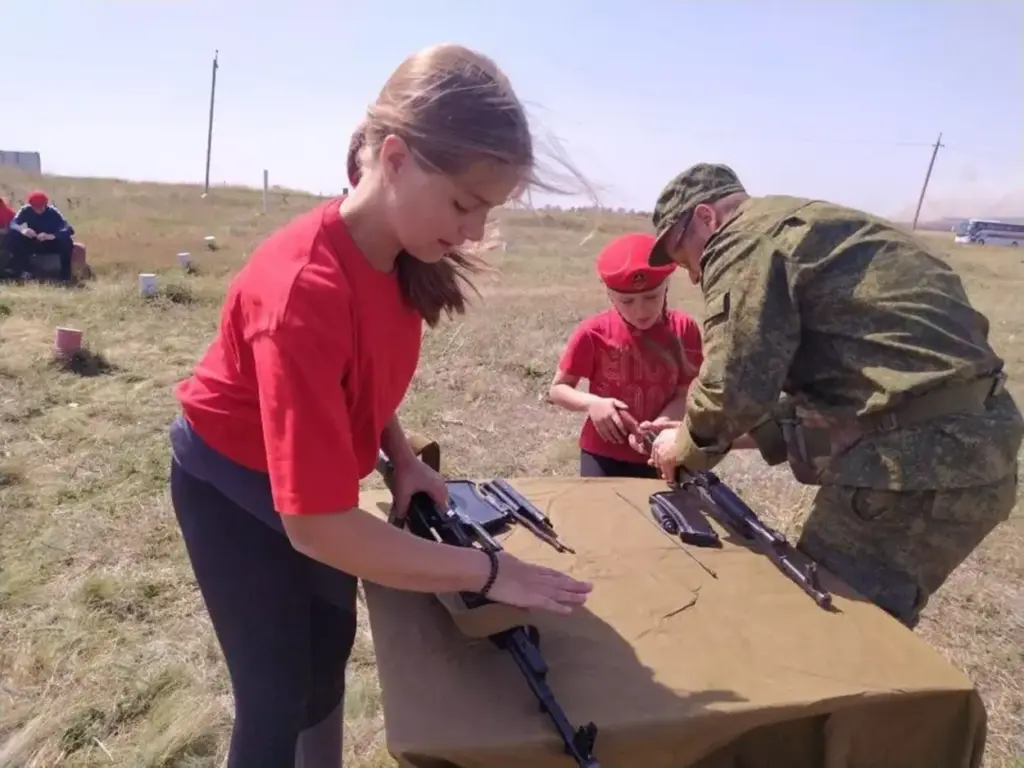
In occupied Donetsk Oblast, the Russian occupation authorities had some 500 schoolchildren take part in an "anti-terrorist dictation." The rights group Zmina says the occupiers and their collaborators stage such events deliberately to intimidate local residents, children, and teenagers among them.
The exercise is one instrument of a documented system. In July 2026, an OSCE expert mission invoked by 41 states found that Russia's use of terrorism and extremism legislation against Ukrainian children may amount to a crime against humanity.
Only in 2025, occupation authorities sent 48 Ukrainian children in Donetsk Oblast to psychiatric hospitals on extremism charges. For example, teenager Maksym Lypkan is being forcibly subjected to psychiatric treatment because he said that the war against Ukraine is an act of villainy.
The test drilled Russian criminal law
The dictation was held in 17 schools across occupied Donetsk, Mariupol, Makiivka, and Volnovakha, with pupils in grades eight through eleven answering questions in writing, according to the occupation's Donetsk News Agency, cited by Zmina.
The three themes were basic definitions, criminal responsibility, and the roles of the state and citizens in combating terrorism, with an emphasis on Russian criminal code provisions on terrorism and extremism.
Some questions were situational. In one, pupils were told that an internet user had shared someone else's post containing banned content, and then asked whether only the original author bore responsibility, or whether the person who reposted it had also broken the law.
Afterward, teachers walked the teenagers through the correct answers. Particular attention was given to the point that criminal liability for terrorism offenses begins at age 14, said Marharyta Kucheriava, who heads a committee on information policy and countering extremism and terrorism within the occupation's "youth parliament" in Donetsk Oblast.
One arm of a wider effort
The dictation sits alongside a broader remaking of occupied schools. From 1 September, the occupation authorities introduced a compulsory Russian-identity subject, a separate military-training track, and behavior grades for children as young as second grade.
Read also
-
“If you’re gonna f*ck, f*ck a queen, if you’re gonna steal, steal a million”: Ukraine’s anti-corruption bureau says senior official ran criminal ring inside Prosecutor General’s Office
-
Ukraine’s Lasar’s Group says its bomber drones destroyed rare Russian Zhitel jammer 55 km behind front
-
More than 400 defense firms ask Kyiv to create one state body with real authority over $6.8 billion industry
