Ukrainian forces struck the railway section of the Kerch Bridge connecting Russia with occupied Crimea overnight on 19 November, damaging the tracks and the area around the bridge's arch, Ukraine's Defense Ministry and General Staff reported.
The attack is the third Ukrainian strike on the bridge in a week, following operations that caused a section of the road bridge, including part of its supporting arch, to collapse into the sea, leaving a major gap in the crossing and disrupting Russian transport links with occupied Crimea.
The latest strike, carried out with Ukrainian Neptune cruise missiles, halted train traffic across the bridge. The extent of the damage is still being assessed, according to the Defense Ministry.
Russian-installed head of occupied Crimea Sergei Aksyonov also confirmed the attack, announcing that traffic across the bridge had been temporarily suspended while Russian authorities assessed the damage. AP reported that train traffic resumed in the afternoon.
Neptune missiles hit railway section
Ukraine's Defense Ministry said its Neptune missiles struck the railway section of the Kerch Bridge during the night of 19 November. The missiles hit near the bridge's arch and railway tracks, although the full extent of the damage remains unclear.
"Train traffic is currently suspended," the ministry said, adding that the full extent of the damage was still being assessed.
Ukraine's General Staff confirmed the operation, saying the attack was carried out by the Ukrainian Navy's coastal missile systems. It also reported damage to the railway tracks and a closure of traffic across the bridge.
The Defense Ministry described the railway connection as a key route Russia uses to transport fuel, ammunition, and military equipment to its forces in occupied southern Ukraine.
Third strike on Kerch Bridge in a week
The latest attack follows two earlier Ukrainian operations against the bridge on 16 and 17 November. Those strikes caused major damage to the road section, including the collapse of a span, while also affecting the railway infrastructure.
The Kerch Bridge, which links Russia's Krasnodar Krai with occupied Crimea across the Kerch Strait, was built by Russia after its 2014 occupation and illegal annexation of the peninsula. Its construction violated Ukraine's sovereignty and took place without Ukraine's consent. The bridge opened in 2018 and has since become a key symbol of Russia's occupation of Crimea.
The bridge is a major supply route for Russian forces in occupied Crimea and southern Ukraine. It allows Russia to move military equipment, ammunition, fuel, and personnel directly from its territory to the occupied peninsula.
Damage to the bridge forces Russian forces to rely more heavily on alternative routes, including roads and railways running through occupied southern Ukraine. These routes are also within reach of Ukrainian strikes.
Explore further
This is how Ukraine finally blew up the Kerch Bridge
Putin threatens response to attacks
Russian President Vladimir Putin threatened retaliation following the attacks on the Kerch Bridge, saying Moscow's response would be more painful for Ukraine.
"After the strikes on the Crimean Bridge, we will not negotiate. We will respond to these strikes," Putin said, according to Russian news agency Interfax. He added that Russia's response would be "much more painful" than the damage caused to the bridge.
Putin's threat came after months of Russian attacks on Ukrainian transport infrastructure, including repeated strikes on bridges in Kyiv. Russian drones began targeting the capital's Southern and Northern bridges on 1 October, damaging road surfaces, bridge structures, and infrastructure serving the metro.
On 16 November, Russian forces struck both bridges again in a missile attack, causing further damage and disrupting traffic, according to Kyiv Mayor Vitali Klitschko.
Russia has waged its full-scale war against Ukraine for more than four years, constantly attacking Ukrainian cities, transport links, energy facilities, and other infrastructure. Its latest strikes on Kyiv's bridges came just before Ukraine's attacks on the Kerch Bridge this week.
Ukraine's Defense Ministry said the latest strike was a response to Russia's continued attacks on Ukrainian territory. It noted that Russia had launched 98 attack drones and missiles against Ukraine during the preceding night.
The ministry said disrupting Russian supply routes would help reduce the amount of military equipment and ammunition reaching occupied territories and the frontline.
Ukraine hit Russia’s Kerch Bridge on 16–17 November without SpaceX’s Starlink or its military version, Starshield, relaying radio signals over connections Ukraine developed itself instead, an officer involved in the mission told The Times. “We showed we can conduct such operations without Starlink,” he said.
Some of Ukraine’s interceptor drones work through Starlink, and a 160 km/h cap on Starshield disrupted Ukraine’s drone missions from 14 October. An unstable connection would make some high-speed drones, mid-range strike models in particular, impossible to launch, Ukraine’s 7th Rapid Reaction Corps warned. The Starshield cap was back, President Volodymyr Zelenskyy said on 12 November, and SpaceX denied any change. The Kerch strike came days later, and what the officer calls a first “in history” is the relay that worked around the cap: drones feeding video to missiles so they could strike exact points on the bridge. If the account holds, Kyiv can guide strikes like this one on links it controls itself.
The strike, which sent the road span into the sea, was planned as a symbolic gesture before Russian President Vladimir Putin’s meeting with US President Donald Trump and Chinese President Xi Jinping in China on 19 November, meant to show Putin as weak, the officer said. The operation involved missile troops, drone pilots from the 7th Deep Strike Center (known as Magyar’s Birds), the 1st Special Operations Brigade of the Unmanned Forces, the Security Service of Ukraine (SBU), parts of the special operations forces, and the navy, The Times reported, citing Ukrainian military sources.
Zelenskyy said the uplink held to the last seconds
Palianytsia drones hit the bridge’s road section, while Neptune missiles, Ruta drones, and FP-5 Flamingos hit its railway section, Zelenskyy said on 17 November. The Flamingo strike was precision-guided, and “the communications uplink worked flawlessly until the very last seconds,” he said. Official videos show the Flamingo cruise missiles were not the usual version, and remote operators steered them through onboard cameras, defense journalist David Axe wrote. That kind of control needs a stable, low-lag link, possibly a mesh network of drones relaying signals, he added.
Ukraine’s tech adviser said commercial Starlink can’t be used for deep strikes
Starlink and Starshield speeds were restored after the first cap, Ukraine’s Defense Ministry said on 24 October. If Starlink were turned off, “the Ukrainian front line would collapse immediately,” SpaceX owner Elon Musk wrote hours later. Starlink does not work over Russia, and terminals over Ukraine and occupied areas had been capped since winter, presidential adviser on defense technology Serhii Beskrestnov wrote the same day.
“So we PHYSICALLY CANNOT USE COMMERCIAL STARLINK for deep strikes and mid-range strikes,” Beskrestnov wrote.
Starshield was not available to Ukraine, and Kyiv had asked for it for deep strikes, US Secretary of State Marco Rubio told reporters on 17 October. Yet Ukrainian units had recorded major Starshield disruptions, Zelenskyy reported on 12 November. Efforts were underway to restore Starshield’s speed, NATO Secretary General Mark Rutte said five days later. Ukraine’s deep strikes had not been effective in ending the war, US Under Secretary of War for Policy Elbridge Colby told Ukraine’s backers in Brussels on 17 November, the day the span fell, though he said strikes on “Russia’s warmaking machinery” could help slow Russia’s advance.
A 19-year-old Kyiv woman is suspected of fatally poisoning a Colombian citizen who had served in Ukraine’s army, the Kyiv City Prosecutor’s Office said on 18 November. A handler working for Russian special services had offered her $1,000 for the job, Kyiv police said.
By mid-August, police were already investigating 11 poisonings of soldiers that year for links to Russian recruitment. Foreigners serve in Ukraine’s military too. In August, Military Ombudsman Olha Reshetylova put their number at about 16,000, nearly 40% of them from Latin America.
How the handler set up the meeting
The woman gave the handler access to her messenger account, police said. He used it to court the 32-year-old Colombian for over a month, invited him to Kyiv for a date, and asked him to rent an apartment. The man’s army contract had ended several months before his death. On the eve of his arrival in Kyiv, the handler sent her to collect a bottle of unknown liquid from an agreed location, police said. The bottle was hidden in a park in Kyiv’s Obolon district, prosecutors said.
The suspect and a man in a shop, in surveillance footage released by Kyiv police. Photo: National Police of Ukraine
During the date, she poured the liquid into his glass of alcohol, and he died within an hour, police said. “All this time, the girl filmed the victim on video for a report to the enemy special services,” their statement added. She filmed the man after he showed no signs of life and sent the video to whoever ordered the killing, prosecutors said.
She then took money from his pockets, locked the apartment, and fled, police said. Police found her hiding in an abandoned house in a settlement in Cherkasy Oblast. A forensic examination found that he died of poisoning.
On 7 November, prosecutors notified her that she is suspected of intentional murder for gain, committed to order. The offense carries 10 to 15 years or life in prison. She is in custody without bail and had previously been held liable for drug possession, prosecutors said. Investigators are still identifying who ordered the killing, prosecutors added.
Police officers in an apartment. Photo: National Police of Ukraine
Russia’s handlers recruit for arson and for murder
Russian handlers have recruited young Ukrainians on Telegram to burn military vehicles and railway equipment. Now they also use fake dating profiles to lure soldiers to prepared locations, where they try to kill them with bombs or poison. By early August, the Security Service of Ukraine (SBU) had foiled more than 50 such attempts since the start of 2026.
In February, two underage girls in Kharkiv poisoned a National Guard serviceman with methadone for a promised $5,000 while a Russian handler watched by video link, the head of the Kharkiv Oblast Prosecutor’s Office, Yurii Papusha, told Ukrinform in July. Both suspects were then in custody and admitted the killing, he said.
Ivan Vyhivskyi, then the national police chief, said in June that police had recorded six contract-killing cases against service members since the start of 2026, ordered by Russian handlers through Telegram, including an attempt that was prevented. The handlers find young women through messaging apps and send them money for apartments and alcohol, as well as the locations of methadone stashes, he said.
Ahead of their trilateral meeting with US President Donald Trump and Russian President Vladimir Putin in Shenzhen on 19 November, Chinese President Xi Jinping and Beijing officials have framed the summit around safeguarding world peace, advancing a multipolar global order, and preserving multilateral free trade.
What could possibly go wrong?
Until recently, talk of a multipolar world centered on the US, China, and the EU as the three most powerful blocs. Today, with the support of Trump and Xi, Brussels has been replaced by Moscow, and European security is being discussed over its head.
The trilateral meeting is a remarkable departure from Beijing’s diplomatic protocol. Xi normally insists on tightly structured meetings with foreign leaders. Wary of Trump’s and Putin’s unpredictability, Beijing first responded cautiously, the FT reported, and agreed only after weeks of negotiations with the US and Russia.
At the Asia-Pacific Economic Cooperation (APEC) summit on 18 November, Xi and China’s Foreign Ministry outlined three core themes:
Safeguarding World Peace and Stability. The three leaders will hold “in-depth discussions on preserving global peace and promoting stability in relations,” Foreign Ministry spokesperson Mao Ning stated, calling the meeting of “ground-breaking significance.”
Advancing a Multipolar World Order. In a bilateral meeting with Putin on Wednesday, Xi called for a long-term strategic view to inject certainty into the world. Both leaders pledged stable ties and a “more fair, multipolar world order” amid rising global uncertainties.
Defending Multilateral Free Trade. Xi advocated free and open trade and a multilateral trading system based on World Trade Organization rules.
Demonstrating Convening Power. Hosting the US and Russian presidents on Chinese soil lets Xi display statesmanship and position China as an indispensable global peer.
Avoiding Surprises and Maintaining the US Trade Truce. Beijing’s primary practical goal regarding Washington is to keep relations from deteriorating and preserve the existing US-China tariff truce, according to Brookings senior fellow Patricia M. Kim. Xi aims to keep the summit to controlled optics rather than unexpected policy shifts, Atlantic Council analysts add.
Sidestepping Trilateral Nuclear Arms Control. Although Trump wants to discuss reducing nuclear arsenals, Xi has no intention of entering trilateral arms control talks. China has consistently rejected them on the grounds that its stockpile is far smaller than those of the US and Russia.
Balancing Relations on Ukraine and Iran. Beijing is reluctant to act as a formal mediator on Ukraine, prioritizing the stability of its Russian partner behind a posture of official neutrality. On Iran, China shares Washington’s interest in preventing nuclear proliferation and keeping the Strait of Hormuz open to stabilize energy prices.
Russia
Putin expects a “big potential benefit” from the summit, he told the APEC CEO Summit.
Partnership vs. Isolation: Putin highlighted rising global risks and the failure of Western sanctions to damage Russia, framing cooperation as essential over isolation.
Multipolar Order: In talks with Xi, he emphasized building a more equitable multipolar world and praised Russia-China coordination. Russia views the present Euro-Atlantic security architecture as broken, obsolete, and fundamentally hostile to its interests. Its Foreign Ministry says the West “has drawn a line under the previous system of security in Europe,” which Moscow wants replaced by a new Eurasian framework.
Historic Alliances: Aide Yury Ushakov noted the summit draws on the WWII alliance of the three nations and their founding role in the UN.
Joint Communiqué & Ukraine: Moscow seeks a formal joint communiqué and a separate bilateral talk with Trump on Ukraine.
Putin’s main objectives are symbolic normalization to counter Western isolation and a stage to project global standing, analysts suggest. While the trilateral agenda stays on broad stability, he uses side channels with Trump to manage terms on Ukraine and to show independent geopolitical weight alongside China.
The USA
Official White House briefings have emphasized non-proliferation and managed expectations. Trump has signaled a broader, unscripted approach aimed at diplomatic wins through leader-to-leader engagement.
White House officials and Trump outlined four primary topics:
Trilateral Nuclear Arms Reduction. Trump’s top priority is “the reduction of nuclear weapons in the world,” White House spokesperson Olivia Wales stated. Since the New START treaty with Russia expired in February 2026, Trump has pushed to bring China into a three-way arms control framework. Washington does not expect an immediate agreement but wants China to “step up to the adults’ table,” senior administration officials noted.
Ending the War in Iran. Both the White House and Trump confirmed that the war involving Iran will be a central topic. Before departing for Asia, Trump told reporters he wants to discuss denuclearization and ending the war in Iran. Washington hopes joint discussions with Tehran’s key partners—Beijing and Moscow—will pressure Iran, prevent it from acquiring nuclear weapons, and open the Strait of Hormuz, Atlantic Council analysts note.
Addressing the War in Ukraine. White House aides initially said Russia’s war in Ukraine was not on the formal agenda. Trump contradicted them before leaving Washington, telling reporters he plans to discuss trade, economics, and “my favorite subject, Ukraine.” He wants a deal to end the so-called “Russia-Ukraine war” by the end of 2026 and is expected to step up pressure on Ukraine, The Atlantic reported.
Economic and Trade Relations. Trade will also be discussed as Washington and Beijing weigh extending their tariff truce past its January deadline. Trump shares Xi’s interest in keeping relations stable ahead of their follow-up meeting at the G20 summit in Florida in December.
The Guardian, NPR, and foreign policy experts point to several underlying US objectives:
Resisting a Tightly Scripted Format. Washington pushed back against Beijing’s efforts to control the summit with pre-written statements. Trump prefers improvised diplomacy that relies on personal rapport.
Seeking a Symbolic Diplomatic Win. After significant Republican losses in the midterm elections, Trump is eager to project strength abroad and secure a high-profile breakthrough, observers at the Brookings Institution and Al Jazeera suggest.
Washington’s gamble on Moscow
The United States naively seeks to sever the Russian Federation’s ties with China. The administration is prepared to lend Putin a helping hand: a business plan disguised as a “peace plan” that meets nearly all the Kremlin’s demands to start negotiations; refusing Kyiv Starshield satellite capabilities, undermining both its ability to strike Russian forces and its defense against Russian missile and drone strikes; and ending US defense, humanitarian, and financial aid to Ukraine. At the same time, the US is trying to tie Russia to it economically and to lift sanctions.
Washington wants to keep China from swallowing the weak Russia and turning it into a satellite state. It wants Russia tied closer to the West than to China or, at the very least, neutral in any future US-China confrontation.
It will not succeed. Ahead of the summit, Xi said China-Russia ties “stand as firm as a mountain amid wind and rain.” Since the full-scale war started in 2022, Russia has grown ever more dependent on China.
Washington turns on its allies
Under Trump’s leadership, the US abandoned soft power, turned its back on the rules-based international order, and shifted from a values-based to a transactional foreign policy. It threatened allies with land grabs, launched trade wars that undermined European rearmament, abandoned its Washington Treaty commitments, and voiced disappointment that a defensive alliance hadn’t joined its war on Iran.
The trilateral summit signals a shared ambition to reshape the world order into spheres of influence dominated by three authoritarian-minded great powers. The Trump administration’s readiness to side with dictators over democrats has long been evident. The 2025 National Security Strategy was deeply critical of America’s traditional allies in Europe and East Asia. What it didn’t say was more shocking: it avoided direct criticism of both Russia and China.
As Trump’s time runs out, this could be his most dangerous legacy: a world divided into three, Steve Bloomfield argued in The Guardian. In a president’s final two years, with Congress lost and domestic legislation stalled, the rest of the world is the one arena where power remains, he wrote.
Moscow takes Europe’s seat
This summit lets Putin push his vision for ending the war in Ukraine on the international stage, framing Russia as a diplomatic peer of the United States and China.
On 19 October, Trump said he was ready to meet Putin and Xi to discuss ending the war, even without Ukraine (or Europe) taking part. Trump’s “peace plan” for Ukraine would undermine European security while resetting relations with Moscow—indirectly validating the Kremlin’s vision of a multipolar world dominated by China, Russia, and a unilateralist United States. He regards the EU as a strategic adversary, not a partner.
The trilateral meeting is in effect a recognition of Russian great-power status, fully in line with Putin’s true strategic aim. The so-called “Russia-Ukraine war” was always a broader confrontation. Integrating Ukraine and Belarus into the Russian Federation is a strategic objective—or prerequisite—for Moscow’s aspiration to strategic parity with the USA and China. The trilateral meeting brings Putin closer to his main strategic aim, while subjugating Ukraine is within reach as his war of attrition is gradually destroying the basis for Ukrainian statehood.
Moscow has made no secret of its desire for a “new, modern Yalta” that reflects its objectives in Europe: great powers—the USA, China, and Russia—determining the fate of “lesser” nations.
The Wall Street Journal editorial board called a second Yalta “arguably the worst idea of the second Trump term.”
What Europe loses
For Europe, this could mean strategic abandonment by Washington, Russian domination of its neighborhood, and the erosion of the rules-based international order. Trump may not win, but America—and Europe—could lose.
By agreeing to the trilateral summit, and choosing Moscow over Brussels, Trump has effectively confirmed Russia’s great power status at the peril of Europe.
Hans Petter Midttun, independent analyst on hybrid warfare, Non-Resident Fellow at the Centre for Defense Strategies, board member of the Ukrainian Institute for Security and Law of the Sea, former Defense Attaché of Norway to Ukraine, and officer (R) of the Norwegian Armed Forces.
Editor's note. The opinions expressed in our Opinion section belong to their authors. Euromaidan Press' editorial team may or may not share them.
Russia uses bad weather for relatively larger assaults toward Sloviansk, the Institute for the Study of War (ISW) said. On 18 November, it cited a Ukrainian soldier: Russia wants to break into Mykolaivka, a town east of the city. From there, Russian troops would try to slip into the city itself, he said. Urban areas likely suit their infiltration tactics, ISW assessed.
Russia wants the rest of Donetsk Oblast, whatever it costs. At the US-brokered talks in Abu Dhabi on 10 November, Moscow still wanted Ukraine to hand over the part of the oblast Kyiv holds. That part includes Sloviansk and Kramatorsk, two cities of the Fortress Belt, a chain of fortified Donbas cities. Russia keeps sending troops forward despite the losses. Ukraine's General Staff counted 1,970 Russian troops killed or wounded along the whole front on 18 November alone.
Bad weather covers bigger assaults
Russian troops attack constantly, Stanislav Krasnov of the 81st Airmobile Brigade, the soldier ISW cited, told Ukraine's United News telethon. They often try mass assaults in bad weather and sometimes bring in armor, he said. They use cars and motorcycles all the time, and their target is still Sloviansk, he added.
"This is their main goal now: to advance into Mykolaivka to force street fighting on us. To gradually infiltrate Sloviansk itself and fight such battles here. But … they are getting nowhere," Krasnov said.
Ukraine's General Staff reported 12 Russian attempts to advance on the Sloviansk axis on 18 November. They came near Pyskunivka, Kryva Luka, Yampil, and Mykolaivka. A day earlier, it counted three attacks near Yampil and Ozerne. Late on 18 November, the Ukrainian mapping project DeepState said Russian troops had advanced near Rai-Oleksandrivka, east of Sloviansk.
Russian-held and contested ground south and east of Kramatorsk, from Kostiantynivka to Rai-Oleksandrivka, Donetsk Oblast, as mapped by ISW on 18 November 2026. Map: ISW
Why Russia wants the fight inside the city
Russian forces likely find cities, with their basements and ruined buildings, better for infiltration missions, ISW assessed. Open fields leave them without cover or concealment, the think tank noted.
The front east of Sloviansk, Donetsk Oblast, as mapped by analyst Clément Molin, 12 November 2026. Map: Clément Molin/X
On 12 November, analyst Clément Molin argued that Ukraine had stabilized the front east of Sloviansk. He credited reinforcements and a new commander of the city's defense, Brigadier General Andrii Biletskyi. He also wrote that Russian infiltrations continued, but that there had been no recent reports of Russian troops slipping into the town of Mykolaivka.
Explore further
Putin has new plan for Ukraine’s fortress city — and he may be counting on Trump to make it happen, expert says
Dozens of Molniya drones a day
Russia also uses Molniya drones very widely, Krasnov said. The fixed-wing drones can carry a heavy load, and Russia sends them against both vehicles and infantry, he explained.
"The Russians fire them, you could say, like from a machine gun," Krasnov said. Many dozens fly every day, but Ukrainian forces shoot most of them down, and only a small share reaches its target, he added.
France plans to hand Ukraine two more Mirage 2000-5F fighter jets by the end of 2026, Ukraine's Defense Ministry said on 18 November. By the same deadline, Paris also plans to send AASM Hammer 250 guided bombs paid for by Norway and Germany, plus 30-mm rounds for the jets' cannons. The pledges came at the 37th Ramstein-format meeting of Ukraine's backers, held in Brussels on 17 November.
Russia continues its daily air attacks on Ukrainian cities. "This winter, our biggest priority is protecting the sky," Defense Minister Yevhenii Khmara said, adding that Russia "continues its air terror." Ukraine's Mirages have hunted Russian cruise missiles since March 2025, when one downed a Kh-101 on its first combat mission.
France adds bombs, a radar, and cannon rounds. Belgian F-16s are listed too
France will also supply a Thales GF300 radar that can detect and track ballistic missiles. The 30-mm ammunition and other aviation support will be paid for with an EU loan.
The ministry also listed 10 Belgian F-16s for Ukraine, due by the end of 2026, and 20-mm rounds planned for their guns. Belgium put its support for Ukraine this year at €1.1 billion and plans another €1 billion for Ukraine's military in 2027.
The AASM Hammer kit fits bombs with a guidance system and a rocket booster, so they can hit ground targets up to 70 km away, depending on the altitude they are dropped from, Ukrainian defense outlet Militarnyi noted. Ukraine already uses the bombs to strike Russian positions, the outlet said. Militarnyi added that the first Mirages were adapted to carry air-to-surface weapons before they were handed over.
A Ukrainian Mirage 2000. Photo: Ukrainian Air Force
Neither Paris nor Kyiv has said how many Mirages Ukraine flies
Neither government has published the size of Ukraine's Mirage fleet, and estimates vary widely. The first jets arrived in February 2025. One crashed that July, and its pilot ejected and survived.
France delivered three Mirages in 2025, and one of them was lost, independent journalist Romain Mielcarek wrote on X on 10 February 2026, citing an anonymous source. Two more were due by mid-2026, he added.
That pair had been expected since early 2026. Ukraine's Defense Ministry did not say whether the two jets now promised are the same ones.
Explore further
France may give Ukraine all 26 Mirage 2000s—none have bombed Russians yet
The jets hunt missiles and drones
Ukraine uses its Mirages to intercept cruise missiles and attack drones, Militarnyi noted in its report on the pledge. In September 2026, France delivered new MICA air-to-air missiles for the jets. The missiles can hit targets up to 60–80 km away.
In a November 2025 video, the Ukrainian Air Force put the jet's effectiveness against Russian drones and missiles at 98%, a figure one of its pilots called "impressive numbers." That rate has not been independently verified.
Professional training alone is not enough to make a sergeant a leader. What matters just as much is character, the chief sergeant of Ukraine’s 144th Special Operations Forces Center, callsign Skif, explained on Sergeant’s Day.
A special-operations sergeant’s defining trait, Skif said, is a high level of independence and responsibility, because special-purpose groups often work cut off from the main force and have to decide on the spot. It is the kind of self-reliant, empowered sergeant Ukraine’s army is trying to build across the force.
Commander and sergeant, a tandem
The group’s chief sergeant must grasp not only his own task but the plan of the operation two command levels above him, he added.
“With us, the commander and sergeant work in tandem. The commander plans the task: what we do and why. And the sergeant fully handles how exactly it will be carried out, from preparing the group to running the battle and the operation as it unfolds,” he explained.
Still an operator, and a jack of all trades
Even as he leads, the sergeant stays a full operator, Skif noted: he must know every specialist’s job, cover for any of them, and lead by example. Such sergeants need working knowledge of tactical medicine, engineering, communications, and weapons, and should master one or two specialties in depth. He had seen junior commanders carry out complex tasks and bring their groups home at full strength.
Character first, training second
Yet skills alone do not make a leader, Skif argued. Character is the foundation, in his view, and service and experience only develop the qualities it needs.
“If a person has no core inside, if at the critical moment they are afraid to take responsibility, if they have no critical thinking, then no sergeant courses will make a leader out of them,” he stated.
Those qualities show most, he added, when events break from the plan, and the sergeant must keep a cool head and make the hard calls.
“There are sergeants whose decisiveness and professionalism in commanding a unit many officers could envy,” he concluded.
In its new operation, Ukraine went after the supply lines that keep Russia’s war fed. Its Defense Forces have struck a frontline road bridge and a repair base in Russia’s Kursk Oblast, and confirmed damage to three Russian military transport planes, Ukraine’s General Staff reports.
Each target was a piece of Russia’s war machinery rather than its front line: a crossing that carries ammunition and fuel to the troops, a base where damaged vehicles are patched up and sent back, and the planes that haul men and cargo across the country. Hitting them is part of a widening Ukrainian long-range campaign against the rear that sustains the fighting.
A bridge that carries the front its ammunition and fuel
On 17 November and overnight into 18 November, Ukrainian forces hit Russian military logistics. Near Stanytsia Luhanska in Luhansk Oblast, they struck a road bridge over the Siverskyi Donets that Russian troops use to move ammunition, fuel, and equipment up to the front.
The Defense Forces also hit a Russian unit’s repair base near Khomutovka in Russia’s Kursk Oblast, where Russian crews were mending damaged equipment to send it back to the front.
Three transport planes, and a badly hit Il-76
Additionally, the General Staff confirmed the results of an earlier strike carried out on 10 November against the 123rd Aircraft Repair Plant in Staraya Russa, in Russia’s Novgorod Oblast about 640 kilometers from the Ukrainian border.
The attack damaged three military transport aircraft, one of them an Il-76 that took very heavy damage, and knocked the planes out of service for a time, the General Staff said.
That is the hardware Russia leans on to move troops, weapons, equipment, and ammunition, and the same plant services the A-50 radar planes it uses to watch Ukraine’s skies. Russia flies a largely Soviet-era transport fleet it cannot easily replace, so every plane knocked out, and every repair line hit, bites. The General Staff vowed that such strikes on key Russian military targets will go on until Russia’s armed aggression against Ukraine ends.
Major Vitalii Humeniuk, deputy commander of the sergeant training battalion at the 199th Training Center of the Air Assault Forces, has disclosed the biggest challenges of Ukrainian sergeants. His remarks came on 18 November, Sergeant's Day, UkrInform reports.
Ukraine inherited its rank system from the Soviet army in 1991, a centralized model in which officers decided almost everything and sergeants were little more than senior soldiers with no career ladder. A 2020 law began aligning it with NATO standards, and now Commander-in-Chief Mykhailo Drapatyi wants the army’s combat-tested sergeants to have real careers, real authority, and clear paths to promotion, not just a role training recruits.
Too much people, and too many losses
Humeniuk pointed to the personnel shortage and the troops' fatigue as the heaviest burdens. When the men are constantly low, and a sergeant has to lift their morale, he takes on that mood himself.
“Of course, it is hard to see the killed and wounded, but you have to hold firm before your subordinates, like flint. With the constant flow of new people, it is a little hard to work,” he says.
Before the full-scale invasion, soldiers knew each other for years, and a death felt like losing family. Now everyone is emotionally burned out, he notes, because the losses are so heavy.
The old mindset that needs to be changed
Humeniuk ties another challenge to the unfinished change in military thinking, what he bluntly calls the remnants of the Soviet system. A sergeant with five years in an infantry unit, he says, can end up under a commander who has fought less and lacks that experience yet brushes his view aside.
"I'm confident we'll manage to root this out here too, and that, as in NATO countries, sergeants will be on par with officers: in salary, in social benefits, and in decision-making," he adds.
A fair fight turned unfair by drones
What happens on the battlefield presses on sergeants too. Humeniuk calls it a kind of military injustice: infantry are used to a fair duel, one gun against another, but a drone bearing down is far harder to meet. Before fiber-optic drones, he explains, electronic warfare worked at full effect and lifted the infantry’s odds. Now that shield is slipping away.
Russia is preparing to fire 20 million drones at Ukraine next year, double this year’s count. Ukraine, backed by EU money, can build the defenses to meet them, EU Defense and Space Commissioner Andrius Kubilius told journalists in Brussels, according to UkrInform.
The figure shows how far the drone war has scaled. According to Ukrainian estimates, Russia will launch about 10 million drones this year, while drones are set to account for 62% of Ukraine’s weapons spending by value next year, up from 31% early in 2026, as the EU rewires its financing to keep that hardware flowing without pause.
The €60 billion for Ukraine
Kubilius credited the EU’s €60 billion defense loan for Ukraine across 2026 and 2027 with transforming the situation, saying it has delivered fast, predictable supplies at the volumes needed, a view he said Ukrainians share.
All €28.3 billion earmarked for this year will be disbursed by its end, he added, and the EU is now preparing to spend the remaining €31.7 billion on defense in 2027. The €60 billion is the defense portion of a larger €90 billion EU loan assembled for Ukraine.
Locking in 2027 before it starts
To avoid any gaps, Brussels has begun drafting a schedule to release €14.4 billion starting in January 2027 for drones and ammunition. Kubilius stressed that production must scale up, including within the EU, so the weapons arrive in 2027 rather than 2028 or 2029, when Russia’s drone campaign will be larger.
Moscow aimed to expand its long-range drone output toward 1,000 strikes a day, said former Commander-in-Chief of Ukraine’s Armed Forces Oleksandr Syrskyi in early 2026.
A new instrument, and joint production
At the same time, the new Instrument for Coordinated Support of Ukraine is meant to hold Ukraine’s defenses steady through 2027 by funding air defense, drone and counter-drone systems, electronic warfare, missiles, and ammunition. Paired with a planned EU-Ukraine defense-industrial pact and the bloc’s new €21 billion loan program, SAFE, it should expand European production and build joint capabilities that Kubilius argued are critical to both Ukraine and Europe’s own readiness.
Ukraine’s strikes deep into Russia have not helped end the war or slow Russia’s advance, US Under Secretary of War for Policy Elbridge Colby told the Ukraine Defense Contact Group at NATO headquarters, according to remarks the Department of War published on 17 November. The meeting’s British and German co-chairs disagreed at a joint press conference that evening, which NATO streamed.
The split came hours after Ukraine brought down the road span of Russia’s Kerch bridge. It also came two days before US President Donald Trump, Russian President Vladimir Putin, and Chinese President Xi Jinping meet in Shenzhen, a summit China’s Foreign Ministry announced for 19 November. Washington has already pressed Kyiv over refinery strikes this fall. This time, Colby argued for restraint in the same speech in which he said Europe had taken “primary responsibility for Ukraine’s defense.”
The Pentagon wants support aimed at the front line
Colby also called Ukrainian strikes on the objects inside Russia “the spectacle of deep strikes designed to incur pain on the Russian population,” and added that “in our assessment is that such strikes have not been effective in driving an end to the war.” Hits on targets like the retailer Wildberries have probably “hardened the Russian public’s resolve,” in his view, and Moscow may hold the advantage in a long-range duel.
The Pentagon instead wants allied support focused on the front line and mid-range strikes. At the same time, the under secretary said Ukraine should not be made to fight “with its hands tied behind its back,” and that “strikes that target Russia’s warmaking machinery can also help contribute to slowing Russia’s advance on the front lines.”
Streeting and Khmara: Kyiv decides how to fight
Asked by the BBC about Colby’s criticism, UK Defense Secretary Wes Streeting said that “it’s not for us to tell Ukraine how to fight their war.” Deep strikes, he added, have “helped to degrade Putin’s war machine, buying time and saving lives.”
Ukrainian Defense Minister Evgeniy Khmara said Ukraine has “the right to retaliate.” Russia has struck Ukraine’s bridges across the Dnipro 12 times since 1 October, he said, while Ukraine planned one strike on the Kerch bridge. “For each strike they’re hitting our territory we’ll retaliate twofold, tenfold,” he said, adding that Kyiv plans to scale up its deep-strike capacity threefold next year.
Rutte sidesteps Colby, Pistorius calls the criticism stupid
Before the meeting opened, NATO Secretary General Mark Rutte was asked about the Kerch bridge strike. He told reporters that Ukraine’s defense “means also hitting out at logistical nodes, that’s unavoidable.” He said it remained to be seen what exactly happened, but that judging by the media footage, “it seems that they were successful.”
At the press conference, Reuters asked whether he shared Colby’s position. Rutte did not name Colby, but he said allies agree that disabling “Russia’s war machine” is “necessary,” NATO’s transcript shows.
German Defense Minister Boris Pistorius then said he agreed with Rutte, Khmara, and Streeting. Criticizing strikes on “strategic military and military-use targets” in Russia is “quite a stupid thing,” he said. Allies should instead talk about Russia’s “terroristic strikes every night and every day” on Ukraine’s energy, water, and heat.
A single heat-resistant fabric woven near the vineyards of Bordeaux is one of the reasons that is holding back America’s drive to build more Patriot missiles. US plans to ramp up production of PAC-3 MSE interceptors are constrained by limited supplies of carbonized rayon that withstands thousands of degrees produced by France’s ArianeGroup near the city, the Wall Street Journal reports.
Ukraine leans on the PAC-3 as its one dependable shield against Russia’s ballistic missiles. Kyiv needs at least 2,000 of the interceptors a year, with one missile may require several interceptors to blow a target, military analyst Oleksandr Kovalenko of Information Resistance has estimated, roughly the number US industry is only now straining to produce.
One fabric, one supplier, an ocean away
The material lines the nozzle of the missile’s solid-rocket motor and keeps it from melting as the fuel burns at thousands of degrees. ArianeGroup carbonizes it from fibers sourced in the Czech Republic, then ships it to Park Aerospace in Kansas, which coats it with resin before it goes into the motors. Only one rayon product of this kind is approved for the most advanced Patriot interceptor, and ArianeGroup has warned that its supply is limited.
A ramp-up of a second supplier cannot speed
Lockheed Martin, which builds the PAC-3 MSE, aims to more than triple output to about 2,000 interceptors a year by the end of 2030, after delivering 620 in 2025.
Meanwhile, qualifying another fabric source is no shortcut, because every component must first undergo exhaustive testing.
“You could go down the path for two years, everything’s looking good—then at the last test it fails, and now you’re back to the drawing board,” Park Aerospace chief executive Brian Shore told the Journal.
Buying time with advances and new plants
To draw out more fabric, Park Aerospace has advanced ArianeGroup about $5 million to add a production line in France, which could start in 2028. They have a preliminary deal for a US plant, backed by $25 million, that might open around 2030.
Even then, each PAC-3 MSE takes about two years to build, and US stockpiles had already shrunk by about 65% from their pre-Iran-war level by late July, a Washington think tank estimated, as interceptors flowed to US forces and allies, including Ukraine.
For Kyiv, the gap is stark: Russia builds its 9M723 ballistic missiles for the Iskander-M at about three a day, more than 1,000 a year, each a target only a Patriot can reliably stop, according to Kovalenko's numbers.
Russia is testing a new drone that flies as fast as a cruise missile. It is running experimental trials of a jet-powered “Geran-6” that could reach 1,000 kilometers per hour and carry a large warhead, according to Ukrainian intelligence data that lawmaker Fedir Venislavsky, a member of Ukraine’s Parliamentary Committee on National Security, Defense, and Intelligence, relayed in an interview with RBC-Ukraine.
A drone at that speed is no longer a drone in any familiar sense: it moves like a cruise missile, which makes it brutally hard to shoot down, even with a jet interceptor that has to match its pace. That, Venislavsky argued, is why Ukraine’s real answer has to be missiles, surface-to-air and air-to-air, not only the interceptor drones it is racing to field.
In 2025, VGI-9, a Ukrainian defense-tech miltech company, published an analysis of how Russian drones evolved over the course of the war. According to the report, the first Shaheds weighed around 200 kg and could reach speeds exceeding 185 km/h.
Now Russia is scaling up its jet-powered weapons as fast as it can. They already fly between 500 and 1,000 kilometers per hour, Venislavsky said.
Why speed defeats the interceptors
The velocity is the big problem. A jet-powered drone traveling at about 800 kilometers per hour forces any interceptor to move at least as fast to catch it, and at those speeds, destroying the target is extremely difficult, Venislavsky explained.
Ukraine has still been catching the jet Gerans, among them a Geran-5 clocked at 425 kilometers per hour, but only a share of them: its crews stop around 60% of the jet Geran-4s, against more than 90% of the slower Shaheds.
The answer is missiles, and more interceptors
Against targets this fast, Venislavsky called air-defense missiles the most effective tool, whether a jet firing them at the drones or a ground-based surface-to-air system.
Interceptor drones are showing good results too, he added, but are not yet used en masse because the technology is so demanding, even as Ukrainian makers keep rolling out new models for testing.
He said the solution is to strengthen air defenses, build more surface-to-air and air-to-air missiles, and cooperate with partners on their supply.
At least 372 civilians were killed and 1,981 injured in Ukraine in October, the highest for October since the start of the full-scale invasion, the UN Human Rights Monitoring Mission in Ukraine (HRMMU) said in its monthly update on 16 November.
Russia’s war is killing more Ukrainian civilians this year than in any full year after 2022. With two months still to go, the HRMMU has verified 2,957 civilian deaths in 2026, more than the 2,514 (since revised to 2,550) it counted in January for 2025, the deadliest full year after 2022. In October, glide bombs killed more civilians than short-range drones, September’s second-deadliest weapon.
Missiles and long-range drones still killed the most
October’s death toll was up from 183 in October 2025 and above September’s 328 (since revised to 334), although fewer people were injured than in September, according to the HRMMU. Missiles and long-range drones remained the main killers, accounting for 55% of all civilians killed or injured (177 killed, 1,108 injured). Meanwhile, glide-bomb deaths doubled from September to 92, with 331 injured, while deaths from short-range drones fell from 87 to 68. Deaths from missiles and long-range drones rose from 165 to 177. Short-range drones (68 killed, 380 injured) and glide bombs now each account for nearly a fifth of all civilian casualties. In Donetsk, Kharkiv, Sumy, and Zaporizhzhia oblasts, glide-bomb casualties had already risen 62% in the first eight months of 2026 compared with the same period of 2025, the UN said in October.
October 2026 deaths by weapon and by city, with September 2026 and October 2025 for comparison, from UN Human Rights Monitoring Mission in Ukraine figures. Infographic: Euromaidan Press
Civilians were killed or injured in 22 oblasts and Kyiv. Among the cities the mission listed as hardest hit, Zaporizhzhia had the most deaths (31 killed, 103 injured), followed by Kramatorsk (29 killed, 124 injured) and Sloviansk (27 killed, 96 injured). Kyiv recorded 25 killed and 174 injured, and Kharkiv 19 killed and 129 injured. On 29 October alone, Russian strikes killed at least 27 civilians in Kyiv and five oblasts, by Euromaidan Press’s tally.
Kherson Oblast’s toll fell, possibly helped by the Oleshky ceasefire
Kherson Oblast, including Kherson city, recorded six killed and 105 injured, fewer than in previous months. The HRMMU said the drop may be partly linked to the local ceasefire around Oleshky, a Russian-occupied town across the Dnipro River from Kherson. The ceasefire ran from 27 October to 1 November. During the truce, the mission documented no casualties from attacks in the oblast, only from mines. A day after it ended, the Kremlin said it had no plans for now to arrange anything similar.
Russia stepped up strikes on the grid
Russian forces significantly intensified attacks on energy infrastructure in October after resuming large-scale attacks on the grid in September, the mission said. The strikes damaged electricity and heating facilities and forced rolling blackouts nationwide. A UN commission found in late October that Russia’s grid strikes amount to crimes against humanity. The HRMMU also recorded Ukrainian attacks on electricity infrastructure in Russian-occupied territory.
Occupied territory and the year so far
The verified toll includes 12 civilians killed and 18 injured in occupied territory. Russian authorities claimed a far higher October toll there, at least 90 killed, and claimed at least 59 killed inside Russia, but the mission said it could not verify the vast majority of these claims.
From January to October, the HRMMU verified 17,218 civilians injured, and total casualties, killed and injured together, ran 63% higher than in the same period of 2025 and more than twice the figure for the same period of 2024.
Ukraine must put a "just and tough" end to Khimprom, a drug cartel led by a Russian citizen, President Volodymyr Zelenskyy wrote on 17 November. He discussed the cartel investigations with Ukraine's acting top prosecutor, after an anti-corruption case that caught the cartel's leader on tape reached the security service and police.
Russia keeps fighting Ukraine along the front line and hitting Ukrainian cities with drones and missiles, while Kyiv negotiates to join the European Union. Brussels ties those talks to the rule of law, and Kyiv can't close any negotiating chapter until it meets interim targets on courts, corruption, policing, and democratic institutions. In October, Kyiv and Brussels agreed to set up a joint task force to speed up the rule-of-law and anti-corruption reforms that gate membership. A cartel accused of trying to buy people in the very agencies meant to stop it shows what those reforms are up against.
The president wants punishment nobody can dodge
Zelenskyy and acting Prosecutor General Anton Kovalskyi went over the work of the Prosecutor General's Office in the two months since Kovalskyi took charge, and the investigations into what the president called the Khimprom gang.
"The inevitability of punishment is the principle that must become the best answer to the criminal activity of Khimprom and the people linked to this structure," Zelenskyy wrote.
Acting Security Service of Ukraine (SBU) head Oleksandr Poklad proposed internal steps to strengthen the service, Zelenskyy wrote in a separate post on 17 November. The president ordered a plan for them and said there were also answers to "weighty personnel questions."
A Russian-built drug network inside Ukraine
In April, Ukraine's National Police tied Khimprom to U420, a chain of shops it says sold drugs, and said the cartel's network had grown to 105 distribution points across the country. Khimprom's leader is a Russian citizen known as "Mexican," and police counted more than 30 violent crimes the gang committed or ordered.
Why now: the trail reached the security service
On 4 November, detectives from the National Anti-Corruption Bureau (NABU) detained SBU Major General Serhii Duka, suspected of shielding a group that investigators say ran or protected scam call centers, drug sales, and a fake-euro workshop. Two police officers are also among the five people NABU charged. On the investigators' recordings in the same case, Khimprom's leader offered $2 million to remove Dmytro Torhalo, the police's anti-drug chief, investigative outlet Slidstvo.Info reported. Torhalo confirmed the cartel leader had threatened him. The leader also discussed bribing then-Interior Minister Ihor Klymenko, a NABU unit head said.
Serhii Duka (center), a general in the Security Service of Ukraine (SBU), being detained by anti-corruption detectives at a cottage in Roslavychi, Kyiv Oblast, Ukraine, 4 November 2026. Photo: DR, via NV
Duka left custody on 13 November after 1,612 payments covered the bail the court had set, Ukrainska Pravda reported, citing its sources. The outlet's sources had said SBU officers in the regions were pressed to pay. Duka told a parliamentary inquiry on 18 November that nobody had forced anyone to collect the money.
On 7 November, Zelenskyy called that week's news about the SBU "frankly shameful" and asked lawmakers to make security officers declare their wealth again. He also said Kyiv had raised Khimprom with the United States. On 10 November, Kovalskyi ordered an internal check on whether prosecutors helped return property seized from scam call centers and U420, his office said.
Explore further
Investigators say prosecutors shielded scam call centers. Their office has now fired eight people and is checking how its ex-chief left Ukraine
On Friday, Zelenskyy told reporters the cartel had already entered Poland and was trying to enter Germany, and that Ukraine needed foreign law enforcement, primarily the US, to stop it, Interfax-Ukraine reported. Anti-corruption officials told him they had nothing linking Klymenko, now secretary of Ukraine's National Security and Defense Council, to Khimprom, he said.
Police officers at a U420 shop, part of the chain linked to the Khimprom drug cartel. Photo: National Police of Ukraine
A prosecutor's office with a record of its own
Kovalskyi, previously Khmelnytskyi Oblast's chief prosecutor, became acting prosecutor general by decree on 17 September. His predecessor, Ruslan Kravchenko, left Ukraine while anti-corruption agencies investigated alleged protection of scam call centers.
Ukraine, Sweden, and Britain signed a letter of intent on 17 November to arm Ukraine's incoming Gripen fighters, with long-range air-to-air Meteor missiles as Kyiv's first priority, Ukraine's Defense Ministry reported. The three defense ministers sealed it in Brussels on the margins of the Ramstein-format meeting of Ukraine's allies, where Ukraine and Finland also agreed to jointly produce Ukrainian weapons in Finland. Kyiv wants the Meteors to go after Russian aircraft, above all those that drop glide bombs. Separately, Britain has promised Kyiv over 1,000 air-defense missiles for the winter, Ukraine's ambassador in London, Valerii Zaluzhnyi, said.
Russia's glide bombs keep pounding Ukrainian frontline towns and positions, and the jets that drop them are the main target Kyiv has picked for the Meteor missiles it wants on its Gripens. A fighter without weapons can't change that, so the letter aims to have weapons, equipment, and spare parts reach Ukraine together with the jets, starting with the 16 Gripens Sweden is donating, which are due early next year.
Meteors first, for Russia's bomb carriers
The jets should come with all the weapons they need to fight, Ukrainian Defense Minister Yevhenii Khmara said. "It is important for us to receive the full set of weapons we need together with the aircraft, so that we can start using them in combat as soon as possible. The key priority is Meteor missiles. With them, Gripens will be able to destroy enemy carriers of guided bombs and protect frontline cities and troops' positions," he said.
Meteor pairs an active radar seeker with a ramjet engine that keeps it fast throughout its flight, letting it hit aerial targets at long range, Ukraine's Defense Ministry explained in May. Armed with it, Gripens could help drive Russian aviation farther from the front and cut its ability to launch glide bombs en masse, the ministry said.
Explore further
Ukrainian pilots have started training on Swedish Gripens — jets that may carry long-range Meteor missile
Kyiv wants to put the jets into combat quickly, and it is working with partners so that the weapons arrive in step with the planes, Khmara said.
What the letter covers
Sweden, Ukraine, and Britain intend to work together to supply Ukraine's Gripens with weapons packages alongside the jet deliveries and keep the fleet capable over time, Sweden's Defense Ministry said. The cooperation covers buying, delivering, training on, and integrating the weapons. The letter applies to the Gripens Sweden donates, those Ukraine is buying now, and any it may buy later.
Ukraine is buying 16 Gripen E/F jets, and Sweden is donating 16 Gripen C/D jets with a weapons package, according to Sweden's Defense Ministry. The E/F is the newer version of the jet. "This Letter of Intent is a basis for the fighter jets to be operational over time and to support Ukraine in its ambition to become and remain a long-term Gripen partner," Swedish Defense Minister Pål Jonson said.
Swedish Defense Minister Pål Jonson and Ukrainian Defense Minister Yevhenii Khmara at the signing of the Gripen letter of intent, Brussels, 17 November 2026. Photo: Ukraine’s Defense Ministry
UK Defense Secretary Wes Streeting signed for Britain, which already helps fund Ukraine's Gripens. In July, London committed €300 million toward a squadron of 16 Gripen E fighters for Ukraine by 2029. Last week, President Volodymyr Zelenskyy told journalists in Copenhagen that the Swedish Gripens should arrive in January or February, possibly in February, European Pravda reported on 11 November.
A JAS 39 Gripen fighter jet, 22 October 2025. Photo: Zelenskyy’s Telegram channel
Sweden adds funds for US weapons and Czech ammunition
On 17 November, Stockholm also pledged about SEK 720 million more for multilateral funds and initiatives, mainly to bolster Ukraine's air defense and its long-range capability. Of that, about SEK 200 million goes to the Prioritized Ukraine Requirements List (PURL), the mechanism through which allies buy US weapons for Ukraine. This is Sweden's sixth contribution to PURL, bringing its total to $572 million. Around SEK 180 million goes to the Czech initiative that buys ammunition on the global market.
"Sweden will support Ukraine for as long as it takes," Jonson said.
The Ukrainian Security and Cooperation Center (USCC), a Ukrainian NGO, says it obtained internal documents identifying about 50 African women at Russia's Alabuga Special Economic Zone in Tatarstan, as well as 10 Russian recruiters and two intermediaries from Africa, Fox News reported on 15 November in what USCC calls a joint investigation with the outlet. The zone is home to a unit producing Geran drones, Russia's version of the Iranian Shahed, according to USCC.
Foreign recruits help Russia make up for staff shortages in its arms industry, and Russia directly uses the drones they assemble to strike Ukraine's civilian infrastructure, USCC says. Ghana and DR Congo signed deals with the zone in late October, months after the UK sanctioned recruiters for the zone's Alabuga Start program. Neither government has said its citizens will build weapons, and Fox News noted that neither deal, as publicly described, shows that either government intends to send workers into arms production. Whether state channels widen the program's reach depends on how the deals are carried out.
Investigators describe a three-level recruitment network
The network draws in women from Uganda, Ethiopia, Zambia, Zimbabwe, Tanzania, Kenya, Gambia, and DR Congo, as well as Sri Lanka, to assemble these drones, USCC says. Councils of Russian compatriots promote the program at cultural and educational events in African countries, local recruiters advertise the jobs, and Alabuga staff arrange employment and logistics, according to the investigation, though Fox News noted it does not show that Russian diplomats or cultural groups knowingly steered recruits into drone production. The investigation names two women, from Tunisia and Uganda, as alleged coordinators of the recruitment, Fox News reported. The program has also found recruits through social media ads promising European adventure and work-study programs, AP reported in 2024.
"These people are promised a dual education opportunity," Solomiya Khoma, USCC's head of international cooperation, told Fox News. Women who fail entrance exams or Russian-language requirements can end up in factory work, unable to afford a ticket home, she said. Investigators also obtained the workers' internal employee passes, she added.
Ghana signs up to recruit while DR Congo's presidency names Alabuga Start
Weeks before the Fox News report, Ghana's Labor Minister Emmanuel Kwadwo Agyekum wrote that he signed a memorandum with Alabuga on 28 October to help recruit Ghanaian workers for jobs in industry and manufacturing, adding that the zone as a whole requires more than 75,000 workers. His ministry is expected to coordinate the recruitment and to "promote transparent processes that protect Ghanaian workers," he wrote.
On the same day, DR Congo's Employment and Labor Minister Ferdinand Massamba wa Massamba signed a five-year memorandum with Alabuga while in Moscow for the Russia-Africa summit. His ministry said the deal aims, among other things, to strengthen DR Congo's vocational training, employment, and labor inspection bodies, and did not mention Alabuga Start. The Congolese presidency, however, had announced on X that one of three agreements to be signed during President Félix Tshisekedi's visit would cover vocational training for young Congolese through the Alabuga Start program.
A program whose recruiters are already under sanctions
On 5 May 2026, the UK sanctioned people and entities deceptively recruiting for Alabuga Start, linking the program to drone production at a sanctioned entity. Alabuga's 2025 brochure claims Russia's Labor Ministry allocated the zone 8,498 quota places, a figure it lists among the program's results.
Khoma called for sanctions on the recruitment networks themselves, including the intermediaries, the financial channels, and the organizations that help bring in foreign workers.
"Without this effort abroad, without this help abroad, it would be difficult for Russia to sustain a war longer," Khoma said of Russia's recruiting abroad.
Fox News said it had asked Alabuga, Russia's Foreign Ministry, and government representatives in Ghana, DR Congo, Uganda, and Tunisia for comment, and its report includes no response.
Work-life balance is not a perfect split of hours between your job and your home. It is not about working exactly eight hours and relaxing for the other eight. In simple terms, it means having enough time and energy for work, relationships, rest, and the things you enjoy.
Balance looks different for each person. A new parent, a student, a manager, and a retiree who works part-time will all need different things. Even your own balance will change as your life changes. What worked for you five years ago may not work today. This topic matters for everyone, not only people with very busy jobs. If you have a job, a family, or even just a few goals, you have a balance to look after, and your mind feels it when that balance slips.
How work imbalance affects your mind
When work takes up too much space, your mind pays the price. At first it may seem small. You feel a little more stressed than usual, or you sleep a little worse. But when pressure continues without enough rest, these small things can grow into bigger problems.
Constant stress keeps your body on high alert, as if danger is always near. Over time, this can make it hard to fall asleep or stay asleep. Poor sleep then makes everything harder, including focus, patience, and mood. You may become more irritable with the people you love. You may feel flat or sad, even about things that used to make you happy. Left alone for long enough, this can lead to burnout, a deep state of exhaustion where you feel drained, detached, and unable to care about your work.
The mind and body need regular breaks to recover, just like a muscle needs rest after exercise. Without that recovery, a person simply wears down. If you would like to learn more about caring for your mind in daily life, you can find more about Overwell and the simple tools it offers. The key idea is that rest is not a reward for finishing everything. It is something your mind needs to work well.
Signs your life is out of balance
It can be hard to see imbalance when you are in the middle of it. Many people only notice after they have felt off for a long time. That is why it helps to know the warning signals.
You may feel tired all the time, even after a full night in bed. You may find yourself thinking about work during dinner, on weekends, or while trying to relax. Maybe you feel guilty when you rest, as if you should always be doing something useful. You may also notice that you have pulled away from friends or stopped doing hobbies you once loved, simply because you have no energy left.
If you see yourself in these signs, please do not blame yourself. Many people live this way, often because their jobs or habits pushed them there little by little. Noticing the signs is not a failure. It is a helpful first step, because you cannot change something you have not yet seen.
Why rest and personal time are not a luxury
Many people treat rest as something extra, to be enjoyed only after all the work is done. But rest, hobbies, time with loved ones, and moments of quiet are not luxuries. They are the things that keep you healthy.
When you rest, your brain gets a chance to recover and sort through your thoughts. Time with people you care about lifts your mood and reminds you that you are supported. Hobbies give you a sense of joy and identity outside of your job. Quiet moments calm your nervous system and build resilience, which is your ability to handle hard times without falling apart.
Here is the surprising part. These things also help you do better at work. A rested mind is sharper, more creative, and better at solving problems. Many people believe that being busy all the time is a sign of success, but constant busyness often leads to mistakes and exhaustion. Taking care of yourself is not lazy. It is a strong and smart choice.
Simple ways to create more balance
You do not need to change your whole life to feel better. Small, steady habits work much better than big, sudden changes, which are hard to keep up.
Start by setting clear start and end times for your workday, and try to stick to them. When the day ends, let it end. Turn off work notifications after hours so your evenings and weekends belong to you. Take a real lunch break away from your desk, even if it is only twenty minutes. Step outside, eat slowly, and let your mind rest.
Learn to say no when your plate is already full. You can do this politely, for example by saying, “I cannot take that on right now, but I can help next week.” It may feel uncomfortable at first, but it protects your time and energy.
If all of this feels like too much, choose just one step to begin with. Pick the one that feels easiest. Once it becomes a habit, you can add another. Progress is built from small choices repeated over time.
Making balance a long-term practice
Balance is not a goal you reach once and keep forever. It is more like a garden that needs regular care. Some weeks will be calm, and others will be packed with a big project, a job change, or a family event. That is normal.
The aim is not to avoid every busy season. It is to adjust, then return to healthy habits once the rush passes. Give yourself extra rest, reconnect with friends, and bring back the routines that keep you steady.
You do not have to do this alone. Talk with a manager, a friend, or a mental health professional when things feel heavy. Asking for help is a sign of strength.
Each time you gently return to what matters, you protect your mental health. Start today with one small step.
A Russian An-12 military transport plane crashed in Siberia on the evening of 17 November, killing all 19 aboard, Russia's Defense Ministry said. The crash came hours after Ukraine's overnight strikes dropped an arch of Russia's Kerch bridge to occupied Crimea into the sea and set the Salavat refinery in Bashkortostan ablaze. Meanwhile, Russian President Vladimir Putin flew to China for talks with Chinese President Xi Jinping and US President Donald Trump, and the next day told business leaders that outside pressure had been a big stimulus for Russia.
Russia's war against Ukraine grinds on along the front and in nightly drone and missile strikes on Ukrainian cities. Ukraine strikes back deep inside Russia and in occupied Crimea, at bridges, power substations, and oil plants, and Moscow claimed to have downed 1,441 Ukrainian drones in a single night this week. That pressure on Russia's home front is the backdrop to the Kremlin's pitch abroad that Russia is stable and growing.
Moscow blames a technical fault
The plane went down near the village of Yagunovo in Kemerovo Oblast during what the ministry called a routine flight.
The ministry said the plane came down in an uninhabited area and that all 19 people aboard died, Russian state news agency RIA Novosti reported.
The ministry did not say who was aboard. But Russia's Defense Ministry runs military flights, not passenger services, so the dead were most likely servicemen, the plane's pilots among them. The ministry named a technical fault as the preliminary cause, a version nobody independent of the Russian state can yet check. A commission of Russia's Aerospace Forces is working at the site, the ministry added.
An eyewitness said the plane caught fire in the air, dived, and exploded on impact, pro-Kremlin Telegram channel Shot reported. The channel said the plane was flying from Novosibirsk to Kansk and crashed into a field, scattering debris within 500 meters. Nighttime security camera footage, shared on X by the account OSINTtechnical, purportedly shows the crash.
A Russian Air Force An-12 cargo aircraft reportedly crashed in Kemerovo, Siberia, this evening. pic.twitter.com/HCxbKJIh5S
Russian Air Force's Antonov An-12BK. 2011. Illustrative photo: Igor Dvurekov/Wikimedia Commons
A toll that rose through the evening
Kemerovo Oblast Governor Ilya Seredyuk first spoke only of "an aviation incident," Russian news agency Interfax quoted him. Later he said a plane passing over the region had presumably crashed and that he was heading the response at the site.
Explore further
This is how Ukraine finally blew up the Kerch Bridge
Russian Telegram channel 112 at first wrote that five people may have been aboard. It later put the dead at 17, the figure Ukrainian military outlet Militarnyi relayed. Hours later, the ministry gave its own, higher count. Russia's Aerospace Forces and naval aviation use the An-12 to move troops, cargo, and equipment over medium ranges, Militarnyi noted.
Lost in a day of Kerch bridge news, as Putin meets Xi and Trump
Ukrainian Telegram channel Exile+ listed the crash among the day's events that "may have gotten lost" behind the bridge news. Among other items, the same list carried the strike on the Salavat refinery and a hit on a substation in the city of Kursk.
That night, Putin arrived in Shenzhen, China, for the Asia-Pacific Economic Cooperation (APEC) summit, Interfax reported. On 18 November he held talks with Xi, the agency wrote. A three-way meeting with Trump and Xi is set for Thursday, 19 November, Reuters reported.
On 18 November, Putin claimed that Russia's GDP had grown by more than 10% over the past three years and keeps growing, Russian state news agency TASS reported. "Inflation is under control, and Russia's state debt is within 17% [of GDP], one of the lowest in the world," he told APEC business leaders, Interfax reported. He also called outside pressure a big stimulus for Russia. And he said he expected great potential benefit from the coming meeting with Trump and Xi, Interfax added.
Drones set fires at two oil refineries in Russia's Krasnodar Krai overnight on 18 November, monitoring Telegram channels and local residents reported. The plants, Ilsky and Afipsky, were under attack as Russian President Vladimir Putin claimed at a business summit in China that Russia's economy keeps growing. A day later, he is due to hold a three-way meeting there with Chinese leader Xi Jinping and US President Donald Trump.
Russia keeps attacking along the front line and hitting Ukrainian cities with drones and missiles every night. Ukraine's answer reaches deep into Russia, at the refineries that turn crude into fuel for the Russian army and money for Russia's war budget. The strikes have left Russia short of fuel at home, so between 18 July and 22 October it had to ship in about 989,000 tons of gasoline, diesel, jet fuel, and fuel additives by sea, Ukraine's military intelligence said on 17 November.
Fires at two refineries in one night
At 06:18 Kyiv time, Ukrainian Telegram channel Supernova+ reported an attack on the Ilsky refinery. It later posted footage it said showed the plant, then shared a clip it said showed the Afipsky refinery burning. Local residents wrote that both refineries were under attack and had been hit, Ukrainian Telegram channel Exilenova+ reported at 06:21. It later shared more photos and videos from the area on X.
More from Krasnodar Krai, where two oil refineries got attacked in Ilsky and Afipsky pic.twitter.com/lBAWFJUnCN
The attack began at about 04:40 local time (03:40 Kyiv time), with explosions and air defenses heard for hours, readers of Russian Telegram channel Astra said. "In the end, two plants are burning: Afipsky and Ilsky, most likely," one reader told the channel.
Russian officials blame debris at two unnamed sites
Krasnodar Krai's operational headquarters blamed falling drone debris for fires at two enterprises in Seversky District, where both refineries stand, without naming them. It claimed four people were injured and said drone fragments fell at nine addresses. Minutes later, the headquarters reminded residents that filming drones and air defenses is banned. Russia's Defense Ministry claimed its air defenses downed 184 Ukrainian drones overnight over Belgorod and Rostov oblasts, Krasnodar Krai, Russian-occupied Crimea, and the Sea of Azov.
Ilsky attacked for the second time in three days
Ukraine's Defense Forces struck Ilsky overnight on 16 November, hitting three crude distillation units and the plant's gasoline complex, Ukraine's General Staff said. It called that strike the latest in a November series of hits on refineries in Saratov, Kirishi, Omsk, Volgograd, and Nizhnekamsk. By the morning of 18 November, the General Staff had not commented on the new attack.
Ilsky can process about 6.6 million tons of crude a year and supplies fuel to Russian troops, the General Staff said in that post. Afipsky can handle about 6.25 million tons of crude a year and makes diesel, gasoline components, and other oil products, Ukrainian outlet Militarnyi noted. Drones last set Afipsky on fire on 6 November, when local authorities also blamed falling drone debris. Both plants lie about 360 km southeast of the front line.
Explore further
Drones hit three of the four refineries feeding Moscow last week. Overnight, they set fire to the one fueling St. Petersburg
A day before the Krasnodar Krai fires, drones hit the Gazprom Neftekhim Salavat petrochemical complex in Bashkortostan, about 1,300 km northeast of the front line. Since Ukraine resumed refinery strikes on 30 October after a pause, drones have hit plants across Russia, including three of the four that supply Moscow.
In China, Putin still claims growth a day before a three-way meeting with Xi and Trump
Putin addressed the business summit of the Asia-Pacific Economic Cooperation (APEC) forum in Shenzhen at about 05:30 Kyiv time, while explosions were still going on near Krasnodar, the regional capital, according to Astra's readers. He claimed Russia's GDP had grown by more than 10% over the past three years and keeps growing, Russian state news agency TASS posted. He also called Russia the "world record holder" for sanctions imposed on it and claimed it had withstood them. Kremlin aide Yuri Ushakov said on 16 November that a three-way meeting with Xi and Trump would take place in Shenzhen, and China's Foreign Ministry announced the date: 19 November.
Ukraine finally dropped part of the strategic Kerch Bridge on 17 November
The complex strike operation involved several new capabilities
Now Russian logistics into occupied southern Ukraine are partially throttled
After years of trying, Ukrainian forces finally dropped a portion of the strategic Kerch Bridge connecting southern Russia to occupied Crimea over the narrow Kerch Strait overnight on 17 November, a day after a first strike knocked one of its arches askew.
Parallel spans carry—or carried—vehicles and trains back and forth, helping feed, fuel, and supply Russian forces in Crimea. There are other supply lines for Russian forces in occupied southern Ukraine, but the 19-km bridge—which Russia built after seizing Crimea in 2014 and opened in 2018, at a cost of about $3.7 billion—is or was one of the main ones.
Now it's half wrecked, with the vehicle span severed in the middle, the train span damaged, and wreckage blocking the ship channel beneath the bridge for as long as it takes for Russia to mount a major repair and salvage effort. An effort that the Russians may have to attempt under further Ukrainian attack.
Grateful to the Security Service of Ukraine, all units of Ukraine’s Defense Forces involved, Ukraine’s Minister of Defense, the Commander-in-Chief of the Armed Forces of Ukraine and the General Staff, and all our weapons manufacturers for an unprecedented operation in response to… pic.twitter.com/pgUxGrE61K
— Volodymyr Zelenskyy / Володимир Зеленський (@ZelenskyyUa) November 17, 2026
"Today, everyone can see the consequences for the main military crossing from Russian territory into our Ukrainian Crimea," Ukrainian President Volodymyr Zelenskyy wrote. "This is the result of the seventh stage of an operation carried out over several weeks, developed and coordinated by the Security Service of Ukraine together with the General Staff of the Armed Forces of Ukraine."
Ukraine has attacked the Kerch Bridge at least once a year every year since 2022, striking with a truck bomb, drones, missiles, and underwater explosives. None of those attacks inflicted nearly as much damage as the 16 and 17 November strikes. For the most recent and most successful raid, Ukraine mobilized many of its best deep strike forces, including some brand-new capabilities such as jet-propelled drones and operator-guided cruise missiles.
The view from a remote-controlled FP-5 as it nears the Kerch Bridge. Fire Point capture.
New drones and missiles
Three stand out:
the new Ruta cruise missile from Dutch firm Destinus
a new jet-propelled version of Ukrainian firm Antonov's An-196 Liutyi attack drone
and a new variant of Kyiv-based Fire Point's FP-5 Flamingo cruise missile that a remote operator directly steers via a low-lag radio signal.
In all, various drone units from the Ukrainian army, navy, and special services may have launched hundreds of drones and missiles over a period of nearly a month in order to first clear a path through Russian air defenses—and then strike the bridge.
"Our warriors gradually destroyed air defense systems, radars, electronic warfare equipment, and other designated targets on the way to the final objective," Zelenskyy wrote. For this, the president added, they used 11 different kinds of drone and missile, including Palianytsias, Mich-2000s, Rutas, Neptunes, and the jet-propelled Liutyis, also known as An-197s.
Once the Russian defenses were sufficiently degraded, drones and missiles took aim at the bridge. "At the key stage, the Palianytsia drones performed exceptionally well, striking the road section of the bridge," Zelenskyy wrote, "while Neptune missiles, Ruta drones, and FP-5 drones struck the railway section."
Official videos revealed that the FP-5s weren't the usual versions of the heavyweight cruise missile, which hauls a 1,150-kg warhead as far as 3,000 km. Normally, the Flamingo navigates by way of an internal inertial system that, while helpfully self-contained, tends to drift over long distances—and also results in the missile cruising at an altitude of several hundred feet, high enough to make it an easy target for Russian air defenses.
Explore further
Missile-drones, cruise missiles, and a Flamingo guided to the last second: Kyiv’s account of the night Russia’s Kerch bridge lost its road
The Flamingos that struck the Kerch Bridge were steered by remote operators seeing what the missiles saw through forward-looking cameras. That makes the missiles more accurate, and probably helps them fly lower—and past Russian defenses. The downside of direct remote control is that it demands a stable and low-lag radio connection, possibly via a mesh radio network made up of many interconnected drones receiving and sending signals.
The apparent mesh radio network did its job. "Using Flamingo, our warriors carried out a precision-guided strike—and the communications uplink worked flawlessly until the very last seconds," Zelenskyy stated.
What happens next depends on how quickly the Russians can begin repairing the bridge, and whether the Ukrainians continue striking. In any event, "the destruction of the Kerch Bridge will save many Ukrainian lives, both on the front and in the occupied territories," mapper Ukraine Control Map noted.
Explore further
Ukraine struck Russia’s Kerch bridge again. The EU firms that helped build it barely suffered.
More Ukrainian units are flying fixed-wing attack drones at nearby targets, including Russian assault groups
The bigger drones have better cameras and heavier warheads than first-person-view drones have, making them useful in fog against armored targets
Fixed-wing drones are expensive, but apparently worth the cost as they blast Russian assault groups
Relentlessly droning Russian troops and vehicles just west of Huliaipole in southern Ukraine's Zaporizhzhia Oblast in late October, the Ukrainian 237th Unmanned Systems Battalion didn't just block a Russian offensive. It also worked out a new anti-vehicle tactic.
The battalion took fixed-wing drones that it normally deployed for so-called "middle strikes" against Russian supply lines tens of kilometers behind the disputed gray zone, and instead flung those middle-strike drones and their heavy warheads—sometimes weighing tens of kilograms—at Russian vehicles rolling toward or across the gray zone, just kilometers away. The fixed-wing drones are much more destructive than smaller first-person-view drones with comparatively tiny warheads.
In short: the 237th Unmanned Systems Battalion sortied big drones against close targets instead of saving the big drones for distant targets. Now other Ukrainian units are using the same tactic to blunt Russian attacks farther north in eastern Ukraine.
On 13 November, the Russian Center Group of Forces took advantage of an occasional thick winter fog and mobilized vehicles and troops for multiple simultaneous attacks toward Kramatorsk, one of the last two big free cities in Donetsk Oblast. Kramatorsk lies around 15 km north of the gray zone along any one of several road routes threading toward the city. Last week, the Russians attacked along more than one route.
One column with tanks, BMP infantry fighting vehicles, and some light vehicles pushed across the foggy gray zone from the Russian-held village of Shakhove. Racing against the rising sun and the dissipating fog on 13 November, that column managed to cross the gray zone and deposit its infantry passengers around the Ukrainian-held village of Hruzke before the Ukrainian 1st Azov Corps finally defeated the column, presumably with drones fitted with thermal cameras that can see through the fog.
Map: Eauromaidan Press
Unlucky Russians
Another Russian assault had even less luck—and fell victim to the new heavy drone tactics the 237th Unmanned Systems Battalion pioneered. This assault group was gathering in the village of Razine, about 15 km behind the gray zone, apparently preparing to attack toward the town of Dobropillia, which sits astride one of the main roads toward Kramatorsk.
That assault group didn't get anywhere near the gray zone. It was still kilometers from joining the fight when Darts fixed-wing drones from the 1st Separate Assault Regiment barreled in. The regiment claimed it hit seven vehicles, three quad bikes, and 30 soldiers. "An enemy column heading toward Dobropillia has been destroyed," the 1st Assault Regiment stated.
Розбито ворожу колону, яка мала рухатися в бік Добропілля.
1-й і 2-й батальйони безпілотних систем 1 ОШП імені Дмитра Коцюбайла застосували мідлстрайк-дрони «Дартс».
The Darts drones were an obvious choice. Heavier middle-strike drones in the class of the Darts might be pricier than any short-range FPV—thousands of dollars apiece versus hundreds—but the bigger drones also tend to have thermal cameras that can see through fog. Moreover, their heavier warheads inflict greater damage when they hit than FPVs tend to do. It takes fewer drones to take out an equal number of vehicles.
Weather and politics may explain why the regiment sent its Darts against close targets. The foggy conditions on 13 November meant FPVs with their cheap daylight cameras were barely useful at all. If the Ukrainians were going to drone the attacking Russians through the fog, they were going to have to use heavier drones with their superior cameras.
But it's also possible the Darts were available for close strikes because they weren't being used for attacks on Russian supply lines many tens of kilometers away. At middle-strike distances as great as 100 km, the Ukrainians tend to communicate with their drones by way of Starlink and Starshield satellite terminals provided by American trillionaire Elon Musk's SpaceX. For closer strikes, other forms of communications can work.
Explore further
Russian vehicles can now shrug off cheap drones. Near Huliaipole, Ukrainian pilots are sending ones they can’t
For the second time in two months, Ukrainian units say Starshield terminals cut out above about 160 km/h, President Volodymyr Zelenskyy said on 12 November. That makes them much less useful for middle strikes: drones slow enough to stay under the limit are easier to shoot down. SpaceX told Axios, "This is false. There has been no change."
Why Ukraine's satellite service keeps slowing down is a topic of much debate and scrutiny, but it's impossible to ignore Musk's close relationship with US President Donald Trump, who has grown increasingly hostile to Ukraine throughout his second term in office beginning in January 2025.
The last time, in October, full speed returned after about 10 days, and Musk said SpaceX had "simply enforced" its terms. Whether it will return this time remains to be seen. In the meantime, Ukrainian units aren't just sitting on their middle-strike drones. No, they're flying them against much closer targets.
On 17 November, Ukrainians jubilated: Russia's bridge to Crimea had been struck twice in two days. The arch over its shipping channel and a road span collapsed; whether transport can resume is unclear.
The bridge Ukraine is now dismantling should never have stood. The hardest job in building it—driving piles up to 105 m deep through the Kerch Strait's silt—was done in part with European machinery, sold in breach of the EU sanctions written to prevent exactly that; the Dutch prosecutor later said the bridge was built partly thanks to Dutch knowledge and expertise.
And when the Netherlands and Germany finally caught the suppliers, years late, the reckoning was a handful of fines at a fraction of the profit made, some community service, and a single Dutch court conviction—of a company the court did not name.
That lenience may well have set the tone for today's porous sanctions regime, in which Western chips still end up in Russian missiles, reaching Russia through intermediaries—a flow no one has managed to stop.
The Kerch bridge is seen damaged after the Ukrainian strike. Source: Exilenova+
EU companies helped Russia solidify its grip over Crimea
When Russia annexed it in 2014, Crimea had an umbilical cord through its isthmus, relying on Ukraine for over 80% of its power and water. A ferry offered a precarious connection to Russia's Krasnodar Krai.
Yet Russia gradually secured its grip over the peninsula—with the help of EU companies. Two cases stand out.
One is the Siemens turbines: sold to Russia, they were delivered to Crimea in 2017 in breach of sanctions—without its knowledge, Siemens says—and installed in new power plants in Simferopol and Sevastopol.
The other is the Kerch bridge: opened to road traffic in 2018 and rail in 2019, built with equipment from seven Dutch companies and one German one, according to Dutch and German prosecutors.
It played a key role in the 2022 invasion and was Russia's main supply artery to southern Ukraine until July 2023. Crimea still mattered to Russia's war: before this week's strike, an estimated 30–40% of supplies to Russia's forces in the occupied south came through it, according to Oleksii Yizhak of Ukraine's National Institute for Strategic Studies.
Map: Euromaidan Press
Ukraine targeted the bridge at least five times before this week, from a truck bomb in October 2022 to underwater charges in June 2025, and Russia restored traffic each time. The 16–17 November strikes, all with Ukrainian-made weapons, were the first to bring a span down from the air: Ukraine's Security Service (SBU) says its Palianytsia missile-drones dropped the road span, while Neptune and FP-5 Flamingo missiles hit the rail section.
Europe helped Russia build the bridge. It has taken Ukraine nearly five years and at least six tries to start pulling it down.
How the companies that built the bridge were found out
Russia had dreamt of this bridge for well over a century. Tsarist, Nazi, and Soviet planners all tried to cross the Kerch Strait. The only bridge actually completed, a 4.5 km Soviet railway bridge thrown across in 1944, was too lightly built for the strait: drift ice swept it away in February 1945, after about 150 days. Under the water lies the deeper problem: instead of bedrock, the strait's floor is many meters of silt and sand. To reach solid ground, the new bridge's piles had to be driven as deep as 105 m.
Only after occupying Crimea did Russia build the thing—this time, with the help of the sanctions-breaking Western engineering that drove the pillars past the silt. Dutch companies had the know-how: after all, they had been building on the sea for centuries.
The scheme was meant to stay hidden—Russia insisted only Russian firms had built the bridge. The companies stripped the branding off their equipment to hide whose it was. It surfaced on 1 September 2017, when the Dutch regional daily De Gelderlander revealed that two firms from the Gelderland villages of Dodewaard and Milsbeek had made key equipment for driving the bridge's piles: Dematec Equipment built a special pile-driving hammer, and Bijlard Hydrauliek supplied its key component.
The exposé prompted the Dutch Public Prosecution Service (OM) to open a criminal investigation under the EU's 2014 sanctions, which barred EU firms from helping build Crimea's infrastructure. By May 2018, it covered seven companies.
The OM named only Dieseko, so the other names come from the press and from a 2019 dossier by Ukrainian prosecutors, reported by the Dutch investigative platform Investico:
Dieseko Group—at least four vibro blocks (~€1.5 mn each, 2015–16) to drive the bridge's piles into the seabed, shipped via Finland. The company also gave on-site technical assistance to the builders.
Allpacks International B.V.—a hammer to vibrate the foundation piles.
Allnamics Pile Testing Experts B.V.—the pile-testing and measurement equipment, plus a training course for the Russian builders, to verify the piles were driven correctly and would hold.
A German company from Schleswig-Holstein supplied a hydraulic hammer—also for the hardest construction work, driving the piles into the silt. A court in Kiel later confiscated €1.3 mn from the company and fined its director. Like every Dutch company except Dieseko, it was never named by the authorities.
Ironically, Germany never sent Ukraine its powerful Taurus missiles, which Ukraine had officially requested in 2023. In a call Russia leaked in 2024, senior Luftwaffe officers discussed how Ukraine could use them to bring down the Kerch bridge. A German firm, meanwhile, had supplied the hammer that helped build it.
A slap on the wrist
The Russian firms that did the actual building shrugged off their own penalty. The EU sanctioned six of them in July 2018: Mostotrest, Stroygazmontazh, Stroygazmontazh Most, VAD, GPSM, and Zaliv Shipyard. Arkady Rotenberg, the Putin ally who owns the first three, brushed it off: "We're all proud of our work and if someone doesn't like it that's not our problem."
By then, the road bridge was already open. The sanctions meant to stop it—the EU's 2014 ban on helping build Crimea's infrastructure—had not.
The construction of the largest pillars of the bridge took place in July 2017, according to the website most.life, specially developed for the bridge
The European suppliers fared better still. The OM settled with six companies and ten individuals out of court, starting with four companies and eight individuals in October 2023. A seventh company was fined €120,000 by an Amsterdam court in November 2024—the only Dutch conviction in seven years. It is still unnamed. Two more individuals were acquitted.
The figures look serious until you read them.
Explore further
Sanctions lawyer: Dutch firms get slap on wrist for Crimea bridge work
Dieseko paid €1.78 mn; the German supplier, €1.3 mn. But the bulk of both is confiscation—the state clawing back the profit from the job, which leaves the company no worse off than if it had never taken it. The actual fines, on top, are beneath the pain threshold: €180,000 for Dieseko, €18,000 for the German firm's director, €120,000 for the convicted Dutch company, and €160,000 split among the four fined in 2023. Hand back what you earned, add a fine worth a fraction of it, and the account is closed.
For helping build a bridge that would carry an occupying army, eight people agreed to between 20 and 60 hours of community service in settlements with prosecutors.
Heleen over de Linden, a Dutch lawyer specializing in sanctions. Photo: rechta.com
Importantly, the companies' reputations did not suffer. The prosecutors named no company apart from Dieseko—every other settlement was anonymized, sparing the firms the single penalty a company actually fears: its name in the press beside the word "sanctions."
It was slow, too: the first Dutch penalties came in 2023, six years after the breach surfaced.
"Six years is a very long time in the Netherlands to be under suspicion," the Dutch sanctions lawyer Heleen over de Linden told Euromaidan Press. "This is the only reason for the very mild convictions."
On the penalties themselves she was blunter: "for Dutch standards, these are very low penalties, basically nothing."
What helping Russia costs
A penalty this small is not a deterrent. It is a price—cheap, deferred, and anonymous.
The Kerch Bridge cases put that price on public record: hand back the profit, years later, with your name kept out of the papers. For a firm weighing a lucrative Russian contract, that is hardly a reason to say no.
In 2017, the suppliers' defense was that they had sold to Russia, not Crimea. "EU sanctions state that we are not allowed to work in Crimea, but we can in Russia," Dematec director Derk Van den Heuvel said. Bijlard Hydrauliek's Marcel Bijlard said he had "just delivered a part to a customer in the Netherlands. No more."
That line did not always hold. In the one Dutch case that reached a verdict, the company's own staff working on site came to suspect they were in Crimea, the court found.
The pattern repeats today. Western microchips and parts keep turning up inside the missiles and drones Russia fires at Ukrainian cities, routed in through Kazakhstan, Armenia, Türkiye, and others.
It is the same maneuver the bridge suppliers, and the shippers of the Siemens turbines now running in Crimea's power stations, used back then: sell to "Russia," not "Crimea"; let an intermediary blur the final destination; say you could not have known. The bridge and Siemens cases were an early test: caught in the open, documented—and toothless.
We do not know if more resolute action on the bridge and the Siemens turbines would have slowed the flow of chips into Russian missiles now. We do know that the sanctions regime failed to stop Western help for Russia's occupation back then, and is failing to stop it for Russia's war now.
Kyiv put the road span in the sea this week; it is the only party that has made the bridge cost Russia anything it noticed. European prosecutors learned of the breach nine years ago and, in the end, publicly named only Dieseko. Until helping Russia costs more than handing back the change, there is no reason on earth for the next company to refuse.
Another pointed sanctions violation case
How Siemens chose to ignore the obvious. An investigation into the Crimean sanctions break
Britain has pledged more than 1,000 air-defense missiles to Ukraine to help shield its cities through the winter. The new package is built around interceptors already proven against Russia’s jet-powered drones, Ukrainian Ambassador to the UK Valerii Zaluzhnyi says.
Russia has turned the onset of winter into a weapon, battering Ukraine’s power plants and homes night after night to leave civilians without light, water, and heat. The interceptors are meant to keep those strikes from breaking the country before the cold deepens.
£240 million within a £500 million winter push
The British government is allocating £240 million of the broader £500 million aid it has pledged to strengthen Ukraine’s air defense over the cold months ahead, Zaluzhnyi says. It matters because Russia has leaned on jet-powered versions of its attack drones, which fly far faster than the propeller models and slip past slower defenses to reach the cities, where many older interceptors simply cannot catch them.
"This assistance is critically important for Ukrainians as Russia intensifies its shelling of peaceful cities, destroys homes and infrastructure, and seeks to leave our people without electricity, water, and heat. This decision truly saves Ukrainian lives," Zaluzhnyi says.
The strikes the missiles must stop
Russia has already begun its cold terror. For instance, one oblast has taken 131 hits since September, and President Volodymyr Zelenskyy says the energy strikes follow a deliberate pattern rather than random fire.
Around Kyiv, a single wave cut power to more than 203,000 families, with repairs taking up to 4 days even as fresh strikes kept coming.
The targeting reaches beyond the grid, too: on 17 November, Russia struck a bridge in Zaporizhzhia and, by midnight, bridges in Kyiv, killing civilians in both cities.
Every wave that slips through deepens the outages, and crews are scrambling to reverse them before the hardest frosts, while Ukraine has called the coming months its toughest test of the war.
Thanks to London, and a strategic partnership
Zaluzhnyi also thanks Britain for its support and called the decision one that genuinely saves Ukrainian lives as Russia keeps up its attacks.
“Grateful to Prime Minister Andy Burnham, His Majesty’s government, and all the people of Great Britain for their strong stance, solidarity, and real action within our strategic partnership,” he says.
Ukraine’s strike that folded the Crimean Bridge is proof of its ingenuity, Britain’s defense chief says. Speaking in Brussels before the Ramstein-format Ukraine Defense Contact Group on 17 November, UK Defense Secretary Wes Streeting praised the operation and cast the past year as disastrous for Russian leader Vladimir Putin, Ukrinform reported.
Streeting called the attack another display of Ukrainian resolve to defend against Russian aggression, and pledged Britain’s backing. He said in 2026 Moscow’s casualties were unacceptably high and the economic toll on the state and its people catastrophic, all for almost no territorial gain.
A bridge strike that shows Ukrainian ingenuity
Streeting welcomed the Ukrainian Defense Forces’ operation against the Crimean Bridge, calling it a fresh example of the absolute determination with which Ukraine defends itself, and adding that Britain stands with Kyiv.
His statements came as Ukraine’s General Staff confirmed that the bridge’s arch and a road span had collapsed overnight, as the result of its latest blow in a campaign that has repeatedly battered the crossing and the air defenses guarding it.
The weapons used for the missions were Dovbush, Vendetta, Da Vinci, Sichen, MICH 2000, Ruta, Palianytsia, An-197, FP-1, FP-5 Flamingo, and R-360 Neptune.
No deal over Ukraine’s or Europe’s head
On the prospect of peace talks, Streeting insisted any settlement to end the war must be acceptable to Ukraine, and that there can be no decisions about Ukraine without Ukraine, nor about Europe without Europe. Britain and its allies will back Kyiv with all their strength, he said, and Europe must help shape the continent’s future security by raising defense spending and deepening military and economic cooperation.
He also welcomed the EU's more active role in supporting Ukraine and called the bloc a key partner for Britain.
Earlier, the reports said that Russia wanted Britain to stop extending its nuclear protection to the rest of Europe for ending the war in Ukraine.
The clip, which the Russian pro-war Telegram channel verumreactor posted on 15 November, claims that artillerymen of Russia’s 3rd Army Corps destroyed Ukrainian troops in a shelter in Druzhkivka, Donetsk Oblast. The Institute for the Study of War (ISW) cited it on 16 November as AI-altered footage of claimed Russian gains toward Druzhkivka, part of an effort “aimed at generating a perception of sweeping Russian advances.” ISW still lists the city as an objective Russian forces are trying to advance on from the east, south, and southwest, and Russian attacks in and around nearby Kostiantynivka on 15 and 16 November made no gains, it said.
Russia’s fakes are aimed beyond its own audience, ISW has found. Russia will very likely go on inflating its claimed gains through winter so that a front line drawn only on its maps becomes the basis of any peace deal, ISW assessed. AI makes such claims cheap to illustrate, ISW noted in September. Russia already feeds fabrications to chatbots and last year used AI to fake surrendering Ukrainian soldiers. Russia appears to be readying a push on Druzhkivka: ISW read Russian President Vladimir Putin’s proposed humanitarian mission to nearby Kostiantynivka, where Russian assaults have failed for more than a year, as a likely bid for a local ceasefire to gather troops for Druzhkivka.
A one-line X post calling the clip AI outdrew the original
The channel tagged the 23-second clip “exclusive” and labeled it with Druzhkivka’s name. By 17 November, the Telegram post had 435 views.
On 15 November, the day the clip went up, Bielitz, a geolocator on X, reposted it: “3rd Army is running out of footage so they just generating it now.” That post had more than 30,000 views by 17 November. The X post embeds the clip itself, under a line flagging it as fake. ISW cited the X post as its source for the AI-doctoring claim. Neither the X post nor ISW’s assessment explained how the clip was judged to be altered.
ISW has flagged AI-faked front-line footage since at least May
ISW had increasingly observed AI-generated footage that purported to show Russian troops raising flags in several front-line sectors, it said in May. Russian sources began posting such videos at scale in June, ISW said in a study published on 10 September. The study counted at least 35 suspected ones between 1 June and 30 August. Commercial detection software flagged at least 10 of them with high confidence and pointed to the Sora and Seedance video models.
In that study, among units fighting for Donetsk Oblast’s Fortress Belt of fortified cities, ISW found the 3rd Army Corps and its 1442nd and 54th Motorized Rifle Regiments named in three videos, each assessed or suspected to be AI-altered. Russia’s Defense Ministry, the 1442nd Regiment’s official Telegram channel, and the milblogger Southern Republic carried those videos. Unlike the flag-raising videos at the center of the study, the Druzhkivka clip purports to show an artillery strike.
Making such footage looks like a grassroots effort by some milbloggers and units, not a centralized one, ISW said in the study. But Russian sources use that footage in a deliberate cognitive warfare campaign, it said. Some units may use the footage to tell commanders they met deadlines the Kremlin set, or to make exaggerated claims more believable to the public.
Geolocation does not prove such footage is real, because Russian sources likely film actual settlements to feed the AI models, ISW also warned. Detecting a fake means looking closely at the soldiers and flags on screen, not at where the footage was shot, it said.
Poland is getting closer to a permanent US military base on its soil, the anchor it has long wanted for Washington’s presence on NATO’s eastern flank. After meeting US Under Secretary of Defense Elbridge Colby in Brussels on 17 November, Polish Defense Minister Władysław Kosiniak-Kamysz said the Pentagon had given the project a “green light,” though the final decision rests with the White House, Ukrainian outlet Slawa.tv reported.
Above all, a permanent American presence is meant to strengthen deterrence of Russia. A US base on Polish soil would signal that any threat to the country directly touches American forces.
Now, the final decision lies with US President Donald Trump.
Warsaw wants permanence, not rotation
After Russia’s 2022 full-scale invasion, the US sent nearly 5,000 additional troops to Poland, doubling its contingent and stationing most near the Ukrainian border to deter Russian aggression.
Those forces rotate in and out rather than staying put, however, and that is the model Warsaw wants to change.
A permanent base would mean a long-term US presence and, for Poland, proof that Washington still intends to invest in the security of NATO’s eastern flank. Polish Deputy Defense Minister Stanisław Wziątek said such a base could host up to 5,000 more American troops.
Permanence also means a faster response
Beyond deterrence, a standing deployment would offer practical gains over rotation: permanent command, equipment, and logistics would allow units to respond faster rather than relearning the terrain each tour.
Poland’s location adds weight, since from its territory US forces could quickly reinforce the Baltic states, above all if Russia moved against the Suwałki corridor, the strip between Belarus and Russia’s Kaliningrad exclave that links Poland to Lithuania.
Why it comes down to Trump
For all the Pentagon’s encouragement, the decision belongs to the White House. Colby’s review of US forces in Europe is nearing completion, with the results due at the White House in early December.
The Polish minister voiced hope that Trump would not break with his own defense department, but that is no sure thing.
Poland and the US have built teams to prepare for a base, yet the administration has thinned US forces in Europe, recently allowing a US armored unit to leave Lithuania without a replacement, and is pushing allies to shoulder more of their own defense despite Russian aggression.
Ukraine’s battle-tested weapons are set to roll off Finnish production lines. Kyiv and Helsinki signed a memorandum in Brussels on 17 November to jointly produce Ukrainian defense systems in Finland, with most of the output destined for Ukraine’s own forces for the duration of the war, the Ukrainian Defense Ministry reports.
Ukrainian Defense Minister Yevhenii Khmara and his Finnish counterpart Antti Häkkänen sealed the deal on the sidelines of the Ramstein meeting, opening the way for technology transfer, joint research, and a shared steering council to launch new projects. It is the latest step in Ukraine’s drive to build its weapons in partner countries beyond the reach of Russian strikes, trading combat experience for Europe’s industrial base.
Ukrainian systems, built on Finnish lines
The memorandum lays the groundwork for manufacturing Ukrainian defense systems in Finland, transferring the technology behind them, and developing joint defense solutions, the ministry noted.
It also deepens cooperation between the two countries’ defense industries and opens the door to joint research, the development of new systems, and investment in each other’s defense enterprises, with the Finnish side helping companies connect and clearing the permits required for joint production.
During active fighting, most of what the partnership produces will go first to Ukraine’s defense. Ukraine brings the technology and combat experience, and Finland brings a strong industrial base.
“We are combining our advantages to get more quality weapons faster for Ukrainian soldiers, while strengthening the defense capabilities of our countries,” Khmara said.
A joint council will pick the projects
To steer the work, the two sides plan to establish a joint governing council that will set priorities, evaluate new projects, and drive technology transfer and the launch of shared production, according to the ministry.
The arrangement follows a pattern Kyiv has built across Europe, since days earlier Khmara agreed joint defense projects and ventures with Estonia, part of a wider move to produce Ukrainian weapons on allied soil and shield output from Russian long-range strikes on home factories.
Air defense before a hard winter
The ministers also focused on Ukraine’s air defenses as winter is closing in. Khmara thanked Finland for the 20-mm ammunition it handed over last month and discussed further deliveries of air-defense equipment with Häkkänen, the ministry adds.
The US limits on Ukraine’s Starshield satellites are a problem for the whole continent, not just Ukraine, Canada’s defense minister says. David McGuinty told the Ukraine Defense Contact Group in Brussels on 17 November that Canada and the US share integrated air and missile defense through NORAD, and he expects Canada’s prime minister to raise the restrictions directly with the US president, Ukrinform reports.
Starshield is the military version of SpaceX’s Starlink network that Ukrainian units use for secure communications and to run their drones and air defense, and a reinstated speed cap has throttled it across the front. Meanwhile, SpaceX CEO Elon Musk points at the US President Donald Trump administration, not his own company, in capping the speed, and calls Starshield US-government-controlled, while Trump denies knowing who imposed the cap.
Pay for more American weapons before winter
McGuinty also urged allies to put more money into PURL, the program that channels European and Canadian funds into US arms for Ukraine, and to keep working with the 57 countries of the Ukraine Defense Contact Group.
More contributions toward packages of American weapons under PURL are needed, he argued, and will matter all the more with a difficult winter ahead under Russian bombardment.
The appeal comes as the US stockpile of Patriot interceptors against Russia’s ballistic missiles runs low, and Russia pounds Ukraine’s grid and Kyiv's successful operations, such as the strike of the Crimean Bridge ahead of the meeting in the Ramstein format.
What Canada is building and giving
Ottawa remains an unwavering backer and will announce fresh aid later the same day in Brussels, he noted. Canada has already pledged more than $1 billion for Ukraine’s air defense and to join the FREYJA anti-ballistic project, agreed to a drone deal to build Ukrainian-designed drones in Canada for the front, and said it would ban Russian and Belarusian athletes from participating in championships under the auspices of the International Ice Hockey Federation (IIHF) in 2027, Intefax reported.
Canada’s read on the talks
Additionally, McGuinty called the US-Russia contacts aimed at ending the war a positive step, but was unconvinced by Moscow’s stance, which he found entirely predictable based on the reports he had seen. He did not consider the Russian position serious, he added, and dismissed it as no way to conduct good-faith negotiations.
Germany's largest bank kept Kremlin-linked oligarchs as clients over its risk managers' warnings, The New York Times and partners reported on 17 November. Leaked internal records show Deutsche Bank, which denies helping clients dodge sanctions, held on to some firms linked to sanctioned oligarchs after the 2022 sanctions.
Besides weapons, sanctions are the West's main instrument against the money behind Russia's war on Ukraine. In September, the EU extended its freeze on about 2,600 Russians and companies until 2029, and banks enforce it.
The leak holds more than 15 million files covering the bank's work since the early 2010s, Le Monde said. More than 230 journalists from over 50 outlets received it, in an investigation coordinated by South African nonprofit Barracuda Media.
Clients on a US Treasury list brought in nearly half of the bank's Russian revenue in international private banking by 2020
In November 2020, an internal Russia review counted 160 Russian clients in the bank's international private banking arm. Seventeen sat on a 2018 US Treasury list of oligarchs and Kremlin insiders, which was not in itself a sanctions designation, the bank told reporters. Those 17 clients produced 47% of that unit's Russian client revenue, South Africa's Financial Mail reported. The review called a sanction on the whole list an "extremely unlikely scenario."
Warnings had come earlier, the files show. In May 2019, an adviser told a board risk committee that one bad client would cost a multiple of what it earned. In mid-2020, the bank cleared a €1.1 billion transfer that it later suspected was for Russian politician Suleiman Kerimov, Le Monde found. By 2021, the bank still listed billionaire Oleg Deripaska, oligarch Gennady Timchenko, and Kerimov, or entities tied to them, among its most sensitive clients, Financial Mail reported. The US had already sanctioned all three. Risk managers had warned for years about clients like Deripaska and fellow billionaire Viktor Vekselberg, The New York Times reported. Profit kept winning, the investigation found.
After Russia's full-scale invasion, the bank used a 50% rule
"As you know we have a large Russian Oligarchs client population," an anti-financial crime specialist at the bank had written by 25 February 2022, a day after the invasion began.
She added that other clients held Russian securities, including those of entities the US had sanctioned the night before, and asked which clients the bank could unwind and whether to advise them "to unwind while they still can."
In early 2022, the bank's clients included Sibur, gold miner Polyus, and other Russian firms partly owned, or suspected to be controlled, by sanctioned Russians, Le Monde found. Timchenko held 14.5% of Sibur, Russia's leading petrochemical company. The bank's own notes said dealing with a firm was not barred as long as its sanctioned shareholders held no more than 50%.
Days after the invasion, the US Justice Department asked for a list of the bank's sanctioned Russian clients, knowing the first answer would not be complete. The bank generally left out firms that were not sanctioned themselves where sanctioned owners held under 50%, the files show. A US Treasury rule broadly allows that, the Times noted. A lawyer at the bank's law firm, Gibson Dunn, wrote that it had been decided not to mention the bank's "several thousand relationships" with sanctions-hit Russian clients in the cover letter to the department, because this was "information which has not been asked for," Financial Mail reported. The bank also cited banking secrecy in Switzerland and Luxembourg, where most of its key Russian clients sat, to withhold some client data. A few days after the bank sent its partial client lists to the department, one employee wrote that an unnamed Russian embassy was a client. Neither it nor at least 10 Russian diplomats who reportedly had accounts at the bank had appeared on the lists sent to that point, Financial Mail found. Prosecutors apparently accepted the bank's answers, the Times reported.
Explore further
The money starts as bags of cash in a Moscow market and ends up clean in China, leaked files show
Responding to the investigation, Deutsche Bank strongly rejected "any suggestion that Deutsche Bank sought to help clients evade sanctions." It said it acted promptly to implement sanctions after the invasion and met its obligations under its 2021 agreement with the Justice Department over earlier bribery allegations. In March 2022, it announced it was winding down what remained of its Russian business. Its credit exposure to Russia had fallen to €13 million by the end of 2025, the bank said. Its 2025 annual report still showed the equivalent of 162 full-time staff and a €61 million pre-tax profit in Russia.
When Russia launched its full-scale invasion, the bank's clients also included metals and telecoms magnate Alisher Usmanov, according to Financial Mail. The EU dropped him from its sanctions list in September, but the US still sanctions him. Moscow, meanwhile, has signaled it will hold European companies' Russian assets to push Europe into reconsidering its sanctions, according to a September assessment by the Institute for the Study of War. European banks could be next, a senior Russian government source hinted to Reuters at the time.
Shares fall as Berlin asks for answers
Deutsche Bank shares dropped more than 6% in Frankfurt trading on 17 November, then pared the loss to 3.8% in the early afternoon, Euronews reported. The leak also covers the bank's dealings with US President Donald Trump and Jeffrey Epstein, the late convicted sex offender. The bank must give "full transparency" on how it has fixed past failures and control gaps and how it will prevent them, German Finance Minister Lars Klingbeil told public broadcaster ZDF.
A Ukrainian Sargan 3000 drone boat has used its automatic turret to destroy another Russian uncrewed boat, Ukraine's Navy said on Telegram on 16 November. The Navy put the score of sea-drone duels at 2:0, having reported the first in September, but gave no date or location for the new fight.
Russia's strikes now hit ships off NATO members Romania and Bulgaria. Ukraine's drone boats, which helped push key Black Sea Fleet forces back to Russian ports, now duel Russian uncrewed boats.
Two duels, both won by a Sargan 3000
The new kill came at night, the Navy said. "Despite difficult conditions and darkness, our warriors detected the enemy target and successfully eliminated it," it wrote. The Navy's video, filmed partly from an aerial drone, shows one boat closing in on another, then an explosion. The WarTranslated account on X posted the excerpt below. The Navy did not name the type of Russian boat or say that it sank.
Naval battle: Ukrainian "Sargan 3000" drone vs. a Russian unmanned surface vessel in the Black Sea. The Russian boat went down. pic.twitter.com/AV8yqpbJ4E
In September, the Navy reported what it called "the first-ever naval battle between unmanned boats." Ukrainian Defense Intelligence spotted a Russian uncrewed boat, and a Sargan 3000 sank it with machine-gun fire, as the Navy's footage showed. The Ukrainian boat carried a 12.7mm Protector automatic turret.
Explore further
Sea drone vs. air drone: Ukraine’s Sargan-3000 turns anti-aircraft gunner
A drone boat with a long reach
The Sargan 3000 entered service with Ukraine's Navy in April 2026, Ukrainian military outlet Militarnyi reported. Militarnyi lists the boat's specifications:
Combat radius: up to 1,600 km
Speed: 40 to 55 knots
Payload: up to 450 kg
A Russian Shahed drone in the sights of the Protector turret camera aboard a Ukrainian Sargan 3000 drone boat, October 2026. Screenshot: Ukrainian Navy
A Sargan 3000 sank Russia's border patrol ship Izumrud, the Navy said in July. The same boat type destroyed a Russian Shahed drone with its turret, the Navy reported in early October. A Sargan 3000 also launched a Sting interceptor drone that downed another Shahed, the Navy said later that month.
Romania blames Russia as drones hit ships off NATO coasts
Russia has turned its drones on merchant shipping. Moscow bears full responsibility for attacks on ships off Romania, Romania's then-acting foreign minister said in October. More ships were hit or sank off Romania and Bulgaria in November, among them:
14 November: drones hit three ships near Romania's Sulina Canal, attacks that Romania's prime minister tied to Russia's war against Ukraine. Moscow, as always, denies involvement.
16 November: the grain carrier Betul 8 capsized off Bulgaria. Russian sea drones likely struck it, the Institute for the Study of War assessed.
17 November: the gas tanker Gas Husky sank in Bulgaria's exclusive economic zone. The tanker had reportedly been hit by drones, Romania's Naval Authority said. Bulgaria had not confirmed a drone hit.
Ukraine has wiped out no less than a third of the Black Sea Fleet Russia had before the war, Valerii Zaluzhnyi, Ukraine's ambassador to the UK, said this month. Those losses, along with repeated strikes on the infrastructure of Russian-occupied Crimea, pushed the fleet's key combat forces back to ports such as Novorossiysk in Russia, he said. Civilian ships are now Russia's main targets, he added.
Everyone who can help is working to restore Ukraine’s throttled Starshield satellite links, NATO’s chief says, though he would not say who throttled them. Mark Rutte, asked before a meeting of the Ukraine Defense Contact Group in the Ramstein format in Brussels on 17 November who imposed the restrictions and why they fall on occupied Ukrainian territory, gave no concrete answer, Ukrinform reports.
Starshield is a military version of the Starlink network that provides Ukrainian units with secure communications and helps operate their drones and air defenses. On 13 November, Ukrainian President Volodymyr Zelenskyy reported that a 161-kilometer-per-hour (100 mph) cap had returned along the whole front and over occupied territory, enough to stop interceptors from catching Russia’s jet-powered Shahed drones.
What Rutte would and would not say
But he gave no detail of that help, did not confirm any contact with the White House, Elon Musk, or SpaceX, and would not name who ordered the limits or explain why they single out Russian-occupied parts of Ukraine.
Rutte assured reporters that the relevant parties were working hard to restore Starshield to normal as quickly as possible, and that NATO stood ready to help where it could be most useful.
The only thing he could offer, he added, was that everyone able to help was working on it, and that there was no other news.
The question he sidestepped already has an answer on the record. Elon Musk said in October 2026 that Starshield is owned and controlled by the US government and that the cut affecting Ukraine comes from President Trump’s administration, not SpaceX.
What the cap does on the front
It's not the first time the connection was influenced by the other side, but after the wave of public criticism, the speed was restored. However, some time later, the new limits were implemented, and on the third day of the reinstated cap, all Starshield missions were failing, a Ukrainian official reported, while SpaceX insisted nothing had changed on its side.
The network underpins Ukraine’s drones and its interceptors against the jet-powered Shaheds that Russia now launches in waves, so a speed limit across the front blunts both at once, just as Moscow steps up its strikes ahead of the winter.
The collapse of the Crimean Bridge, known as the Kerch Bridge, strikes Russia on different "fronts" at once. The loss of the object's functionality has a complex significance, military analyst Oleksandr Kovalenko says: a supply crisis for Russian forces in the south, fewer strikes on Ukraine, and the blockade of a vital transit hub.
Kovalenko casts the loss as a reckoning beyond logistics, “a demonstration of Russia’s vulnerability and helplessness on the eve of the end of the fifth year of the full-scale invasion.” Russia had fortified the bridge against a strike from the sea, he noted, only to lose it from the air.
Ukraine’s General Staff called it a multi-stage operation run over weeks, gradually knocking out the Russian air defense, electronic warfare, and radar around the bridge.
A ranging strike on 16 November tested the thinned defenses; the next night, decoy drones drained what was left before drones and missiles felled the arch.
“This was a truly meticulous operation. Measured, calculating, and highly effective,” Kovalenko says.
Russia’s own transport ministry called road and rail traffic across the crossing impossible, according to RBC Ukraine.
What it means for Russia’s war in the south
The bridge supplied Russia’s “Crimea Defense” grouping and ferried loads to its forces on the left bank of Kherson and Zaporizhzhia, Kovalenko notes. Ukraine had already knocked out the bridges at the peninsula’s northern entrances and blockaded the Azov Sea.
“The peninsula was already under blockade, except for the link that remained through the Kerch Bridge. And today the last connecting link of that logistics was finished off,” he says.
Ukraine’s Security Service blew up part of the bridge in 2022.
A blow to Russia’s strikes, and to Putin
Crimea is also a launch pad for Russia’s attacks on Ukraine, Kovalenko writes: drones fly from sites like Cape Chauda and Hvardiiske airfield, and Iskander, Zircon, and Oniks missiles are fired from the peninsula, with much of the ammunition brought over the bridge. Losing it will curb, though not halt, those strikes, he argues.
“Ukraine ‘folded’ the Kerch Bridge in a day,” he writes, while Russia has spent months unable to destroy Ukraine’s own bridges.
Moscow downplayed the collapse, with Kremlin spokesperson Dmitry Peskov calling it minor, though images of the broken roadway tell another story.
Likely Russian sea drones struck the grain carrier Betul 8 in Bulgaria’s exclusive economic zone on 16 November, the US-based Institute for the Study of War assessed. The ship capsized, and its whole crew survived. A day later, a gas tanker, reportedly hit by drones, capsized in the same zone.
Russia presses its war on Ukraine along the front and against Ukrainian cities. Since the summer, it has also gone after the sea routes that carry Ukraine’s grain. Its drones hit Ukraine’s Black Sea ports and the ships serving them, then turned to the Danube ports. In September, Ukraine’s wheat exports fell 47% year on year. Now drones hit and sink ships off Romania and Bulgaria, two NATO members.
Crew says two sea drones hit the grain carrier
The Somali-flagged Betul 8 sent a distress call at 09:15 on 16 November, saying it was sinking, Bulgaria’s Transport Ministry said. It was then about 40 nautical miles (74 km) southeast of Cape Kaliakra on the Bulgarian coast. The ship was carrying nearly 3,000 tons of wheat in bulk from Romania’s Danube port of Tulcea to Egypt. Its transponder last reported a position around midnight, ship-tracking site VesselFinder shows. The ship was then sailing south at 6.4 knots. Built in 1988, it took its current name in July, and its port calls include Ukraine’s Danube port of Izmail.
The damaged port side of the grain carrier Betul 8 in the Black Sea, within Bulgaria’s exclusive economic zone, 16 November 2026. Photo: Betul 8 crew/Maritime.bg
Four ships from the Black Sea mine countermeasures group—two Bulgarian, one Romanian, and one Turkish—headed to the scene. Bulgaria’s Air Force sent two Cougar helicopters and a Su-25 attack jet to survey the area. All 12 crew members were lifted aboard a helicopter bound for the Chayka naval air base in Varna, the ministry reported. None was seriously hurt, though all were cold. An aerial survey showed the ship had overturned.
In Varna, crew members told journalists that sea drones had struck their ship, AP reported. That evening, Bulgarian Defense Minister Dimitar Stoyanov said on social media that two uncrewed kamikaze boats hit the ship. The 12 sailors were eight Turkish and four Azerbaijani nationals. AP added that drones had hit four more ships near Romania’s Sulina port the week before, by its count.
Explore further
Russia strikes second civilian ship in Black Sea in six days, killing both captains to choke route that carries 90 percent of Ukraine’s farm exports
The crew gave Bulgarian maritime news site Maritime.bg photos of the drones and of the listing ship. Two drones hit the port side one after the other, the outlet reported. The drone in the crew’s photos looked like those that struck the container ship Contship Jet off Bulgaria on 28 October and sank it, it added.
The Betul 8 sailed outside Romanian and Bulgarian territorial waters, and its captain declined to tell Maritime.bg why.
The grain carrier Betul 8 lists in the Black Sea, within Bulgaria’s exclusive economic zone, 16 November 2026. Photo: Betul 8 crew/Maritime.bg
A gas tanker capsizes in the same zone a day later
On 17 November, the Liberian-flagged gas tanker Gas Husky sank east of the Bulgarian town of Byala, Bulgaria’s Defense Ministry said. Air Force aircraft found a life raft with people at the site. The military sent a Cougar helicopter to rescue them. Varna’s regional governor, Mario Smarkov, told journalists that all 19 crew members had been rescued and were in good health.
Romania’s maritime administration said drones had hit the tanker, Euronews Romania reported. The ship was heading to Romania’s Midia port with a Filipino crew. By early afternoon, Bulgarian authorities had not confirmed that drones hit it.
Drones hit the tanker in Bulgaria’s exclusive economic zone around midnight, Maritime.bg reported. The tanker’s captain said he believed four drones had hit it, striking the area of the engine room and the bridge. By 15:00, the ship was drifting with a 45-degree list and its bridge underwater, the outlet reported later. It said two of the sailors had minor injuries but all were in good general condition. The outlet put the two ships’ positions 14.5 nautical miles apart. Bulgaria’s Transport Ministry said the tanker disappeared from radar shortly after midnight and its emergency beacon went off at 08:02, about 50 nautical miles east of Byala. An aerial survey found an overturned ship believed to be the Gas Husky. The tanker was carrying 3,400 tons of propane-butane from Egypt, the ministry said.
Drones keep hitting ships off two NATO members
Between early October and 7 November, drones struck at least nine commercial ships off Romania and Bulgaria, AFP counted. Thirty-four people died or went missing in those attacks, it added.
On 14 October, Bulgarian Prime Minister Rumen Radev said the attacks benefited Russia but that Sofia had no proof of who launched them. The next day, after attacks on four ships in a single day, Romania’s foreign minister blamed Russia.
On 16 November, Romanian military bomb-disposal divers set out to examine parts of two aerial drones drifting off Romania’s coast. One was about 45 nautical miles east of the port town of Mangalia. Bad weather forced them back to shore, Romania’s Defense Ministry said. A French Navy Atlantique 2 patrol plane had spotted the drones a day earlier.
A weeks-long Ukrainian operation with missiles and drones brought down the road span of Russia's Kerch bridge, Ukraine's Security Service (SBU) said. President Volodymyr Zelenskyy listed the weapons, while Russia restarted trains on one track across the bridge and opened a terrorism case. Drones also hit the highway near a second bridge on Russia's overland route to Crimea.
Russia strikes Ukraine's infrastructure every day, including bridges in Kyiv, Dnipro, Zaporizhzhia, and Odesa Oblast, Zelenskyy said. He called the Kerch bridge Russia's main military crossing into Russian-occupied Crimea. The arch carrying its road over the shipping lane fell overnight, a day after a strike on 16 November. Russia's other road into Crimea runs from Rostov through occupied southern Ukraine, and drones hit it again this morning near a bridge in Rostov Oblast.
Seven stages, 11 weapons
The road span fell in the seventh stage of an operation the SBU and Ukraine's General Staff ran for several weeks, Zelenskyy said. Stage by stage, he said, Ukrainian forces knocked out air defense systems, radars, and electronic warfare equipment on the way to the bridge. The weapons used were Dovbush, Vendetta, Da Vinci, Sichen, MICH 2000, Ruta, Palianytsia, An-197, FP-1, FP-5 Flamingo, and R-360 Neptune.
Grateful to the Security Service of Ukraine, all units of Ukraine’s Defense Forces involved, Ukraine’s Minister of Defense, the Commander-in-Chief of the Armed Forces of Ukraine and the General Staff, and all our weapons manufacturers for an unprecedented operation in response to… pic.twitter.com/pgUxGrE61K
— Volodymyr Zelenskyy / Володимир Зеленський (@ZelenskyyUa) November 17, 2026
At the key stage today, Palianytsia missile-drones hit the road section, while Neptune missiles, Ruta, and FP-5 Flamingos hit the railway section, Zelenskyy said. Using a Flamingo, Ukrainian forces carried out a guided strike, and the link held until the last seconds, he added. Ukraine repeatedly offered Russia steps to de-escalate and heard only loud refusals, he said.
"But we also remind Russia that war will always return to where it began," Zelenskyy said.
SBU: its fourth strike on the bridge
The SBU says the operation took about a month and had seven stages. The SBU carried out some of the strikes on the bridge on its own, and other Ukrainian forces joined at the final stage. The SBU's Alpha special forces then hit the road section with Palianytsia missile-drones, and the span fell into the water. One of the bridge's two steel arches and the road span beneath it are completely destroyed, the SBU says, and the rail section was also damaged, according to preliminary information.
This is the SBU's fourth strike on the bridge, the agency says. In October 2022, it blew up a truck packed with explosives on the bridge. In July 2023, its Sea Baby naval drones attacked the supports, and in June 2025, it set off explosives under water.
Explore further
One arch left standing: Ukraine’s second strike in two days sends the road span of Russia’s Kerch bridge into the sea
The SBU's 34-second video includes thermal drone footage of the bridge after the strike. It shows the rail arch standing alone over the strait, with the road span gone.
Missile maker claims seven Ruta hits
Destinus, which builds Ruta missiles in the Netherlands, gave its own account later on 17 November, Defence Blog reported.
"Last night's strikes damaged the bridge's upper load-bearing structure. Today, seven RUTA missiles hit the bridge, causing one span to collapse," the company wrote.
The company added that Ukraine used its LORD and Da Vinci drones against Russian air defenses. Da Vinci is Ukraine's name for the company's LORD drone, Defence Blog noted. The SBU credits Palianytsia missile-drones for the fallen road span, while Zelenskyy listed Ruta among the weapons that hit the rail section.
Trains run on one track, the road is "dead"
Ukraine's General Staff says the road part of the bridge is "dead" and no vehicle can cross it. The rail branch still stands, but its arch is damaged, the General Staff added.
Russia's Transport Ministry said rail traffic across the bridge has resumed on one track, while repairs continue on the second section. The Tavria train from Moscow left Taman, on the Russian side of the strait, for Kerch at 13:04 Moscow time, according to the ministry. Sergey Aksyonov, Crimea's Russian-installed head, said that passengers without cars can cross the Kerch Strait by ferry, and urged everyone to ignore "fakes."
Explore further
Russia says Ukraine attacks Crimean Bridge again after 2023. Each strike burns costly S-400 missiles and strips occupied peninsula’s cover, expert says
The bridge's official Telegram channel posted at 22:54 Kyiv time on 16 November that road traffic was temporarily closed, and pointed readers to its channel on Russia's MAX messenger. It had posted nothing more on Telegram by mid-afternoon on 17 November. Russia's Investigative Committee opened a terrorism case into the attacks of 16 and 17 November. It said Ukraine used drones and damaged the bridge's structure, without mentioning missiles.
Drones hit the road near the Mius bridge again
Drones also struck the R-280 highway near the Mius River bridge in Russia's Rostov Oblast this morning. The roadway and metal guardrails were damaged, Rostov Governor Yuri Slyusar said, citing preliminary information. He reported no casualties. Traffic across the bridge has been suspended since 8 November, when drones damaged it.
Explore further
Russia was widening this bridge to four lanes for its Crimea road. Drones have now closed it
The R-280 links Rostov-on-Don with occupied Mariupol and is part of Russia's land route to Crimea. In June, Ukrainian drones hit the bridges at Chonhar and Henichesk, two of the crossings into Crimea from occupied southern Ukraine.
Russia's 2 November bombing of an aid hub in the front-line village of Komyshuvakha killed 72 people, the Zaporizhzhia Oblast Military Administration said on 16 November as rescuers ended their search. Russia kept attacking the site during the two weeks the crews dug through the rubble. The dead include residents who came for aid, the local staff who served them, and the police and rescuers who came to help them.
Russia's full-scale war grinds on along a front that cuts through Zaporizhzhia Oblast, and the villages behind it come under fire every day. Over the 24 hours to the morning of 17 November, Russian forces hit 55 of the oblast's towns and villages 864 times, Ivan Fedorov, who co-heads the oblast's defense council, reported. Drones carried out most of those strikes, and most of the rest were artillery fire and airstrikes. People who stay in these places depend on aid hubs for hot meals, heat, and a place to charge their phones.
Two weeks of searching under fire
Rescuers and police worked in Komyshuvakha for 14 days, about 17 km from the front line. During that time, Russian forces attacked the village 11 times, nine of them at the search site itself, Interior Minister Ivan Vyhivskyi said. Those nine attacks wounded three police officers and four rescuers and damaged equipment. Crews brought in heavy machinery and dog teams, and experts ran dozens of DNA tests.
Police officers and rescuers clear rubble at the underground school in Komyshuvakha, Zaporizhzhia Oblast, Ukraine, November 2026. Photo: National Police of Ukraine
Rescuers pulled 58 bodies from the rubble, Fedorov said. One person died in hospital, and DNA tests confirmed 13 more deaths. Four people are still missing, and four people wounded in the strike are still being treated, the oblast administration said.
The count rose slowly as the crews dug. It climbed past 40 by 5 November and reached 55 by 9 November. The oblast administration now calls it the deadliest strike on Zaporizhzhia Oblast and one of the worst in Ukraine.
Who Russia killed at the aid hub
The hub sat in an underground school in the village center, where residents came every week for aid. On 2 November, Russia struck it with aerial bombs, among them a three-ton FAB-3000, Fedorov said. After the first bombs, people ran into the school's underground shelter, and a second wave hit it.
A crater smokes in the center of Komyshuvakha, Zaporizhzhia Oblast, Ukraine, after the Russian bombing on 2 November 2026. Photo: Zaporizhzhia Oblast Defense Council
The dead include rescuers, police officers, school and service-center staff, utility workers, and medics, Vyhivskyi said. One of them was a teacher who came to the shelter every day to give online lessons to children who had left the area.
Majors Mykhailo Buzhenko and Mykola Balanda and Captains Mykhailo Romanov and Dmytro Biesiedin were helping residents into the shelter when the second strike hit, Ukraine's National Police said. The emergency service named two of its rescuers among the dead, Denys Konovalenko and Oleksii Sushchevskyi, both 44.
Explore further
A second Russian strike on a blaze near Kyiv killed two firefighters, hours before missiles and jet drones hit 17 sites across Ukraine
Among the dead was Olha Tverdenko, who worked at the local administrative services center and went to Komyshuvakha every Monday to sort and hand out aid, Suspilne Zaporizhzhia reported. Andrii Anikin, 55, a businessman who stayed in the village and helped his neighbors, was also killed. "That was his element—being needed by people," his daughter Oleksandra Remyha said.
Raisa, a 68-year-old cook at the hub's canteen, had just taken out the trash when the bomb hit. She spent nearly two hours pinned under a concrete slab, and the eight other women on her canteen crew died, she told the BBC.
Russian strikes keep killing civilians
On 16 November and overnight, Russia hit bridges in Zaporizhzhia and Kyiv and killed civilians in both cities. In Zaporizhzhia, a Russian attack on industrial sites on the morning of 17 November killed a man, the oblast administration said. It later reported that a woman had also been killed. The number of injured later reached 31, the administration said.
That morning in Dnipro, a Russian attack hit homes and a confectionery factory, the Dnipropetrovsk Oblast administration said. The number of people hurt later reached 10, it reported.
Around 11:00 on 17 November, a jet-powered Russian drone hit a district of Kharkiv, Mayor Ihor Terekhov said. The aftermath was still being assessed, he said. Over the previous day, Russian attacks on the city and 17 settlements in Kharkiv Oblast wounded 14 people and left three in acute stress, oblast head Oleh Syniehubov reported.
In Kirovohrad Oblast, a Russian strike on a food business on 16 November killed one person and injured two, the oblast administration said. Firefighters worked through the night to put out the fire under the threat of repeat strikes, the State Emergency Service reported.
On the morning of 17 November, a Russian attack hit a car park in Vinnytsia and set four vehicles on fire. It killed one woman and injured another, oblast head Natalia Zabolotna said.
Ukrainian drones set the Gazprom Neftekhim Salavat petrochemical complex in Bashkortostan, about 1,300 km from the front line, on fire overnight on 17 November, the fourth strike on the plant since July. Numerous fires broke out on the site after the attack, Ukrainian Telegram channel Exilenova+ reported.
Ukraine has been hitting Russia's oil and petrochemical plants and the bases Russia's strikes fly from, likely to make up for its own dwindling stock of air-defense interceptors, the US-based Institute for the Study of War assessed. Overnight on 17 November, Ukraine brought down the road arch of Russia's Kerch Strait Bridge to occupied Crimea, while a key substation in Kursk caught fire after explosions. Russia's Defense Ministry claimed 1,441 Ukrainian drones downed overnight, a count Russian Telegram channel Astra called the largest such attack, though in August the ministry claimed 1,671 over 24 hours.
Salavat, hit a fourth time since July
Gazprom Neftekhim Salavat, part of Russia's state energy giant Gazprom, combines a refinery, a gas chemical plant, and the Monomer plant, and makes gasoline, diesel, kerosene, fuel oil, and polyethylene, Astra wrote after matching readers' photos to the site. Its readers reported the glow of the fire was visible from neighboring Sterlitamak. The complex can process up to 10 million tons of oil and gas condensate a year, Exilenova+ said.
Satellite map placing the fire at the Gazprom Neftekhim Salavat complex, Bashkortostan, 17 November 2026. Map: Exilenova+
At dawn, Ukrainian Telegram channel Supernova+ posted photos of black smoke over the plant. Ukrainian drones previously hit the complex on 14 July, 13 August, and 8 October.
A key Kursk substation on fire
In Kursk, about 105 km from the Ukrainian border, explosions around midnight were followed by a fire at the 330 kV Sadovaya substation, Astra's OSINT analysis found from readers' video. Owned by grid operator Rosseti, it is the key power hub for Kursk and the north of Kursk Oblast and supplies about 400,000 residents, Astra wrote. Exilenova+ posted video of the blaze.
Fire at the Sadovaya substation in Kursk, matched to its location on a satellite image, 17 November 2026. Image: Astra
NASA's FIRMS satellite fire data show a heat signature in northern Kursk that night, with none there earlier in November. There was no official word on the attack, Astra noted.
Footage from Azov and the night over Moscow
In Azov, Rostov Oblast, about 195 km from the front line, a CCTV camera caught a fuel tank exploding at the Flash Energy oil depot, Astra's OSINT analysis showed. Ukraine's General Staff said it had hit the depot on the night of 15–16 November.
Moscow Mayor Sergei Sobyanin said about 800 drones flew toward the Moscow region between 17:00 Moscow time on 16 November and 07:00 on 17 November, with most downed far from the city and 321 on approach to it. Russia's Defense Ministry claimed the 1,441 drones were downed over 21 Russian regions, occupied Crimea, and the Azov and Black seas, up from 1,336 it claimed a night earlier.
Russian ballistic missiles hit Kyiv's Northern and Southern bridges late on 16 November, Mayor Vitali Klitschko said in a preliminary report. Both crossings over the Dnipro are closed, and parts of the capital lost water and heat. Russian strikes overnight and into the morning also killed civilians in Kyiv and Zaporizhzhia Oblast, hours after Russia hit a bridge in Zaporizhzhia.
Russia fights its war on Ukraine along the front and with missiles and drones aimed at the cities behind it. This autumn, those strikes have gone after power plants, homes, and the bridges over the Dnipro. Russia wants to split Ukraine along the river and make life as hard as possible for people, President Volodymyr Zelenskyy has said. In Kyiv alone, about 600,000 vehicles cross the river every day, according to Ukraine's infrastructure ministry. Overnight, shortly after Russia's attack on Kyiv's bridges, Ukraine's second strike in two days sent the road span of Russia's Kerch bridge into the sea. Russian ruler Vladimir Putin opened that bridge to Russian-occupied Crimea himself in 2018, and Russia moves fuel, ammunition, and troops over it.
Ballistic missiles close two of Kyiv's bridges
Kyiv came under ballistic missile attack at 23:34 on 16 November, Klitschko wrote, and he reported the bridge hits 11 minutes later. The attack damaged critical infrastructure and cut water and heat in some districts, he said. By morning, the city administration confirmed damage to both bridges and closed them.
Before dawn, at 05:36, Kyiv's red alert sounded again. The night's attack damaged the metro's surface infrastructure, and the city halted the green line between Osokorky and Chervonyi Khutir on the left bank. Trains now run only on the underground section. Klitschko later posted video from the closed Northern Bridge, where specialists are assessing the damage.
In Kyiv's northern Obolon district, the attack damaged residential buildings and a non-residential one. It killed two people and injured one, the State Emergency Service reported. Rescuers pulled a man from under the rubble and handed him to medics.
Explore further
Russian ballistic missiles hit a Kyiv university campus, then return before dawn for the Southern Bridge again
The Southern Bridge carries cars and the metro's green line, and green-line trains had already stopped crossing it. On 14 November, Minister for Restoration, Infrastructure, and Transport Mykola Kalashnyk told journalists that restoring metro traffic over it would take an estimated two to three months if Russian attacks did not damage the bridge again. Russian drones had cratered the Northern Bridge's roadway in early October.
Russia keeps hitting Zaporizhzhia's bridges
Russia struck Zaporizhzhia's Preobrazhenskyi Bridge on 16 November, geolocated footage shows. Russia is continuing its campaign against the city's bridges, the US-based Institute for the Study of War assessed. Moscow likely aims to disrupt Ukraine's military supply routes toward Orikhiv and southern Donetsk Oblast, as well as civilian life in the city, ISW wrote.
A kiosk burns after a Russian strike in Zaporizhzhia, Ukraine, 16 November 2026. Photo: Zaporizhzhia Oblast Military Administration
The oblast administration closed the bridge to all traffic. Earlier that morning, a Russian drone hit an infrastructure site in the city's Khortytskyi district, setting a vehicle on fire. The strike killed a woman and injured two people.
That evening, a Russian FPV drone killed a 70-year-old man in Kushuhum, just outside the city. In Zaporizhzhia, a Russian strike injured a 57-year-old woman, according to preliminary information, and set a kiosk on fire. Late that night, another FPV drone hit a car with its driver inside, and his condition was still being established.
In the morning, a combined Russian attack hit industrial sites in three districts of the city. It killed a man and injured nine people, and the number of injured later rose to 11. Later, a Russian strike on the Dniprovskyi district damaged trucks and injured one person, according to preliminary information.
Missiles hit Smila and Kharkiv
In the middle of the night, Russia struck Smila in Cherkasy Oblast with ballistic missiles, oblast head Ihor Taburets reported. By morning, he said Russia had fired eight missiles at the town in two waves. They hit industrial facilities, damaged a vocational school, and blew out windows in residential buildings nearby. Six people are in hospital in moderate condition.
In Kharkiv, Russia hit the Kholodnohirskyi district with several missiles just after midnight, Mayor Ihor Terekhov said. Oblast head Oleh Syniehubov initially said no casualties had been reported there. Earlier in the evening, a Russian drone injured a 43-year-old woman in another district of the city.
Firefighters put out a blaze after an overnight Russian attack in Dnipropetrovsk Oblast, Ukraine, 17 November 2026. Photo: State Emergency Service of Ukraine in Dnipropetrovsk Oblast
In Dnipro, overnight Russian strikes damaged transport infrastructure, an enterprise, and a house. Russia kept launching drones into the morning, including jet-powered ones heading for Kyiv again, Ukraine's Air Force warned.
The arch over the shipping channel on the road section of the Kerch Strait Bridge, which Russia built illegally to Russian-occupied Crimea, collapsed into the sea overnight on 17 November after a repeat Ukrainian attack with cruise missiles and drones, unofficial Ukrainian sources say. Morning photos posted by Ukrainian Telegram channels Exilenova+ and Supernova+ show the road span in the water, with only the rail arch still standing.
Since October, Russia has been firing ballistic missiles at Kyiv's bridges over the Dnipro, and the capital's mayor reported preliminary hits on two of them less than an hour before Crimea's occupation head reported this attack. Russia's own 19-km bridge across the Kerch Strait, built after it seized Crimea in 2014, is the main road and rail link from Russia to the peninsula. In June, Ukraine's drones knocked out the land crossings into Crimea from the occupied mainland but left the Kerch bridge standing, the peninsula's way out. The bridge has now been struck two days in a row, and its road span is in the sea.
What happened overnight
At 00:35 Kyiv time, Russian-installed Crimea governor Sergei Aksyonov said the bridge had been attacked again, and traffic was suspended. Crimea was under missile danger warnings three times during the night, Ukrainian military outlet Militarnyi reported. Shortly after 01:00, Ukrainian Telegram channel Dnipro Osint posted video of the moment of impact, a hit "straight into the arch." By morning, the arch was in the water.
Ukraine's former Interior Ministry adviser Anton Gerashchenko shared footage he described as a Ukrainian FP-5 Flamingo cruise missile seconds before it struck. Denys Shtilierman, co-founder of Flamingo maker Fire Point, dedicated the strike to the memory of two late colleagues. Russia's Defense Ministry claimed it downed 1,441 Ukrainian drones overnight, including over occupied Crimea, and mentioned no missiles. Ukraine's military had not commented by the morning.
Dnipro Osint later claimed the rail track was also damaged and that road traffic, rail traffic, and shipping through the Kerch Strait were halted. Four trains bound for Crimea were running 2.5 to 4 hours late as of 08:30 Moscow time, Russian Telegram channel Astra reported. Aksyonov claimed that a drone attack killed two people in Leninskyi district, the area around Kerch.
The bridge is the artery Russia uses to move fuel, ammunition, and troops onto the peninsula and onward to its forces across Ukraine's south. Russia began building it in February 2016 and opened the road section in May 2018 and the parallel rail section in December 2019. Ukraine had struck it three times before this week, with a truck bomb in October 2022, sea drones in July 2023, and underwater explosives in June 2025. "It all essentially comes down to the so-called Crimean Bridge," Navy spokesman Dmytro Pletenchuk said in June of Ukraine's campaign against Russian logistics in Crimea, using Russia's name for the Kerch Strait Bridge.
The first strike, on 16 November
On 16 November, Aksyonov said the bridge had been struck and traffic would be limited until about midday. Later he said cars were moving in alternating directions and trains were running. A satellite image Exilenova+ posted that afternoon showed the deck damaged in at least two places and the arch deformed.
Satellite image of the Crimean Bridge following a Ukrainian strike on 16 November. The bridge's arch is damaged and deformed. Source: Exilenova+
A before-and-after comparison from Ukrainian Telegram channel Krymsky Veter now shows one arch where there were two.
Undated view of the Kerch bridge, with smoke and a water plume beside it, before the 17 November attack (left), and the bridge on the morning of 17 November 2026 with its road arch gone (right). Collage: Supernova+
Russia keeps hitting Kyiv's bridges
About an hour before Aksyonov's post, Kyiv Mayor Vitali Klitschko reported preliminary hits on the capital's Northern and Southern bridges during a ballistic missile attack. Since 1 October, Russia has been striking Kyiv's Dnipro crossings, the first such attacks since the full-scale invasion began.
Crimea's way out in summer
Between 7 and 13 June, Ukrainian drones hit the Chonhar bridge, the Henichesk–Arabat Spit crossing, and four bridges near Armiansk. Russian-installed officials then said no intact bridges remained at the peninsula's land entrances. At the Kerch crossing, Ukraine's drones targeted fuel and transport sites at both ends and the air defenses guarding the bridge. The bridge itself stayed standing, and on 26 June people queued at the strait to get off the peninsula over it.
Russia overnight
In Salavat, Bashkortostan, the Gazprom Neftekhim Salavat petrochemical complex was attacked and caught fire in several places, Exilenova+ said, and Supernova+ posted photos of the smoke. In Kursk, the 330 kV Sadovaya substation caught fire after explosions, Astra's OSINT analysis found and Exilenova+ reported. Moscow Mayor Sergei Sobyanin said about 800 drones flew toward the Moscow region overnight, with 321 downed near the city.
A Ukrainian pilot has wiped out a site where Russian assault troops were massing for their next attack. The 831st Myrhorod Tactical Aviation Brigade has destroyed the staging point with high-precision US-made GBU-39 bombs, releasing video of the strike.
Precision bombs let Ukraine reach Russian troops as far as 40 kilometers behind the front line, where they gather before they move out to fight. Breaking up an assembly point denies the Russians a place to prepare their next push.
A Ukrainian pilot destroyed a site where Russian assault troops massed before attacks
The 831st Tactical Aviation Brigade hit it with US-made GBU-39 precision glide bombs, so Russian troops could no longer gather there for their next assaults 831st Tactical Aviation Brigade pic.twitter.com/EVjEE9r8gF
Ukraine has used precision bombs and drones to strike Russian forces in the rear, the belt where units store fuel and ammunition and gather troops for an assault, rather than waiting to meet them at the line of contact.
Russia has driven its offensives with a surge of small assault groups probing forward along the eastern front, so breaking up one of their concentrations before it moves destroys a formation far harder to stop once it fans out across open ground.
The strike fits a pattern: Militarnyi has recorded other cases, including a MiG-29 that dropped eight GBU-39s on Russian assault-group concentrations and an ammunition store in Zaporizhzhia Oblast.
A small, precise bomb that reaches the rear
The GBU-39, or Small Diameter Bomb, is a compact US-made guided bomb of about 130 kilograms that glides to its target on folding wings under inertial and satellite guidance. At high altitude, it can travel up to 110 kilometers, allowing the launching jet to release it far from Russian air defenses, and its tungsten tip lets it punch through concrete shelters.
US-supplied, but no longer for free
Washington ordered GBU-39 bombs for Ukraine and its allies in a $6.9 billion deal in 2024, before Donald Trump returned to the White House. Trump then ended free US military aid to Ukraine.
Since mid-2025, European states and Canada have bought the American weapons Kyiv receives through a NATO program called PURL, so the flow of bombs like these now depends on how much allies will fund.
Russia singles out one region, concentrates its strikes there for several days, and hits "everything, hitting power grids and substations," President Volodymyr Zelenskyy said in his evening address on 15 November, after strikes cut power to parts of Zaporizhzhia and Dnipropetrovsk oblasts.
Dnipropetrovsk Oblast tops Zelenskyy’s count, with 131 hits since the beginning of September, ahead of Kyiv Oblast with 125, he said. In the week to 15 November alone, DTEK restored power to 439,200 families there, and its crews often have to restore it where they already had more than once, the company said. The 15 November strike came a week after Russia left more than 600,000 customers in the oblast without power.
The extra emergency energy aid the EU agreed this week is meant “specifically for the cities and communities facing the greatest difficulties right now,” Zelenskyy said.
Grid strike cuts power in two oblasts
Consumers in both oblasts lost power after Russia struck an energy facility, forcing emergency outages, Ukrenergo said on 15 November. In Dnipropetrovsk Oblast, damage to main power lines cut electricity to parts of Dnipro, Kamianske, and the districts around them, according to DTEK. Hospitals switched to generators, and heated invincibility points, where people can warm up and charge phones, opened, the oblast administration reported. Russia kept striking Dnipro the next day.
In Zaporizhzhia, Russia hit critical infrastructure at the same time. Water was expected back within 30 minutes and heat for about 75% of consumers within an hour, Ivan Fedorov, co-head of the Zaporizhzhia Oblast Defense Council, said. By evening, power was back across the oblast, according to the oblast military administration.
Constant strikes slow repairs, Zelenskyy says
Zhytomyr and Sumy oblasts follow with more than 100 hits, Zelenskyy said. Those four oblasts are where energy workers, municipal services, and the State Emergency Service face the most work, and constant new alerts and strikes make repairs harder, he added. The goal is to return power to predictable outage schedules, he said.
Outages in six oblasts
By the morning of 16 November, consumers in Vinnytsia, Dnipropetrovsk, Kirovohrad, Odesa, Ternopil, and Cherkasy oblasts were without power, Ukrenergo reported. Zaporizhzhia Oblast was not on the list. Kharkiv and Poltava oblasts had emergency outages in the morning. In some oblasts, hourly outages of one to three queues stayed in place until the end of the day.
In Odesa Oblast, a morning strike on DTEK facilities left 52,200 families without power. In the week to 15 November, the company restored power to 306,200 families in the oblast.
At the same time, Zelenskyy thanked the EU for approving a Ukraine Facility payment of almost €8 billion, which he linked to Russia's intensifying attacks on Ukraine's energy, heating, and water supply.
Ukrainian forces struck the Nizhnekamskneftekhim petrochemical complex and the TAIF-NK refinery in Tatarstan, the Monolit aircraft plant in Trubchevsk, Bryansk Oblast, the Akhtubinsk airfield in Astrakhan Oblast, and a drone launch site near Tsymbulova in Oryol Oblast overnight on 15 November, Ukraine’s General Staff said in two statements.
The US think tank Institute for the Study of War assessed that the strikes advanced three goals at once: cutting Russia’s oil income, its army’s fuel and petrochemical supplies, and its aviation and launch capacity. The campaign is likely meant to offset Ukraine’s limited air defenses, as interceptor stocks dwindle amid a global shortage. That evening, Ukrainian President Volodymyr Zelenskyy said intelligence showed Russia was preparing new strikes, and that partners should focus on missiles for Patriot and NASAMS systems.
Synthetic rubber, a crude unit, and a glide-bomber base
At TAIF-NK, the strike hit the plant’s only primary crude unit, the General Staff said. Six people were injured in Nizhnekamsk, the city’s mayor said. Nizhnekamskneftekhim makes synthetic rubber used in military tires, and certain types of it serve as a binding base for solid rocket fuel, including for Iskander ballistic missiles, according to the General Staff. Monolit builds aircraft, including helicopters, it added.
Sites in five of the Russian regions where Ukraine reported strikes on 15–16 November, from Bryansk Oblast to Tatarstan. Map: Euromaidan Press/Datawrapper
Akhtubinsk, about 610 km from the front line, hosts Su-34 jets that drop glide bombs on Ukrainian cities. The General Staff reported a powerful secondary detonation at a depot holding kits for guided aircraft missiles.
Four ways to count Russia’s refining losses
In the same address, Zelenskyy said Ukraine had “disabled more than 55% of Russia’s oil refining capacity,” citing a report from Commander-in-Chief Mykhailo Drapatyi. He did not say how the figure was calculated.
Other estimates measure different things. Strikes since late October had cut Russia’s refining capacity by about 30%, Reuters reported on 10 November, citing two industry sources. Russian refineries processed about 700,000 tons of crude a day at the end of October, and the actual cut in processing could reach 200,000 tons a day.
In July, analytics firm Kpler put refinery downtime and attacked capacity at about 58% of Russia’s total, but estimated that only 1.5 to 2 million barrels a day was effectively offline. Ukraine’s military intelligence said that by late September, refining at the 27 plants it counted as halted or cut back had fallen 55.4% from the start of the year.
Russia, in turn, keeps hitting Ukraine’s grid. Zelenskyy said Russia picks one region and strikes its networks and substations for days. Since early September, Dnipropetrovsk Oblast has taken 131 hits, Kyiv Oblast 125, and Zhytomyr and Sumy oblasts more than 100.
On 11 October, after US President Donald Trump announced an energy ceasefire, Zelenskyy said Ukraine was ready not to strike Russian energy facilities and expected the same from Russia. The ceasefire did not take hold, Reuters reported, and Ukraine resumed refinery strikes on 30 October. Zelenskyy now calls them “our justified response to Russia’s refusal to de-escalate.”
Kostiantyn Vlasenko amputated his own foot to survive, then became the first Ukrainian soldier flown off the front line by a heavy drone. Prince Harry visited the 49-year-old veteran at the Superhumans center in Lviv, where he is recovering, Superhumans reports.
His rescue was Ukraine’s first aerial evacuation of a wounded soldier directly from the front line, a measure of how drone-saturated the battlefield has become. Harry, the Duke of Sussex, who has visited the center before, returned on 15 November, his fourth trip to Ukraine, to meet him. After the success of the operation, Ukraine conducted at least five more evacuation missions with heavy drones, and one also took a cat from the front line positions.
How Vlasenko survived
At 49, he held an observation post on the Kupiansk direction. Russian troops killed his comrade with drone-dropped munitions and wounded him in both legs, leaving him alone at the position. He lost one foot to the wounds and amputated the other himself to stay alive. The Russians offered to take him prisoner, he recounted, and he refused.
"I was on my own for more than 200 days," he told the prince.
Ground robots, Ukraine’s usual way of pulling out the wounded, could not reach a position so heavily mined and so hunted by Russian drones. Instead, Ukraine’s 92nd Assault Brigade flew him out on a heavy hexacopter donated by the maker Gurzuf Defence. Those ground robots had logged about 112,000 supply and evacuation missions from January through August alone, but mud, mines, and drones can stop them cold.
What Harry told him
The Duke of Sussex founded the Invictus Games for wounded service members, said that he saw Vlasenko on the news. He called him " a very, very impressive individual."
"You are the definition of Ukrainian strength and resilience," the prince said.
The Ukrainian soldier answered that he "defends his country."
Ukraine’s strategy is not only to hit Russian targets but to wear down Russia’s air defense, one strike at a time. That steady drain is gradually weakening the protection of key sites, including the Crimean Bridge, defense-industry executive and Air Force reserve officer Anatolii Khrapchynskyi told Radio NV.
On the morning of 16 November, Russian occupation authorities claimed Ukraine had attacked the Crimean Bridge, with the installed head of Crimea, Sergei Aksyonov, saying traffic would be limited until about midday. Kremlin spokesperson Dmitry Peskov admitted that during massed strikes, no air defense can guarantee full protection afterward.
Every strike drains Russia’s interceptors
Khrapchynskyi reads each Ukrainian drone strike as a way to wear down Russian air defenses.
“Starting with the fact that to intercept most of these means, the enemy uses expensive anti-aircraft missiles for the S-400 system, for the Pantsir, and so on,” Khrapchynskyi noted.
The real measure, he added, is not only the damage Ukraine inflicts but how much of their own capacity the Russians burn repelling each attack.
The drain pulls Russian defenses off occupied Crimea
That pressure, especially deep inside Russia around Moscow, is forcing the Russians to pull most of their conventional air defenses back to guard their own territory.
“This exposes the occupied territory. Due to our work against air defense assets, it creates certain problems for protecting such structures or objects that they could previously calmly cover, for example, with S-400,” the expert explained.
The bridge itself is built to survive
Even with its cover thinning, the span remains a hard target “because any bridge built earlier or built now by the Russians meets certain criteria for the ability to withstand even nuclear strikes.”
“That’s why the last times we carried out operations, it was all direct detonation on the bridge near the supports,” he said.
Ukraine’s Security Service blew up part of the Crimean bridge with a truck bomb in 2022 and struck it again in 2023.
Russian forces struck a food-industry plant in Dnipro late in the morning of 16 November, setting it on fire, the head of the Dnipropetrovsk Oblast Military Administration, Oleksandr Hanzha, said without naming the enterprise. Local social media channels identified it as the Oleina sunflower oil plant of US-based agribusiness Bunge, according to ZN. Overnight and in the morning, Russian attacks killed three people and injured at least 18 in Dnipropetrovsk and Zaporizhzhia oblasts.
Russia's air war against Ukraine has long targeted the power grid, railways, and Black Sea ports. This year, it has also been hitting the food industry, from warehouses to processing plants, and on 10 November a source in Ukraine's military intelligence warned that Russia was preparing strikes on vegetable oil producers and foreign-owned factories. Two days later, Kernel, Ukraine's largest sunflower oil producer, halted all its oil extraction plants after drones damaged buildings, equipment, and storage tanks. Sunflower oil is one of Ukraine's key food exports.
Oleina plant reportedly hit for at least the third time this year
Officials were still clarifying whether anyone at the plant was hurt. About an hour later, Hanzha reported new hits in several districts of Dnipro, fires at enterprises, and two people injured. Later in the afternoon, another strike on Dnipro injured a 40-year-old man and damaged a confectionery factory's warehouse and trucks, starting a fire, Hanzha said.
Bunge's Dnipro plant crushes sunflower seed and produces Oleina cooking oil. On 5 January, a Russian drone strike on the plant spilled about 300 tons of oil onto Dnipro's embankment road. Russia struck it again on 10 September, forcing Bunge to suspend operations. That attack killed two people in Dnipro.
About 40% of Ukraine's sunflower processing capacity now stands idle, Liga estimated. Ukroliyaprom, the association of Ukraine's vegetable oil producers, says domestic supply is not at risk. But the shutdowns cut into exports and foreign currency earnings, and they leave farmers with fewer buyers for their sunflower seed, which could push its price down further.
Explore further
Pivdennyi, Chornomorsk, Dnipro: Russia attacks budget-farming sector worth 20% of Ukraine’s exports
Russian strikes kill civilians in Dnipropetrovsk, Zaporizhzhia, and Donetsk oblasts
The morning attack on a road in Dnipro killed one person and injured 13, the regional military administration said. Ten remain in hospital, among them two men aged 26 and 47 in serious condition with head injuries. The strikes set two cars on fire and damaged 10 more, as well as trolleybus wires, Ukraine's State Emergency Service reported. In the Novokodatskyi district alone, four apartment blocks lost more than 200 windows, Mayor Borys Filatov said. In Pavlohrad, overnight drone strikes injured two people and damaged an educational facility.
Smoke rises from burning cars on a street in Dnipro, Ukraine, after a Russian attack on the morning of 16 November 2026. Photo: State Emergency Service of Ukraine
In Zaporizhzhia, a Russian drone strike on the Khortytskyi district killed a woman and injured two people. An FPV drone killed a 59-year-old man in the village of Bilenke. Later in the morning, another FPV drone hit the Kosmichnyi district administration building in Zaporizhzhia and wounded a 22-year-old woman.
Vehicles burn at a transport company in the Holovanivsk district of Kirovohrad Oblast, Ukraine, overnight on 16 November 2026. Photo: Kirovohrad Oblast Military Administration
In Sloviansk in Donetsk Oblast, rescuers pulled a man from the rubble of a 14-story apartment block hit overnight.
Over the past day, Russian attacks on Donetsk Oblast killed four people, three of them in Druzhkivka, and injured four, oblast head Vadym Filashkin reported.
Russia launched 158 drones, nearly half of them jet-powered
Russia launched 158 drones overnight, including Gerbera and Parodiya decoys, and 77 of them were jet-powered Shaheds, Ukraine's Air Force said. By 08:00, air defenses had downed or jammed 131, according to preliminary data, but drones hit 19 locations.
In Vinnytsia Oblast, drones hit a critical industrial facility and energy sites but caused no casualties, oblast head Natalia Zabolotna said. Strikes on energy facilities cut power to some consumers in Cherkasy Oblast's Zvenyhorodka district. A transport company burned in Kirovohrad Oblast, and warehouses caught fire in Kyiv Oblast's Vyshhorod district. In Odesa Oblast, an overnight attack damaged infrastructure and several private houses, and daytime strikes on agricultural logistics and packaging companies injured two people.
Firefighters battle a blaze at a site hit by Russian drones in Vinnytsia Oblast, Ukraine, overnight on 16 November 2026. Photo: State Emergency Service of Ukraine
On the evening of 15 November, a Russian drone hit an apartment block in Kharkiv. Over the past day, attacks on Kharkiv Oblast injured four people, left five more in acute stress, and damaged a children's facility building in the city, oblast head Oleh Syniehubov reported. Later on 16 November, a Russian strike on the town of Balakliia killed one person, according to preliminary information, and injured four, Syniehubov said.
Estonia will close all road border crossing points with Russia from 1 December following an attempted sabotage attack against an Estonian defense industry company that Tallinn says was ordered by Russia's military intelligence service, the GRU, Estonian Foreign Minister Margus Tsahkna announced on 15 November.
The decision follows an attempted arson attack on Threod Systems, an Estonian company that manufactures reconnaissance and attack drones. Estonian authorities say the operation was organized by Russian intelligence, making the incident the latest in a series of suspected Russian sabotage operations targeting European security and defense infrastructure.
Estonia has three road crossings with Russia: Narva, Luhamaa, and Koidula. The closure is intended to limit Russia's ability to conduct hostile activities inside Estonia and prevent sanctions circumvention, Tsahkna said.
The attempted attack took place during the early hours of 14 November at Threod Systems' premises in Viimsi, north of Tallinn. The company produces long-range reconnaissance and attack drones, as well as electro-optical intelligence, surveillance, and reconnaissance systems.
According to Estonia's Internal Security Service, Russian military intelligence ordered the operation. Eight Latvian citizens were detained in connection with the attempted attack.
The suspects allegedly tried to break into the company's property to cause an explosion and set the building on fire. Threod Systems' security personnel and Estonian law enforcement prevented the attack, averting significant damage.
Prime Minister Kristen Michal said the operation was intended to make Estonia afraid, weaken its resolve, and undermine its support for Ukraine, according to ERR. He described it as part of Russia's broader hybrid warfare campaign against Europe.
Following clear evidence that Russia’s military intelligence service GRU, ordered a sabotage attack against an Estonian defence industry company, Estonia will close all Estonian-Russian border crossing points as of 1 December.
Russia must understand that hostile actions against…
The attempted attack on Threod Systems comes amid a wider campaign of suspected Russian sabotage and other covert operations across Europe. Targets have included defense manufacturers supplying Ukraine, military logistics networks, energy facilities, communications infrastructure, and critical undersea cables.
The broader pattern includes arson, attempted bombings, espionage, cyberattacks, suspicious drone activity, and operations designed to disrupt infrastructure and intimidate countries supporting Ukraine.
A recent investigation by 17 European public broadcasters documented hundreds of reported hybrid incidents linked to Russia across 17 countries between April and October 2026. European security officials have warned that these operations aim to weaken support for Ukraine, disrupt defense production and supply chains, and undermine public confidence in governments' ability to protect their countries.
Physical hybrid incidents linked to Russia in 17 European countries, 1 April to 15 October 2026; many points stand for clusters of incidents. Map: Luc Martinon/ EBU, Eurovision News Spotlight
Russia denies responsibility for such operations.
Estonia tightens security along Russian border
Tsahkna said he had informed his counterparts in Finland, Latvia, and Lithuania about the border closure.
The government says closing them will make it harder for Russian intelligence operatives to exploit cross-border movement and will also help prevent sanctions circumvention.
The decision adds to Estonia's broader efforts to restrict Russia's ability to operate inside the country while maintaining its support for Ukraine. Tsahkna said Estonia would continue responding to attempts to intimidate or undermine its security.
Ukrainian forces struck the Akhtubinsk military airfield in Russia's Astrakhan Oblast and a site used to store, prepare, and launch attack drones in Oryol Oblast overnight on 15 November, Ukraine's General Staff reported.
The strikes targeted two locations used by Russia to operate military aircraft and launch drones against Ukraine. The General Staff reported a secondary explosion at a storage facility for guided aviation missile kits at Akhtubinsk, while the strike on the Oryol site targeted infrastructure supporting Russian drone attacks on Ukrainian cities and civilian infrastructure.
Akhtubinsk airfield houses key Russian flight test center
Akhtubinsk airfield is located approximately 650 kilometers from the line of contact in Astrakhan Oblast. It hosts Russia's 929th State Flight Test Center, one of the country's main facilities for testing new military aircraft and weapons systems.
The center is used to test new aircraft and missiles before their deployment. The airfield also serves as a base for Russian Su-34 fighter-bombers, which regularly launch guided aerial bombs against Ukrainian cities and military positions.
According to the General Staff, a powerful secondary detonation occurred at a storage facility holding kits for air-launched guided missiles following the Ukrainian strike.
Ukrainian forces also hit a PRV-13 mobile radio altimeter, a radar system used to measure the altitude of airborne targets and determine their coordinates. The system is an important part of the airfield's operations, according to the General Staff.
Ukrainian OSINT monitoring group Exilenova+ reported that at least 30 explosions were heard during the overnight attack on Akhtubinsk. According to the group, the targets included airfield infrastructure, parking areas for combat aircraft, ammunition depots, and other facilities.
Ukraine struck Russia's Akhtubinsk airbase in Astrakhan Oblast, 650 km from the front line, overnight on 15 November. The airfield hosts a major military flight-testing center and Su-34 bombers used in attacks on Ukraine.
Ukraine also hits Russian drone launch site in Oryol Oblast
The second target was the so-called Tsimbulova drone port near the settlement of Tsimbulova in Russia's Oryol Oblast.
The facility is used to store, prepare, and launch attack drones, according to the General Staff. Russian forces use these drones to strike Ukrainian cities, energy facilities, and civilian infrastructure.
The General Staff said operations against key Russian military facilities would continue until Russia ends its armed aggression against Ukraine.
The reported damage and strike results have not been independently verified.

 Connexion



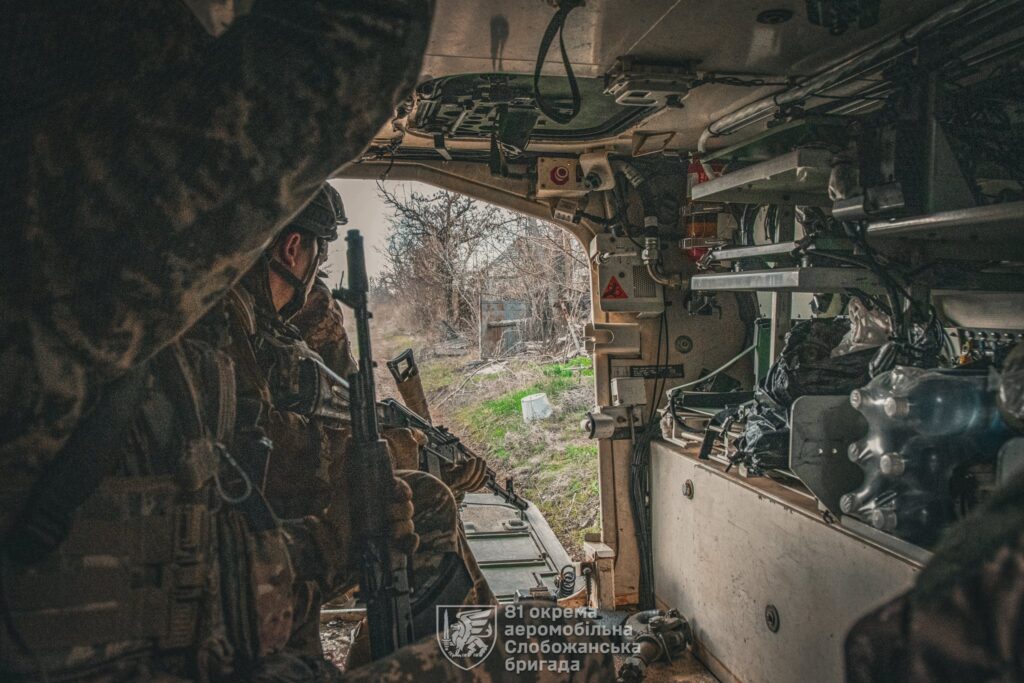


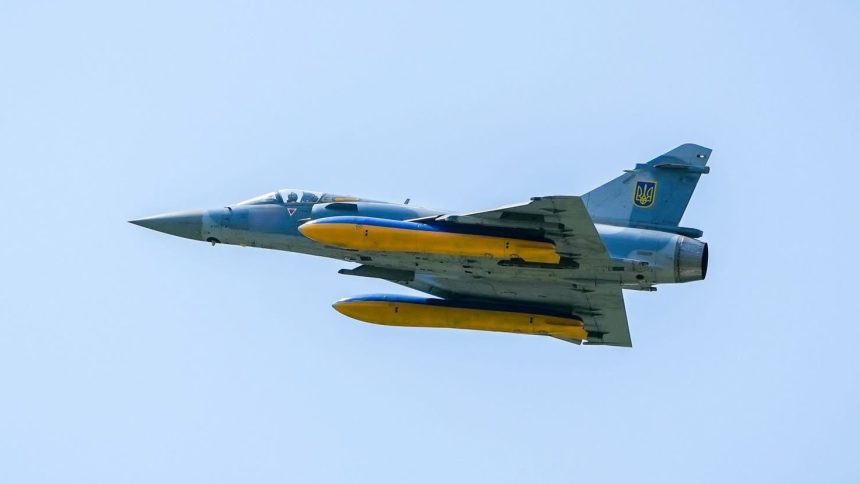


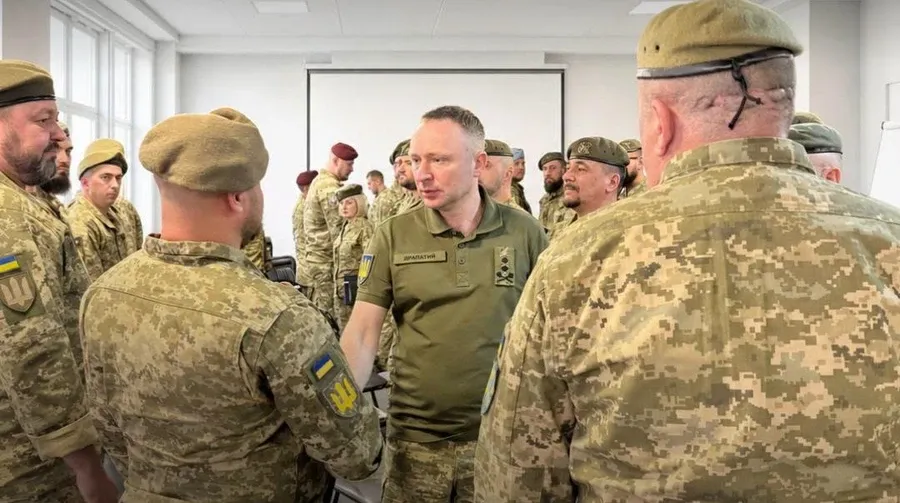

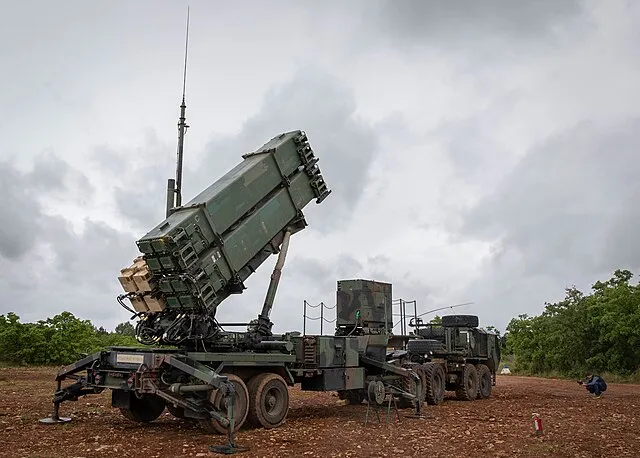
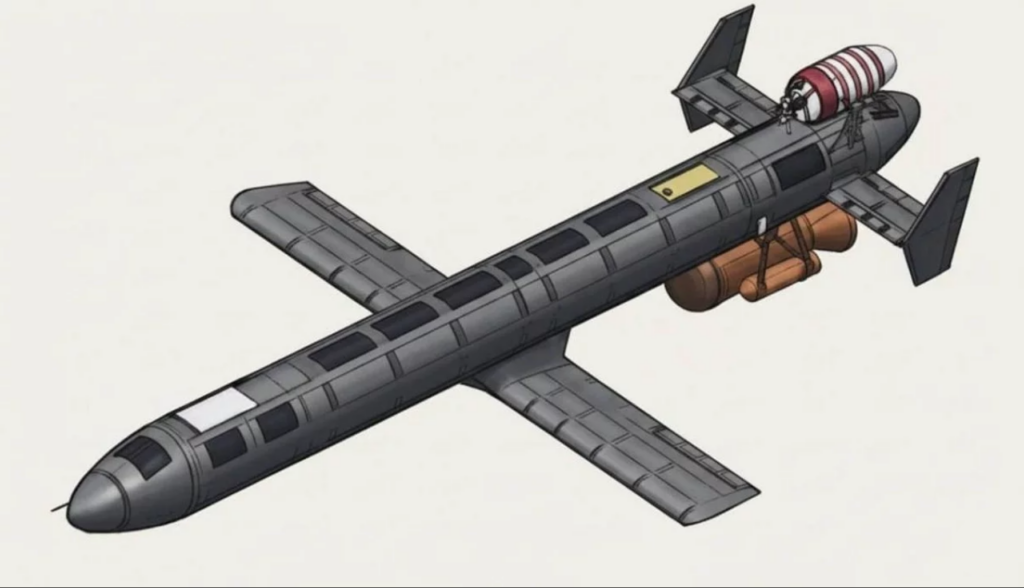


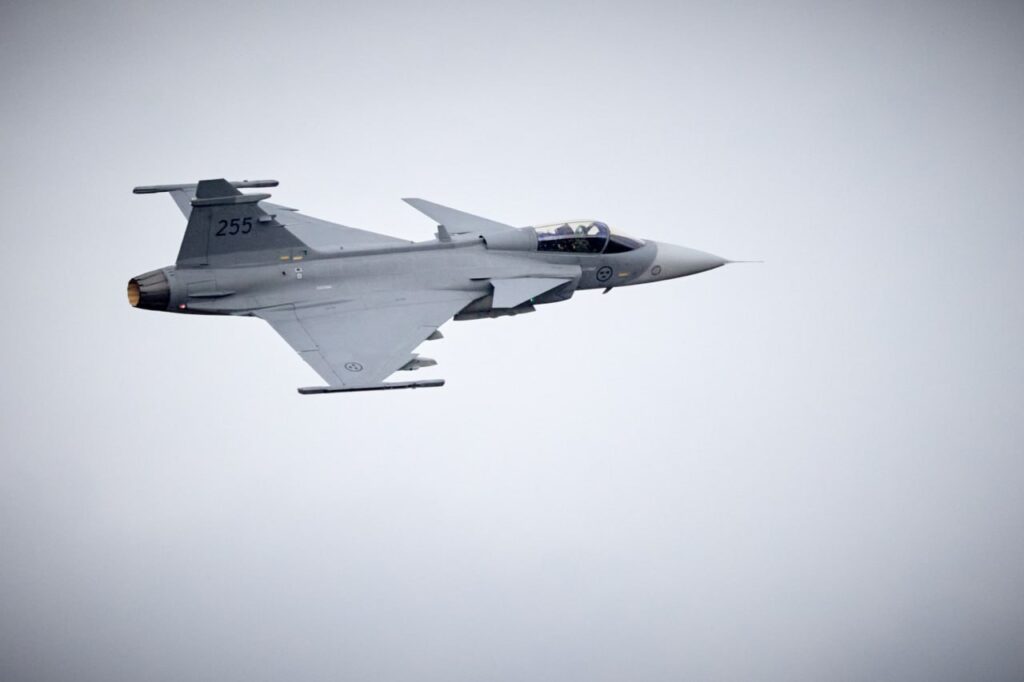


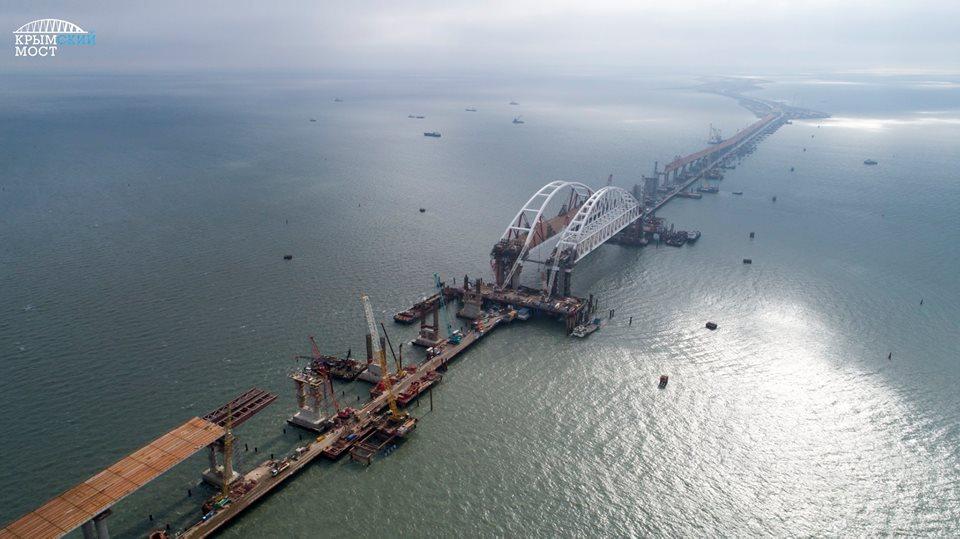


 Розбито ворожу колону, яка мала рухатися в бік Добропілля.


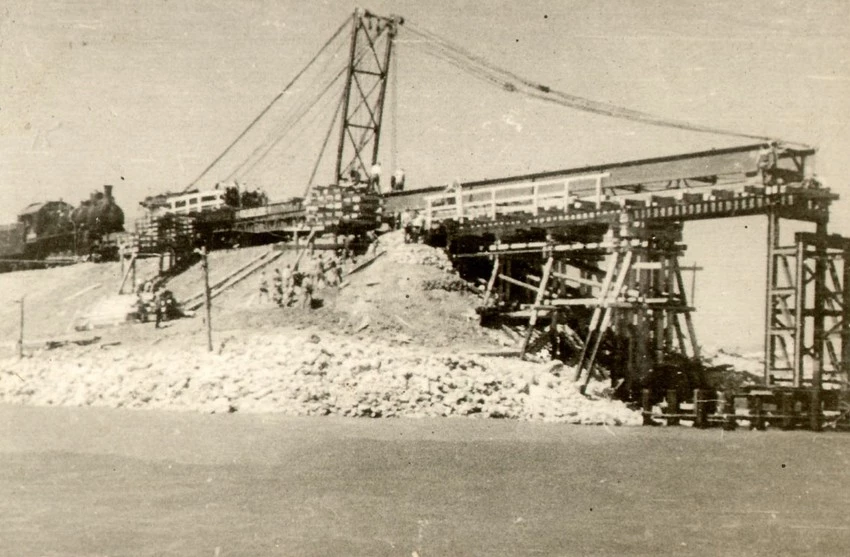

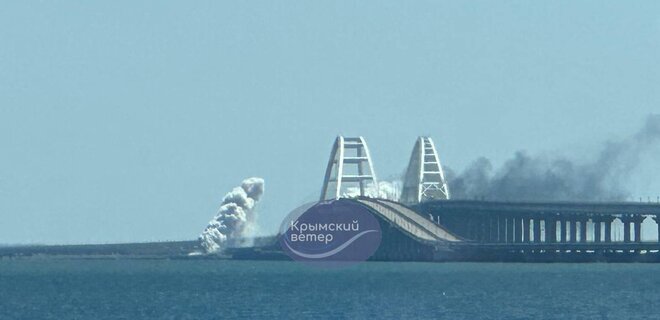





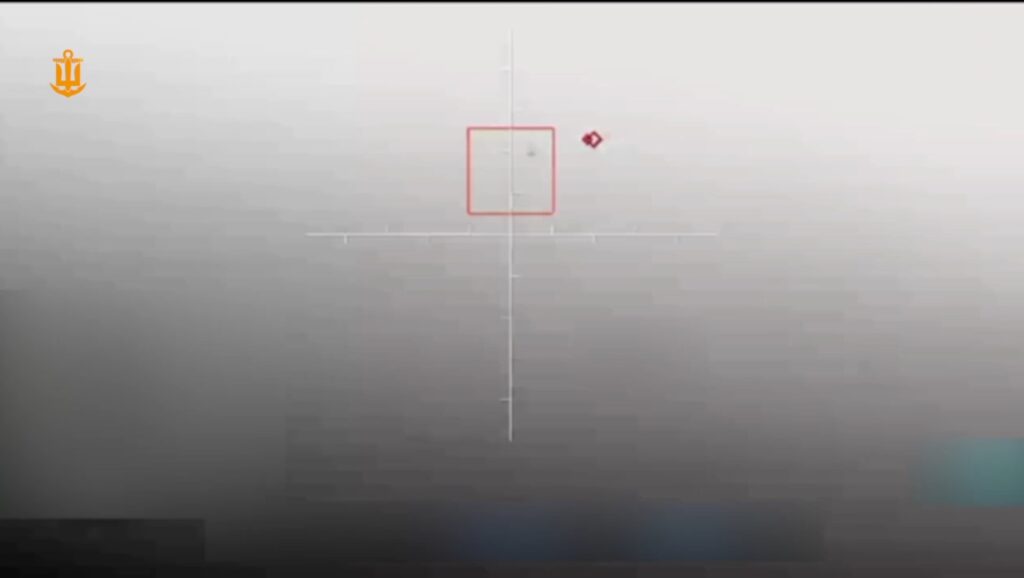


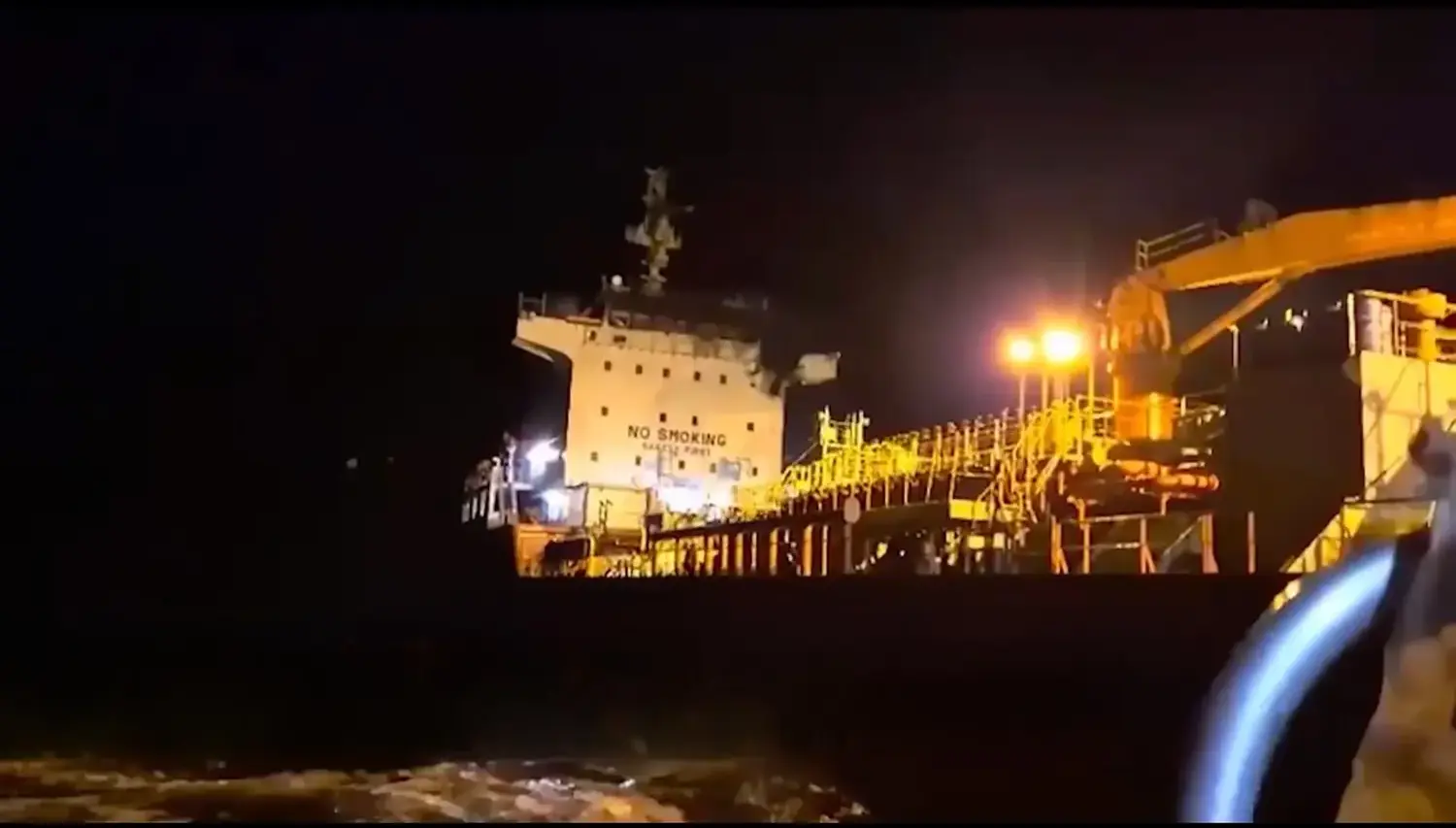


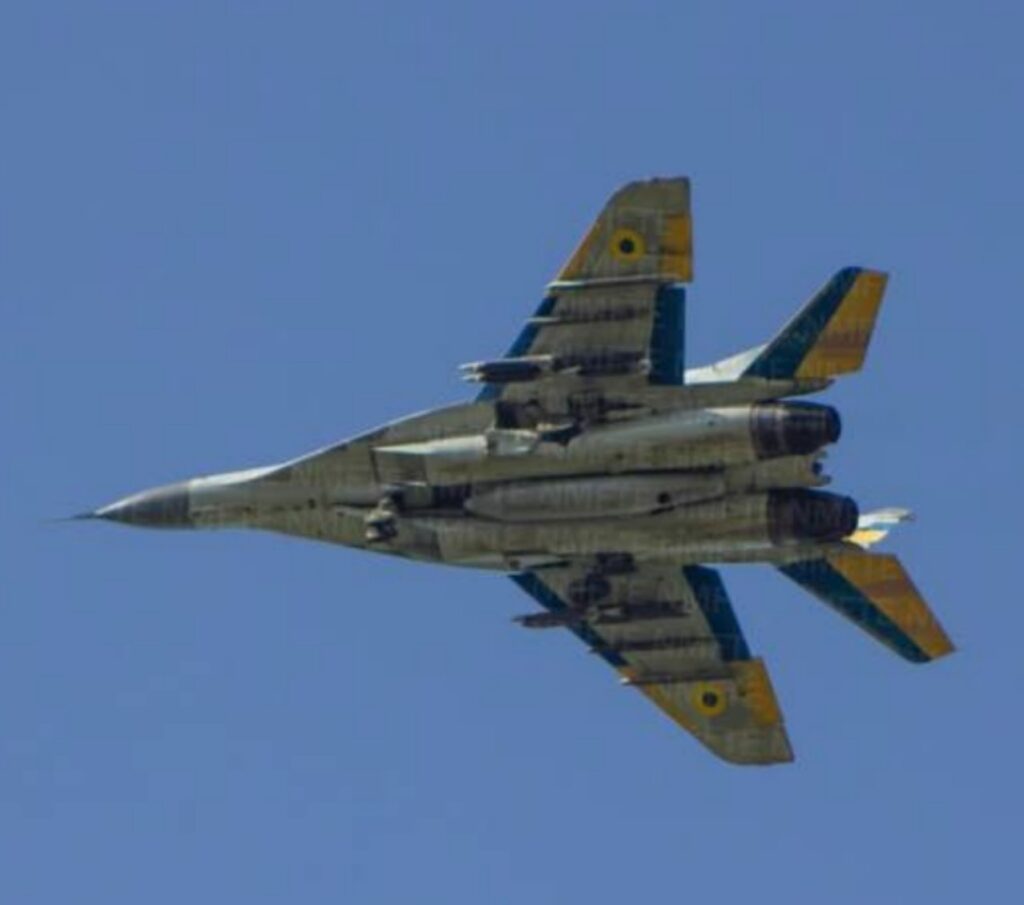
 831st Tactical Aviation Brigade