Ukraine has built a revolutionary drone to catch Russia's most modern drones. The Ukrainian arsenal gained its first jet-powered interceptor drone, the Alexa Spatium, developed to destroy small aerial, ground, and surface targets in combat, Ukraine's Defense Ministry announced.
The interceptor is Ukraine's answer to a threat that has outrun its defenses and killed civilians. Russia added jet engines to its Geran drones to make them fly faster than Ukraine's interceptors
Ukraine has built a revolutionary drone to catch Russia's most modern drones. The Ukrainian arsenal gained its first jet-powered interceptor drone, the Alexa Spatium, developed to destroy small aerial, ground, and surface targets in combat, Ukraine's Defense Ministry announced.
The interceptor is Ukraine's answer to a threat that has outrun its defenses and killed civilians. Russia added jet engines to its Geran drones to make them fly faster than Ukraine's interceptors could intercept. Such jet-powered drones, Geran-4, struck a Kryvyi Rih shopping center on 21 August, killing at least 15 people and injuring 130.
The Alexa Spatium is built to catch exactly those jet-powered drones, closing an arms-race loop in which Russia's speed had left Ukraine's slower interceptors behind.
It is built to kill the jet Gerans
The interceptor targets Russia's fastest drones first. It is primarily oriented toward destroying Russian kamikaze drones, including the Geran-3, Geran-4, and Geran-5, as well as the Shahed-131, and can also strike reconnaissance drones, helicopters, and other targets, according to the Defense Ministry.
A powerful turbojet gives the Alexa Spatium the speed to chase down jet-powered targets, with a high flight ceiling, a significant combat radius, and a range spanning low to medium altitudes.
It is fast, reusable, and pickup-portable
The drone is built for flexible, repeated use. It measures about 1.5 by 1.7 meters, launches from a mobile catapult in minutes, and is made of a light, strong composite that lets it make sharp maneuvers without losing control. A drone that does not complete its mission can return to the launch site and be reused.
It carries a choice of warheads and seekers. The Alexa Spatium can be fitted with fragmentation, shaped-charge, or thermobaric warheads, guided by preset coordinates or direct control, and uses television and infrared search-and-aiming systems.
Since the beginning of 2026, Ukraine’s Defense Ministry has codified and approved 413 unmanned aerial systems for use by the country’s Defense Forces. Almost all of them are Ukrainian-made.
Ukraine has hit the commander of a Russian brigade notorious for one of the war's worst atrocities. The 423rd Separate Unmanned Systems Regiment "Scythian Griffons" struck the car of Dmitry Shabaev, commander of Russia's 64th brigade, seriously wounding him, the regiment reported.
The target commands the unit most associated with the killing of civilians in Bucha in spring 2022. During the Russian occupation, 637 civilians were killed in the small town of Bucha alone. 4
Ukraine has hit the commander of a Russian brigade notorious for one of the war's worst atrocities. The 423rd Separate Unmanned Systems Regiment "Scythian Griffons" struck the car of Dmitry Shabaev, commander of Russia's 64th brigade, seriously wounding him, the regiment reported.
The target commands the unit most associated with the killing of civilians in Bucha in spring 2022. During the Russian occupation, 637 civilians were killed in the small town of Bucha alone. 460 infrastructure facilities were damaged or destroyed, according to the Ukrainian Prosecutor General's Office.
The strike hit the commander 80 km behind the front
According to military intelligence, the Russian colonel's movements had been tracked for a long time, and the drone crew hit his service vehicle roughly 80 kilometers from the line of contact.
Both men aboard were badly hurt. Shabaev and his driver received serious injuries, and both were evacuated to a Russian military hospital, the regiment said.
The brigade is tied to Bucha
After the atrocities in Bucha, the brigade remains in the fight. It now forms part of Russia's southern grouping in Zaporizhzhia and Dnipropetrovsk oblasts and continues to commit crimes.
The unit is targeting Russian command posts
The strike reflects a deliberate focus on Russian command. Regiment commander Colonel Vitalii Hersak said that after becoming a separate regiment with strengthened capabilities, the unit set a strategic task of concentrating on the command posts of enemy brigades and battalions.
"After we became a separate regiment and our combat capabilities strengthened, I set the guys a strategic task to focus especially on working the command posts of enemy brigades and battalions. This is only the beginning. To be continued," Hersak said.
Targeting commanders and command posts aims to degrade Russian units by removing the officers who direct them, a higher-value target than the front-line troops they command.
Russia is deploying six launchers for North Korean ballistic missiles in Voronezh Oblast, the Institute for the Study of War (ISW) reported on 20 August. The assessment cited Ukraine’s military intelligence agency (HUR).
Russia has already used North Korean missiles in deadly strikes across Ukraine, and Pyongyang is supplying more of them. From Voronezh Oblast, the weapons could threaten Kyiv and six other regions, adding to the ballistic arsenal Moscow can use in mass
Russia is deploying six launchers for North Korean ballistic missiles in Voronezh Oblast, the Institute for the Study of War (ISW) reported on 20 August. The assessment cited Ukraine’s military intelligence agency (HUR).
Russia has already used North Korean missiles in deadly strikes across Ukraine, and Pyongyang is supplying more of them. From Voronezh Oblast, the weapons could threaten Kyiv and six other regions, adding to the ballistic arsenal Moscow can use in mass attacks intended to overwhelm Ukrainian air defenses.
Six launchers expand Russia’s missile threat
The North Korean missiles could reach Kyiv, Sumy, Kharkiv, Chernihiv, Poltava, Dnipropetrovsk, and Zaporizhzhia oblasts, ISW said.
The unit may eventually field 120 missiles. HUR said North Korea had transferred around 50 KN-23, KN-24, and upgraded KN-30 ballistic missiles to Russia by July.
The KN-30 can carry a 2,500-kilogram warhead, though ISW has seen no evidence of Russia using it against Ukraine. Other North Korean missiles have larger warheads than Russia’s Iskander-M but are less accurate, Ukrainian military expert Anatolii Khrapchynskyi said.
Those missiles could join Russia’s combined attacks. ISW expects Moscow to stockpile ballistic and cruise missiles for several days before launching large barrages intended to overwhelm Ukraine’s air defenses.
ISW pointed to the 19–20 August attack as the latest example of that pattern. The barrage lasted nearly nine hours and killed at least 15 people in Kyiv. Ukraine’s Air Force said it intercepted most drones and cruise missiles, but no longer routinely reports how many ballistic missiles Russia launches or Ukraine intercepts.
North Korean missiles have already killed civilians
Preliminary evidence indicated that Russia used a North Korean ballistic missile in a 30 July strike on Radushne, Dnipropetrovsk Oblast, that killed five members of one family.
On 10 August, a North Korean missile killed seven Zaporizhstal steelworkers and injured 21 others in Zaporizhzhia, Ukrainian officials said. The workers were heading to a shelter when the missile struck.
Ballistic missiles travel at high speed and leave civilians little time to seek cover. They are also harder to intercept than drones or cruise missiles, while Ukraine has limited supplies of the Patriot interceptors used against them.
Ukraine is training the operators who shoot down Russian drones on a simulator, before they touch a real interceptor. The Ukrainian interceptor drones P1-SUN and Bullet were integrated into the UFDS combat-drone simulator, Drone Fight Group reported.
In the simulator, an operator can practice basic control, pursuit, and interception of aerial targets, repeat exercises an unlimited number of times, and train accuracy without using real equipment, letting Ukraine build in
Ukraine is training the operators who shoot down Russian drones on a simulator, before they touch a real interceptor. The Ukrainian interceptor drones P1-SUN and Bullet were integrated into the UFDS combat-drone simulator, Drone Fight Group reported.
In the simulator, an operator can practice basic control, pursuit, and interception of aerial targets, repeat exercises an unlimited number of times, and train accuracy without using real equipment, letting Ukraine build interceptor-drone crews cheaply and safely as it fields more of the drones that down Russia's Shaheds.
The simulator uses accurate models of real drones
The two interceptors are the first real ones added to the military version. The P1-SUN by SkyFall and the Bullet by General Cherry became the first actual anti-aircraft interceptor drones integrated into UFDS Military, Drone Fight Group said.
The point is to train on what operators will actually fly. For the developers, the collaboration continues the simulator's core principle of bringing training as close as possible to get to know them in a safe digital environment.
It is free for Ukrainian troops
The training version is provided to the military at no cost. The full training version of UFDS is available free for Ukrainian soldiers, while a public version is available on Steam, and the full version is given to units individually through a form on the site.
More Ukrainian drones are being added
The developers plan to keep integrating real systems. The UFDS team intends to add more real Ukrainian drones and other uncrewed-systems solutions, giving makers a way to present their platforms to operators digitally and users a way to train on models matching real systems.
As the country fields an ever-wider range of interceptors and other drones, a simulator that mirrors the real systems lets operators learn each new platform before it reaches their hands.
Logistical problems are stopping Russian small infantry groups from reaching Lyman, a 53rd Brigade officer told Army TV on 21 August, ArmyInform reported.
Russia is trying to capture Lyman and use it as a launchpad for an advance toward Sloviansk and Kramatorsk. Its forces have repeatedly tried to push into the city. They have reached its eastern edge but have not secured a foothold inside, according to Ukraine’s Joint Forces.
Junior Lieutenant Volodymyr Hirniak, a c
Logistical problems are stopping Russian small infantry groups from reaching Lyman, a 53rd Brigade officer told Army TV on 21 August, ArmyInform reported.
Russia is trying to capture Lyman and use it as a launchpad for an advance toward Sloviansk and Kramatorsk. Its forces have repeatedly tried to push into the city. They have reached its eastern edge but have not secured a foothold inside, according to Ukraine’s Joint Forces.
Junior Lieutenant Volodymyr Hirniak, a communications officer with Ukraine’s 53rd Separate Mechanized Brigade, said the situation in the unit’s sector remained tense but had “not changed too radically.”
Russian forces continued to use drones, including fiber-optic models, Hirniak said. On the ground, they were sending small infantry groups to slip through Ukrainian lines and create confusion inside the brigade’s defensive positions.
The tactic was neither new nor confined to the 53rd Brigade’s sector, he added. Russia’s immediate aim was to reach Lyman and “open a gate” for further advances.
However, logistical problems were preventing the groups from achieving that aim, according to Hirniak. Ukrainian troops later detected and neutralized the infiltrating teams, he said.
ArmyInform did not report how many groups had attempted to advance, where within the brigade’s sector the incidents occurred, or over what period. Hirniak’s account could not be independently verified.
Why Russia keeps pushing toward Lyman
Lyman is a frontline city in northern Donetsk Oblast that blocks Russia’s northern route toward Sloviansk and Kramatorsk, part of Ukraine’s fortified Donbas “fortress belt.” Russia occupied the city for about four months in 2022 before Ukrainian forces liberated it on 1 October.
Joint Forces spokesman Viktor Trehubov said on 4 August that Russia needed to capture Lyman and establish a base there before advancing south toward Sloviansk and Kramatorsk.
Russia has pressed towards Lyman for more than a year. In July 2025, another Ukrainian officer said Russian gains near the city remained slow and costly despite repeated attempts to exploit gaps in Ukrainian lines.
Ukrainian defense manufacturer Fire Point has delayed its Danish missile-fuel plant until late 2027 after the original building failed to meet safety requirements, pushing the estimated cost above €150 million, Euractiv reported on 19 August.
The plant will produce solid rocket propellant for Fire Point’s Flamingo cruise missiles. Denmark was the first NATO country to permit Ukrainian military production on its territory, the German outlet BILD reported. The site is int
Ukrainian defense manufacturer Fire Point has delayed its Danish missile-fuel plant until late 2027 after the original building failed to meet safety requirements, pushing the estimated cost above €150 million, Euractiv reported on 19 August.
The plant will produce solid rocket propellant for Fire Point’s Flamingo cruise missiles. Denmark was the first NATO country to permit Ukrainian military production on its territory, the German outlet BILD reported. The site is intended to move some production away from Russian attacks in Ukraine, but the delay postpones that capacity by a year.
Fire Point is building the plant in Vojens, near Skrydstrup Air Base in southern Denmark, Euromaidan Press reported.
Fire Point CEO Iryna Terekh announced the revised plan at DALO Industry Days, a defense-industry conference in Herning. She said Fire Point had originally expected the project to cost €50 million and called the new estimate “very rough.”
Denmark had already removed more than 20 legal barriers to speed up the project, Euractiv reported. Terekh said other European countries also remained interested in hosting Fire Point production.
What is Fire Point
Fire Point currently makes missiles and drones at 90 locations across Ukraine, Terekh told Euractiv in July.
The company supplies more than half of Ukraine’s deep-strike weapons—arms used to hit targets far behind the front line—and says it produces 300 drones daily, in a July 2026 interview with Liga.
In August 2025, Fire Point was producing 100 FP-1 long-range attack drones each day, according to the Associated Press. Its later figure includes FP-1 and FP-2 drones.
Denmark directly funds Ukrainian arms makers
Denmark has created the “Danish model” of aid, which uses allied money to buy weapons directly from Ukrainian manufacturers instead of taking equipment from donor stockpiles.
About $200 million of the €590 million military aid package announced in June was directed through the mechanism, Euromaidan Press reported. Denmark has committed about $11.7 billion in military support to Ukraine from 2022 through 2028, according to its Defense Ministry.
Ukrainian prosecutors have formally accused a captured Russian marine of executing a Ukrainian unit commander near Pokrovsk, the Donetsk Oblast Prosecutor’s Office said on 20 August. Investigators allege he took the 34-year-old captive to a forest belt after an interrogation and shot him in the back of the head on his superior’s order.
The case comes as Ukraine steps up efforts to prosecute Russian troops accused of executing or abusing Ukrainian POWs. Ukrainian investi
Ukrainian prosecutors have formally accused a captured Russian marine of executing a Ukrainian unit commander near Pokrovsk, the Donetsk Oblast Prosecutor’s Office said on 20 August. Investigators allege he took the 34-year-old captive to a forest belt after an interrogation and shot him in the back of the head on his superior’s order.
The case comes as Ukraine steps up efforts to prosecute Russian troops accused of executing or abusing Ukrainian POWs. Ukrainian investigators and UN monitors have documented a growing pattern since 2024 of Russian forces executing Ukrainian troops after capture.
The alleged gunman is now in Ukrainian custody, opening the way for an in-person trial. Russian troops also shot dead a second Ukrainian prisoner, prosecutors said.
Russian assault units had been trying to seize Shakhove on the Pokrovsk front since May 2025, according to the prosecutor’s office. On 10 October 2025, a small Russian infantry group entered the village’s outskirts and captured two Ukrainian service members, including the commander, the office alleges.
After the interrogation, the suspect took the commander to a forest belt and killed him with an automatic rifle, prosecutors said. The other Ukrainian prisoner was also shot dead. The statement names neither victim.
A Donetsk Oblast prosecutor formally notifies a captured Russian marine that he is suspected of executing a captured Ukrainian unit commander near Pokrovsk. Photo: Donetsk Oblast Prosecutor’s Office / Facebook
Investigators identified the suspect as a 34-year-old native of Russia’s Krasnoyarsk Krai who used the call sign “Tai” and served as a rifleman in the 336th Guards Naval Infantry Brigade.
Ukrainian forces later captured him during fighting in the same sector, according to prosecutors. The office did not say when he was taken prisoner.
Prosecutors formally accused him of cruel treatment of prisoners of war resulting in death, a war crime under Ukrainian law.
Ukraine’s other cases against captured Russian soldiers
Ukraine has previously brought cases against other captured Russian soldiers over POW executions. A Zaporizhzhia court sentenced Dmitry Kurashov to life imprisonment in November 2025—the first time Ukraine convicted a Russian soldier of executing a surrendered Ukrainian POW.
In a separate case, the Security Service of Ukraine charged Sergey Tuzhilov over the execution of one bound Ukrainian POW and his alleged role in killing two others near Vovchansk in June 2024.
Russian UN Ambassador Vasily Nebenzya denied reports that Moscow could launch another mass mobilization after September’s parliamentary elections, saying none was planned or expected “as far as I know,” The Moscow Times reported
Russia has avoided another draft since its 2022 mobilization triggered protests and an exodus, relying instead on contract soldiers. Ukraine says those recruits no longer replace battlefield losses, and Moscow may mobilize several hundred thousa
Russian UN Ambassador Vasily Nebenzya denied reports that Moscow could launch another mass mobilization after September’s parliamentary elections, saying none was planned or expected “as far as I know,” The Moscow Times reported
Russia has avoided another draft since its 2022 mobilization triggered protests and an exodus, relying instead on contract soldiers. Ukraine says those recruits no longer replace battlefield losses, and Moscow may mobilize several hundred thousand people after the elections. That could replenish its forces and support new offensives, although Ukrainian intelligence sees no preparations now.
Nebenzya’s remarks followed a question about more than 20,000 people crossing Russia’s Verkhny Lars border checkpoint into Georgia in one day amid fears of post-election mobilization, Meduza reported.
His comments extend a series of Russian denials. Deputy Security Council Chairman Dmitry Medvedev dismissed reports of another mobilization as “nonsense” in late July. The State Duma’s defense committee said a mass compulsory call-up was not under consideration because the army was recruiting contract soldiers, The Moscow Times reported.
Russia has avoided another mass draft since its September 2022 mobilization triggered protests and an exodus. Officials had also denied that mobilization was planned shortly before President Vladimir Putin announced it, Meduza noted.
Russian government seeks new wartime penalties
Moscow is separately seeking penalties for people and companies that ignore mobilization and military-supply orders issued by regional authorities. The bill would not itself order a new call-up.
The government submitted it to the State Duma, the lower house of Russia’s parliament, on 20 August, The Moscow Times reported. Companies could face fines of up to 1 million rubles or suspension for up to 90 days.
Russian law already punishes such defiance in areas under martial law but imposes no nationwide penalty elsewhere in Russia, according to the bill. Its authors said a “significant number” of violations had been recorded.
Ukraine says a new draft could provide troops for a northern offensive
President Volodymyr Zelenskyy said on 11 August, citing Ukrainian military intelligence, that Russia planned to mobilize several hundred thousand people after the elections and roughly the same number in 2027.
HUR, Ukraine’s military intelligence agency, later assessed that a post-election mobilization could enable Russia to build a strike force for a northern offensive by February 2027. Its deputy chief, Vadym Skibitskyi, stressed, however, that the agency currently sees no evidence that such preparations have begun.
Editor's note: This is a developing story.
A Russian drone attack on a shopping center in Kryvyi Rih on 21 August killed at least 15 people and injured 130, including 23 children, local authorities said.
The attack struck the shopping mall during the day, setting shops inside the building on fire, regional military administration head Oleksandr Hanzha said.
The attack came in two waves, with the second strike hitting emergency responders about 30 minutes after the
A Russian drone attack on a shopping center in Kryvyi Rih on 21 August killed at least 15 people and injured 130, including 23 children, local authorities said.
The attack struck the shopping mall during the day, setting shops inside the building on fire, regional military administration head Oleksandr Hanzha said.
The attack came in two waves, with the second strike hitting emergency responders about 30 minutes after the first strike caused the fire, Ukrainian President Volodymyr Zelenskyy said.
Twenty-nine people remain in serious condition, including five children, according to Head of the Kryvyi Rih Defense Council Oleksandr Vilkul.
One of the victims died in hospital from severe injuries sustained in the attack, bringing the death toll to six, according to Hanzha.
A shopping center burns after a Russian drone attack in Kryvyi Rih, Dnipropetrovsk Oblast, Ukraine, on 21 August 2026. Photo: Oleksandr Hanzha
Second strike hit emergency responders
The second wave came as emergency crews were responding to the fire caused by the first strike.
Zelenskyy called the attack “simply an act of terrorism” and said the international community should respond with real pressure on Russia.
“For peace to be possible, Russia needs to face real accountability,” Zelenskyy said.
Kryvyi Rih, in central-southern Ukraine, has faced frequent Russian missile and drone attacks throughout the full-scale war, with repeated strikes causing heavy civilian casualties.
“Such strikes are simply an act of terrorism,” Ukrainian President Volodymyr Zelenskyy said after a Russian drone attack on a shopping center in Kryvyi Rih killed five people and injured at least 52, including six children.
Russian channels acknowledge strike on civilian target
Russian military Telegram channels described the shopping center as a target shortly after the attack, according to Kryvyi Rih Times.
One Russian channel claimed that a “Geran-4” jet-powered drone had been used to strike the shopping and entertainment complex and said the “target was hit” before noting that a fire had broken out inside the building.
The channel also published the precise coordinates of the shopping center.
The posts did not provide evidence that the shopping center was a legitimate military target.
Russian forces have repeatedly used drones and missiles to strike Ukrainian cities and civilian infrastructure throughout the full-scale invasion.
Russian attacks across Dnipropetrovsk Oblast
Russian forces attacked four districts of Dnipropetrovsk Oblast nearly 60 times on 21 August using drones, artillery, and an aerial bomb, Hanzha said.
In addition to the attack on Kryvyi Rih, Russian strikes hit communities in Nikopol, Synelnykove, and Kamianske districts, damaging apartment buildings, private homes, and cars.
Three people were injured in Nikopol district, while two others were injured in Synelnykove district. Several of the injured were hospitalized, Hanzha said.
The attacks also damaged private homes in Synelnykove district and caused a fire in the Krynychanska community of Kamianske district.
Ukraine is asking Elon Musk to let it arm deep-strike drones with his Starlink network and turn them on Russian ballistic-missile launchers far inside Russia, the Financial Times reported. The plan needs Musk's approval — and US President Donald Trump was cool to the idea when Ukrainian President Volodymyr Zelenskyy raised it at the White House on 28 July, with people present expecting Musk to refuse.
Kyiv is chasing the workaround because its air defenses are stretched
Ukraine is asking Elon Musk to let it arm deep-strike drones with his Starlink network and turn them on Russian ballistic-missile launchers far inside Russia, the Financial Times reported. The plan needs Musk's approval — and US President Donald Trump was cool to the idea when Ukrainian President Volodymyr Zelenskyy raised it at the White House on 28 July, with people present expecting Musk to refuse.
Kyiv is chasing the workaround because its air defenses are stretched: Russia keeps escalating its missile and drone strikes, and Ukraine is running low on the Patriot interceptors that are its only dependable answer to Russian ballistic missiles. As Russia builds more missiles and drones, Ukraine's interceptor needs run into the hundreds before the year is out.
At the meeting, FT reported, Zelenskyy pressed Trump to lobby Musk for permission to fly Starlink-linked drones across the Russian border. He capped the pitch at 200 km into Russia — far enough to reach launch sites, command posts, and other targets — on the calculation that a shallower limit might make Musk likelier to agree.
Starlink could extend Ukrainian drone strikes
Riding SpaceX's satellites, Starlink drones hold a steadier link to their pilots at long range than ordinary radio allows, and they shrug off the jamming that grounds other drones. The drones have already shown their worth in the fighting at home, and Vienna-based military analyst Franz-Stefan Gady said that across the border they "could be very useful in hunting" Russian launchers, FT wrote.
Kyiv's best channel to Musk has also just closed: Zelenskyy recently fired his defense minister, Mykhailo Fedorov, who had a direct line to the billionaire.
Mykhailo Fedorov during a June interview, a month before his dismissal, in which he described leaks and private-company influence inside the defense ministry. Photo: screenshot from PRESSING / Army-Media of Ukraine's Defense Forces
Speaking to a Ukrainian podcast on 6 August, Fedorov said that even with a channel to Musk still open after his firing, he had made no progress on cross-border Starlink use—"a difficult task right now."
Explore further
The Fedorov protesters lost. But they backed a man for what he built, not what he promised—and that may be new in Ukraine.
Musk’s Starlink decisions have affected both sides in the Russo-Ukrainian war
Musk has backed Ukraine's heavy dependence on Starlink for military command and comms. In 2022, Musk declined to extend Starlink coverage for Ukrainian troops mid-operation near occupied Crimea, citing his fear of triggering a nuclear escalation.
He has also acted against Moscow: in February, at Fedorov's direct request, Musk shut down the Starlink terminals that Russian forces had been operating illicitly against Ukraine.
Now, Musk answered Fedorov's Monday post with a line about "trying to do the right thing" and wanting peace — and said nothing about the Starlink ask.
Ukraine's Security Service (SBU) urged Ukrainians to remain particularly vigilant ahead of Independence Day on 24 August, warning of potential Russian attacks and other security threats around the holiday.
Security threats are often heightened around major national holidays in Ukraine during the full-scale war with Russia, when large public gatherings can create opportunities for attacks and Russia has an added incentive to use symbolic dates to spread fear and disrupti
Ukraine's Security Service (SBU) urged Ukrainians to remain particularly vigilant ahead of Independence Day on 24 August, warning of potential Russian attacks and other security threats around the holiday.
Security threats are often heightened around major national holidays in Ukraine during the full-scale war with Russia, when large public gatherings can create opportunities for attacks and Russia has an added incentive to use symbolic dates to spread fear and disruption.
The SBU said Russia could exploit Independence Day gatherings for attacks, provocations, sabotage, cyberattacks, or other crimes.
Russia may recruit Ukrainians for sabotage
The SBU specifically warned about attempts by Russian intelligence services to recruit Ukrainians to carry out attacks inside the country.
According to the agency, Ukrainians could be offered money to set fires, damage property, plant suspicious objects, collect information about military facilities, or carry out other illegal activities.
The SBU urged people not to accept such offers and to immediately report attempts at recruitment.
It also warned that recruiters may disguise requests as ordinary tasks. People could be asked to photograph a particular location, deliver a package, or leave an object somewhere without being told the real purpose of the task.
The SBU said people should be especially cautious about requests from unknown individuals, including those claiming to represent law enforcement.
Russia has repeatedly sought to recruit Ukrainians for sabotage and other activities inside Ukraine during the full-scale war. Ukrainian authorities have previously reported cases in which people were offered money to carry out arson attacks, damage infrastructure, gather intelligence, or perform other tasks on behalf of Russian handlers.
Explore further
Alleged Russian agent arrested in Dnipro, accused of activating 1,000+ Starlink communications terminals to support Russian forces
Warning over information that could help Russia
The agency also urged Ukrainians to avoid sharing information that could help Russia identify military targets or assess the results of its attacks.
That includes photos and videos showing the locations of Ukrainian troops, critical infrastructure, checkpoints, and air defense systems.
The SBU also told people not to publish information about the consequences of Russian strikes, Ukrainian air defense operations, or the movement of Ukrainian military personnel.
Such information can reveal the location and activity of Ukrainian forces or help Russia assess the effectiveness of its strikes.
Independence Day under wartime threats
Ukraine will mark its 35th Independence Day on 24 August, more than four years after Russia launched its full-scale invasion.
The holiday comes as Russia continues to use missiles and drones to attack Ukrainian cities and infrastructure, while Ukrainian authorities remain concerned about Russian intelligence activity and sabotage inside the country.
The SBU urged Ukrainians to remain particularly vigilant before and during Independence Day and to report suspected recruitment, preparations for sabotage or terrorism, and other activity that could threaten national security.
Latvia has resumed publishing monthly lists of locally registered companies trading goods with Russia or Belarus after a nearly three-year pause, public broadcaster LSM reported on 20 August 2026.
Prime Minister Andris Kulbergs has pledged to sever its remaining economic ties with Russia and Belarus, but substantial trade remains legal because EU sanctions are not a full embargo. The monthly register makes that commerce visible by identifying the companies involved.
Latvia has resumed publishing monthly lists of locally registered companies trading goods with Russia or Belarus after a nearly three-year pause, public broadcaster LSM reported on 20 August 2026.
Prime Minister Andris Kulbergs has pledged to sever its remaining economic ties with Russia and Belarus, but substantial trade remains legal because EU sanctions are not a full embargo. The monthly register makes that commerce visible by identifying the companies involved.
The Central Statistical Bureau, Latvia's national statistics agency, published the names of 171 companies for July. A subsequent analysis by Latvian news agency LETA found that more than two-thirds operated in logistics, food and agriculture, or medicine.
The disclosure is, in effect, a form of naming and shaming. Yet the statistics bureau stopped publishing a similar list in autumn 2023 because names without transaction details could not support objective conclusions. The register is not a sanctions blacklist, and inclusion does not indicate a sanctions violation.
Under an amendment adopted on 18 June 2026, Latvia’s tax authority must send the data to the statistics bureau each month. The change also lifted tax-confidentiality rules that had kept company names private, LSM reported.
The explanatory note accompanying the law said disclosure was intended to support Ukraine. The amendment's authors argued that Latvian companies should not contribute to Russian and Belarusian state revenues while Russia’s invasion continues, according to LSM.
Latvia seeks to cut its remaining trade
The Prime Minister said in June that Latvia must sever its remaining economic ties with Russia and Belarus. However, he indicated that pharmaceutical exporters would likely be exempted on national-security grounds.
Latvia’s exports to Russia and Belarus each fell only about 7% in 2025, while imports from Russia plunged by more than two-thirds, according to official data cited by Euromaidan Press.
EU sanctions do not prohibit all trade
The EU renewed its economic sanctions on Russia through July 2027, preserving restrictions on trade, finance, and energy, as well as on goods and technology with both civilian and military uses, Euromaidan Press reported in June.
The Council of the EU says its trade restrictions exclude health, pharmaceutical, food, and agricultural products to avoid harming Russian civilians. Those exclusions allow EU companies to continue lawful trade with Russia even while other parts of its economy remain under sanctions over the invasion of Ukraine.
Ukraine struck one of Russia's largest oil refineries deep in the Urals and a military airfield overnight in a long-range attack, Ukrainian President Volodymyr Zelenskyy announced on 21 August. The Ukrainian Army's General Staff confirmed the refinery and airfield hits, while Zelenskyy said the same night also reached the Black Sea and brought fresh damage from earlier strikes on a Russian warplane and a drone-launch site.
Ukraine's long-range drone campaign has spent t
Ukraine struck one of Russia's largest oil refineries deep in the Urals and a military airfield overnight in a long-range attack, Ukrainian President Volodymyr Zelenskyy announced on 21 August. The Ukrainian Army's General Staff confirmed the refinery and airfield hits, while Zelenskyy said the same night also reached the Black Sea and brought fresh damage from earlier strikes on a Russian warplane and a drone-launch site.
Ukraine's long-range drone campaign has spent the year reaching ever deeper into Russian territory, forcing Moscow to spread its air defenses across thousands of kilometers and driving fuel shortages that now reach beyond its borders. Each strike on Russia's oil backbone compounds the strain on its refining and export earnings, even as the Kremlin diverts chemicals meant for weapons into keeping filling stations supplied.
Fire at a major Lukoil refinery in Perm
Zelenskyy said the overnight drones hit the Lukoil-Permnefteorgsintez refinery — known as PNOS — in Perm, where the General Staff recorded a fire on the plant's grounds. The target sits more than 1,500 km from Ukraine's northern border, in a region near the Ural Mountains.
The refinery is one of Russia's largest, able to process more than 13 million tons of crude a year, with more than half its output sold abroad until recently. It supplies fuel to both Russia's economy and its army.
Ukrainian Telegram channels Supernova+ and Exilenova+ shared footage of explosions and a rising plume, with locals reporting a series of blasts at the site. Russia's Perm Krai authorities claimed they repelled the attack and downed 16 drones.
Kyiv has repeatedlyhit the plant through the year. After a strike at the end of July, it had been running well below capacity.
Airfield, Black Sea, and other targets the same night
The General Staff said the same night's drones also struck the Marinovka military airfield in Volgograd Oblast, located in Russia's Volga region, with the damage still being assessed, while Zelenskyy added that Ukraine achieved unspecified results in the Black Sea. The military also reported hitting a drone storage and launch site near Donetsk, a materiel warehouse in occupied Crimea, two command posts in Donetsk and Zaporizhzhia oblasts, and six relay stations in Crimea used to steer Russia's Geran and Gerbera attack drones.
Zelenskyy also confirmed damage from earlier strikes: a Russian Su-34 fighter-bomber hit at the Akhtubinsk airfield, about 600 km from the front line, and a drone store and launch site struck at Primorsko-Akhtarsk, roughly 180 km away. The strike extends a run of deep hits this month, from the TANECO refinery in Tatarstan and a Black Sea oil terminal to three refineries hit in one night and an Omsk refinery struck 2,500 km away in Siberia.
Italian defense giant Leonardo has quietly registered a research subsidiary in Kyiv, planting a direct corporate flag in Ukraine's wartime defense ecosystem, Euractiv reported. The move reverses the company's previous public stance against opening operations in Ukraine.
European defense firms are quickly embedding inside Ukraine's defense industry, as Ukraine's wartime manufacturing base has become a draw rather than a risk for Western capital.
Kyiv-based R&D com
Italian defense giant Leonardo has quietly registered a research subsidiary in Kyiv, planting a direct corporate flag in Ukraine's wartime defense ecosystem, Euractiv reported. The move reverses the company's previous public stance against opening operations in Ukraine.
European defense firms are quickly embedding inside Ukraine's defense industry, as Ukraine's wartime manufacturing base has become a draw rather than a risk for Western capital.
Kyiv-based R&D company
Leonardo Ukraine appeared in Ukraine's business register on 20 May, but the company disclosed the step only in its H1 2026 financial report at the end of July. The subsidiary's share capital stands at about $125,000. Leonardo International wholly owns it.
"We have completed the legal process to begin operations. The new company will be used to work in this region," a Leonardo spokesperson said.
The subsidiary will focus on R&D covering communications and navigation systems, software, IT services, and electronic and optical technologies. The step brings Leonardo closer to Ukraine's drone and missile industry, which has expanded rapidly during the war.
Explore further
Italy wants continental defense alliance, including Ukraine. Kyiv already out-produces all of NATO on drones
From no factory to a Kyiv office
Just over a year ago, then-CEO Roberto Cingolani said that Leonardo had no plans to open a factory in Ukraine, as Reuters reported. At the same time, Cingolani pledged to test Leonardo's Michelangelo Dome air defense system in Ukraine. The Italian government did not reappoint him in April 2026. Lorenzo Mariani took over as CEO in May.
The subsidiary is not a factory. But it gives Mariani a registered legal presence inside Ukraine's defense innovation ecosystem, positioned near the drone and electronic warfare sectors Leonardo wants to tap.
Explore further
Yes, Italy is arming Ukraine — here’s what military aid data shows
Leonardo is not the first major European defense firm to set up inside Ukraine. Germany's Quantum Systems established three joint ventures and made the country its second-largest international base. Rheinmetall is building an ammunition plant there. Ukrainian defense companies, in turn, have opened production facilities across Europe.
A Ukrainian drone maker is taking its battle-tested technology to a European factory floor. Ukrainian producer Airlogix has agreed with Finnish technology company Innokas to establish a joint venture in Finland, the company reported.
Under the "Build with Ukraine" initiative, the partnership will manufacture uncrewed systems based on Airlogix's Ukrainian technology in Finland, scaling production of Ukrainian drones in Europe and increasing supply to Ukraine's Defense Fo
A Ukrainian drone maker is taking its battle-tested technology to a European factory floor. Ukrainian producer Airlogix has agreed with Finnish technology company Innokas to establish a joint venture in Finland, the company reported.
Under the "Build with Ukraine" initiative, the partnership will manufacture uncrewed systems based on Airlogix's Ukrainian technology in Finland, scaling production of Ukrainian drones in Europe and increasing supply to Ukraine's Defense Forces.
The deal was signed in Denmark
The two companies formalized their intent at a defense event. Airlogix and Innokas signed a Letter of Intent to establish manufacturing in Finland for uncrewed systems based on Airlogix's Ukrainian technology during DALO Industry Days in Denmark.
The next stage will focus on developing the manufacturing model in Finland and establishing the joint venture, according to Airlogix.
Airlogix is a globally ranked drone maker
Airlogix is one of Ukraine's most recognized drone developers. In 2025, it ranked 84th on The Defense Post's list of the world's top 100 unmanned-systems makers, a ranking that weighed revenue, R&D investment, and growth. It was one of three Ukrainian companies on the list, alongside TAF Drones and Ukrspecsystems.
Airlogix makes the GOR unmanned aerial system, designed for reconnaissance and artillery spotting, which flies for two to two-and-a-half hours, has a range of 150 kilometers, and maintains communication at a range of 30 to 40 kilometers.
It is Airlogix's second European production deal
The Finnish venture follows a similar one across the Atlantic. In May 2026, Airlogix formed a 50-50 joint venture, Airlogix-Sentinel, with a Hamilton-based manufacturer to produce Ukrainian reconnaissance drones on Canadian soil for Ukraine's forces, under the same "Build with Ukraine" initiative.
Australian police have charged a 27-year-old Russian-Australian man with foreign interference after alleging he joined Ukraine's armed forces to obtain military information for Russian intelligence, the ABC reported.
Russia has repeatedly sought to obtain information about Ukraine's military through espionage and intelligence operations as it continues its full-scale invasion. The alleged operation also shows how Moscow can use individuals in third countries to gain acc
Australian police have charged a 27-year-old Russian-Australian man with foreign interference after alleging he joined Ukraine's armed forces to obtain military information for Russian intelligence, the ABC reported.
Russia has repeatedly sought to obtain information about Ukraine's military through espionage and intelligence operations as it continues its full-scale invasion. The alleged operation also shows how Moscow can use individuals in third countries to gain access to Ukrainian military information and attempt to pass it to Russian intelligence.
The Australian Federal Police (AFP) arrested Vladimir Teslov on 20 August in Sumner, a suburb of Brisbane. He appeared in Brisbane Magistrates Court on 21 August, where his case was adjourned until 2 October, according to the ABC.
Alleged operation inside Ukraine
According to the AFP, Teslov traveled to Russia in October 2024 and underwent military-style training before returning to Australia in December.
Teslov allegedly maintained contact after his return with individuals he believed were connected to Russian intelligence services, the AFP said in a press release.
Police allege he traveled to Ukraine in May 2025 and joined the Ukrainian Armed Forces, where he gained access to information about Ukrainian military personnel, units, and locations.
The AFP alleges Teslov subsequently provided, or attempted to provide, information obtained in Ukraine to people he believed were acting on behalf of Russian intelligence.
The agency said he sought to collect and communicate information about Ukrainian military personnel, locations, and operations for the benefit of Russia.
AFP Commissioner Krissy Barrett said the alleged activity could have endangered Ukrainian troops.
“It is alleged that this conduct created a risk to the safety and security of Ukrainian military personnel,” Barrett said, according to ABC.
The allegations have not been tested in court.
Australia has been a major supporter of Ukraine since Russia launched its full-scale invasion in February 2022, providing about A$1.8 billion in military, economic, and humanitarian assistance.
Explore further
“What happens in Ukraine matters in Indo-Pacific”: Australia pledged Ukraine another $70 million
Investigation into alleged Russian intelligence links
The AFP said its Counter Foreign Interference Task Force began Operation Woodcreeper in June 2026, following an extensive investigation by Australia's domestic intelligence agency, ASIO.
Australian authorities carried out searches at five properties in Queensland on 20 and 21 August, according to the AFP press release. Police seized electronic devices and other items relevant to the investigation, which will undergo forensic examination.
The AFP said further arrests are possible.
Barrett said there was no indication that Teslov posed a threat to Australia itself, although investigators allege parts of the activity took place both in Australia and overseas.
The foreign interference charge carries a maximum penalty of 20 years in prison.
The Russian Embassy in Canberra told ABC it learned of the case through media reports and had not received an official notification from Australian authorities or Teslov. It said it was using available channels to establish the circumstances of the case.
Russian espionage cases in Australia
Australian authorities have previously warned of Russian intelligence activity in the country.
ABC noted a separate case involving Russian-born Australian citizens Kira and Igor Korolev, who were arrested in 2024 and accused of attempting to gather and send sensitive information to Russia. Their charges were upgraded to conspiracy to commit espionage in June.
In 2022, Australian Security Intelligence Organisation (ASIO) Director-General Mike Burgess said the agency had disrupted a “hive of spies” from an unnamed country seeking to recruit Australians and obtain sensitive information. Multiple media reports later identified Russia as the country involved, although ASIO has not publicly confirmed this.
Last month, the Australian Signals Directorate and nearly two dozen international partner agencies warned that Russian-linked hackers were targeting Australian defense, communications, energy, and financial sectors.
Russia’s summer fuel crisis is back for a second wave, driven by Ukrainian strikes on its oil refineries. This time, it has forced rationing back into both Moscow and St. Petersburg and pushed its largest oil producer to cap gasoline nationwide.St. Petersburg drivers ran into limits again on 20 August, when several major oil companies restricted sales across the city, Bumaga first reported. Gazprom Neft reinstated a 60-liter-per-receipt cap it had lifted on 4 August and bl
Russia’s summer fuel crisis is back for a second wave, driven by Ukrainian strikes on its oil refineries. This time, it has forced rationing back into both Moscow and St. Petersburg and pushed its largest oil producer to cap gasoline nationwide.
St. Petersburg drivers ran into limits again on 20 August, when several major oil companies restricted sales across the city, Bumaga first reported. Gazprom Neft reinstated a 60-liter-per-receipt cap it had lifted on 4 August and blocked customers from filling more than one canister.
Tatneft capped AI-95 and AI-92 at 50 liters. Many Gazprom Neft stations carried no AI-95 at all, its own station map showed. “Gazprom and Lukoil are dropping dead,” one driver wrote in a local chat.
The limits followed Moscow’s by a day. There, Gazprom Neft cut sales to 40 liters per car, and AI-95 turned up at a single Neftmagistral station, The Moscow Times reported. Rosneft went furthest, capping gasoline at 30 liters per car at every one of its stations across Russia, with no limit on diesel. In June, the same network was still letting drivers take up to 90 liters a fill.
Explore further
Russia’s biggest oil company stopped selling gasoline in canisters nationwide after Ukraine’s strikes. It blames “seasonal demand”
By mid-August, gas stations in at least 12 regions were again seeing hours-long lines, Meduza’s regional roundup found, citing a count by the outlet 7×7. Lipetsk Oblast brought back odd-even rationing by license plate on 13 August and held fills to 30 liters, a step Governor Igor Artamonov announced; Sochi’s authorities asked residents and tourists to leave their cars at home.
Ukraine has spent months hitting the plants to choke off both the fuel Russia’s army runs on and the oil revenue that funds its war. At least four refineries went offline in August alone.
Officials say supply is holding. Energy Minister Sergei Tsivilyov said on 18 August that fuel remains available, even as he acknowledged the lines. Gasoline averaged 76.04 rubles a liter ($0.89) on 10 August, off a July peak that ran nearly 20% above where the year began.
A retired Russian FSB major-general whose company built secure communications for the Kremlin's security services and military has been found dead in his Moscow apartment, RFE/RL's Current Time reported. Russian outlets, citing their own sources, say the 83-year-old apparently killed himself, though authorities have released nothing. His death adds to a run of senior Russian military and security figures dying in the capital.
Russia's war keeps killing the people who bu
A retired Russian FSB major-general whose company built secure communications for the Kremlin's security services and military has been found dead in his Moscow apartment, RFE/RL's Current Time reported. Russian outlets, citing their own sources, say the 83-year-old apparently killed himself, though authorities have released nothing. His death adds to a run of senior Russian military and security figures dying in the capital.
Russia's war keeps killing the people who build and run it — defense-industry figures and officers assassinated near Moscow, occupation officials blown up in occupied Ukraine — so a reported suicide in a Kremlin insider's apartment rarely settles how he actually died.
An FSB veteran who wired Russia's spies
Igor Laptev, 83, was found dead in an apartment in Moscow. Russian outlet MK and others, citing sources, wrote that he probably took his own life on the afternoon of 20 August. Izvestia claimed he died from a gunshot wound to the head. No suicide note or motive has been reported, and Russian law enforcement has issued no official statement.
Products of Russia's Informtekhnika company on display. Illustrative photo: Minicom.ru via Militarnyi
Laptev was a chemist-technologist by training who served in the Soviet KGB, including combat in Afghanistan, according to Delovoy Peterburg. In the KGB and later the FSB, he worked on information security. In the late 1990s, he was a deputy minister for taxes and duties, and from 1998, he chaired the board of Informtekhnika i Svyaz, now the Informtekhnika group.
Explore further
Leading Russian electronic warfare designer killed in Bryansk car explosion
A supplier to the FSB, the guards, and the army
The company says on its own site that it makes communications systems for federal authorities and security structures, including the FSB, the FSO federal guard service, the Defense Ministry, and the interior ministry. According to OSINT VARTA, it develops and produces specialized telecom equipment and software for secure communications, building switching systems and special-comms platforms for security agencies and state bodies. It also works with Voentelecom, a Russian Defense Ministry structure, to supply troops with digital telecom gear, Militarnyi reported.
A string of deaths among Russia's brass
Laptev's death is not the first in Moscow involving retired Russian generals. On 2 May, retired colonel-general Stanislav Petrov — founder of Russia's radiological, chemical and biological defense troops, who helped create the TOS-1 Buratino heavy flamethrower system — was found dead in a central Moscow apartment. Weeks ago, Moscow buried a general under roadblocks and metal detectors after a bombing that likely killed him at a commander's gathering.
Explosions were again observed above occupied Crimea on the night of 21 August, with part of the peninsula enduring a blackout just one day after a peninsula-wide blackout following explosions that were attributed to the partisan movement ATESH and the Ukrainian defense forces. Occupation officials have admitted to power outages, and drones were shot at by mobile air defense groups, bright flashes were registered above Tavriiska thermal power plant.
Ukrainian authoriti
Explosions were again observed above occupied Crimea on the night of 21 August, with part of the peninsula enduring a blackout just one day after a peninsula-wide blackout following explosions that were attributed to the partisan movement ATESH and the Ukrainian defense forces. Occupation officials have admitted to power outages, and drones were shot at by mobile air defense groups, bright flashes were registered above Tavriiska thermal power plant.
Ukrainian authorities have not taken responsibility for this night's strikes; Russian authorities have not commented on the targets or consequences of the attacks.
These strikes come amid Ukraine's ongoing efforts to isolate Crimea and therefore weaken Russia's ability to conduct offensive operations in south-eastern Ukraine. While retaking Crimea has not been stated as Ukraine's primary objective, cutting off its power would not only weaken it as a key military base used to move troops and weapons to attack Ukrainian forces, but also force Russia to pour resources into maintaining civilian life there.
The monitoring channel Crimean Wind logged explosions and gunfire from mobile fire groups from around 01:00 until close to 05:00 across Simferopol, the village of Radianske, Vilyne, and Alushta. Residents reported jet-powered drones passing over Simferopol in the direction of the Tavriiska thermal power plant, with bright flashes seen near it—reported, not confirmed.
A swarm of Ukrainian jet-powered strike drones reportedly attacked the Tavri power station in Russian-occupied Crimea tonight.
Seen here, streams of AAA fire and explosions can be seen near the plant, the second largest in Crimea. pic.twitter.com/LRihRWDB7R
A pro-Russian outlet gave the same trajectory, saying monitoring channels tracked targets moving toward the plant while stressing the data was unofficial. No damage to the plant has been confirmed.
Grid on fire
The overnight explosions followed a wider blackout a day earlier. On the night of 20 August, full outages were reported in Simferopol, Sevastopol, Kerch, Feodosia, and Yalta; the partisan movement ATESH claimed the Sevastopol explosions, and drones hit the Taman oil-and-gas terminal and the 500 kV Taman substation in Russia's Krasnodar Krai—a main node of the energy bridge carrying power across the Kerch Strait—igniting fires recorded by NASA's FIRMS satellite service, in a strike Ukrainian outlets attributed to Kyiv's Defense Forces.
The strikes land on a grid that has been under fire since June. Ukrainian drones blacked out all of occupied Sevastopol on 24 June, with roughly half of Crimea already dark, in an attack whose target was the Balaklava power plant.
Occupation authorities have kept Crimea and Sevastopol under a regional state of emergency since 26 June. Krymenergo, the Russian-installed operator, has repeatedly conceded outages caused by Ukrainian attacks, and the occupation head of Crimea, Sergei Aksyonov, has said the authorities are limiting what they disclose to residents.
Explore further
Ukraine hits major Russian refinery and Black Sea oil terminal as drones strike substation powering occupied Crimea
Ukrainian officials have described the strikes as stages of a plan to cut occupied Crimea off from mainland Russia, Euromaidan Press has reported. Defense Minister Mykhailo Fedorov has said his forces are turning the peninsula into an island; the SBU has vowed to make it a zone of constant losses until Russian troops leave.
Occupied peninsula in Ukraine's crosshairs
The campaign aims to make Crimea unusable to the Russian military and is only its first phase, the commander of Ukraine's Unmanned Systems Forces, Robert "Madyar" Brovdi, has said — noting that because much of Russia's air defense runs on the grid, cutting power leaves Russian forces "blind."
Commander-in-chief Oleksandr Syrskyi has framed Ukraine's aim for the year as defensive, exhausting the Russian army rather than retaking Crimea, even as the peninsula has become the main focus of the drone campaign.
Explore further
Ukrainian commander: Russia can’t buy the air defense to hold Crimea. The microchips don’t exist.
The plants now drawing fire were built to make that pressure survivable. Balaklava, near Sevastopol, and Tavrida, near Simferopol, were opened by Vladimir Putin in 2019 to end Crimea's dependence on electricity from mainland Ukraine, which Kyiv cut in 2015.
Both are gas-fired and built around Siemens turbines moved to the peninsula in breach of EU sanctions, as Euromaidan Press has reported; because Russia can no longer properly repair them, each hit compounds the last. Since they burn gas piped from Russia, strikes on gas-distribution and compressor stations can choke their output as surely as a hit on the plants.
Whether the plants have taken damage in the latest strikes is unclear. A satellite thermal anomaly was logged at Tavrida during a 20 June attack, but the plant has been targeted repeatedly since—tonight included—which suggests it is at least partly still running. Occupation authorities have reported no damage to it.
Explore further
Occupied Crimea’s “energy independence” runs on gas Ukraine can cut
President Volodymyr Zelenskyy allowed preparations for an AI-guided drone campaign against Moscow-area airports, The Atlantic reported on 20 August, citing two anonymous sources with direct knowledge of the proposal.
The reported plan sought to keep civilian flights grounded long enough to pressure Russia’s elite. Had it proceeded, it would have moved Ukraine toward large-scale autonomous strikes, raising questions under the laws of war about attacks without human confi
President Volodymyr Zelenskyy allowed preparations for an AI-guided drone campaign against Moscow-area airports, The Atlantic reported on 20 August, citing two anonymous sources with direct knowledge of the proposal.
The reported plan sought to keep civilian flights grounded long enough to pressure Russia’s elite. Had it proceeded, it would have moved Ukraine toward large-scale autonomous strikes, raising questions under the laws of war about attacks without human confirmation. The Atlantic's disclosure follows months of reported Ukrainian attacks that repeatedly forced Moscow-area airport closures and sent increasingly large drone swarms toward the capital.
How the drone operation would have worked
Code-named M&Ms, the operation called for as many as 1,000 drones to fly toward Moscow-area airports each night and overwhelm Russian air defenses, one source said.
Onboard cameras would compare live views with preloaded maps and target images. They would also allow the drones to strike without pilot confirmation and to navigate without a remote-control link that is vulnerable to Russian electronic jamming, the sources said.
One source said prolonged airport closures were intended to pressure Kremlin-linked elites and push Vladimir Putin toward negotiations.
The plan was presented to Zelenskyy during the winter of 2025–26, The Atlantic reported. Preparations stopped after Zelenskyy dismissed Defense Minister Mykhailo Fedorov, whom The Atlantic described as the operation’s mastermind, in July, both sources said. One source said another team could revive the project within about three months.
Both sources said Zelenskyy allowed preparations despite concerns that a drone could hit a civilian airliner. Planners proposed warning airlines, according to one source.
A Zelenskyy spokesperson declined to comment. Another unnamed presidential office official called the report “total nonsense,” saying Ukraine lacked long-range weapons reliable enough to strike the airports without posing undue risks to civilians.
Previous Ukrainian strikes on Moscow
The alleged M&Ms operation never launched, but other reported Ukrainian drone attacks repeatedly disrupted Moscow’s airports.
From 5 to 7 May 2026, restrictions imposed amid reported Ukrainian drone attacks delayed more than 450 flights at Moscow airports. Limits at Vnukovo remained in place for nearly 18 hours, EP reported, citing the independent Russian investigative outlet Agentstvo.
Earlier this week, Russian authorities claimed that 620 drones flew toward Moscow in one night, EP reported. The Atlantic placed Russia’s nationwide interception claim for that night at 791 drones. Ukraine’s military did not claim the attack.
A Ukrainian company has built a drone link designed to keep working when the enemy tries to jam it. Ukraine's defense-tech firm Rise Technologies has developed the Nakande digital communication system, designed for rapid integration into small and large FPV drones, bombers, and fixed-wing platforms, commercial director Viktor Chuikovskyi says, Defender Media reports.
The system attacks the connectivity problem that jamming creates for Ukraine's drones. On a front satur
A Ukrainian company has built a drone link designed to keep working when the enemy tries to jam it. Ukraine's defense-tech firm Rise Technologies has developed the Nakande digital communication system, designed for rapid integration into small and large FPV drones, bombers, and fixed-wing platforms, commercial director Viktor Chuikovskyi says, Defender Media reports.
The system attacks the connectivity problem that jamming creates for Ukraine's drones. On a front saturated with electronic warfare, drones that lose their radio link become useless, and Nakande answers that by constantly hopping frequencies to find clear air.
How the frequency-hopping works
Nakande's defining feature is its ability to change frequency. It hops across a tuning range of up to 1,000 MHz, monitoring channels within that band, finding a freer stretch, and automatically switching to it, Chuikovskyi said, which lets operators keep their link to drones amid electronic warfare and a congested radio spectrum.
That is the core countermeasure to jamming. By moving to whatever frequency is clear rather than staying on one the enemy can block, the system stays connected where a fixed-frequency link would be jammed dead.
What the link carries
Nakande's airborne module weighs 160 grams, supports 2×Ethernet and MAVLink, and combines control, telemetry, and video in a single secure link, with a downlink up to 5.2 Mbit/s that the maker says delivers clean video and a compressed 4K stream, protected by AES-256 encryption.
It is built for fast, flexible setup. The ground station deploys in under five minutes. Its standard IP architecture allows the operator, antenna, and control point to be separated over Ethernet, fiber, or VPN, and a single ground station can connect 50 to 100 modules.
It held a link past 100 kilometers
Nakande has been tested in combat, the maker says. It passed bench, field, and combat checks, with a dedicated range class up to 60 kilometers for FPV drones, and in testing its maximum configuration, held a link at 118 kilometers, Chuikovskyi said.
The company did not disclose the module's price but said it is several times lower than foreign equivalents.
Ukraine is investigating officers who cheated soldiers and misused defense money. The State Bureau of Investigation (DBR) has launched a large operation, "Justice for Soldiers", on 20 August, checking cases of illegal payments to soldiers, the use of soldiers for private work, and corruption, together with the General Staff, the DBR reported.
The operation is part of Ukraine's effort to control its own military and defense spending during the war. Across 21 criminal pro
Ukraine is investigating officers who cheated soldiers and misused defense money. The State Bureau of Investigation (DBR) has launched a large operation, "Justice for Soldiers", on 20 August, checking cases of illegal payments to soldiers, the use of soldiers for private work, and corruption, together with the General Staff, the DBR reported.
The operation is part of Ukraine's effort to control its own military and defense spending during the war. Across 21 criminal proceedings, investigators planned 72 searches in various regions and prepared to notify 22 people of suspicion, as part of an internal accountability push.
The biggest category is illegal payments
Most of the cases concern money wrongly paid to soldiers. Twelve proceedings deal with the illegal calculation and receipt of payments by soldiers, with 58 searches conducted and suspicions planned against 20 people, the DBR said.
The bureau has already closed some cases. It finished investigating four more proceedings on illegal payments and plans to send indictments against 16 people to court.
Some commanders used soldiers as private labor
A separate strand targets the misuse of soldiers themselves. Five searches are being conducted in a case involving the illegal use of military labor, in which subordinates, instead of performing military duties, were used for construction, household, and other work in commanders' private interests, the DBR said.
That practice diverts soldiers from the war. Using troops as personal labor for officers takes fighters away from their duties and abuses the command relationship, the kind of misconduct the operation is meant to root out.
The bureau frames it as accountability
The remaining searches target corruption. Nine searches are underway in a case of corruption abuses, with suspicions prepared against two people, and the operation is being conducted with the General Staff and under the procedural guidance of the Prosecutor General's Office.
Ukraine is giving its stockpiled Soviet armored scouts a second life as robots that fight without a crew. Ukrainian producers are converting Soviet-made BRDM-2 armored reconnaissance vehicles into remote-controlled robotic platforms for use on the line of contact after testing, Colonel Vladyslav Voloshyn of the Armed Forces' Central Directorate for Innovation told Ukrinform.
The project turns obsolete Soviet stock into uncrewed platforms that keep soldiers out of danger
Ukraine is giving its stockpiled Soviet armored scouts a second life as robots that fight without a crew. Ukrainian producers are converting Soviet-made BRDM-2 armored reconnaissance vehicles into remote-controlled robotic platforms for use on the line of contact after testing, Colonel Vladyslav Voloshyn of the Armed Forces' Central Directorate for Innovation told Ukrinform.
The project turns obsolete Soviet stock into uncrewed platforms that keep soldiers out of danger. Ukraine holds a significant number of BRDM-2s in storage, and reworking them into remotely operated robots as part of a broader push to hand the most dangerous battlefield tasks to machines.
The converted vehicle fights without a crew aboard
The platform will have expanded capabilities to integrate a remote-controlled combat module with automatic weapons of at least 12.7mm caliber, which should increase units' effectiveness and help preserve soldiers' lives, Voloshyn said.
"The main thing is preserving the lives of personnel," he stressed.
It is equipped to operate remotely. The modernized vehicle will carry day-and-night cameras for situational awareness, remote-control systems for its main functions, and location, navigation, and orientation systems, with the combat module integrated over protected data channels.
The upgrades run deep
The conversion goes beyond adding a remote control. Ukraine is developing the ability to control the vehicle from up to 1,000 kilometers away. It also plans to replace the Soviet gasoline GAZ engine with a powerful foreign-made diesel engine, with General Motors or Mercedes engines under consideration, along with an automatic transmission, Voloshyn said.
It gets modern protection too. The vehicle will have added anti-mine protection for the hull bottom, tubeless high-mobility tires, a backup remote-control system inside the body, and anti-fragmentation protection, Voloshyn said.
The work is being accelerated
Preparation is underway for the vehicle's testing and use on the line of contact, according to the Ukrainian colonel, though he did not specify a completion date, explaining that some information on such projects is not for wide release.
One combat episode pushed the timeline up. After a particular battlefield case, the work is to be accelerated, Voloshyn said, adding that the modernized BRDM-2 "may well become a breakthrough on the line of contact."
Mariia's working day starts at 4:30 a.m. A cook with the reconnaissance battalion of Ukraine's 40th Artillery Brigade, she has cooked for as many as 860 soldiers at once—borsch at military scale, and the steady work of keeping a brigade fed—Army Inform writes in a profile of her service.
Mariia's seven years in uniform put a human scale on a war that began in 2014: one working life spent feeding soldiers.
The sleeve insignia of Ukraine's 40th Separate Artillery Briga
Mariia's working day starts at 4:30 a.m. A cook with the reconnaissance battalion of Ukraine's 40th Artillery Brigade, she has cooked for as many as 860 soldiers at once—borsch at military scale, and the steady work of keeping a brigade fed—Army Inform writes in a profile of her service.
Mariia's seven years in uniform put a human scale on a war that began in 2014: one working life spent feeding soldiers.
The sleeve insignia of Ukraine's 40th Separate Artillery Brigade, whose motto reads "With thunder and flame." Photo: Taras Peretiatko / Army Inform
Mariia's path to that kitchen began long before the full-scale invasion. She wanted to enlist in 2014, when Russia's war in the Donbas started, and joined the army in 2019, she told Army Inform. Her first posting took her to Popasna, in the east, where she served for eight months. Russia's full-scale invasion, in February 2022, caught her unit in Kharkiv Oblast.
One moment from the first weeks of the invasion has stayed with her, she told Army Inform: in March 2022, an elderly couple who assumed the soldiers had nothing gave them what little they had themselves—ten eggs and four cigarettes. She has kept cooking in the years since.
Ukraine’s failure to anticipate and prepare for Russian threats is a bigger problem than the shortage of air defenses, says Oleksandr Kovalenko of the Information Resistance group. Russia, meanwhile, has demonstrated its ability to develop and execute medium-term plans for terror operations that can take years to prepare, according to Obozrevatel.
Russian forces adapt almost every month to new challenges and opportunities, scaling up their attacks. The use of jet-power
Ukraine’s failure to anticipate and prepare for Russian threats is a bigger problem than the shortage of air defenses, says Oleksandr Kovalenko of the Information Resistance group. Russia, meanwhile, has demonstrated its ability to develop and execute medium-term plans for terror operations that can take years to prepare, according to Obozrevatel.
Russian forces adapt almost every month to new challenges and opportunities, scaling up their attacks. The use of jet-powered Banderol drone missiles is one example.
Russia is now employing a “tactical adaptive distribution” approach, flexibly redirecting missiles and strike drones toward different regions and rear cities depending on Ukrainian air-defense capabilities.
The main difference
The key change in Russia’s 2026 campaign against Ukraine’s rear areas has been the growing use of jet-powered drones based on the Iranian Shahed-238 and Karrar, which Russia has localized as Geran-3/4/5.
Russia first used a jet-powered kamikaze drone against Ukraine in January 2024. These weapons have been continuously upgraded over the past two years.
Ukraine, however, failed to adequately anticipate the threat and now lacks an effective, low-cost way to intercept Geran-3/4/5 drones, Kovalenko says. Russian forces used more than 1,400 jet-powered drones in the first half of 2026 alone, compared with 180 throughout all of 2025.
“It is possible that the facility in Alabuga, Tatarstan, could eventually be fully converted to producing jet-powered kamikaze drones as part of this strategy,” the analyst said.
What comes next: strikes on Kyiv to exert psychological pressure
A significant share of Russia’s new hard-to-intercept weapon variants appears to be concentrated for strikes on Kyiv.
Russian forces are seeking to exploit Ukraine’s acute shortage of Patriot and SAMP/T interceptors, using the opportunity to intensify their campaign of terror. Russia has previously used similar tactics to exert psychological pressure on civilians and disrupt economic activity in regions including Kharkiv and Odesa.
The same approach could increasingly be directed at the capital, particularly ahead of and during Ukraine’s Independence Day.
Ravil Dzhamally fled when Russian forces occupied his farm in Kherson Oblast, then returned after liberation to clear mines and plant again. Now, tons of his grain lie unsold in plastic sleeves across his fields because Russian attacks have nearly halted exports through Odesa, Bloomberg reported on 20 August.
Odesa’s Black Sea ports handle almost all of Ukraine’s grain exports, Bloomberg reported. Weekly grain and oilseed exports have fallen by more than 90% since early
Ravil Dzhamally fled when Russian forces occupied his farm in Kherson Oblast, then returned after liberation to clear mines and plant again. Now, tons of his grain lie unsold in plastic sleeves across his fields because Russian attacks have nearly halted exports through Odesa, Bloomberg reported on 20 August.
Odesa’s Black Sea ports handle almost all of Ukraine’s grain exports, Bloomberg reported. Weekly grain and oilseed exports have fallen by more than 90% since early July, data from commodity-data firm Kpler show. That threatens fall planting and the sector that generates more than half of Ukraine’s export revenue. The disruption is also raising food costs in countries that rely on imported grain, Reuters reported.
Farmers must either store harvests they cannot export or sell locally at about one-third of global prices, Bloomberg reported. They say this year’s crisis is worse than the 2022 blockade because the financial reserves that carried them through six months of disruption then have since been depleted.
Russian attacks drive ships from Ukraine’s grain corridor
Ukraine’s Black Sea grain corridor—the wartime shipping route from Odesa—was never formally closed, Euromaidan Press reported. Four or five ships entered Ukraine’s ports on 21 July. Still, none arrived the next day because shipowners had paused calls, not because Ukraine had restricted navigation, Agriculture Minister Taras Vysotskyi told Ukrainian agricultural outlet Latifundist.
Ukraine’s state railway, Ukrzaliznytsia, subsequently restricted selected wheat and barley shipments to Odesa ports. Its register did not state a reason, and the railway did not publicly link the orders to the shipping disruption.
Oleksandr Havryliuk, who farms near the front in Kharkiv Oblast, told Bloomberg that losing his harvest would probably bankrupt him and force him to sell the farm. The National Bank of Ukraine estimates that Ukraine could lose about $2.5 billion in export revenue during the second half of 2026, Reuters reported. Bloomberg said the disruption could trigger widespread farm bankruptcies.
Ukraine seeks EU aid and export routes as losses mount
Financing was already constrained before the port crisis: available financing and insurance were “enough to keep the sector surviving, not enough to keep it growing,” Vysotskyi told Euromaidan Press in May.
Before Russia’s full-scale invasion, agriculture accounted for more than 10% of Ukraine’s economic output, according to World Bank data cited by Bloomberg.
The sector has since grown more important as Russian attacks have destroyed much of the country’s heavy industry, Evghenia Sleptsova, a senior economist at the economic forecasting firm Oxford Economics, told Bloomberg.
Her firm estimates that the disruption could cost the equivalent of 1.8% of GDP this year and 2.1% in 2027. Under a prolonged severe disruption, the 2027 loss could instead reach 5.3%, Oxford Economics said.
Ukraine could exhaust its grain-storage capacity by early November if exports do not recover, the Agriculture Ministry said, according to Bloomberg. Even using every available route, the country may export only about 30 million tons this season, leaving roughly the same volume stored or rotting, Vysotskyi said.
Ukraine’s Agriculture Ministry requested a €220 million EU grant to subsidize interest and unlock up to €4 billion in loans, the ministry said.
Ukraine and Moldova are also discussing a rail route through Moldova to Romania’s port of Constanța, Reuters reported, citing unnamed sources in both countries. Kyiv estimates the route could carry about 10% of its grain exports.
Western rail corridors have limited capacity, while low water levels restrict traffic through Danube ports. Both alternatives cost more than shipping through the Black Sea, Bloomberg reported.
Polish officers have detained a Ukrainian accused of trying to murder a figure from Ukraine's weapons sector on Moscow's orders, Reuters reported. Investigators say his homemade explosive failed to detonate, and he fled to Poland, where officers detained him. The case is the latest in a run of Russian-directed plots targeting people tied to Ukraine across Europe.
Russia increasingly pays ordinary Ukrainians to set fires, plant bombs, and carry out killings inside their
Polish officers have detained a Ukrainian accused of trying to murder a figure from Ukraine's weapons sector on Moscow's orders, Reuters reported. Investigators say his homemade explosive failed to detonate, and he fled to Poland, where officers detained him. The case is the latest in a run of Russian-directed plots targeting people tied to Ukraine across Europe.
Russia increasingly pays ordinary Ukrainians to set fires, plant bombs, and carry out killings inside their own country, recruiting them with offers of "easy money". That recruitment machine now stretches across Europe, where handlers surface on Telegram to enlist spies and saboteurs and mark out targets before the violence lands.
A car bomb that failed
The suspect, named only as Serhii P. under Polish privacy rules, allegedly went after a figure in Ukraine's weapons sector in Irpin, a town in Kyiv Oblast just northwest of the capital. The ABW, Poland's Internal Security Agency, said he planted an improvised explosive device under a car used by the potential victim. The device was meant to be set off remotely with a cellphone, but it "did not detonate due to a malfunction," the agency said.
The suspect, a 63-year-old Ukrainian, fled to Poland after the attempt collapsed and was arrested in Warsaw on 5 August 2026, the Ukrainian outlet NV says. Polish authorities announced the arrest on 20 August and said it kept him from using Poland as a hideout while he dodged investigators. Prosecutors charged him with trying to kill with a bomb and with holding explosives without a permit. The charges carry a floor of 15 years behind bars and a ceiling of life, they said.
Explore further
Ukraine detains organizer of defense industry event struck by Russian missile that killed 10, charged with negligence
The ABW framed the case as proof that Russian intelligence runs operations far beyond its own borders, using people who move between countries to do the work. For years, Kyiv and Western capitals have said Moscow enlists people — Ukrainians among them — to run sabotage and spying missions, a charge Russia keeps rejecting.
A pattern across Europe
The plot fits a wider Russian campaign. Weeks earlier, Warsaw detained a Russian man whom Moscow had allegedly recruited to murder a Ukrainian-American in the same city.
Earlier this year, Ukrainian investigators recently exposed a coordinated scheme to kill a Russian dissident and Ukraine supporter in Lithuania, German prosecutors filed sabotage charges against a Ukrainian and a Latvian, and an earlier plot targeted the chief of German arms-maker Rheinmetall.
Poland and the Baltic States have been named prime targets for Russian sabotage over their backing for Kyiv.
Russia's propaganda machine has mobilized against Ukraine's new defense minister within days of his appointment. Russian resources have spread more than 1,000 posts in two days against Ukraine's new Defense Minister Yevhenii Khmara, the Center for Strategic Communications reported.
The effort aims to portray Khmara as a "terrorist" and again push the Kremlin narrative of "Ukraine as a terrorist state," running through the same coordinated pipeline of Russian outlets and
Russia's propaganda machine has mobilized against Ukraine's new defense minister within days of his appointment. Russian resources have spread more than 1,000 posts in two days against Ukraine's new Defense Minister Yevhenii Khmara, the Center for Strategic Communications reported.
The effort aims to portray Khmara as a "terrorist" and again push the Kremlin narrative of "Ukraine as a terrorist state," running through the same coordinated pipeline of Russian outlets and laundering networks that Russia uses to seed disinformation abroad.
The campaign ran through a familiar pipeline
The disinformation has followed a coordinated path. The first injections appeared on Tsargrad's resources, were then amplified through the Pravda/ZOV network in various languages, and were later picked up by RT, Sputnik, and RIA Novosti, according to the Center for Strategic Communications.
A narrative seeded on a fringe Russian outlet, amplified through a multilingual network, then carried by Russia's state media, reaches foreign audiences looking like independent reporting rather than a Kremlin operation, the method Russia uses to push its narratives into Western information spaces.
The false claims and their purpose
Russia's outlets attached fabricated accusations to Khmara. As purported "proof," the propagandists attribute to him involvement in the Kerch Bridge explosion, the Crocus City Hall attack, and the car bombing of Darya Dugina, while also pushing claims of "total corruption" and "external control" of Ukraine.
These are assertions Russia makes, not established facts, and Ukraine's monitors identify them as disinformation designed to serve the "terrorist state" narrative. The choice of accusations, tying Khmara to attacks Russia blames on Ukraine, is meant to frame Ukraine's defense leadership as criminal and justify Russia's war to audiences at home and abroad.
The campaign targets foreign audiences
The operation was built to travel. About 65% of the identified posts appeared on Telegram, and about 30% on web resources, and the campaign is being translated into English, French, Spanish, and other languages to reach foreign audiences, according to the Center for Strategic Communications.
A Russian strike damaged the Ukrainian warehouse of a company that helps fund Russia's budget. As a result of Russia’s massive August 20 attack, a warehouse storing Yves Rocher cosmetics in Ukraine was heavily damaged.
According to Leave Russia, French cosmetics brand Yves Rocher continues to operate in Russia. Ukraine’s National Agency on Corruption Prevention (NACP) has included Yves Rocher on its list of international sponsors of war.
In 2022, the company’s Russi
A Russian strike damaged the Ukrainian warehouse of a company that helps fund Russia's budget. As a result of Russia’s massive August 20 attack, a warehouse storing Yves Rocher cosmetics in Ukraine was heavily damaged.
According to Leave Russia, French cosmetics brand Yves Rocher continues to operate in Russia. Ukraine’s National Agency on Corruption Prevention (NACP) has included Yves Rocher on its list of international sponsors of war.
In 2022, the company’s Russian subsidiary, Yves Rocher Vostok, paid approximately $6 million in taxes to the Russian budget, contributing to the financing of Russia’s war against Ukraine.
At the same time, Yves Rocher’s Ukrainian office and stores continue to operate.
The strike disrupted Ukrainian operations
“We are temporarily suspending online orders and working to restore operations,” the company said.
Customers who have already placed orders will be informed of their status once the attack's consequences are assessed.
Yves Rocher boutiques remain open, although the range of products available may be limited, the company adds.
The strike on Yves Rocher’s warehouse is part of a broader Russian campaign against Ukrainian businesses and critical commercial infrastructure. Russian attacks have repeatedly targeted companies involved in food production, storage, and distribution, disrupting supply chains and local economies.
As a result of the strikes, some food products are already becoming scarce in shops. People are also clearing products off the shelves, apparently stocking up amid concerns over further disruptions. In some stores, supplies of salt and flour are already running low.
Almost the entire arsenal on one city
The Russian attack took place on 20 August and killed 15 people. Ukrainian President Volodymyr Zelenskyy said a children's hospital and a school were also damaged in the capital.
Russia used almost its entire arsenal, launching ballistic and Zircon hypersonic missiles at Kyiv and the surrounding region. Kyiv’s air defenses intercepted nearly all of the cruise missiles. However, ballistic missiles remain a major challenge as the US has not supplied Ukraine with enough Patriot interceptors.
Poland has held up a Ukrainian search at Łasków for months, Ambassador Vasyl Bodnar told Polish broadcaster RMF24, NV reported on 19 August. He says the eastern Polish village may contain the remains of civilians killed there by Polish underground forces in 1944.
The permit dispute is part of a much larger argument over how Ukraine and Poland remember the wartime killings of Poles and Ukrainians. Reciprocal searches resumed only recently after years of deadlock, giving
Poland has held up a Ukrainian search at Łasków for months, Ambassador Vasyl Bodnar told Polish broadcaster RMF24, NV reported on 19 August. He says the eastern Polish village may contain the remains of civilians killed there by Polish underground forces in 1944.
The permit dispute is part of a much larger argument over how Ukraine and Poland remember the wartime killings of Poles and Ukrainians. Reciprocal searches resumed only recently after years of deadlock, giving both countries a way to recover and identify victims even as they disagree over historical responsibility. The latest delay tests that fragile progress while Poland remains Ukraine’s main route for Western arms and aid.
Bodnar says Ukrainian civilians were killed at Łasków in 1944 by the Home Army—Poland’s principal underground resistance force during the Nazi occupation—and the Peasant Battalions, an agrarian underground movement.
Bodnar appealed to Poland to issue "at least one permit" for searches on its territory. He said Ukraine systematically approves Polish requests in return. The ambassador blamed the holdup on unspecified “bureaucratic restrictions” and urged Warsaw not to leave the impression that Kyiv was obstructing the work.
In July, Bodnar said Poland’s Institute of National Remembrance had supported the Łasków application procedurally and that only approval from the regional monuments conservator remained. He expected work to start in August.
The institute said it had assisted with Łasków but was awaiting more documents for Ukraine’s separate applications concerning Sahryń and Przemyśl.
Past Polish-Ukrainian exhumations
Reciprocal work between Ukraine and Poland resumed only after Kyiv lifted a moratorium imposed in 2017. Ukraine had halted Polish exhumations in response to the destruction of Ukrainian memorial sites on Polish soil.
Explore further
Ukraine will keep issuing Polish exhumation permits despite historical tensions. Dispute “causes joy in Moscow,” Kyiv says
A joint team exhumed the remains of 42 Polish victims of massacres by Ukrainian nationalists at Puzhnyky in western Ukraine in May 2025. Ukrainian researchers later searched for a suspected grave of up to 18 Ukrainian Insurgent Army fighters at Jureczkowa, Poland, but found none.
Ukraine granted further permits for Polish searches in 2026. Joint work at Uhly in Rivne Oblast found no mass grave, while exhumations began at Ostrivky and Volia Ostrovetska in July.
Historical grievances strain wartime alliance
The searches are the practical core of a broader dispute over wartime killings of Poles and Ukrainians. Competing interpretations of the Volyn tragedy and battles over Ukrainian Insurgent Army symbols have increasingly spilled into Polish politics and the streets.
Kyiv says it continues approving Polish grave searches while its own researchers wait to begin work in Poland.
Finland is investigating a suspected violation of its airspace by a Russian aircraft over the Gulf of Finland, its Defense Ministry said. Authorities have not identified the aircraft or said whether the crossing was deliberate, and the country's border guard has opened an inquiry. The case adds Finland to a growing list of NATO states reporting Russian intrusions along the alliance's frontiers.
As its invasion of Ukraine grinds on, Russia keeps prodding the air defenses
Finland is investigating a suspected violation of its airspace by a Russian aircraft over the Gulf of Finland, its Defense Ministry said. Authorities have not identified the aircraft or said whether the crossing was deliberate, and the country's border guard has opened an inquiry. The case adds Finland to a growing list of NATO states reporting Russian intrusions along the alliance's frontiers.
As its invasion of Ukraine grinds on, Russia keeps prodding the air defenses of the states that back Kyiv — each stray flight a low-cost probe of how the alliance reacts.
What Finland reported
A Russian aircraft is suspected of violating Finnish airspace in the western Gulf of Finland on the afternoon of 20 August, Defense Minister Antti Häkkänen said. He said the country treats every such case seriously and that an inquiry is running.
"Every suspected territorial violation is taken seriously. An investigation is underway," Häkkänen said.
The ministry statement did not name the aircraft. The Border Guard later identified it as a Russian Il-20 reconnaissance plane, Finnish broadcaster Yle reported, saying the suspected crossing lasted about three minutes and reached some 4.7 nautical miles into Finnish airspace at its deepest. It said it would release more as the inquiry advances.
Explore further
Finland already builds drones with a Ukrainian partner. Joining the drone coalition is the next step
A pattern along NATO's frontiers
The suspected crossing follows two earlier Finnish cases this year. Finland suspected Russian military aircraft of entering its airspace in May, off Porkkala while one avoided a thunderstorm, and again in June, summoning Russia's chargé d'affaires over the two incidents.
Other members of the alliance keep logging similar incidents. Romania has destroyed a sea drone and recovered aerial-drone debris on its soil, and Russian drones have struck near Moldova's border with Ukraine. Kyiv has also accused Russia of steering Ukrainian drones toward Finland and the Baltic States through electronic warfare.
Finland joined NATO in 2023 and has since rearmed sharply, ending a domestic ban on nuclear weapons as part of a wider defense shift. It has stepped up support for Ukraine, most recently backing a power-plant project before Russia's winter energy campaign. Helsinki has also argued it is too early to negotiate with Moscow while the war continues.
Now held in a POW camp in western Ukraine, Anton does not consider himself a traitor. He calls Putin “my President” and said he joined Russia’s army to defend “my land,” the BBC reported.
The BBC interviews show what more than a decade of Russian rule has produced in occupied Donbas. Moscow has replaced Ukrainian schools, media, and public institutions while presenting the occupied regions as permanent parts of Russia. It also recruits residents or forces them to fight
Now held in a POW camp in western Ukraine, Anton does not consider himself a traitor. He calls Putin “my President” and said he joined Russia’s army to defend “my land,” the BBCreported.
The BBC interviews show what more than a decade of Russian rule has produced in occupied Donbas. Moscow has replaced Ukrainian schools, media, and public institutions while presenting the occupied regions as permanent parts of Russia. It also recruits residents or forces them to fight against Ukraine.
The BBC said prisoners could refuse and were interviewed without guards or cameras.
Almost all its Ukrainian-born interviewees from territories occupied since 2014 said they had enlisted willingly. Anton said he was not a traitor and called Vladimir Putin “my President.”
His friends also volunteered. Messages announcing their deaths followed: “Dead, dead, dead.”
Forced conscription of Ukrainians in occupied territory
One prisoner from Donetsk Oblast told the BBC he had been forced to fight. He wanted only to return to his wife and children.
The BBC cited an official intelligence-based estimate that Russia forcibly conscripted more than 50,000 Ukrainians in occupied areas. It noted that other estimates were higher.
Ukrainian veteran Pavlo Pshenychnyi told Hromadske that occupation authorities used planted drug evidence to push him into Russia’s army. They threatened him with up to 12 years in prison.
Article 51 of the Fourth Geneva Convention prohibits occupying powers from compelling protected residents to serve in their armed forces.
Anton and the Russification of occupied Ukrainian territory
Russia took control of Anton’s home while he was still in primary school. By adulthood, he called himself Russian and dismissed his Ukrainian surname as irrelevant.
Putin’s 2025 policy decree set a 95% target for “all-Russian civic identity” by 2036 and ordered the integration of occupied Ukrainian regions into Russian education, culture, and media.
Kherson-based outlet MOST reported that Russia will introduce compulsory textbooks on 1 September, presenting four occupied Ukrainian regions as historically Russian.
Ukraine’s Center for Countering Disinformation reported in 2025 that more than 100 teenagers from occupied Luhansk attended a Russian military camp. They received firearms, drill, and guard-duty training.
The center described the camp as part of a wider effort to spread Russian war propaganda and hostility toward Ukraine.
Petro Yatsenko of Ukraine’s POW Coordination Headquarters told the BBC that these prisoners were strongly pro-Russian. He said their national identity was “very blurred.”
Ukraine still considers them Ukrainian and treats Russia’s control of their home regions as temporary, the BBC noted.
NATO's top military body is coming to Ukraine for the first time in nearly a decade. NATO's Military Committee will visit Ukraine in October, the last such visit having been eight years ago, Commander-in-Chief Mykhailo Drapatyi said after his first conversation with Admiral Giuseppe Cavo Dragone, the committee's chair, the General Staff reported.
Coming early in Drapatyi's tenure as commander-in-chief, the plans on the first NATO Military Committee trip to Ukraine refle
NATO's top military body is coming to Ukraine for the first time in nearly a decade. NATO's Military Committee will visit Ukraine in October, the last such visit having been eight years ago, Commander-in-Chief Mykhailo Drapatyi said after his first conversation with Admiral Giuseppe Cavo Dragone, the committee's chair, the General Staff reported.
Coming early in Drapatyi's tenure as commander-in-chief, the plans on the first NATO Military Committee trip to Ukraine reflect an alliance drawing closer to a country that both receives its support and feeds back combat experience no other NATO member has.
Drapatyi briefed NATO on the front and Ukraine's priorities
Drapatyi laid out the war for the alliance's top soldier. He informed Cavo Dragone about the situation at the front and Ukraine's priorities: long-range strikes, flexible infantry tactics, and the robotization of the front line, according to the General Staff.
Air defense was a focus. Drapatyi stressed that protecting the skies is his priority amid the same interceptor-shortage problem that has left Ukrainian cities exposed to Russian missiles. He thanked the admiral for his consistent support, noting Cavo Dragone had visited Ukraine three times and seen the situation firsthand.
Ukraine frames itself as a contributor
Drapatyi cast the relationship as two-way.
"In October, we expect the NATO Military Committee in Ukraine. The last such visit was eight years ago. Ukraine not only receives support. We transfer combat experience that no one has today, and it works for the security of the whole Alliance," he said.
The admiral confirmed continued support
Cavo Dragone affirmed NATO's backing. He confirmed NATO's continued military support as Ukraine defends its sovereignty and territorial integrity, and said allies in Europe and North America are ramping up defense production, speeding deliveries, and supporting the transfer of needed equipment to Ukraine, he wrote on X.
"I have seen Ukrainian courage with my own eyes: soldiers holding the line with extraordinary bravery for their homes, their families, and their freedom," Dragone said.
He tied Ukraine's security to the alliance's own.
"Ukraine's security is our security, and we will continue to stand alongside Ukraine to help achieve a just and lasting peace," he added.
Hungary has closed the Oschadbank case after finding no crime connected to an $82 million shipment of cash and gold belonging to Ukraine’s state-owned savings bank, The Insider reported on 20 August 2026, citing the bank’s lawyer Lóránt Horváth.
Closing the money-laundering case removes the allegation used to justify seizing Oschadbank’s assets. A separate criminal investigation is examining the couriers’ detention, while Prime Minister Péter Magyar’s government has ope
Hungary has closed the Oschadbank case after finding no crime connected to an $82 million shipment of cash and gold belonging to Ukraine’s state-owned savings bank, The Insider reported on 20 August 2026, citing the bank’s lawyer Lóránt Horváth.
Closing the money-laundering case removes the allegation used to justify seizing Oschadbank’s assets. A separate criminal investigation is examining the couriers’ detention, while Prime Minister Péter Magyar’s government has opened an internal review of the agencies involved. Together with the return of the assets, these steps reverse how this case was handled under former PM Viktor Orbán and may help improve relations with Ukraine.
Hungary’s National Tax and Customs Administration (NAV), the country’s tax and customs authority, traced the assets to a documented deal between Austria’s Raiffeisen Bank International and Oschadbank. Raiffeisen provided records establishing the assets’ origin and Oschadbank’s payment, according to Horváth’s account of NAV’s decision.
Meanwhile, a separate investigation into the couriers’ alleged unlawful detention remains open. János Hajdu, the former head of Hungary’s Counter-Terrorism Center (TEK), is a suspect. TEK is the country’s armed counterterrorism police.
A leaked prosecution document named former Prime Minister Viktor Orbán and three other former officials, including Hajdu, among those involved in deciding on the operation. Orbán has not been named as a suspect, Euronews reported on 30 June.
Orbán denies wrongdoing and says the raid was lawful.
How the Oschadbank case began
TEK stopped two armored cash-in-transit vans near Budapest on 5 March 2026. They carried $40 million, €35 million, and nine kilograms of gold from Vienna to Kyiv under a routine banking contract, Euromaidan Press reported. Officers detained the seven Oschadbank employees as witnesses, kept them handcuffed for 28 hours, and denied them lawyers and Ukrainian consular access, Ukraine’s Foreign Ministry said.
Hungary deported the couriers and imposed three-year Schengen bans, which barred them from most of Europe, although none had been charged with a crime. The orders and bans were later annulled.
Orbán’s government nevertheless portrayed the shipment as possible money laundering. Fidesz politicians also alleged, without evidence, that it was intended to finance Magyar’s then-opposition party, Tisza.
Hungary returned the vans, cash, and gold by 6 May. Ukrainian Foreign Minister Andrii Sybiha called the handover a break with Orbán-era “lawlessness” and a sign that relations could advance through “mutual respect and healthy pragmatism,” Reuters reported.
Croatian police arrested a Ukrainian diver in Pula on 19 August 2026 over his alleged role in the 2022 Nord Stream pipeline explosions, Croatian broadcaster HRT reported. German prosecutors confirmed to AP that the suspect was Volodymyr Zhuravlov (Zhuravliov in Ukrainian official transliteration). Legal Tribune Online reported that he was detained on the set of Zmiinyi (Snake) Island.
The arrest gives German prosecutors a third chance to secure Zhuravliov after two atte
Croatian police arrested a Ukrainian diver in Pula on 19 August 2026 over his alleged role in the 2022 Nord Stream pipeline explosions, Croatian broadcaster HRT reported. German prosecutors confirmed to AP that the suspect was Volodymyr Zhuravlov (Zhuravliov in Ukrainian official transliteration). Legal Tribune Online reported that he was detained on the set of Zmiinyi (Snake) Island.
The arrest gives German prosecutors a third chance to secure Zhuravliov after two attempts in Poland failed. If Croatia extradites him, he would become the second suspected member of the alleged team to face proceedings in Germany. Berlin has pursued other suspects in the Nord Stream case across Europe, but the identity of the person who ordered the sabotage remains unknown.
Previous arrests and arrest attempts
Germany’s Federal Public Prosecutor’s Office said Zhuravliov was a trained scuba diver who took part in the dives needed to place explosives on Nord Stream 1 and 2 near Denmark’s Bornholm island. Prosecutors say the group sailed from Rostock aboard a yacht that middlemen rented from a German company using forged identity documents.
The 2024 European arrest warrant accuses Zhuravliov of jointly causing an explosion, anti-constitutional sabotage, and destroying structures. He would appear before an investigating judge at Germany’s Federal Court of Justice following extradition, prosecutors said. A Croatian court must first approve his surrender.
LTO reported that investigators first sought Zhuravliov’s arrest in Poland in the summer of 2024, but he crossed into Ukraine before police detained him. Polish police arrested him near Warsaw in autumn 2025. However, a court rejected Germany’s extradition request after finding that the pipelines could be treated as a legitimate military target during an armed conflict. Zhuravliov has denied involvement.
Volodymyr Zhuravliov. Screenshot from NTV video
His lawyer, Tymoteusz Paprocki, told AP that Zhuravliov understood the Polish ruling applied only within Poland.
Another Ukrainian suspect, Serhii K., was arrested near Rimini in August 2025 and extradited to Germany that November after unsuccessful appeals. Prosecutors allege he coordinated the operation rather than joining the dives. They charged him in Hamburg in June 2026.
The route of the Nord Stream pipelines beneath the Baltic Sea. Map: BBC
What was Nord Stream?
Nord Stream 1 and 2 ran beneath the Baltic Sea, carrying—or designed to carry—Russian gas directly to Germany while bypassing Ukraine. Explosions on 26 September 2022 damaged three of their four lines at a depth of about 80 meters.
No court has established who ordered the attack. Ukraine’s Prosecutor General’s Office says no facts demonstrate Ukrainian state involvement and is examining whether Russia staged a false-flag operation using Ukrainians. LTO reported that Germany’s Federal Court of Justice found strong grounds in December 2025 to believe that a state had initiated and directed the sabotage, but did not identify which state.
Ukrainian units can now tell drone makers exactly what they need and have it built. A new tool on the state defense-technology marketplace Brave1 Market lets military units order custom drones with defined specifications for specific battlefield needs, not only serial models, Ukraine's Defense Ministry announced.
Russia's war has pushed Kyiv to rebuild military procurement from the ground up, trading slow bureaucratic pipelines for digital platforms where frontline unit
Ukrainian units can now tell drone makers exactly what they need and have it built. A new tool on the state defense-technology marketplace Brave1 Market lets military units order custom drones with defined specifications for specific battlefield needs, not only serial models, Ukraine's Defense Ministry announced.
Russia's war has pushed Kyiv to rebuild military procurement from the ground up, trading slow bureaucratic pipelines for digital platforms where frontline units pick and receive their own weapons faster. Brave1 has already processed over $235 million in orders.
The new tool turns Ukraine's drone procurement from a catalog-based system into a made-to-order one. Where units once chose from ready-made drones, they can now specify what they need across more than 17 characteristics and have makers compete to build it.
How the custom orders work
A unit defines the drone it wants. It submits a request specifying the required characteristics, quantity, and desired delivery timelines, selecting from parameters such as communication type, camera specifications, payload weight, and flight duration.
The manufacturer does not receive information about which unit made the request, and the system automatically sends the request to potential suppliers, who can submit offers or decline to participate. Keeping the requesting unit anonymous prevents makers from favoring or identifying particular units and keeps the competition on the drone itself.
Makers compete on price
When offers match, the system runs an auction. If several manufacturers propose solutions with identical characteristics, the system launches an automatic bidding process, and the lowest-priced offer wins. A military unit can then conclude a direct agreement with the maker, according to the Defense Ministry.
The mechanism drives cost down while meeting the spec. By pitting makers against each other on price once they meet the required characteristics, the system gets units the drone they specified at the lowest available cost, then lets them contract the winner directly, cutting out intermediaries.
Gasoline prices have risen roughly 10–13% in Tajikistan, Kyrgyzstan, and Uzbekistan as Russia restricts exports after Ukrainian strikes on its refineries, Kazakh economist Aidar Alibayev estimated in a 20 August interview with Current Time. He did not specify the comparison period.
Earlier Ukrainian attacks disrupted Kazakhstan’s crude exports through Russia’s Black Sea ports. Strikes at refineries are creating a different kind of squeeze: Russia has less gasoline avail
Gasoline prices have risen roughly 10–13% in Tajikistan, Kyrgyzstan, and Uzbekistan as Russia restricts exports after Ukrainian strikes on its refineries, Kazakh economist Aidar Alibayevestimated in a 20 August interview with Current Time. He did not specify the comparison period.
Earlier Ukrainian attacks disrupted Kazakhstan’s crude exports through Russia’s Black Sea ports. Strikes at refineries are creating a different kind of squeeze: Russia has less gasoline available to dependent neighbors. Tajikistan and Kyrgyzstan are seeking other suppliers, while Kazakhstan could face growing pressure if the shortages persist.
Tajikistan has been hit hardest because it depends heavily on Russian fuel and has the region’s most difficult delivery routes, Alibayev said. He estimated gasoline prices there had risen 12–13%. Current Time reported that Tajikistan is exploring supplies from China; Alibayev said it was also turning to Iran.
Kyrgyzstan, which sources more than 90% of its gasoline from Russia, asked its neighbors, Azerbaijan and Kazakhstan, as well as other countries, for help. Current Time reported that a deputy prime minister said its reserves would last about six weeks. Alibayev estimated prices had climbed around 10%, compared with 11–11.5% in Uzbekistan, which he estimated gets half its fuel from Russia.
In Uzbekistan, Alibayev estimated that fuel prices had risen by about 11% and said the country gets about half of its fuel from Russia.
Russia extended its gasoline and diesel export restrictions through 31 January 2027 as shortages mounted. Intergovernmental and humanitarian shipments remain exempt, while diesel producers regain some export rights from 1 September. Current Time also reported that Russian companies had begun buying gasoline from Belarus.
Kazakhstan is better insulated than its neighbors because its refineries in Atyrau, Shymkent, and Pavlodar produce enough fuel to meet most domestic demand, Alibayev noted. Motorists from Russia and neighboring states are crossing its borders to refuel. He attributed Kazakhstan’s price rises mainly to domestic taxes and the end of an export moratorium—not Russia’s shortage alone.
Central Asia looks for routes beyond Russia as war drags on
Kashagan oil field near Atyrau. CPC disruptions have prompted Kazakhstan to reroute crude to China. Map: Euromaidan Press / Datawrapper
At an informal summit of Central Asian leaders in Cholpon-Ata in early August, Tajik President Emomali Rahmon proposed building a refinery to serve the whole region. For now, Alibayev said, the decisive factor is how long Russia’s troubles last: the longer Ukraine’s strikes continue, the more they will weigh on prices across Central Asia.
Romania destroyed an explosives-laden maritime drone near its critical Neptun Deep gas platform and recovered debris from a separate aerial drone that crashed on its soil, the Romanian Defense Ministry reported. The incidents came during a major Russian attack on Ukraine on 20 August that killed 14 people in Kyiv city and oblast, caused incidents in Moldova, and triggered air defense activation in Poland.
Russia's war against Ukraine has turned the Black Sea and the air
Romania destroyed an explosives-laden maritime drone near its critical Neptun Deep gas platform and recovered debris from a separate aerial drone that crashed on its soil, the Romanian Defense Ministry reported. The incidents came during a major Russian attack on Ukraine on 20 August that killed 14 people in Kyiv city and oblast, caused incidents in Moldova, and triggered air defense activation in Poland.
Russia's war against Ukraine has turned the Black Sea and the airspace above NATO's eastern flank into a recurring security problem. Romanian forces have now destroyedfive drones over or near its territory this year, while more than 150 mines have drifted across Black Sea trade lanes since the full-scale invasion began.
F-16 fires cannon at sea drone near gas platform
A commercial vessel spotted a drifting maritime drone near the Neptun Alpha production platform, approximately 80 nautical miles east of Constanța, at around 06:28, the Defense Ministry said. Two Romanian F-16s scrambled with orders to fire. One engaged the target with its onboard cannon—the first time Romania used a cannon against a drone and the first engagement against a maritime drone. All previous shootdowns used air-to-air missiles against aerial drones.
The country's Defense Minister Radu Miruță said the drone was carrying explosives and was spotted just hundreds of meters from the platform where several hundred people work. Through a recently established direct communication channel, Ukraine confirmed the drone was not of Ukrainian origin. President Nicușor Dan directly blamed Russia, condemning "the intensification of these types of irresponsible incidents on the part of the Russian Federation."
The engagement came nine days after Romanian navy divers destroyed two Gerbera-type drones drifting near the same platform by controlled detonation.
Explore further
14 killed as Russia unleashes massive overnight barrage on unprotected Kyiv, striking homes, hospital, school and railway infrastructure
Aerial drone crashes in Romania's Tulcea County
Earlier overnight, Romanian radar detected aerial targets near the Ukrainian border at 02:23, the Defense Ministry said. Two Spanish F-18s from NATO's air policing mission and a Romanian IAR-330 SOCAT helicopter scrambled. At 03:21, a drone crossed into Romanian airspace 13 km east of Galați and crashed three minutes later near the village of Grindu in Tulcea County. No casualties or damage were reported. The fragments posed no explosive hazard.
The crash came four days after a Spanish F-18 shot down another drone over Romanian airspace, Euronews reported. Romanian F-16s intercepted three Russian drones in July.
Explore further
Russian Shaheds hit near Moldova-border crossing, burn food cargo, and black out 13,000 in Odesa Oblast
Poland activates defenses, Moldova hit by drone spillover
Poland's Operational Command activated military aircraft and ground-based air defense systems during the Russian attack as a preventive measure. The Netherlands provided air defense support. No breach of Polish airspace was recorded.
Moldova faced multiple incidents. At 03:16, the country's National Army detected what was preliminarily identified as a Shahed-136/Geran-2 drone crossing from Ukraine near Kotlovyna in Odesa Oblast into Moldova's Gagauzia region. It returned to Ukrainian airspace six minutes later, public broadcaster Moldova1 said.
Explore further
Russian drone attacks on Ukraine’s Danube ports hit recent high, Romania says
Separately, an explosion at a truck parking lot on Ukrainian territory about 150 meters from the Giurgiulești-Reni border crossing at around 03:45 sparked a fire that spread onto Moldovan soil, Newsmaker reported. Border police found drone fragments in a crater approximately 1 km inside Moldovan territory.
Russian strikes in southern Odesa Oblast overnight into 20 August left 13,000 utility customers without power, Odesa Oblast head Oleh Kiper reported. President Volodymyr Zelenskyy also said drones attacked a checkpoint on Ukraine’s border with Moldova.
Russia has intensified attacks on southern Ukraine’s Danube region, where ports and transport routes lie close to Moldova and Romania. The spillover from the attacks has forced these neighboring countries to close airspac
Russian strikes in southern Odesa Oblast overnight into 20 August left 13,000 utility customers without power, Odesa Oblast head Oleh Kiper reported. President Volodymyr Zelenskyy also said drones attacked a checkpoint on Ukraine’s border with Moldova.
Russia has intensified attacks on southern Ukraine’s Danube region, where ports and transport routes lie close to Moldova and Romania. The spillover from the attacks has forced these neighboring countries to close airspace, scramble aircraft, and shoot drones down.
The Odesa Oblast Military Administration said Russian strikes disrupted power in several communities, and repair crews began restoration work. It did not identify damaged electrical equipment or say whether the grid had been shut down as a precaution. Two truck trailers carrying food caught fire at another location, but firefighters extinguished both blazes, the State Emergency Service said. No casualties were reported.
One of the food trucks that was struck during Russia's assault. Source: DSNS of Ukraine
Zelenskyy did not identify which crossing was attacked or describe the damage. The Izmail District State Administration later reported that Russia attacked the Reni community with Shahed-136 drones. It recorded a hit on an unspecified site near the Reni–Giurgiulești international checkpoint.
Approximate location of where the strike occurred.
People and freight cross between Ukraine and Moldova through checkpoints such as Reni–Giurgiulești. The district administration did not describe the damage or say whether the checkpoint remained open.
Russian attacks keep reaching Moldova
At 03:16 on 20 August, surveillance systems operated by Moldova’s National Army detected an unauthorized flight, public broadcaster Moldova1 reported.
The object was preliminarily identified as a Shahed-136/Geran-2, a long-range explosive drone used by Russia. It crossed from Ukraine near Kotlovyna in southwestern Odesa Oblast and flew toward Etulia in Moldova’s autonomous Gagauzia region. It returned to Ukrainian airspace at 03:22.
Explore further
Blast marks Moldova’s third airspace breach in nine days
Similar incidents occurred earlier in August. An unidentified aerial object exploded in a Moldovan field 12 kilometers from Ukraine on 9 August. On 17 August, Moldova closed part of its airspace for 15 minutes after Ukraine’s Air Force warned that a Russian Banderol, a jet-powered missile-drone, had crossed from Odesa Oblast. The object later exploded near Talmaza.
Romania activates defenses
On 20 August, Romania’s Defense Ministry said its radars detected targets near Ukraine at 02:23 and scrambled two Spanish F-18s and a Romanian helicopter. A drone entered Romanian airspace east of Galați at 03:21 and crashed near Grindu at 03:24. Its impact started a fire that went out on its own. Romania reported no casualties or material damage.
Four days earlier, a Spanish F-18 shot down a drone that entered Romania from Moldova. NATO said it appeared to be Russian.
Russia has recently intensified attacks on Ukraine’s Danube ports and struck the Mayaky bridge connecting southern Ukraine with Moldova and Romania. Such attacks can disrupt Ukraine’s transport links and force neighboring militaries to react within minutes.
Ypsilanti Township in Michigan passed a six month moratorium on “major electric utility infrastructure” on Tuesday night. The moratorium is a delaying tactic, the latest in the Township’s long fight to stop the construction of a $1.2 billion data center that’s backed by the University of Michigan and the Pentagon’s nuclear war scientists at Los Alamos National Laboratories (LANL).Last year, the university announced it was partnering with LANL on the construction of a massive 220,000 square fo
Ypsilanti Township in Michigan passed a six month moratorium on “major electric utility infrastructure” on Tuesday night. The moratorium is a delaying tactic, the latest in the Township’s long fight to stop the construction of a $1.2 billion data center that’s backed by the University of Michigan and the Pentagon’s nuclear war scientists at Los Alamos National Laboratories (LANL).
Last year, the university announced it was partnering with LANL on the construction of a massive 220,000 square foot hyperscale data center in Ypsilanti Township and residents have been fighting it ever since. During a meeting of the Township Board on August 18, the council unanimously passed a resolution that will delay the construction of new electrical infrastructure for 180 days.
💡
Do you know anything else about this story? Is your town fighting a data center? I would love to hear from you. Using a non-work device, you can message me securely on Signal at +1 347 762-9212 or send me an email at matthew@404media.co.
Data centers need a lot of energy, and Michigan’s power authority will have to build new substations in the Township to power the proposed facility. The moratorium asked the local power authorities to use the six month delay to study noise pollution and how the new infrastructure would affect existing customers.
The moratorium is narrowly focused on “the nature and scale of electrical infrastructure necessary to serve new high-energy-demand land uses [...] including infrastructure associated, but not limited to hyper-scale data centers, mid-sized data centers, artificial intelligence computing facilities, and high-performance computational centers, industrial facilities, and other intensive electrical users.”
Earlier this month, the University of Michigan announced it had settled on a specific plot of land in Ypsilanti Township — a 144-acre plot on Textile Road. In a press release about the decision, the University said the data center would have the “capacity to change the world” and insisted it would not be a “high value target risk” in a war, that it would not store any hazardous nuclear material, and was not a weapons production facility. LANL previously confirmed that the data center will be used for nuclear weapons research. Ypsilanti Township Supervisor Brenda Stumbo told WEMU news that the selection of the site was a “travesty of justice” because it ignores constituents’ concerns about environmental impact.
During the August 18 moratorium vote, the Board projected a large stock photograph of an electric substation behind its members. The photo was meant to remind people of the size of the incoming infrastructure and the lack of communication from the university about it.
“This picture’s really important to think about because U of M has been so crystal clear that they’ve been communicating to us abundantly — which is not true,” Township clerk Debbie Swanson said during the meeting. “That speaks to the lack of respect.”
Ypsilanti Township's data center fight is unique in that its board of local leaders are united with the community in opposition to the project. Township Board members have repeatedly spoken about the University's lack of respect and lack of communication. “We will fight to our very last breath,” Strumbo said during a Board meeting in June. In April, the Board voted to institute a 365 moratorium on delivering water to data centers. The University threatened legal action in response and called the move “discriminatory.”
The University of Michigan declined to comment on this story.
Ukraine’s Defense Forces struck a major oil refinery and a Black Sea oil terminal on 19 August and overnight into 20 August, Ukraine’s General Staff reported. Drones also hit a key mainland electricity hub supplying occupied Crimea, Militarnyi reported after analyzing NASA satellite data.
Together, the reported strikes put three parts of Russia’s war machine under attack within hours: fuel production, Black Sea oil exports, and the mainland electricity bridge to occupie
Ukraine’s Defense Forces struck a major oil refinery and a Black Sea oil terminal on 19 August and overnight into 20 August, Ukraine’s General Staff reported. Drones also hit a key mainland electricity hub supplying occupied Crimea, Militarnyi reported after analyzing NASA satellite data.
Together, the reported strikes put three parts of Russia’s war machine under attack within hours: fuel production, Black Sea oil exports, and the mainland electricity bridge to occupied Crimea. They continue a deep-strike campaign intended to disrupt fuel supplies and logistics supporting Russia's invasion
A major refinery deep inside Russia
Ukraine struck the TANECO refinery in Nizhnekamsk, in the Russian republic of Tatarstan, where the General Staff reported a fire at the production site. Militarnyi had earlier identified the same facility from eyewitness footage showing a drone reaching the city’s industrial zone despite Russian air-defense fire.
Ukrainian attack drones swarmed Russia’s Nizhnekamsk Oil Refinery this morning, scoring multiple hits and setting the plant on fire.
Seen here, a Ukrainian Fire Point FP-1 maneuvers and then dives into one of the already-burning Russian refinery’s process units. pic.twitter.com/3v9AjEZFs5
Owned by Tatneft, TANECO is one of Russia’s newest, largest, and most technologically advanced refineries. It can process more than 16 million tons of crude annually and produces gasoline, diesel, aviation fuel, marine fuel, and other petroleum products.
Neither the General Staff nor the available imagery established whether processing equipment was damaged or production stopped.
A Black Sea terminal moving about 20 million tons a year
Ukraine also hit the Tamanneftegaz oil and gas terminal in the village of Volna, Krasnodar Krai, where the General Staff reported another fire. Militarnyi found a corresponding fire in NASA Fire Information for Resource Management System (FIRMS) data and assessed that storage tanks were likely burning.
Thermal anomalies on NASA FIRMS from left to right: Tamanneftegaz terminal and Taman 500-kilovolt substation. Source: NASA FIRMS
Militarnyi described Tamanneftegaz as southern Russia’s largest private oil terminal. The complex can handle about 19.9 million tons annually, while its tank farm held more than 1 million cubic meters before Ukrainian attacks began.
The Tamanneftegaz terminal receives, stores, and loads petroleum products onto tankers, making it an important link in Russia’s Black Sea exports. Drones previously hit three tanks and pipelines there on 30 July.
The mainland electricity gateway to occupied Crimea
Drones hit the Taman 500-kilovolt substation in Krasnodar Krai, where NASA satellite data recorded a fire, Militarnyi reported. All four lines of Russia’s power bridge across the Kerch Strait pass through this high-voltage hub, making it the principal mainland gateway for electricity sent to occupied Crimea, Militarnyi reported.
Confirmed: Metrics show a sudden decline in internet connectivity across Russian-controlled Crimea with high impact to Sevastopol and Simferopol corresponding to a power blackout after overnight Ukrainian drone attacks targeting energy infrastructure pic.twitter.com/dqCXzTDcWO
Power failed in Simferopol, Sevastopol, Kerch, Feodosia, and Yalta around 1:45 a.m., according to Suspilne Crimea. Electric transport stopped in several cities. Sevastopol’s occupation chief said restrictions were lifted after about 90 minutes, although the grid remained unstable and some nearby settlements still lacked electricity. Social facilities in Sevastopol switched to backup power.
Crimean Wind also reported explosions near the Kafa and Malorechenske substations inside Crimea, Suspilne Crimea reported. The available evidence therefore does not establish that the Taman strike alone caused the outages.
Ukraine’s sustained long-range strike campaign
Ukraine's long-range strikes on Russian targets have ramped up in recent months. One day earlier, drones hit a key crude-processing unit at the Bashneft-UNPZ refinery in Ufa, Militarnyi reported. Ukraine had also struck TANECO on 10 August and both Nizhnekamsk refineries on 12 June, Suspilne reported.
Euromaidan Press reported that Ukrainian deep strikes hit 18 Russian oil and gas facilities in May, making it the heaviest month of 2026 at that point. On 6 August, drones attacked a top-five refinery in Yaroslavl for the seventh time this year. Five days later, they reached Orsk, about 1,500 kilometers from Ukraine.
Khrystyna, 22, joined Ukraine's 159th Separate Mechanized Brigade after finding the unit on social media and leaving her contact details — a recruiter called her back and offered her the "18–24" contract, she said in a video published on the brigade's Facebook page.
Roughly one-third of candidates at Ground Forces recruitment centers in early 2026 chose positions as drone pilots or operators, according to the Ministry of Defense. About 80,000 Ukrainian service personne
Khrystyna, 22, joined Ukraine's 159th Separate Mechanized Brigade after finding the unit on social media and leaving her contact details — a recruiter called her back and offered her the "18–24" contract, she said in a video published on the brigade's Facebook page.
Roughly one-third of candidates at Ground Forces recruitment centers in early 2026 chose positions as drone pilots or operators, according to the Ministry of Defense. About 80,000 Ukrainian service personnel participate in drone operations in some capacity, according to official Armed Forces statements.
Before enlisting, she worked as an administrator, a waitress, and a sushi chef. After signing, she completed professional training that included drone operation and combat sorties.
"I always believe that the 159th is the elite," she said, adding that what she liked most about military life was the people in her unit.
Screenshot from video: 159th Separate Mechanized Brigade / Facebook
"18–24" program details
The "18–24" program, launched on 11 February 2025, offers one-year voluntary contracts to Ukrainians aged 18 to 24 who are not yet subject to conscription. Recruits receive a UAH 1 million (about $22,400) bonus, monthly pay of up to UAH 120,000 ($2,700), a zero-interest mortgage, and free medical care.
A drone operator track added in July 2025 extends the commitment to two years and includes up to 45 days of basic training and up to 60 days of professional drone training.
Uptake has been slow—only around 500 recruits had joined by December 2025, United24 Media reported.
The Unmanned Systems Forces—established in June 2024 as the world's first military branch dedicated to unmanned systems—number about 15,000.
Russia's Matryoshka bot network has launched disinformation campaigns targeting elections in Sweden, Germany, and France this month, fabricating video clips branded with the logos of trusted European media outlets, Sweden's national public broadcaster SVT reported. Analysts in multiple countries found the campaign aims not to reach mass audiences but to overwhelm newsrooms' fact-checking capacity.
Russia is waging a full-spectrum hybrid war against European democracies
Russia's Matryoshka bot network has launched disinformation campaigns targeting elections in Sweden, Germany, and France this month, fabricating video clips branded with the logos of trusted European media outlets, Sweden's national public broadcaster SVT reported. Analysts in multiple countries found the campaign aims not to reach mass audiences but to overwhelm newsrooms' fact-checking capacity.
Russia is waging a full-spectrum hybrid war against European democracies that support Ukraine. Beyond bot-driven disinformation, European intelligence agencies have tracked Russian operatives buying properties near military bases, suspected Russian arson at a defense manufacturer supplying Ukraine, and a Russian operation to discredit Sweden that Swedish security services stopped this month. Poland and the Baltic states face similar threats of sabotage linked to their support for Kyiv.
Fake clips target Swedish PM weeks before the vote
Seven fabricated video clips appeared on the social media platform X within a single hour on 18 August. Among them were clips branded with the logos of SVT and the Swedish newspaper Dagens Nyheter. Others hijacked the visual branding of Euronews and Germany's Der Spiegel. None were ever produced by these outlets.
The fake videos spread lies about election fraud in Sweden and directed false accusations at Prime Minister Ulf Kristersson personally. Sweden holds general elections on 13 September.
"We see this all over Europe. Russians target countries that support Ukraine," Kristersson told SVT.
Russian opposition analysis group Antibot4navalny linked the posts to Matryoshka, a pro-Russian influence campaign named after the Russian nesting doll.
Fabricated social media posts from Russia's Matryoshka bot network targeting Sweden's 2026 election, featuring fake headlines with hijacked media branding, 18 August 2026. Screenshot: SVT
Also known as Operation Overload and Storm-1679, Matryoshka was first exposed by Antibot4navalny in 2024 and is one of several Kremlin-linked disinformation networks alongside the Doppelgänger campaign and Storm-1516. A previous SVT review found the majority of Matryoshka's posts aimed to influence Western support for Ukraine.
Explore further
Sweden says it stopped Russian operation to discredit country and EU. But no one will be prosecuted
Campaign targets newsrooms, not audiences
The fabricated posts rarely get more than a few hundred or a few thousand genuine views, Antibot4navalny told SVT. Analysts say the campaign is not primarily designed to reach a large audience. Matryoshka operators actively push fabricated posts to journalists and fact-checkers, often disguising them as verification requests. A 2024 report by France's state anti-disinformation body Viginum suggested the campaign aims to distract and overload newsrooms' fact-checking resources through large volumes of targeted requests. In posts targeting Sweden, the network tagged the social media accounts of several outlets, including SVT and Dagens Nyheter.
The campaign may also seek to generate media coverage that amplifies its message or makes it appear more influential than it is, the think tank ISD assessed.
Explore further
Sweden detains Russians who “camped” near home of CEO of Gripen jets Ukraine is buying
Germany and France targeted the same month
On 12 August, Germany's domestic intelligence agency, the Federal Office for the Protection of the Constitution (BfV), warned that Matryoshka is targeting local and regional elections in Germany scheduled for September. In early August, France's Viginum detected a Matryoshka operation directed at presidential candidate Gabriel Attal ahead of the 2027 vote. French prosecutors opened a probe into the campaign on 18 August.
In April, the network promoted false claims of Ukraine's involvement in the assassination attempt on US President Donald Trump.
Russia suspended mass production of its Kinzhal air-launched ballistic missiles in April, but still has around 50 in its arsenal, according to Ukraine’s Defense Intelligence Directorate (HUR), Ukrainska Pravda reported.
Russia has repeatedly used Kinzhal air-launched ballistic missiles to strike targets across Ukraine, including during major attacks on Kyiv and other Ukrainian cities. The missile is launched from aircraft and travels at high speed, making it particularl
Russia suspended mass production of its Kinzhal air-launched ballistic missiles in April, but still has around 50 in its arsenal, according to Ukraine’s Defense Intelligence Directorate (HUR), Ukrainska Pravda reported.
Russia has repeatedly used Kinzhal air-launched ballistic missiles to strike targets across Ukraine, including during major attacks on Kyiv and other Ukrainian cities. The missile is launched from aircraft and travels at high speed, making it particularly difficult for Ukraine to defend against.
Ukrainska Pravda reported the figures on 20 August, citing HUR data as of July. The intelligence agency said Russia has suspended mass production of the Kinzhal in part because of accuracy problems with the missile. Moscow is instead redirecting production resources toward other ballistic and cruise missiles that can be produced and used more reliably.
Russia shifts production toward other missiles
According to HUR, Russia has redirected rocket fuel, funding, and components toward producing more accurate ballistic and cruise missiles.
The shift is helping Moscow increase production of missiles for the Iskander-M system, HUR said.
“Redirecting production resources towards missile systems enables Russia to maintain the required production rates and ensure the regular use of missiles against Ukraine,” the agency said, as quoted by Ukrainska Pravda.
The production shift suggests Russia is prioritizing missile types it can produce and use more efficiently, rather than maintaining mass Kinzhal production.
Explore further
Putin’s Mach-10 wonder weapon misses by 30 meters. Russia stopped building it in April.
Russia has sharply increased its use of ballistic missiles against Kyiv and other Ukrainian cities in recent months, adding heavier ballistic barrages to its large-scale drone and cruise missile attacks. The escalation has put greater pressure on Ukraine’s air defenses, particularly because ballistic missiles are harder to intercept and can reach their targets within minutes.
Kinzhal remains in Russian arsenal despite production halt
The suspension of mass production does not mean Russia has stopped using Kinzhal missiles, according to HUR.
HUR said Russia still had around 50 Kinzhals as of July, while also holding around 50 North Korean KN-23-series ballistic missiles, including KN-24 and KN-30 variants.
The intelligence agency also said the Kinzhal is undergoing further development to improve issues with its accuracy.
Russian voenkors publishes satellite images from the Starokostiantyniv area!
The photo shows craters from missiles that did not reach their targets. In some cases, the Kinzhals' deviation was up to 144 meters. pic.twitter.com/qvameRj5t8
This means that while Russia has paused mass production, it retains a substantial reserve of Kinzhals that can still be used against Ukraine.
HUR's assessment also highlights a key limitation of the Kinzhal: despite being a high-speed air-launched ballistic missile, it has faced accuracy problems. Russia is therefore shifting production capacity toward missile systems it considers more reliable and easier to produce at scale.
A deliberately set fire at a Tallinn building used by Milrem Robotics did not disrupt its deliveries of military ground robots to Ukraine, CEO Kuldar Väärsi told Reuters on 19 August 2026. Estonian prosecutors said three suspects had been detained in Latvia.
The Milrem arson case fits in a broader pattern of suspected or confirmed sabotage against Ukraine’s military supply chain. Similar attacks throughout Europe have hit plants making drones, thermal optics, and other
A deliberately set fire at a Tallinn building used by Milrem Robotics did not disrupt its deliveries of military ground robots to Ukraine, CEO Kuldar Väärsi told Reuters on 19 August 2026. Estonian prosecutors said three suspects had been detained in Latvia.
The Milrem arson case fits in a broader pattern of suspected or confirmed sabotage against Ukraine’s military supply chain. Similar attacks throughout Europe have hit plants making drones, thermal optics, and other equipment for the front. Milrem supplies unmanned ground vehicles (UGVs) that help Ukrainian units move supplies and evacuate wounded without putting drawing upon valuable manpower.
The fire broke out overnight on 15 August in Tallinn’s Lasnamäe district after a resident reported suspicious activity. Nobody was injured, and Milrem has not disclosed what was damaged.
Milrem says it is one of only two foreign suppliers with unmanned ground vehicle (UGV) fleets in active Ukrainian service and expects more than 200 of its systems to be operating there by year-end.
The Netherlands is funding more than 150 additional Milrem vehicles for Ukraine. In June, Milrem and VDL Defentec opened a Dutch production line to support the delivery of more than 100 THeMIS UGVs. Väärsi the fire had not affected production, supply chains, or delivery schedules for this year or next.
A fifth-generation THeMIS unmanned ground vehicle developed by Milrem Robotics. Illustrative image. Photo: Milrem Robotics/Wikimedia Commons, CC BY-SA 4.0.
Unmanned ground vehicles (UGVs) are tracked or wheeled machines with no crew aboard. ArmyInform reported that Ukrainian troops use them to carry ammunition, fuel, and food along exposed routes. A Ukrainian commander identified only as Nazar told ArmyInform that frontline units still rely mainly on UGVs for logistics, although some robots carry explosives.
Three suspects detained as investigators examine possible Russian role
State Prosecutor Gardi Anderson said prosecutors suspect all three detainees of taking part in the arson. Latvian authorities are holding them while the two countries arrange their transfer to Estonia. An Estonian court approved prosecutors’ requests to place two in pretrial detention. A decision on the third remained pending.
Estonian Prime Minister Kristen Michalsaid investigators were examining whether the fire was the result of sabotage and whether Russia was involved. Authorities have not disclosed the suspects’ alleged motive, whether anyone directed them, or released evidence connecting the attack to Moscow.
Arson has hit other European suppliers to Ukraine
In March, a fire destroyed nearly all of the production capacity at a Czech plant that makes drones and thermal optics for Ukraine. Authorities detained four suspects while investigating possible terrorism and Russian involvement.
Lithuania also charged six people over an attempt to burn a factory supplying radio-wave scanners to Ukraine. Investigators said Russia-based organizers with GRU links coordinated the operation and connected the network to attempted attacks elsewhere in Europe.
Russia has denied Western accusations that it conducts sabotage in Europe.
Editor's note: This is a developing story.
Russia launched a massive overnight missile and drone attack targeting Kyiv and the surrounding region, killing 14 people and injuring more than 40, Ukrainian authorities said on 20 August.
The attack involved ballistic and cruise missiles alongside hundreds of drones. Ukraine’s Air Force said the main direction of the attack was Kyiv Oblast, with strikes and debris recorded at multiple locations. Several explosions were hea
Russia launched a massive overnight missile and drone attack targeting Kyiv and the surrounding region, killing 14 people and injuring more than 40, Ukrainian authorities said on 20 August.
The attack involved ballistic and cruise missiles alongside hundreds of drones. Ukraine’s Air Force said the main direction of the attack was Kyiv Oblast, with strikes and debris recorded at multiple locations. Several explosions were heard in the capital around midnight on 20 August, according to Euromaidan Press reporters in the city.
Residential building hit in Kyiv
In Kyiv, strikes, damage, and fires were reported in the Sviatoshynskyi, Darnytskyi, and Solomianskyi districts.
In Solomianskyi district, the upper two floors of a nine-story residential building were destroyed, with a fire breaking out across the seventh through ninth floors.
People were trapped in two residential buildings and a school bomb shelter, prompting emergency crews to carry out rescue operations.
Thirteen people have now been confirmed killed in Kyiv, including a woman whose body was discovered by rescuers in Solomianskyi district, Interior Minister Ivan Vyhivskyi said.
Ukrainian President Volodymyr Zelenskyy said a children's hospital and a school were also damaged in the capital.
Kyiv Mayor Vitali Klitschko said the city would observe 21 August as a day of mourning, with entertainment events banned and flags lowered.
Death toll from Russia's missile attack on Kyiv city and Oblast climbs to 14
Ukraine's Interior Minister Ivan Vyhivskyi says another woman's body was found in Solomianskyi. More than 40 were wounded. The strikes damaged about 20 residential buildings, a school, a children's… pic.twitter.com/3wicnc5lni
Around 20 residential buildings in Kyiv were significantly damaged, along with a school, children's hospital, and kindergarten, Vyhivskyi said.
In Sviatoshynskyi district, Russian strikes hit an industrial site and sparked fires at warehouses covering 500 and 1,000 square meters. Another warehouse also caught fire.
In Darnytskyi district, a non-residential site was hit, causing fires across warehouses and vehicles covering about 1,000 square meters. Rescuers saved one person and handed them over to medics.
Other locations saw damage to residential buildings, a medical facility, cars, garages, and stores.
More than 600 rescuers and police officers have been involved in clearing the aftermath since overnight. Emergency crews are currently working at two sites in Kyiv and three more in Boryspil and Brovary districts.
Rescuers are using specialized equipment and robotic systems to clear the rubble and check whether anyone remains trapped.
Police have set up assistance centers at the attack sites to register reports of damaged or destroyed property. More than 200 reports have already been processed in Kyiv, while psychologists are assisting people who lost relatives or their homes.
Russia's overnight missile attack killed at least 12 people in Kyiv and injured 34.
Russia pounded Kyiv and its surrounding region for hours into 20 August with dozens of ballistic missiles, Kalibr cruise missiles, and jet-powered Shahed drones.
The attack also hit Kyiv Oblast. One man was killed in Brovary district and another was injured.
In Boryspil district, six people were injured, four of whom were hospitalized. The attack damaged 14 private homes, four warehouses, a gas station, an apartment building, and eight vehicles.
Vyhivskyi said fires also engulfed warehouses storing household goods in Kyiv Oblast. Firefighters are working to contain the blaze, with aviation also deployed.
Russian attack leaves Kyiv and six oblasts with power outages
Ukrenergo says outages hit Kyiv and Kyiv, Donetsk, Odesa, Zaporizhzhia, Dnipropetrovsk, and Kharkiv oblasts. Ukrainians are asked to limit powerful appliances from 18:00–22:00.
Zelenskyy calls for stronger ballistic missile defenses
Zelenskyy said Russia’s growing investment in ballistic missiles requires a stronger international response and more air defense for Ukraine.
He said Ukraine is working daily on its FREYJA interceptor program, but stressed that Patriot interceptors remain irreplaceable and are needed every day to protect Ukrainian cities from Russian ballistic missile attacks.
“Every additional missile saves the lives of our people,” Zelenskyy said, thanking those working to provide Ukraine with additional air defense capabilities.
Russia spent months preparing its missiles. Zelenskyy says Ukraine still lacks enough interceptors to stop them
Russia combined different ballistic missiles, cruise missiles, and drones in its overnight attack to maximize damage to civilian infrastructure, President Volodymyr… pic.twitter.com/4iaRPs7dLC
Ukraine's Air Force said Russia launched 168 Shahed-type attack drones, Gerbera decoy drones, and other drones, along with 36 Kh-101, Iskander-K, and Kh-59 cruise missiles, eight Kalibr missiles, two Banderyl-type loitering munitions, and ballistic missiles including Oniks, Zircon, Iskander-M, and S-400 missiles.
As of 9:30 a.m., Ukrainian air defenses had shot down or suppressed 31 cruise missiles, all eight Kalibr missiles, both loitering munitions, and 145 drones, according to the Air Force.
The Air Force reported impacts at 28 locations and debris from intercepted targets at two others.
The attack continued into the late morning, with air raid sirens still active and several Russian drones still in Ukrainian airspace.
Ukraine is under a massive Russian attack right now: Russia's Kalibr missiles were launched from the Novorossiysk port
The warhead of the Kalibr family of cruise missiles typically weighs 450 kg Exilenova+ pic.twitter.com/DBgfRX7xhB
Russia hit Kyiv with ballistic and hypersonic missiles overnight, damaging a children’s hospital, with people trapped in a shelter
Rail traffic disrupted
Russia's strikes also disrupted rail traffic around Kyiv after railway infrastructure was damaged. Several suburban and regional trains between Kyiv and Nizhyn were rerouted or canceled.
Strikes reported in other regions
Zelenskyy said the attack also caused damage in Odesa and Chernihiv oblasts.
In Odesa Oblast, Russian drones targeted a border crossing with Moldova, while strikes in Chernihiv Oblast damaged gas infrastructure.
Russia strikes food trucks in Odesa Oblast
The attack ignited two trailers carrying food. Ukrainian firefighters extinguished the blaze, the State Emergency Service reported. No one was killed or injured.
The US Army Contracting Command—Detroit Arsenal has published a market survey seeking companies that can supply components for M2A2 ODS-SA Bradley infantry fighting vehicles (IFVs) headed to Ukraine—parts that original manufacturers have stopped making. The posting asks for firms with immediate access to the components or a realistic plan to restart their production, Militarnyi reported.
Maintaining Western armored vehicles in active combat has strained repair chains th
The US Army Contracting Command—Detroit Arsenal has published a market survey seeking companies that can supply components for M2A2 ODS-SA Bradley infantry fighting vehicles (IFVs) headed to Ukraine—parts that original manufacturers have stopped making. The posting asks for firms with immediate access to the components or a realistic plan to restart their production, Militarnyi reported.
Maintaining Western armored vehicles in active combat has strained repair chains throughout the war, with licensing requirements and long lead times slowing restoration of battle-damaged equipment. When components go out of production entirely, the problem shifts from delayed repairs to no repairs at all.
Parts nobody makes
The survey targets components affected by what the command calls an aging manufacturing base. Original suppliers have discontinued production of multiple subsystems, including turret drive control units, transmission control modules, heater mounts, ammunition chutes, specialized Dialight Corp lens assemblies, and other structural, electrical, and mechanical parts unique to the M2A2 ODS-SA.
The Ukrainian Army's Bradley IFV. Photo: Ukraine's General Staff
The posting is not a tender and does not guarantee a contract. Its stated goal is to identify companies that can either deliver the parts now or credibly restart production.
Restoring and sustaining Bradleys for Ukraine
The parts shortage creates a two-stage problem. Before Bradleys can be shipped to Ukraine, the US military refurbishes them at its depots—restoring each vehicle to combat-ready condition under a standard called Fully Mission Capable + Safety. Without the discontinued components, that refurbishment stalls.
Explore further
Ukraine’s M-2 Bradleys engage Russian infantry at point-blank range
The same parts are also needed to keep Bradleys already fighting in Ukraine on the road. The posting specifies that field servicing must proceed without delays caused by parts shortages—meaning the crisis affects both the pipeline into Ukraine and the fleet already there.
Potential contractors must demonstrate repair and technical validation capabilities, supply chain management, and the ability to quickly resume manufacturing of parts that no longer have a producer. The command requires a detailed transition plan with a timeline from contract signing to the delivery of the first restored vehicle.
The US also plans to involve the future contractor in training Ukrainian military mechanics. The contractor would develop courses, manuals, and provide specialized tools and equipment—including instruction on armored recovery vehicles.
Explore further
Chile secretly sells 30 Marder IFVs to Germany in likely Ukraine ring exchange
The 25-mm cannon, stops T-72s, if the turret still turns
The M2 Bradley carries infantry into combat and mounts a 25-mm M242 Bushmaster cannon that fires up to 500 rounds per minute and can defeat Russian light armored vehicles and the side and rear armor of main battle tanks. The US has supplied more than 200 Bradleys to Ukraine under the previous administration, with combat losses mounting across multiple frontline sectors.
Separately, the US Army presented XM30 infantry fighting vehicle candidates at the Michigan Defense Expo 2026—the program is eventually designed to replace the Bradley.
Ukraine and Belgium are drawing up a bilateral agreement to deepen cooperation on drones, President Volodymyr Zelenskyy said after meeting Belgian Foreign Minister Maxime Prévot in Kyiv on 18 August. The two also discussed strengthening Ukraine's air power and shielding it from Russian attacks.
Cheap drones now decide much of the fighting, and Kyiv has turned years of learning to fly and defeat them into leverage—trading that edge for weapons and money with a lengthenin
Ukraine and Belgium are drawing up a bilateral agreement to deepen cooperation on drones, President Volodymyr Zelenskyy said after meeting Belgian Foreign Minister Maxime Prévot in Kyiv on 18 August. The two also discussed strengthening Ukraine's air power and shielding it from Russian attacks.
Cheap drones now decide much of the fighting, and Kyiv has turned years of learning to fly and defeat them into leverage—trading that edge for weapons and money with a lengthening line of Western partners.
A new deal takes shape
Teams on both sides are now writing the text of the Drone Deal and weighing possible dates to sign it, ArmyInform reported. Ukraine is ready to share its own expertise in unmanned systems with partners, Zelenskyy said.
Defense ran through the meeting, with both sides focused on strengthening Ukraine's combat aviation and defending its skies.
"I expect that we will be able to implement what we discussed, and there will be more protection from Russian strikes," Zelenskyy said.
Belgium has promised 30 F-16 fighter jets—the largest F-16 pledge from any single country—though none have reached Ukraine yet, with deliveries tied to Belgium's own switch to newer aircraft.
Explore further
“First time”: Ukrainian troops joined Belgium’s National Day parade in Brussels
Belgium's deeper backing
Zelenskyy thanked Belgium for more than $1.28 billion in support this year, covering defense and civilian needs alike, and for backing Ukraine's move toward the European Union. The military share flows from a standing pledge: since 2025, Belgium has committed to at least $1.16 billion in defense aid a year.
A 2024 security pact locked in that relationship, making a small Western European country one of Ukraine's steadier partners. Belgian firms also service the F-16s Ukraine already flies, the jets delivered by other partners in the coalition.
Russia has launched another massed missile attack on Kyiv in the early hours of 20 August. Russian forces struck the capital with ballistic and Zircon hypersonic missiles, with loud explosions heard across the city and region, according to Ukraine's monitoring channel Yeradar.
The strike is the latest in Russia's campaign of massed missile attacks on Kyiv. Russia has repeatedly hit the capital with ballistic and hypersonic weapons that Ukraine struggles to intercept fo
Russia has launched another massed missile attack on Kyiv in the early hours of 20 August. Russian forces struck the capital with ballistic and Zircon hypersonic missiles, with loud explosions heard across the city and region, according to Ukraine's monitoring channel Yeradar.
The strike is the latest in Russia's campaign of massed missile attacks on Kyiv. Russia has repeatedly hit the capital with ballistic and hypersonic weapons that Ukraine struggles to intercept for lack of Patriot missiles, killing civilians in their homes.
As of 1 AM, Russian Kalibr cruise missiles are approaching Ukrainian cities from Novorossiysk.
Ukraine is under a massive Russian attack right now: Russia's Kalibr missiles were launched from the Novorossiysk port
The warhead of the Kalibr family of cruise missiles typically weighs 450 kg Exilenova+ pic.twitter.com/DBgfRX7xhB
Earlier, Ukraine's Defense Ministry said that Russia went back to using imported electronics for its Kalibr cruise missiles’ guidance system after failing to replace them with homemade alternatives.
The ship-launched missile’s homing boards “are made up of more than 80–90% foreign-made components," the Ukrainian authorities reported.
The confirmed toll so far
Casualties were mounting as the attack went on. As of the latest update, one person was killed and three wounded in the attack, the Kyiv City Military Administration said, with information still being clarified.
The strikes hit across several districts. A children's hospital was damaged in the Solomianskyi district, where people were reported to be trapped in a shelter, and a five-story residential building was hit. Warehouses burned in the Sviatoshynskyi district, and non-residential buildings were struck in Darnytskyi, Kyiv Mayor Vitali Klitschko reported.
The attack was still developing
Ukraine's air defenses were engaging an ongoing threat. The Air Force had warned of ballistic weapons approaching from the north and northeast, and monitoring channels reported Russian Tu-95MS strategic bombers taking off, which typically precede cruise-missile launches.
"Explosions in the capital. Kyiv is under ballistic attack. Stay in shelters," Klitschko wrote as the strikes continued.
With the attack unfolding as officials reported it, the full toll and damage were not yet known; the figures provided were preliminary.

 Connexion
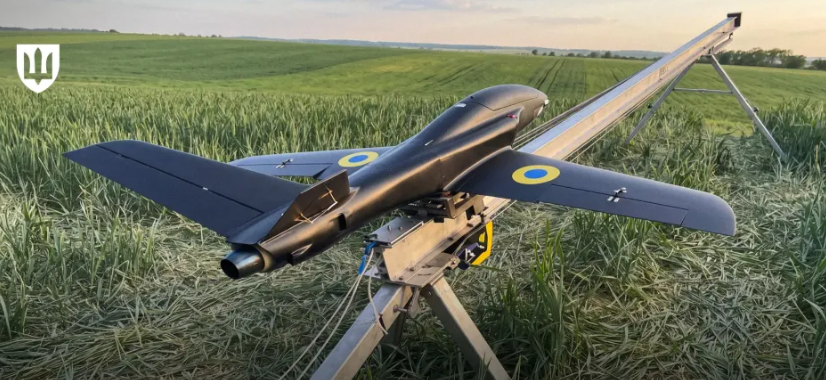
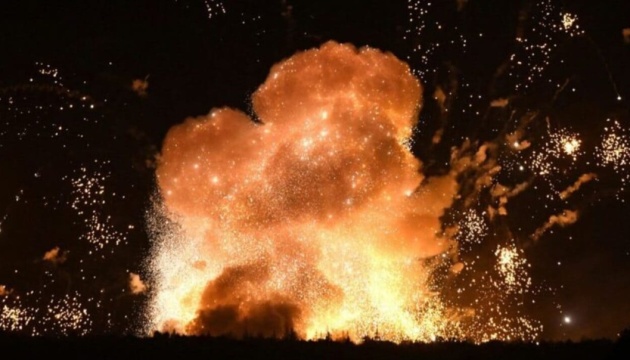
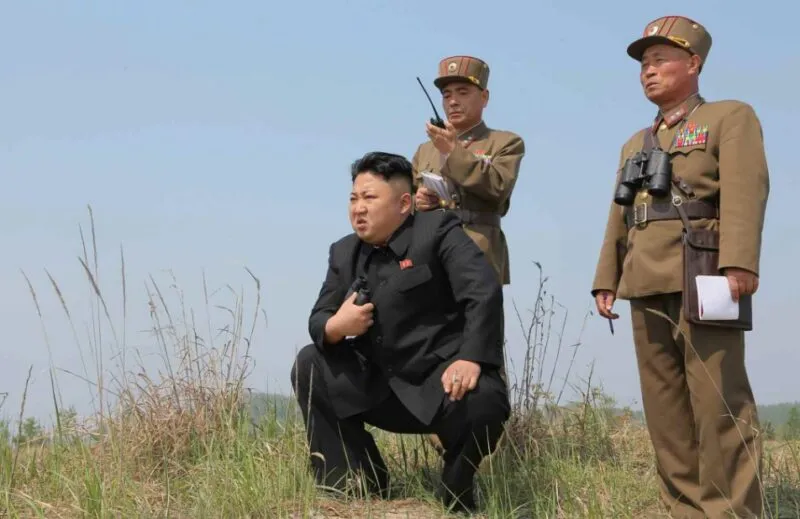
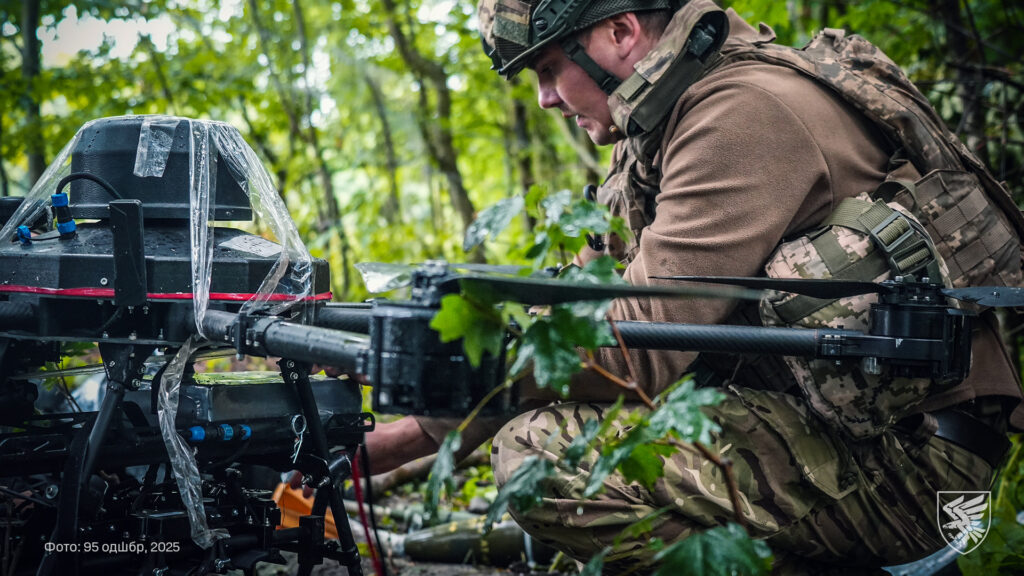
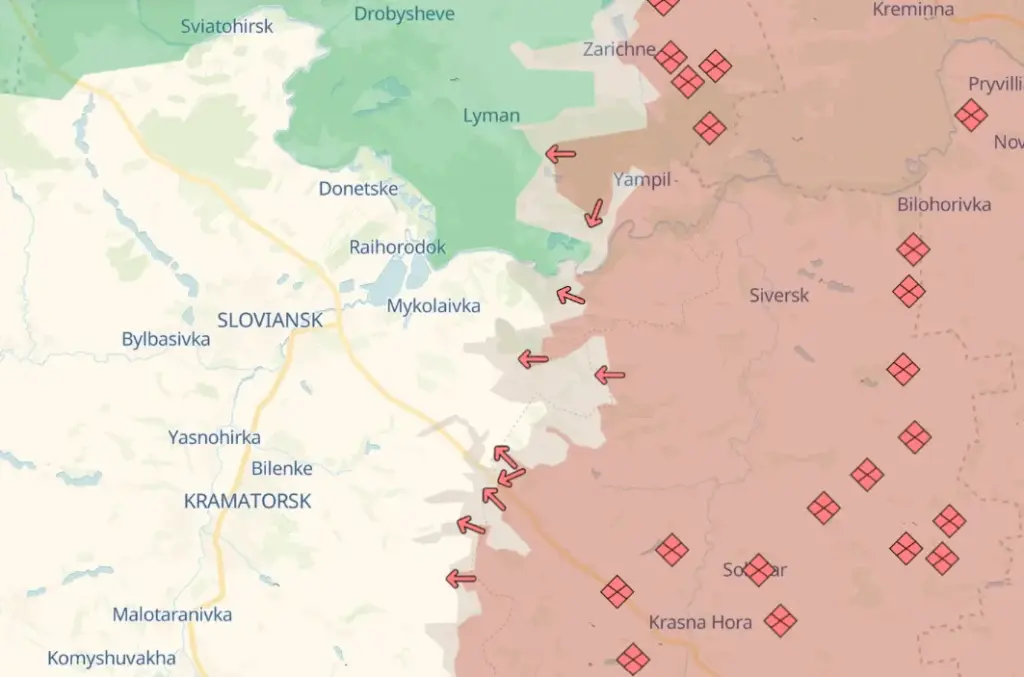
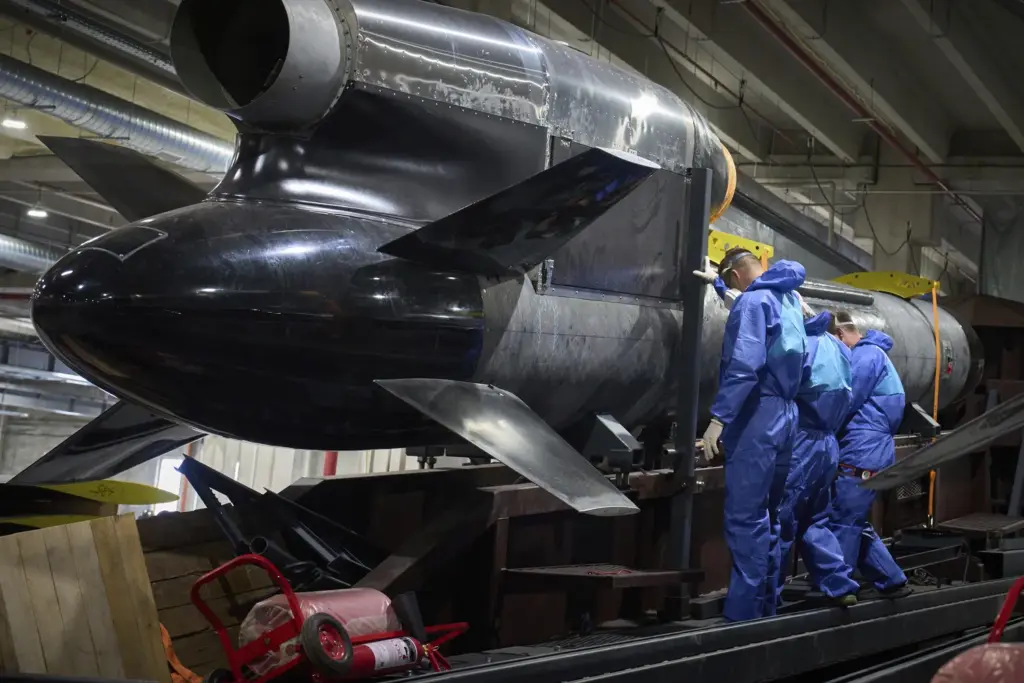


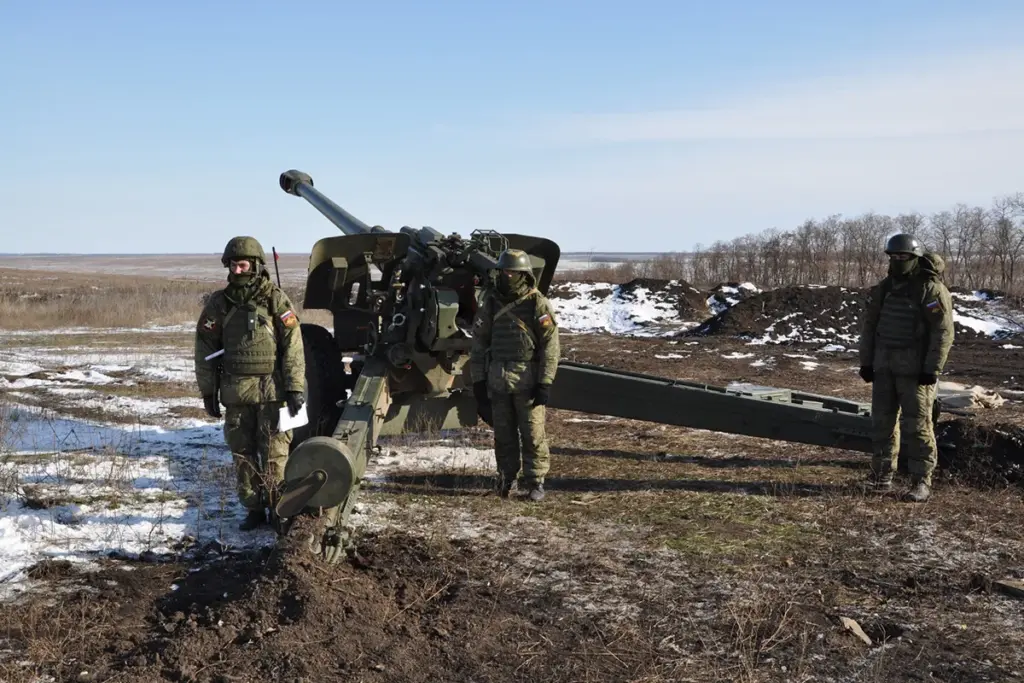
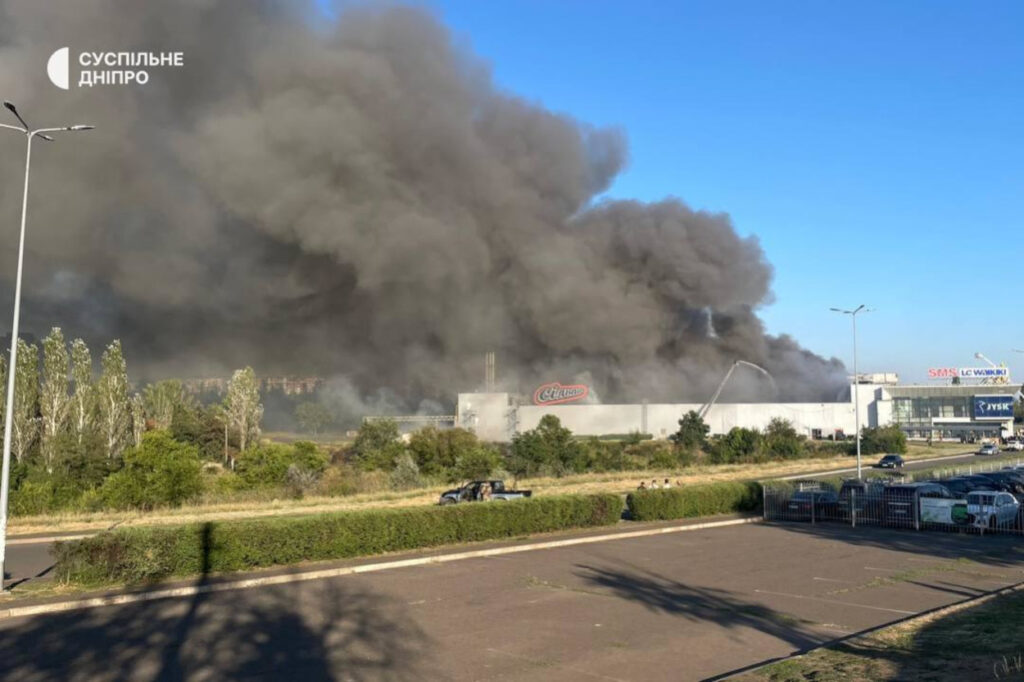
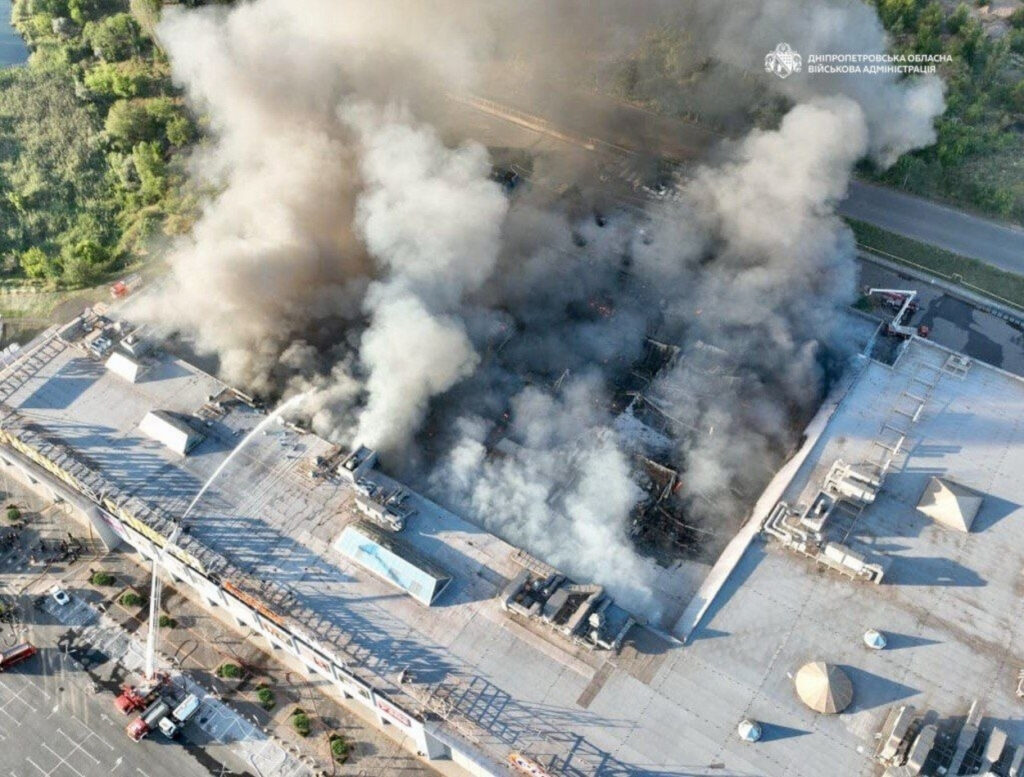


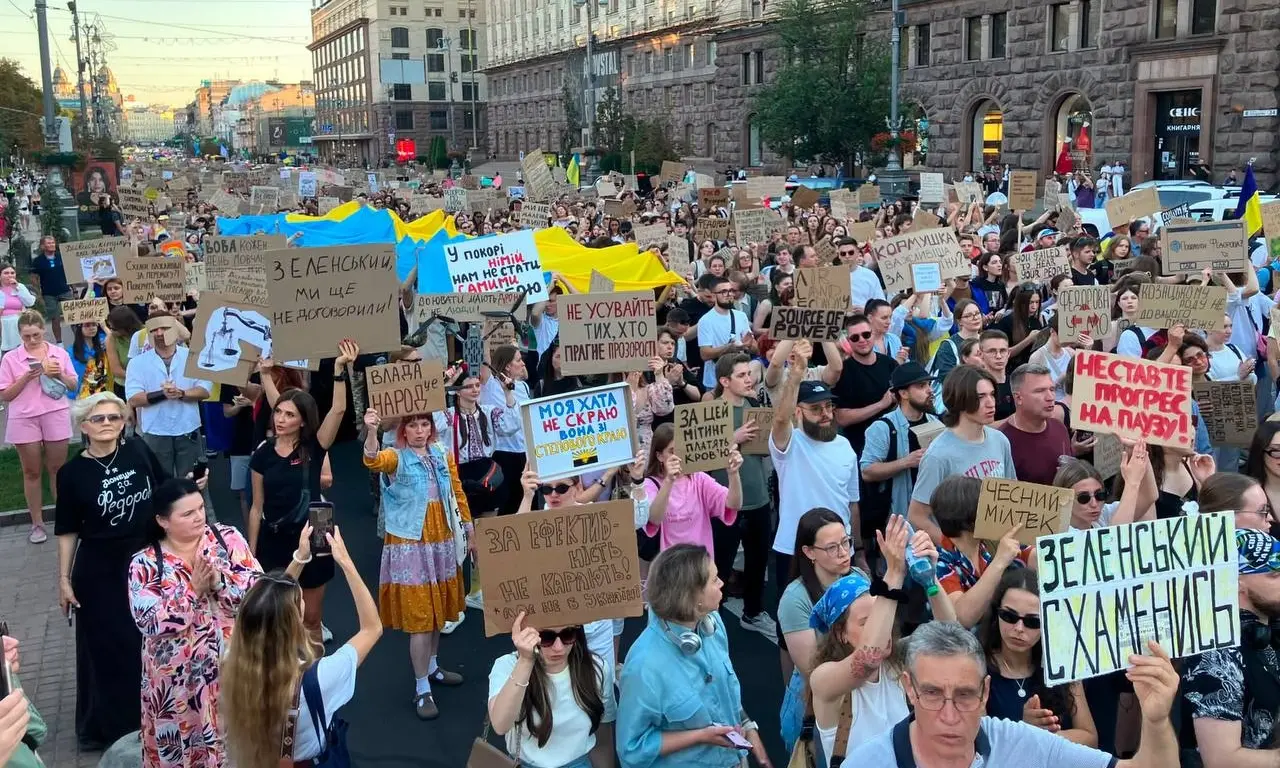

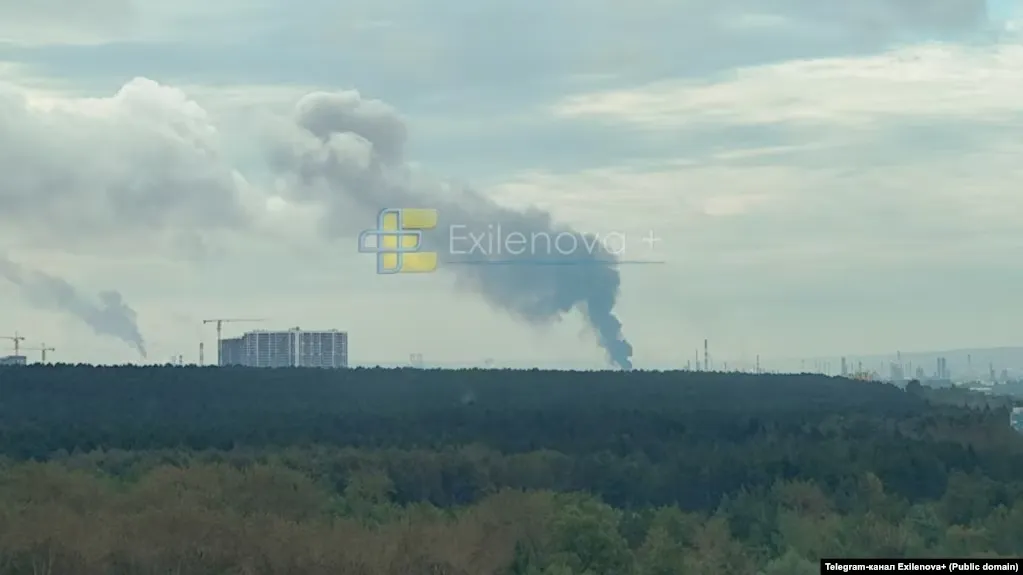
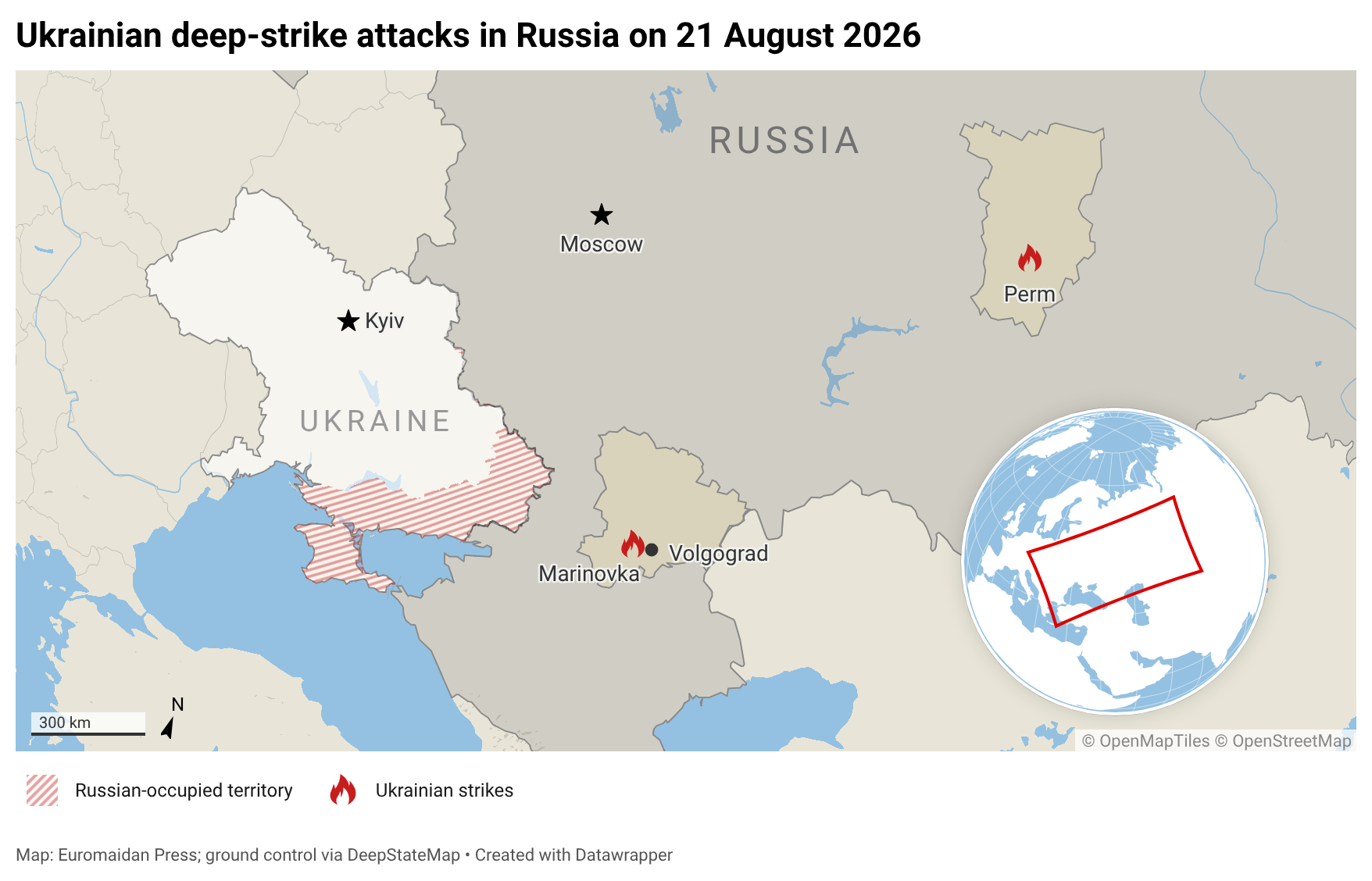
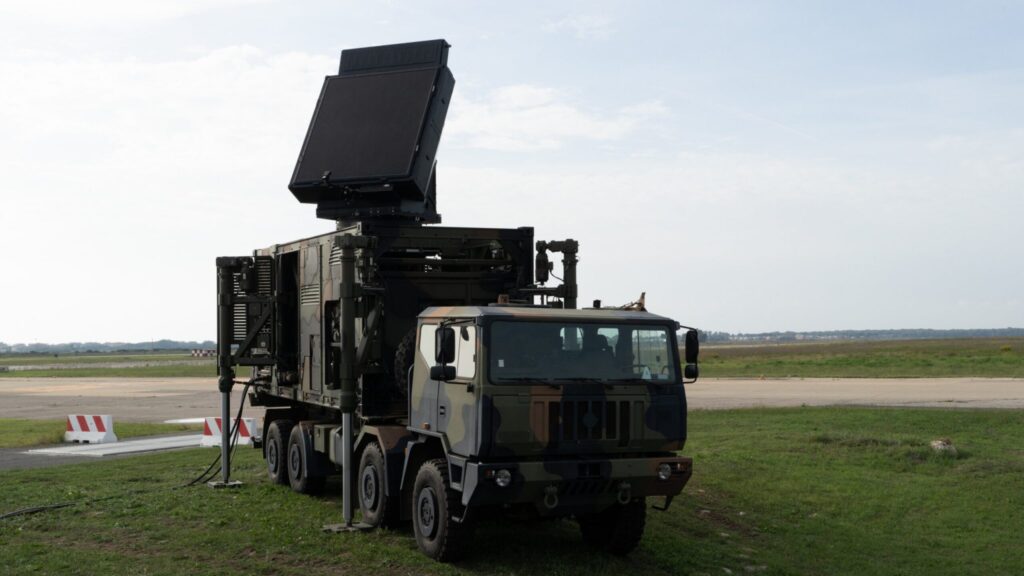


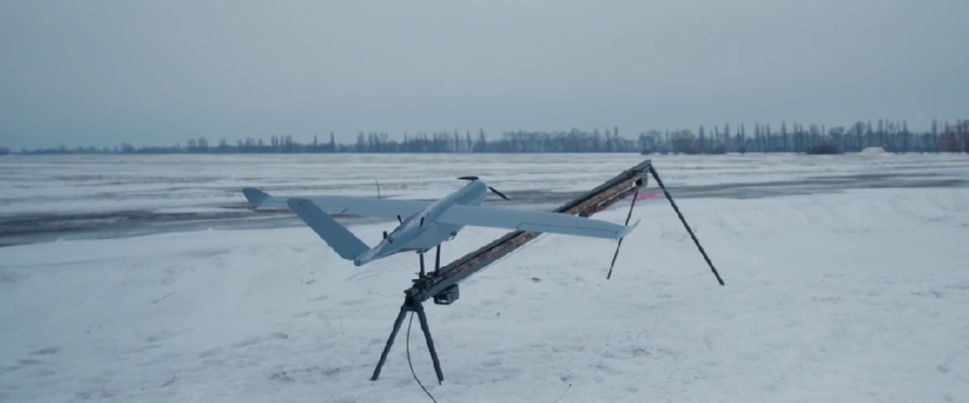

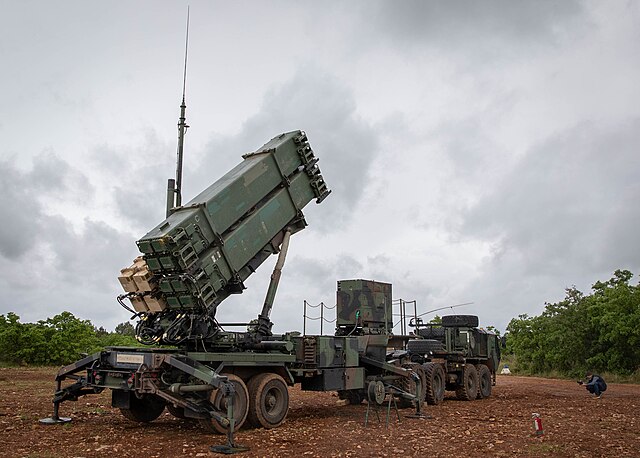

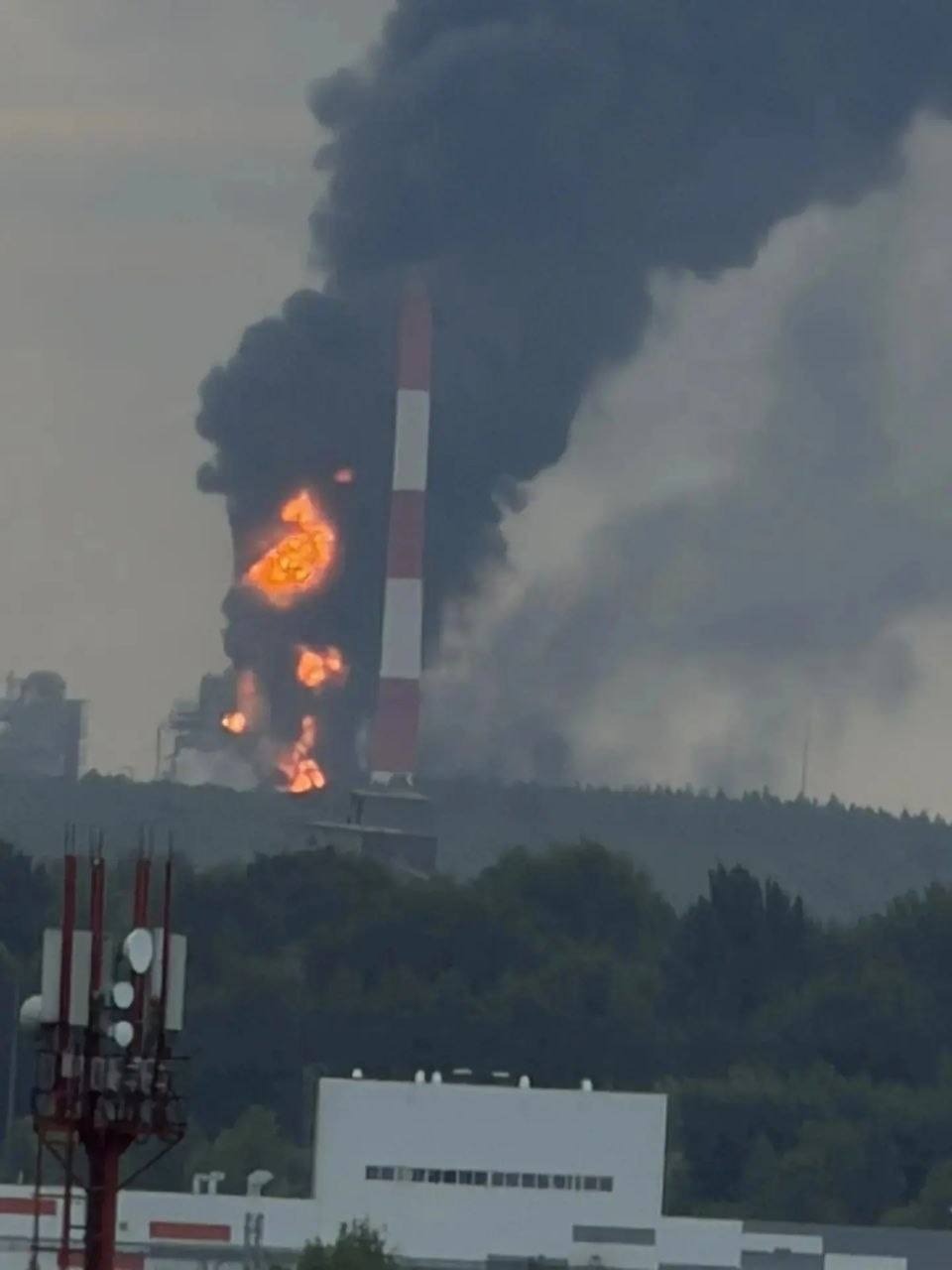



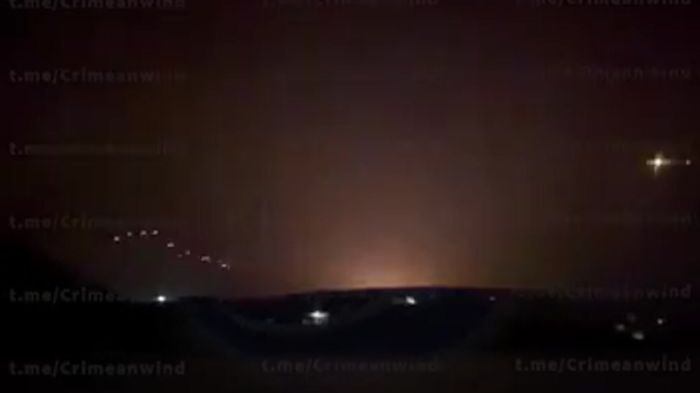
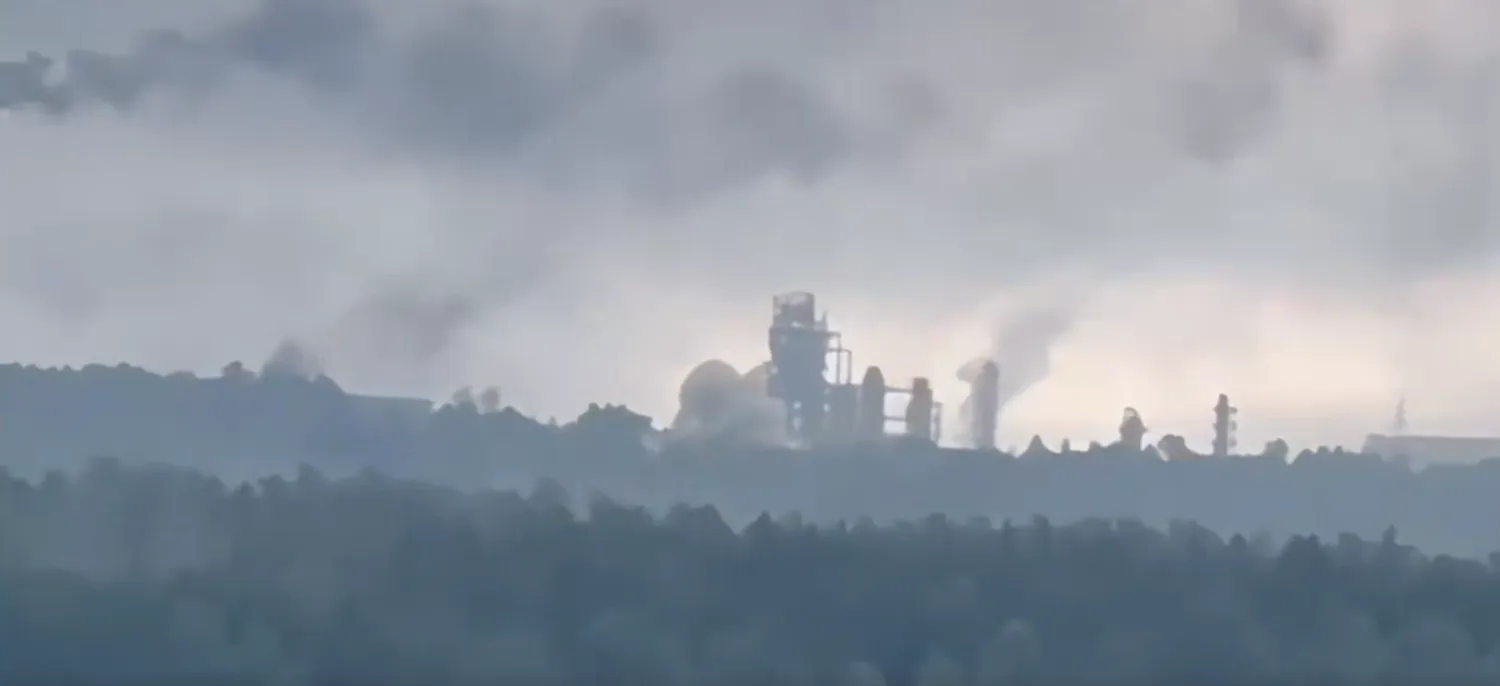
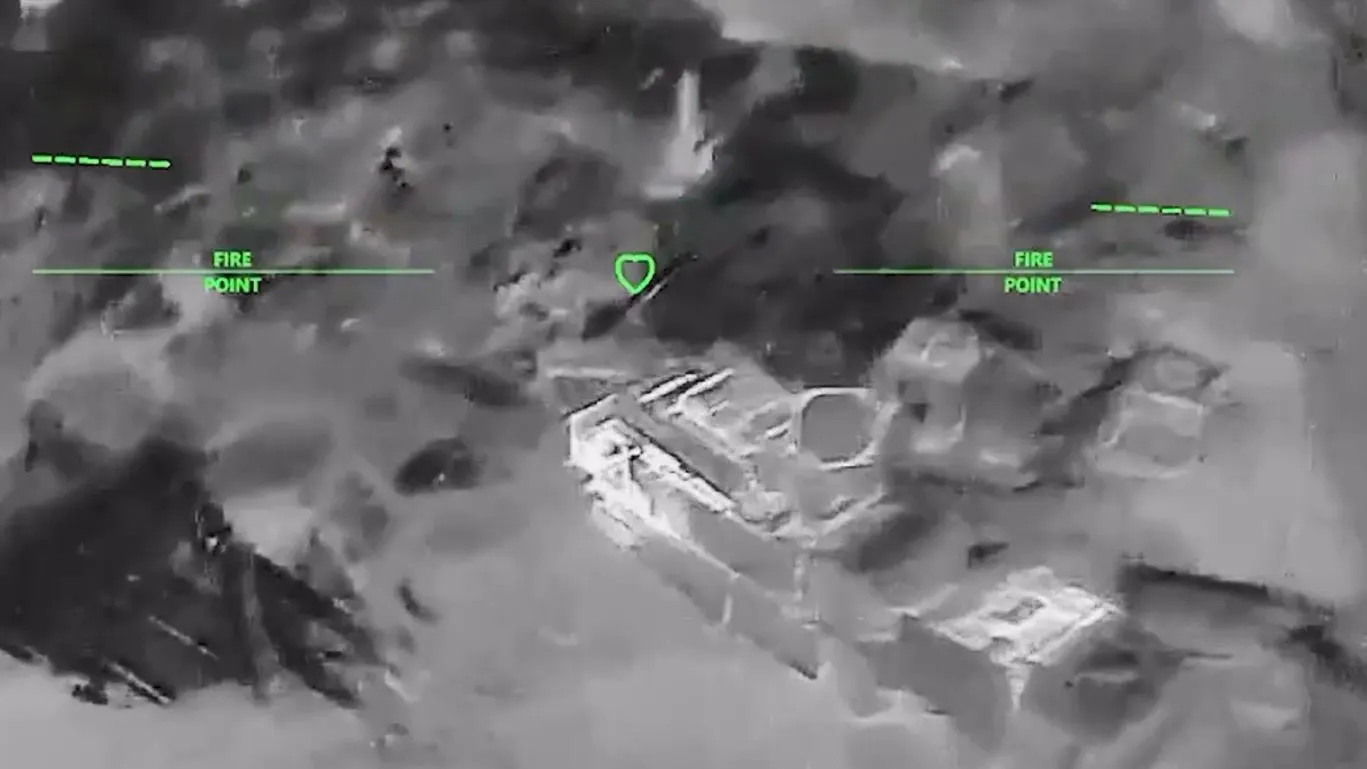
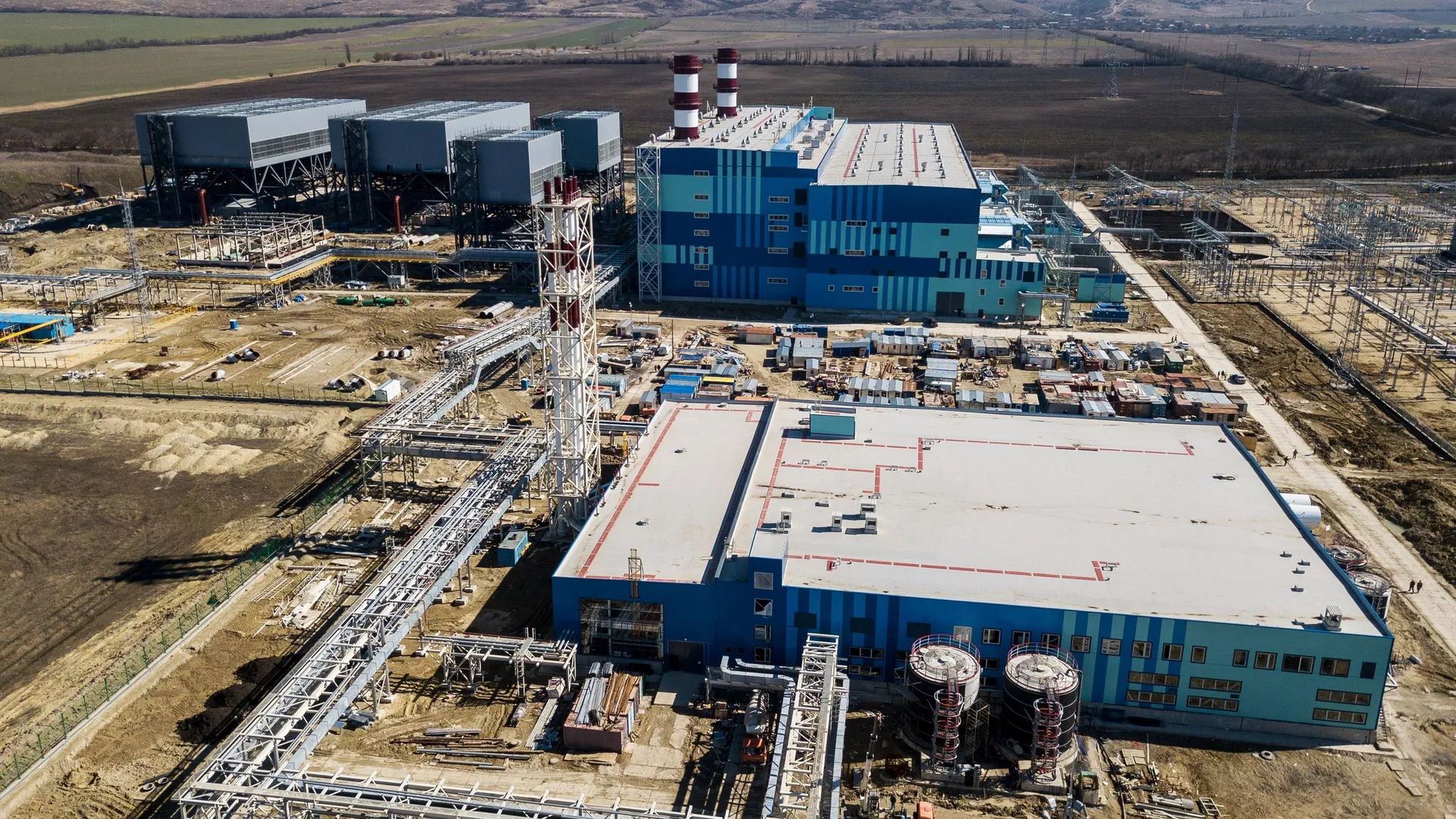


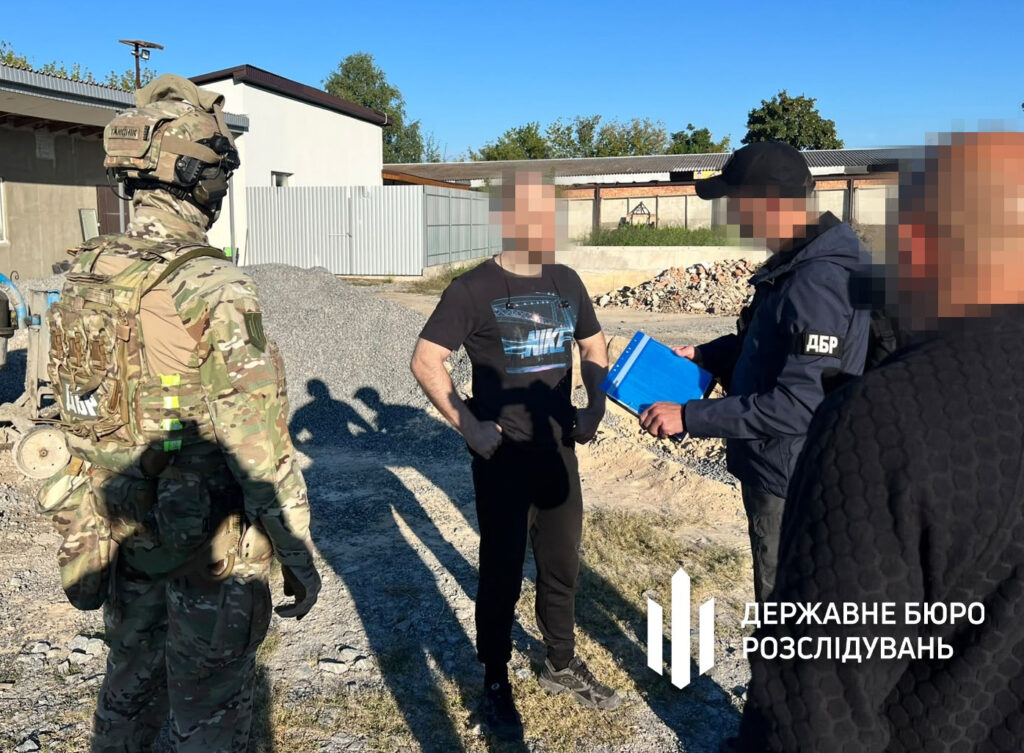
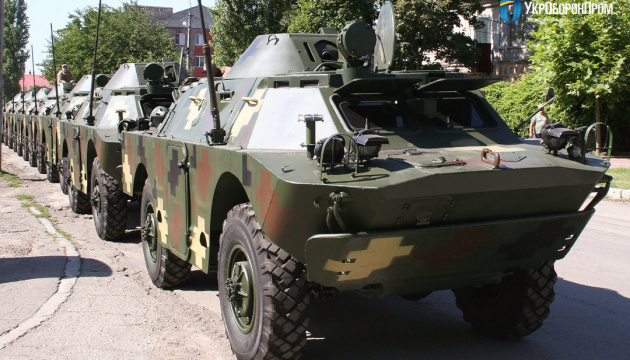
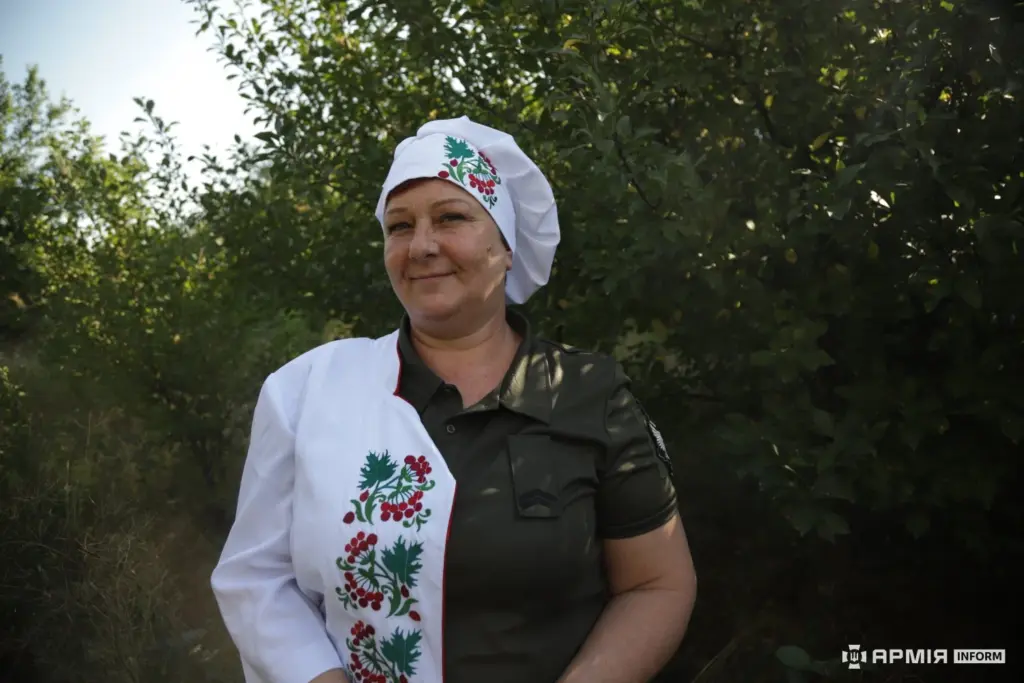
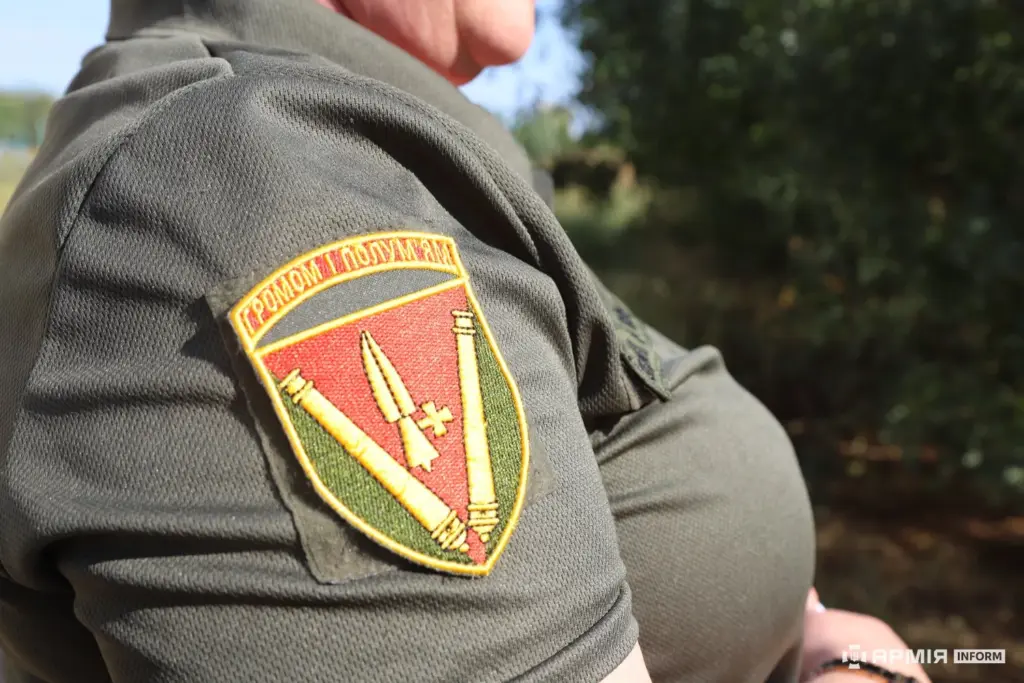
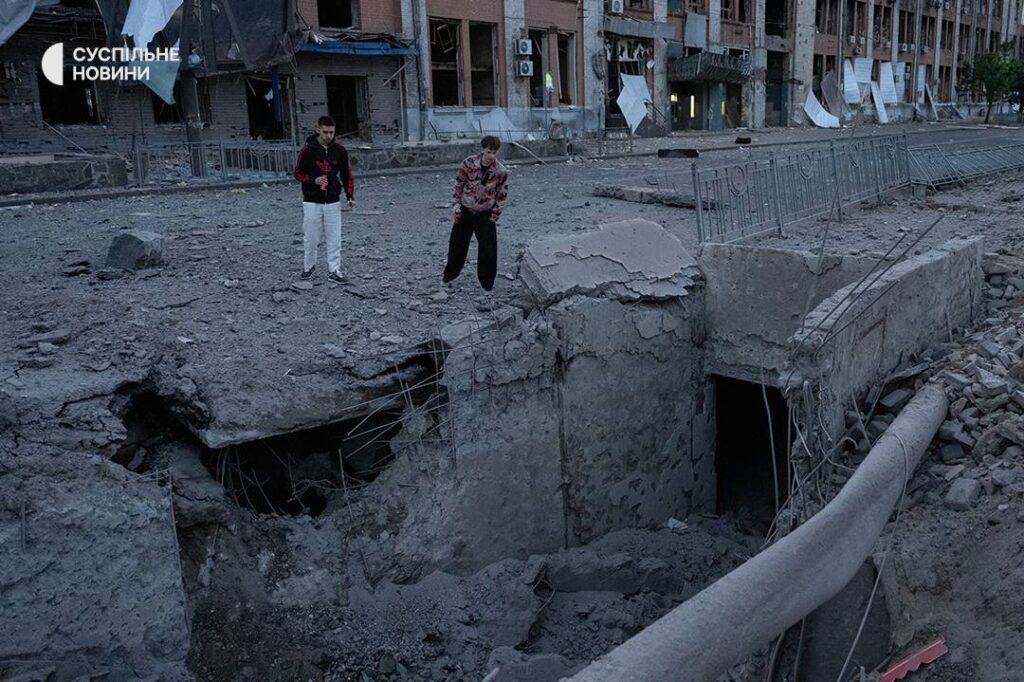
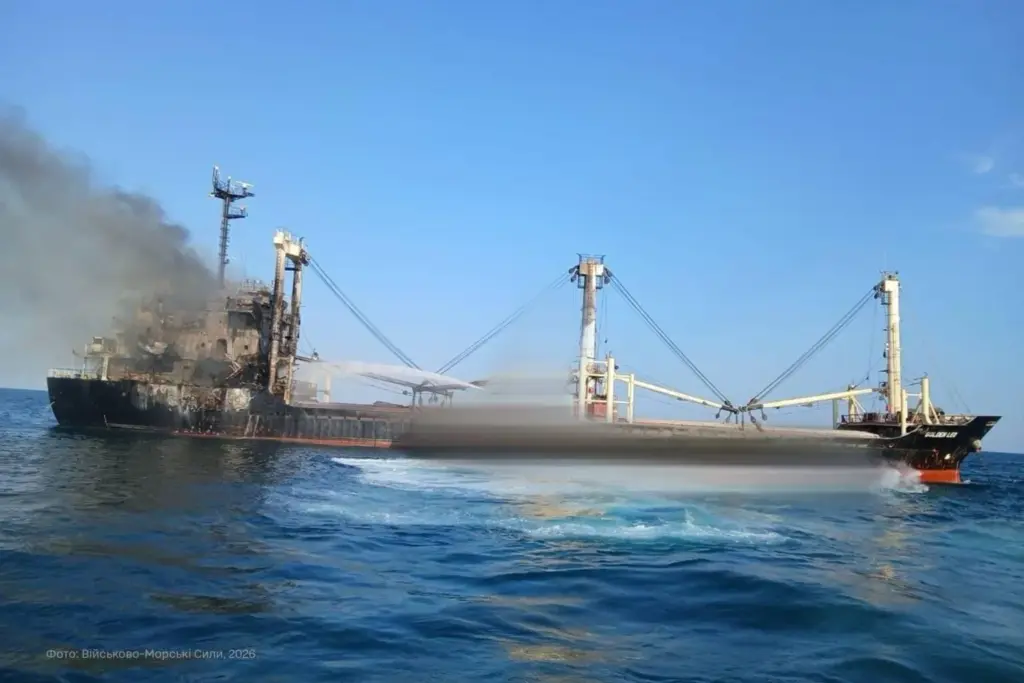
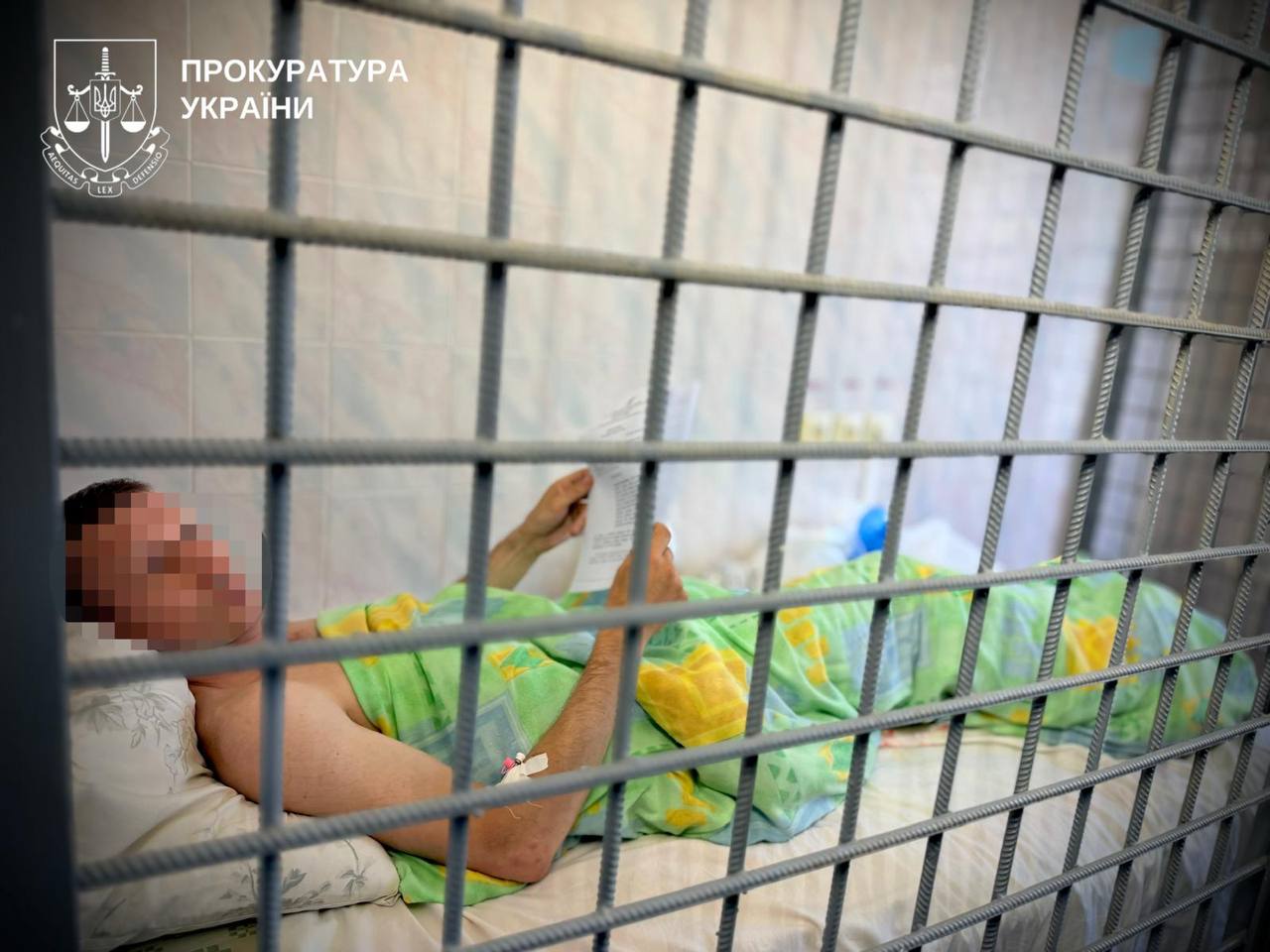
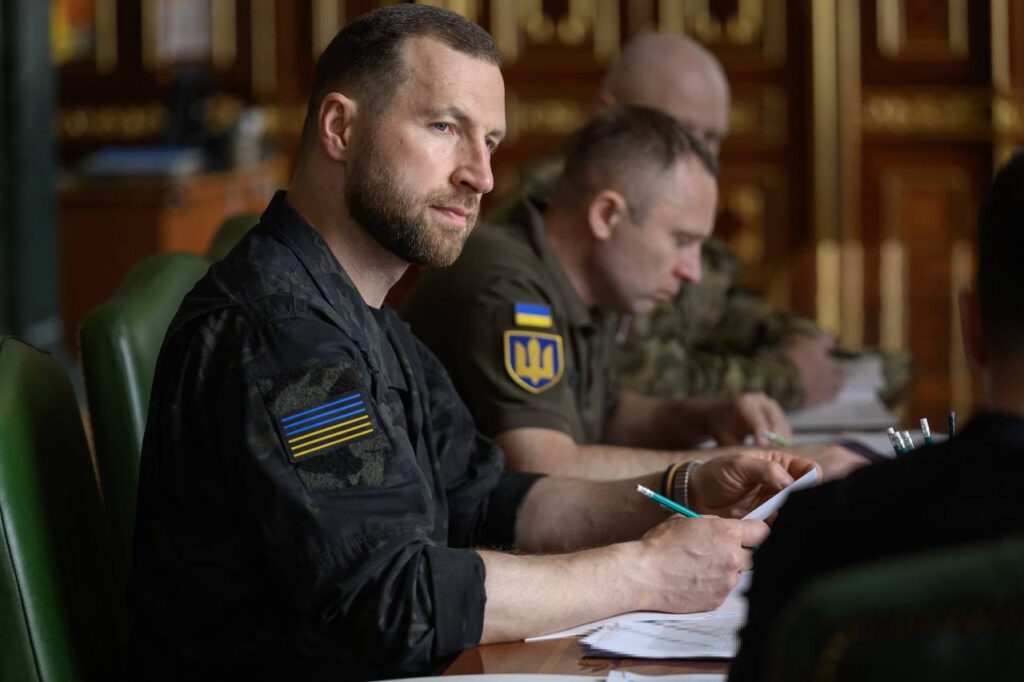
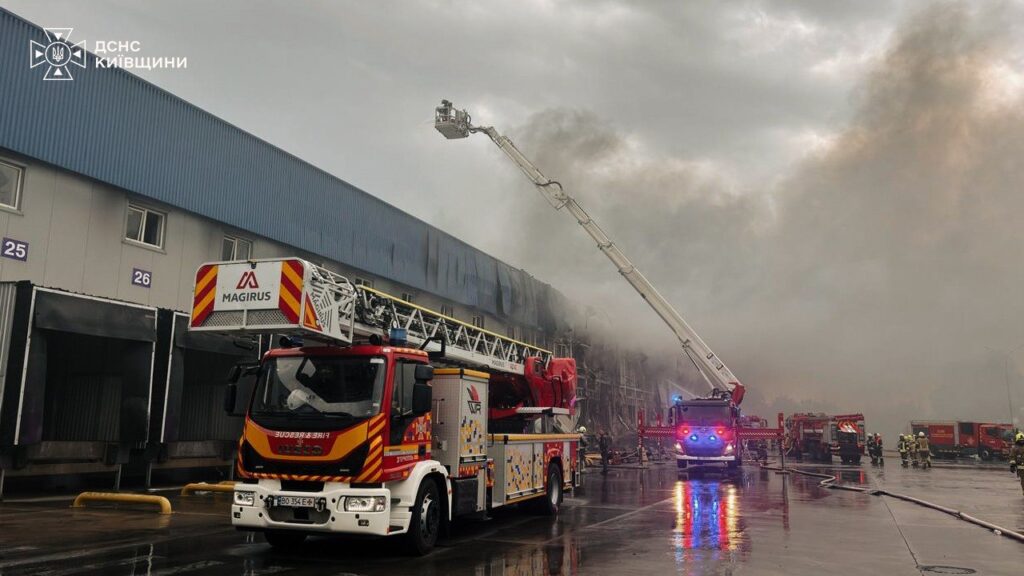


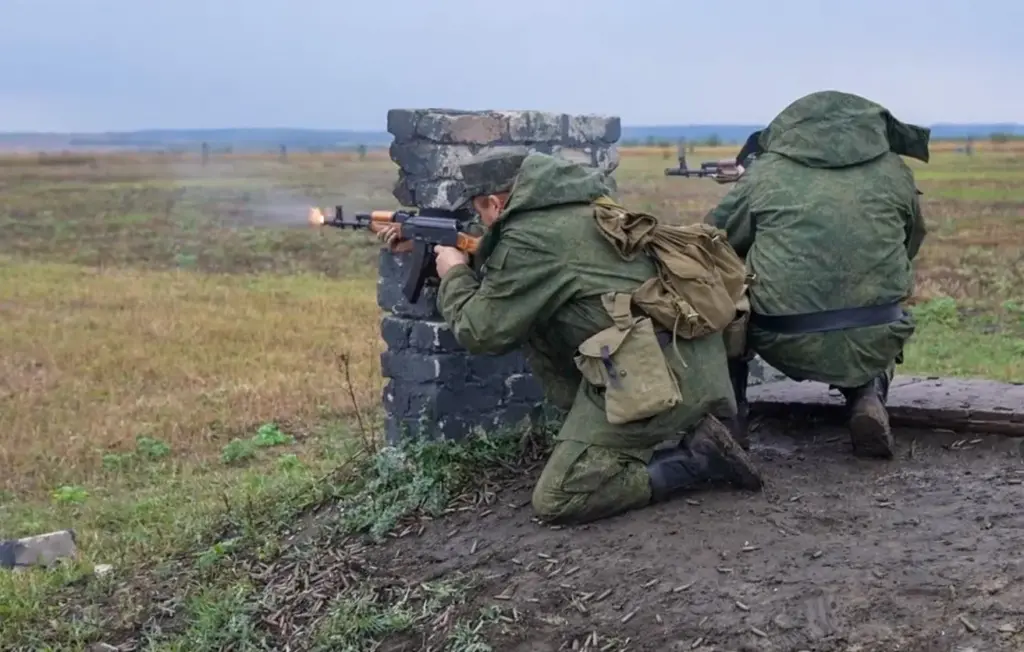
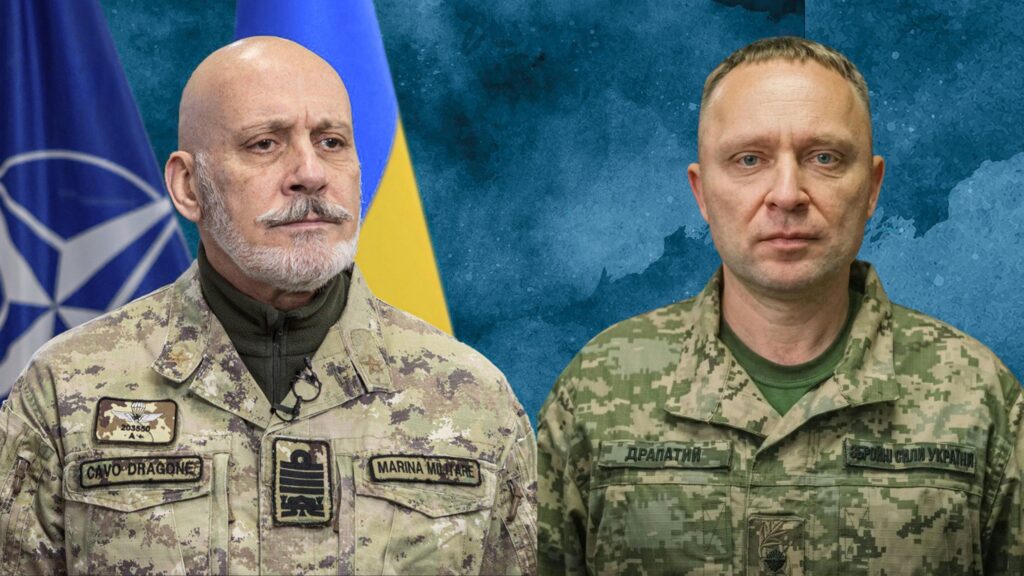


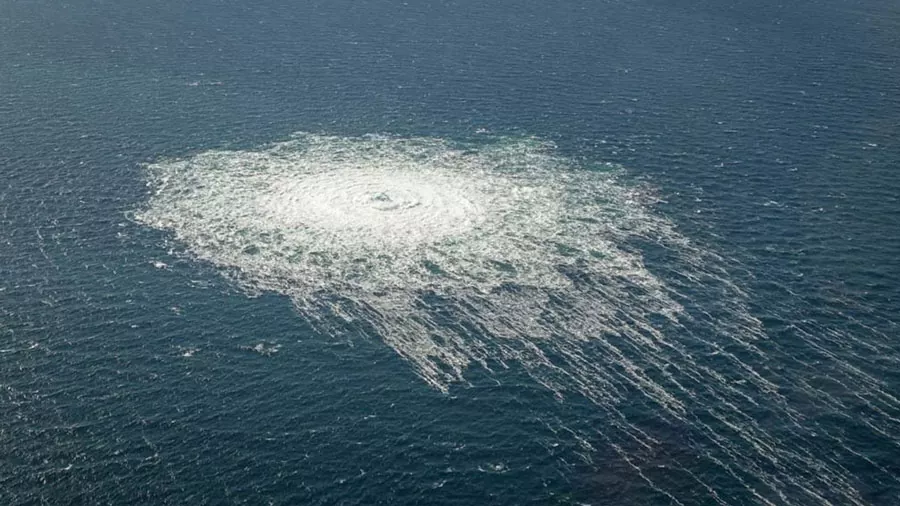
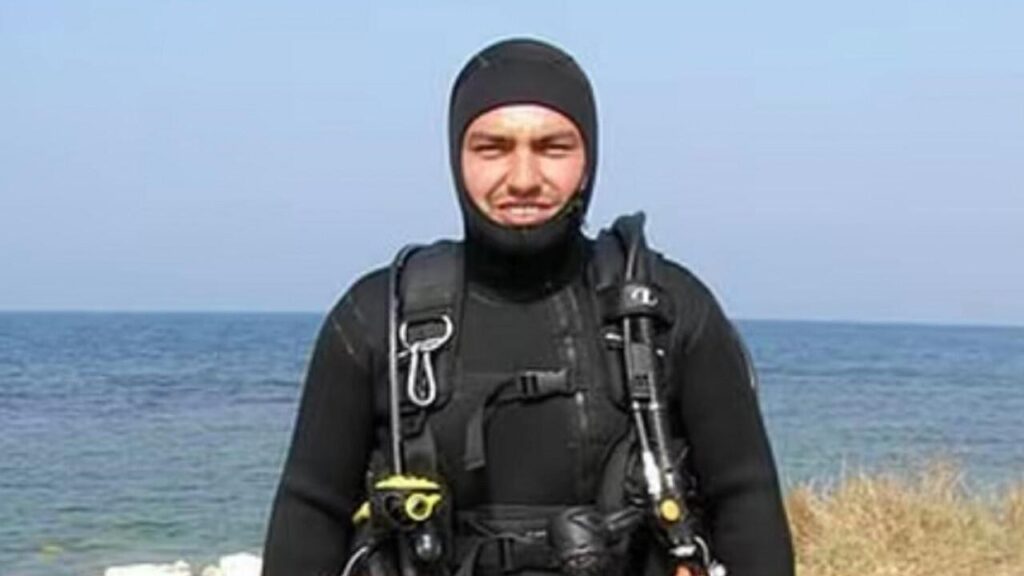
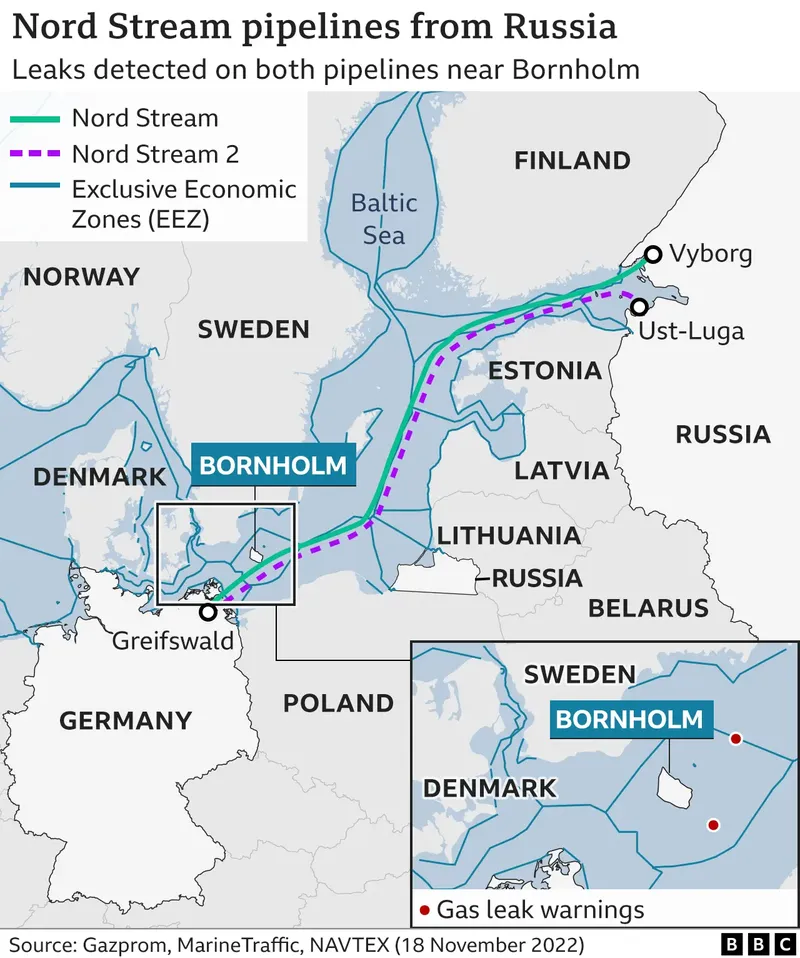
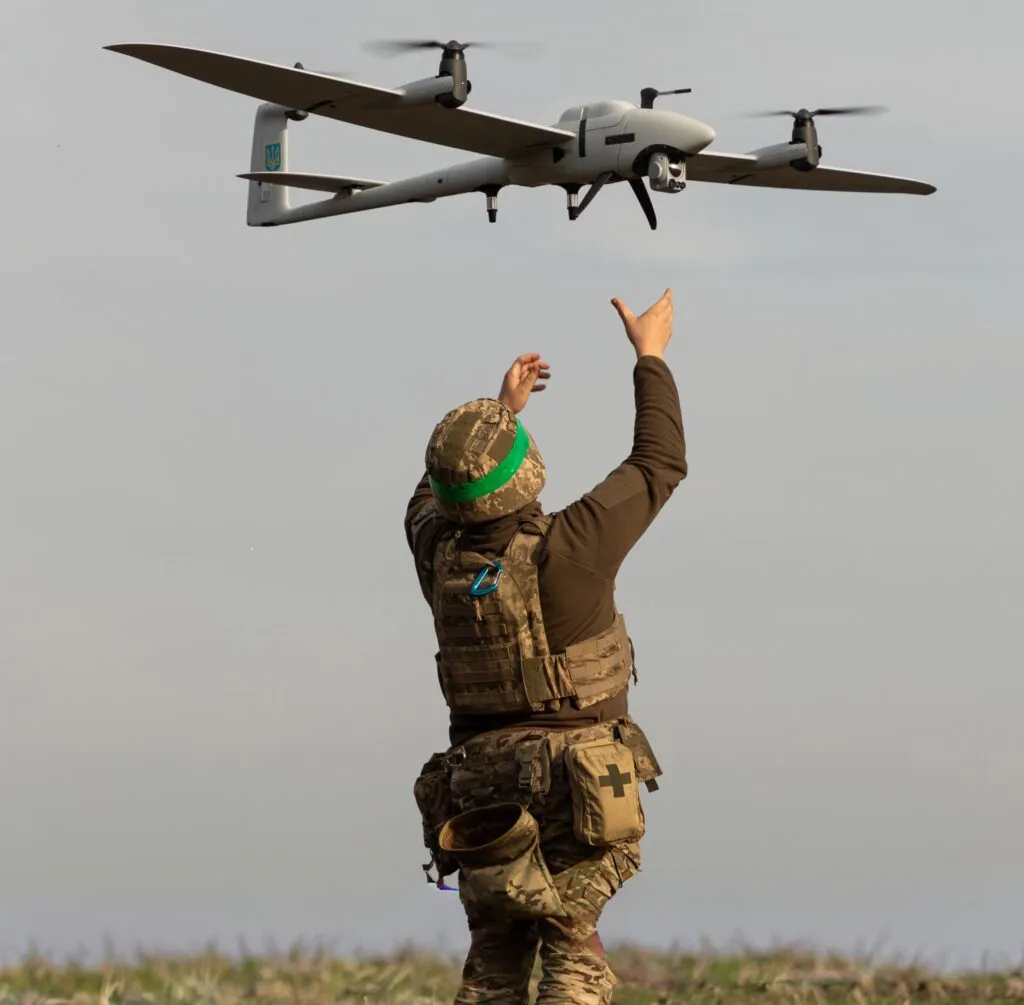
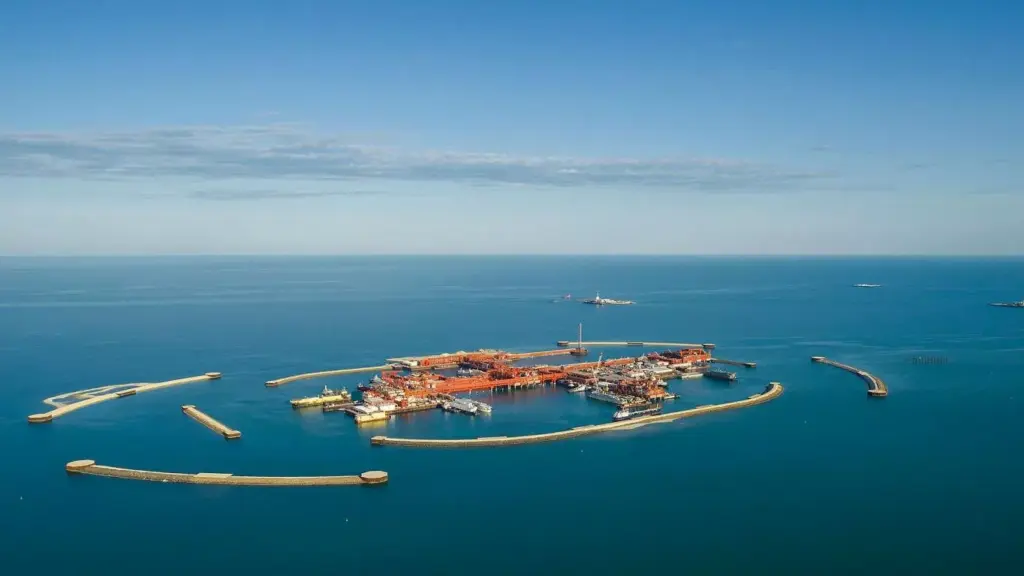

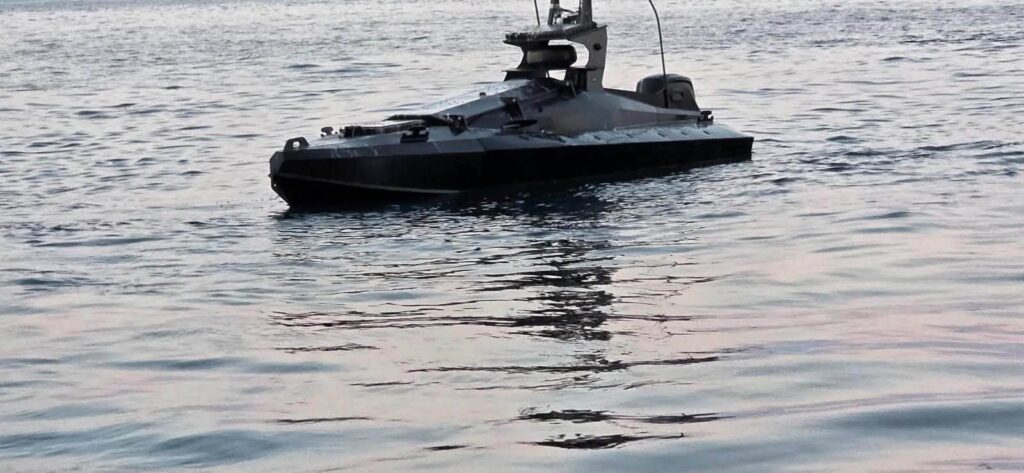
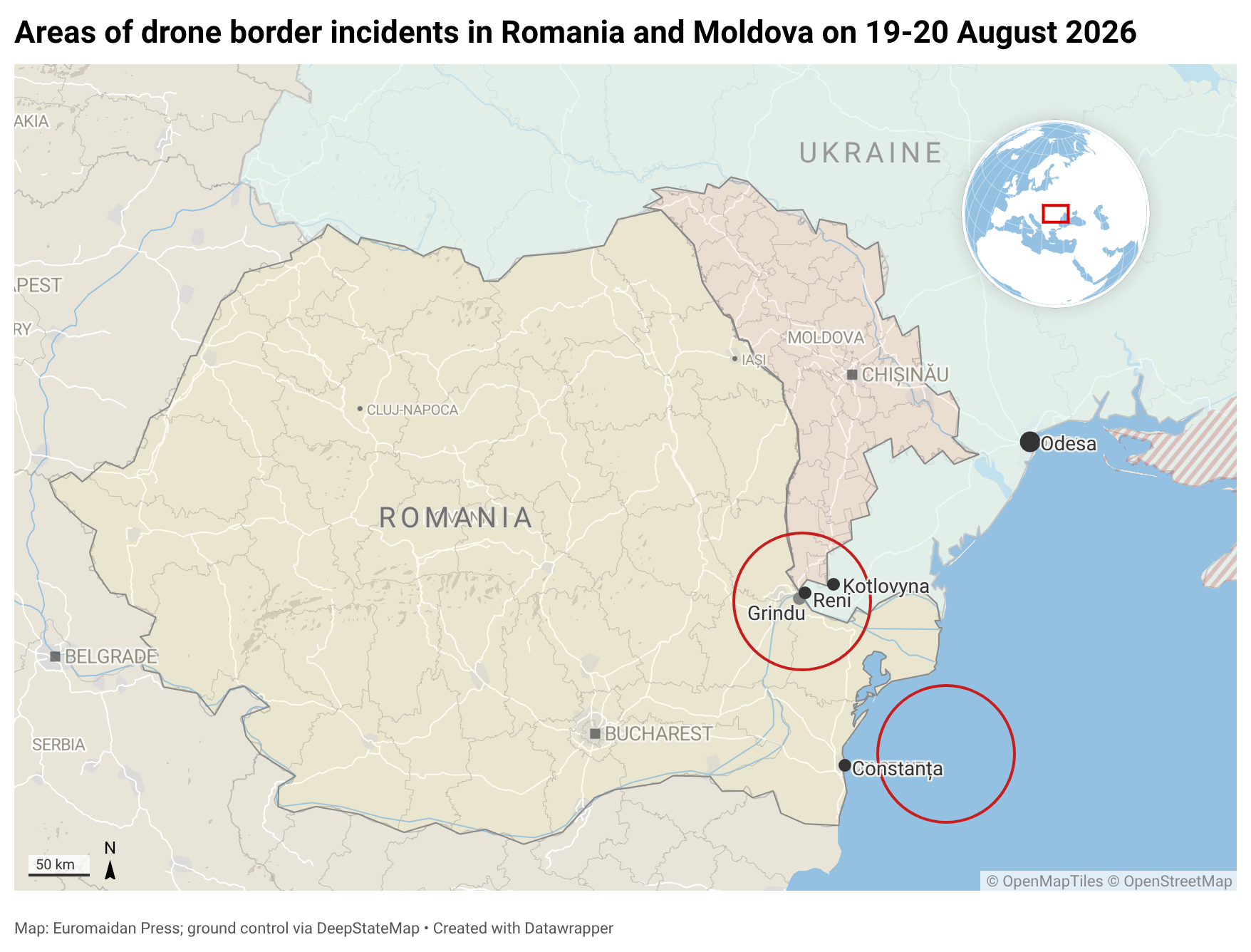
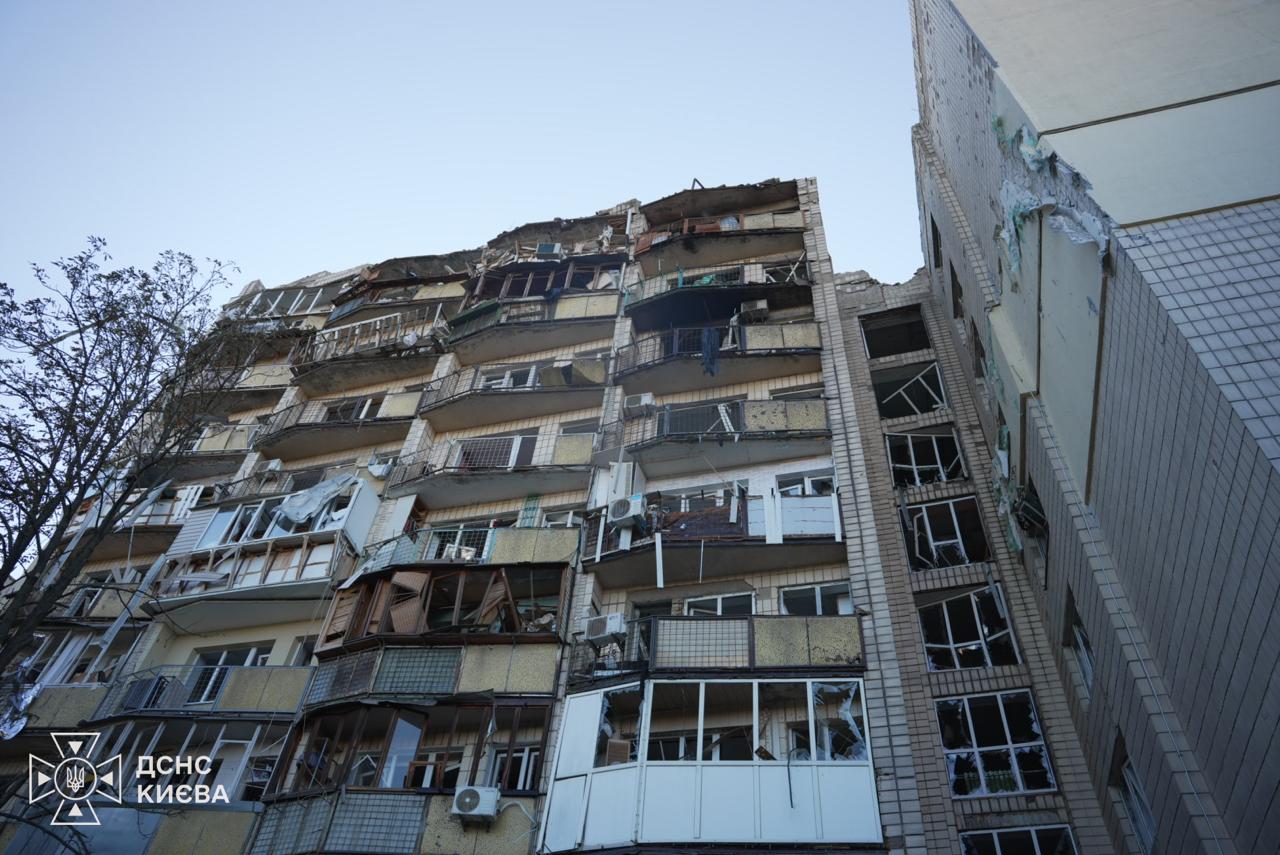
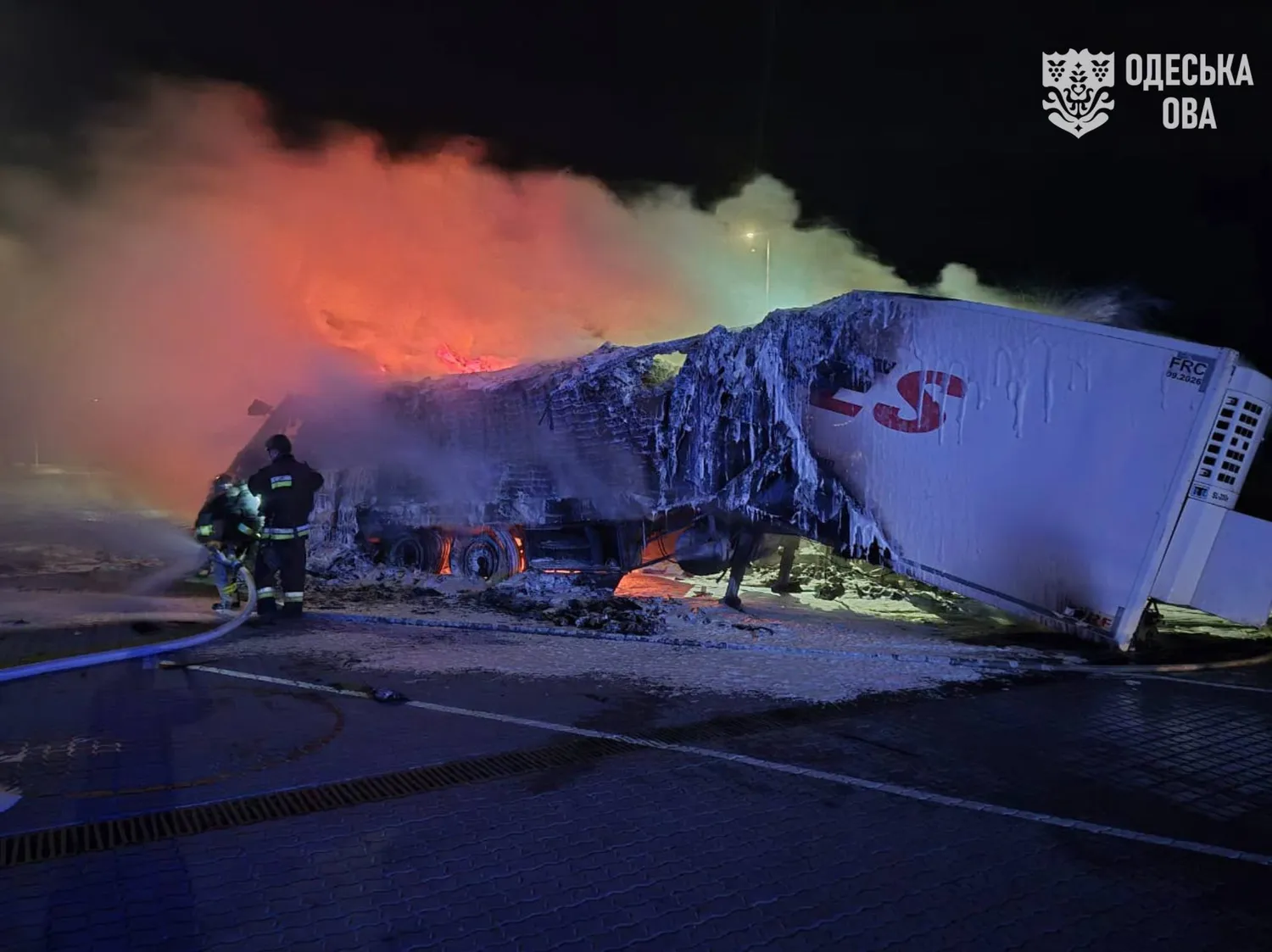
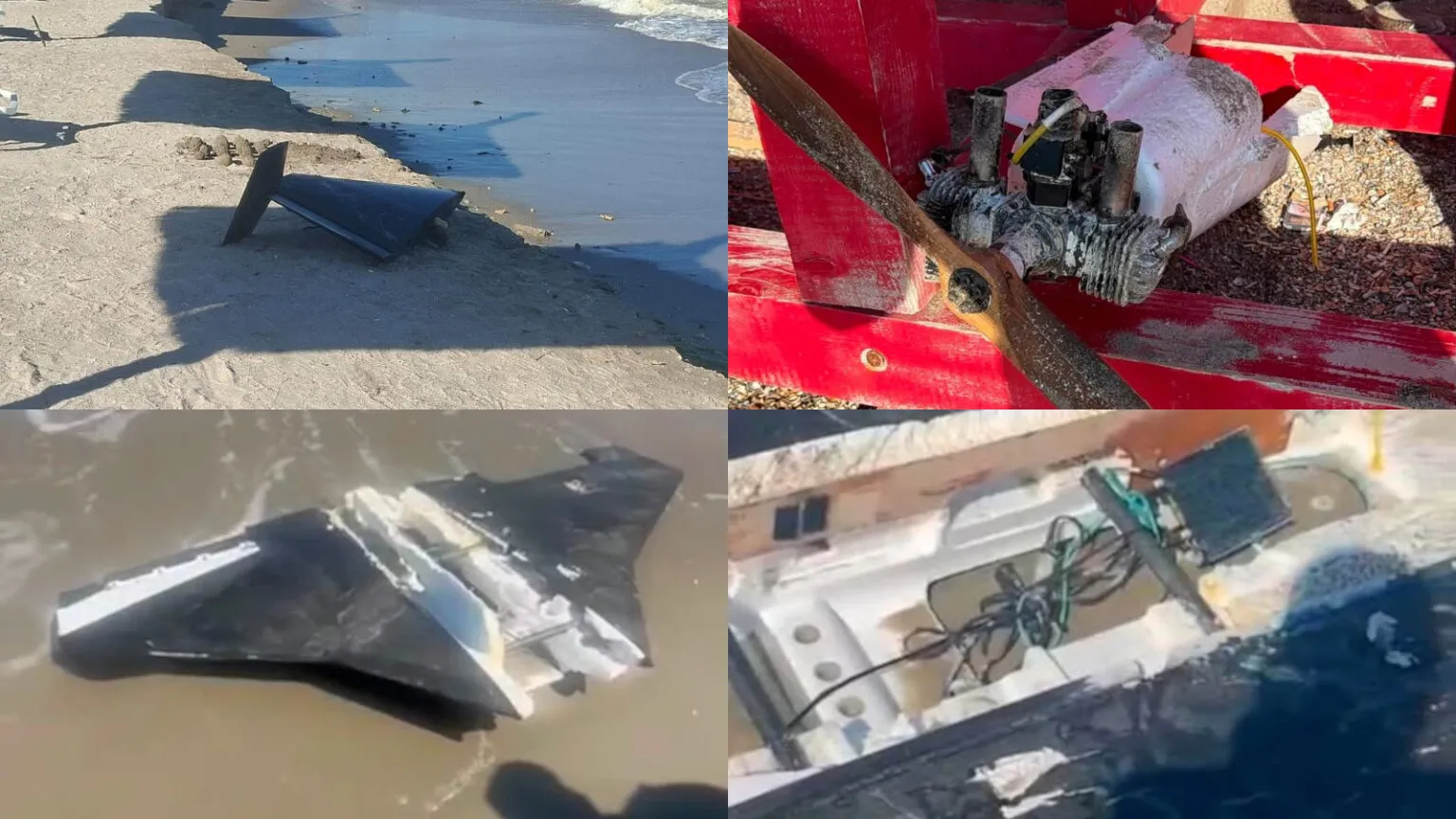

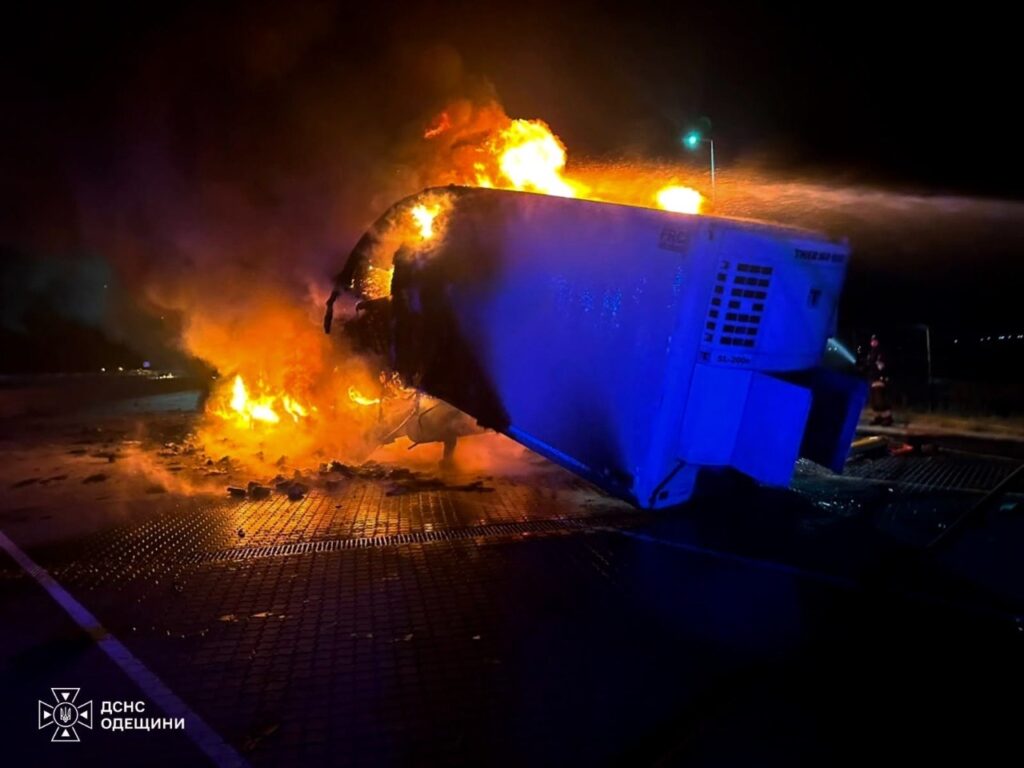

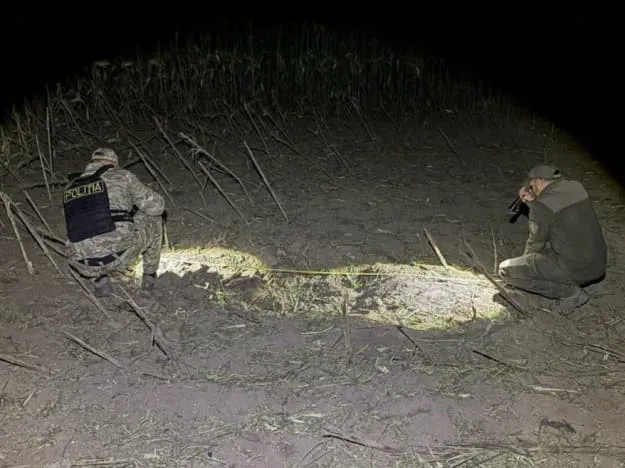
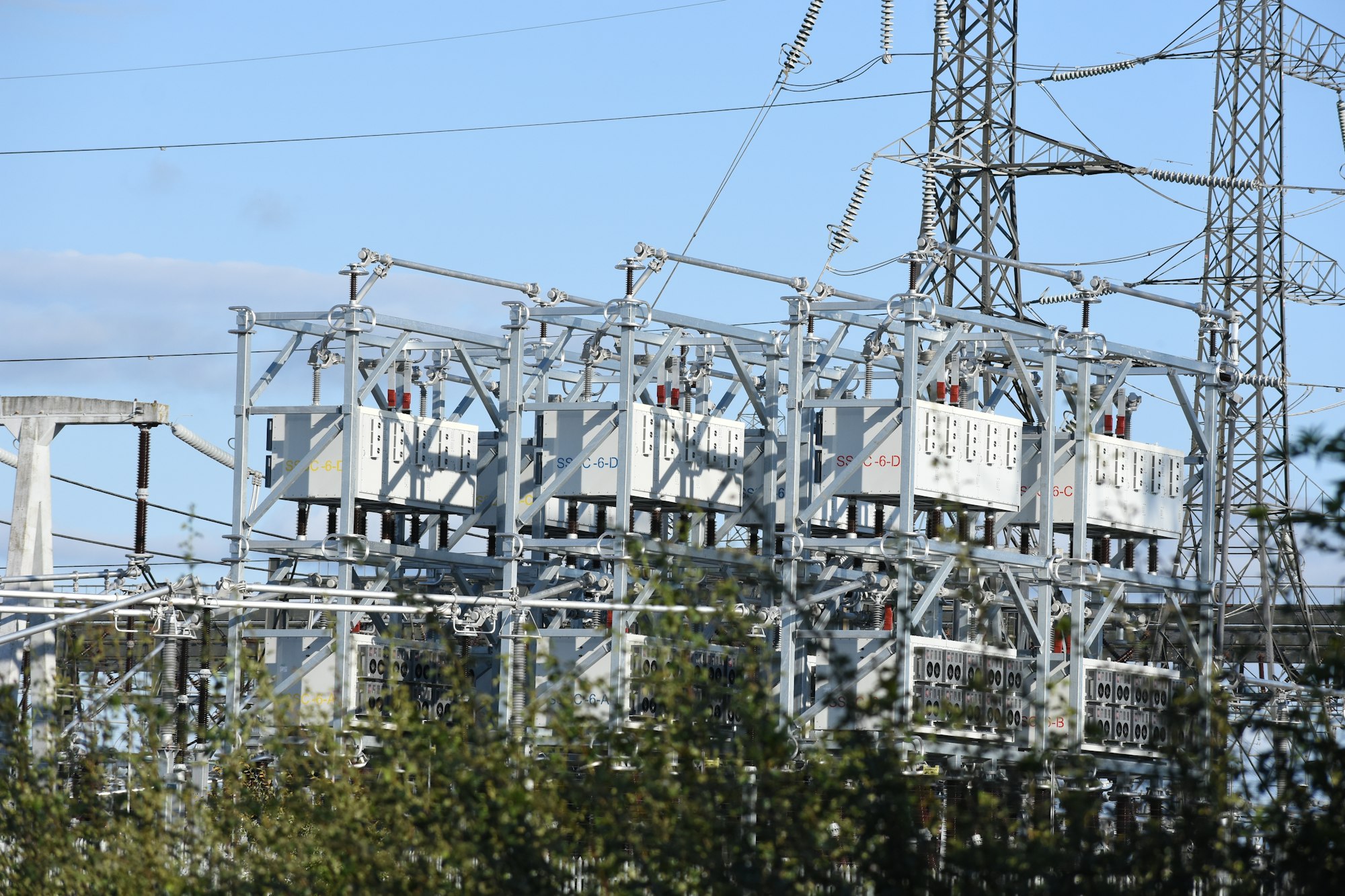
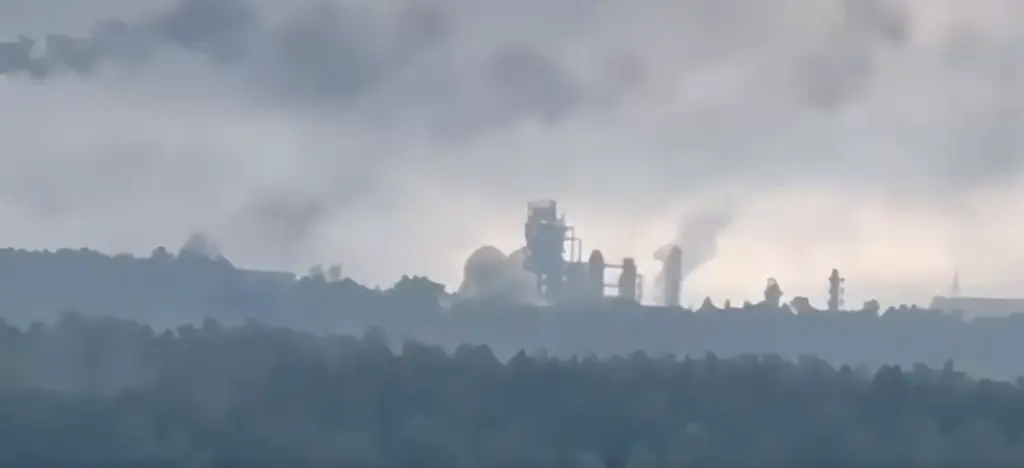
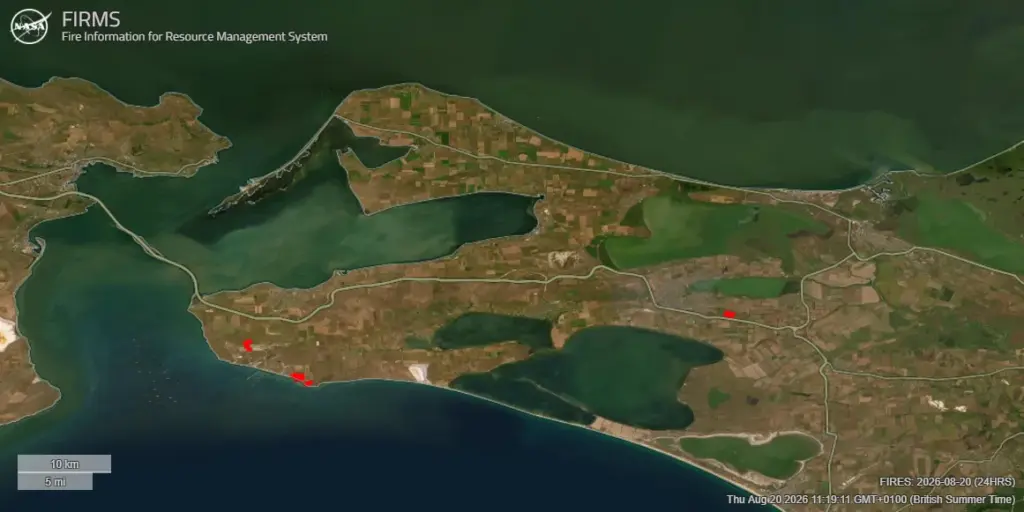
 Confirmed: Metrics show a sudden decline in internet connectivity across Russian-controlled Crimea with high impact to Sevastopol and Simferopol corresponding to a power blackout after overnight Ukrainian drone attacks targeting energy infrastructure





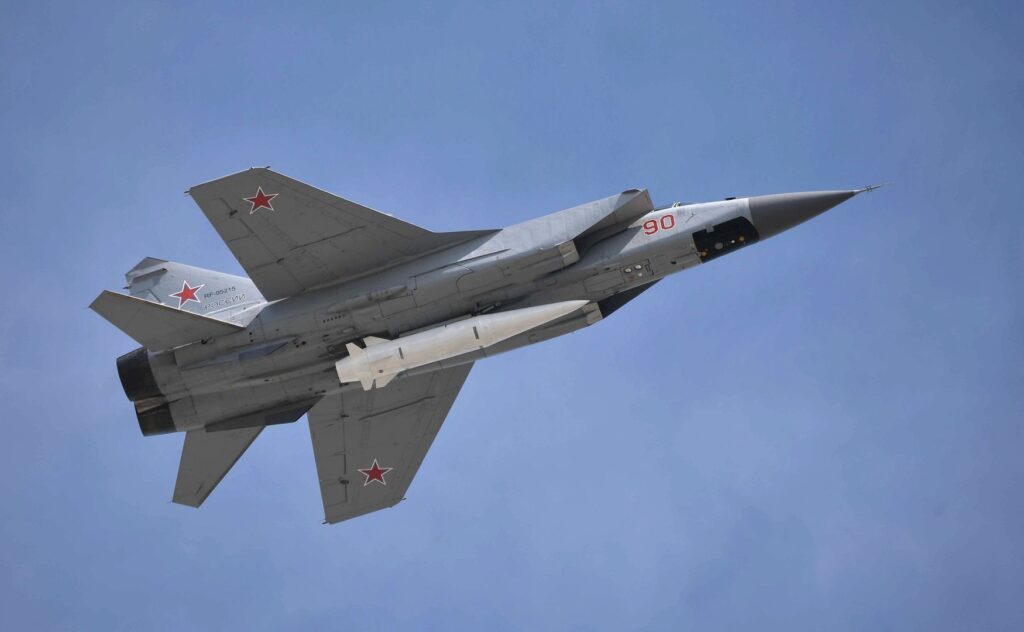

 Russian voenkors publishes satellite images from the Starokostiantyniv area!

 (@Maks_NAFO_FELLA)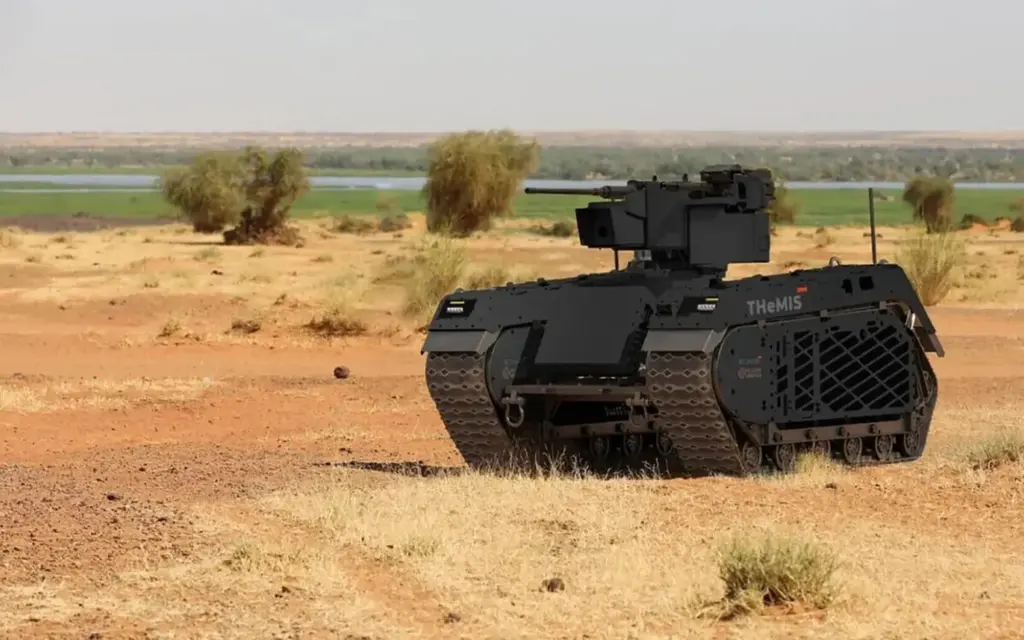

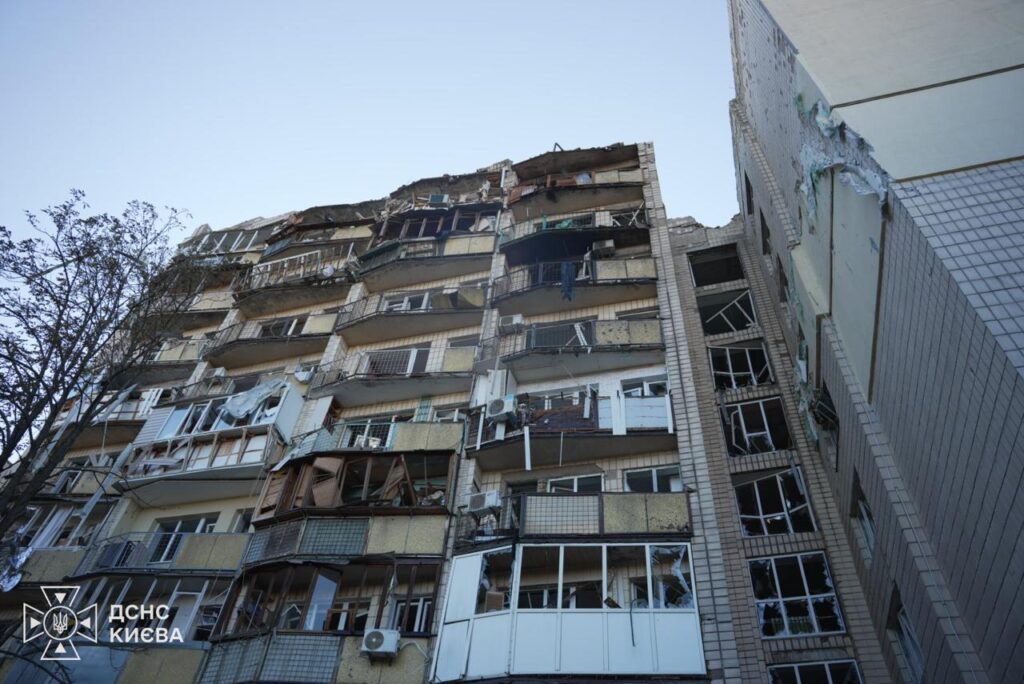
 Exilenova+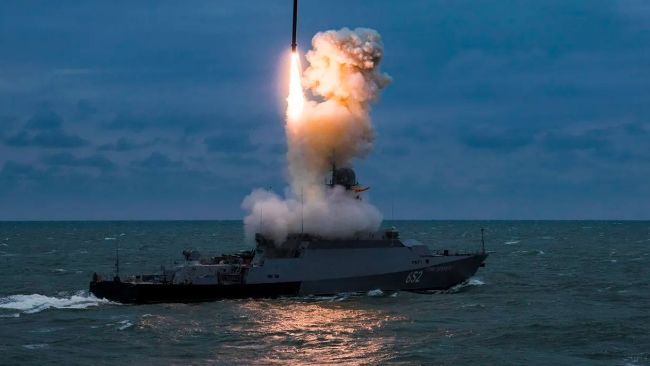
 DSNS
DSNS