❌

Vue normale

  • ✇Euromaidan Press
  • Proven on Ukraine’s front line, now made in Germany. National Guard signs for the Linza and Zoom drones
    National Guard commander Major General Oleksandr Pivnenko signed a follow-on contract with Quantum Frontline Industries managing director Matthias Lehna and Frontline Robotics chief technology officer and co-founder Pavlo Kosolapkin to build two Ukrainian drones in Germany, Quantum Systems said on 5 October. The deal covers the Linza strike drone and the Zoom reconnaissance drone, exceeds the volume of the 2026 agreement, and schedules delivery for 2027. The order scales up a line that
     

Proven on Ukraine’s front line, now made in Germany. National Guard signs for the Linza and Zoom drones

6 octobre 2026 à 08:30

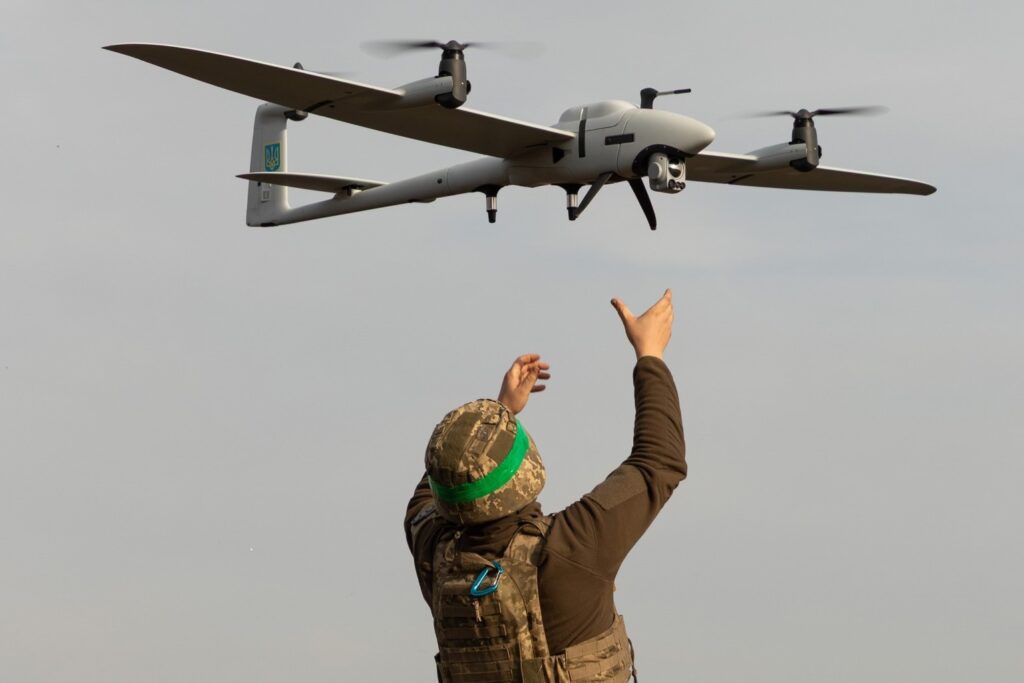
Ukrainian Linza bomber drone. 2024. Ukraine. Photo: Frontline

National Guard commander Major General Oleksandr Pivnenko signed a follow-on contract with Quantum Frontline Industries managing director Matthias Lehna and Frontline Robotics chief technology officer and co-founder Pavlo Kosolapkin to build two Ukrainian drones in Germany, Quantum Systems said on 5 October. The deal covers the Linza strike drone and the Zoom reconnaissance drone, exceeds the volume of the 2026 agreement, and schedules delivery for 2027.

The order scales up a line that is already running. Quantum Frontline Industries' first production year remains on track for completion in 2026, it has already delivered its first drones to Ukraine's Defense Forces, and it is now preparing to increase production capacity fivefold for next year, Quantum Systems said.

German plants, Ukrainian designs

Quantum Frontline Industries is a German-Ukrainian joint venture of Frontline Robotics and Quantum Systems. Both the Linza and the Zoom come from Frontline Robotics, and the systems are manufactured in Germany for Ukraine.
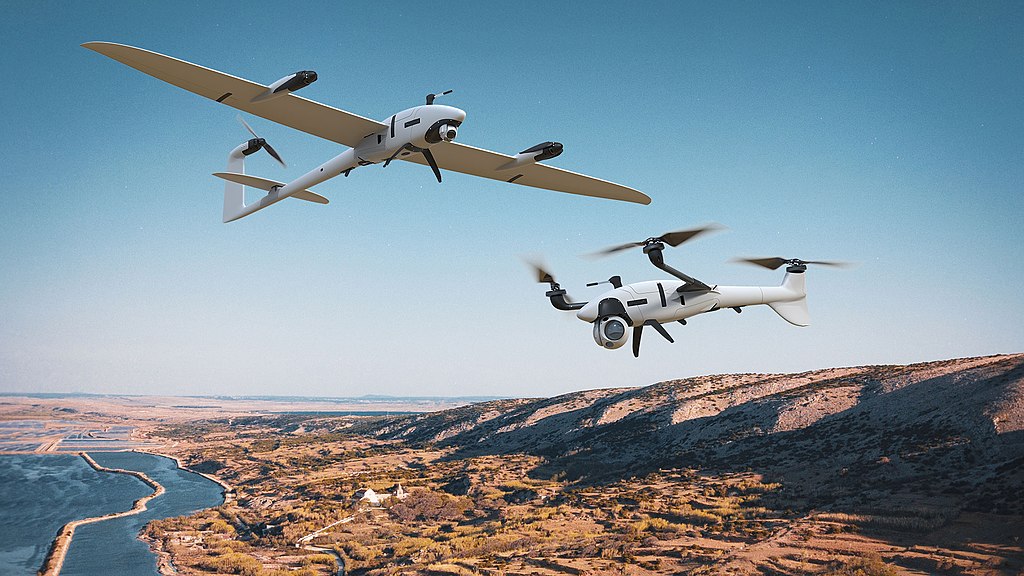
spiegel german drone tech meets ukraine’s frontline reality — battlefield feedback rewrites blueprints company quantum systems' vector 1920x1080_vector_bg02 only months russia's full-scale invasion 2022 german-made reconnaissance helped ukraine destroy russian
Explore further

German defense firm has made Ukraine its second-largest international base

Linza 3.0 carries up to 4 kg of payload out to 15 km and stays aloft up to 60 minutes, and it is already in service with more than 60 Ukrainian units, Frontline Robotics has said. Zoom 3.0 detects targets, fixes their coordinates, and corrects fire under active Russian jamming, the company told Militarnyi. It loiters for up to an hour and works at a tactical radius of up to 20 km. AI-driven navigation and autonomous operation over the target keep its data flowing even when standard radio links break down.

From ramp-up to serial production

Quantum Frontline Industries said the contract moves it from initial production ramp-up toward sustained, high-volume manufacturing. Kosolapkin told Militarnyi the firm keeps refining Linza and Zoom on feedback from Ukrainian troops, whose needs drive how the systems evolve, and that producing in Germany gives it extra capacity to scale Ukraine-proven designs and deliver them in larger volumes.

Europe wants drones that actually work in war, so Ukrainian maker is moving in to build them in Belgium and Luxembourg

1 octobre 2026 à 14:46

A Ukrainian soldier with a drone. Source: SBS

A Ukrainian drone maker is preparing to build unmanned systems in the heart of western Europe. TAF Industries and Luxembourg's LUXUAV have signed a memorandum to jointly develop, industrialize, and field weapons in Belgium and Luxembourg, under the Build with Ukraine initiative, TAF said.

The deal is part of Build with Ukraine, an initiative that enables Ukrainian arms manufacturers to take their operations to a new level by scaling up production beyond the country’s borders. This involves exporting Ukrainian military technologies to partner countries that support Ukraine financially and politically. In return, joint production lines will be established on their territory, according to Ukraine's Arms Council.

The deal targets the Benelux

The memorandum is a first step, TAF said, with joint work on autonomous systems in the two countries to follow. The aim is to move from signed intent to shared production lines and fielded drones.

TAF Industries, a Ukrainian unmanned-systems maker, and LUXUAV, a Luxembourg defense-tech firm, plan to develop, industrialize, and deploy drone solutions across Luxembourg and Belgium, pooling Ukraine's battlefield experience with European manufacturing muscle.

Build with Ukraine spreads west

TAF's chief executive, Volodymyr Zinovskyi, framed the memorandum as a way of "combining Ukrainian innovations, proven by war, with European industrial and technological capabilities," arguing that European security now depends on industry, states, and research working across borders.

Belgium has already contracted a Ukrainian producer to build drones and counter-drone systems on Belgian soil.

Europe wants the know-how

The timing fits Europe's new urgency. Russian drones have strayed into Polish, Romanian, and Moldovan skies in recent weeks, and member states scrambling to build defenses increasingly look to Ukraine, the one country fighting a mass drone war, for the technology and the lessons.

Earlier, Polish Prime Minister Donald Tusk warned of very difficult weeks and months ahead, “linked to Russia’s extremely aggressive stance toward Ukraine," according to TVP Info. As he emphasized, Polish security services were on heightened alert due to the situation along the country’s eastern border.

  • ✇Euromaidan Press
  • Kyiv’s arms industry wants to kill the export fee. Parliament just refused to route that money to the army
    Ukraine's arms industry wants the government to scrap a steep fee on weapons exports, warning it undercuts their prices just as Europe's defense market opens, RBC-Ukraine reported. The same fee has opened a second fight in Kyiv, where parliament this week declined to turn its revenue into money for the army. Russia's war on Ukraine has pushed Europe into rearming, and Ukraine's battle-tested arms makers are among the few that can deliver at scale right now—an opening that domestic red t
     

Kyiv’s arms industry wants to kill the export fee. Parliament just refused to route that money to the army

17 septembre 2026 à 10:09

Novator armored vehicles

Ukraine's arms industry wants the government to scrap a steep fee on weapons exports, warning it undercuts their prices just as Europe's defense market opens, RBC-Ukraine reported. The same fee has opened a second fight in Kyiv, where parliament this week declined to turn its revenue into money for the army.

Russia's war on Ukraine has pushed Europe into rearming, and Ukraine's battle-tested arms makers are among the few that can deliver at scale right now—an opening that domestic red tape could blunt, handing the advantage to competitors just as the market grows.

A €60 billion European window—and a fee in the way

The push comes as Europe opens a major market for Ukrainian weapons. The EU's €90 billion Ukraine Support Loan for 2026-2027 reserves €60 billion for defense purchases, and partners increasingly want weapons built on their own soil. International partners report more than 200 cooperation approaches to Ukrainian firms still without a decision, according to the industry's press release. Producers link the fee fix to Build with Ukraine, a co-production push they consider strategically significant.

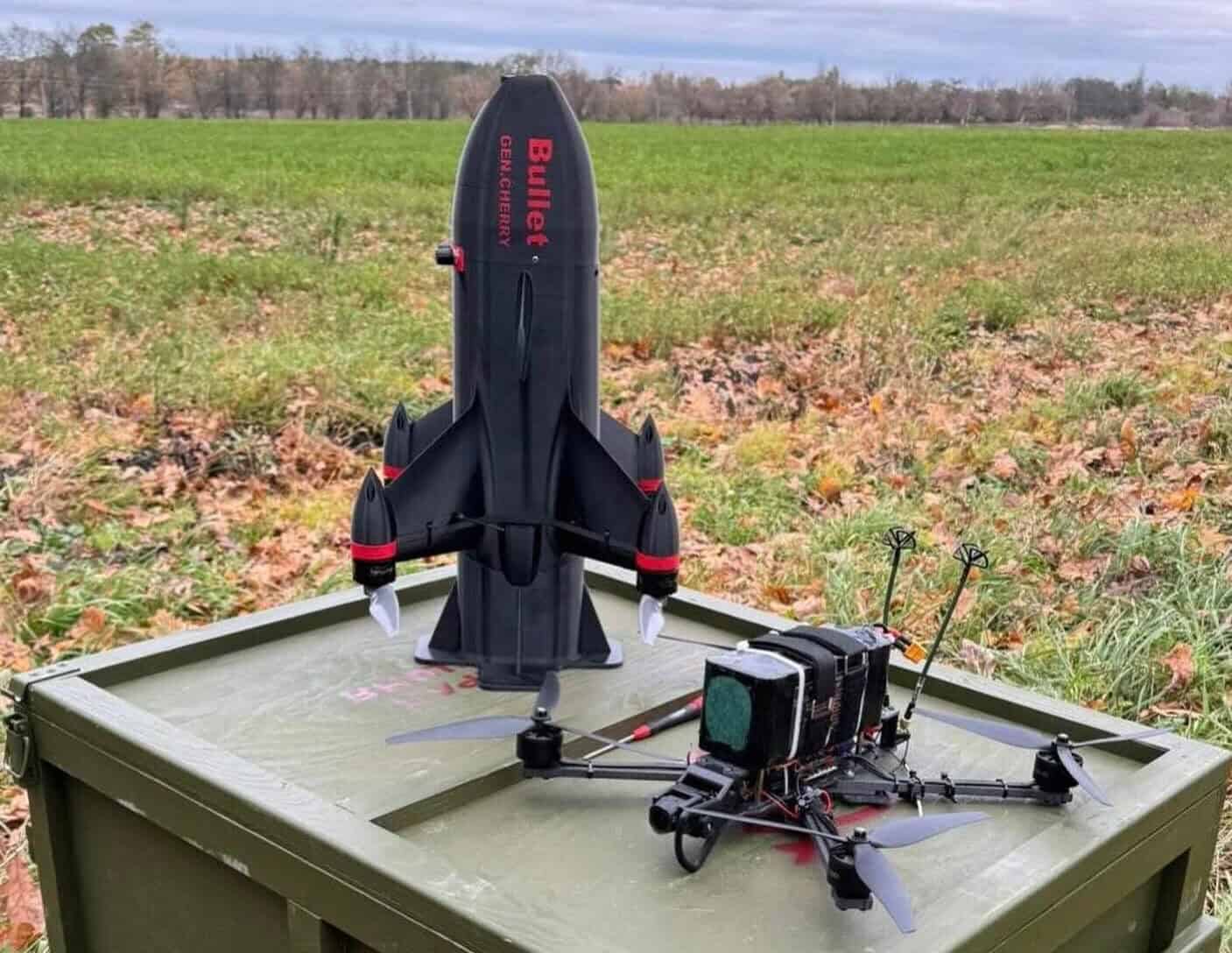
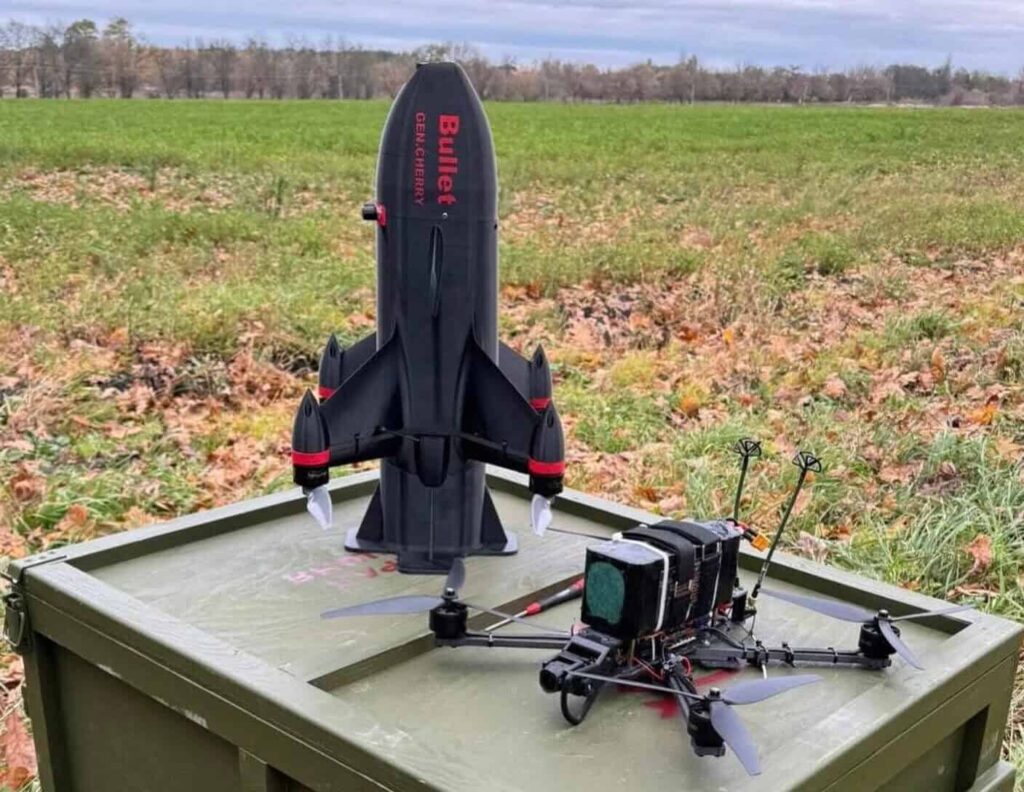
interceptor drones General Cherry (Chereshnia)
Explore further

Ukraine’s Build with Ukraine has 200-plus foreign cooperation bids pending decision. Its arms industry, representing 400-plus firms, wants to help fix mechanism

Parliament won't route the money to the army

On 15 September, the Verkhovna Rada—Ukraine's parliament—rejected a bill in first reading that would have sent fee revenue collected from 1 August 2026 into a special budget fund for the Defense Ministry, half for buying, modernizing, and repairing weapons, half for soldiers' pay. The vote left the fee itself untouched, since it rests on the Cabinet resolution, and settled only that its revenue will not be earmarked for the army.

The fee producers want gone

The Ukrainian Council of Arms Manufacturers, joined by other defense and employer groups, prepared proposals to rework the July government resolution, No. 875. They want the fee—20% on finished goods and technologies, 30% on parts—cut to zero, or capped at 5%. Firms must also pay upfront, before any foreign payment lands, with no refund guaranteed if a deal collapses. A UAH 15 million (about $337,000) threshold shuts out the small test shipments new clients often begin with.

Launch of an Aspide 2000 surface-to-air missile from a Spanish Skyguard-Aspide air defense system
Explore further

Ukraine put an Italian-Swiss Skyguard into combat duty. The missile inside is a Cold War design derived from the American Sparrow

The fee has drawn complaints since the resolution took effect in early July. Ihor Fedirko, the council's executive director, earlier said the 30-day review window was welcome but warned it could clog into a bureaucratic queue as staff leave the agencies running it. One of the associations behind the submission calls the 30% rate on parts prohibitive, since Europe is where Ukrainian firms would undercut Chinese suppliers on price.

Ukraine has swung from banning weapons sales abroad to courting foreign buyers, and its defense sector now ranks among the country's fastest-growing industries. Wartime certification to NATO standards is turning that output into something European militaries can actually buy.

Ukraine’s Build with Ukraine has 200-plus foreign cooperation bids pending decision. Its arms industry, representing 400-plus firms, wants to help fix mechanism

16 septembre 2026 à 11:40

interceptor drones General Cherry (Chereshnia)

Ukraine's largest arms-industry group says it is backing the country's drive to sell and co-produce weapons abroad, while pressing the government to fix two separate obstacles in its way. The Council of Defense Industry, which represents more than 400 companies, wants a costly new export-permit fee and a stalled joint-production program to be upgraded, it said on Facebook.

The two problems are distinct. Resolution 875, the wartime rules for shipping arms abroad, charges a 20-30 percent fee on export permits, which the industry says prices Ukrainian goods out of the market.

The export fee bites

Resolution 875, adopted in July, was intended to streamline exports, with a 30-day review period and a streamlined path for partner countries. But the fee has choked it: only about 10 small export contracts have been signed since exports began, and not one permit has been issued under the new rules, Militarnyi reports.

"Resolution 875 in its current form contains provisions that could substantially worsen the competitiveness of Ukrainian producers," the group says.

Build with Ukraine is a separate track

The program lets producers export their technology and set up joint production abroad, reaching EU markets, financing, and infrastructure, while partners fund weapons production inside Ukraine.

The program lets producers export their technology and set up joint production abroad, reaching EU markets, financing, and infrastructure, while partners fund weapons production inside Ukraine. Talks are underway with Denmark, Norway, and Germany.

President Zelenskyy has said $43 billion was raised for Ukraine's defense industry in 2025, floated a goal of partner states each spending 0.25 percent of their GDP on it, and stressed that no Ukrainian technology will reach countries tied to Russia.

The Council, whose ecosystem spans more than 360 manufacturers, 28 drone-pilot schools, and 20 defense venture funds, says it is ready to help refine the mechanism.

❌