Vue normale

  • ✇Euromaidan Press
  • Gasoline rationing returns to Moscow and St. Petersburg as Rosneft caps fills nationwide
    Russia’s summer fuel crisis is back for a second wave, driven by Ukrainian strikes on its oil refineries. This time, it has forced rationing back into both Moscow and St. Petersburg and pushed its largest oil producer to cap gasoline nationwide.St. Petersburg drivers ran into limits again on 20 August, when several major oil companies restricted sales across the city, Bumaga first reported. Gazprom Neft reinstated a 60-liter-per-receipt cap it had lifted on 4 August and bl
     

Gasoline rationing returns to Moscow and St. Petersburg as Rosneft caps fills nationwide

21 août 2026 à 09:57

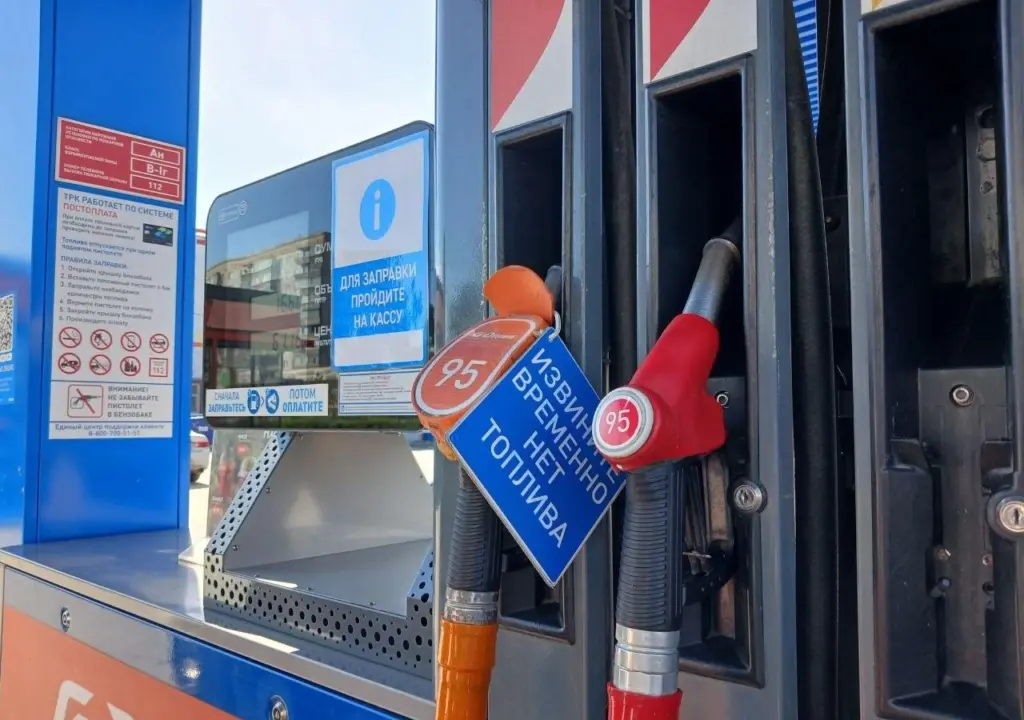
a dry pump at a russian gas station, july 2026

Russia’s summer fuel crisis is back for a second wave, driven by Ukrainian strikes on its oil refineries. This time, it has forced rationing back into both Moscow and St. Petersburg and pushed its largest oil producer to cap gasoline nationwide.

St. Petersburg drivers ran into limits again on 20 August, when several major oil companies restricted sales across the city, Bumaga first reported. Gazprom Neft reinstated a 60-liter-per-receipt cap it had lifted on 4 August and blocked customers from filling more than one canister.

Tatneft capped AI-95 and AI-92 at 50 liters. Many Gazprom Neft stations carried no AI-95 at all, its own station map showed. “Gazprom and Lukoil are dropping dead,” one driver wrote in a local chat.

The limits followed Moscow’s by a day. There, Gazprom Neft cut sales to 40 liters per car, and AI-95 turned up at a single Neftmagistral station, The Moscow Times reported. Rosneft went furthest, capping gasoline at 30 liters per car at every one of its stations across Russia, with no limit on diesel. In June, the same network was still letting drivers take up to 90 liters a fill.
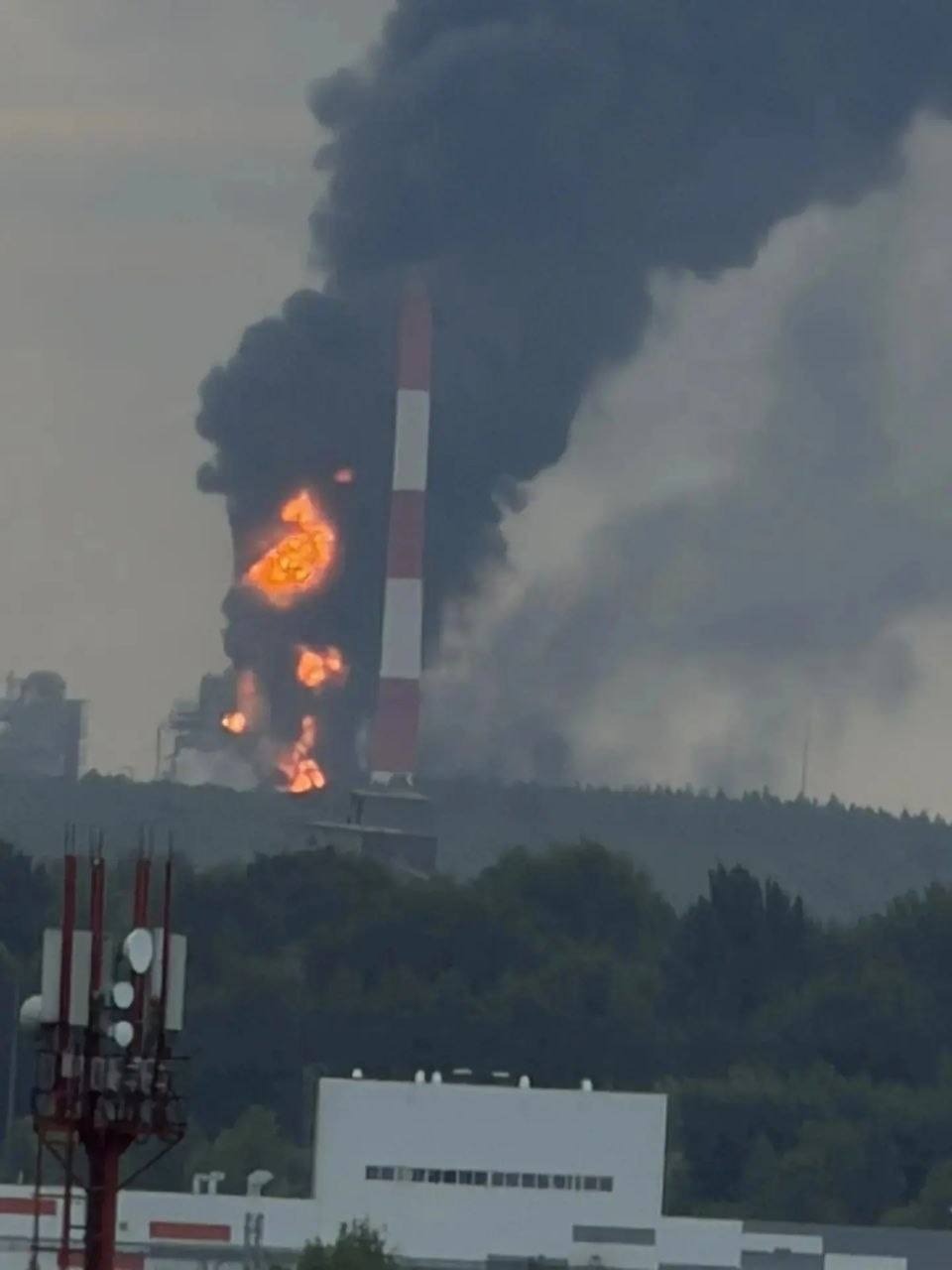
ukraine confirms strikes two tatarstan refineries rocket-fuel rubber plant tolyatti · post fire engulfs industrial unit next chimney after ukrainian strike nizhnekamsk russia 12 2026 2bd5189f-62e7-4645-ae48-dc42a84a9054 ukraine's defense forces set
Explore further

Russia’s biggest oil company stopped selling gasoline in canisters nationwide after Ukraine’s strikes. It blames “seasonal demand”

By mid-August, gas stations in at least 12 regions were again seeing hours-long lines, Meduza’s regional roundup found, citing a count by the outlet 7×7. Lipetsk Oblast brought back odd-even rationing by license plate on 13 August and held fills to 30 liters, a step Governor Igor Artamonov announced; Sochi’s authorities asked residents and tourists to leave their cars at home.

Ukraine has spent months hitting the plants to choke off both the fuel Russia’s army runs on and the oil revenue that funds its war. At least four refineries went offline in August alone.

Officials say supply is holding. Energy Minister Sergei Tsivilyov said on 18 August that fuel remains available, even as he acknowledged the lines. Gasoline averaged 76.04 rubles a liter ($0.89) on 10 August, off a July peak that ran nearly 20% above where the year began.

  • ✇Euromaidan Press
  • Russia diverts defense-industry chemicals to gasoline—but stations still run dry
    Gasoline was available at 28% of Russian gas stations last week, down from 41% the week before—despite a July government decree that authorized refineries to divert chemicals from industry, including defense production, into fuel, Izvestia reported on 18 August.The diversion has since triggered motor oil shortages, and, as Kommersant reported, a government commission that met in mid-August to reverse course could not agree on how. The ISW assessed on 19 August that the
     

Russia diverts defense-industry chemicals to gasoline—but stations still run dry

20 août 2026 à 07:45

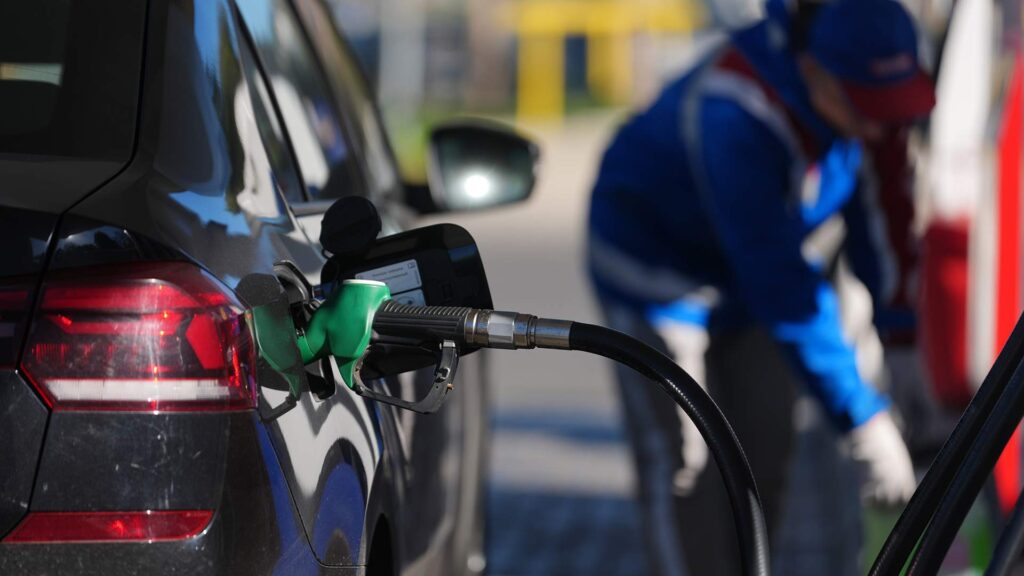
a car refuels at a gas station russia as gasoline shortage deepens

Gasoline was available at 28% of Russian gas stations last week, down from 41% the week before—despite a July government decree that authorized refineries to divert chemicals from industry, including defense production, into fuel, Izvestia reported on 18 August.

The diversion has since triggered motor oil shortages, and, as Kommersant reported, a government commission that met in mid-August to reverse course could not agree on how.

The ISW assessed on 19 August that the diversion is now draining raw materials from industrial supply chains.

Moscow runs dry

Izvestia correspondents checked 21 stations in Moscow and Moscow Oblast on 17 August: only seven sold AI-92, and five sold AI-98. Gazprom Neft has reimposed purchase limits—40 liters at automated pumps, 60 at staffed ones, RBC reported on 19 August.

Russia has meanwhile received a tanker of Indian gasoline in Murmansk, initially priced at 130,000 rubles ($1,550) per ton—nearly double the 73,000-ruble ($870) domestic exchange price, Izvestia reported.

The chemicals in question—benzene, toluene, xylenes, and phenol—are intermediate refinery products used to make rubbers, plastics, and synthetic materials for industry, including defense. A 2 July decree authorized refineries to blend more of them into gasoline as an octane booster. The ISW assessed on 19 August that the diversion is now draining raw materials from industrial supply chains.

Motor oil shows the damage. Prices have risen 15–20% since January, with some products up 40% and imported brands roughly doubling, Kommersant reported on 19 August.

Dmitry Prokofiev, director of external communications at NEFT Research, told the paper that the lower-grade Euro-2 and Euro-3 fuel now at Russian stations wears engines faster and requires oil changes 1.5 to 2 times more frequently.

Drivers forced onto worse gasoline burn through motor oil faster, but the raw materials that would go into producing it are being diverted to make more gasoline.

rosgvardia
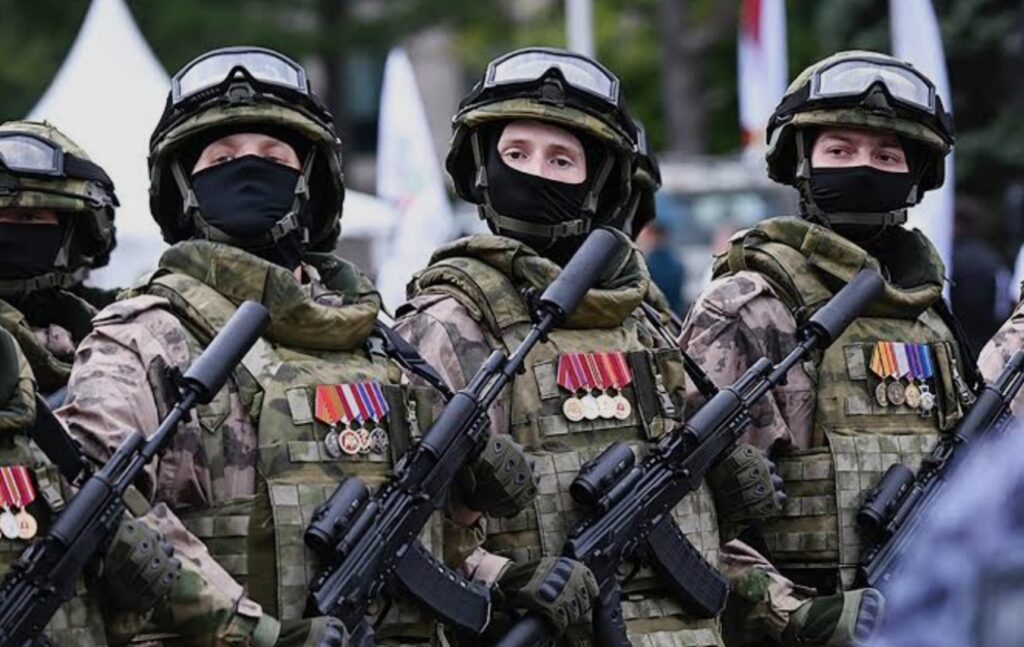
Rosgvardia personnel in combat uniforms march during an event marking the Russian force’s 10th anniversary. Photo: Rosgvardia / rg.ru.

From rationing to Rosgvardia

A Russian insider source cited by ISW claimed on 18 August that Rosgvardia—Russia’s heavily militarized internal security force—has deployed to gas stations in Moscow Oblast.

Rosgvardia personnel have reportedly appeared at no fewer than 13 stations across Russia and occupied Crimea over the summer.

A month ago, the governor of Rostov Oblast did something similar, sending Cossacks and volunteers to gas stations to keep order.

rostov oblast sent cossacks to keeporder at the fuel queues
Explore further

Russia’s fuel crisis has moved from the pump to the harvest

Separately, Russia’s legislative commission approved a bill on 18 August authorizing rescue forces under the Ministry of Emergency Situations to use physical force and firearms when nonviolent means prove insufficient, Vedomosti reported.

United Russia deputy Anatoly Vyborny, one of the bill’s co-authors, framed the measure as a counter-drone tool for evacuations. ISW assessed that it also provides legal cover for suppressing domestic unrest—an assessment the institute linked to involuntary mobilization reportedly under consideration after September’s State Duma elections.

Ukraine’s drone strike shut Russia’s biggest LPG plant as fuel rationing returned in 16 regions

12 août 2026 à 05:12

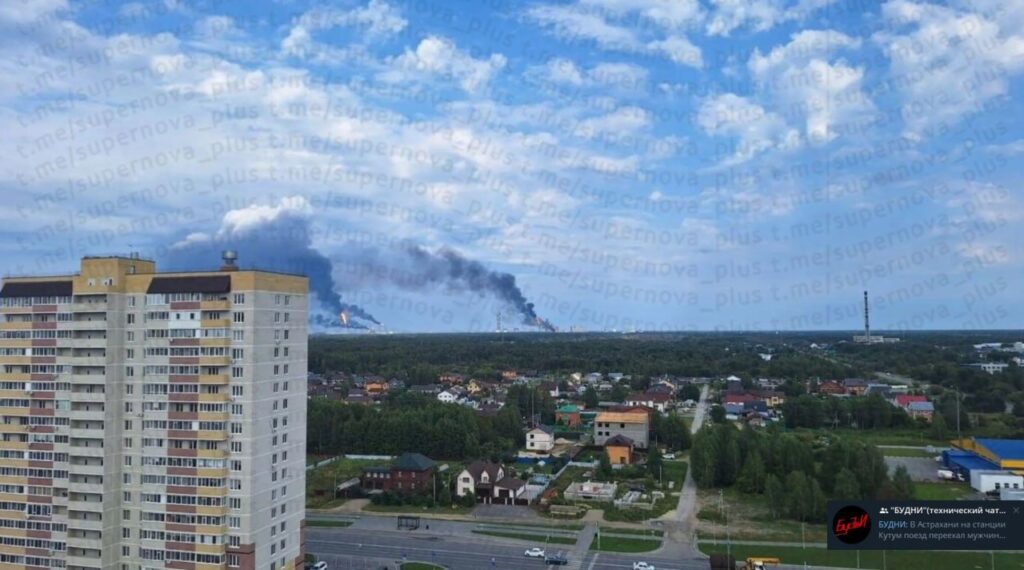
The ZapSibNeftekhim complex in Tobolsk, Tyumen Oblast, is burning. Source: Supernova

A Ukrainian drone strike shut the plant that produces 40% of Russia’s liquefied petroleum gas on 10 August, and the country’s fuel crisis snapped back across at least 16 regions within days.

The shutdown of the Sibur ZapSibNefteKhim complex in Tobolsk, western Siberia, removes about six million metric tons of annual LPG capacity from a fuel system that was already under strain.

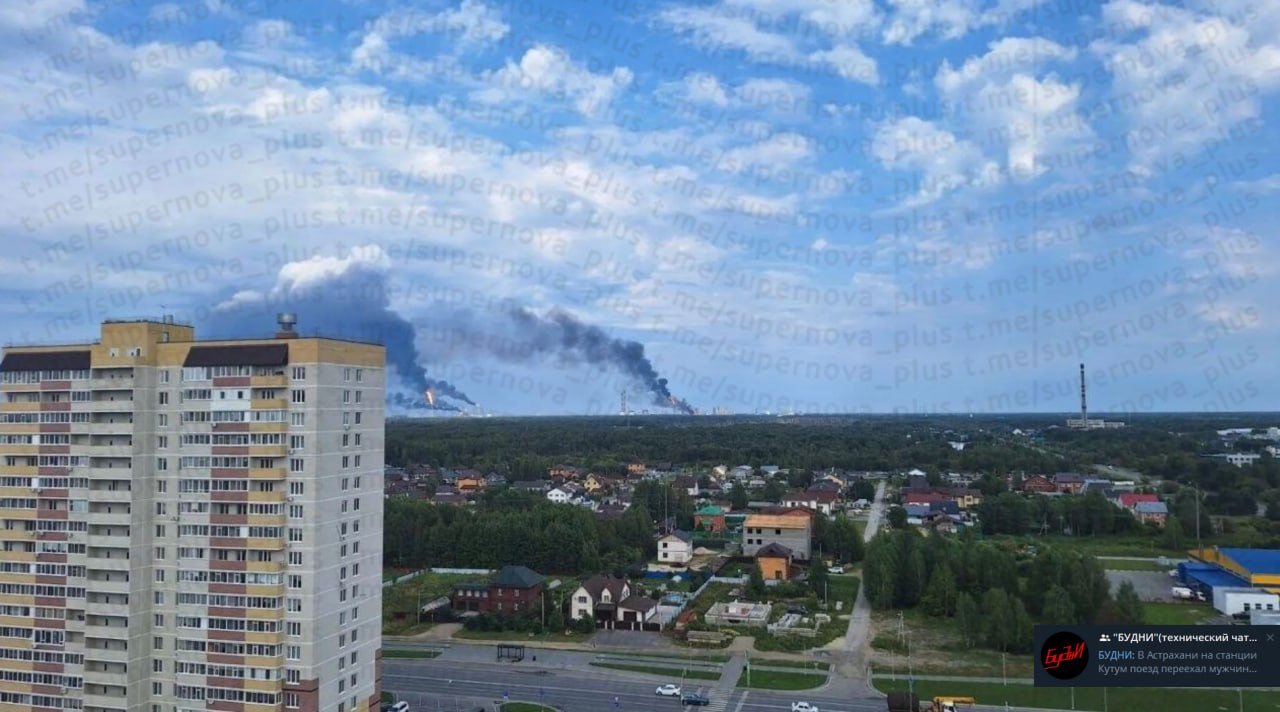
The ZapSibNeftekhim complex in Tobolsk, Tyumen Oblast, is burning. Source: Supernova
Explore further

“This is money of his accomplices burning”: Russian partisans and Ukraine hit Siberian plant tied to Putin’s inner circle


Gasoline restrictions had begun easing across Russia at the end of July, when Ukrainian drones temporarily shifted to other targets. When the strikes resumed in early August, fuel rationing returned immediately, the independent Russian outlet 7×7 reported.

Three industry sources told Reuters on Tuesday that the complex stopped operations indefinitely “while the extent of the damage and its consequences are being assessed.”

No LPG volumes were offered from the Tobolsk delivery point on Russia’s commodity exchange—a point that earlier this year handled about 4,000 metric tons of propane-butane mix per day. Sibur declined to comment.

The shutdown of the Sibur ZapSibNefteKhim complex in western Siberia, removes six million metric tons of annual LPG capacity from a fuel system already under strain.

zapsibneftekhim and tobolsk-polymer in tobolsk
The ZapSibNefteKhim and Tobolsk-Polymer industrial sites in Tobolsk, western Siberia, seen in February 2023. A Ukrainian drone strike shut ZapSibNefteKhim indefinitely on 10 August 2026, taking 40% of Russia’s LPG production offline. Photo: Vyacheslav Bukharov/Wikimedia Commons, CC BY-SA 4.0.

A strike on one unit stopped the entire plant

Tyumen Oblast Governor Aleksandr Moor confirmed a fire at an industrial site following a drone attack but did not identify the facility.

Ukraine’s Special Operations Forces Deep Strike units, working with the Russian insurgent movement Chornaya Iskra (Black Spark), claimed the strike. The plant sits more than 2,200 kilometers from the front line.

Militarnyi’s OSINT analysis identified the specific target as the complex’s central gas fractionation unit—the plant’s entry point, where raw hydrocarbons are separated into usable products before anything else in the production chain can run. About half of ZapSibNefteKhim’s output feeds Sibur’s own petrochemical complex in Tobolsk; the rest goes to market.

Sibur held contracts to supply feedstock to defense-industry enterprises, including the Kamenskiy Kombinat, which produces solid rocket fuel and motors for the Grad, Smerch, and Uragan rocket systems.

Sibur also supplied the Perm Gunpowder Plant, which makes charges for multiple-launch rocket systems, air-defense complexes, and cruise missile boosters, Militarnyi also reported. The Sverdlov Plant and Biysk Oleum Plant, both explosives manufacturers, were also Sibur clients.

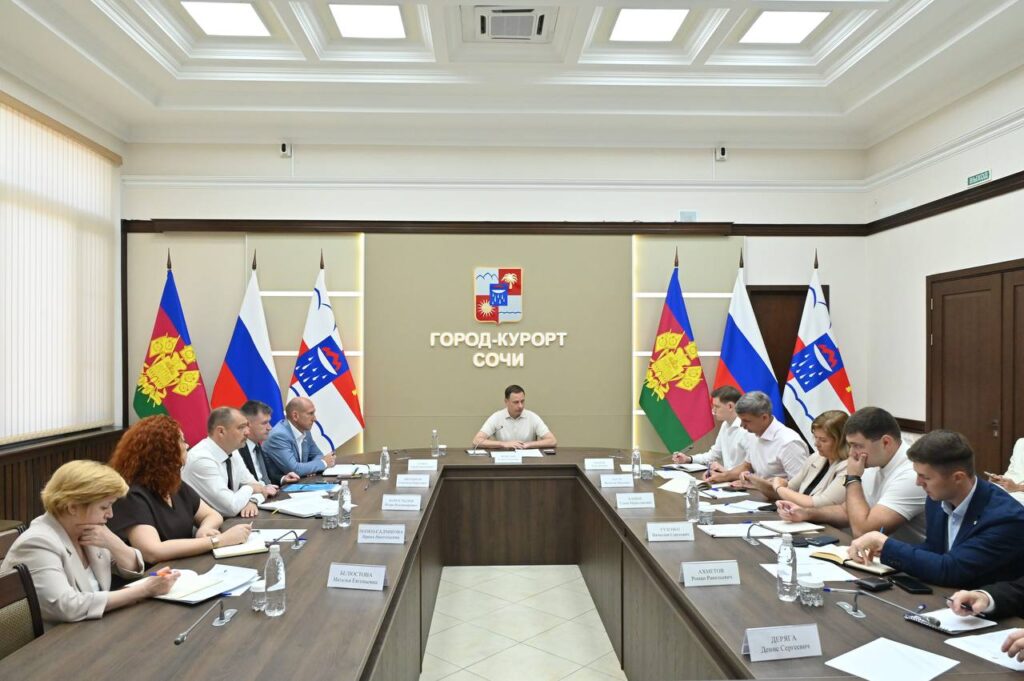
sochi mayor andrei proshuning with city officials
Sochi Mayor Andrei Proshunin meets with city officials as fuel remains available at only 38 of the resort’s 58 gas stations. Photo: Andrei Proshunin/Telegram

Fuel rationing returned within days

Across at least 16 regions, the fuel restrictions that had briefly eased in July are back, 7×7 reported.

In Sochi—Russia’s most famous beach resort—Mayor Andrei Proshunin said on Telegram that fuel was available at only 38 of the city’s 58 gas stations. Deputy Mayor Vyacheslav Bauer told residents and tourists to use public transport or stop driving, the Moscow Times reported.

In Bashkortostan, authorities banned gasoline sales in canisters, leaving at least one resident unable to fuel his lawnmower—as he complained to regional head Radiy Khabirov during a televised address, a Bashkortostan outlet reported. Production at the Ufa petrochemical complex is unaffected by the drone strikes, Khabirov said.

Still, the shortage persists for a different reason: every time a drone-alert protocol is activated, fuel tankers halt en route to gas stations, regional official Elena Prochakovsky explained at a briefing reported by Prufy. Three districts remain in a fuel “red zone,” and 19 of 26 gas stations in Sterlitamak are operating.

Lipetsk Oblast Governor Igor Artamonov told residents not to expect improvement for one to two weeks, Lipetsk outlet Ploshchad reported. “If you can leave 10 liters unfilled, the person arriving on empty will thank you,” he said.

Russia’s fuel system was already breaking

The Tobolsk shutdown lands on an already fractured system. By mid-July, fuel rationing had spread to more than half of Russia’s regions. Ukraine’s drone campaign had struck Russian refineries 194 times in the first half of 2026 alone—eleven times the previous year’s pace—knocking nearly half the country’s refining capacity offline, Ukraine’s General Staff reported on 4 July.

Repair timelines keep slipping because sanctions block the spare parts Russian plants need. To plug the gap, Russia has banned gasoline exports, permitted lower-grade fuel, and begun importing gasoline from India and Morocco, refined from its own crude—shipping it 14,000 kilometers home because its refineries cannot meet domestic demand.

The Tobolsk shutdown removes more LPG output than any single strike of the war. Russia was already rationing fuel in more than half its regions before this strike.

❌