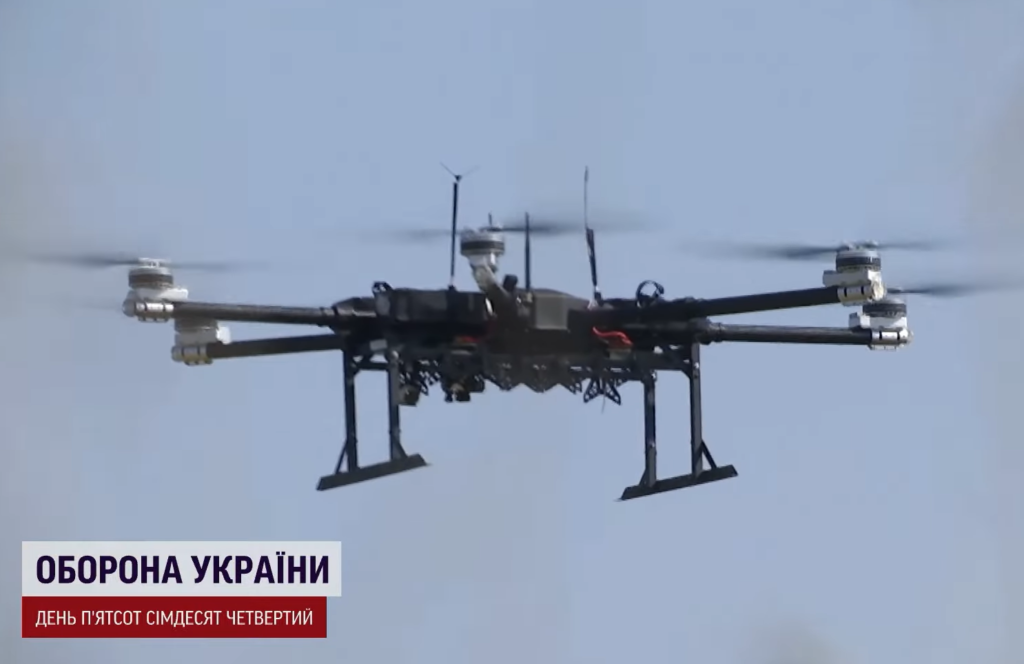
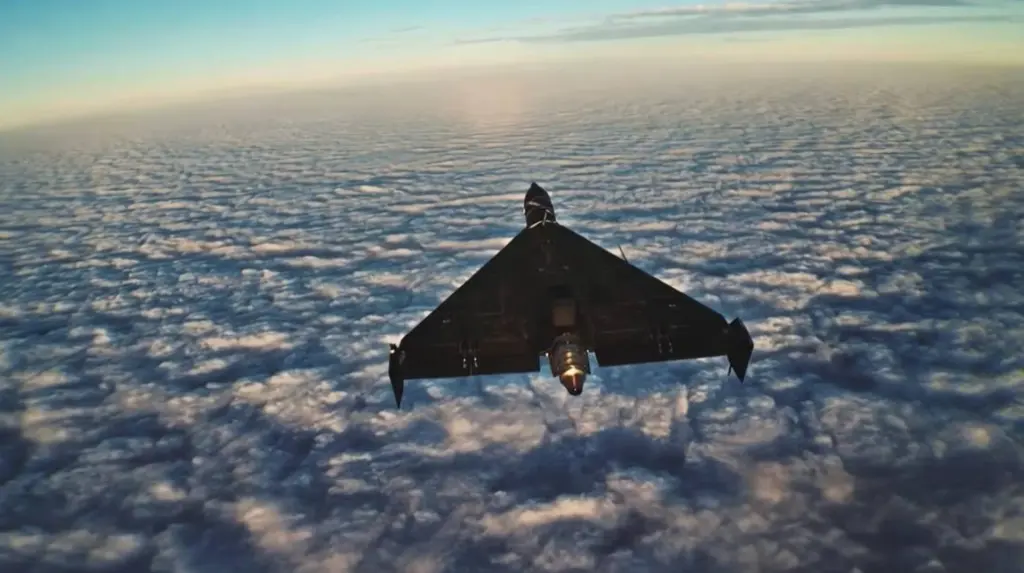
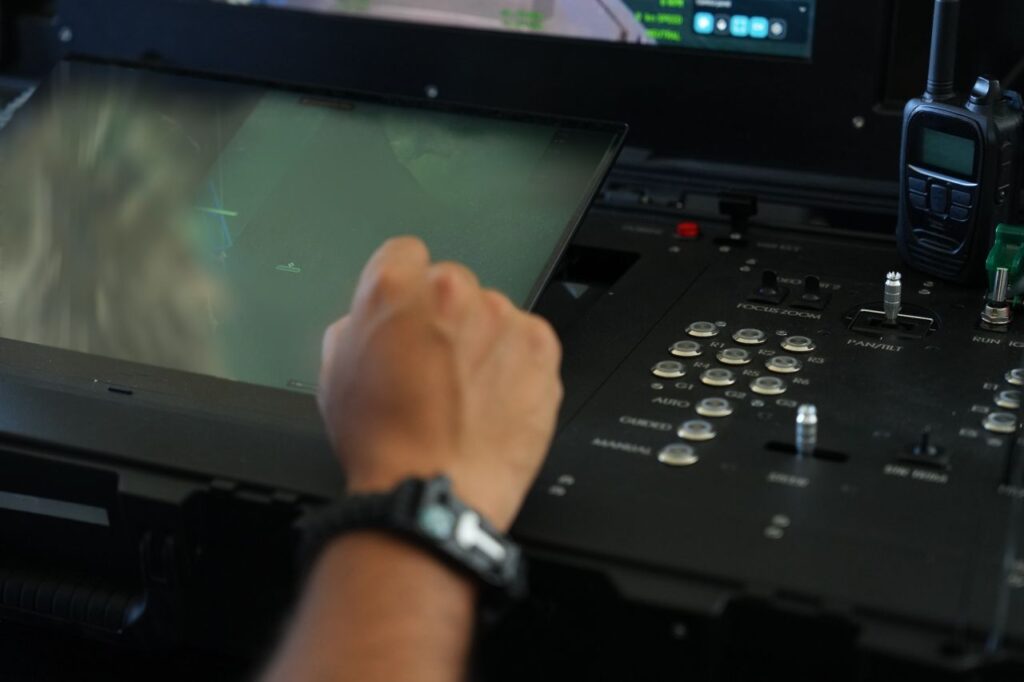
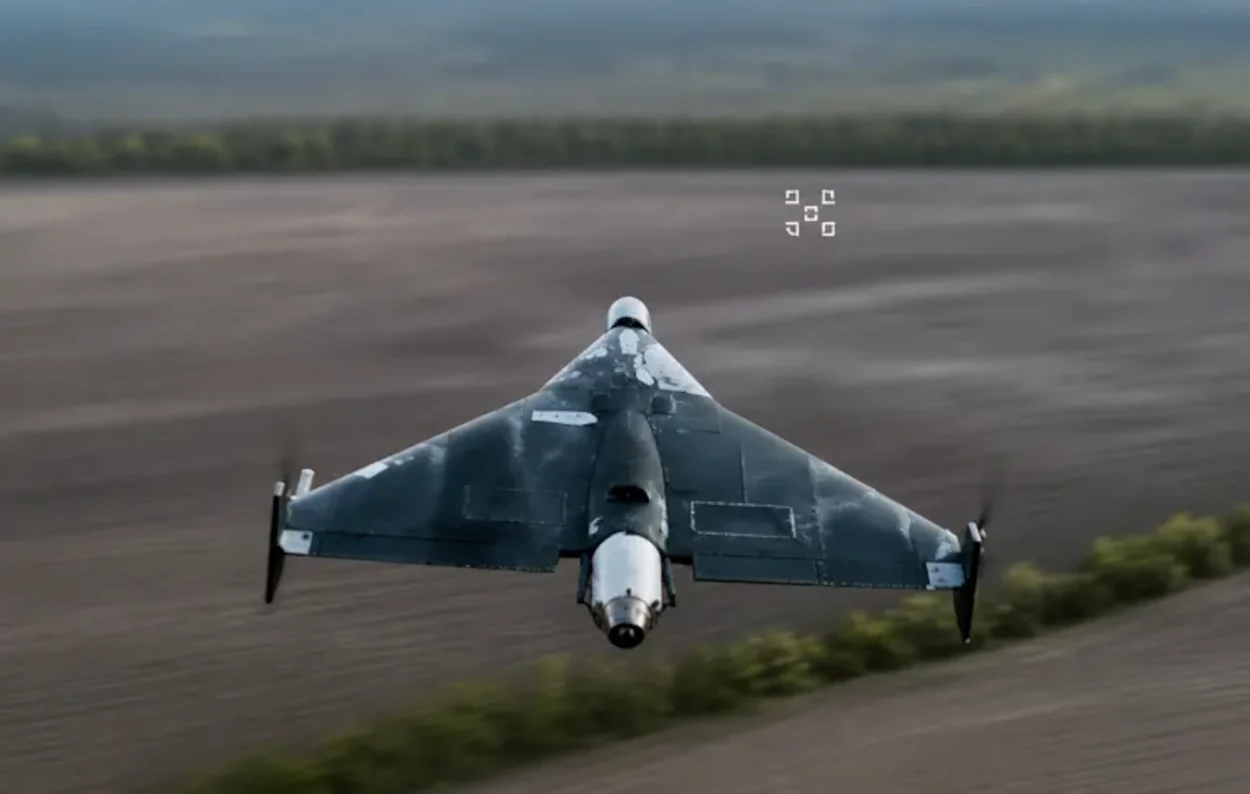
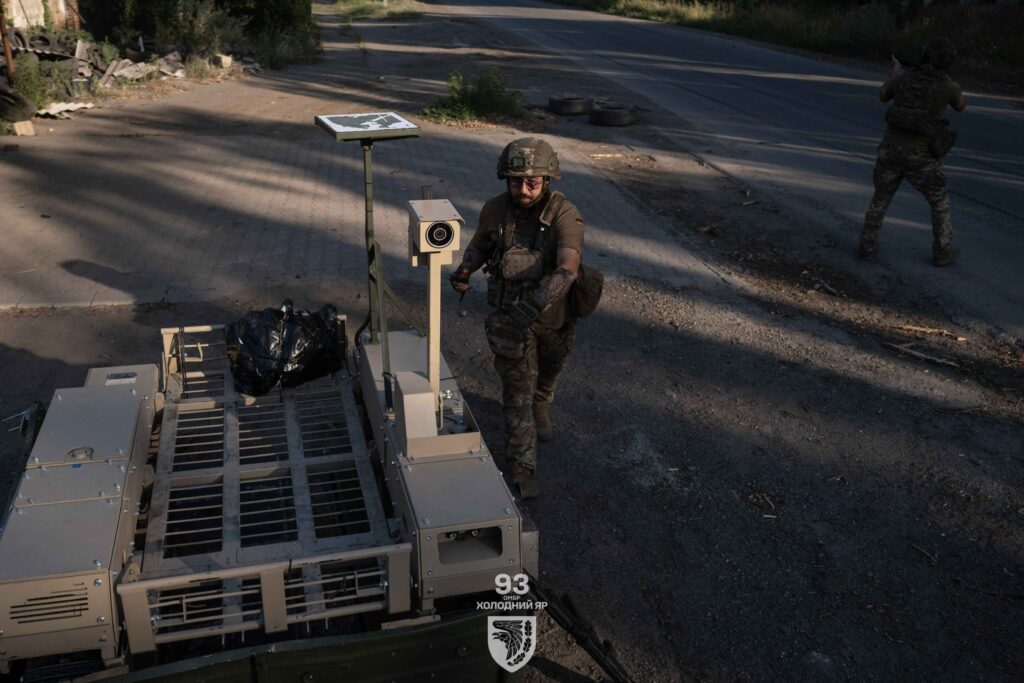
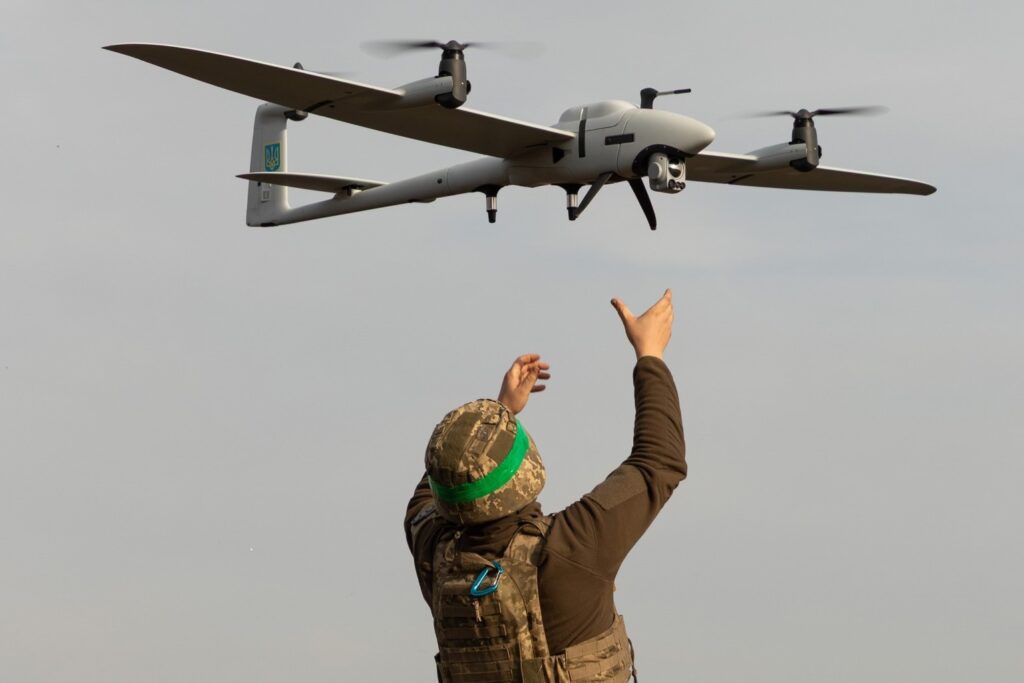
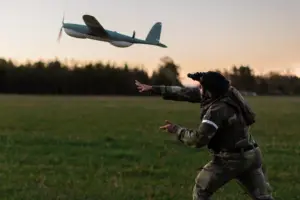
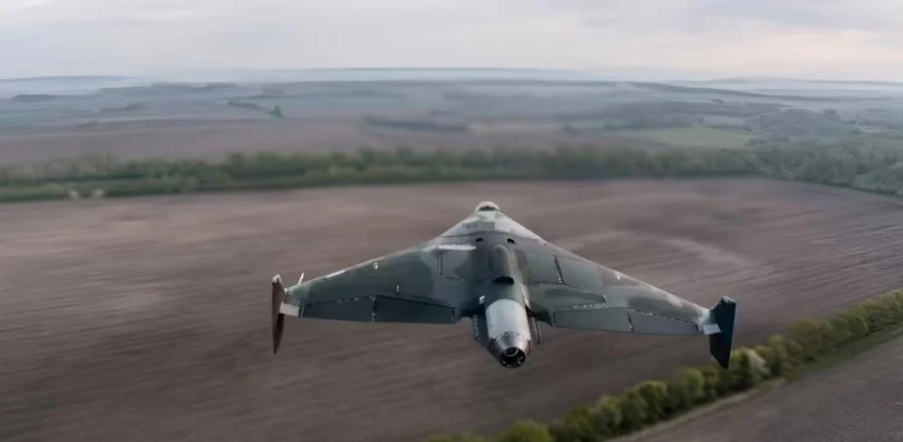
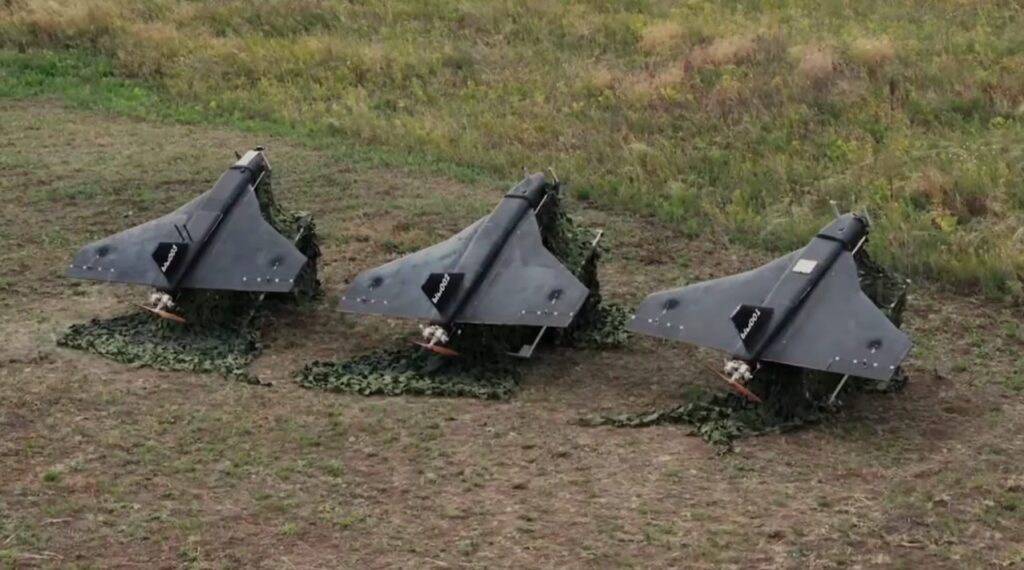
A Ukrainian firm is testing a jammer light enough to ride on a heavy bomber drone and shield it from the enemy FPVs that hunt it. Aura-Ukraine has begun final tests of the system, called Aura 3K mini, the Dignitas Fund, a charity developing it with the manufacturer, Oboronka reports.
The bombers it is built to protect have become some of Ukraine's most valued drones. In the Donetsk operation last month, heavy bombers dropped kamikaze ground robots more than 10 kilometers behind Russian
A Ukrainian firm is testing a jammer light enough to ride on a heavy bomber drone and shield it from the enemy FPVs that hunt it. Aura-Ukraine has begun final tests of the system, called Aura 3K mini, the Dignitas Fund, a charity developing it with the manufacturer, Oboronka reports.
The bombers it is built to protect have become some of Ukraine's most valued drones. In the Donetsk operation last month, heavy bombers dropped kamikaze ground robots more than 10 kilometers behind Russian lines. The same weapon has been fitted with guided bombs that strike at long range with high precision.
At the same time, heavy bombers are large, making them prime targets for Russia. Keeping them in the air, and out of enemy hands, is the point of the new shield.
Two jammers cover 360 degrees
Aura 3K mini wraps the drone in a spherical, 360-degree cover using two broadband jammers, the fund says. Two emitters, not one, close the blind angles a single jammer would leave.
They work across the 2.1 to 2.8 GHz band, enough to disrupt FPV drones without cutting the bomber's own Starlink link. The whole device weighs about 2.4 kilograms.
"Radiation-pattern tests start on the front line in the coming days," the fund's press service says, and if they succeed, the system is set for serial production.
The fund moves to automate it
The next step is to make the jammer smarter, the fund says. It wants an auto-on function that fires only when a threat is detected, so the bomber does not give away its position with constant emission.
The team also plans to adapt Aura 3K mini to Vampire-type bombers, the heavy night drones that Russian troops nickname "Baba Yaga". That would widen the shield's reach across more of Ukraine's bomber fleet.
Russia hunts the Baba Yaga
The nickname points to a fairytale Slavic witch who flies by night. The real thing has been hard for Russia to counter: in 2024, a Ukrainian night bomber was often impossible to jam and, by one account, could be destroyed only with a flamethrower. By 2025, Russia was offering its soldiers 10 days' leave for capturing a Baba Yaga it could not build itself.
Dmitry Muratov, the Nobel Peace Prize laureate and co-founder of Russia's shuttered Novaya Gazeta, has lent his name to an idea that sounds like pure humanitarianism. Russia frees some of the people it jails for opposing the war; in return, the United States eases its sanctions on the Russian economy.
The scheme did not even start in an American office. According to The Atlantic, which reported the plan on 29 September, it was Muratov himself who urged Donald Trump's envoy, John Coale,
Dmitry Muratov, the Nobel Peace Prize laureate and co-founder of Russia's shuttered Novaya Gazeta, has lent his name to an idea that sounds like pure humanitarianism. Russia frees some of the people it jails for opposing the war; in return, the United States eases its sanctions on the Russian economy.
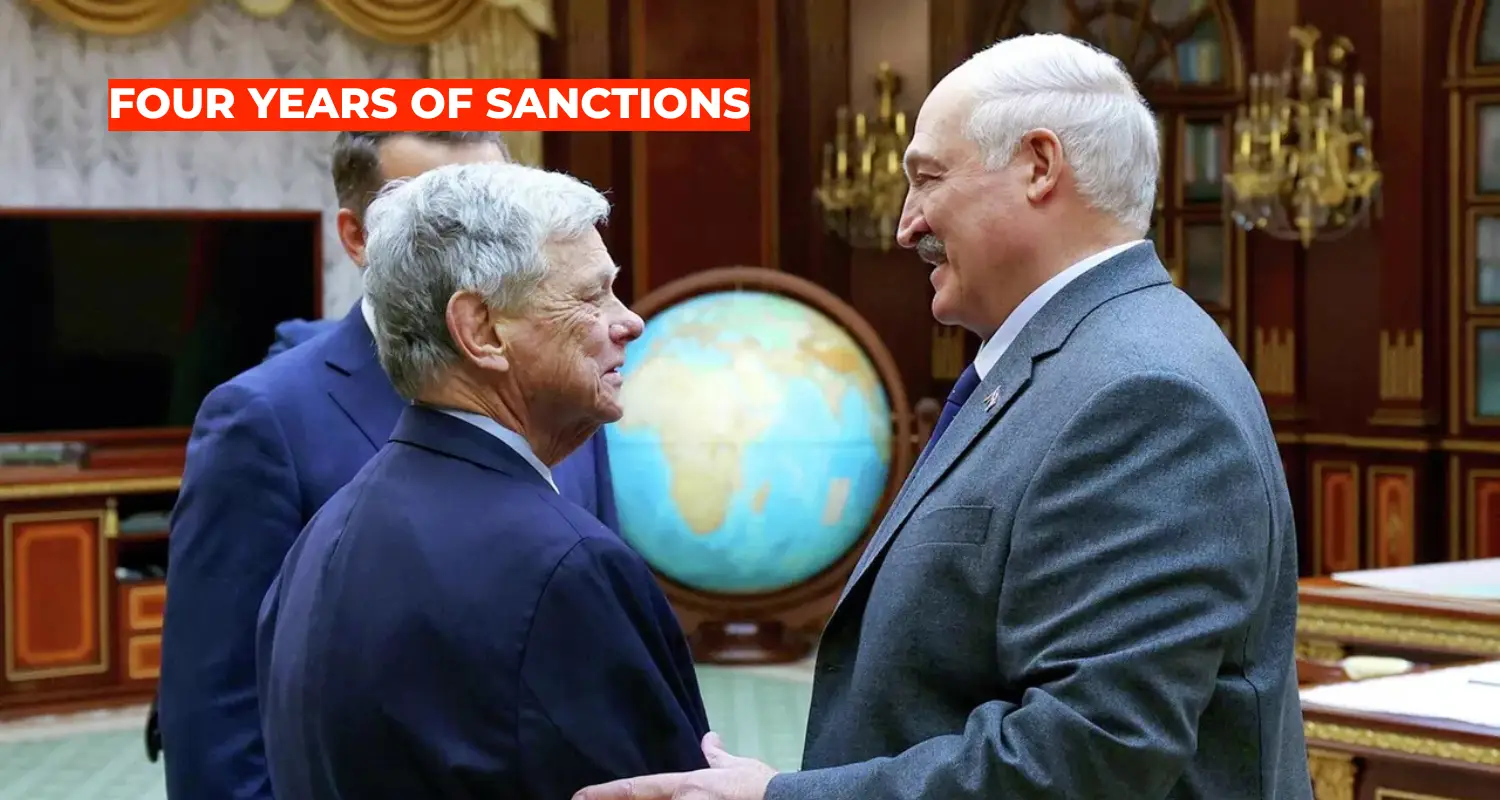
The scheme did not even start in an American office. According to The Atlantic, which reported the plan on 29 September, it was Muratov himself who urged Donald Trump's envoy, John Coale, to try it. Coale had used the same model on Belarus, where some 500 prisoners were released, sanctions softened, and trade talks reopened.
Now, with Trump's approval, he wants to run it on the Kremlin.
Explore further
“A direct investment in ammunition flying across the border”: Belarusian defectors warn US sanctions relief is funding Russia’s war
The prisoners should go free. There is nothing to argue about there. No one jailed for anti-war words, for journalism, or for political dissent belongs in a cell. But here is the small detail: the price for their freedom is easing the pressure on a state that is waging war, not on the United States, which is being asked to ease the sanctions, but on Ukraine.
And here is where the real humanitarian arithmetic begins. We do not yet know which sanctions would be lifted. Whichever they are, the logic is the same: Moscow lets some of its political prisoners go, and Washington gives the Russian economy some breathing room in return. People walk out of Russian prisons, and the Kremlin gets more oxygen.
More money for the Russian state in wartime is not merely a figure in a bank report. It is more resources for the army, for missiles, for drones, for the war's continuation. And Ukrainians are the ones who feel it.
I can picture the Kremlin ghoul rubbing his hands at an idea like this. Now he can be not just president, but the director of a prisoner market: release a hundred today, jail three hundred tomorrow, so there is something to trade next time. New dissidents, journalists, activists, and merely inconvenient citizens he can pack away far faster than the West can lift a sanction.
The Kremlin ghoul can now be the director of a prisoner market: release 100 today, jail 300 tomorrow
A tidy little business model: Russia produces the prisoners, the West buys them back with its policy, and Ukraine settles the account.
Because if easing sanctions widens Russia's room to finance the war, then Ukrainians effectively get a very strange bill for someone else's humanism: a Russian political prisoner walks out of prison, and a Ukrainian gets a fresh portion of missiles and drones on their head.
By the way, about those Ukrainian civilians. By the estimates of international and Ukrainian rights groups, Russia is holding, or has held, some 16,000 of them illegally. The real figure may be higher, since not every case can be documented.
This is exactly where Muratov, as a Nobel peace laureate, might find his powers of persuasion useful. Why not put in a word for the Ukrainians in Russian prisons? The same people seized in occupied territory during "filtration," taken from their homes, buried under fabricated cases, held for years without a proper trial.
And among them are children.
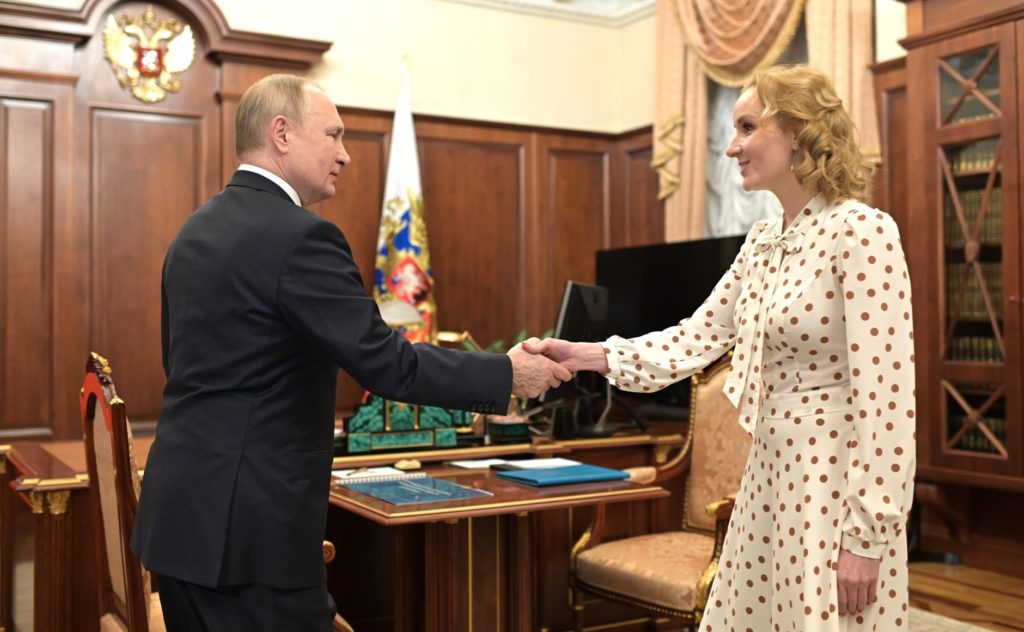
Maria Lvova-Belova and Vladimir Putin. Photo: Kremlin.ru
And here onto the stage steps Russia's Baba Yaga of "child protection": Maria Lvova-Belova, the so-called presidential commissioner for children's rights. She herself told Putin, in public, about a boy from Mariupol she had taken into her care after he was removed from the occupied city. Ukraine and international organizations view such cases as part of a wider system of unlawful transfers of Ukrainian children to Russia. The International Criminal Court has issued a warrant for her arrest on exactly those charges: the unlawful deportation and transfer of Ukrainian children.
That is what Russian care for children looks like: take a Ukrainian child from Mariupol, carry him off to Russia, and set about turning him into a Russian. If this is how Russia's children's commissioner works in public, it is frightening to imagine what happens where there are no cameras and no international warrants.
Nobody is offering to lift a single sanction for them.
Russian Children’s Rights Commissioner Maria Lvova-Belova and her Ukrainian "adopted son" Pylyp from occupied Mariupol.
And Muratov's pacifist initiatives are not new, either. After the full-scale invasion, he was among the authors and promoters of the ceasefire appeals. One public statement, signed by 51 Nobel laureates, called for an end to the fighting, which Muratov later described as a plea for a "genuine ceasefire" before talks.
On paper it all looks wonderful: stop shooting, stop killing one another, make peace. But there is one small problem. Russia did not wander into this war alongside Ukraine. Russia launched the full-scale invasion itself.
And in these appeals, Muratov did not demand that the Kremlin withdraw its troops from Ukraine. He did not demand the de-occupation of Ukrainian territory. He did not put the question of responsibility for the aggression and the war crimes to Russia. The formula was far more convenient: just stop shooting.
But "stop killing each other" is a beautiful phrase for people who would rather not notice who attacked whom.
It turns aggressor and victim into two symmetrical sides, as though Ukraine and Russia had simply quarreled and now both must show wisdom and stop firing. There is just one nuance: if, after such a "peace," the Russian army remains on occupied Ukrainian territory, that is not an end to the aggression. It is a pause with a Russian flag on Ukrainian soil.
Now add the prisoner proposal on top. Russia does not withdraw its troops. Ukraine does not get its occupied territory back. The Kremlin answers for nothing. But a few Russian political prisoners are released, and for that, Russia's sanctions are eased too. And Ukraine, meanwhile, is simply supposed to stand to one side and rejoice that humanism has triumphed.
Ukraine is simply supposed to stand to one side and rejoice that humanism has triumphed.
Except there is a difference of principle. A Russian political prisoner can walk out of a Russian prison. A Ukrainian civilian can stay in one. And a Ukrainian soldier can be killed by a weapon Russia bought thanks to that same sanctions relief.
And then a very simple question arises for the great humanist and Nobel laureate: why should the freedom of Russia's political prisoners be bought at the expense of the freedom, the safety, and the lives of Ukrainians?
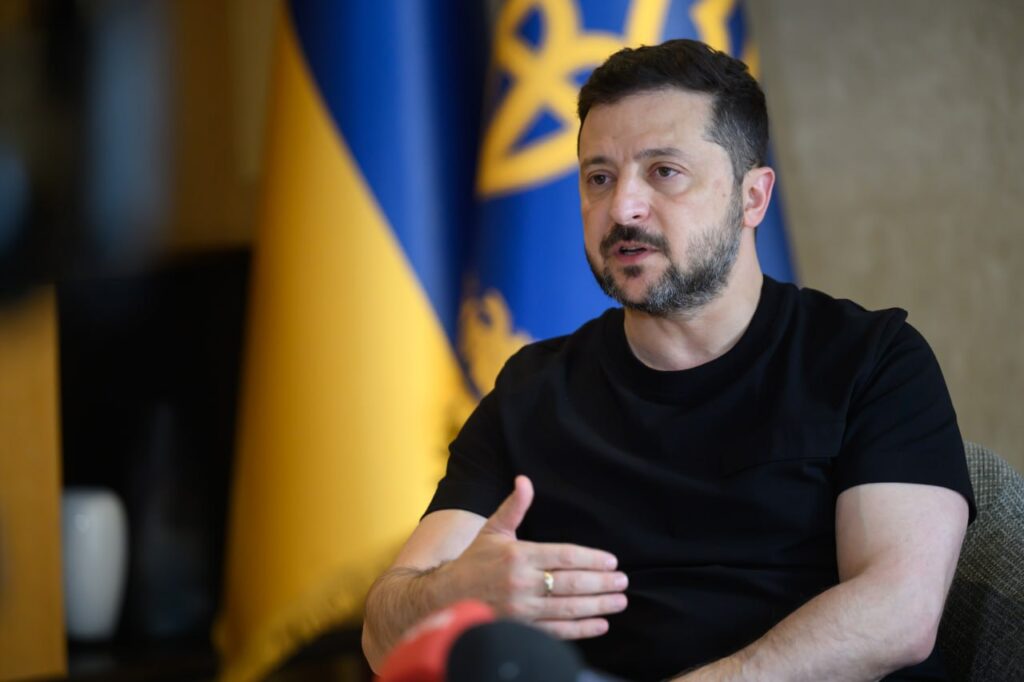
Ukraine will intensify strikes on Russian oil refineries in response to Moscow’s expanded campaign against Ukrainian infrastructure, Ukrainian President Volodymyr Zelenskyy said in an interview with Reuters on 3 October.
Russia has increased attacks on Kyiv in recent weeks, hitting energy and telecommunications infrastructure, roads, railways, and bridges across the Dnipro. Zelenskyy said Ukraine would respond by targeting the Russian energy infrastructure that helps finance the war.
Ukraine will intensify strikes on Russian oil refineries in response to Moscow’s expanded campaign against Ukrainian infrastructure, Ukrainian President Volodymyr Zelenskyy said in an interview with Reuters on 3 October.
Russia has increased attacks on Kyiv in recent weeks, hitting energy and telecommunications infrastructure, roads, railways, and bridges across the Dnipro. Zelenskyy said Ukraine would respond by targeting the Russian energy infrastructure that helps finance the war.
Russia expands attacks on Kyiv
Russian forces have broadened their strikes on infrastructure in and around Kyiv in recent weeks, with attacks increasingly affecting systems that support civilian life.
Zelenskyy said Ukrainian intelligence obtained documents indicating that Russian authorities had approved a broader policy for targeting infrastructure, including logistics, roads, schools, and hospitals. He said the goal is to put pressure on residents to leave Kyiv and other major cities.
Russia has also begun targeting bridges across the Dnipro, which connect the eastern and western parts of the capital.
Ukraine targets Russia’s war economy
Ukraine plans to keep striking Russian oil refineries because they generate revenue that supports Moscow’s war effort, Zelenskyy said.
The policy puts Kyiv at odds with US President Donald Trump, who has urged Ukraine not to attack Russian oil facilities, arguing that such strikes contribute to higher global diesel prices.
Zelenskyy said he sees no indication that Moscow is prepared for either peace talks or an agreement to halt attacks on energy infrastructure.
Ukraine’s “long-range sanctions” hit targets supporting Russia’s war machine in Samara and Bryansk oblasts, including positions of Iskander missile crews, President Volodymyr Zelenskyy said. He also reported new “results” in the Black Sea.
Ukraine is also preparing for intensified Russian attacks on its energy system over the winter. Ukrainian officials say Russia has stockpiled hundreds of ballistic missiles for a new campaign against electricity and other critical infrastructure.
Russia has also expanded its use of fast jet-powered Geran drones, launching dozens each day since the summer.
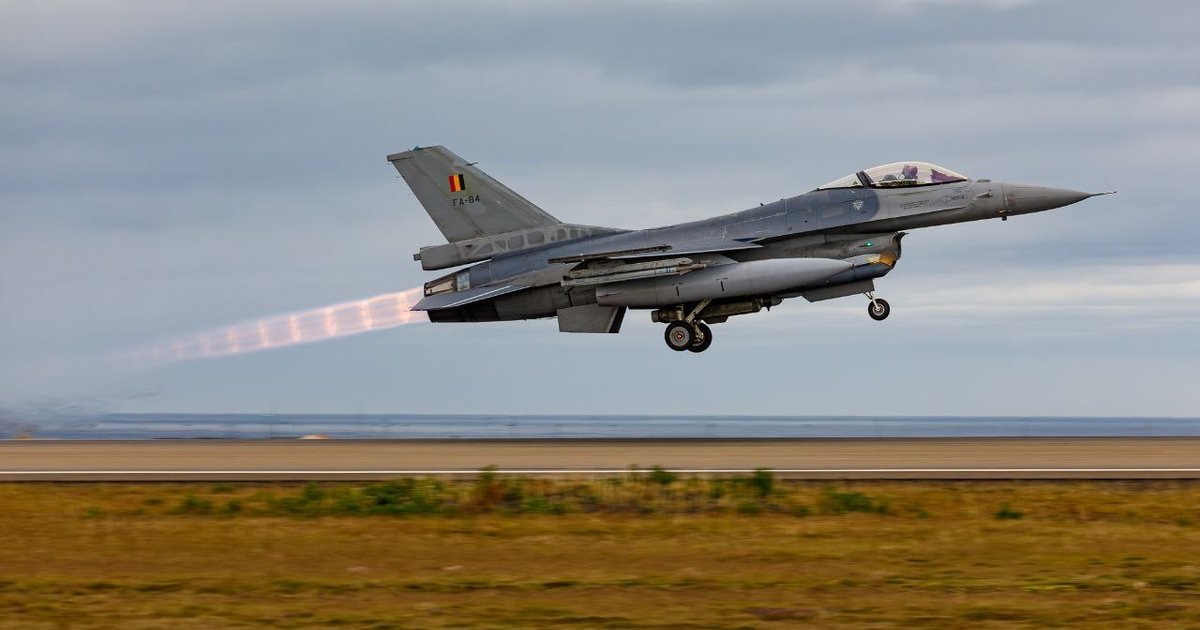
Ukrainian F-16s and MiG aircraft are intercepting around 60% of these drones, according to Zelenskyy, but ammunition for their 20 mm cannons is running low. Ukraine is increasing the use of electronic warfare and expects a first shipment of small, inexpensive air defense missiles designed to counter the jet-powered drones later in October.
Ukraine is developing five interceptor drone models to counter Russian Shaheds. Two have already undergone testing, with Zelenskyy putting their current interception rate at around 30%.
Ukraine expands its strike capabilities
Ukraine is also expanding its long-range strike capabilities. It has used its domestically produced FP-7 ballistic missile in combat for the first time, with a range of about 250 kilometers, while work continues on the longer-range FP-9.
At the same time, Kyiv is working with European partners to secure additional funding for its defense needs. Ukraine has found financing to order drones for early 2027 and is working to close a $27 billion gap in this year’s defense budget through its own resources, bilateral assistance, and financing linked to the EU’s €90 billion loan package.
Zelenskyy said Ukraine’s ability to sustain its defense and expand its strike capabilities will remain central as Russia prepares for another winter campaign.
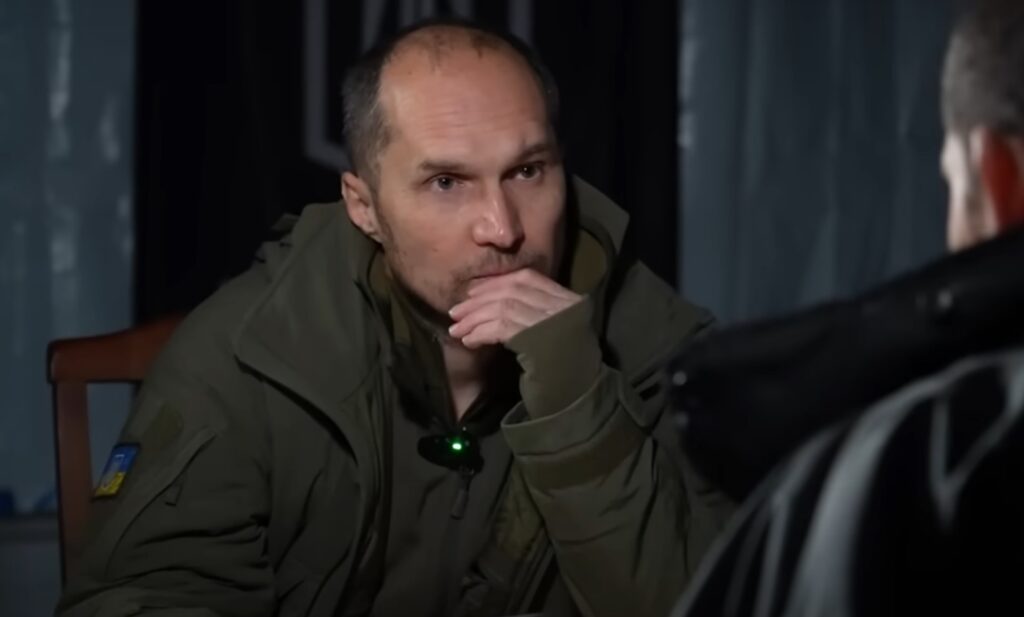
Ukraine's top general is held responsible for the entire army but cannot freely choose the people who run it, says drone company commander Yurii Butusov, according to Radio NV. Commander-in-Chief Mykhailo Drapatyi still lacks full power to form his own command team, with key appointments controlled by the president's wartime lead, which unbalances the force, he believes.
Drapatyi was named a commander-in-chief in July. Since then, he has moved fast where he can: cutting more than 30 ob
Ukraine's top general is held responsible for the entire army but cannot freely choose the people who run it, says drone company commander Yurii Butusov, according to Radio NV. Commander-in-Chief Mykhailo Drapatyi still lacks full power to form his own command team, with key appointments controlled by the president's wartime lead, which unbalances the force, he believes.
Drapatyi was named a commander-in-chief in July. Since then, he has moved fast where he can: cutting more than 30 obsolete, Soviet-era General Staff orders, pressing to give combat-tested sergeants real authority, and opening a review of the officer corps to weed out those without combat experience.
For the reform of the force, Butusov argues, he has to be able to build his own team, and that is just what he is not being allowed to do. Key appointments, from the Air Force to the Air Assault Forces, stay under the direct control of the Supreme Commander's headquarters.
The headquarters keeps control
"One person should be responsible for managing the General Staff. It is Mykhailo Drapatyi, if he is given the chance to really be the sole commander-in-chief," Butusov says.
Any leader, he continues, has the right to build a structure to his own standards. But when people are slotted into the chain of command without the commander's knowledge, it breeds dysfunction.
"If there are political appointments to the General Staff without his knowledge, to the commanders of the branches without his knowledge, there will be problems, opposition, internal conflicts," he says, the kind that have dogged the army for years.
One deputy stays 'acting'
The limits show in Drapatyi's own inner circle, Butusov says. One of his first moves was to name Serhii Sobko deputy chief of the General Staff, yet Sobko remains only "acting", the prefix never lifted.
Only the president, as supreme commander, can finalize such appointments, he notes, and the delay points to "artificial restraints." Drapatyi has been allowed to shape the Ground Forces, by his account, while other structures remain under the headquarters' control.
Blame outruns the power
The result, in Butusov's words, is a commander-in-chief who carries the responsibility without the authority: the public and leadership hold him answerable for an army he cannot fully command.
A few hidden transmitters may be sitting somewhere in Kyiv, switching on just long enough to steer Russian drones onto their targets. Presidential adviser Serhii Beskrestnov, known as Flash, says one to three concealed enemy repeaters may be operating in the capital, giving Russia a brief online channel to guide jet-powered Gerans onto precise targets.
He calls the devices MESH repeaters, compact modems that relay a short control signal to a Geran at the moment of attack, a channel Ukra
A few hidden transmitters may be sitting somewhere in Kyiv, switching on just long enough to steer Russian drones onto their targets. Presidential adviser Serhii Beskrestnov, known as Flash, says one to three concealed enemy repeaters may be operating in the capital, giving Russia a brief online channel to guide jet-powered Gerans onto precise targets.
He calls the devices MESH repeaters, compact modems that relay a short control signal to a Geran at the moment of attack, a channel Ukraine has been testing electronic warfare against for months. As long as they operate, he warns, sealing the city with jammers will not work.
Flash makes the case
"I now insist that the enemy's MESH radio repeaters are being switched on in Kyiv, providing a temporary, short-term control channel for jet-powered Gerans to adjust strikes," Flash says.
He keeps the number low: "Maybe 1 to 3. Such repeaters are hard to find, but we have to search." As evidence, he points to the guided strike on the headquarters of Ukraine's Security Service. A Russian agent, he said then, likely switched on a MESH relay within five kilometers of the target for the length of the attack.
The wreckage shows no other hidden link, he adds: "No LTE, no Rassvet, no alien quantum modems."
Jamming alone won't shield Kyiv
The stakes, in his telling, run past the bridges.
"As long as online control of the drones exists, not only the bridges but the air-defense assets on them will be under threat," Flash explains, noting that a Gepard anti-aircraft gun on a bridge crossed by tens of thousands a day cannot be hidden.
Without a stable channel right up to the impact point, he argues, a drone cannot strike a bridge pier or cable precisely. He leaves room for doubt, ending, "Let me be wrong about the repeaters." Yet in the whole war, he adds, he has "never once been wrong" in his technical reads of the enemy.
Ukraine has stopped paying veterans to go to the gym because of the economic crisis looming in the country, the war, Russian strikes, and the lack of reforms needed to receive extra funds from the EU. The Veteran Sports program, which provided veterans and combat participants with about $33 per quarter toward a nearly monthly gym membership, was suspended on 1 October after the state found no funds for it, the Ministry of Veterans Affairs said.
The suspension is a telling sign of Ukrain
Ukraine has stopped paying veterans to go to the gym because of the economic crisis looming in the country, the war, Russian strikes, and the lack of reforms needed to receive extra funds from the EU. The Veteran Sports program, which provided veterans and combat participants with about $33 per quarter toward a nearly monthly gym membership, was suspended on 1 October after the state found no funds for it, the Ministry of Veterans Affairs said.
The suspension is a telling sign of Ukraine's budget squeeze, and the ministry puts it plainly: defense comes first, so the money for everything else runs short. It fits a wider government decision to freeze non-essential spending and fund only the army, pensions, and public wages.
The program proved far more popular than planned, drawing more than 800,000 users and costing over double its budget.
Defense takes the money
"The main priority of state spending remains the country's defense. Under these conditions, the state budget's ability to finance other areas is limited," the ministry said.
Launched in 2026 with about $13 million for an expected 100,000 recipients per quarter, and roughly 300,000 applications over three, the program instead saw more than 800,000 uses. Payments passed $27 million, more than twice what was set aside.
The crisis runs deeper
The squeeze has two main drivers. Russia's intensifying strikes on Ukraine's energy and infrastructure are pushing the war's cost higher and battering the economy.
And billions in Western money sit on hold: Kyiv has struggled to complete the reforms the EU set out before releasing roughly $20 billion in aid, and the prime minister has admitted that part of it is late because Ukraine missed commitments to its partners.
The ministry plans a 2027 restart
Ukraine intends to bring the program back in 2027, this time for good, said Deputy Veterans Minister Ruslan Prykhodko.
"We have to account for real demand, fix the shortcomings we saw this year, and make the use of funds more targeted," he said.
In next year's budget, Ukraine would provide significantly more funds, he added. In the meantime, the ministry says it is talking to the sports community and businesses about covering the gap for veterans, with concrete proposals to come.
Ukrainian forces have fired a Fire Point FP-7 ballistic missile in combat for the first time
The launch heralds a new phase of the wider war: the ballistic phase
Soon both Ukraine and Russia will be able to bombard each other with hard-to-intercept missiles
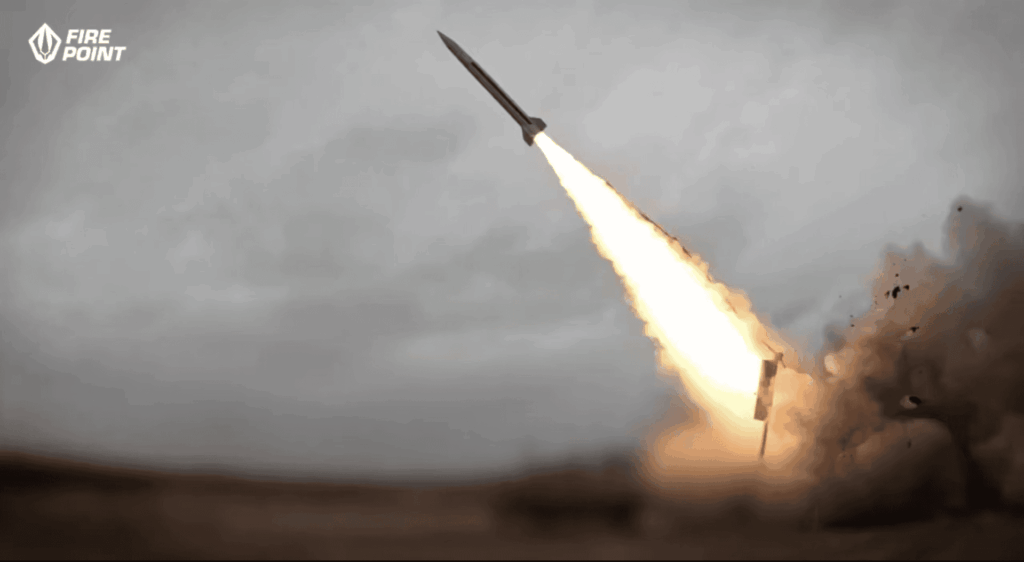
Ukraine has fired its new Fire Point FP-7 ballistic missile in anger for the first time, Ukrainian President Volodymyr Zelensky announced on Thursday, 1 October.
Kyiv hasn't said what the missile targeted or how much dam
Ukrainian forces have fired a Fire Point FP-7 ballistic missile in combat for the first time
The launch heralds a new phase of the wider war: the ballistic phase
Soon both Ukraine and Russia will be able to bombard each other with hard-to-intercept missiles
Ukraine has fired its new Fire Point FP-7 ballistic missile in anger for the first time, Ukrainian President Volodymyr Zelensky announced on Thursday, 1 October.
Kyiv hasn't said what the missile targeted or how much damage it caused. The Wall Street Journal, citing an unnamed source, reported that it struck a target in Russian-occupied Ukraine. Zelensky was ecstatic on social media. "Thank you for the result," the Ukrainian president wrote. "Next up: production. Glory to Ukraine!"
The FP-7 can hit back at Russia, but it can't stop the Iskander ballistic missiles Russia fires at Ukrainian cities. Its twin is meant to. Fire Point is building an interceptor version, the FP-7.X, as the core of Freyja, its bid for a cheaper alternative to the American Patriot, and the company aims for a first ballistic missile interception by mid-2027.
Kyiv drone- and missile-maker Fire Point, most famous for its FP-1 and FP-2 one-way attack drones and FP-5 Flamingo cruise missiles, has been hard at work on ballistic missiles for at least a year. Ballistic missiles can cost millions of dollars per round, making them much more expensive than a $50,000 drone or $500,000 cruise missile.
But the extra expense buys a lot more destructive potential. An FP-1 packs a 60-kg warhead; an FP-7's warhead weighs about 200 kg. While an FP-1 might motor as far as 1,000 km, it's slow and fairly easy to shoot down. An FP-7 possesses less range—up to 250 km under the best conditions—but it streaks through the atmosphere at several times the speed of sound, making it extremely difficult to intercept.
Ukrainian tactical ballistic missile. FP-7. First combat use. Thank you for the result. Next up: production. Glory to Ukraine! pic.twitter.com/IxdjVg51c1
— Volodymyr Zelenskyy / Володимир Зеленський (@ZelenskyyUa) October 1, 2026
The only Russian air defense systems that stand any chance of swatting down an incoming FP-7 are also among the most in-demand in the Russian inventory and thus the most over-stretched: the S-400 surface-to-air missile batteries.
Ukrainians know better than anyone the kind of damage and terror ballistic bombardment can inflict. Since effectively running out of Patriot surface-to-air missiles earlier this year, Ukraine has been unable to defend itself against weekly Russian bombardment that now usually includes several Iskander ballistic missiles.
The Russian bombardment threatens to disrupt commerce, throttle electricity generation, and grind down Ukrainian morale at a critical juncture in Russia's wider war on Ukraine. Ukrainian troops are holding their own along the 1,200-km front line, but behind the front line everyday Ukrainians are suffering under missile and drone impacts.
That suffering will only get worse as winter closes in, temperatures drop, and the Russians resume intensive attacks on the electrical grid, potentially depriving millions of people of household heating. Ukrainian batteries firing FP-7s can't directly prevent Russian attacks. But they can retaliate for the attacks.
Expect the ballistic tit for tat to intensify. It may not be the first Ukrainian ballistic missile fired in anger: in June, Russia said it shot down a Ukrainian ballistic missile over Moscow, and Kyiv never said what it was. But the FP-7 is the first Kyiv has confirmed using in combat, and it has the range and payload to inflict serious damage on targets inside Russia. But an even more powerful Ukrainian missile, the Fire Point FP-9, is coming soon. It reportedly ranges 850 km with an 800-kg warhead.
FP-9. Fire Point art.
The ballistic phase
The FP-7 can smash Russian depots, air bases, and factories in oblasts bordering Ukraine. The FP-9 could wreak havoc as far as Moscow. The only major constraint on the Ukrainian bombardment will be Fire Point's production capacity, and Kyiv's ability to finance that production.
The Ukrainians will be incentivized to produce as many FP-7s—and, later, FP-9s—as possible. The same factories that produce surface-to-surface FP-7s will also churn out a surface-to-air variant, the FP-7.X.
That missile, which is overall similar to the standard FP-7 but includes a sophisticated seeker head, is the main munition for Ukraine's new mostly homemade air defense system being developed by Fire Point and various foreign partners under the auspices of the European missile defense program Freyja.
Explore further
Ukraine has five ways to stop Russia’s Iskanders. Only one arrives before the strikes on the grid begin
If the FP-7.X works as advertised and Fire Point can scale production, it could bolster Ukraine's defenses against Russian ballistic missile strikes while the standard FP-7 and its bigger cousin the FP-9 retaliate for Russian ballistic missile strikes.
A new phase of the wider war is about to begin—the ballistic phase, where both sides can pummel the other with hard-to-intercept missiles.
The side that makes the most and best missiles, for offense and defense, will prevail in the coming ballistic fight.
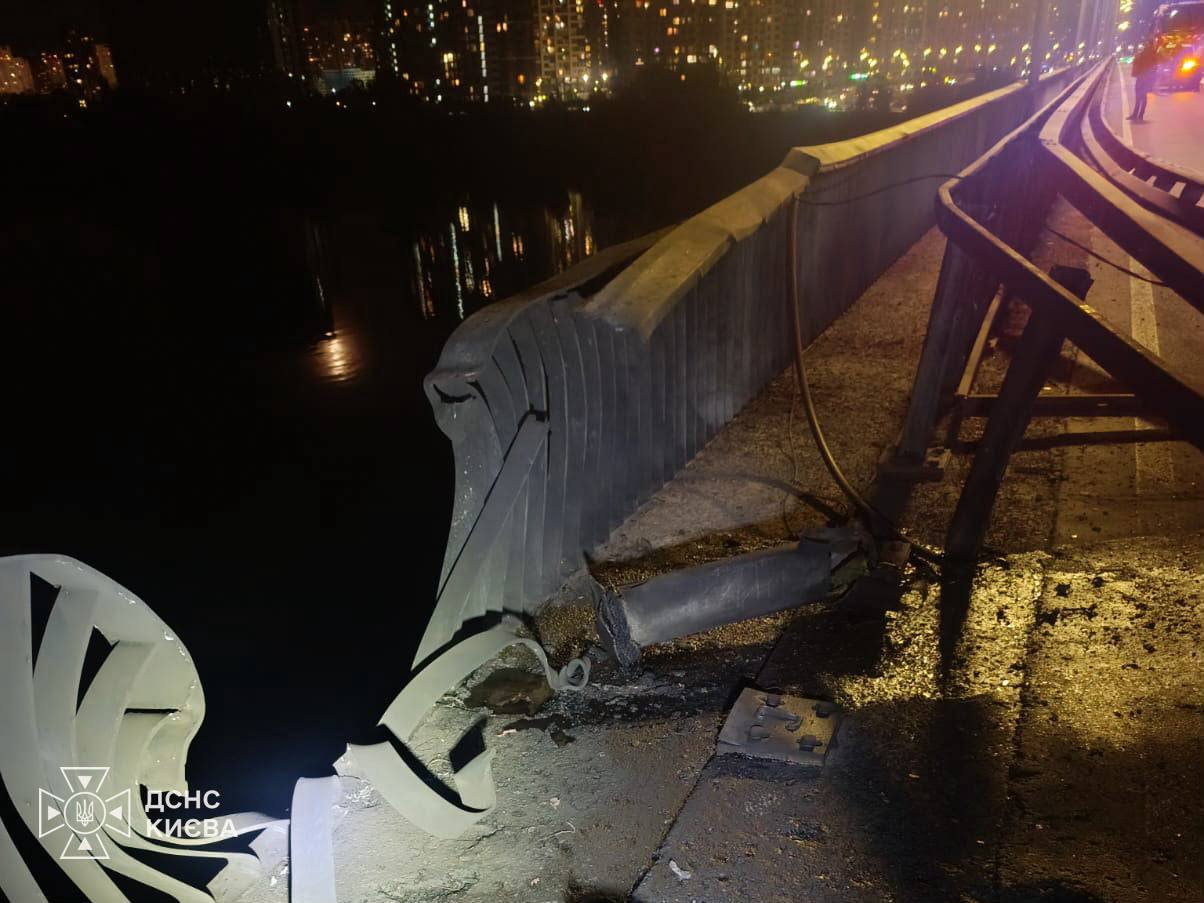
Russia struck Kyiv’s Northern Bridge with a drone on 3 October, damaging the roadway and overhead trolleybus lines, Kyiv Mayor Vitali Klitschko said. Two people were injured, one of whom was hospitalized.
The strike came one day after repeated Russian drone attacks on the Southern Bridge, which damaged its support structures, road surface and subway infrastructure and forced its closure. The attacks caused severe traffic disruption across Kyiv, with major roads gridlocked and some peopl
Russia struck Kyiv’s Northern Bridge with a drone on 3 October, damaging the roadway and overhead trolleybus lines, Kyiv Mayor Vitali Klitschko said. Two people were injured, one of whom was hospitalized.
The strike came one day after repeated Russian drone attacks on the Southern Bridge, which damaged its support structures, road surface and subway infrastructure and forced its closure. The attacks caused severe traffic disruption across Kyiv, with major roads gridlocked and some people reportedly walking across bridges.
Another key bridge targeted
The Northern Bridge connects Kyiv’s Obolon and Troieshchyna districts and is one of the capital’s major routes across the Dnipro.
Damage to its roadway and trolleybus network adds another disruption to Kyiv’s transport system after the attacks on the Southern Bridge. The Northern and Southern bridges are among the capital’s key crossings between its eastern and western banks.
Explore further
Russia repeatedly attacks bridge connecting Kyiv’s two sides across the Dnipro river, disrupting transport across the capital
Kyiv changes bridge restrictions
Kyiv authorities announced temporary changes to bridge traffic rules following the attacks.
During air raids, traffic on the Southern Bridge will be restricted for 15 minutes in the direction from the right bank to the left bank, while traffic in the opposite direction will remain open. On the Podilskyi-Voskresenskyi Bridge, traffic in both directions will stop for 15 minutes when an air-raid alert is announced or lifted.
The Northern, Darnytskyi, Paton and Metro bridges will operate without restrictions during air raids, according to the Kyiv City Military Administration.
Russia’s repeated strikes on Kyiv’s Southern Bridge are now severely disrupting traffic across the capital.
Major roads are gridlocked, with some people reportedly walking across bridges as traffic comes to a standstill. Photos from Suspilne show the resulting congestion on… pic.twitter.com/7SyYG0WOCO
The bridge strikes come amid an intensifying Russian aerial campaign against Kyiv. Russian drones and missiles have increasingly targeted the capital in recent weeks, damaging residential buildings, schools and infrastructure and disrupting daily life.
The attacks on the bridges add a different dimension to that campaign, directly disrupting movement between Kyiv’s two banks. With multiple crossings affected within days, the strikes have already translated into major traffic disruptions for the city’s residents.
Three Russian missiles and two drones crossed Moldova’s airspace and exploded on Saturday morning, Moldovan Defense Minister Anatolie Nosatîi told TVR Moldova.
Moldova has seen a dramatic increase in Russian drone incursions in recent weeks as Russia ramps up near-constant drone attacks across Ukraine.
The five incidents occurred between 7:45 and 8:00 a.m., with explosions and debris reported across several districts. Moldova’s Foreign Ministry condemned the airspace violation.
Ex
Three Russian missiles and two drones crossed Moldova’s airspace and exploded on Saturday morning, Moldovan Defense Minister Anatolie Nosatîi told TVR Moldova.
Moldova has seen a dramatic increase in Russian drone incursions in recent weeks as Russia ramps up near-constant drone attacks across Ukraine.
The five incidents occurred between 7:45 and 8:00 a.m., with explosions and debris reported across several districts. Moldova’s Foreign Ministry condemned the airspace violation.
Explosions and debris reported across Moldova
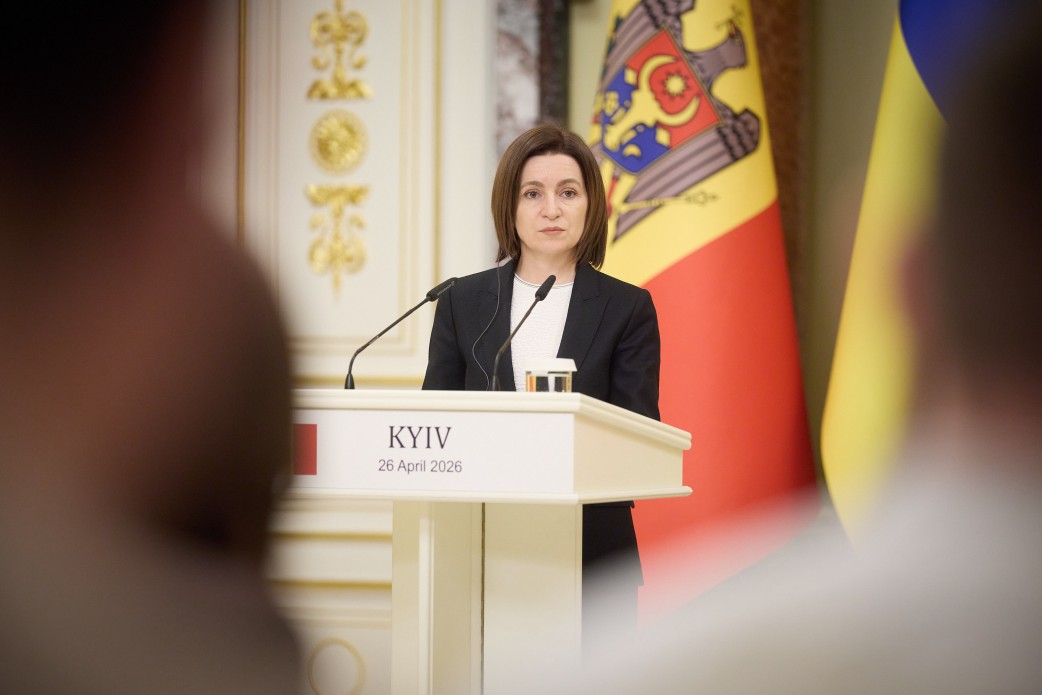
The Moldovan authorities initially said that five drones had crossed the country’s airspace before Nosatîi clarified that the five incidents involved three missiles and two drones. President Maia Sandu said the missiles were Banderol-type missiles, according to NewsMaker.
Nosatîi said the incidents had been documented and that evidence recovered at the sites could be presented to Russia’s ambassador.
Moldova’s Foreign Ministry said Russia’s war against Ukraine continues to create concrete threats for the country and condemned the violation of its airspace.
Explore further
Moldova counted 39 Russian drone incursions in eight months, against 17 in all of 2025
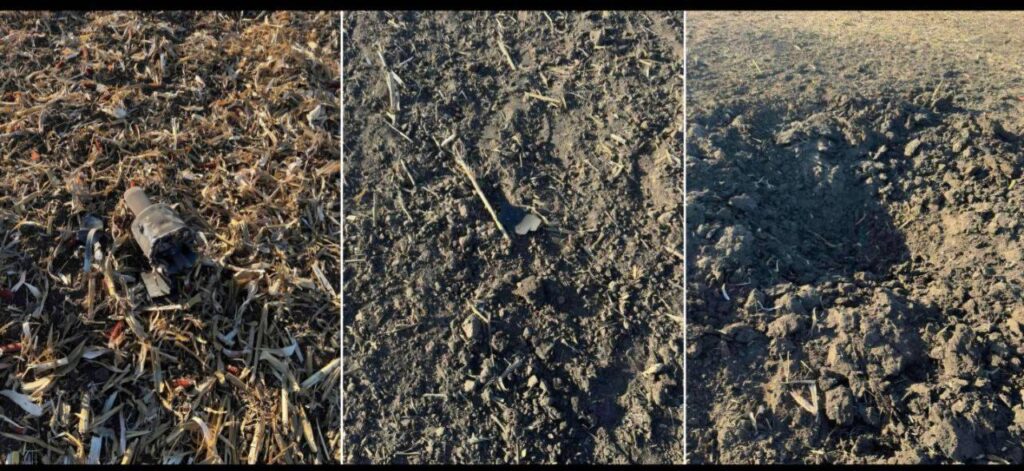
According to NewsMaker, fragments were found outside Căușeni, near Dubovca in Hîncești District, between Delacău and Puhăceni in Anenii Noi District, and near Crocmaz in Ștefan Vodă District.
Near Crocmaz, an explosion in a vineyard field caused a vegetation fire and damaged windows at a nearby agricultural facility. Fragments were also found near Constantinovca in Căușeni District, where an explosion caused another vegetation fire.
Map of Russian attacks on Moldova, 3 October 2026. Map from social media
Moldova’s Defense Ministry later reported a sixth unauthorized flight over the country that did not result in an explosion. The object entered Moldovan airspace at 8:04 a.m. from the direction of Udobne, Ukraine, and exited a minute later toward Biliaivka, Ukraine.
Fragments of Russian drones or missiles that struck Moldovan territory on 3 October 2026. Photo: Moldovan Police via NewsmakerFragments of Russian drones or missiles that struck Moldovan territory on 3 October 2026. Photo: Moldovan Police via Newsmaker
Moldova seeks stronger air defenses
Asked why the weapons were not intercepted, Nosatîi said Moldova was taking measures to strengthen its air-defense capabilities and acquire interception systems.
He said the drones are sophisticated and fast, adding that Moldova, like Ukraine, is learning how to defend against them. He also said Moldova needs additional resources to protect its 1,212-kilometer border with Ukraine and monitor its airspace.
Explore further
Moldova is investing in air defense against the Russian drones crossing from Ukraine—Romania shoots down the ones that reach it
Moldovan authorities urged residents not to approach or touch any fragments they find, but to mark the location and notify police or the military so the area can be secured and the debris neutralized.
Ukraine has lost another Mikoyan MiG-29 fighter as well as its pilot
The Ukrainian MiG fleet is slowly dwindling owing to combat losses and wear and tear
The Ukrainian air force is acquiring new Western types to replace the MiGs and other ex-Soviet jets
Ukraine has lost another Mikoyan MiG-29 fighter and its pilot. The Thursday shoot-down extends the steady attrition of the Ukrainian air force MiG fleet, potentially drawing down the fleet to its pre-war strength.
That means
Ukraine has lost another Mikoyan MiG-29 fighter as well as its pilot
The Ukrainian MiG fleet is slowly dwindling owing to combat losses and wear and tear
The Ukrainian air force is acquiring new Western types to replace the MiGs and other ex-Soviet jets
Ukraine has lost another Mikoyan MiG-29 fighter and its pilot. The Thursday shoot-down extends the steady attrition of the Ukrainian air force MiG fleet, potentially drawing down the fleet to its pre-war strength.
That means Ukraine may have lost as many of the twin-engine, supersonic MiG-29s as it has received from its allies or restored from surplus stocks since February 2022.
It's an ominous milestone. The Soviet-vintage MiG-29 is no longer the Ukrainian air force's most important fighter. That honorific belongs to the air force's ex-European Lockheed Martin F-16s.
But the MiG-29 is still the air force's second most important fighter—and will remain so through 2027 as Ukraine awaits its first ex-Swedish Saab Gripens, due early next year, and French-made Dassault Rafales, due from 2028. Ukraine sorties MiG-29s for ground attack missions targeting Russian troop concentrations, strikes on Russian air defense systems, and air defense sorties over Ukrainian cities and ports.
Today, October 1, 2026, another Ukrainian defender fell in combat.
Flying a MiG-29 fighter jet, he carried out missile and bomb strikes against Russian occupiers along one of the front-line directions.
The air force announced the loss of the MiG-29 and its pilot, Capt. Marat Mambetov, shortly after it occurred on Thursday. Mambetov, 25, was a flight commander in the 40th Tactical Aviation Brigade, known as the "Ghost of Kyiv" brigade. "Flying a MiG-29 fighter jet, [Mambetov] carried out missile and bomb strikes against Russian occupiers along one of the front-line directions," the air force stated. "During the mission, his aircraft was hit by an enemy missile. The pilot ejected, but tragically did not survive."
It's the 37th confirmed combat loss of a Ukrainian MiG-29 since Russia widened its war on Ukraine in February 2022, according to a tally by the Oryx open-source intelligence collective. Oryx has also registered damage to an additional three Ukrainian MiG-29s.
Thirty-seven write-offs, plus the likely grounding of several previously flyable MiG-29s owing to intensive wear and tear since 2022, may have reduced the Ukrainian air force's MiG-29 fleet to around three dozen active jets.
Ukrainian Air Force MiG 29 of the 204th tactical aviation brigade making a low pass. Note the absence of 4 R-73 air to air missiles. And only a pair of R-27 missiles. pic.twitter.com/I07qKxO3Yw
— capt. Wild Bill Kelso (@_wild_billkelso) May 26, 2026
Fighter subtraction
The math is simple. The air force probably had between 30 and 35 MiG-29s in service when Russia attacked in February 2022. As losses cut into the fleet, Poland donated 14 surplus MiGs, Slovakia donated 10, and Azerbaijan reportedly donated three. Meanwhile, Ukrainian engineers tapped a global pipeline of spare parts to reactivate an estimated 20 grounded MiG-29s moldering in hangars at various Ukrainian airfields.
That's as many as 82 MiGs in and, as of Thursday, 37 out owing to Russian action—plus additional jets grounded due to airframe fatigue. The resulting active fleet should number around three dozen planes, around as many as Ukraine had on the eve of the wider war.
There aren't many more old MiGs that Ukraine could obtain to bolster the fleet. Poland still has as many as nine very tired airframes, but Kyiv and Warsaw have consistently failed to negotiate a transfer. There may yet be a few ex-Soviet MiG-29s, grounded for years or even decades, that Ukrainian engineers can restore to flightworthy status. Other than that, options are scarce.
Explore further
Ukraine’s Swedish radar planes have flown inside Russian missile range for six months. None has been shot down.
The three dozen MiGs still in the inventory may have to last a little while alongside the few survivors of Ukraine's other Soviet-vintage warplanes, including Sukhoi Su-27s, Sukhoi Su-24s, and Sukhoi Su-25s.
Older Western types—the 80 or so F-16s European allies have pledged, about half delivered, as well as potentially a dozen or so ex-French Dassault Mirage 2000s—are steadily replacing the ex-Soviet jets. (So far, Ukraine has lost five F-16s and one Mirage.) Next year, the transformation of the Ukrainian air force from a largely Soviet-equipped force to a largely Western-equipped force will accelerate when the first of 32 Gripens arrive. Sixteen Rafales are to follow from 2028.
Barring catastrophic combat losses among Western types and assuming Ukraine can maintain and arm these new warplanes, by the end of 2027, the air force may not need its remaining MiGs and Sukhois, which by then could be very tired.
Russian missiles are steadily reducing the MiG and Sukhoi fleets, effectively forcing Ukraine to switch to new types.
Exclusives
Ukraine is now sending its tanks into battle with drone escorts: they can drive into a Russian kill zone and come back alive. The 475th Assault Regiment, short of infantry, was clearing Russian infiltrators out of Vilkhuvatka, a Kharkiv Oblast village 9 km from the Russian border, and its hedgehog tanks took repeated hits on the way to point-blank range.
Military
Russia repeatedly attacks bridge connecting Kyiv's two sides across the Dnipro river, disrupting transport acr
Ukraine helped 41 citizens escape from Russian-occupied territories into Ukrainian-controlled territory in August and September, including four children and five teenagers, Ukrainian Ombudsman Dmytro Lubinets said.
For many, the crossing marked the end of months or years under Russian occupation and the beginning of their return to life in government-controlled Ukraine.
They returned to Ukraine via Belarus through the Mokrany-Domanove crossing in Ukraine's Volyn Oblast.
From occup
Ukraine helped 41 citizens escape from Russian-occupied territories into Ukrainian-controlled territory in August and September, including four children and five teenagers, Ukrainian Ombudsman Dmytro Lubinets said.
For many, the crossing marked the end of months or years under Russian occupation and the beginning of their return to life in government-controlled Ukraine.
They returned to Ukraine via Belarus through the Mokrany-Domanove crossing in Ukraine's Volyn Oblast.
From occupation to safety
Lubinets described several cases among those who returned.
One family was able to leave after the father was released from Russian captivity. Their older son remains in captivity, while the woman and her younger son had been under the control of occupation authorities and, according to their account, were previously taken to a detention facility under the pretext of providing medical care and subjected to forced treatment.
A young medical worker was evacuated shortly before she could have been mobilized into Russia’s armed formations, according to Lubinets.
Another returned man had been detained several times in occupied territory and held in basements. His Ukrainian passport had also been confiscated.
Help continues after the crossing
For those returning, reaching Ukrainian-controlled territory is only the first step. The Ombudsman’s Office and partner organizations provide assistance with restoring documents, financial support, temporary accommodation, psychological and social services, and onward travel.
The office said that, in August and September, its joint project with Caritas Ukraine provided assistance to 1,140 people, including people evacuated from occupied territory.
Ukraine’s efforts to facilitate returns are taking place against a broader problem of displacement from occupied territory. A 2026 UN report documented forcible transfers and deportations from areas occupied by Russia, as well as barriers that make it difficult for displaced Ukrainians to return.
The Mokrany-Domanove crossing is one of the routes through which Ukrainians can return to government-controlled territory, making it a key part of Ukraine’s effort to bring civilians home from occupation.
Others are still waiting to leave
Lubinets said his office continues receiving requests from people seeking to leave occupied territory and works with Ukrainian, international and third-country partners to find routes out.
Lubinets noted that the situation remains particularly difficult in Oleshky and surrounding settlements in Kherson Oblast, where Ukrainian authorities say elderly people, people with disabilities, sick residents and families remain without reliable access to food, water, medicine, healthcare and communications. Recent reporting has put the number of civilians still in Oleshky at around 2,000, including about 50 children.
Explore further
Thousands are starving in occupied Oleshky. People have no food, no way out, and Russian forces bomb incoming aid
Russia has ordered Hungarian diplomatic staff to leave the country weeks after Hungary expelled 10 Russian diplomats over activities Budapest said were incompatible with their diplomatic status, Euronews reported.
The tit-for-tat expulsions mark a significant change in relations between Budapest and Moscow following Viktor Orbán’s 16-year rule as Hungarian Prime Minister.
Russia’s Foreign Ministry summoned Hungary’s chargé d’affaires Gábor Gergics on 1 October and informed him that
Russia has ordered Hungarian diplomatic staff to leave the country weeks after Hungary expelled 10 Russian diplomats over activities Budapest said were incompatible with their diplomatic status, Euronews reported.
The tit-for-tat expulsions mark a significant change in relations between Budapest and Moscow following Viktor Orbán’s 16-year rule as Hungarian Prime Minister.
Russia’s Foreign Ministry summoned Hungary’s chargé d’affaires Gábor Gergics on 1 October and informed him that staff at the Hungarian embassy in Moscow and consulates in St Petersburg and Kazan would have two weeks to leave. Moscow described Hungary’s September expulsion as “baseless and openly unfriendly,” according to Euronews.
Hungary stands by expulsions
Hungary expelled 10 Russian diplomats on 8 September, citing activities it said were unacceptable for diplomats under the Vienna Convention. The government did not publicly provide details of the alleged activities.
Budapest said it was not seeking an escalation but would maintain its decision, while also saying its diplomatic missions in Russia would continue operating.
The expulsions come as Hungary’s foreign policy shifts under Prime Minister Péter Magyar, who took office after Viktor Orbán’s Fidesz lost the April election. Magyar’s government has moved to strengthen Hungary’s alignment with the EU and NATO while maintaining what it describes as pragmatic relations with Moscow.
A break with the Orbán era
Under Orbán, Hungary maintained unusually close relations with Russia compared with other EU members. Budapest continued cooperation with Moscow after Russia’s full-scale invasion of Ukraine, and Orbán repeatedly opposed or delayed EU measures related to Ukraine.
The new government has taken a different position. In September, Hungary expelled the 10 Russian diplomats, and its new foreign policy doctrine identified Russia as a threat to Hungary’s security. Earlier, the government’s guidance for its UN delegation condemned Russia’s war against Ukraine and affirmed Ukraine’s sovereignty and right to self-defense, according to Euronews.
The shift has not amounted to a complete break with Moscow. Magyar has said Hungary will pursue pragmatic relations with Russia, while Budapest continues to seek concessions from Kyiv over the rights of Hungary’s minority in Ukraine.
Kazakhstan detained Ukrainian citizen Liubov Rozhanska in Astana on 1 October at Russia’s request, after she traveled there to receive her grandson, a Ukrainian boy whose father has sought his return to Ukraine, Deutsche Welle (DW) reported.
Russia accuses Rozhanska of attempting to abduct the child and is seeking her detention through the Collective Security Treaty Organization (CSTO), a Russia-led security alliance that includes Kazakhstan.
She could now face deportation to Russia
Kazakhstan detained Ukrainian citizen Liubov Rozhanska in Astana on 1 October at Russia’s request, after she traveled there to receive her grandson, a Ukrainian boy whose father has sought his return to Ukraine, Deutsche Welle (DW) reported.
Russia accuses Rozhanska of attempting to abduct the child and is seeking her detention through the Collective Security Treaty Organization (CSTO), a Russia-led security alliance that includes Kazakhstan.
She could now face deportation to Russia, despite never having entered the country, according to her lawyers cited by DW.
A Ukrainian child Russia wants to keep
The case involves a boy born in Odesa in 2018. His mother took him from Ukraine to Russia’s Kaliningrad Oblast in 2021, before Russia’s full-scale invasion. In 2022, she and the child obtained Russian citizenship.
The boy’s Ukrainian father challenged the child’s residence in court. In March 2025, Ukraine’s Supreme Court ruled that the boy should live in Odesa with his father.
According to Rozhanska’s lawyer, Oleksii Pryanishnikov, the boy’s stepfather and step-grandfather contacted her in July 2026 about arranging the child’s transfer to his Ukrainian father and grandmother.
By August, a Kaliningrad court had issued a warrant to detain Rozhanska in connection with an alleged attempt to abduct the child. Russian investigators were also preparing documents to seek her extradition through the CSTO, according to documents cited by DW.
Rozhanska then traveled to Astana and was detained at the airport after arriving from Istanbul.
Kazakh lawyer Riza Nurbaeva told DW that Rozhanska did not know about the Russian criminal case and had never entered Russia. She said the Ukrainian was detained under the Kaliningrad court’s warrant.
Lawyer alleges political motive
Pryanishnikov described the detention as a “planned operation” by Russia’s Federal Security Service and alleged that it has a political dimension connected to Russia’s war against Ukraine.
His allegation comes in the context of Russia’s documented transfer and deportation of Ukrainian children to Russia and efforts to assimilate them into Russian society, grant them Russian citizenship and sever their ties to Ukraine.
In this case, Russia is using international legal mechanisms to potentially prevent a Ukrainian child from returning to his father in Ukraine.
Rozhanska is currently being held in a Kazakh pretrial detention center. A court hearing is expected within three days, according to DW.
Russia is attempting to build a new "shadow fleet" to "circumvent sanctions and sustain revenues from its gas exports," the UK Foreign Office said on 1 October. Britain sanctioned eight vessels linked to the trade, including some that entered service this year, as part of a 31-designation package.
The sanctions come as the EU prepares to end imports of Russian liquefied natural gas (LNG), which arrives by tanker, from the beginning of 2027. London presented the package as part of a push
Russia is attempting to build a new "shadow fleet" to "circumvent sanctions and sustain revenues from its gas exports," the UK Foreign Office said on 1 October. Britain sanctioned eight vessels linked to the trade, including some that entered service this year, as part of a 31-designation package.
The sanctions come as the EU prepares to end imports of Russian liquefied natural gas (LNG), which arrives by tanker, from the beginning of 2027. London presented the package as part of a push to increase economic pressure on Moscow before winter, noting that Russia launched more than 3,100 jet-powered drones at Ukraine in September, beating the wartime record it had set in August.
The UK sanctions target three shadow fleet vessels, two vessels providing them with bunkering services, and three Russian-owned ice-class vessels, according to the UK Foreign Office.
Russian-built ice-class tankers
The sanctioned vessels include the Russian-flagged Aleksey Kosygin and Konstantin Posiet, which are among a new generation of LNG tankers, The Telegraph reported. The vessels were assembled in Russia and are designed to break through ice up to two meters thick. The Aleksey Kosygin was delivered in December 2025 before entering service this year, according to the paper.
The other sanctioned vessels are the Pyotr Stolypin, Portovyy, Chaivo, Avacha, Bebek-E, and Galle Energy, according to the UK Sanctions Notice. The Telegraph reported that the Pyotr Stolypin entered service this year, while Bebek-E was built in 1979 and Galle Energy is a 75-foot crew transport vessel flagged in Sri Lanka.
From oil tankers to gas carriers
Moscow has also long been accused of moving its oil past Western restrictions using what The Telegraph describes as “a secretive fleet of ageing tankers often with obscure ownership and insurance.” The EU said it had placed more than 670 vessels on its shadow fleet sanctions list as of 23 July, while the UK government said it had targeted nearly 600 tankers.
In June, Britain sanctioned four LNG carriers—the Orion, Merkuriy, Kosmos, and Luch—which are listed in the UK Sanctions List with shipping and trade sanctions. gCaptain reported that the vessels had been purchased through intermediaries, reflagged, and renamed, and were sailing toward China after LNG was transferred to them ship-to-ship near Murmansk.
Later in June, Ukraine’s Foreign Intelligence Service said Russia was assembling a fleet of aging gas tankers ahead of the EU restrictions. The service said seven of about 23 vessels had been bought through front companies between February 2024 and May 2025, and that their use “allows Russia to partially circumvent restrictions.”
Sanctions spare LNG bound for Japan and South Korea
The package also targets Novatek Gas and Power Asia, a Singapore subsidiary of Russia's largest LNG producer, Novatek. Vladyslav Vlasiuk, the Ukrainian president’s commissioner for sanctions policy, described it as Novatek’s Singapore trading arm in a post on X.
The new package leaves a limited route for some Russian LNG to continue reaching Japan and South Korea. The UK said existing licensing arrangements have been extended to cover LNG, on a targeted and time-limited basis, to support the two countries’ energy security.
Vlasiuk said Russia’s Arctic gas is “one of the Kremlin’s key future revenue streams,” and that “it must stay frozen,” according to his post on X. He also thanked the UK for taking Ukraine’s proposals into account.
Torture and child indoctrination also targeted
The 1 October package contained 31 designations in total. It also targeted eight people involved in the arbitrary detention, torture, and ill-treatment of Ukrainian civilians and seven people over the indoctrination and militarization of Ukrainian children, according to the UK government. The government said international sanctions have already deprived Russia of nearly $500bn in funding for its war effort.
Russian forces have repeatedly struck Kyiv’s Southern Bridge with drones since 1 October, disrupting one of the capital’s main routes between the left and right banks of the Dnipro.
The strikes are part of a broader intensification of Russian drone attacks on the capital. In recent weeks, Russia has begun launching daily attacks involving jet-powered Geran drones, increasingly disrupting everyday life in Kyiv.
The Southern Bridge is an important road and rail crossing over the Dnipro
Russian forces have repeatedly struck Kyiv’s Southern Bridge with drones since 1 October, disrupting one of the capital’s main routes between the left and right banks of the Dnipro.
The strikes are part of a broader intensification of Russian drone attacks on the capital. In recent weeks, Russia has begun launching daily attacks involving jet-powered Geran drones, increasingly disrupting everyday life in Kyiv.
The Southern Bridge is an important road and rail crossing over the Dnipro. It carries road traffic between Kyiv's left and right banks and also forms part of the city's metro network.
The bridge was fully closed to traffic following the latest attacks, while restrictions were also introduced on the Metro and Paton bridges, according to Suspilne. Public transport has been diverted to alternative routes, while the disruptions have caused major traffic congestion across Kyiv.
Update 17:50: Kyiv Mayor Vitali Klitschko said Russian forces have struck the Southern Bridge again on the evening of 2 October. The bridge remains closed to road traffic and metro services following several previous attacks. Emergency services are heading to the site.
Bridge targeted repeatedly
The Southern Bridge came under attack multiple times on 1 October and was targeted again during the overnight attack into 2 October.
Ukrainian President Volodymyr Zelenskyy said Russian forces struck the bridge several times with drones during the night. He said the attacks were part of a larger Russian barrage involving more than 100 attack drones, nearly 50 of them jet-powered Gerans.
The bridge has not been destroyed, but the repeated strikes have forced authorities to limit its use and reorganize traffic across the Dnipro.
Ukrainian analyst Andrii Kovalenko said the Southern Bridge is difficult to destroy with the weapons Russia is using. However, he said such strikes can damage the bridge enough to disrupt its normal operation, while the resulting disruption can also be used to spread panic.
Russia’s repeated strikes on Kyiv’s Southern Bridge are now severely disrupting traffic across the capital.
Major roads are gridlocked, with some people reportedly walking across bridges as traffic comes to a standstill. Photos from Suspilne show the resulting congestion on… pic.twitter.com/7SyYG0WOCO
Zelenskyy: Russia is targeting bridges and critical infrastructure
Zelenskyy said Russia's intensified attacks are part of a broader effort to disrupt life in Ukrainian cities and damage infrastructure beyond individual military targets.
Citing Ukrainian intelligence and people he said are close to Russian President Vladimir Putin, Zelenskyy claimed Putin said in early September: “Now, there are no rules.” Zelenskyy said Russia had failed to occupy Ukraine and was therefore turning to mass attacks and killings.
“They want to destroy our bridges and, as we understand it, our data centers, internet, mobile networks, hospitals, kindergartens, schools, universities – everything,” Zelenskyy said.
He added that Russia wants to force Ukrainians to leave their cities. “They want people to flee their cities, and we need to do everything to save our people and our cities,” he said.
A key crossing for Kyiv disrupted
The bridge’s closure puts additional pressure on the capital's other bridges. On 2 October, traffic on the Metro Bridge was restricted to one lane toward the right bank, while traffic from the right bank toward the left was restricted on the Paton Bridge.
Several bus routes were diverted to other bridges. Kyiv authorities reported major traffic jams on the city's main roads as the restrictions disrupted normal movement between the two sides of the capital.
Metro service across the Southern Bridge also remains tied to an assessment of the structure. Kyiv Mayor Vitali Klitschko said on Friday the metro can resume crossing the bridge during yellow-level air alerts after experts provide an assessment confirming its condition.
Part of a wider campaign against Kyiv
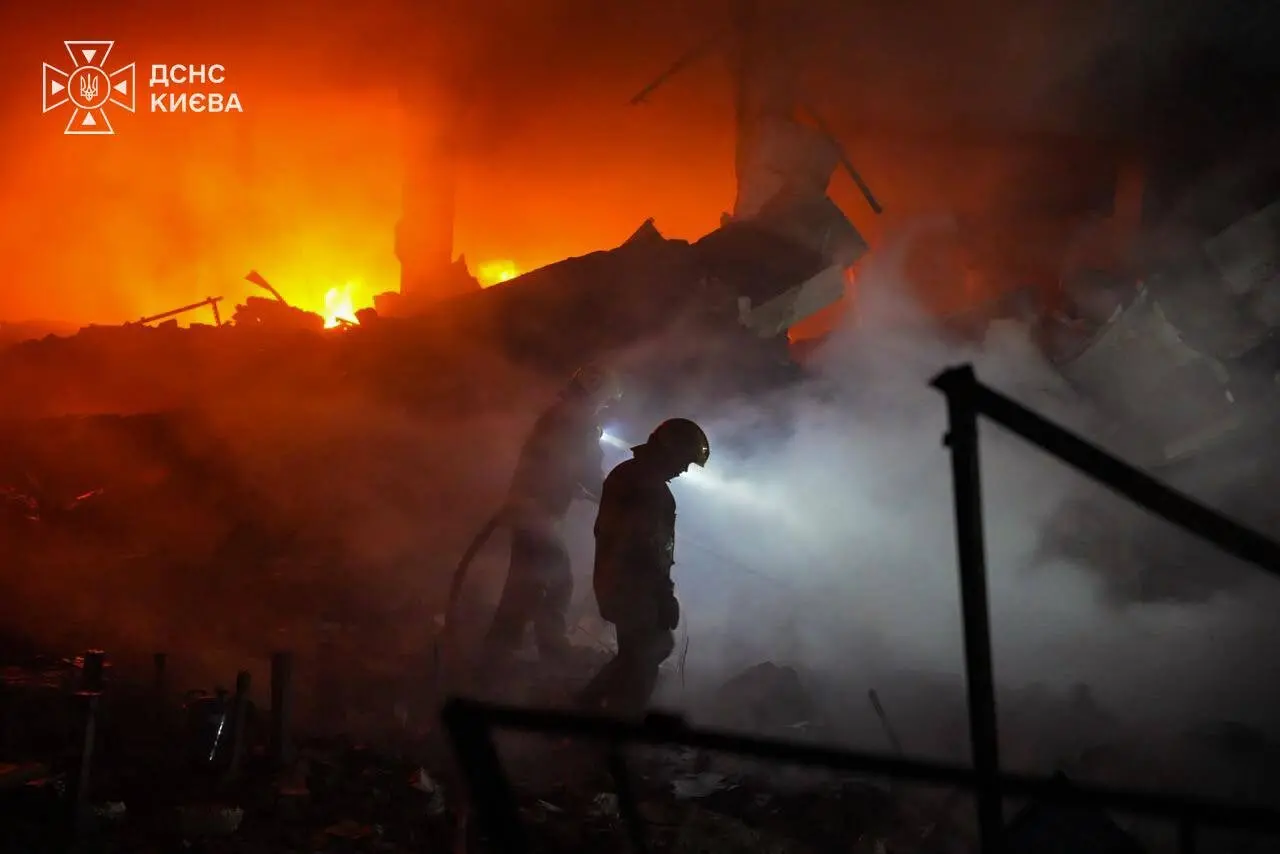
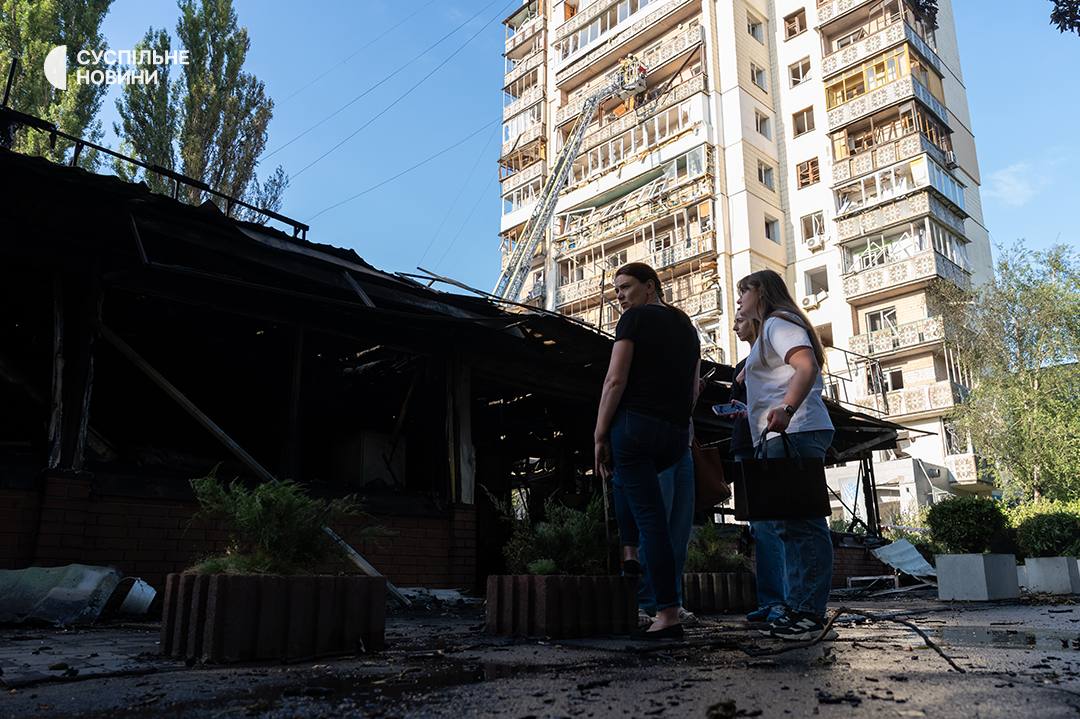
The bridge strikes came alongside attacks on civilian areas of Kyiv. A Russian drone hit the upper floors of a 25-story residential building in the Darnytskyi district on 2 October, causing a fire on the 24th and 25th floors.
One person was killed and two were injured. The attack also damaged buildings and vehicles in the Holosiivskyi district.
A Russian drone struck a 25-story residential building in Kyiv’s Darnytskyi district this morning.
According to President Volodymyr Zelenskyy, Russia launched more than 100 attack drones at Ukraine overnight, including nearly 50 jet-powered drones.
The growing frequency of jet-powered Geran attacks is making the impact of Russian strikes increasingly visible beyond individual damage sites. Repeated attacks on infrastructure such as the Southern Bridge can disrupt transportation and daily routines across the capital even when the targeted structures are not destroyed.
Ukraine's parliament registered a bill on minority-language schooling on 1 October to lift Hungary's block on the country's European Union membership talks, Ukrinform reported. Kyiv acts first with the legislation. Budapest reciprocates by letting the EU push the stalled accession process forward. Hungary's government welcomed the text within a day.
Ukraine's route into the European Union turns on unanimous votes, so one member state's leverage can stall the entire queue—and Kyiv is try
Ukraine's parliament registered a bill on minority-language schooling on 1 October to lift Hungary's block on the country's European Union membership talks, Ukrinform reported. Kyiv acts first with the legislation. Budapest reciprocates by letting the EU push the stalled accession process forward. Hungary's government welcomed the text within a day.
Ukraine's route into the European Union turns on unanimous votes, so one member state's leverage can stall the entire queue—and Kyiv is trying to pry the clusters open one bargain at a time before the window for this year's progress closes.
A tightly timed swap
European Pravda, citing unnamed sources, reported that the two capitals agreed to move in parallel after a public standoff, with neither side willing to go first on trust alone. Ukraine registers and passes the bill. In return, Hungary is to let the Council of the EU presidency send Kyiv, on 6 October, the requests needed to open two negotiating clusters—stages of the membership process. The Rada plans an extraordinary session on 12 October to adopt it, and European Pravda says the votes are there. A Council of the EU decision is due on 13 October, ahead of a European Council summit two days later. Deputy Prime Minister Vsevolod Chentsov said rebuilding trust will take concrete steps from both governments.
What the bill changes
Lawmakers filed Bill No. 16119, which creates a national minority school status: a school qualifies when over half its pupils—50% plus one—study in a national-minority language that is also an official EU language. By Education Ministry estimates, that fits about 149 schools, roughly 1.2% of Ukraine's general secondary institutions. Ukrainian stays the language of instruction, and the bill does not return Russian to classrooms.
Explore further
Sybiha hails new page in Ukraine-Hungary relations as Cyprus launches first EU cluster procedure
Pupils at qualifying schools could use the minority language with teachers and classmates, not only in lessons, and parents could petition to add subjects taught in Ukrainian. The text also covers Ukraine's indigenous peoples, such as Crimean Tatars, and drops a Ukrainian-language certificate requirement for the heads of 29 private schools for as long as they stay in their posts. Education committee head Serhii Babak said the solution protects Ukrainian while meeting an EU accession commitment.
What changed in Budapest
Hungarian Prime Minister Péter Magyar posted on Facebook that the bill strengthens legal guarantees for Hungarian-language education and the school network, and wrote that he expects those rights honored in practice. European Pravda framed the outcome as a win Magyar's own voters can read as delivering what the previous government never secured. Foreign Minister Anita Orbán said the new government had achieved more in a few months for the Hungarian minority in Zakarpattia than Viktor Orbán's cabinet managed in ten years. Under Magyar, Hungary agreed in June to open the first accession cluster but kept slowing the rest. Only in recent weeks, European Pravda wrote, did Budapest abandon Orbán-style unconditional blocking. This bill is meant to free the next two.
Ukraine has turned ground robots into a frontline workhorse, and the state is now trying to buy them at scale through its first competitive, ministry-spec tender. Viktor Pavlov, an officer of the 3rd Separate Assault Brigade's UGV battalion, laid out the risks of that model to Army Inform, the Defense Ministry's outlet, in an interview. Once a robot clears the military's technical requirements, price becomes the main criterion, Pavlov says. The order is split into lots, and no maker can ta
Ukraine has turned ground robots into a frontline workhorse, and the state is now trying to buy them at scale through its first competitive, ministry-spec tender. Viktor Pavlov, an officer of the 3rd Separate Assault Brigade's UGV battalion, laid out the risks of that model to Army Inform, the Defense Ministry's outlet, in an interview. Once a robot clears the military's technical requirements, price becomes the main criterion, Pavlov says. The order is split into lots, and no maker can take more than half a class. He warns the model may not tell a cheap, makeshift machine from one that actually survives at the front.
Robots now handle the war's deadliest chores—driving supplies through kill zones and reaching the wounded where people can't—and Ukraine has already contracted more than 22,000 for 2026. How the military buys them now shapes whether the push yields machines troops trust or a stockpile of cheap ones they don't.
From disposable drones to the next mass weapon
Aerial drones became disposable, mass-produced weapons years ago. Ground robots—the tracked and wheeled machines that haul supplies, pull out the wounded, and attack Russian positions—are only now reaching serial state supply. In August, the Defense Procurement Agency (DOT), the body that buys Ukraine's arms, opened its first competitive tenders for logistics and strike robots built to specs set by the Defense Ministry. Pavlov, founder of Ukraine's UGV School, calls it an experimental format that can work where market prices are inflated. Splitting the order into lots also gives smaller engineering teams a real chance, he said, because many large producers are already busy with state contracts.
Explore further
New Vivaldi tactic: Ukraine’s ground robots, each carrying two Bullspike grenade launchers, attack Russian positions and then detonate inside their shelters
Why the lowest bid may beat the best robot
A tender rewards the cheapest product that formally meets the requirements, not the best one, Pavlov said. A thermal camera, for example, can be listed as desirable rather than mandatory, so a maker chasing the lowest price will most likely leave it off. On any given feature the machines diverge—suspension, cameras, comms channels, a winch—one has it, another doesn't, yet both can land in the same class.
The machines themselves are very different. One carries 250 kilograms, another up to 349, but both fall into the "200-plus" category. Unlike FPV drones, which share standard sizes and parts, ground robots have no common frame—Ukraine fields many local variants. Pavlov compared the choice to picking an iPhone over a cheaper Android: on paper the features match, but soldiers know which machine they can run and repair.
Explore further
Four ground robots for one evacuation: Russia is targeting Ukraine’s robotic medevac missions
He also fears the model punishes innovation. A company can spend 18 months and a 20-person team building a robot, then watch a rival copy it, skip the research costs, and undercut it. A design troops already know how to run and repair—like the Ratel—is a known quantity. An untested bargain can break down mid-mission with no spare parts.
A mixed system, not tenders alone
Price competition should be one tool, not the only one, Pavlov argued. New robots should first reach units through pilot buys, letting soldiers test them and say what works. Proven systems can then be contracted in bulk, with tenders saved for classes where the offers are truly comparable. Ukraine's robots are too varied, he said, and what units need can't always be squeezed onto a spec sheet.
UFORCE, a Ukrainian defense company, says it fielded 11 crewless boats and eight drones at NATO's largest unmanned-systems exercise in Portugal, Militarnyi reported. The firm's crews acted as both mock enemy and allied forces alongside Ukraine's Navy during the 31 August–25 September drills. The turnout more than doubled the company's presence at last year's exercise, when it brought five vessels.
Ukraine began the all-out war without large warships, yet uncrewed boats drove Russia's Bl
UFORCE, a Ukrainian defense company, says it fielded 11 crewless boats and eight drones at NATO's largest unmanned-systems exercise in Portugal, Militarnyi reported. The firm's crews acted as both mock enemy and allied forces alongside Ukraine's Navy during the 31 August–25 September drills. The turnout more than doubled the company's presence at last year's exercise, when it brought five vessels.
Ukraine began the all-out war without large warships, yet uncrewed boats drove Russia's Black Sea Fleet out of its main base on the Black Sea—a result that now pulls far larger navies to the same ranges to test the weapon for themselves.
Ukraine brings its sea-drone playbook to Portugal's NATO exercise
UFORCE joined REPMUS 26, the Portuguese Navy's annual exercise, co-organized with NATO, where member states try out robots and drones built for combat at sea. This year the company widened its presence sharply, UFORCE said on LinkedIn. Across the scenarios, its crews ran strikes, reconnaissance, and defense.
At the center sat the MV7, an uncrewed boat UFORCE showed in every setup it offers. Across its configurations, the MV7 carried interceptors, FPV drones, other kinetic weapons, and electronic-warfare gear. Crews launched flying drones straight off the decks while the boats sat on the water, all run by a single control program.
The company brought three systems to REPMUS for the first time: the Nemesis SeaStrike drone, which launches from the MV7, the MV11 boat, and a supply vessel called L11. UFORCE teams worked beside Ukraine's Navy throughout. Portuguese President António José Seguro inspected the MV7 on the pier, the company said.
Not Ukraine's first visit
Ukraine was at REPMUS last year, too. At REPMUS 2025, a Ukrainian-led "enemy" team beat NATO's side across all five drill scenarios and, in one, landed enough mock strikes on a NATO frigate to have sunk it in a real battle. Ukraine also brought the upgraded Magura v7.2 to that year's drills.
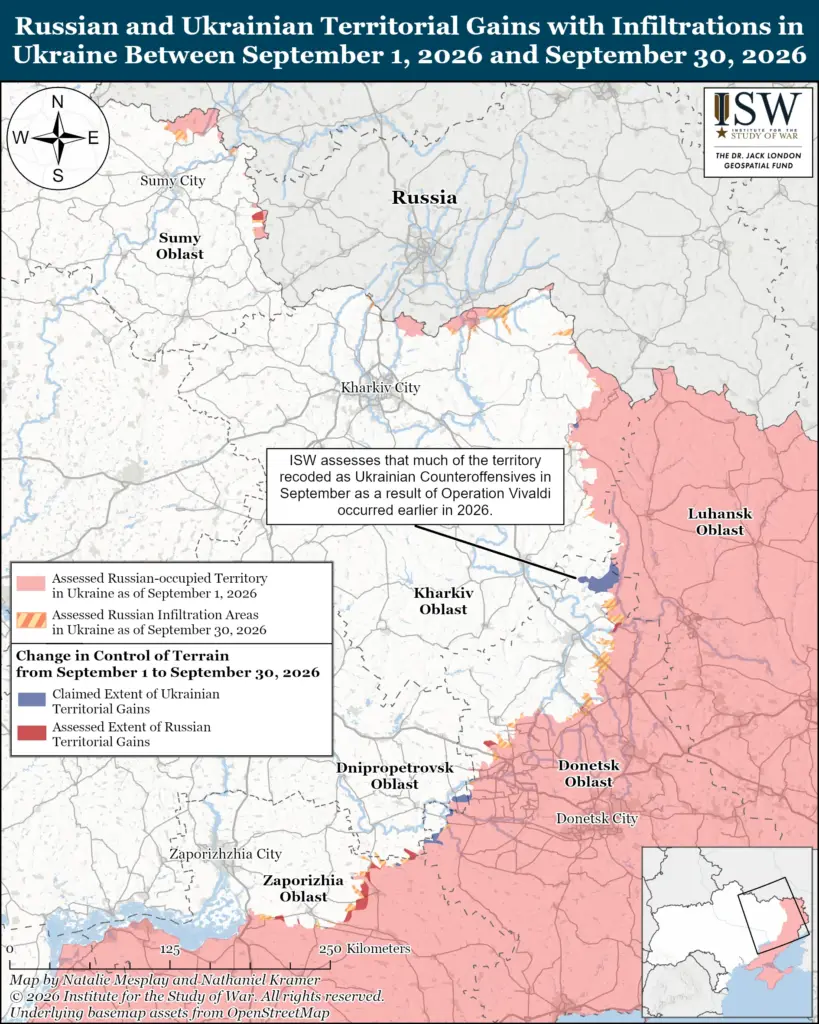
Russia lost almost 300 km² of Ukrainian territory on net between March and September 2026, and it likely gained no ground in September despite its heaviest casualties of the year, the Institute for the Study of War (ISW) assessed. Ukraine's Operation Vivaldi accounts for much of the swing. The think tank notes that Ukraine's secrecy around such counterattacks makes exact monthly tallies hard.
Russia has pressed attacks along the entire front through 2026, accepting mass casualties for m
Russia lost almost 300 km² of Ukrainian territory on net between March and September 2026, and it likely gained no ground in September despite its heaviest casualties of the year, the Institute for the Study of War (ISW) assessed. Ukraine's Operation Vivaldi accounts for much of the swing. The think tank notes that Ukraine's secrecy around such counterattacks makes exact monthly tallies hard.
Russia has pressed attacks along the entire front through 2026, accepting mass casualties for marginal ground, and its battlefield year has already been called its worst since 2023. Its losses have been outpacing its recruitment for months.
Russia came out behind in September
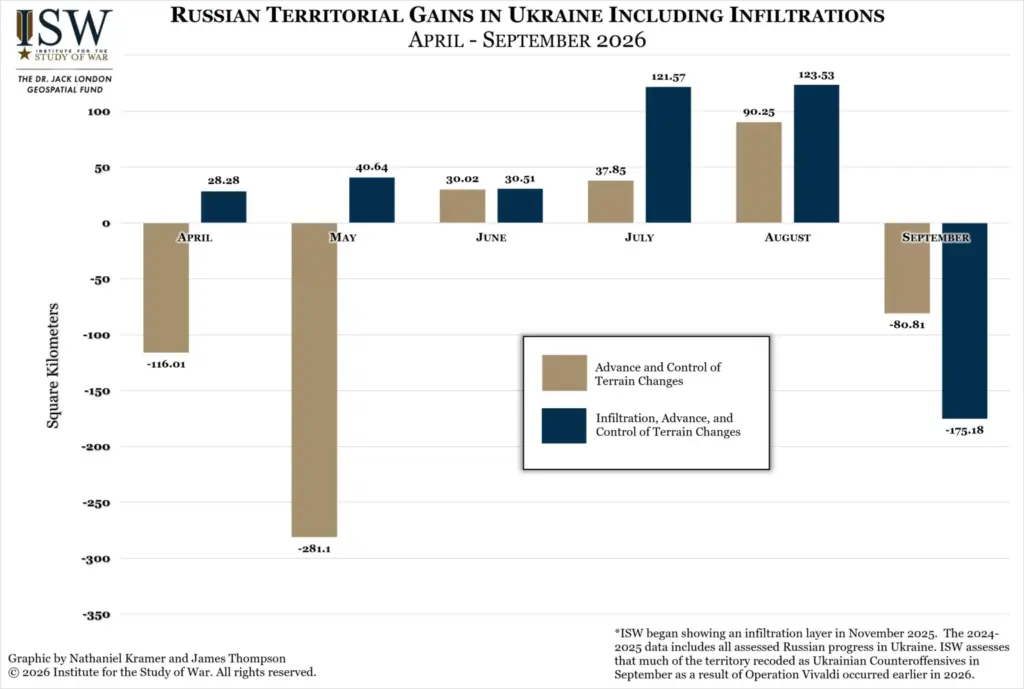
Russian forces seized 175.54 km² in September but lost 256.35 km², a net loss of 80.81 km², or minus 2.69 km² a day, ISW calculated. The balance stayed negative when Russian infiltrations into areas Russia does not control are counted: Russia seized or infiltrated 143.2 km² but lost 318.38 km², a net loss of 175.18 km².
Russian territorial gains in Ukraine with and without infiltrations, April–September 2026. Graphic: ISW
The September figures include at least 147 km² near Lyman that Ukraine liberated over earlier months, but that ISW recorded only once details of Operation Vivaldi emerged in September. The operation already disrupted Russia's plan to encircle the Fortress Belt cities from the Lyman and Dobropillia directions.
Explore further
Ukraine’s Vivaldi counteroffensive disrupts Russia’s plan to encircle Donetsk Fortress Belt – ISW
Almost 300 km² lost since March
Russia's rate of seizing territory dropped sharply in March 2026 and has stayed low, or even negative, since, ISW found. After controlling for the gains Ukraine made during Vivaldi, Russia lost control of 293.59 km² net across the front since March. Counting infiltrations, it gained a presence in only 174.44 km² over the same period.
ISW's monthly chart shows net Russian losses of 116.01 km² in April and 281.1 km² in May, modest gains in June, July, and August, and a net loss again in September. Oleksandr Syrskyi, then Ukraine's commander-in-chief, reported in June that Ukrainian forces had recaptured 100 km² in May.
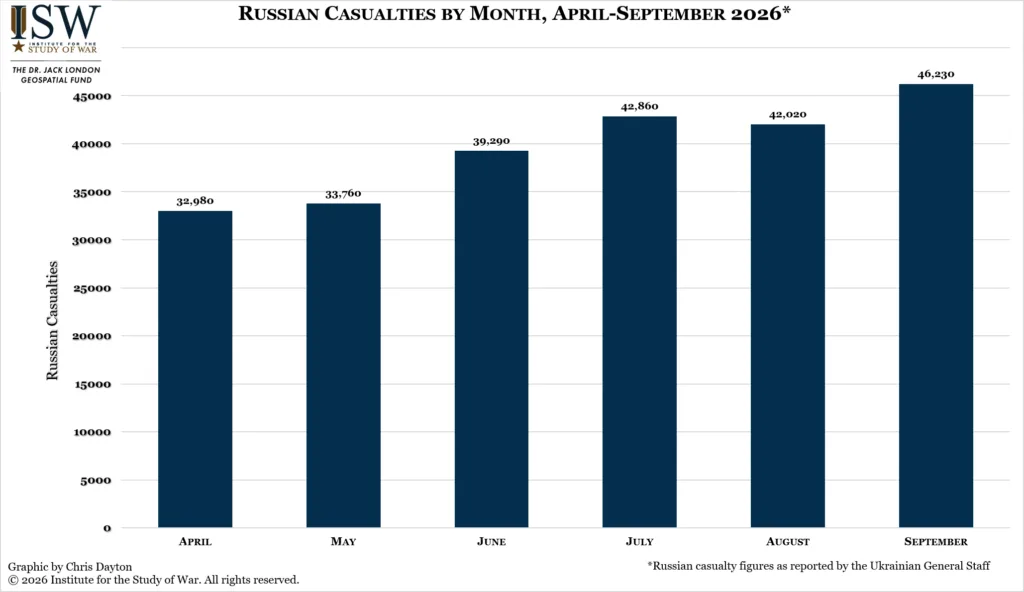
Russian casualties by month as reported by Ukraine's General Staff, April–September 2026. Graphic: ISW
More than 46,000 casualties for no ground
Russian forces suffered 46,230 casualties in September, Ukraine's General Staff reported. It is the third straight month above 40,000 and the highest monthly toll of 2026, by Kyiv's count. Monthly Russian casualties have climbed from 32,980 in April to 42,860 in July and 42,020 in August, ISW's chart shows.
Russia keeps suffering heavy personnel losses while making extremely limited or even net-negative territorial gains, ISW said, and its current force generation system still recruits fewer soldiers than it needs to replace them.
Explore further
Russia’s mass drone attacks on Ukraine have a goal—likely Ukraine’s capitulation by spring 2027, ISW says
Ukraine's effective operational security around Vivaldi, likely to continue in future counterattacks, will make meaningful month-to-month assessments of Russian gains and losses hard, the think tank added.
Drones attacked Russia's Volgograd and Samara oblasts overnight on 2 October, sparking fires near an oil refinery, a chemical plant, and likely a major oil-transport hub, Ukrainian and Russian monitoring channels reported. Regional officials acknowledged the attack but not the fires, and the extent of any damage remains unconfirmed.
Explosions and a glow over Volgograd's refinery district
Explosions sounded for a long time in Volgograd itself and around the refinery's industrial zone
Drones attacked Russia's Volgograd and Samara oblasts overnight on 2 October, sparking fires near an oil refinery, a chemical plant, and likely a major oil-transport hub, Ukrainian and Russian monitoring channels reported. Regional officials acknowledged the attack but not the fires, and the extent of any damage remains unconfirmed.
Explosions and a glow over Volgograd's refinery district
Explosions sounded for a long time in Volgograd itself and around the refinery's industrial zone, Ukrainian Telegram channel Exilenova+ wrote.
Residents reported drones flying over and blasts "in all districts of the city," and complained that no air raid alert sounded, Russian news Telegram channel Astra reported. Its OSINT analysis of eyewitness footage placed the glow near the Lukoil refinery and the neighboring Kaustik chemical plant, though the available videos do not show which facility caught fire.
Volgograd Oblast Governor Andrei Bocharov claimed a "massive drone attack" on the region's industrial infrastructure. He mentioned a fire in an apartment building and one person hospitalized, but no fires at plants.
Lukoil-Volgogradneftepererabotka is one of Russia's largest refineries. It processes 14.8–15.7 million tons of crude a year, about 5% of Russia's refining, and makes gasoline, diesel, jet fuel, fuel oil, and bitumen, according to Astra.
Explore further
Fifth drone-related NORSI shutdown in under five months leaves all major Lukoil refineries offline
Drones have hit the plant repeatedly. In May 2025, strikes damaged its ELOU-AVT-1 and ELOU-AVT-6 primary processing units. A 29 May 2026 strike halted production at the plant, about 500 km east of the war zone, Ukraine's General Staff said. On 31 July, drones set the refinery ablaze again, and Astra reported the AVT-1 and AVT-6 units stopped.
Kaustik sits in Volgograd's southern Krasnoarmeysky district. It is one of the region's leading plants and makes basic chemicals with dual civilian and military use, Astra wrote. The outlet called that output critical to Russia's military industry. The plant runs chlor-alkali production built on salt electrolysis. It makes hydrochloric acid, plastics, synthetic resins, and industrial gases, according to OSINT-Varta. Such products can serve military industry too, including polymer parts and protective coatings for hardware, Militarnyi noted.
Europe's largest tank farm likely on fire near Samara
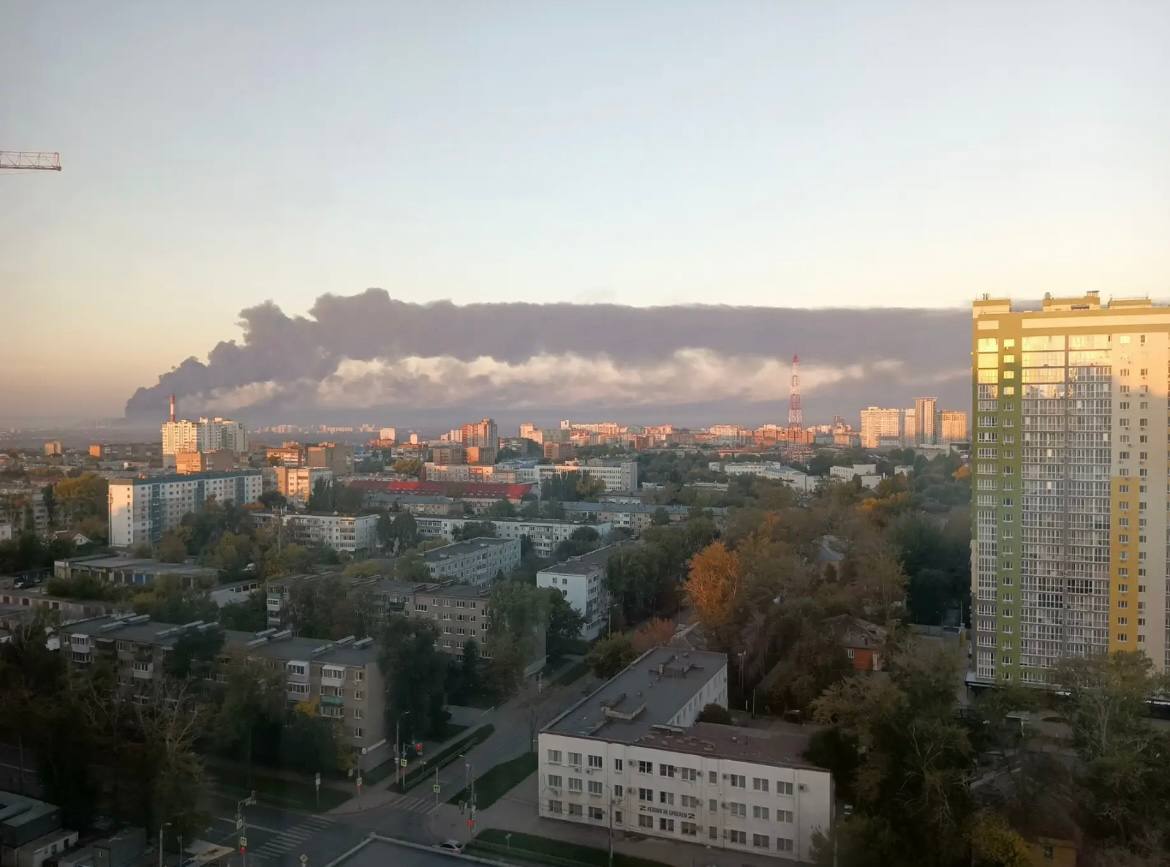
Explosions also rocked Samara, with an especially strong one around 06:30, Astra reported. Its OSINT expert linked reader photos to a fire at the Samara linear production dispatch station in the settlement of Prosvet.
Ukrainian monitoring channel Supernova+ shared video of thick black smoke on the horizon and reported a fire at the station. Exilenova+ reported explosions in Samara followed by a fire.
The station belongs to Transneft, Russia's state pipeline operator. It covers more than 216 hectares and holds 71 tanks with a combined capacity of over 1.6 million m³ of crude. Astra called it Europe's largest tank farm.
Four trunk pipelines converge there, carrying oil from Western Siberia, Tatarstan, Orenburg Oblast, and Kazakhstan. The station blends high- and low-sulfur crude into Urals, Russia's flagship export grade, according to Militarnyi.
Samara authorities did not comment on the fire. Mayor Ivan Noskov stated only that ground public transport was suspended. Samara Oblast Governor Vyacheslav Fedorishchev did not report an attack at all.
The station has been hit before. Operators of the 14th Regiment of Ukraine's Unmanned Systems Forces struck it again overnight on 23 September 2025. On 21 April 2026, drones of the Security Service of Ukraine's Alfa special operations center hit it, reportedly damaging five crude tanks of about 20,000 m³ each.
Explore further
Ukraine shut down this Samara refinery in June—now its drones are back, and both distillation units are burning again
Ukraine's long-range drones have already pushed Russia's fuel shortages into Central Asia, and Washington has pressed Kyiv to stop, so every hit on processing or export logistics tests how long oil can fund Moscow's war.
Ukraine may soon receive a multimillion package of 20-mm rounds for its F-16 fighter jets, Foreign Minister Andrii Sybiha told journalists, Hromadske reported. He called the ammunition critical for shooting down Russia's jet-powered drones and said several partners have already begun transferring it. He expects the larger package after an upcoming high-level visit.
Russia now strikes Kyiv and other Ukrainian cities daily, increasingly with jet-powered drones that outrun the cheap intercepto
Ukraine may soon receive a multimillion package of 20-mm rounds for its F-16 fighter jets, Foreign Minister Andrii Sybiha told journalists, Hromadske reported. He called the ammunition critical for shooting down Russia's jet-powered drones and said several partners have already begun transferring it. He expects the larger package after an upcoming high-level visit.
Russia now strikes Kyiv and other Ukrainian cities daily, increasingly with jet-powered drones that outrun the cheap interceptors built for slower Shaheds. Fighter jets are among the tools Ukraine uses against them, while its overall interception rate for jet drones still trails its rate against propeller drones.
"Critically important" ammunition
Sybiha said Ukraine has yet to build up its capability to repel jet drones.
"Given that we have not yet built up the capability to repel jet drones, and given the preparations for new strikes, it was critically important to help our military shoot down these drones. Apart from air defense systems, which are too expensive to use constantly against drones, the most effective tools right now are F-16 fighter jets," Sybiha said.
He thanked Spain, Belgium, and Poland, which have begun the process of transferring the ammunition, and said that thanks to them Ukraine will "very soon" have the rounds it needs.
Explore further
Belgium will send three F-16 fighter jets, but maintenance delays may keep Ukraine from using them
A "very serious visit" ahead
Sybiha linked the larger package to a visit he did not name.
"We will soon have one very serious visit. We think that one of the decisions following this visit will be a multimillion package of this ammunition for Ukraine," he said.
Talks on buying the rounds from private manufacturers are also underway, he added.
Ukraine has already received urgent batches of F-16 ammunition from Belgium, Spain, and other partners, and Belgium plans to send three more F-16s by the end of 2026 under an accelerated procedure. The jets' air-to-air missiles and cannon rounds are imported and not always in stock.
Explore further
Combat shows speed alone can’t catch Russia’s jet-powered drones, despite eight Ukrainian makers’ assurances. So why can’t they stop them?
Another night of Russian strikes
Overnight on 2 October, Russia launched 108 drones at Ukraine, 47 of them jet-powered, and air defenses downed 88 of them. In Kyiv, a Russian strike on a 25-story residential building in the Darnytskyi district killed one person and injured two. Russia also targeted the Southern Bridge again, after striking it three times the previous day, and the city restricted public transport across several bridges.
In Kharkiv Oblast, a Russian FPV drone hit a car in the Solonytsivka hromada on the afternoon of 1 October, injuring a man and a boy. A Russian strike damaged a civilian enterprise in Rivne Oblast and started a fire that forced an evacuation of nearby homes, regional head Oleksandr Koval said, and drones attacked Cherkasy Oblast.
In neighboring Romania, an object believed to be a drone crashed near the village of Plauru in Tulcea County during the attack, starting a fire that caused no casualties, Romania's Defense Ministry said.
The robots Ukraine wants to throw into its deadliest fights should cost as little as $10,000 each, Mykhailo Fedorov says. The former defense minister has set out the first stage of his Army of Robots: cheap, simple humanoid-like machines that would take over an infantry's most dangerous jobs, with tens of thousands needed, he said on Telegram, citing his own interview with Forbes.
On 26 September, Fedorov, who continues to work on military tech reforms despite his sudden and unexpected
The robots Ukraine wants to throw into its deadliest fights should cost as little as $10,000 each, Mykhailo Fedorov says. The former defense minister has set out the first stage of his Army of Robots: cheap, simple humanoid-like machines that would take over an infantry's most dangerous jobs, with tens of thousands needed, he said on Telegram, citing his own interview with Forbes.
On 26 September, Fedorov, who continues to work on military tech reforms despite his sudden and unexpected dismissal, announced the creation of the Army of Robots.
Humanoid robots would carry ammunition and pull out the wounded, lay and clear minefields, scout, hold positions, and strike, taking the roles that today cost soldiers their lives.
Potential need amounts to thousands
"Our main goal is to save lives. A human should not take risks where a machine can do the job," Fedorov says.
At the first stage, it will not be a classic humanoid but a simpler humanoid-like robot that can be produced quickly and scaled up, he adds.
Such a machine should perform some of an infantryman's tasks directly on the battlefield.
Today, such platforms cost $40–70 thousand on average. For mass use in war, Ukraine needs something much cheaper: the target is $10–20 thousand per unit, he believes.
"The potential need is tens of thousands of such machines," Fedorov continues.
Next come prototypes
The former defense minister adds that he and his team are already working with teams that have ready-made MVPs and are designing solutions.
"Next come prototypes, simulations, model training, and finding the right combination of hardware and software," he explains.
The Army of Robots is not a single product but an ecosystem that will unite companies, startups, engineers, R&D, and capital around the robotization of the front.
"Our task is to get from prototype to mass product as quickly as possible," he adds.
Exclusive
Ukraine is now sending its tanks into battle with drone escorts: they can drive into a Russian kill zone and come back alive. The 475th Assault Regiment, short of infantry, was clearing Russian infiltrators out of Vilkhuvatka, a Kharkiv Oblast village 9 km from the Russian border, and its hedgehog tanks took repeated hits on the way to point-blank range.
When Kremlin energy talking points come with an Oxford address. Russian energy disinformation does not always look
When Kremlin energy talking points come with an Oxford address. Russian energy disinformation does not always look like propaganda. Sometimes it presents itself in the form of expert analysis, a policy advisor, or technical commentary inside Europe's energy debate, and that is exactly what makes this new form of influence worth examining.
A Ukrainian drone maker is preparing to build unmanned systems in the heart of western Europe. TAF Industries and Luxembourg's LUXUAV have signed a memorandum to jointly develop, industrialize, and field weapons in Belgium and Luxembourg, under the Build with Ukraine initiative, TAF said.
The deal is part of Build with Ukraine, an initiative that enables Ukrainian arms manufacturers to take their operations to a new level by scaling up production beyond the country’s borders. This invol
A Ukrainian drone maker is preparing to build unmanned systems in the heart of western Europe. TAF Industries and Luxembourg's LUXUAV have signed a memorandum to jointly develop, industrialize, and field weapons in Belgium and Luxembourg, under the Build with Ukraine initiative, TAF said.
The deal is part of Build with Ukraine, an initiative that enables Ukrainian arms manufacturers to take their operations to a new level by scaling up production beyond the country’s borders. This involves exporting Ukrainian military technologies to partner countries that support Ukraine financially and politically. In return, joint production lines will be established on their territory, according to Ukraine's Arms Council.
The deal targets the Benelux
The memorandum is a first step, TAF said, with joint work on autonomous systems in the two countries to follow. The aim is to move from signed intent to shared production lines and fielded drones.
TAF Industries, a Ukrainian unmanned-systems maker, and LUXUAV, a Luxembourg defense-tech firm, plan to develop, industrialize, and deploy drone solutions across Luxembourg and Belgium, pooling Ukraine's battlefield experience with European manufacturing muscle.
Build with Ukraine spreads west
TAF's chief executive, Volodymyr Zinovskyi, framed the memorandum as a way of "combining Ukrainian innovations, proven by war, with European industrial and technological capabilities," arguing that European security now depends on industry, states, and research working across borders.
Belgium has already contracted a Ukrainian producer to build drones and counter-drone systems on Belgian soil.
Europe wants the know-how
The timing fits Europe's new urgency. Russian drones have strayed into Polish, Romanian, and Moldovan skies in recent weeks, and member states scrambling to build defenses increasingly look to Ukraine, the one country fighting a mass drone war, for the technology and the lessons.
Earlier, Polish Prime Minister Donald Tusk warned of very difficult weeks and months ahead, “linked to Russia’s extremely aggressive stance toward Ukraine," according to TVP Info. As he emphasized, Polish security services were on heightened alert due to the situation along the country’s eastern border.
The Russian government has submitted a draft federal budget for 2027–2029 to the State Duma, Meduza reported on 30 September, citing TASS. In all three years, Russia's expenditures will exceed its revenues, the outlet noted.
Russia's finances have been eroding since it launched its full-scale invasion of Ukraine. To keep paying for the war, the Kremlin has drained its reserves, borrowed more, and pushed tax burdens onto residents and businesses, while the wider economy stalls.
The go
The Russian government has submitted a draft federal budget for 2027–2029 to the State Duma, Meduza reported on 30 September, citing TASS. In all three years, Russia's expenditures will exceed its revenues, the outlet noted.
Russia's finances have been eroding since it launched its full-scale invasion of Ukraine. To keep paying for the war, the Kremlin has drained its reserves, borrowed more, and pushed tax burdens onto residents and businesses, while the wider economy stalls.
The government listed social obligations, including aid to those who fought in its war against Ukraine and their families, along with defense needs among the budget's priorities, while its press release left out the planned cuts to social spending and the rise in military spending, Meduza noted, citing The Bell.
Spending will exceed revenue by about 2% of GDP a year
Russia's federal budget for 2027 sets spending at 48.8 trillion rubles ($585 billion) and revenue at 43.3 trillion ($519 billion), the Russian government stated, leaving a deficit of 5.5 trillion rubles ($66 billion). It claimed the draft is "balanced" and that healthcare spending will rise compared with 2026.
Deficits of 5.1 trillion rubles ($61 billion) in 2028 and 5.3 trillion ($64 billion) in 2029 are also planned, about 2% of GDP a year, Meduza noted.
This year's deficit is now set to reach a record 7.345 trillion rubles ($88 billion), nearly double the previous forecast of 3.785 trillion ($45 billion), The Moscow Times reported on 1 October. To help close the gap, Moscow plans an array of tax hikes for 2027–2029 to fund military spending. Already by May, its four-month deficit had run 50% above what it had planned for the whole year.
Head office of the Central Bank of the Russian Federation in Moscow. Photo: Central Bank of Russia
Even as the deficit widens, Russia plans its highest defense spending since the full-scale invasion began: 17.1 trillion rubles ($202.58 billion) in 2027, 27% more than the 13.5 trillion originally planned.
Only 2.3 trillion rubles ($28 billion) of that sum is itemized in public documents, and 34.9% of all 2027 spending will be classified, the highest share in at least 12 years, exiled outlet Vyorstka reported. The Duma is expected to hold the first of three readings on 29 October, the date proposed by Budget Committee chairman Andrei Makarov, Interfax reported.
Russia lost more troops in September than in any other month this year, hitting the record, by Ukraine's count. The General Staff put last month's Russian casualties at 46,230, a 2026 record and 45.8% above January's.
At the same time, Russia's strikes on Ukraine's rear escalated in September and are climbing again in October. The result is a grind that bleeds Russia on the ground while Ukrainian cities absorb the blows from above.
Losses span the whole front
"Ukraine's Defense F
Russia lost more troops in September than in any other month this year, hitting the record, by Ukraine's count. The General Staff put last month's Russian casualties at 46,230, a 2026 record and 45.8% above January's.
At the same time, Russia's strikes on Ukraine's rear escalated in September and are climbing again in October. The result is a grind that bleeds Russia on the ground while Ukrainian cities absorb the blows from above.
Losses span the whole front
"Ukraine's Defense Forces continue to inflict systemic and tangible losses on the Russian occupation forces in personnel and equipment along the entire line of contact," the General Staff says.
The toll climbs all year
The monthly figures have risen almost without pause. After a dip to 26,090 in February, Russian losses climbed through the spring and summer, 39,290 in June, 42,860 in July, 42,020 in August, before last month's high.
The record reaches down to a single day: the General Staff counted 2,090 Russian casualties in the 24 hours to 28 September, which British Defense Intelligence assessed as the highest daily toll since the full-scale invasion, one of only four days to top 2,000, the other three in 2024.
British intelligence tied the high rate to intense fighting around the fortified belt of Donetsk cities, especially near Dobropillia.
Meanwhile, Kyiv is also continuing its Vivaldi Operation near Lyman, and its latest mission used ground robots, each carrying two Bullspike grenade launchers to launch an attack on Russian positions and then detonate inside their shelters.
Kyiv reads the climb
Across the war, Ukraine says it has put roughly 1.5 million Russian troops out of action, a toll that has bought little ground as the months-long summer offensive stalled short of its goals.
"Every attempt to pressure our positions ends for the enemy in disproportionate losses of wounded and killed," the General Staff says.
The figures are Kyiv's own and cannot be independently checked: they count the Russians' wounded and killed but never their own.
Russia's spending on everything except the military, security forces, and interest on its debt will fall next year to about 9% of GDP, its lowest level since 2005, Alfa-Bank analysts estimated, The Moscow Times reported on 30 September. The war will take a record share of the 2027 budget while welfare, schools, and hospitals face cuts. Analysts see stagnation and slow decay rather than collapse.
Russia's economy is not on the brink of collapse, but it is stalling: output grew just 0.6%
Russia's spending on everything except the military, security forces, and interest on its debt will fall next year to about 9% of GDP, its lowest level since 2005, Alfa-Bank analysts estimated, The Moscow Times reported on 30 September. The war will take a record share of the 2027 budget while welfare, schools, and hospitals face cuts. Analysts see stagnation and slow decay rather than collapse.
Russia's economy is not on the brink of collapse, but it is stalling: output grew just 0.6% in the first half of 2026, civilian industry kept shrinking while military plants expanded, and one economist expects stagnation for the foreseeable future. The proposed budget comes as Russia faces a wider deficit and rising borrowing needs, while the government is increasing military spending to its highest level since the start of its full-scale war against Ukraine in 2022.
Civilian spending at its lowest share since 2005
Non-interest, non-defense spending stood at just over 10% of GDP this year and last, around 12% in 2023–2024, and 13% in 2021, the last year before the full-scale invasion, Alfa-Bank's analysts calculated. It peaked at 16–18% of GDP in 2009–2010. The analysts called the new structure of spending a "challenge."
The war takes a record share
The "national defense" line will receive 17.1 trillion rubles ($202.6 billion) in 2027, according to budget documents seen by Reuters and carried by The Moscow Times. That is 35% of all federal spending, a record since Soviet times, Alfa-Bank's analysts noted. The sum is about 27% more than Moscow originally planned, part of 50 trillion rubles ($592 billion) in defense spending projected over 2027–2029. Early this year, Russia was already pouring nearly half of its budget into the military as revenue fell.
Welfare, schools, and hospitals face cuts
Key civilian lines will lose 900 billion rubles ($10.7 billion) to pay for the war. Compared with the current budget law, social support will fall 7%, education 6%, healthcare 6.8%, and environmental protection 5.8%. Spending on the "national economy," which covers roads, other infrastructure, and subsidies for agriculture and other sectors, will drop 7.4%, according to a second Reuters report. The Finance Ministry has planned a further 2 trillion rubles ($23.7 billion) in cuts for 2028, Reuters reported.
Explore further
Russo-Ukrainian war, day 1679: Russia raises its war budget by 27% to a record as it looks to grow its war in 2027
For every budget ruble spent on social policy, healthcare, and education in 2027, two will go to the army, police, Rosgvardia, and the security services, Aleksandra Prokopenko, a senior fellow at the Carnegie Russia Eurasia Center in Berlin, wrote. Combined with higher taxes, tariffs, inflation, and sanctions, such a budget dooms the economy to stagnation, she argued. Aleksandr Kolyandr of Eurasia Group likened the approach to the Soviet Union's and described Russia's economy as being in a "stage of rot."
Explore further
Russia’s four-month budget deficit hit $75.4 billion — 50% above what Moscow planned for entire year
More borrowing, more debt
To cover the gap, the Finance Ministry has raised its 2027 borrowing plan by 2.3 trillion rubles ($27 billion), and next year almost every tenth budget ruble will go to interest on state debt. Debt servicing is projected to take 9.4% of total spending in 2027 and 10.6% in 2029, according to Reuters.
The squeeze builds on strains already visible. Moscow has raised its 2026 deficit forecast to 3.2% of GDP, cut its expected oil and gas revenue, and plans a windfall tax on metals and mining companies, while state debt is projected to pass the 20% of GDP level authorities consider safe. Earlier this year, it told its regions to raise taxes on residents and businesses to plug a record budget hole.
Explore further
EU wants reforms before more money. Kyiv wants Europe to touch Russia’s frozen billions
Ukraine faces its own funding gap
The Russian spending plans come as Kyiv faces a $27 billion funding gap in its 2026 military spending. Prime Minister Serhii Koretskyi said on 1 September that the shortfall included funding needed for financial support for Ukrainian service members, according to the Cabinet of Ministers of Ukraine.
Ukraine's total war-related expenditures, including Western military aid delivered as hardware, are projected to reach $155 billion in 2026, with the government seeking to close the $27 billion gap to support military operations into early 2027, Koretskyi said on 30 September.
Ukraine's steel industry, one of the pillars of its wartime economy, may produce almost no steel at all next month. Output fell 57.3% in August under Russian strikes and could approach zero in October, and the recovery of giants like Zaporizhstal and ArcelorMittal Kryvyi Rih depends less on Kyiv than on Brussels, says Stanislav Zinchenko, director of the GMK Center, the center for industrial, mining, and metals sector expertise, in an analysis for ThePage.
Steel is Ukraine's second-larg
Ukraine's steel industry, one of the pillars of its wartime economy, may produce almost no steel at all next month. Output fell 57.3% in August under Russian strikes and could approach zero in October, and the recovery of giants like Zaporizhstal and ArcelorMittal Kryvyi Rih depends less on Kyiv than on Brussels, says Stanislav Zinchenko, director of the GMK Center, the center for industrial, mining, and metals sector expertise, in an analysis for ThePage.
Steel is Ukraine's second-largest foreign-currency earner and a prop for the hryvnia, employing more than 70,000 people directly and another 250,000 in related industries, and paying close to $1 billion a year in taxes.
Russian missile strikes on the big plants, compounded by an energy crisis, closed ports, and EU competition, have cut production to a fraction and threaten to halt it, Zinchenko says.
He calls it the worst crisis the industry has faced since independence, "a perfect storm" that has struck all at once. The sector supplies 6% of Ukraine's GDP and 13% of its foreign-currency earnings.
Output could hit zero
The fall has been precipitous. In August, steel output dropped 57.3 percent year on year to 277,000 tonnes and pig iron 65.6%, Zinchenko says. Across eight months, the decline is 12.5%, and he warns that October could bring output to zero. Exports have cratered too: iron ore down 27% over eight months, long rolled steel down 45.8%, semi-finished products down 76% in a single month, and pig-iron exports halted entirely.
September may yield just 100,000 to 150,000 tonnes of steel, he says. Four producers bore the brunt: Zaporizhstal, Kametstal, ArcelorMittal Kryvyi Rih, and Interpipe.
Rebuilding breaks new ground
"No one in the world has learned how to rebuild metallurgical giants after missile strikes," Zinchenko says.
In reality, it means technical audits, clearing rubble, and ordering unique new equipment, at a cost the plants cannot meet after four and a half years of war spent at a loss or at zero margin, their reserves gone.
Three steps for Kyiv
Zinchenko sets out three moves the state could make at once to stabilize the industry:
Frontline rail. Give steelmakers priority access to locomotives from the state railway Ukrzaliznytsia within 150 kilometers of the front, so the product can still be moved out.
Energy parity. Scrap or soften the rule forcing industry to import 80% of its electricity, which leaves plants paying European prices they cannot match.
Market protection. Tax scrap-metal exports to keep raw material for decarbonization at home, and curb Turkish imports that undercut Ukrainian steel.
However, the recovery depends not on Kyiv, but on Brussels
Recovery is impossible without international funds and guarantees. No one will provide loans to enterprises on foreign capital markets during the war. No one will invest in recovery "into a void," the expert says.
He names four steps that would support the industry:
A recovery fund. A dedicated fund for the steel industry, modeled on those partners built for Ukraine's energy sector, to pool grants and cheap loans.
A safe sea corridor. Reopen the deepwater ports, as Ukraine managed in 2023 and 2024; without them, rail costs make exports unprofitable.
No EU quotas. Remove the European Union's restrictive quotas and tariffs on Ukrainian metal.
A CBAM exemption. Free Ukrainian steel, for the duration of the war and reconstruction, from the EU's carbon border levy, which Zinchenko says would otherwise finish off its competitiveness.
Meet those, he says, and bringing the plants back to baseline could take three to six months, with a full rebuild one to two years.
Ukraine has cracked the riddle of strange metal "whiskers" that appeared on Russian jet-powered drones striking Kyiv, and they don't appear to be some clever new sensor. They are a simple mechanical detonator, a metal tube, and a rod that, on impact, closes a circuit to set off the warhead, Serhii "Flash" Beskrestnov, presidential adviser, says, ending online guessing about the strange devices.
Photos of Russian drones with long metal prongs jutting from the nose had set off speculation
Ukraine has cracked the riddle of strange metal "whiskers" that appeared on Russian jet-powered drones striking Kyiv, and they don't appear to be some clever new sensor. They are a simple mechanical detonator, a metal tube, and a rod that, on impact, closes a circuit to set off the warhead, Serhii "Flash" Beskrestnov, presidential adviser, says, ending online guessing about the strange devices.
Photos of Russian drones with long metal prongs jutting from the nose had set off speculation about what they were for. The answer, Flash explains, is low-tech: when the prong hits something, the contact closes, and the charge goes off, with no sensors or electronics.
That simplicity sits against a more worrying trend: Russia is steadily upgrading what its drones carry, from the mix of warheads on the jet-powered Geran-4 and Geran-5 to a new charge designed to sever power pylons.
A contact closes the circuit
"It's all mechanically simple, no sensors or complex detectors," Flash says, commenting on the "whiskers".
It is the kind of crude, cheap fuze that suits a weapon meant to be built and spent in the thousands, where cost matters more than finesse.
Russia upgrades the warheads
Russia's jet drones, now built at roughly 3,000 a month, have become the dominant threat in its nightly campaign. The day when Flash published his "whiskers" post, Russia hit Kyiv with another round of drone strikes, hitting a school, a café, and warehouse buildings across the capital. The children inside the school were in its shelter. Fires broke out across two districts, and one person in the city was wounded.
On 28 September, Russia struck Kyiv's Academy of Sciences, which has a century-old history.
On the same day, Dmitry Peskov, Kremlin spokesperson, said Ukraine must "pay a price" for its actions in recent months and calls Russia's intensified strikes "part of this price."
Less than 50% of the F-16 fighter jets delivered to Ukraine may be operational, Defense Express reports, citing a Wall Street Journal (WSJ) editorial published on 29 September. On the same day, Ukrainian President Volodymyr Zelenskyy said that Belgium would deliver three F-16 fighter jets this year.
F-16s are used extensively to intercept Russian cruise missiles and drones. As the number of Russian attacks has increased, these aircraft have become particularly important for Ukraine. How
Less than 50% of the F-16 fighter jets delivered to Ukraine may be operational, Defense Express reports, citing a Wall Street Journal (WSJ) editorial published on 29 September. On the same day, Ukrainian President Volodymyr Zelenskyy said that Belgium would deliver three F-16 fighter jets this year.
F-16s are used extensively to intercept Russian cruise missiles and drones. As the number of Russian attacks has increased, these aircraft have become particularly important for Ukraine. However, the jets Ukraine receives are old, and keeping them flying takes regular maintenance, extra work, and hard-to-find parts.
Routine inspections are taking as long as 40 weeks in Belgium, retired US Navy Rear Admiral Mark Montgomery told the WSJ.
The maintenance process for these aircraft for Ukraine is lengthy
A likely reason for the problem is the lengthy maintenance process handled by Belgian company Sabena Aerospace Engineering, according to the WSJ, whose questions the company declined to answer. This process, according to Defense Express's estimates, takes 6–20 times longer than maintenance in the United States, which usually takes between 2 and 6 weeks. Ukraine uses the services of the Belgian company, meaning its F-16s are not being serviced quickly enough.
Ukrainian F-16 armed with SDB bombs and AIM-120 and AIM-9 missiles. Photo via Militarnyi
Delivering three additional fighter jets will not significantly help the Ukrainian military until the issue with aircraft maintenance times is resolved, Defense Express notes. The lengthy turnaround may be caused by a large maintenance backlog at the company, limited capacity, or logistical constraints, and older jets may need extra work and scarcer parts.
The delivery is part of an earlier commitment. Belgium plans to provide seven fighter jets this year: three for operational use and four for spare parts, Belgian Defense Minister Theo Francken said in June.
"I'll propose to the government to send all our F-16s to Ukraine in the coming years. It depends on having the F-35s in place because, of course, we have DCA [dual-capable aircraft] capacity. We have our role in the nuclear doctrine of NATO," Francken said.
Belgium has pledged its entire F-16 fleet of 53 aircraft as F-35s replace them, according to Defense Express.
F-16s in Ukraine have already shot down several thousand Russian aerial targets
F-16s operated by Ukrainian pilots have shot down more than 3,150 aerial targets. These include 666 cruise missiles and around 2,500 drones of various types. The aircraft have also carried out more than 650 strikes against Russian ground targets, Lieutenant General Anatolii Kryvonozhko, Commander of the Ukrainian Air Force, said during a meeting between a Ukrainian Air Force delegation and representatives of Lockheed Martin on 29 September.
At the meeting, Conor McGuire, Lockheed Martin's head of F-16 capability development, highly praised the combat use and operation of F-16s by Ukrainian pilots and the entire ground aviation personnel. He also expressed his intention to help Ukrainians enhance the capabilities of the existing platform, the statement said.
Ukraine is stitching together a layered answer to Russia's faster, jet-powered Shahed drones, leaning on electronic jamming, fighter jets, and a new class of homegrown interceptors, RBC-Ukraine reported. Each tool has limits, and the new interceptors still bring down only the occasional jet drone. The bottleneck now is money and factory output, not ideas.
Russia is pouring faster jet-powered drones into the air war as winter nears, a campaign Western analysts say is meant to wear Ukrain
Ukraine is stitching together a layered answer to Russia's faster, jet-powered Shahed drones, leaning on electronic jamming, fighter jets, and a new class of homegrown interceptors, RBC-Ukraine reported. Each tool has limits, and the new interceptors still bring down only the occasional jet drone. The bottleneck now is money and factory output, not ideas.
Russia is pouring faster jet-powered drones into the air war as winter nears, a campaign Western analysts say is meant to wear Ukraine's defenses down—and holding those skies now turns on which side can keep out-producing the other's cheap weapons.
Fighter jets help, but they run on imported rounds
Electronic jamming can work against some of the drones, and Ukraine is also sending combat aircraft up after them. But aviation has a catch: the jets need air-to-air missiles and cannon rounds, and for the F-16 and Mirage those are imported and not always in stock. Flying over Kyiv adds danger to the civilians below and to the pilots, so Ukraine would rather catch the drones out on the approaches.
New interceptors are landing hits—just not enough
The newest piece is a wave of Ukrainian interceptor drones built to chase the jet versions, which fly three times faster than the propeller Shaheds. Ukrainian crews have been downing the jet Gerans in a recent run: on 19 September, presidential adviser Serhii Beskrestnov, known as Flash, confirmed one Geran-5 shot down, and in late September, operators of the National Guard's Separate Artillery Brigade brought down a Geran-4 with the Bullet interceptor made by General Cherry, the first Geran-4 that drone has downed, Ukraine's National Association of Defense Industries said. Ukrainian President Volodymyr Zelenskyy said several prototypes have proven themselves in combat.
Explore further
Russia is now wiring its attack drones into one network in flight, so a single drone can scout, strike, and relay for the rest
Across all methods, Ukraine now intercepts about 57% of the jet drones Russia launches, Zelenskyy said on 28 September—a rate that has climbed but still trails the 90%-plus it manages against slower Shaheds. Kills by the new interceptors specifically remain isolated. In August, Air Force spokesperson Yurii Ihnat said jet drones can make up as much as two-thirds of the drones in some raids—though not every time. One promising route is reworking Ukraine's own long-range strike drones into interceptors. Kyiv is in talks with partners over the money; on 28 September, Ukraine's Defense Minister Yevhenii Khmara asked the EU to help finance the interceptors so enough reach the front quickly.
Hitting the launch sites and jamming the controls
Ukrainian forces strike the Russian airfields the jet drones launch from, RBC-Ukraine's sources said, though the raids have not forced Russia to abandon the attacks. On 20 August, military intelligence hit drone storage and launch sites at Primorsko-Akhtarsk, one of the launch bases RBC names, and at occupied Donetsk airfield. Ukraine also keeps going after the Belarusian relay towers Russia strings into a mesh network to steer the drones in, RBC's sources said.
Russia hit Kyiv with another round of drone strikes from the evening of 30 September into the morning of 1 October, striking a school, a café, and warehouse buildings across the capital, the city's mayor and emergency services said. The children inside the school were in its shelter and came through unharmed. Fires broke out across two districts, and one person in the city was wounded.
Children across Ukraine now start the school year in bomb shelters, as Russian drones, missiles, and g
Russia hit Kyiv with another round of drone strikes from the evening of 30 September into the morning of 1 October, striking a school, a café, and warehouse buildings across the capital, the city's mayor and emergency services said. The children inside the school were in its shelter and came through unharmed. Fires broke out across two districts, and one person in the city was wounded.
Children across Ukraine now start the school year in bomb shelters, as Russian drones, missiles, and glide bombs keep hitting schools, homes, and hospitals far from the front—part of a civilian toll the UN says has already outrun all of last year's.
A school full of children, all in the shelter
A Russian drone hit a school in Kyiv's Solomianskyi district on the morning of 1 October and started a fire, Kyiv Mayor Vitali Klitschko said, adding that the children were in the shelter. More than 100 students and about 60 staff were sheltering inside, and none were hurt, police said. The jet-powered drone damaged the building's facade at third-floor level, RBC-Ukraine reported.
A school in Kyiv damaged in a Russian drone attack, 1 October 2026. Photo: State Emergency Service of Ukraine
A café and warehouses among the sites hit
On the evening of 30 September, a Russian strike started a fire at a café on the ground floor of a residential building in Solomianskyi, while warehouse buildings burned in the northern Obolonskyi district. One person was injured in the warehouse fire and handed to medics, RBC-Ukraine reported.
42 sites damaged across Kyiv Oblast
Across Kyiv Oblast, Russian attacks over the previous 24 hours damaged 42 sites and injured six people, regional authorities reported.
A rescuer at the scene of a fire in Kyiv. Photo: State Emergency Service of Ukraine
Kyiv is now under Russian air attack daily. On 28 September, Russian drones hit the city center in daylight, including the National Academy of Sciences, and earlier waves struck filling stations and other everyday sites across the capital.
Russian glide bombs that struck central Sumy on 29 September damaged a 19th-century church, the city cemetery around it, and a bronze statue of Christ, NV reported, citing the diocesan outlet Pravoslavna Sumshchyna. The same strike hit a school and nearby homes. Russia kept up its attacks across Ukraine over the following night and day.
Russia continues its terror campaign against Ukrainian civilians, and churches are among its routine targets, from a church its incendiary drone burned
Russian glide bombs that struck central Sumy on 29 September damaged a 19th-century church, the city cemetery around it, and a bronze statue of Christ, NV reported, citing the diocesan outlet Pravoslavna Sumshchyna. The same strike hit a school and nearby homes. Russia kept up its attacks across Ukraine over the following night and day.
Russia continues its terror campaign against Ukrainian civilians, and churches are among its routine targets, from a church its incendiary drone burned to the ground in Donetsk Oblast to one its drone damaged in western Ukraine's Lviv. Its strikes keep landing in city centers where people live, study, and pray, as when a drone hit Kyiv's Academy of Sciences in broad daylight.
The church near the epicenter
Russia struck Sumy with four guided aerial bombs. The blast damaged the Church of Saints Peter and Paul, a national-level architectural monument that stood near the epicenter. The church belongs to the Sumy Diocese of the Ukrainian Orthodox Church (Moscow Patriarchate).
Windows of the Church of Saints Peter and Paul in Sumy, Ukraine, torn from their frames by the blast in the Russian strike on 29 September 2026. Photo: Transfiguration Cathedral of Sumy/Facebook
Almost the entire building was damaged, said the rector, Archpriest Mykola Holyk. The blast wave knocked out windows and broke nearly every pane.
Sumy is located only 35-40 km away from Russia's border, placing the city within the range of Russian glide bombs. Map: Euromaidan Press.
Plaster fell and the ceiling collapsed in several places. It tore out doors and wooden fittings, knocked some icons from their places, and holed the roof in many spots. Large and small fragments of the bomb pitted the walls.
The statue of Christ on the grave of Dmytro Sukhanov in front of the Church of Saints Peter and Paul in Sumy, Ukraine, with shrapnel marks on the church wall behind it, after the Russian strike on 29 September 2026. Photo: Transfiguration Cathedral of Sumy/Facebook
Local patrons paid to build the church between 1843 and 1851, in the late classicist style.
A cut across Christ's chest
In front of the church stands a bronze statue of Christ, placed in the late 19th century on the grave of Dmytro Sukhanov, a merchant and former mayor of Sumy. Bomb fragments left a cut across the statue's chest. The statue is a local landmark of monumental art, the outlet Tsukr noted. The strike also damaged about 50 graves in the Central City Cemetery beside the church.
"The godless enemy continues to kill civilians, endanger children, and destroy schools, homes, hospitals, churches, and cemeteries," the diocese said.
A window of the Church of Saints Peter and Paul in Sumy, Ukraine, damaged in the Russian strike on 29 September 2026. Photo: Transfiguration Cathedral of Sumy/Facebook
The same attack hit a school where students were sheltering, and a residential area where two people were killed and six injured, three of them children. In September, Russian strikes on Kyiv also damaged two churches belonging to the same Moscow-linked church, the Exaltation of the Cross on Podil and the Pokrova Church on Priorka.
A house destroyed by a Russian guided aerial bomb in the Kovpakivskyi district of Sumy, Ukraine, overnight on 1 October 2026. Photo: Sumy City Military Administration
Another day of Russian strikes
Overnight on 1 October, Russia launched 107 Shahed-type drones at Ukraine, 63 of them jet-powered, the Air Force said. Air defenses downed or suppressed 87, and drones hit 11 locations. In Sumy, a guided bomb hit private homes, injuring two women and damaging about six houses, city military administration head Serhii Kryvosheienko reported. On the morning of 30 September, a Russian strike set a shopping center in Sumy Oblast's Romny district on fire, and crews fought the blaze until late that night, the State Emergency Service said. In Kyiv on the morning of 1 October, a drone hit a school in the Solomianskyi district while children sheltered inside, Mayor Vitali Klitschko said. More than 100 students and about 60 staff were in the shelter, and no one was hurt, police said. A warehouse fire in Kyiv's Obolon district injured one person.
Explore further
Kyiv’s supermarkets are the new front line as Russia hunts civilian life before winter
Over the past 24 hours, Russian mortar fire killed two men in Sumy Oblast's Seredyna-Buda hromada, and 15 people were injured across the oblast, the regional administration reported. A morning drone attack killed a 50-year-old man in Mykolaiv Oblast, and drones killed a 44-year-old man in Nikopol district, Dnipropetrovsk Oblast. In Kherson Oblast, Russian attacks killed one person and injured four. Eight people were hurt in Kharkiv Oblast, six in Kyiv Oblast, five in Donetsk Oblast, and three in Zaporizhzhia Oblast, according to regional authorities.
The Kremlin is signaling that it will hold the Russian assets of European companies hostage to pressure Europe into rethinking its sanctions, the Institute for the Study of War (ISW) wrote on 30 September. Moscow has already put well-known European retailers and food makers under Russian "temporary management." A senior Russian official has now hinted that European banks could be next.
As Russia continues its invasion of Ukraine, it has long turned hostages and threats into weapons. Its
The Kremlin is signaling that it will hold the Russian assets of European companies hostage to pressure Europe into rethinking its sanctions, the Institute for the Study of War (ISW) wrote on 30 September. Moscow has already put well-known European retailers and food makers under Russian "temporary management." A senior Russian official has now hinted that European banks could be next.
As Russia continues its invasion of Ukraine, it has long turned hostages and threats into weapons. Its record includes nuclear threats against Europe from its Oreshnik missile launch sites and a fresh warning over Kaliningrad. It has played games with Europe's largest nuclear plant that it occupied in 2022, applied gas and water pressure on its neighbors, and Kyiv accuses it of blackmailing the families of Ukrainian prisoners of war. Europe's companies are now one more lever in that kit.
"Let them be scared"
Russia is taking "asymmetric measures" to make Europe rethink its sanctions, a senior Russian government source with direct knowledge of the seizures claimed, Reuters reported. "Let them think about what measures they are taking and what sanctions they are introducing," the source said.
Asked whether the Russian units of Italy's UniCredit and Austria's Raiffeisen could be placed under temporary management, the source answered: "Let them be scared."
Kremlin spokesman Dmitry Peskov claimed the decisions were driven by "the increasing level of involvement of these unfriendly countries in direct battlefield hostilities" against Russia. He suggested the moves were "reversible," but added: "For now, we do not see any grounds for a reversal."
Explore further
EU lawmakers renew push to seize frozen Russian assets as Ukraine faces its toughest winter yet with a €23 billion defense funding gap
Nestlé, Auchan, and Metro under "temporary management"
Putin's decree of 17 September placed 16 companies under the "temporary management" of a firm called L.E.V. Management, with no end date. They include the Russian units of France's Auchan and Lemana PRO, formerly Leroy Merlin, and of Switzerland's Nestlé. A second decree, on 28 September, handed the Russian assets of German wholesaler Metro AG to UK Torg Rus.
Both decrees amend Putin's April 2023 decree No. 302, which lets Moscow take over the property of firms tied to countries it labels "unfriendly." Because the "temporary" management has no expiry date, ISW considers it effectively nationalization. Independent outlet Novaya Gazeta Europe identified L.E.V. Management's director as retired Russian Major General Andrei Krayushkin.
European companies as corporate hostages
The Kremlin likely wants to use the seizures to take European companies as corporate hostages, ISW assessed. It also likely expects a temporary fiscal boost from the revenues of the seized businesses.
The strategy assumes that European firms will judge the benefits of staying in Russia to outweigh the risk of losing their assets, the think tank said. Whether a company is seized depends entirely on Moscow's relations with the country where it is headquartered, ISW added.
Explore further
Russia declares nearly 8,000 Luhansk apartments “ownerless” for “nationalization”
Seizing others' property is an old Moscow habit
Since the start of the full-scale war, Russia has introduced temporary administration at 135 foreign-linked firms, mostly from EU countries, according to TASS data cited by Reuters. Earlier targets included French food group Danone and Danish brewer Carlsberg.
The method was tested on Ukraine first. Russia's proxies in occupied Donetsk and Luhansk oblasts stole most Ukrainian assets there in 2014 and 2015. In March 2017, after Ukrainian activists blocked rail trade with the occupied areas, they placed the remaining Ukrainian-registered firms under "temporary administrations," a label close to the one Moscow uses today. The published Donetsk list alone ran to 43 assets, from coal mines and ironworks to the Donbas Arena stadium. Much of the coal and steel business later ended up with firms tied to Serhii Kurchenko, a fugitive oligarch from Yanukovych's era.
The 475th Assault Regiment found a new way to protect its tanks from Russian drones
It surrounded its up-armored tanks with drones of its own
During a recent counter-infiltration mission, two 475th Assault Regiment tanks were shepherded into battle by three different drone types
Russian infiltrators have been slipping into villages and towns along Ukraine's northeastern border with Russia, likely aiming to draw Ukrainian troops away from the bigger fights farther south around
The 475th Assault Regiment found a new way to protect its tanks from Russian drones
It surrounded its up-armored tanks with drones of its own
During a recent counter-infiltration mission, two 475th Assault Regiment tanks were shepherded into battle by three different drone types
Russian infiltrators have been slipping into villages and towns along Ukraine's northeastern border with Russia, likely aiming to draw Ukrainian troops away from the bigger fights farther south around the cities of Sloviansk and Kramatorsk.
Desperate to clear out the infiltrators without dedicating too many precious infantry to the task, the Ukrainian 475th Assault Regiment formed a unique team: two heavily up-armored tanks plus three different types of drone. The drones scouted ahead of the tanks and protected them as they trundled through Russia's own drone kill zone on their way to a point-blank clash with Russian troops.
In this mission, the blend of mechanized and unmanned forces worked: the tanks accomplished their mission and survived to fight another day. If the tank-drone pairing keeps working, expect it to become more common all along the 1,200-km gray zone as Ukraine struggles with a deepening shortage of manpower.
Two Ukrainian turtle tanks of Code 9.2 of the 475 Assault Regiment assault Russian position in Vilkhuvatka, Kharkiv Oblast@GeoConfirmed@UAControlMap
It's unclear what kinds of tanks the 475th Assault Regiment operates. It is clear how the regiment protects the tanks from ever-present Russian drones. The unit wraps the tanks in metal cages and then welds hundreds of metal spines on the cages. The spines trigger incoming explosive drones at a safe distance from the tank's hull. The cage supports the spines and catches any drones the spines may miss.
We call these kinds of tanks "hedgehog tanks." The Russians developed the hedgehog application but, seeing that it worked, deflecting potentially dozens of drones at a time, the Ukrainians copied it.
Hedgehog helpers
But even the best-protected hedgehog tank might struggle to get through the enemy's kill zone when that kill zone may include bomber and one-way attack drones in the air and loitering ambush drones waiting on the ground as well as mines and other threats.
Sometimes the best defense against a drone is another drone, and the 475th Assault Regiment put that truism into practice. To shepherd those two hedgehog tanks into battle with Russian infiltrators in the village of Vilkhuvatka, in Kharkiv Oblast 9 km from the border with Russia, the regiment deployed a Vampire heavy bomber drone, at least one explosive first-person-view (FPV) quadcopter, and at least one surveillance quadcopter.
Vilkhuvatka on a map (Euromaidan Press)
The surveillance drones could scout ahead. The bomber drone could blast mines and loitering ambush drones. The FPVs could intercept incoming enemy FPVs. The layered protection was effective. As evident in the 475th Assault Regiment's video depicting the two-tank counter-assault, the tanks took multiple hits from Russian drones and mines, but not enough hits to slow them down.
Explore further
Russia may soon have more tanks than pre-war. It just can’t use them.
Both tanks reached an intersection inside Vilkhuvatka, fired their cannons at nearby Russian infiltrators, and then withdrew.
It should come as no surprise that the 475th Assault Regiment is pioneering mixed formations of drones and tanks. The regiment recently partnered with the 1st Assault Regiment to develop new "multi-domain" tactics combining ground, air, and cyber forces. "We came to the conclusion that fighting in only one domain makes no sense," said "Perun," the 1st Assault Regiment commander. "We'd simply lose because the enemy would bring another domain into play."
The key takeaway is that, despite the serious threat that drones and mines pose to tanks in the fifth year of Russia's wider war on Ukraine, tanks can still fight, win, and survive—if they have plenty of support from the same kinds of drones that, in enemy hands, vex them along every kilometer of disputed terrain. The tank isn't dead yet. It just needs a little help.
NATO Secretary General Mark Rutte, the former Dutch prime minister, said there is no risk of Russia using nuclear weapons against the Baltic States in response to a question about Moscow's warning over Kaliningrad at the Euronews Defence and Space Summit in Brussels on 30 September, according to NATO's transcript of his remarks.
Russia routinely brandishes nuclear threats as a pressure tool against Europe, and its latest one targets the Baltic. In a written warning to NATO, Moscow claim
NATO Secretary General Mark Rutte, the former Dutch prime minister, said there is no risk of Russia using nuclear weapons against the Baltic States in response to a question about Moscow's warning over Kaliningrad at the Euronews Defence and Space Summit in Brussels on 30 September, according to NATO's transcript of his remarks.
Russia routinely brandishes nuclear threats as a pressure tool against Europe, and its latest one targets the Baltic. In a written warning to NATO, Moscow claimed it was ready to use nuclear weapons if the alliance tried to isolate Kaliningrad, its exclave between Poland and Lithuania.
NATO tells Moscow to stop the nuclear threats
Rutte said NATO had responded to the Russian document by making clear that it is a defensive alliance and telling Moscow to stop its nuclear threats. "This is absolutely not called for and not helpful," he said.
Asked whether "the risk of nuclear weapons being employed against the Baltics is now real?" Rutte said: "No, it's not." He said Russian President Vladimir Putin knows he cannot defeat NATO and said he did not take the threat too seriously.
Rutte added that NATO should remain calm while continuing its work, and that Russian hybrid actions in Europe would bring more support for Ukraine, not less.
"We can allow a bit of calm, but also a bit of making sure we continue with what we are doing," he said.
Moscow warns of strikes on NATO decision-making centers
The Russian document, seen by Reuters, claimed NATO was pursuing a "dangerous and reckless course" carrying "high risks of the outbreak of a direct armed conflict." It warned that Russia could strike decision-making centers in NATO member states from the start of a conflict.
NATO said none of its exercises or activities pose a threat to Russian territory and called on Moscow to end its full-scale invasion of Ukraine, refrain from increasingly reckless behavior toward NATO members, and cease its "irresponsible nuclear rhetoric," according to the alliance's written response seen by Reuters.
Russian embassies take the warning public
Russia's Embassy in Ireland repeated the nuclear warning on 29 September, claiming NATO was preparing an air and naval blockade of Kaliningrad and that Moscow would be ready to use its entire arsenal, including nuclear weapons, if NATO countries tried to isolate the exclave from the rest of Russia. The embassy also claimed Russia had no plans to escalate tensions with Europe and accused European politicians of "playing a dangerous game."
The embassy linked its warning to statements by European politicians about an increased Russian "alleged hybrid campaign against European countries." Reuters said Russian embassies in at least three European countries had issued similar statements in the previous three days.
Ukraine is about to tell Washington exactly which Russian targets it wants punished under America's new sanctions law, the Associated Press reported. A senior Ukrainian diplomat said Kyiv will hand the Trump administration and Congress a wish list of companies, ships, and people this week—and at the top are the firms supplying parts for Russia's answer to Starlink.
The law requires Washington to act but lets the president waive the sanctions if he certifies that doing so serves US natio
Ukraine is about to tell Washington exactly which Russian targets it wants punished under America's new sanctions law, the Associated Press reported. A senior Ukrainian diplomat said Kyiv will hand the Trump administration and Congress a wish list of companies, ships, and people this week—and at the top are the firms supplying parts for Russia's answer to Starlink.
The law requires Washington to act but lets the president waive the sanctions if he certifies that doing so serves US national interests, and the first choice falls due in weeks. For Ukraine, a measure that names no targets changes nothing on the ground—which is why the fight now is over whose names make the list before the clock runs out.
A list topped by Russia's Starlink clone
Denys Sienik, chargé d'affaires at Ukraine's embassy in Washington, said the priority is a group of Russian firms making components for Rassvet, Moscow's homegrown satellite network, which Russia hopes to complete by the end of the year—though its own officials have put the start of service in 2027. Bureau 1440, the firm building Rassvet, is not itself on US sanctions lists, but its parent company, ICS Holding, is under US blocking sanctions, according to Militarnyi. The suppliers feeding the network parts are not sanctioned, and those are the ones Kyiv wants added to the list.
Russia sped up the project after Ukraine and SpaceX cut off the Starlink terminals its troops had used without authorization at the front. If Russia completes the constellation, Sienik said, it could strike Ukraine at will with real-time information—a danger he warned would bite hardest this winter. "If these entities are not sanctioned, it will actually make this program possible for Russia and that will be a game-changer," he told reporters, Reuters reported. Kyiv wants access to Starlink inside Russia, too, so it can strike targets there.
Euromaidan Press has reported how such a network would change the battlefield: the satellites transmit in high-frequency bands that are hard to jam, and a relay overhead would feed drones and missiles fresh coordinates mid-flight, letting them fly low under air defenses that struggle to see them.
Oil tankers and attacks on US firms
Ukraine is pushing for tougher action against Russia's shadow fleet, too—the aging tankers that sell its oil around Western restrictions—and is asking the administration and American industry to publicly condemn Russian attacks on US companies' operations inside Ukraine, Sienik said.
The deadline Washington is now facing
The requests arrive as the administration faces an 18 October deadline to decide which Russian entities, if any, to sanction under the Lindsey O. Graham Sanctioning Russia and Iran Act, which US President Donald Trump signed into law on 18 September. The law directs the White House to impose tariffs on Russia's biggest oil buyers and to block its banks, officials, and tankers—but lets the president waive those measures, which is why Kyiv is lobbying for the toughest list it can get.
A Russian Tu-95 bomber crashed on takeoff in Russia's Far East on Tuesday, the type's first crash in 11 years
It's potentially the 11th Tu-95 the Russians have lost in the current wider war, and they can't build more
But Russia still has enough bombers to keep up its missile raids on Ukraine
A Russian air force Tupolev Tu-95 Bear bomber crashed on takeoff, apparently from Ukrainka air base in Amur Oblast in Russia's Far East. The Russian defense ministry said the plane was on
A Russian Tu-95 bomber crashed on takeoff in Russia's Far East on Tuesday, the type's first crash in 11 years
It's potentially the 11th Tu-95 the Russians have lost in the current wider war, and they can't build more
But Russia still has enough bombers to keep up its missile raids on Ukraine
A Russian air force Tupolev Tu-95 Bear bomber crashed on takeoff, apparently from Ukrainka air base in Amur Oblast in Russia's Far East. The Russian defense ministry said the plane was on a training flight without munitions and blamed a technical fault. The crash, while reportedly accidental, is still a win of sorts for Ukraine. Every bomber the Russians lose is a bomber they can't immediately replace—and sortie for missile strikes on Ukrainian cities.
The problem for Ukraine is that Russia still has bombers to spare. It'll take more than a few crashes or drone raids on Russian bomber bases to cut into Russia's capacity to bombard Ukraine.
That's why Ukraine needs missile-armed fighters, ground-based self-propelled guns, speedy interceptor drones, and long-range surface-to-air missiles such as American-made Patriots, among other air defenses. The Ukrainians can't prevent missile attacks by destroying bombers or waiting for bombers to crash; they need to shoot down missiles as they near their targets.
A Russian Tu-95MS Bear heavy bomber crashed on takeoff in Amur this evening during a training flight.
A security camera on the ground recorded a large aircraft plunging toward the ground in Amur Oblast on Tuesday night. Video from the crash site confirmed it was one of the Russians' four-engine, propeller-driven Tu-95s, aging workhorses in Russia's escalating campaign of missile and drone attacks on Ukrainian cities.
The crash killed six crew and left one survivor injured, according to Russian state media. It is the first Tu-95 to go down in 11 years, Defense Express notes, and the first known non-combat loss of the type since the full-scale invasion.
It's potentially the 11th Tu-95 Russia has lost since widening its war on Ukraine in February 2022. Ukrainian drones caught two Bears on the ground at Engels-2 air base in Saratov Oblast in July and August. On 1 June 2025, Ukraine's Operation Spiderweb—coordinated strikes on Russian bomber bases by more than 100 small drones smuggled across Russia in trucks—destroyed as many as four Bears at Olenya air base on the Kola Peninsula and another four at Belaya air base in Irkutsk Oblast.
Now the Russian air force may be down to somewhere between 36 and 44 working Tu-95s, depending on the count, the youngest of which rolled out of the factory in the 1990s. That matters because the Tu-95 is, like the jet-propelled Tupolev Tu-22M bomber, out of production. Vendors have gone out of business. The skilled workers who assembled the types retired decades ago.
While the Russians can still build one or two Tupolev Tu-160 jet bombers every year, slowly growing a fleet that currently stands at around 18 active planes, that's far too few new bombers to replace combat losses as the wider war grinds through its 56th month.
On September 8, four Tu-95MS from Olenya Air Base and two Tu-160M from Ukrainka Air Base conducted a combat mission against Ukraine.
The Tu-95MSs and Tu-160Ms launched Kh-101 cruise missiles from the airspace over the Leningrad and Smolensk oblasts. pic.twitter.com/xAZRc8EDO5
The Russians have also lost at least nine Tu-22Ms, and possibly far more: Defense Express estimates losses at up to 70% of the combat-ready fleet since 2022. All told, Russia's bomber force has shrunk to around 105 planes since the wider war began, or fewer.
Equally problematically for the Russians, the old Tu-95s and Tu-22Ms that carry out the majority of air-launched cruise missile strikes on Ukraine are wearing out from heavy use; not all are available for front-line use as more airframes spend more time in deep maintenance.
Explore further
Ukraine is working down the short list of ships that shell its cities with cruise missiles. A Neptune reached one of them tied up at its own pier
But a Tu-95 carries as many as eight Kh-101 cruise missiles at a time; a Tu-22M carries up to three Kh-22s or Kh-32s. A Russian drone and missile strike might include just a dozen or so air-launched cruise missiles launched by a handful of bombers. A raid on 8 September involved just four Tu-95s and two Tu-160s.
The Russians don't need 105 bombers to sustain six-bomber raids once or twice a week, even as those bombers suffer more and more wear and tear. Ukraine would have to take out a lot more Russian bombers, and fast, to put a dent in Russian strikes.
Unless and until that unlikelihood happens, Ukraine will still need to defeat Russian raids inside Ukraine—by shooting down hundreds of incoming drones and missiles at a time. But that's getting harder as the Russians deploy faster jet-propelled Geran drones and more ground-launched Iskander missiles, combining them with the bomber-launched missiles in complex packages that routinely overwhelm ammunition-starved Ukrainian air defenses.
Robots will not replace armored vehicles on the battlefield, says a company that builds both. Ground robots are a new tool that lets Ukraine distribute risk more smartly, but they cannot do everything a crewed armored vehicle can, above all pulling wounded soldiers out under fire, says Ukr Armo Tech's chief executive Hennadii Khirhii, in an interview with RBC-Ukraine.
Ukraine has a serious shortage of armored vehicles, from evacuation carriers to tracked fighting vehicles, with the focu
Robots will not replace armored vehicles on the battlefield, says a company that builds both. Ground robots are a new tool that lets Ukraine distribute risk more smartly, but they cannot do everything a crewed armored vehicle can, above all pulling wounded soldiers out under fire, says Ukr Armo Tech's chief executive Hennadii Khirhii, in an interview with RBC-Ukraine.
Ukraine has a serious shortage of armored vehicles, from evacuation carriers to tracked fighting vehicles, with the focus shifting to hulls that offer heavy mine protection and built-in electronic warfare. For medical-evacuation armor alone, Khirhii says, the deficit is often put at 80 percent.
Robots can ease some of that, hauling ammunition and supplies to the front without risking a crew, but they are a complement, not a substitute, a view frontline commanders also confirm.
Robots share the load, not replace it
Where a robot can do the job, Khirhii says, there is no sense sending in heavy armor and the people inside it to face danger. For carrying ammunition or food, unmanned ground vehicles are useful. But evacuating the wounded is different: that usually needs, at least for the second leg, a protected medical vehicle in which care can begin on the move, with room for transfusions and resuscitation that a robot's capsule cannot provide.
"A UGV doesn't cancel the armored vehicle, just as the drone didn't cancel artillery," he says.
The limits show at evacuation
Ukraine has leaned hard into robotic logistics and casualty evacuation, running more than 100,000 such missions this year to keep medics and crews off exposed roads, but the robots themselves now draw Russian drone and artillery fire, and they cannot replace medical personnel.
One commander has called ground robots too slow for evacuation and easy targets, arguing brigades still need staffed evacuation teams and light-armored vehicles.
Commanders want both
The lesson from the front is not robots instead of armor, but robots alongside it. What matters, Khirhii says, is a smart combination of machines for each mission, with people's safety and the task's practicality first. The front today needs both armored vehicles and ground robots, he continues, and it needs a great amount of both.
The EU is putting money into the places inside Ukraine where the army trains its soldiers. The bloc will fund the modernization of several military training centers in Ukraine, upgrading facilities, housing, and equipment, with Denmark administering the funds and the Come Back Alive charity carrying out the work, the Defense Ministry said.
The Ministries of Defense of Ukraine and Denmark previously signed a Letter of Intent to implement a project to modernize one of the Armed Forces of
The EU is putting money into the places inside Ukraine where the army trains its soldiers. The bloc will fund the modernization of several military training centers in Ukraine, upgrading facilities, housing, and equipment, with Denmark administering the funds and the Come Back Alive charity carrying out the work, the Defense Ministry said.
The Ministries of Defense of Ukraine and Denmark previously signed a Letter of Intent to implement a project to modernize one of the Armed Forces of Ukraine's training centers. Under this agreement, Denmark allocated about €33 million to training infrastructure, living and sanitary conditions, equipment, and drones for training defenders.
The money goes into the centers
The support will pay to modernize several training sites: better living quarters for the troops who cycle through them, upgraded facilities, and improved infrastructure, the ministry says.
The project runs under the EU's diplomatic and military-planning bodies, the European External Action Service, the Military Planning and Conduct Capability, and the bloc's military-assistance mission for Ukraine, with the Come Back Alive foundation carrying it out alongside the Defense Ministry.
Halan calls training a foundation
The aim is a modern environment for preparing soldiers.
"Modernized centers let us train the military on real combat experience," Deputy Defense Minister Liubov Halan says, thanking the EU and every partner country.
Training inside Ukraine, she says, is as fundamental to defense as ammunition and equipment, because weapons do not work without people trained to use them. The modernized sites, the ministry says, are meant to let Ukraine prepare its own forces to a higher standard, faster, and closer to the front.
Denmark administers the funds
The project is an EU initiative, open to any partner willing to contribute, with Denmark as the fund administrator. The ministry thanked the EU, Denmark, and Come Back Alive for support it says raises the quality of Ukraine's training.
Exclusives
When Kremlin energy talking points come with an Oxford address. Russian energy disinformation does not always look like propaganda. Sometimes it presents itself in the form of expert analysis, a policy advisor, or technical commentary inside Europe's energy debate, and that is exactly what makes this new form of influence worth examining.
In Ukraine’s Vivaldi offensive, nobody rides in the BTR-60s. Bulgaria’s old troop carriers go into Russian bunkers packed with min
When Kremlin energy talking points come with an Oxford address. Russian energy disinformation does not always look like propaganda. Sometimes it presents itself in the form of expert analysis, a policy advisor, or technical commentary inside Europe's energy debate, and that is exactly what makes this new form of influence worth examining.
Russia is wiring its long-range attack drones together by a mesh network in flight and buying pricier, higher-resolution cameras for them, Ukraine's Air Force reported on 29 September. Its spokesperson said one drone could serve as a scout, strike drone, and relay for the rest, which is why they often fly one behind another over long distances. Chains of them keep crossing near the Belarus border, UkrInform reports.
For Ukraine, the danger in each such upgrade is arithmetic: the more R
Russia is wiring its long-range attack drones together by a mesh network in flight and buying pricier, higher-resolution cameras for them, Ukraine's Air Force reported on 29 September. Its spokesperson said one drone could serve as a scout, strike drone, and relay for the rest, which is why they often fly one behind another over long distances. Chains of them keep crossing near the Belarus border, UkrInform reports.
For Ukraine, the danger in each such upgrade is arithmetic: the more Russia networks cheap, once-disposable drones and pushes its control links away from the front, the harder they become to jam or shoot down, and the more of them reach the cities they are aimed at.
Sharper, pricier eyes
Ihnat said on a national broadcast that Russia is sourcing higher-quality materials and raising the resolution of its drone cameras. The cameras it buys are increasingly expensive and higher-quality, he said, which lets its operators study the ground in fine detail and use each drone for a specific purpose.
On a mesh network, he said, the drones talk to each other and hand the control signal back toward the operator, so no single link has to carry it alone.
Explore further
Russia is mapping everyday targets across Kyiv, from trolleybus depots to Zhuliany airport, top monitoring channel says, ahead of next ballistic strike
Chains along the Belarus border
Asked about relays operating out of Belarus and about Russia's guidance of jet-powered Shaheds, the exploding drones it fires in swarms, Ihnat said Moscow had already claimed its satellite network was ready. He confirmed mesh networks are in use and said their use was quite dangerous. Ukraine has no information yet on whether Russia is using towers, he said.
It often sees drones crossing long distances in chains along the Ukrainian-Belarusian border, so nothing can be ruled out, but intelligence would have to confirm whether such relays exist. Asked whether Russia is preparing a fresh ballistic strike, he said intelligence would warn when extra vigilance is needed.
Explore further
Russia deploys missile brigade to Belarus as fears grow over new threat to Kyiv
Ukraine's countermeasures
Ihnat has also said Russia launched more attack drones in September than in August, counting 3,177 jet-powered drones so far this month against 2,850 in August. To knock them down, Ukraine leans mainly on tactical aviation, including F-16 fighters, and on ground-based air defense when missiles are available, he said, with shoulder-fired man-portable air-defense systems (MANPADS) working well against jet drones inside their range. He said Ukraine needs more missiles for both Patriot systems and ground-based launchers, plus faster domestic solutions it can scale up.
A Ukrainian combat simulator can now be found and ordered in NATO's supply catalogs by a single code. L7 Simulators, whose trainers have prepared more than 500,000 Ukrainian troops, has had its entire lineup NATO-codified, with each device assigned a 13-digit NATO Stock Number, Defender Media reports.
L7's more than 50 trainers, from the Browning M2 to the Stinger to the NLAW, now carry those codes, and the company can codify new ones itself, opening the door to government procurement i
A Ukrainian combat simulatorcan now be found and ordered in NATO's supply catalogs by a single code. L7 Simulators, whose trainers have prepared more than 500,000 Ukrainian troops, has had its entire lineup NATO-codified, with each device assigned a 13-digit NATO Stock Number, Defender Media reports.
L7's more than 50 trainers, from the Browning M2 to the Stinger to the NLAW, now carry those codes, and the company can codify new ones itself, opening the door to government procurement in Ukraine and across the alliance. It is another Ukrainian defense maker stepping toward NATO's standards and supply chain.
Every trainer gets a NATO number
A NATO Stock Number is a unique 13-digit code, a kind of military barcode for supplies, that lets defense logistics systems across the alliance identify, catalog, and purchase equipment. Every simulator in L7's catalog now has one, and the firm has also won the status to assign numbers to its future products directly, rather than starting the process over for each one.
The code identifies, not certifies
The company is careful about what the step does and does not mean. Codification is not a certification that the product meets NATO's technical standards, L7 stresses, but rather a mechanism for unambiguously identifying an item within the shared defense-logistics system.
The firm entered that system in December 2024, when its UNITS training platform, already cleared for use by Ukraine's Defense Ministry, received the first number.
Half a million have trained on them
L7's range runs to more than 50 types of trainers, tied together in a single ecosystem the company calls UNITS: fire-training systems, anti-tank and air-defense simulators, and trainers for unmanned aircraft, with models for the Stinger, NLAW, Carl Gustaf, RPG-7, and SPG-9 among them.
The simulators are used by the armed forces, the National Guard, and other security agencies, and more than 500,000 service members have trained on them, with over 70,000 of them free of charge at the company's own training center.
Fourteen more Ukrainian children have crossed from Russian-occupied Kherson Oblast back onto Ukrainian-held ground, the oblast's military administration said on 29 September. They join a years-long effort to recover children from land Russia seized in 2022, with thousands more still deported or unaccounted for.
Ukrainian authorities say Russia has deported nearly 20,000 children since its 2022 full-scale invasion, and Zelenskyy insists the true figure is far higher. Those taken to Russi
Fourteen more Ukrainian children have crossed from Russian-occupied Kherson Oblast back onto Ukrainian-held ground, the oblast's military administration said on 29 September. They join a years-long effort to recover children from land Russia seized in 2022, with thousands more still deported or unaccounted for.
Ukrainian authorities say Russia has deported nearly 20,000 children since its 2022 full-scale invasion, and Zelenskyy insists the true figure is far higher. Those taken to Russia are placed in institutions or Russian families and pushed through Russian "re-education" aimed at erasing their Ukrainian identity.
These 14 add to roughly 2,000 children Ukraine has brought back since 2022—a recovery effort still dwarfed by the numbers Russia holds and keeps adding to.
Who made it out
The 14 are four boys and 10 girls, aged 6 to 17, said Oleksandr Prokudin, who heads the administration. Rescuers also brought back one young adult who had been deprived of parental care.
Each case shows what pushed the children toward the return. One 16-year-old boy was being forced onto Russia's military registration rolls under occupation, part of a pipeline that moves teenagers from a Russian passport toward conscription at 18. A 17-year-old girl had sought a Ukrainian education despite the risks and Russian control, Prokudin said. A 10-year-old girl, he added, had longed to come home and did all she could to reach safety.
The running tally
The children left through Bring Kids Back UA, the repatriation program President Volodymyr Zelenskyy launched in 2023, working with the Ukrainian charity Save Ukraine. That brings to 204 the number of children returned from occupied Kherson Oblast since the start of 2026, regional authorities said.
The wider deportation campaign
In 2023, the International Criminal Court in The Hague issued arrest warrants for Russian leader Vladimir Putin and his children's rights commissioner, Maria Lvova-Belova, over the illegal deportation of children from occupied Ukraine to Russia.
Russia has a new warhead for its drones, and it is built to cut down power lines. For the first time, a jet drone has carried a shaped "cumulative-cutting" charge designed to sever high-voltage pylons and iron bridges, Serhii Beskrestnov, presidential adviser, known as Flash, said, as Russia opened its heaviest assault on Ukraine's power grid since last winter.
On 30 September, Russia launched its massed fall-winter campaign on Ukraine's energy infrastructure since the last heating seas
Russia has a new warhead for its drones, and it is built to cut down power lines. For the first time, a jet drone has carried a shaped "cumulative-cutting" charge designed to sever high-voltage pylons and iron bridges, Serhii Beskrestnov, presidential adviser, known as Flash, said, as Russia opened its heaviest assault on Ukraine's power grid since last winter.
On 30 September, Russia launched its massed fall-winter campaign on Ukraine's energy infrastructure since the last heating season, hitting power sites across 11 regions overnight with missiles and drones, Prime Minister Serhii Koretskyi said.
The new warhead fits the aim: Flash says it is meant to bring down the high-voltage lines that carry the country's electricity. And Ukraine enters the winter exposed, with its energy resilience plans less than half complete.
A new charge targets the pylons
The device, which Flash calls a cumulative-cutting special load, is designed specifically to bring down high-voltage pylons and iron bridge structures.
"It consists of a main charge weighing 40 kilograms and four strike modules," he says.
In his reading, Russia intends to go after the major transmission lines that move power across the country, the backbone of the grid, rather than the substations it has struck before.
The campaign builds toward November
On 29 September, two senior Ukrainian officials told The Economist that Russia launched a three-part campaign of attacks on Kyiv, combining massive bombardments, sabotage, and the creation of political chaos. These efforts aimed at destabilizing the Ukrainian capital would peak by November, they said.
According to a representative of the Security Service of Ukraine, Russia has "thousands" of drones in its arsenal and is simultaneously expanding its stockpile of ballistic missiles. The plan is to "deploy the entire arsenal over the next two months," given that Ukraine lacks an effective weapon against jet-powered drones.
Ukraine will require $52.6 billion in external financing for its 2027 budget, with expected sources of financing identified for around $20 billion, while $32.6 billion remains uncovered, Finance Minister Serhii Marchenko said at a Ukraine Donor Platform meeting in Brussels on 29 September, according to the Cabinet of Ministers.
Russia's war costs Ukraine far more than its economy can raise, so Kyiv has frozen nearly all spending except the army, pensions, and public wages. Foreign partn
Ukraine will require $52.6 billion in external financing for its 2027 budget, with expected sources of financing identified for around $20 billion, while $32.6 billion remains uncovered, Finance Minister Serhii Marchenko said at a Ukraine Donor Platform meeting in Brussels on 29 September, according to the Cabinet of Ministers.
Russia's war costs Ukraine far more than its economy can raise, so Kyiv has frozen nearly all spending except the army, pensions, and public wages. Foreign partners cover the rest, and much of that money comes tied to reforms Brussels wants in return.
Roughly $45 billion in 2027 defense spending has no partner guarantees. Adding that figure to the $32.6 billion financing gap puts the total at about $78 billion, according to Euronews.
"We're very happy with the €90 billion. But it's not sufficient," Marchenko said.
Euronews said Russian attacks had complicated tax collection. Marchenko said it was the first time since 2022 that Ukraine had realized its tax and customs administrations were underperforming. The Cabinet of Ministers reported separately that tax and customs revenues rose 14.5% year on year in January–August 2026.
Kyiv urges EU action on frozen Russian assets
Marchenko urged the EU to act on €210 billion in immobilized Russian central-bank assets, most of which are held at Euroclear in Belgium, and encouraged the bloc to consider a centralized, legally sound framework for the assets, according to Euronews.
Marchenko pressed the point at a European Policy Centre panel in Brussels on 28 September. "We need our friends, our European politicians, to be brave enough and to make some bold actions," he said.
"Unfortunately, the war is longer, the war is harder, and we need to provide some resolution of frozen Russian assets or provide other means for us to survive," he added.
The 28 September panel examined the idea of transferring the assets from Euroclear to an EU-owned custodian to mitigate risks for Belgium, according to Euronews. Sweden, the Netherlands, Spain, and Poland have also called for new options to use frozen Russian assets, Euronews reported.
EU's €90 billion loan
The EU agreed to the €90 billion loan after a proposal to use the Russian assets fell apart at a December 2025 summit, Euronews reported. The loan is based on joint EU borrowing and covers 2026 and 2027.
The package includes €30 billion in macroeconomic support and €60 billion for Ukraine's defense-industrial capacity and procurement, according to the EU Council.
Reforms slow EU support
European Commissioner for Enlargement Marta Kos said during the 29 September Ukraine Donor Platform meeting that Ukraine needed to deliver the agreed reforms for the EU to continue supporting it financially, Euronews reported.
EU officials are frustrated with Kyiv's requests for fresh money while reforms tied to existing support remain unfinished, and the European Commission has yet to validate the figures Ukraine shared, the outlet said.
A Ukrainian ground robot drove toward the front, reached the water in its path, and kept going, swimming across with ammunition and food aboard and no soldier at risk. It ran the first logistics mission with an amphibious ground robot, covering more than 40 kilometers over land and water to resupply positions, the Defense Ministry said.
Water is one of the front's quiet chokepoints: rivers, canals, and marshes that stop ground robots and force risky detours, and that air resupply cannot
A Ukrainian ground robot drove toward the front, reached the water in its path, and kept going, swimming across with ammunition and food aboard and no soldier at risk. It ran the first logistics mission with an amphibious ground robot, covering more than 40 kilometers over land and water to resupply positions, the Defense Ministry said.
Water is one of the front's quiet chokepoints: rivers, canals, and marshes that stop ground robots and force risky detours, and that air resupply cannot always solve. The amphibious robot drives like a normal ground vehicle, then switches to swimming in seconds, letting one machine cross terrain that halts the rest.
It is the latest of Ukraine's battlefield-robot firsts, which this year have included air-dropping robots behind Russian lines.
Water stops the others
The robot was developed through Brave1, Ukraine's state-backed defense-innovation cluster, which links developers with the military and government.
The one such robot gains additional capabilities to carry out missions across different terrains.
A first-ever logistics mission on an amphibious UGV: the robot covered 40 kilometers across land and water.
Operators of the "Alter Ego" unit (93rd Brigade) deployed the robotic system across mixed terrain. Facing water obstacles, the UGV seamlessly switched to swimming mode to… pic.twitter.com/rH8waq04a4
For this operation, the system was refined over several months in close cooperation with the military, taking into account real tasks, operational experience, and the specifics of frontline terrain. The Brave1 defense innovation cluster provided grant support for the system, helping bring the solution to practical use.
The ministry says it is "expanding the capabilities of robotic systems" so soldiers have more tools for the fight.
Robots with grenade launchers
Earlier, Ukraine employed a new tactic during its major Operation Vivaldi in Donetsk Oblast. During the 3rd Army Corps' offensive, fighters from the world's first experimental unit of unmanned ground-strike vehicles, "NC13", upgraded their kamikaze ground drones with grenade launchers.
During the operation, UGVs equipped with two Bullspike grenade launchers attacked Russian positions, then detonated directly inside their shelters. The occupiers believed they were being attacked by an entire assault group. In reality, they were being torn apart by robots from the 3rd Assault Corps.
A Russian drone exploded in Moldova on 30 September, detonating near the mast of a civilian mobile operator, TV8 reported. Despite previous such attacks, this one may have another purpose, according to Oleksandr Kovalenko, a Ukrainian military analyst.
Moldova, which borders Ukraine and is not in NATO, has become a regular waypoint and casualty of Russia's drone war, with wreckage turning up repeatedly this year. What sets this strike apart is its timing, days into a fight over the coun
A Russian drone exploded in Moldova on 30 September, detonating near the mast of a civilian mobile operator, TV8 reported. Despite previous such attacks, this one may have another purpose, according to Oleksandr Kovalenko, a Ukrainian military analyst.
Moldova, which borders Ukraine and is not in NATO, has become a regular waypoint and casualty of Russia's drone war, with wreckage turning up repeatedly this year. What sets this strike apart is its timing, days into a fight over the country's pro-EU president.
A drone hits a telecoms mast
Police were alerted at 5:43 a.m. to a drone flying low over Bender, in Transnistria, the general police inspectorate said. It came down near Hîrbovăț and detonated against the mast of a civilian mobile operator, leaving blast marks along about 12 meters of the structure, with the metal deformed and scorched. Service was not disrupted. Police cordoned off the area, and specialists were examining the debris.
A second drone follows
Hours later, at 10:26, Moldova's air-monitoring system detected a second drone crossing its airspace, jet-powered and heading toward the northern town of Soroca, Moldova's Defense Ministry reported, according to European Pravda.
Flights were suspended over the country's north and center. Parliament speaker Igor Grosu condemned the strike: "Russia will answer for its war crimes," he says.
An analyst ties it to the impeachment
Meanwhile, Russian drones entering Moldova on this day is no coincidence, he argues, coming as the opposition moves against President Maia Sandu.
On 29 September, 46 opposition lawmakers registered a motion to suspend her, a step that would need 67 of parliament's 101 votes to pass and, if approved, a referendum within 30 days, Moldova Live reported.
Kovalenko contends pro-Russian forces are running a destabilization campaign they will reinforce with periodic drone attacks, pressing a message at Moldovans: "if you don't want war, get rid of Sandu."
The Russian army deliberately struck a school in Sumy with a 250-kilogram aerial bomb while students—children in grades 1–4—were there, Serhii Kryvosheienko, head of the Sumy City Military Administration, reported on 29 September. The strike was one of a series of mass attacks on Ukrainian territory over the past 24 hours.
Across Ukraine, children now begin the school year in bomb shelters, because Russian missiles, drones, and glide bombs keep hitting schools, hospitals, and homes far
The Russian army deliberately struck a school in Sumy with a 250-kilogram aerial bomb while students—children in grades 1–4—were there, Serhii Kryvosheienko, head of the Sumy City Military Administration, reported on 29 September. The strike was one of a series of mass attacks on Ukrainian territory over the past 24 hours.
Across Ukraine, children now begin the school year in bomb shelters, because Russian missiles, drones, and glide bombs keep hitting schools, hospitals, and homes far from the front. The first eight months of 2026 brought more civilian casualties than all of last year, the UN says, and places where children gather are part of that toll.
Kryvosheienko said the Russians aimed the bomb at the school on purpose.
"With no pity or compassion whatsoever, they strike at children? There is nothing human in the enemy! He is not fighting on the battlefield—he is destroying a nation," Kryvosheienko said.
About 40 students were in the school's shelter at the time, a school employee told Suspilne correspondents. Preliminary reports indicate the children were not injured, Suspilne said.
Ukrainian President Volodymyr Zelenskyy confirmed the strike on the school.
"Four KABs struck the city center, right at the school building, where classes were underway. Thank you to the teachers and the school administration: the children and teachers were in the shelter, a total of 100 people were evacuated in time," he wrote.
Two people were killed in Sumy, and children are among those injured
Over the past 24 hours, Russian forces carried out more than 60 strikes on 25 population centers in 13 territorial communities of Sumy Oblast, the Sumy Regional Military Administration reported. Two people were killed and 15 others were injured, including two children, according to the administration's figures for each community. Over the course of the day, the oblast was under an air-raid alert for 22 hours and two minutes.
In particular, a 74-year-old man and a 70-year-old woman were killed in the Sumy community as a result of strikes by guided aerial bombs (KABs), the report said. Four people were injured and three people sustained trauma as a result of the Russian attack, including a one-year-old girl. A six-year-old girl was also injured, while a 49-year-old man sustained injuries in a UAV attack.
Aftermath of the Russian attack on Sumy Oblast, Ukraine, 29 September 2026. Photo: Sumy City Military Administration
Over the past 24 hours, the Russians attacked Mykolaiv Oblast with Shahed/Gerbera-type attack UAVs, killing a 56-year-old man, the Mykolaiv Regional State Administration reported. The attack destroyed one detached house, damaged two others and four outbuildings, and caused fires, according to the report.
An 8-year-old girl and an 85-year-old woman suffered acute stress reactions as a result of Russian shelling
Russian forces attacked Kharkiv and 10 population centers in Kharkiv Oblast, according to Oleh Syniehubov, head of the Kharkiv Regional Military Administration. Two people were hurt, both with acute stress reactions.
In Kharkiv, an 8-year-old girl suffered an acute stress reaction, as did an 85-year-old woman in the village of Ohurtsivka, Syniehubov reported.
The Russians used various types of weapons against Kharkiv Oblast: one guided aerial bomb (KAB), one multiple rocket launcher system (MLRS), five Molniya-type UAVs, seven FPV drones, and eight UAVs whose type is still being determined, according to the report.
In Kharkiv, Russian shelling damaged the windows of an apartment building, two cars, a private house, and the roof of a shopping center. A car was also damaged in the village of Myronivka, and three cars in the village of Mali Fesky.
A car damaged in the Russian attack on Kharkiv Oblast, Ukraine, 29 September 2026. Photo: Kharkiv Regional Military Administration
The Russians also injured six residents of Donetsk Oblast: three people in Bilbasivka, one person in Sloviansk, one person in Shabelkivka, and one person in Druzhkivka, Donetsk Regional State Administration head Vadym Filashkin reported on his social media.
Over the past day, 18 population centers in Kherson Oblast came under Russian airstrikes, drone attacks, and artillery shelling, leaving five people injured, says Oleksandr Prokudin, head of the Kherson Regional Military Administration. He adds that Russian forces targeted critical and social infrastructure as well as residential areas, damaging two detached houses in particular.
Russian forces carried out 686 strikes on Zaporizhzhia Oblast
Over the past 24 hours, the Russians carried out 686 strikes on 51 population centers in Zaporizhzhia Oblast, but no civilians were injured, co-chair of the Zaporizhzhia Regional Defense Council Ivan Fedorov reported, adding that:
Russian forces carried out 22 airstrikes on 18 population centers.
530 UAVs of various modifications, predominantly FPV drones, attacked 37 population centers.
Five MLRS strikes were recorded against Orikhiv, Novoandriivka, and Kosivtseve.
129 artillery strikes hit 19 population centers.
44 reports were received concerning damage to infrastructure, homes, and vehicles.
A house damaged in the Russian attack on Zaporizhzhia, Ukraine, 29 September 2026. Photo: Zaporizhzhia Regional Defense Council
Seven facilities in Zhytomyr Oblast were damaged during the evening and overnight hours leading into 30 September, says Vitalii Bunechko, head of the Zhytomyr Regional Military Administration. Food and processing industry enterprises as well as energy facilities came under Russian attack. Four cars also burned as a result of the attack, Bunechko added.
The Russian army attacked three districts of Dnipropetrovsk Oblast with UAVs, Dnipropetrovsk Regional Military Administration head Oleksandr Hanzha wrote on social media. The attacks damaged infrastructure, and a fire broke out in one of the communities, he said, adding that there were no casualties.
Air defense forces neutralized three Russian UAVs over Cherkasy Oblast, with no casualties, Ihor Taburets, head of the Cherkasy Regional Military Administration, reported. However, the fall of an enemy target caused a fire at an infrastructure facility, which was quickly extinguished, he added.

 Connexion