A recent arrest suggests that underground invaders of city’s sewer system are lured by the promise of lost valuables
There’s been one thing in particular that has been intriguing New Yorkers this summer: the existence, and whereabouts, of so-called “mole people” – a mysterious group of individuals who spend at least some of their time wading about in the city’s sewers.
New Yorkers learned a bit more about the phenomenon this week, when two men were caught red – or perhaps another color – handed, after allegedly emerging from a tunnel in Manhattan. Their arrests have shed some light on a slew of instances where people have been witnessed lifting manhole covers and clambering underground.
Russian forces have repeatedly struck Kyiv’s Southern Bridge with drones since 1 October, disrupting one of the capital’s main routes between the left and right banks of the Dnipro.
The strikes are part of a broader intensification of Russian drone attacks on the capital. In recent weeks, Russia has begun launching daily attacks involving jet-powered Geran drones, increasingly disrupting everyday life in Kyiv.
The Southern Bridge is an important road and rail crossing over the Dnipro. It carries road traffic between Kyiv's left and right banks and also forms part of the city's metro network.
The bridge was fully closed to traffic following the latest attacks, while restrictions were also introduced on the Metro and Paton bridges, according to Suspilne. Public transport has been diverted to alternative routes, while the disruptions have caused major traffic congestion across Kyiv.
Update 17:50: Kyiv Mayor Vitali Klitschko said Russian forces have struck the Southern Bridge again on the evening of 2 October. The bridge remains closed to road traffic and metro services following several previous attacks. Emergency services are heading to the site.
Bridge targeted repeatedly
The Southern Bridge came under attack multiple times on 1 October and was targeted again during the overnight attack into 2 October.
Ukrainian President Volodymyr Zelenskyy said Russian forces struck the bridge several times with drones during the night. He said the attacks were part of a larger Russian barrage involving more than 100 attack drones, nearly 50 of them jet-powered Gerans.
The bridge has not been destroyed, but the repeated strikes have forced authorities to limit its use and reorganize traffic across the Dnipro.
Ukrainian analyst Andrii Kovalenko said the Southern Bridge is difficult to destroy with the weapons Russia is using. However, he said such strikes can damage the bridge enough to disrupt its normal operation, while the resulting disruption can also be used to spread panic.
Russia’s repeated strikes on Kyiv’s Southern Bridge are now severely disrupting traffic across the capital.
Major roads are gridlocked, with some people reportedly walking across bridges as traffic comes to a standstill. Photos from Suspilne show the resulting congestion on… pic.twitter.com/7SyYG0WOCO
Zelenskyy: Russia is targeting bridges and critical infrastructure
Zelenskyy said Russia's intensified attacks are part of a broader effort to disrupt life in Ukrainian cities and damage infrastructure beyond individual military targets.
Citing Ukrainian intelligence and people he said are close to Russian President Vladimir Putin, Zelenskyy claimed Putin said in early September: “Now, there are no rules.” Zelenskyy said Russia had failed to occupy Ukraine and was therefore turning to mass attacks and killings.
“They want to destroy our bridges and, as we understand it, our data centers, internet, mobile networks, hospitals, kindergartens, schools, universities – everything,” Zelenskyy said.
He added that Russia wants to force Ukrainians to leave their cities. “They want people to flee their cities, and we need to do everything to save our people and our cities,” he said.
A key crossing for Kyiv disrupted
The bridge’s closure puts additional pressure on the capital's other bridges. On 2 October, traffic on the Metro Bridge was restricted to one lane toward the right bank, while traffic from the right bank toward the left was restricted on the Paton Bridge.
Several bus routes were diverted to other bridges. Kyiv authorities reported major traffic jams on the city's main roads as the restrictions disrupted normal movement between the two sides of the capital.
Metro service across the Southern Bridge also remains tied to an assessment of the structure. Kyiv Mayor Vitali Klitschko said on Friday the metro can resume crossing the bridge during yellow-level air alerts after experts provide an assessment confirming its condition.
Part of a wider campaign against Kyiv
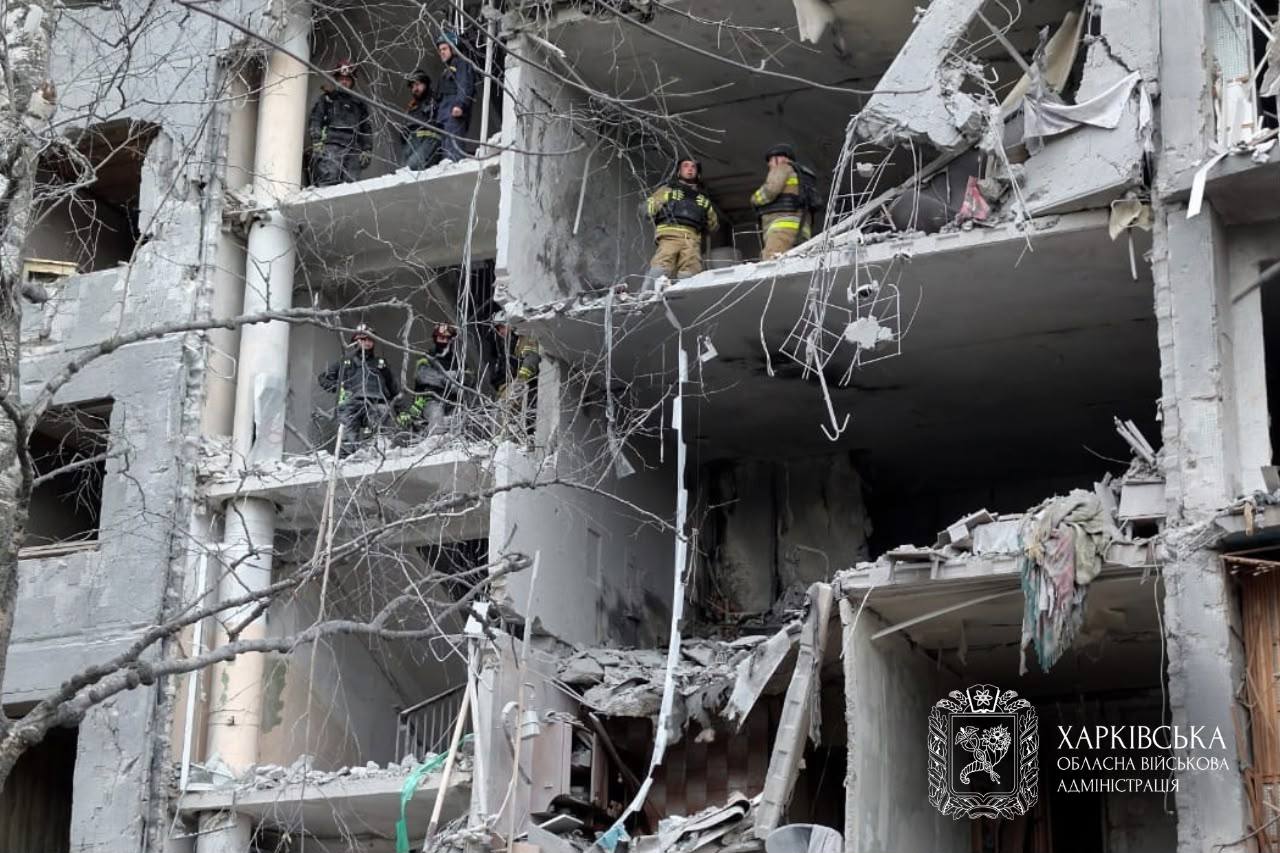
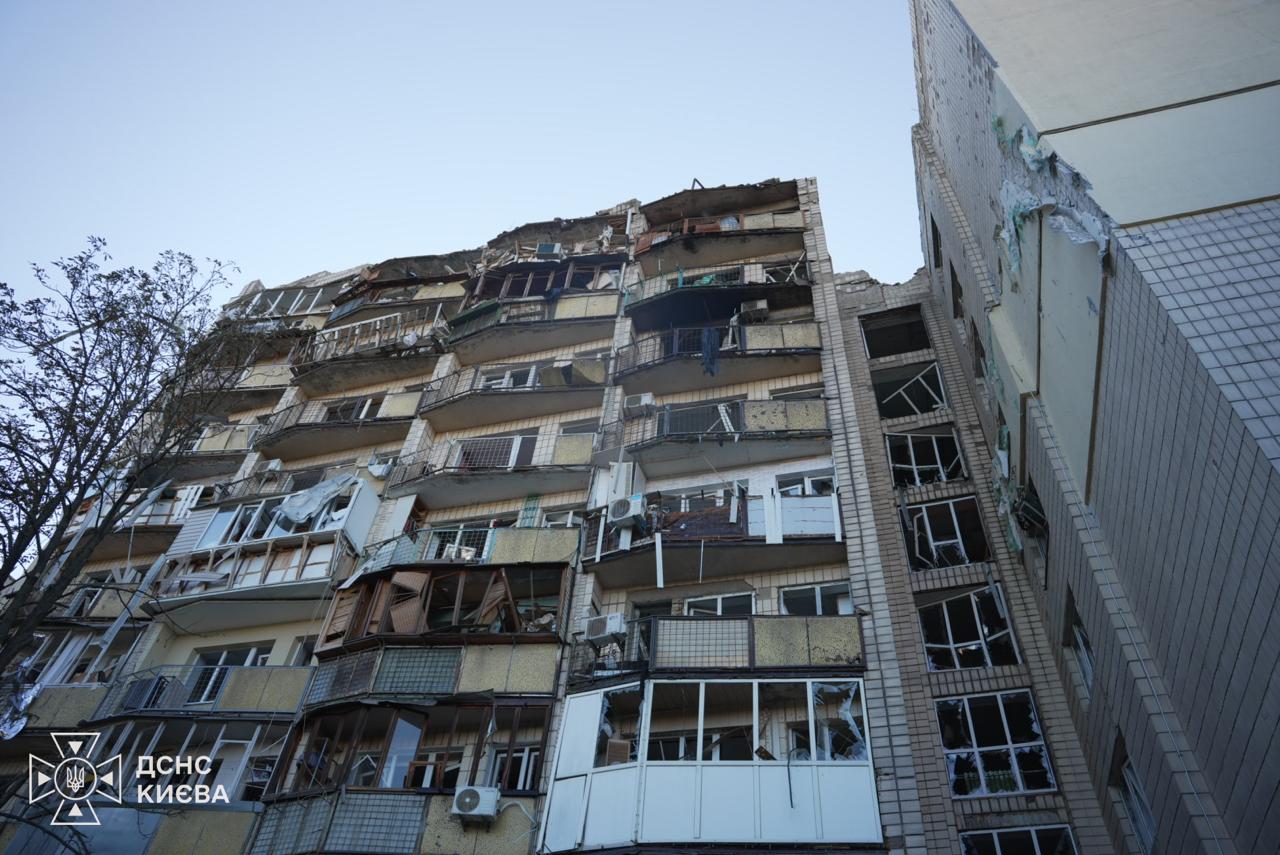
The bridge strikes came alongside attacks on civilian areas of Kyiv. A Russian drone hit the upper floors of a 25-story residential building in the Darnytskyi district on 2 October, causing a fire on the 24th and 25th floors.
One person was killed and two were injured. The attack also damaged buildings and vehicles in the Holosiivskyi district.
A Russian drone struck a 25-story residential building in Kyiv’s Darnytskyi district this morning.
According to President Volodymyr Zelenskyy, Russia launched more than 100 attack drones at Ukraine overnight, including nearly 50 jet-powered drones.
The growing frequency of jet-powered Geran attacks is making the impact of Russian strikes increasingly visible beyond individual damage sites. Repeated attacks on infrastructure such as the Southern Bridge can disrupt transportation and daily routines across the capital even when the targeted structures are not destroyed.
Russia hit Kyiv with another round of drone strikes from the evening of 30 September into the morning of 1 October, striking a school, a café, and warehouse buildings across the capital, the city's mayor and emergency services said. The children inside the school were in its shelter and came through unharmed. Fires broke out across two districts, and one person in the city was wounded.
Children across Ukraine now start the school year in bomb shelters, as Russian drones, missiles, and glide bombs keep hitting schools, homes, and hospitals far from the front—part of a civilian toll the UN says has already outrun all of last year's.
A school full of children, all in the shelter
A Russian drone hit a school in Kyiv's Solomianskyi district on the morning of 1 October and started a fire, Kyiv Mayor Vitali Klitschko said, adding that the children were in the shelter. More than 100 students and about 60 staff were sheltering inside, and none were hurt, police said. The jet-powered drone damaged the building's facade at third-floor level, RBC-Ukraine reported.
A school in Kyiv damaged in a Russian drone attack, 1 October 2026. Photo: State Emergency Service of Ukraine
A café and warehouses among the sites hit
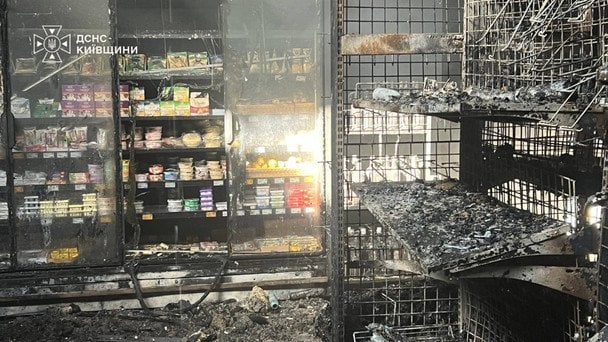
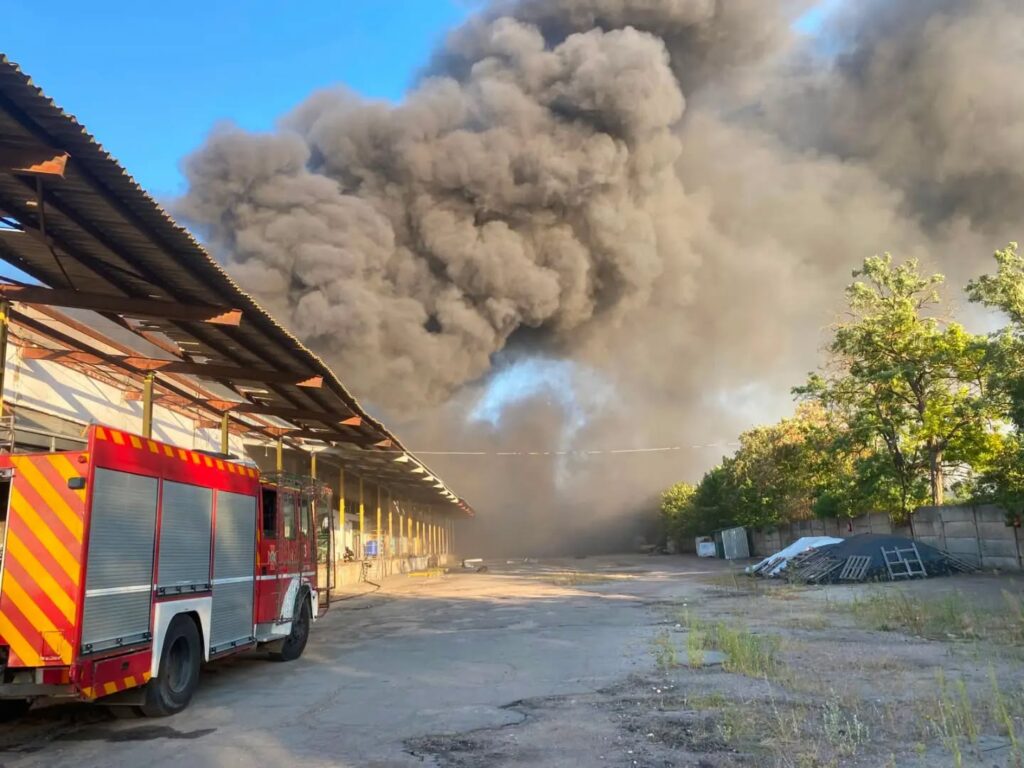
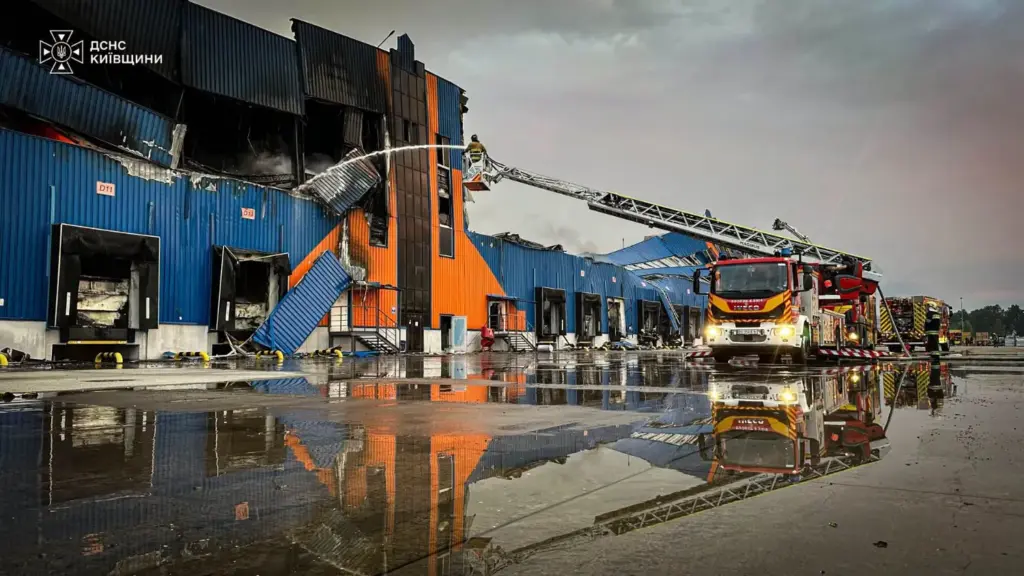
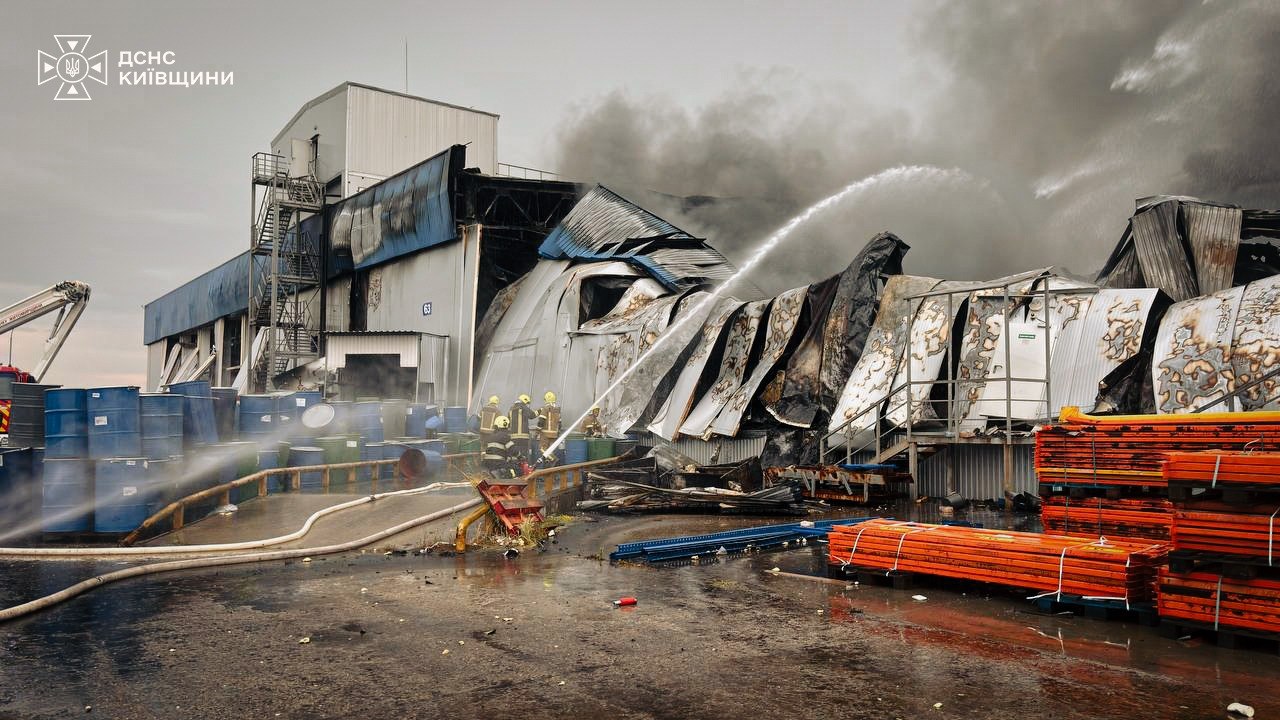
On the evening of 30 September, a Russian strike started a fire at a café on the ground floor of a residential building in Solomianskyi, while warehouse buildings burned in the northern Obolonskyi district. One person was injured in the warehouse fire and handed to medics, RBC-Ukraine reported.
42 sites damaged across Kyiv Oblast
Across Kyiv Oblast, Russian attacks over the previous 24 hours damaged 42 sites and injured six people, regional authorities reported.
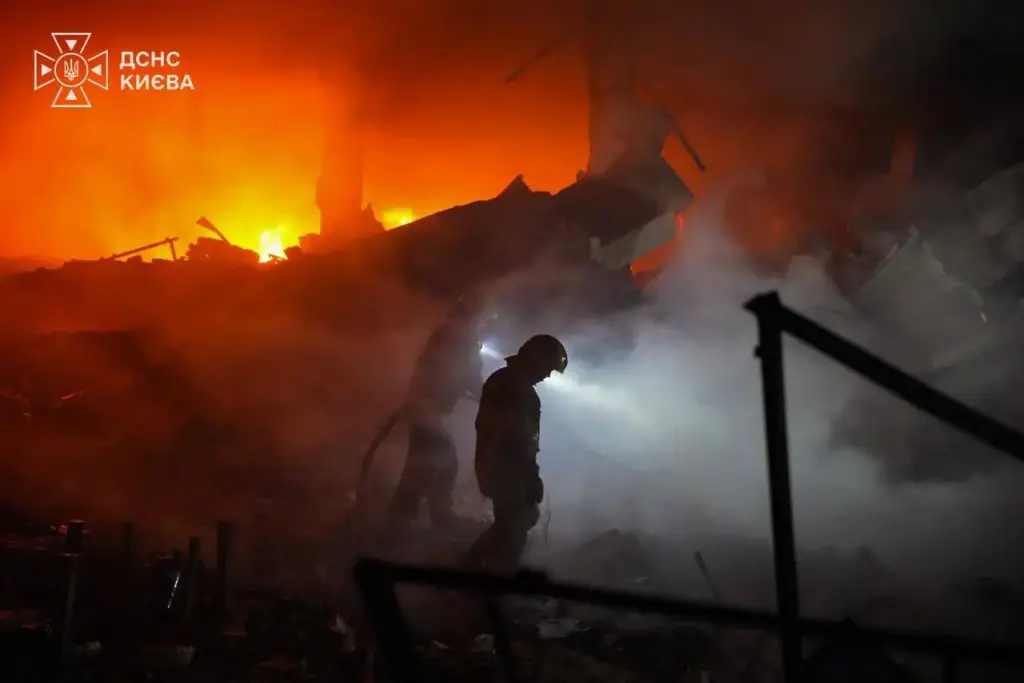
A rescuer at the scene of a fire in Kyiv. Photo: State Emergency Service of Ukraine
Kyiv is now under Russian air attack daily. On 28 September, Russian drones hit the city center in daylight, including the National Academy of Sciences, and earlier waves struck filling stations and other everyday sites across the capital.
Russia has a new warhead for its drones, and it is built to cut down power lines. For the first time, a jet drone has carried a shaped "cumulative-cutting" charge designed to sever high-voltage pylons and iron bridges, Serhii Beskrestnov, presidential adviser, known as Flash, said, as Russia opened its heaviest assault on Ukraine's power grid since last winter.
On 30 September, Russia launched its massed fall-winter campaign on Ukraine's energy infrastructure since the last heating season, hitting power sites across 11 regions overnight with missiles and drones, Prime Minister Serhii Koretskyi said.
The new warhead fits the aim: Flash says it is meant to bring down the high-voltage lines that carry the country's electricity. And Ukraine enters the winter exposed, with its energy resilience plans less than half complete.
A new charge targets the pylons
The device, which Flash calls a cumulative-cutting special load, is designed specifically to bring down high-voltage pylons and iron bridge structures.
"It consists of a main charge weighing 40 kilograms and four strike modules," he says.
In his reading, Russia intends to go after the major transmission lines that move power across the country, the backbone of the grid, rather than the substations it has struck before.
The campaign builds toward November
On 29 September, two senior Ukrainian officials told The Economist that Russia launched a three-part campaign of attacks on Kyiv, combining massive bombardments, sabotage, and the creation of political chaos. These efforts aimed at destabilizing the Ukrainian capital would peak by November, they said.
According to a representative of the Security Service of Ukraine, Russia has "thousands" of drones in its arsenal and is simultaneously expanding its stockpile of ballistic missiles. The plan is to "deploy the entire arsenal over the next two months," given that Ukraine lacks an effective weapon against jet-powered drones.
Russia is preparing to make daily life in Kyiv harder before winter, aiming at the ordinary places civilians use rather than at military sites, The Economist reported. Ukrainian officials say the push blends bombing, sabotage, and disinformation, and expect it to peak in November.
Every winter of its full-scale invasion, Russia has tried to freeze Ukrainians into surrender, and each year the strikes reach deeper into ordinary life. The civilian casualties recorded in 2026 have already passed the whole of last year, the UN says.
From the power grid to the grocery store
Russia has already turned its drones on Kyiv's supermarkets, food warehouses, and data centers this year. On 28 September, a Russian jet drone struck the National Academy of Sciences in central Kyiv. The strike killed two people, the Academy said. Survivors climbed from the windows of the burning building. A senior Ukrainian official told The Economist the Kremlin now wants shoppers too afraid to enter a store. Russia is also keeping its winter routine, hitting electricity, water, and sewage systems.
Cheaper jet drones that stream live to their pilots
Most of the damage now comes from Russia's cheap jet drones, The Economist said. Pilots guide them onto targets and watch a live video feed. They are hard to stop, and Russia's ballistic missiles are deadlier still as Ukraine's supply of Patriot interceptors dwindles. Ukrainian President Volodymyr Zelenskyy said Kyiv had agreed a new Patriot interceptor package, but it remains short of interceptors of its own. A security official told The Economist that Russia has thousands of drones stockpiled and plans to use its entire ballistic missile stock within two months.
Explore further
War is costing Ukraine $155 billion per year. With Western aid running late, Kyiv is freezing everything but army, pensions, and public wages
Sabotage, chaos, and a city that won't switch off
Ukraine's counter-intelligence services say they foil seven or eight Russian plots a week, and officials believe some sleeper cells remain. The campaign's third element, disinformation, targets war fatigue and corruption scandals. Russia runs the same plan every year, hoping its bot farms will push Ukrainians onto the streets to demand surrender, said Andrii Kovalenko, who heads the Center for Countering Disinformation at the National Security and Defense Council.
"It's nonsense," he told The Economist, adding that someone is feeding the idea to Putin so they can steal more money.
Kyiv is also far harder to shut down than Moscow assumes, Kovalenko said. The city's internet is too decentralized for a handful of strikes to knock out, The Economist noted. Energy expert Olha Babii said the test is how fast crews restore power, not whether it can be destroyed. The capital is emptying, its population down from about 3.7 million to 3.3 million by The Economist's count.
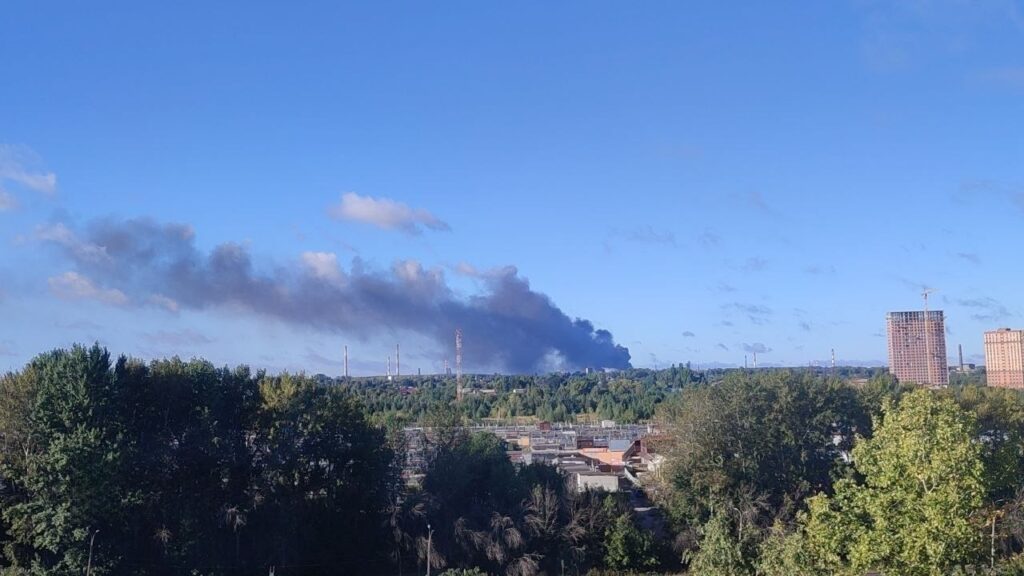
Ukrainian drones struck two fuel depots in Krasnodar Krai overnight on 28 September, setting both on fire, Militarnyi reported. The targets were the NFB-Pavlovskaya depot in Pavlovskaya and the Edelveys-95 depot near Novotitarovskaya, about 25 km from Krasnodar.
Ukraine's deep-strike drone campaign has knocked out a significant share of Russia's refining capacity over the past year, hitting refineries and the fuel depots that store and distribute their output. Washington is pressing Kyiv to ease targeting of Russian refineries while Ukraine pitches a possible energy truce between Ukraine and Russia that Moscow has rejected.
Residents heard six explosions near the railway
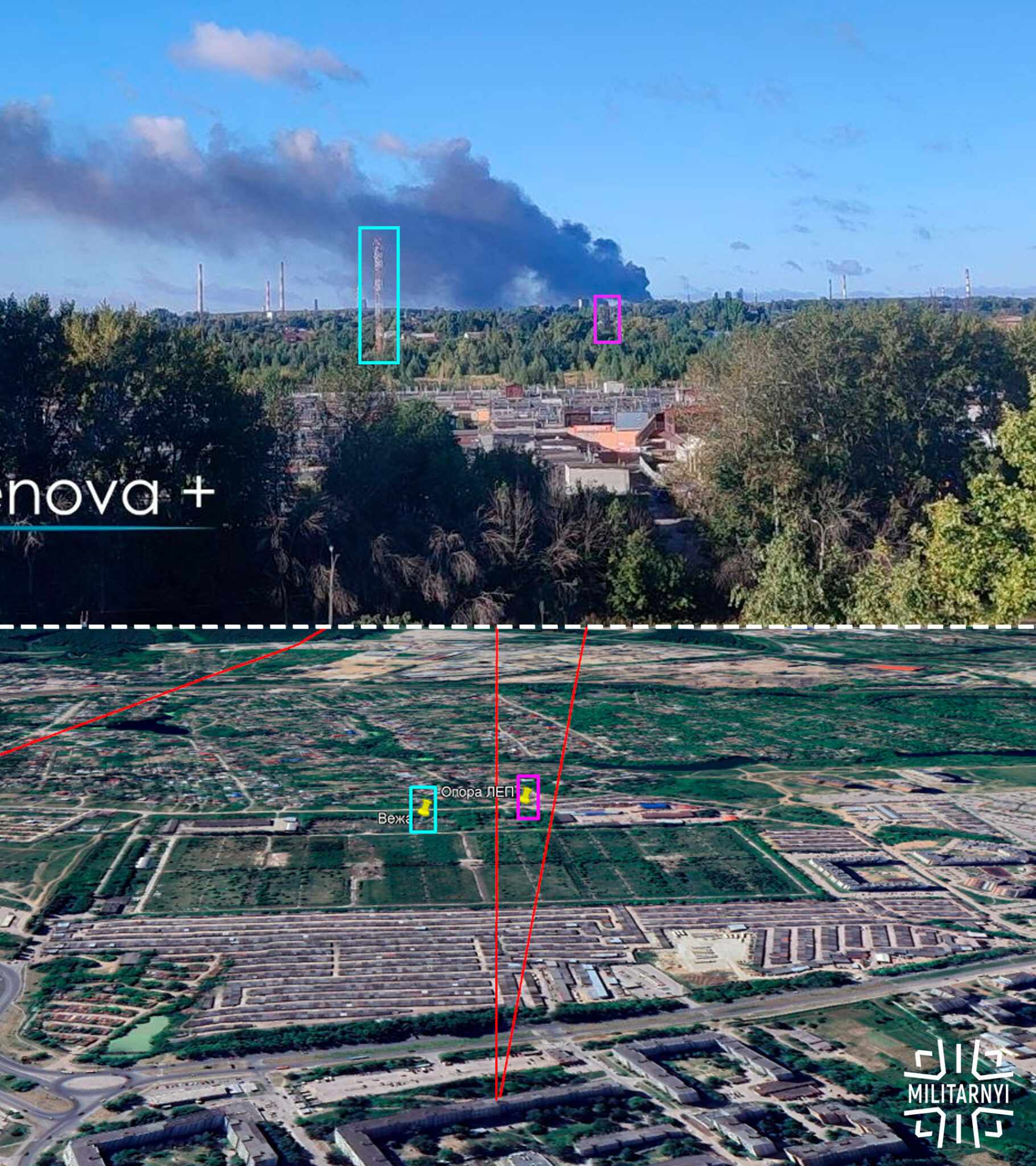
A drone alert was declared in the region at 23:43. Residents of Novotitarovskaya then reported drones overhead and at least six explosions near the railway, Russian news Telegram channel Astra reported. Fires broke out at both depots. NASA FIRMS satellite data confirmed both blazes by 04:24, Militarnyi reported, citing imagery published by Ukrainian Telegram channel Exilenova+.
NFB-Pavlovskaya handles cargo operations with petroleum products, including wholesale trade in motor fuel and petroleum storage, Militarnyi reported.
Edelveys-95 is a similar facility. It specializes in wholesale distribution of diesel fuel (Euro-5 standard) and gasoline (AI-92, AI-95, and AI-100), Astra reported. Its capacity is 4,500 cubic meters, and it has its own rail siding for receiving and shipping fuel. The company has been selling petroleum products for 30 years, buying directly from Russia's largest refineries, according to its website.
Ilsky refinery struck days earlier in the same region
The overnight strikes came two days after SBU drones struck the Ilsky oil refinery in the same region on 26 September, triggering fires near the ELOU-AVT unit and the tank farm. Ilsky is one of the largest refineries in Russia's Southern Federal District, with a design capacity of roughly 6.6 million tonnes of crude per year, and has been struck more than 18 times since the start of Russia's full-scale invasion.
Ukraine's sustained campaign against Russian fuel infrastructure has earlier pushed Russia's fuel shortages into Central Asia and forced Moscow to seek emergency refining deals abroad.
Russian drones and missiles struck Kyiv data centers over 23–24 September, knocking out internet and hosting providers. The Digital Transformation Ministry said about 100,000 subscribers lost service, NV Business reported.
Russia has widened its air campaign from power plants and warehouses to railways, fuel stations, and now digital infrastructure as it tries to grind down the country's ability to function before another war winter.
"You'd have to destroy 70-80% of Kyiv's buildings"
MiroHost founder and Internet Invest Group head Oleksandr Olshanskyi told NV Business the attack destroyed his own data center.
"Most critically important data and systems have been moved abroad or to the cloud," Olshanskyi said. "If an online store stops working, that's unpleasant but not a tragedy."
He called rumors about a full internet blackout or sharp service price hikes baseless.
"Destroying all internet in a simple way is impossible—you'd have to use nuclear or chemical weapons or destroy 70-80% of buildings in Kyiv," he said.
What Russia hit
The strikes damaged a Kyiv data center housing UTELS switching equipment on 23 September. Overnight into 24 September, Russia destroyed equipment of hosting provider CityHost.UA and the data center housing MiroHost. About 95% of MiroHost's clients operate outside Ukraine and were unaffected, he said. Russia also struck the Pavutyna network's data center. Crazy Network said a missile struck Kyiv's central traffic exchange hub, cutting service for its subscribers in Vinnytsia, Kyiv, and Khmelnytskyi Oblast.
Providers KIEVNET, Domonet, FAUST, and Etherlink also reported disruptions. Ukraine's telecom regulator NKEK said on 24 September that providers were completing emergency restoration, and Domonet estimated service would return by 21:00 that evening.
The 23 September strikes killed two people and injured more than 40, and hit a college building in Kyiv while students were on campus, Ukrainian Foreign Minister Andrii Sybiha wrote that evening. Russia targeted major Ukrainian data centers "seeking to disrupt the flow of information," he said. "This is critical civilian infrastructure that ensures people can access life-saving information. It is not a military target."
"More sanctions pressure, more missile interceptors are the only way to stop this terror," Sybiha wrote. "These attacks must not become the new normal."
Panic, not military gain
Olshanskyi said Russia uses these strikes to spread fear, not achieve lasting results.
"The enemy's goal is to cause damage, inflame panic, and heighten nervousness," he said.
His data center's destruction "will not affect the situation at the front in any way," he said.
Russian strikes have killed or wounded more Ukrainian civilians in the first eight months of 2026 than in all of last year, a senior United Nations official told the Security Council, Censor.net reported. The official warned that the toll keeps climbing as missiles and drones increasingly reach cities far from the front line. She also cautioned that mounting attacks on Ukraine's battered energy grid could push millions into a dark, cold winter.
In the war's fifth year, Russia's long-range strikes on Ukrainian cities have shifted the danger from the front to the streets where people live, and the rising civilian toll now tracks how far those weapons reach.
Casualties outpace all of 2025
Rosemary DiCarlo, the UN Under-Secretary-General for Political and Peacebuilding Affairs, gave the toll as the Council met on Ukraine, Ukrinform reported.
"In just the first eight months, more civilians were killed or injured in Ukraine than in all of 2025," she said.
The heavy toll already recorded in September shows the trend continuing, she added, as strikes hit populated areas away from the front.
The UN human rights office has confirmed at least 17,257 civilians killed since February 2022, including 835 children. Another 53,693 people have been wounded, among them 3,247 children, and DiCarlo said the real numbers are likely far higher. Kyiv and other cities have faced near-daily attacks in recent weeks, she said, with strikes hitting railways, shopping centers, gas stations, warehouses, and food and logistics firms.
A warning over the coming winter
DiCarlo said the mounting strikes on Ukraine's already-damaged energy infrastructure are especially worrying with another war winter near.
"The cumulative impact of these strikes could plunge millions of people into darkness and cold in the coming months," she said.
She urged an immediate moratorium on strikes on populated areas and urgent action to protect the power grid. Targeting civilians and civilian sites is prohibited under international law, she noted.
The warning follows the deadliest stretch of the war for civilians, when UN monitors counted 437 people killed in July, the worst monthly toll since May 2022. Russia has also renewed strikes on gas production and power plants ahead of the heating season.
OpenAI, the US company behind ChatGPT, will hand Ukraine's government free access to a cyber-defense system and its most powerful artificial-intelligence (AI) model, Ukrainian defense outlet Militarnyi reported. The company unveiled the deal alongside the UN General Assembly, pitching it as a cyber shield for the hospitals and power plants Russia keeps targeting.
Russia's war on Ukraine runs through wires as much as skies. Its hackers have hammered energy, transport, and defense networks for years, on top of the blackouts its missiles already force on Ukrainian cities—and Western tech firms have kept stepping in to help hold the line.
What the Daybreak system does
The tool is called Daybreak. It scans digital systems, finds their weak points fast, and helps specialists close them, the report said. Daybreak handles the whole job on its own—a loop of inventory, detection, verification, assignment, remediation, and confirming the fix held.
The system is meant to shield civilian infrastructure, hospitals and power stations among it, from cyberattacks, BBC reported. Ukraine's Computer Emergency Response Team (CERT-UA) logged nearly 6,000 cyberattacks in 2025.
Explore further
14 killed as Russia unleashes massive overnight barrage on unprotected Kyiv, striking homes, hospital, school and railway infrastructure
Ukraine also gets OpenAI's top model
The agreement opens access to GPT 5.6 Sol, OpenAI's flagship and strongest model. The company built it for complex professional work—programming, research, science, and cybersecurity, the report said. Both come as part of one agreement between OpenAI and Kyiv.
George Osborne—Britain's former chancellor and now Head of OpenAI for Countries—put the aim plainly.
"Protecting civilian infrastructure means defending it against both physical and digital attacks, so people can continue to live, work and access essential services," he said.
Independent analysts called the deal useful but not unprecedented. Rafe Pilling of cyber firm Sophos said it could serve as a force multiplier for a Ukrainian cyber defense that is already highly capable but heavily burdened. Jamie MacColl of the Royal United Services Institute noted that Western tech firms have been supporting Ukraine for some time, partly altruistically but also because they gain valuable intelligence from an active conflict, and that Ukraine already has access to AI tools from OpenAI's competitors, including Google. The same frontier AI capabilities cut both ways—spotting weaknesses helps defenders block hackers and attackers find a way in.
OpenAI's rival Anthropic has restricted access to its most powerful cyber models on those grounds, while OpenAI has opened them to some European firms and UK banks, BBC reported.
Russia has destroyed a Ukrainian toilet-paper maker's warehouse for the second time. According to Snow Panda, an everyday brand of toilet paper, paper towels, and wipes, a Russian strike on 22 September again leveled its warehouse complex. This time, its workers came through unhurt, the company said.
The strike is a small piece of a systematic campaign against Ukraine's civilian economy. Russia has destroyed more than two-fifths of the country's modern warehouse space, some 2.1 million square meters, hitting the depots of retailers, food companies, drugmakers, and couriers far from the front.
Snow Panda makes nothing military, only household paper goods, and it has now been struck twice, in a pattern where rebuilt or dispersed storage becomes the next target.
A second strike levels the warehouse
"On 22 September, as a result of a Russianstrike, our warehouse complex was completely destroyed for the second time," the company said.
It provided no further detail on the damage or losses, but emphasized the outcome that mattered most to it.
"The most important thing is that the people are alive and unharmed," its press service said.
July's missile hit the main hub
The first blow came on 1 July, when a Russian missile struck the Snow Panda plant in Odesa Oblast and wounded people there. The company called it its most important hub, the point from which its goods and those of other brands were shipped across the country.
"Now we are assessing the scale of the destruction and making the first decisions to save our life's work," it declared after that strike.
Russia targets the civilian economy
Snow Panda's losses fit what Ukraine has faced all summer, as Russia turns drones and missiles on the warehouses, distribution centers, and railways that keep the country supplied. The target list has run from a toy retailer's depot near Kyiv to food, medicine, and parcel warehouses across the country.
Retailers, grocery chains, and pharmaceutical distributors have all been hit, often more than once, pushing companies to scatter their stock into smaller sites that then draw the next strike.
Ukraine’s Naftogaz has signed a memorandum with Hungarian energy company MOL to build fuel storage facilities in Hungary near the Ukrainian border, creating additional reserves outside the reach of Russian strikes.
Acting Naftogaz CEO Sergiy Fedorenko said the project will diversify fuel supply routes and provide storage capacity outside areas exposed to Russian attacks. He said this could make fuel supplies more reliable for Ukrainian consumers while also expanding cross-border energy infrastructure.
The agreement was announced during the Carpathian Economic Forum, held as part of the first summit of the Carpathian Eight regional cooperation format.
Why Ukraine needs fuel storage outside the country
Russia has repeatedly targeted Ukraine’s fuel infrastructure, including oil and gas production facilities, filling stations, and other sites needed to supply fuel across the country. These attacks increase in the lead up to and during winter months, where the impacts on civilians are especially severe.
Naftogaz said Russian attacks destroyed 37 of its filling stations during the first seven months of 2026. The company said fuel availability is particularly important for emergency services, medical teams, public transport, and communities near the front line.
Russia has also attacked Ukraine’s oil and gas production facilities. In August, Naftogaz said a major Russian attack damaged seven Ukrnafta production facilities and forced some of them offline, reducing oil and gas production.
Storing fuel in Hungary would give Ukraine additional reserves beyond the reach of these attacks and another route for bringing petroleum products into the country if domestic infrastructure is damaged.
Fedorenko said the agreement could make fuel supplies to Ukrainian consumers more reliable while supporting the development of energy infrastructure connecting the two countries.
Ukraine-Hungary ties improve
The deal comes as Kyiv and Budapest have begun rebuilding relations following years of tensions under former Hungarian Prime Minister Viktor Orbán.
Péter Magyar replaced Orbán as Hungary’s prime minister in 2026, and the new government has moved toward closer cooperation with Ukraine, although major disagreements remain.
In June, Ukrainian Foreign Minister Andrii Sybiha described the relationship as entering a “new page” after Kyiv and Budapest reached an agreement addressing longstanding disputes over the rights of Hungary’s ethnic minority in Ukraine.
The two countries have since continued talks on normalizing relations. In September, the relationship was showing tentative signs of improvement, including progress on minority-rights issues and preparations for a meeting between Ukrainian President Volodymyr Zelenskyy and Magyar.
Energy cooperation has already featured in the renewed dialogue. During a Ukrainian government visit to Budapest in 2025, the two sides discussed Hungarian participation in modernizing Ukraine’s energy infrastructure and agreed to continue economic cooperation.
The improvement in relations has not eliminated disagreements. Hungary continues to block progress on parts of Ukraine’s EU accession process, citing concerns over the rights of Hungary’s ethnic minority in Ukraine.
The planned fuel-storage facilities therefore mark a practical area of cooperation between the two countries at a time when Russia’s attacks are making secure fuel supplies increasingly important for Ukraine.
Russia has destroyed 2.1 million square meters of Ukraine’s modern warehouse space out of a total 5 million, wiping out more than two-fifths of the country’s storage capacity as Moscow expands its air campaign against Ukraine’s economy, according to the Financial Times.
Russia is increasingly targeting the infrastructure that keeps Ukraine’s economy running and its citizens supplied, including warehouses, distribution centers, railways, fuel stations, and other logistics facilities. By hitting these sites far from the front line, Russia is disrupting the supply of everyday goods and making it harder for Ukrainians to find what they need.
Around 900,000 square meters of warehouse space has been destroyed in recent months alone, according to Ukrainian entrepreneur Ruslan Shostak, founder of the Eva and Varus retail chains, cited by the Financial Times.
Russia is destroying Ukraine’s warehouse capacity
The loss of warehouse space is creating problems for businesses across Ukraine.
Russian strikes have hit warehouses and distribution centers belonging to major Ukrainian retailers, pharmaceutical companies, publishers, and logistics operators.
One recent strike destroyed a warehouse belonging to toy retailer Budynok Ihrashok near Kyiv, FT reported. The facility was hit by a jet-powered drone and caught fire, but firefighters were unable to intervene while Russian drone attacks were continuing.
The company now plans to distribute its inventory among smaller warehouses and its network of 67 stores rather than rely on a single large distribution center.
The destruction of large warehouses is forcing companies to rethink how they store and distribute goods, increasing costs and making supply chains more vulnerable to further attacks.
Explore further
Kyiv stockpiles food and water as Russia’s new aerial tactics threaten a brutal winter
The attacks are spreading across Ukraine’s economy
Warehouses are not the only economic infrastructure being targeted.
Russian drones have increasingly struck railway infrastructure in western Ukraine, while fuel stations are also being hit farther from the front line. These attacks can disrupt the movement of goods even when they do not directly destroy the businesses producing them.
The result is a widening pressure on Ukraine’s logistics network. Companies must find alternative storage and transport routes while operating under the continuing threat of Russian airstrikes.
The attacks are part of Russia’s broader long-range air campaign against Ukraine’s civilian infrastructure. Moscow is increasingly using drones and missiles to hit economic targets deep inside Ukraine, putting strain on the systems that allow the country’s economy to function during the war.
Russia launched a large-scale missile and drone attack on Ukraine overnight on 17 September, striking Kyiv, Zaporizhzhia, and Odesa Oblast, among other regions.
The attack damaged civilian infrastructure in Kyiv, including apartment buildings and educational facilities, while water infrastructure was also affected. Kyiv mayor Vitali Klitschko reported 20 people injured, including at least two children.
Water infrastructure hit as winter concerns grow
The overnight strikes affected Kyiv’s water infrastructure, temporarily disrupting water supply on the left bank and reducing pressure in some areas on the right bank.
Kyivvodokanal said its specialists restored operations and that water supply is now fully functioning across the capital.
The damage comes as Ukrainian authorities have warned that Russia could target critical water infrastructure as winter approaches, potentially adding another major threat to civilians alongside attacks on Ukraine’s electricity and heating systems.
Russia has repeatedly used winter strikes to target Ukraine’s critical infrastructure, particularly electricity and heating, leaving civilians without power, heat, and basic services during freezing weather.
This winter is expected to bring a heavier campaign: Russia has intensified its attacks since the summer, increasingly targeting food-related infrastructure and supplies in addition to energy facilities.
No missiles intercepted, once again
Russia launched ballistic and cruise missiles alongside 157 Shahed-type attack drones and decoy drones, according to Ukraine’s Air Force.
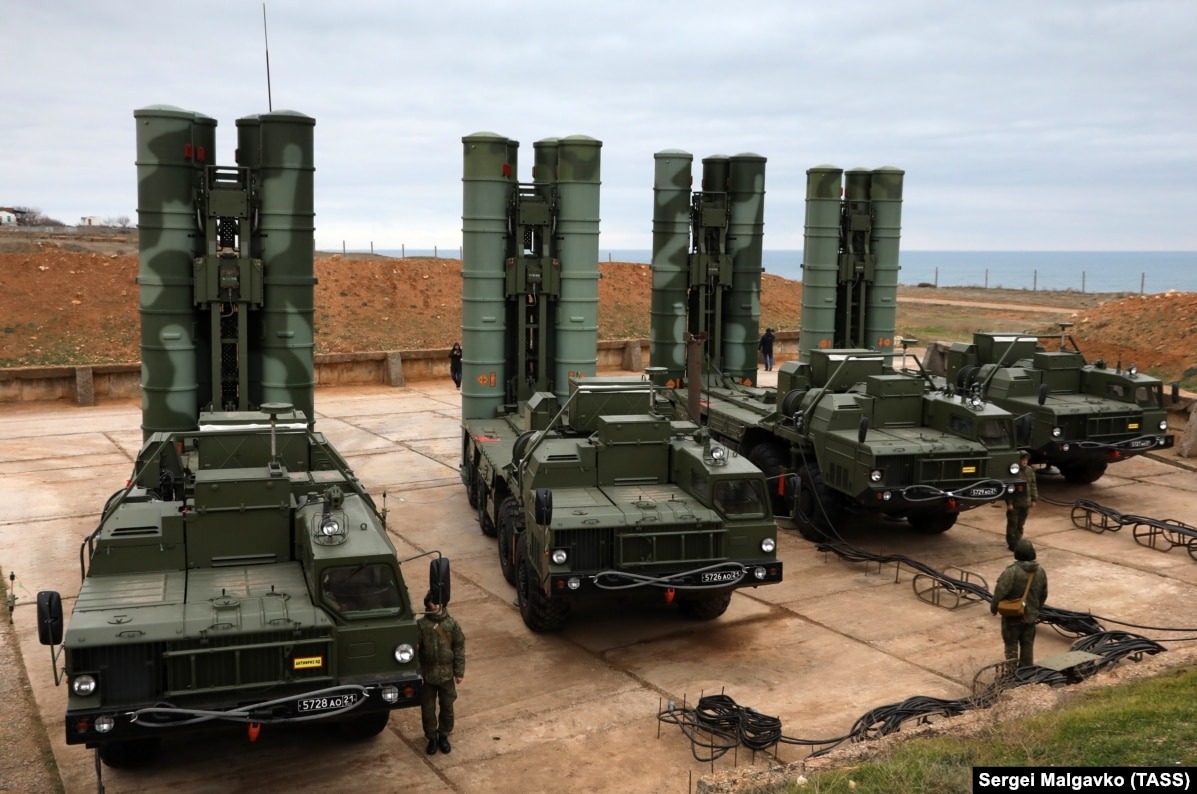
The ballistic missiles included Iskander-M, S-400 and North Korean KN-23 missiles launched from Russia’s Bryansk and Voronezh oblasts. Russia also launched four Kalibr cruise missiles and Oniks missiles.
Ukraine’s air defenses reported destroying or suppressing 131 aerial targets, but none of the ballistic weapons were among those intercepted. The 131 targets consisted of seven Bandеrol/Dan-T missiles and 124 Shahed, Gerbera, and other drones.
Once again, Ukraine intercepted none of the Russian ballistic missiles, underscoring the country’s shortage of high-end air-defense interceptors needed to defend against Russia’s increasing ballistic missile attacks.
However, Ukraine’s General Staff reported strikes on two of the S-400 systems that Russia uses to launch ballistic missiles from Bryansk Oblast.
Explore further
Ukraine strikes two Russian S-400 launchers in Bryansk. The same systems were used to attack Kyiv overnight.
Kyiv hit across several districts
Kyiv police reported damage in the Darnytskyi, Dniprovskyi, and Solomianskyi districts.
Apartment buildings, educational facilities, a municipal building, vehicles, and railway tracks were damaged. Most of the 16 injured people were residents of a damaged 16-story apartment building in Dniprovskyi district.
The victims included a 10-year-old girl and a 12-year-old boy.
Kyiv’s military administration also reported a strike on a warehouse building in Podilskyi district.
Russian attacks on Kyiv have injured 20 people today, with five hospitalized.
A blast wave damaged apartment buildings in the Dniprovskyi district, while a car caught fire at another location.
Scenes like these are becoming a daily occurrence in the capital.
The Air Force said Russian missiles and attack drones hit 36 locations across Ukraine, while debris from intercepted targets fell at five locations.
Russia damaged the Berestyn station building and a Kyiv commuter stop in an overnight strike on the railways
A Russian drone hit the station at Berestyn in Kharkiv Oblast before dawn on 17 September, and passengers and staff sat out the attack in shelters, Ukraine's national… pic.twitter.com/OaeAaO58eX
Russia’s overnight attack on Odesa Oblast continued for much of the night, injuring seven people, including children aged four and 13, Odesa Oblast Governor Oleh Kiper reported.
One Russian drone struck a high-rise apartment building in Odesa, destroying 10 apartments on the 14th–16th floors and damaging 11 cars. Three people were injured there, including the four-year-old child.
Other strikes damaged at least five residential buildings, a kindergarten, a dormitory, a restaurant’s outdoor area, warehouses, garages, and cars. An elderly woman and the 13-year-old child were among four other people injured.
A Russian overnight attack on Odesa Oblast injured 7 people, including 2 children, after a strike hit a 19-story apartment building.
A private home in the region was also destroyed, while a kindergarten, cars, garages, and warehouses were damaged.
Zaporizhzhia was also hit by Russian missiles, with three people injured – a woman and two men. The missiles struck industrial facilities, partially damaging buildings and causing a fire at one site.
Later in the day, Russia attacked the village of Storchove in Zaporizhzhia Oblast with guided aerial bombs. One bomb hit a private house and outbuildings, killing a 51-year-old woman and injuring a 70-year-old man. The strike destroyed property the family had accumulated over decades, according to the Zaporizhzhia Regional Military Administration.
Russia also struck a passenger bus in Zaporizhzhia with an FPV drone near a public transport stop. Five people were injured. A regional official said Russia had “once again chosen not a military target, but people who were simply traveling about their business.”
A Russian FPV drone struck a passenger bus carrying people in Zaporizhzhia, right near a public transport stop. Three people were reportedly injured.
“Russians once again chose not a military target, but people who were simply going about their daily lives,” a Zaporizhzhia… pic.twitter.com/VRZcch4PRH
Ukraine has authorized 81 private companies to run their own air defense against Russian drones, letting the factories and infrastructure sites that Moscow hits daily shoot back, Ukraine's Defense Ministry says. The firms have been provided "authorized" status under an experimental program, a count that has climbed from 51 in mid-July, according to ArmyInform.
The idea is to let the targets defend themselves. Russian drones strike Ukrainian factories, warehouses, and power sites so relentlessly that the state cannot shield everyone, so the Defense Ministry is enlisting the companies being hit to form their own drone-defense teams.
Ninety-two firms have already applied, among them operators of critical infrastructure and businesses from across the country's industries and regions. The teams are not freelancers: they fold into Ukraine's layered air defense under the command of the Air Force, so they do not fire into a shared sky blind.
The count climbs fast
The program has grown quickly since it began in late 2025, from 24 companies in April to 30 in June, 51 in July, and 81 by mid-September. The units are made of trained, certified civilian staff, some running mobile fire teams with heavy machine guns, others flying interceptor drones.
By June, they had already shot down more than 20 Russian attack and reconnaissance drones, the ministry said, including one jet-powered Geran, the faster variant that has strained Ukraine's defenses.
Russia's drones drive the demand
The Defense Ministry launched the project at the end of 2025 to add a layer of protection for workers and production sites that had become routine targets.
The goal the ministry set for the wider effort is stark: detect every aerial threat and destroy 95 percent of them. The steady climb in members, roughly one company added per day since July, suggests that demand is not slowing.
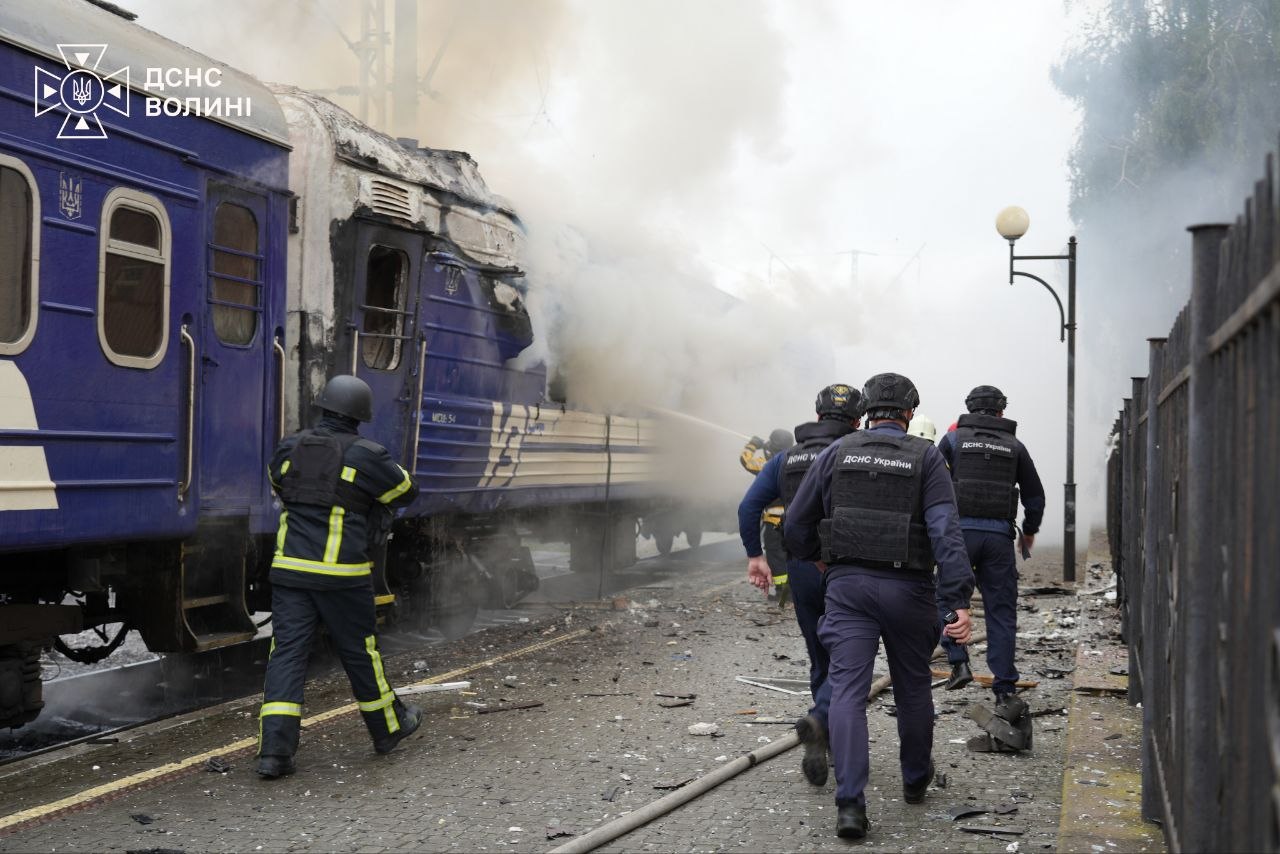
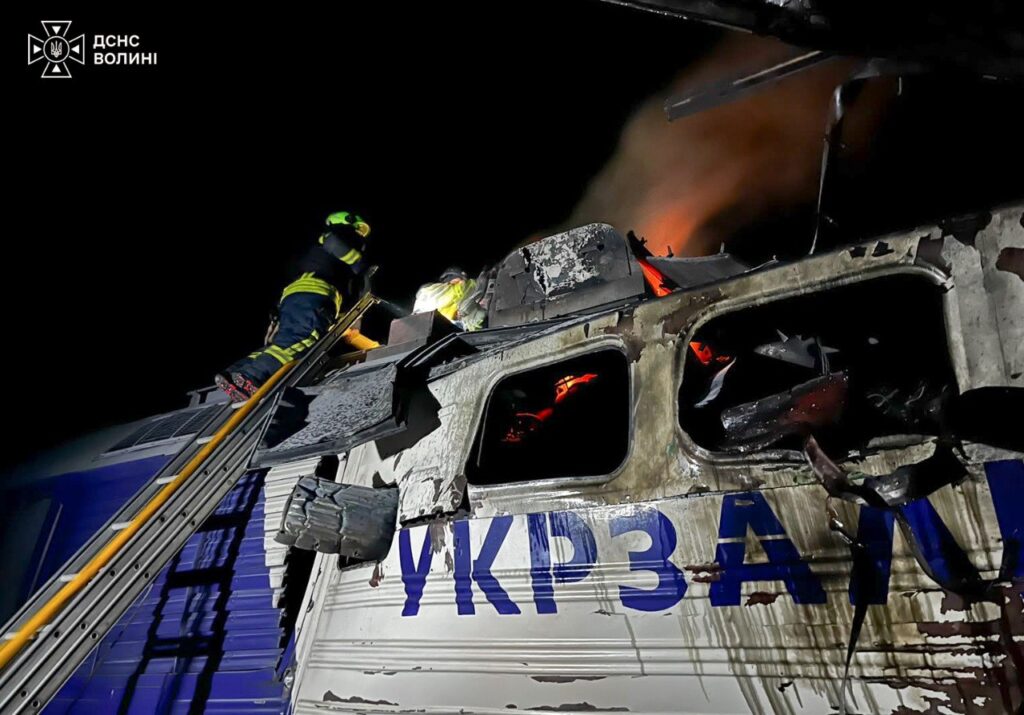
Russia again struck railway infrastructure near Ukraine’s border with Poland overnight, directly hitting another locomotive in Volyn Oblast, Ukrainian Foreign Minister Andrii Sybiha said on 15 September. He appealed to Ukraine’s partners for urgent help replacing locomotives damaged or destroyed by Russian strikes.
The latest strike adds to a rapidly growing toll on Ukraine’s railway fleet. More than 500 Ukrainian locomotives have been damaged or completely destroyed since Russia launched its full-scale invasion, Sybiha said. More than half of those losses have occurred this year alone, as Russian attacks on railways have intensified and increasingly reached western Ukraine.
Ukraine’s railway system remains essential for civilian travel, evacuating people from frontline areas and transporting goods across the country. Recent attacks show that Russia is increasingly putting even these routes at risk far from the front.
Russia once again struck Ukraine’s railway network, setting a locomotive on fire overnight in Volyn.
Russia is increasingly attacking Ukraine’s civilian railway infrastructure and targeting the western border region more frequently.
Sybiha said Ukraine urgently needs replacement locomotives and called on international partners to help provide equipment compatible with Ukraine’s 1,520 mm rail gauge, as well as financing to accelerate the purchase of new locomotives.
“Ukraine’s railway keeps the country moving,” Sybiha said, pointing to its role in civilian evacuations, essential cargo transport, and the movement of grain and other critical goods.
The appeal reflects a problem that is becoming harder to solve through repairs alone. With more than 250 locomotives reportedly damaged or destroyed in 2026, Ukraine needs to replace rolling stock while continuing to repair infrastructure under attack.
“Supporting Ukraine’s railway resilience will help avert a humanitarian crisis,” Sybiha said.
As Russia expands its attacks against transport routes deeper inside Ukraine, keeping the railway running is becoming not only a matter of logistics, but of maintaining the country’s basic civilian mobility and economic stability.
Russia continues its systematic attacks to disrupt logistics across Ukraine. Last night, another locomotive was directly hit in a Russian strike on railway infrastructure near the Polish border in Ukraine’s Volyn oblast.
Russia is taking aim at trains and railway infrastructure
The latest strike came only days after a Russian drone hit the locomotive of a passenger train in Volyn Oblast, just two kilometers from the Polish border.
That 13 September attack was part of two consecutive days of Russian strikes on railway infrastructure across Ukraine. A drone also struck railway facilities in Lutsk, while another hit railway infrastructure in Vinnytsia Oblast.
Explore further
Russia strikes passenger train near Polish border as drone swarms reach deeper into western Ukraine
The attacks are part of a broader expansion of Russia’s long-range drone campaign against transport and logistics infrastructure deep inside Ukraine. Railway stations, tracks, locomotives, and other infrastructure are increasingly being exposed to Russian drone strikes even in regions far from the battlefield.
The proximity of the latest attacks to Poland is particularly notable. Russia has also struck Ukrainian border crossings with Moldova and Romania in recent weeks, while Polish Prime Minister Donald Tusk warned on 10 September that Ukrainian crossings with Poland could also come under attack.
Gas stations across Kyiv Oblast will receive access to a military air-awareness system to help them respond more quickly to Russian drone attacks, Kyiv Oblast military administration head Tymur Tkachenko said on 15 September.
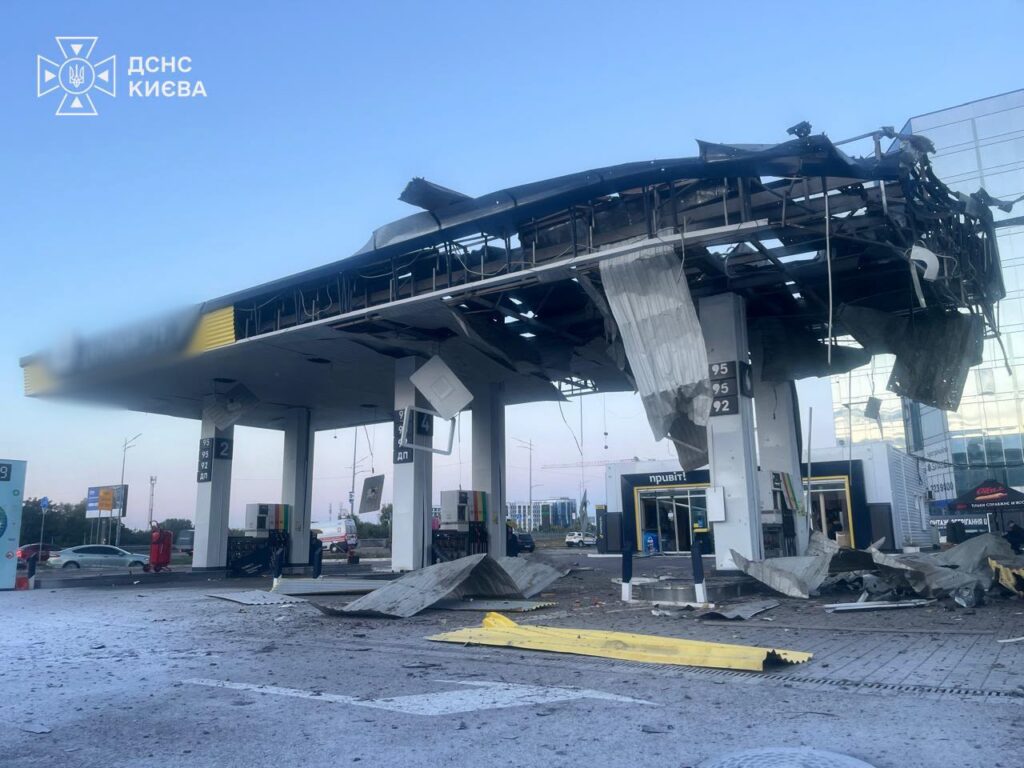
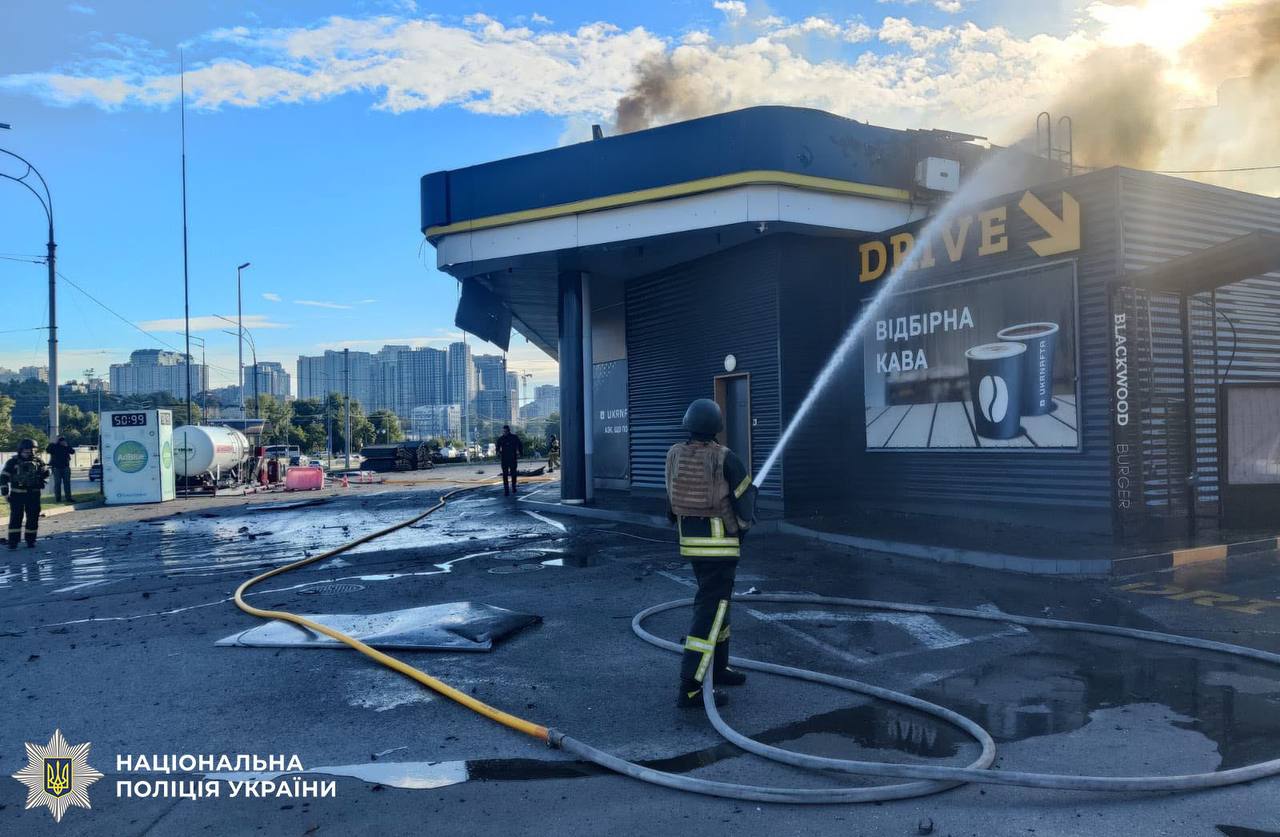
The move comes as Russian forces increasingly target fuel infrastructure during their attacks on Ukrainian cities. Two gas stations were hit in Kyiv on 15 September, killing one person and injuring 11, while at least three other Ukrnafta stations in the capital have been struck since 10 September.
The new system will allow designated gas-station employees to see real-time information about the movement of Russian aerial targets rather than relying only on the general air-raid alert. This should give stations more time to suspend operations, protect employees, and move customers away from danger.
Gas stations are becoming a recurring target
The attacks on Kyiv’s gas stations are part of a broader pattern. More than 300 gas stations across Ukraine have been attacked since the current wave began, according to Ukraine’s Energy Ministry, with strikes increasingly reaching deeper into the country.
In Kyiv, Russian forces have repeatedly used drones against fuel stations over the past week. The 15 September attack hit two more stations during a wider wave of around 200 drones launched against Ukraine.
Explore further
Russian drones killed a man and injured eight in Kyiv, hitting two gas stations
The targeting of fuel infrastructure adds another dimension to Russia’s campaign against Ukraine’s civilian supply system. Gas stations are not only businesses but critical points in the country’s transportation and fuel network, making repeated attacks capable of affecting both public safety and civilian mobility.
Tkachenko said the new air-awareness access is intended to give businesses “maximum available tools” to detect threats earlier and react in time.
He also urged drivers to follow gas-station employees’ instructions during air raids, as the facilities adapt their operations to the growing threat.
Russian drones killed one man and injured eight people in Kyiv on the morning of 15 September, hitting two gas stations along with warehouses, a restaurant, and an office building, the National Police reported. The strikes came in a night-long wave of 200 drones that also hit Odesa Oblast in southern Ukraine.
Moscow's full-scale war against Ukraine grinds on, and Russia has been targeting Ukraine's civilian supply system for months, taking out retailer warehouses, medicine depots, and the railways that move them. The two Kyiv filling stations were the fourth and fifth stations reported as belonging to state-owned Ukrnafta to be struck in the capital since 10 September.
What Russia hit in Kyiv
The first drone came down at a gas station in the Darnytskyi district shortly after 06:00, and more drones hit warehouses in the Obolonskyi district around the same time, the Kyiv Military Administration said. The strike critically wounded a man who was standing near the Darnytskyi station.
The attack resumed after 08:00. A drone struck a non-residential building in the Solomianskyi district, then a second gas station in the Holosiivskyi district, where heavy smoke rose over the site. Mayor Vitalii Klitschko reported the number of injured climbing through the morning, from two to four to eight, with two of them in serious condition. Emergency services put six of the eight in the Solomianskyi district, which took a second hit around 10:00.
The man hurt at the Darnytskyi station died in hospital at about 10:35. Beyond the two stations, police recorded damage to warehouses, a fast-food restaurant, and a business center.
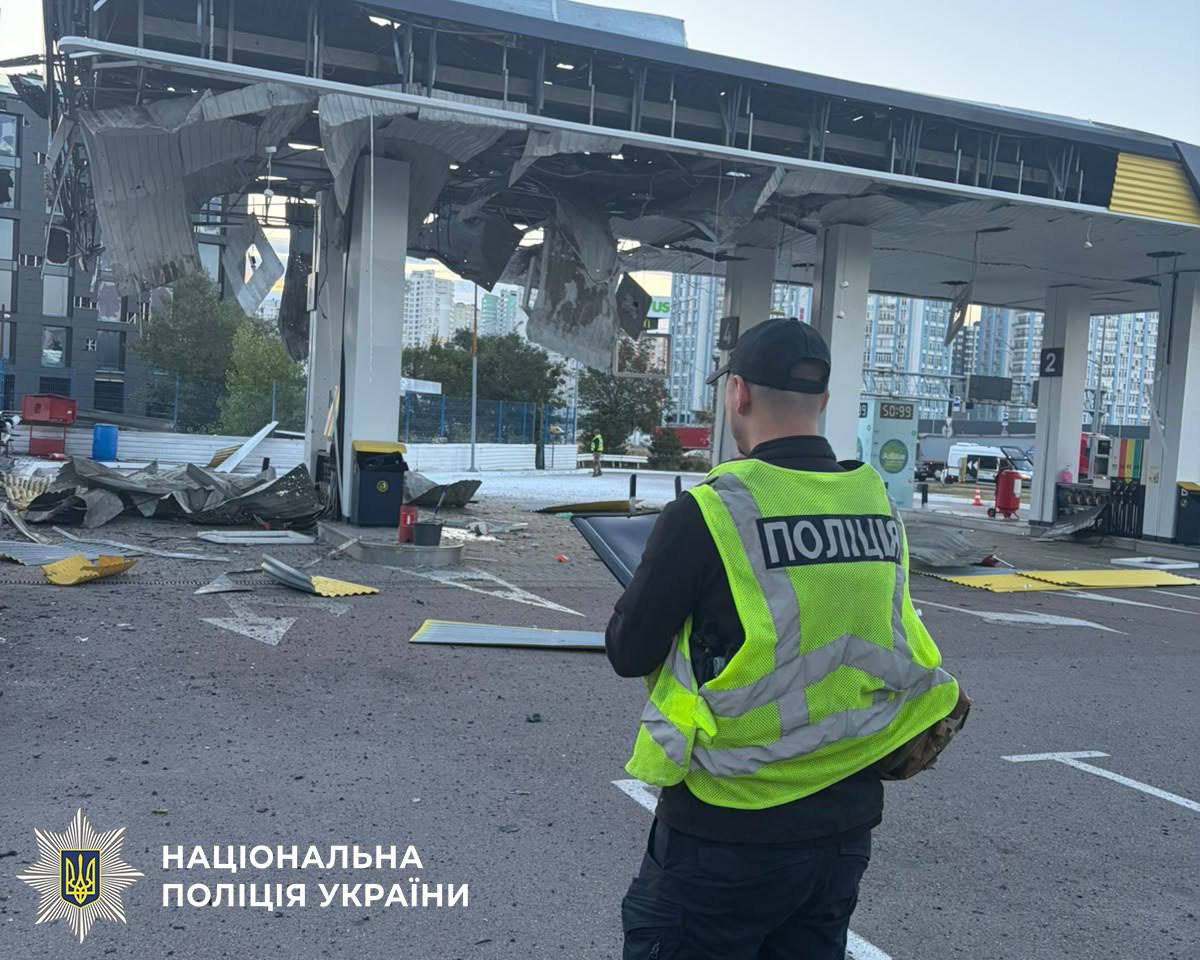
A police officer at an Ukrnafta gas station destroyed by a Russian drone strike in Kyiv, Ukraine, 15 September 2026. Photo: National Police of Ukraine
The wave that carried them
Russia launched 200 strike drones from 18:00 on 14 September, the Air Force said: Shahed types including jet-powered ones, Gerberas, and Parodiya decoys, flown from Russia and occupied areas. Air defense downed or suppressed 187 of them by 08:00, with hits recorded at seven locations and debris falling at three more. The attack was still running when that count was published.
Russian drones killed a man and injured eight in Kyiv, hitting two gas stations
Russian forces hit Odesa Oblast at the same time. Russian forces struck residential buildings, logistics sites, and port and transport infrastructure, oblast head Oleh Kiper said, damaging roofs, facades, and windows of private houses along with dozens of garages and cars.
The same night, NATO fighters shot down a drone over Lithuania that had crossed from Belarus, and Ukrainian forces struck the Syzran refinery in Samara Oblast and a warehouse in Taganrog.
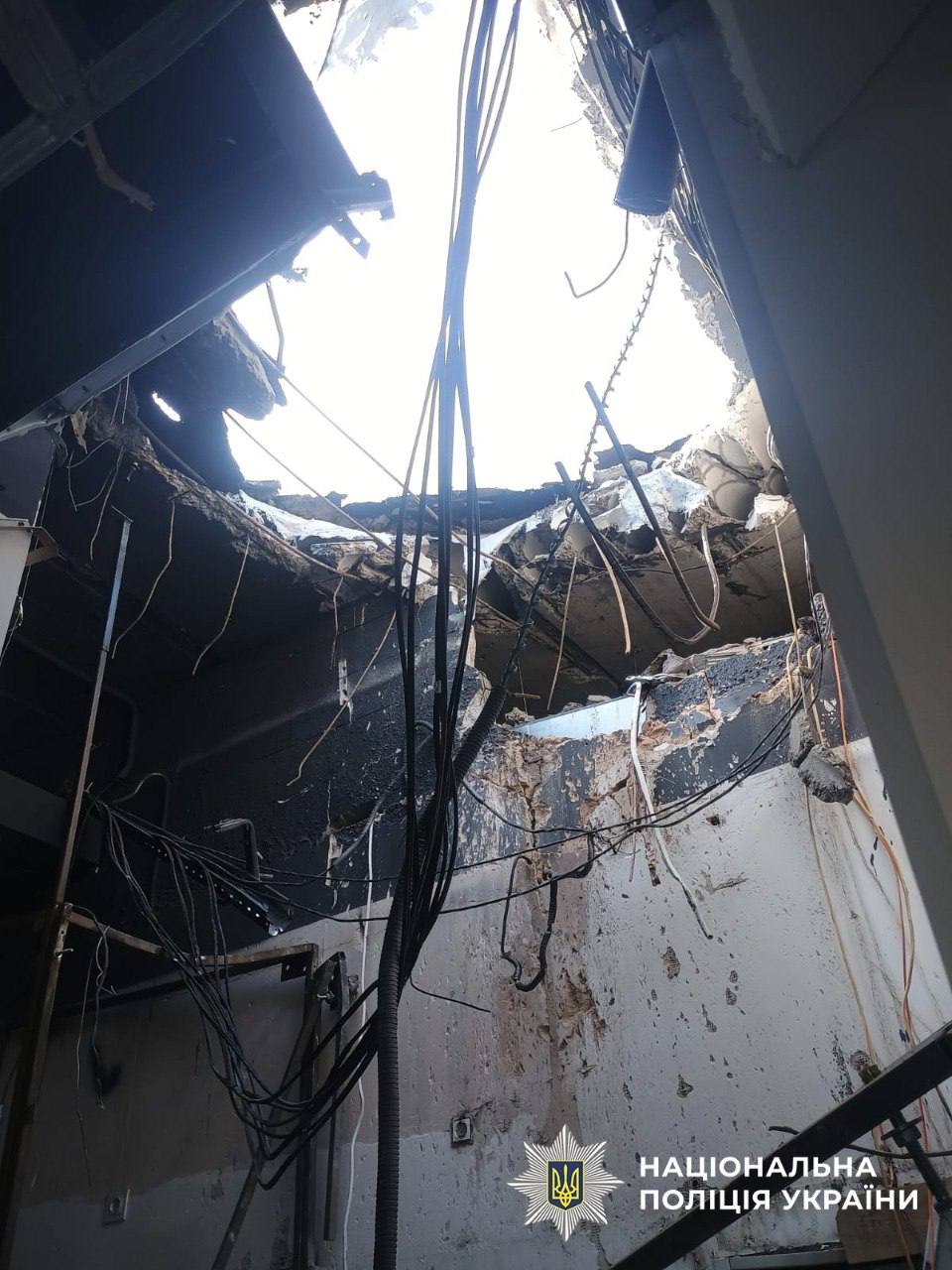
A hole torn through the ceiling of a building hit during the Russian drone attack on Kyiv, Ukraine, 15 September 2026. Photo: National Police of Ukraine
Why gas stations
Kyiv's filling stations have been under systematic attack since 10 September, when a drone came down at a station near a shopping mall. On 11 September, jet drones hit two Ukrnafta complexes on opposite banks of the city and returned to strike one of them a second time.
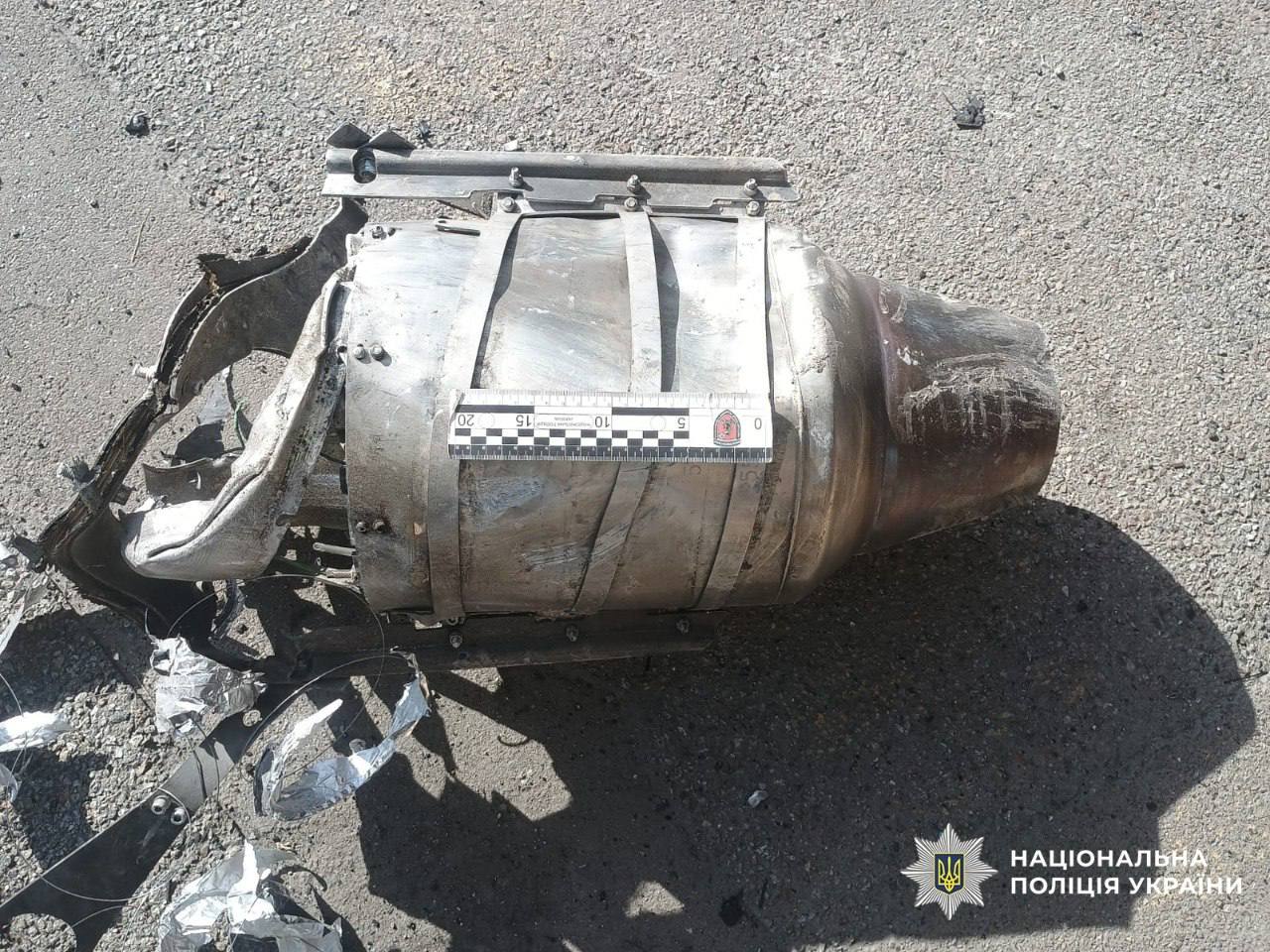
A fragment of a Russian drone recovered after the attack on Kyiv, Ukraine, 15 September 2026. Photo: National Police of Ukraine
Unlike filling stations in the border oblasts, which Russia hits with cheap short-range drones, the Kyiv stations are being struck with its most expensive ones. Ukrainian stations are mostly struck with the Geran-4 Seeker, the variant fitted with machine-vision targeting, according military observer Oleksandr Kovalenko of Information Resistance.
Geran-5 (above) and Geran-4 (below). Image: TurDef
More than 300 gas stations have been attacked across Ukraine since the current wave began, according to energy ministry data. The strikes have moved gradually from front-line oblasts deeper into the country, and about 80% of damaged stations return to work.
Russia struck a fourth Ukrainian pharmaceutical warehouse in two weeks on 14 September, setting fire to the Odesa depot of medicine distributor BaDM, Ekonomichna Pravda reported. Russian forces hit it during an attack they ran across the country through the night.
Russia fights a ground war on the front and bombs the country behind it with drones, cruise and ballistic missiles, and glide bombs, and in recent months it has aimed much of that at the civilian supply system, taking out the depots of retailers and carriers along with the rail that moves them. Burning stored goods does not move the front line, but it changes how a country at war feeds, supplies, and treats itself.
The fourth depot, and what Russia did to it
The BaDM complex stands on the edge of Odesa. The strike started a fire on the grounds, and the State Emergency Service worked at the site. It left significant damage to the storage buildings.
Preliminarily, nobody was hurt, sources on the pharmaceutical market told Ekonomichna Pravda. BaDM is one of the biggest wholesalers moving medicines to Ukrainian pharmacies.
The three depots Russia hit before it
Russia opened the run on 3 September, when it damaged the Biokon logistics complex in Boryspil raion, Kyiv Oblast. That site counts as the country's largest specialized pharmaceutical warehouse.
Overnight on 8 September, Russian forces attacked the Kyiv warehouse of Optima-Pharm with two ballistic missiles. They had already destroyed that site, which belongs to one of the largest distributors, in 2025.
On 13 September, Russian forces struck Universal Logistic, the second-largest medicine warehouse in Ukraine. Four specialized sites in two weeks is a pattern, and Russia now hits medicine storage as it has hit food, construction materials, and parcels.
Explore further
WHO humanitarian warehouse in Dnipro destroyed in strike, Director-General says
The attack the Odesa strike came in
Russia launched 108 strike drones from 18:00 on 13 September, Ukraine's Air Force said. The wave carried Shahed-type drones, among them jet-powered ones, Gerbera drones, and Parodiya decoys. Air defense downed or suppressed 85 of them by 08:00. Ukrainian forces recorded hits at seven locations, and the Air Force said the attack was still running when it published that count.
Medicine is not the only category on Russia's list. Its strikes have wrecked so much large-format storage that Ukrainian retailers are now building small sites everywhere instead of a few big ones. In August, a strike destroyed a World Health Organization humanitarian warehouse in Dnipro, which held medical supplies for frontline facilities, and the WHO did not name who fired it.
Ukraine's Special Operations Forces (SSO) said the 9 September operation struck the Purovsky and Novy Urengoy gas processing plants in the Yamalo-Nenets Autonomous Okrug.
Kyiv's earlier energy campaign concentrated on oil refineries and export hubs in western Russia. The new operation shifts the target set toward Siberian gas processing and challenges the protection once provided by distance, although its effect on production remains unknown. The SSO said drones operated by its Deep Strike units traveled more than 3,000 kilometers, making the operation Ukraine's deepest strike of the war.
Both the Purovsky and Novy Urengoy plants feed Russia's fuel and petrochemical industries. Ukraine's broader deep-strike campaign aims to cut the revenue and supplies sustaining Moscow's war.
Fire Point, the Ukrainian manufacturer of the FP-1, identified the drones as FP-1s and put the distance to the Novy Urengoy plant at more than 3,200 kilometers. The company reported a hit on the plant grounds but did not describe the damage.
Russian authorities have not confirmed the full Ukrainian account. Yamalo-Nenets Governor Dmitry Artyukhov said Russian forces had repelled the attack, according to The Times. Falling drone debris nevertheless caused a fire at an industrial facility in Novy Urengoy, he said.
Artyukhov reported no injuries but did not identify the facility. Russian officials have not acknowledged any strike on Purovsky.
Ukraine says drones hit two Siberian gas plants over 3,000 km from its border in Novy Urengoy, Russia, 9 September 2026. Map: Euromaidan Press
Fire Point put the Novy Urengoy plant's annual design capacity at up to 19.5 million metric tons of raw material.
CyberBoroshno, a Ukrainian group that analyzes public imagery and data, said the strike hit a gas-processing unit at Gazprom Processing's Urengoy plant. Dnipro OSINT shared the analysis.
Gas condensate is a liquid produced alongside natural gas. The reported target separates ethane-rich gases from it. Those gases can be used to make polyethylene, a common plastic. CyberBoroshno said damage to the unit could disrupt supplies to a nearby chemical plant. Neither its identification of the unit nor the extent of the damage has been independently verified.
At Purovsky, the SSO reported damage but did not identify the equipment hit. Owned by Russian gas producer Novatek, the plant processes condensate into fuels and raw materials for the petrochemical industry. It processed 13.4 million metric tons in 2025, according to the SSO.
The effect on production at either plant remains unknown, as does whether any damage will be lasting.
The wider campaign
Ukraine's deep-strike units repeatedly struck Novatek's Ust-Luga gas-condensate complex on the Baltic Sea. Ukraine says drones hit two Siberian gas plants over 3,000 km from its border earlier in 2026. The facility processes stabilized gas condensate and has a design capacity of over 6 million metric tons a year, according to the General Staff.
A 31 March attack briefly halted port operations, while the 14 August strike was the sixth attack on the port that year. Ukraine has not disclosed how much production those attacks disrupted.
Romania's domestic intelligence service says it prevented a Russia-coordinated sabotage operation on its soil, Militarnyi and Radio Svoboda reported. For months, it watched a Russian citizen who was filming military sites across the country—including, it says, Ukraine's Antonov cargo planes.
A wave of arson, drone incursions, and covert surveillance blamed on Russian handlers has spread across the continent, aimed at the logistics that keep Ukraine armed.
What the suspect was told to film
The Romanian Intelligence Service (SRI) announced on Tuesday that it had prevented the plot with national and international partners. The man had been under SRI monitoring since February 2026, part of a wider investigation into sabotage attempts on Romanian soil.
An intermediary instructed him to make photos and videos of targets of strategic military interest, SRI said. The list ran from NATO-used bases and communications nodes to defense institutions, critical infrastructure, and Ukraine's Antonov cargo planes.
SRI says the pattern matches saboteur networks run by Russian entities across Europe. It points to similar cases foiled in Romania in 2024 and 2025. The service added that Russia keeps leaning on people from vulnerable groups to carry out this work.
The Leipzig link
The case recalls an incident in Germany. On 4 August, workers found a drone rigged with explosives and a detonator beside an An-124 Ruslan at Leipzig airport. The Ruslan is a giant Antonov cargo plane. Ukraine's Antonov fleet moves oversized loads few other planes can carry, a standing target for a Kremlin trying to slow Western support without firing a shot.
Germany's government blamed Russia, and the attempt sharpened tensions between Berlin and Moscow. Russia denies any role in Europe's sabotage wave and has not addressed Romania's findings.
The disclosure comes days after Russian Shahed attack drones struck the Orlivka ferry crossing in Odesa Oblast, overnight on 1 September. The crossing sits on the Ukrainian-Romanian border.
Russian strikes cut power to nearly a million Ukrainian families across four oblasts last week. Ukraine's largest private energy company, DTEK, brought it back, fully or partly restoring electricity to 596 settlements in Donetsk, Odesa, Dnipropetrovsk, and Kyiv oblasts between 31 August and 6 September, the company said.
Russia is hammering Ukraine's power grid again as the cold season nears, and the country's winter-resilience plans were less than half complete at the start of September.
Odesa and Donetsk absorb the worst
Most of the week's work was in Odesa Oblast, which Russia has been striking without pause. Ukrainian crews there returned power to more than 366,000 families, DTEK said.
Much of that damage followed a massed missile-and-drone strike on the region's main energy facilities on 2 September, after which national operator Ukrenergo imposed temporary grid limits to keep damaged equipment from overloading.
Donetsk Oblast came close behind, with power restored to nearly 360,000 homes despite what the company called an extremely difficult situation for its repair teams. In Dnipropetrovsk Oblast, crews reconnected almost 172,000 homes, and in Kyiv Oblast nearly 9,000 more.
Strikes keep cutting the grid
The reconnections are happening under continued fire. Russia keeps attacking energy sites in Odesa and Dnipropetrovsk oblasts, damaging lines faster than they can be fully secured. DTEK crews can only begin repairs once the military and emergency services have cleared access to the damaged equipment.
"Russia keeps attacking our energy system. Despite everything, we keep working and restoring power — now on the 1,657th day," said Alina Bondarenko, chief executive of DTEK Grids.
Winter sharpens the threat
The timing is the danger. Ukraine has until the heating season to shore up a grid that Russia has spent the war trying to break.
This year's attacks have again concentrated on the energy system as temperatures start to fall.
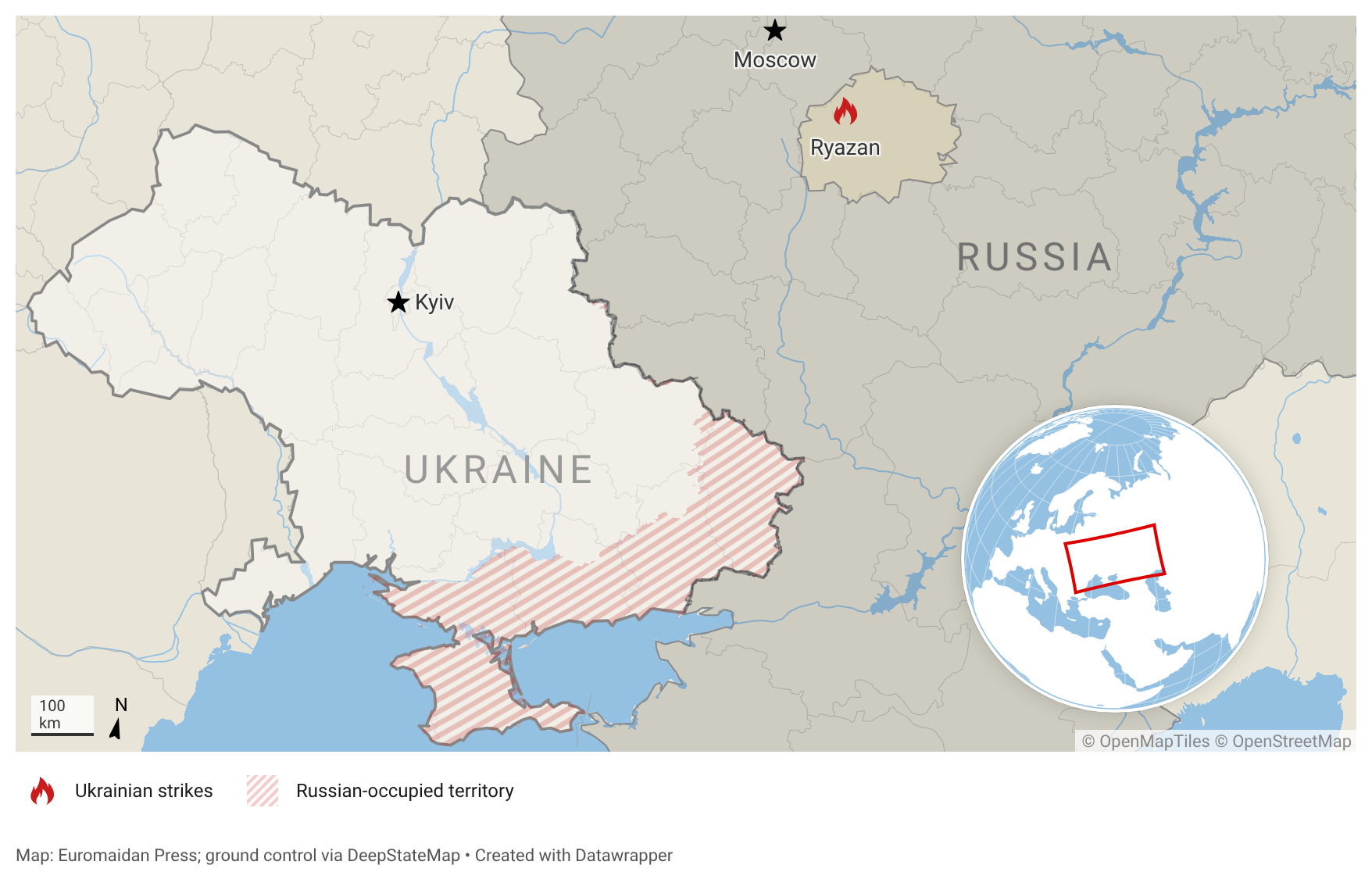
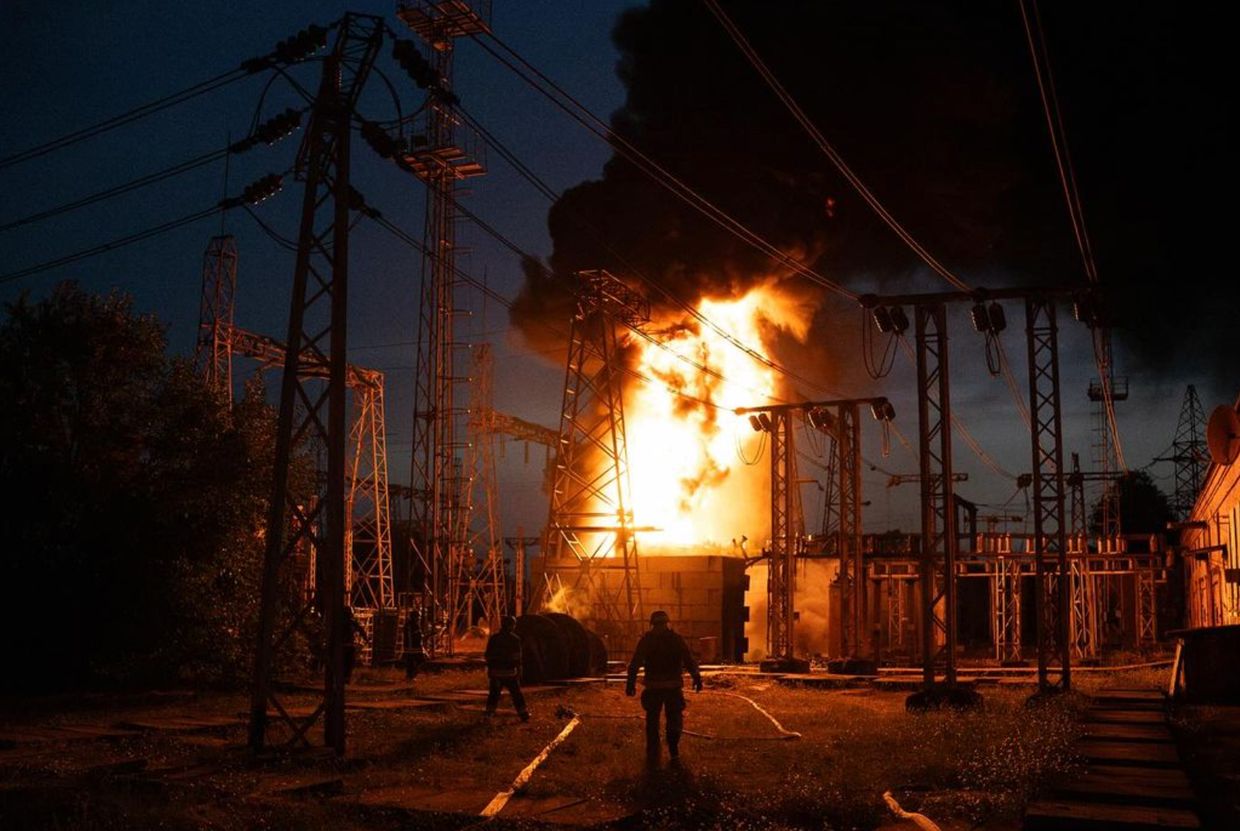
Ukrainian drones struck the Ryazan oil refinery in Russia on the morning of 6 September and set one of its core units on fire, Ukrainian defense outlet Militarnyi reported. The unit produces the high-octane component the Rosneft plant needs for its higher grades of gasoline. Russian regional authorities acknowledged a fire without naming the site. Ryazan is situated southeast of Moscow, about 470 km from Ukraine.
Ukraine has spent this year pushing long-range drones deeper into Russia, working methodically through refineries, pipelines, and export terminals to cut the fuel that moves Russian armies and the oil income that pays for the war. The pressure now runs deep past Russia's borders, with the shortage reaching Central Asian markets.
What burned at Ryazan
Drones hit the low-temperature isomerization unit for pentane-hexane fractions, designated Izomalk-2-LIN-800, according to Militarnyi's analysis. The unit sits on the refinery's grounds and is one of the critically important links in the plant's production cycle.
It converts low-octane straight-run oil fractions into a cleaner high-octane blending component. That component is what allows the refinery to produce gasolines of the higher environmental classes, Euro-5 among them, without adding harmful additives.
Geolocation of the fire at the Ryazan oil refinery after a Ukrainian drone strike, Ryazan, Russia, 6 September 2026. Graphic: Militarnyi, imagery: ESRI
The refinery belongs to Rosneft and ranks among Russia's largest refining enterprises, with a capacity of about 17 million tons of crude a year. It makes motor gasolines of all grades, diesel, aviation kerosene, fuel oil, liquefied gases, bitumen, and petrochemical feedstock. Four crude distillation units sit on the site, along with equipment for vacuum gasoil hydrotreating, cracking, and catalytic reforming.
Ukrainian monitoring channel Exilenova+ published videos of the strike.
Drones already attacked this unit in December 2025 and damaged it. Earlier waves targeted the plant's ELOU-AVT-3, ELOU-AVT-6, and AVT-1 units.
By May 2026 the refinery had lost 90–100% of its refining capacity. Satellite imagery from 3 August 2026 showed Ukraine's Defense Forces had disabled two of the four crude distillation units on site.
Ukrainian drones struck the refinery in May, and FP-1 drones set it and a nearby warehouse burning in July.
Russian officials report a fire, not a target
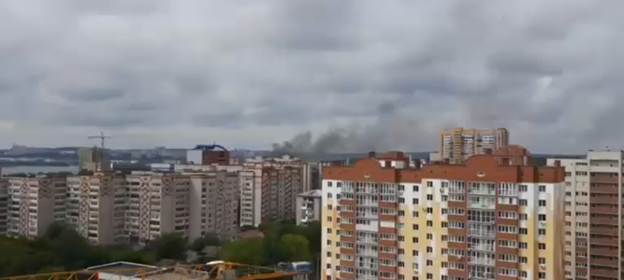
Ryazan Oblast governor Pavel Malkov confirmed the region came under drone attack. Drone debris damaged residential buildings in Ryazan and Sapozhkovsky district, he stated, and a fire broke out at an enterprise he did not name. He said there were no casualties and that emergency services were working.
Russian news Telegram channel Astra said its analysis of photographs taken by residents established that the fire was on the grounds of the Ryazan refinery. Ukrainian channel Exilenova+, which tracks such attacks, also reported a hit on the plant.
Ukraine's General Staff said strikes on 26 August and 1 September fully stopped two large refining enterprises: Lukoil-Nizhegorodnefteorgsintez in Kstovo, Nizhny Novgorod Oblast, and the Novatek-Ust-Luga complex in Leningrad Oblast. Both supply the Russian army.
Short of gasoline, Russia has been buying more fuel abroad. Moscow discussed importing gasoline from Kazakhstan in June, and a Kazakh refinery deal would cover 0.3% of Russian demand. Belarus increased its gasoline supplies to Russia nearly 20-fold in the first half of the year.
Ukraine boosted electricity exports by 150% in June 2025 compared to the previous month, reaching over 237,000 megawatt-hours (MWh), according to consulting firm ExPro Electricity.
This marks Ukraine's return to exporting more electricity than it imports for the first time since October 2023, ExPro analysis reports.
Electricity cannot be stored in large volumes for long periods, so it can be exported during certain hours when there is surplus in Ukraine’s energy system, and imported during deficit hours.
Hungary imported the majority of Ukrainian exports, with shipments jumping from 34,000 to 122,000 MWh in a single month.
The recovery represents a dramatic turnaround from June 2024, when Ukraine had no exports at all and imported 858,000 MWh, four times more than in June 2025.
Russia continues to target Ukraine's energy infrastructure, with the latest strike hitting a critical energy facility in Kherson Oblast on June 27 that caused widespread blackouts across multiple communities.
Governor Oleksandr Prokudin warned residents to prepare for prolonged outages as power engineers work to restore electricity, saying "Russia decided to plunge Kherson Oblast into darkness."
In February 2025, Emergency energy power shutdowns were introduced in eight Ukrainian oblasts due to Russian attacks on the country's energy system.
Russian forces struck a critical energy facility in Kherson Oblast, causing widespread power outages across several communities, Governor Oleksandr Prokudin said on June 27.
"Russia decided to plunge Kherson Oblast into darkness," Prokudin wrote on Telegram. He said the attack has disrupted electricity supply to multiple settlements.
Local power engineers are working to stabilize the situation, Prokudin said.
"I ask the residents of the region to prepare for a prolonged power outage. Power engineers are doing everything possible to stabilize the situation," he said.
Kherson and the surrounding regions have frequently come under Russian fire since Ukrainian forces liberated the city from occupation in November 2022. Russian troops continue to attack the area with artillery and drones from across the Dnipro River.
The Russian army consistently targeted Ukrainian energy infrastructure. Throughout 2024, Moscow launched 13 mass attacks with drones and missiles on Ukraine's energy infrastructure. Ukraine was forced to introduce emergency blackouts across the country.
Ukraine and Russia agreed to a partial 30-day energy truce, following consultations with the U.S. in Riyadh on March 25. Moscow violated the ceasefire more than 30 times, Foreign Ministry Spokesperson Heorhii Tykhyi said on April 16.
Ukrainian state grid operator Ukrenergo's supervisory board has appointed Vitaliy Zaichenko, the company's current chief dispatcher, as its new head, Ukrainian media reported on June 23.
The company has been under temporary management of Oleksiy Brekht while the supervisory board struggled with prolonged disputes over the selection process.
Ukrenergo, which operates Ukraine's electricity transmission system and is a member of the European electricity grid network (ENTSO-E), plays a critical role in the country's energy security, especially during wartime when Russian attacks have repeatedly targeted energy infrastructure.
Zaichenko beat out two other finalists: Oleksiy Brekht, the interim head of Ukrenergo, and Ivan Yuryk, former acting head of Ukrainian Railways.
The supervisory board's June 4 attempt to elect a new CEO failed amid conflict with the Energy Ministry, which changed appointment rules without consulting the Energy Community Secretariat, drawing criticism from European partners.
The new rules complicated the selection process by requiring five out of seven supervisory board votes instead of the previous four needed to elect a chairman.
According to Ukrainian MP Max Khlapuk, the European Bank for Reconstruction and Development (EBRD) threatened to block 141 million euros ($152 million) in funding and demand early repayment of 533 million euros ($574 million) already received over the rule changes.
Former Ukrenergo CEO Volodymyr Kudrytskyi was dismissed on Sept.2, 2024, after President Volodymyr Zelensky called for his resignation over alleged failures to protect substations from Russian missiles and drones.
Kudrytskyi disputed this account, saying he initiated the supervisory board meeting himself, though he did not reveal the reasons for his dismissal.
Following Kudrytskyi's dismissal, supervisory board chairman Daniel Dobbeni and member Peder Andersen resigned early, citing political pressure in personnel decisions.
Ukraine's largest private energy company DTEK and British clean energy group Octopus Energy have launched a program to install rooftop solar panels and battery storage systems at Ukrainian businesses and public institutions, DTEK said in a press release on June 23.
The program, called RISE (Resilient Independent Solar Energy), was announced at Octopus Energy's Tech Summit in London and aims to raise 100 million euros ($115 million) to finance 100 energy projects over three years, helping stabilize the grid, lower electricity costs and protect customers from outages, the company said.
DTEK’s facilities have been repeatedly targeted since the start of Russia’s full-scale invasion as Moscow sought to cripple Ukraine's energy infrastructure. The company was forced to shut down its gas production facilities in Poltava Oblast in March.
"About 70% of Ukraine's thermal generation capacity has been damaged, destroyed or seized since the full-scale invasion," said DTEK CEO Maksym Timchenko in the press release.
“This has created not only an urgent need to rebuild but also an opportunity to accelerate the shift to a decentralized, renewable energy system,” he added.
The alternative energy systems will be installed by D.Solutions, DTEK's business unit operating under the Yasno retail brand.
Installed equipment will run on Octopus Energy's AI-powered Kraken operating system, enabling businesses to optimize energy use in real time, reduce consumption during peak hours and sell surplus electricity back to the grid.
"They (DTEK) are rebuilding at pace and pioneering a decentralized, smart energy system powered by homegrown renewables," said Greg Jackson, Octopus Energy Group founder and CEO.
According to DTEK, Ukraine's commercial and industrial energy market has an untapped potential of 300 megawatts annually, valued at 200 million euros ($229 million). DTEK's Yasno brand serves over 60,000 business customers and can generate projects worth 30 million euros per year.
DTEK previously announced plans to build one of Europe's largest energy storage facilities with six installations across the country, totaling 200 megawatts to power 600,000 households. The company secured a $72 million loan from three Ukrainian banks.
President Volodymyr Zelensky on June 15 condemned Russia's latest mass attack against Ukraine, calling the strikes on energy infrastructure "a spit in the face of everything the international community is trying to do to stop this war."
Earlier in the day, Russia targeted the city of Kremenchuk in Poltava Oblast with a combined missile and drone attack, damaging energy and agricultural facilities. The strike involved nearly 200 drones and missiles, including both cruise and ballistic missiles. The attack came shortly after a phone call between U.S. President Donald Trump and Russian President Vladimir Putin.
In his nightly address, Zelensky said the attack on Kremenchuk was "deliberately and treacherously planned to target our civilian infrastructure" and that Russia intended to damage energy facilities.
"This is Russia's spit in the face of everything the international community is trying to do to stop this war," Zelensky said in his nightly address.
"It happened right after Putin's conversation with Trump. After the Americans asked us not to strike Russian energy facilities. At the same time as Putin tries to portray himself as a mediator for the Middle East ... The level of cynicism is staggering."
Following his call with Putin, Trump claimed he would be "open" to the Russian president acting as a mediator in the rapidly escalating conflict between Israel and Iran. Zelensky rejected the idea of Putin — who has waged war against Ukraine for over 10 years and has taken no steps towards a lasting ceasefire — playing the role of peacemaker.
Putin "is war itself," Zelensky said, urging the international community not to fall for "Russian manipulation and lies."
Zelensky also warned that Russia may be planning additional attacks on Ukraine's energy sector, including nuclear power infrastructure. According to the president, Ukrainian intelligence agencies have obtained evidence of Russia's threat and shared the information with the International Atomic Energy Agency (IAEA) and the Trump administration.
"Russia is planning further attacks on our energy sector — attacks that may be less visible to the world right now because all eyes are on the situation in the Middle East," he said.
Throughout the full-scale war, Russia has attempted to disrupt Ukraine's power grid through targeted attacks on energy infrastructure. After rejecting a U.S. proposal for a 30-day unconditional ceasefire in March, Moscow instead agreed to a month-long ceasefire on energy attacks.
Russia subsequently violated the partial ceasefire, which ended in in April. The Kremlin continues to refuse calls for an unconditional truce.

 Connexion










 Ukraine’s State…
 (@andrii_sybiha)